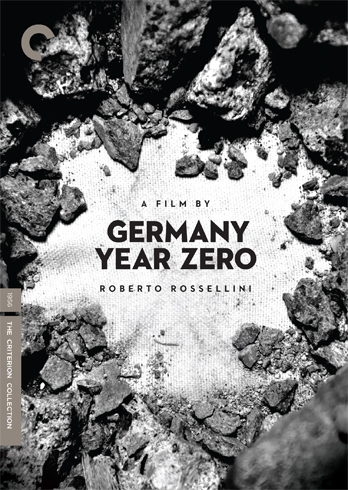
Germany Year Zero
BUY AT:


See more details, packaging, or compare
Synopsis
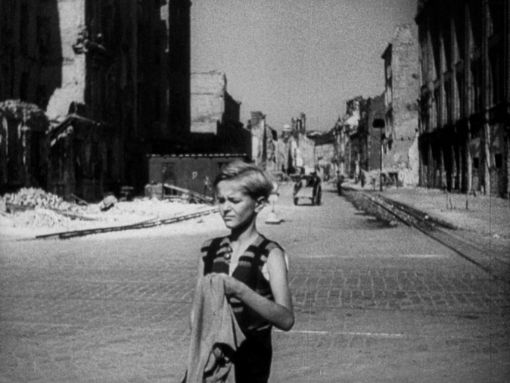
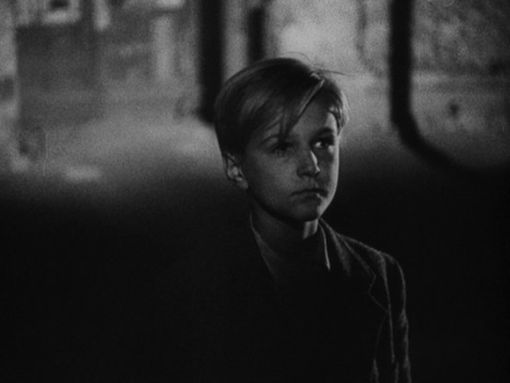
The concluding chapter of Roberto Rossellini’s War Trilogy is the most devastating, a portrait of an obliterated Berlin, seen through the eyes of a twelve-year-old boy. Living in a bombed-out apartment building with his sick father and two older siblings, young Edmund is mostly left to wander unsupervised, getting ensnared in the black-market schemes of a group of teenagers and coming under the nefarious influence of a Nazi-sympathizing ex-teacher. Germany Year Zero (Deutschland im Jahre Null) is a daring, gut-wrenching look at the consequences of fascism, for society and the individual.
Picture 6/10
Roberto Rossellini’s Germany Year Zero comes in Criterion’s new War Trilogy box set, presented in the original aspect ratio of 1.33:1 on a dual-layer disc (the third disc of the three-disc set.) The image has also been slightly picture boxed.
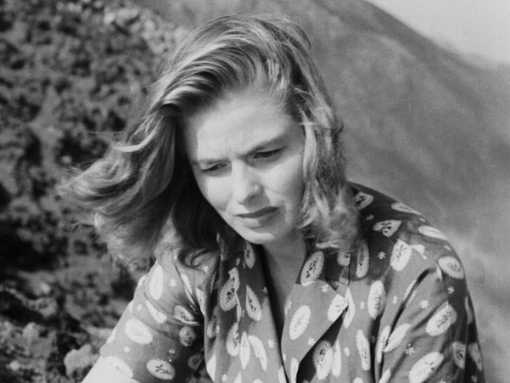
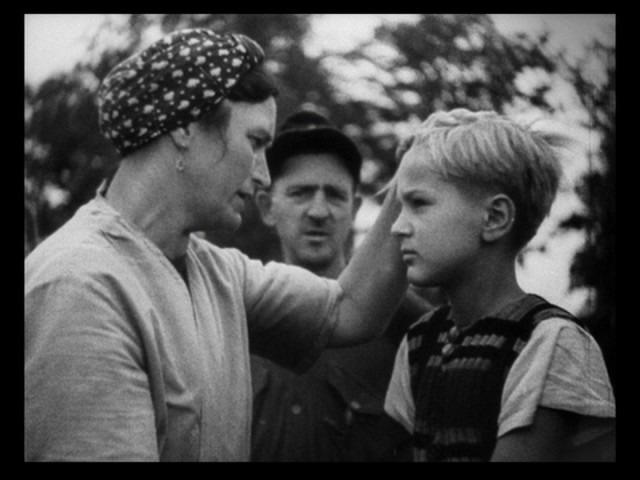
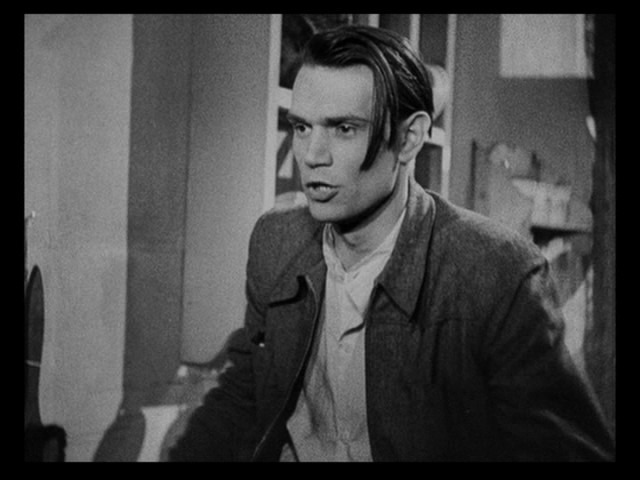
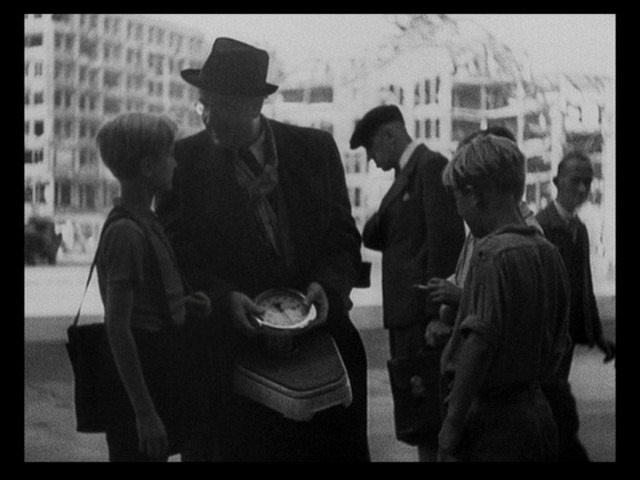
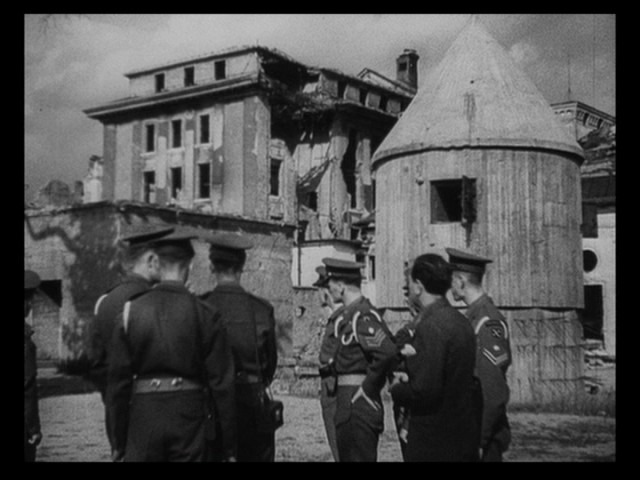
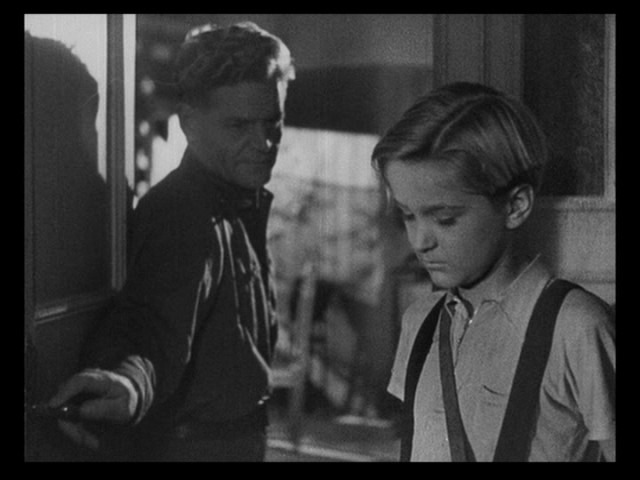
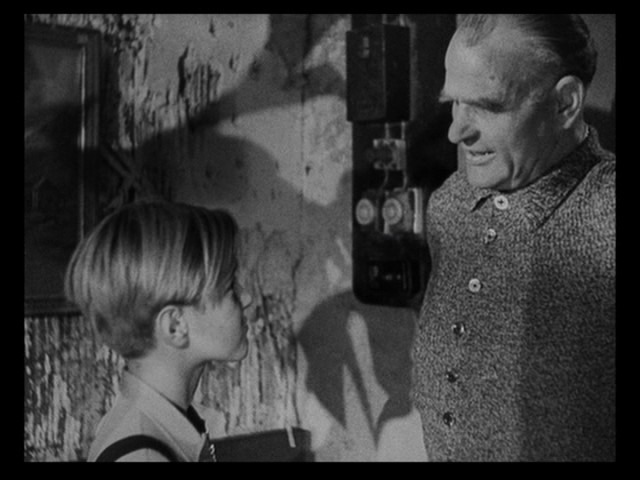
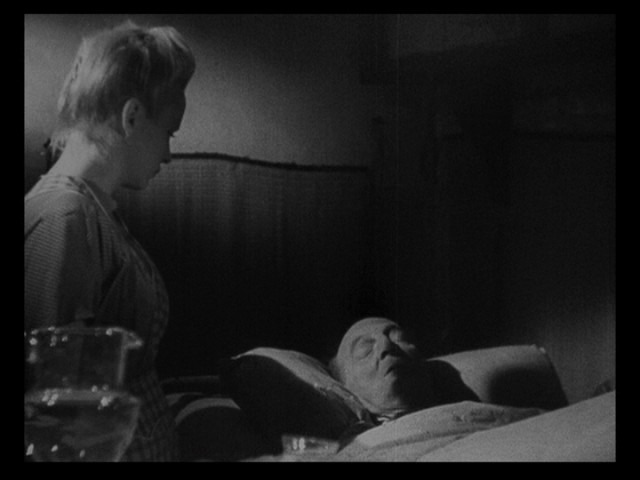
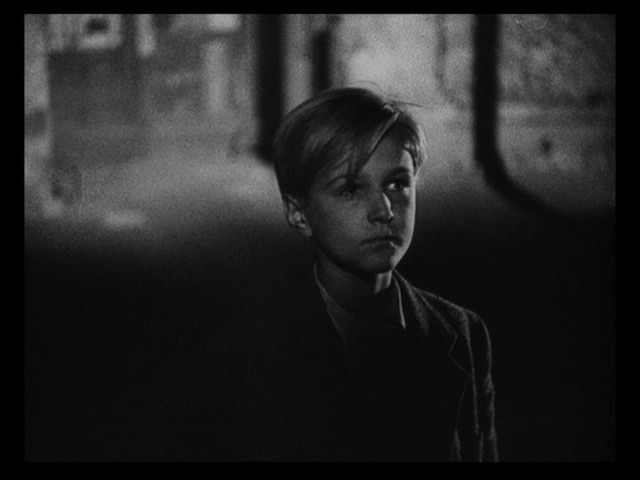
The picture found here is a step up from Paisan though still nowhere near how Rome Open City looked (surprising considering that film was shot using whatever scraps of film Rossellini and his crew could find while this film had more resources and money.) Still, it’s a strong image with a fairly sharp transfer. Grain comes through and looks pretty natural, maybe a little like noise on occasion. Contrast is okay but with blacks looking more like a dark gray than a true black (a problem persistent throughout each film in the box set.) Some sequences come off a bit soft around the edges but I feel this has more to do with the source than the actual transfer.
The condition of the print is pretty good and damage is minimal in comparison to Paisan. There are still some marks and some debris to be found, along with scratches and plenty of vertical lines. Otherwise it does look pretty good, again better than I had been expecting.
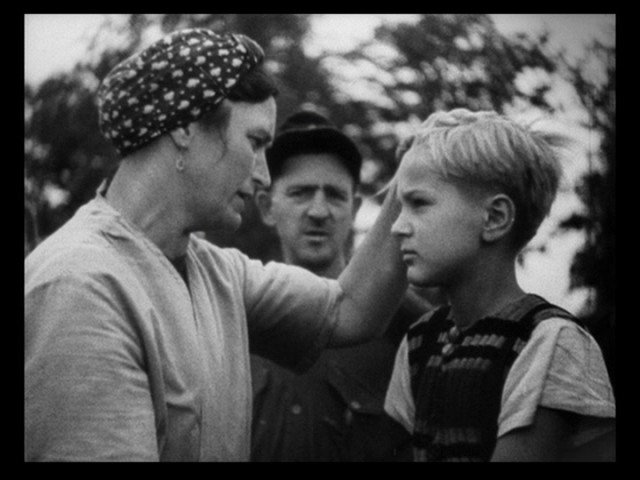
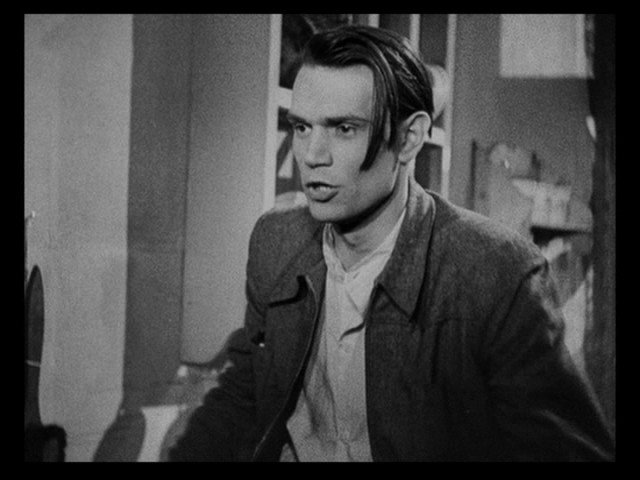
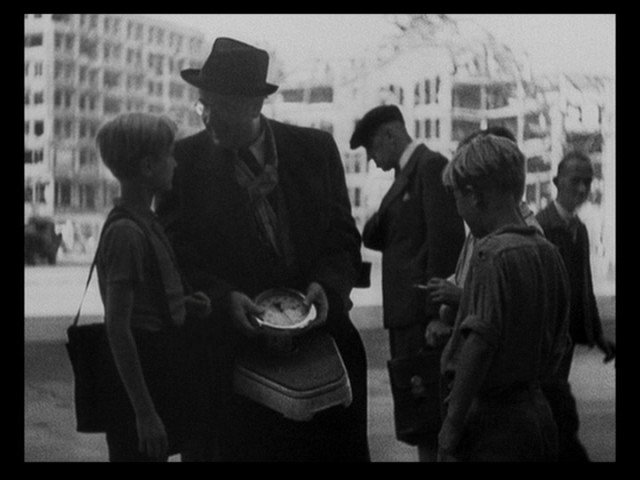
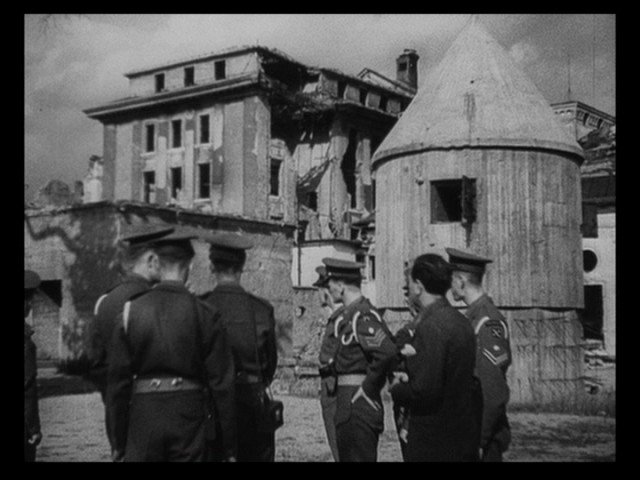
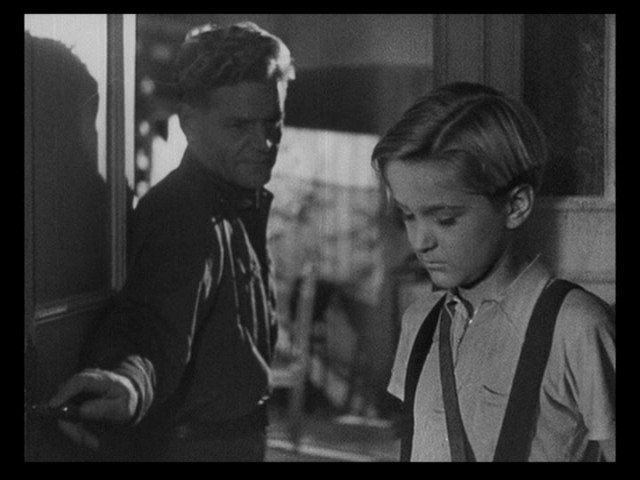
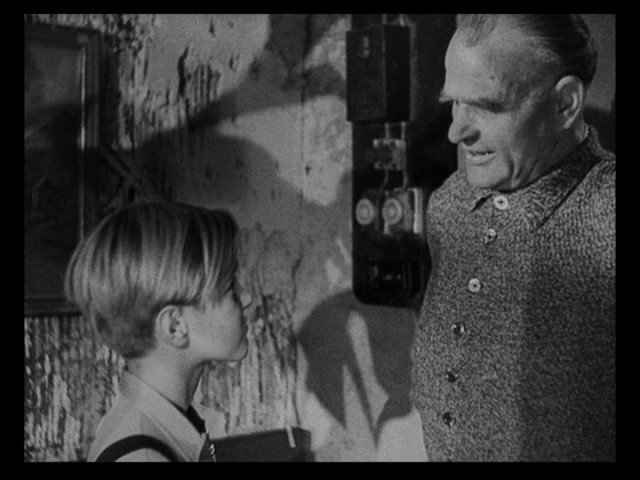
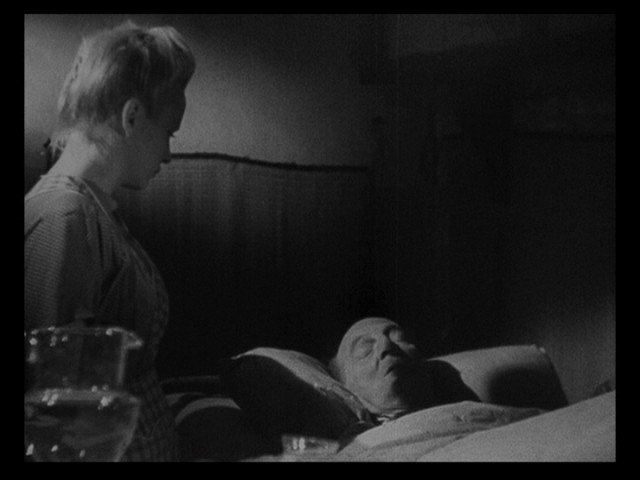
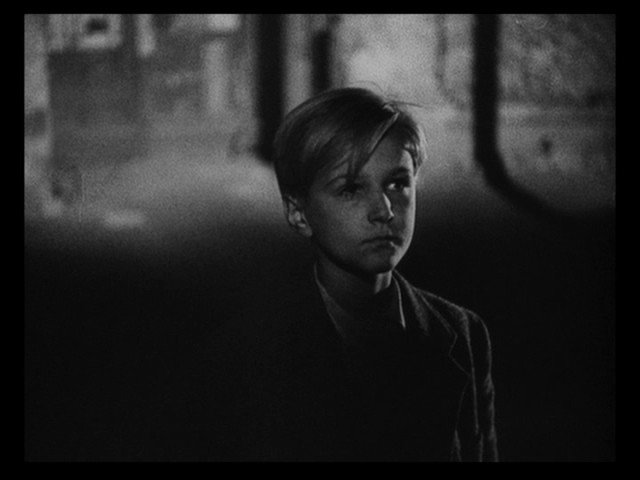
Germany Year Zero - Screen Captures
Audio 5/10
A little better than Paisan the Dolby Digital 1.0 mono track still has some damage and a slight hiss. The music again sounds a touch distorted and edgy, while voices can sound unnatural (probably more to do with the post-production dubbing.
Extras 9/10
As a whole the War Trilogy presents an extensive selection of supplements over its three discs, each disc devoted specifically to the film on the disc or the entire trilogy. The supplement review found here is specific to the disc for Germany Year Zero and not the set as a whole.
This disc manages to nicely close off the set, presenting the largest number of supplements. Again, like with the other discs in the set, we get an introduction by Roberto Rossellini, filmed for a 1963 French television program showing Rossellini’s films. In this one Rossellini explains how this film completes his canvas of the trilogy, and how he had a desire to show Germany in their tragedy. He also recalls his trip to Berlin for the first time after the war. At 4-minutes it’s the longest and probably the most interesting intro by the director found on the set.
Italian Credits and Prologue shows the alternate 3-minute opening for the film. Criterion has chosen to present the German version of the film on the DVD, with German credits and prologue, but this feature presents the Italian version of the credits and prologue which is a little different. I would guess since Criterion is presenting this in this fashion that Rossellini prefers the German version, though I can’t say this is noted anywhere.
Robert Rossellini is the big feature on here, a 65-minute documentary about the man and his career, hosted by Carlo Lizzani, who worked as assistant director on Germany Year Zero. It begins as a typical biography covering his early life but then moves quickly to his film career. It goes over his early films and then concentrates a bit more attention on his war trilogy, Germany Year Zero specifically, with Lizzani recalling the production. It moves on to his affair with Ingrid Bergman but chooses to focus more on the films they made together rather than the scandal surrounding it, even providing footage of Bergman talking about working with Rossellini and the differences between making one of his films and your typical Hollywood film. The documentary then covers his television period and then mentions some unfinished projects that he never got around to before his death. It’s an excellent documentary, featuring interviews with Martin Scorsese and Isabella Rossellini, along with archive clips with Francois Truffaut and Ingrid Bergman. What I most liked about the feature is that it focused mainly on Rossellini’s career and not a lot out of that, except maybe for a small portion on the death of his son, Romano, which led to the development of Germany Year Zero. An excellent documentary and one certainly worth viewing.
Letters from the Front: Carlo Lizzani on Germany Year Zero is a 23-minute segment of a podium discussion with Lizanni. As mentioned in the last paragraph, Lizanni worked as assistant director on Germany Year Zero, though only because Federico Fellini was unavailable. Here he reads a couple of letters he wrote while working on the film, first one he wrote before leaving to work on the production and then another while shooting in Berlin. He interrupts himself occasionally to explain the context of the letters. I wasn’t sure how this feature would be but I actually rather enjoyed it. Although it’s an odd way of doing so it actually offers some great insight into the production and works as a fairly decent making-of in its own way. It’s also fairly funny and entertaining oddly enough, especially since someone reading letters as a feature doesn’t sound all that enthralling. A wonderful treat and a great find.
And again we get an interview with Adriano Aprà, who offers an analysis on the film and how it ties in with his other films in the trilogy. While I’m not sure on a couple of things he’s trying to present it’s an okay bit, though works best when he breaks down the final actions of the film’s protagonist.
Also found here is an 8-minute interview with directors Paolo and Vittorio Taviani, who discuss how the films Paisan and Germany Year Zero influenced them, and when they eventually met Rossellini. It’s a nice interview, especially as the two recall the impact Paisan had on them (I always like it when a filmgoer recalls the moment they realized a film could be more than what they initially thought it could be.)
The disc then concludes with a rather bizarre feature, and one I sort of question being included. Called Roberto and Roswitha it’s a text essay by Thomas Meder that attempts to answer why Rossellini decided to make a film in Germany. He mentions other theories (that probably seem more likely) but presents the theory that Rossellini made the film in Germany for his then-mistress Roswitha Schmidt, who was German. He presents a brief history of the two and then, in a bit of a “conspiracy theory” sort of way, starts to present evidence that she was the reason Rossellini made the film in Germany. While there’s some interesting items such as photos (and a rather cruel breakup letter from Rossellini) I don’t really get why this is here or why this should even be an issue. I guess it’s worth reading through for the few interesting tidbits but if it wasn’t included I doubt many would have missed it.
And that concludes the disc. I really question why the last feature exists but the rest of the disc is quite solid, the documentary being one of the better features found in the set. An excellent effort from Criterion.
Closing
Criterion’s box set for Rossellini’s War Trilogy one of their best efforts presented on DVD, but like Rome Open City the disc for Germany Year Zero holds up well on its own. The picture has its issues but a solid effort has been put in to restoring it and it still looks pretty good, and the supplements (other than maybe the text essay) are all quite good. An excellent closer to an excellent set.
BUY AT: