I don't think I need much explication of Branded to Kill, but I did want to put in some notes and deliver my own take. Needless to say, this is the last feature film Suzuki directs at Nikkatsu, a project made almost on the spur of the moment. Kyusaku Hori requested Suzuki create the movie to fill a hole in the production schedule, and the result of the rush seems to have been a lot more creative latitude for Suzuki. The director had been, it seems, actively campaigning for more creative & production control for some time––possibly since around the time of Kanto Wanderer, since the impetus for this seems to be the pairing of Suzuki's movies with Immamura's films on several occasions, and Suzuki's feeling that his more popular films were in some cases potentially bankrolling Immamura's failures.
There is some evidence the director was getting more freedom with his productions after what looks like really stringent disciplinary action following the failure of Our Blood Will Not Forgive. Fighting Elegy comes from a book Suzuki asks the studio to option, the director and his Art Director Takeo Kimura rewrite the script to Tokyo Drifter, the director's brain trust, the Guryu Hachiro writing group, rewrites Fighting Elegy from the Kaneto Shindo script, and now Branded to Kill gives Guryu Hachiro the opportunity to get its name on a film. Branded is their first on-screen credit, I believe. The film joins nearly every other Nikkatsu production at this point in being not profitable. Nikkatsu is cratering, following upon years of financial mismanagement and failure to keep setting trends. Nikkatsu's action emphasis is losing ground, somehow, to Toei's sleazy, gangster-bootlicking approach and its very conservative, floridly violent yakuza movies. The executive who had defended Suzuki to the other top brass at the studio time and again has already been fired. Suzuki is moved into television, shooting Dear Husband: A Duel. He's informed he won't get his next paycheck, because his name isn't in the employment roster. And things get heated from there. William Carroll's book explicates the situation that unfolds, the "Suzuki Seijun Incident," in an exceptional level of detail and analysis.
There are a lot of reasons this might have seemed like the time to scapegoat someone, but Hori's animus for Suzuki is also irrational, and personal. It seems more than anything that Suzuki annoyed him, asking for more, and maybe cultivating this new alternative cinema fan base Hori seemed to equally loathe. Apparently Hori watched Suzuki's movies with something of an analytical frame of mind––he took Suzuki off the Koji Wada movies after remonstrating Suzuki for employing "extensive visual symbolism within a conventional action movie," or something to that end. It's very possible Branded to Kill offended him.
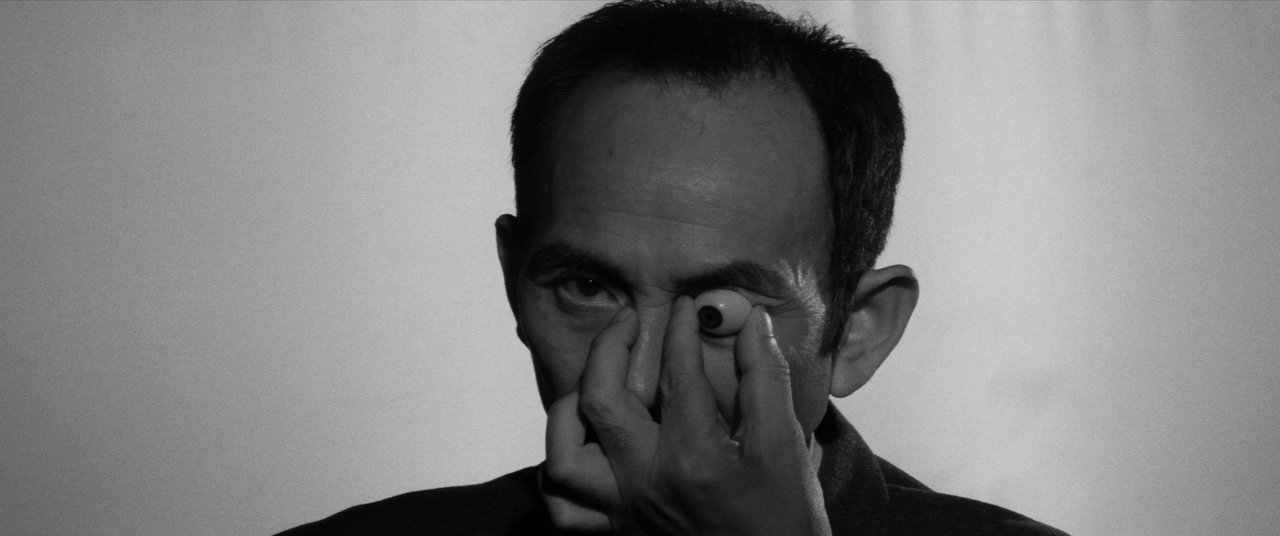
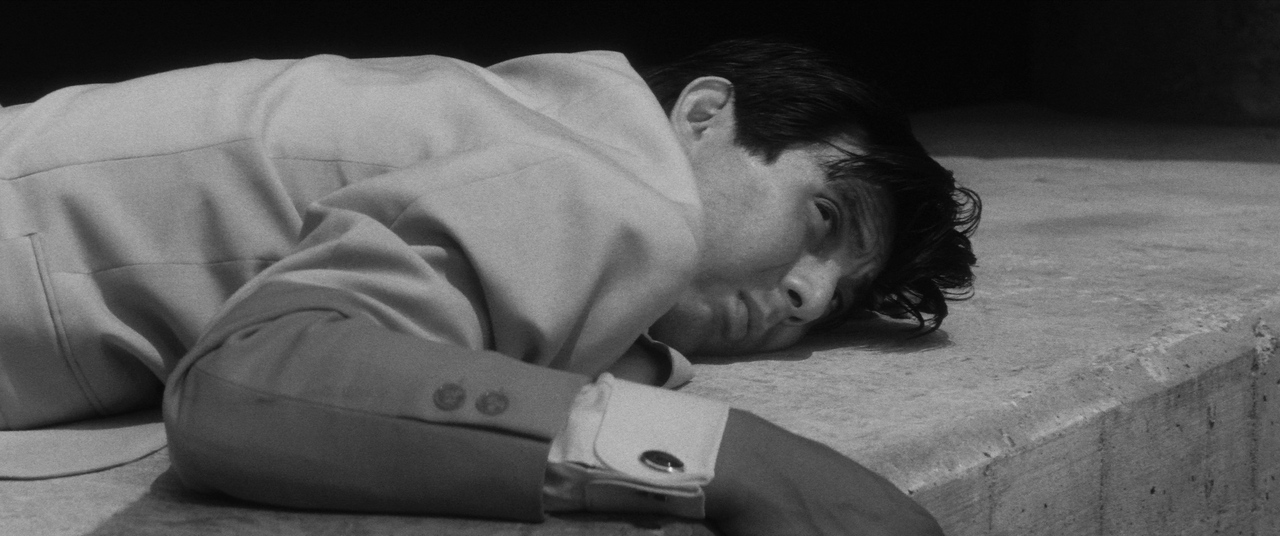
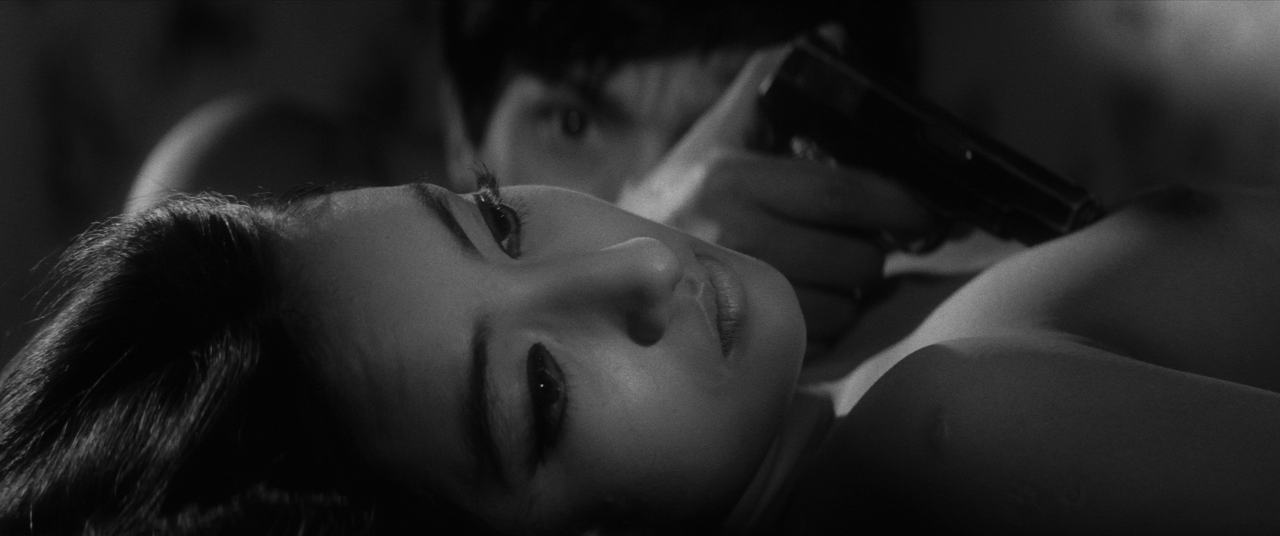
That makes sense to me. The film is jarringly composed, using all the symbolism, surrealism, and games with elliptical editing Suzuki has learned by making his Nikkatsu career a laboratory of cinema experiments. What's more, the film lacks any sort of positive message––it exists, as Peter Yacavone says in his great new book on Suzuki, a film in negative, devoting to tearing down establishment ideas at every turn. This guy had been pestering Hori to get special treatment, Hori seemed to know the films were subversive, but not himself really understand them. And the college kids in Cine-Clubs, who were starting to attend retrospective screenings of his movies, seemed to get them. Hori seems to have viewed the Cine-Clubs as an enemy, and the subsequent banning of Suzuki films from retrospective screenings was possibly a reaction to that enemy encroaching on what Hori felt was his company's territory. First-run product wasn't succeeding, and here was a director, with ideas above his station, who was a hit in revival screenings, often not in first-run (this was probably in part due to Nikkatsu's own meddling and their promotion of the films, as well). Branded to Kill probably seemed like an irresponsible project, where a director let his most enthusiastically intellectual collaborators go wild, and created an unintelligible hash meant for, as Hori would later call it, a select audience of like-minded college students. And this is the same guy who, when Umetsugu Inoue had a hit with The Stormy Man, or when Akira Kobayashi did big ticket sales with The Rambling Guitarist, wanted all the filmmakers in the company to be more or less chasing a slight variation of that same repetitive thing. Observant as he may have been, Hori was probably in no place to appreciate what he had been handed: the film that would be, essentially, a large part of his legacy to the world. Branded to Kill has sustained and expanded interest in Nikkatsu's 50s and 60s output (essentially Hori's era as president) in a way Season of the Sun, Crazed Fruit, Pigs and Battleships, The Insect Woman and The Pornographers hadn't succeeded in doing. And while those films have value, Branded to Kill goes, I think, a good deal farther to innovate, utilizing a deliberately contrary and destructive style (Yacavone calls it "negation" in his exceptional book on Suzuki) to illuminate a film which is more or less eating its own tail––a journey into the shrinking interior of the headspace of one hyper-competitive man who, as he strives and wins greater victories, is hollowed-out and left negated and anonymous by the end. He is a winner in the end, in a space where no one meaningful to him is left alive.
 MY TAKE
Branded to Kill has always seemed to me to be, at its basic level, a satire of olympic-level devotion to one's job: the curse of the salaryman, circa 1967.
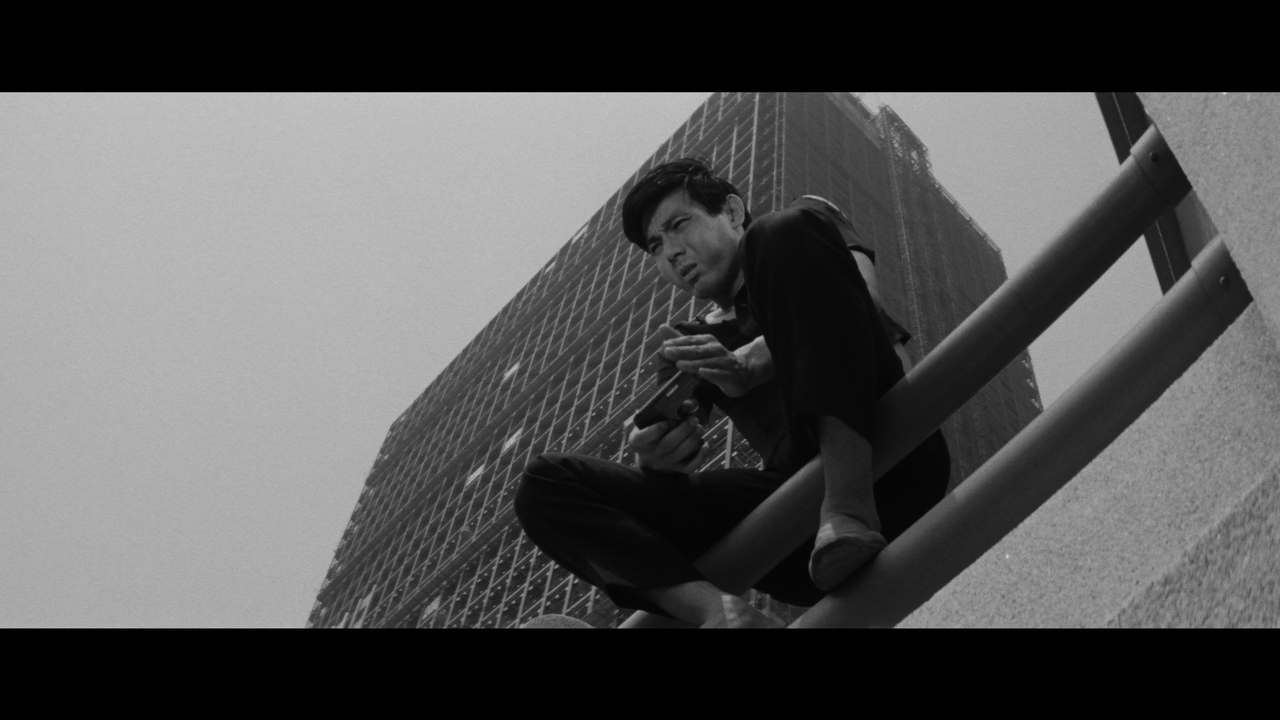
Neither reference, to the salaryman or the olympics, is casual; the film constantly whips up images evocative of both associations. Much of the movie takes place in sections of downtown Tokyo recently bulldozed and rebuilt to present Olympic visitors with Japan's business affluence.
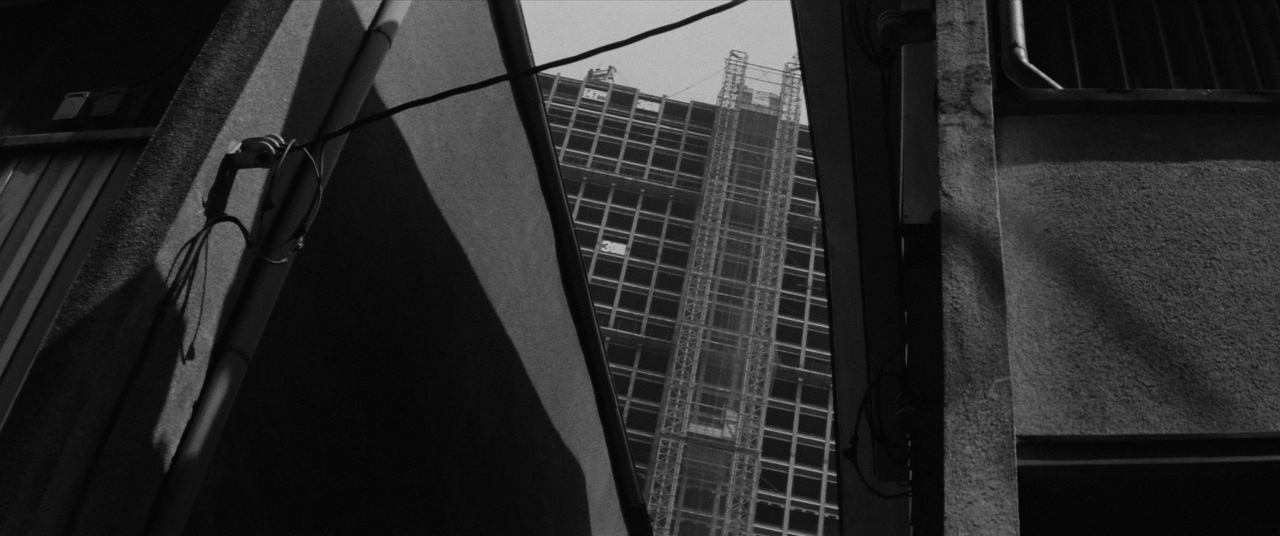
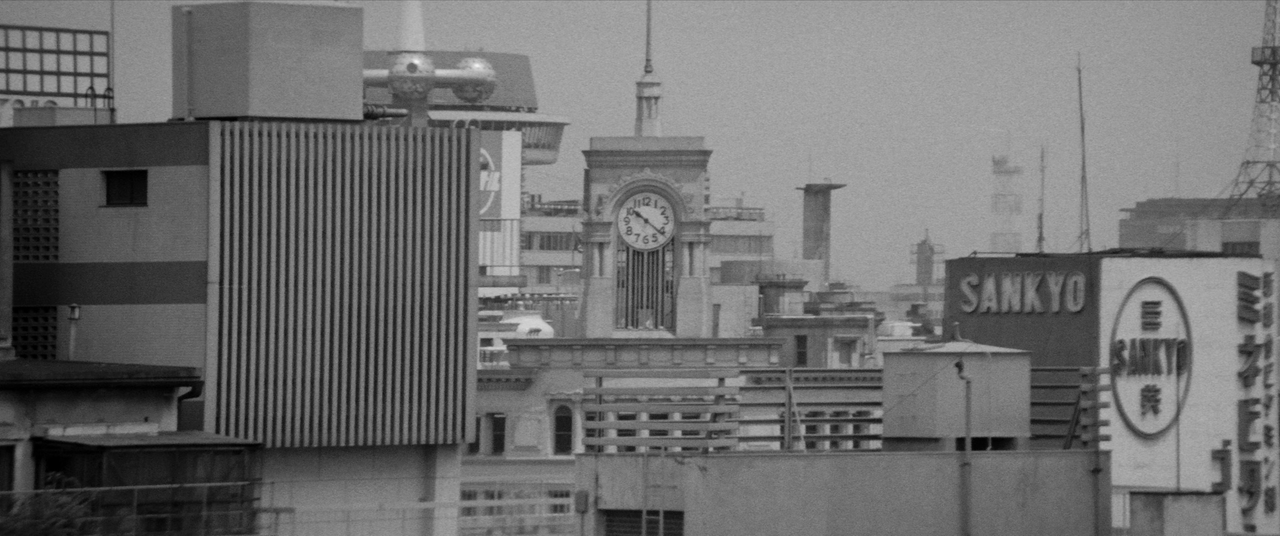
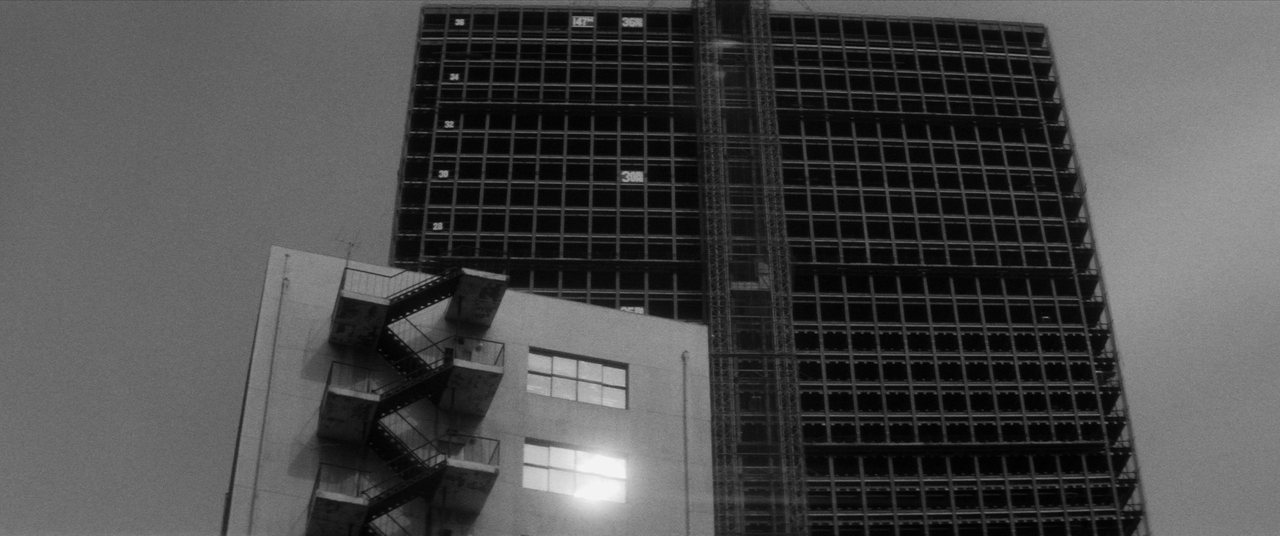
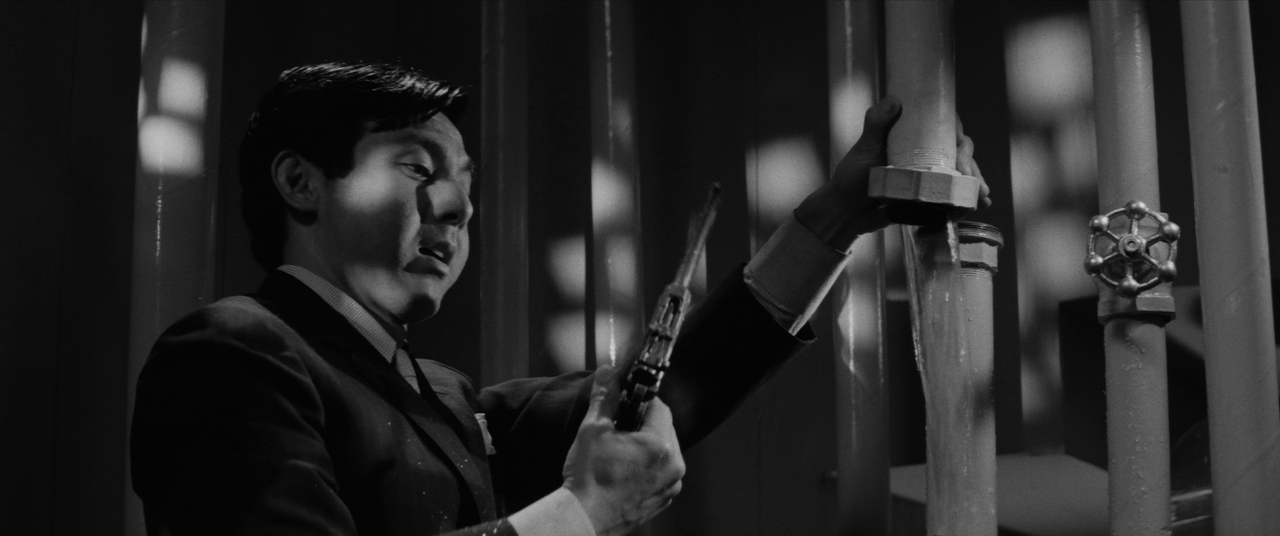
In the picture, this eerie downtown of office and apartment blocks, harsh angles and flat, concrete surfaces is almost deserted, and the space is frequently re-interpreted by Jo Shishido's hitman, Hanada, as athletes in a marathon might, to serve the challenge of their game. In fact, early on in the film, Hanada is contracted to complete a sort of triathlon of hits, crossing the city and adapting to his new surroundings in order to fulfill them. Each hit is one for the record books, including shooting through a moving sign, shooting up through a sink drainage pipe, and jumping onto a commercial balloon to escape after killing the mark and a room full of armed bodyguards. And the finale is a match of gunplay in a boxing ring.
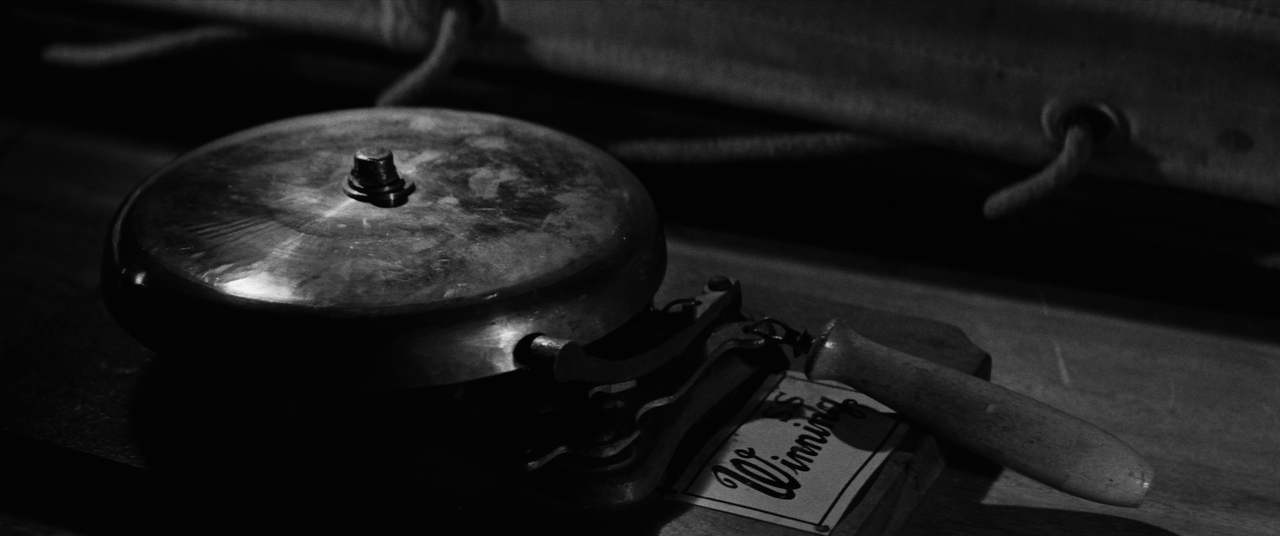
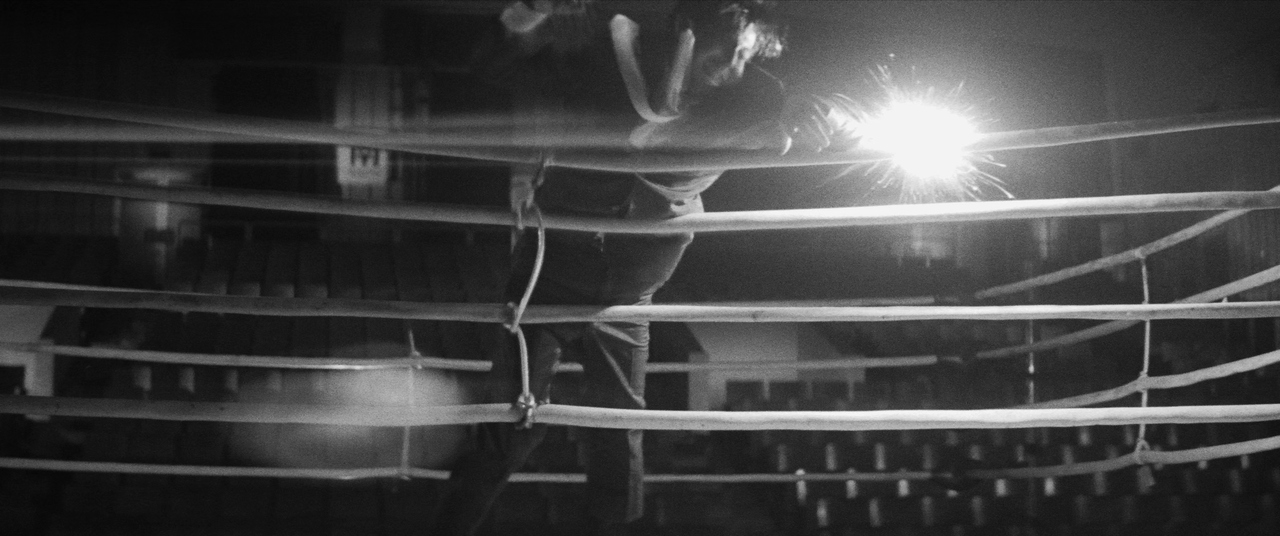
But in each case, there is another purpose for the setting and the meaning of what we're seeing. The downtown structures have been built for the Olympics, but they also house thousands of salarymen, expected to lend to their unrewarding labor the same level of devotion as the Olympic athletes striving for the gold.
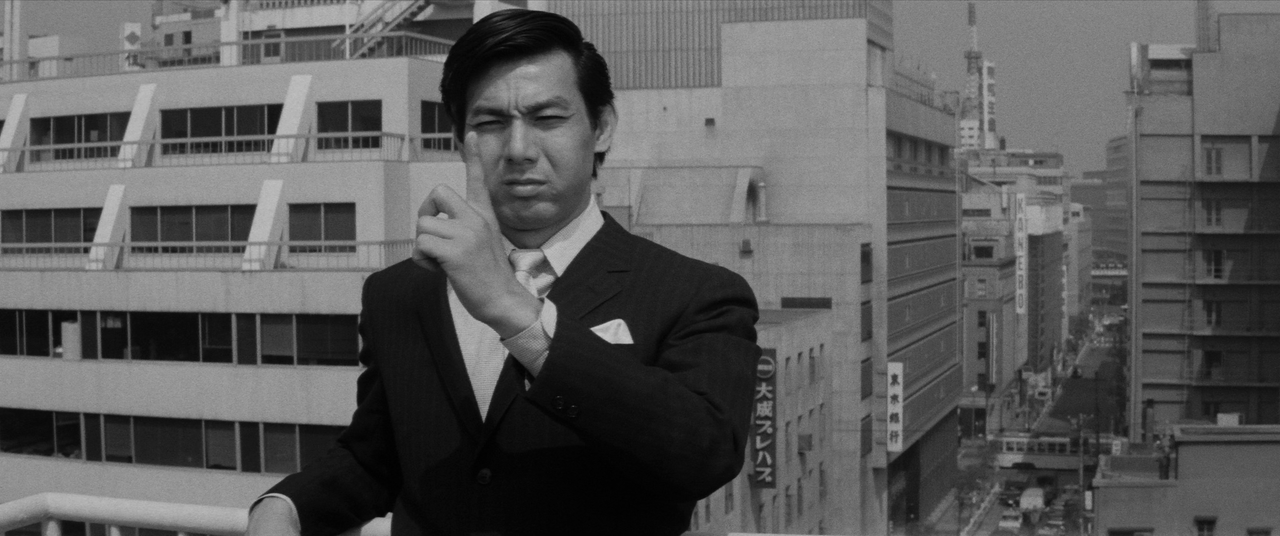
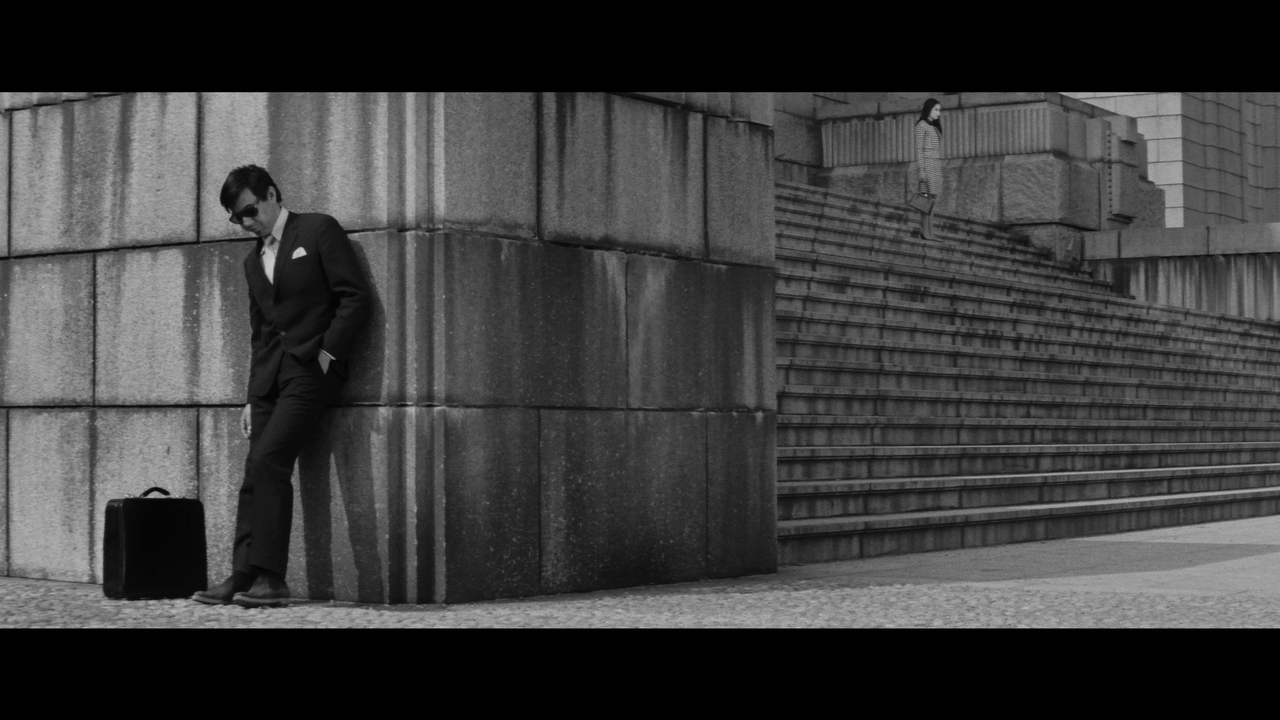
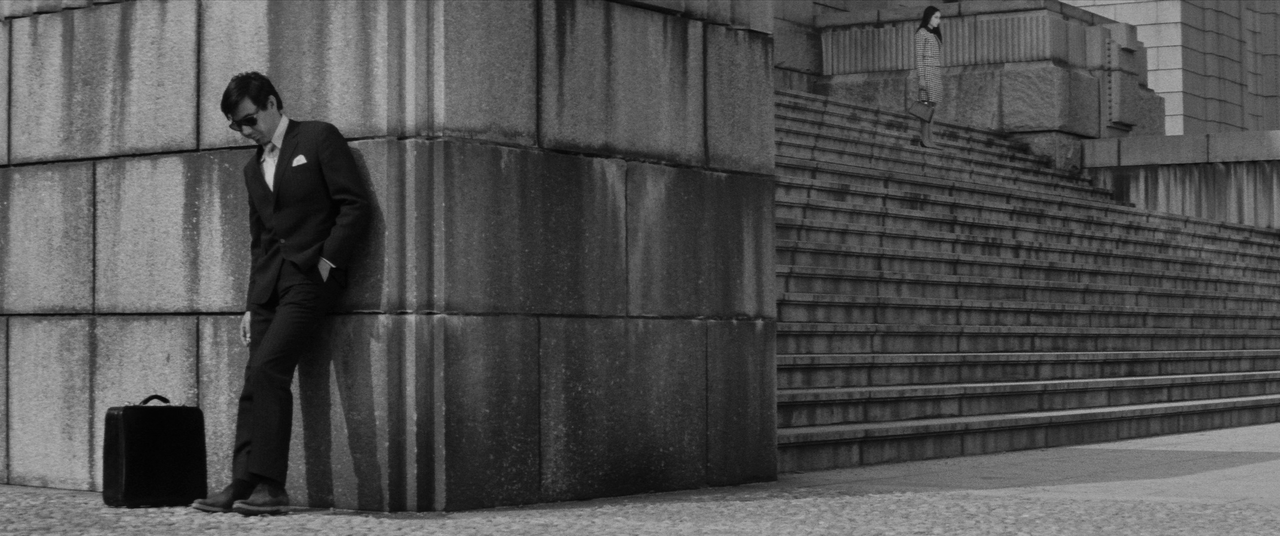
Hanada dresses very dapper, but at the same time, his suit isn't too different from what a junior executive might wear in the era, minus the sunglasses, the tight tailoring, and the ostentatious pocket square. Hanada kills on an assembly line, taking on killing challenges like work projects.
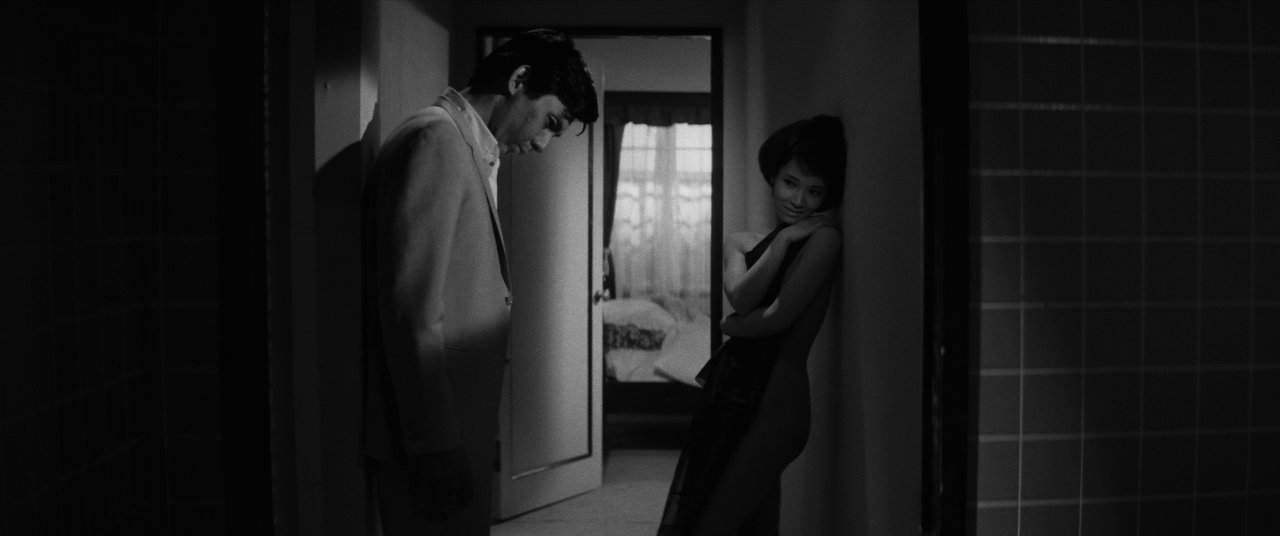
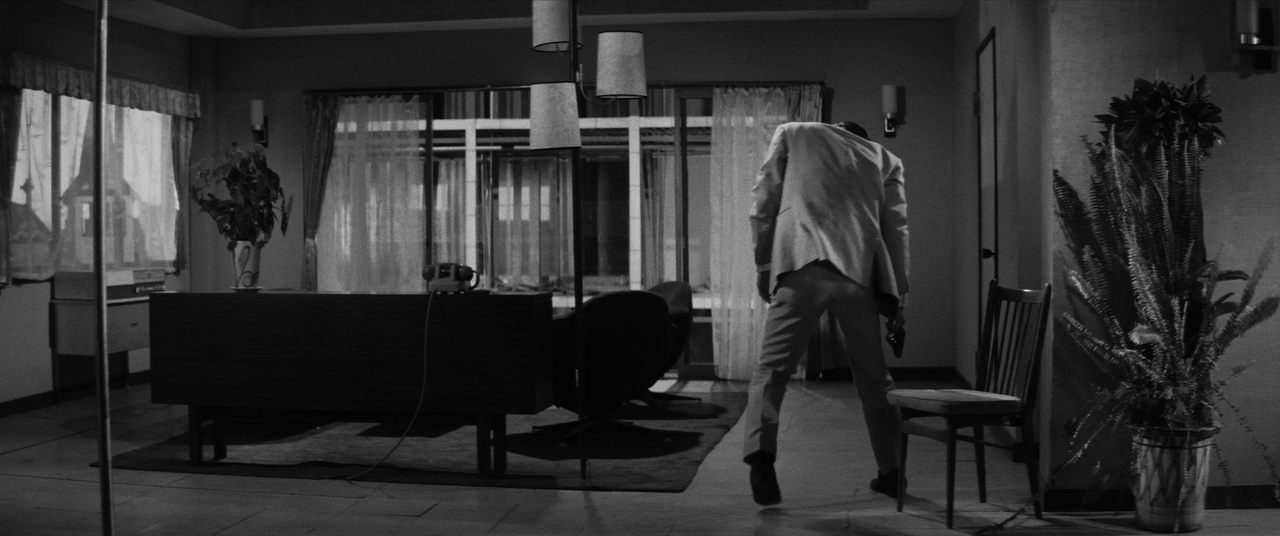
And the rewards don't quite seem commensurate to the level of devotion to professionalism he's expected to live for; Hanada has a moderately-sized apartment (probably big for Tokyo, but not ostentatious––one of its notable features is a lack of windows in most of the interior settings, and frosted windows where there are views of the outside, all going towards making the house like a sort of dark grotto or burrow). He has a newlywed wife, who immediately starts an affair with Isao Tamagawa's character, who is essentially a stand-in for Hanada's superior at work. Hanada doesn't especially seem to care at first, because he has the chance to chase tail himself, at work. Misako becomes his work-wife, and he is slowly but surely alienated from his wife at home the more time he spends at work.
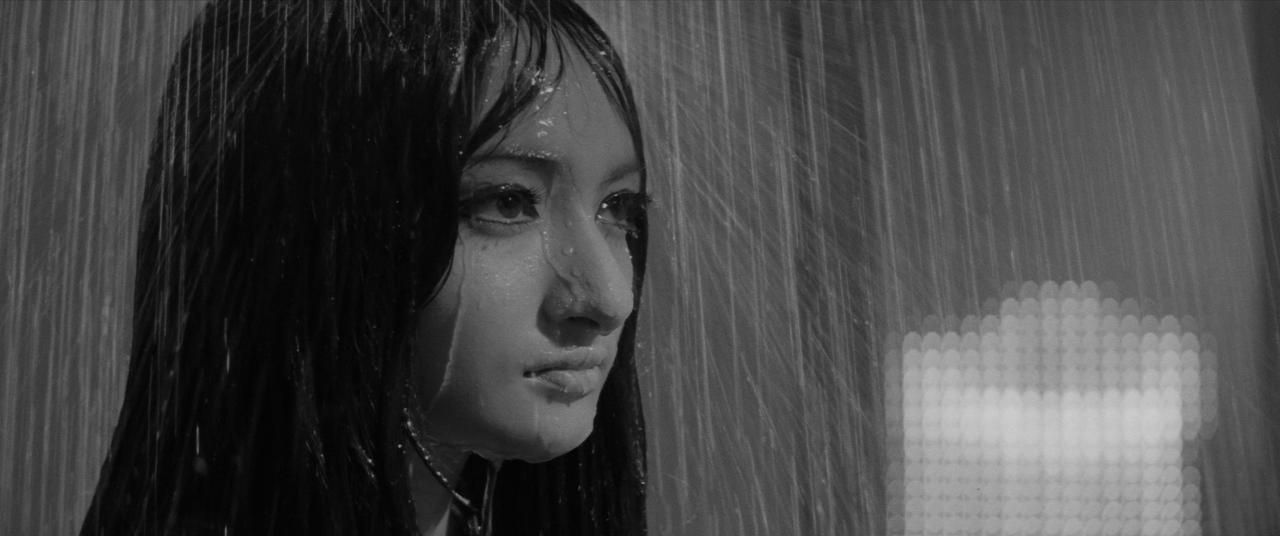
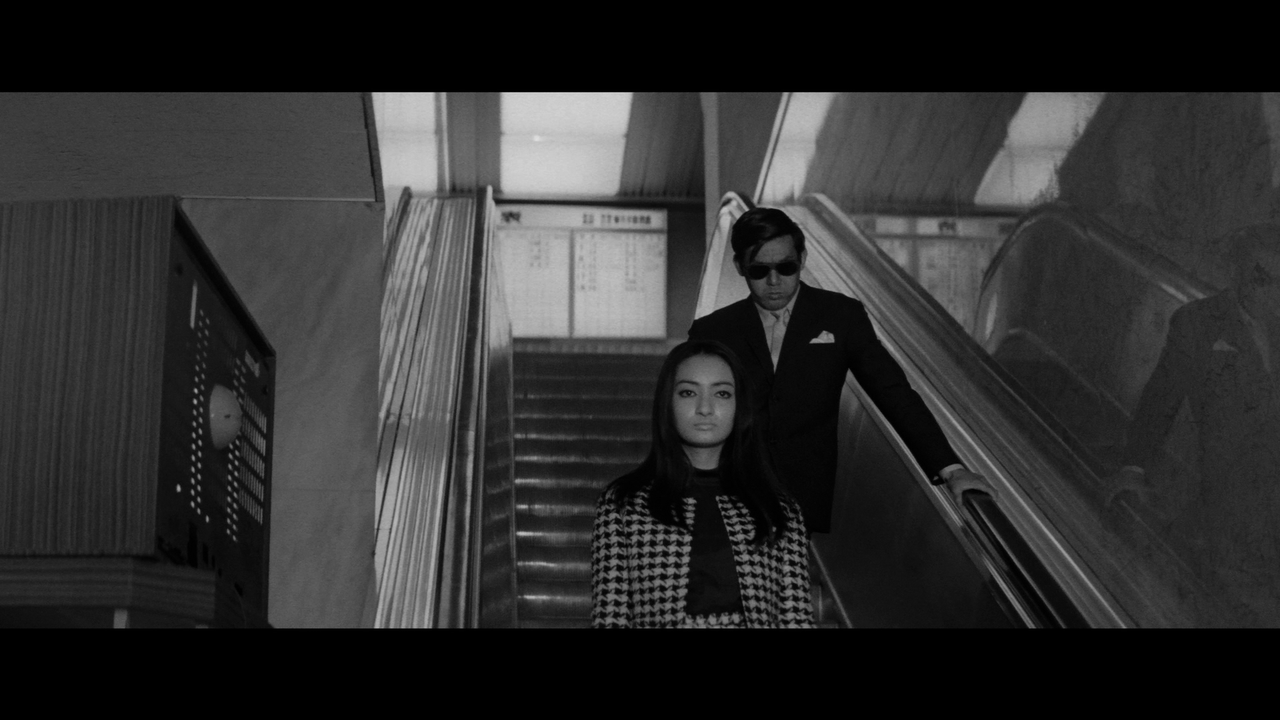
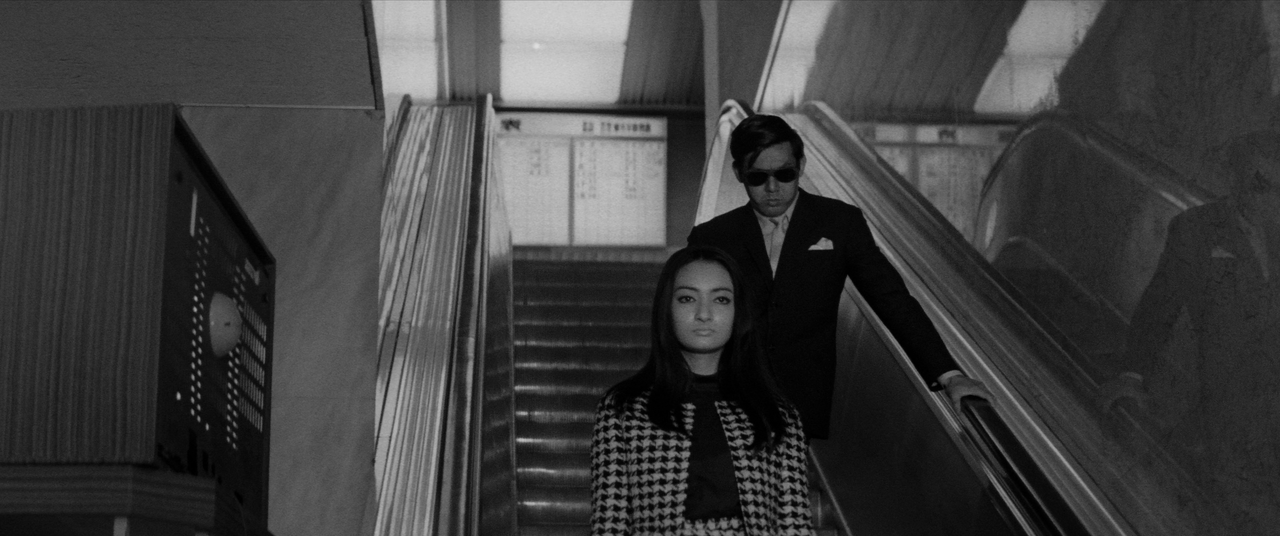
Holy sh*t, Annu Mari. I forgot just how striking she is in the film. Annu Mari is a half-Indian half-Japanese model who got into acting, along with one of her sisters. In addition to Branded to Kill, she appeared in two different series of Ultraman, and had a recurring role on what I believe was a popular television series in the 70s about a group of convicts recruited by the police to make a fascist motorcycle cop gang, called Wild 7. Later on she was a talk show host, and a spokesperson for some cosmetics line or other. She also had a singing career around the time of this film. You can hear her album on Youtube.
Here she is singing Manha de Carnival from Black Orpheus.
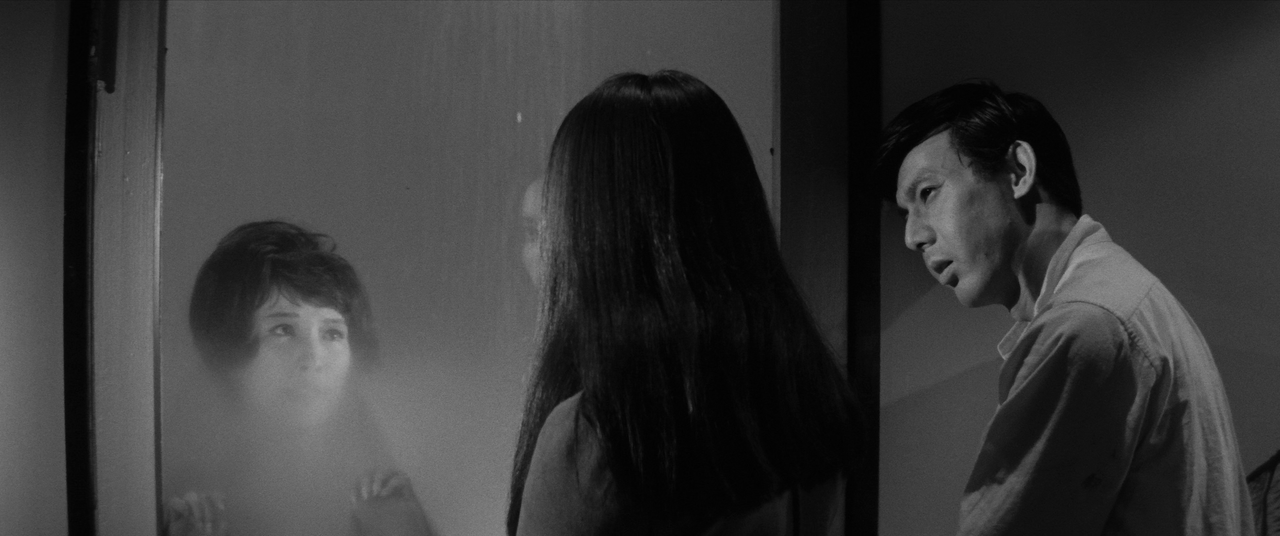
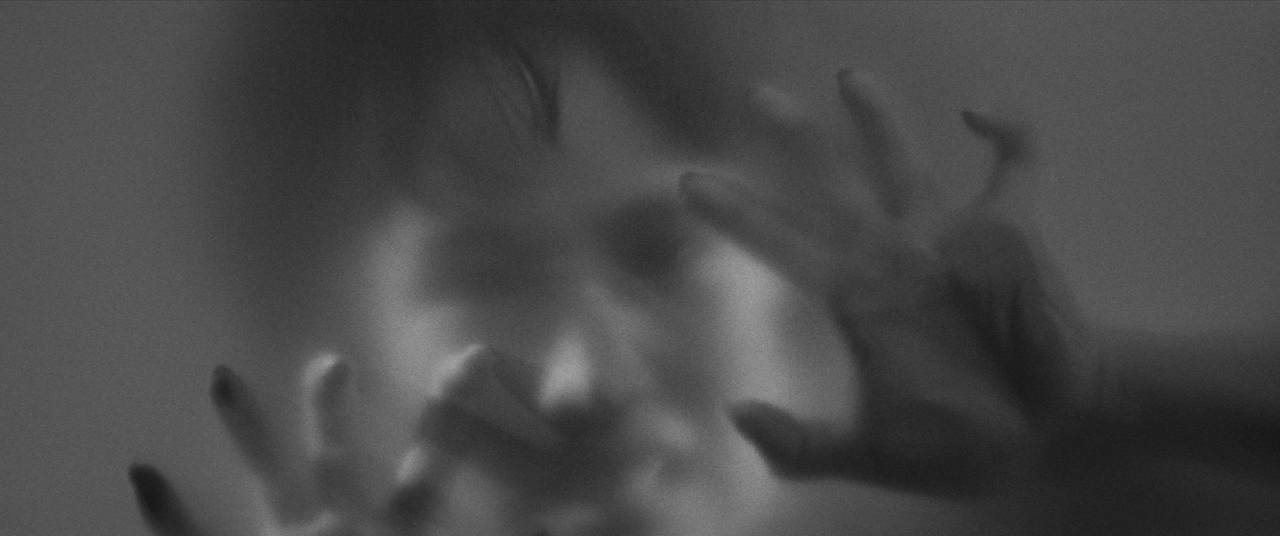
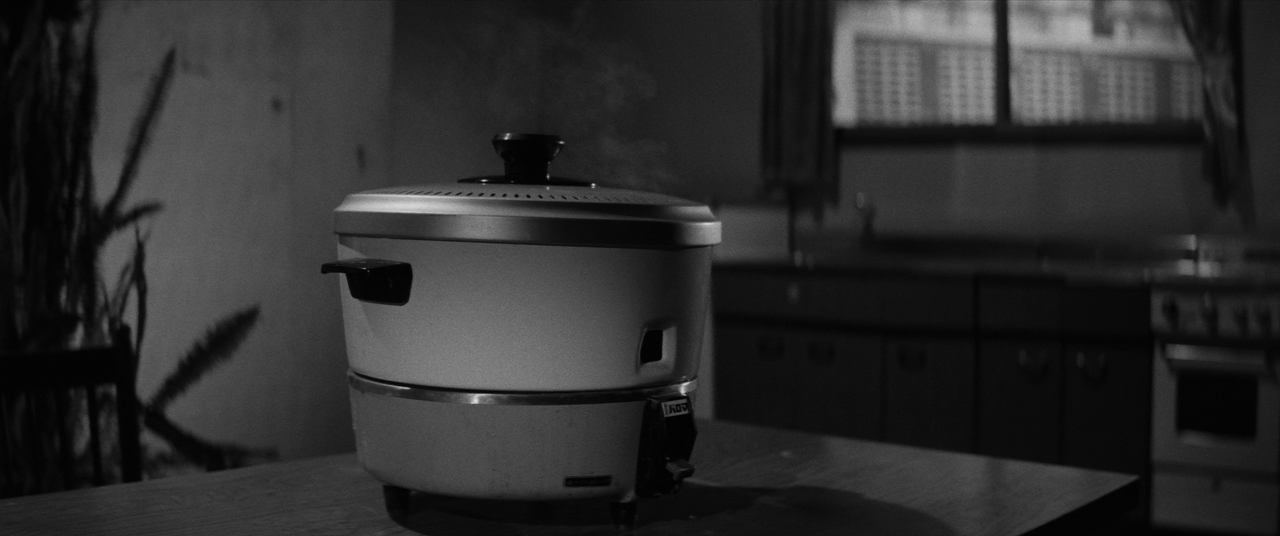
Most conspicuously, Hanada is ranked at his job, like a competitive athlete, or a salaryman, vying with his peers for promotion. Hanada is ranked #3 in this absurd system of rating killers. Professional reviewers and fans whose writing on the film I've read persistently miss what I see as a key detail of the film's first extended sequence of scenes. In the car with Kasuga, the ex-hitman trying to make a comeback, they talk about the phantom #1 killer in the organization, and Hanada makes what seems at first to be a casual remark––that he thinks the #1 killer is just a myth.
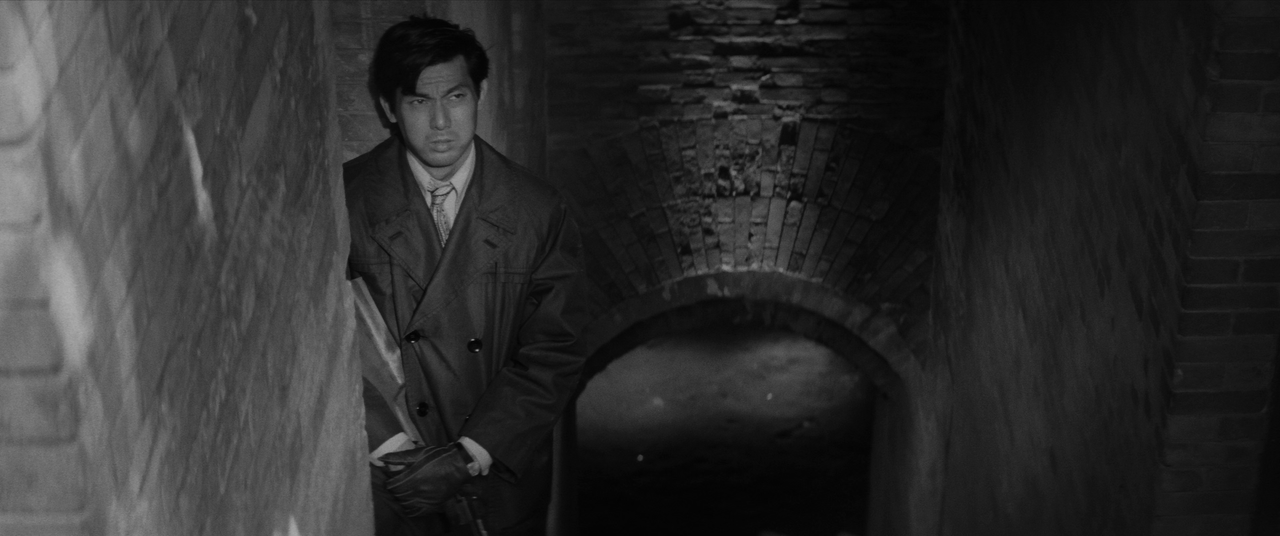
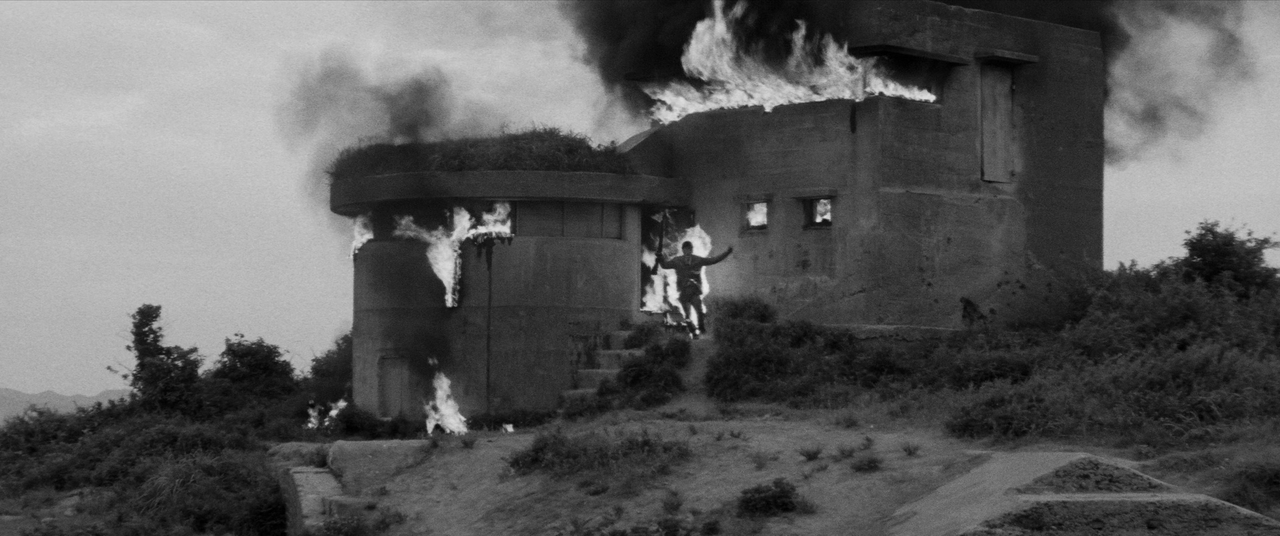
Over the course of the rest of the sequence, this #3 killer takes out the organization's #4 hitman, Koh, and Sakura, the #2 killer. I've frequently seen writers say that Hanada's pursuit of the #1 spot is the main plot of the movie. But Hanada doesn't believe there is a #1 killer, and he just killed the #2-ranked guy. That means Hanada believes now that
he is the #1 killer, and it seems to give him no slight elation. I mean, he does spend some time right afterwards sniffing rice and aggressively f*cking his wife, but other than that, we see no obvious change in his demeanor.
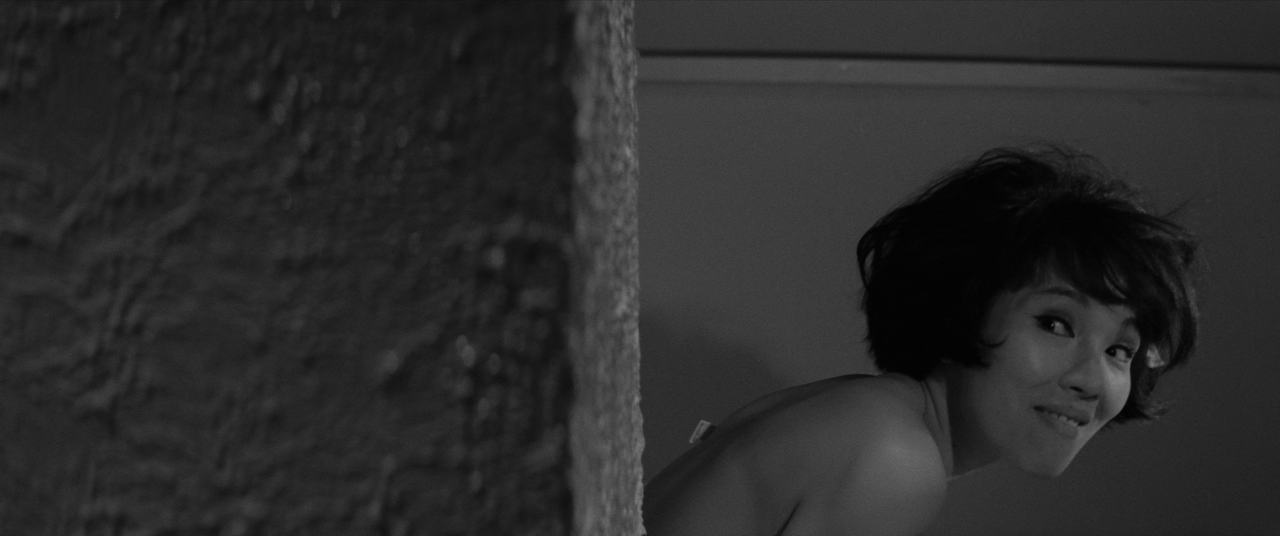
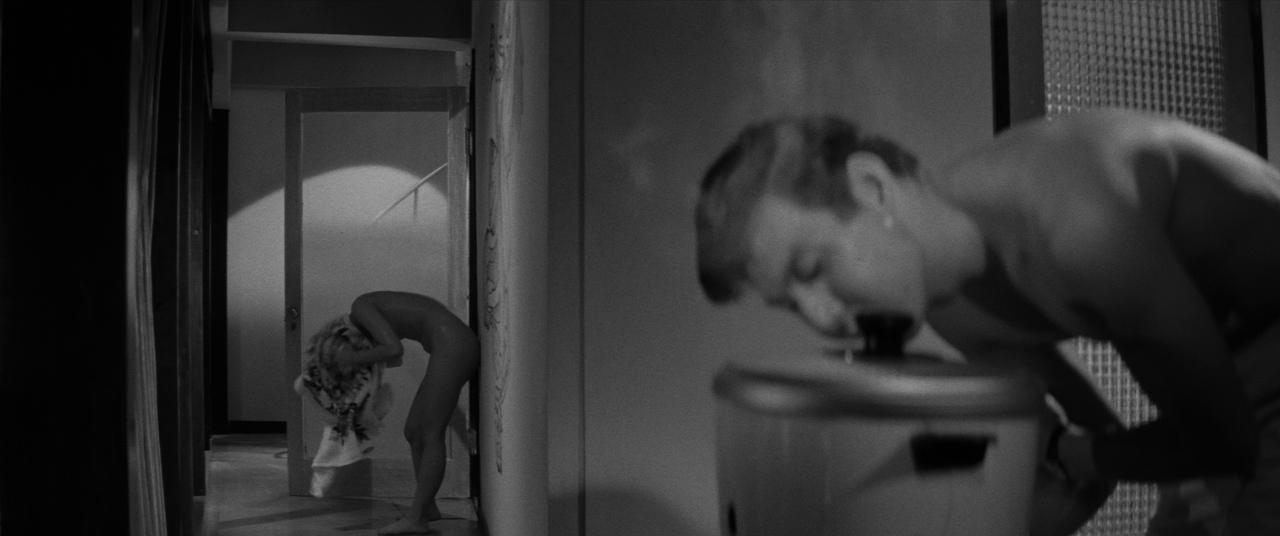
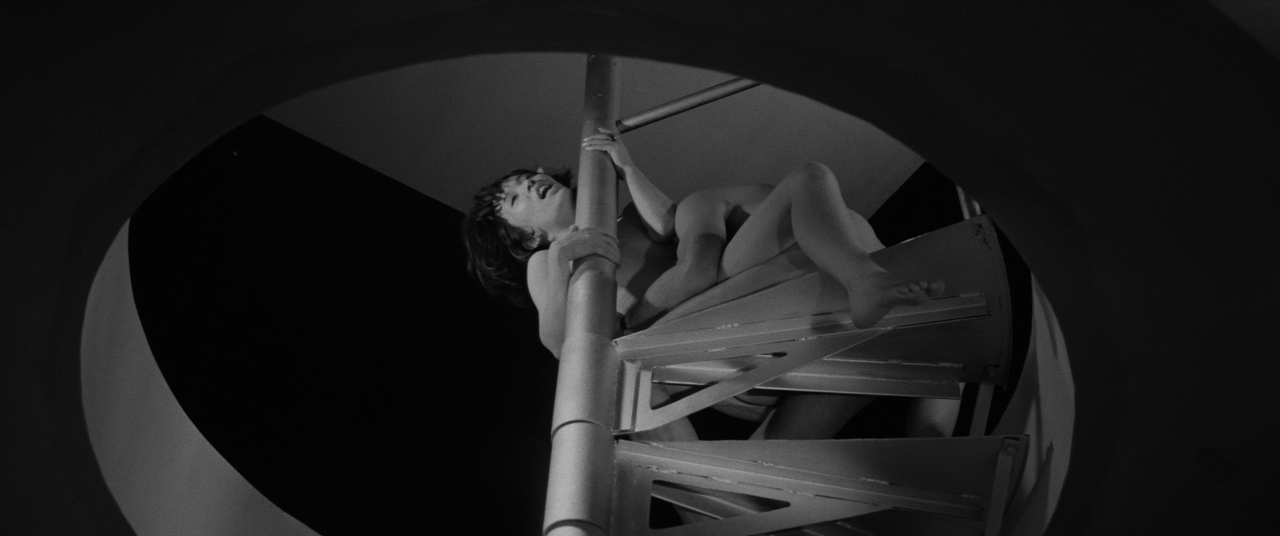
What I mean is, Hanada, professional as he is, doesn't go out and start living high on the hog now. But there is a subtle change that happens, as the film dives into its second act and starts feeling much more interior. The pressure of defending the title now starts to work on Hanada, and the stress is making him lose his mind.
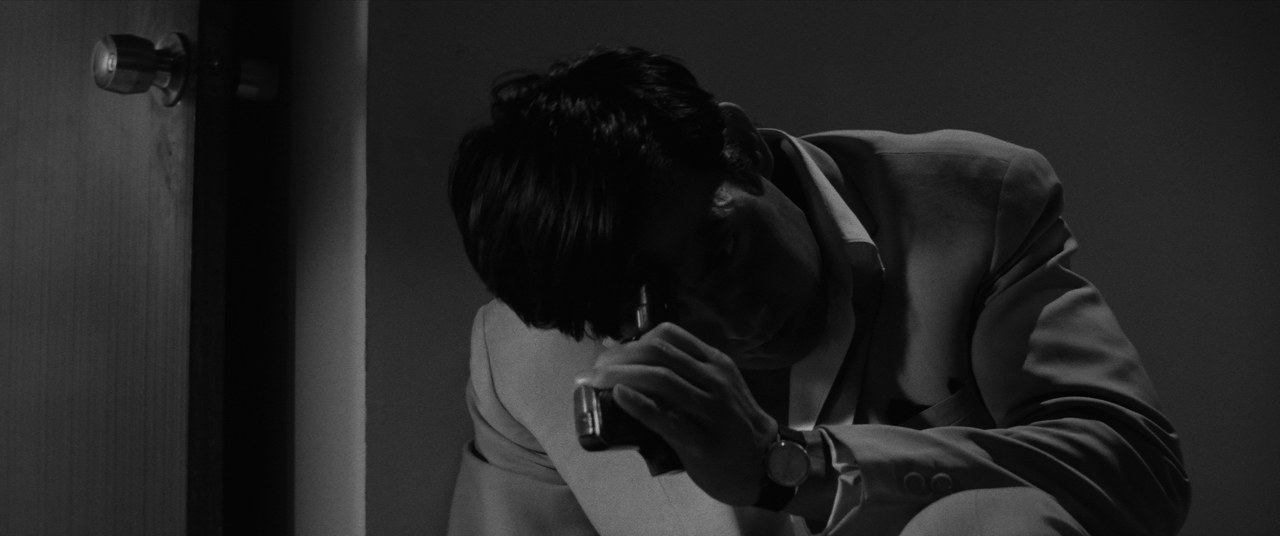
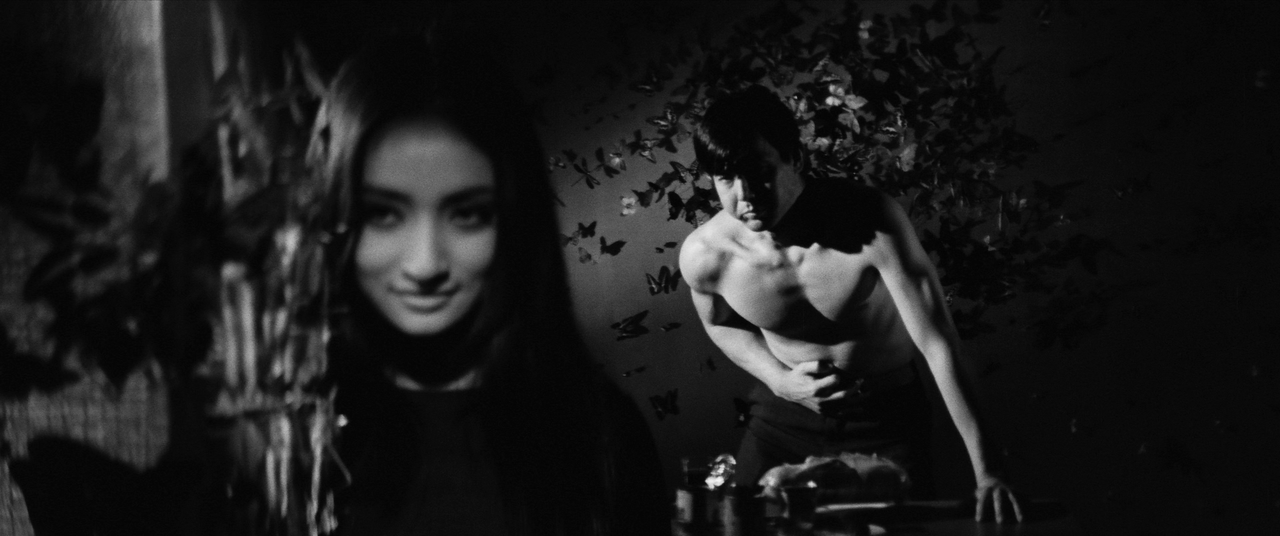
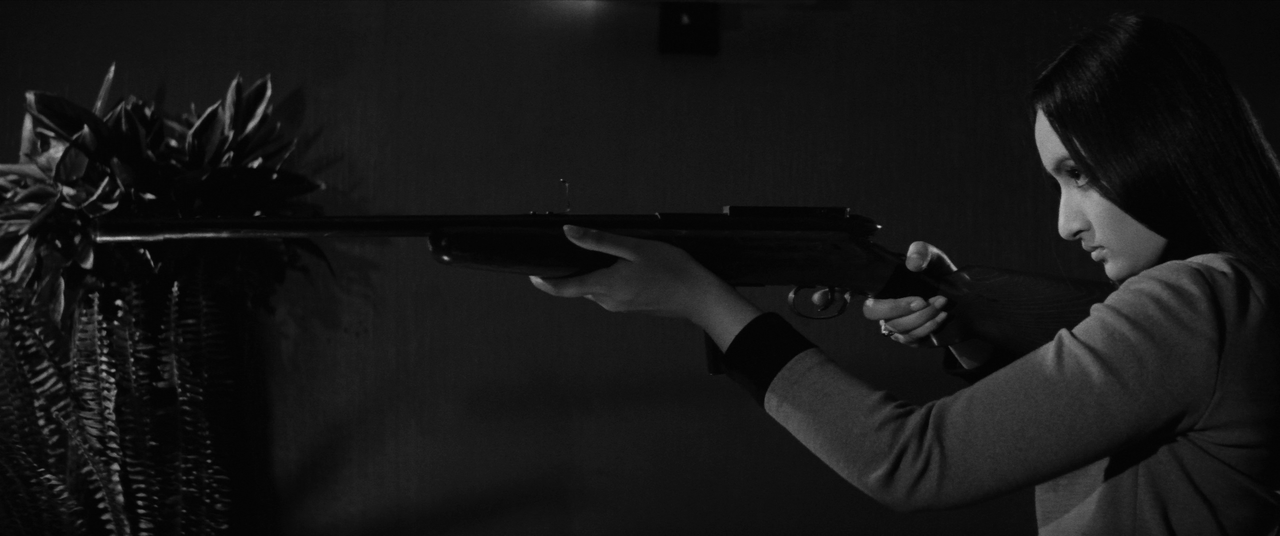
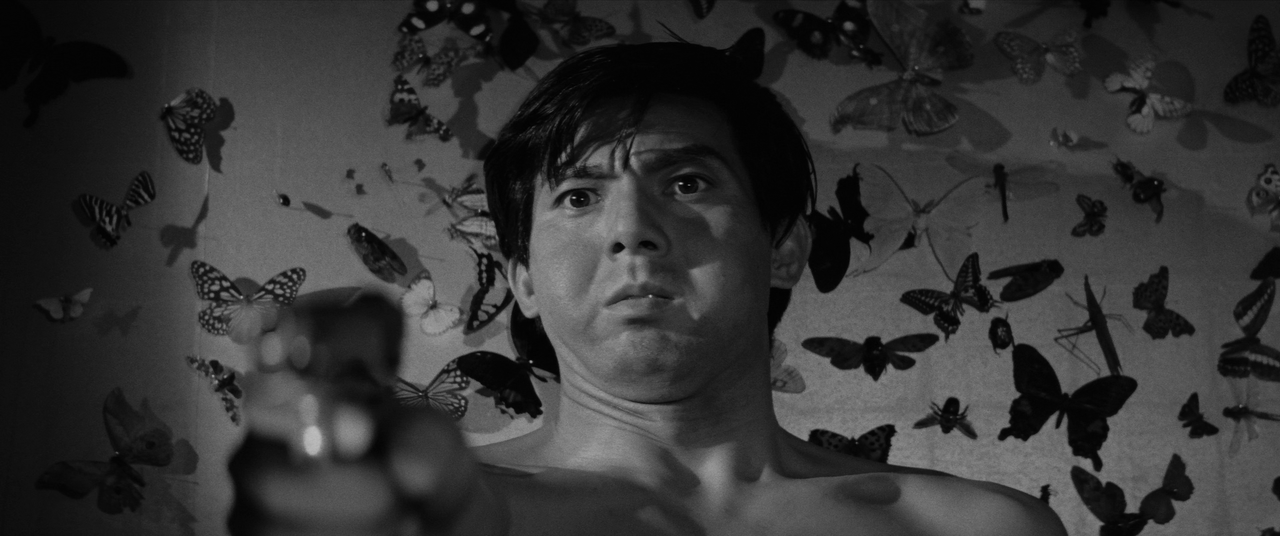
The first act is devoted to Hanada's ascension to what he thinks is the top of the heap. The second act is about how being at the top shreds his nerves and causes him to lose touch with reality. And so the defense of his assumed title at the climax of the second act is much more harrowing than the fight against Koh and Sakura, and Hanada at the end is genuinely elated; he won't lose everything today, even though everyone in the game is gunning for him now.
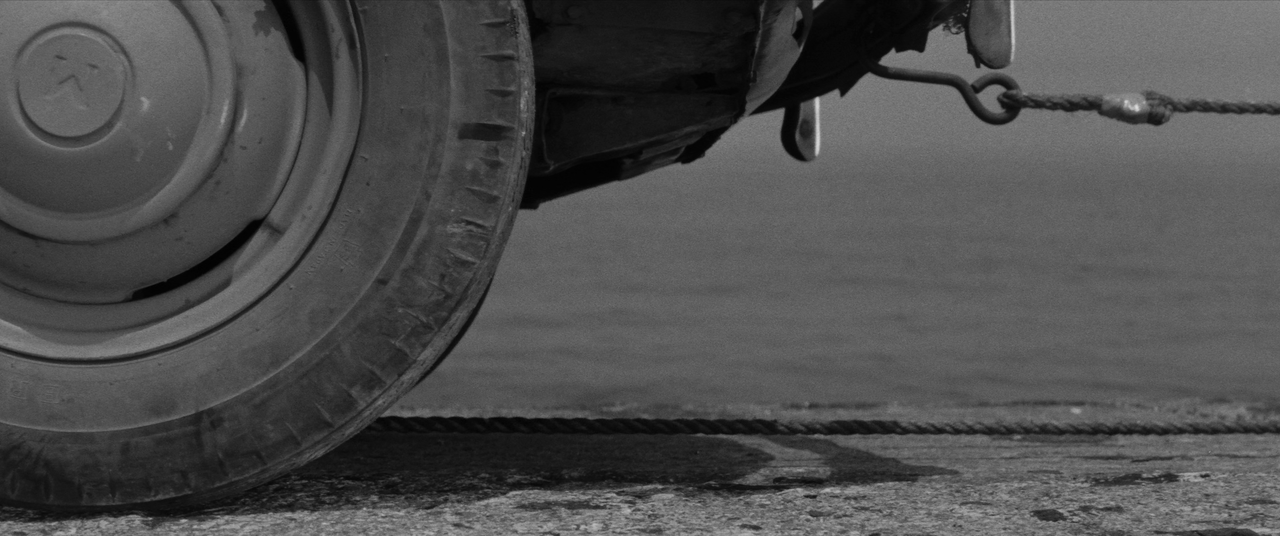
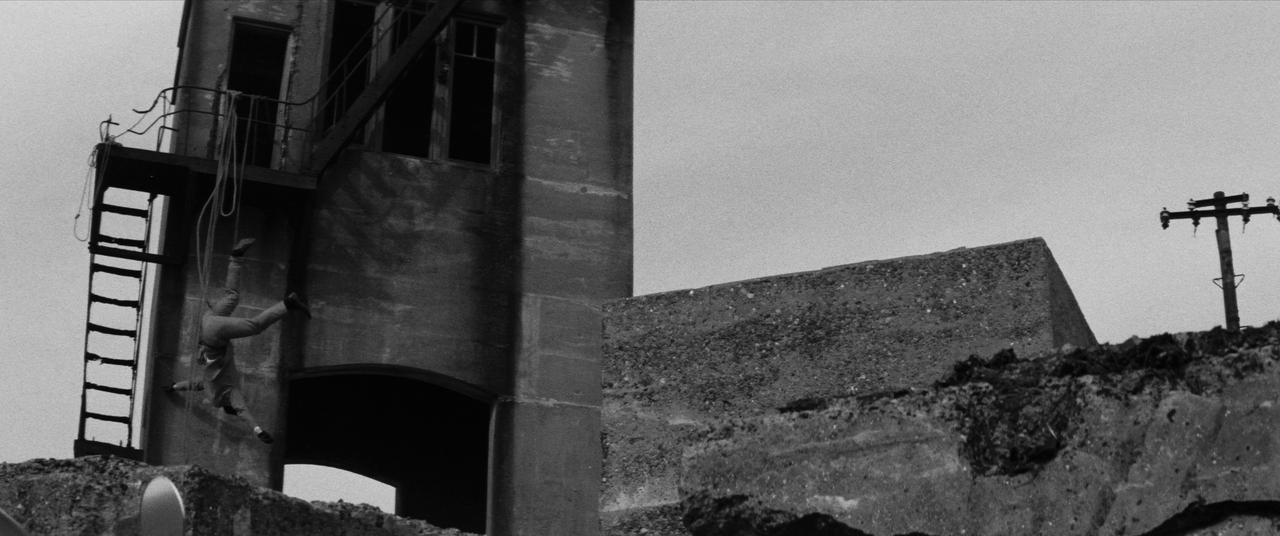
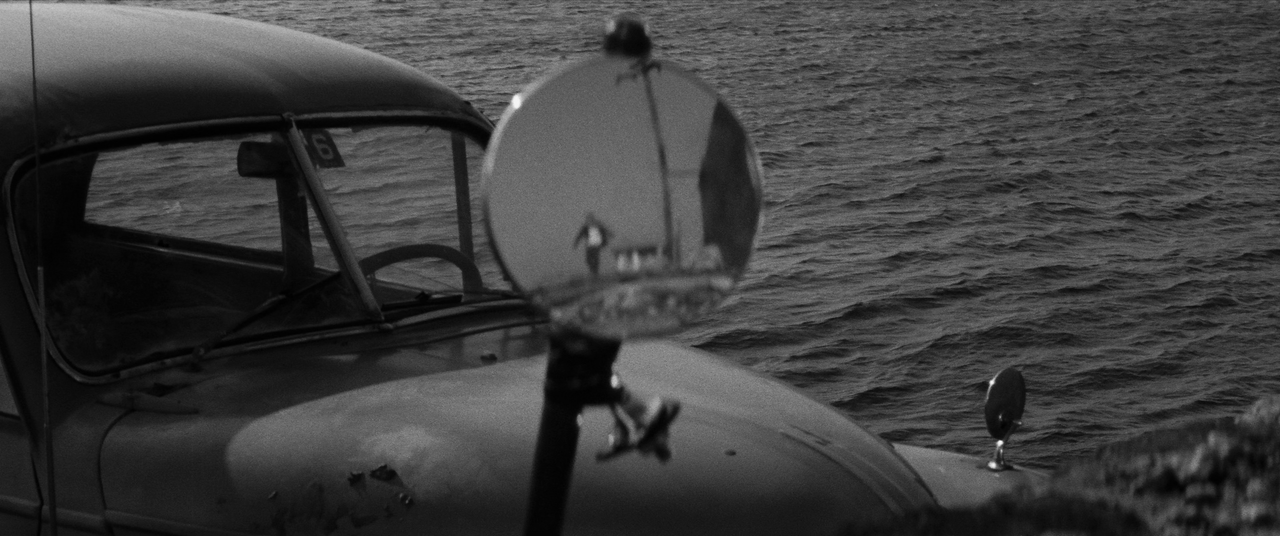
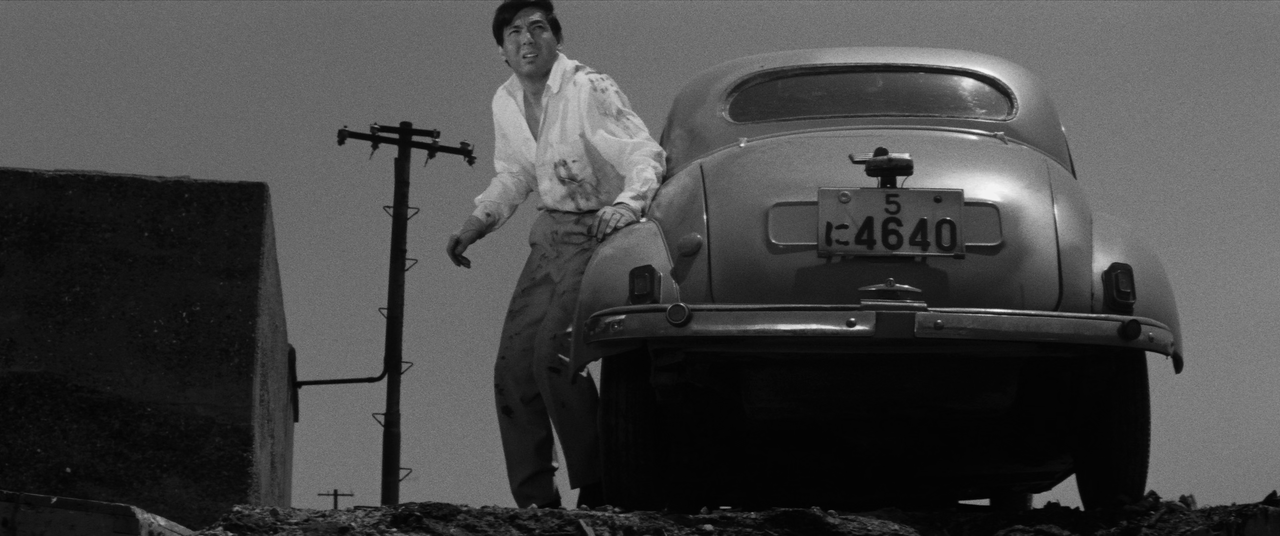
Act three delivers twist; there is a #1 killer, and he wants a one-on-one match with Hanada. Because the perspective of the film is so rooted in Hanada's unreliable vision, we can never be sure how real any of these sequences are––does Hanada actually kill Mami, his wife? Is Misako really his lover? Is the Phantom #1 hit man real?––and it's telling that first two views Suzuki gives us of the #1 guy are deliberately 1) totally out of focus, and 2) towering at an absurd angle above us.
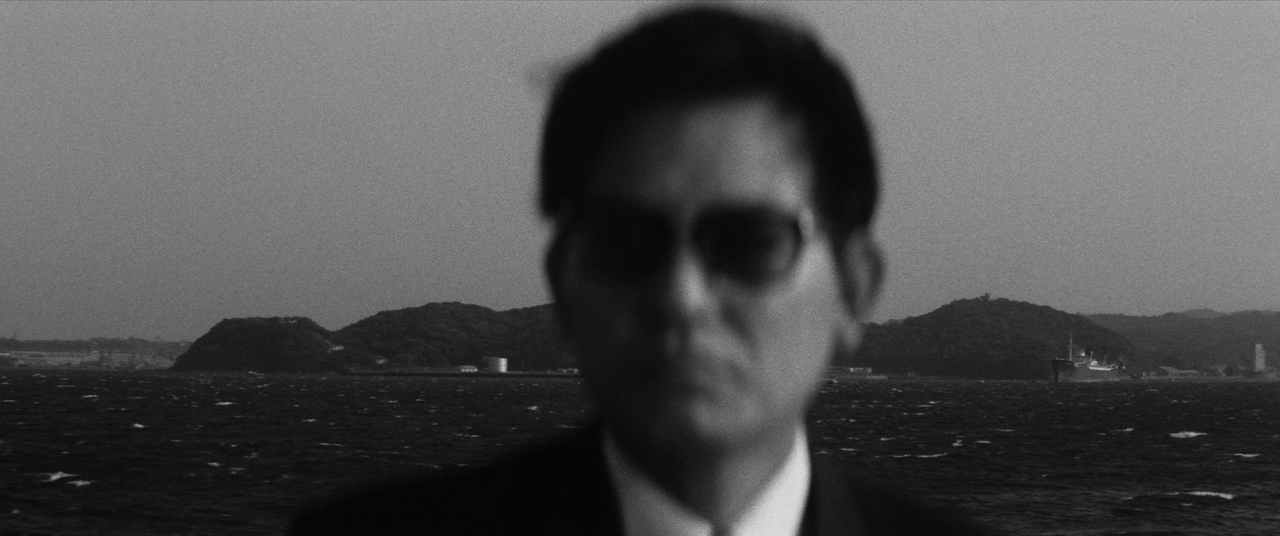
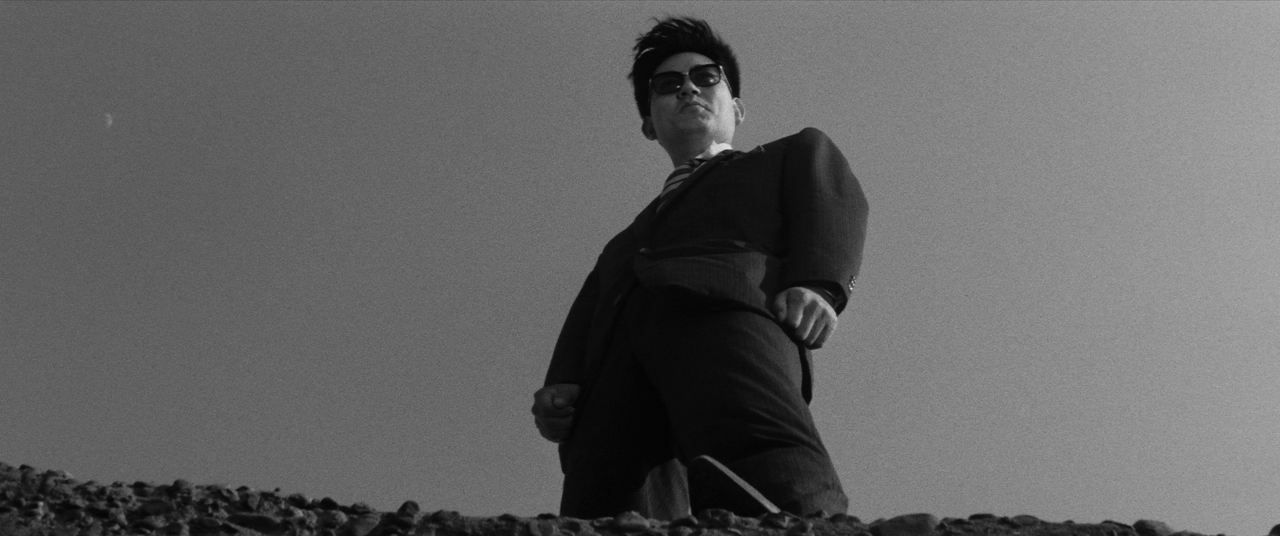
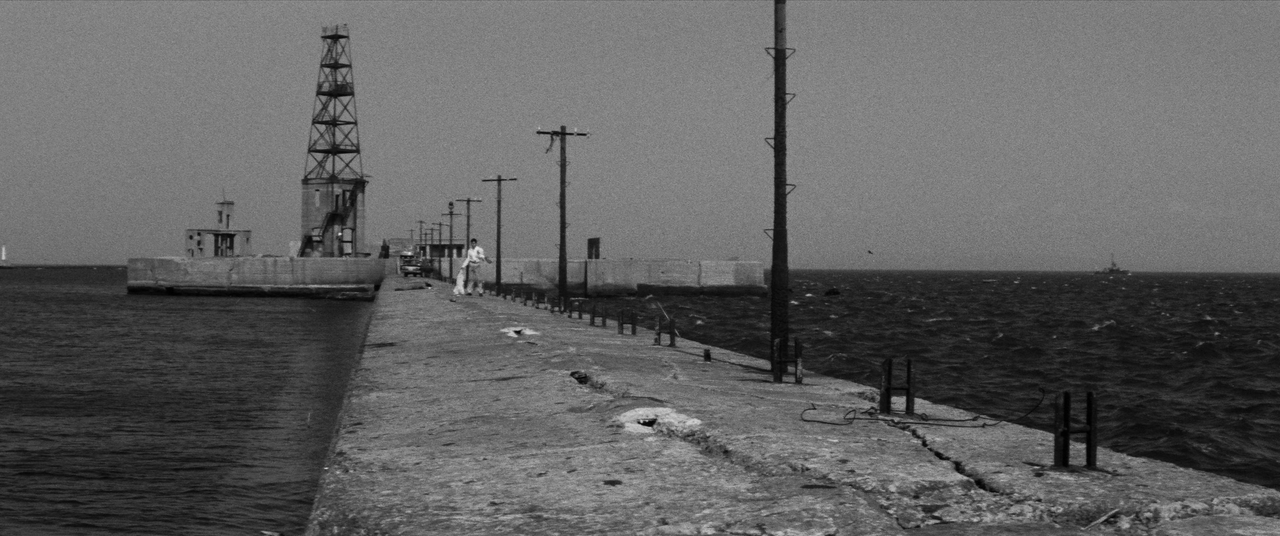
This is how far Hanada is from him when Suzuki cuts back from those first two shots.
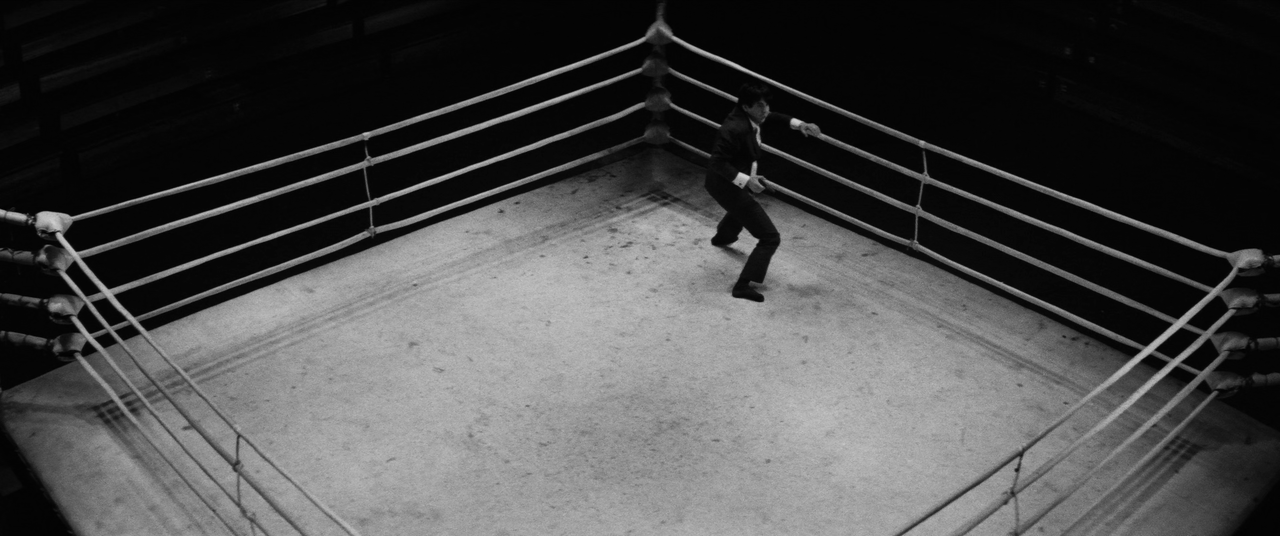
It's almost as if the #1 guy is a phantom, a mirage which appears at Hanada's moment of greatest victory to undermine his self-belief. The match with the Phantom #1 Killer is at first a series of mind-games, where the #1 guy reveals himself to be comically beyond human in his own devotion to the job. He can sleep with his eyes open, and, like a maniacal boss, he handcuffs Hanada to him to train for the match. They'll spend every waking minute studying one another, so that the competition between them is the most ultimate match it can be. Like athletes studying film of one another, they observe each other's every movement, every tell. Finally, in the boxing match at the end, only Hanada crosses the ropes and enters the ring. The #1 killer shoots at him from the shadows.
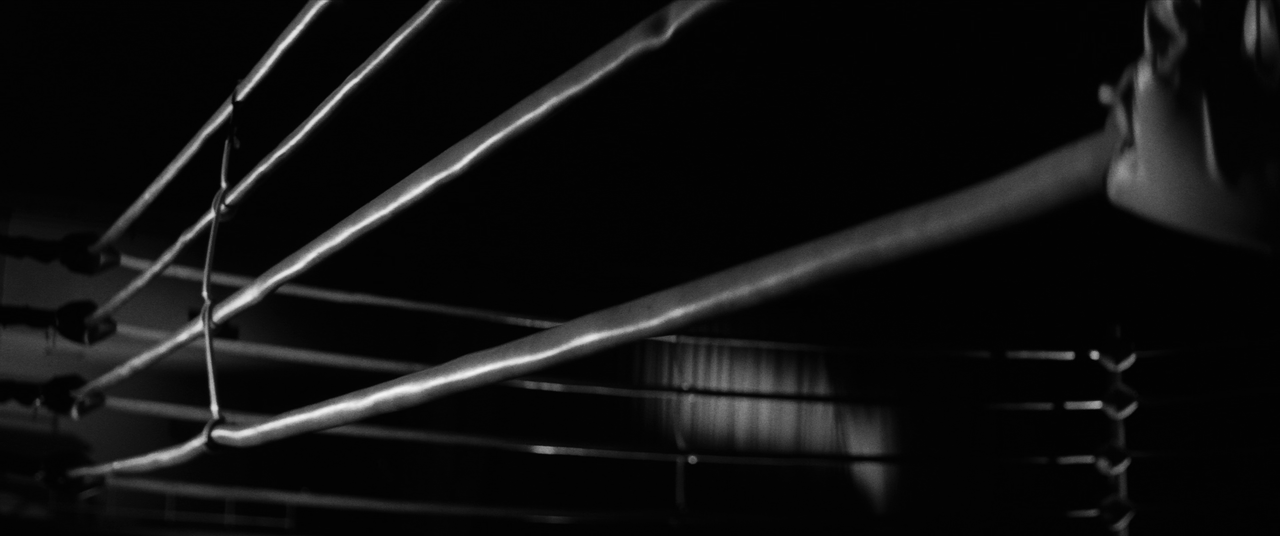
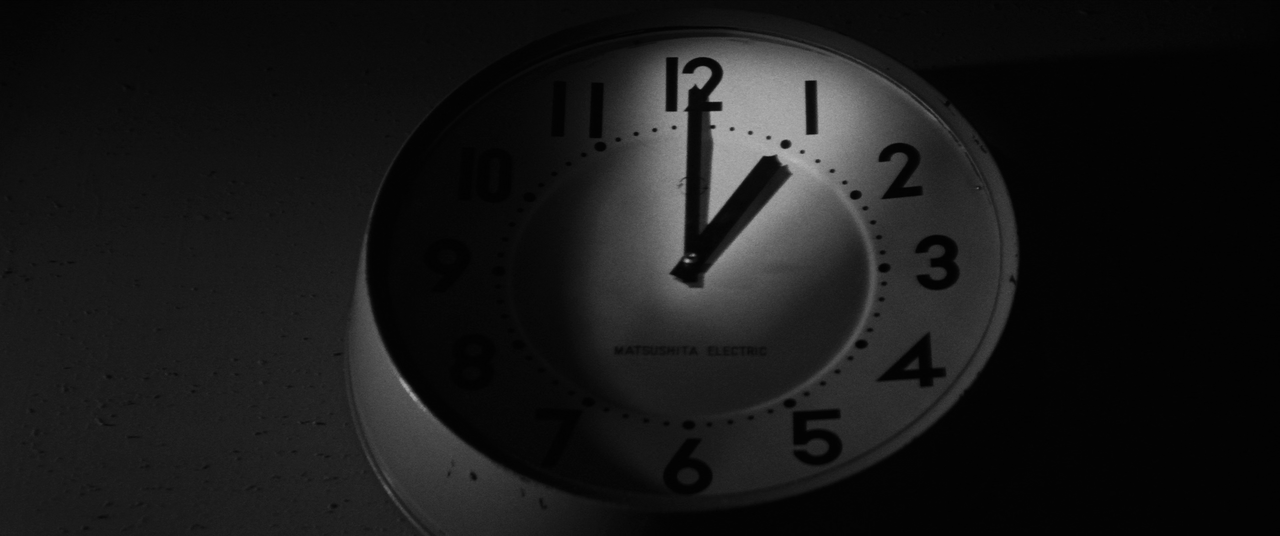
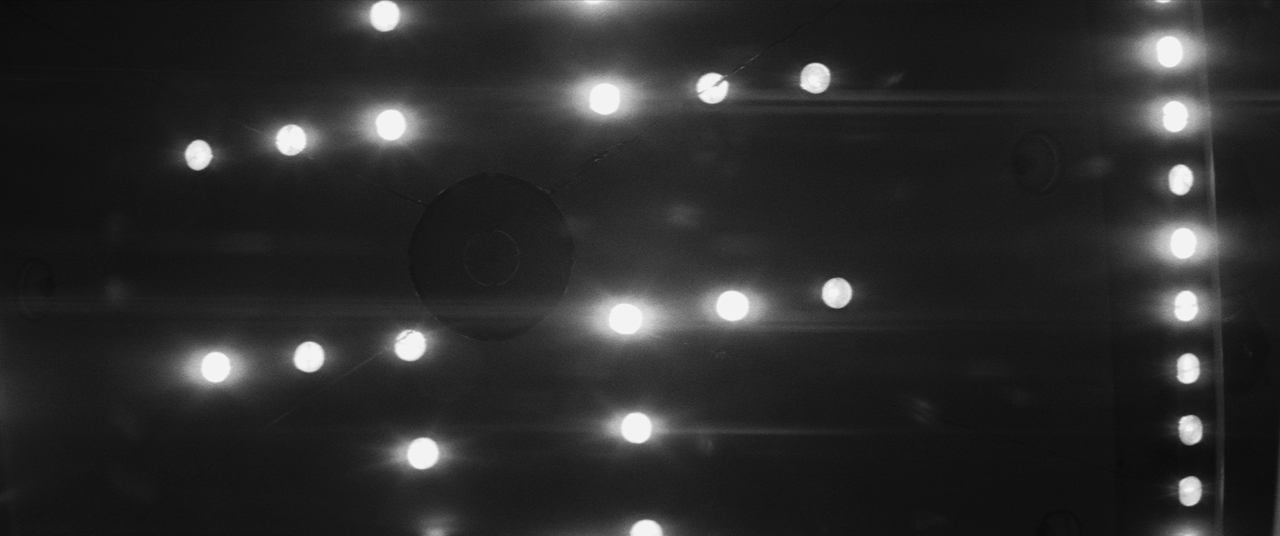
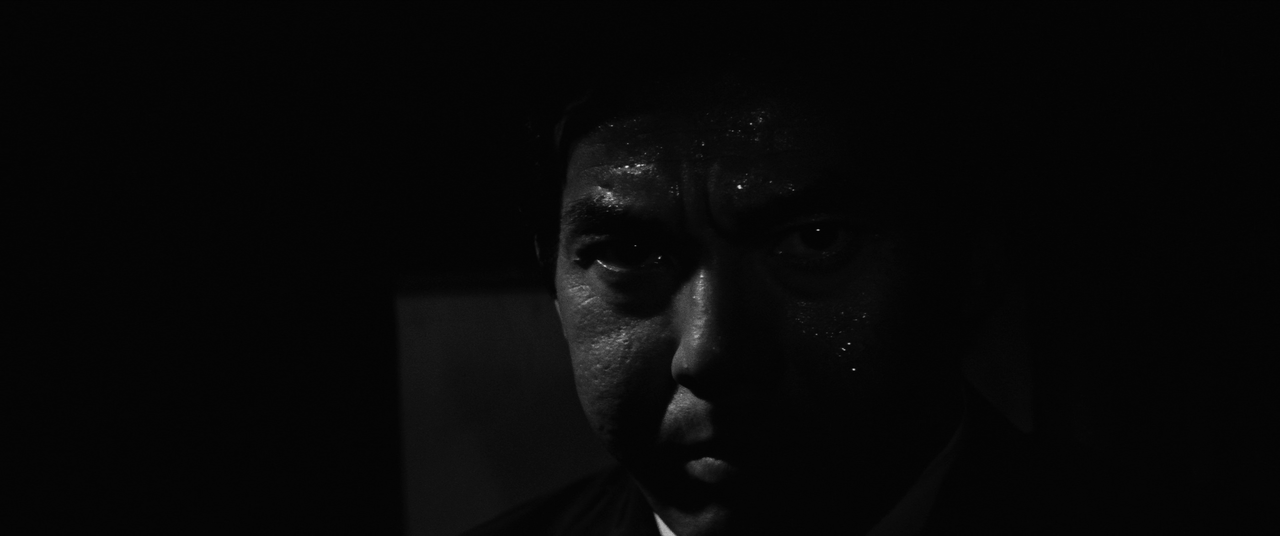
This scene is excessively dark on home video, and I want to compare it a minute to seeing the film in 35mm, so far as I remember it. I see a lot of interpretations of the ending to the film in which people insist that Hanada dies in this battle. It does not happen, and my experience of seeing the film in 35mm seemed much more illuminating to me in a way obscured even on the UHD version of the picture. Here's the rough sequence.
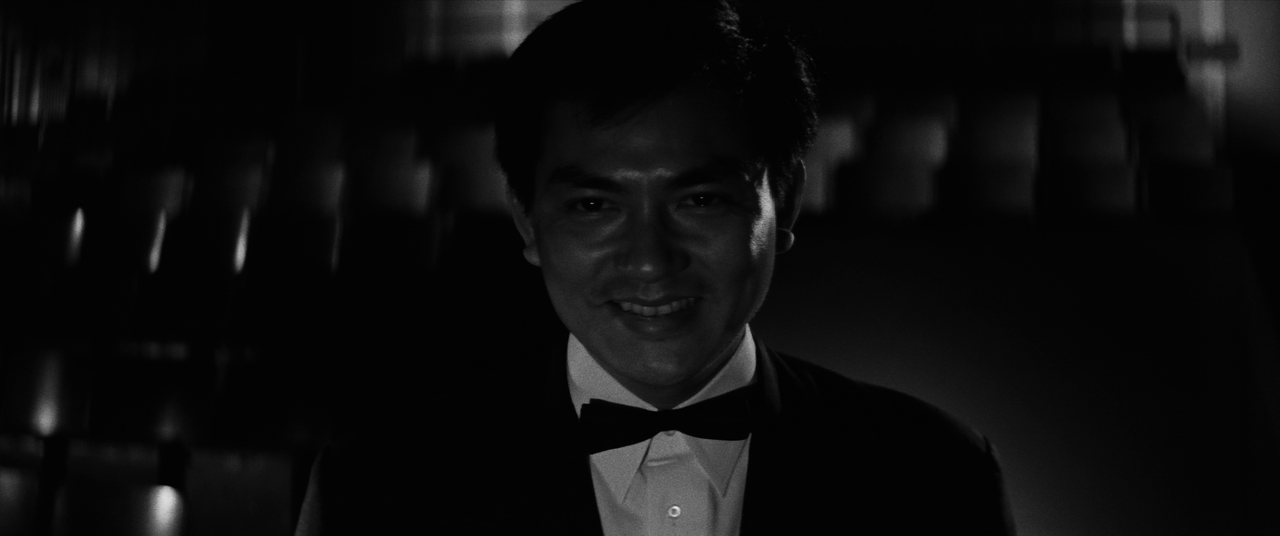
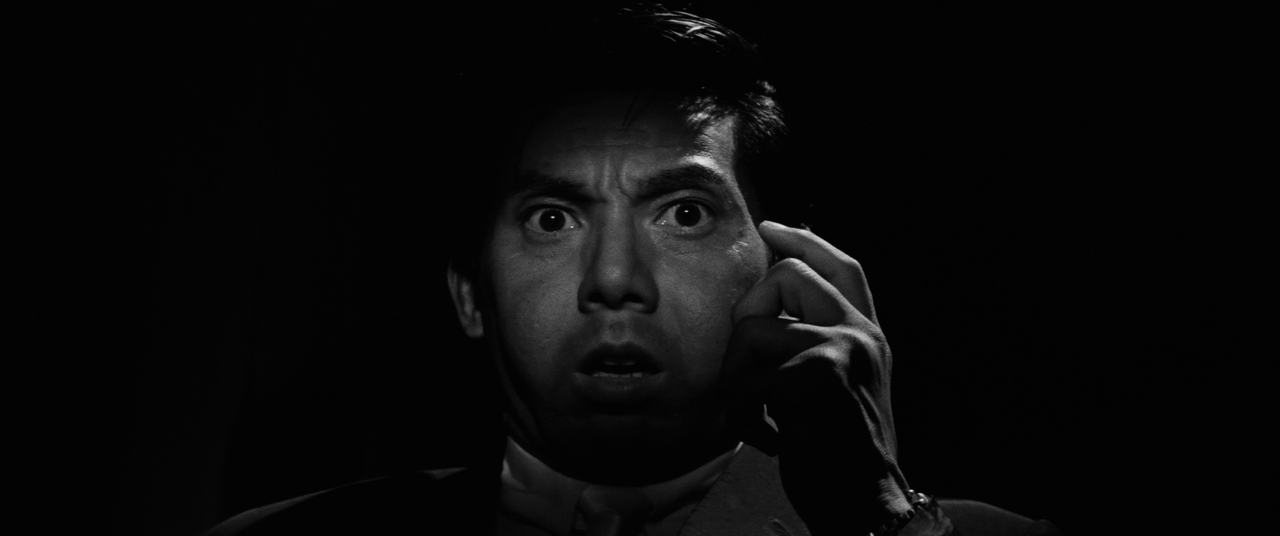
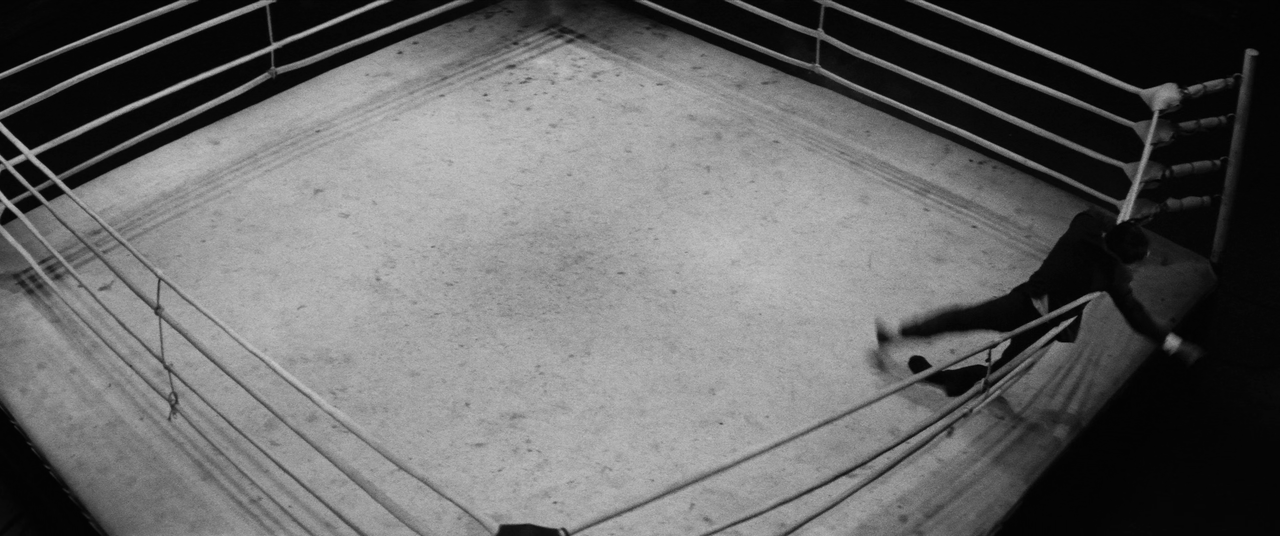
Hanada stands alone in the arena. Gunshots ring out, and Hanada, sweating and desperate, hits the floor. On the floor he sees a collection of items, including cans of beans and a strange-looking band which Hanada puts around his head. The #1 Killer appears in one of the egress tunnels in the stadium, and fires his gun. Hanada falls, seemingly shot...but then we see the broken headband on the mat.
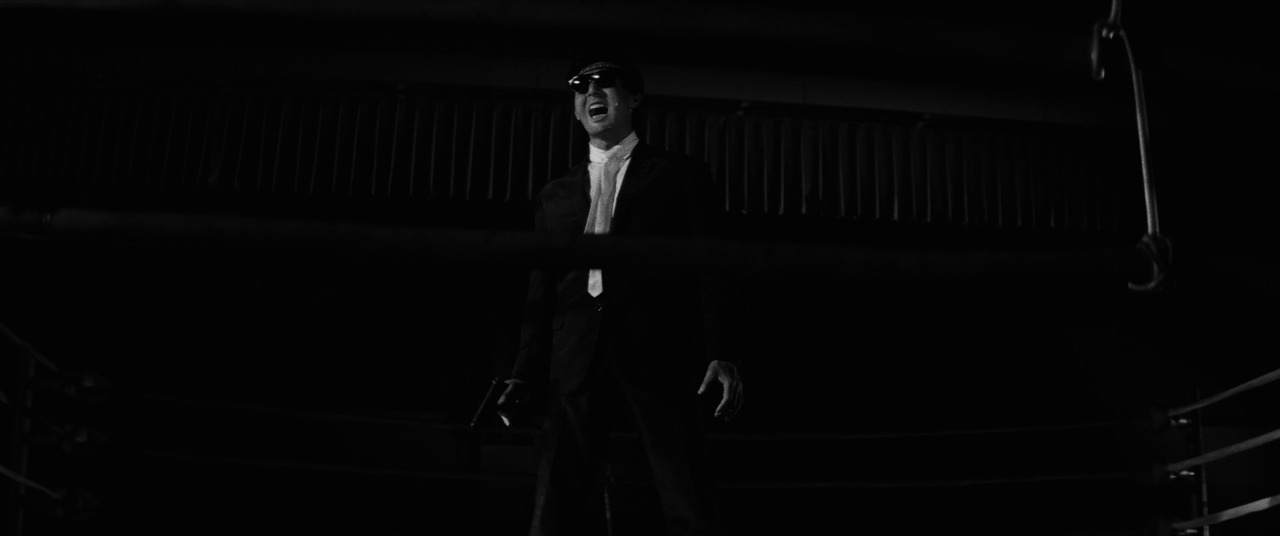
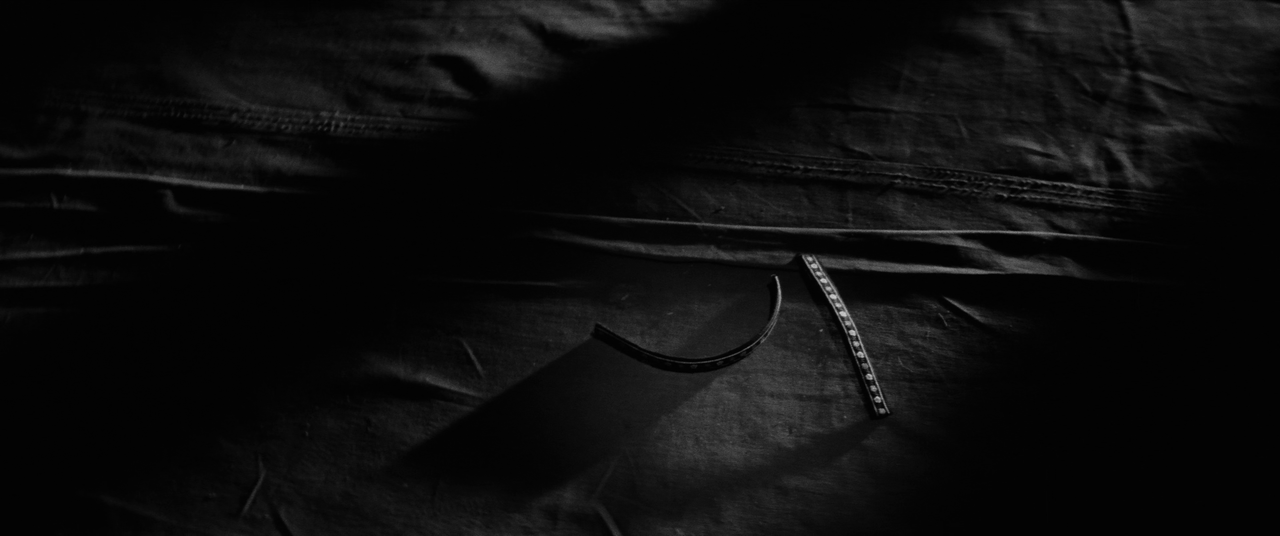
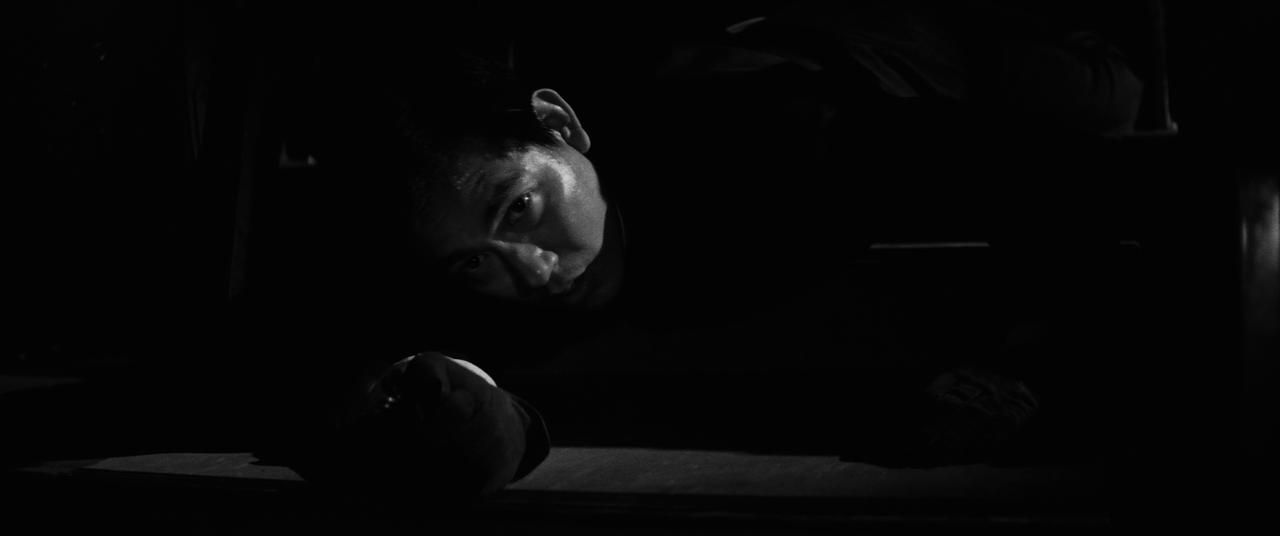
Shot in the head, Hanada is saved by this lucky break. He fires back and #1 falls to the floor of the stands. He shoots Hanada, and Hanada drops. Then Hanada rises and shoots X1 again, killing him. At this point, there is a camera shot I could only make out in the theatrical presentation, which seems just too dark to perceive otherwise, in which we see the lapel of Hanada's suit, and his dented cigarette lighter inside it.
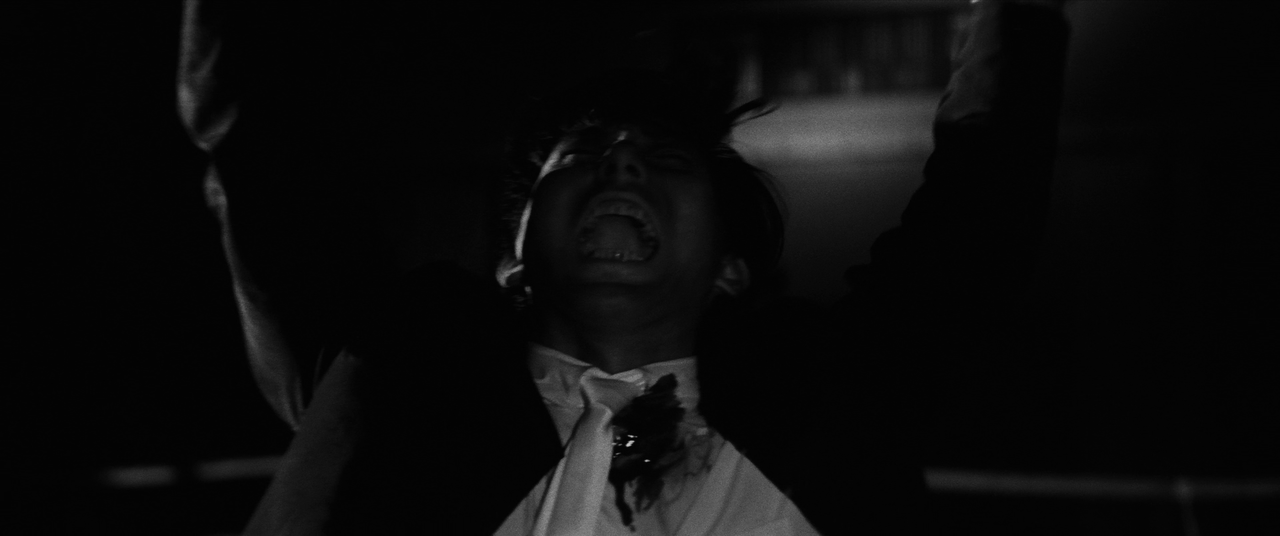
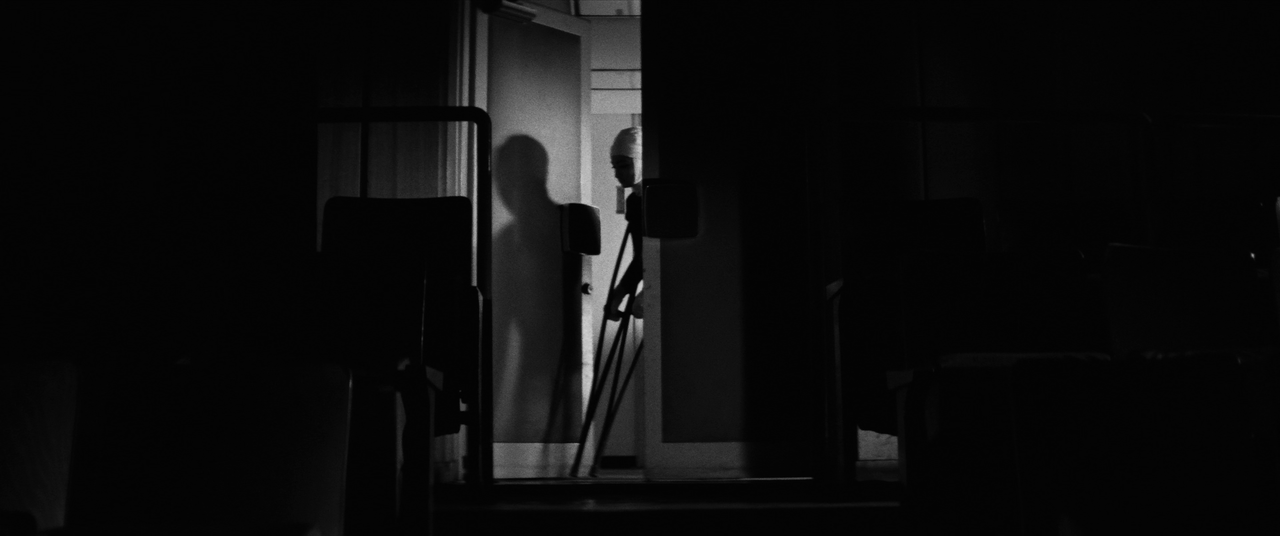
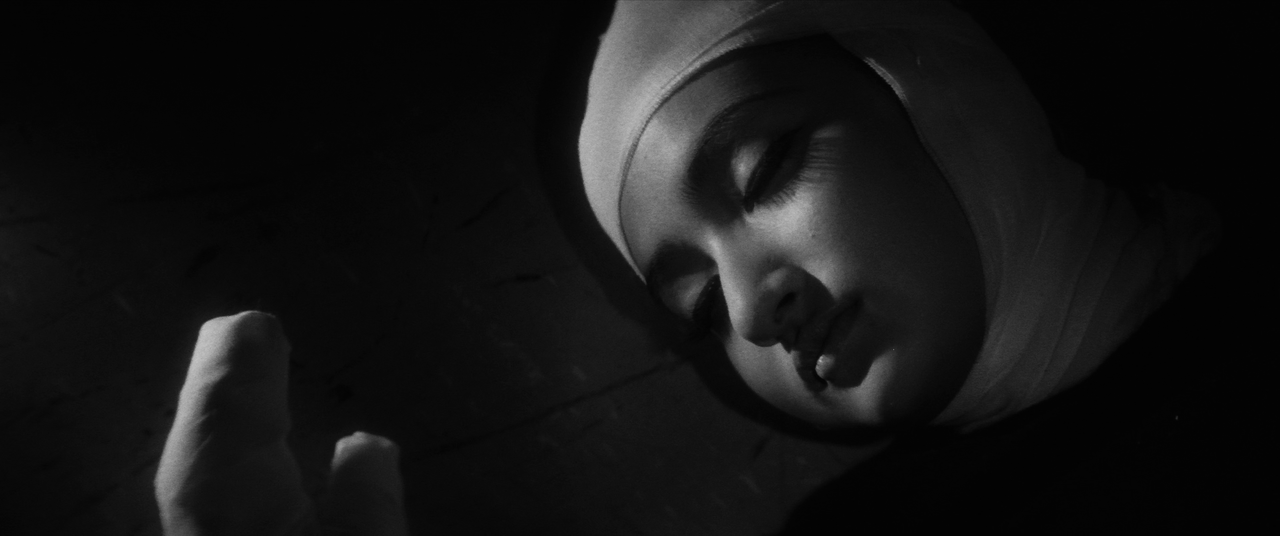
Hanada gets up, bloodied, cheering, jumping for joy. There is blood on his shirt, but he's vigorous, full of relief. He doesn't act like he's been shot at all––which makes me think the blood is the result of him getting cut by the impact of the bullet on the lighter, not by a bullet going through him. But #1 has spent days or even weeks harassing Hanada, making him paranoid, and when a door opens at the back of the arena, we and Hanada expect danger. So Hanada fires exuberantly, and seems to kill Misako, who is trying to hobble in.
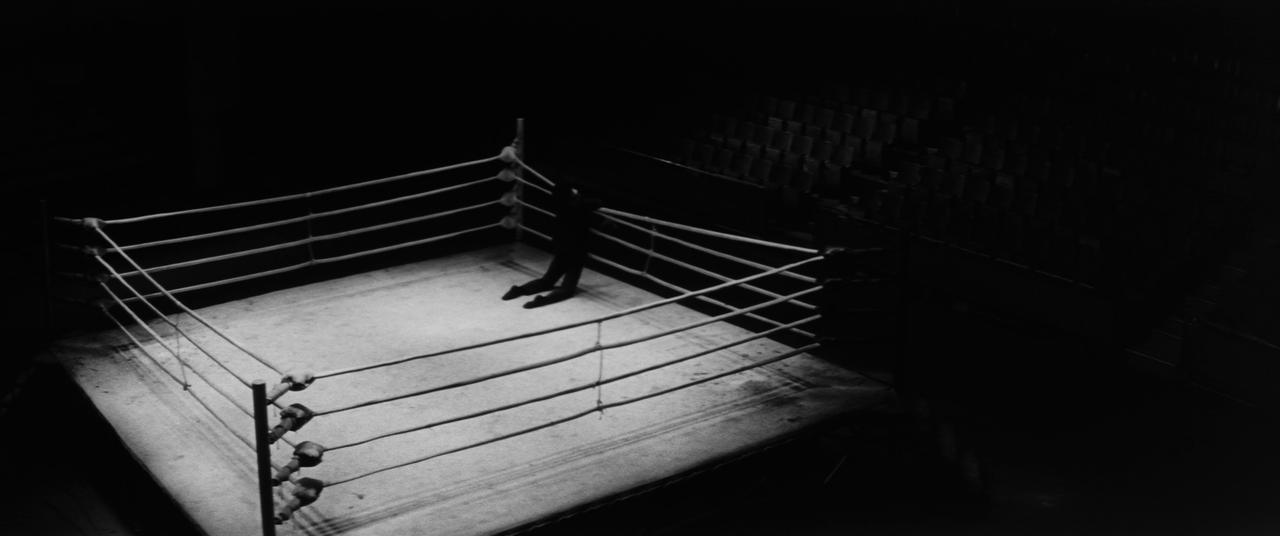
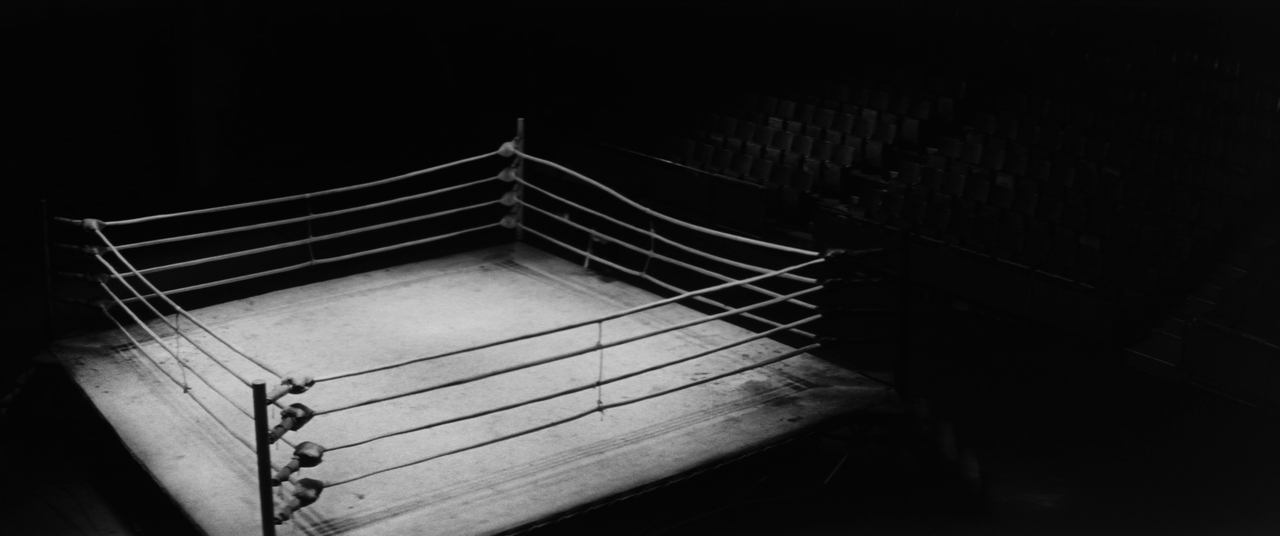
Hanada's distress now is for Misako, whose name he bellows. He jumps out of the ring and fades into the darkness––but the camera doesn't follow him, instead focusing on the vibration of the ropes of the boxing ring until we see the title telling us it's the end. Nothing in this sequence shows Hanada to be dead, or about to die. The energy he expends after being shot twice exceeds anything another victim of a gunshot in the film demonstrates––further suggesting that Hanada is not seriously hurt. And the point of the ending is Hanada's paranoid mistake, and its' accompanying distress. Hanada's "competitive edge" has led to the death of the woman he loves. He literally leaves the stage, a la a kabuki performance, running up an aisle and out of view, his voice trailing after him. And then, almost 35 years later, comes a quasi-sequel, in which Hanada is alive, and recounts on-screen his own disasters in the previous film. Sure, none of this is conclusive, but it's, to my way of thinking, far less evident that Hanada is about to die when he bounds out of the arena after Misako, bellowing her name. The point of the scene is Hanada's folly; in pursuit of perfection, to defeat the most abstractly perfect model of success in his field, he has lost so much perspective he can't distinguish lover from foe, and so he makes his own tragic fate. Scrubbing through the UHD and the Nikkatsu bluray, I see several shots which are essentially pitch-black in this last sequence, but I don't see for sure the shot of the dented lighter, which I am nearly positive I saw in the theater (it was 9 years ago, true, but I have a good memory, and I took detailed notes––my notes at the time include an excited scribble about seeing the dented lighter). But even if I am misremembering what I saw, every other person in the film who is fatally shot loses most of their vitality right away, and falls down dead.
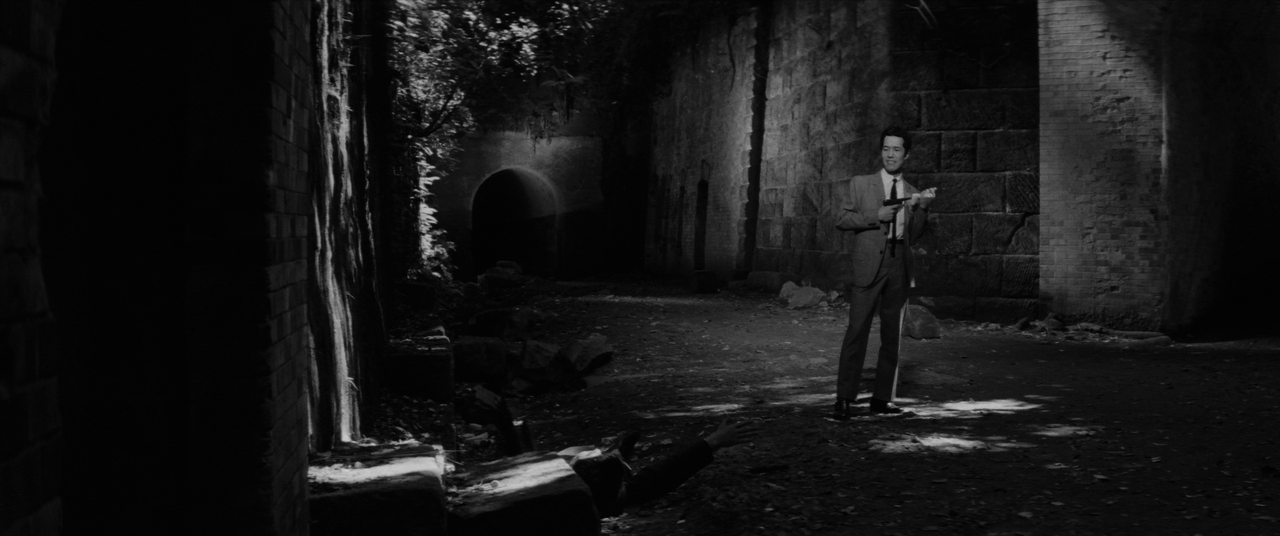
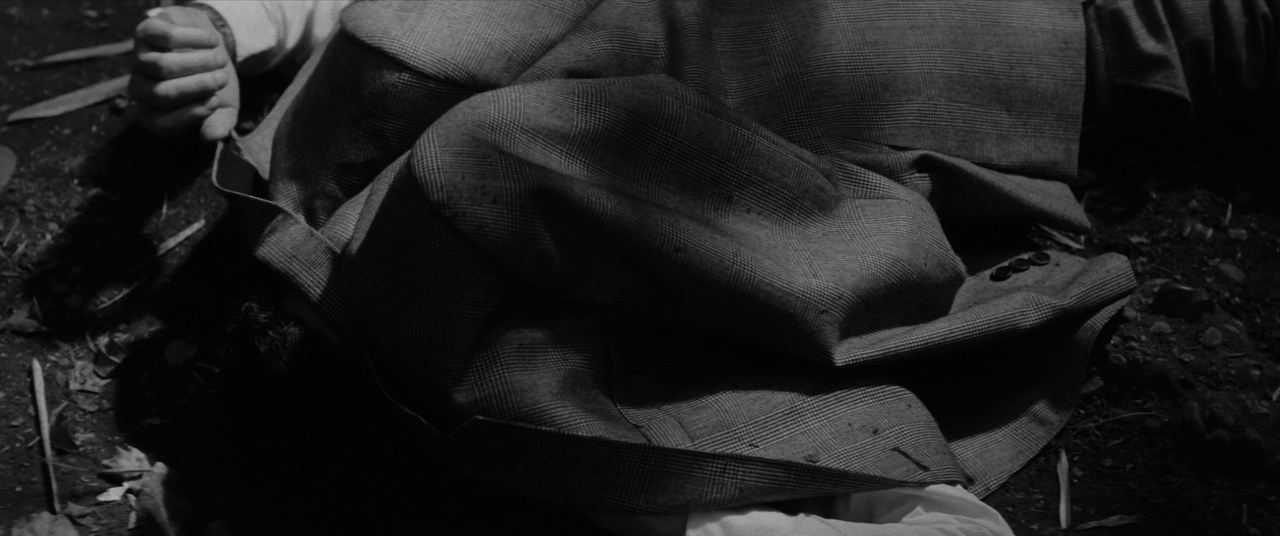
The one exception is screenwriter Atsushi Yamatoya, playing Koh. He walks a ways, takes off his coat, falls, and draw his coat over his own face before he expires. But even that isn't like the panicked sprint of Hanada when he realizes he's shot Misako. We know Suzuki's interpretation of it later on is that Hanada lived, and the real point here is that Hanada's striving leads to his fall. In nearly every late-stage Suzuki movie, striving to be the best leads only to this kind of undoing. The drifter in Tokyo Drifter is free at the end––at the expense of all his former companions and of love, which he feels compelled (or relieved) to reject. Trying to be the ideal yakuza leads Katsuta straight to prison in Kanto Wanderer. The illusion of love can only survive for Harumi if she blows herself up, along with Mikami in Story of a Prostitute. Perfection leads to death. If not of the pursuer, then the death of their love, or their dream. What an irony that the unquestionably negative fate of the greatest hitman is actually to live on after the ending card. Negation can take on ironic and un-heretofore-seen forms in Suzuki's movies, but they tend to end in negation, all the same.
CINEMATOGRAPHY
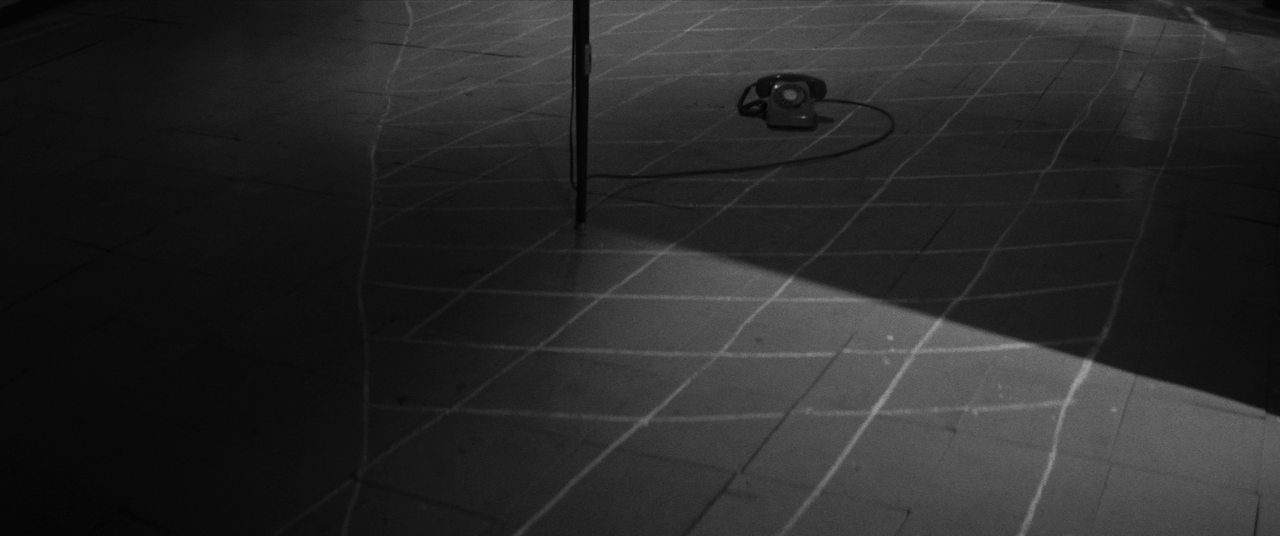
I got so serious I feel like I desperately need this pivot. Branded to Kill is lensed by Kazue Nagatsuka, Suzuki's spiritual cinematographer, if not always his actual cinematographer. Nagatsuka is the early collaborator who enables and encourages Suzuki's experimentation, and a figure who––in spite of endless generic assignments on other Nikkatsu pictures––seems to love to be at the center of a heavily experimental movie. Until he magically returns to Suzuki after 9 years of retirement to shoot Zigeunerweisen and Mirage Theater, Branded to Kill stands out as the most experimental of Suzuki's films, and Nagatsuka––an eminence who worked as a cinematographer since the silent era––is there for.
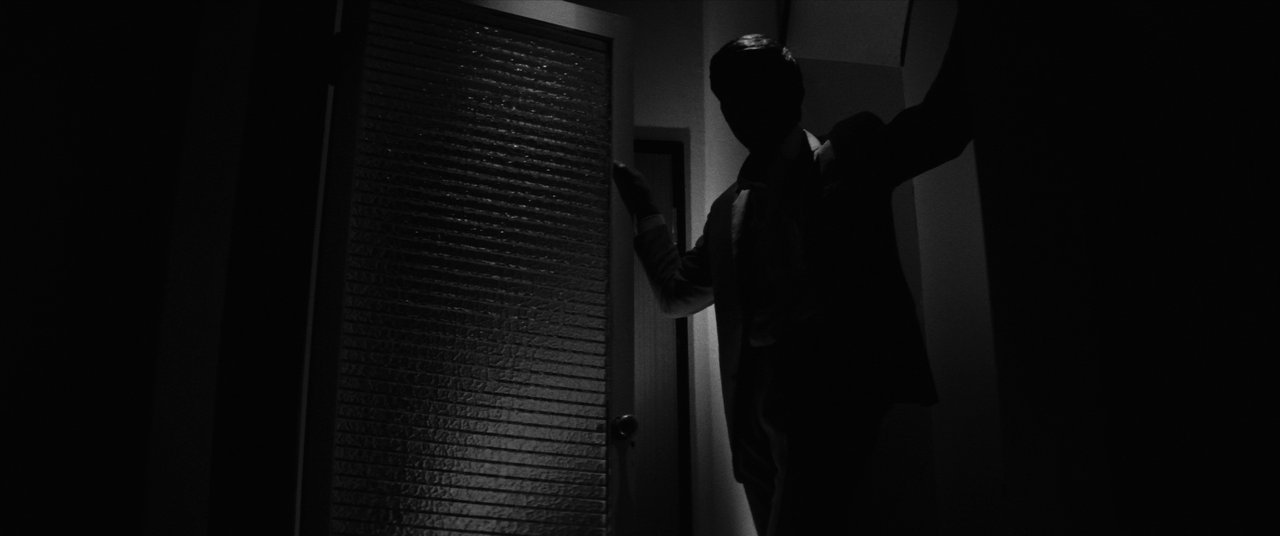
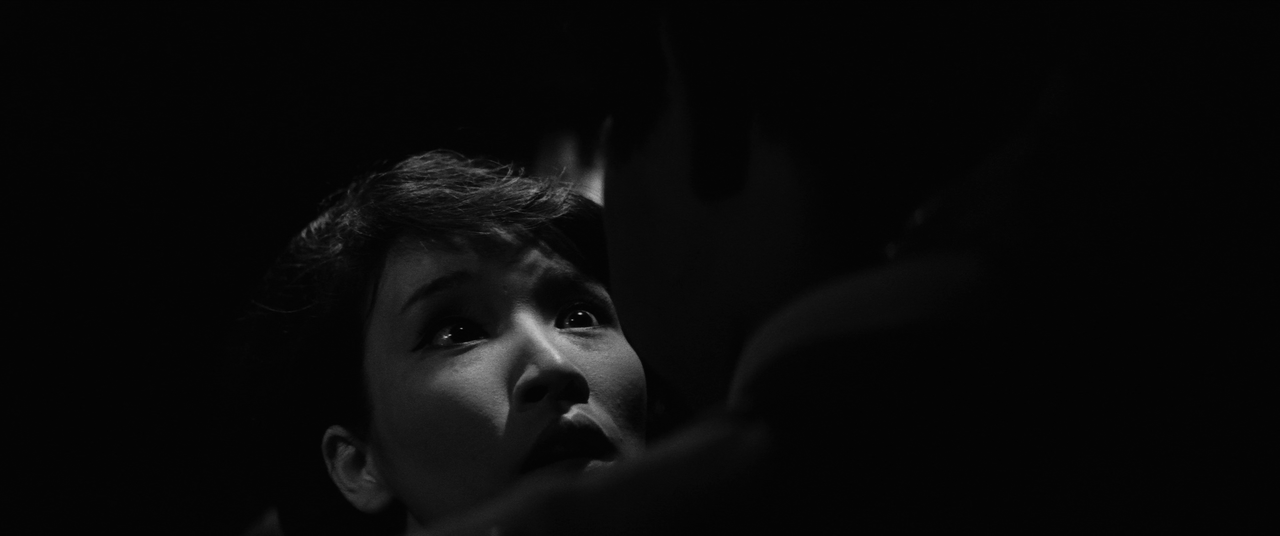
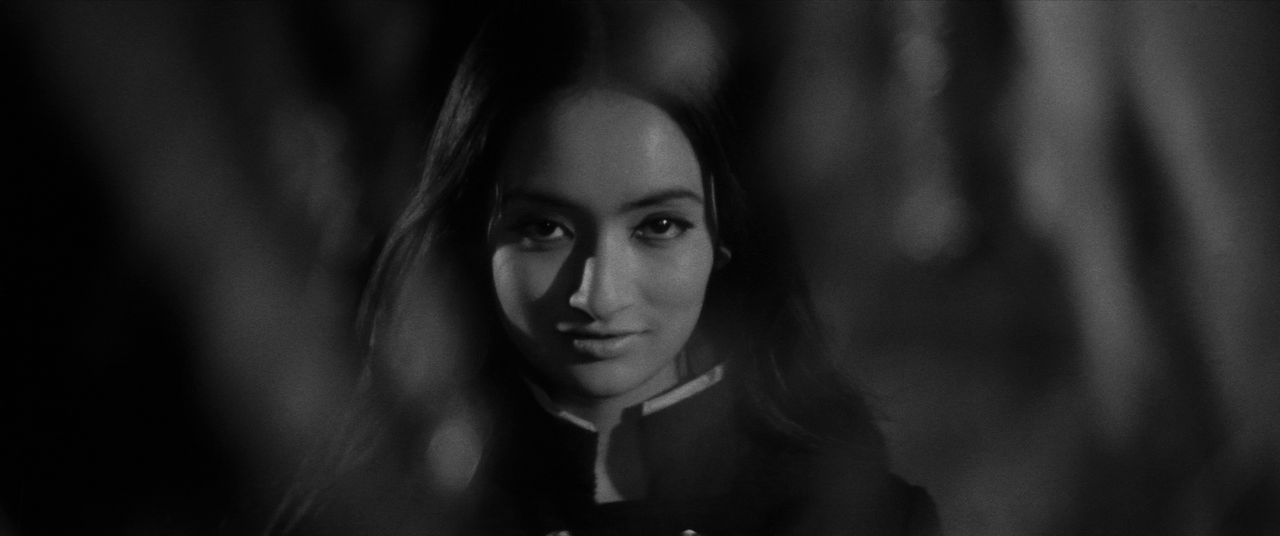
Nagatsuka's specialty is a very jeweled delineation of key forms in an image, achieving extreme depth and texture through a mixture of heavy black shadows and strong rim-lighting or side-lighting. The image is very high-contrast––he doesn't use a lot of grays, like his kohai, Shigeyoshi Mine does (see Carmen from Kawachi). Nagatsuka's look would be the purest expression of noir or neo-noir in Suzuki's work, but for Toshitaro Nakao, who creates images where shadows creep in from the edges of the composition to almost obscure the action. The velvety look of Nakao really underlines the difference with Nagatsuka, who values clarity above everything. The depth Nagatsuka achieves in his images is a constant that never really alters. There is a lot of emphasis on it in this movie, and even later on, in Zigeunerweisen and Mirage Theater, Nagatsuka wrings depth out of Suzuki's most deliberately flat compositions.
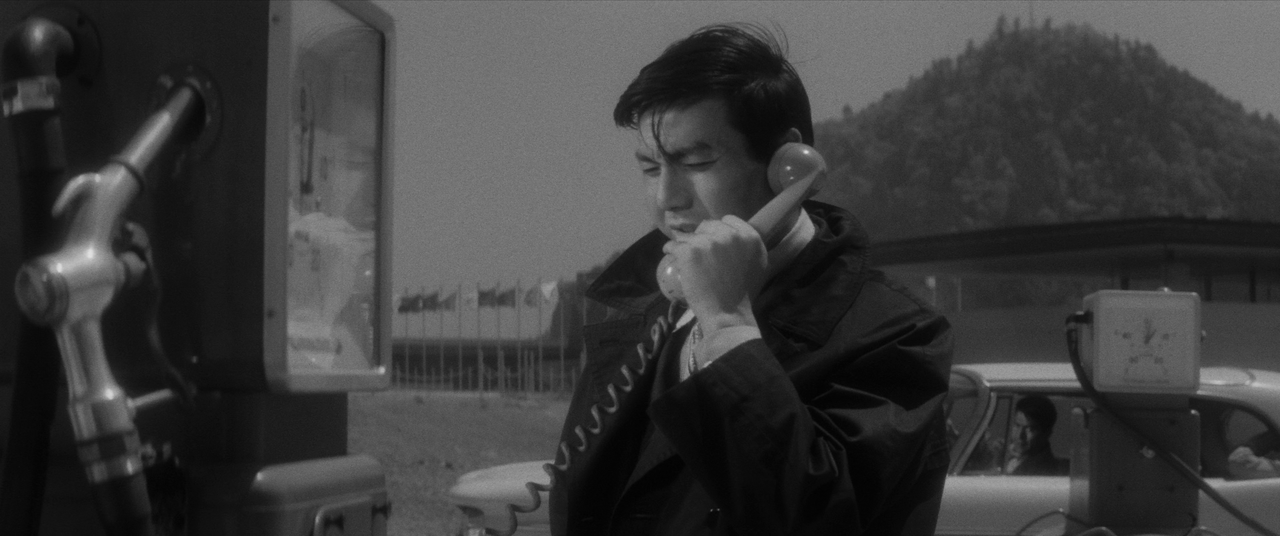
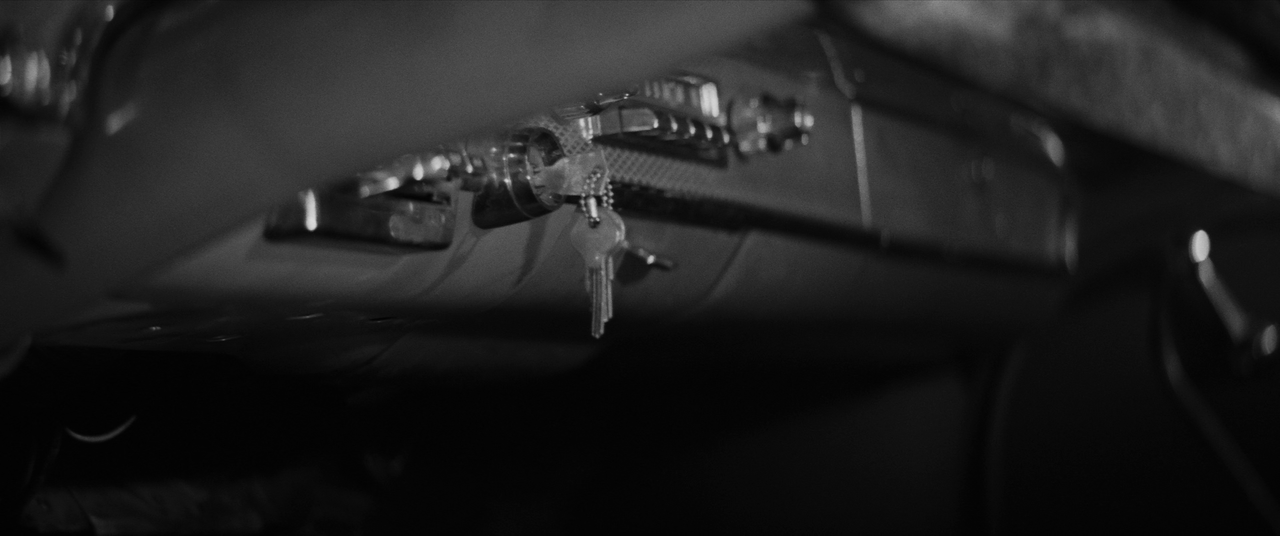
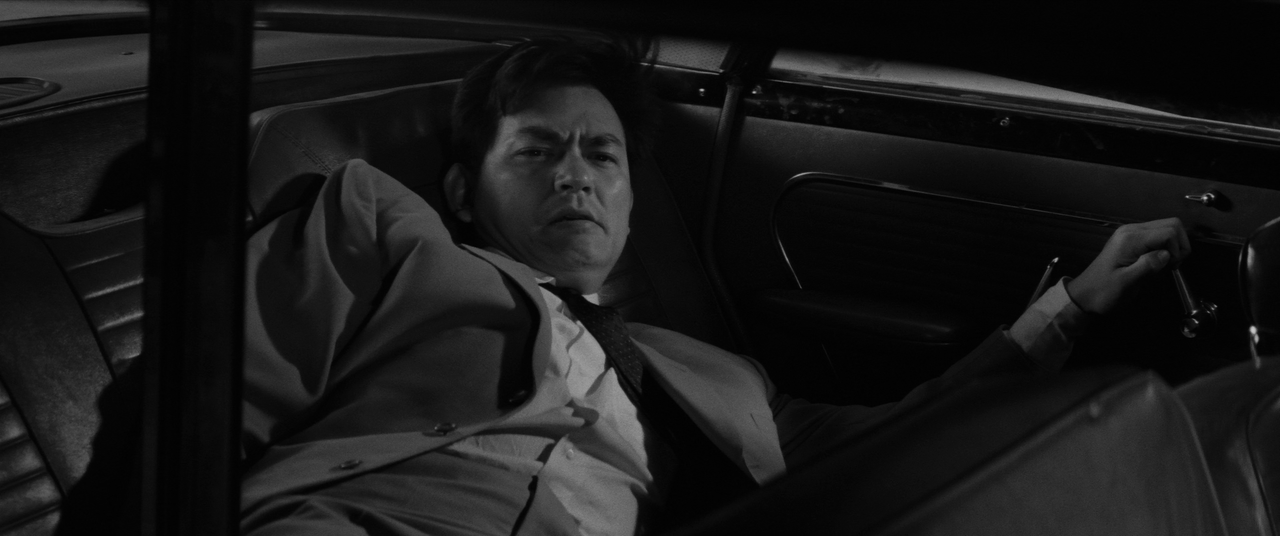
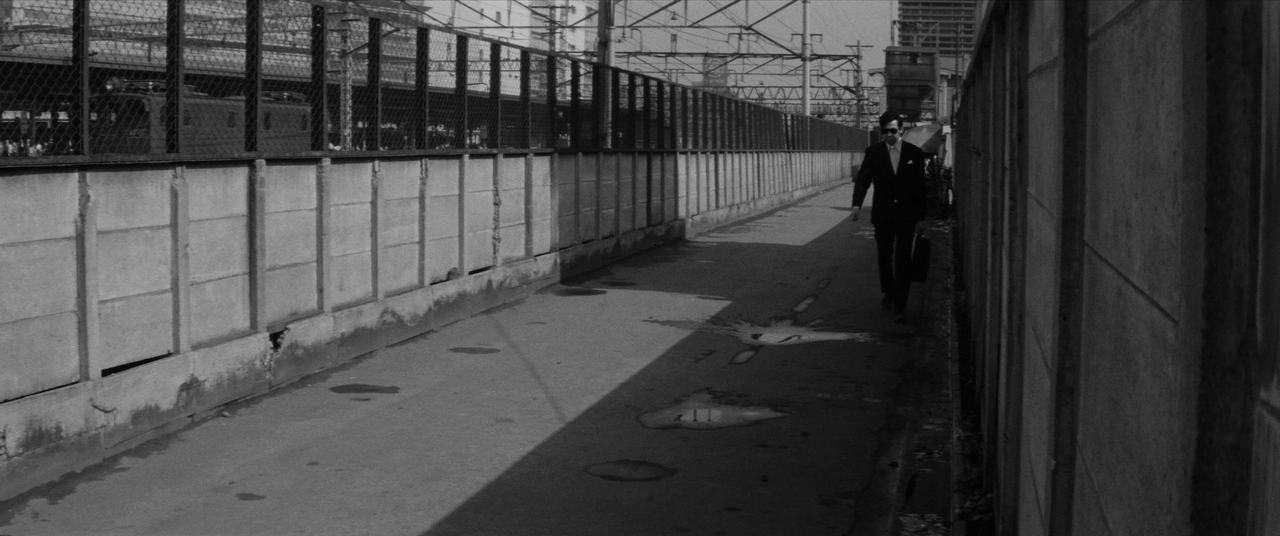
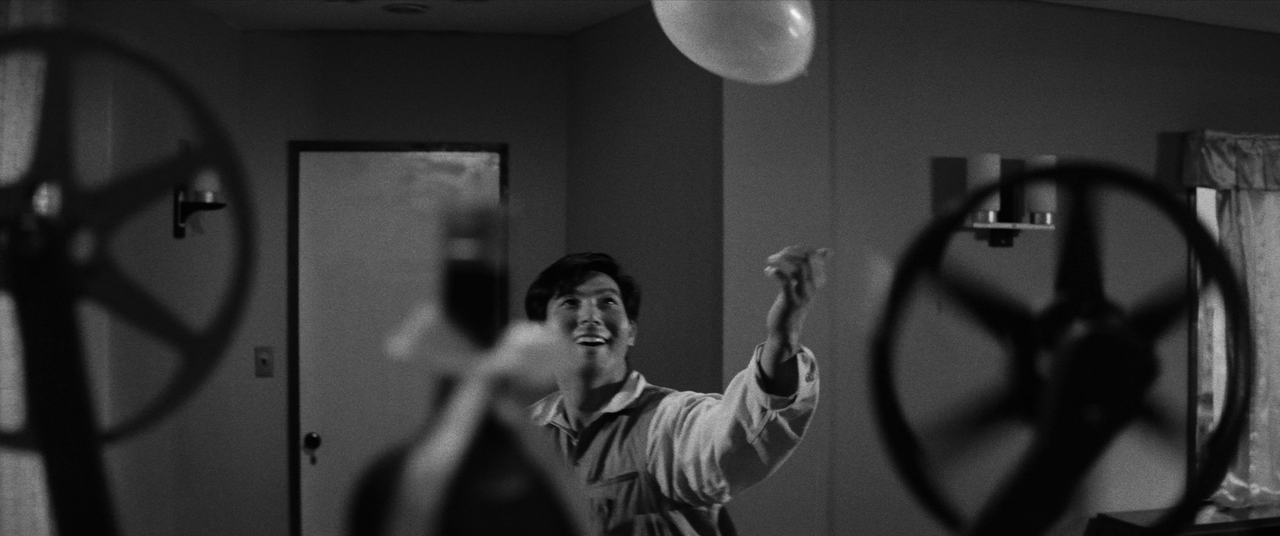
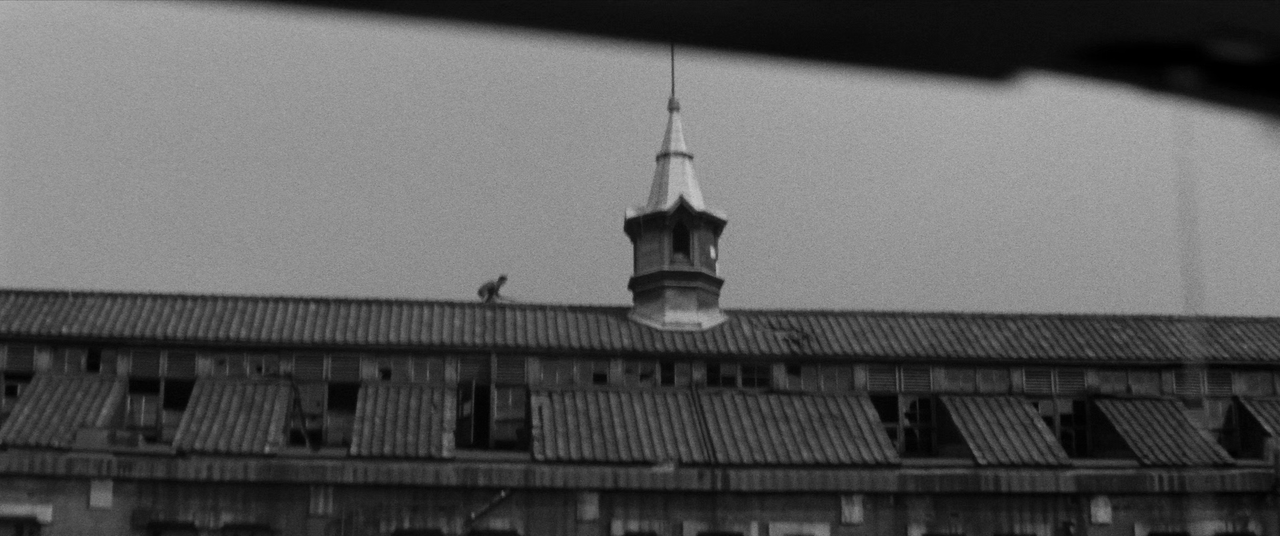
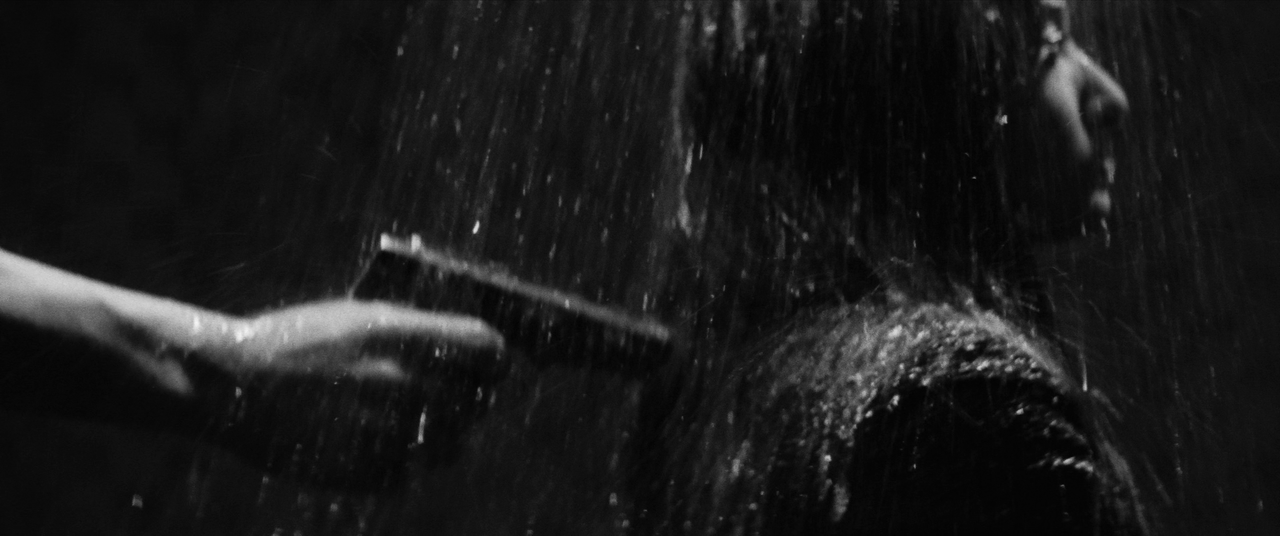
This is also the second-to-last film Suzuki shoots in cinemascope (Story of Sorrow and Sadness is the final one). Intending as I am to tackle his first scope film immediately (Underworld Beauty), it's interesting to see how far Suzuki's highly distinct frame compositions have come. Virtually every frame of the film has some visual challenge or complexity. The thing I see most looking through these shots are multiple frames in the compositions themselves, sometimes very daring compositions. Suzuki only fleetingly uses the rule of threes, instead using contrasts and contours to make the images. Unlike Suzuki's early attempts to track forward with the cinemascope camera, here Suzuki is consciously putting markers in the shots where he does track closer, so we can tell we're moving in space. By and large he seems by this point to prefer lateral movement, and the expressionist canted angles of his early work have been replaced by contour angles created in the poses of actors and the background details. There is a seemingly deliberate contrast between depth and flatness. Often Suzuki will add elements to the composition from outside the camera's focal depth as a way of contrasting flatness with Nagatsuka's signature depth.
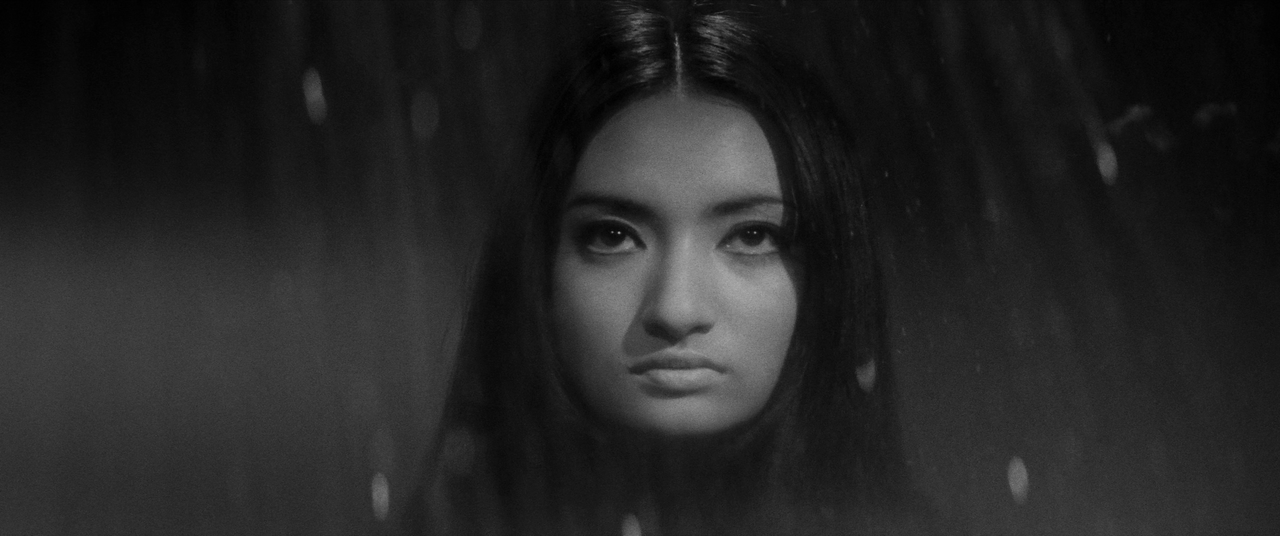
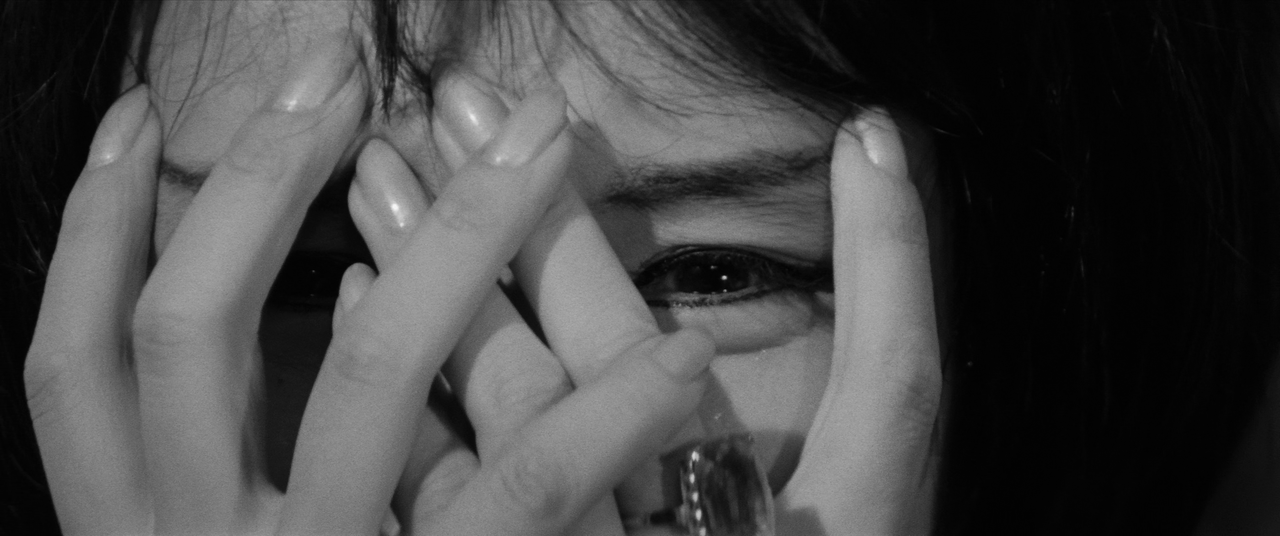
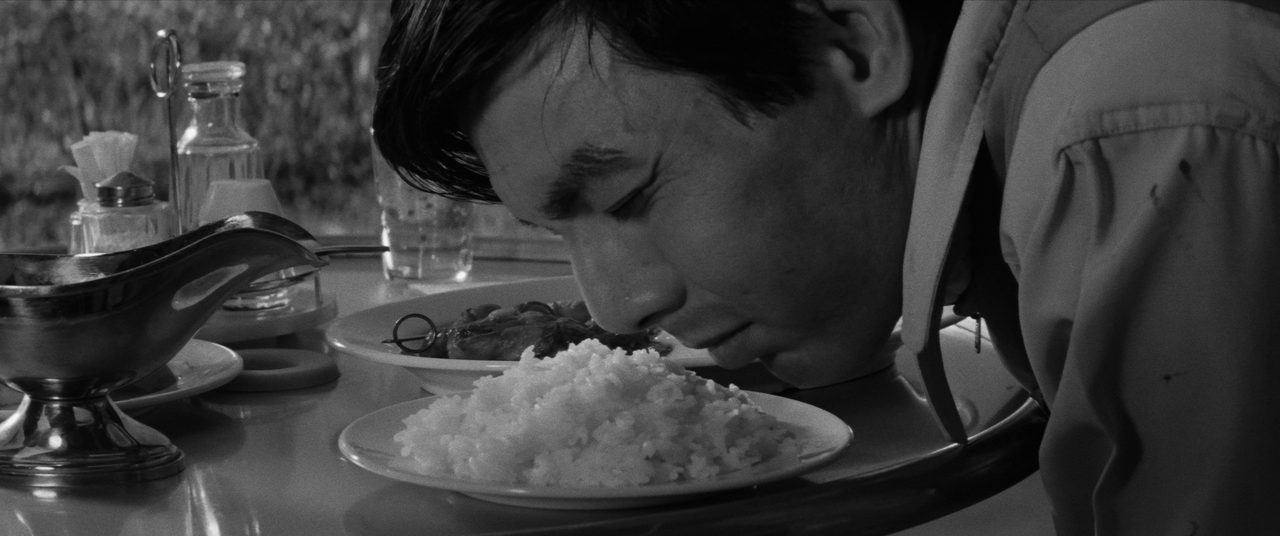
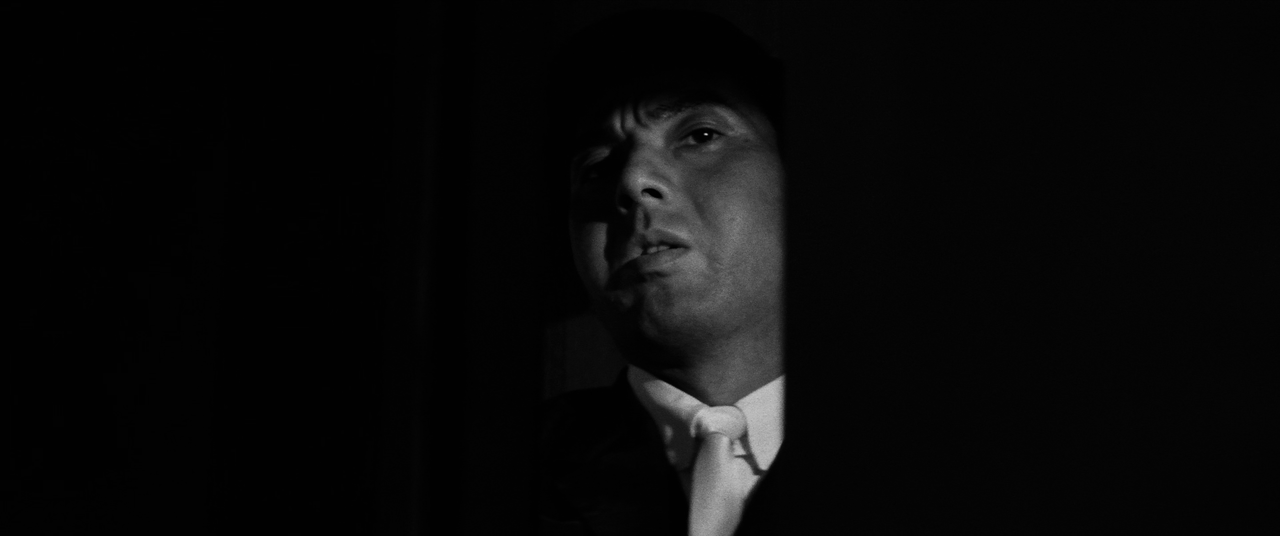
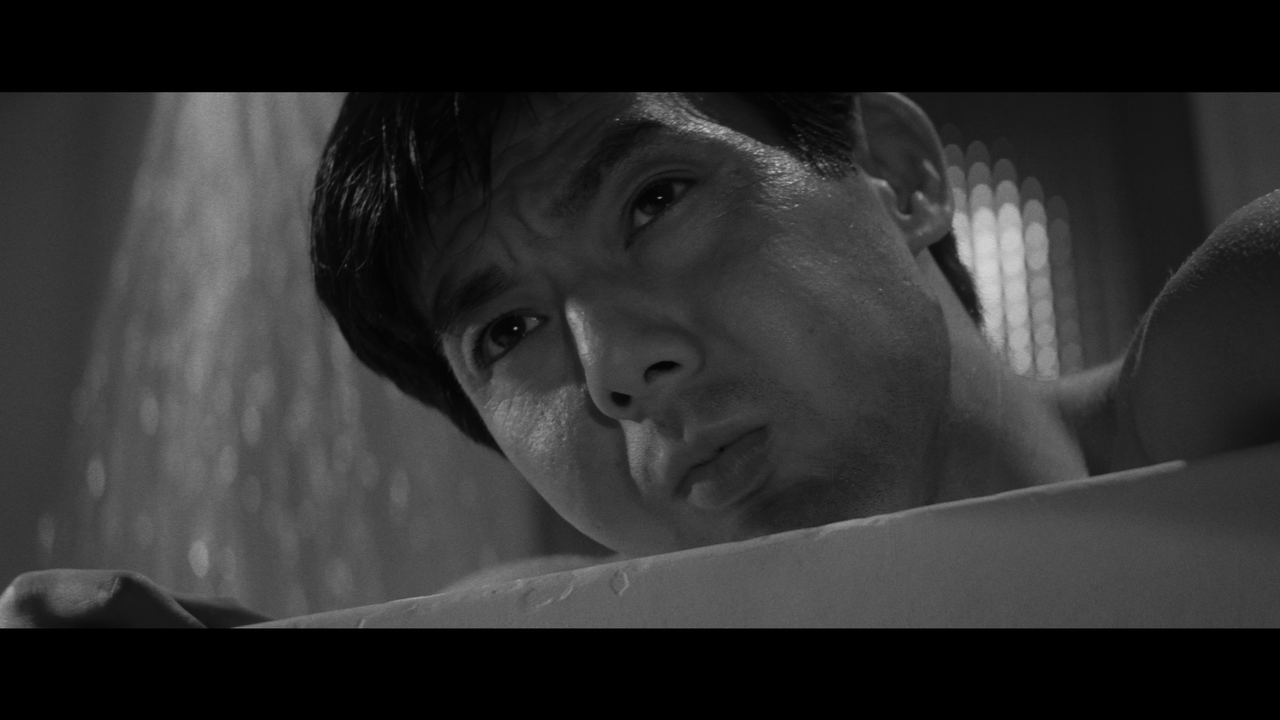
Always great at closeups (if you think this is a skill everyone has, check out the movies of that hack, Buichi Saito, and see a real difference), by this point every composition is made complicated through either the actors pose, the lighting, or background or foreground elements. Sometimes the camera is applied to the scene in a way different from the rest of the film, as when Nagatsuka switches in the film occasionally from his smooth lateral tracking to handheld shots.
 COMPARISON
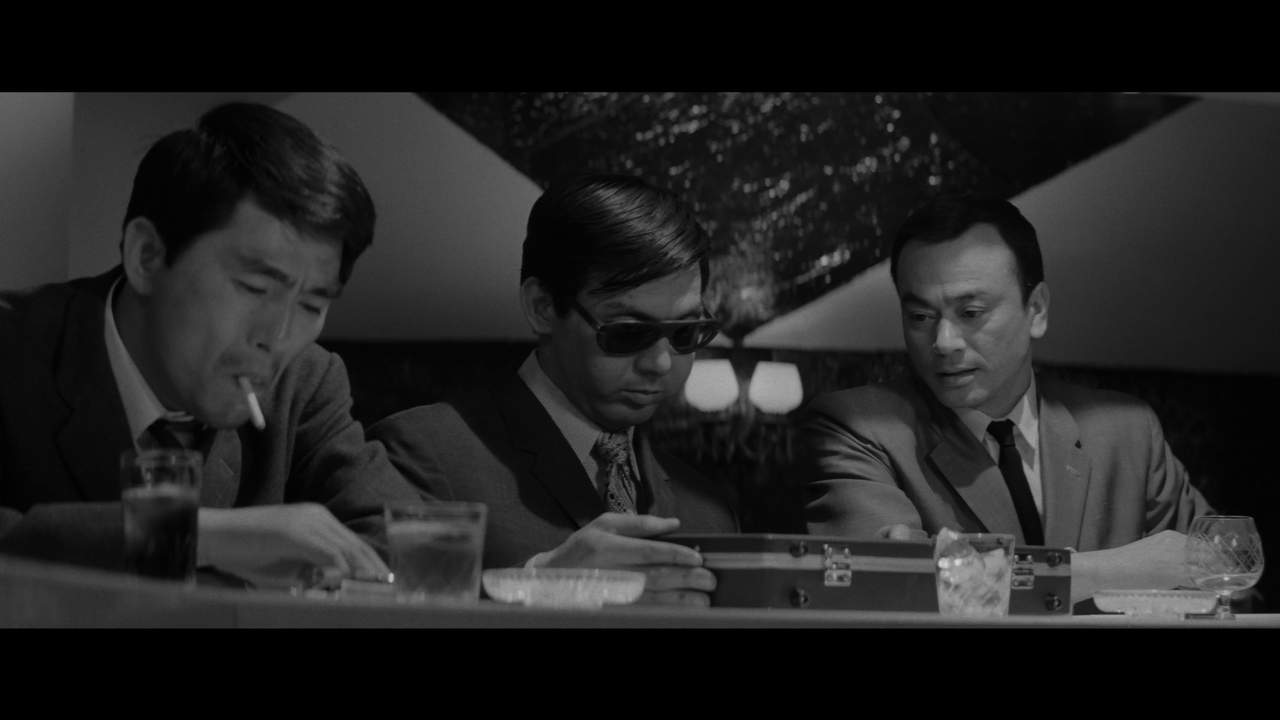
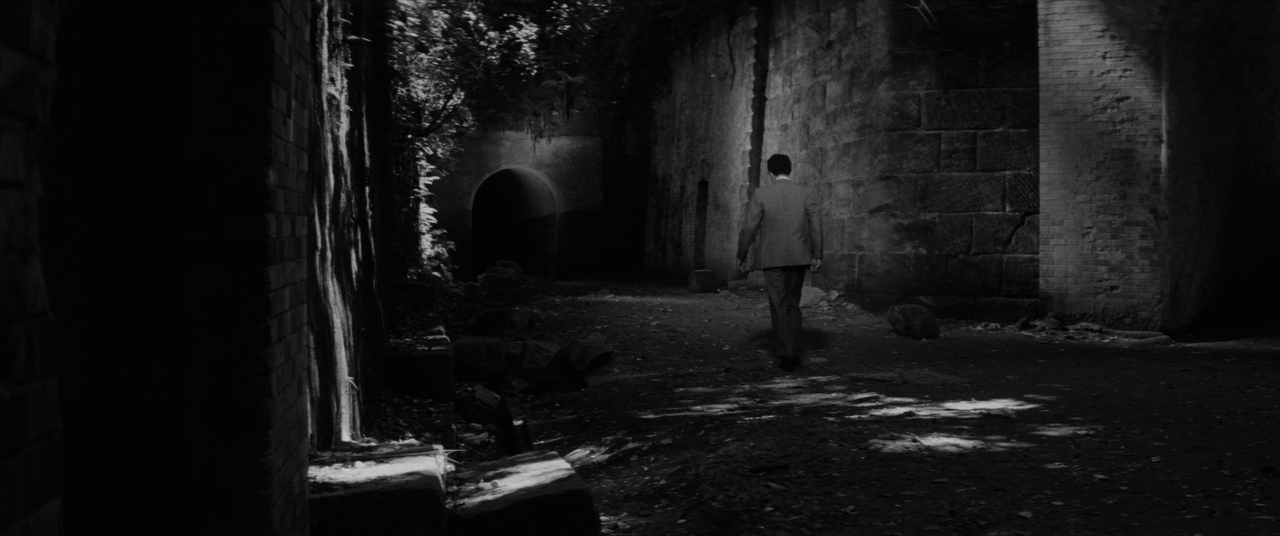
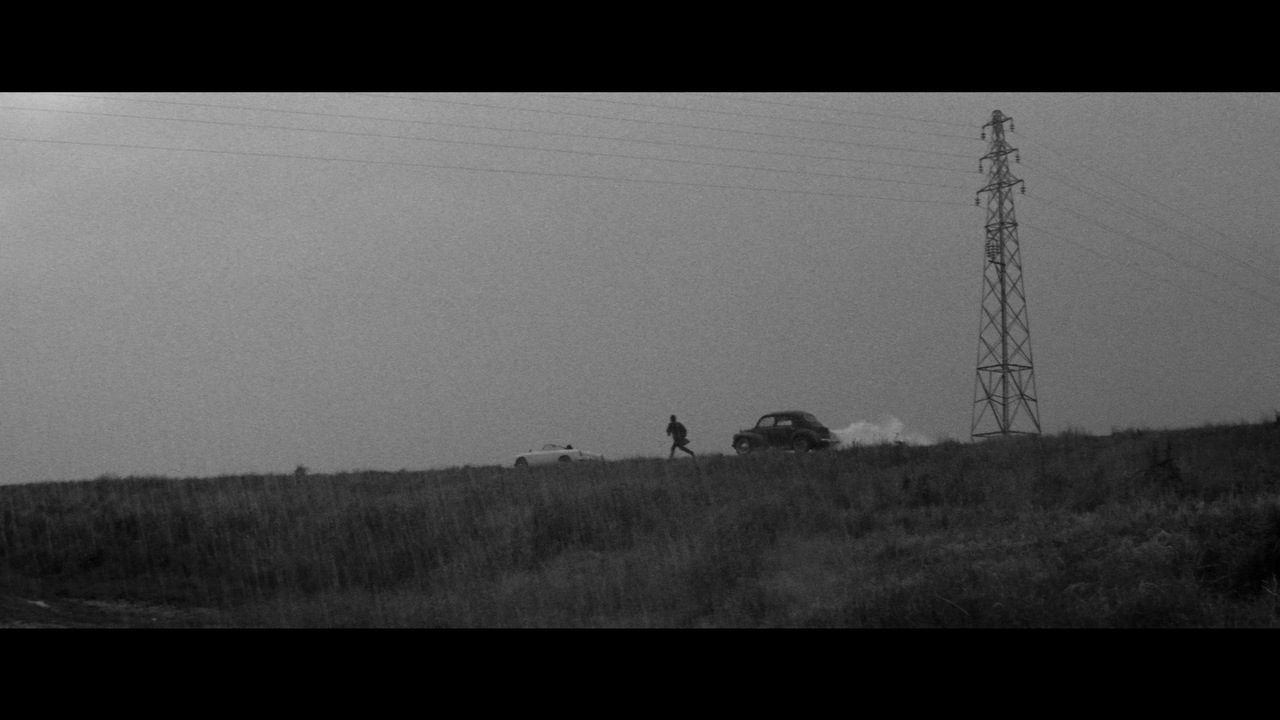
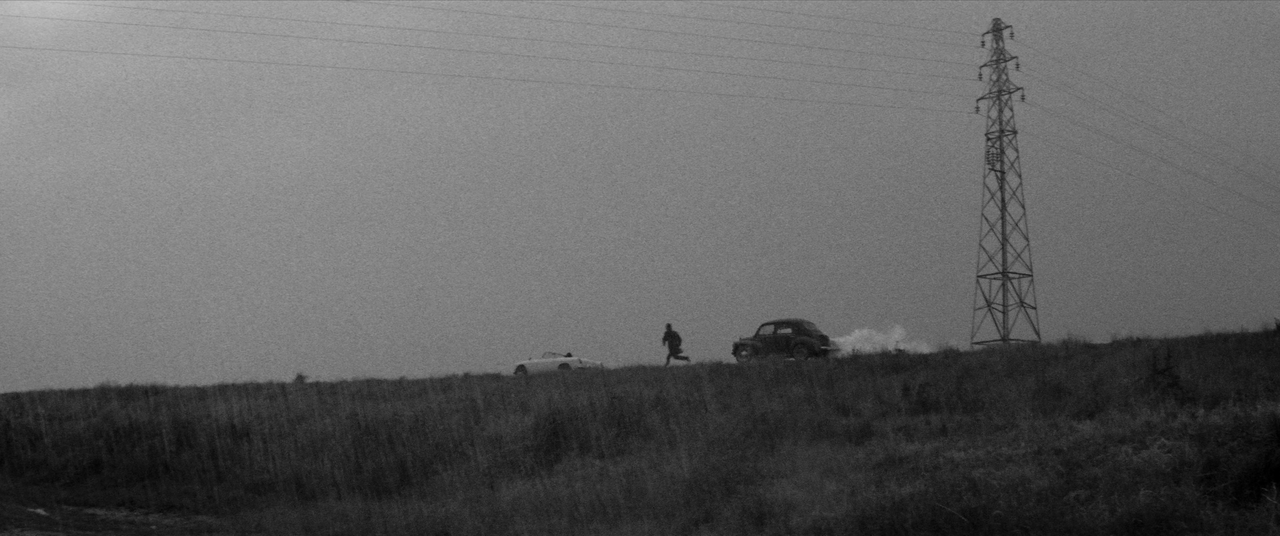
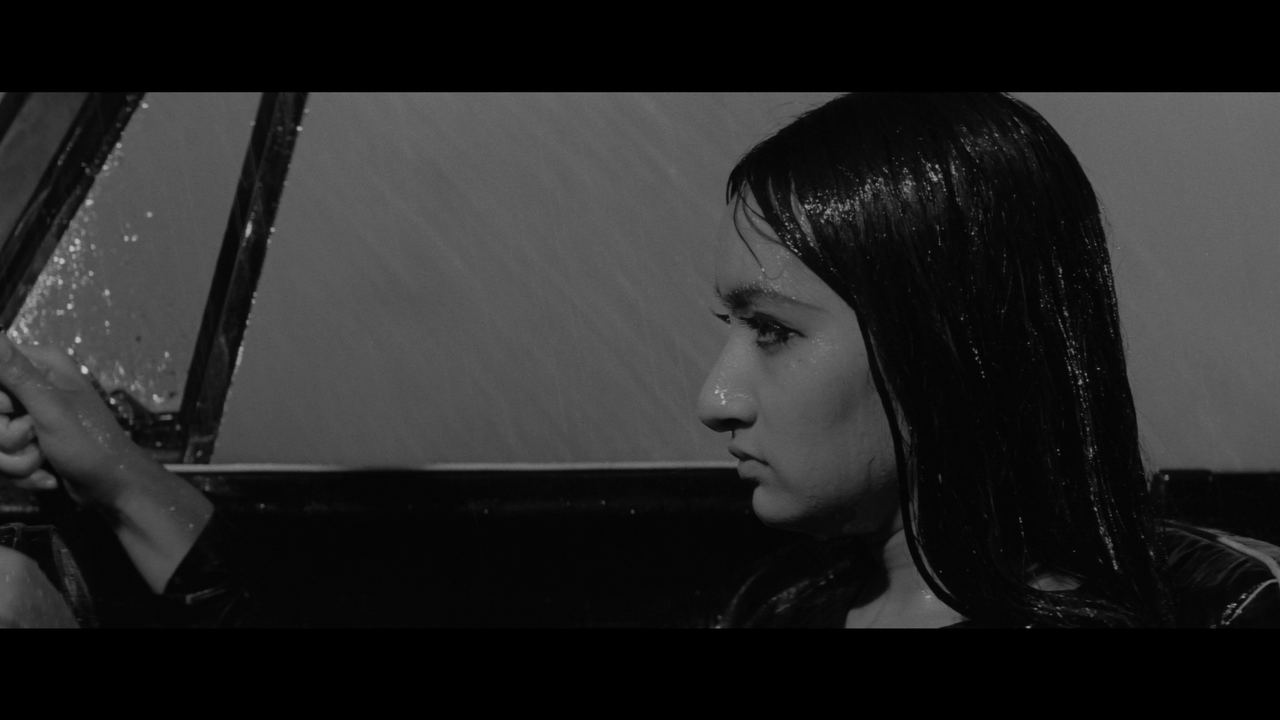
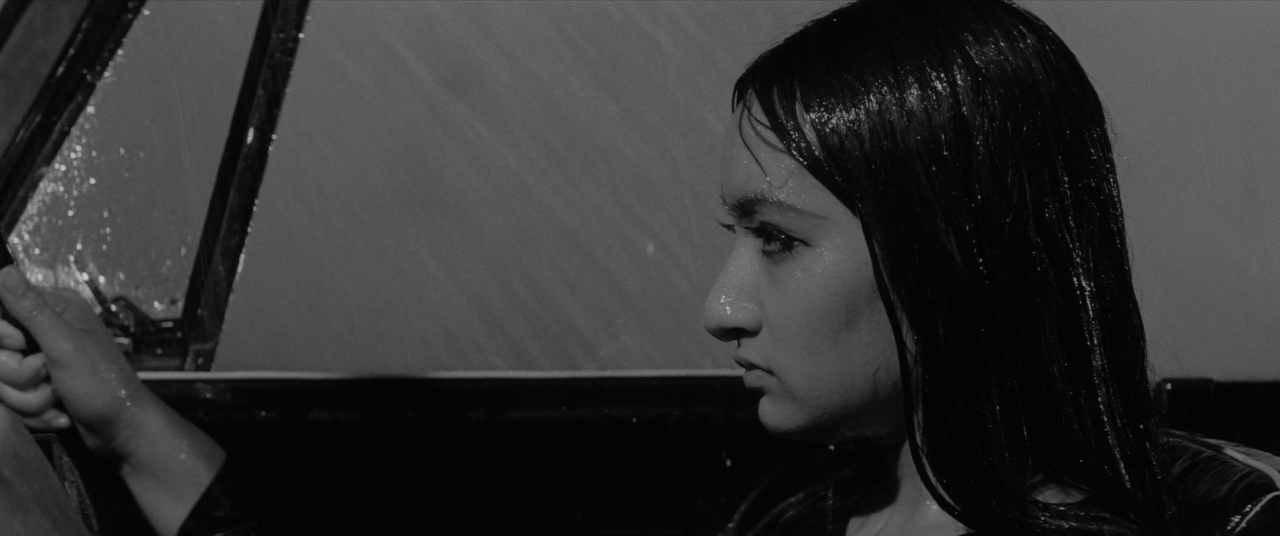
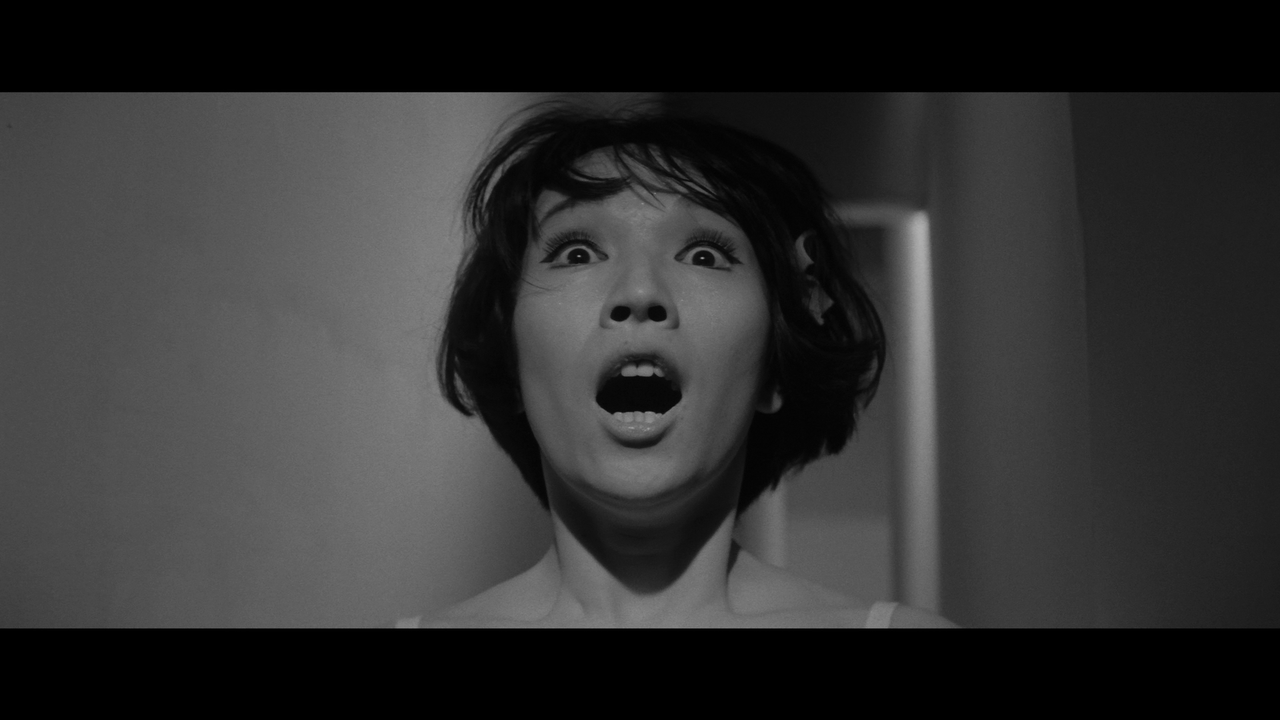
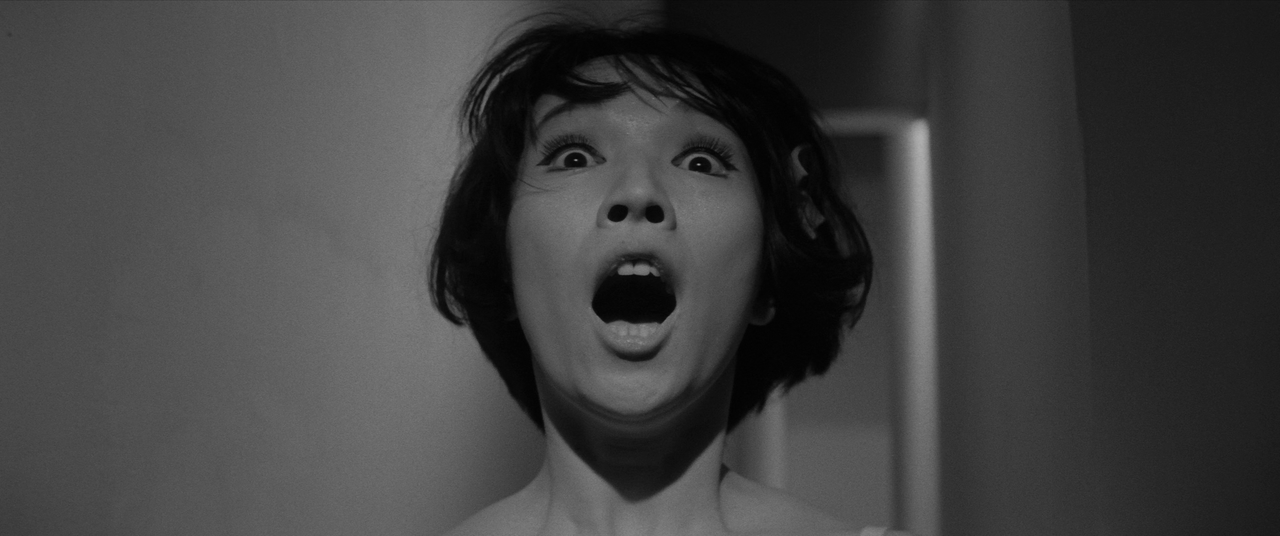
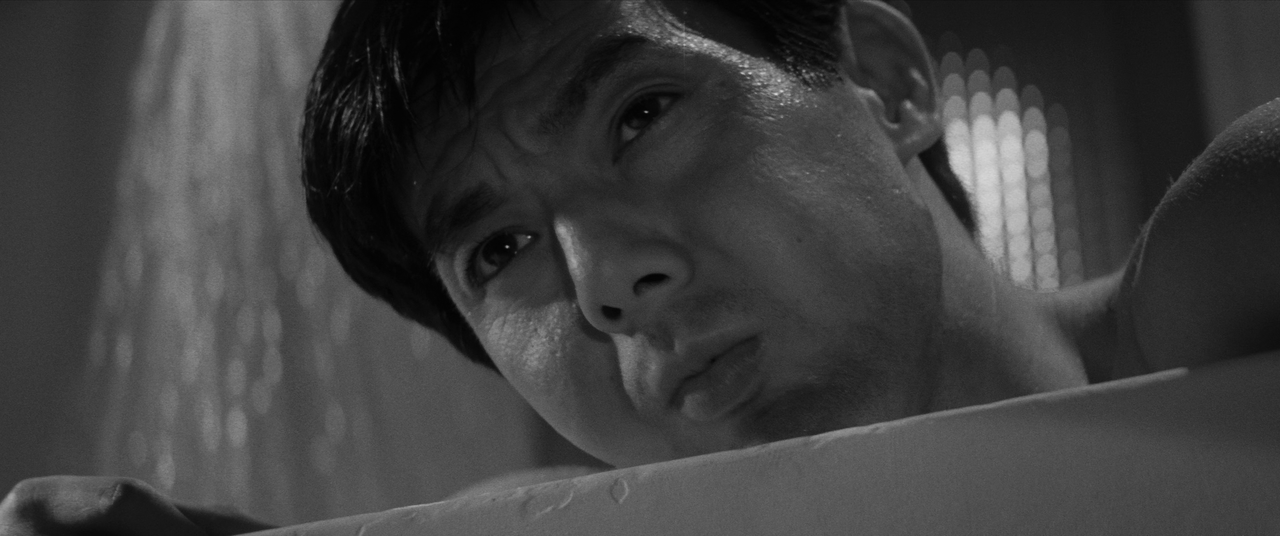
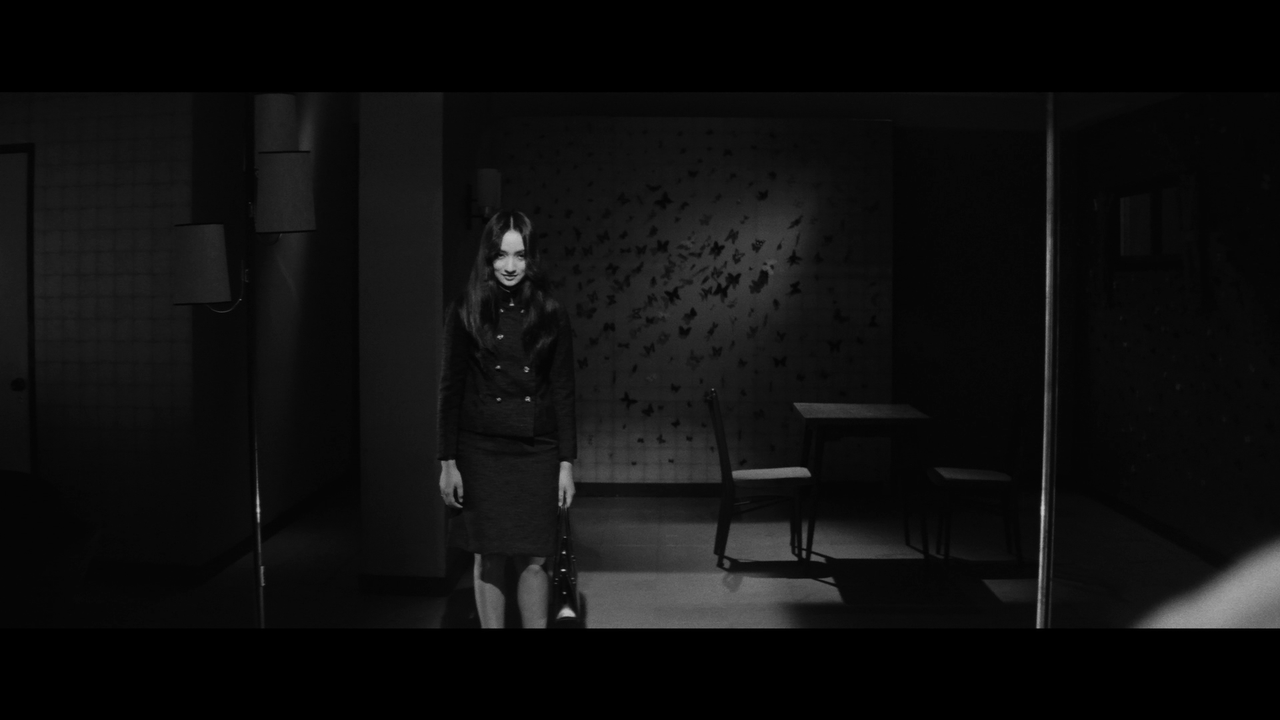
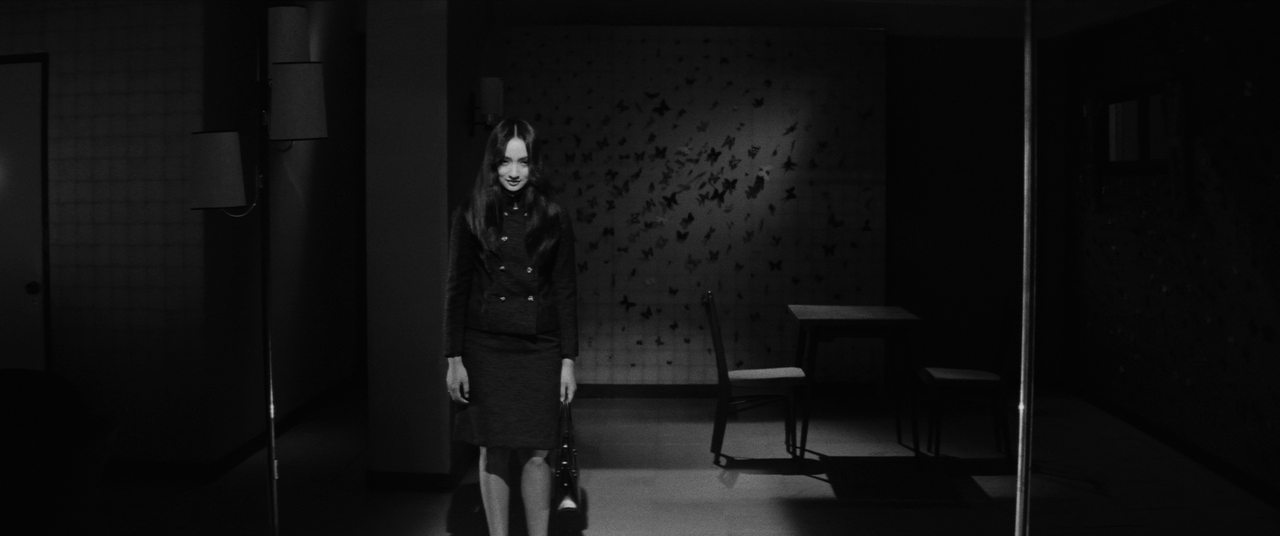
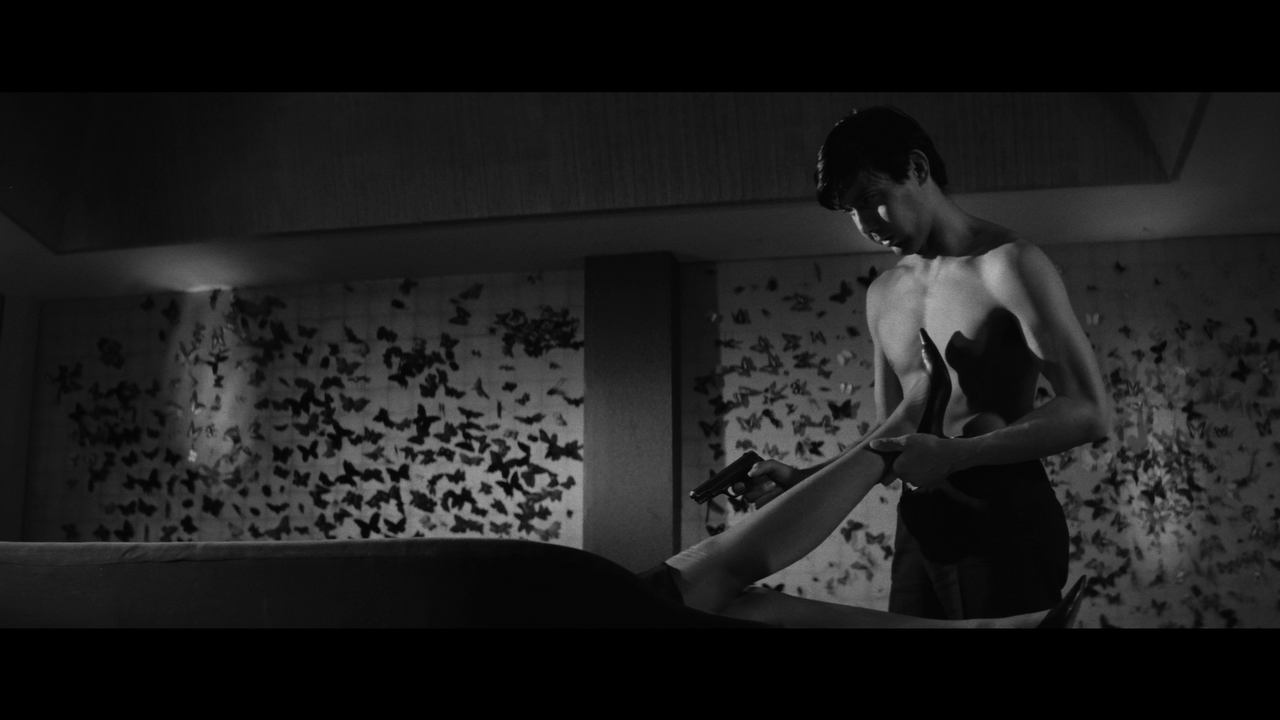
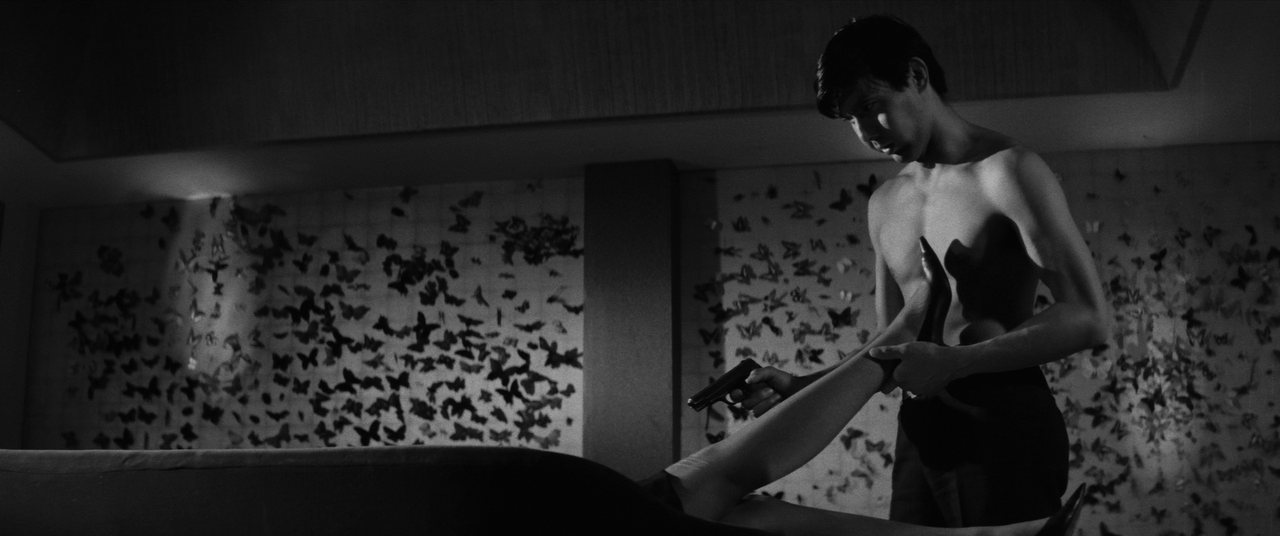
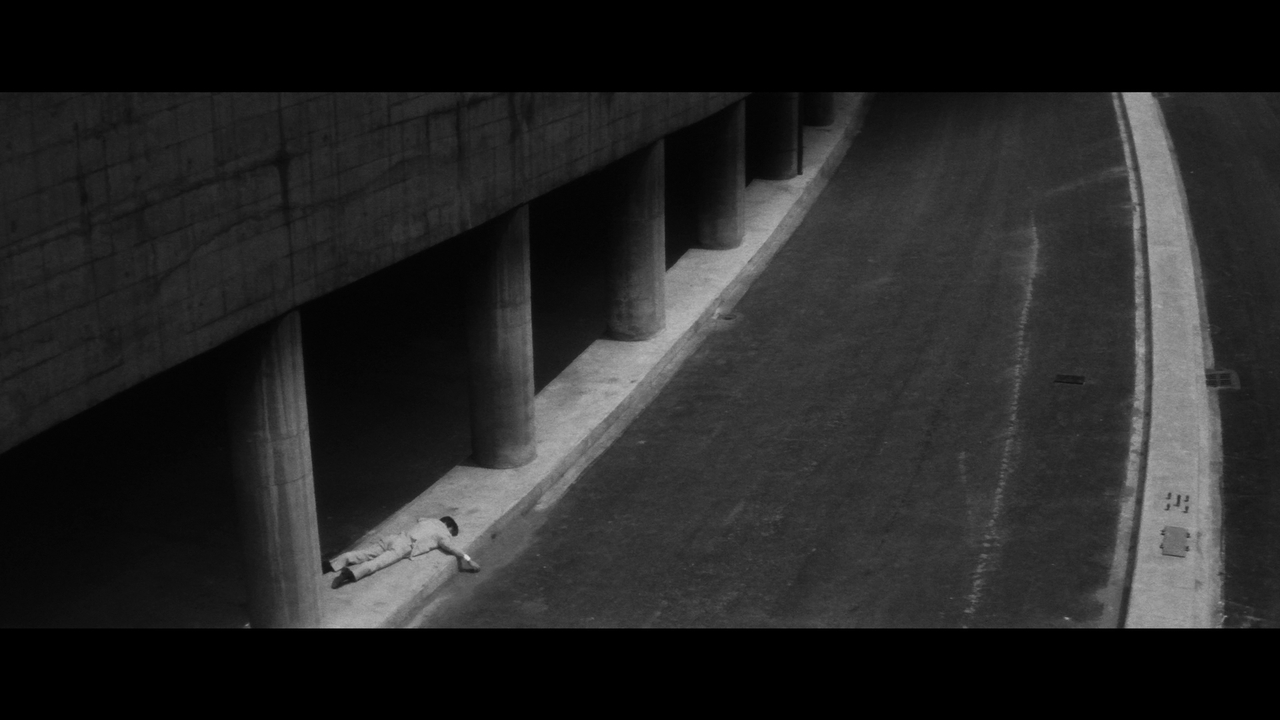
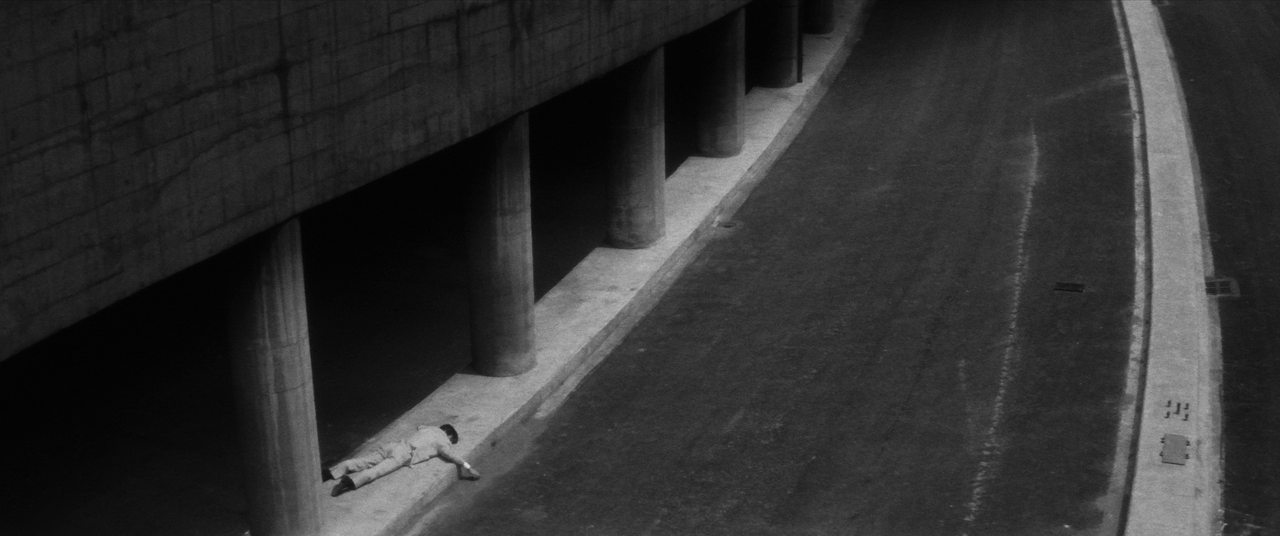
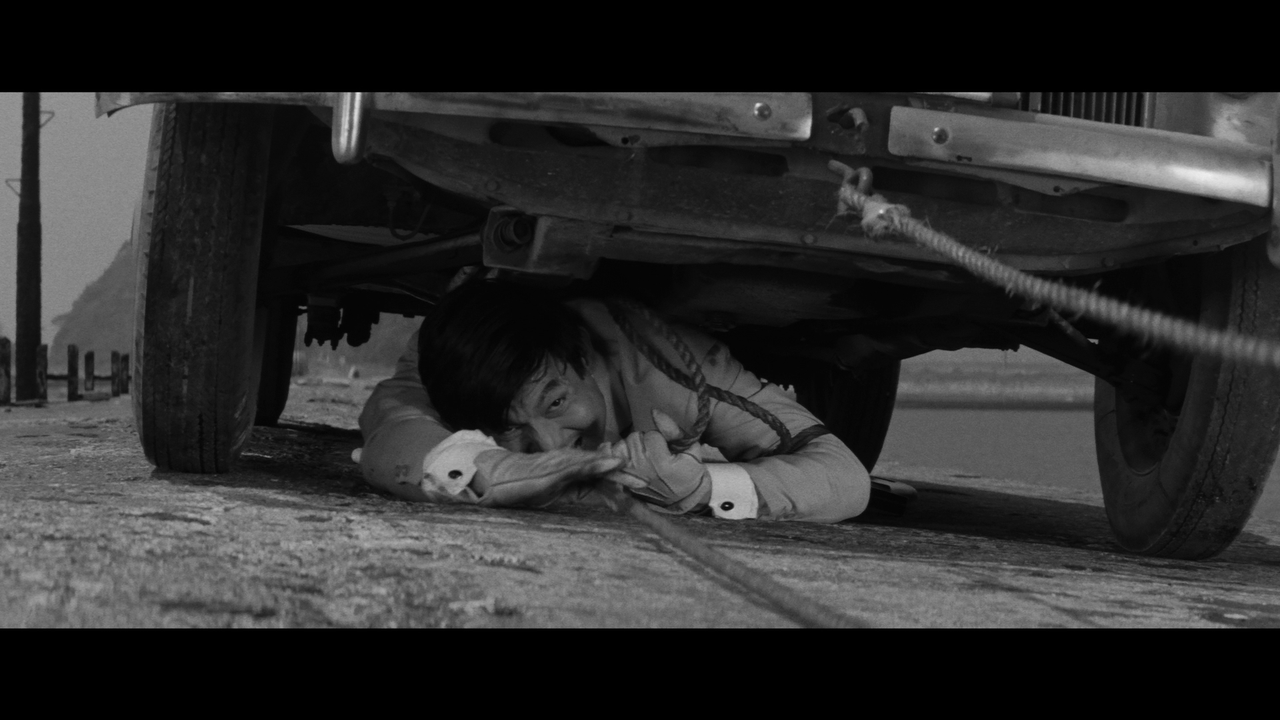
These should mostly be frame matches or nearly so. The same restoration information appears at the front of both sources, and the caps bear out that it's clearly the same source. The UHD delivers a sharper image, and thus a little more depth-of-field, better-resolved contrast, and a little more clarity. I was surprised the difference wasn't more dramatic in side-by-side comparison, but in playback the Criterion UHD source is obviously better.
NIKKATSU
CRITERION UHD
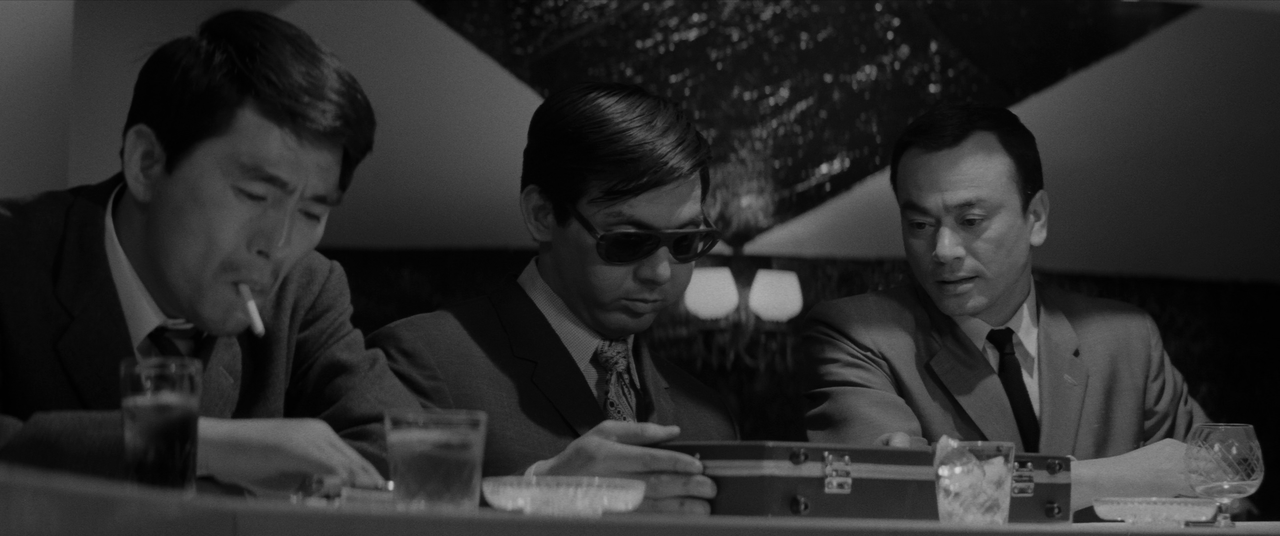
NIKKATSU
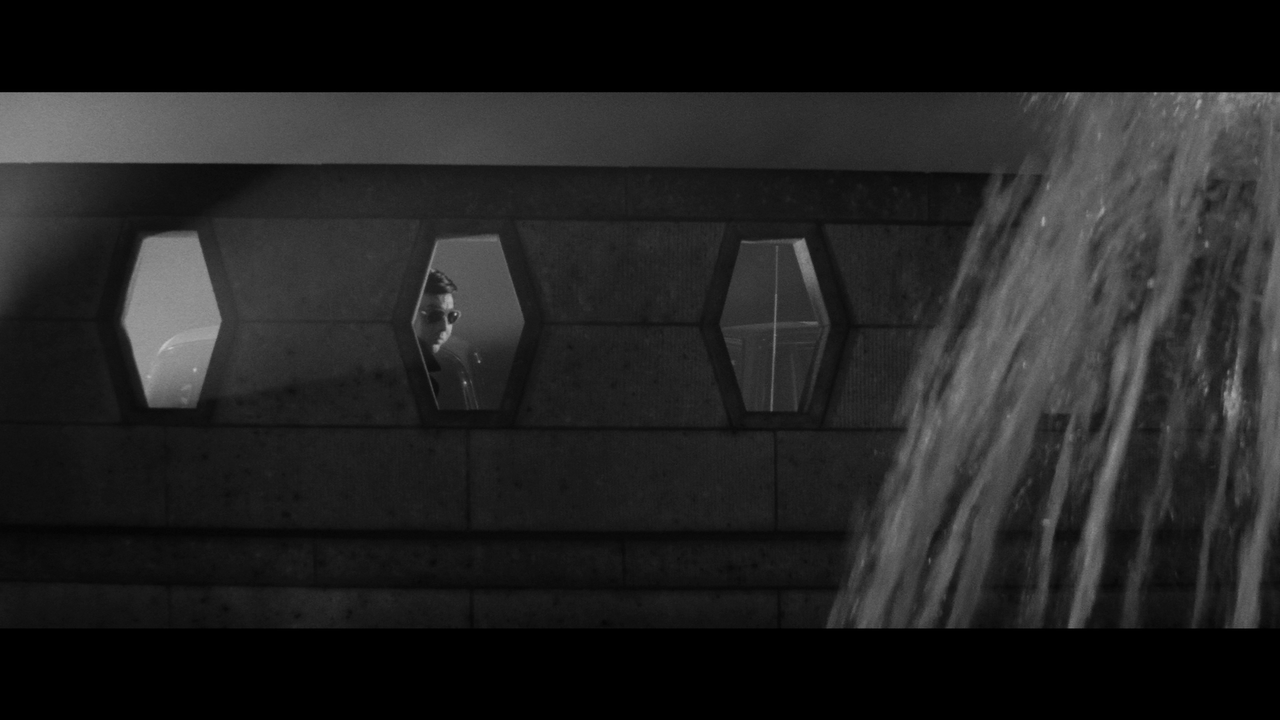
CRITERION UHD
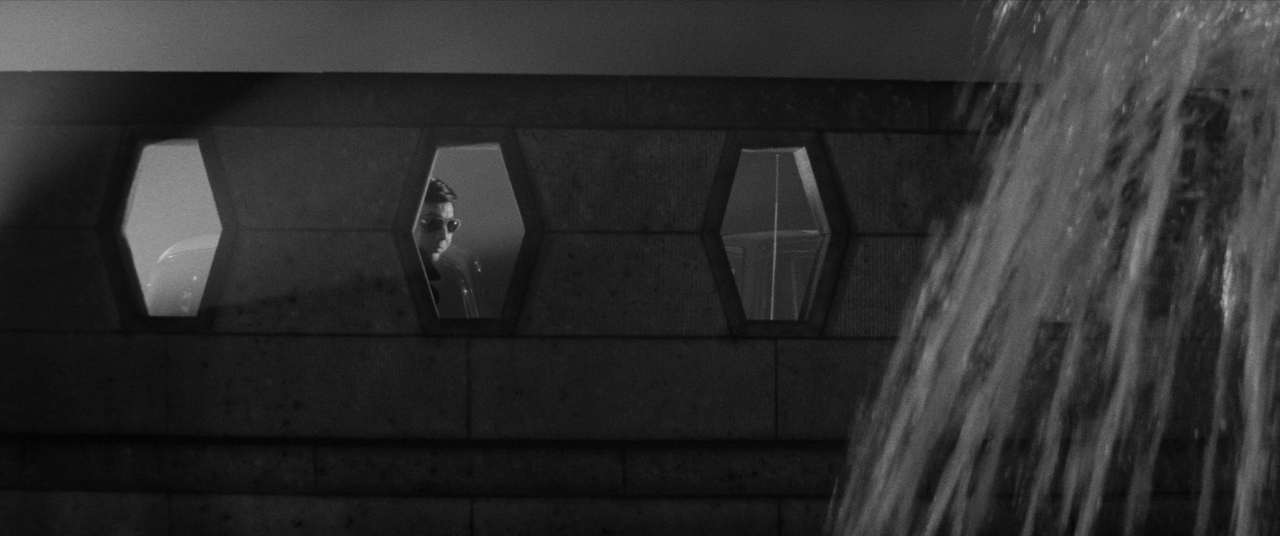
NIKKATSU
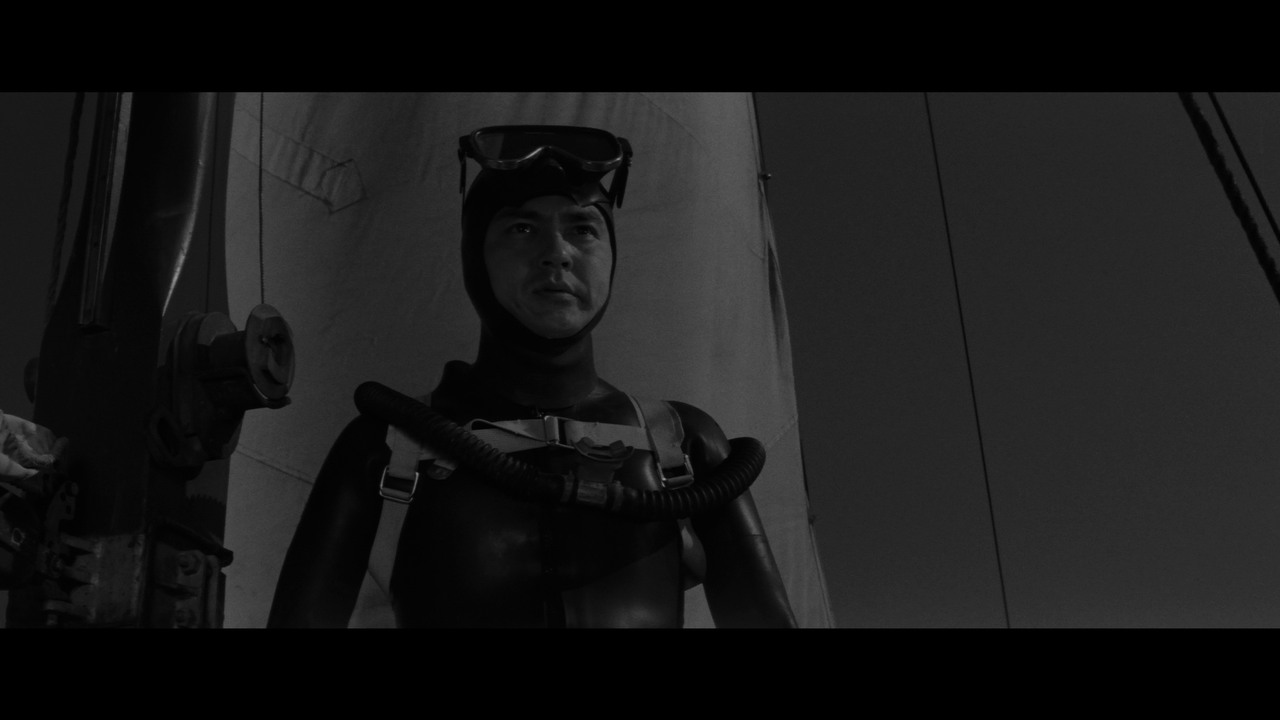
CRITERION UHD
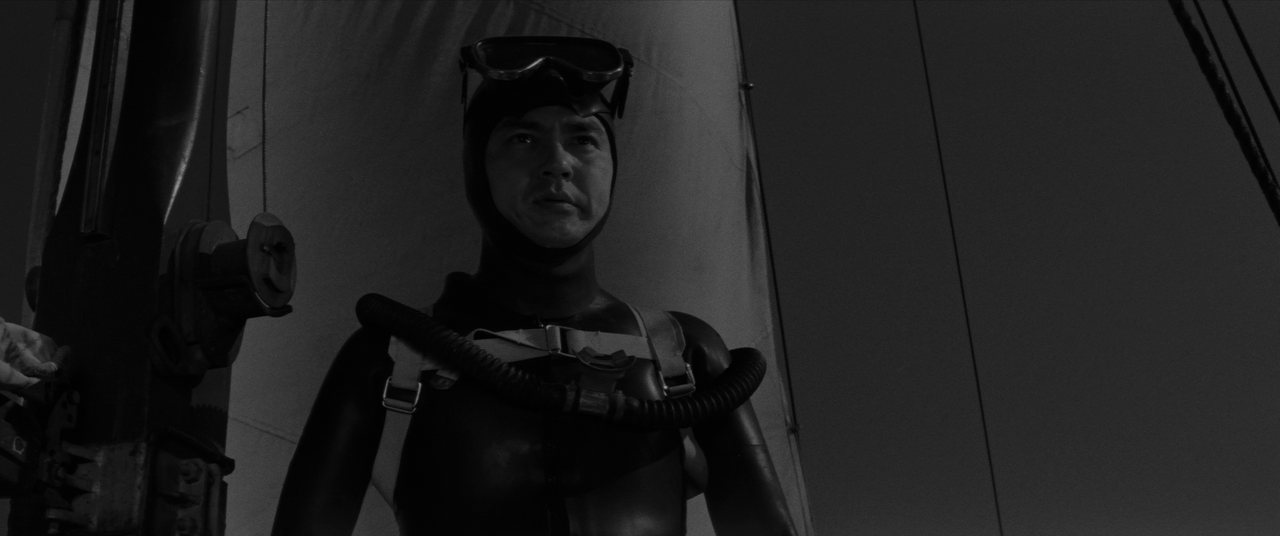
NIKKATSU
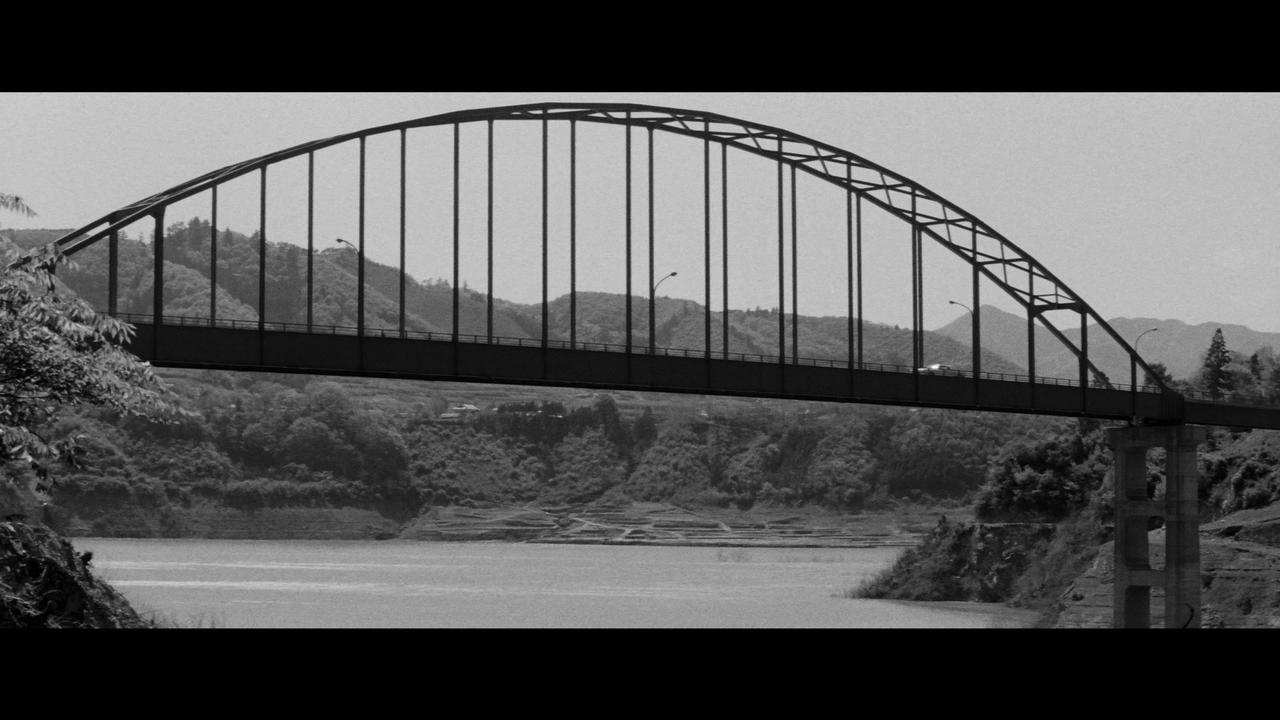
CRITERION UHD
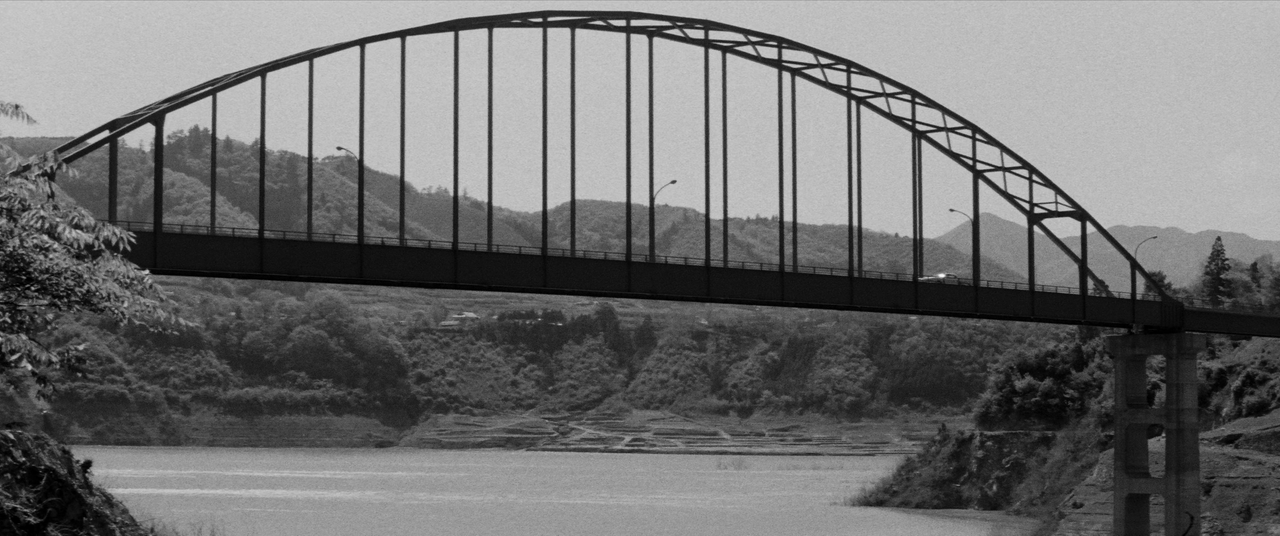
NIKKATSU
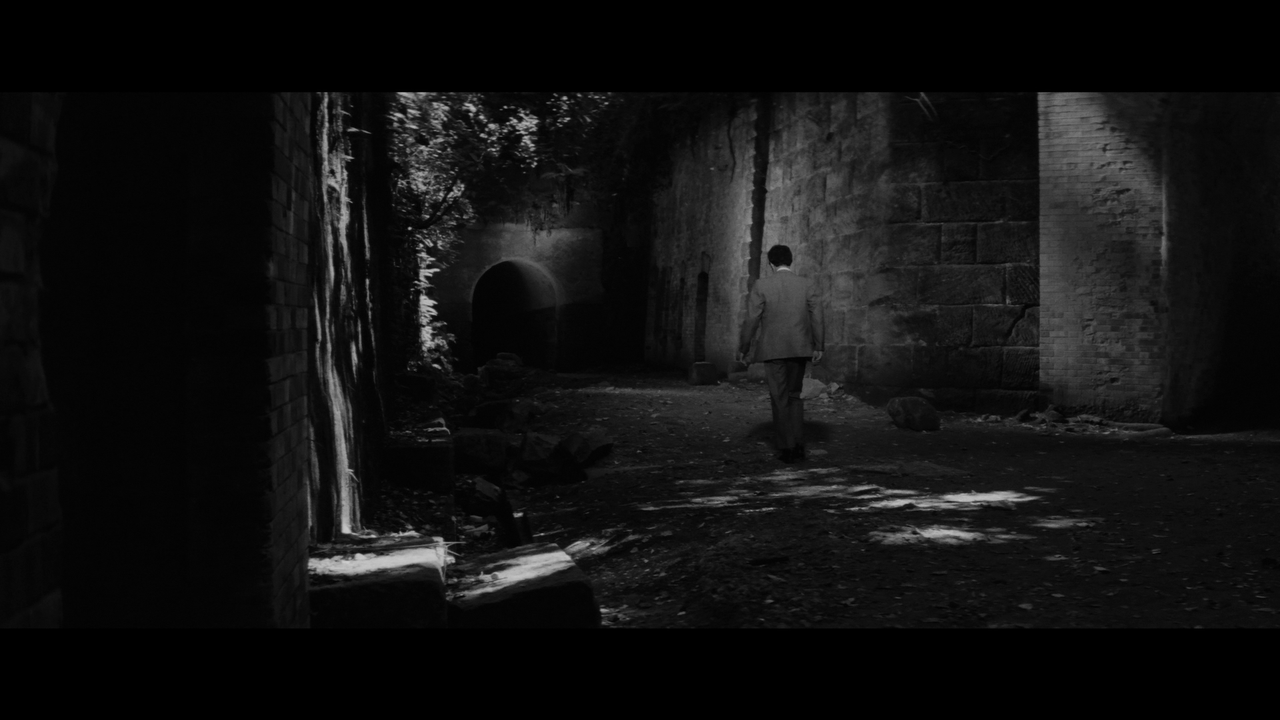
CRITERION UHD
NIKKATSU
CRITERION UHD
NIKKATSU
CRITERION UHD
NIKKATSU
CRITERION UHD
NIKKATSU
CRITERION UHD
NIKKATSU
CRITERION UHD
NIKKATSU
CRITERION UHD
NIKKATSU
CRITERION UHD
NIKKATSU
CRITERION UHD
NIKKATSU
CRITERION UHD
NIKKATSU
CRITERION UHD
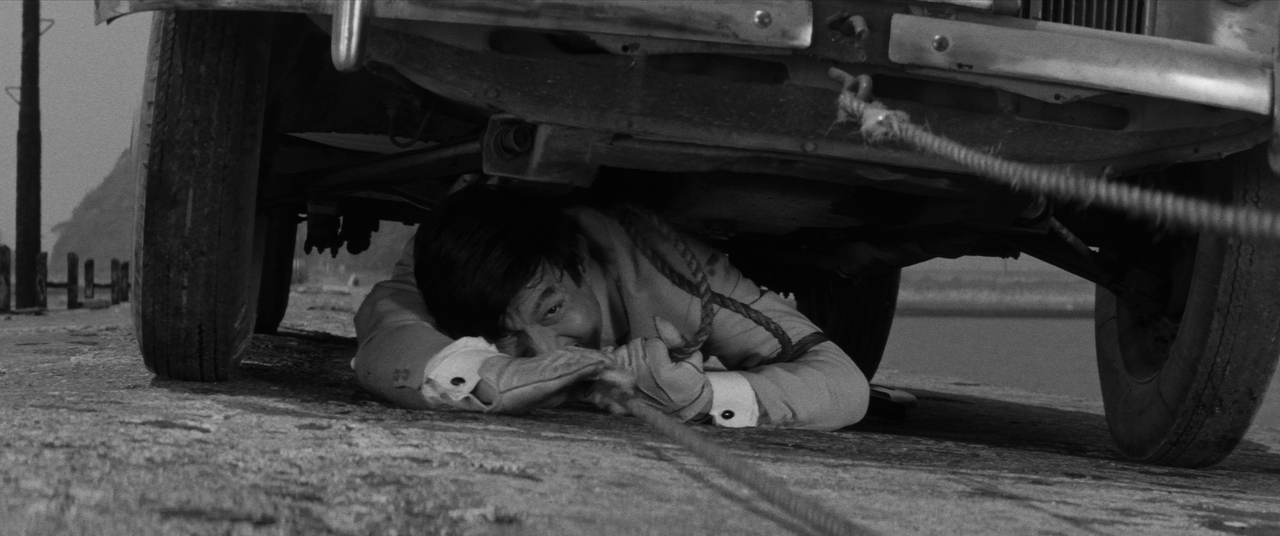
NIKKATSU
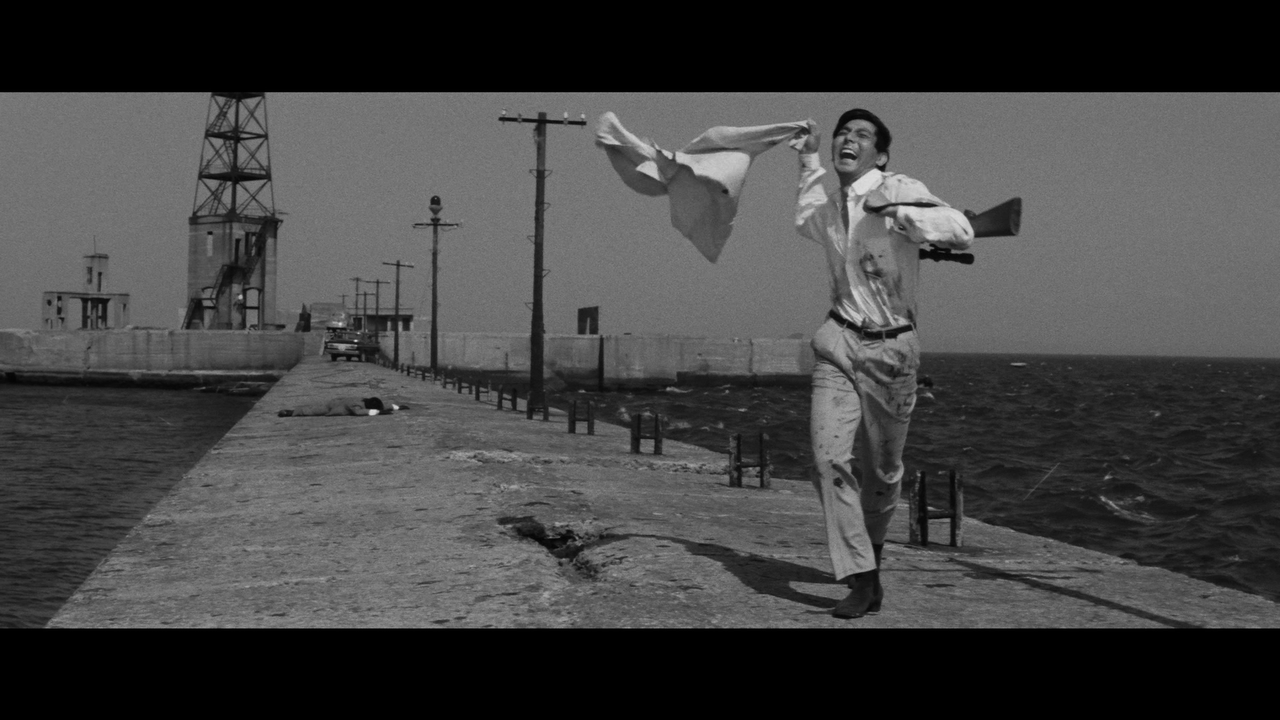
CRITERION UHD
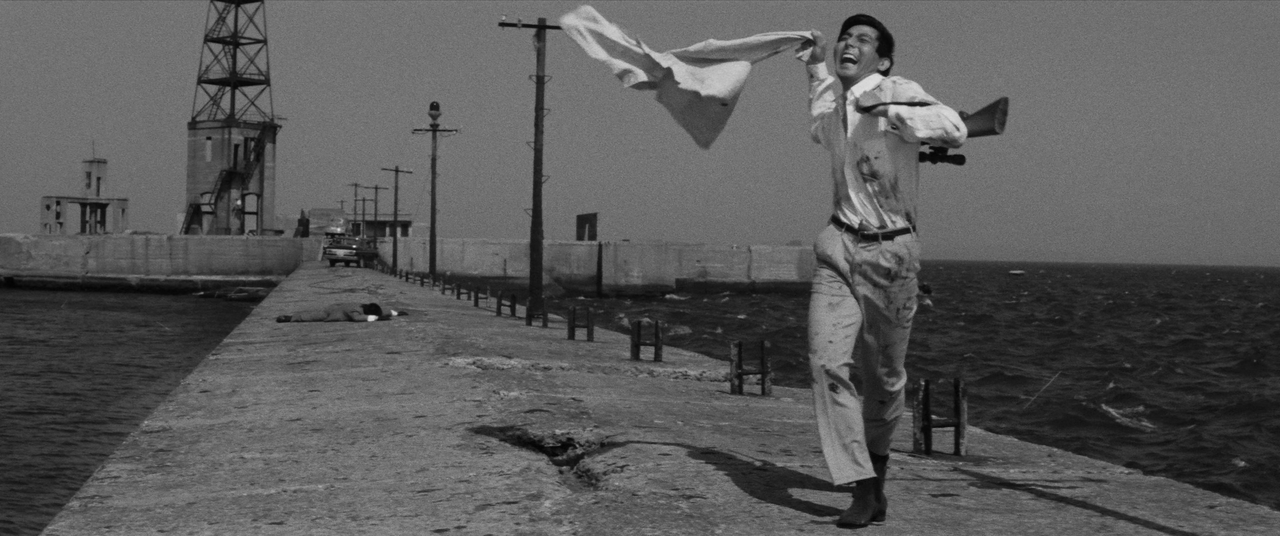
NIKKATSU
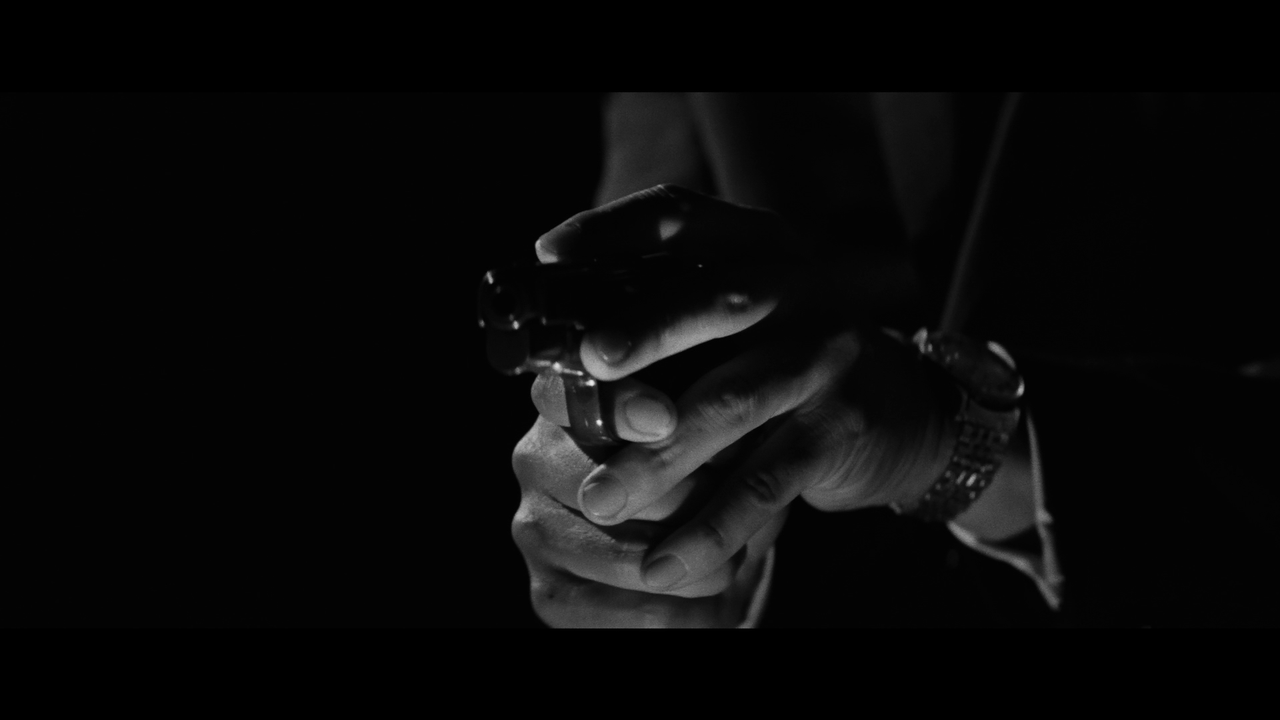
CRITERION UHD
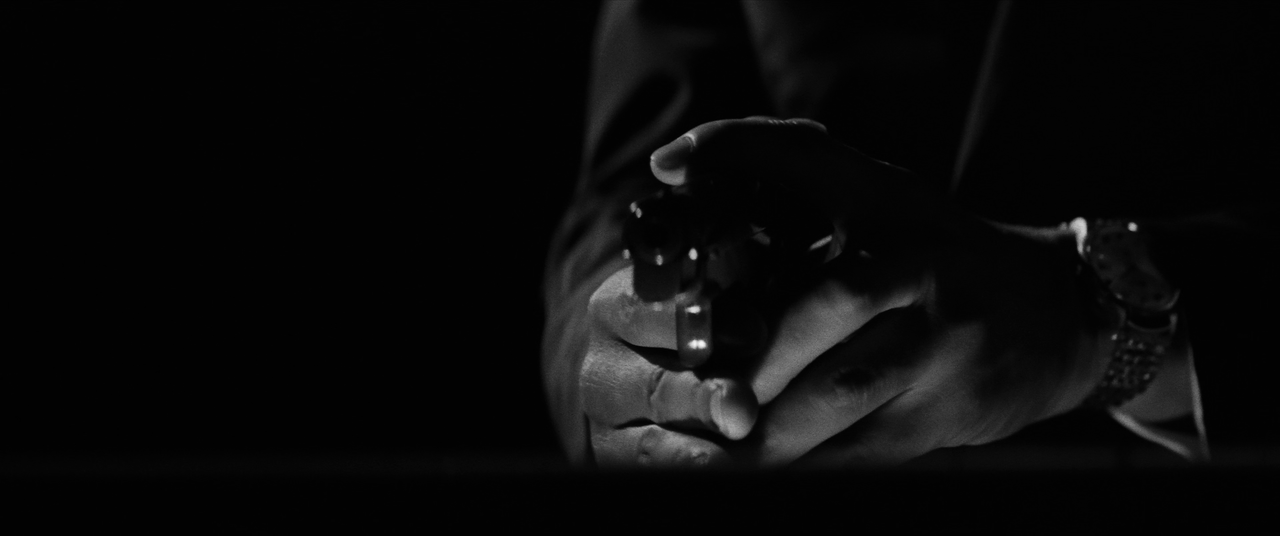
NIKKATSU
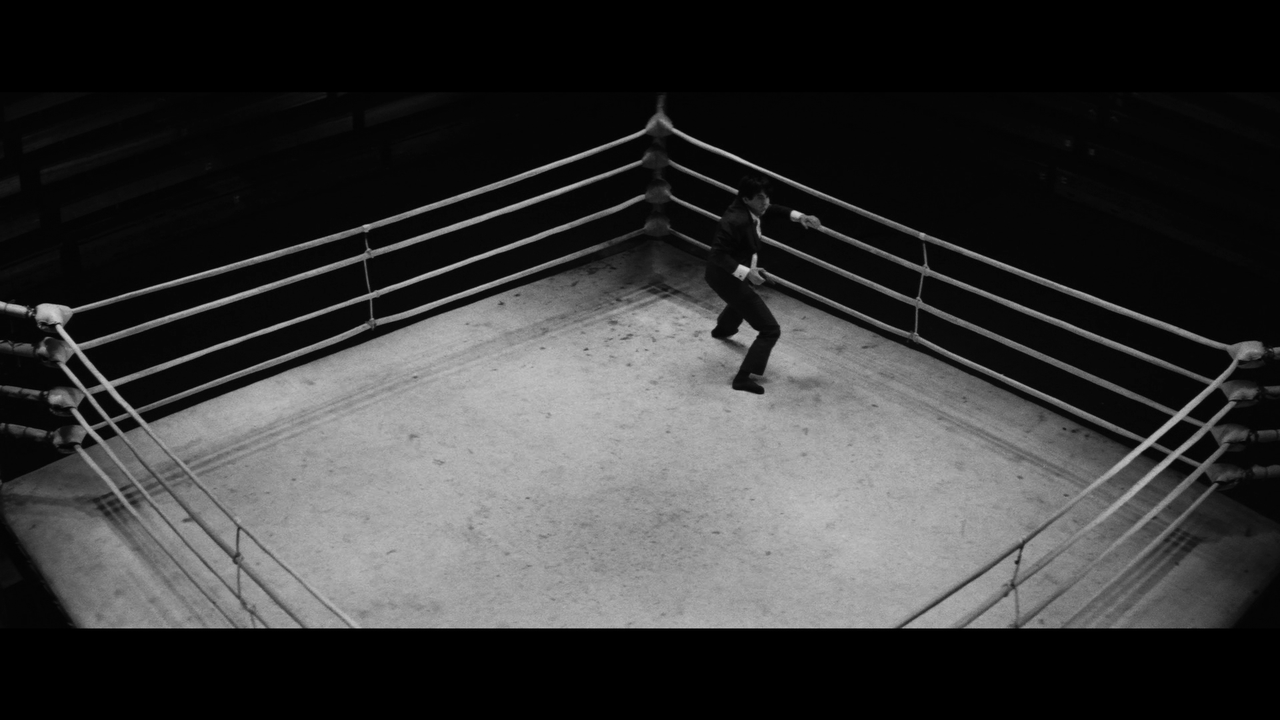
CRITERION UHD
 THE AMERICANS
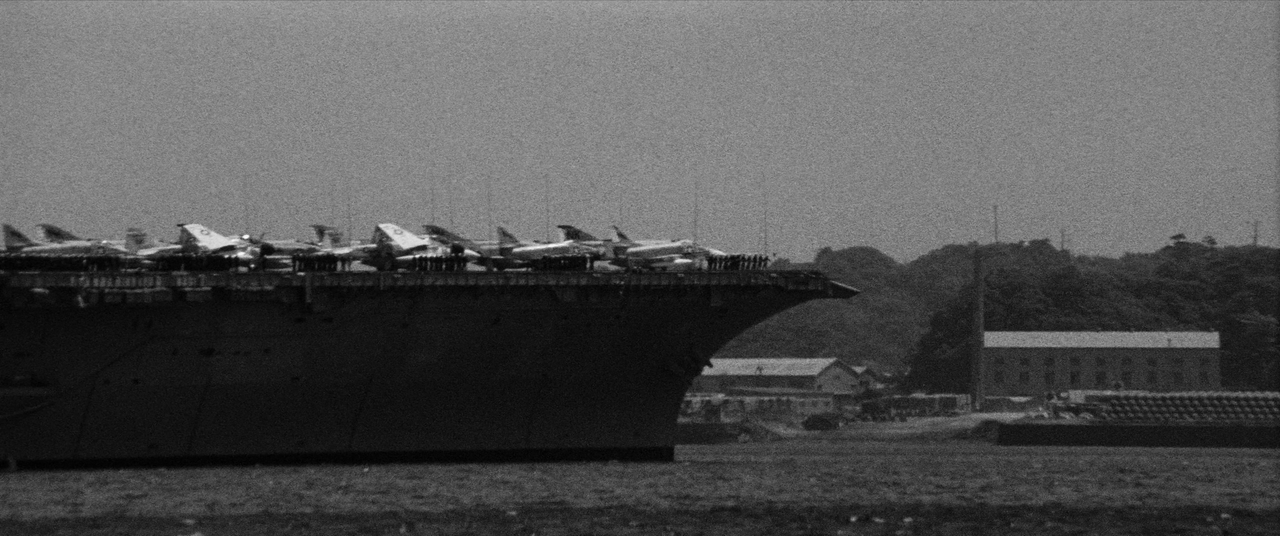
Oh, wait––The Americans! I almost forgot how much shots like this are supposed to mean about imperialism and whatever. Oh well. Out of time. More on that in later reviews, I suppose!