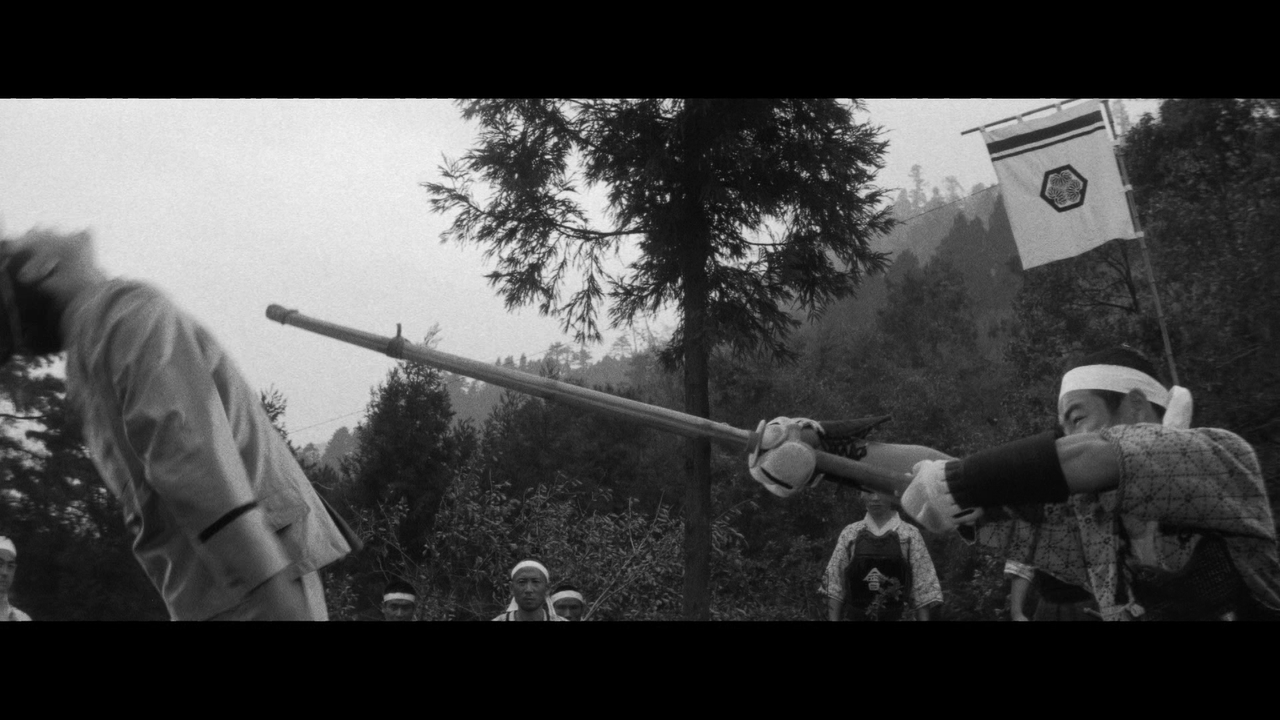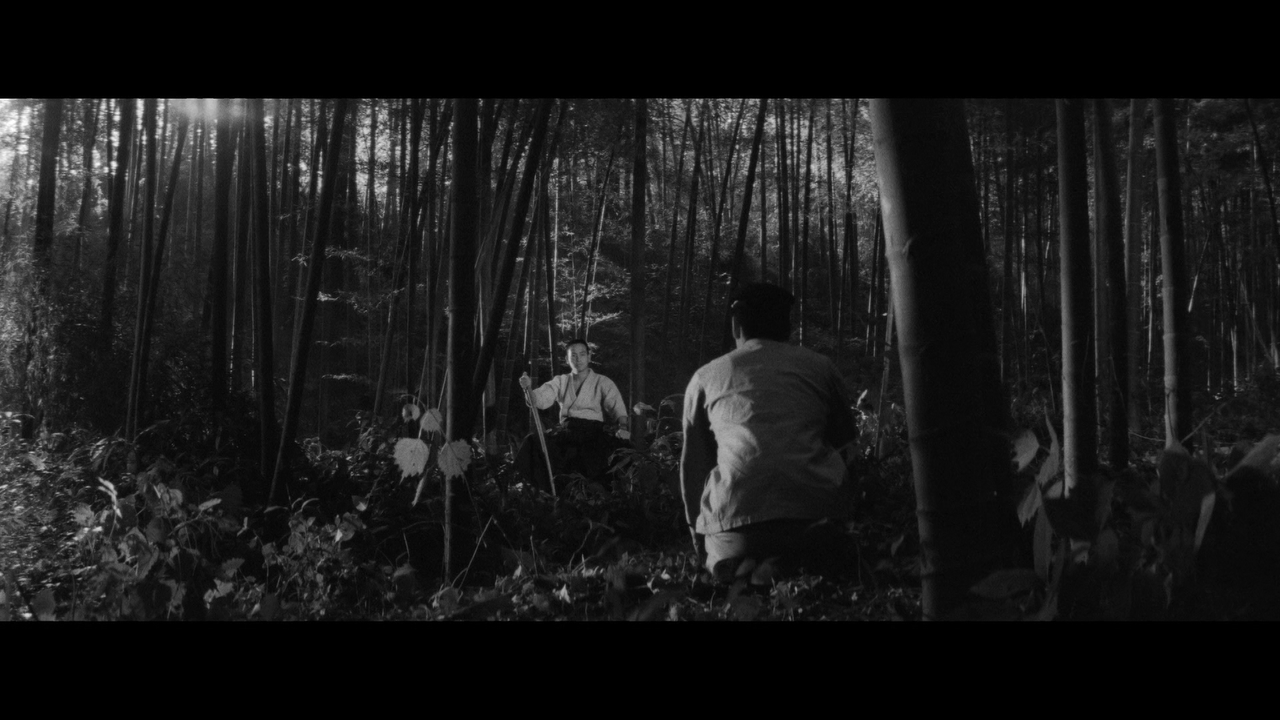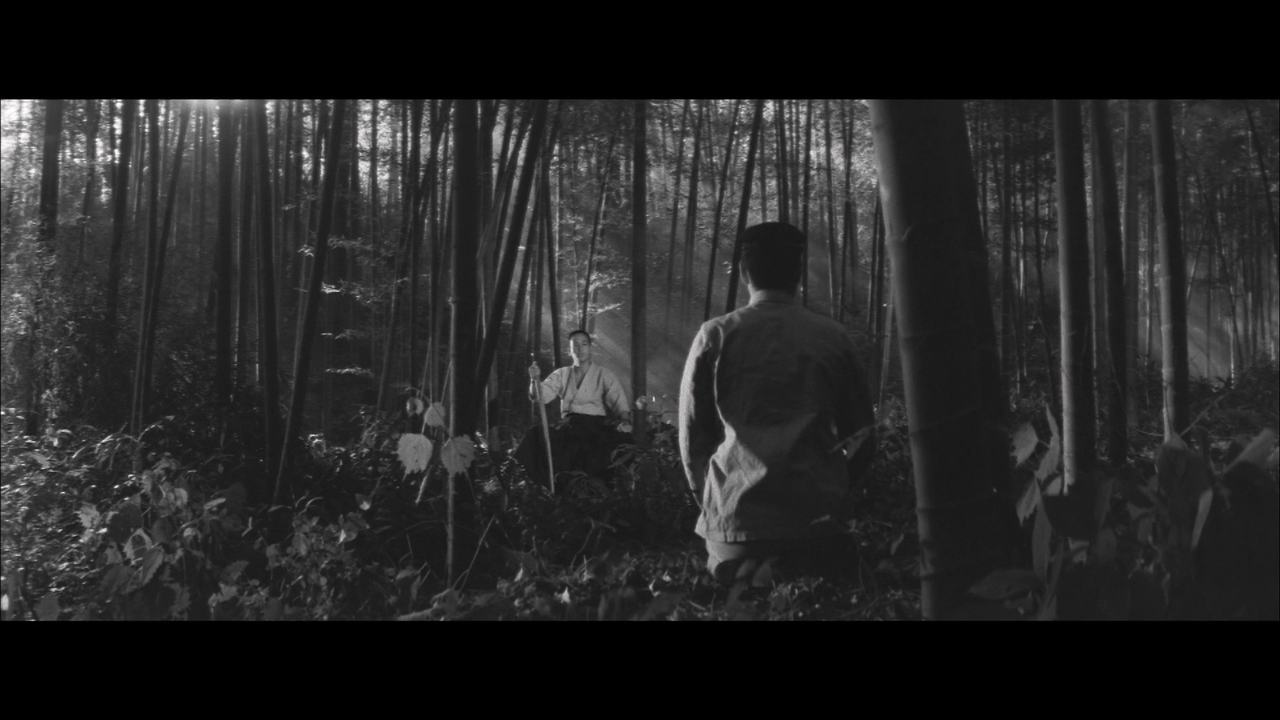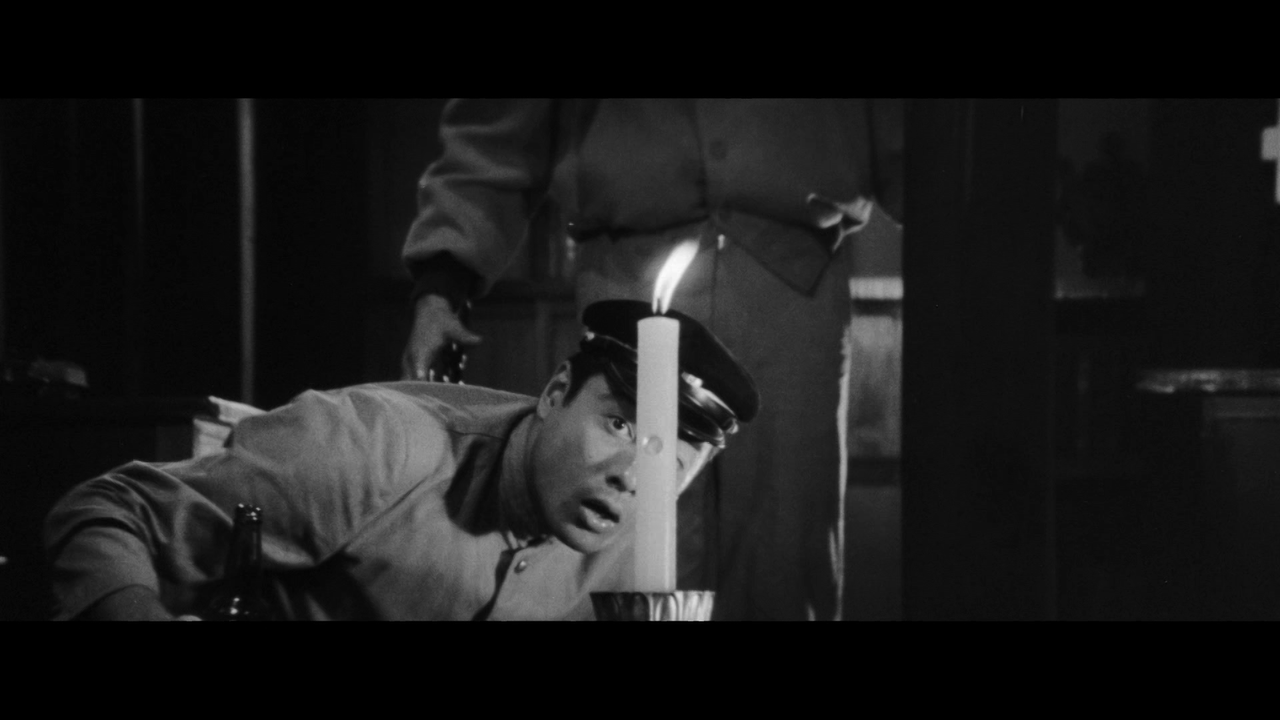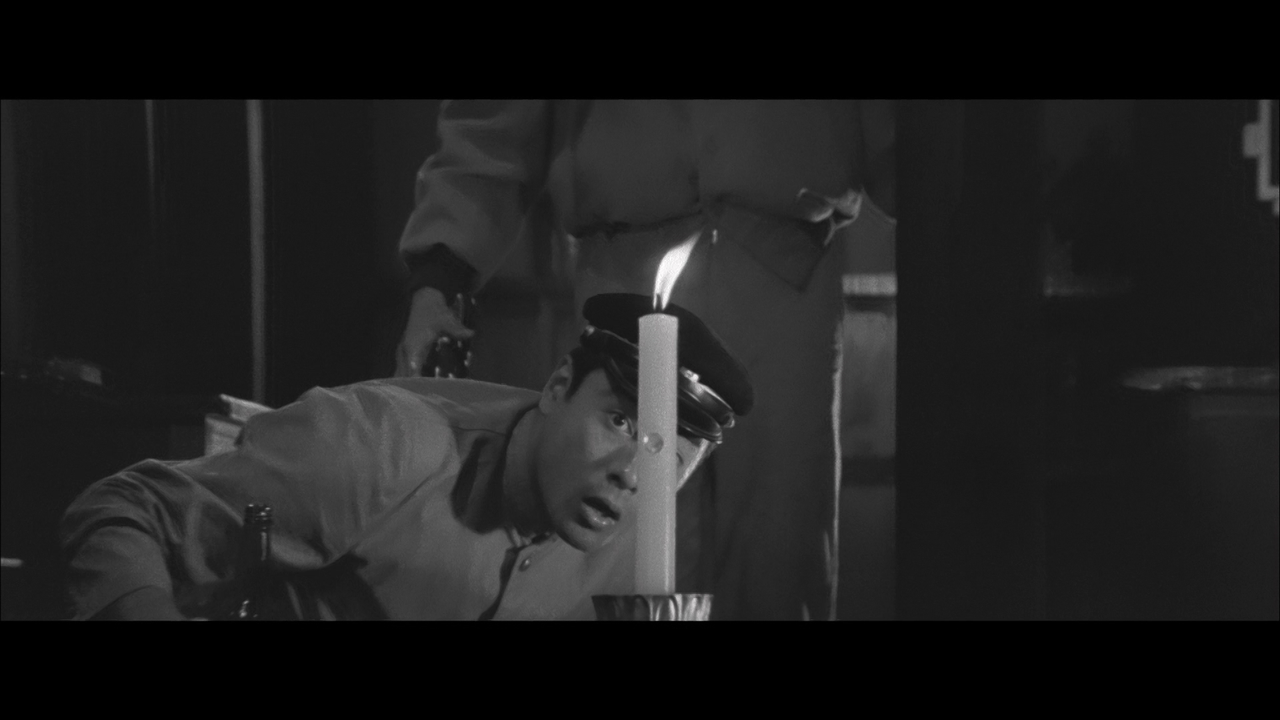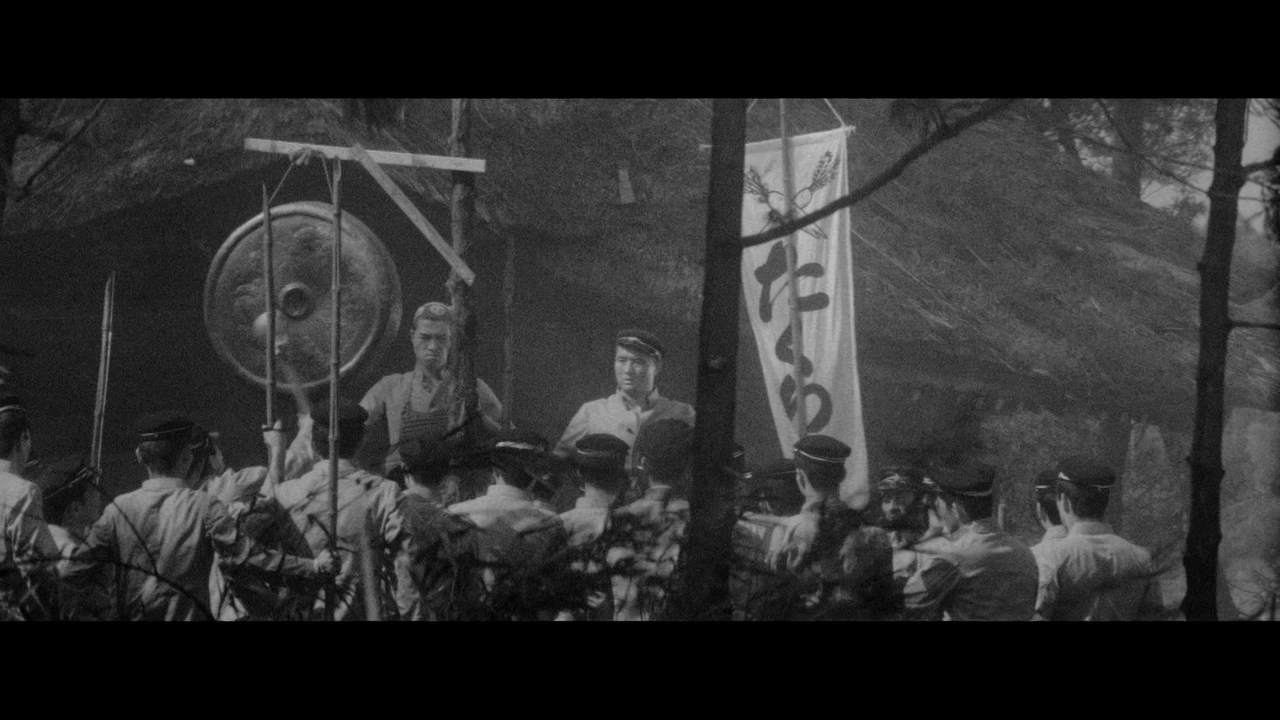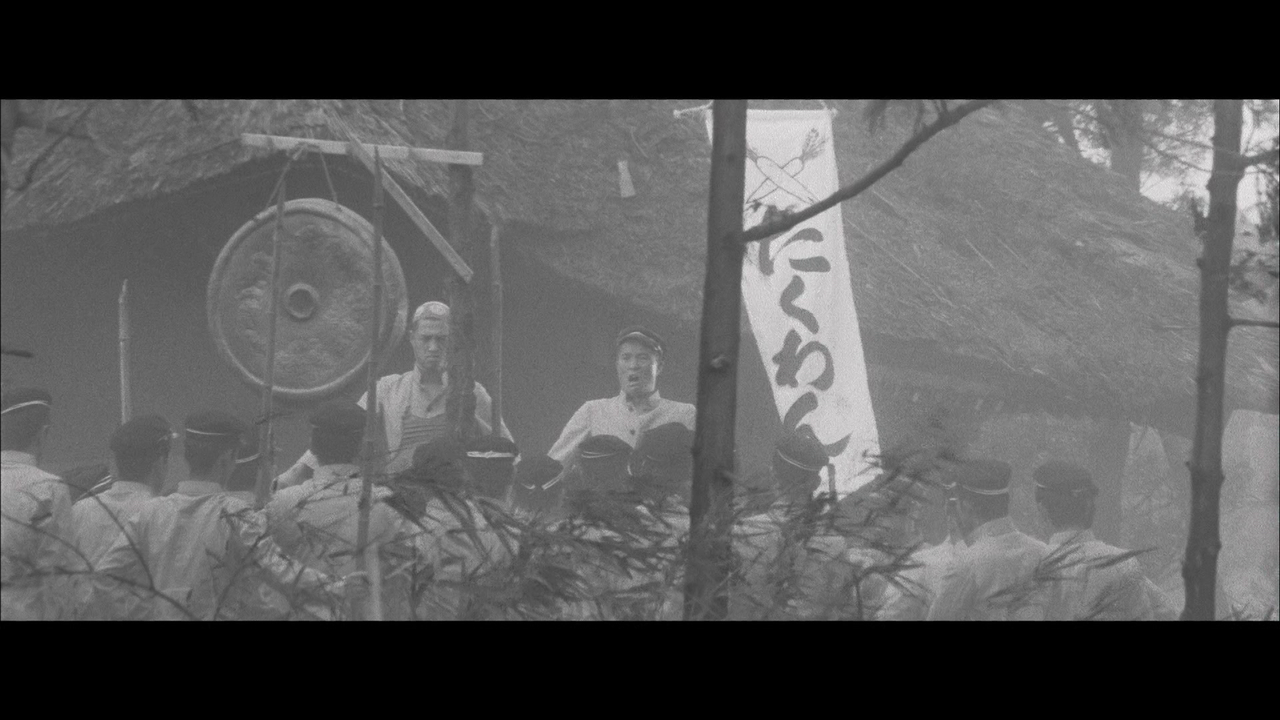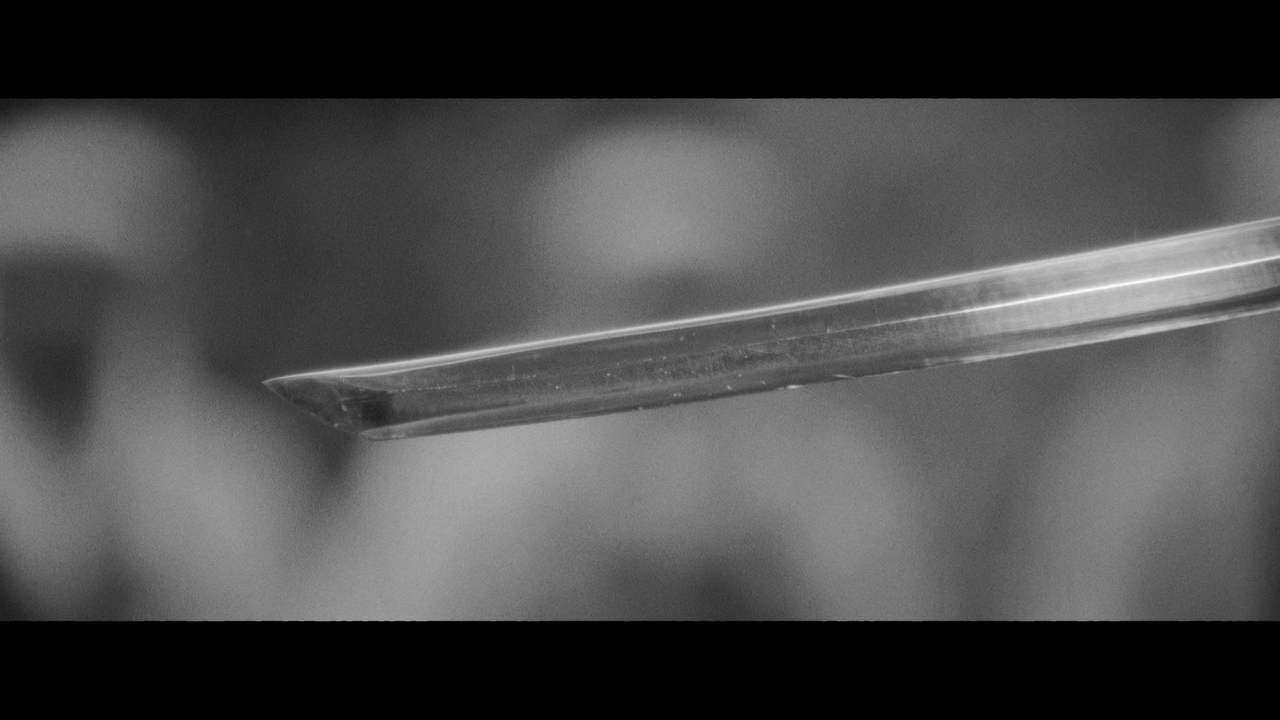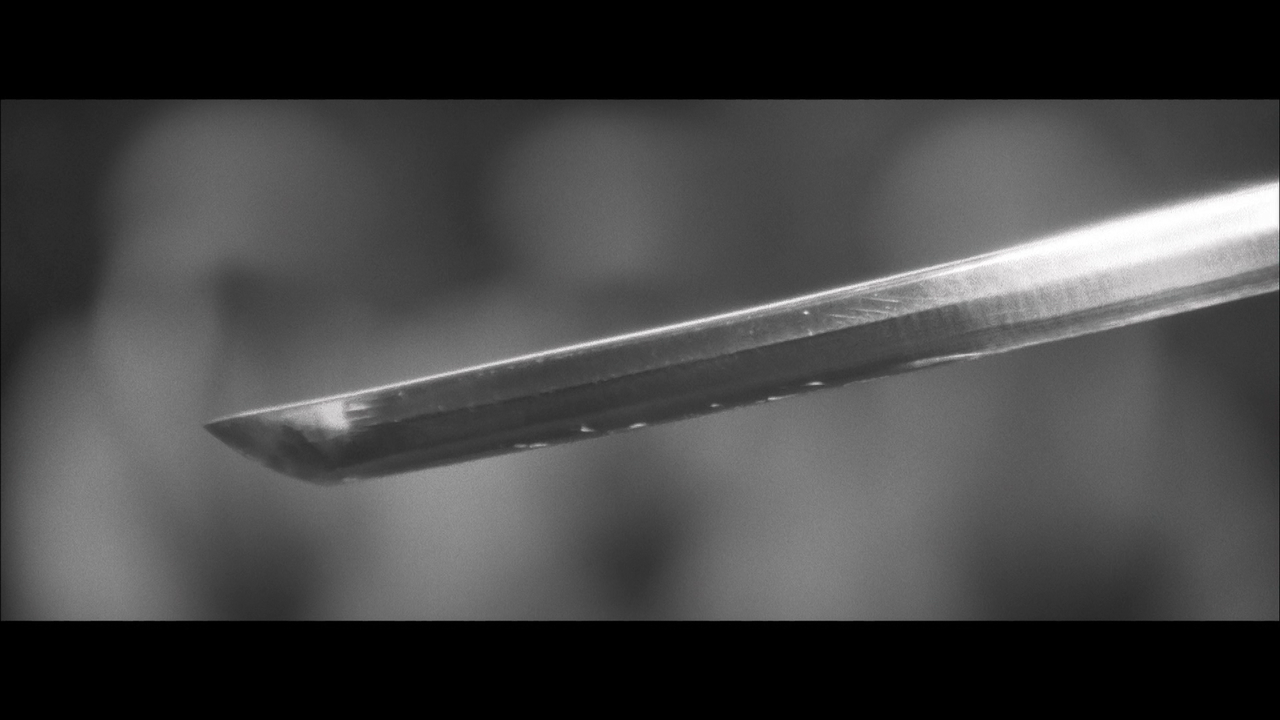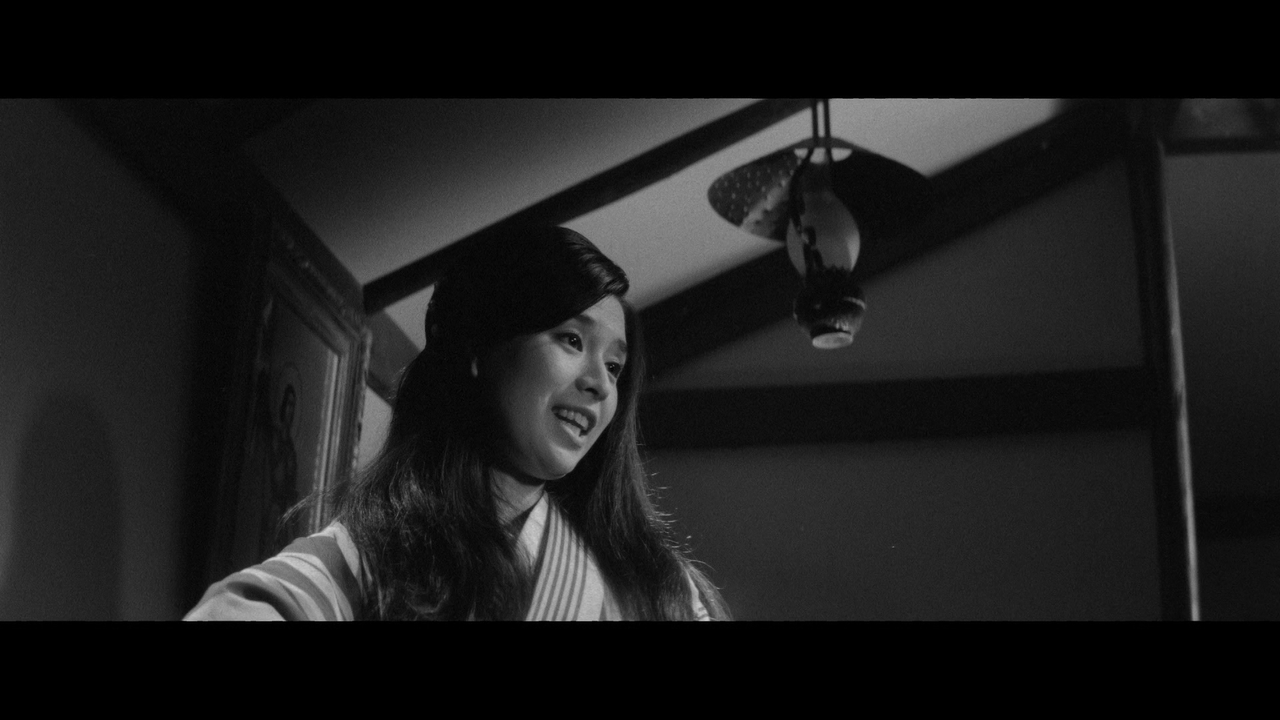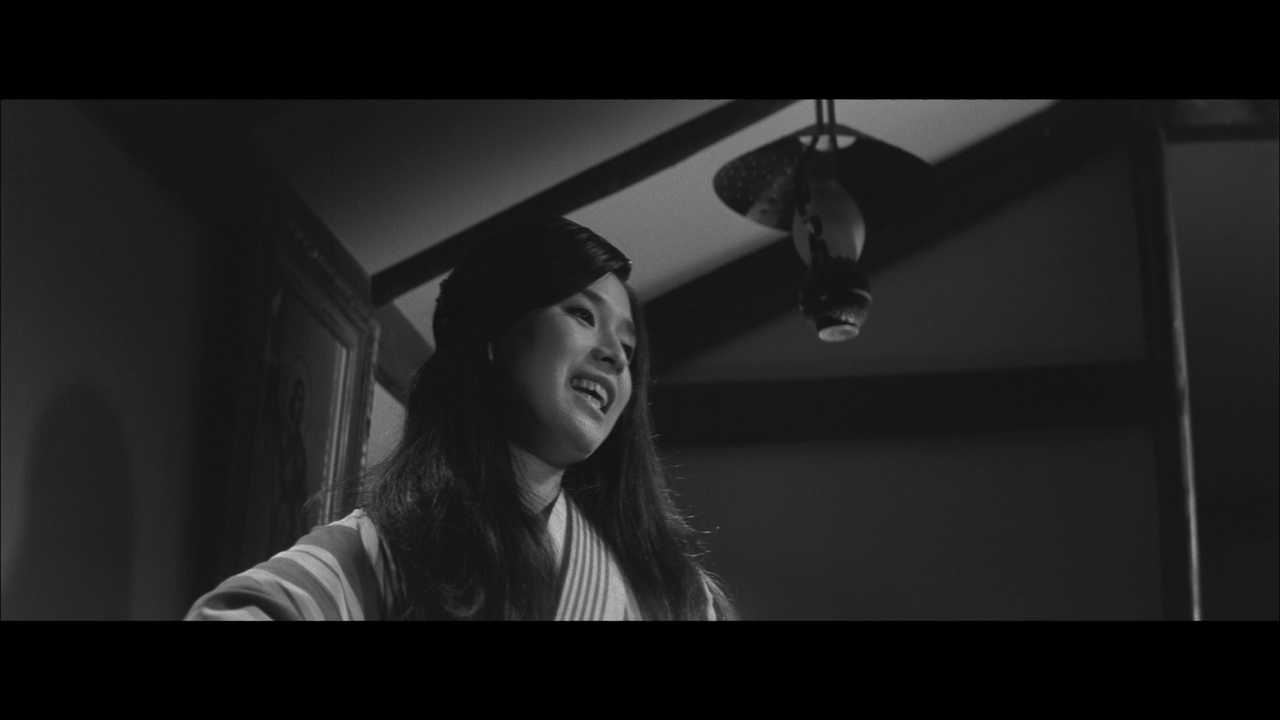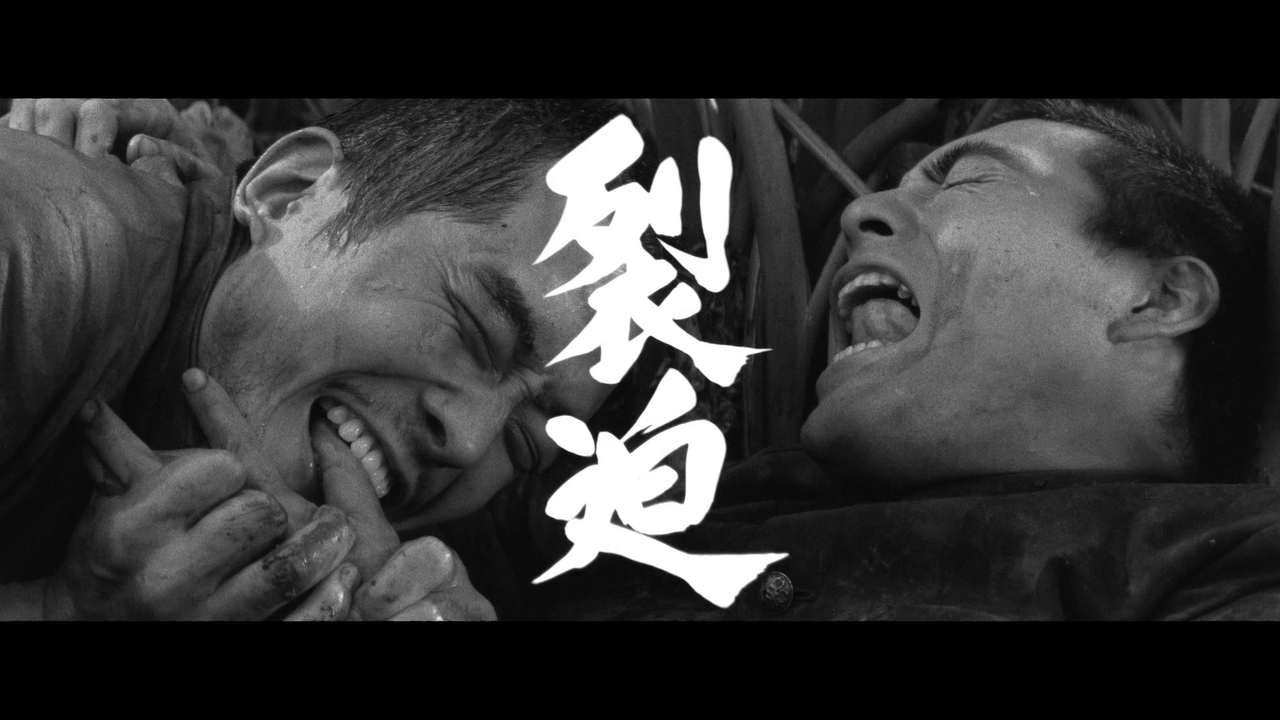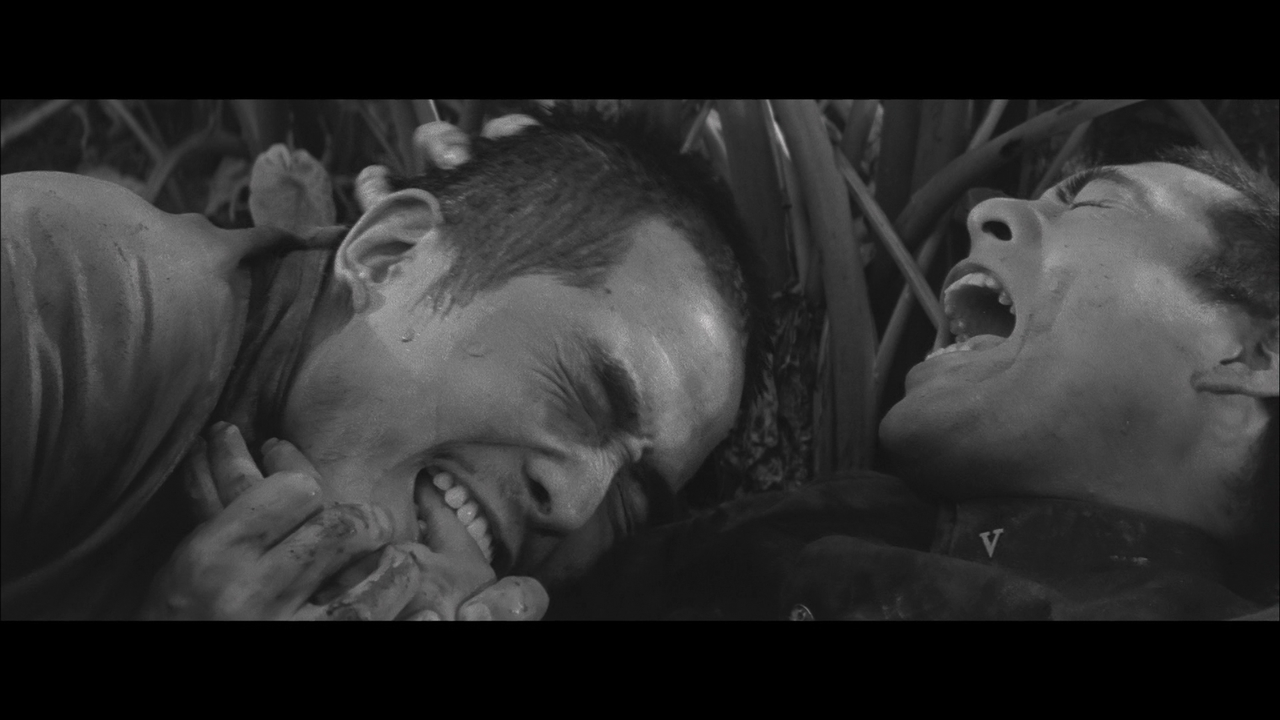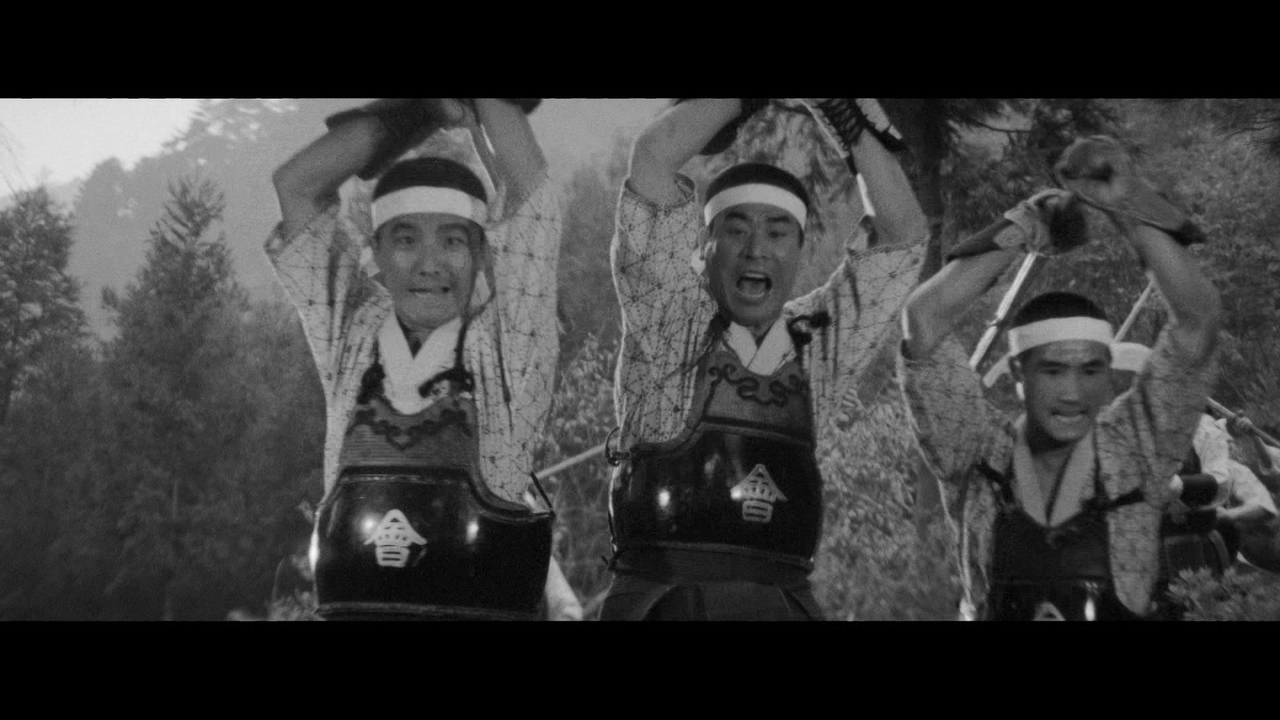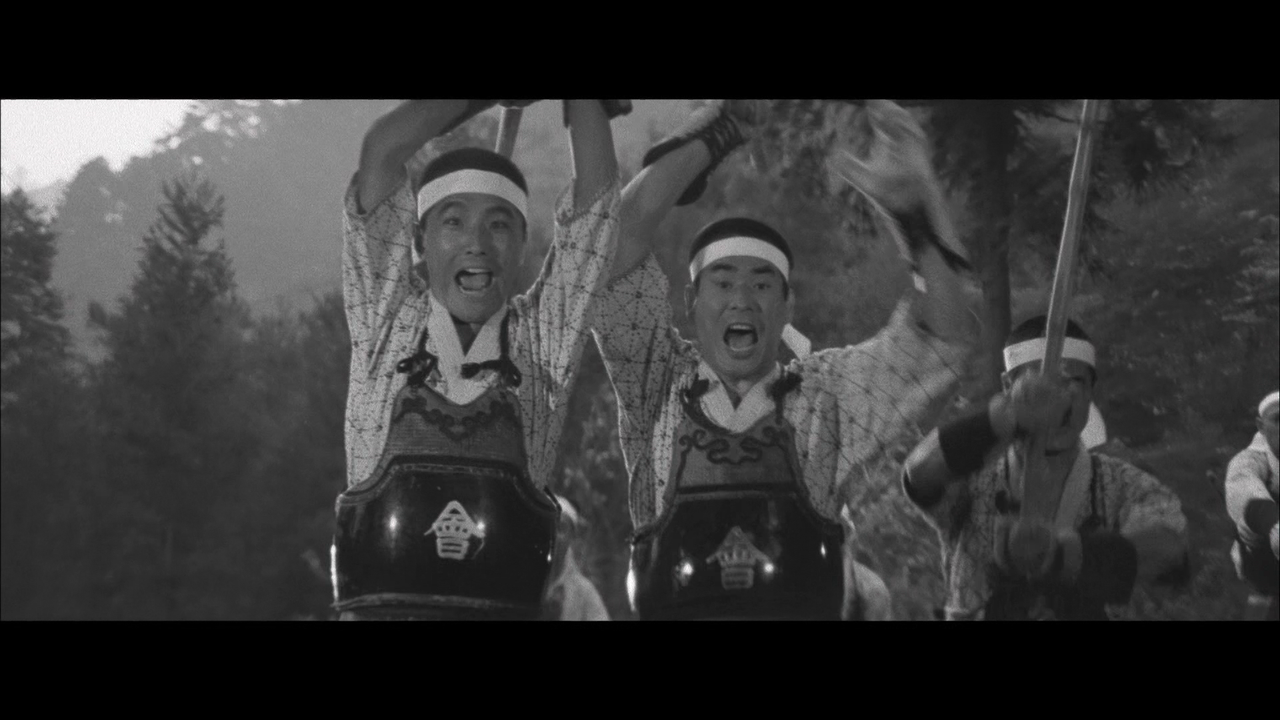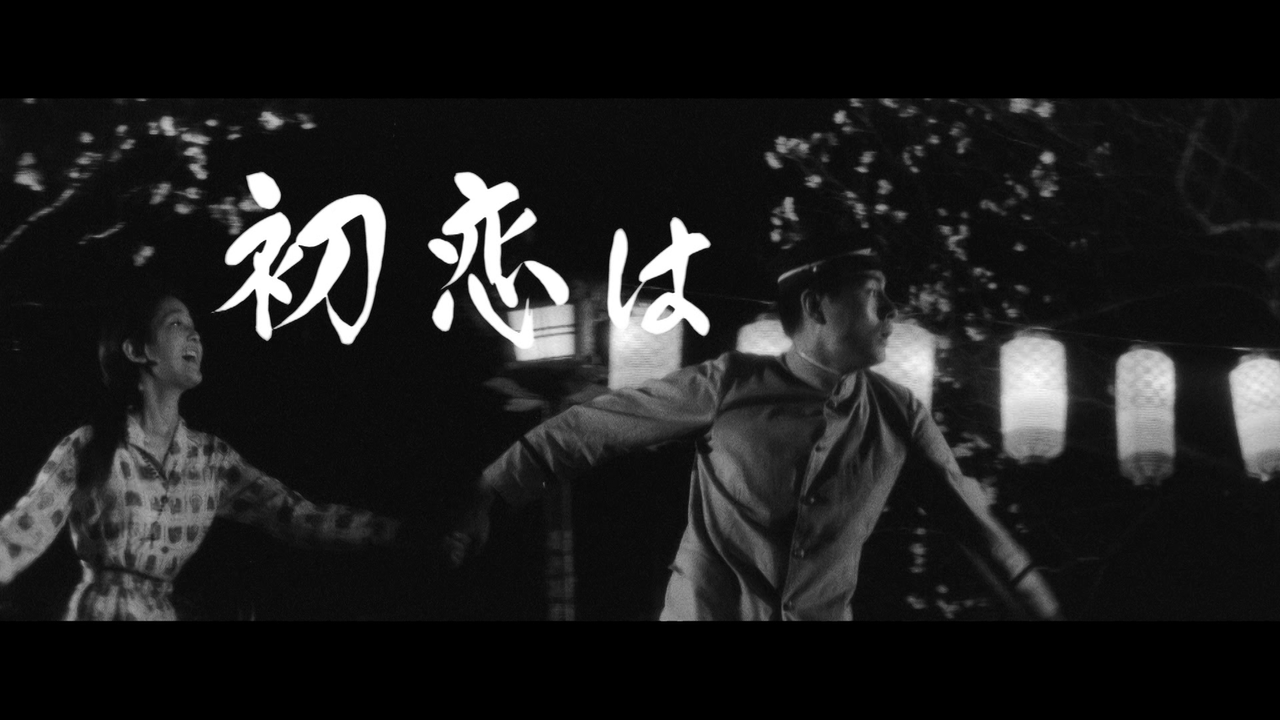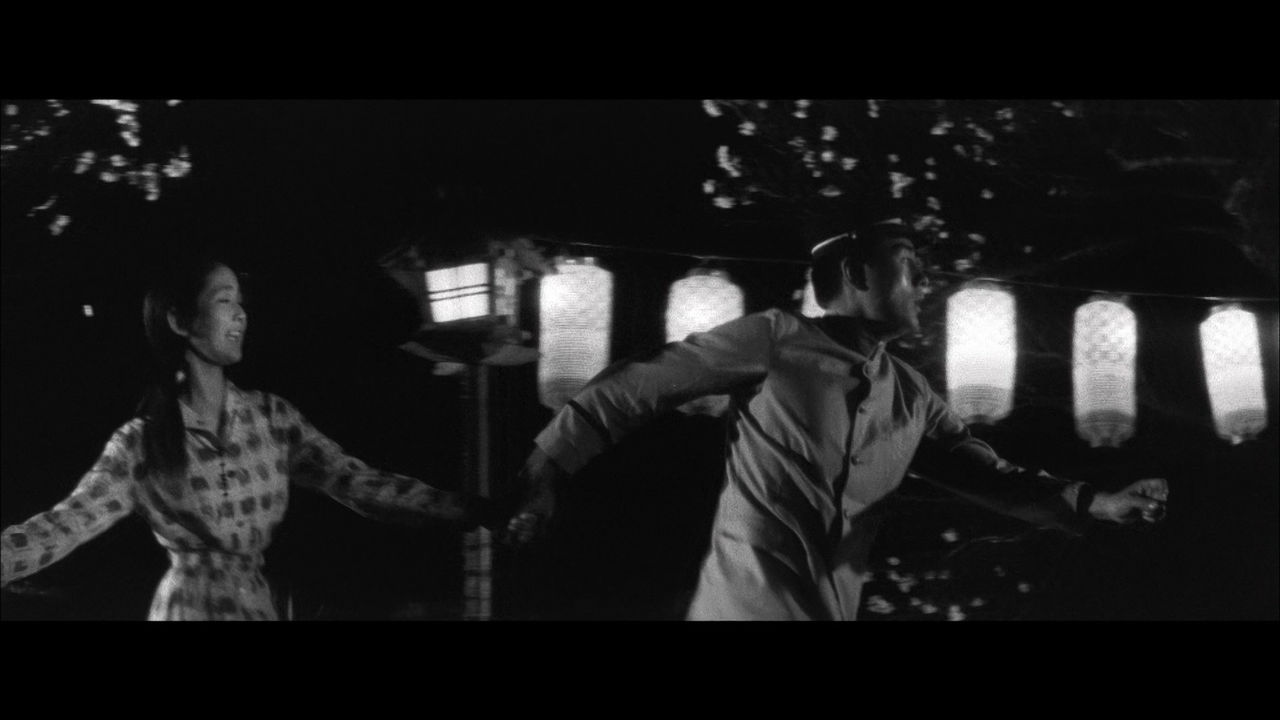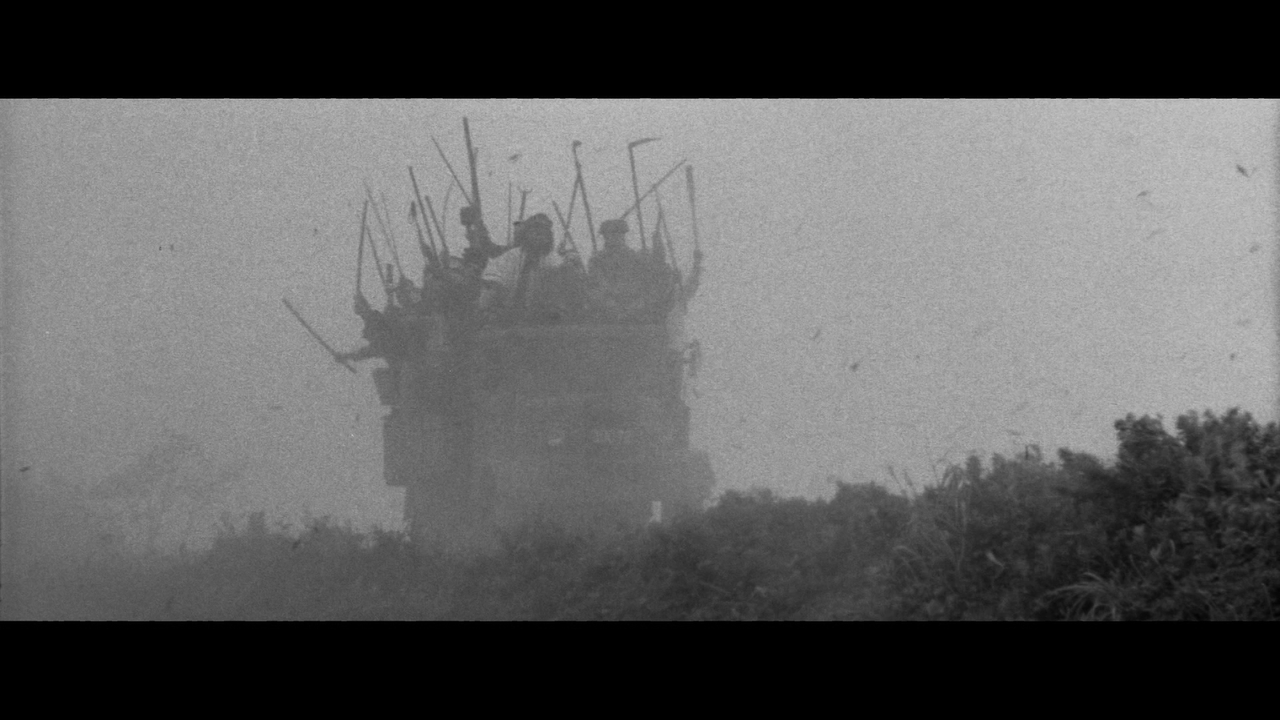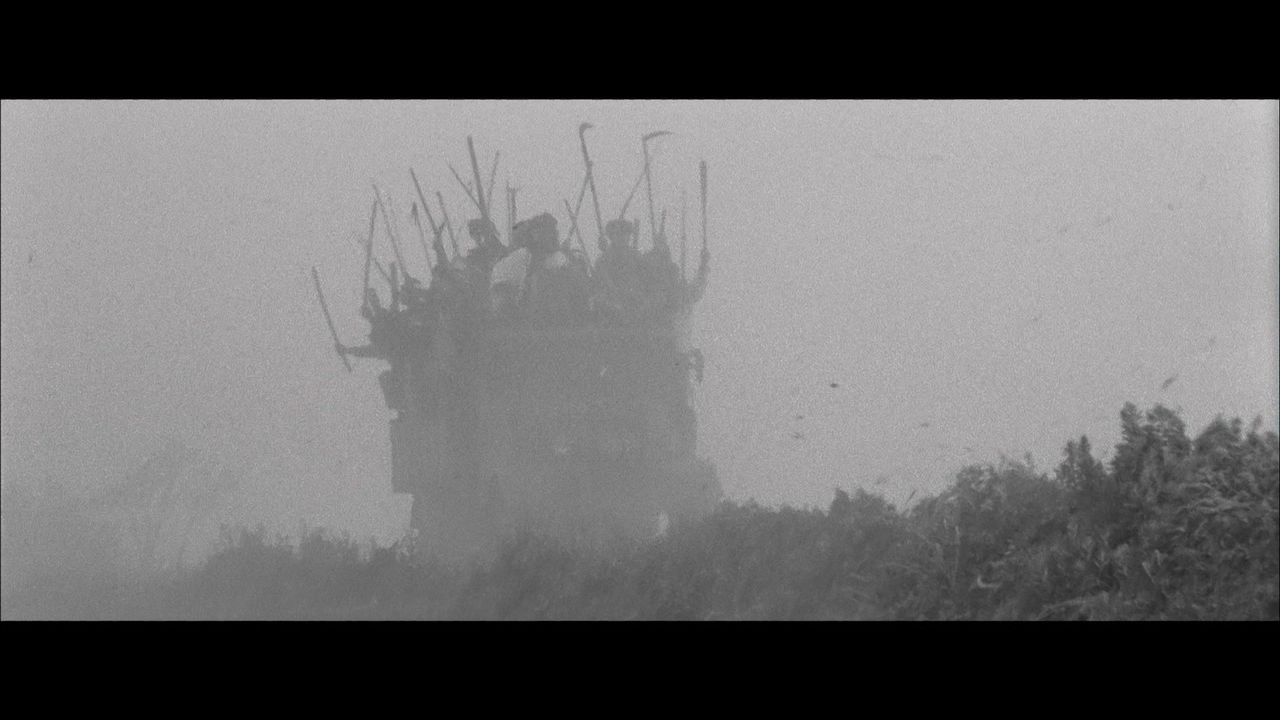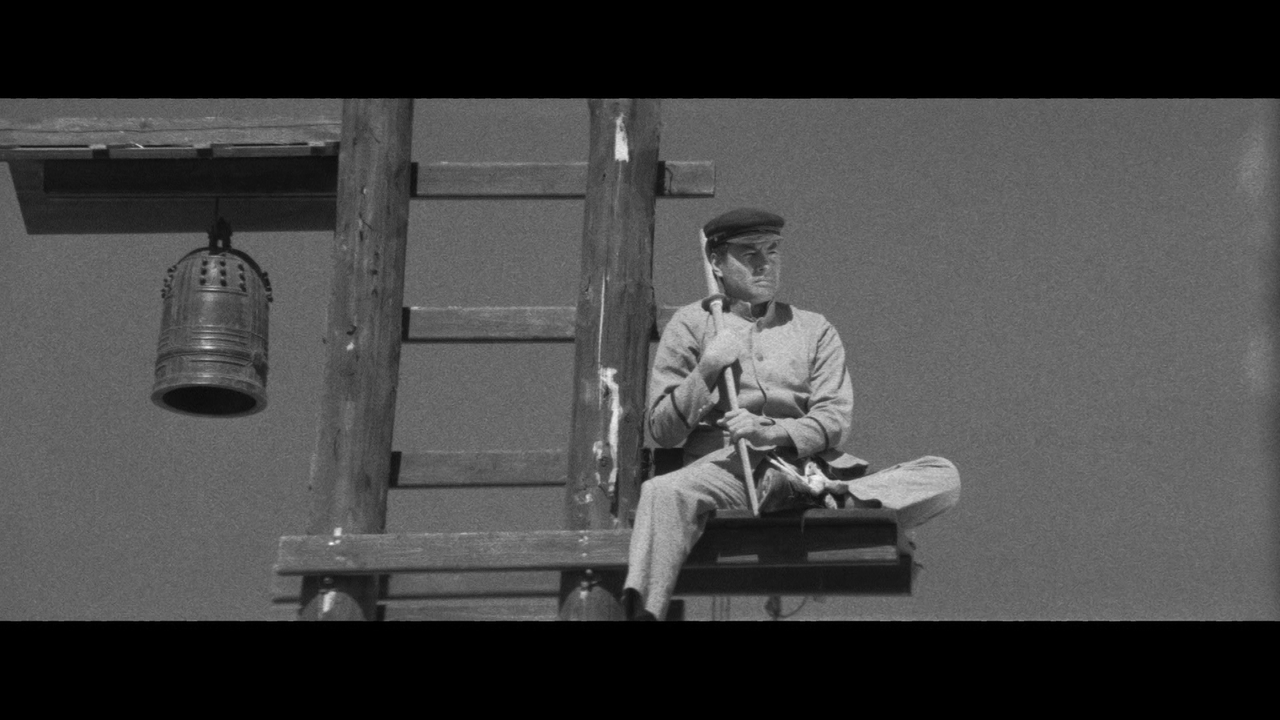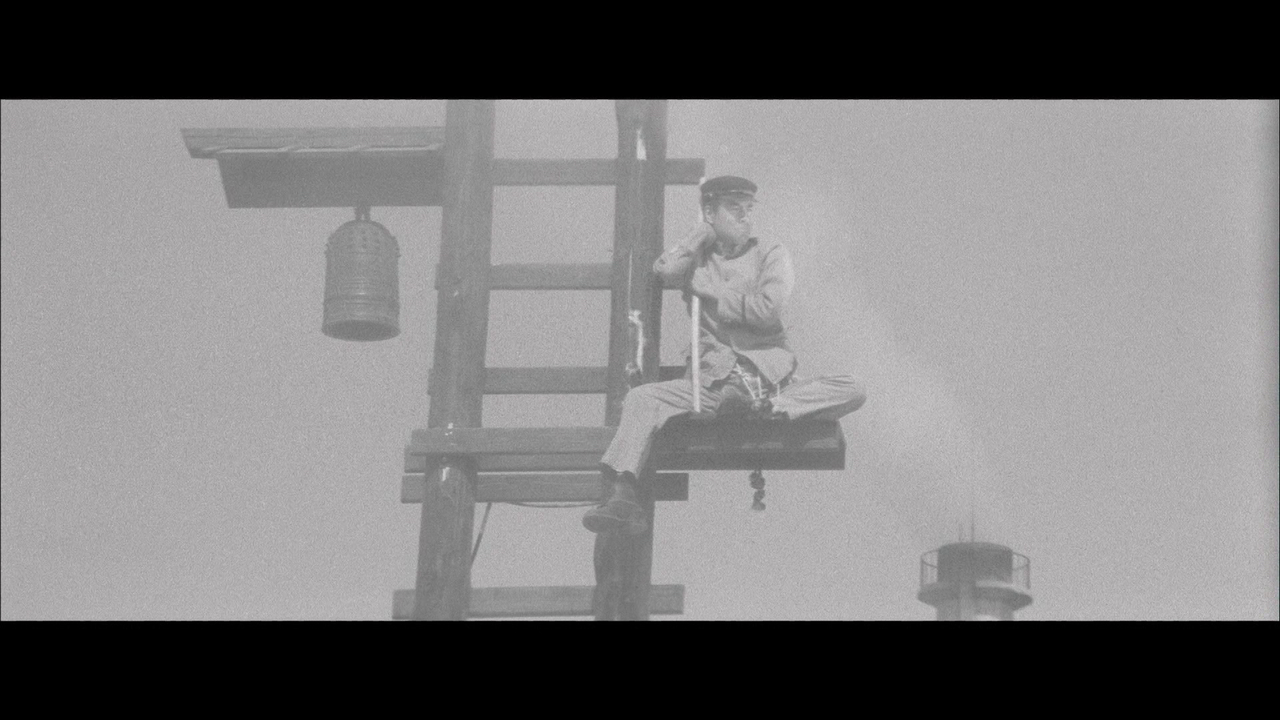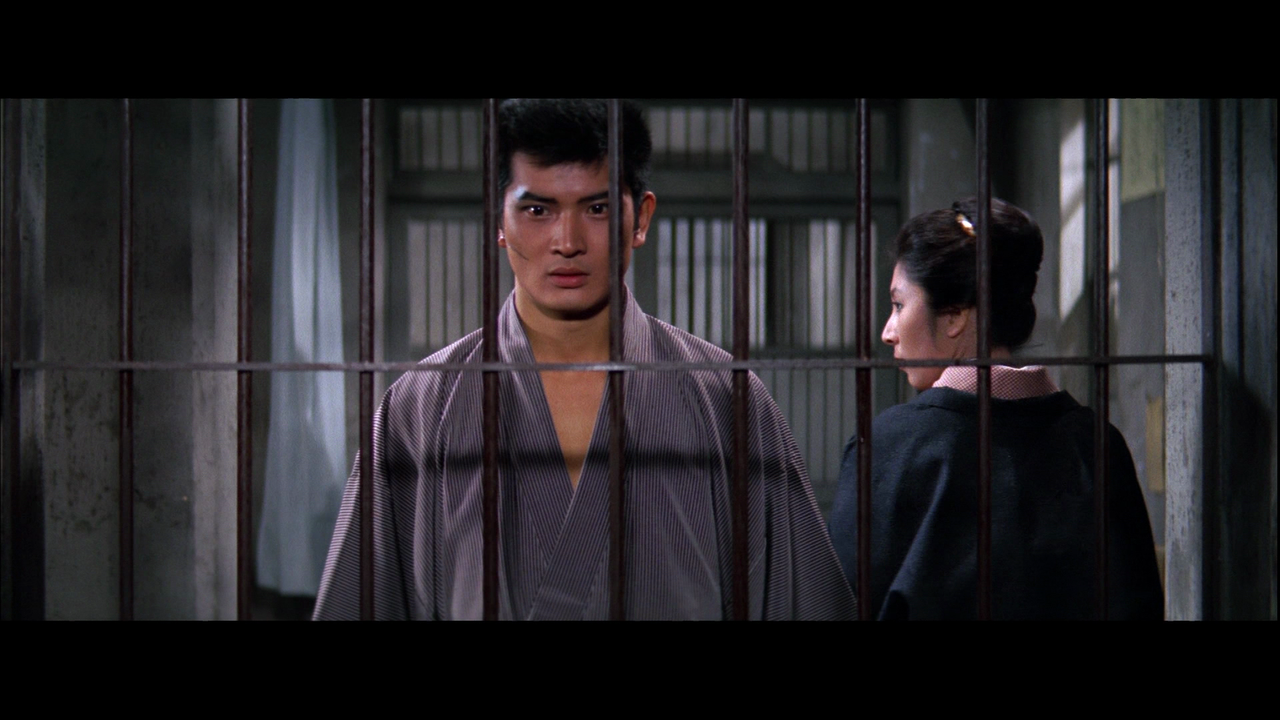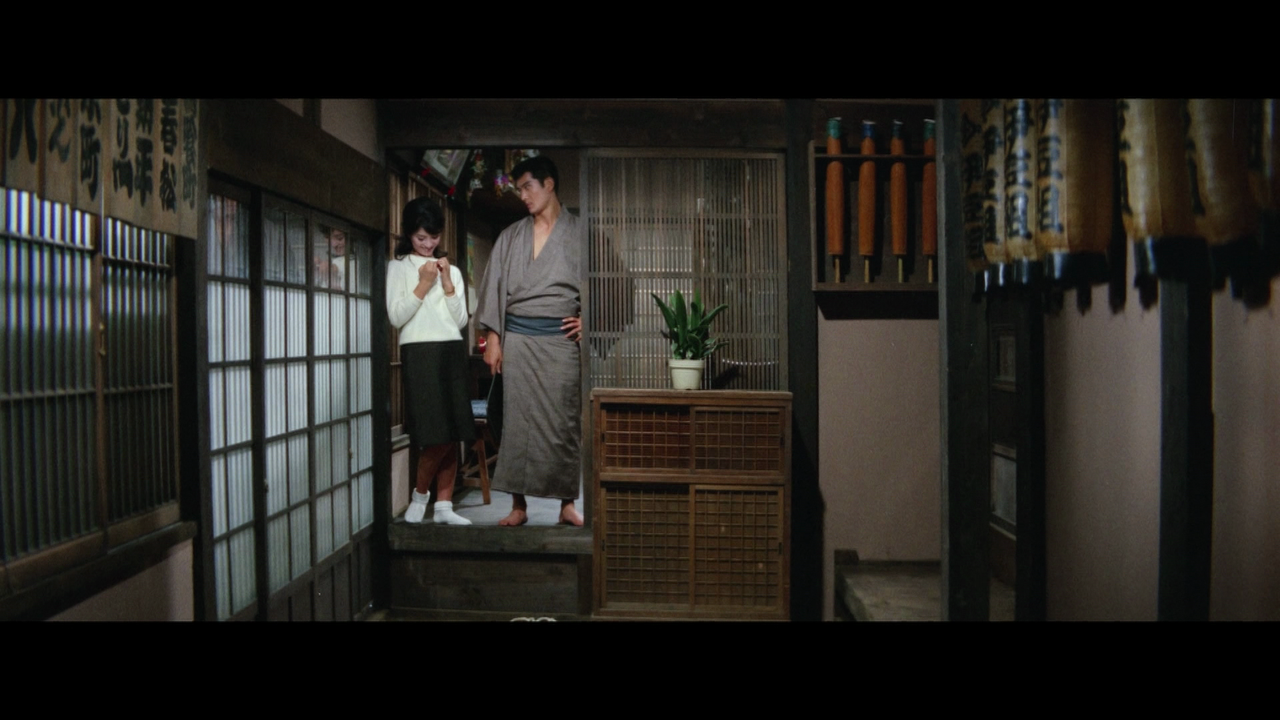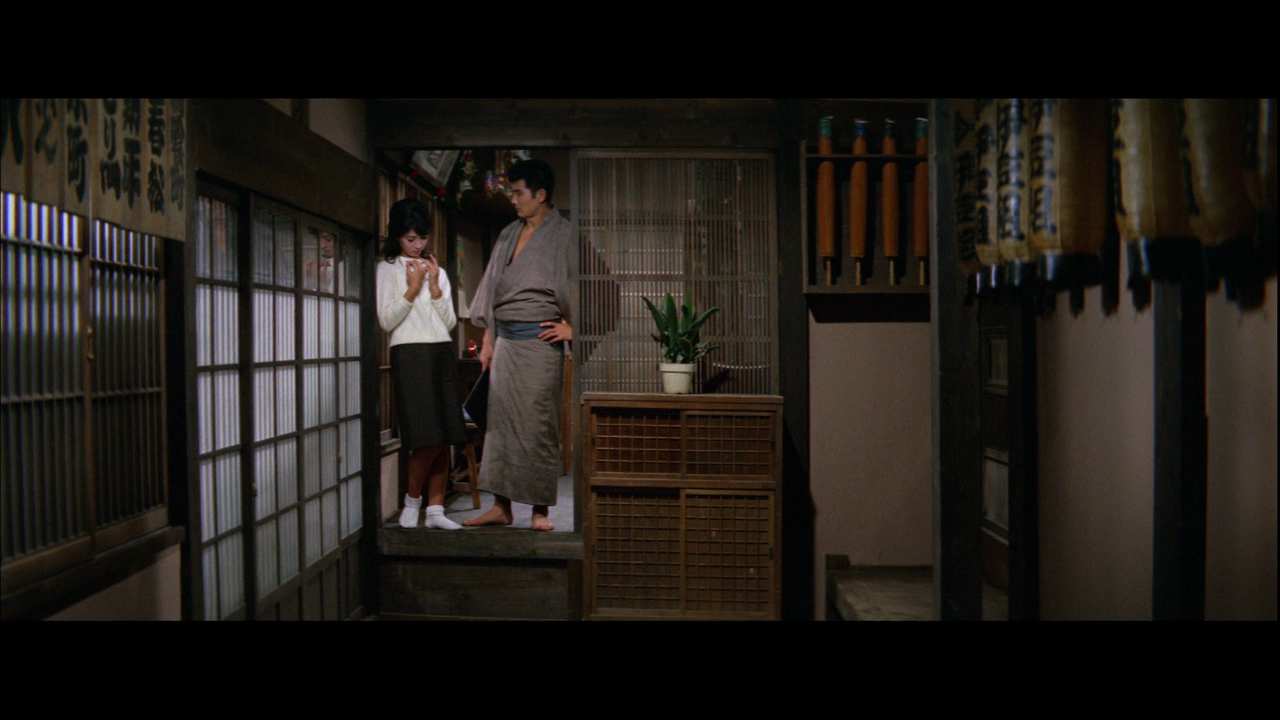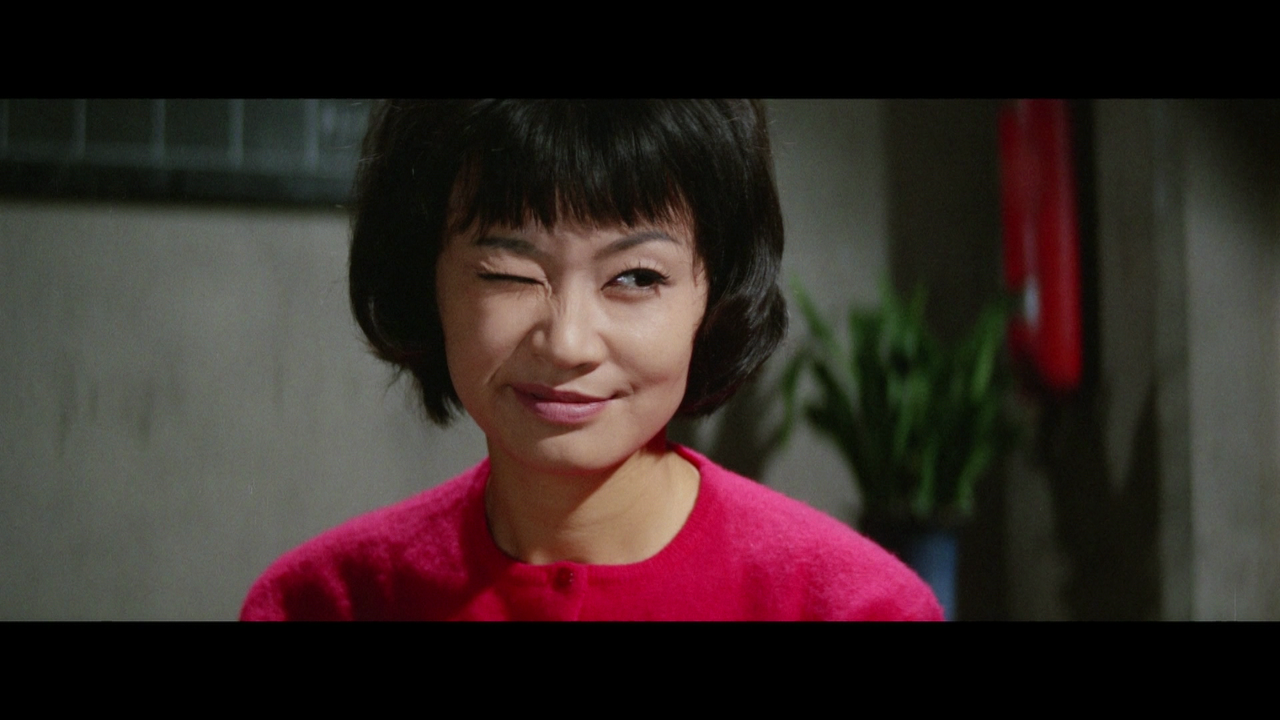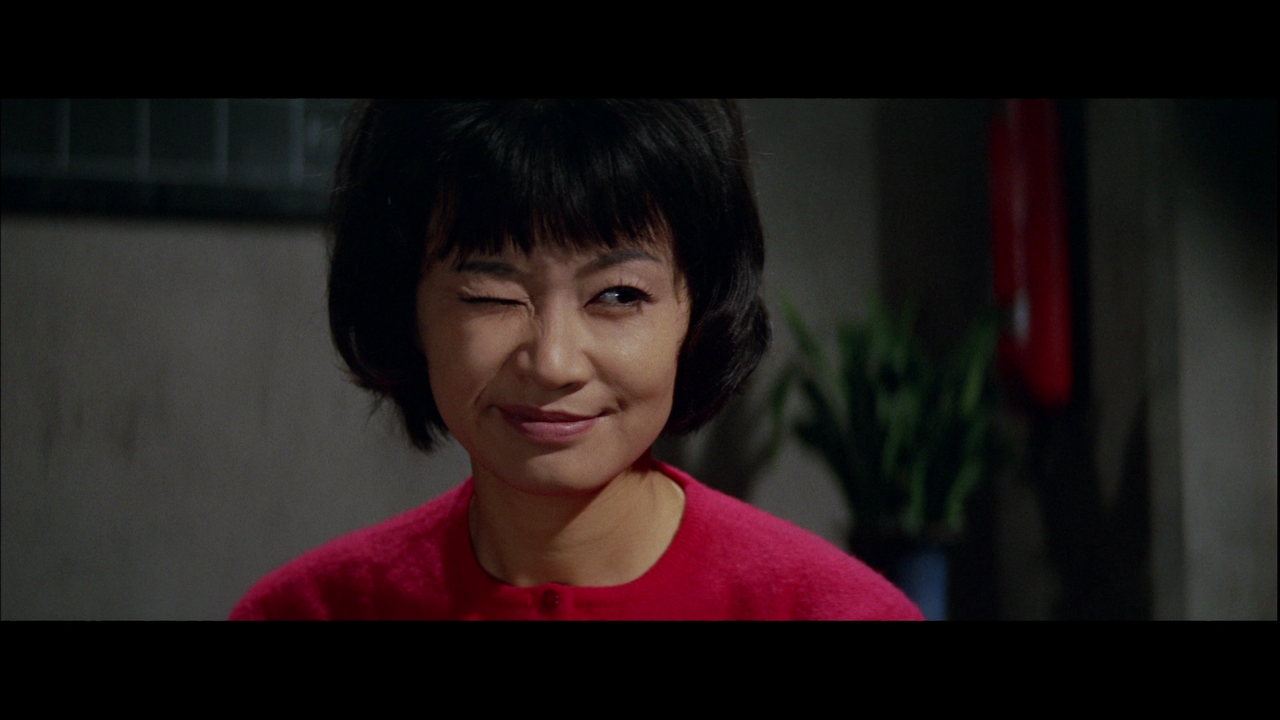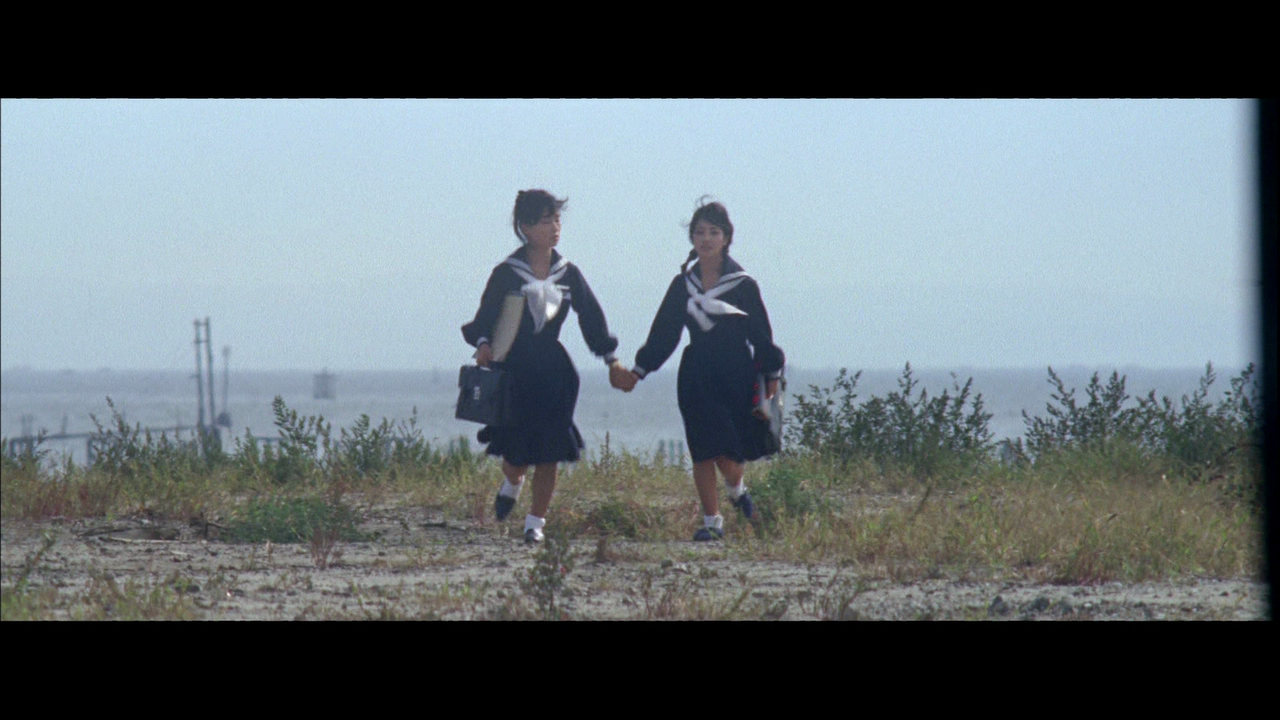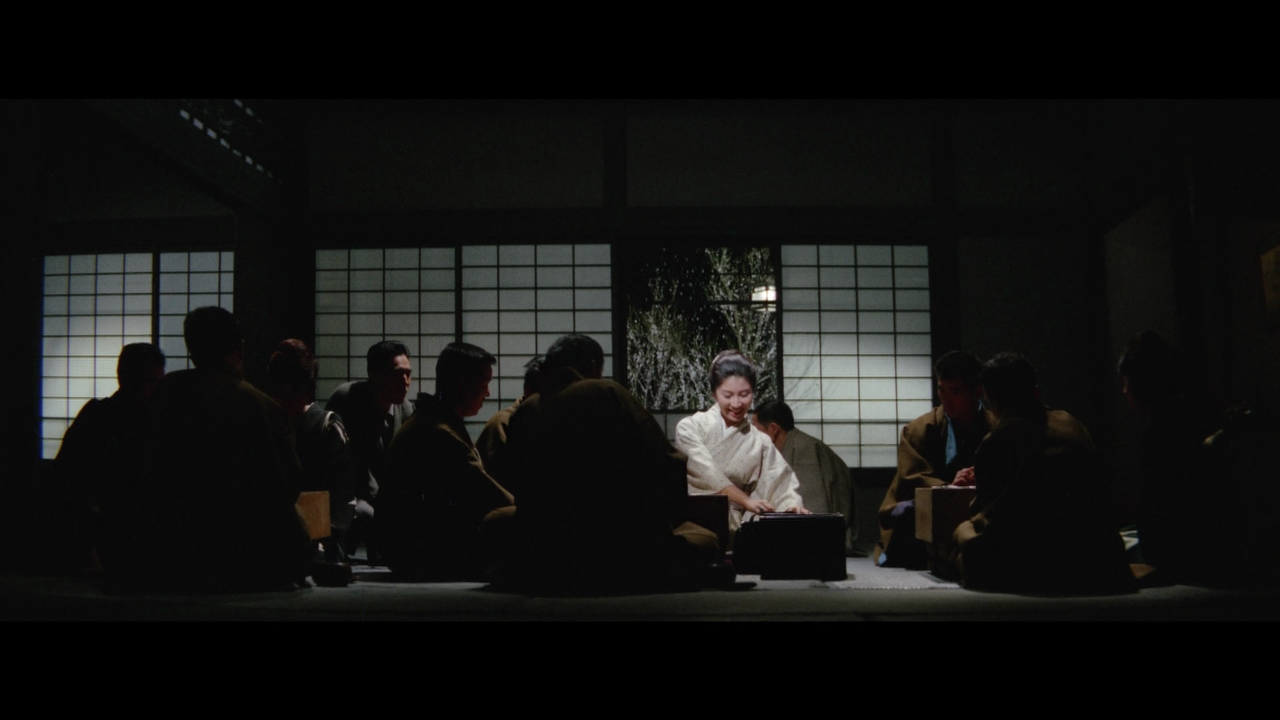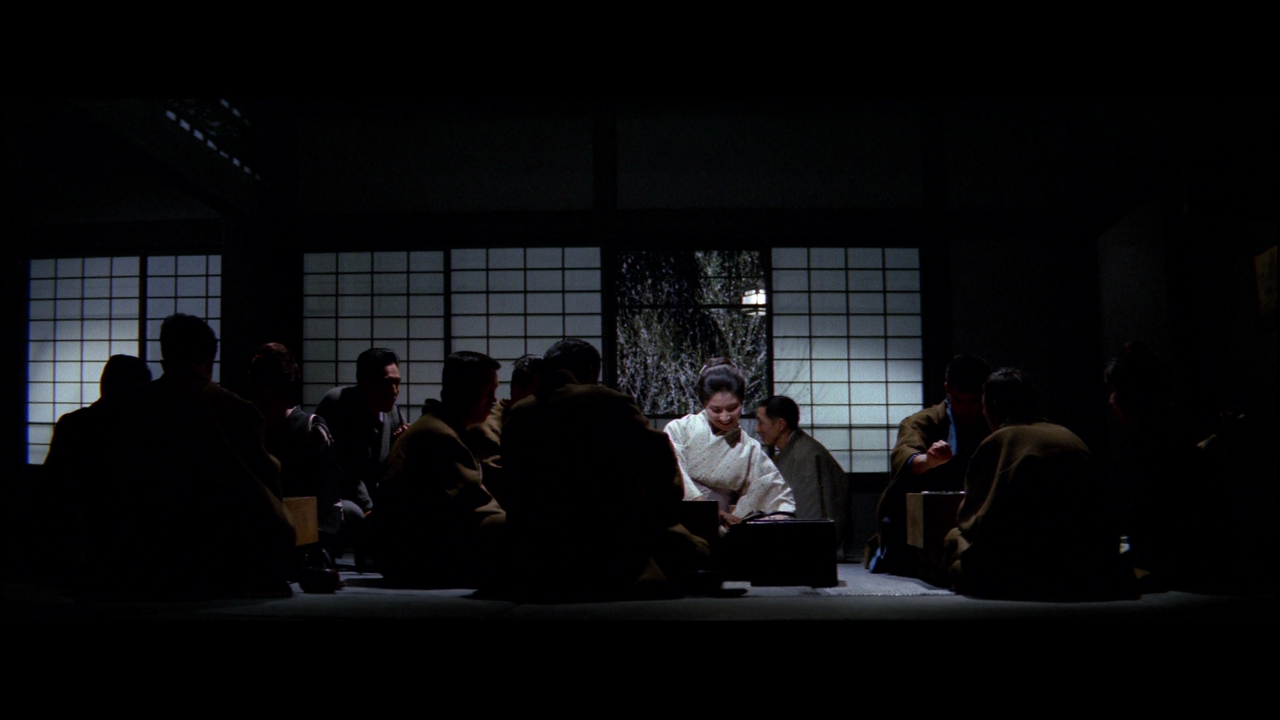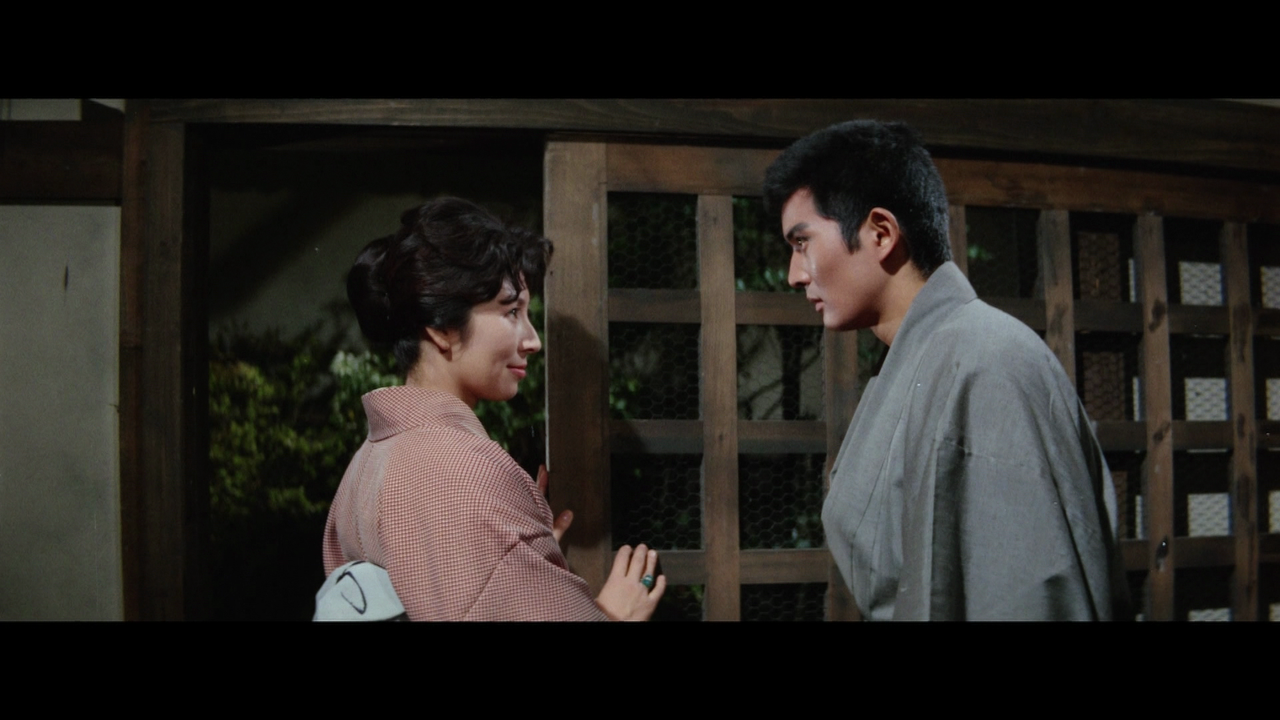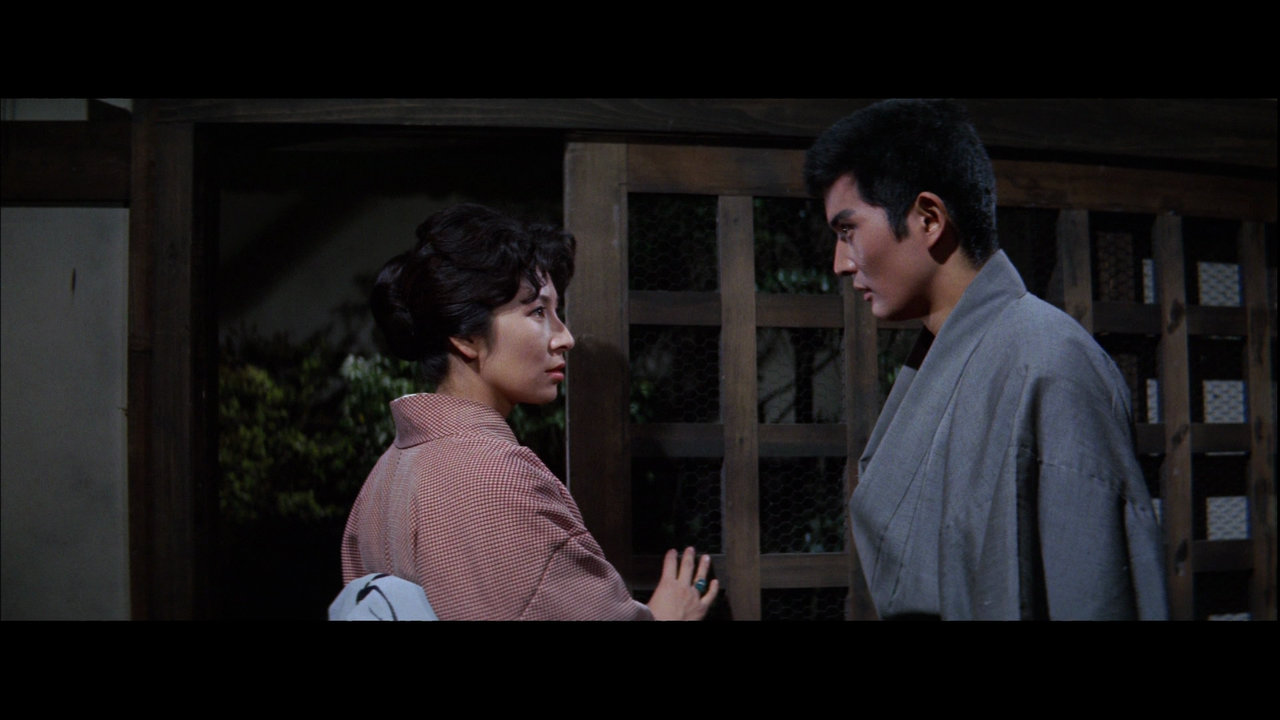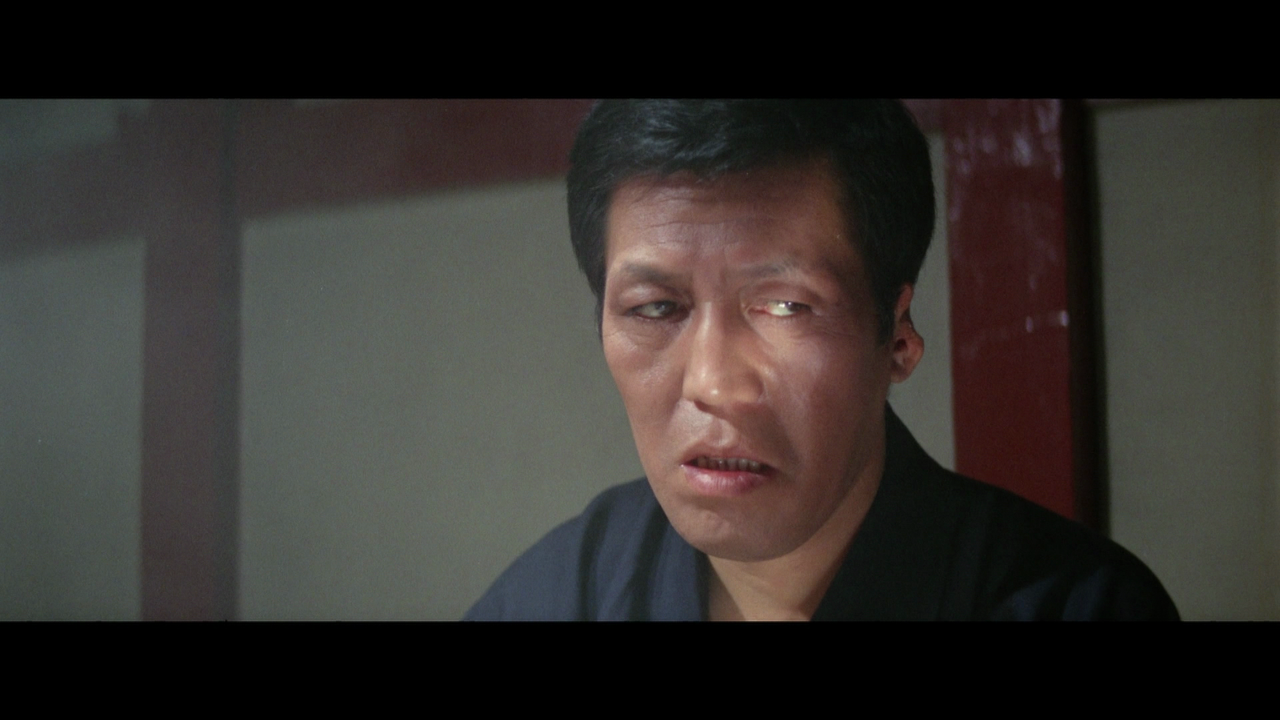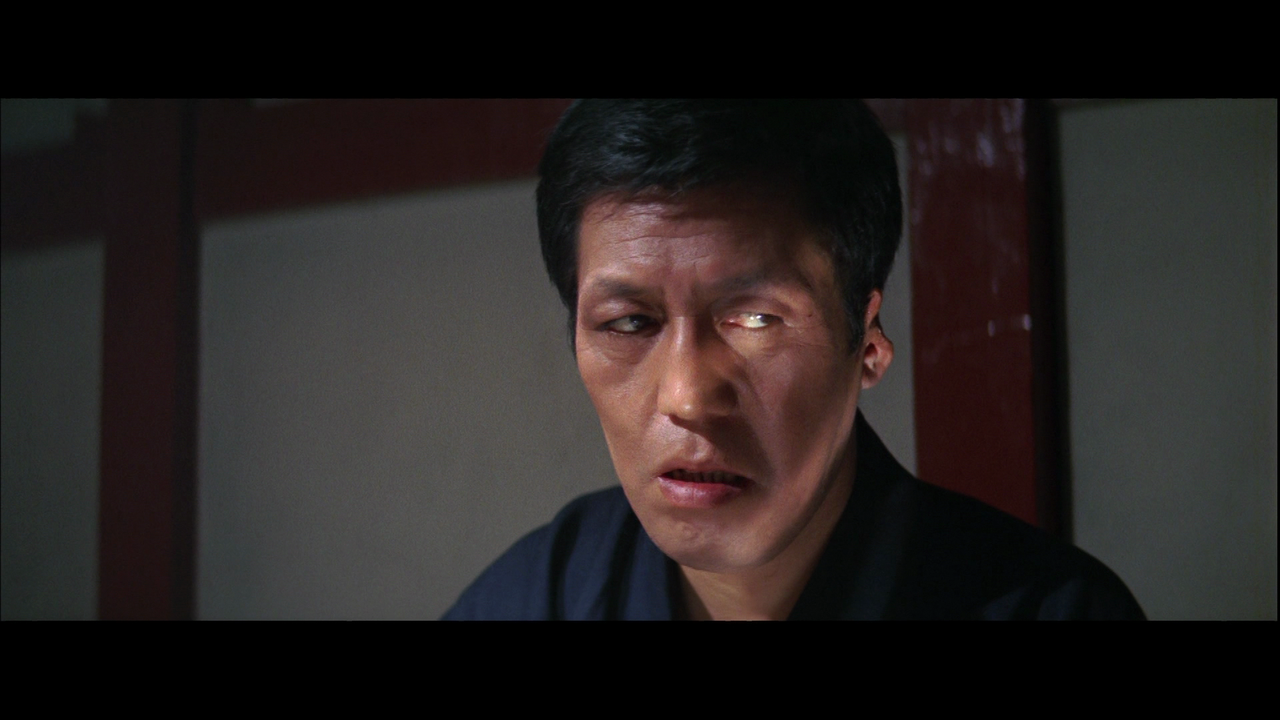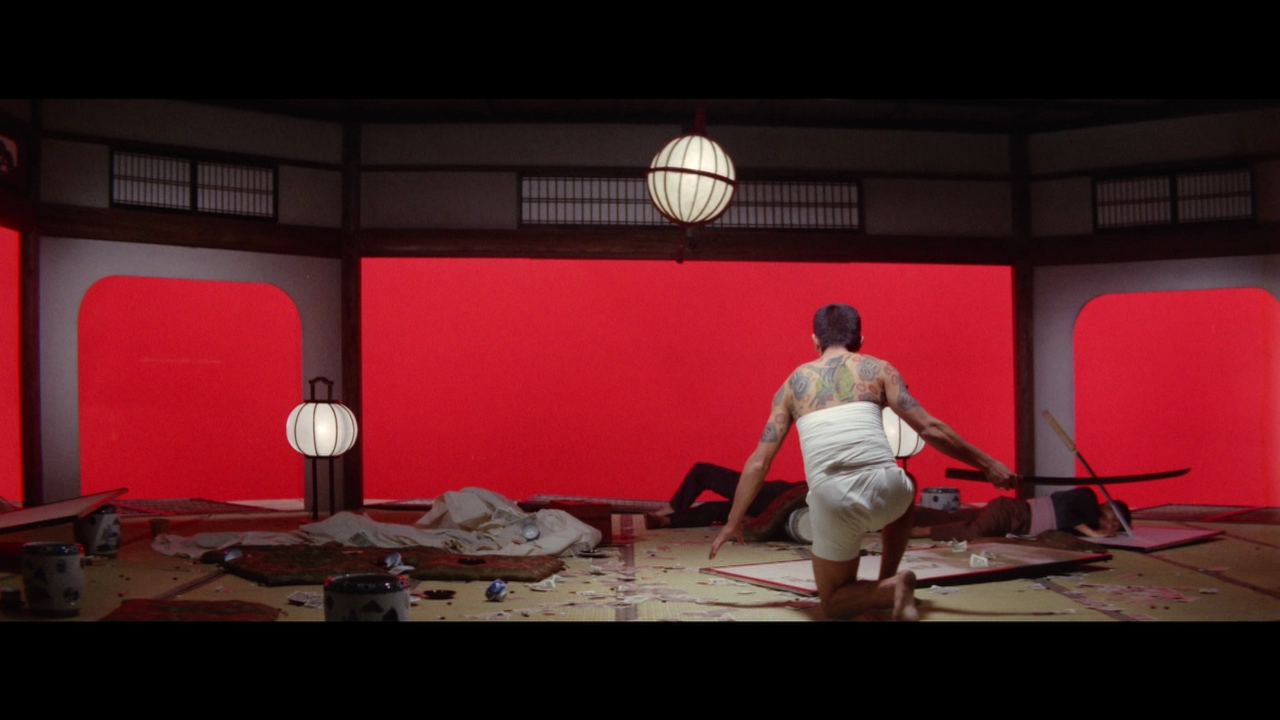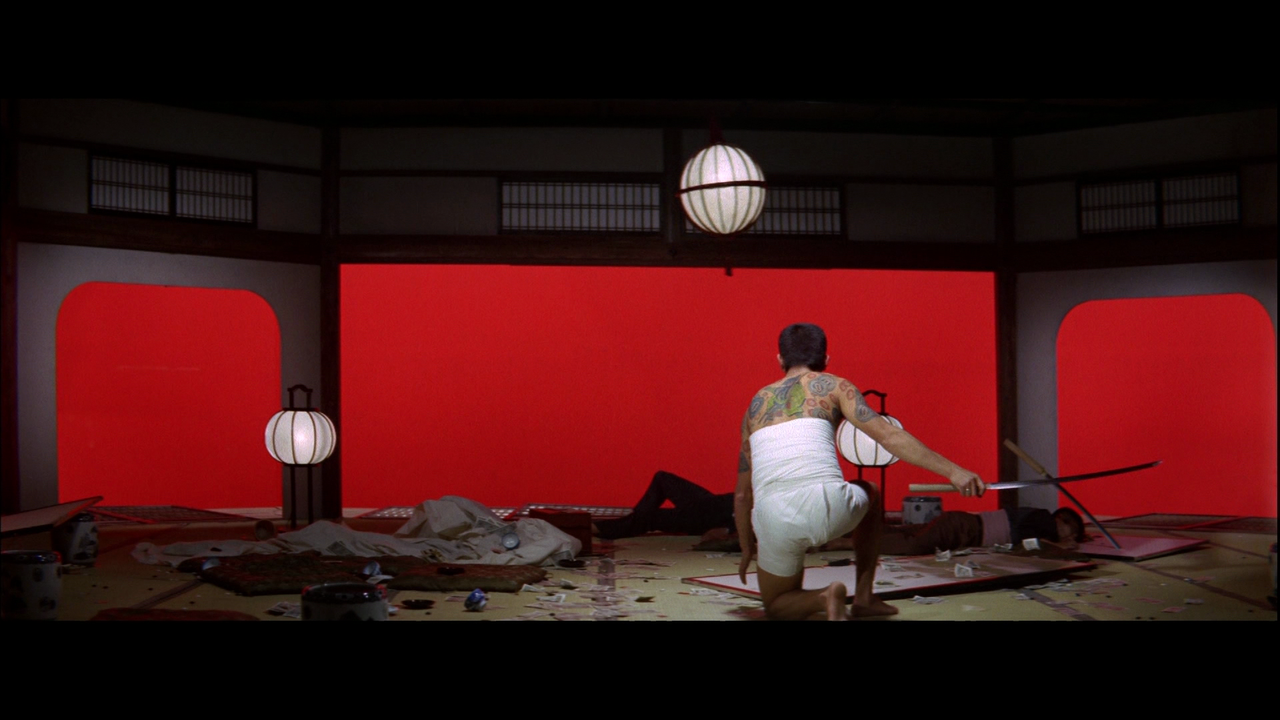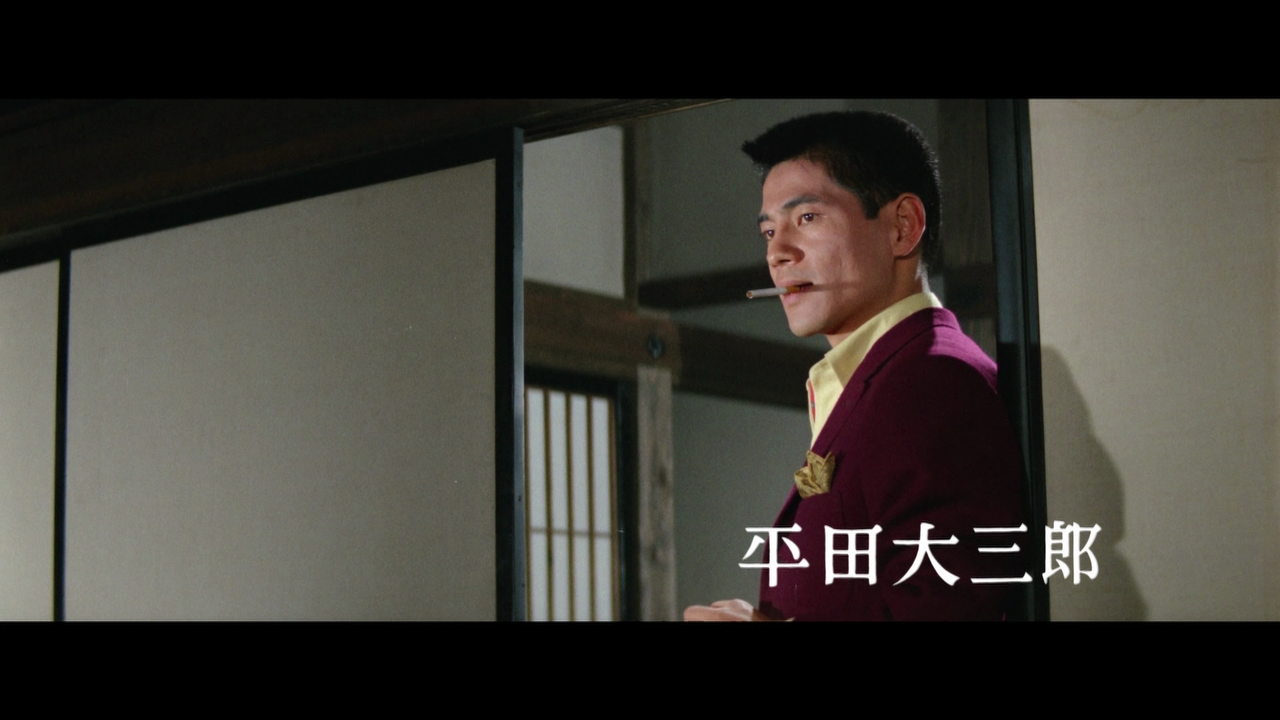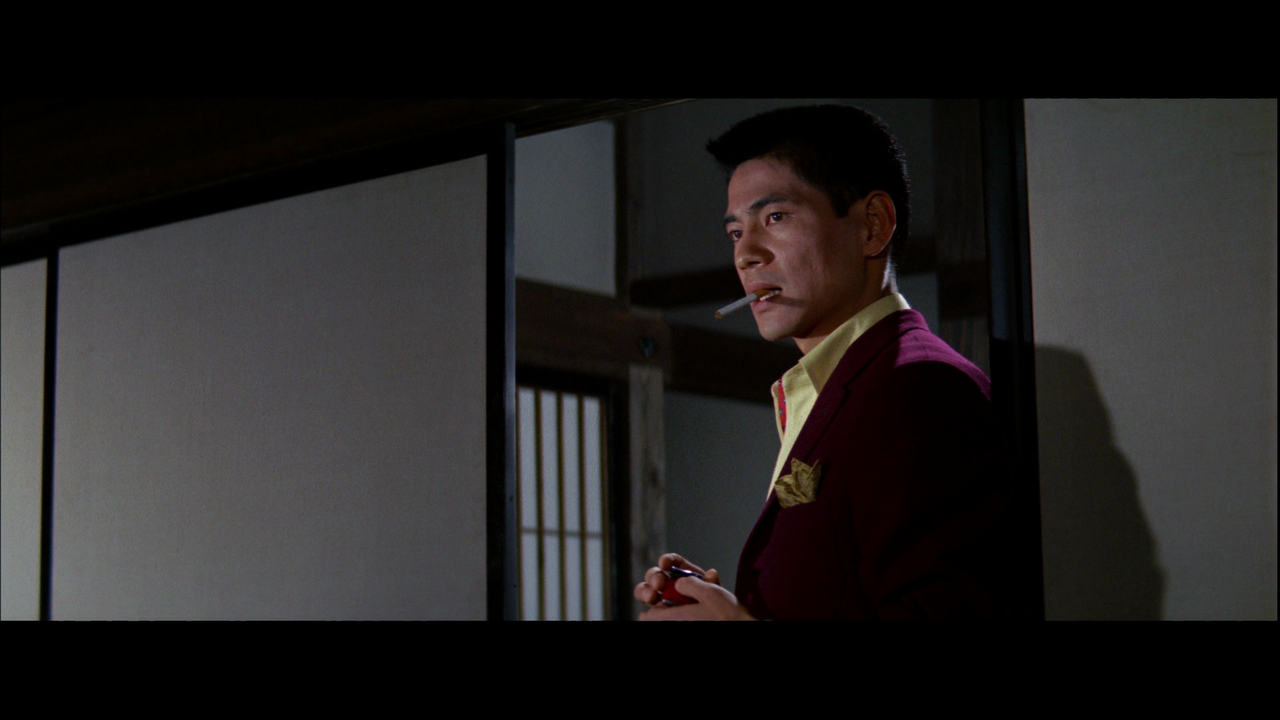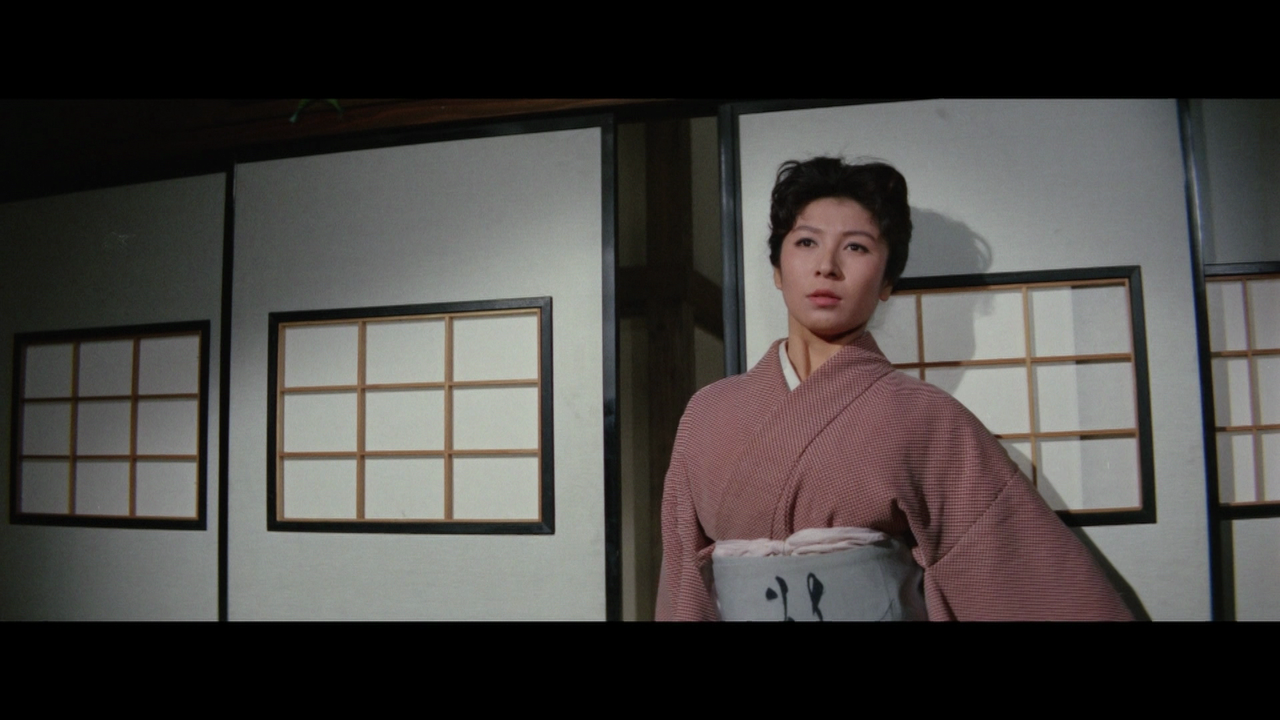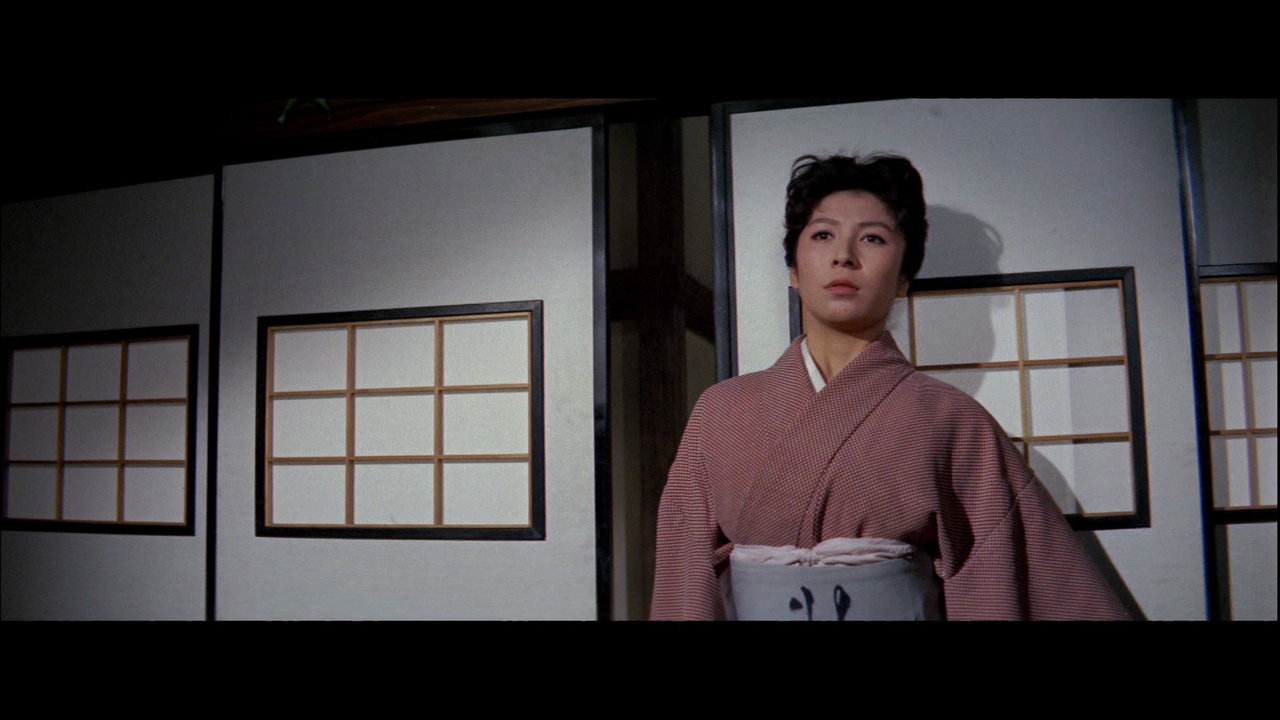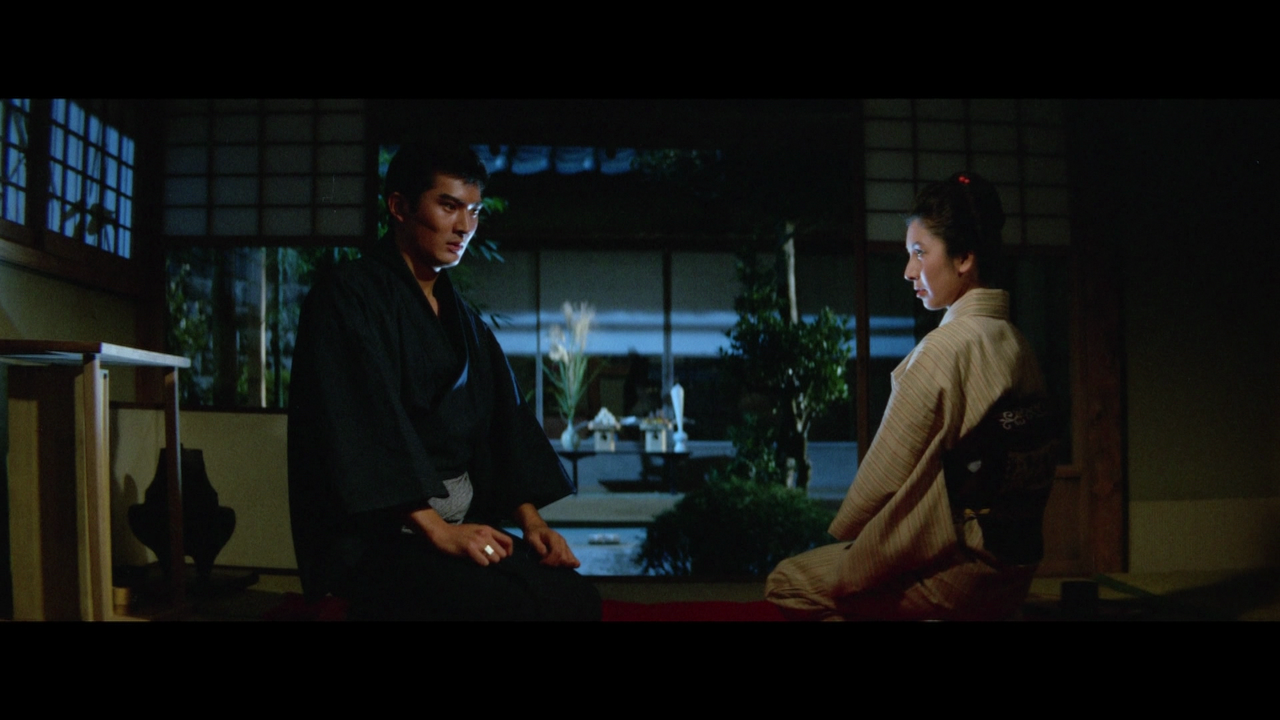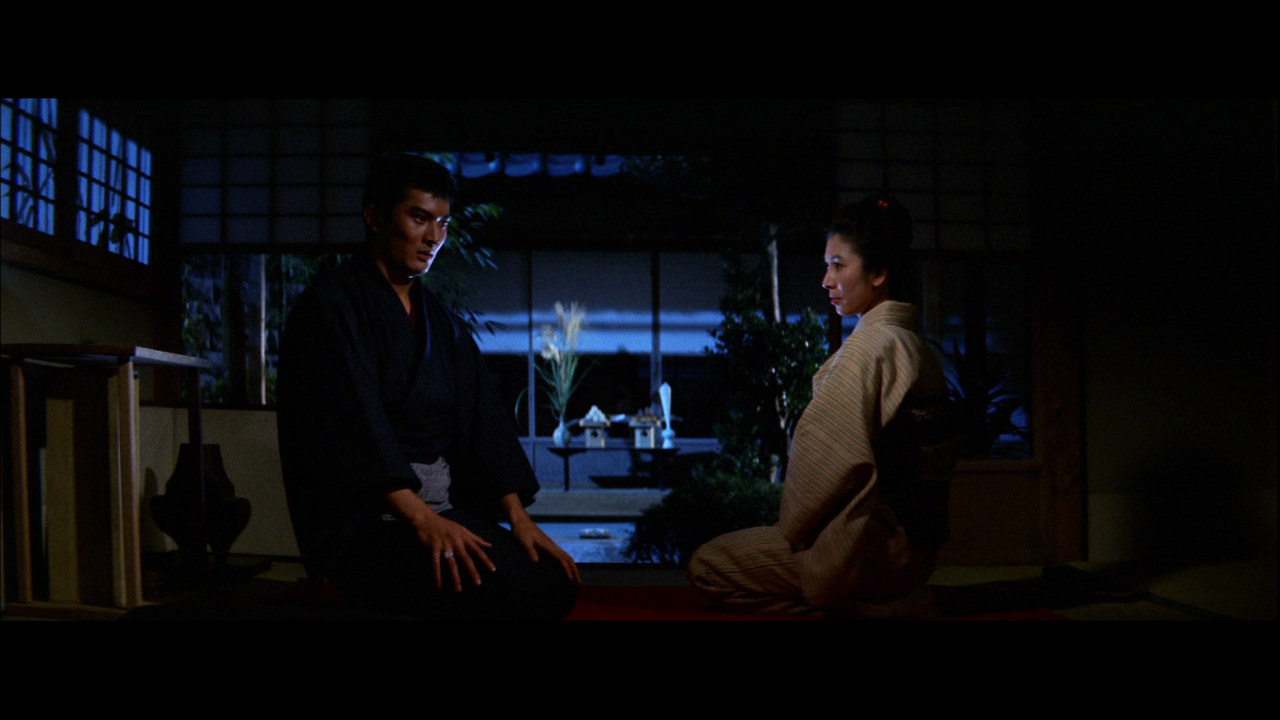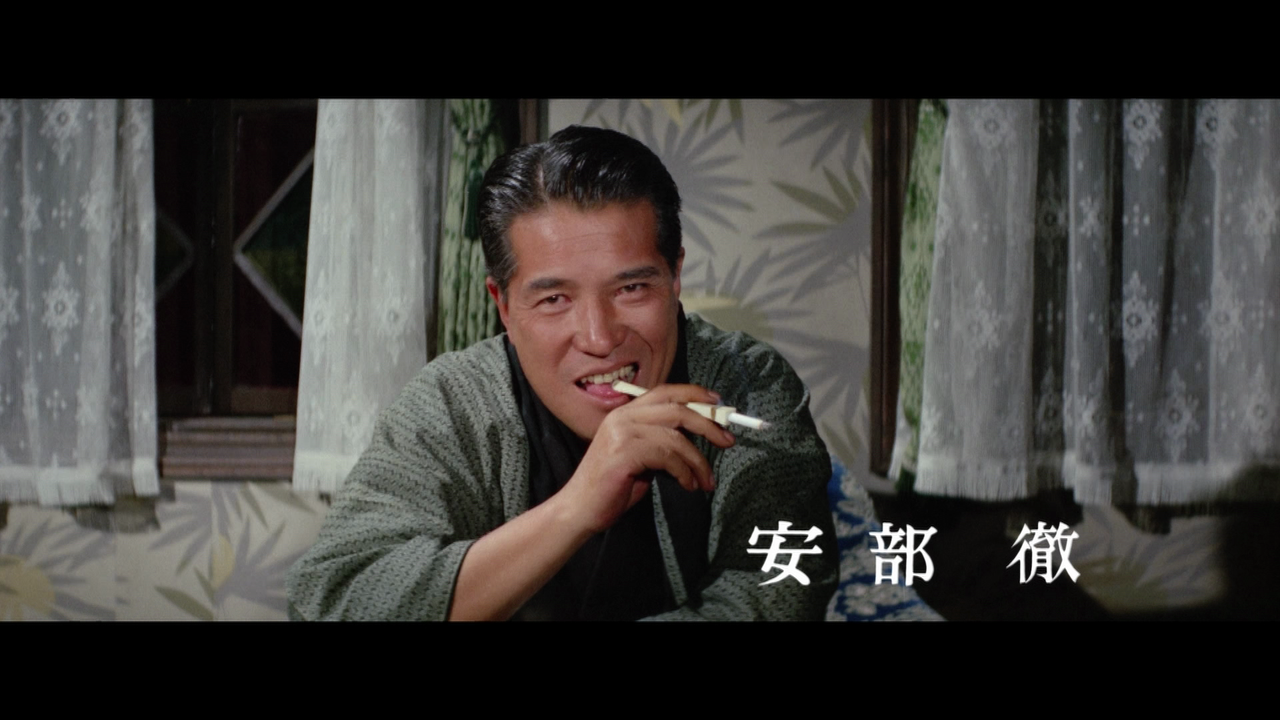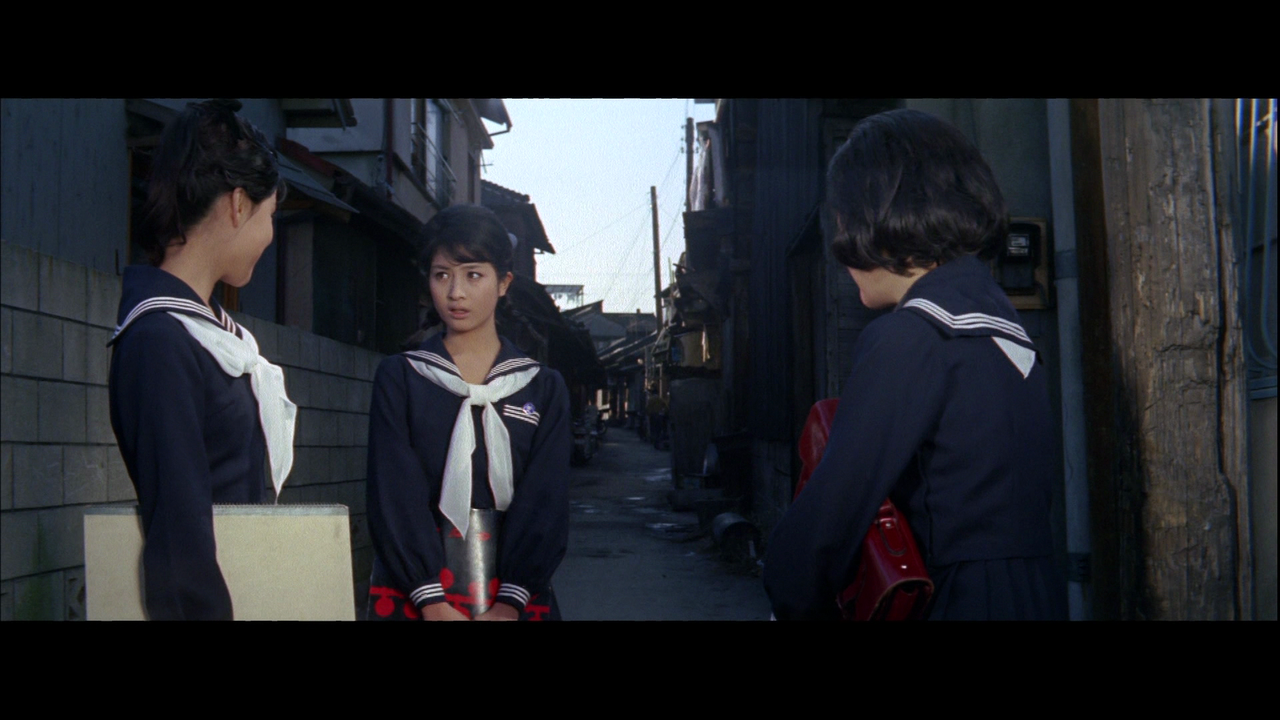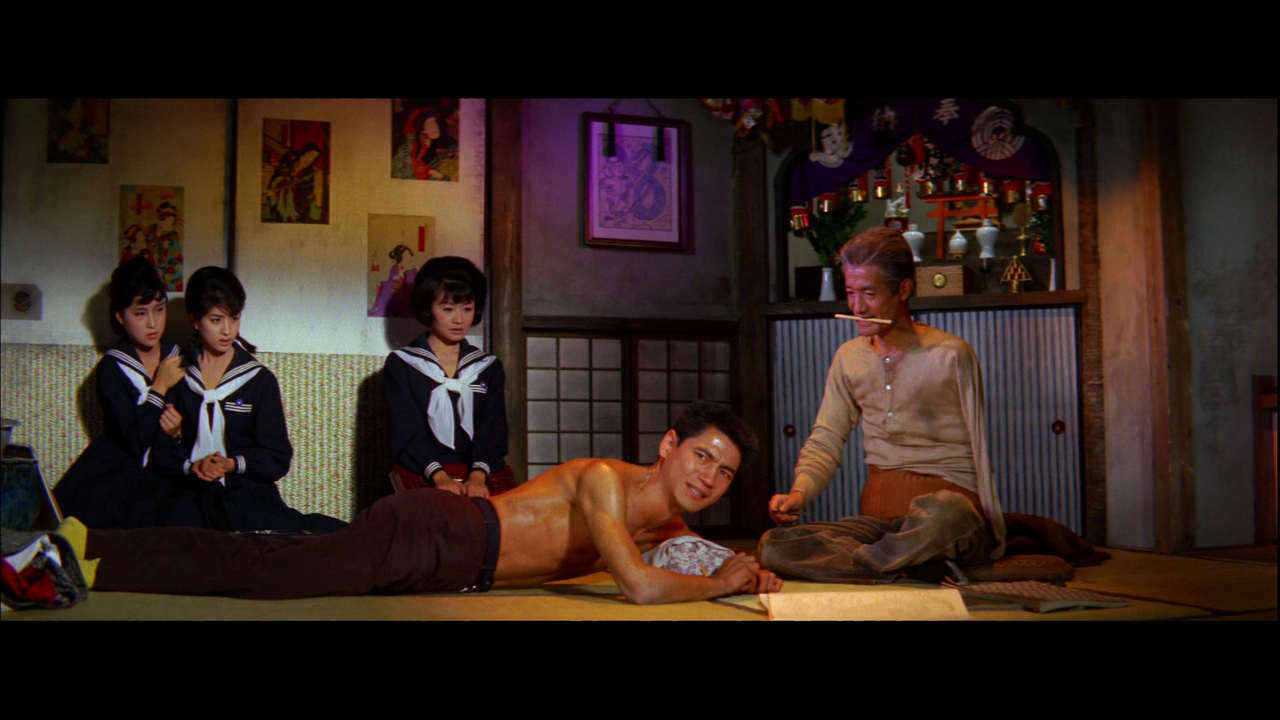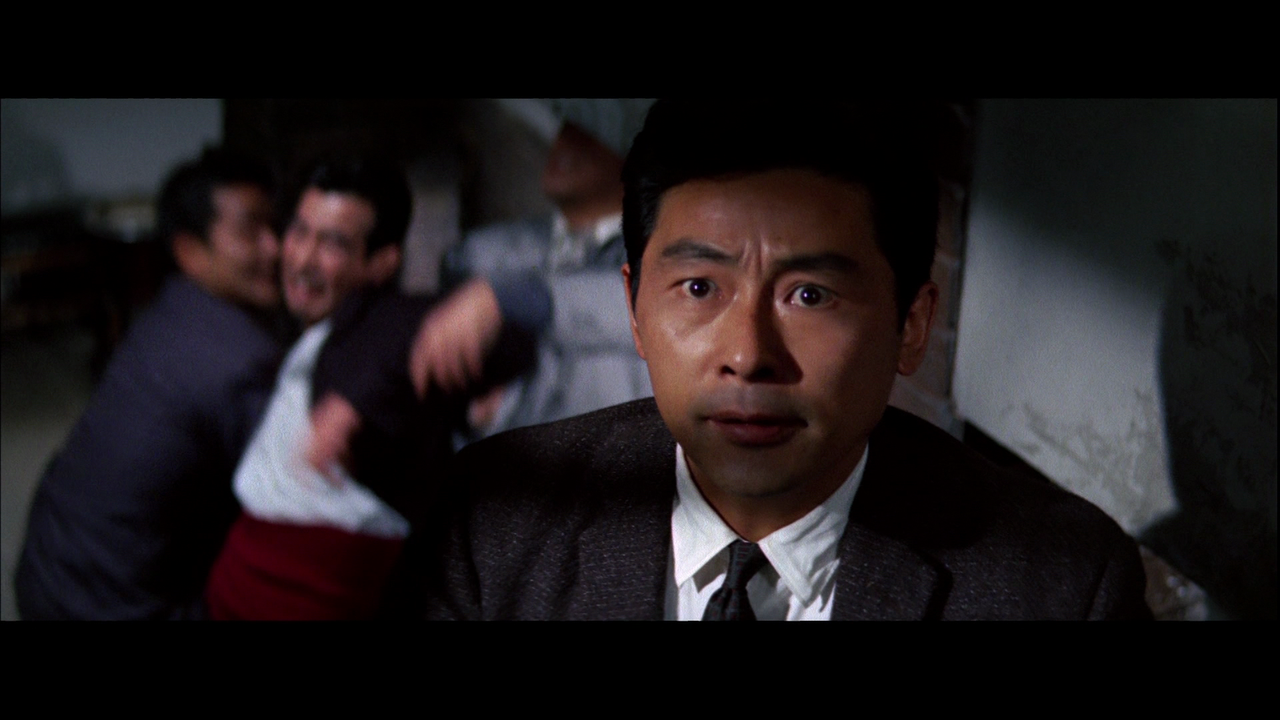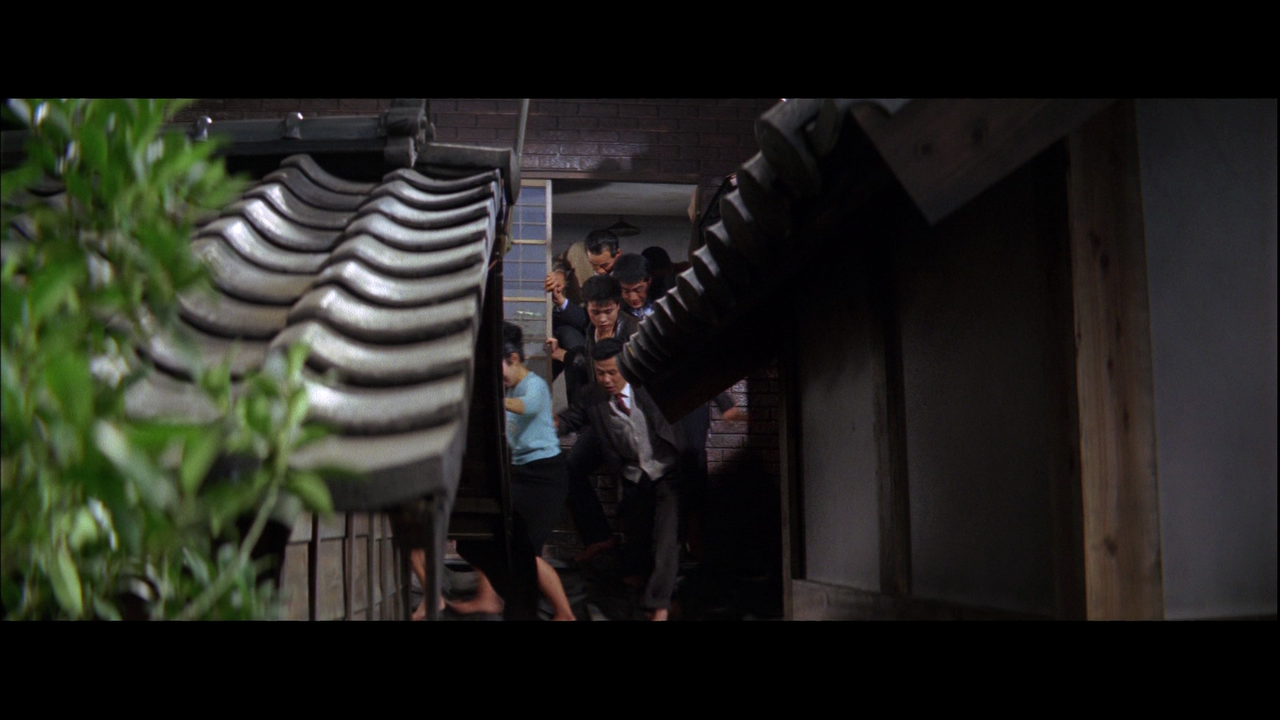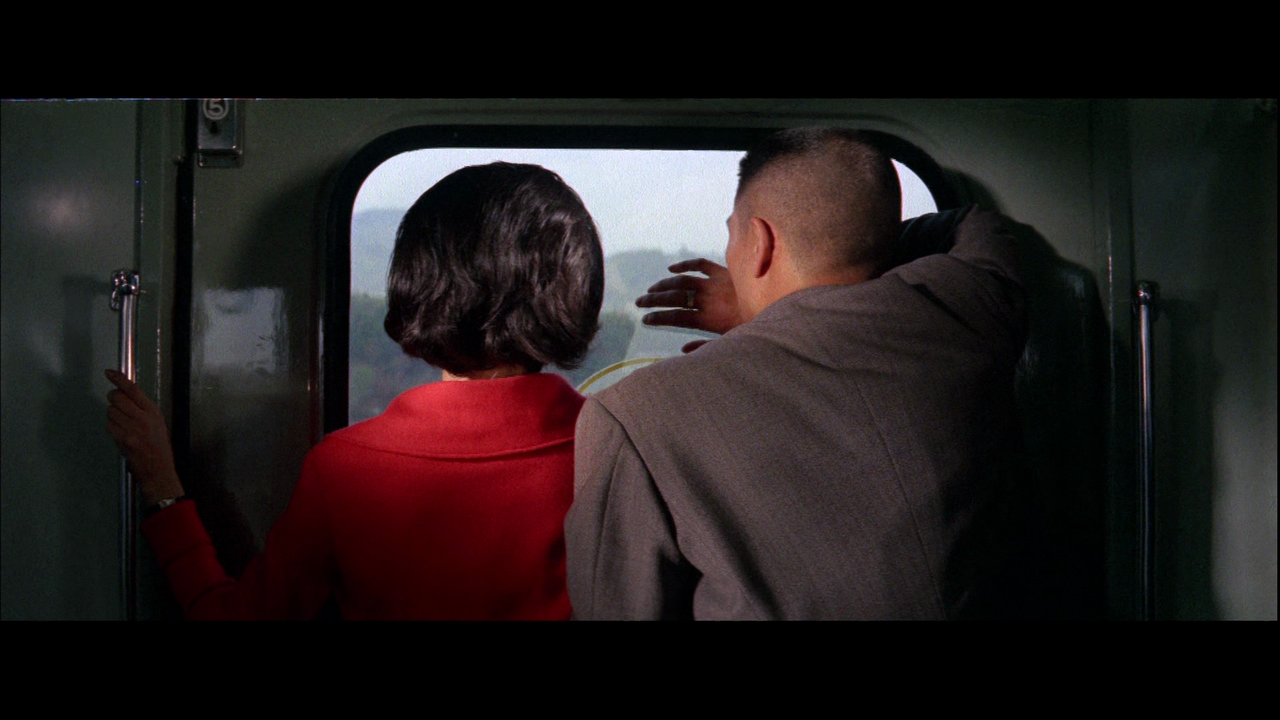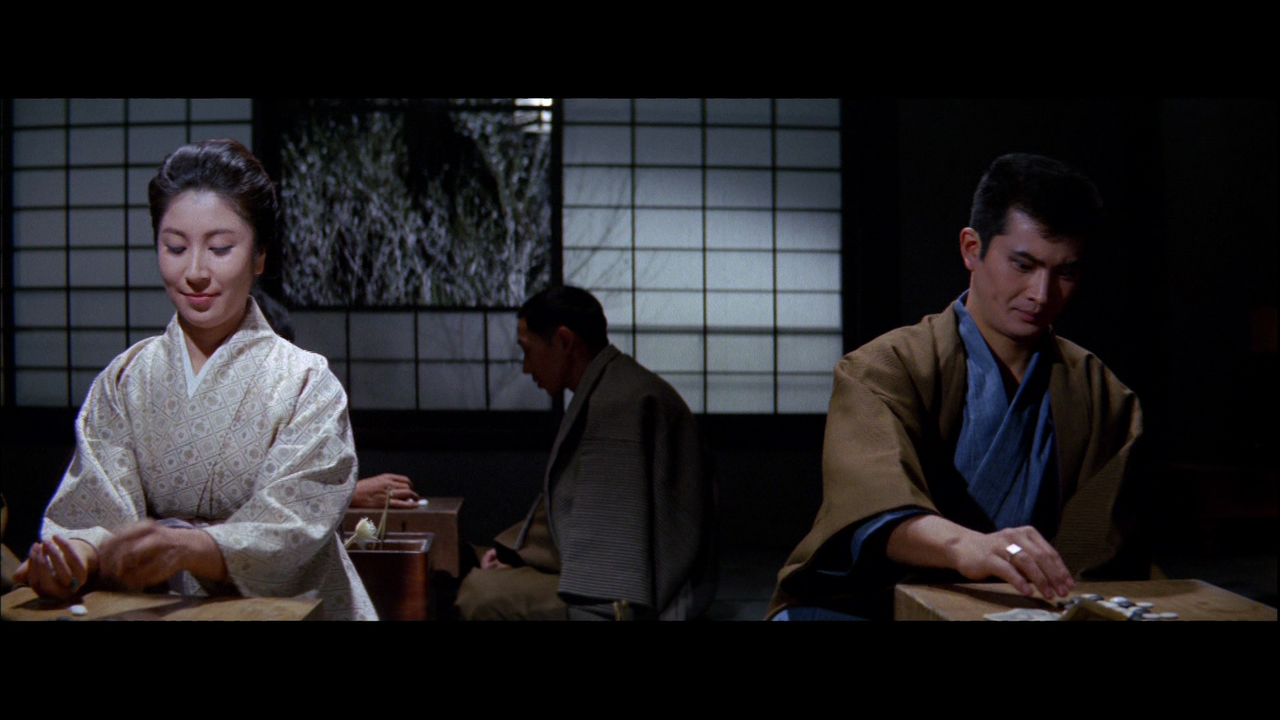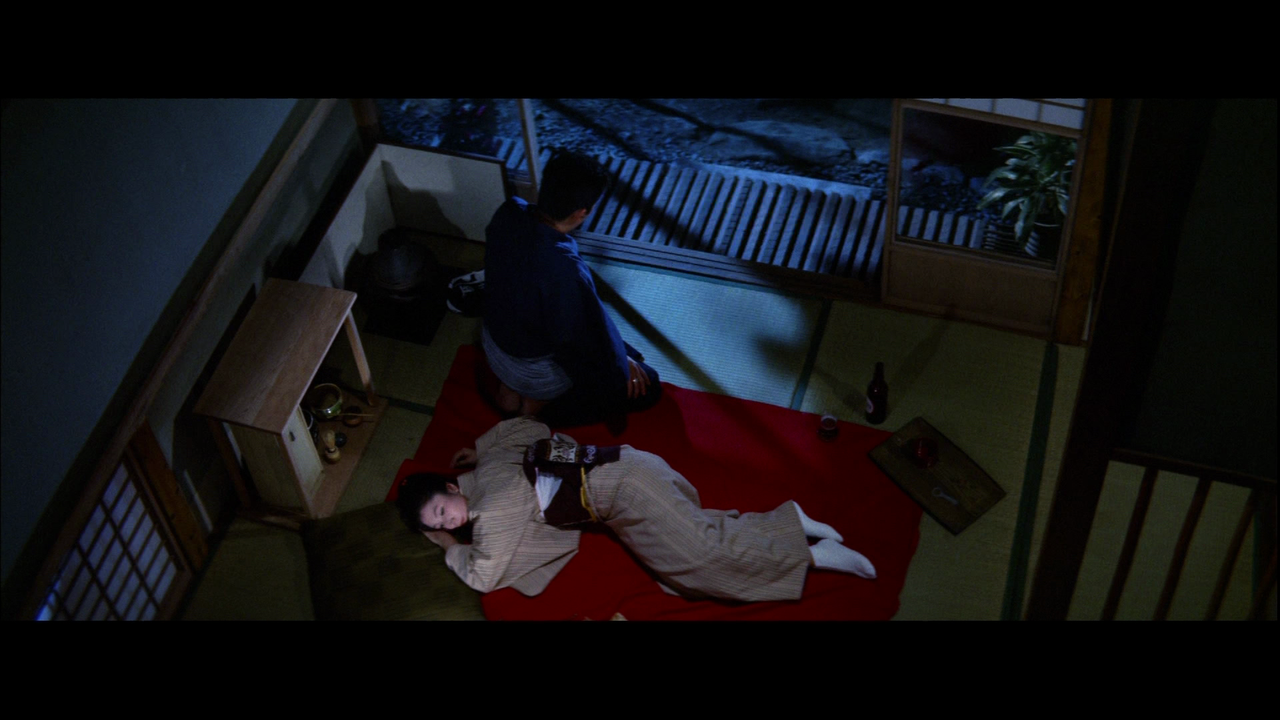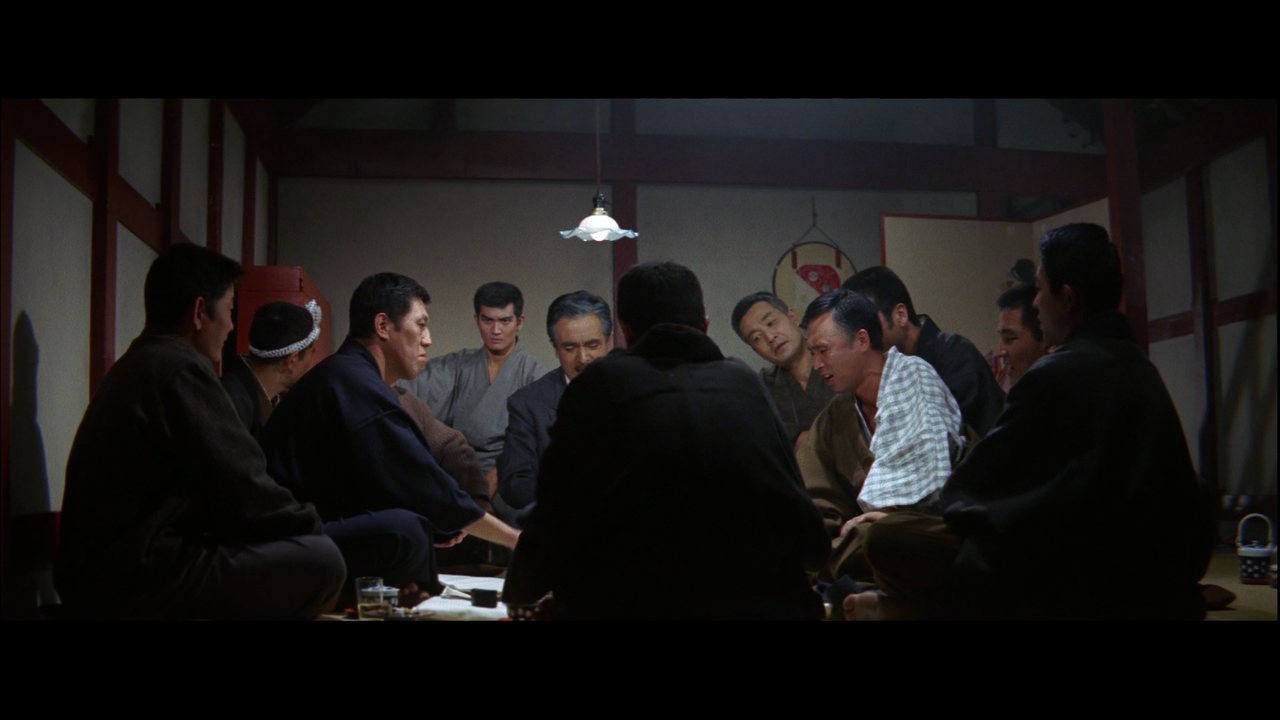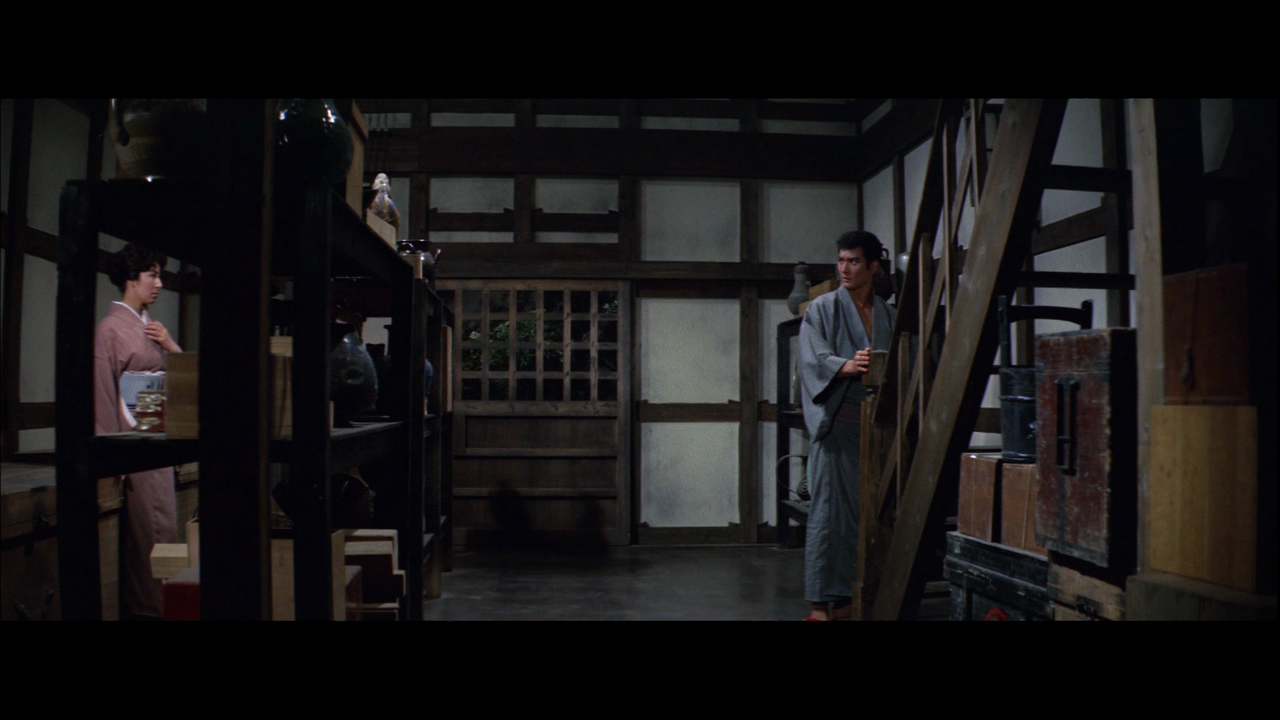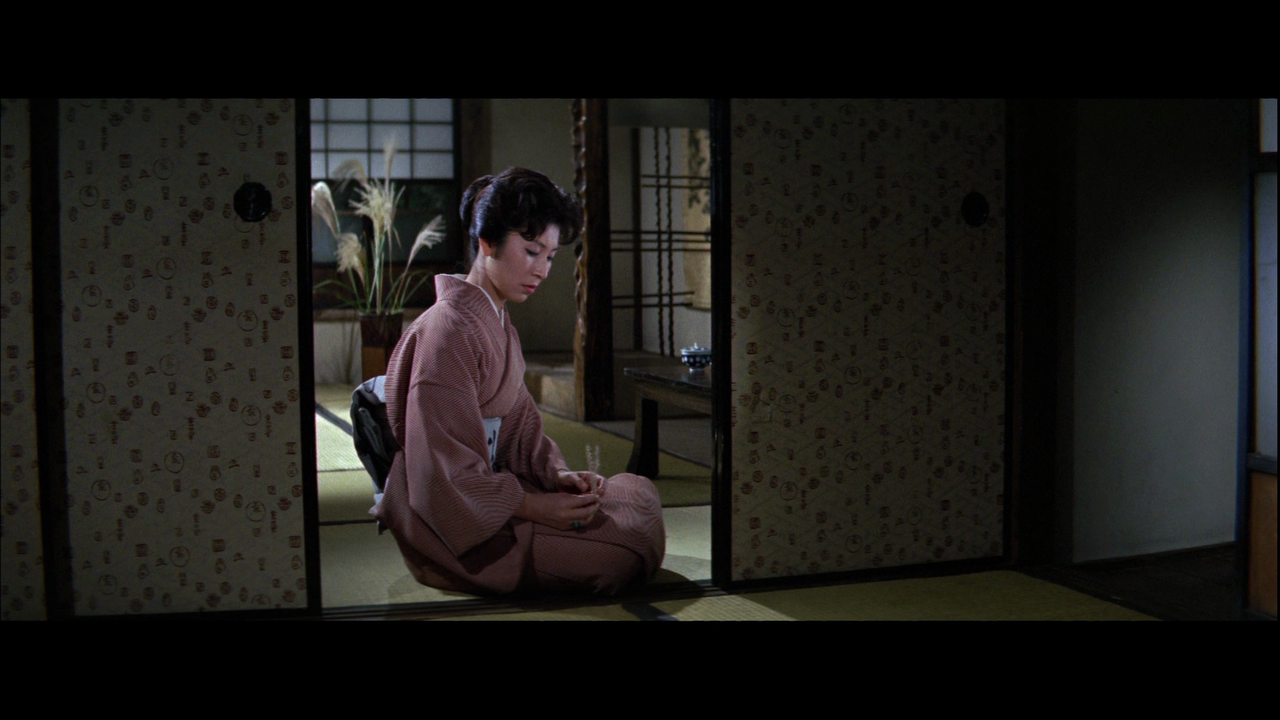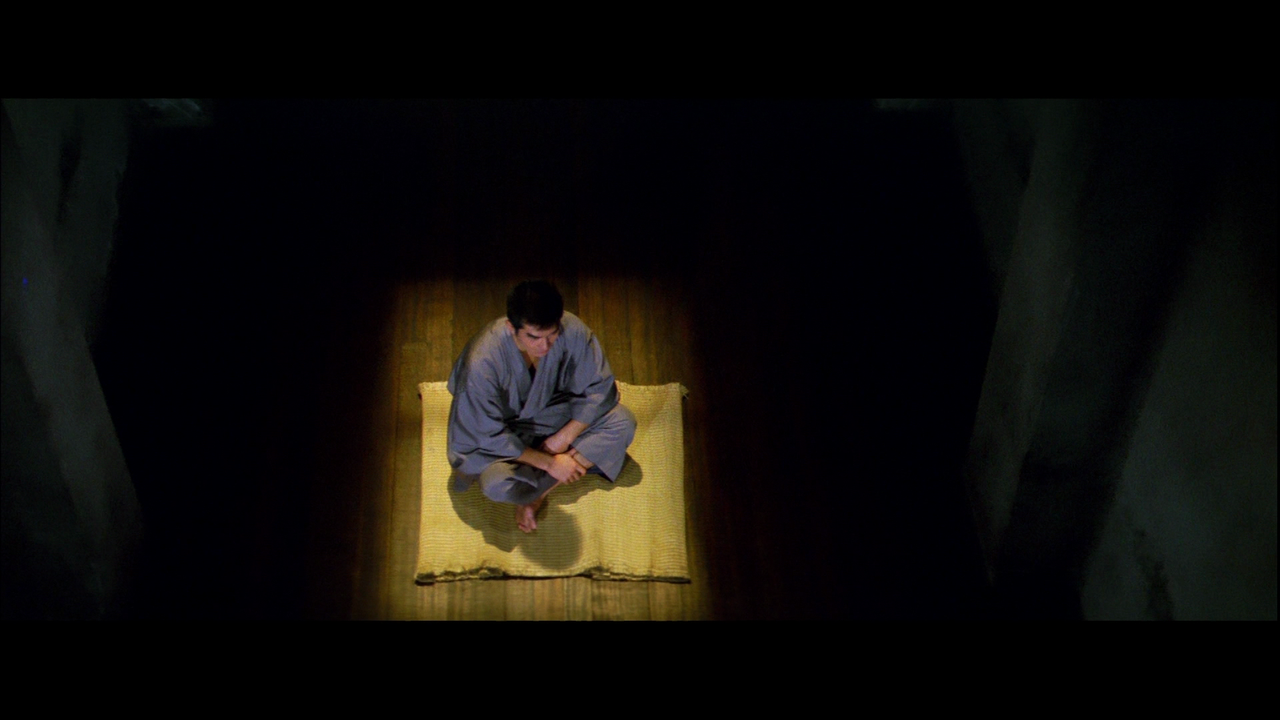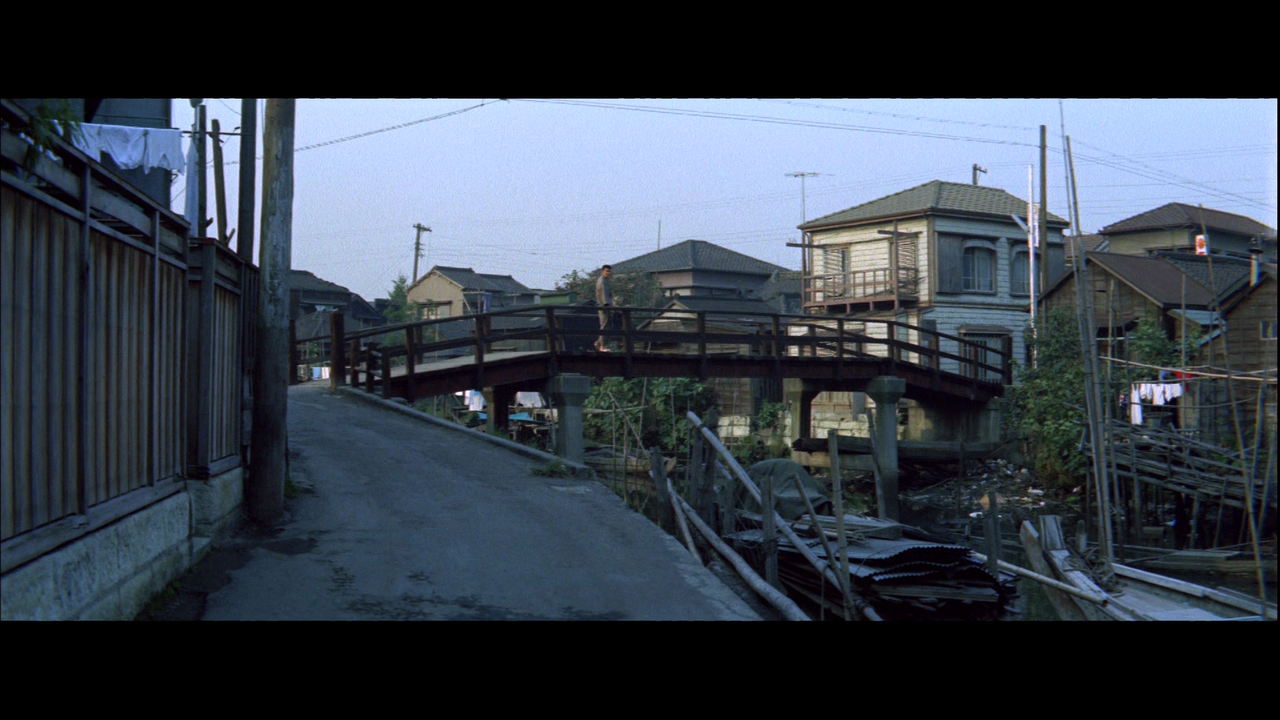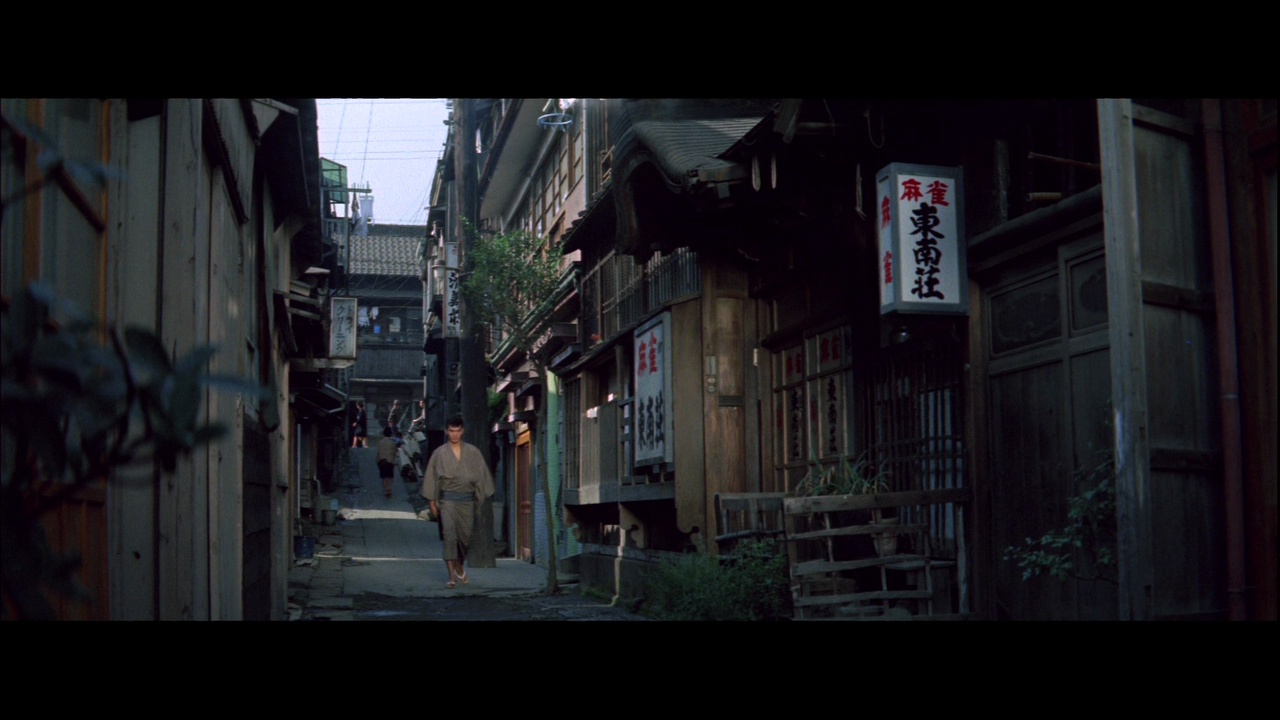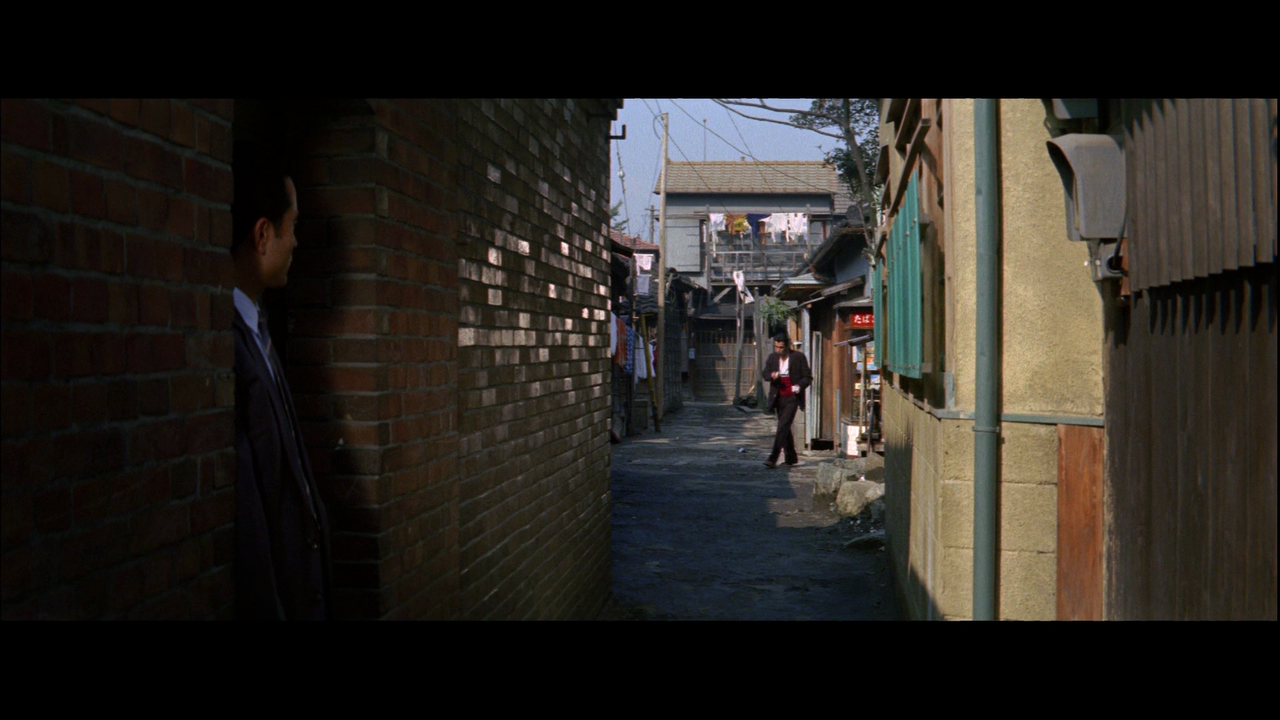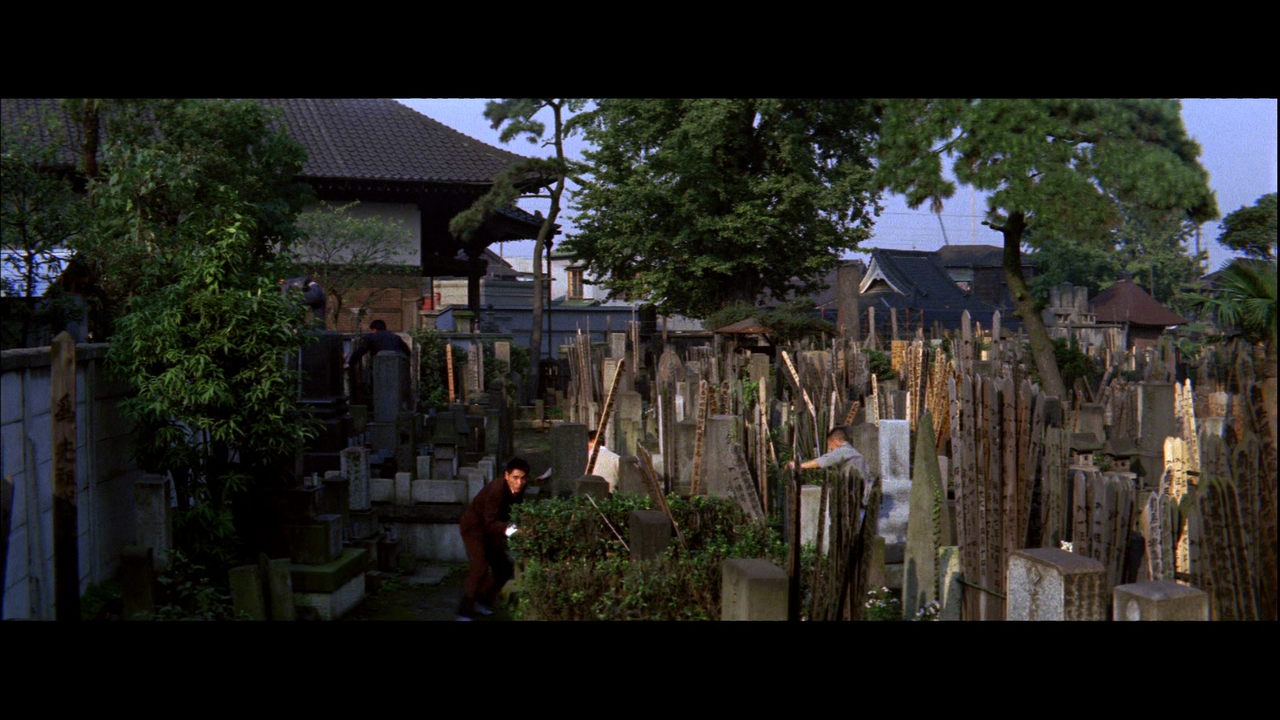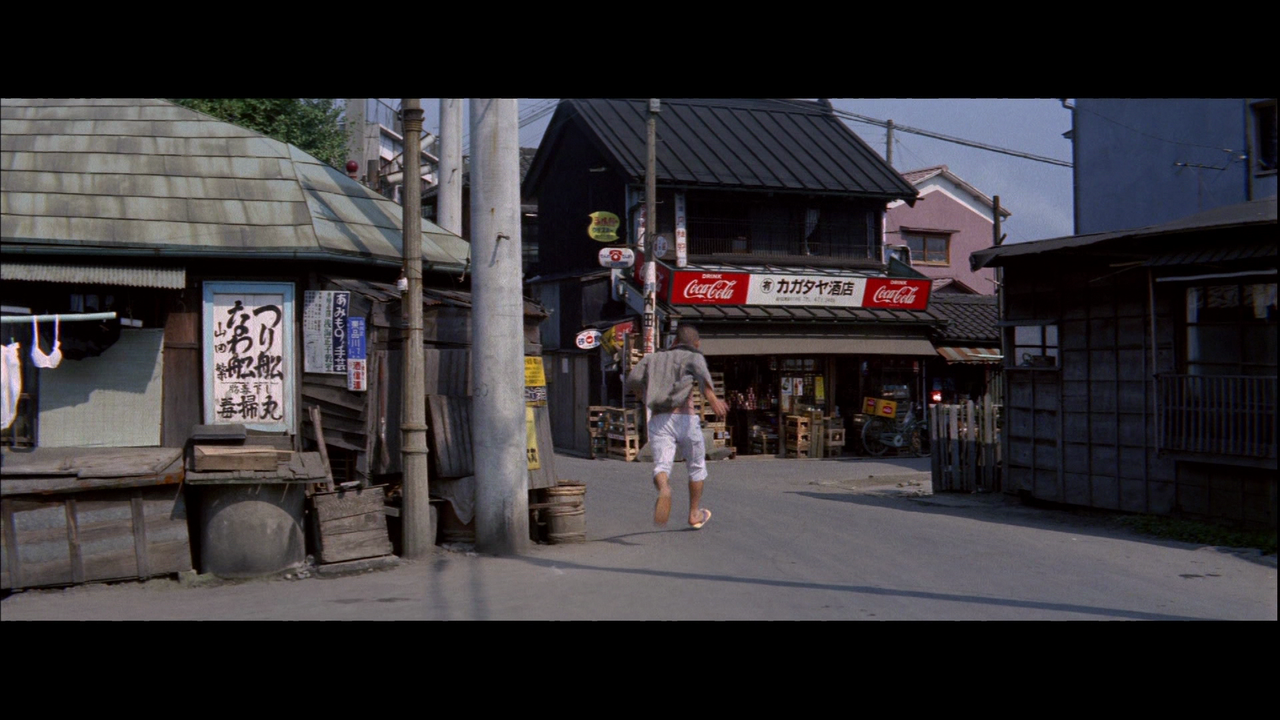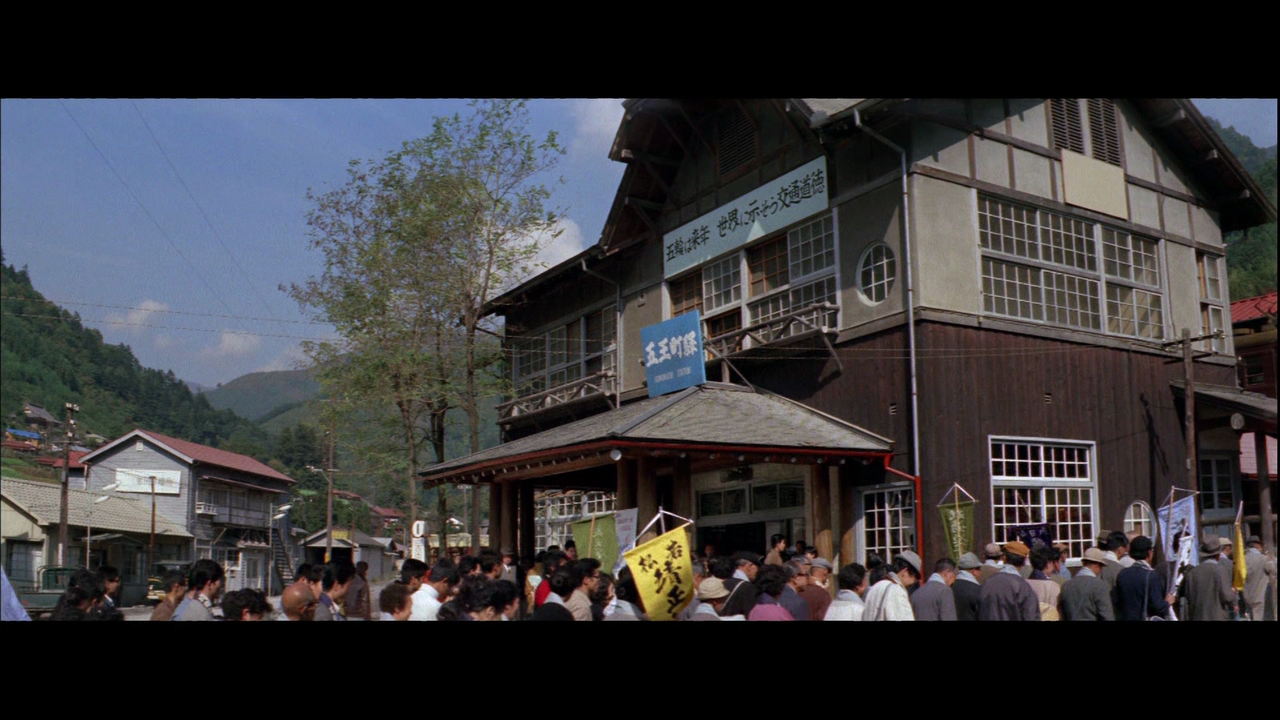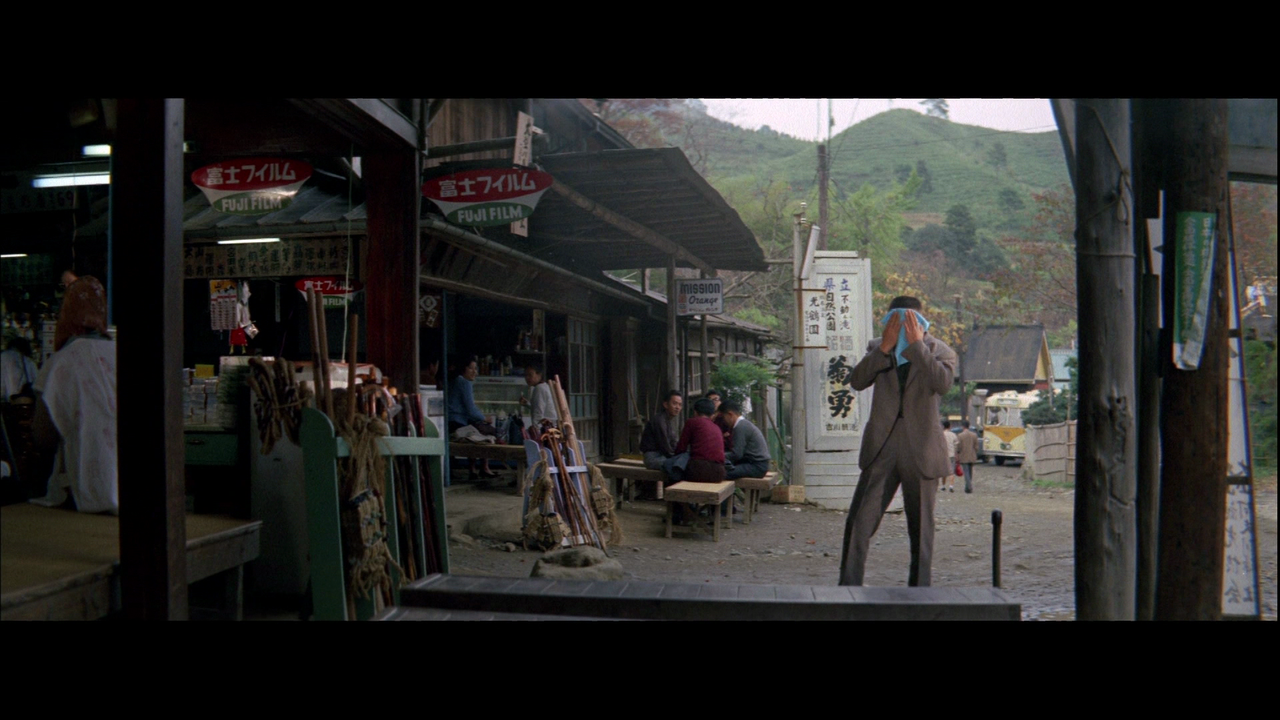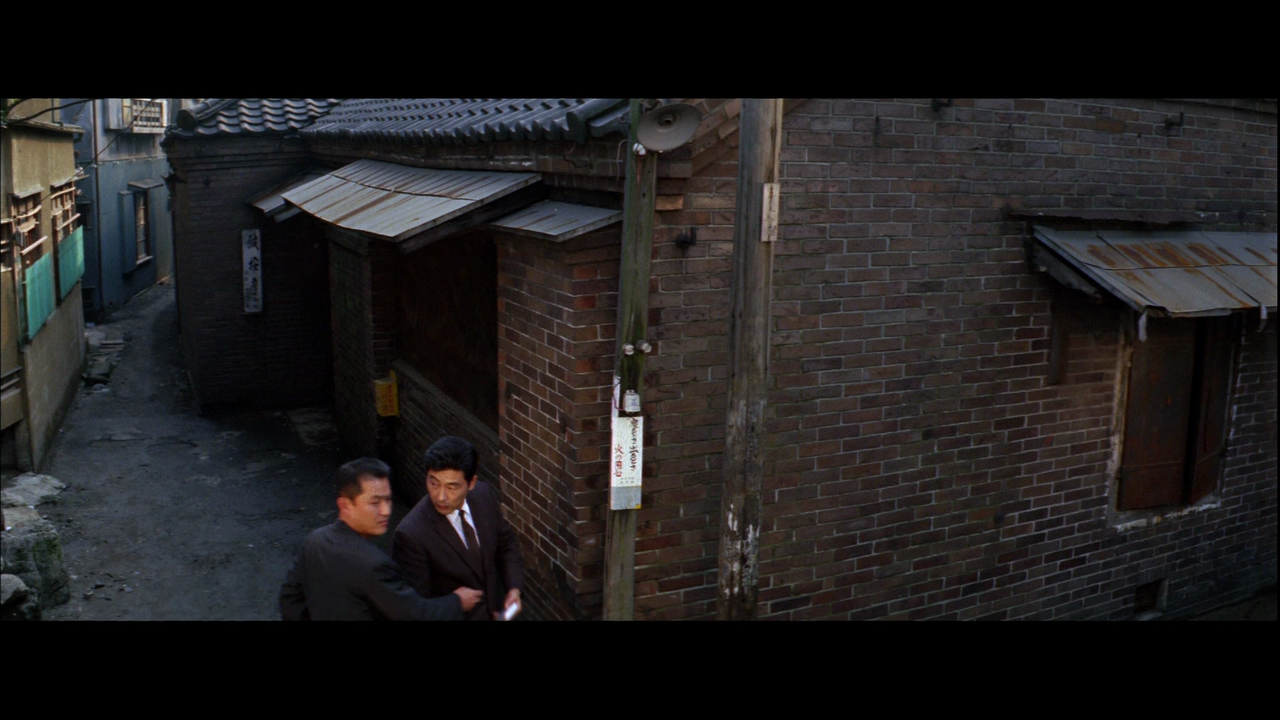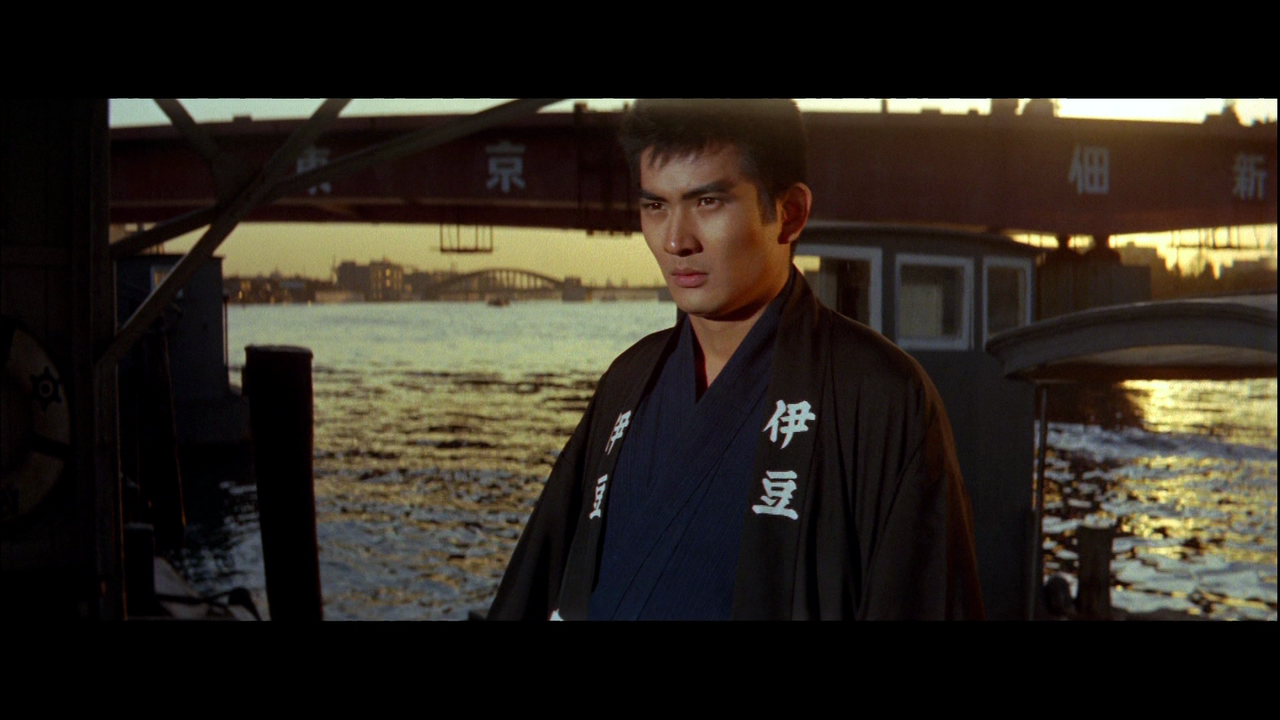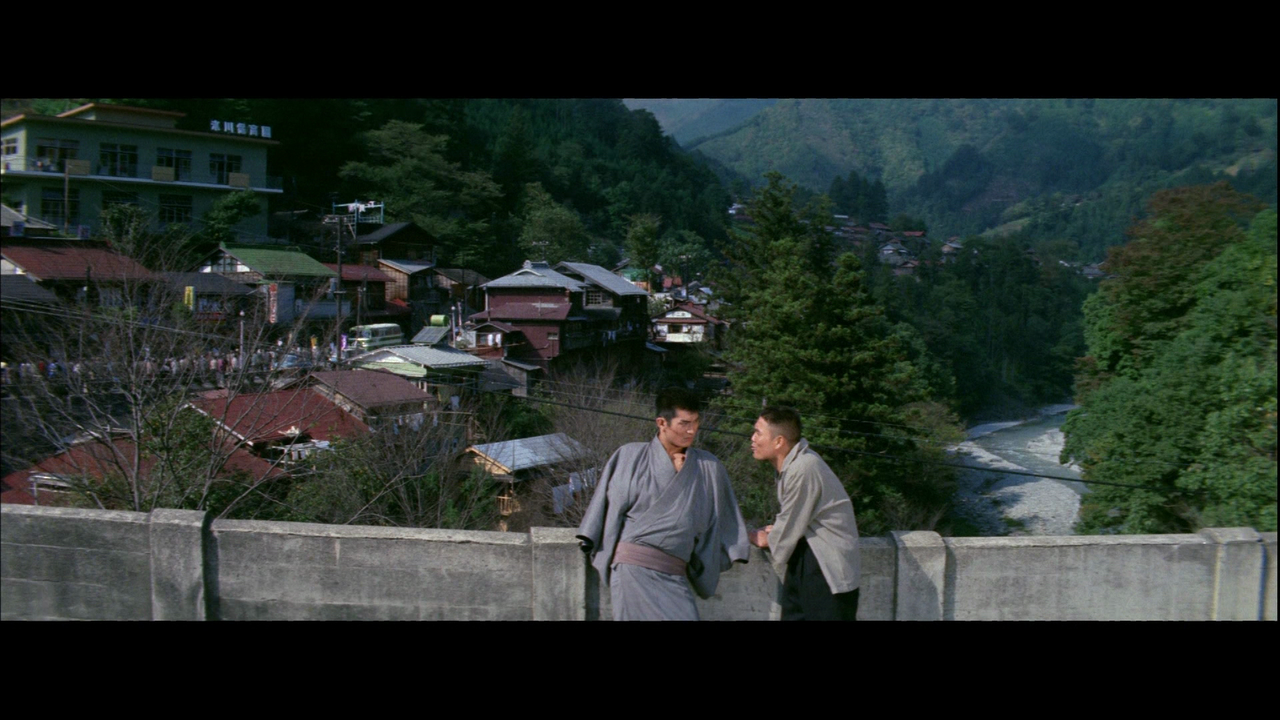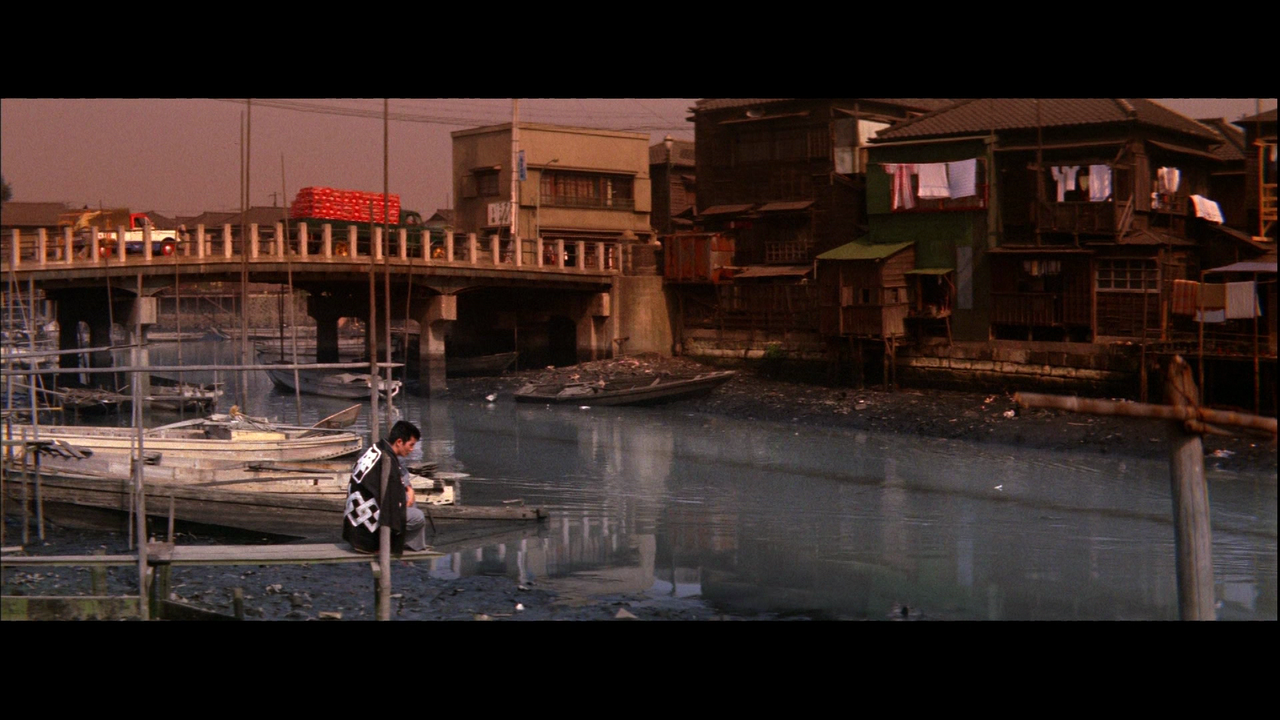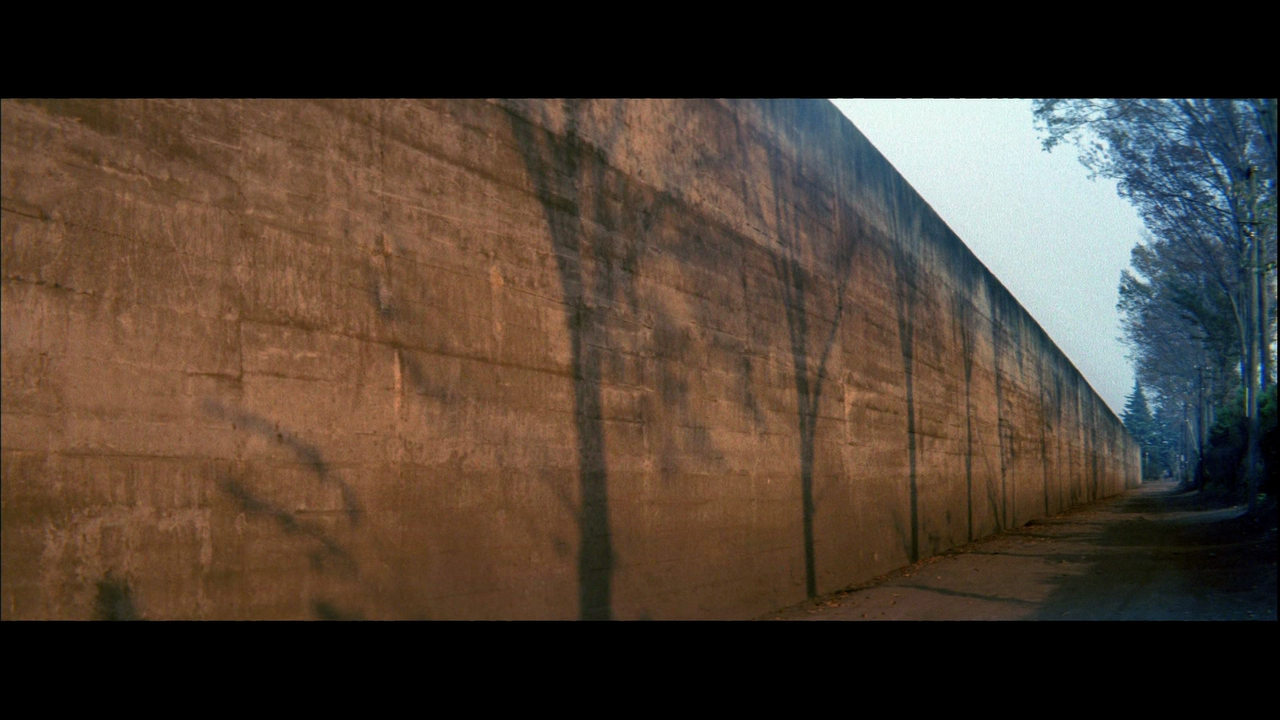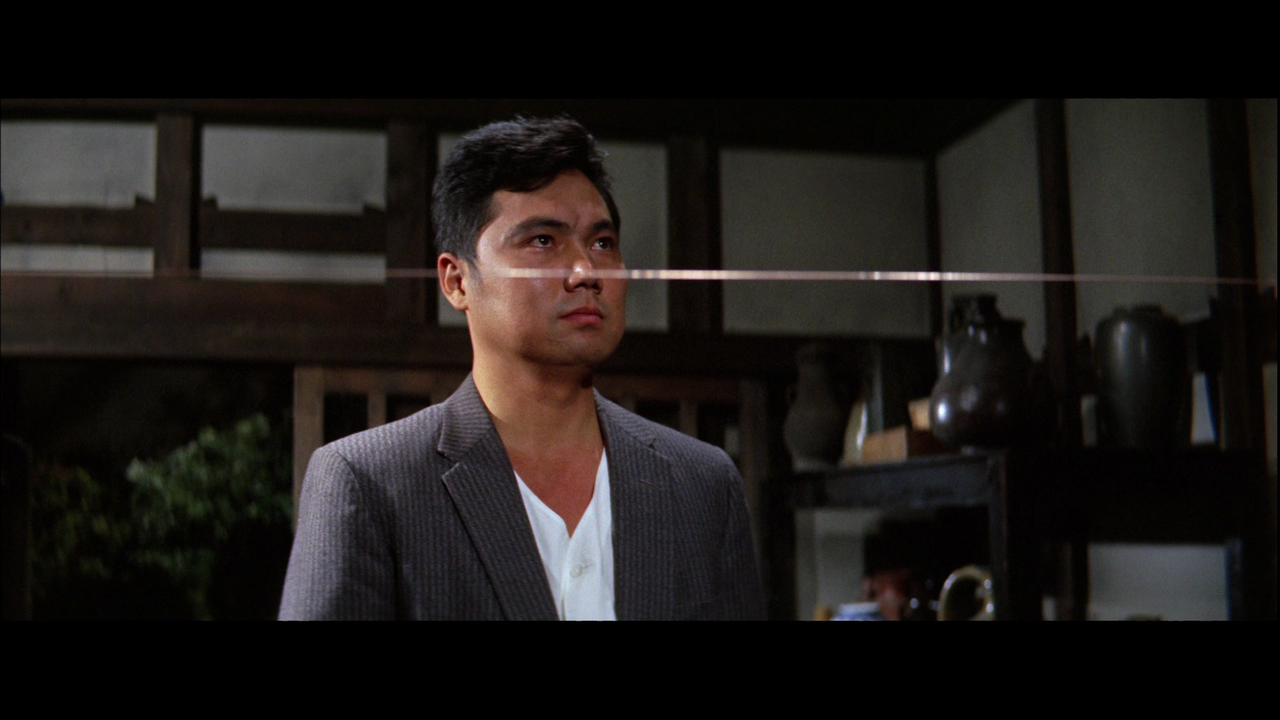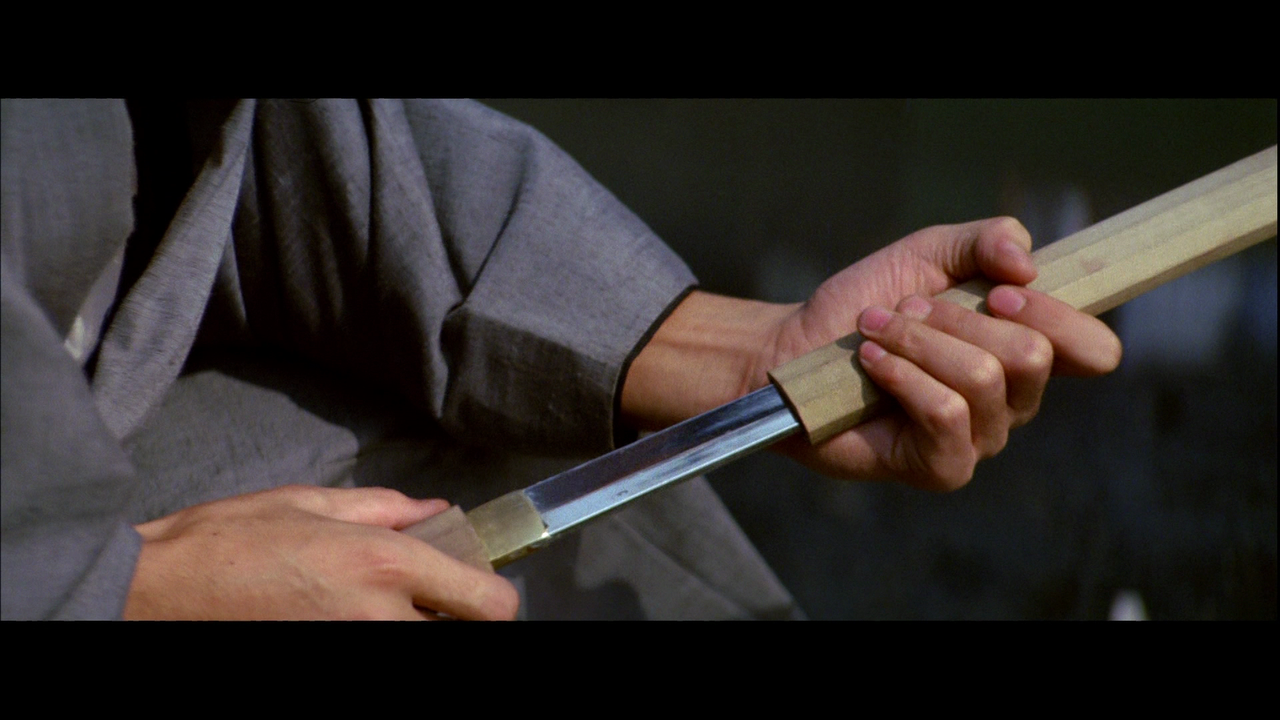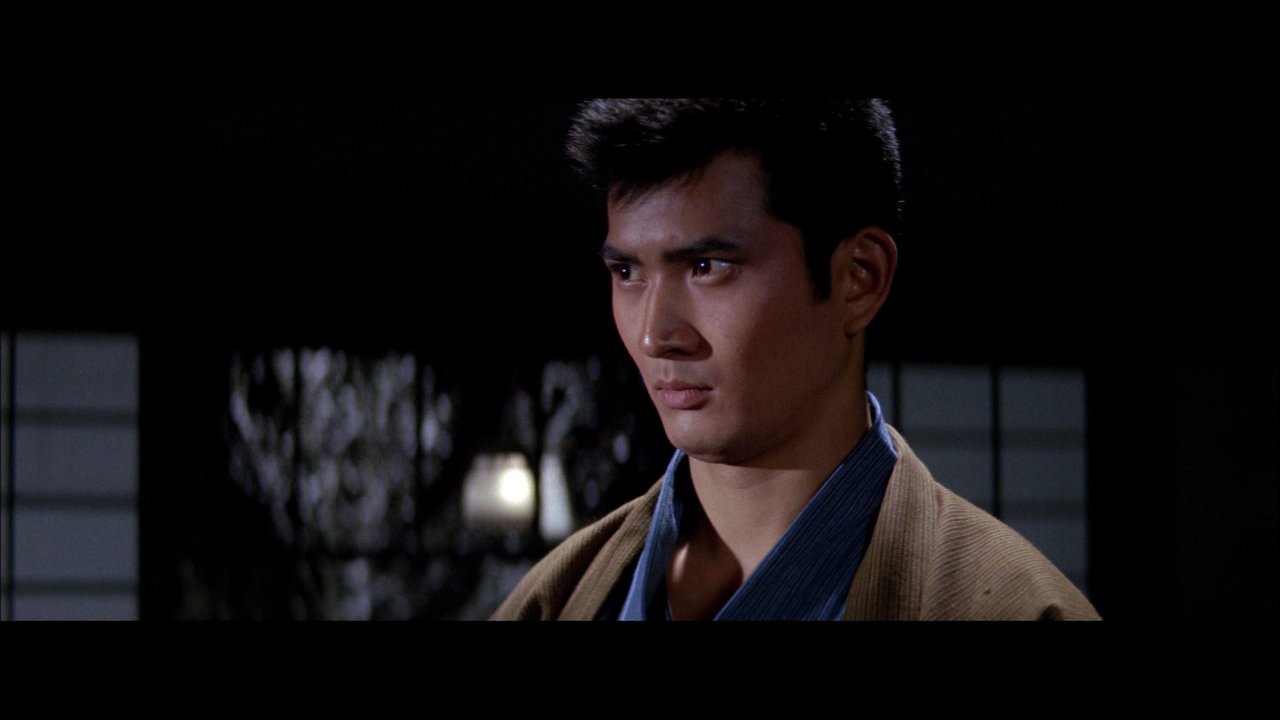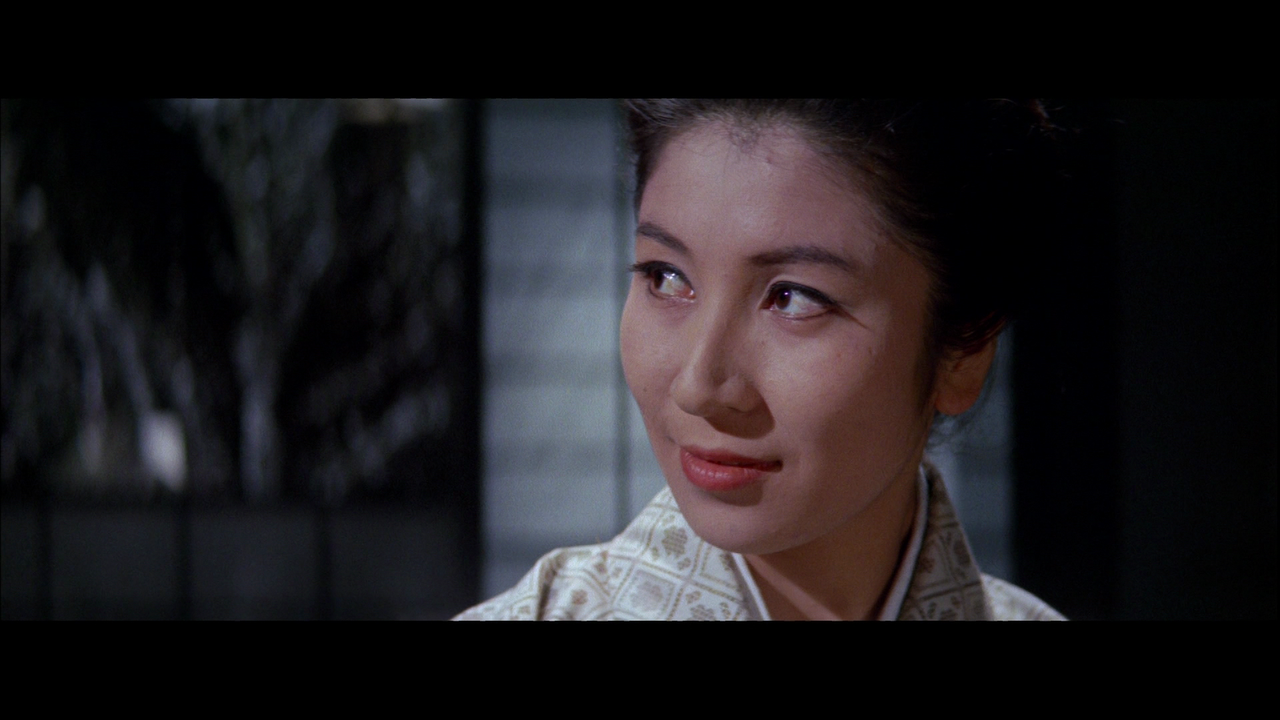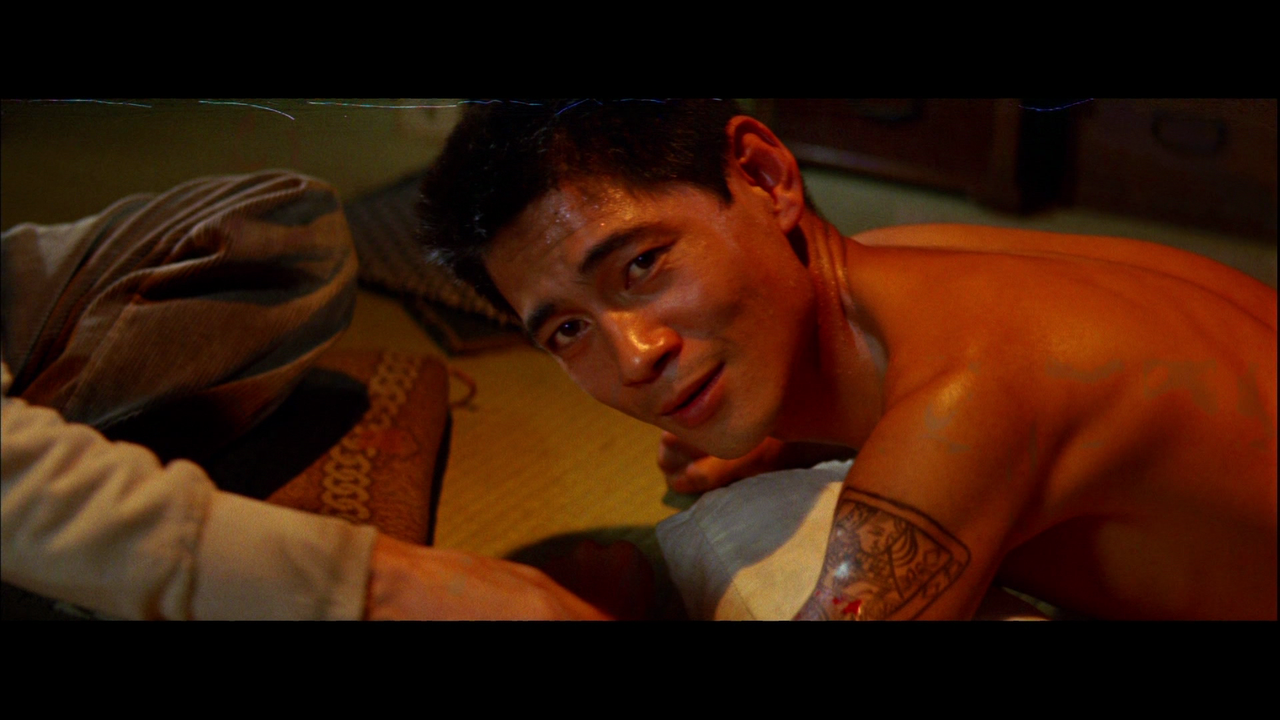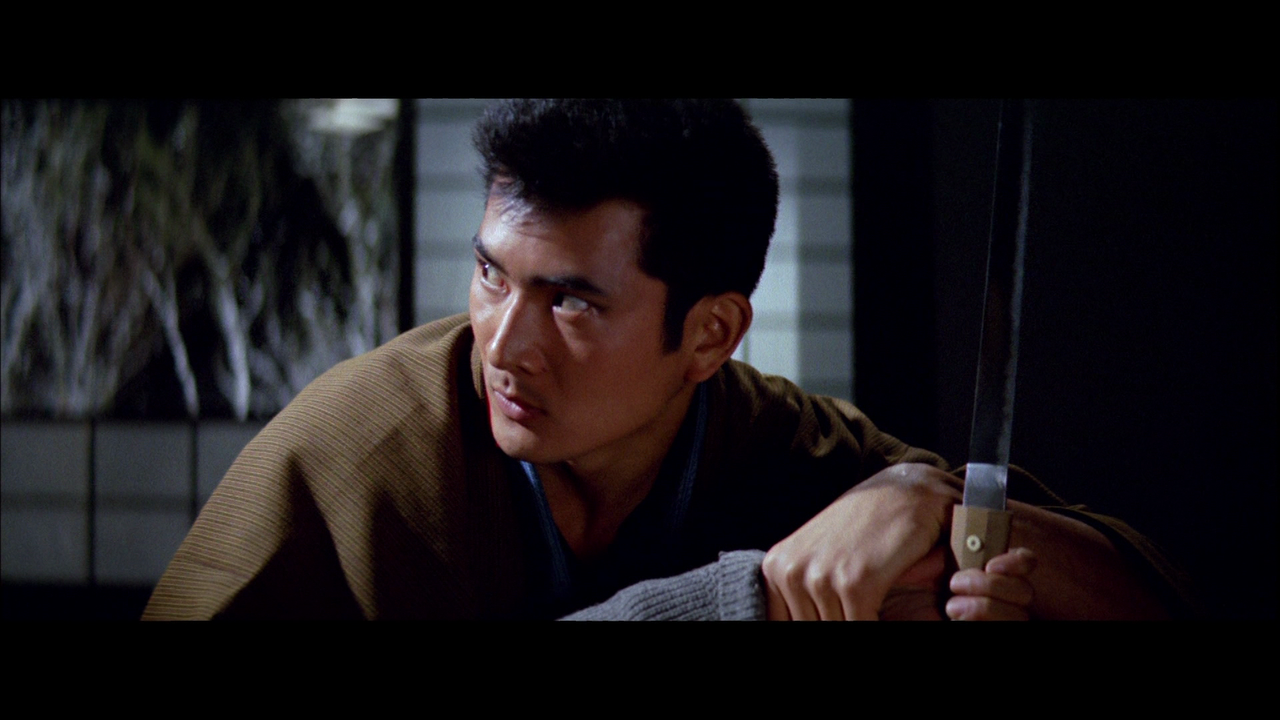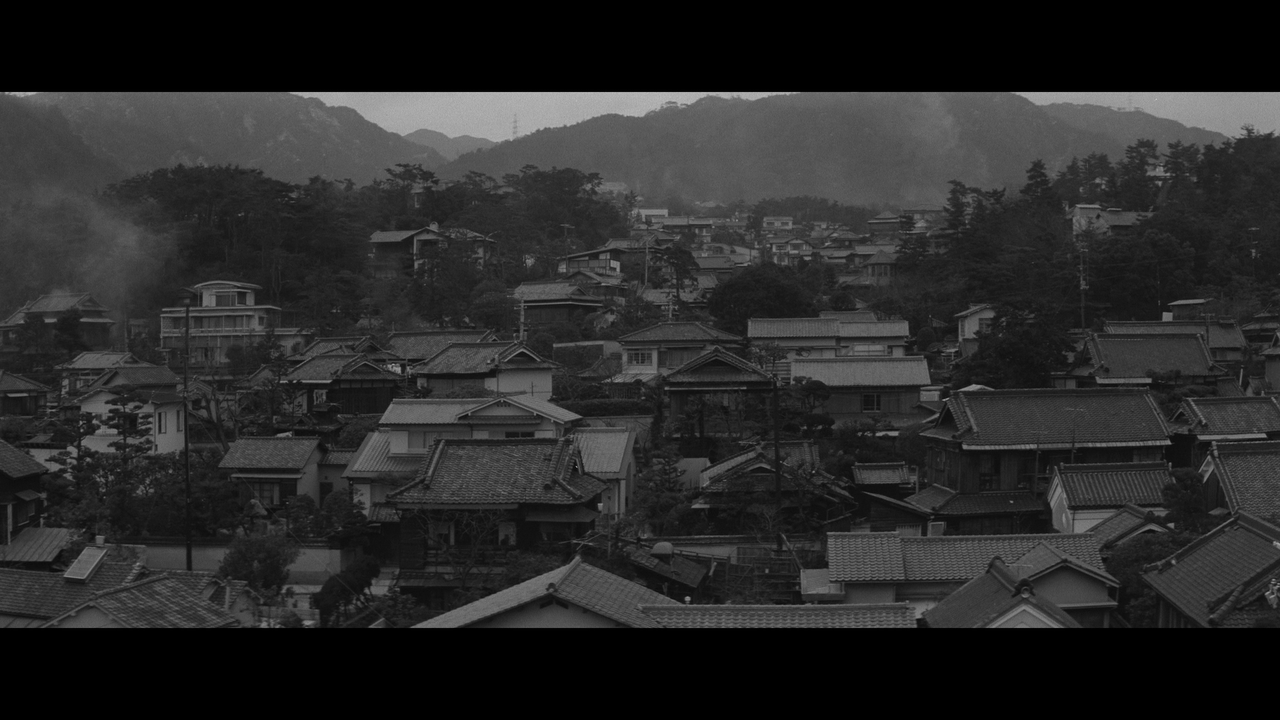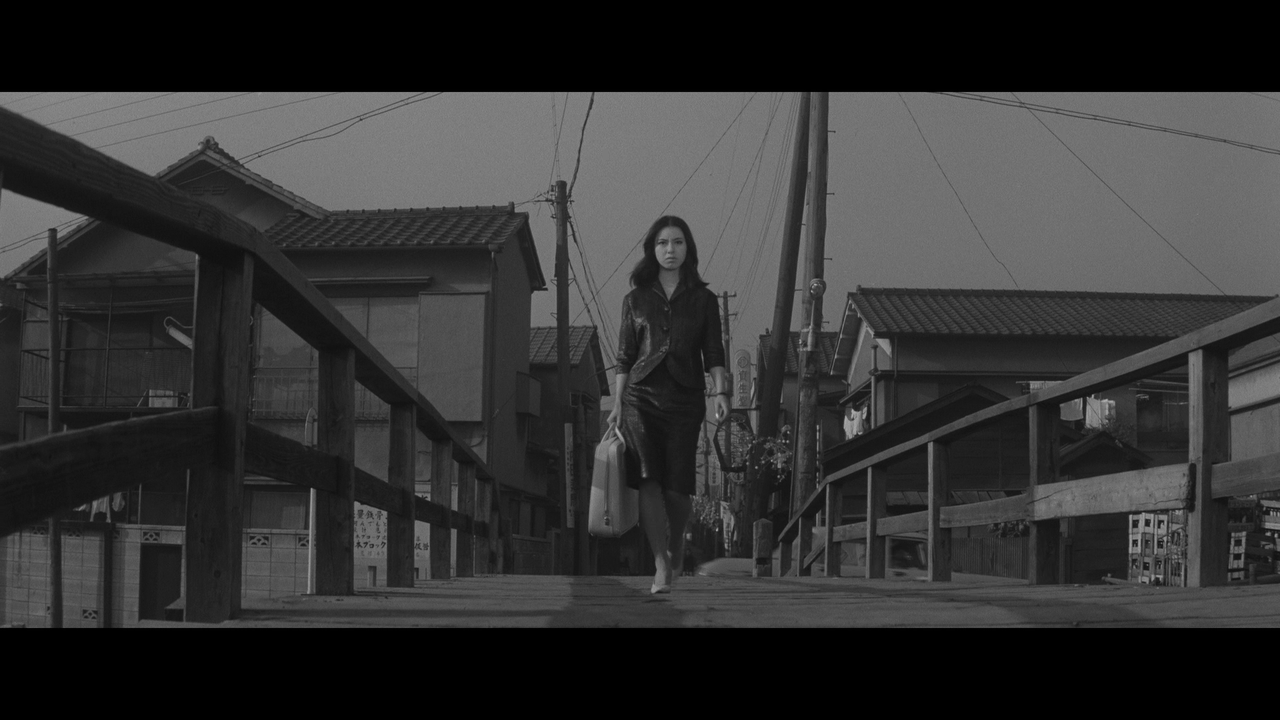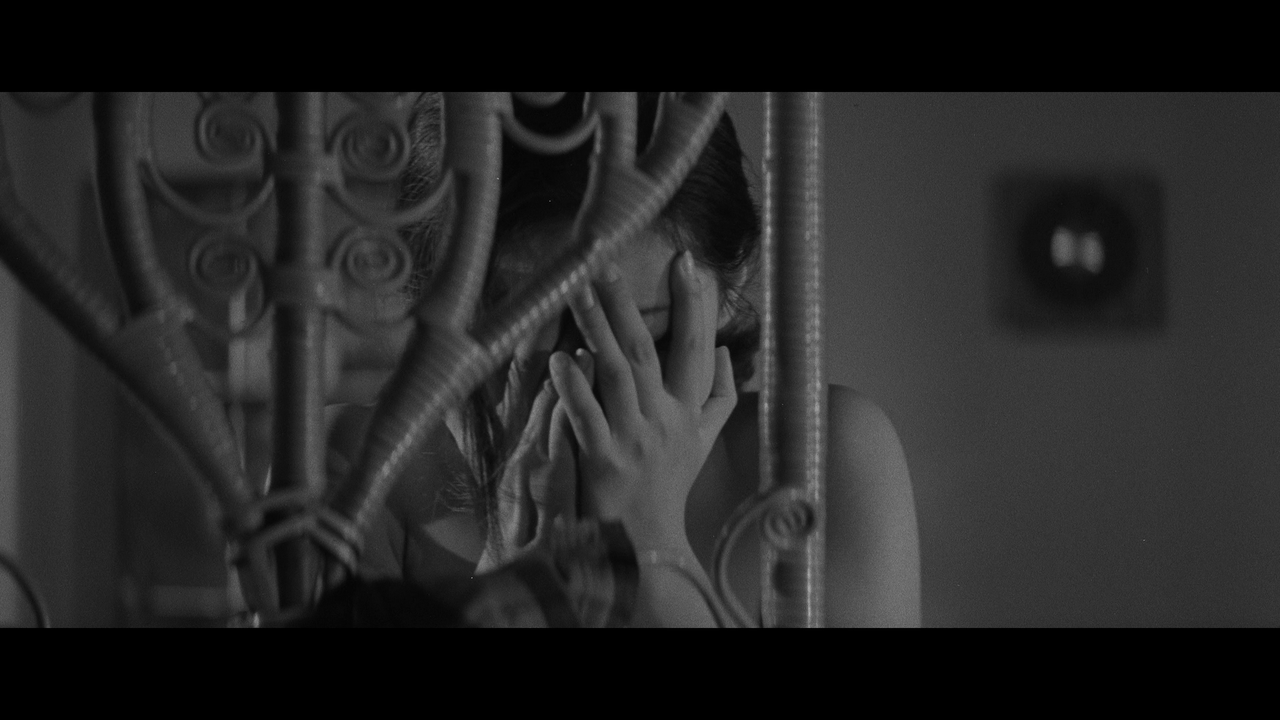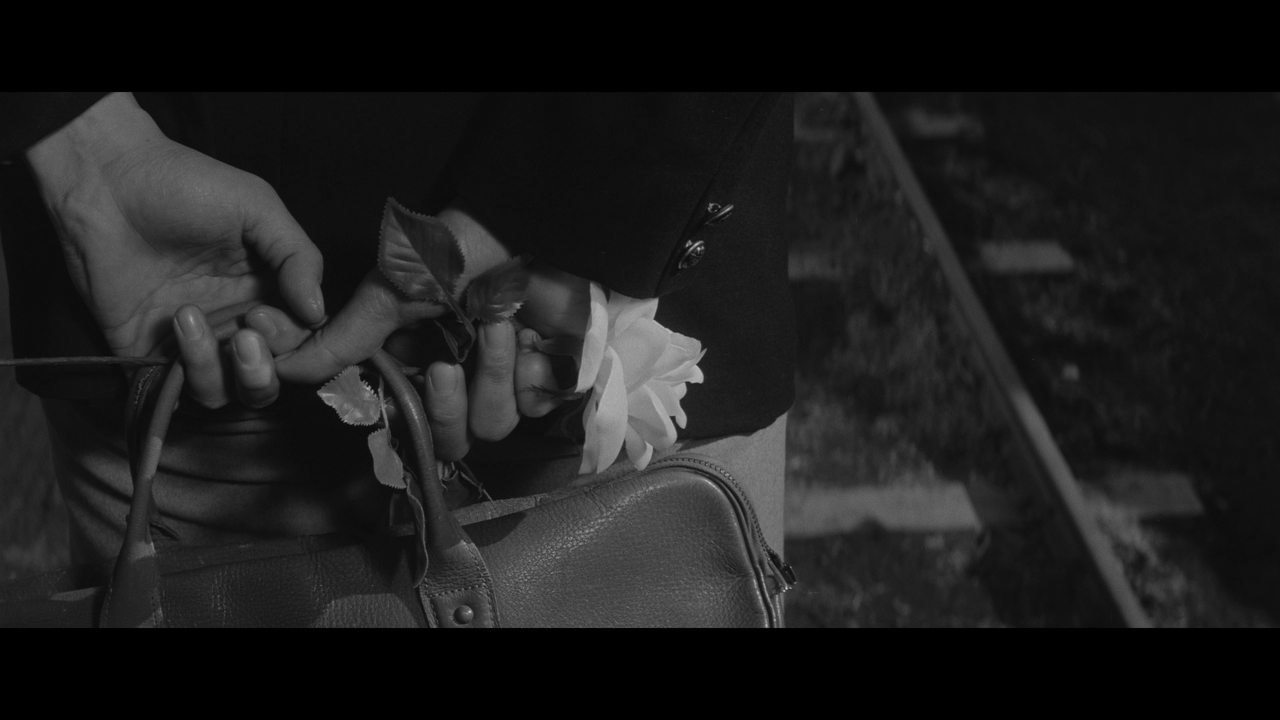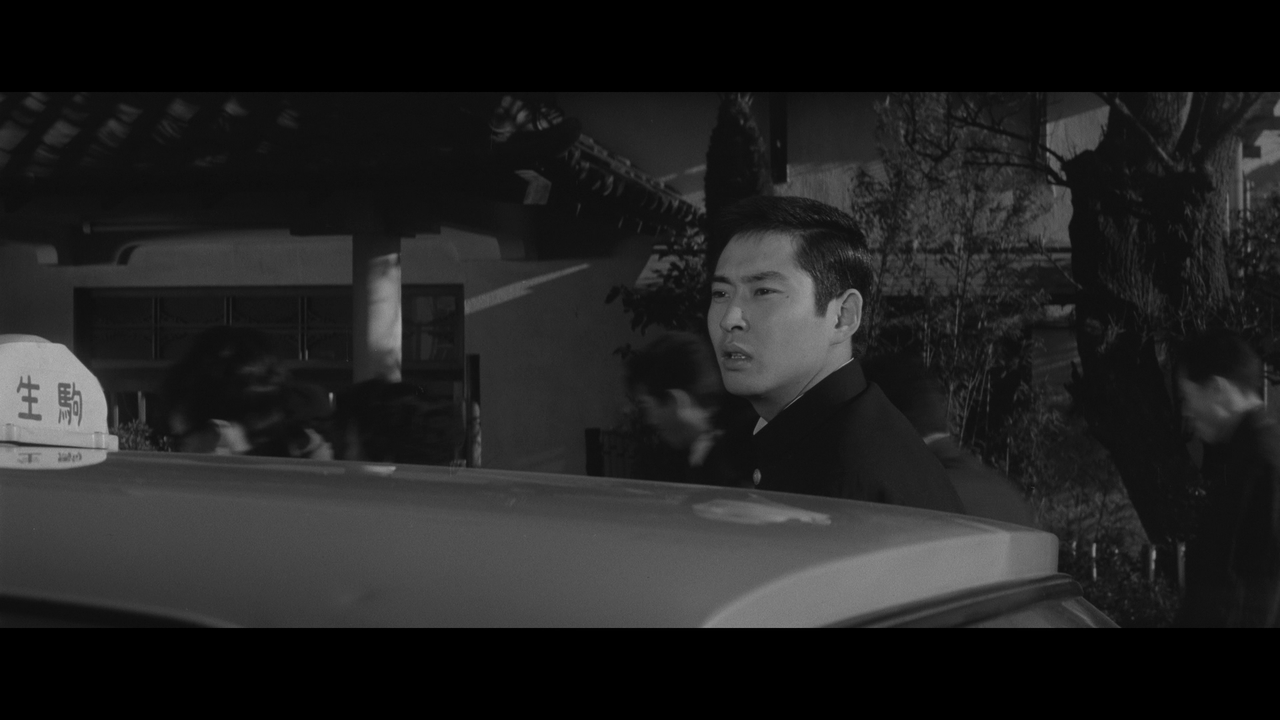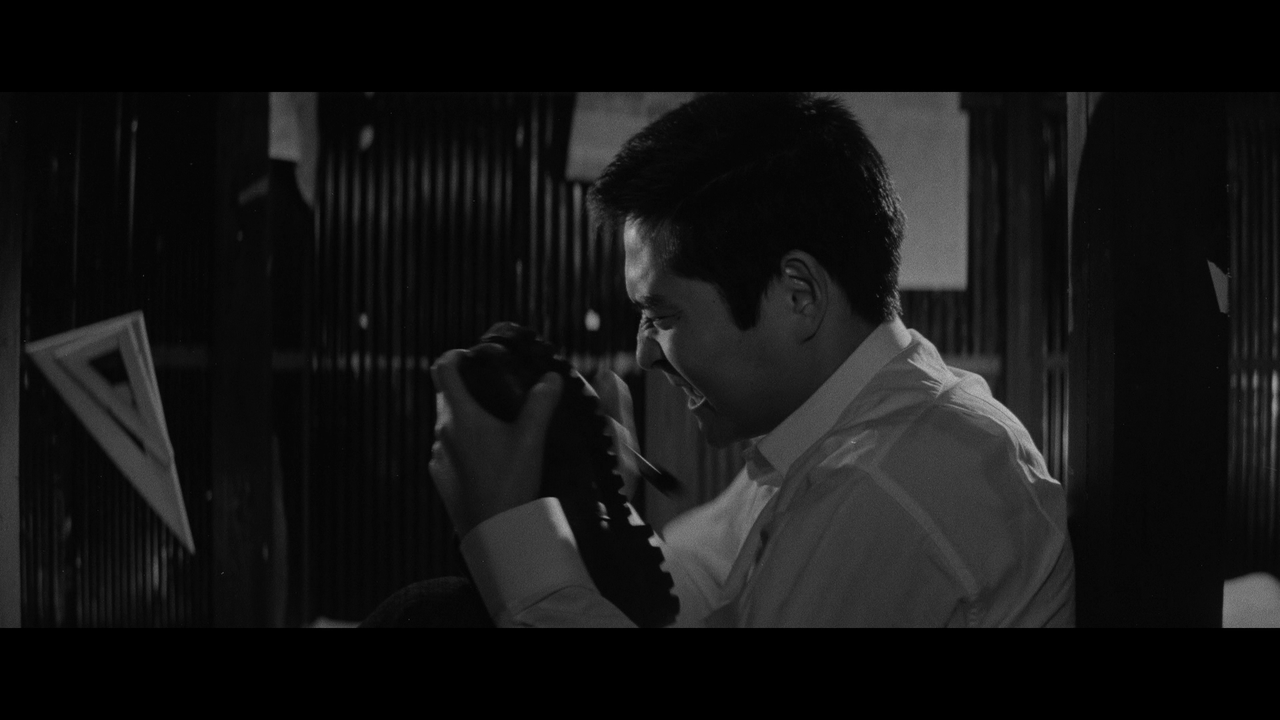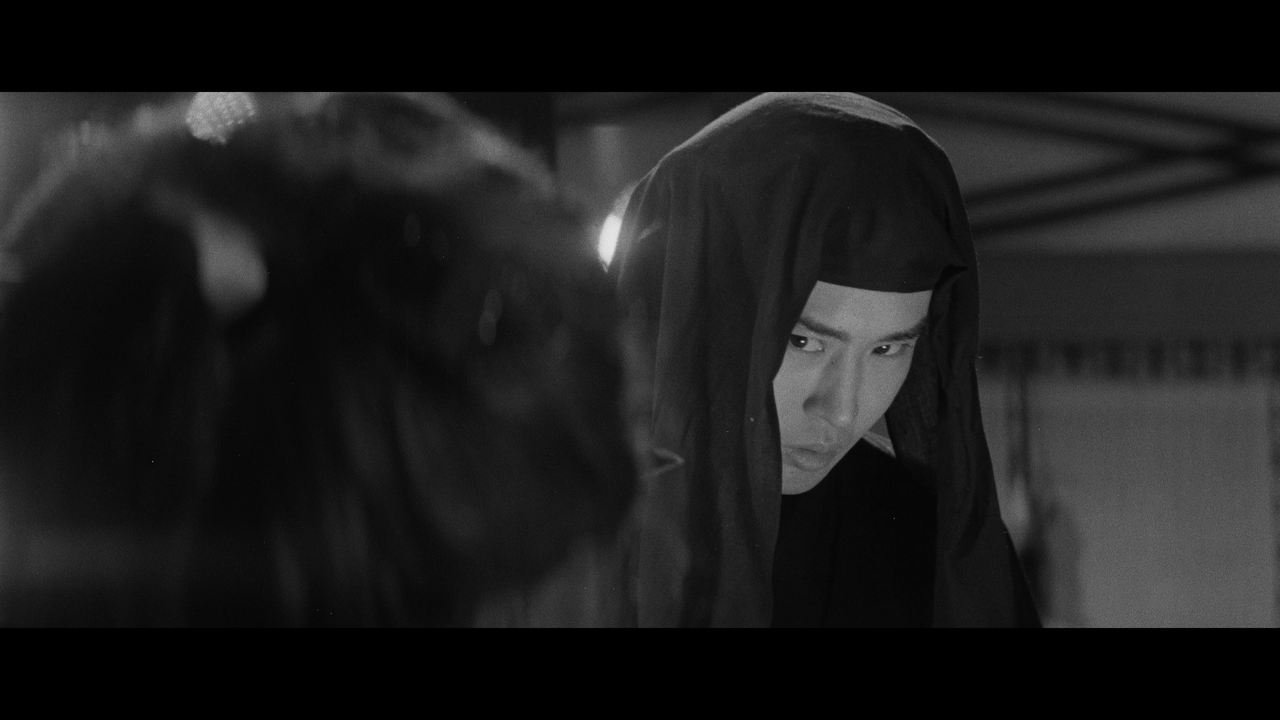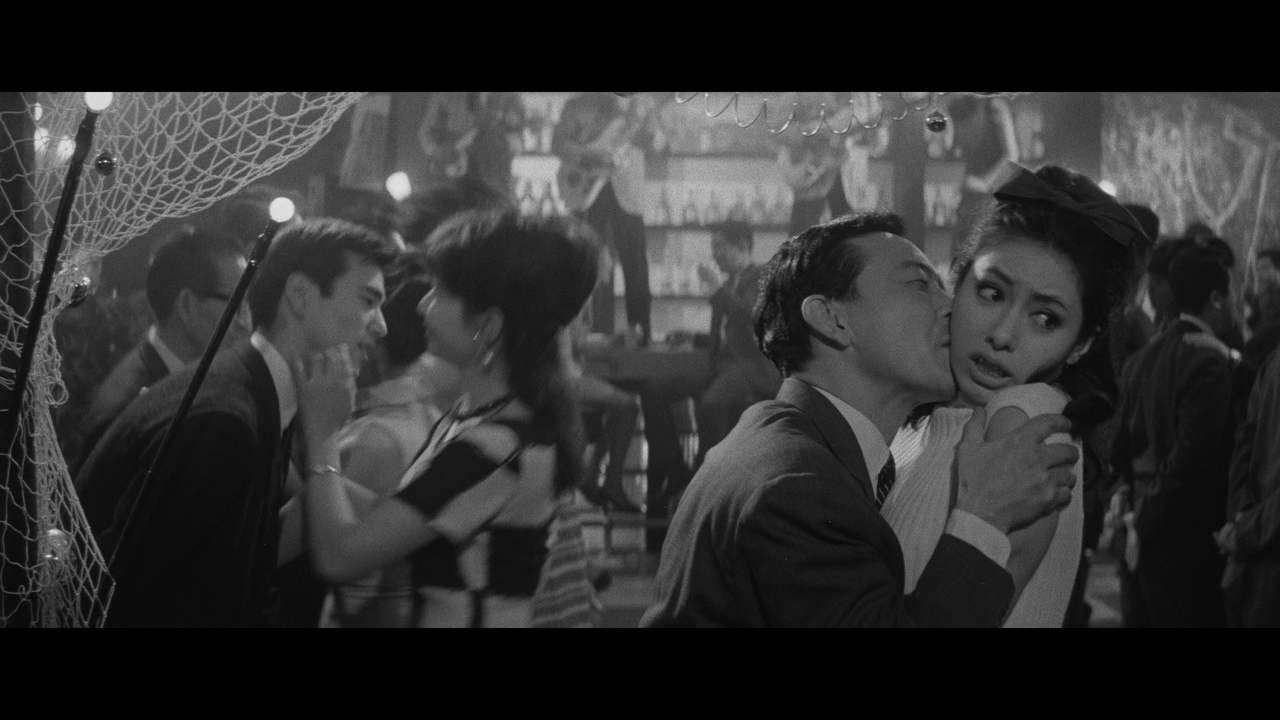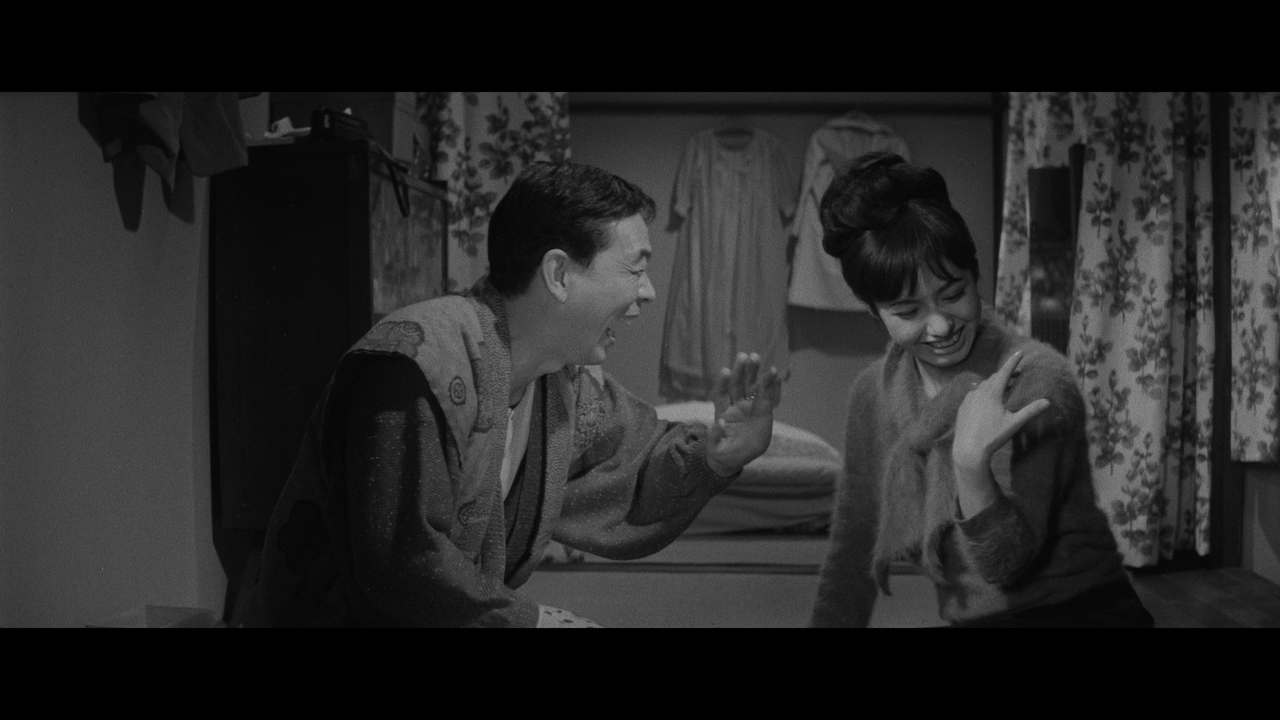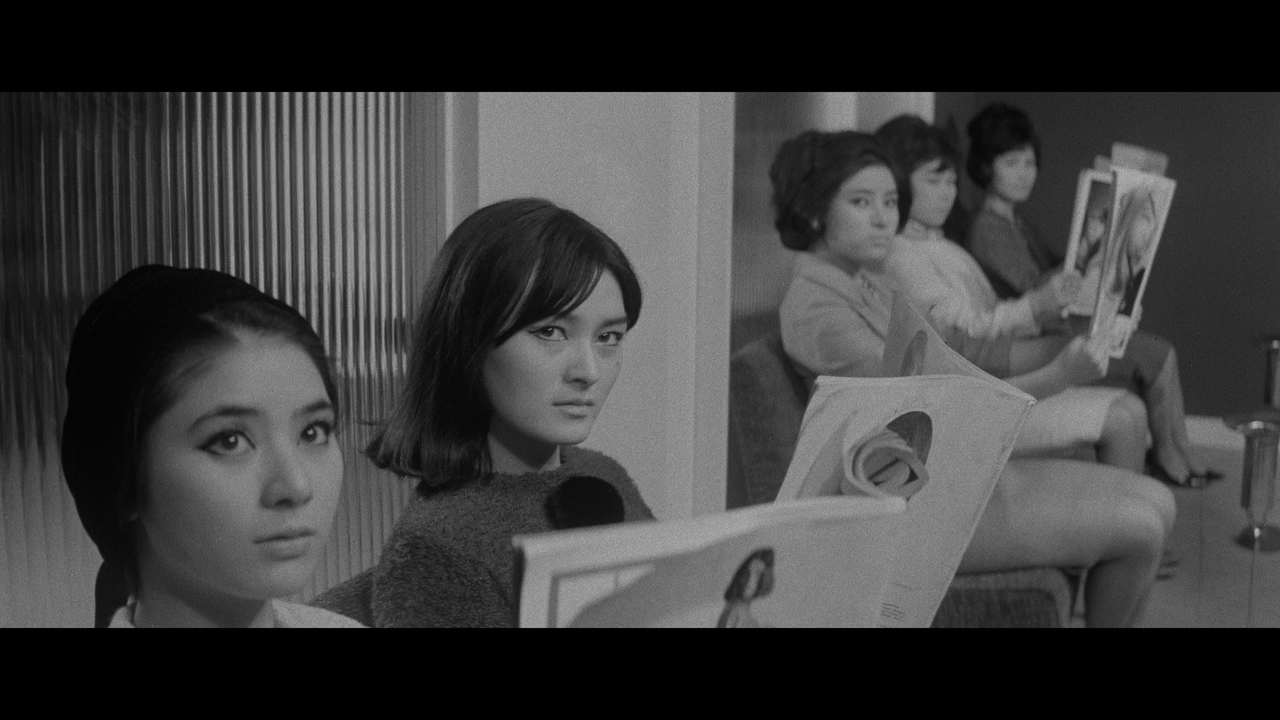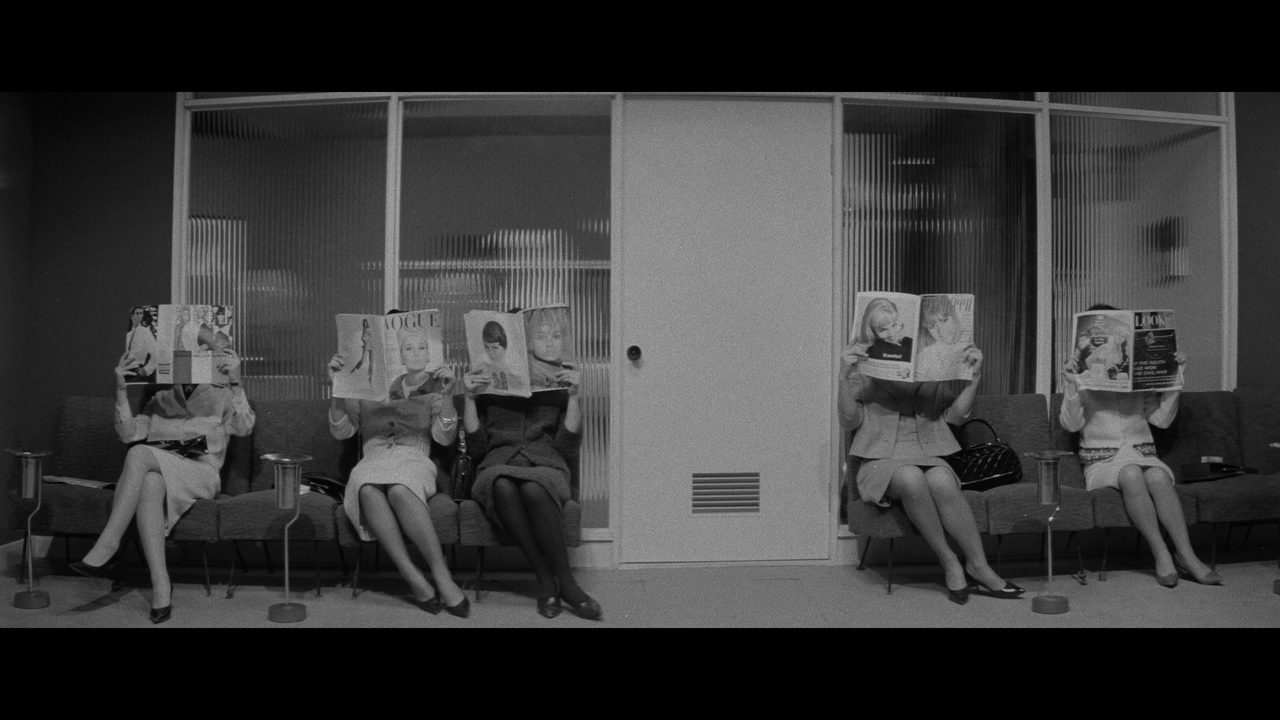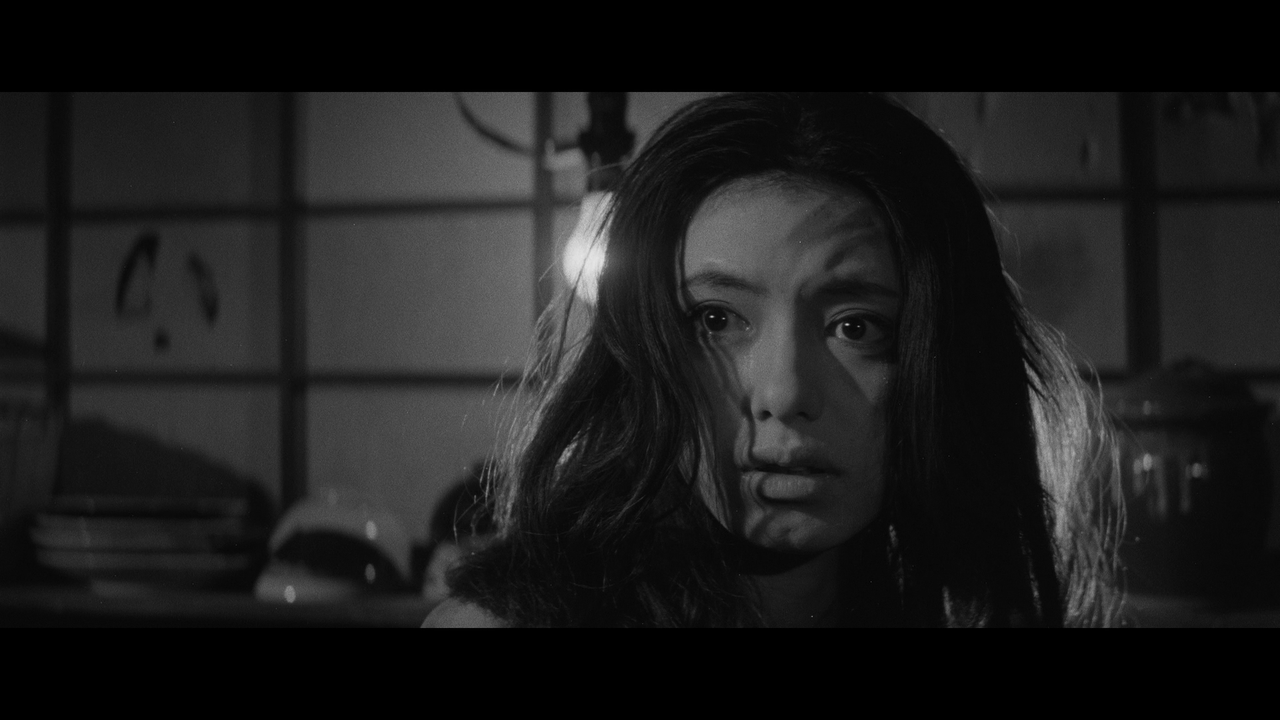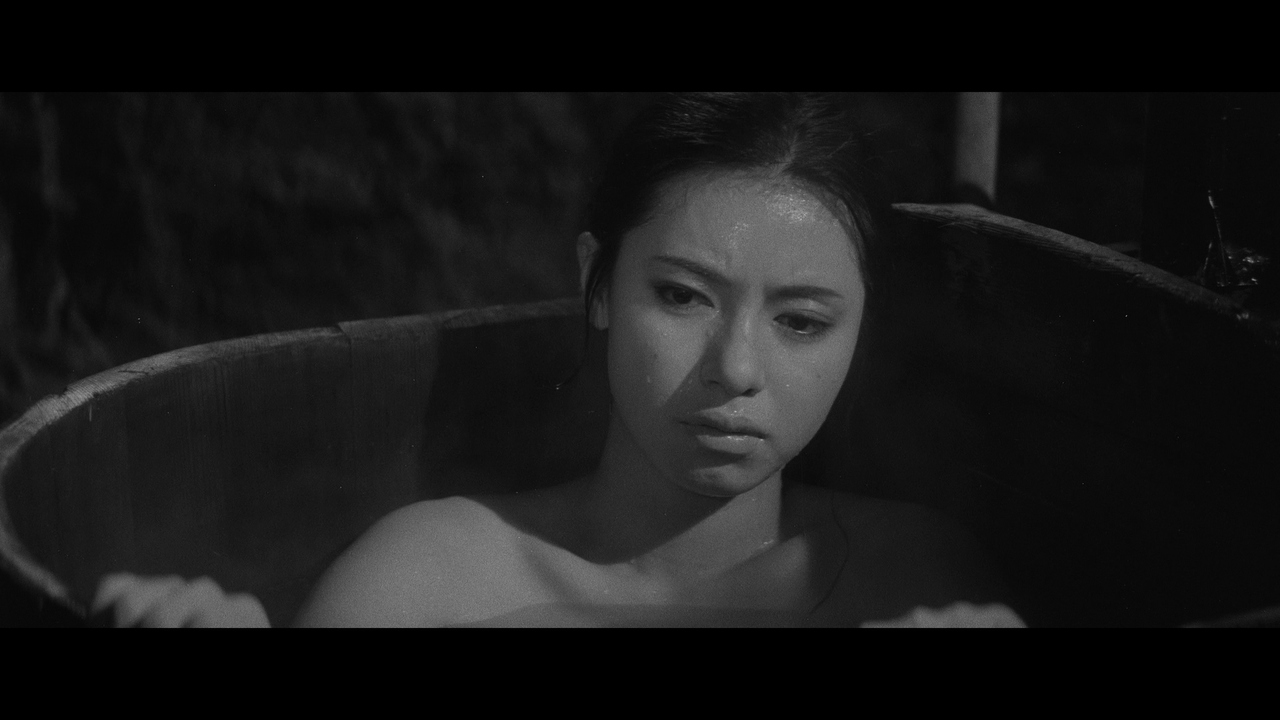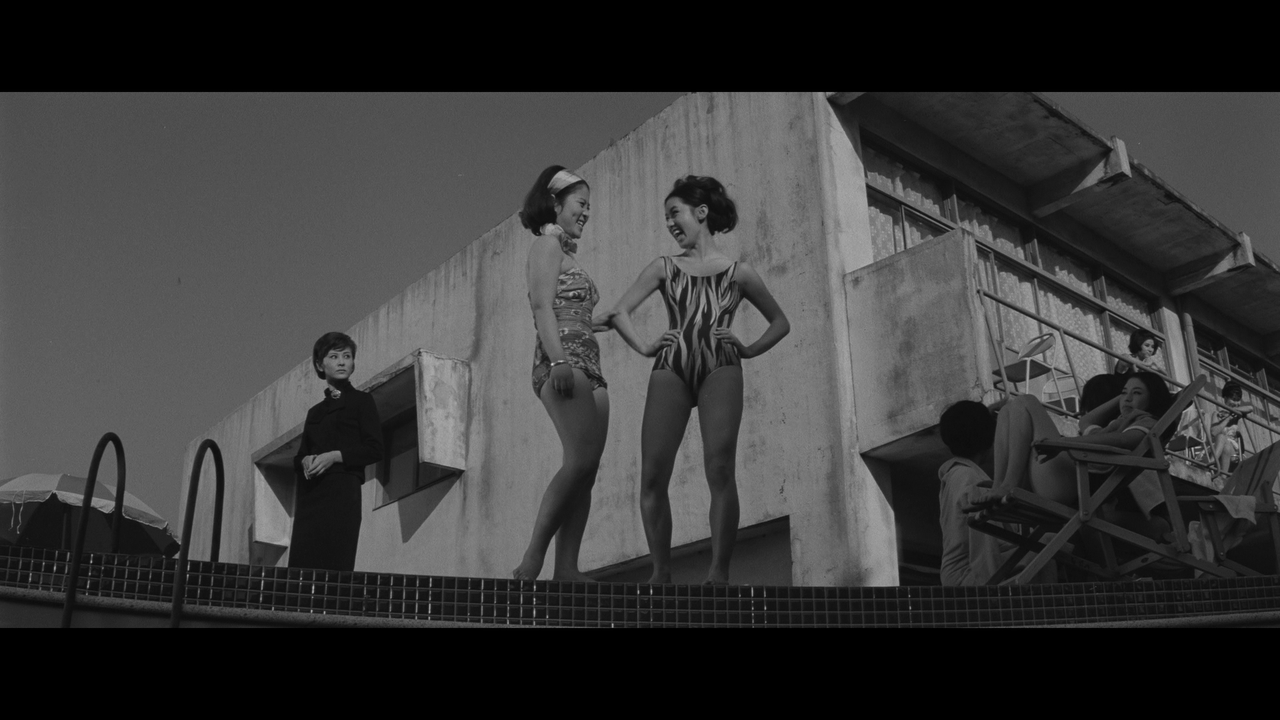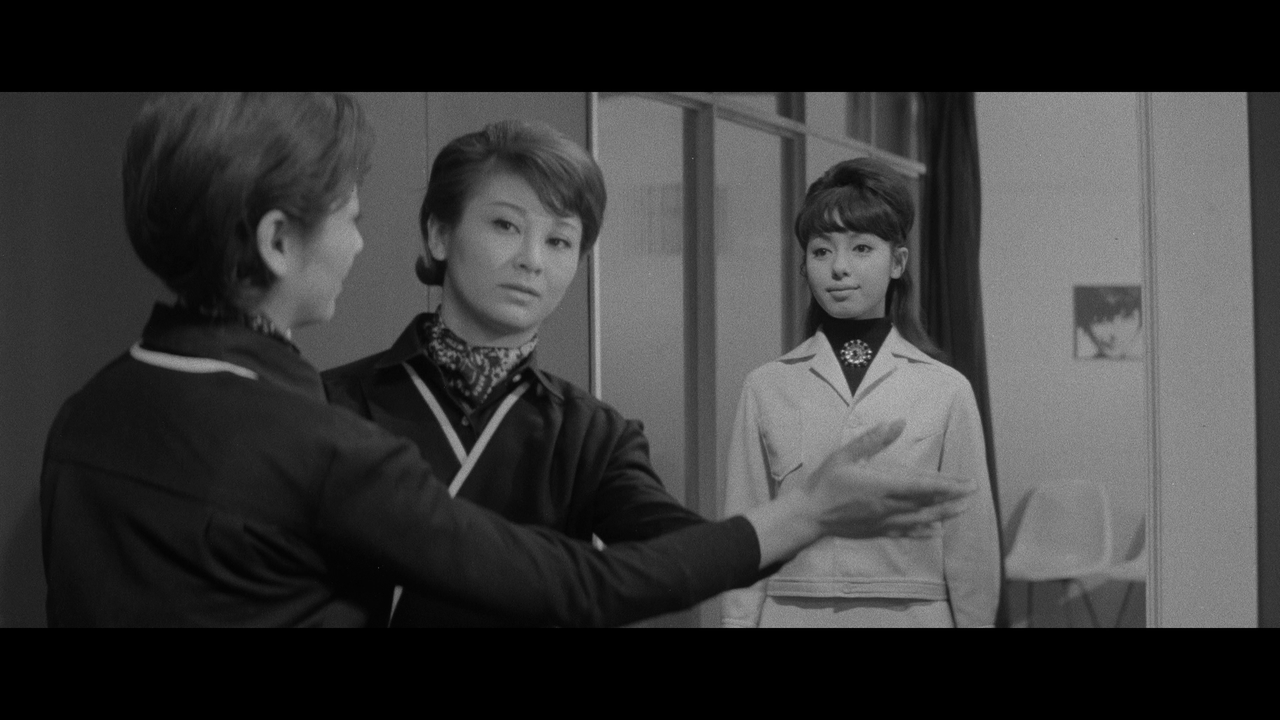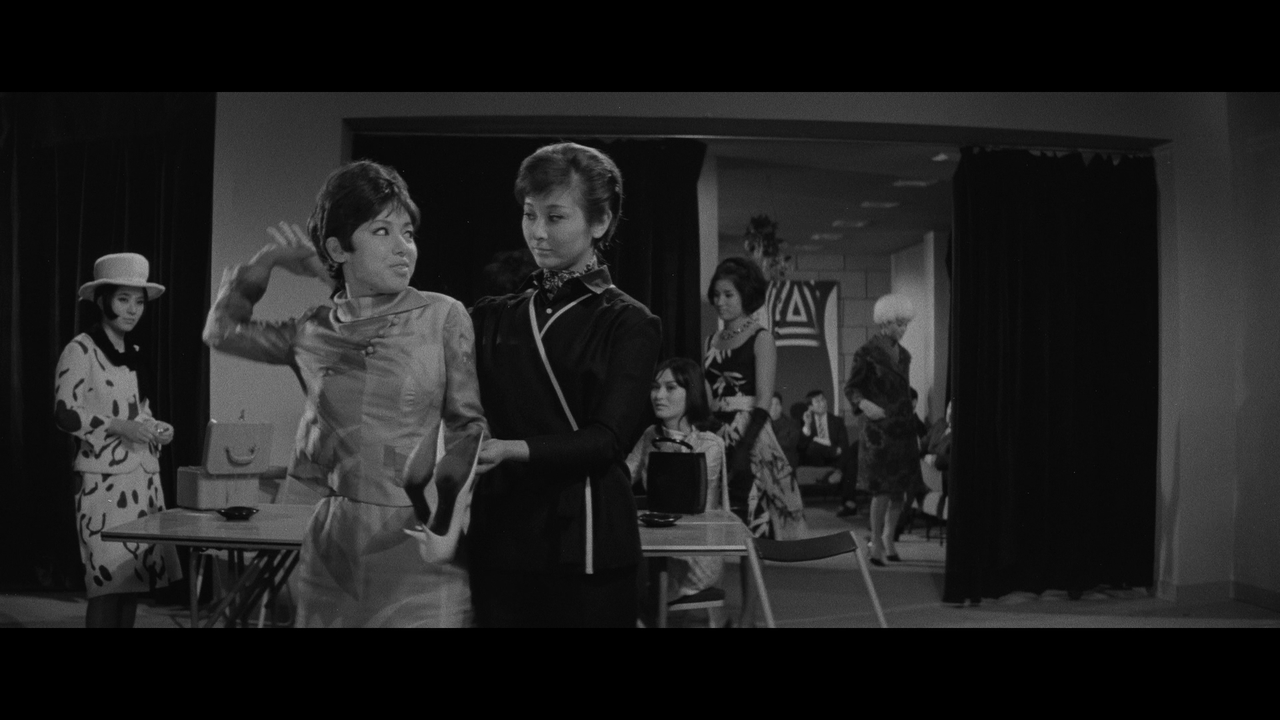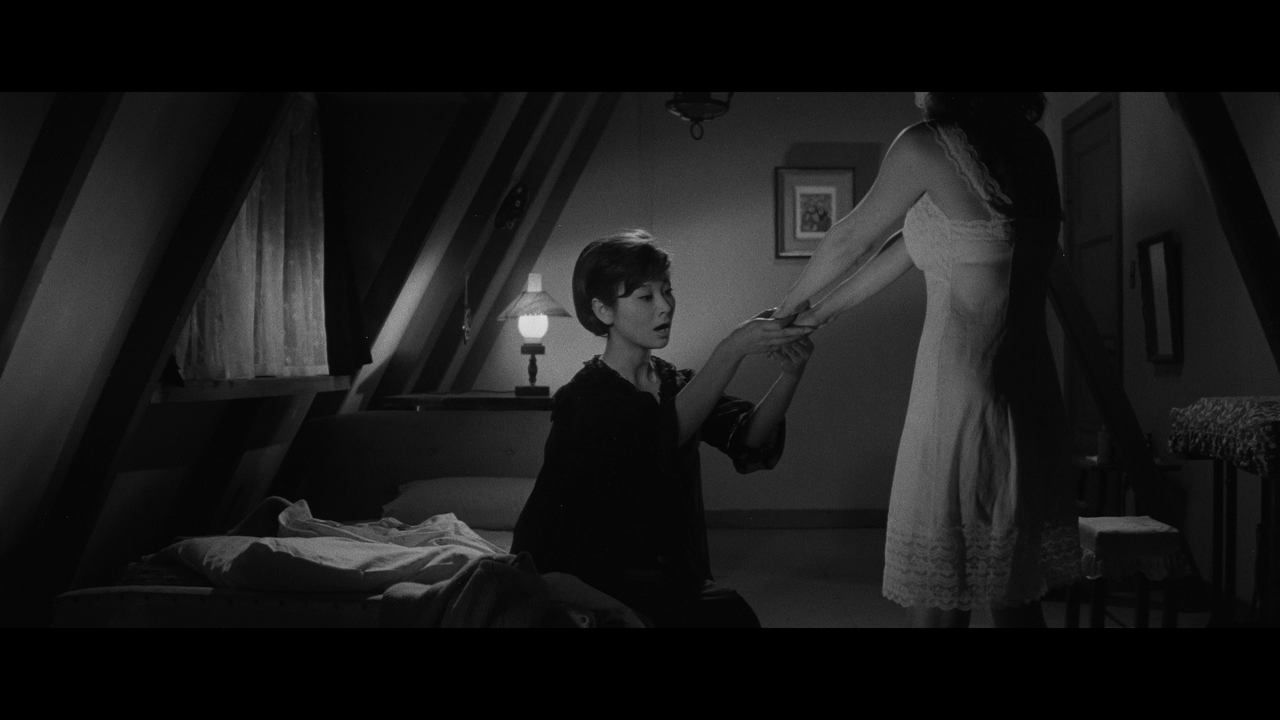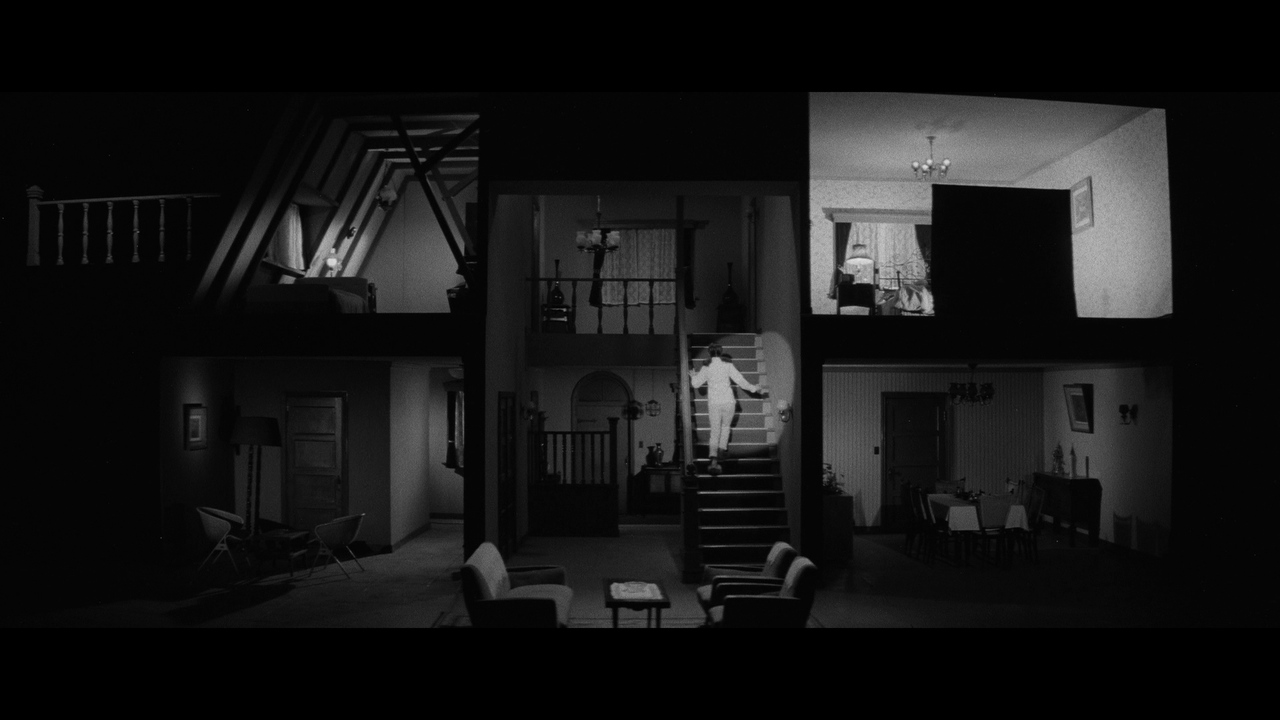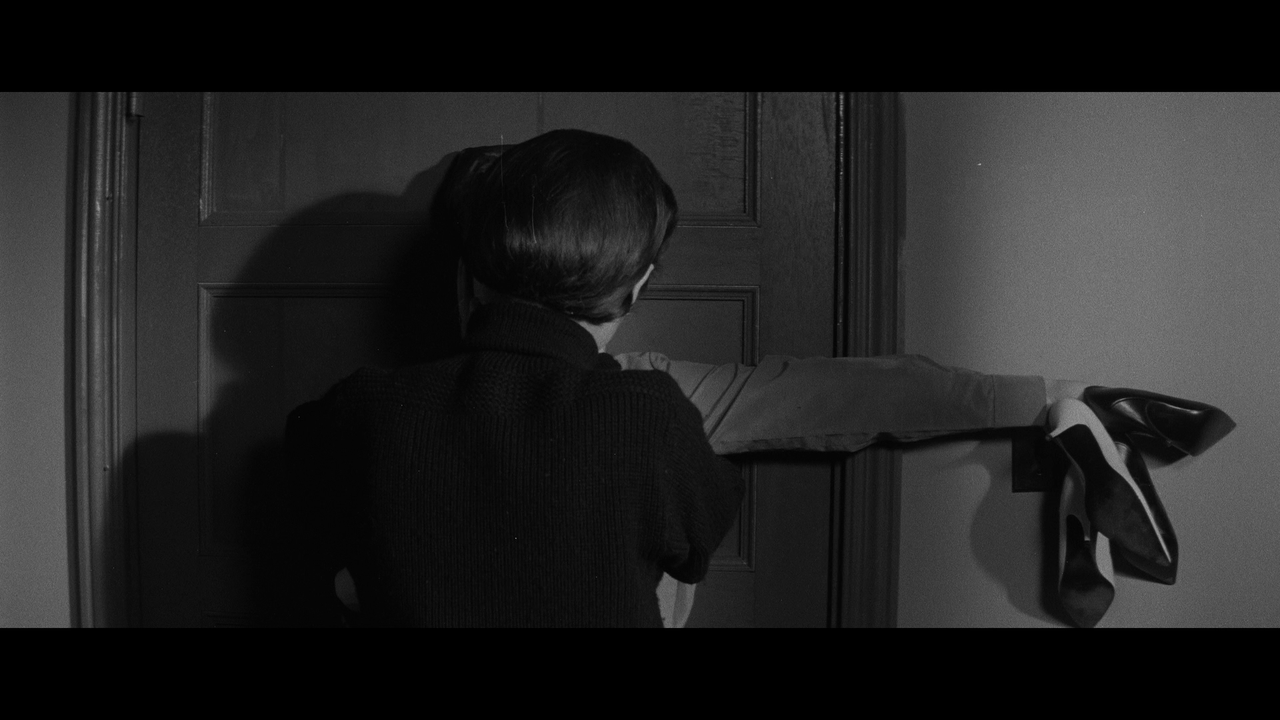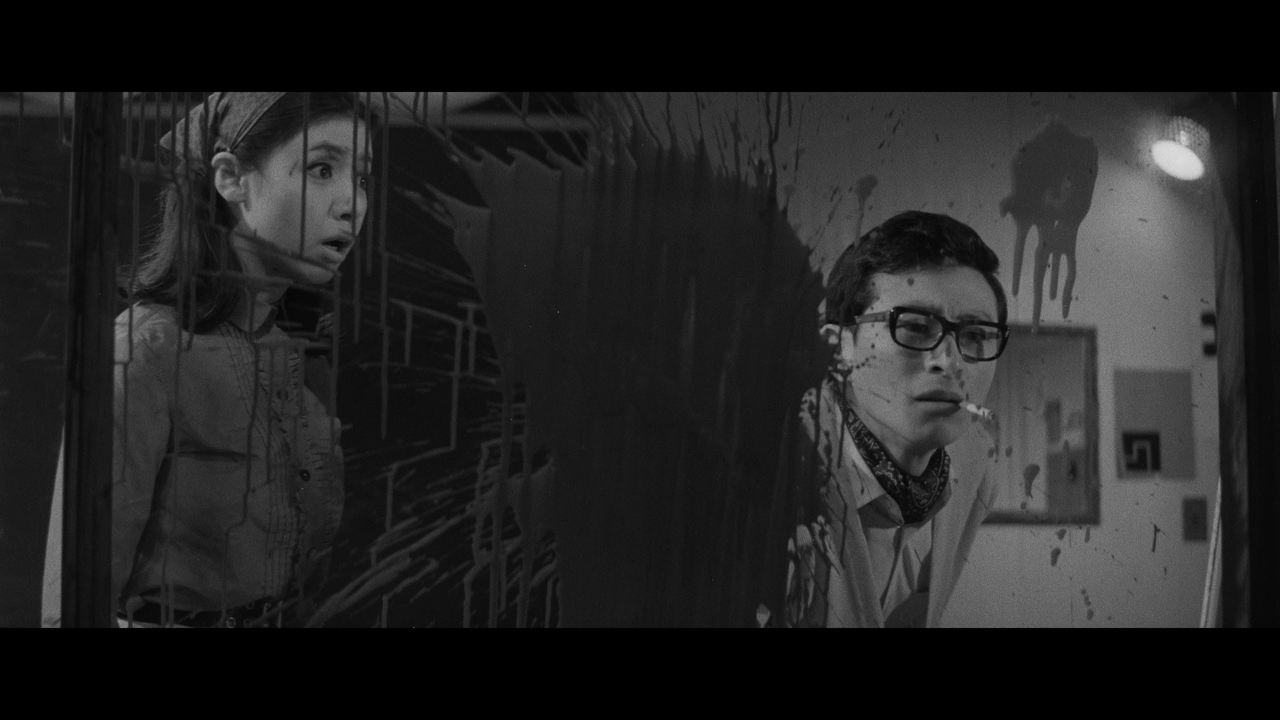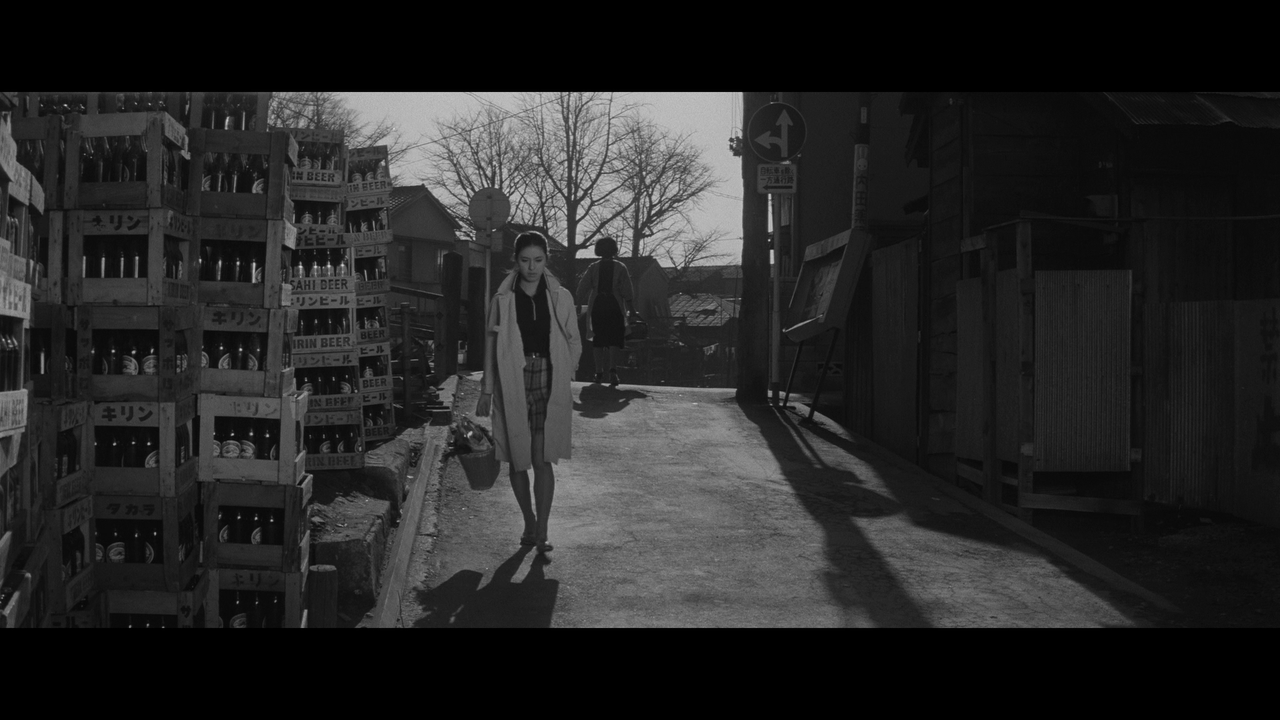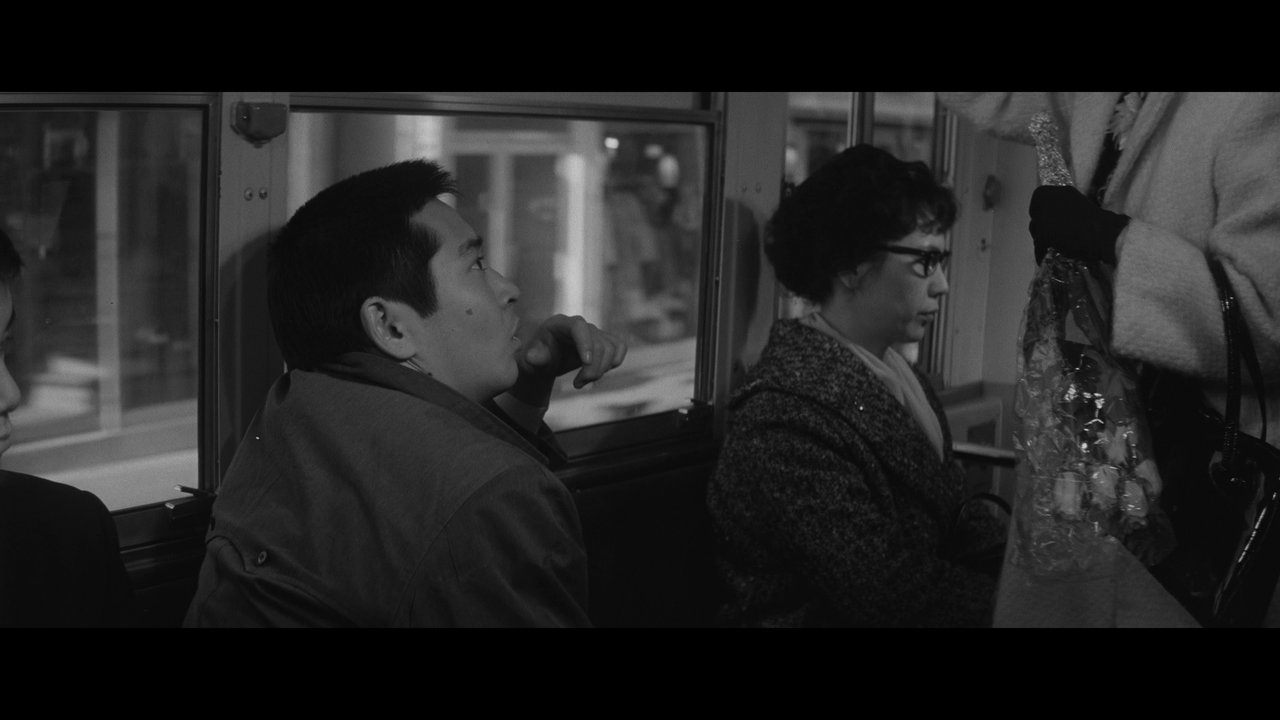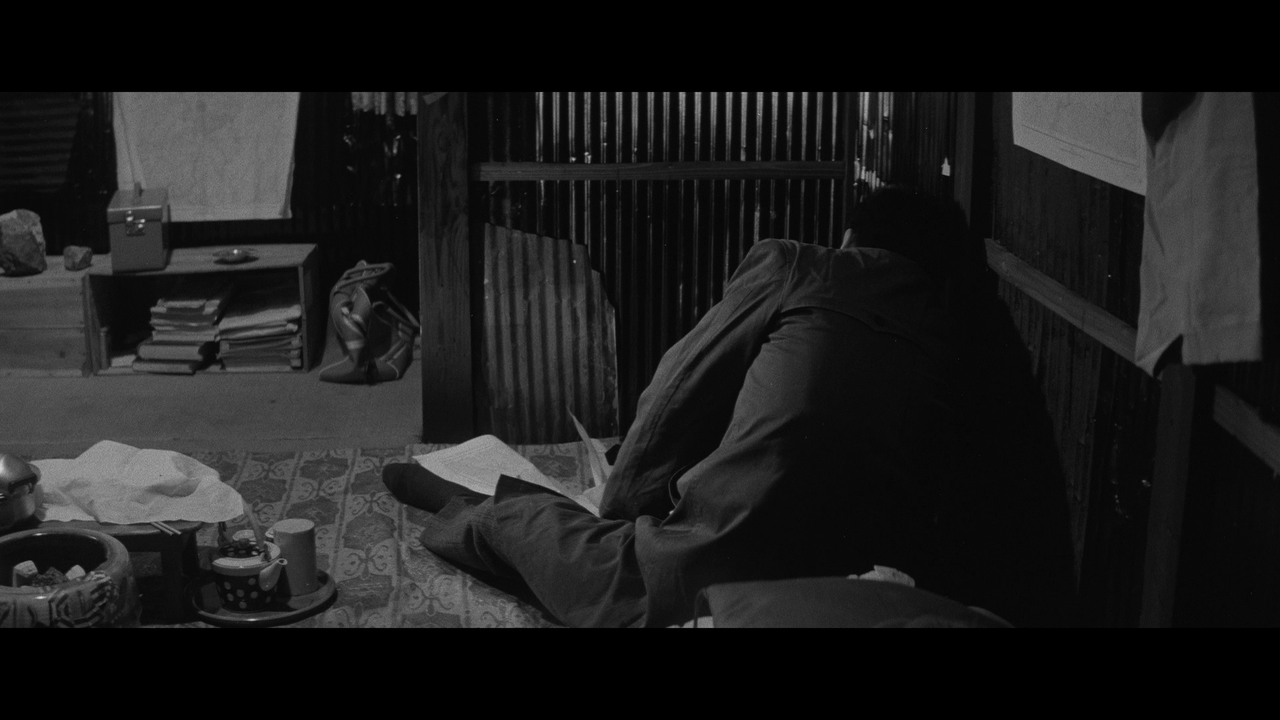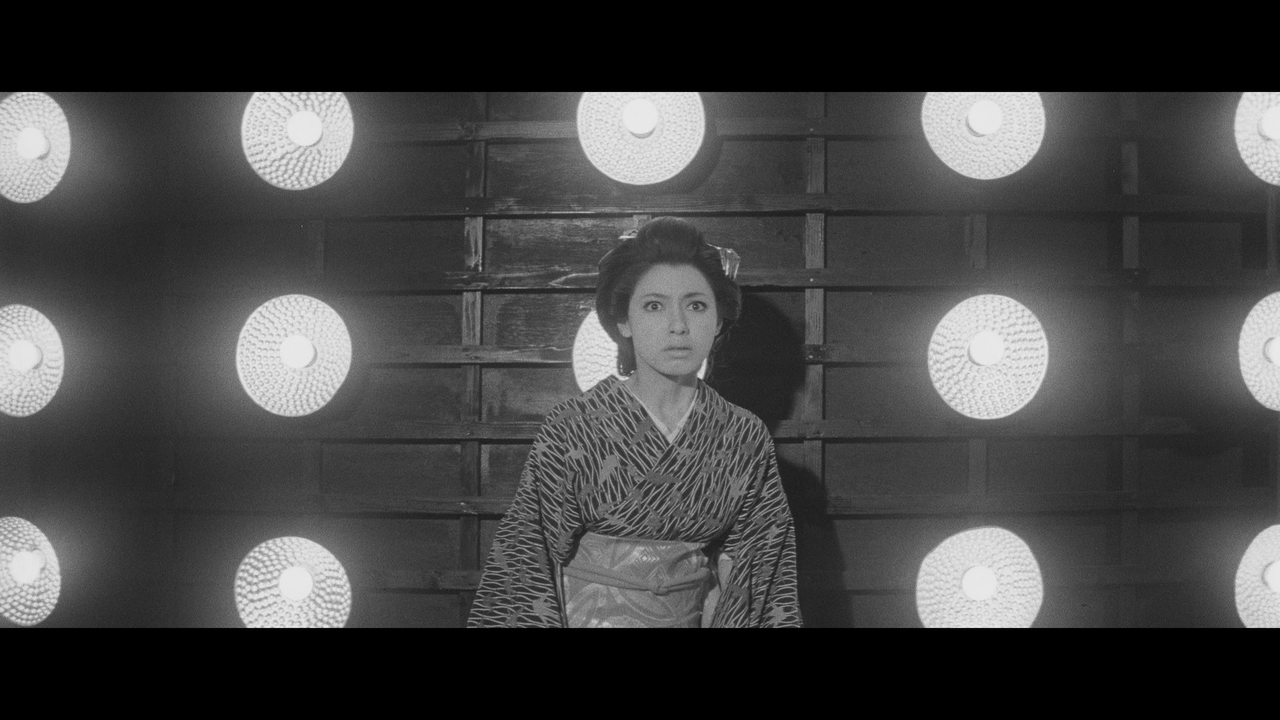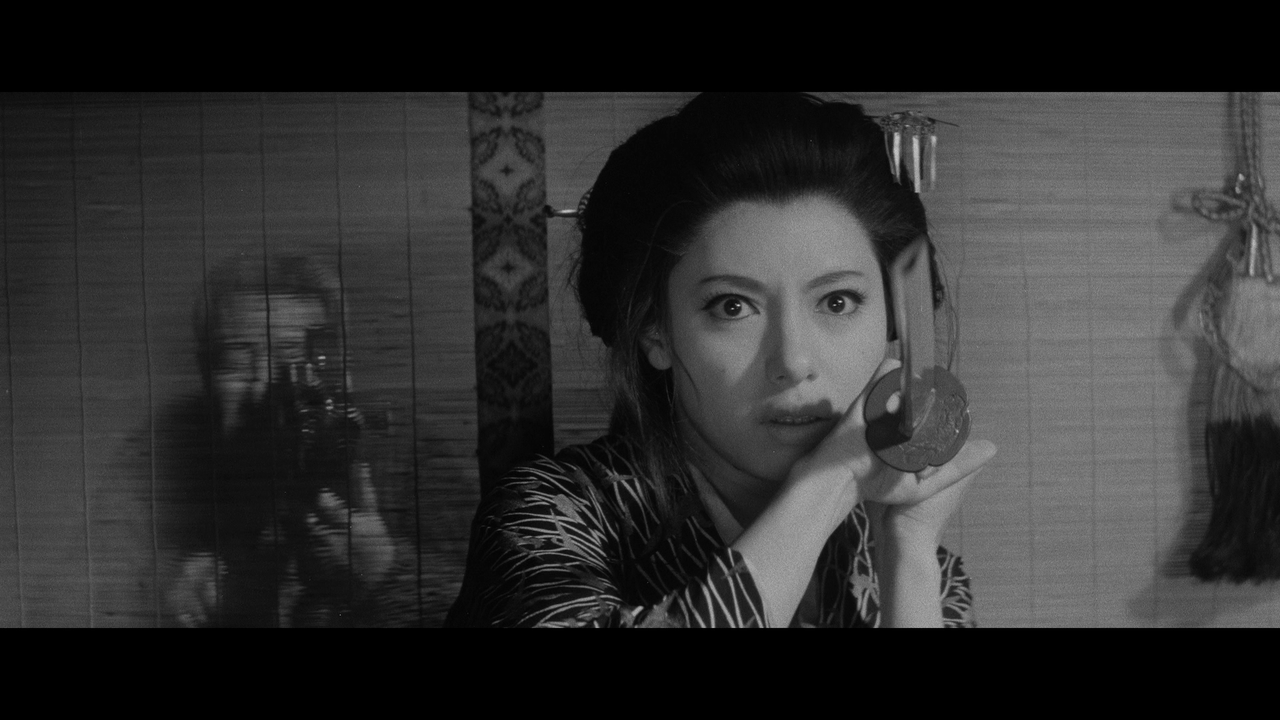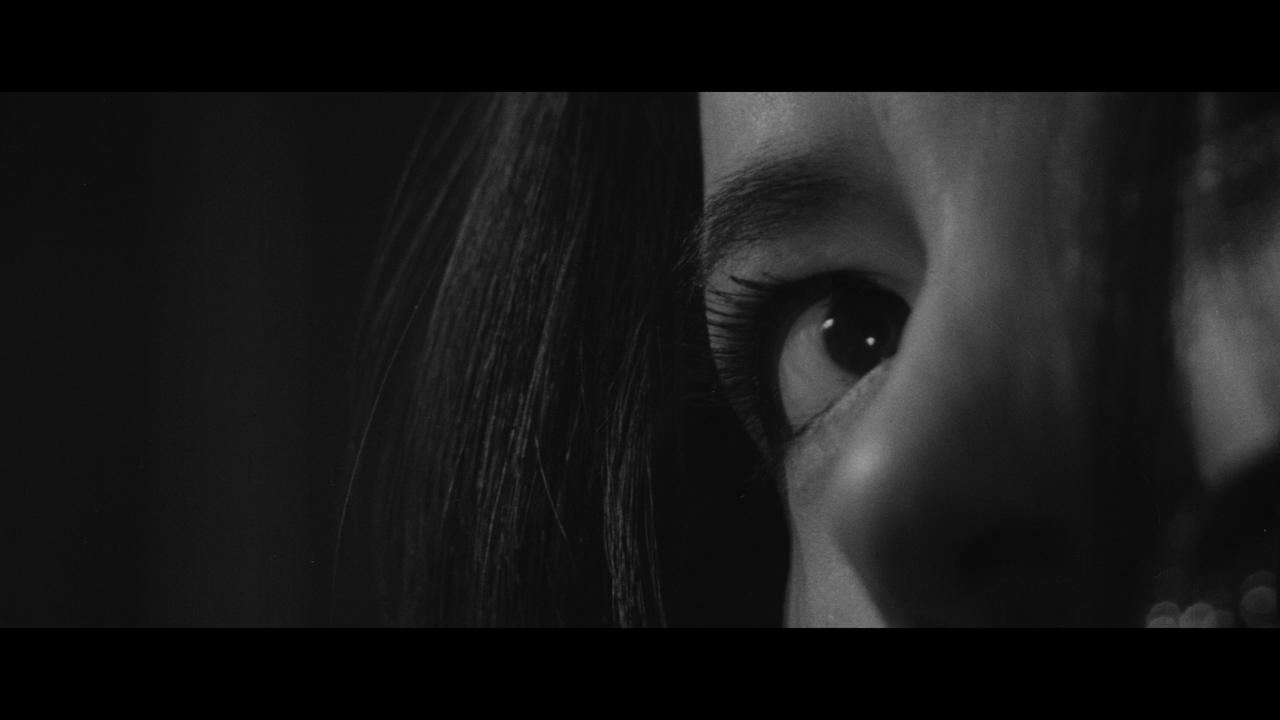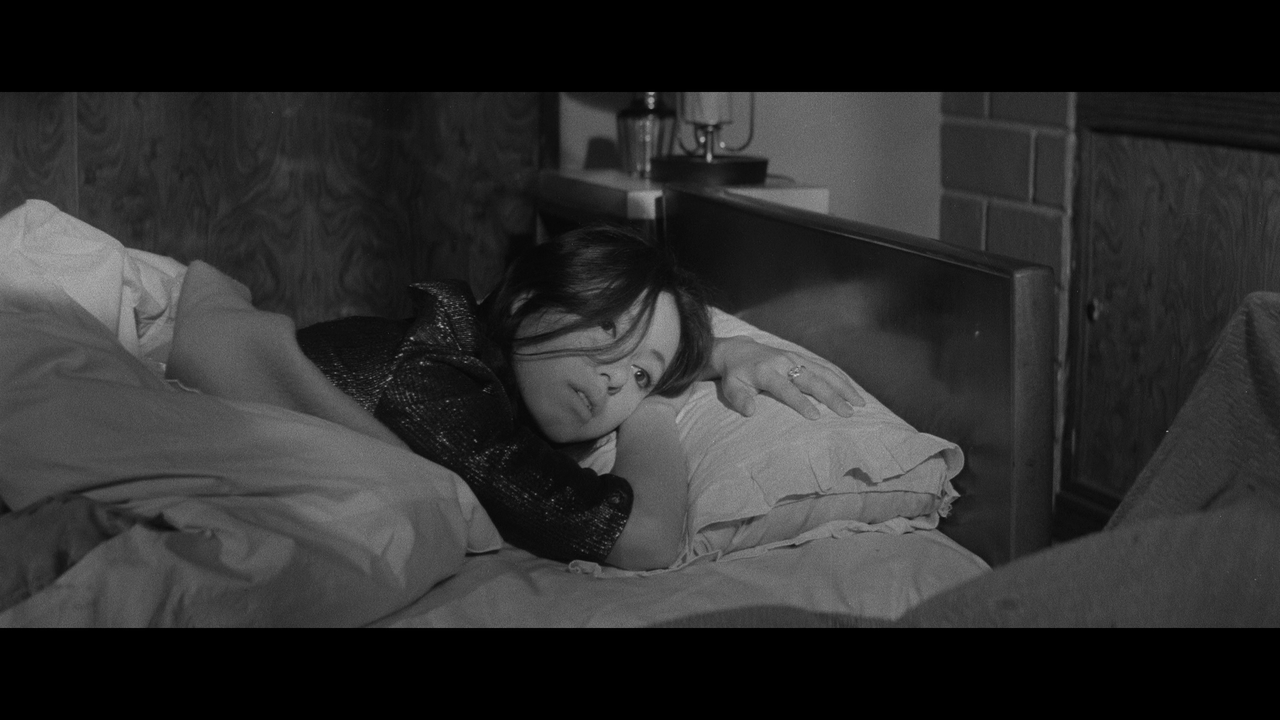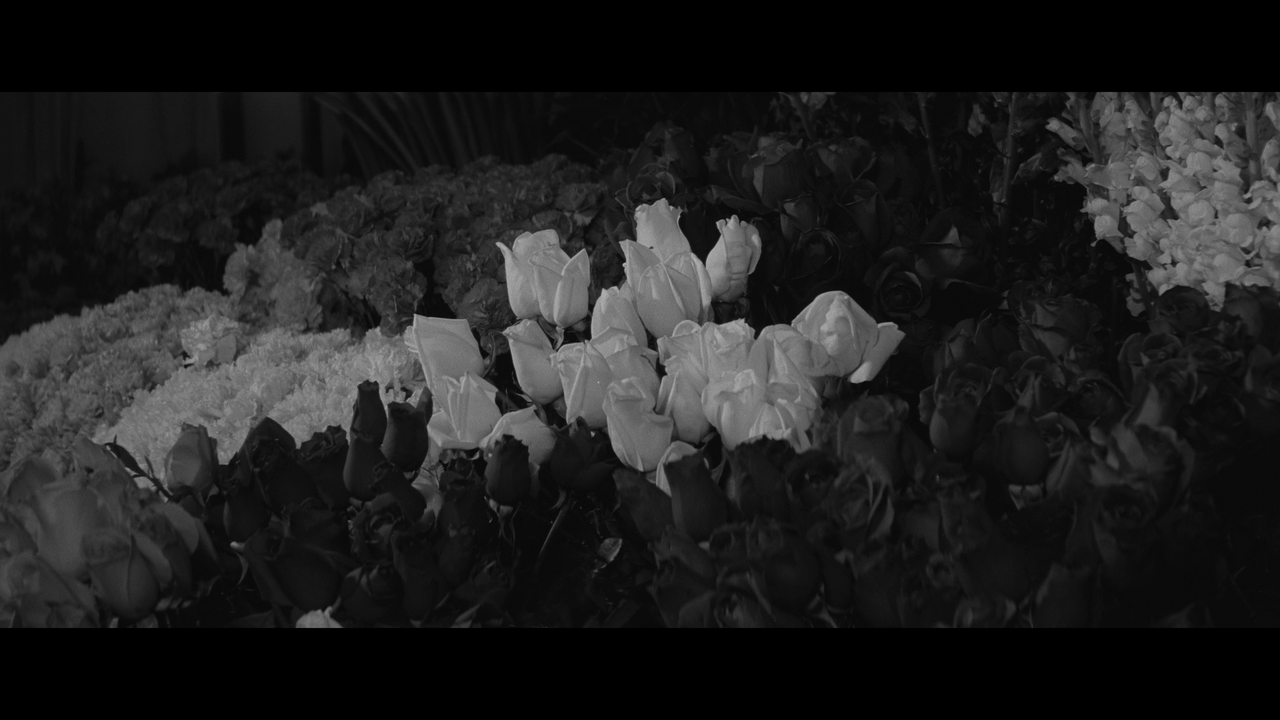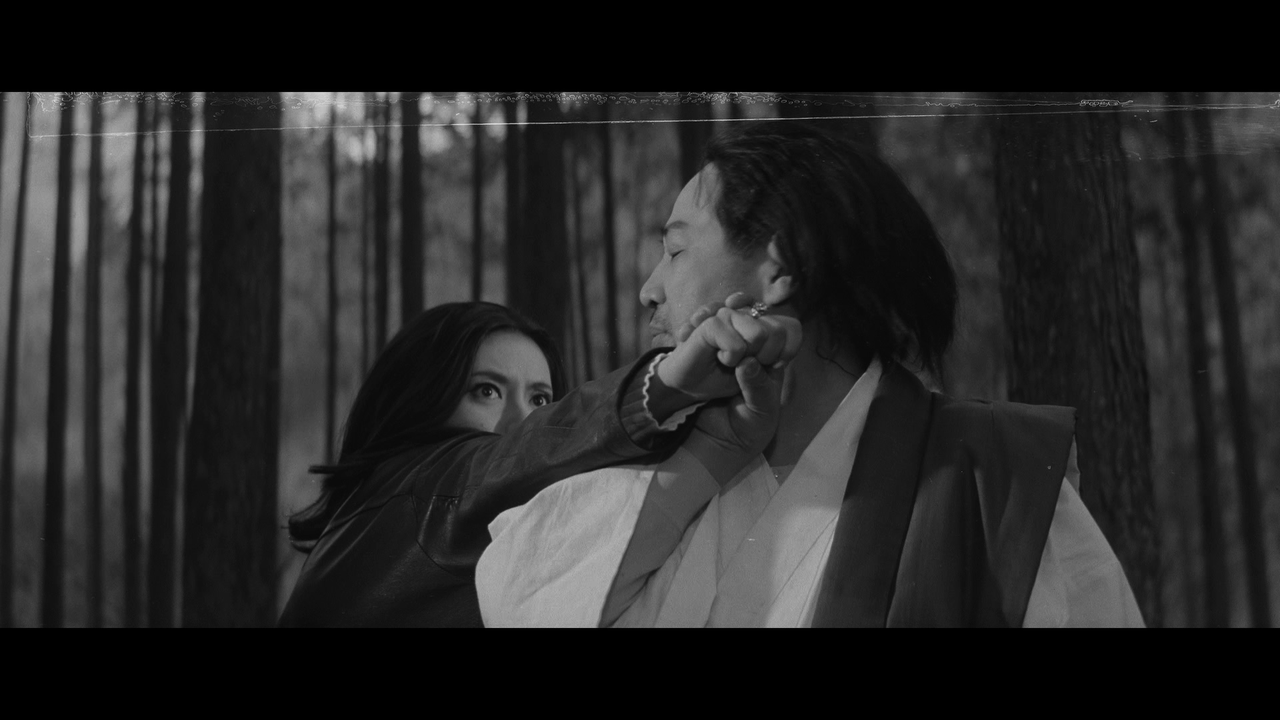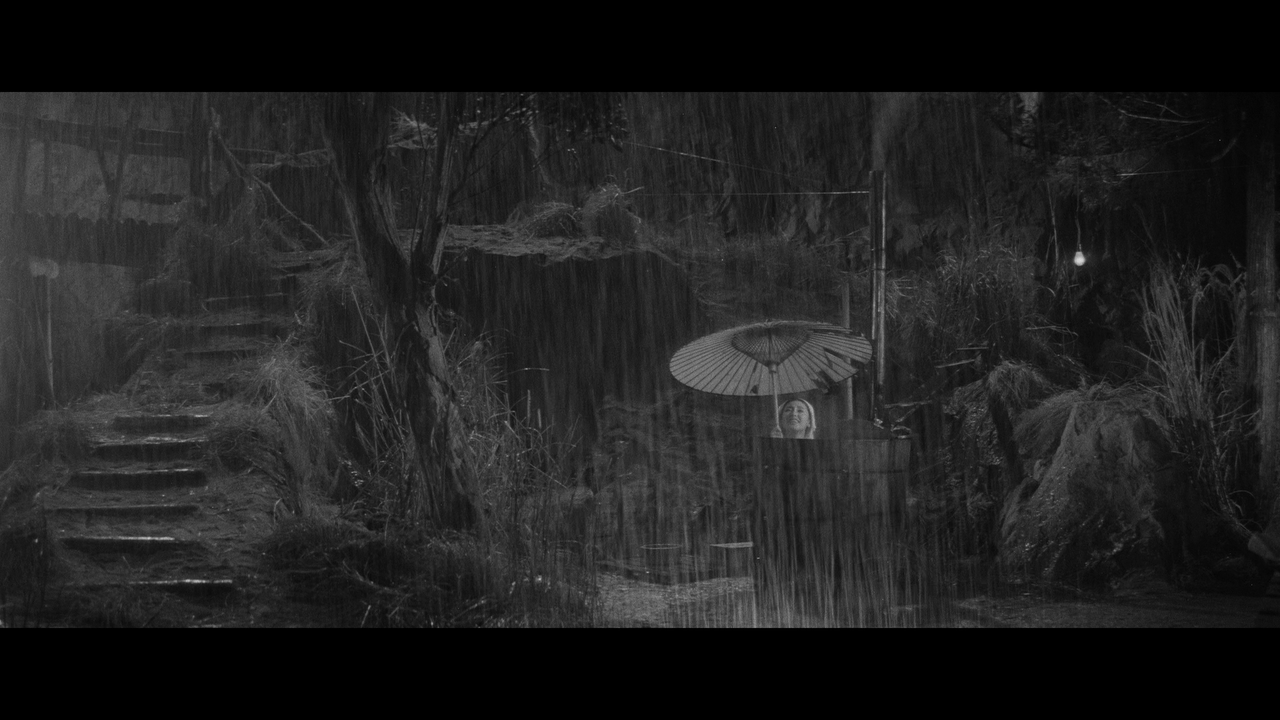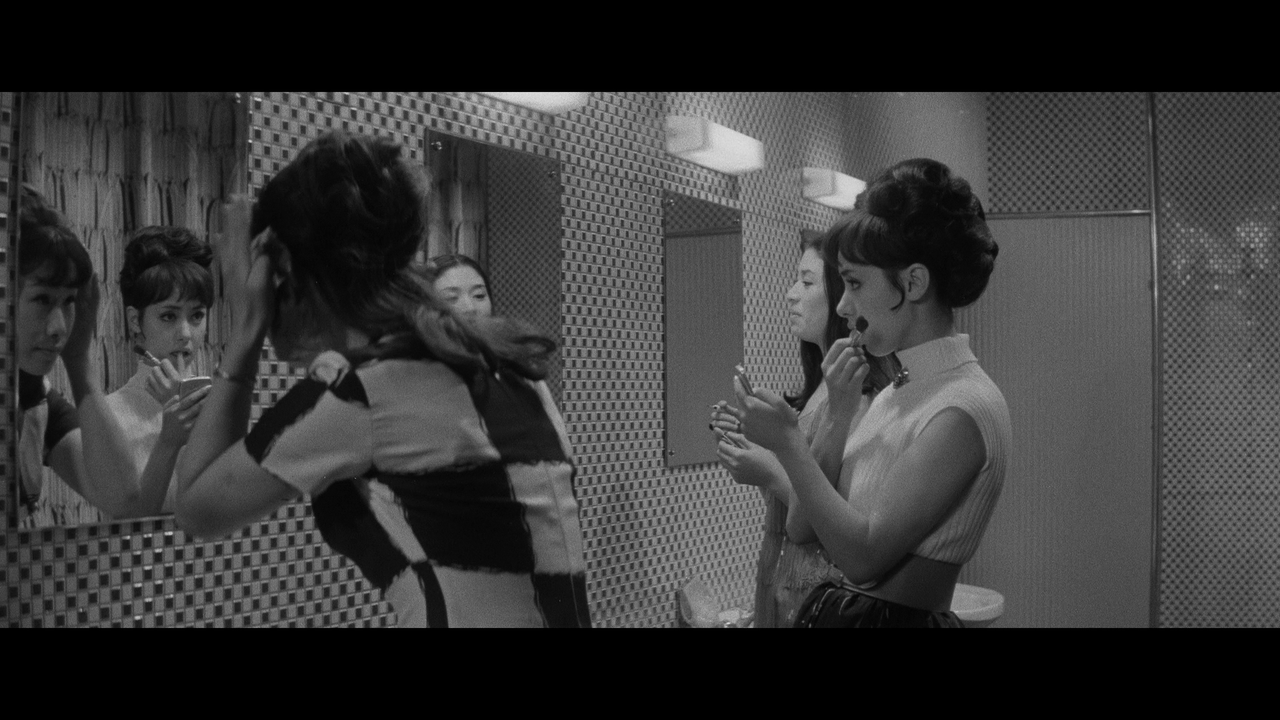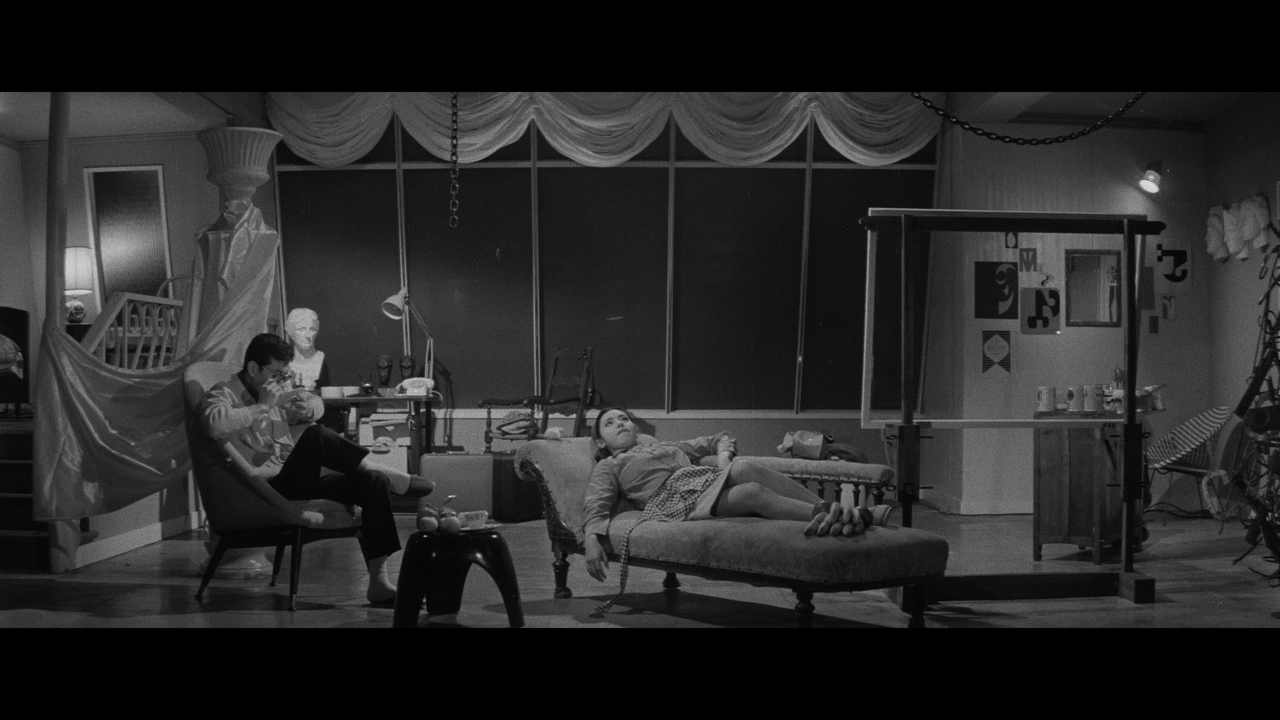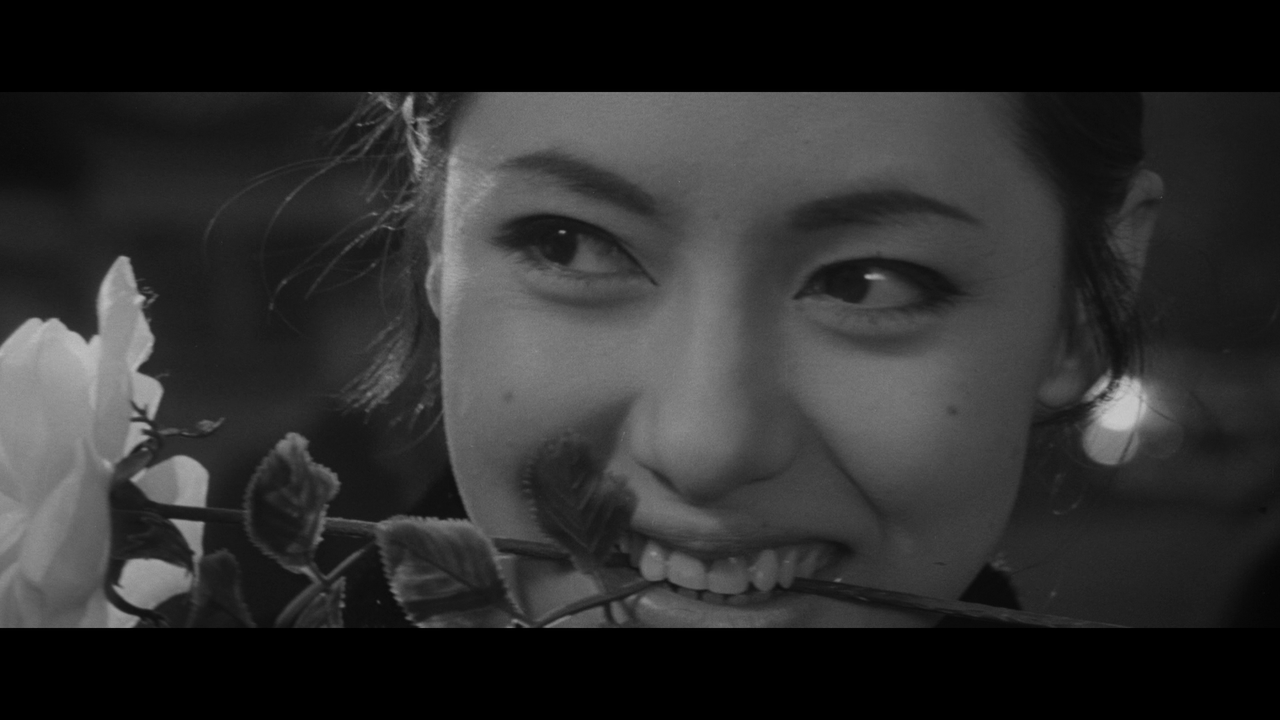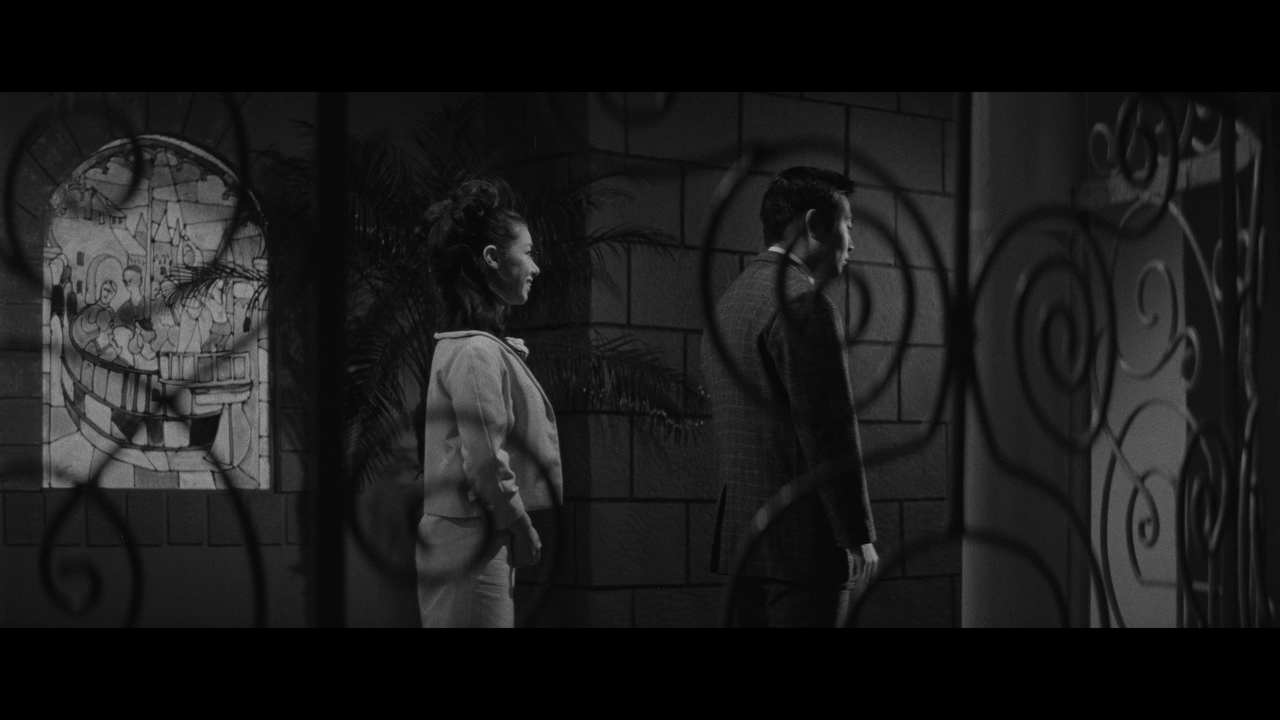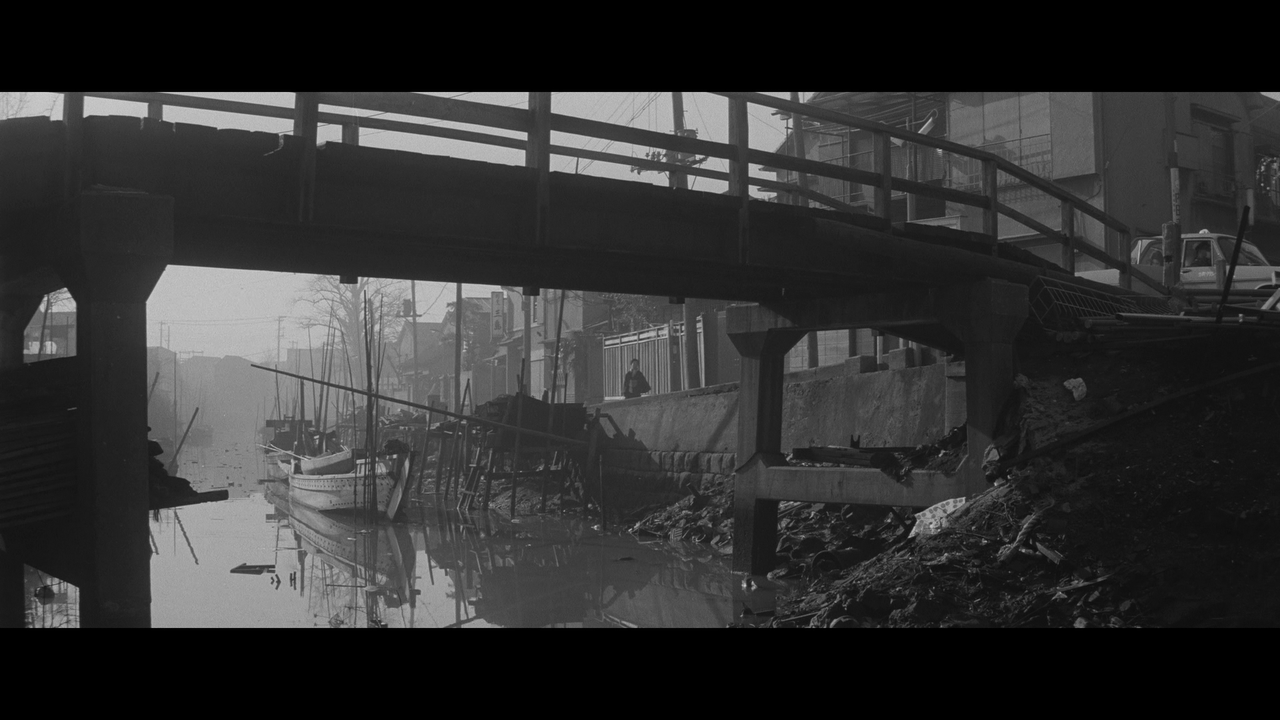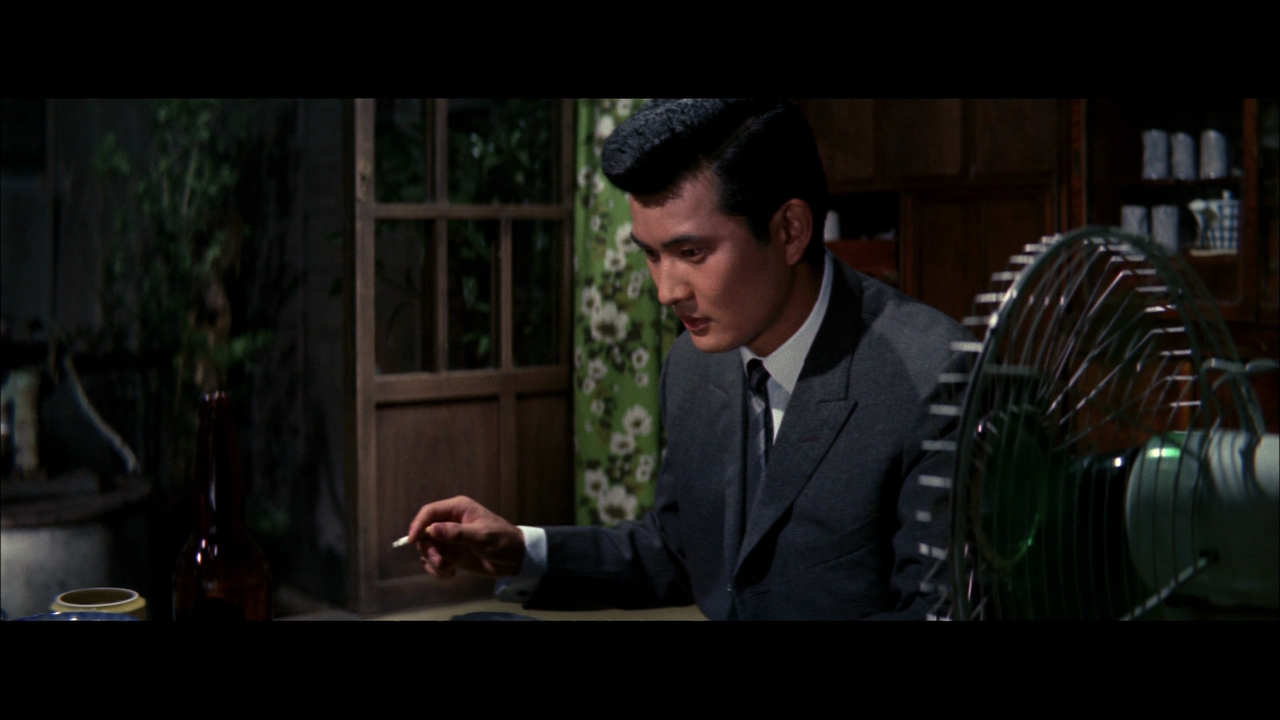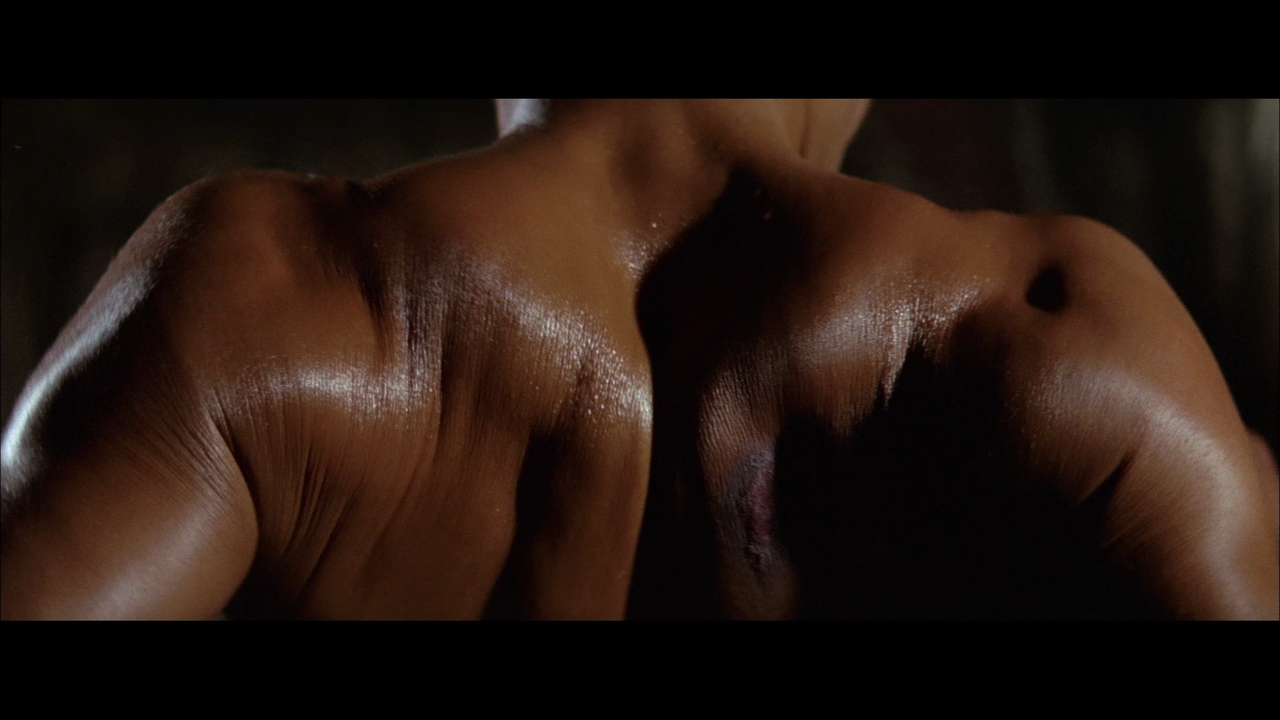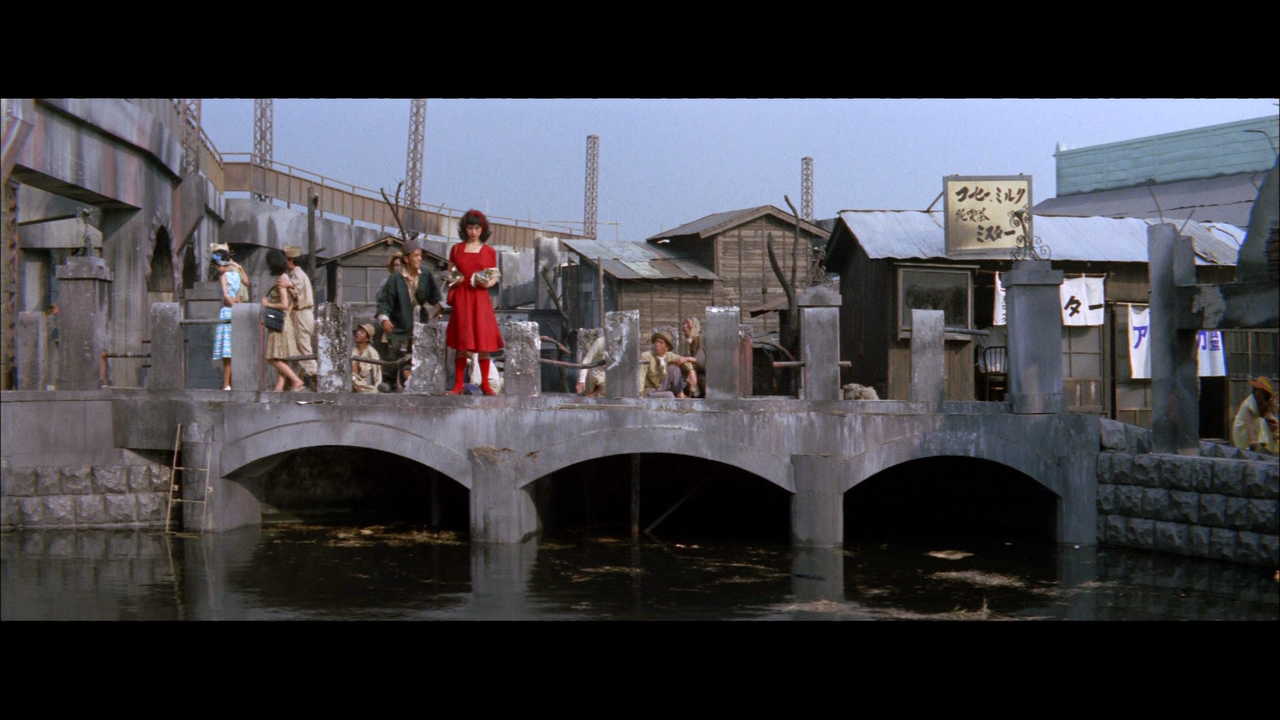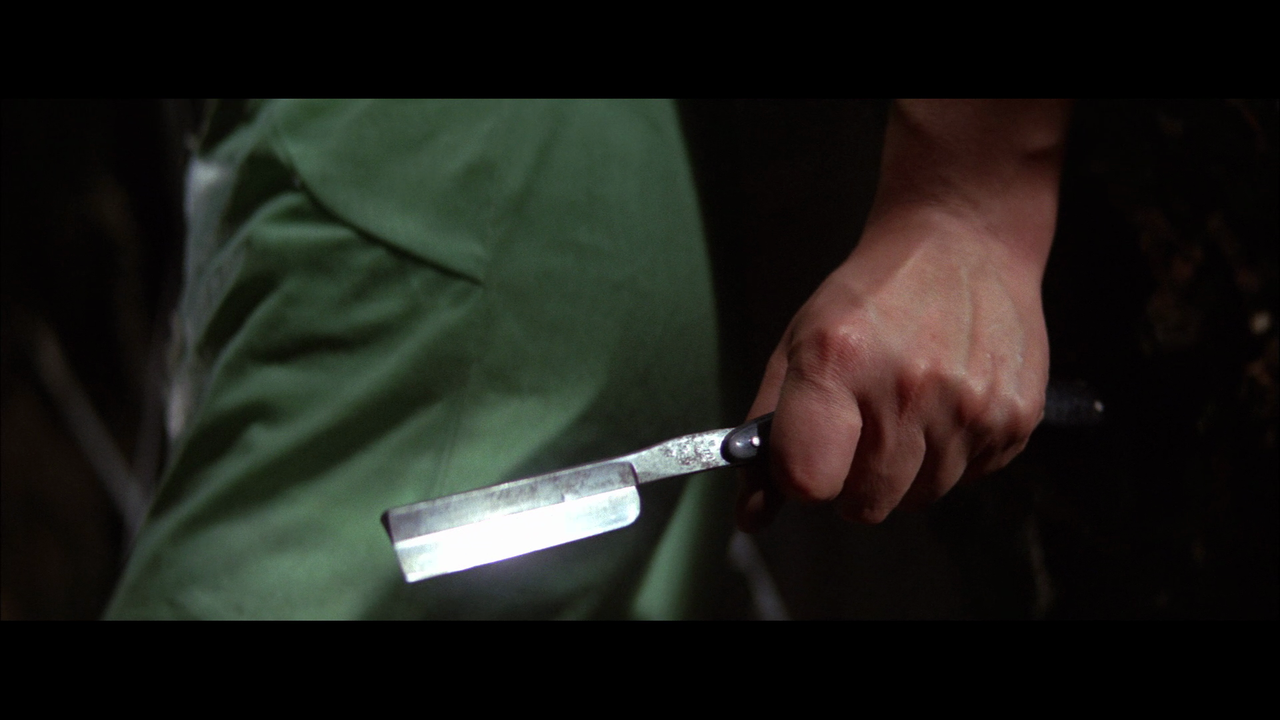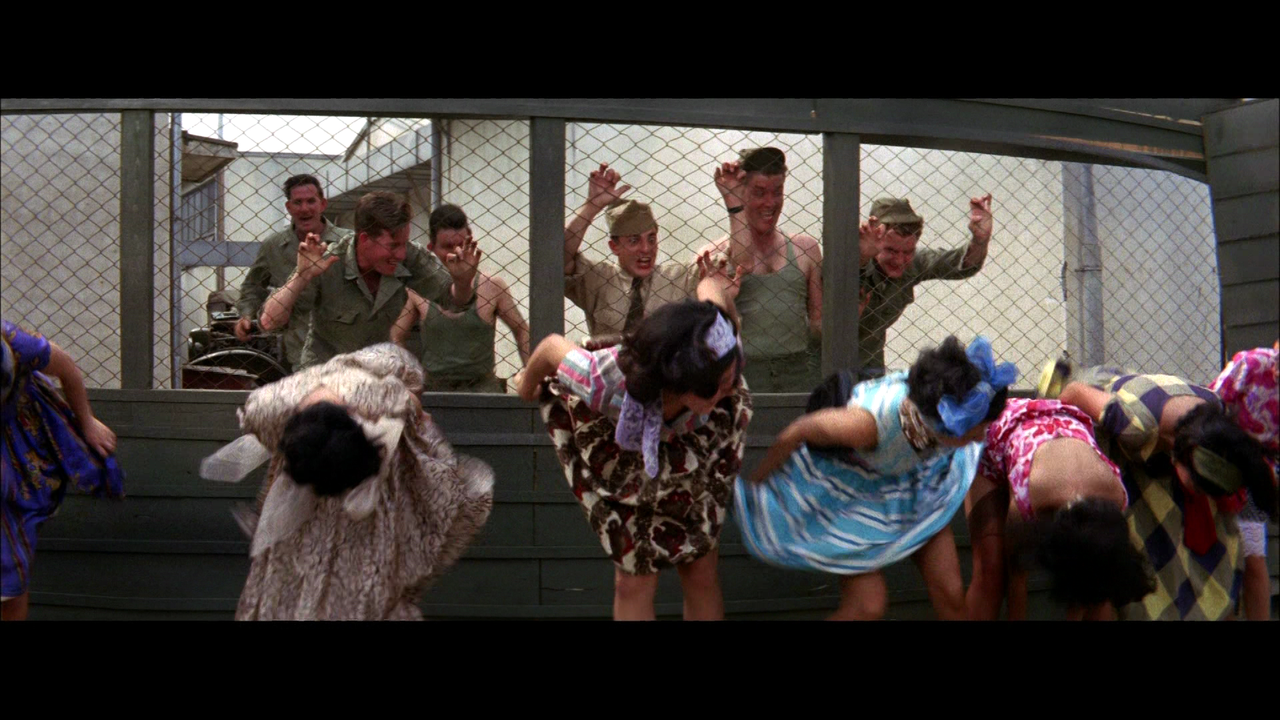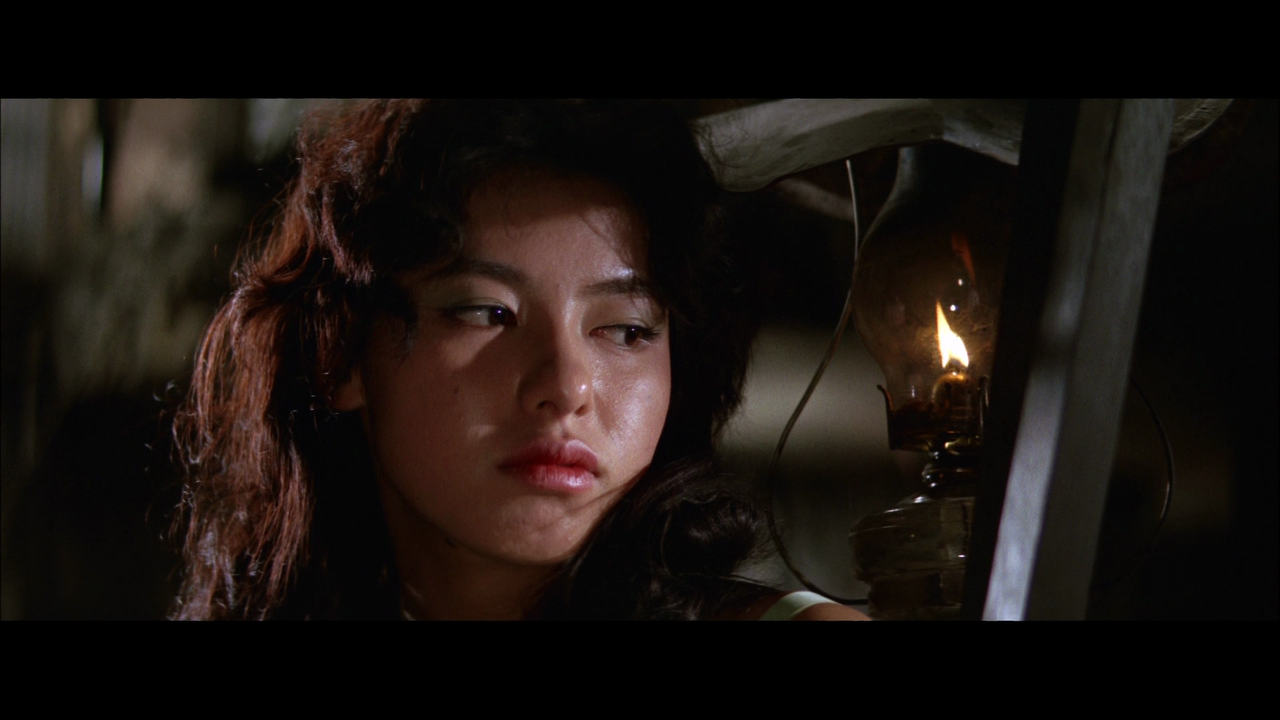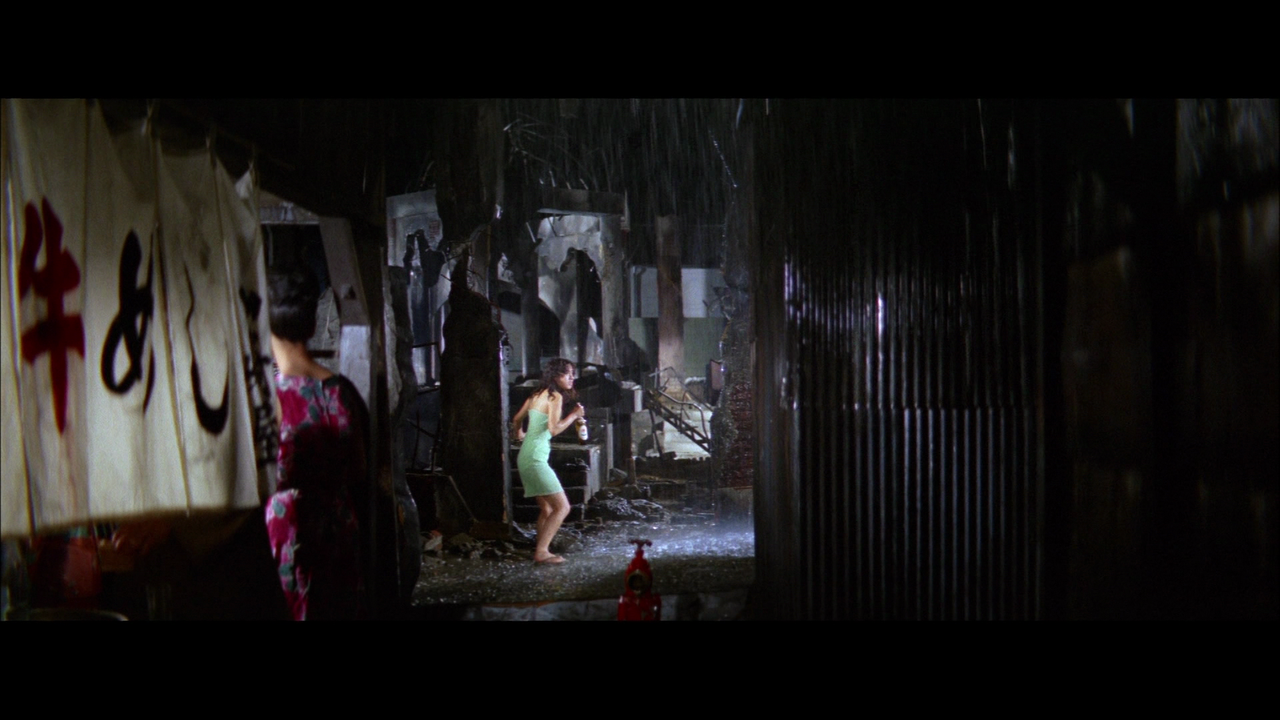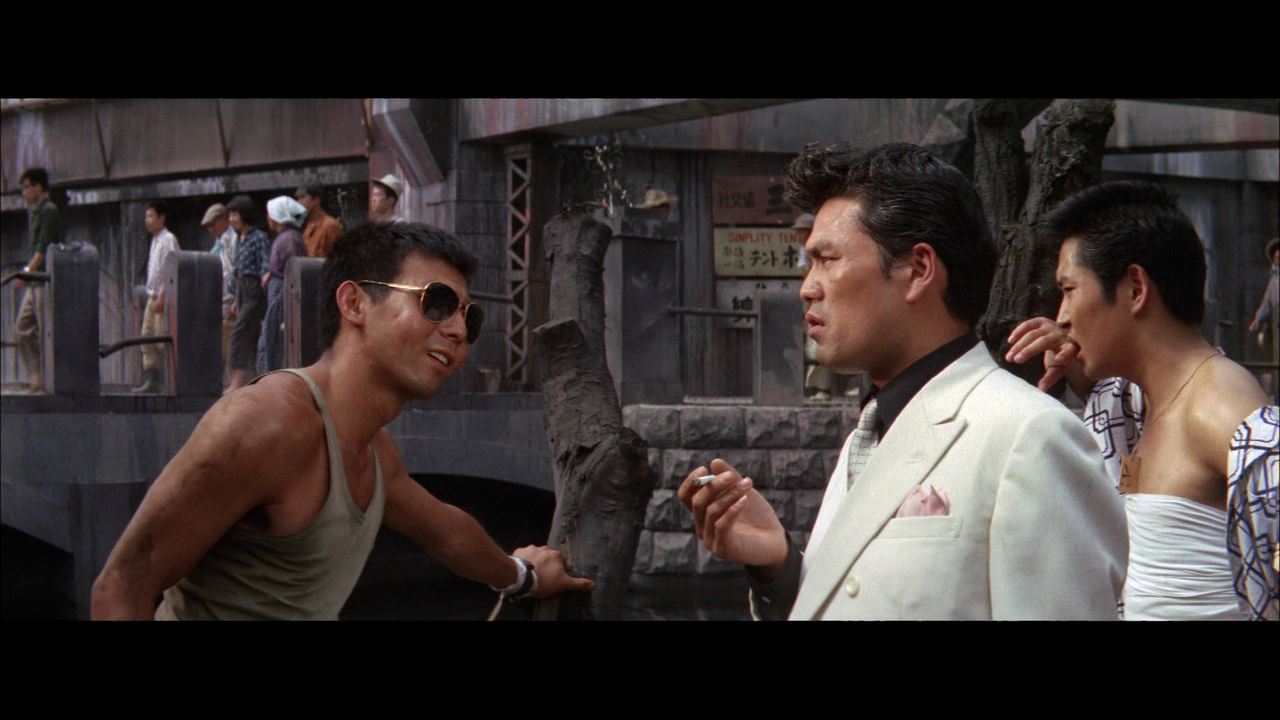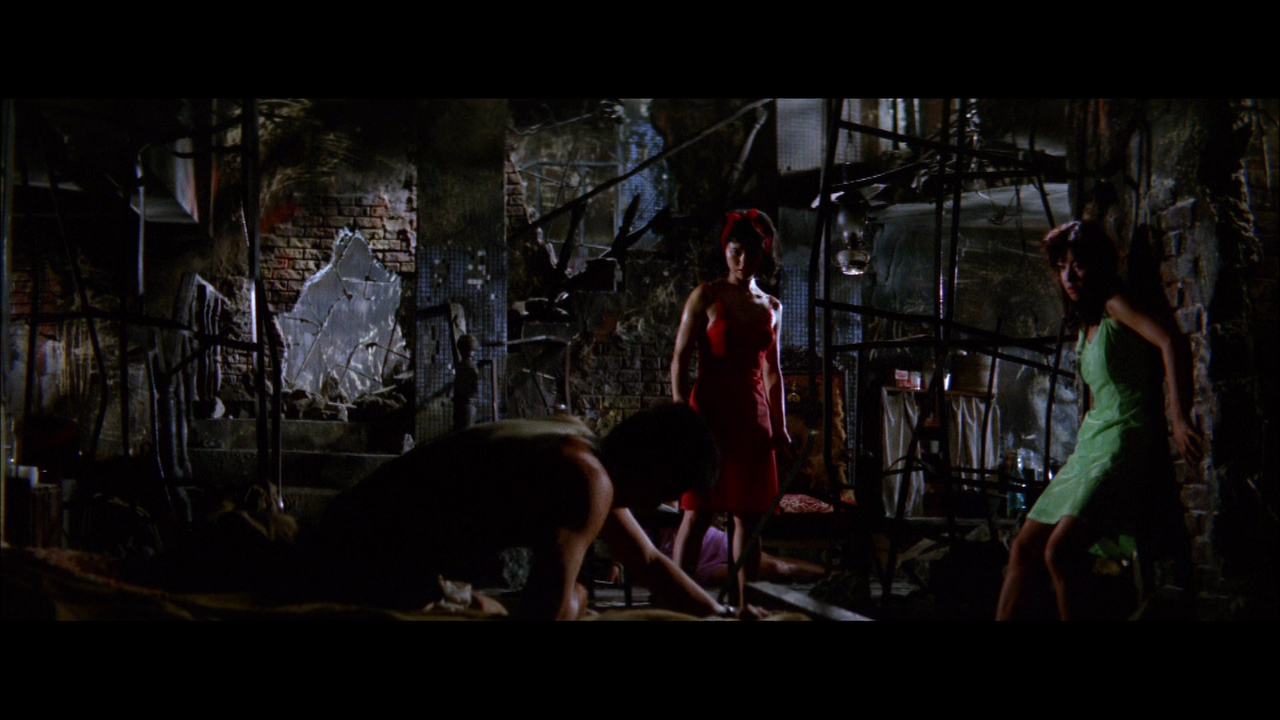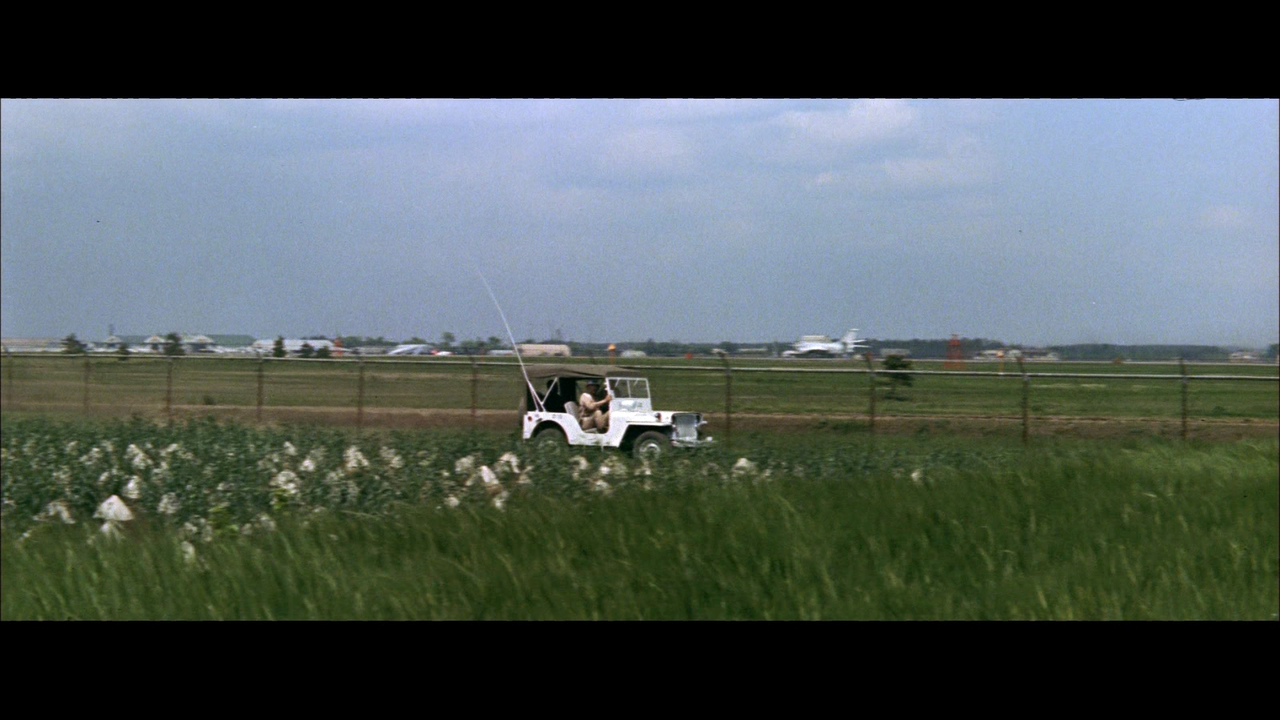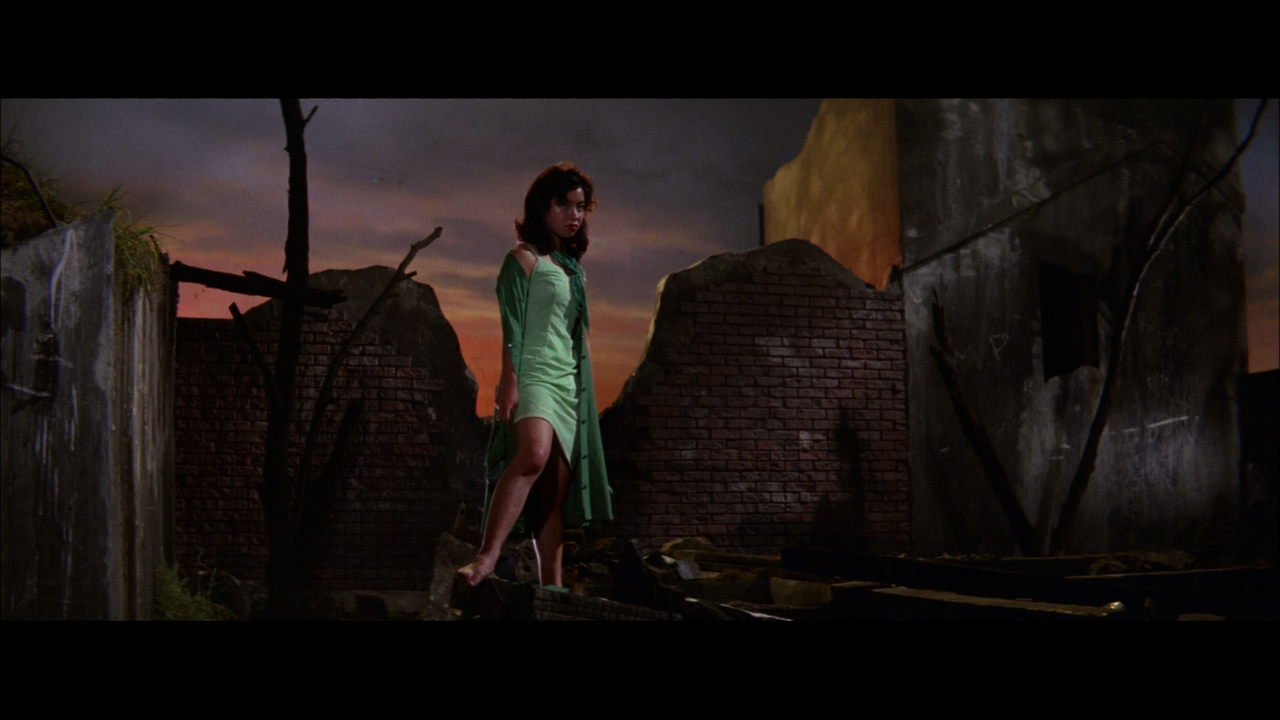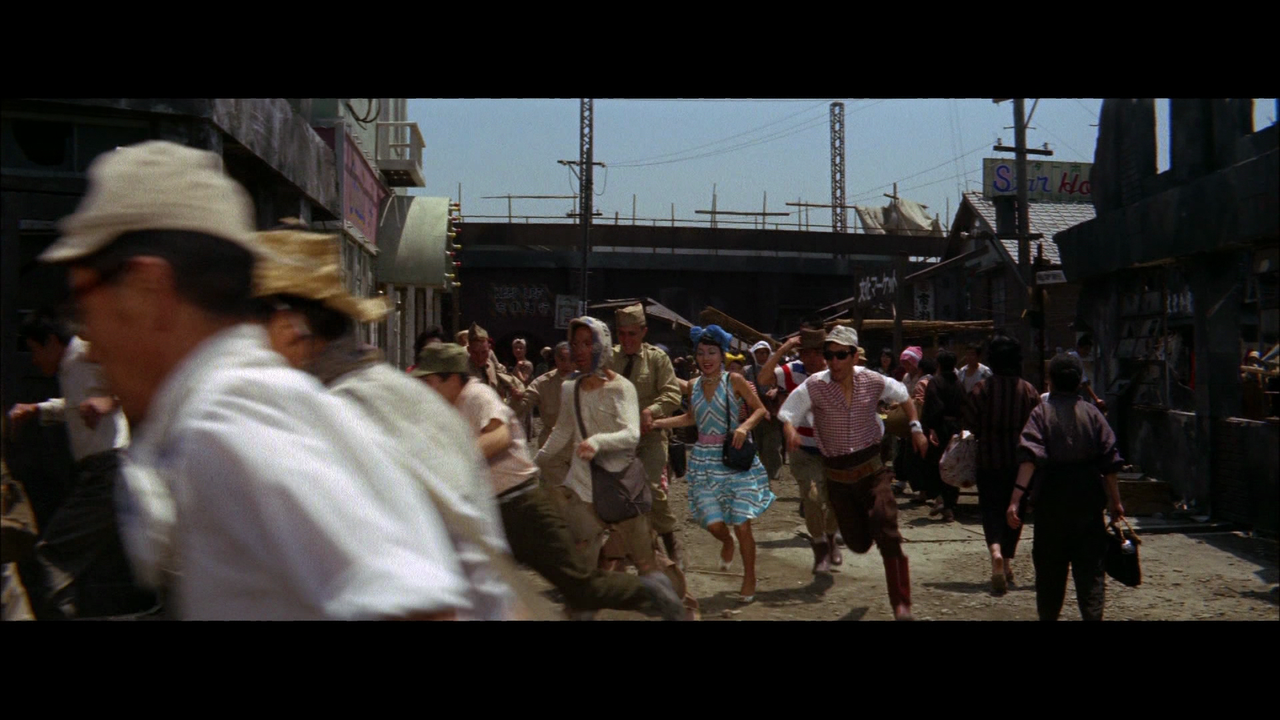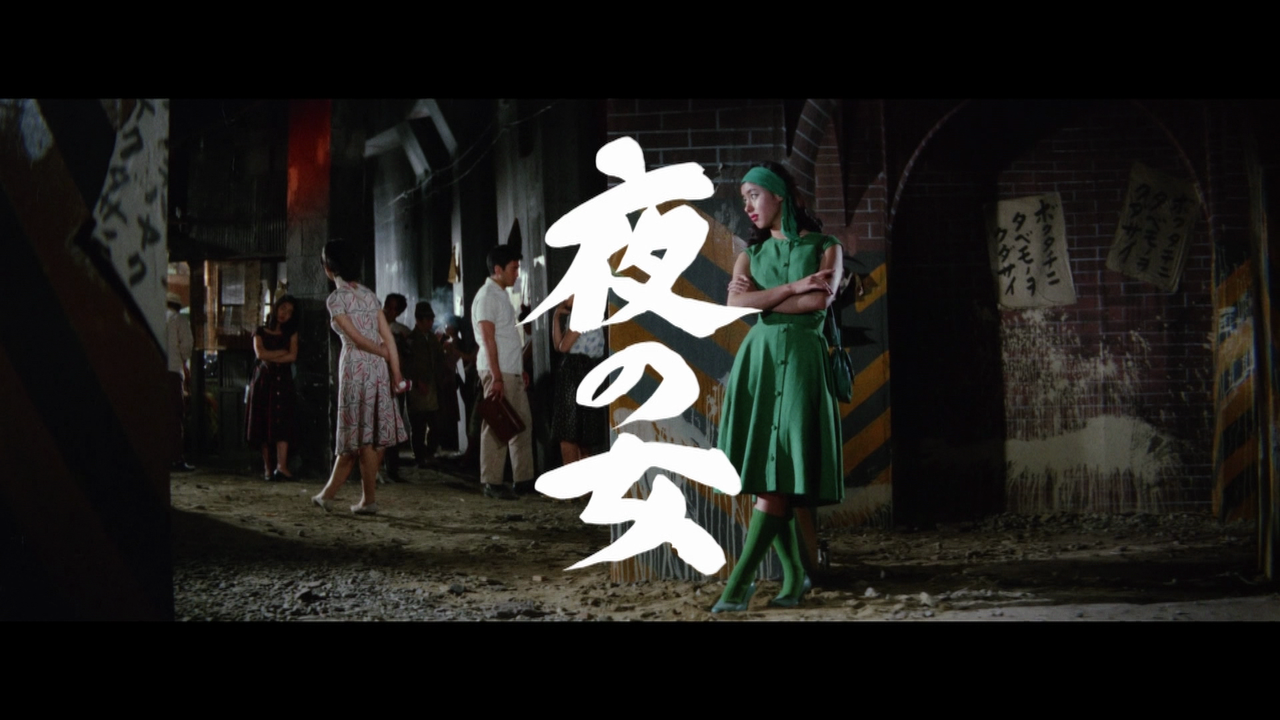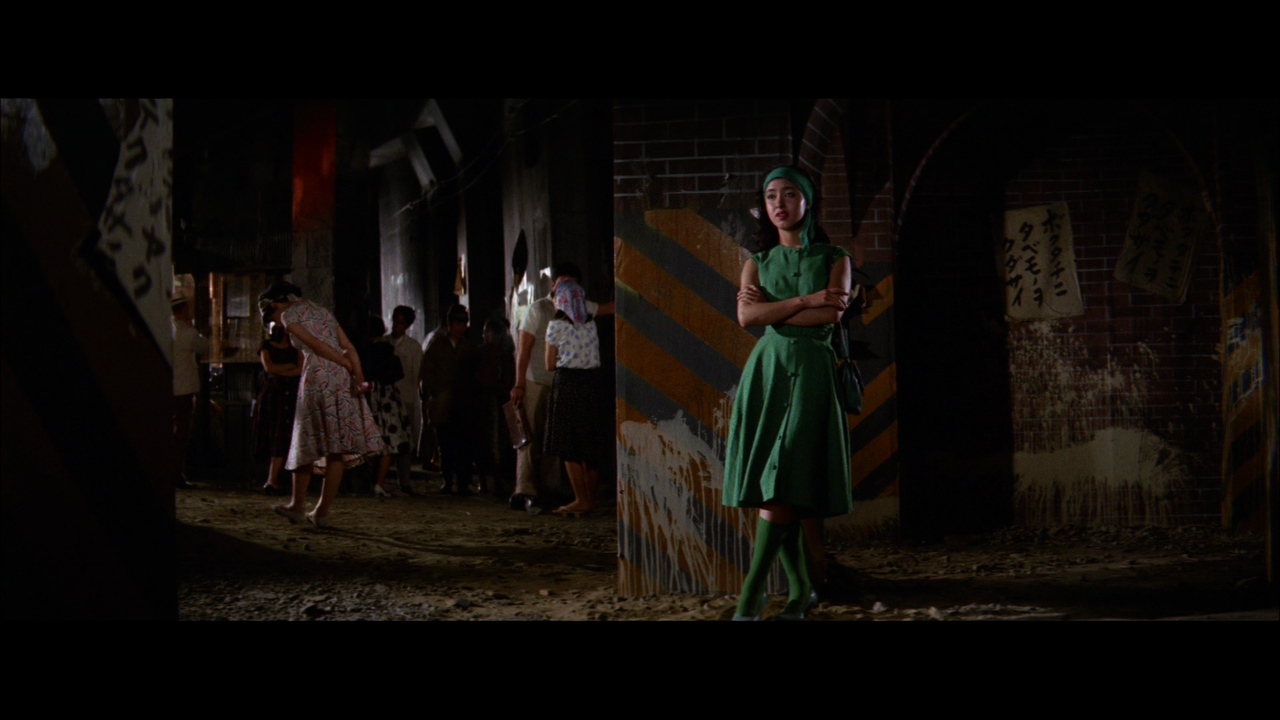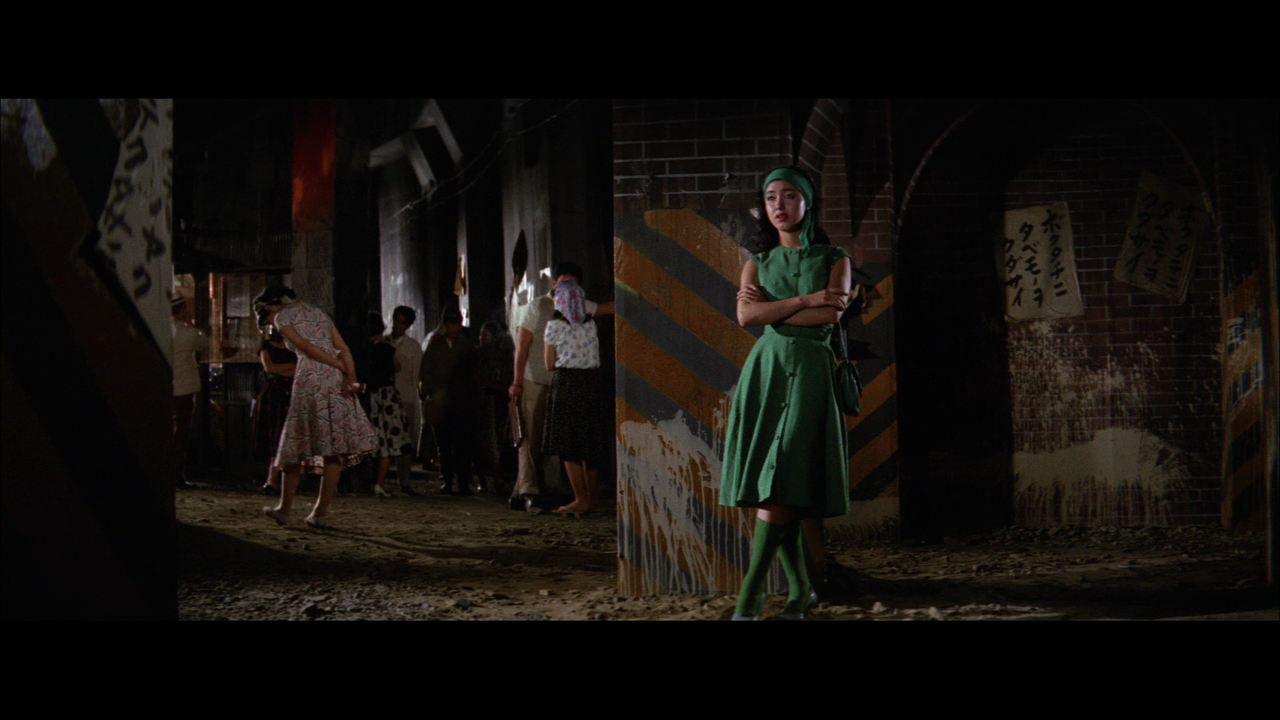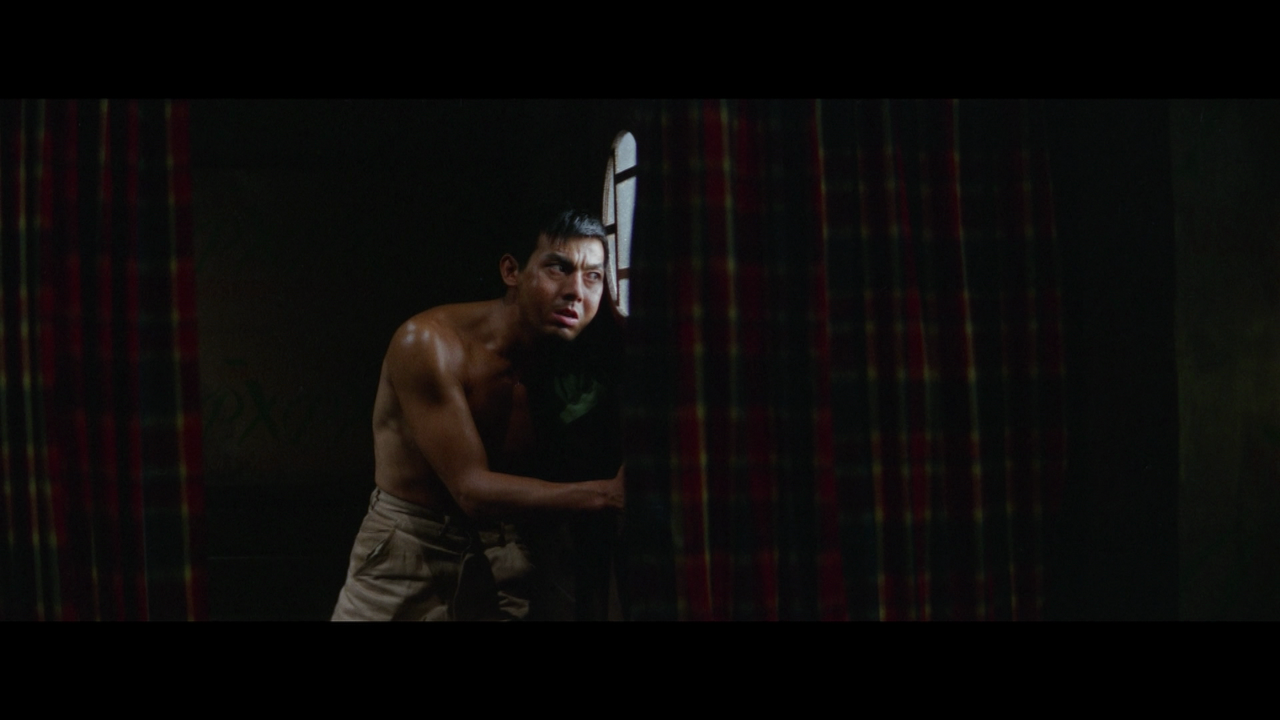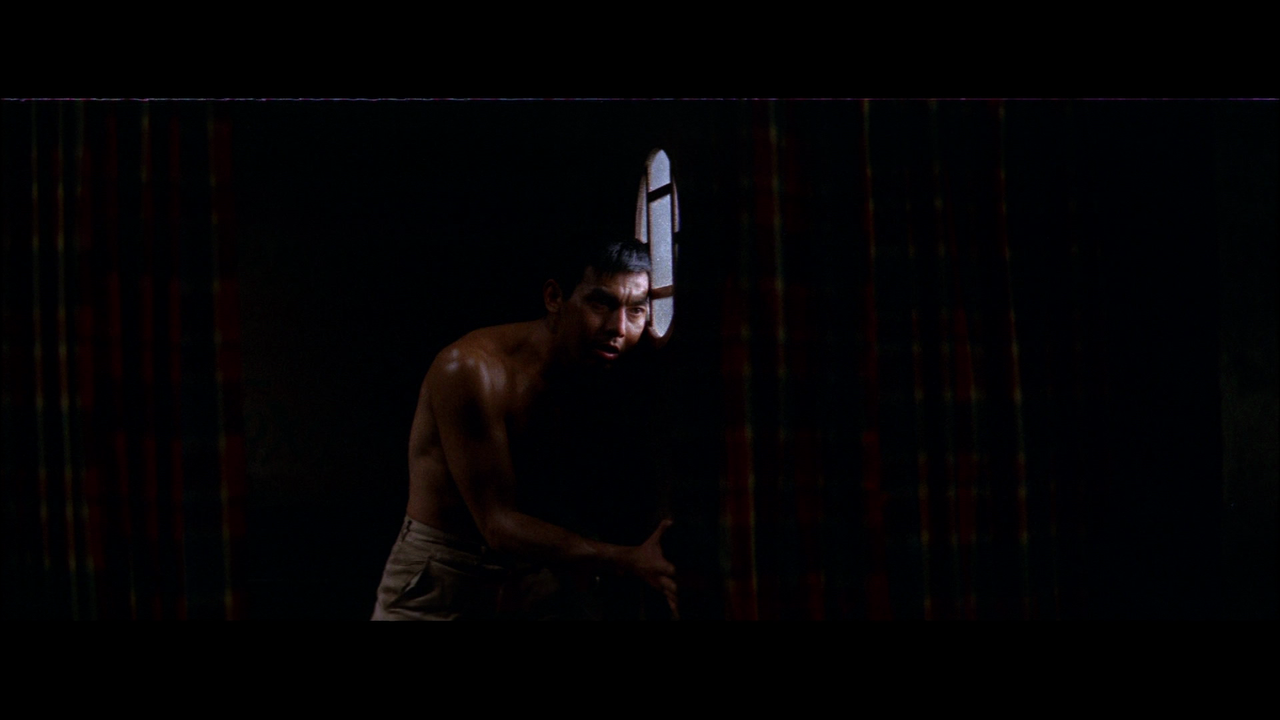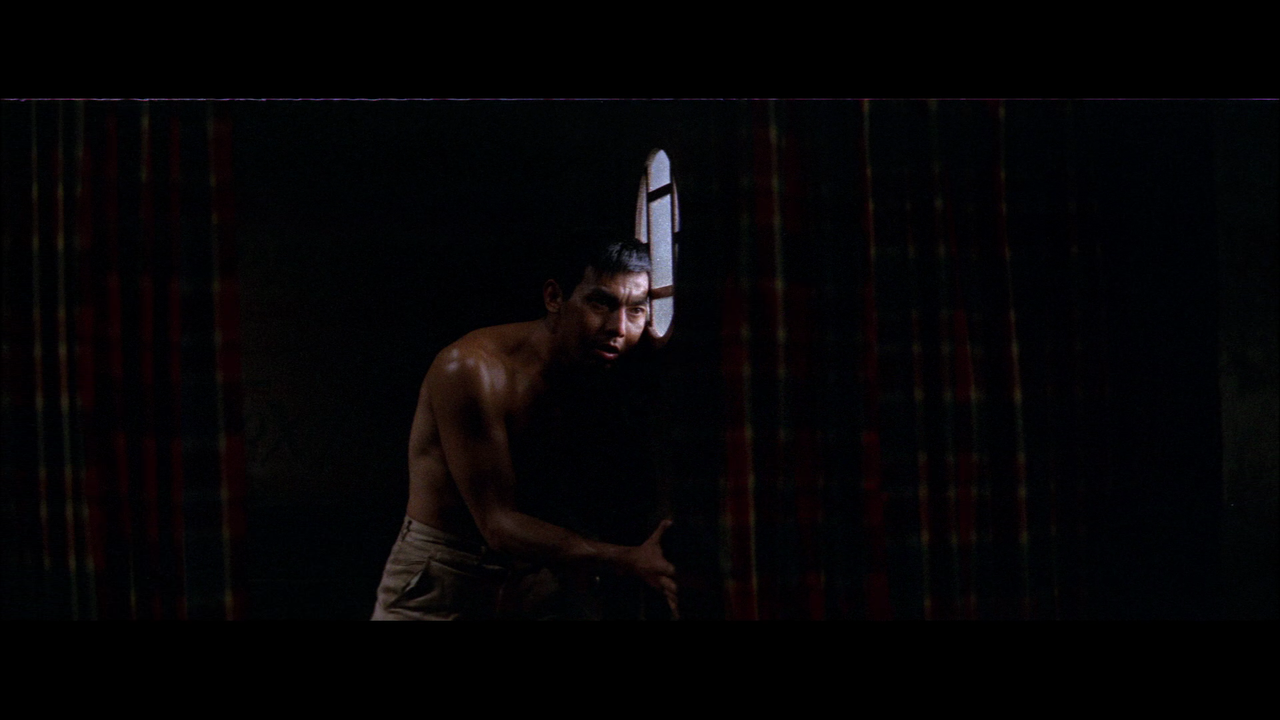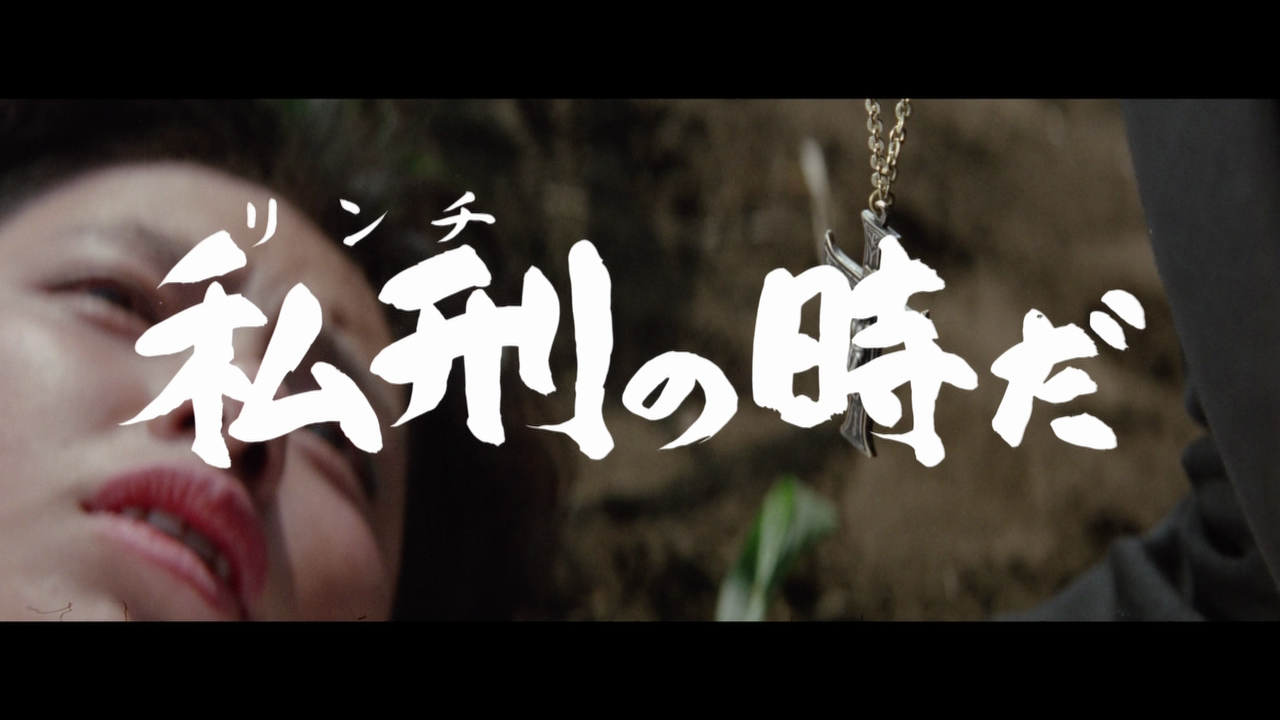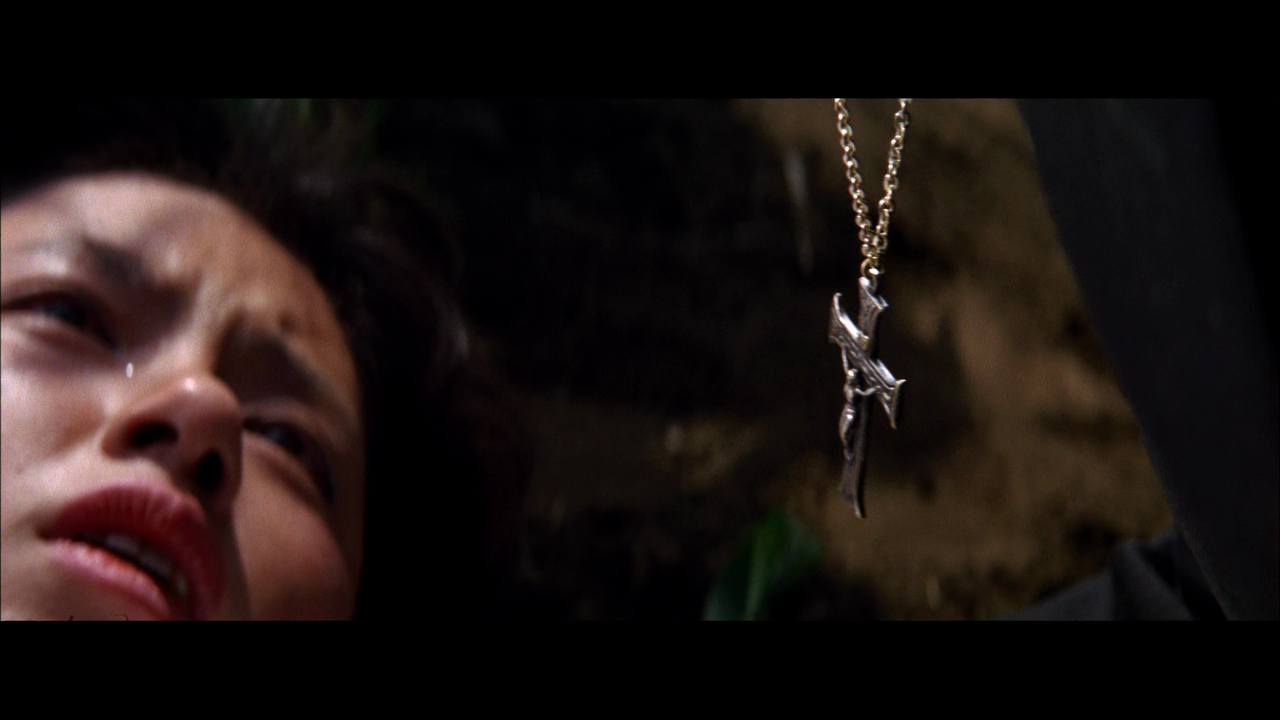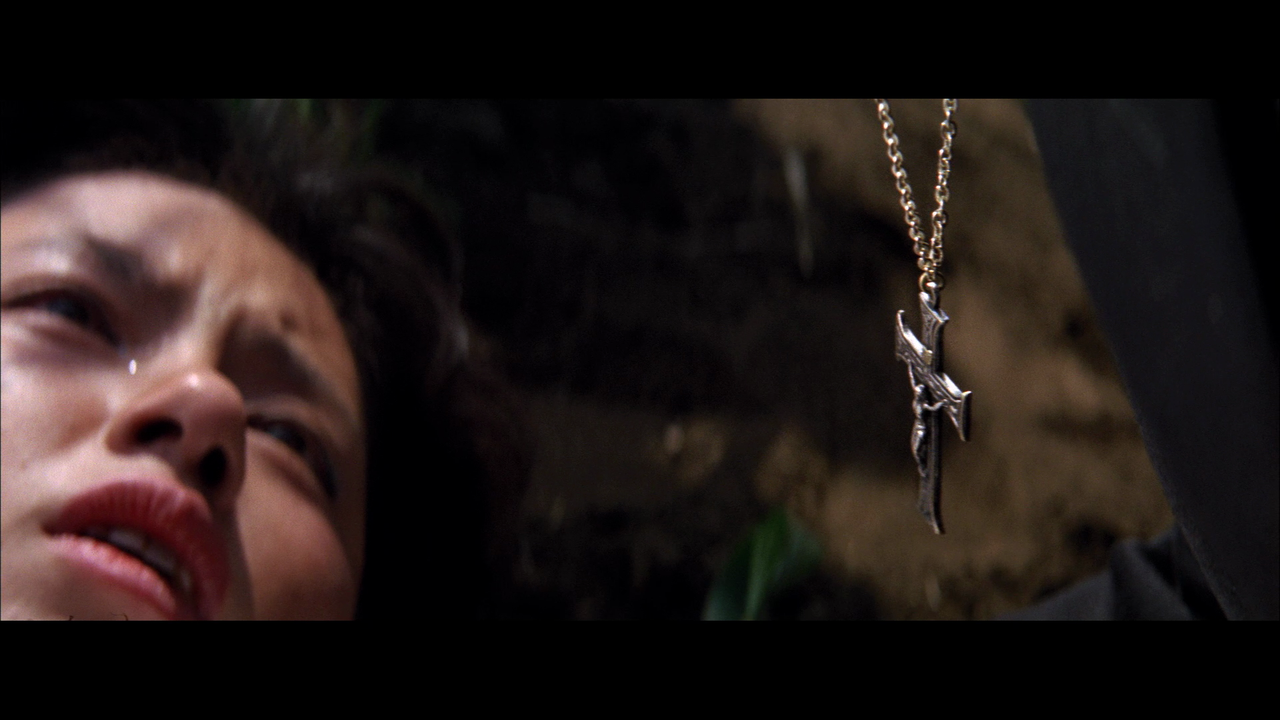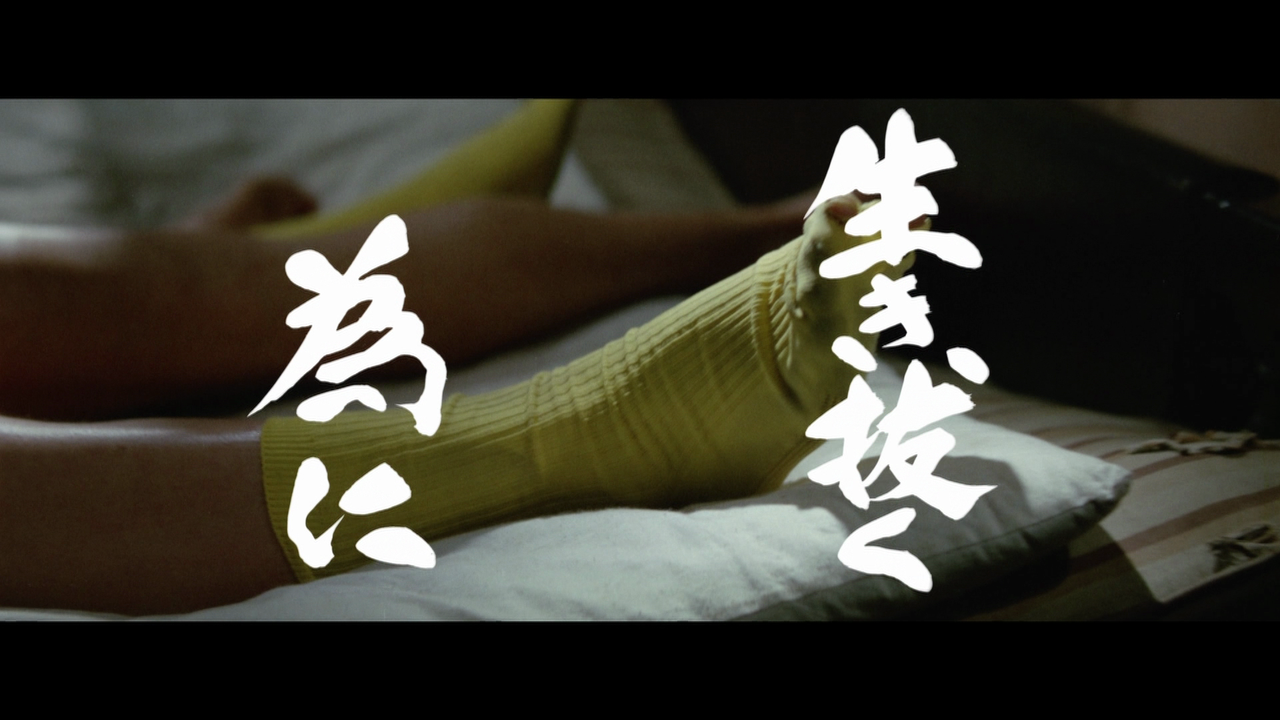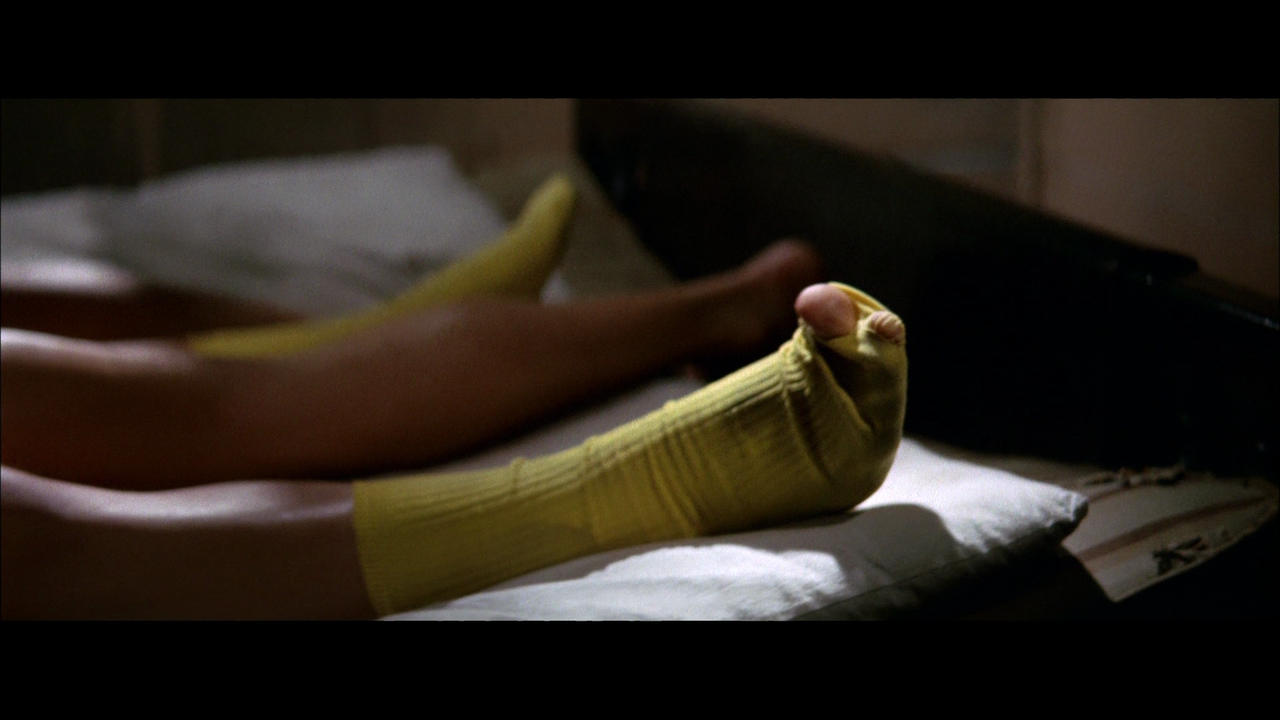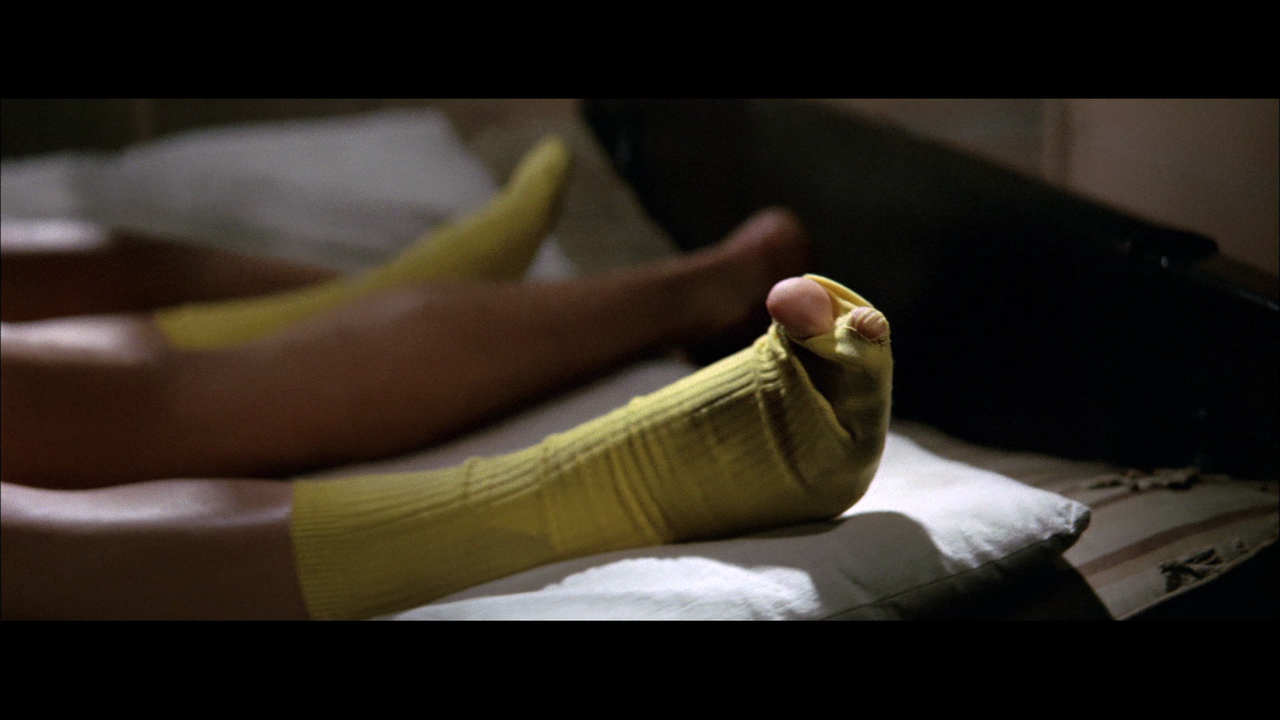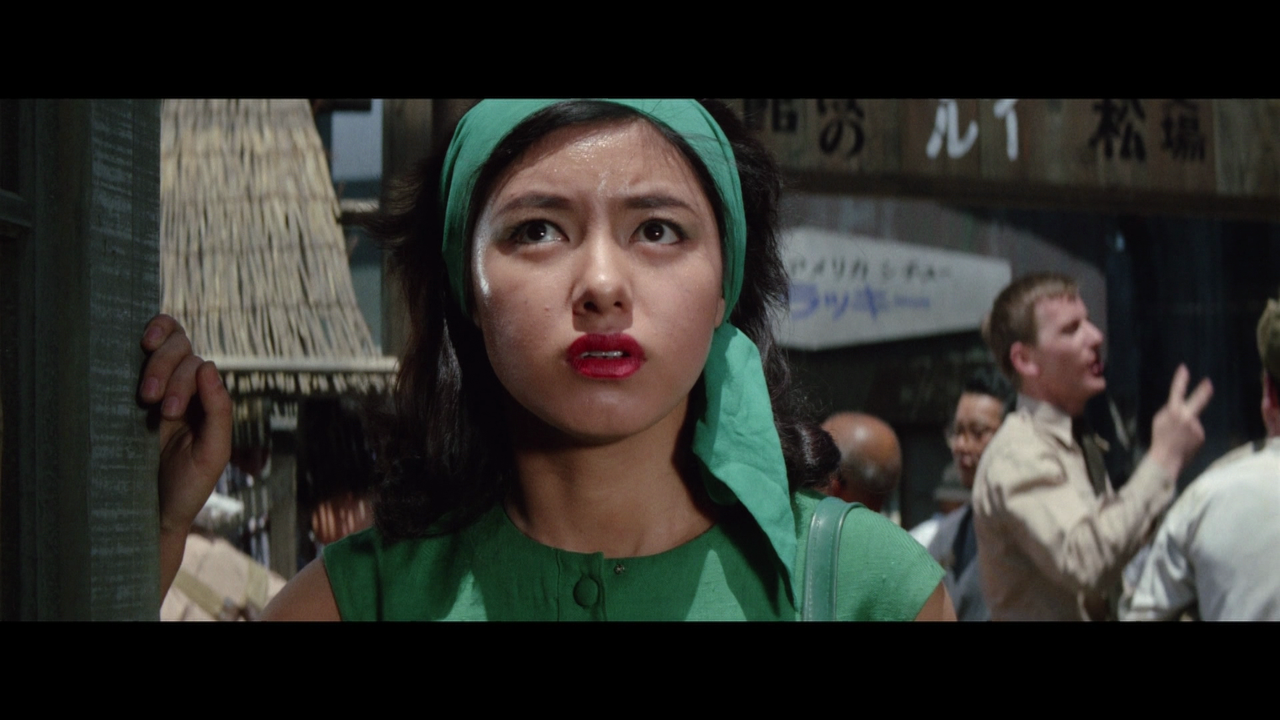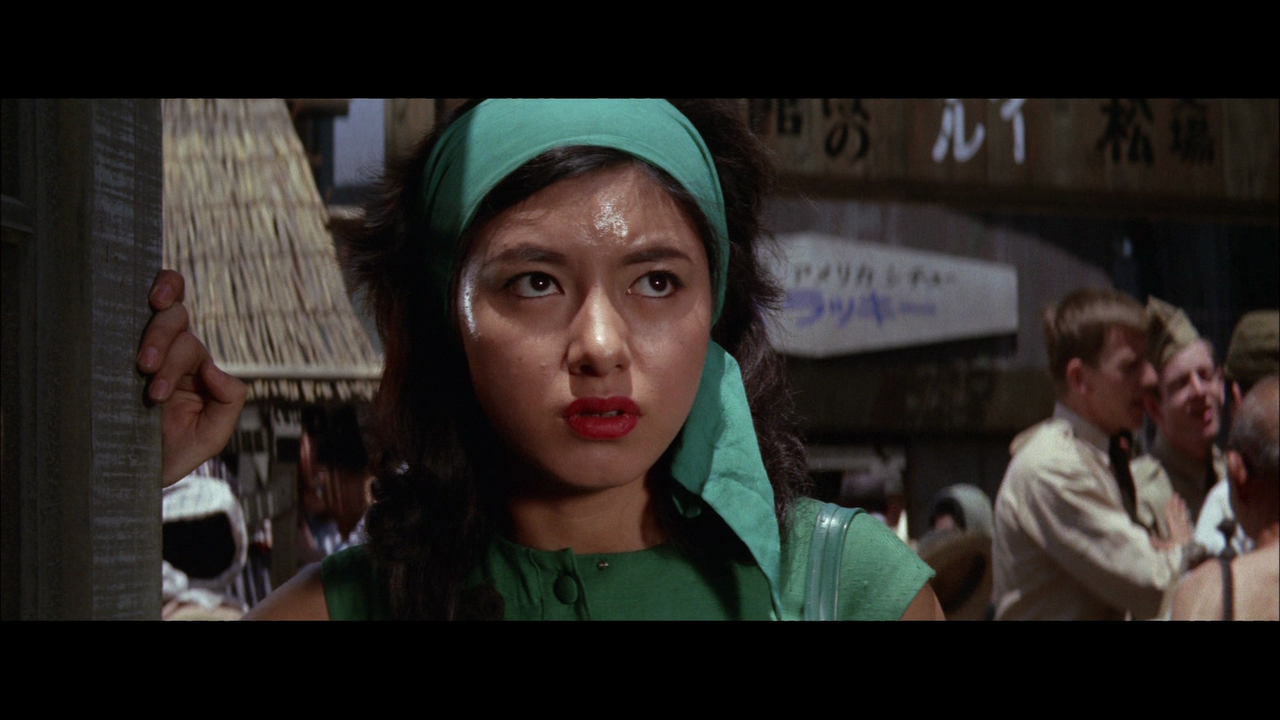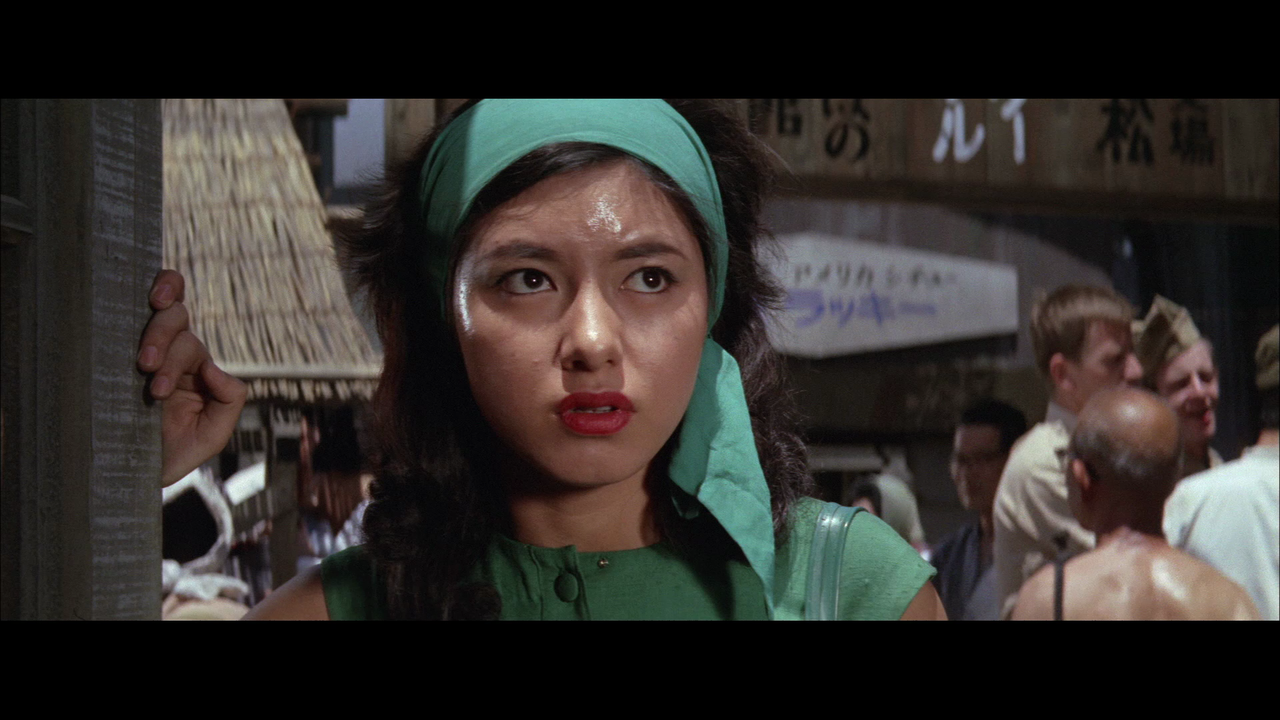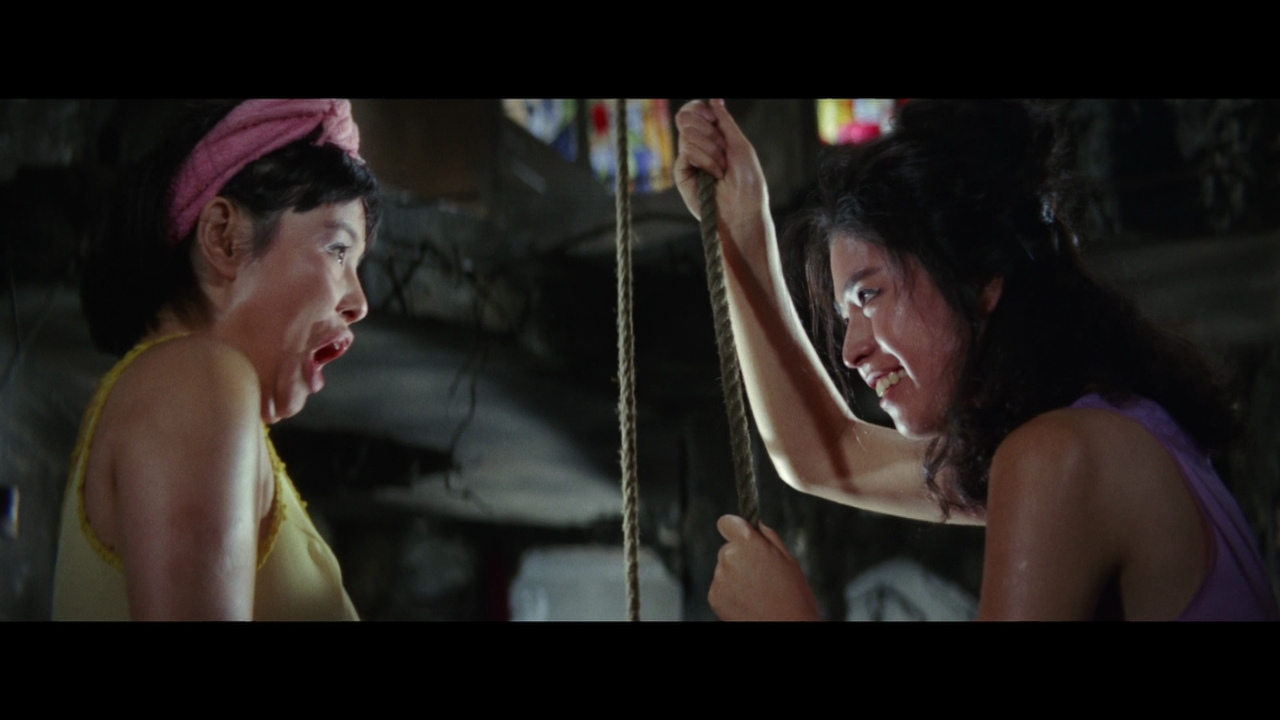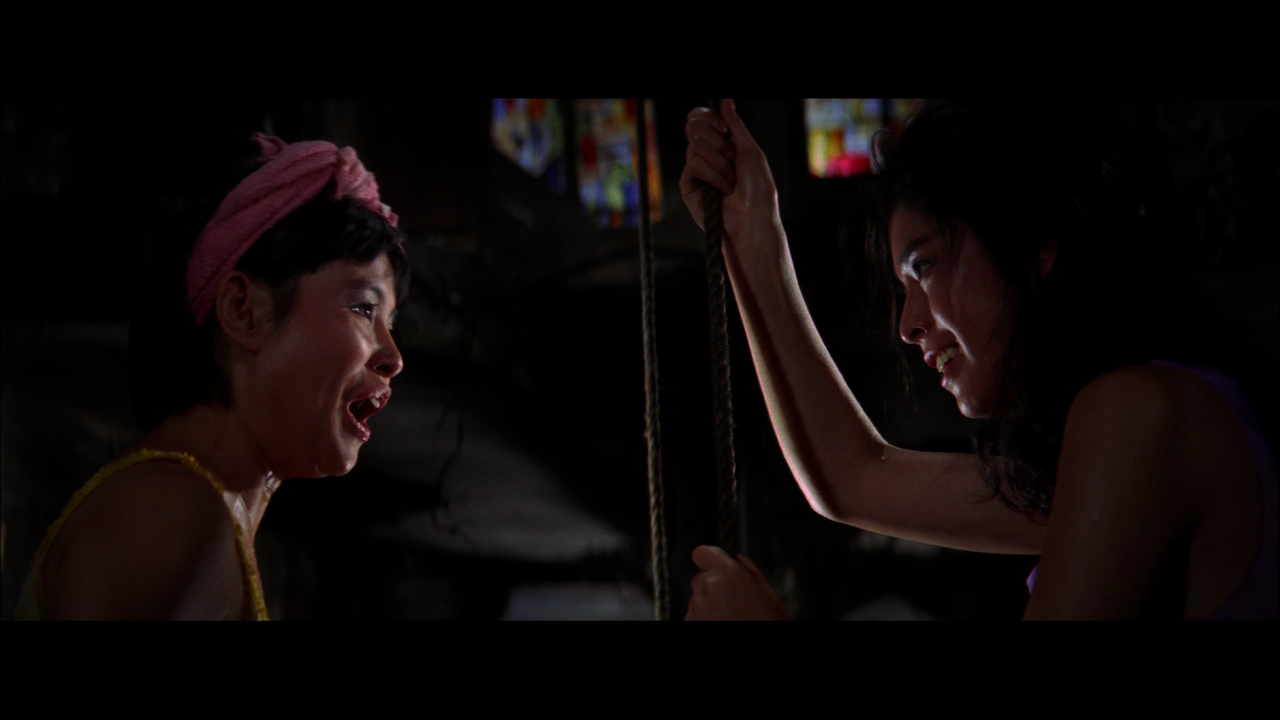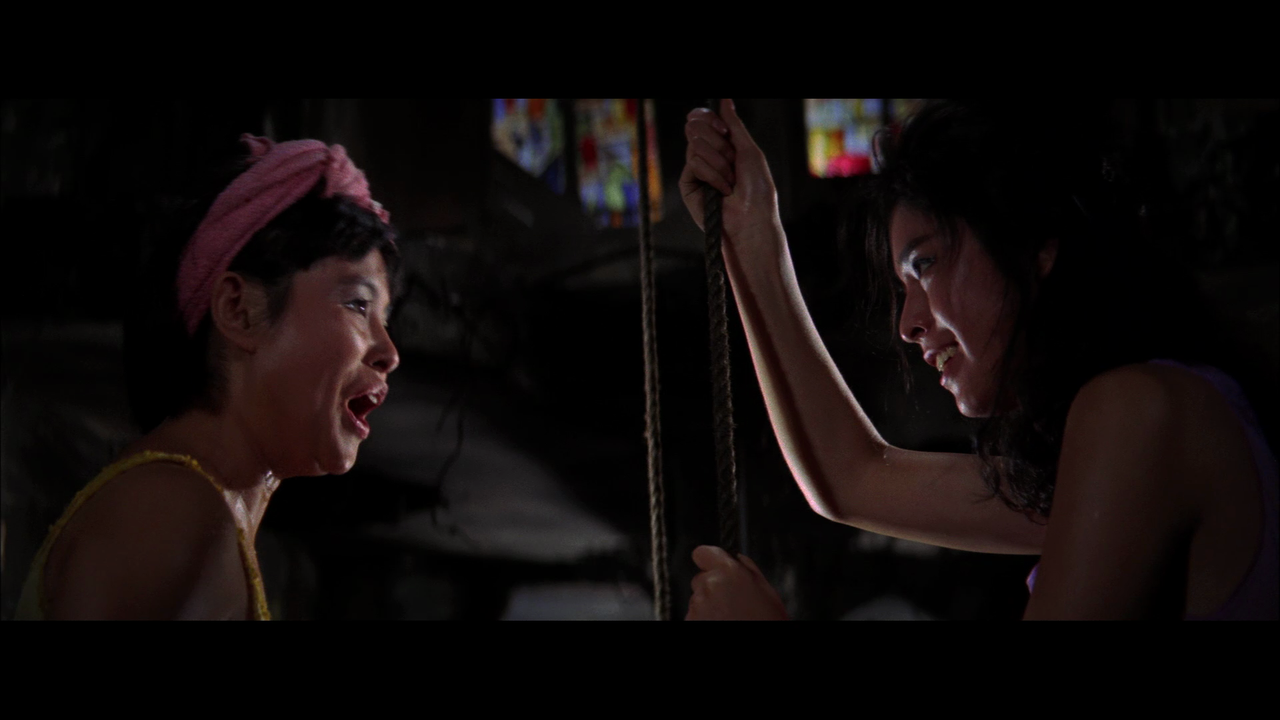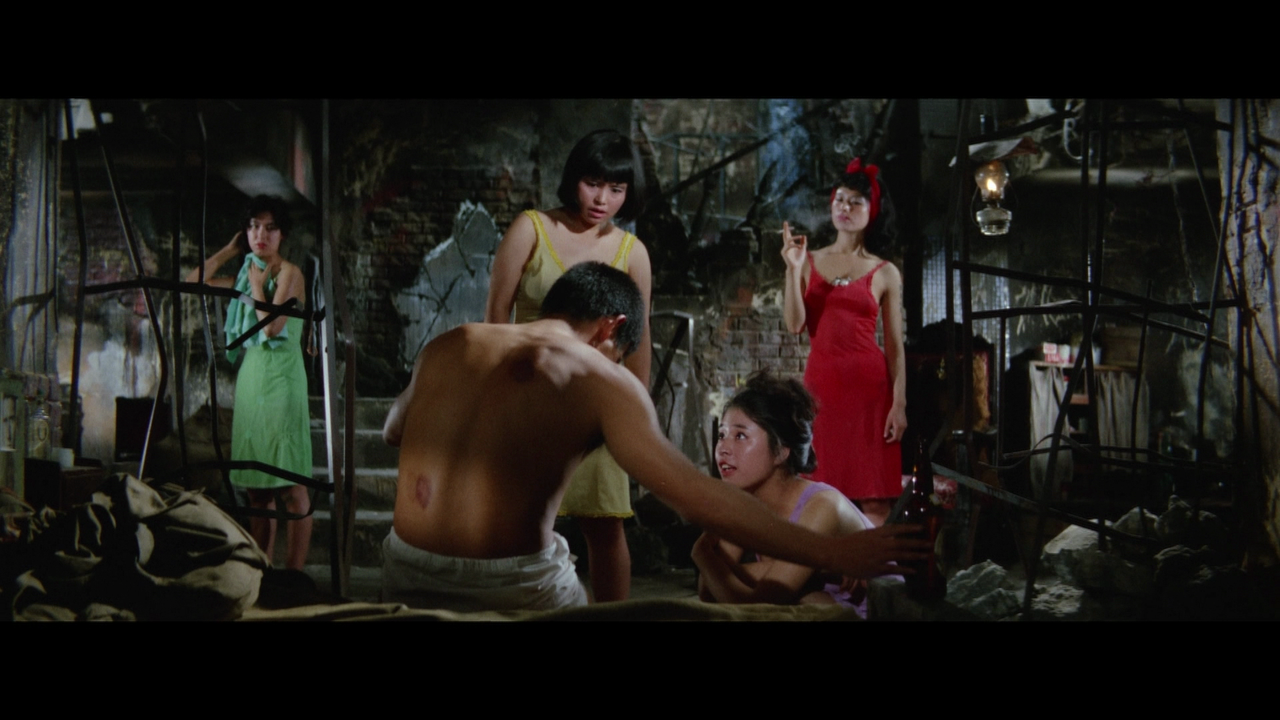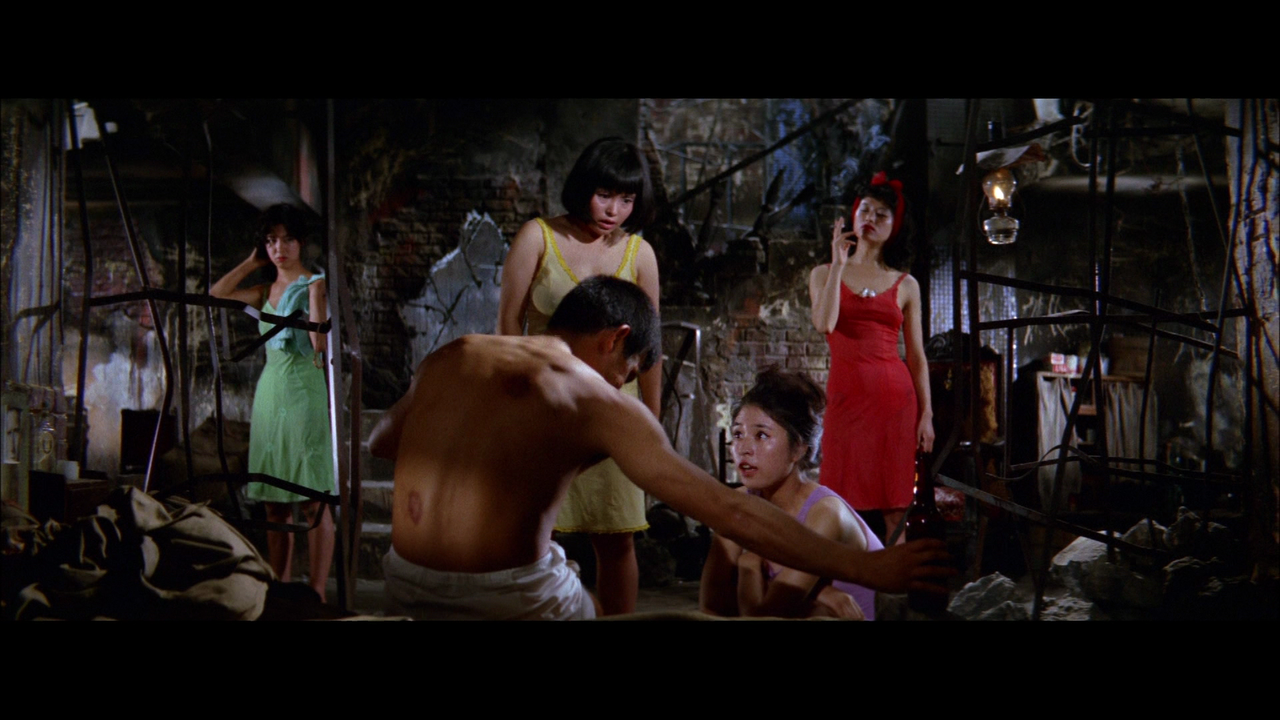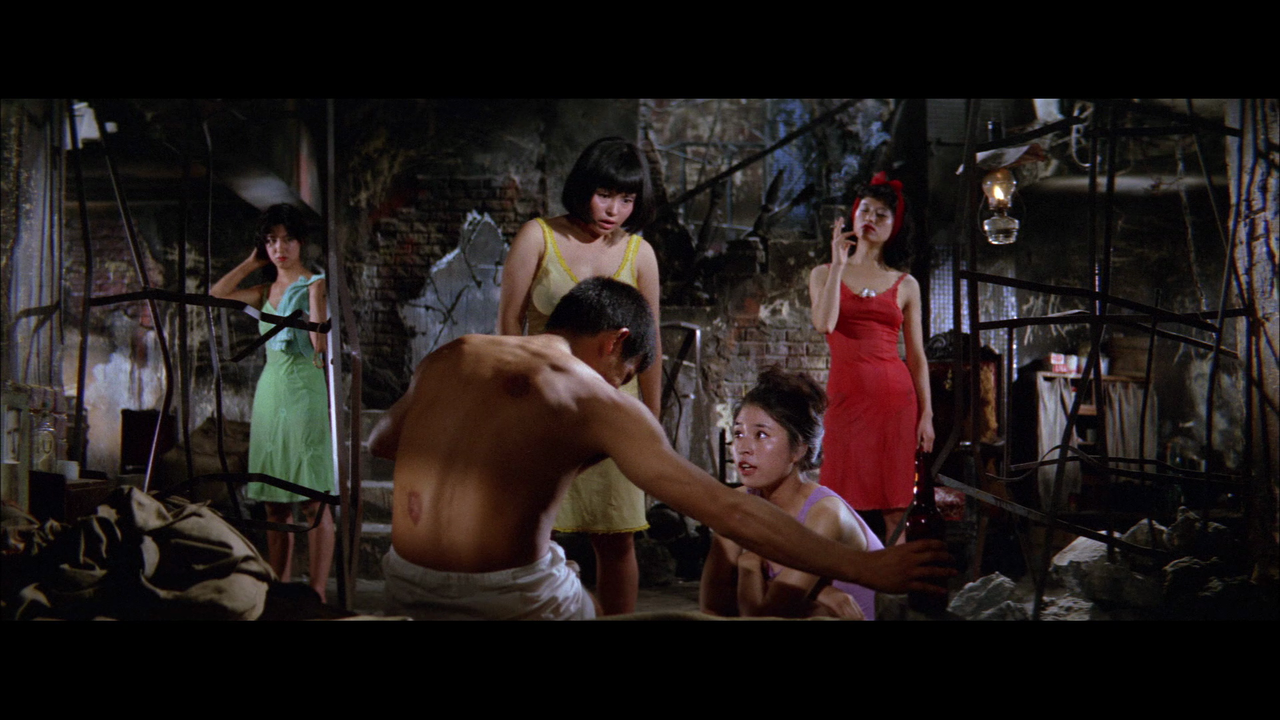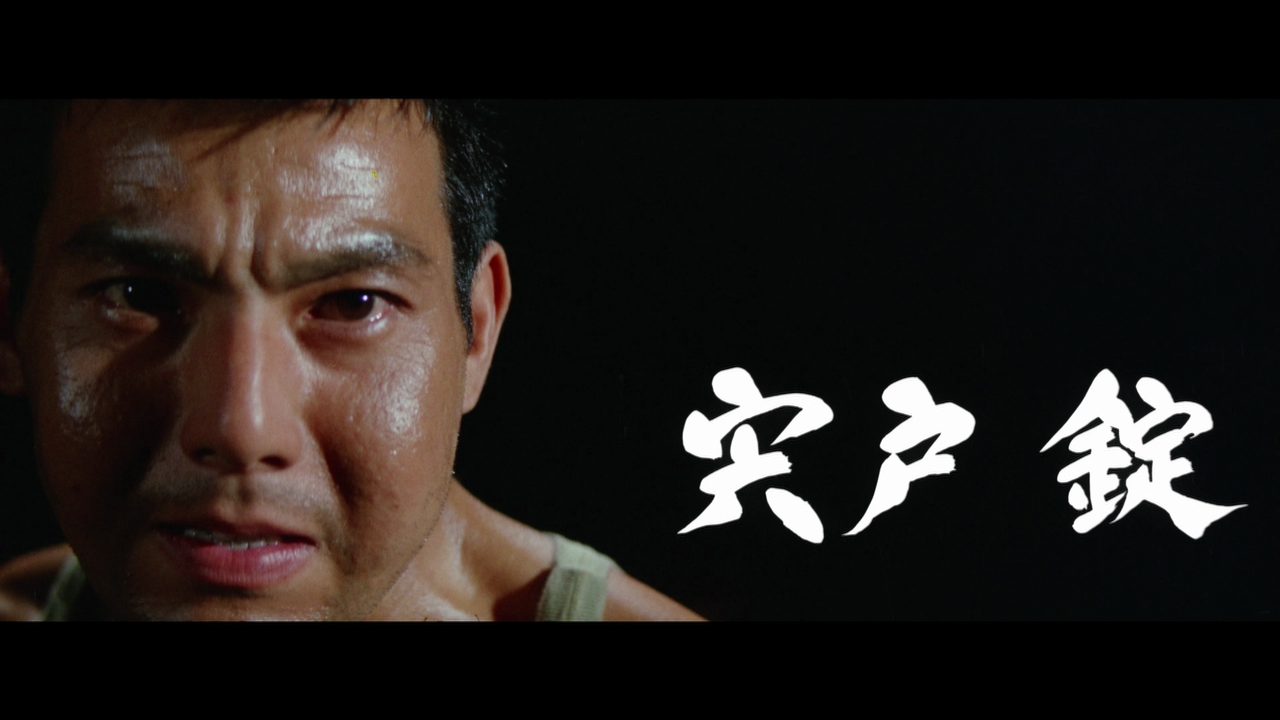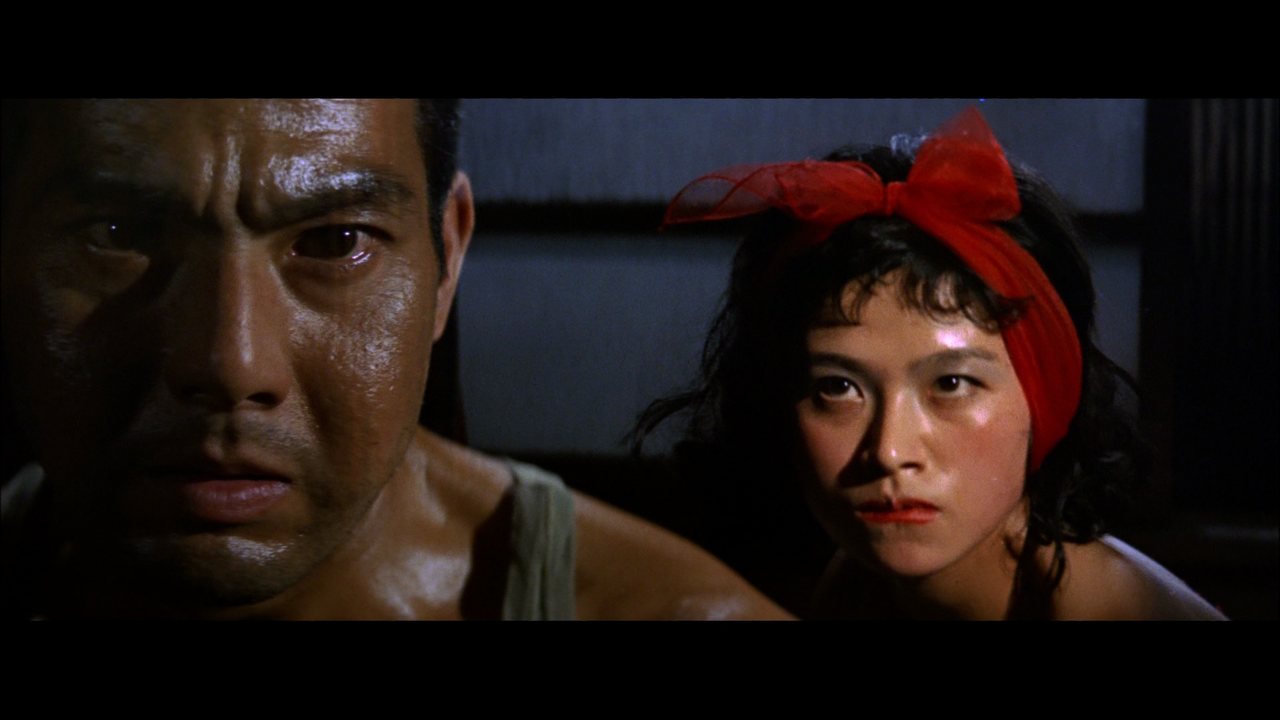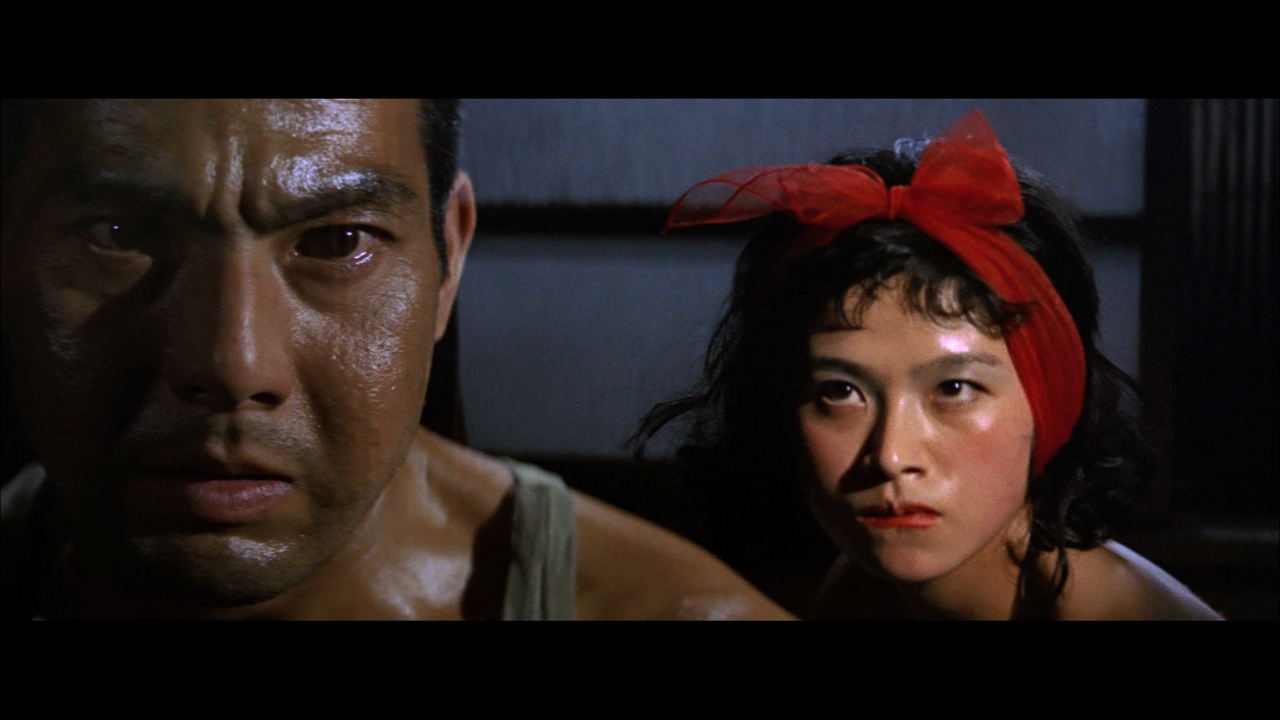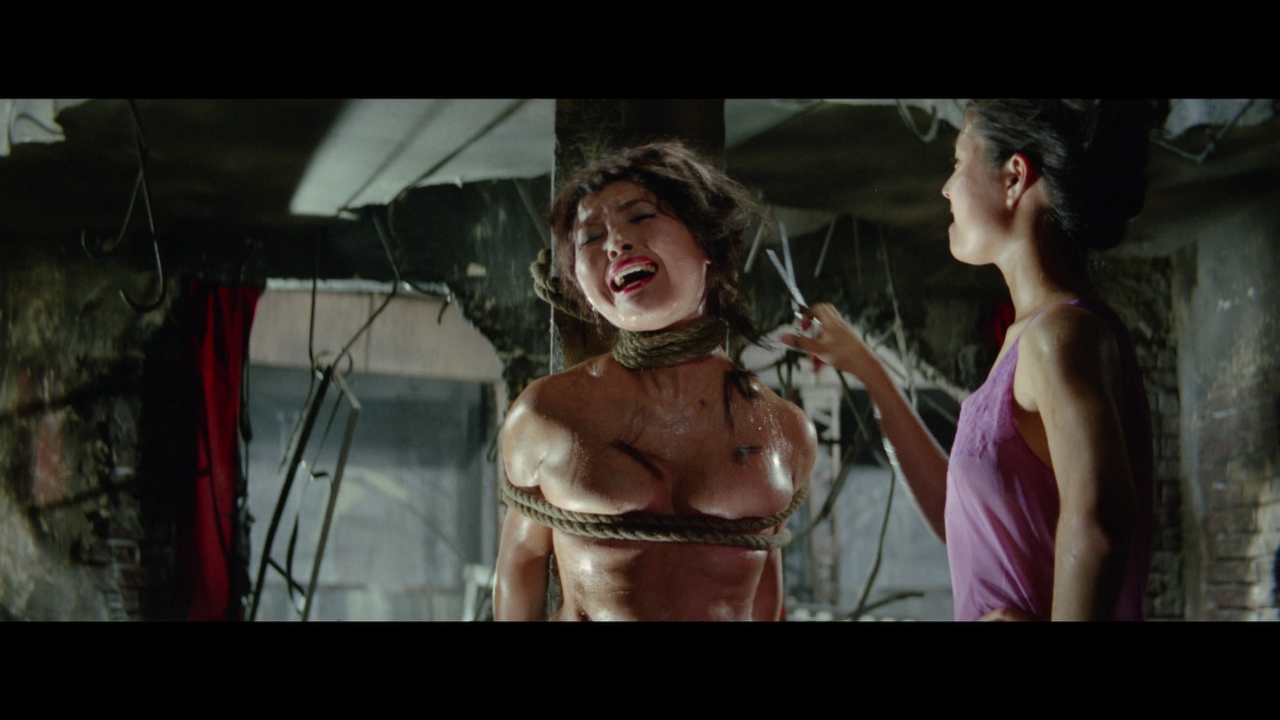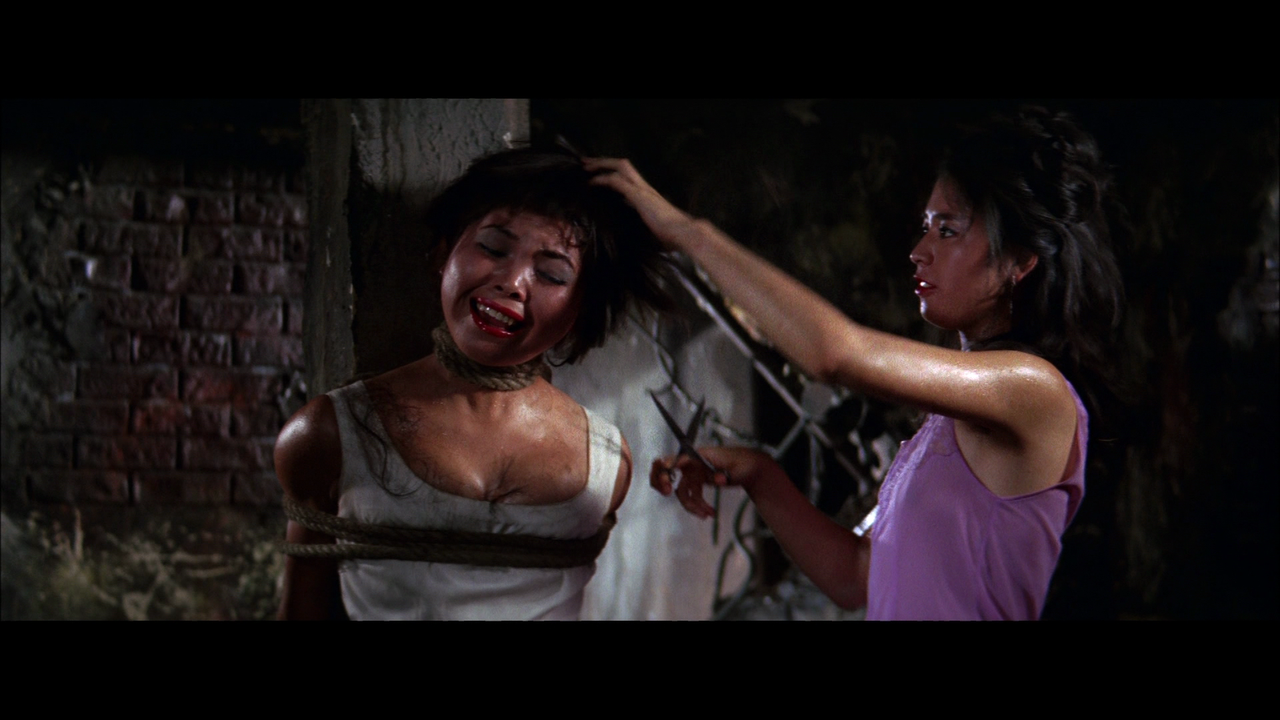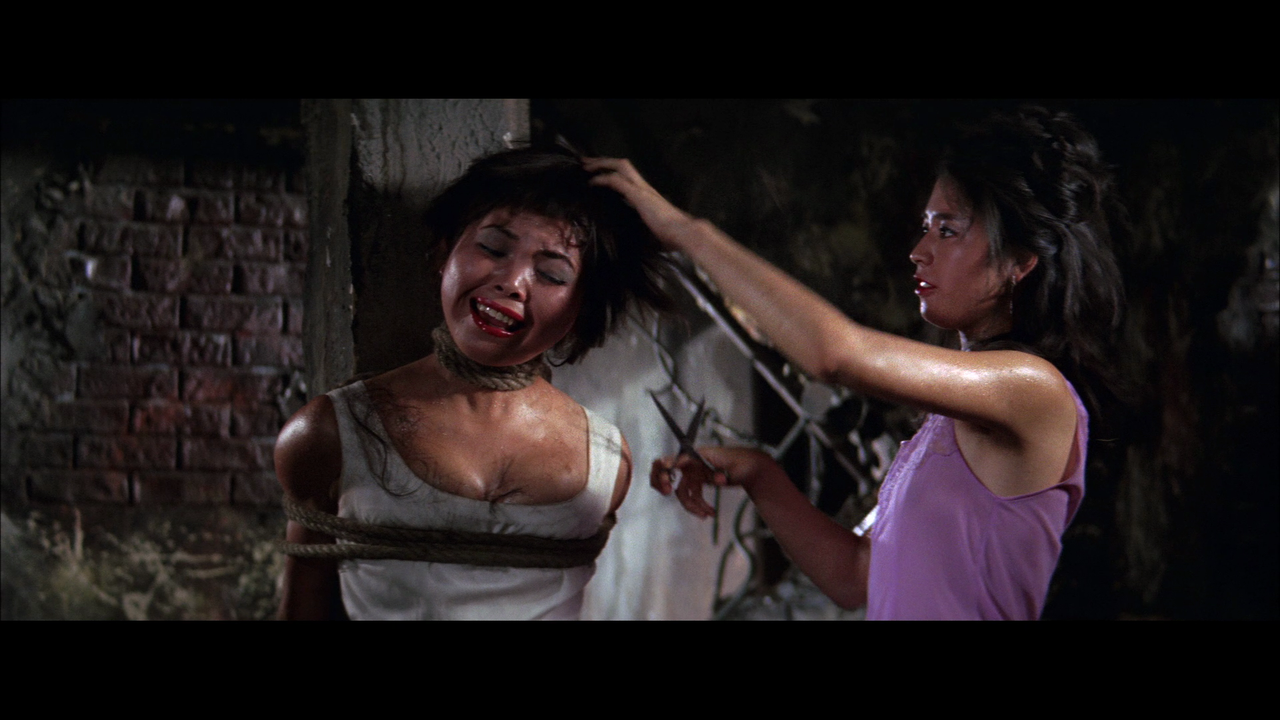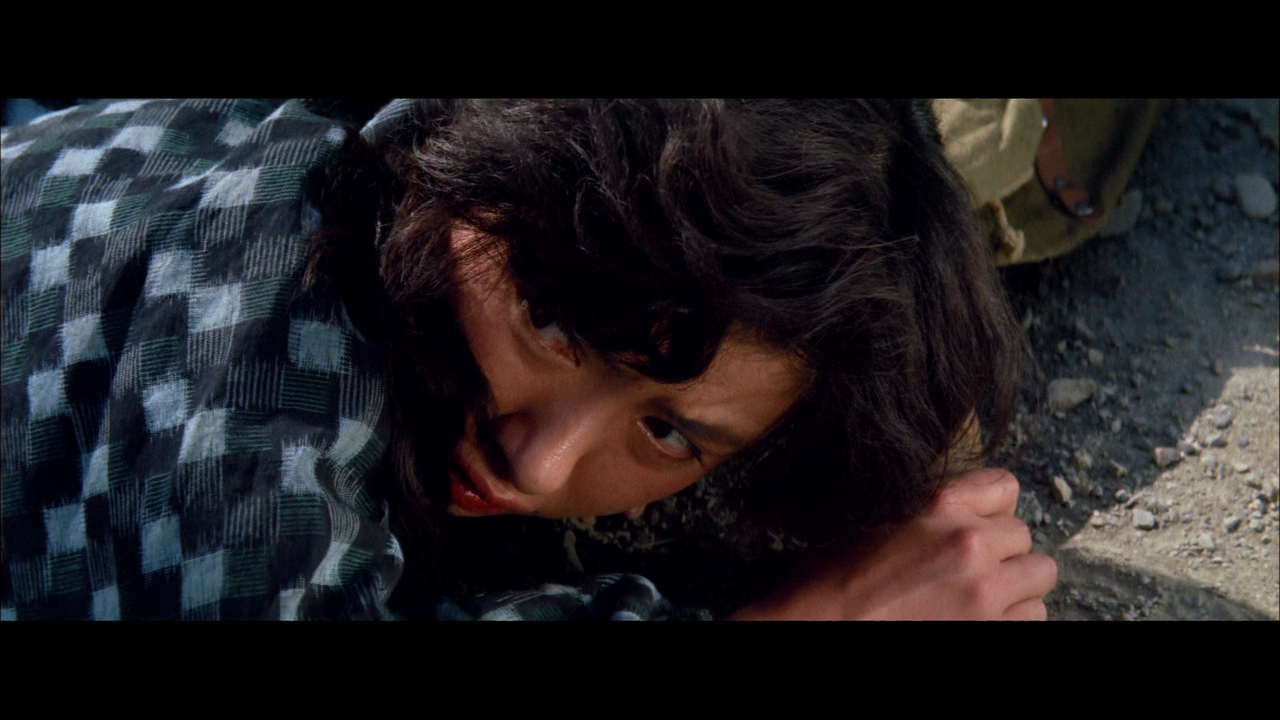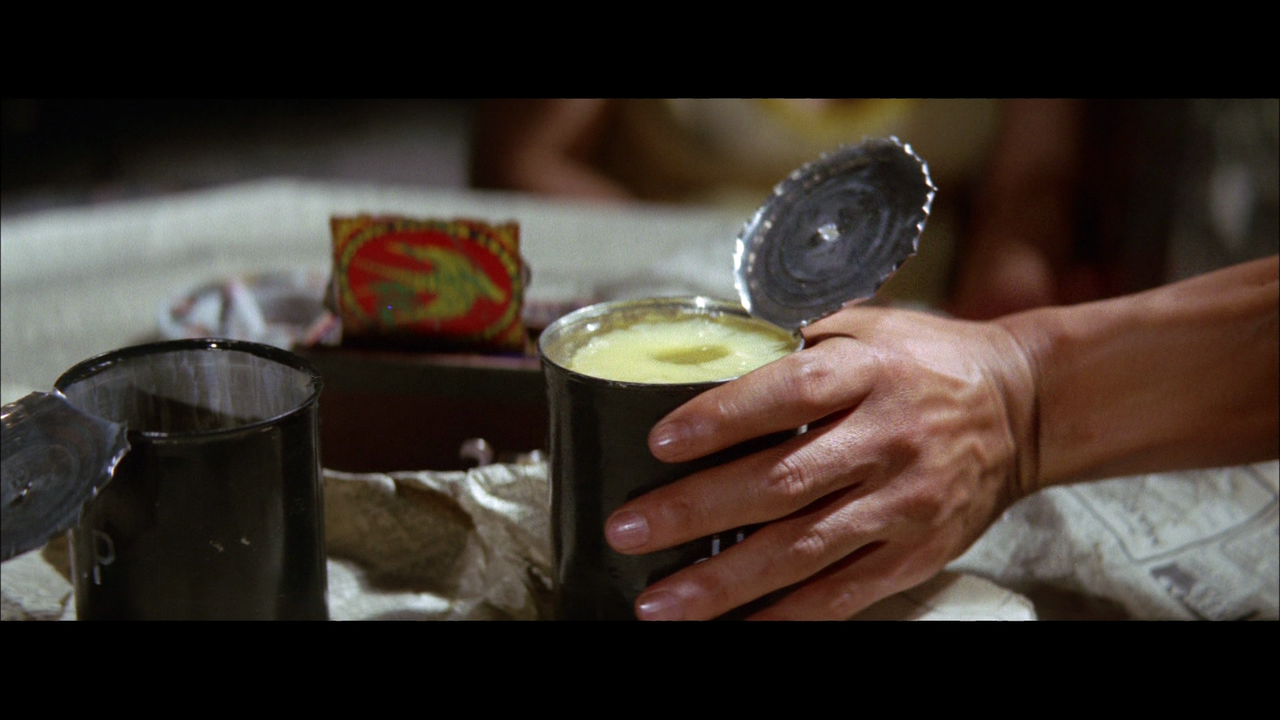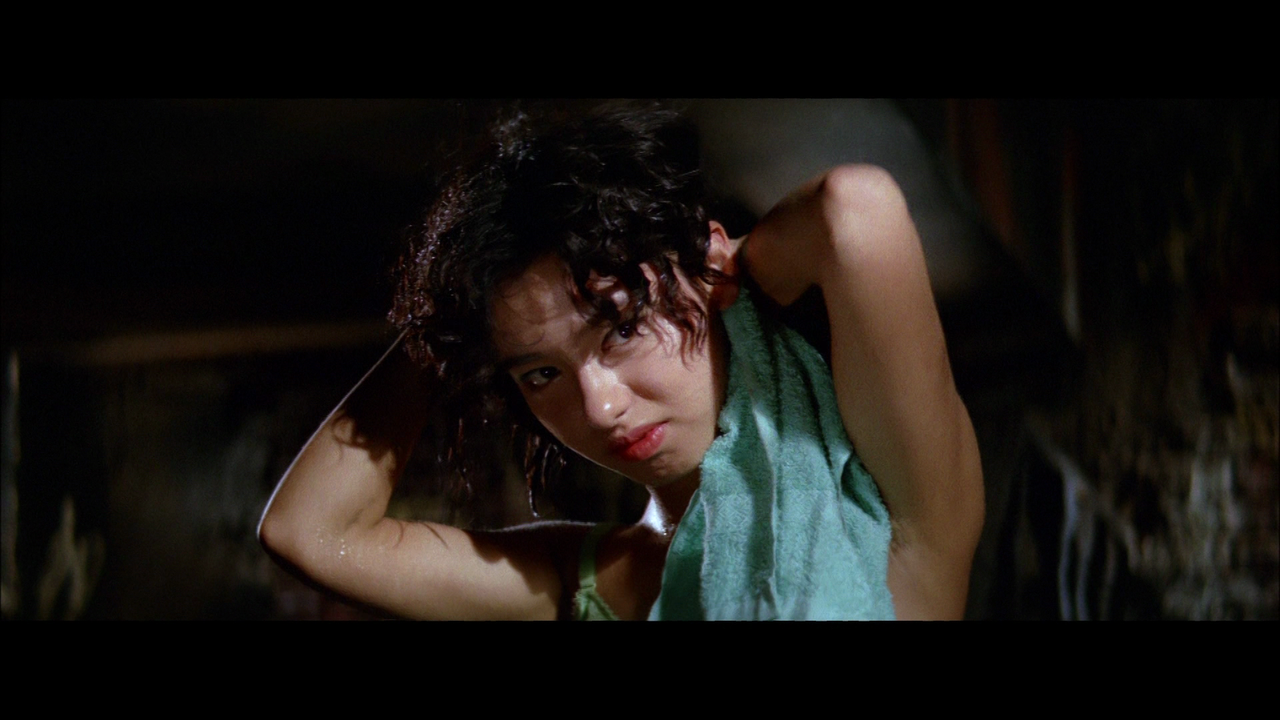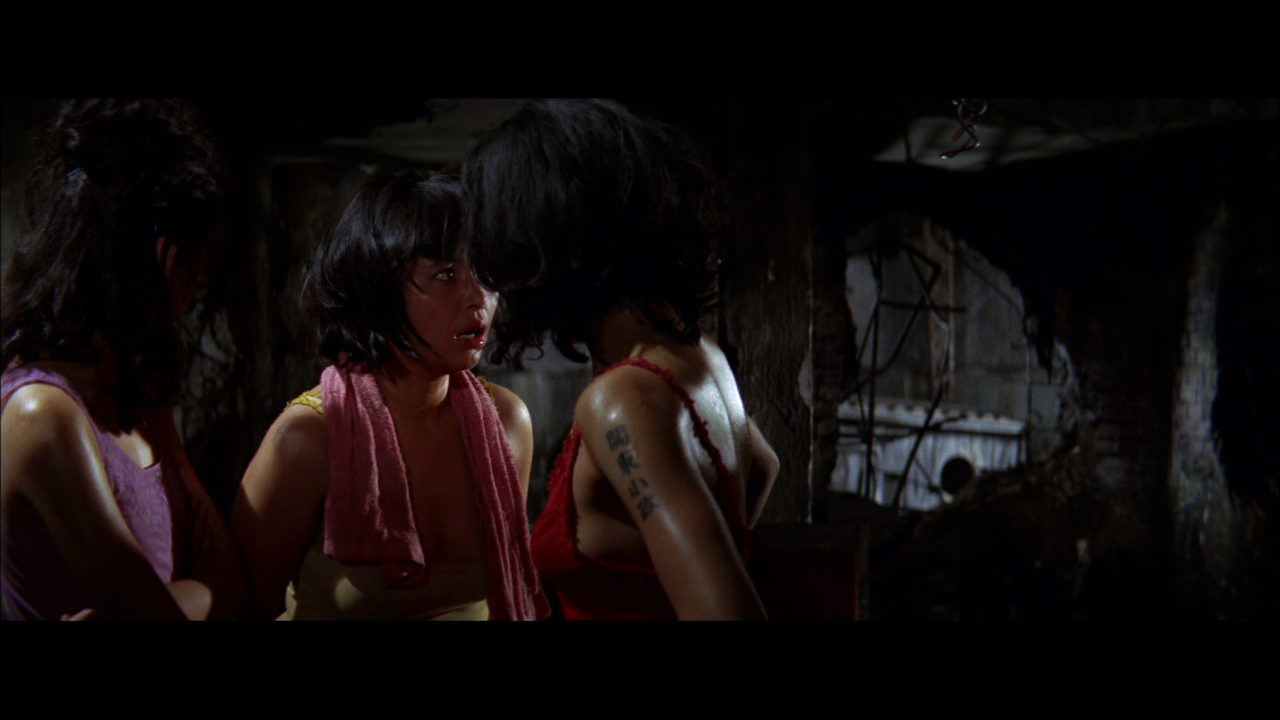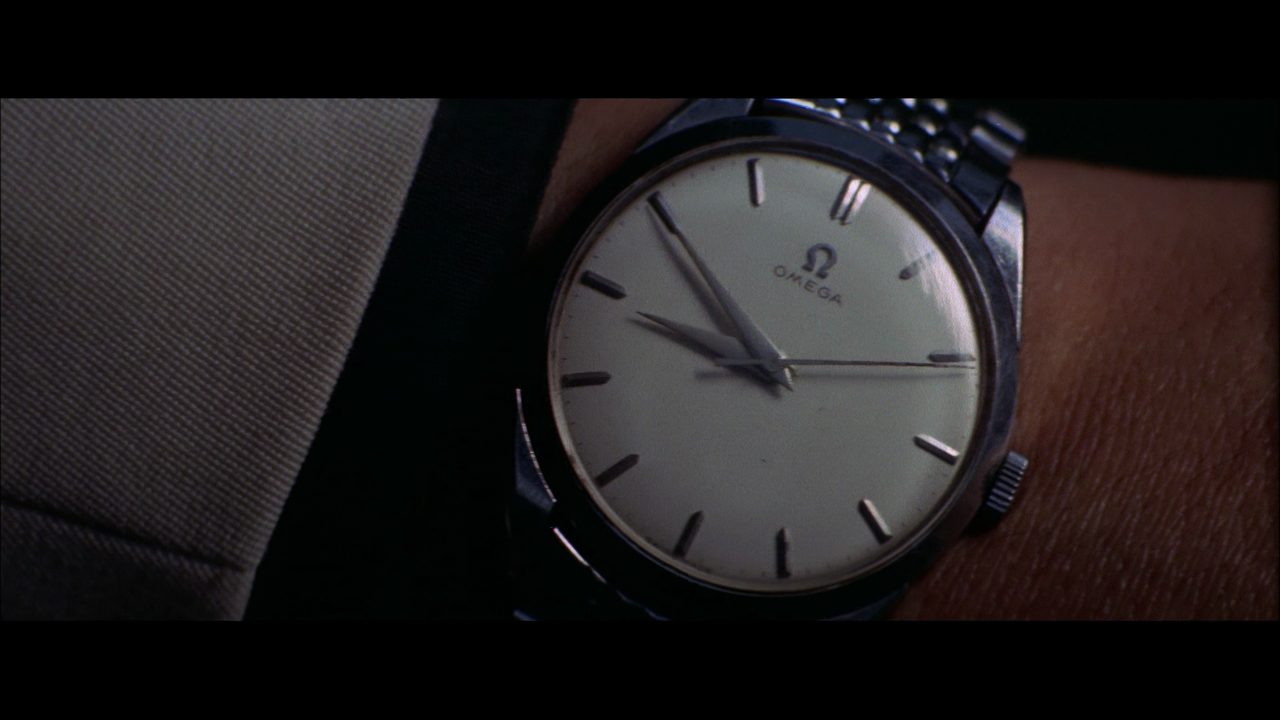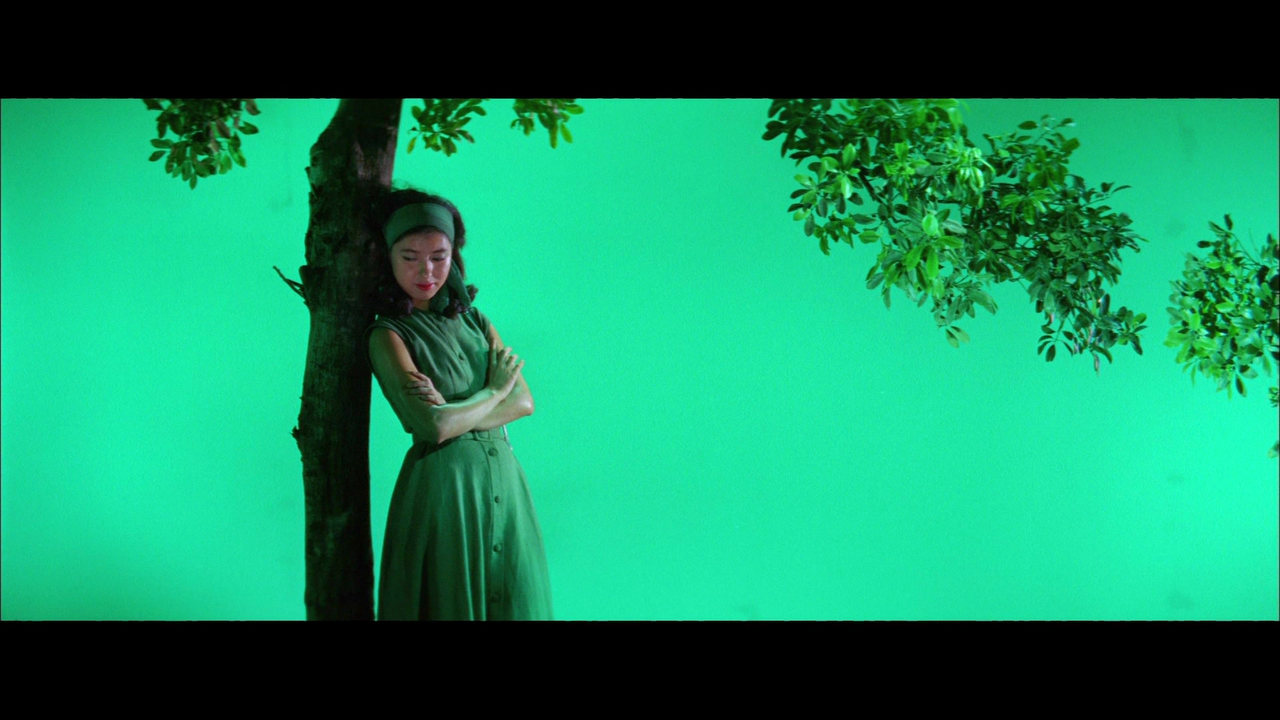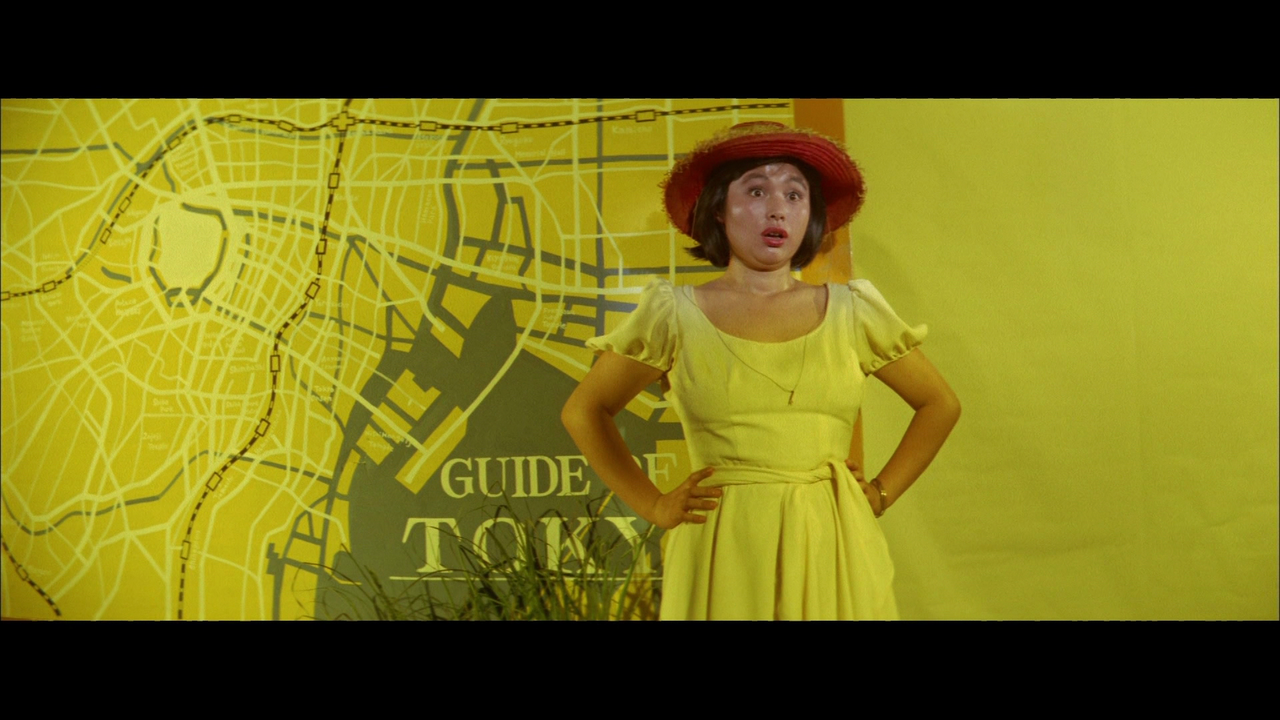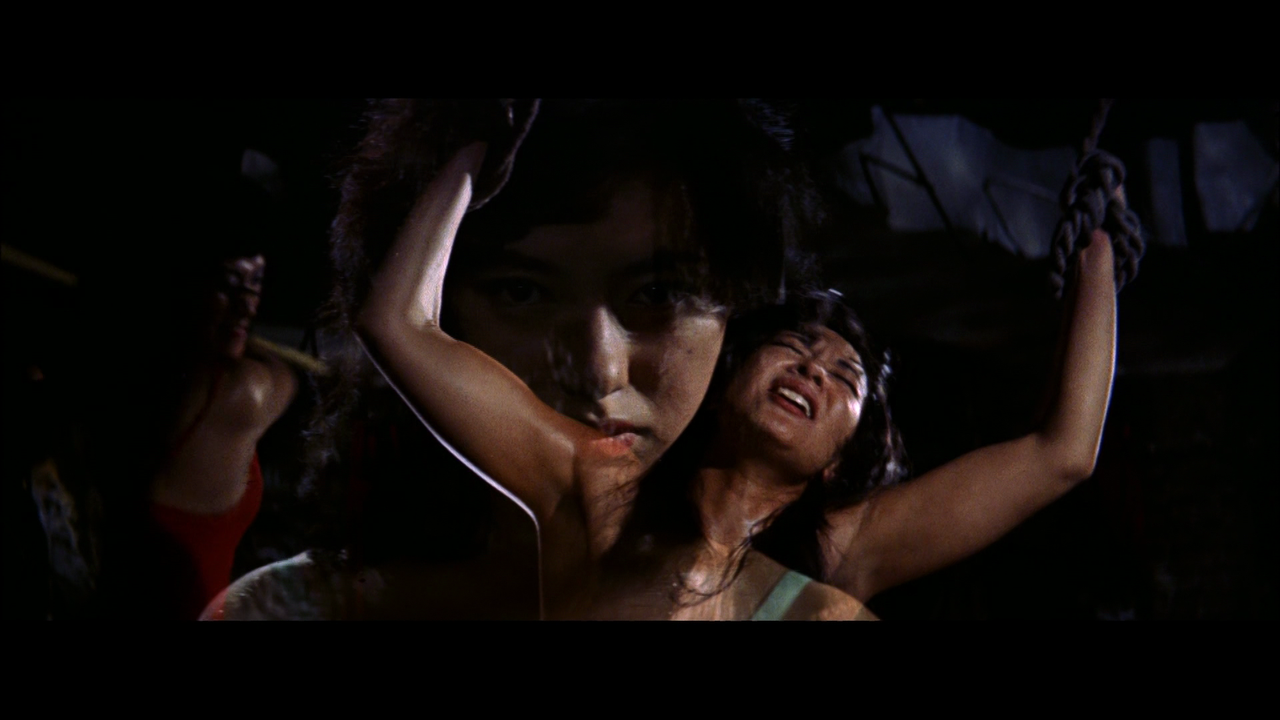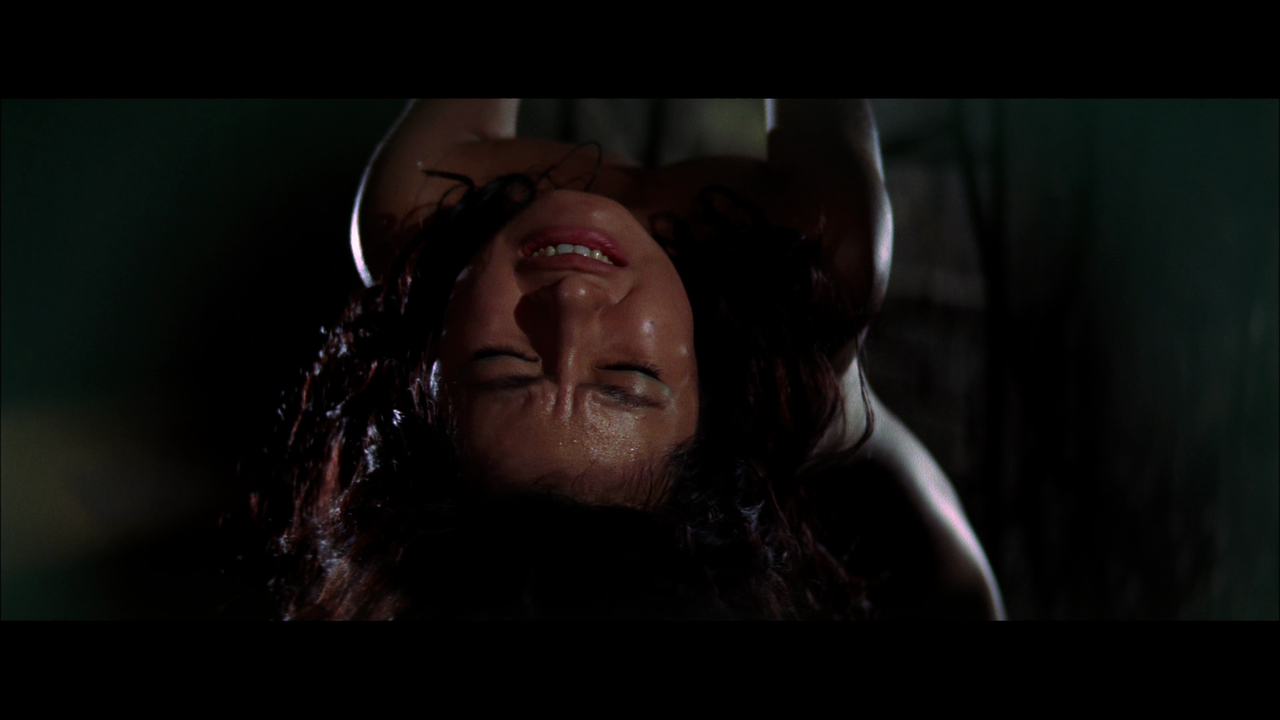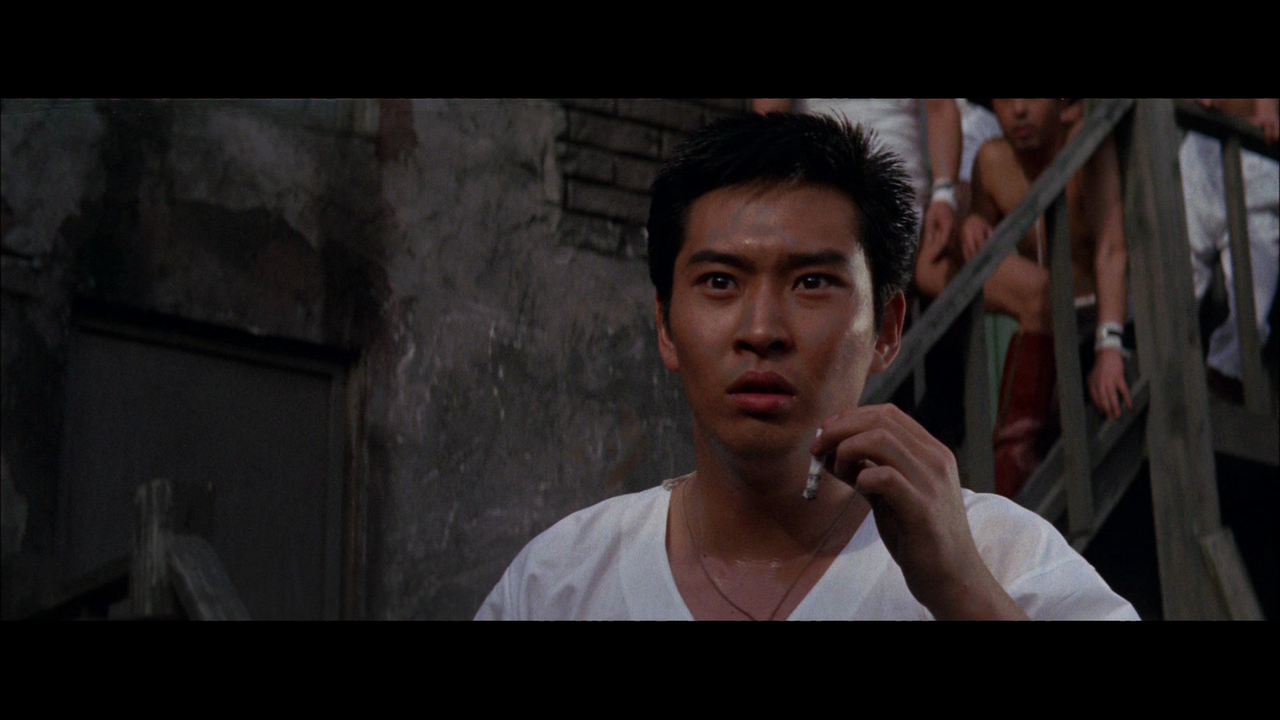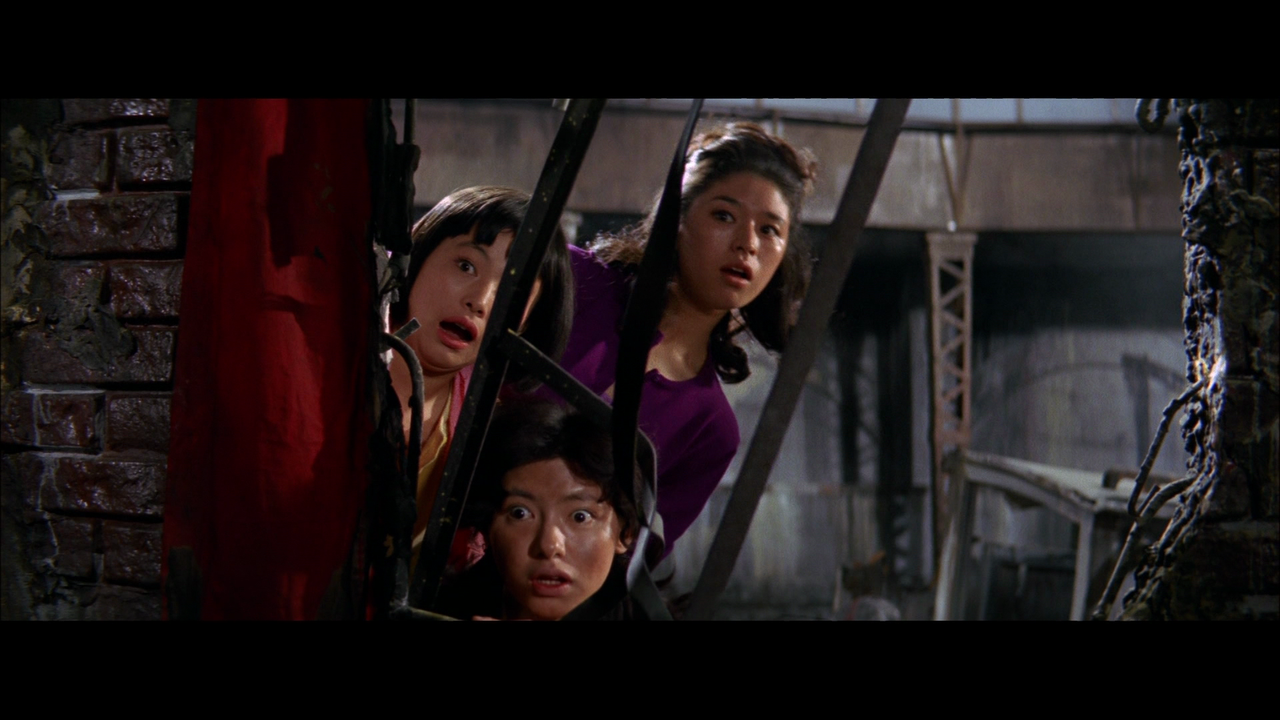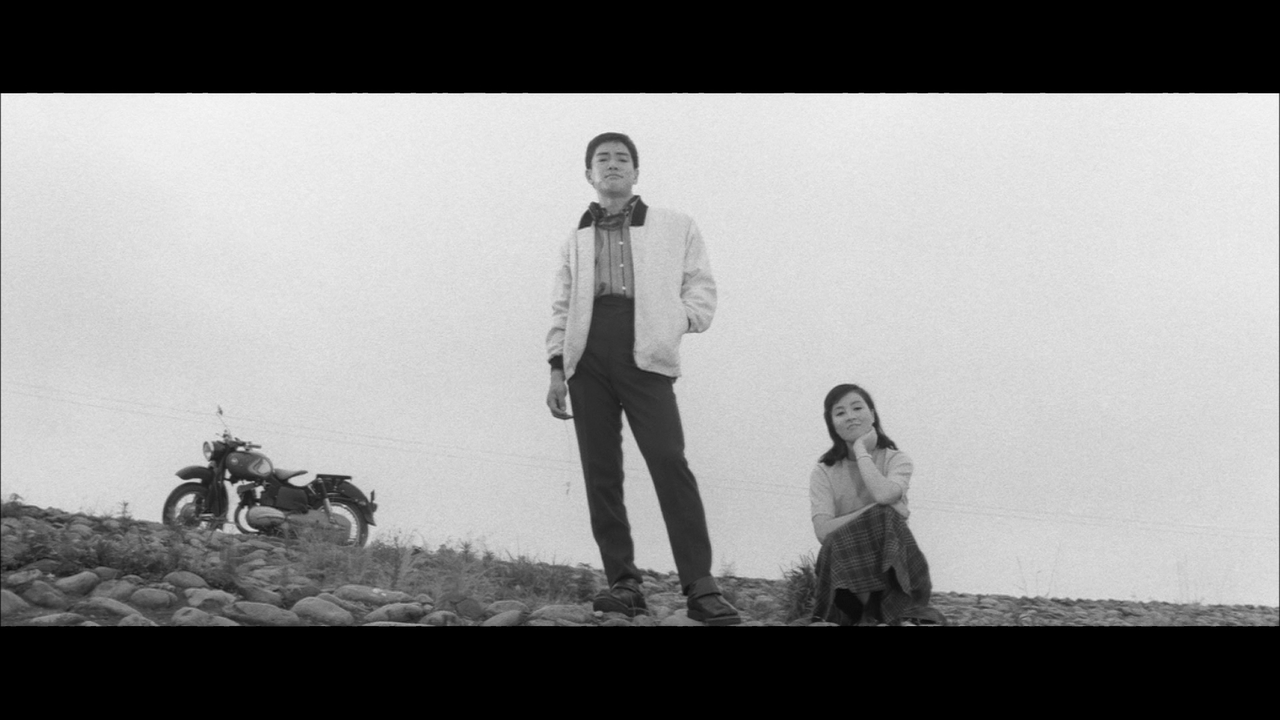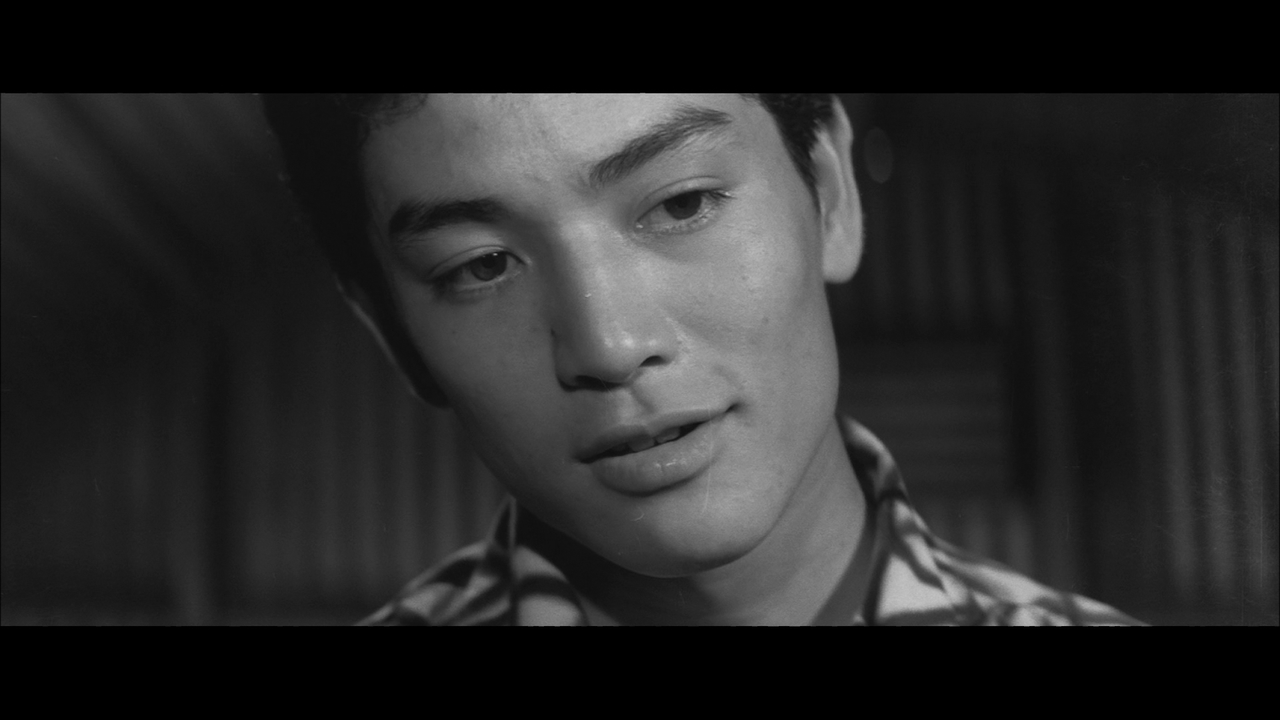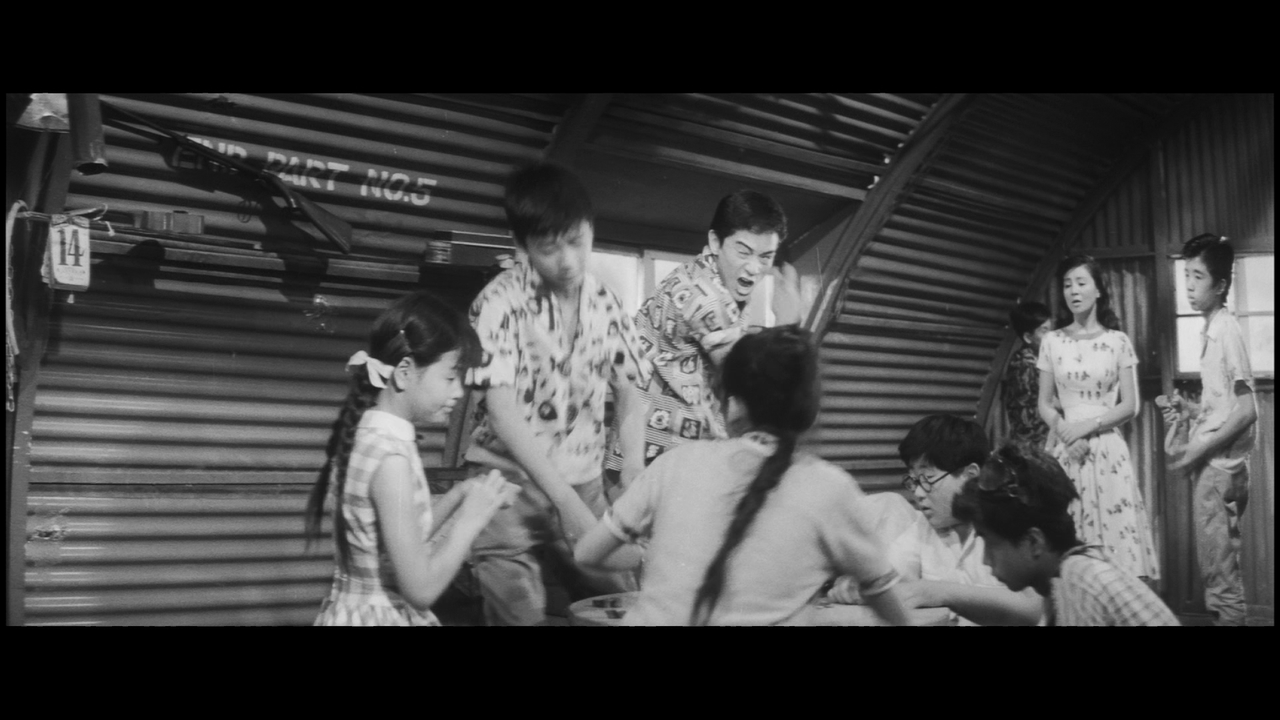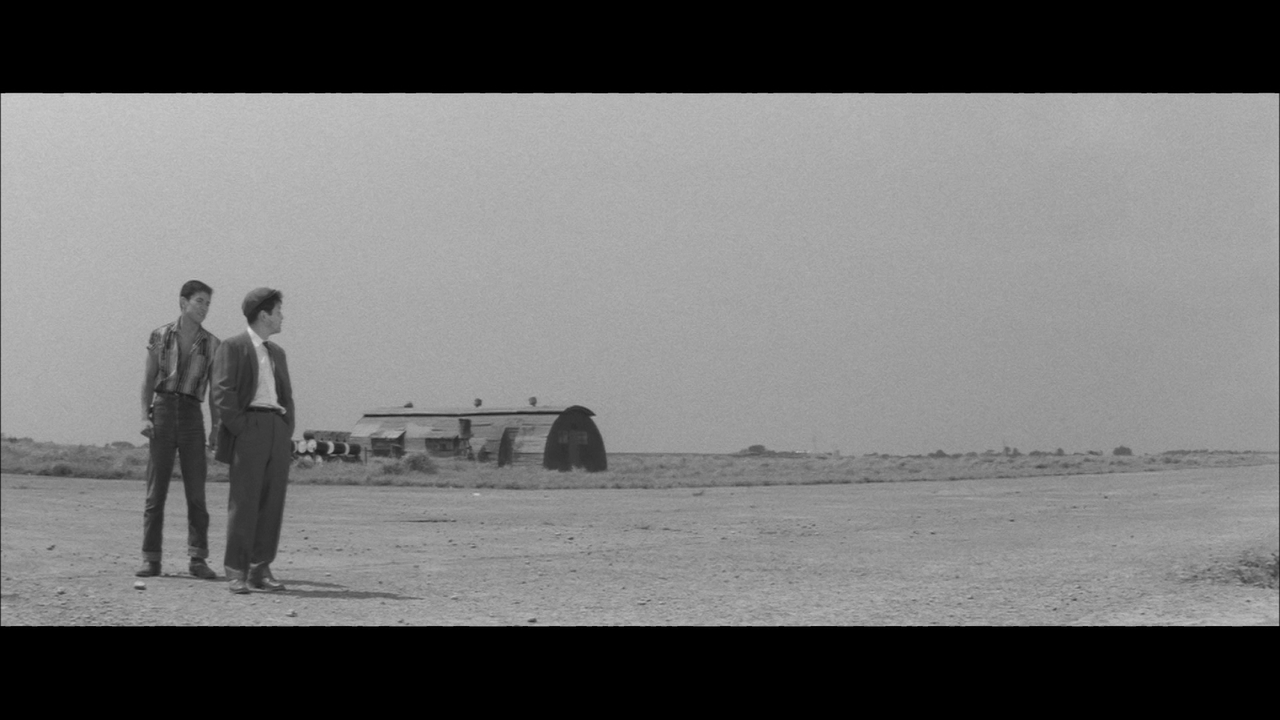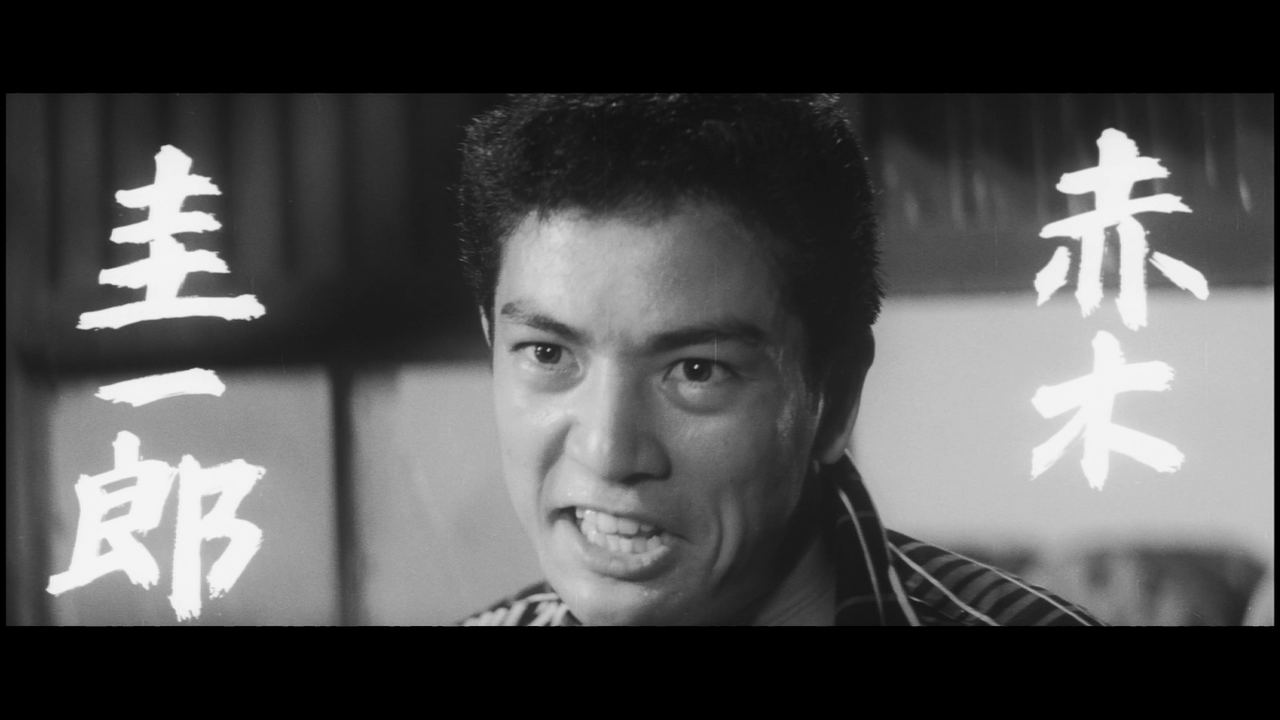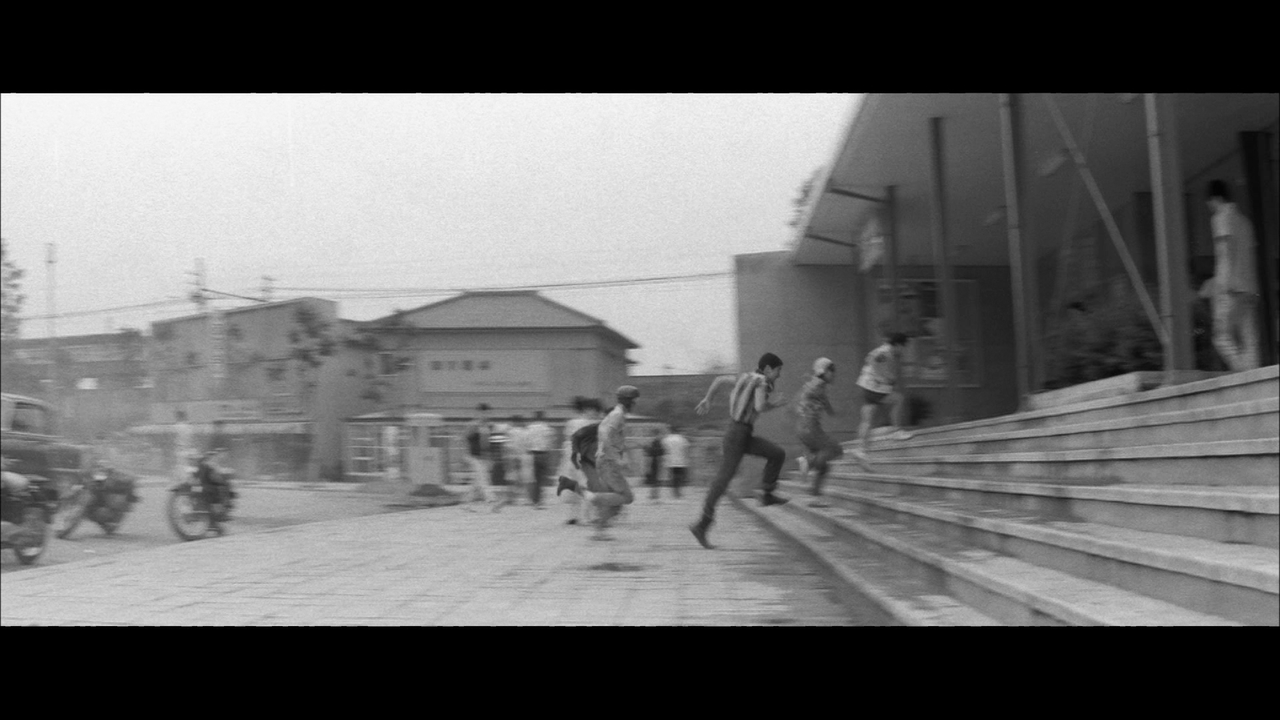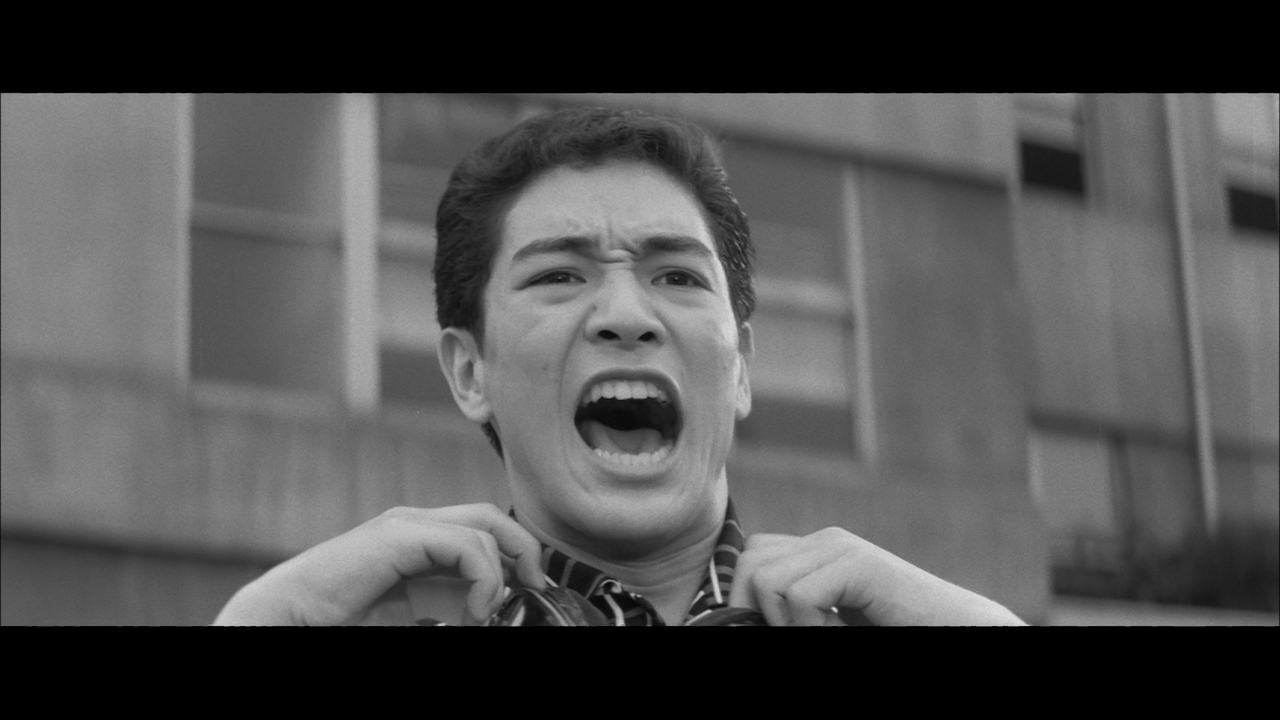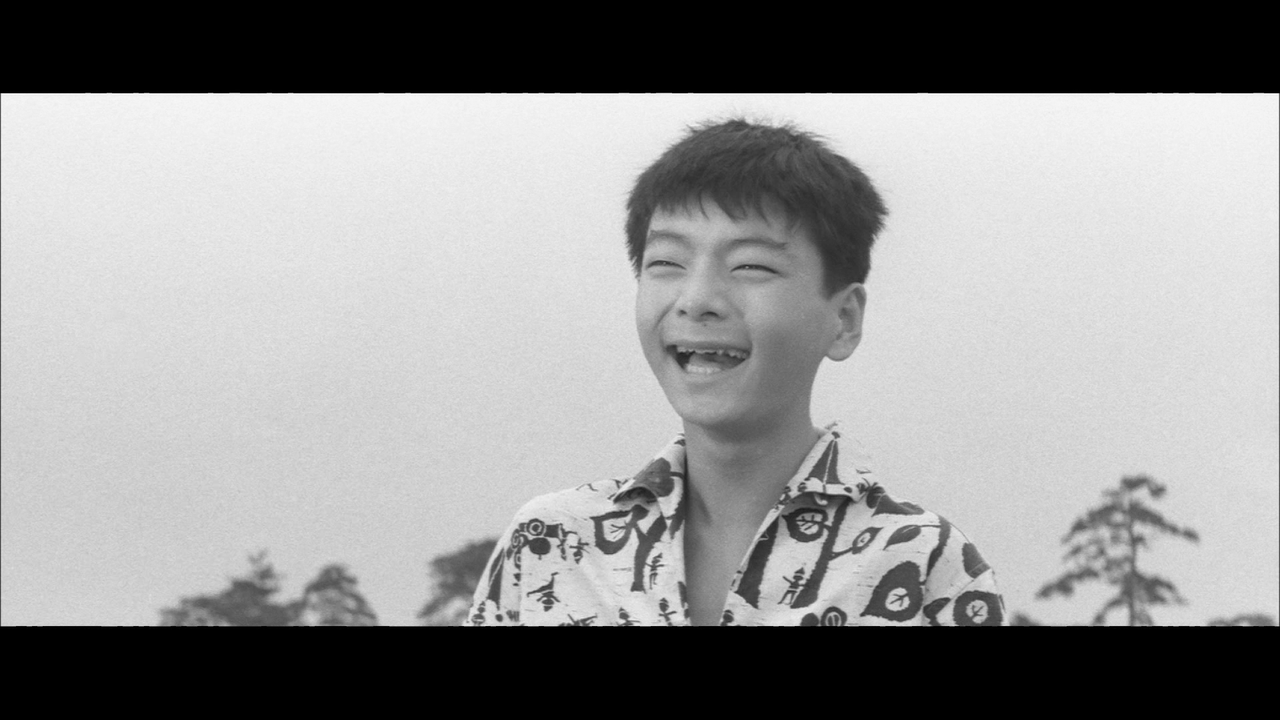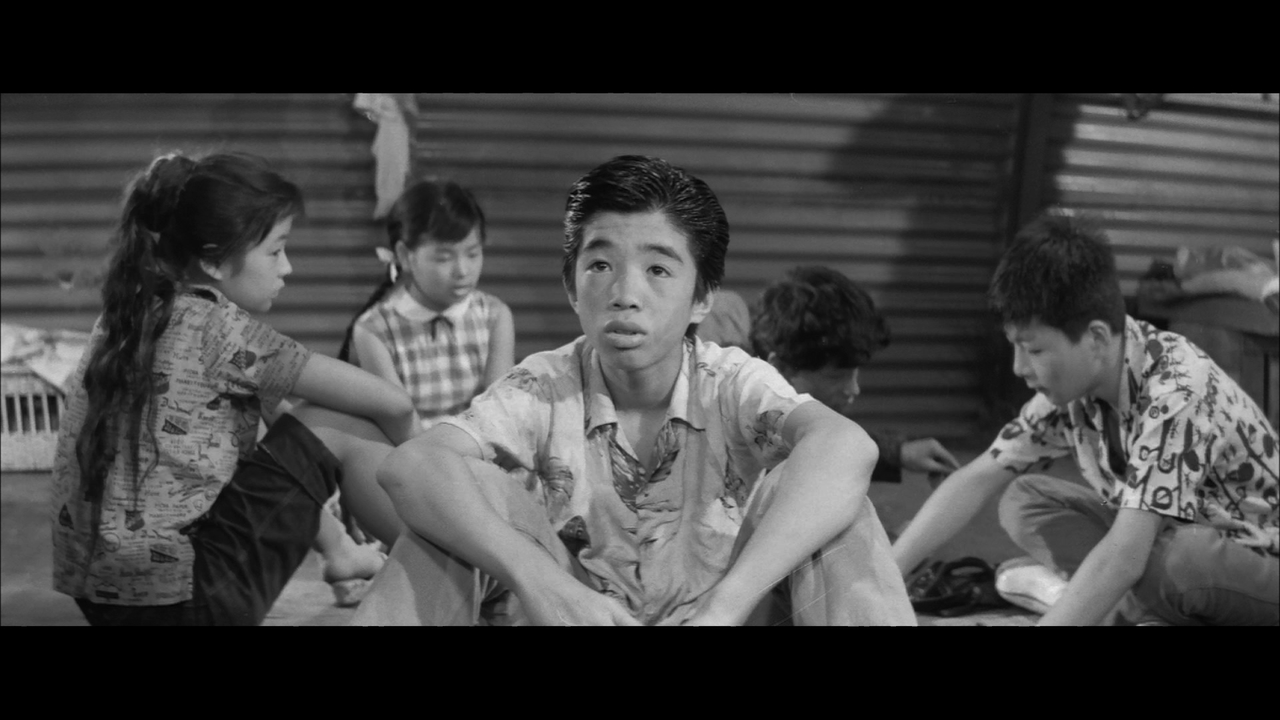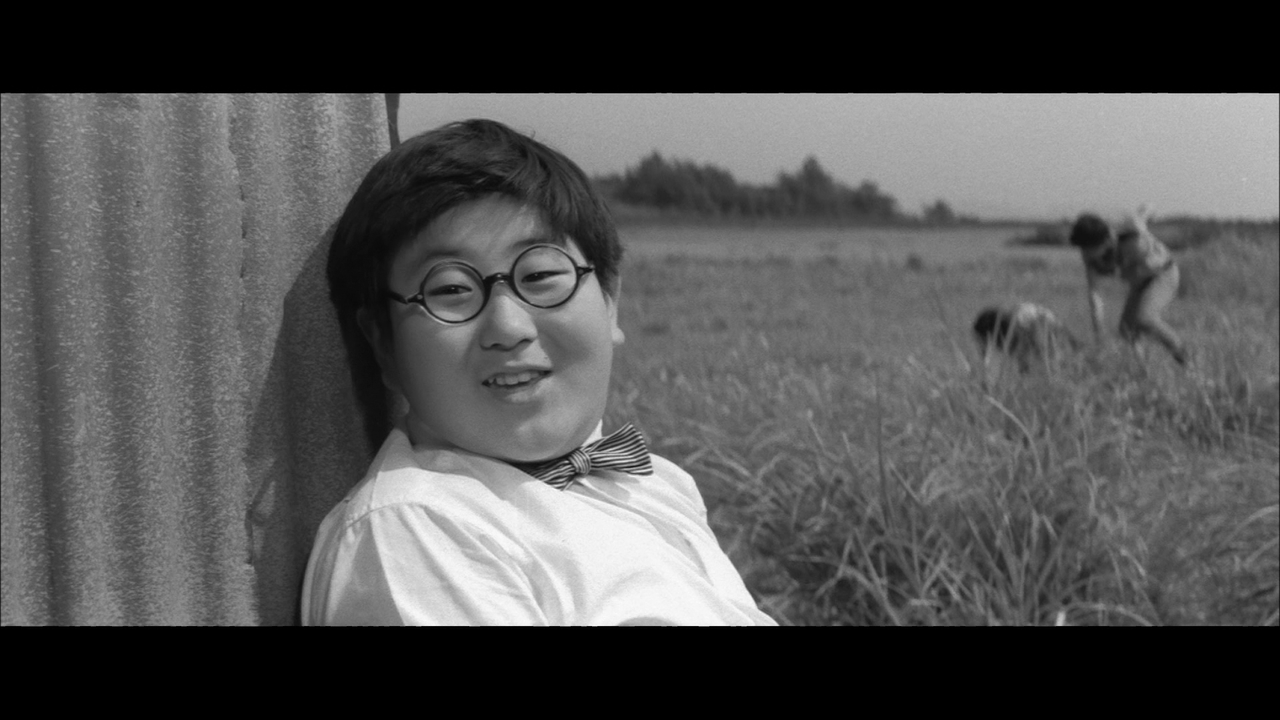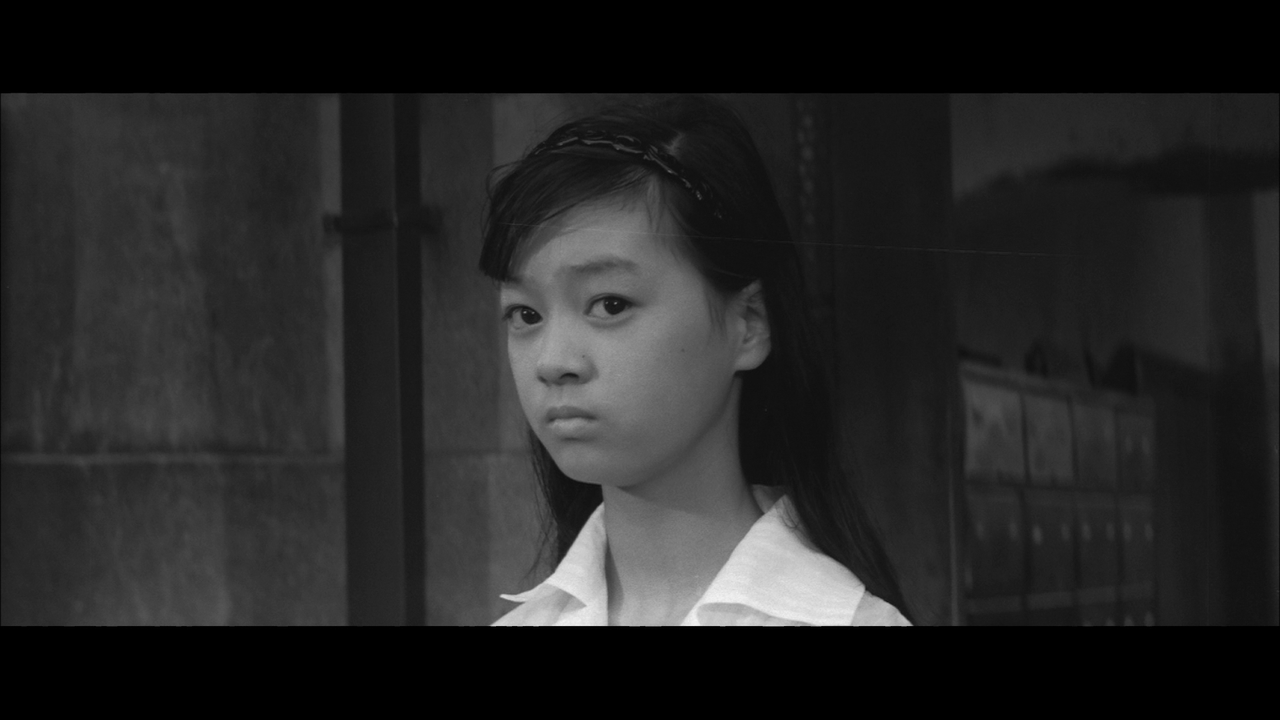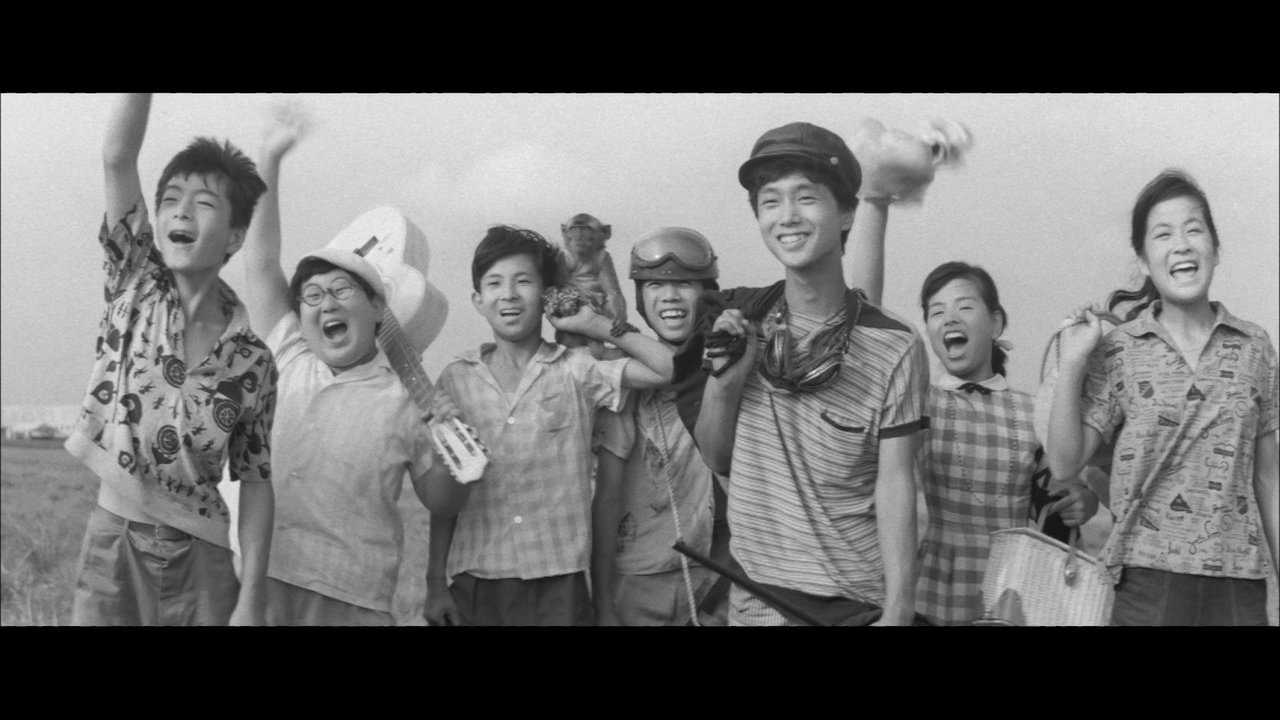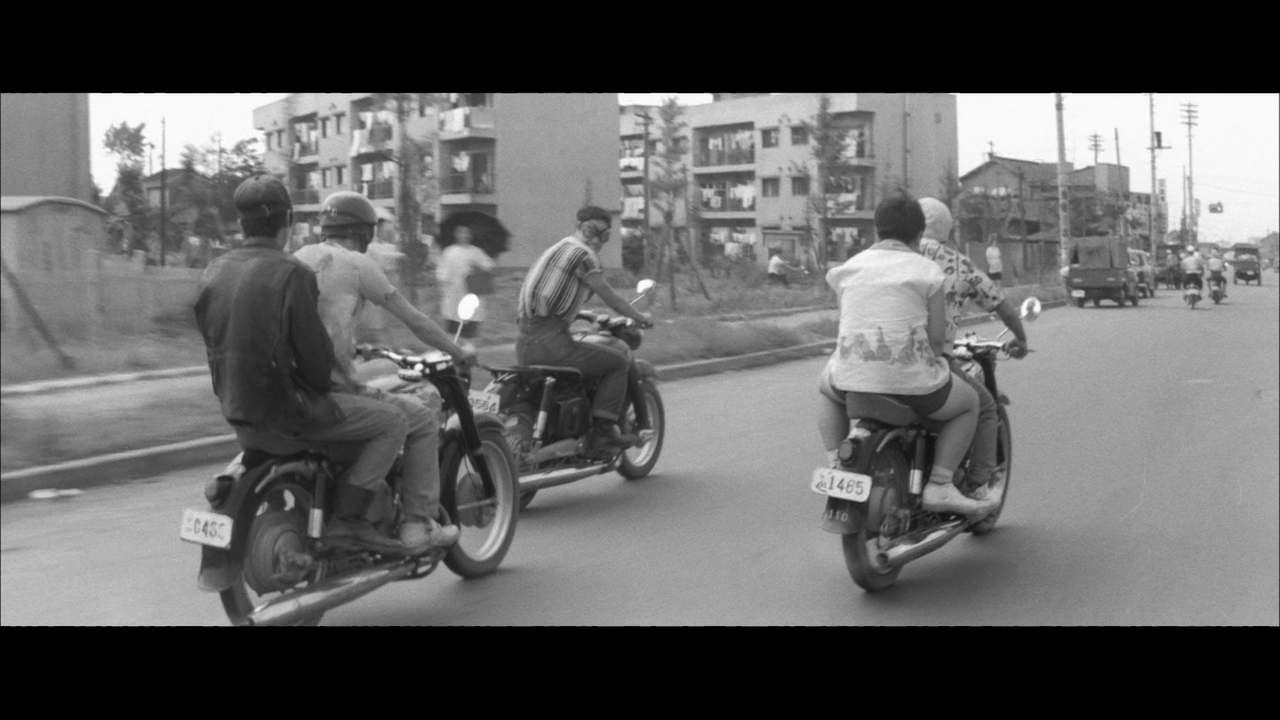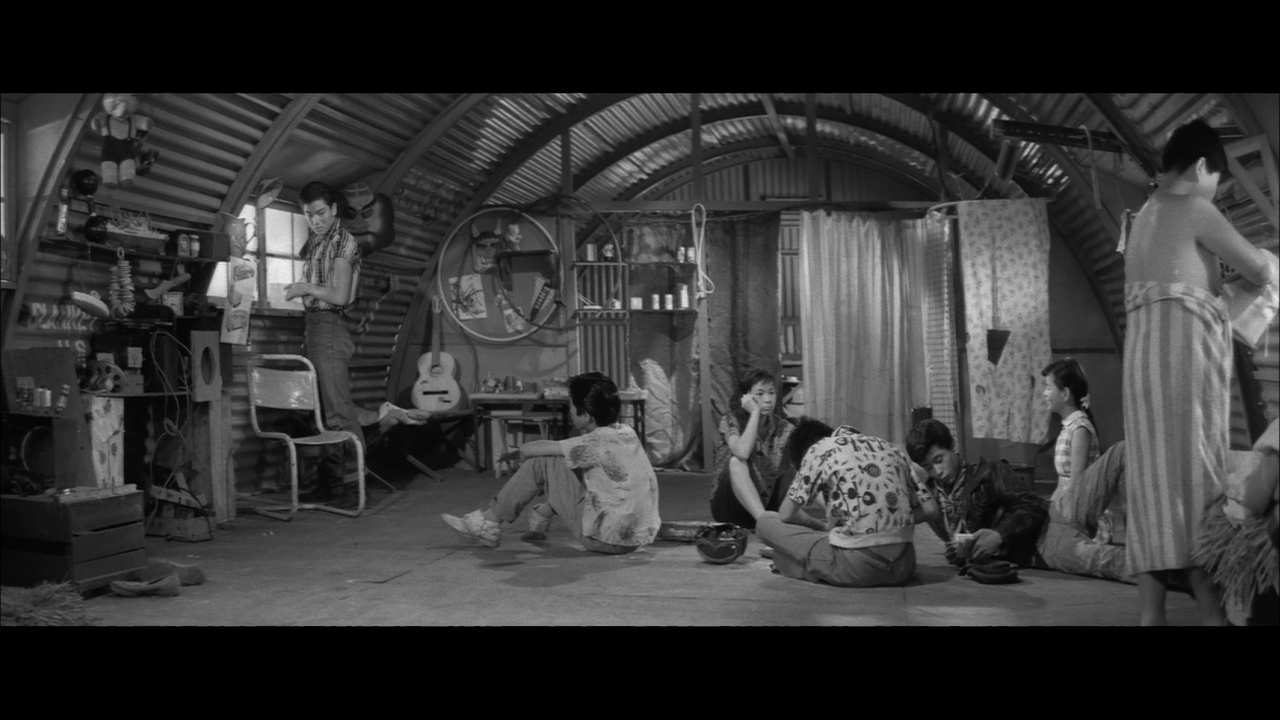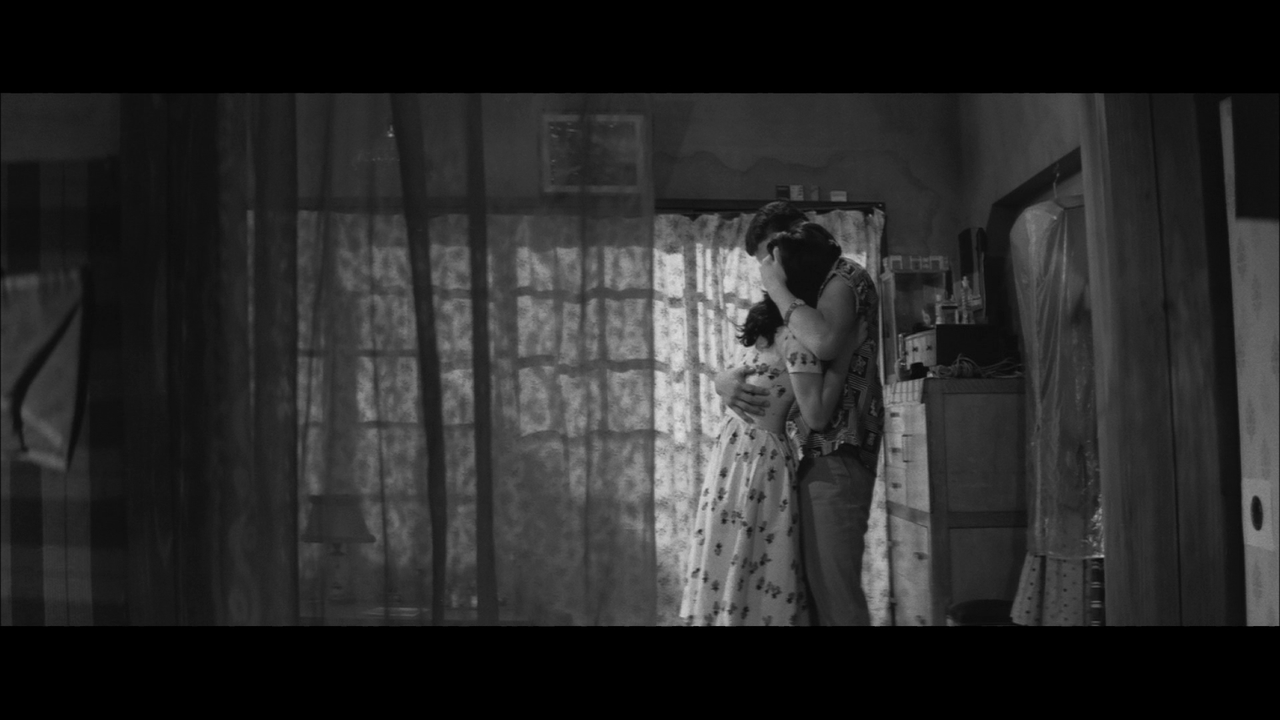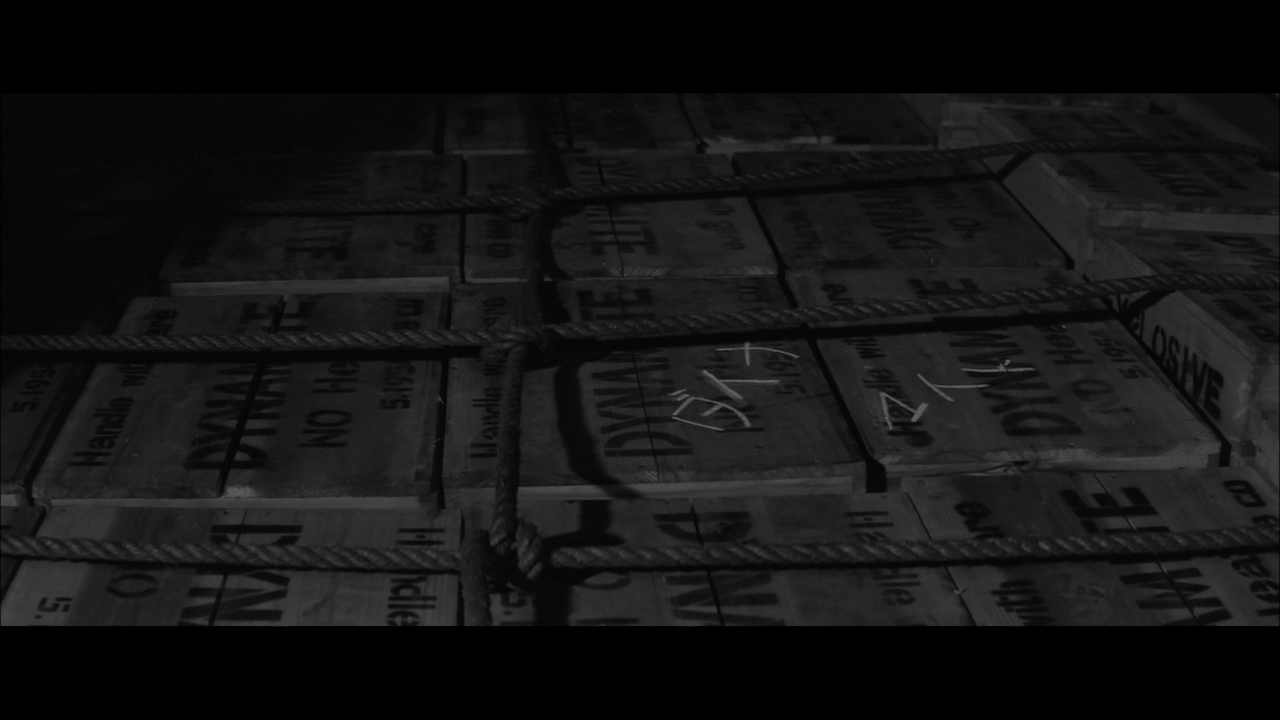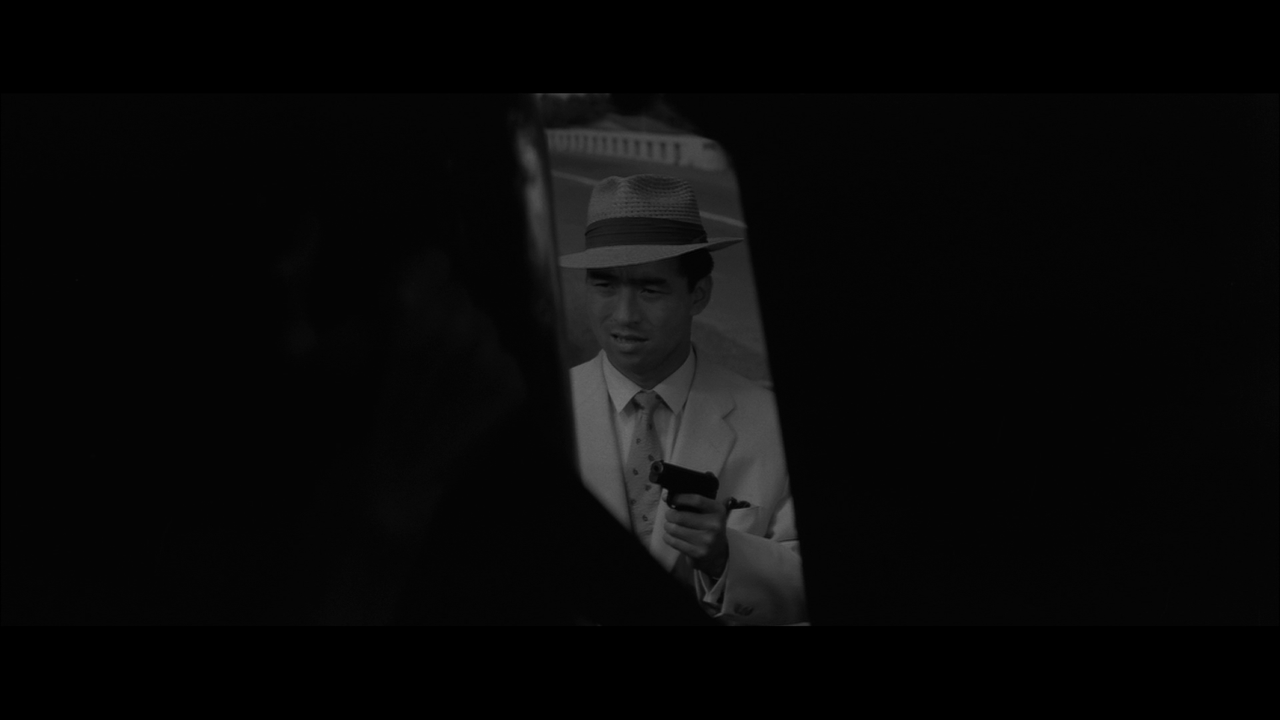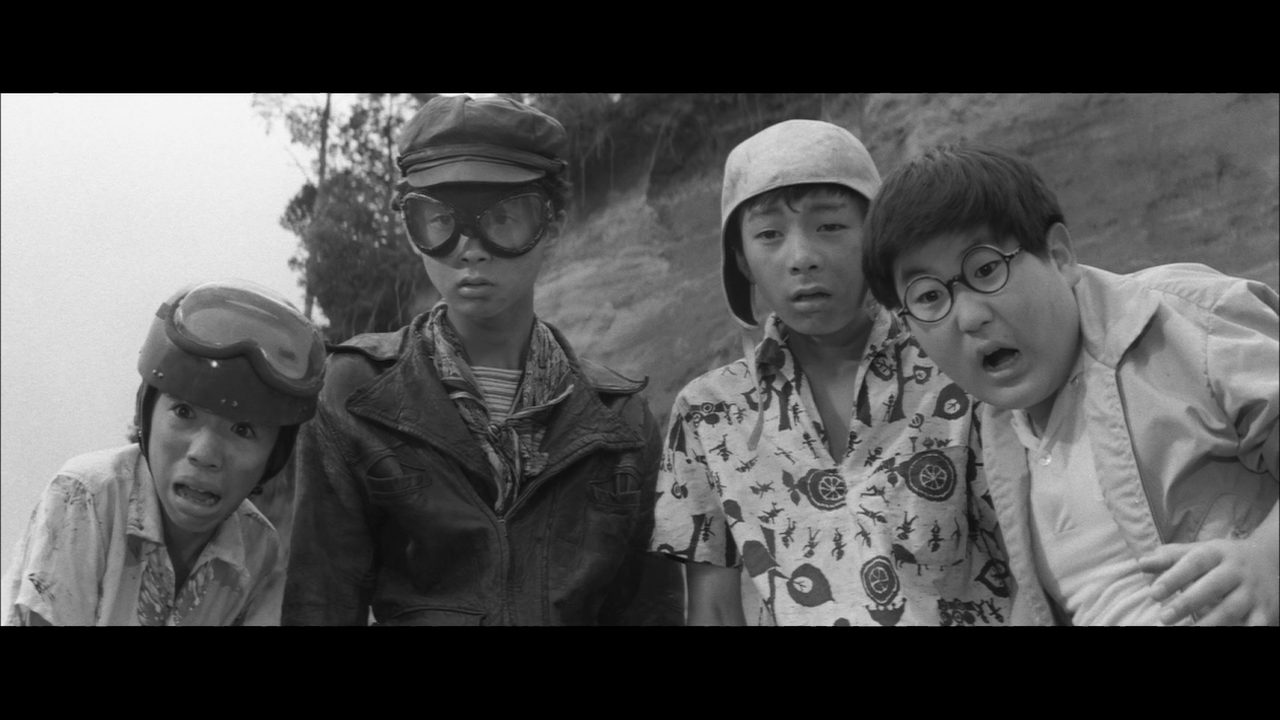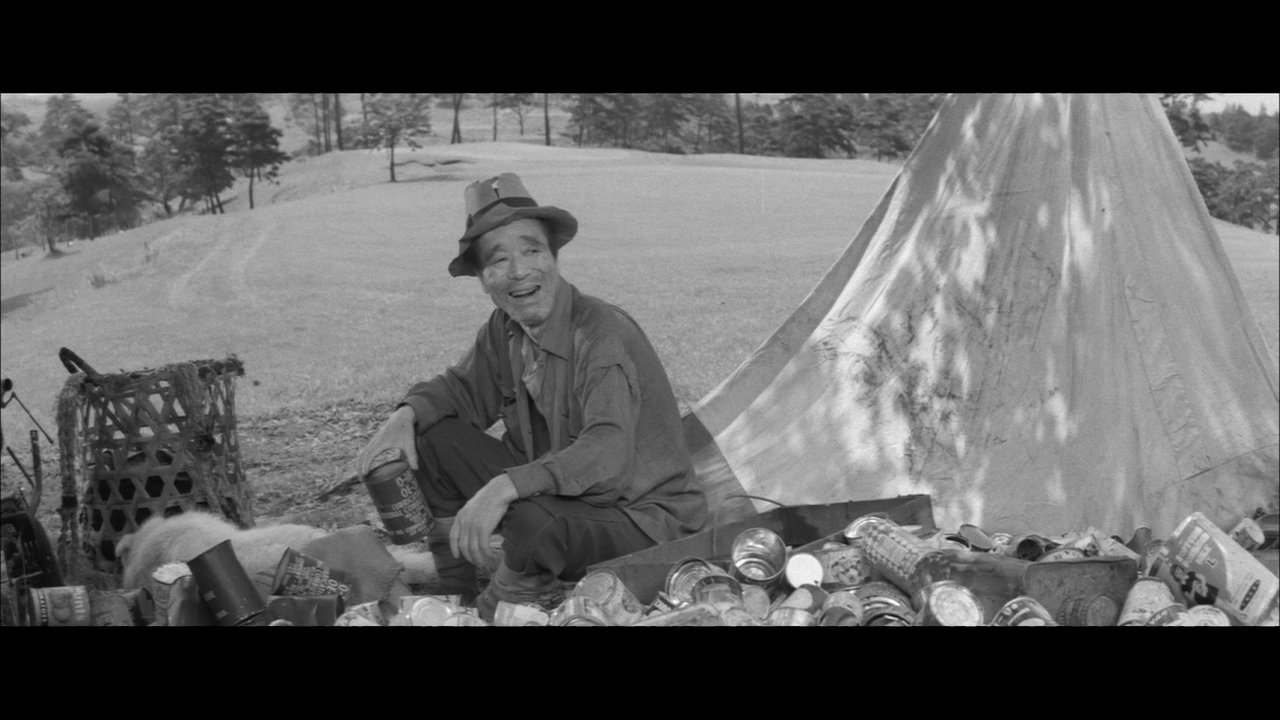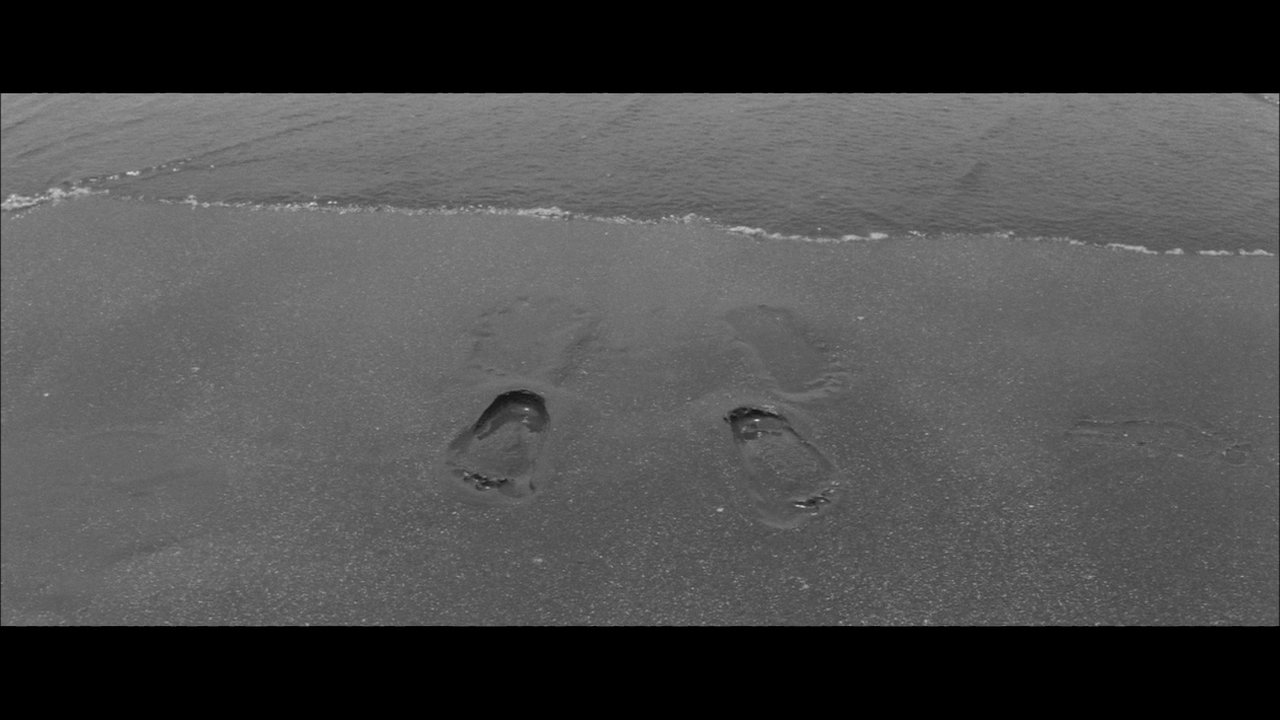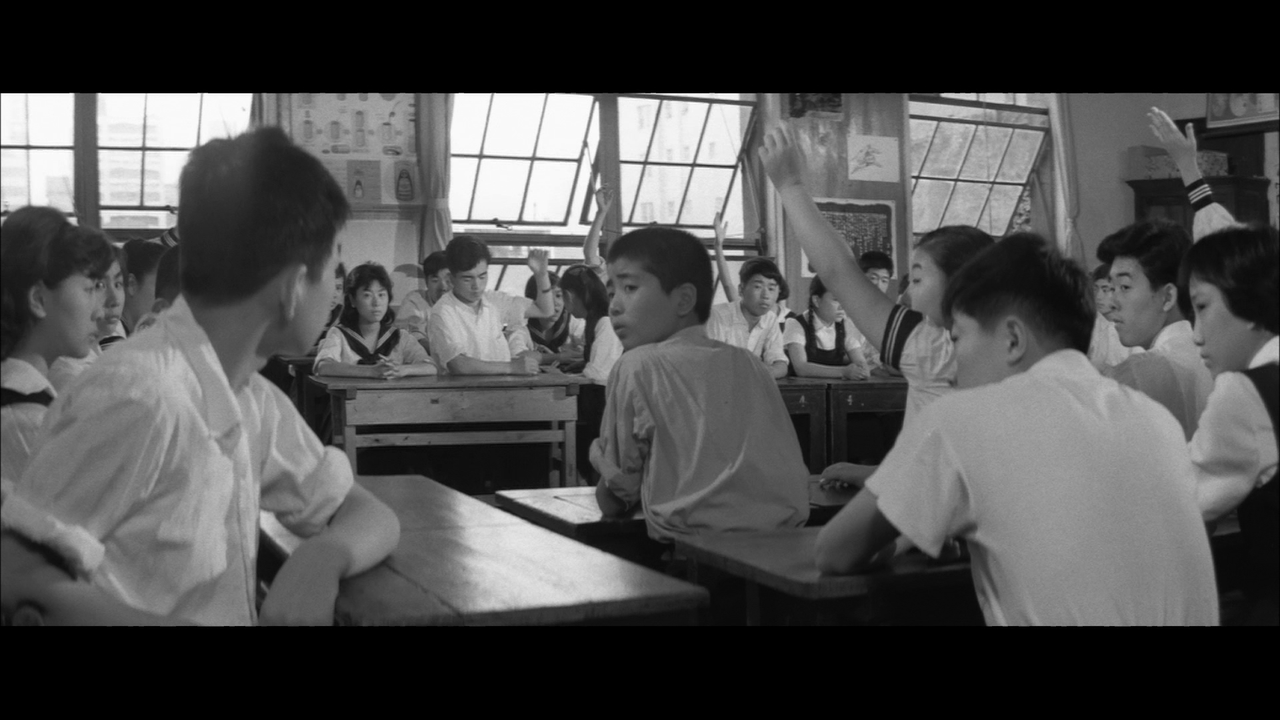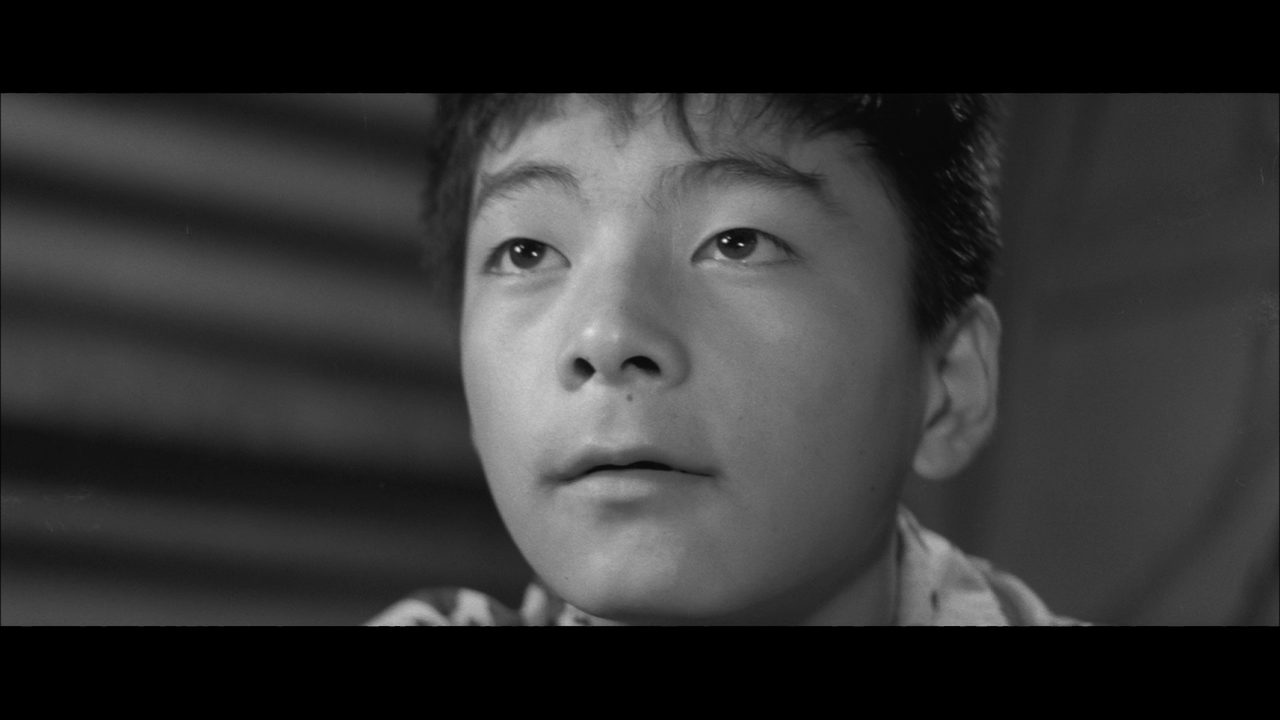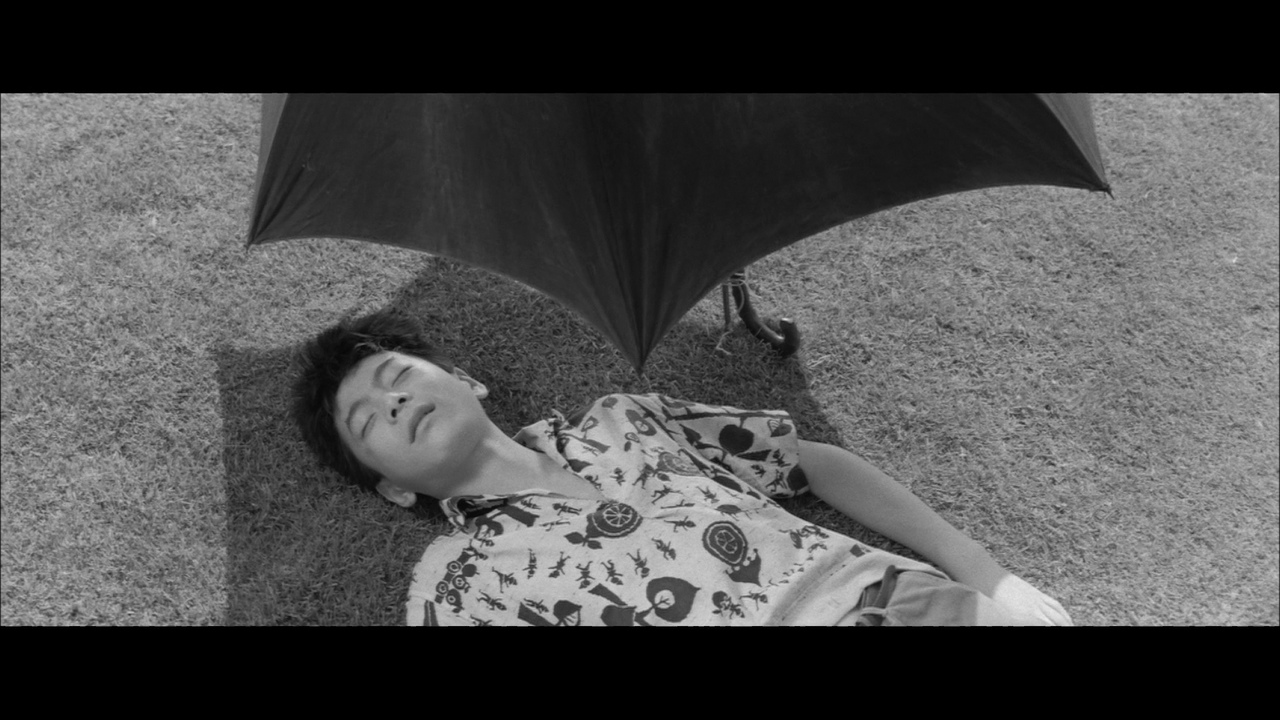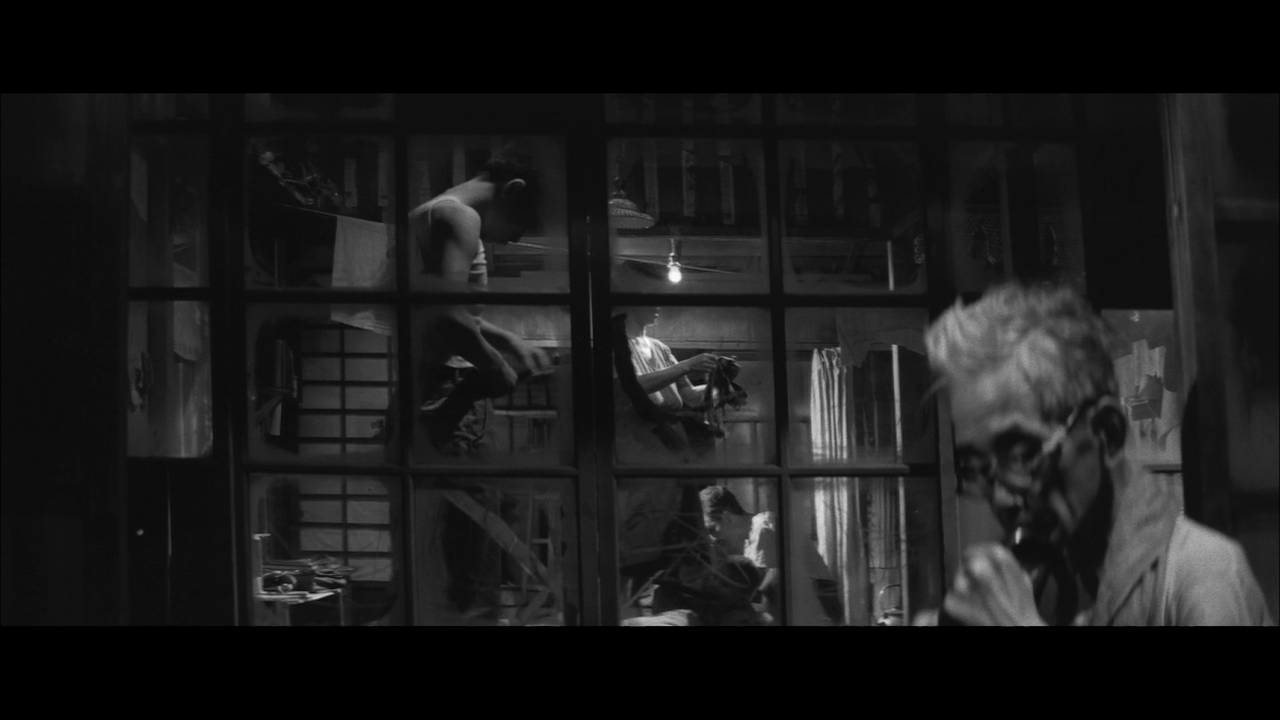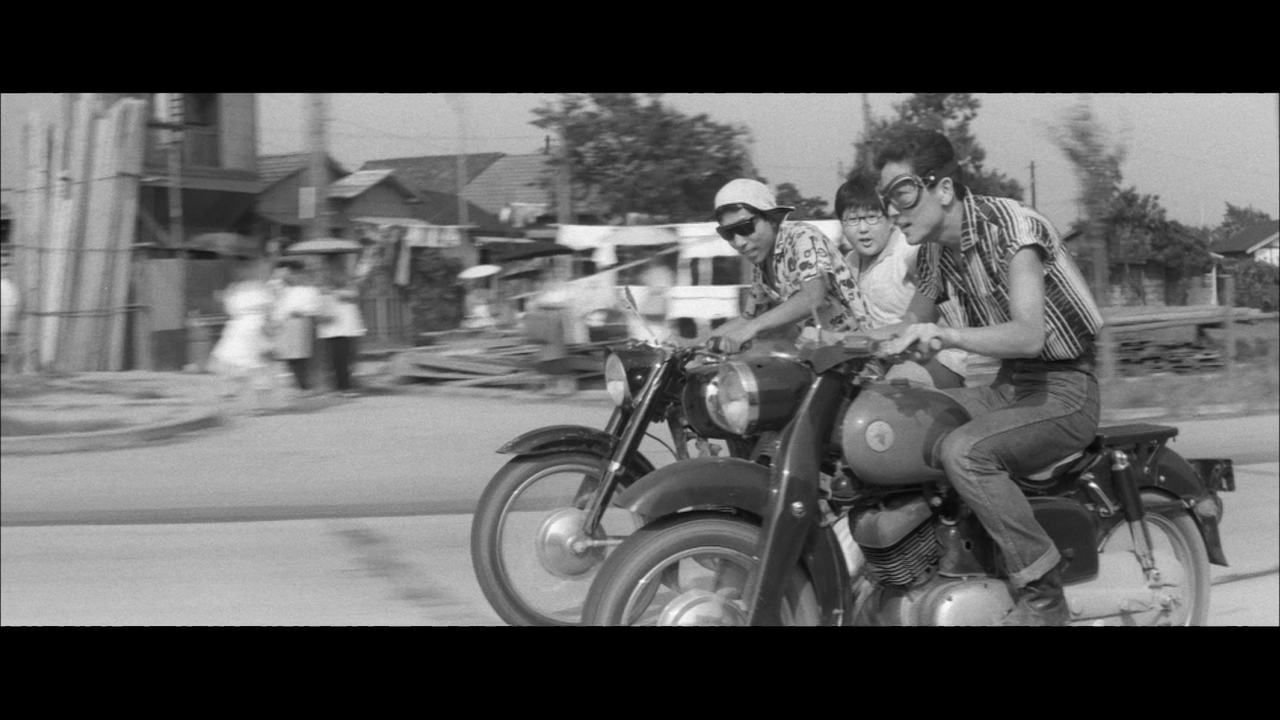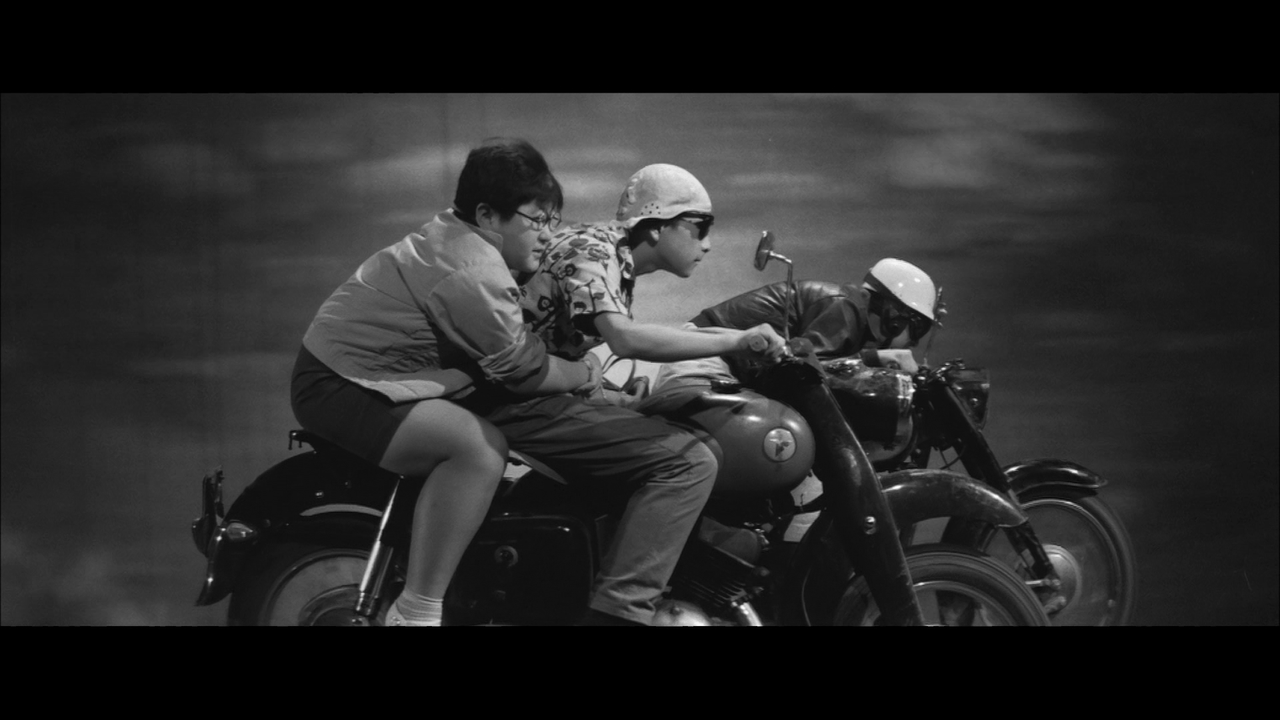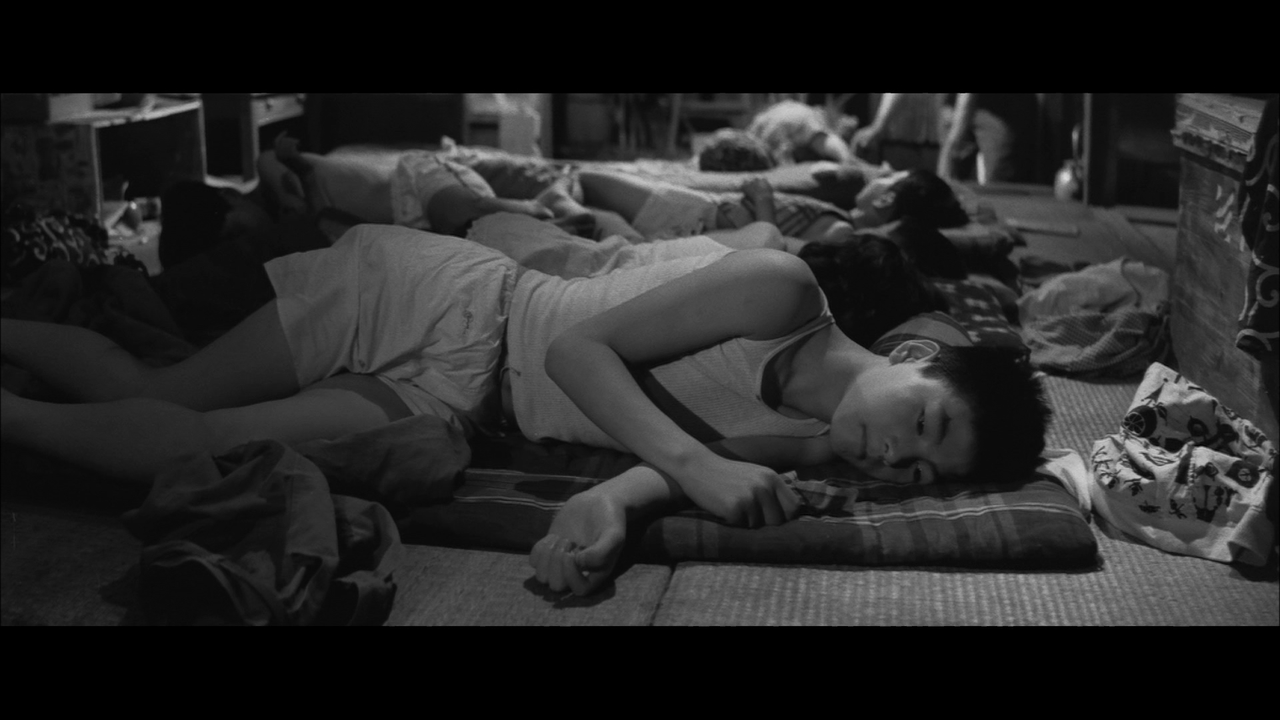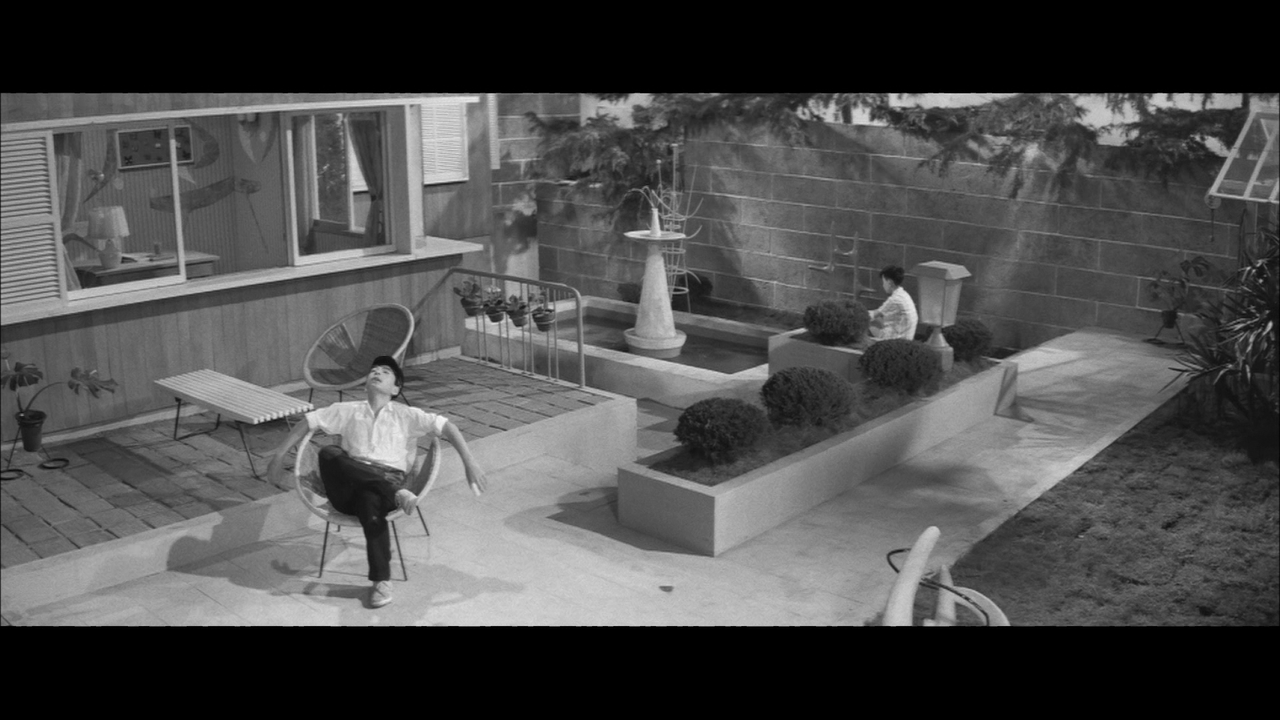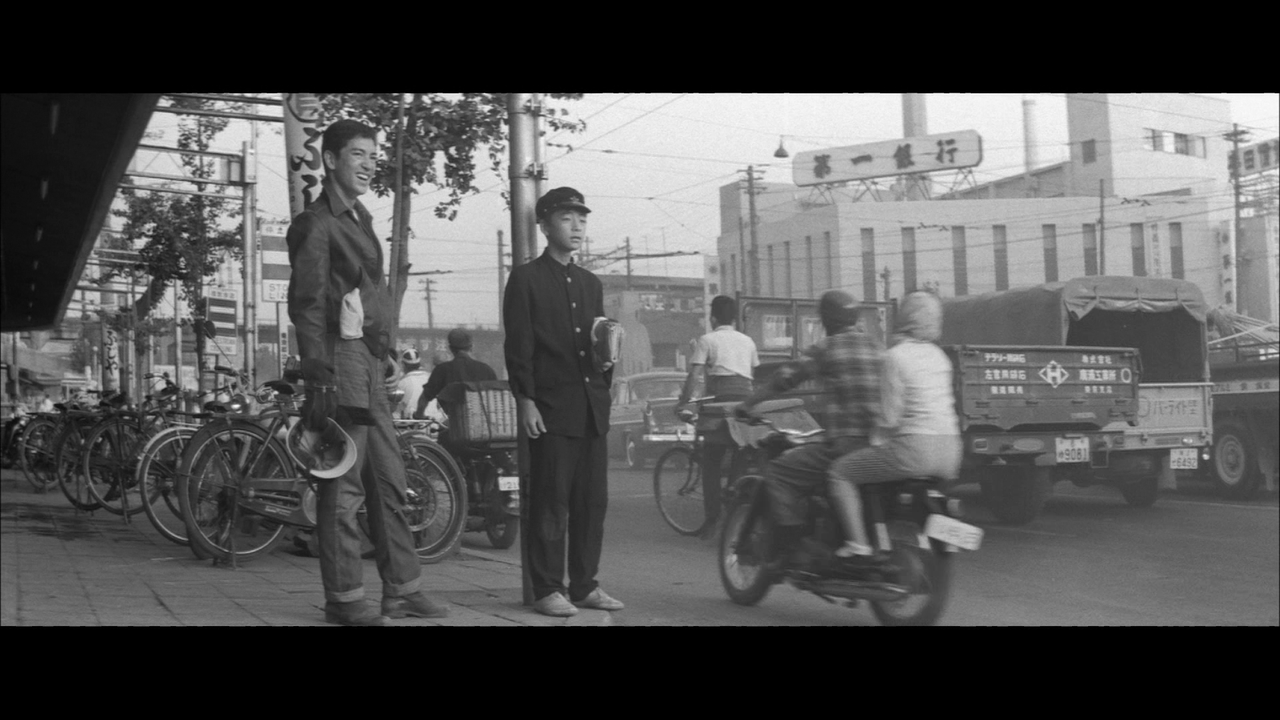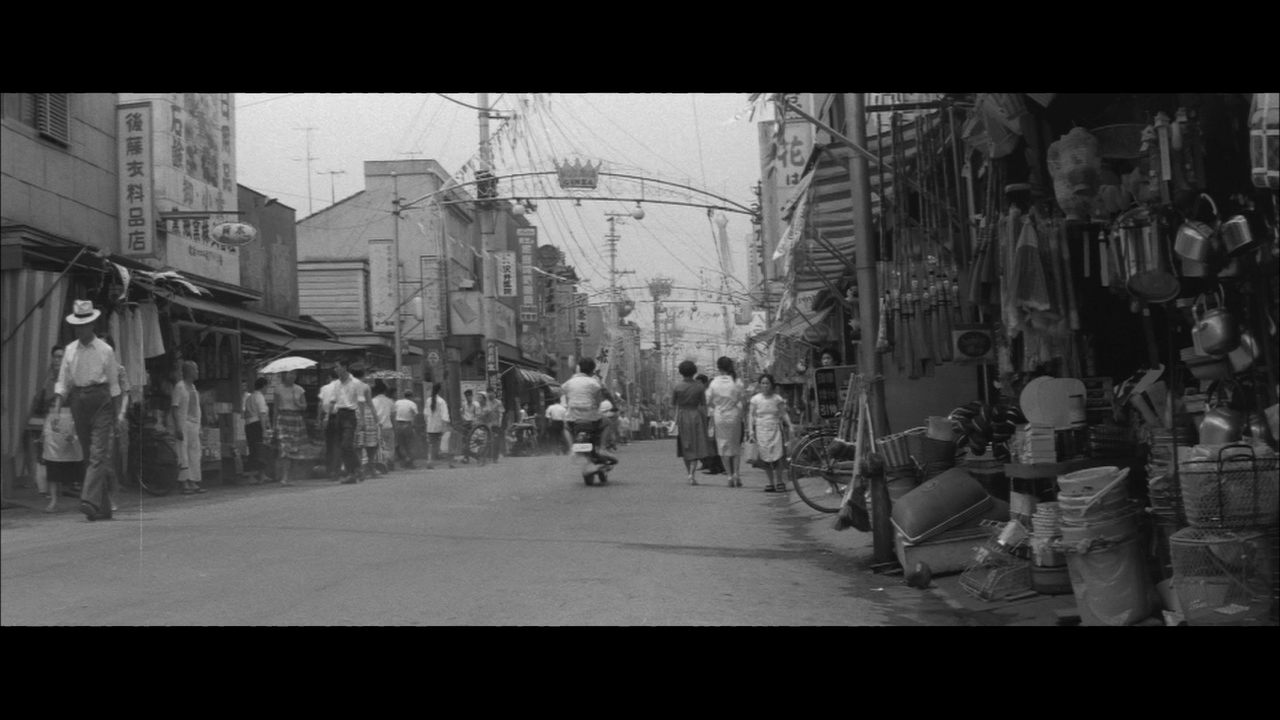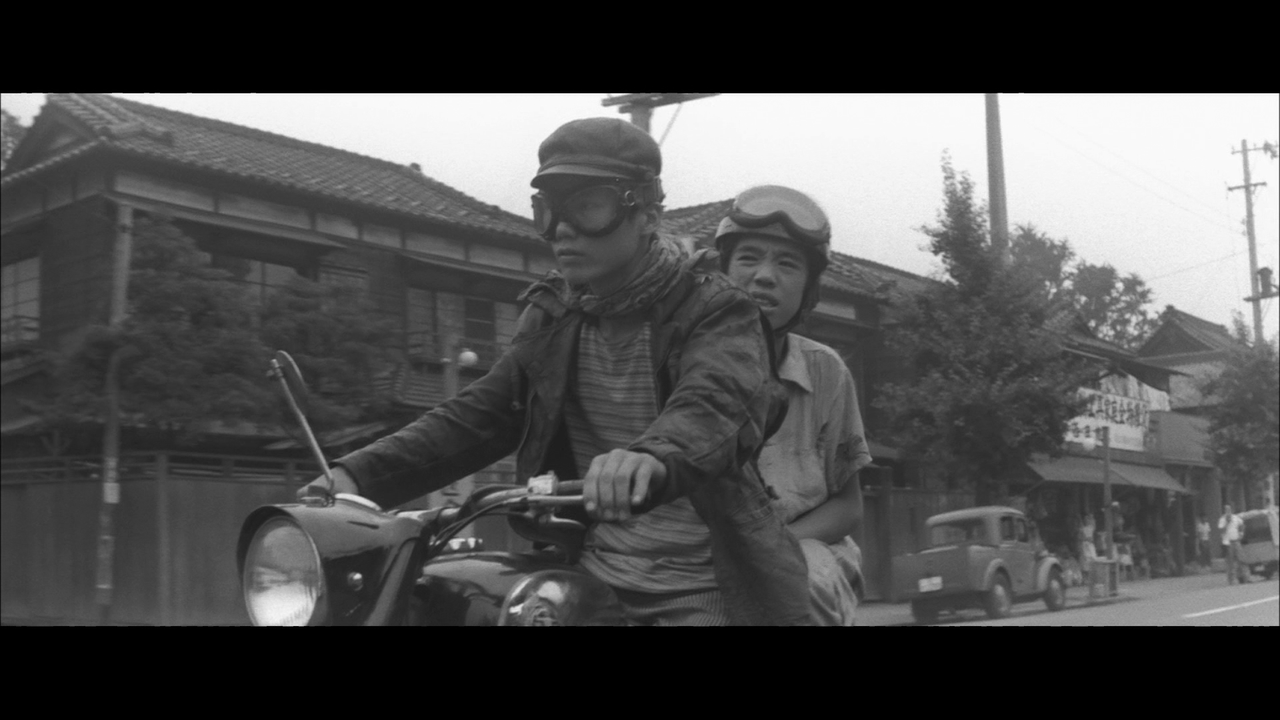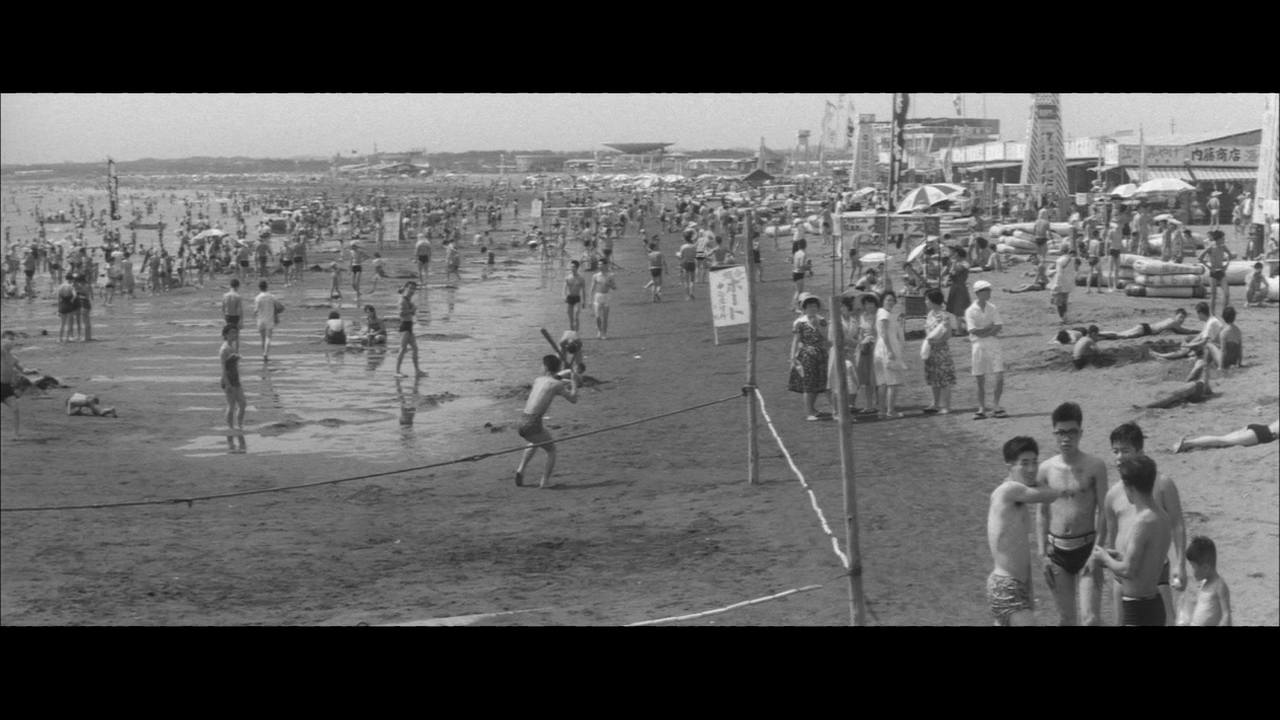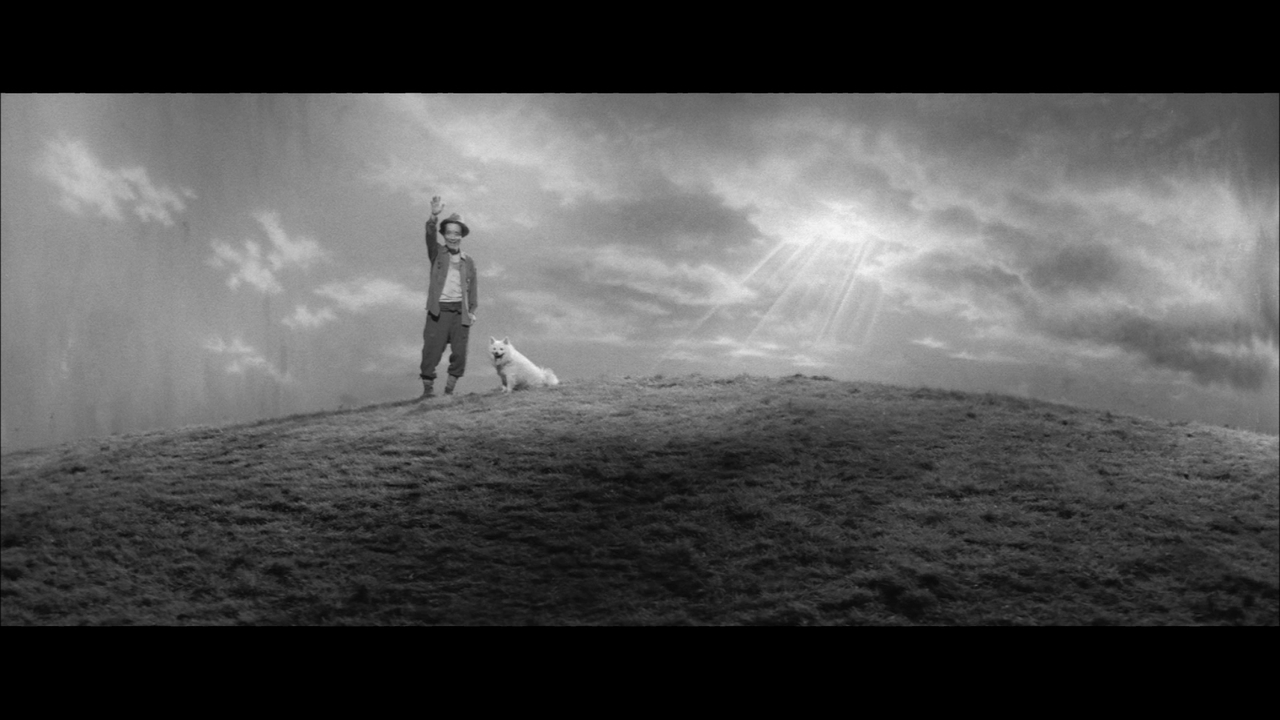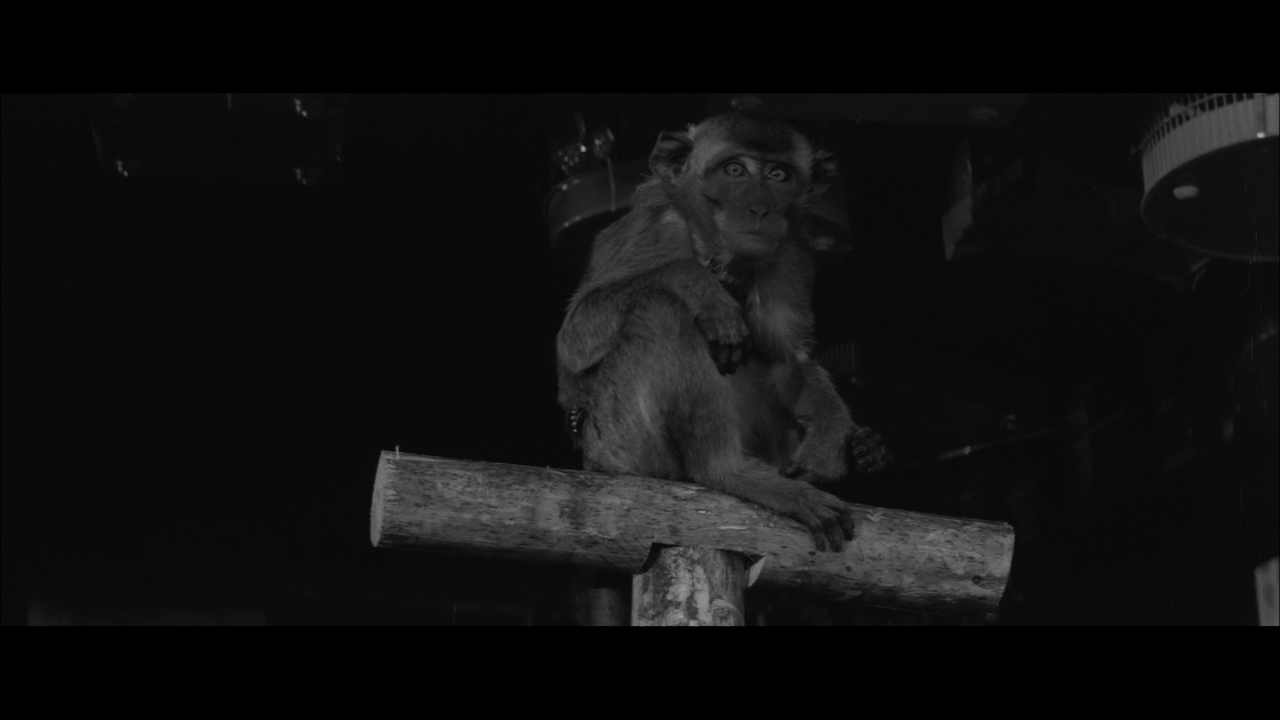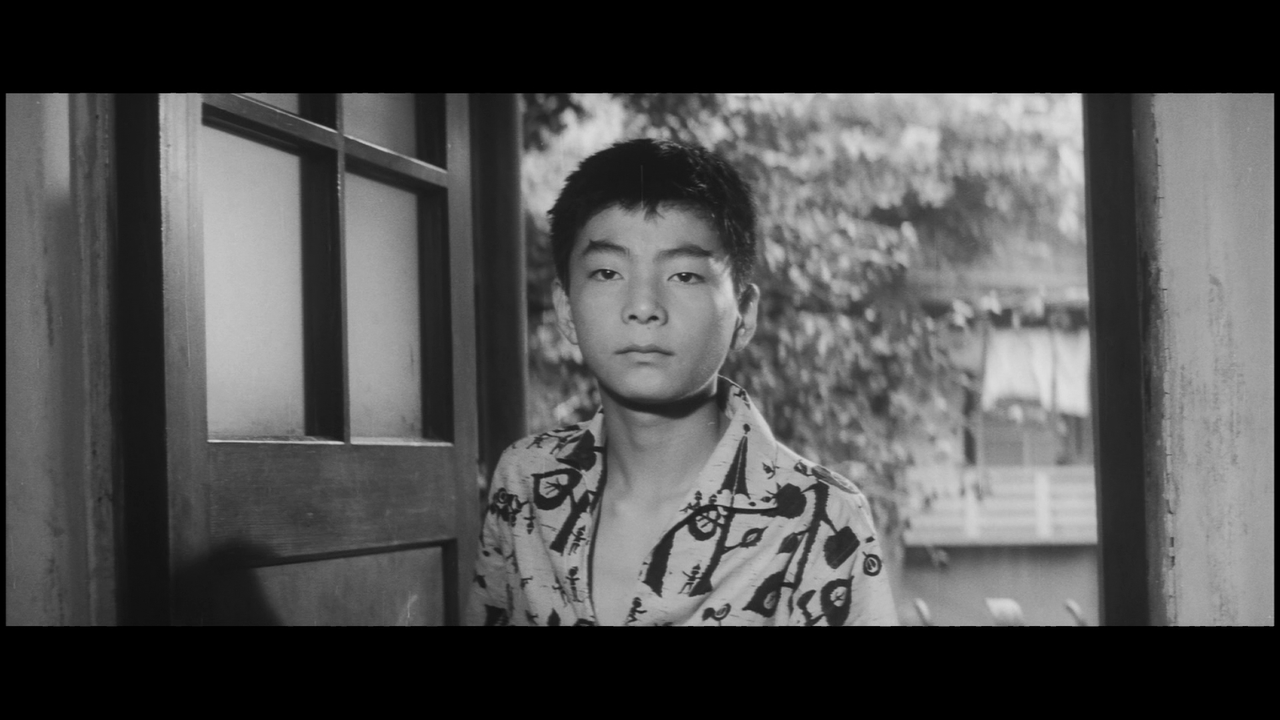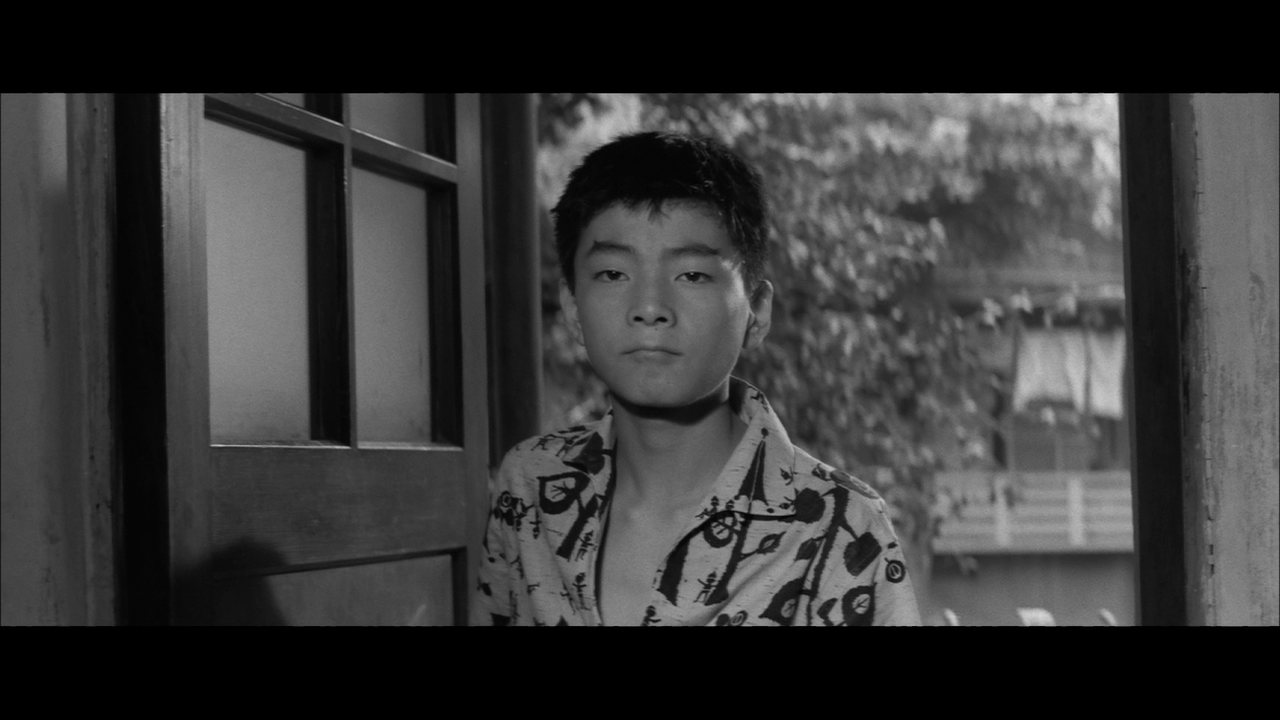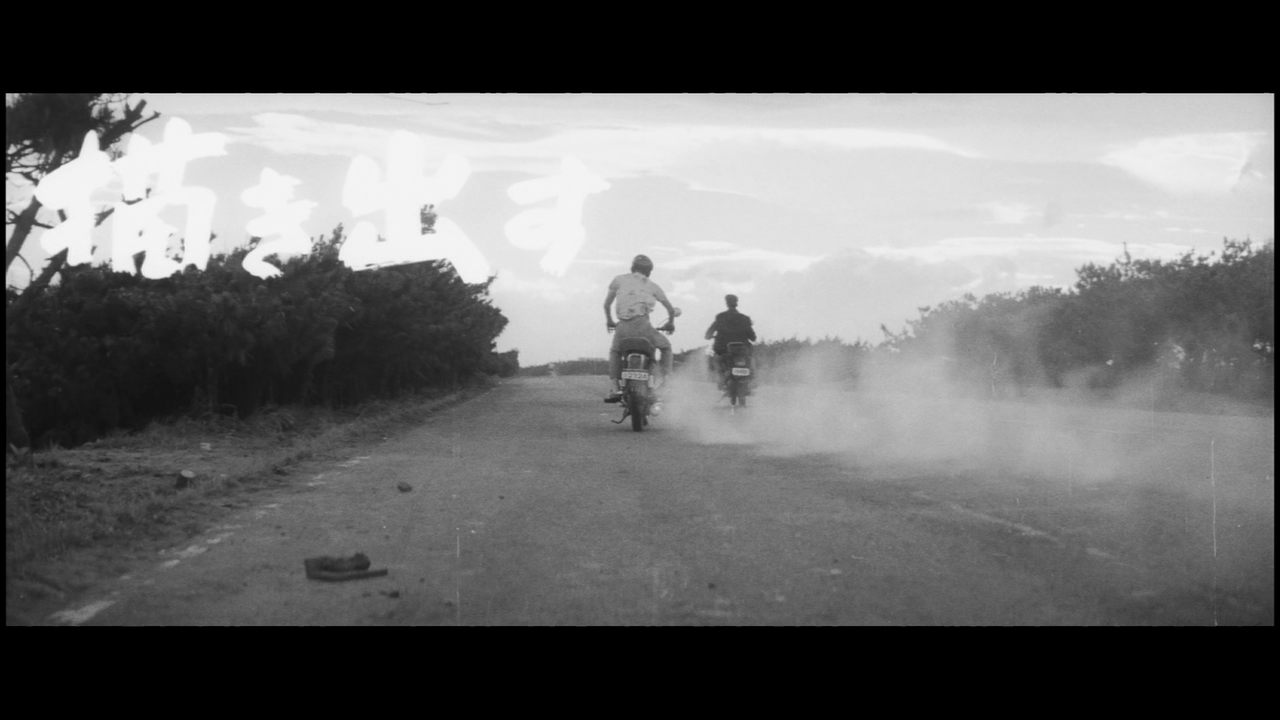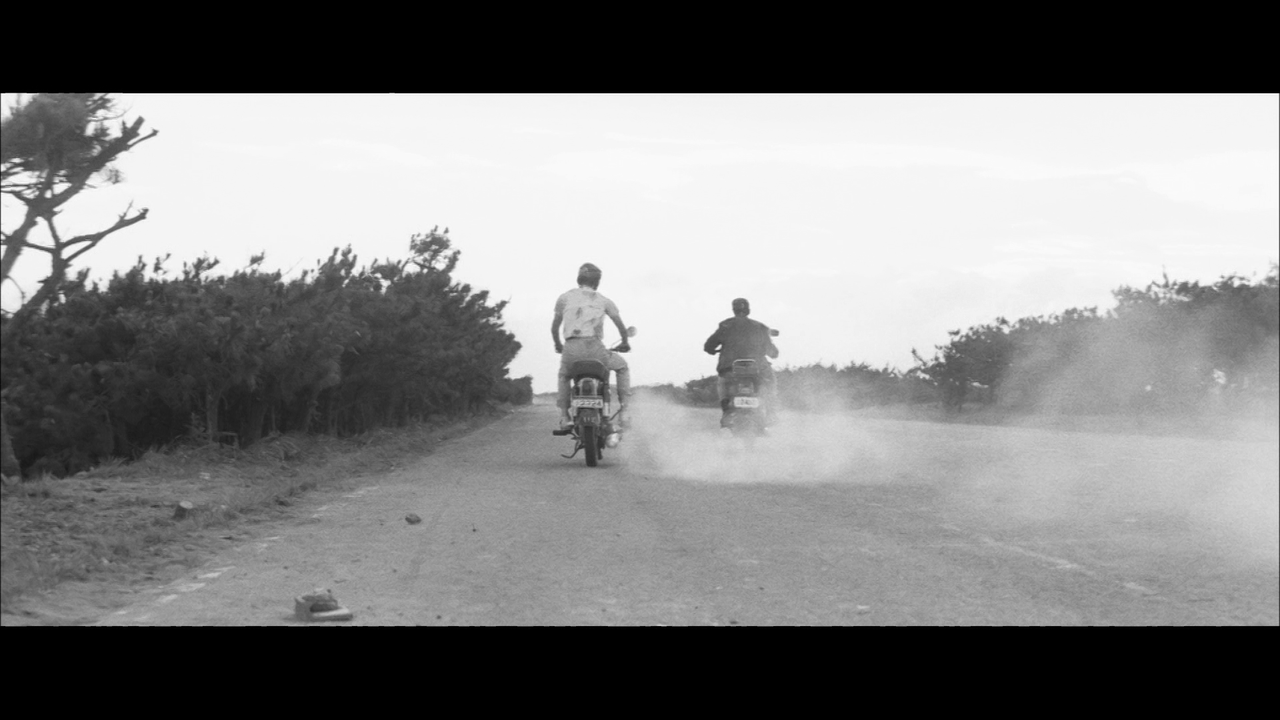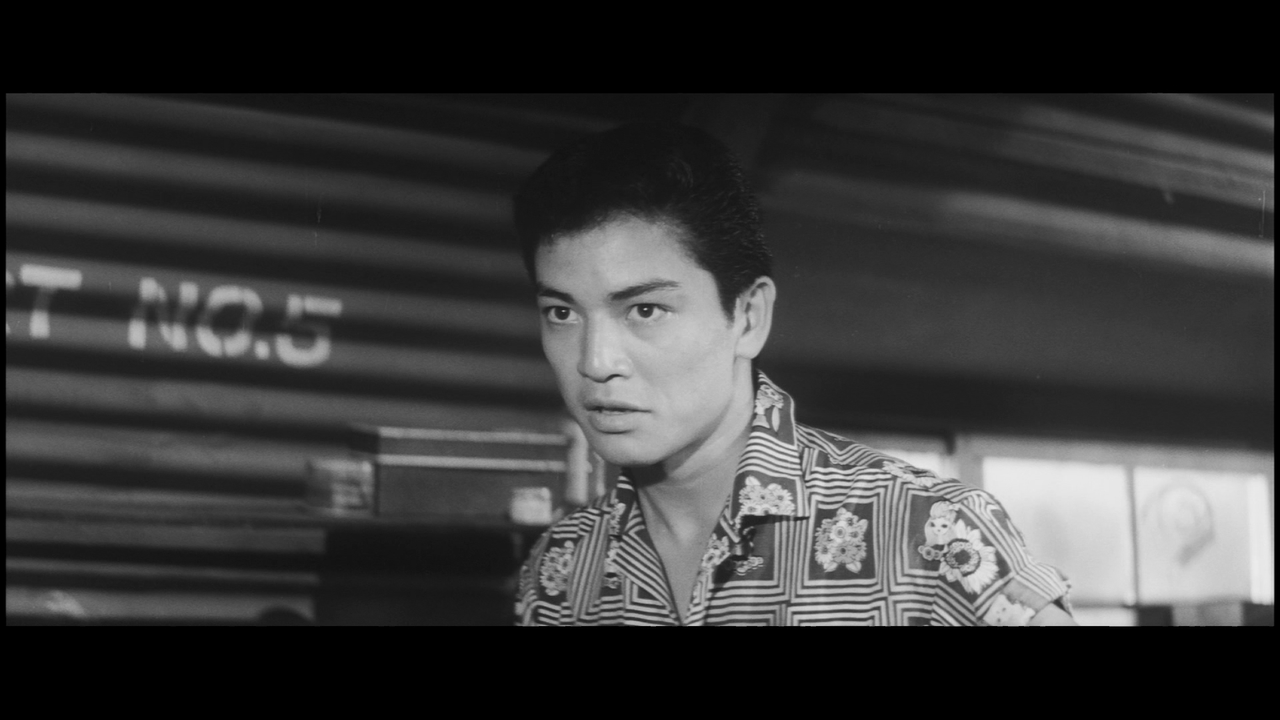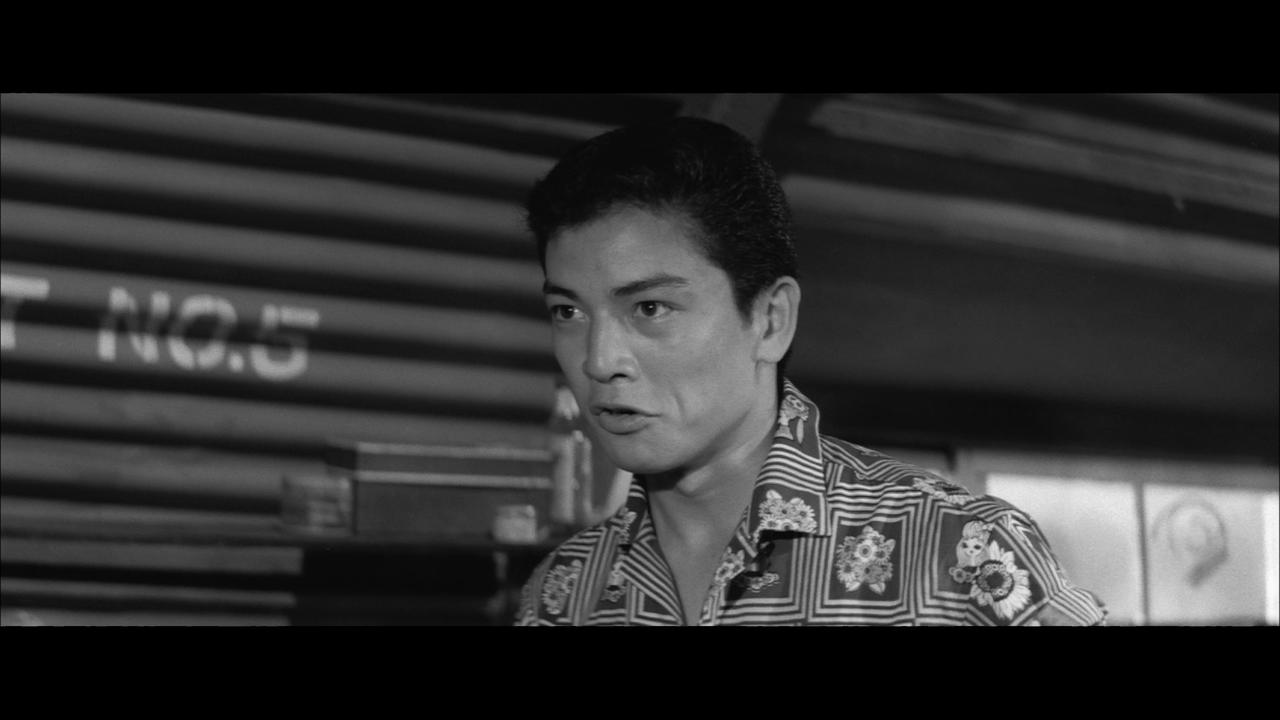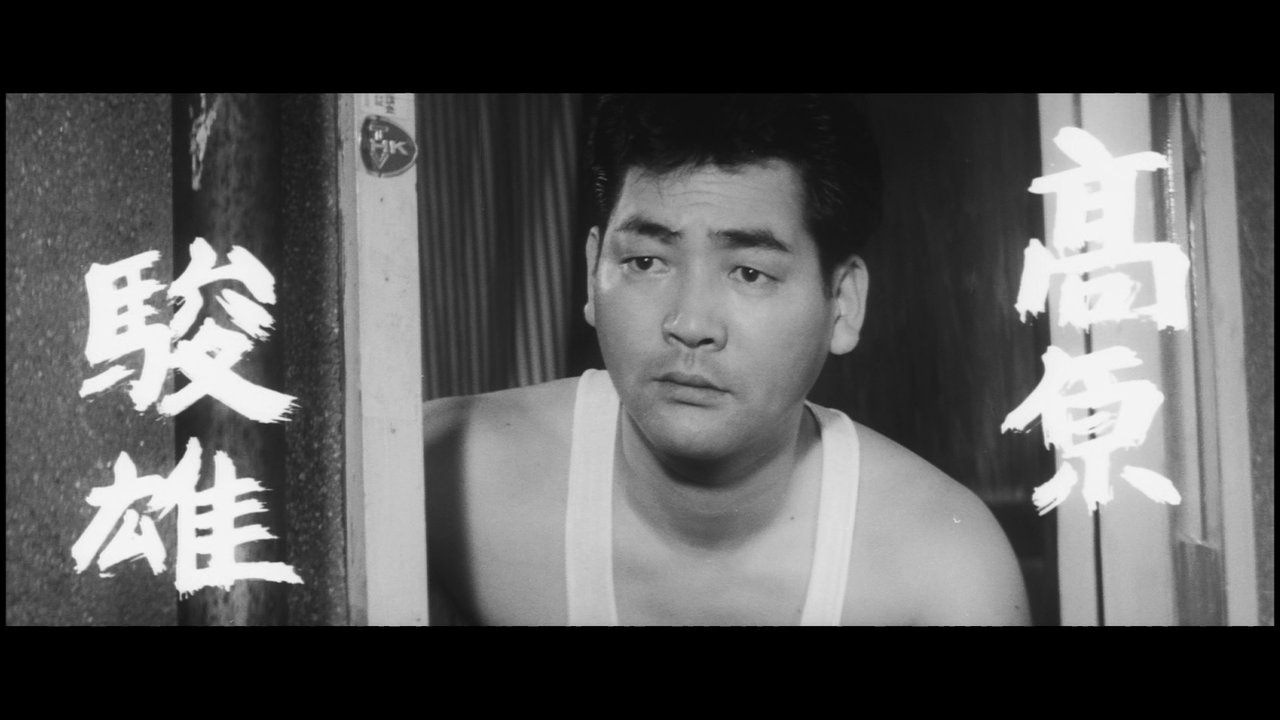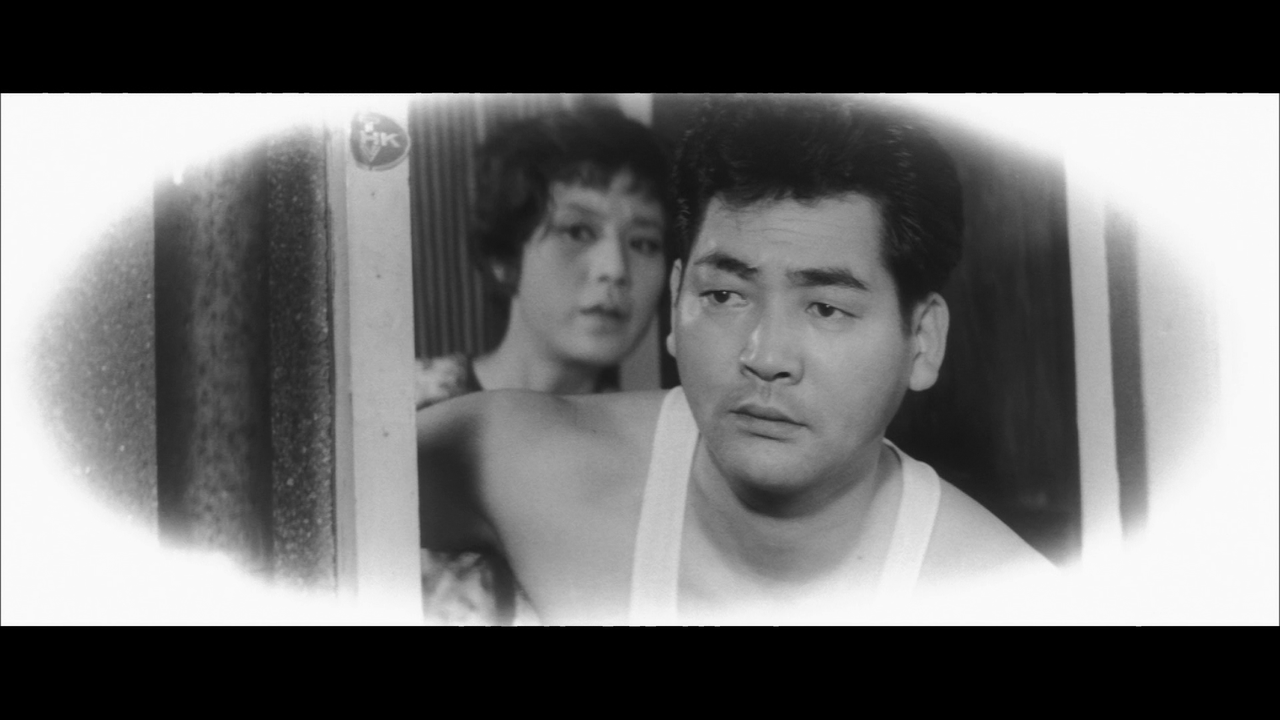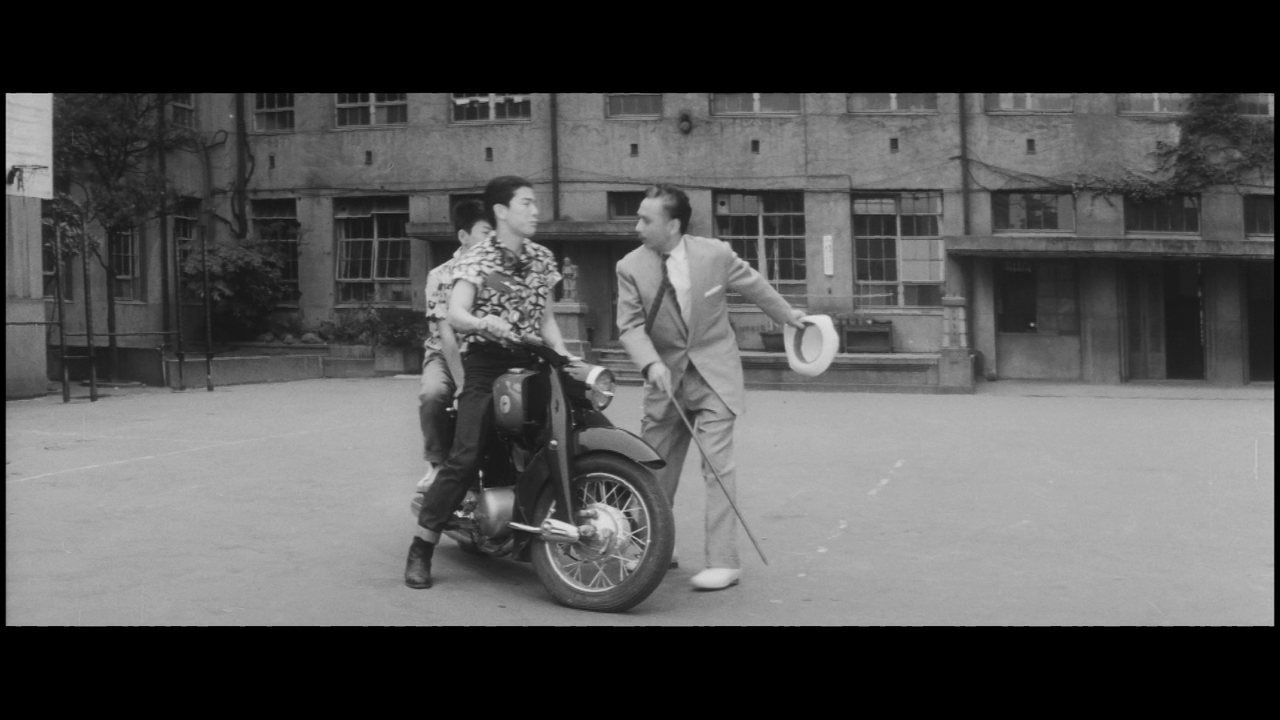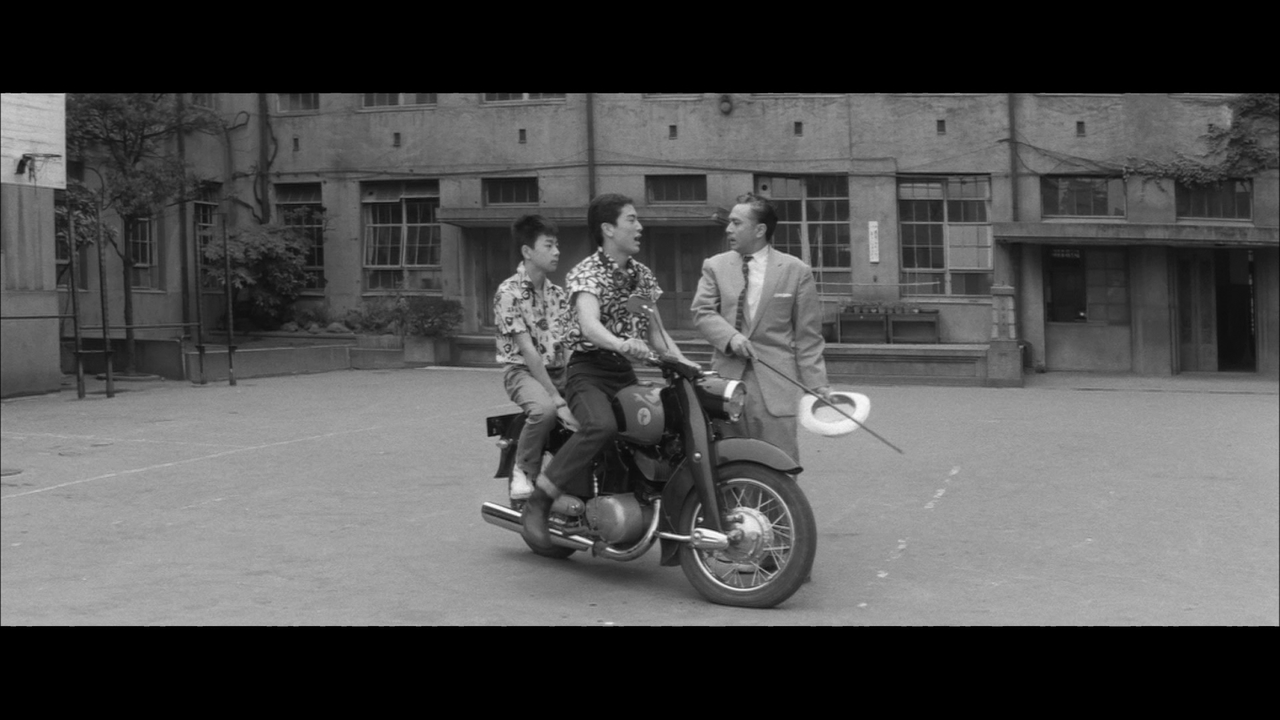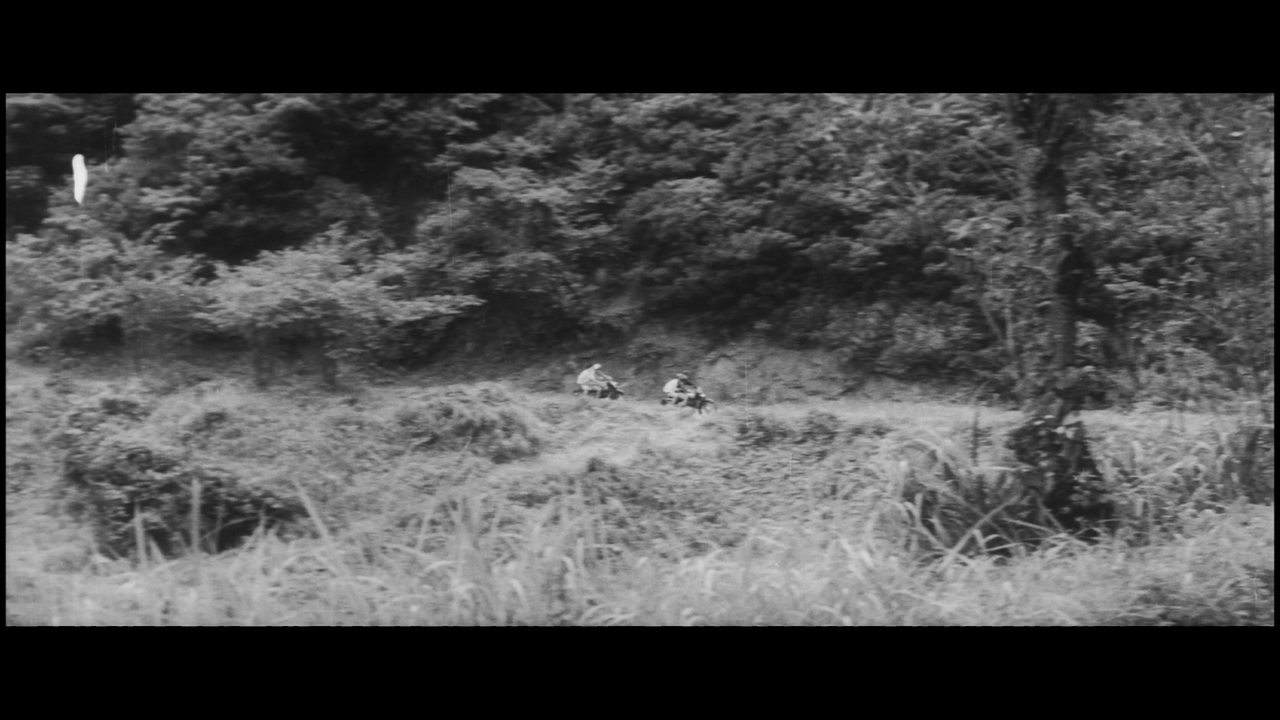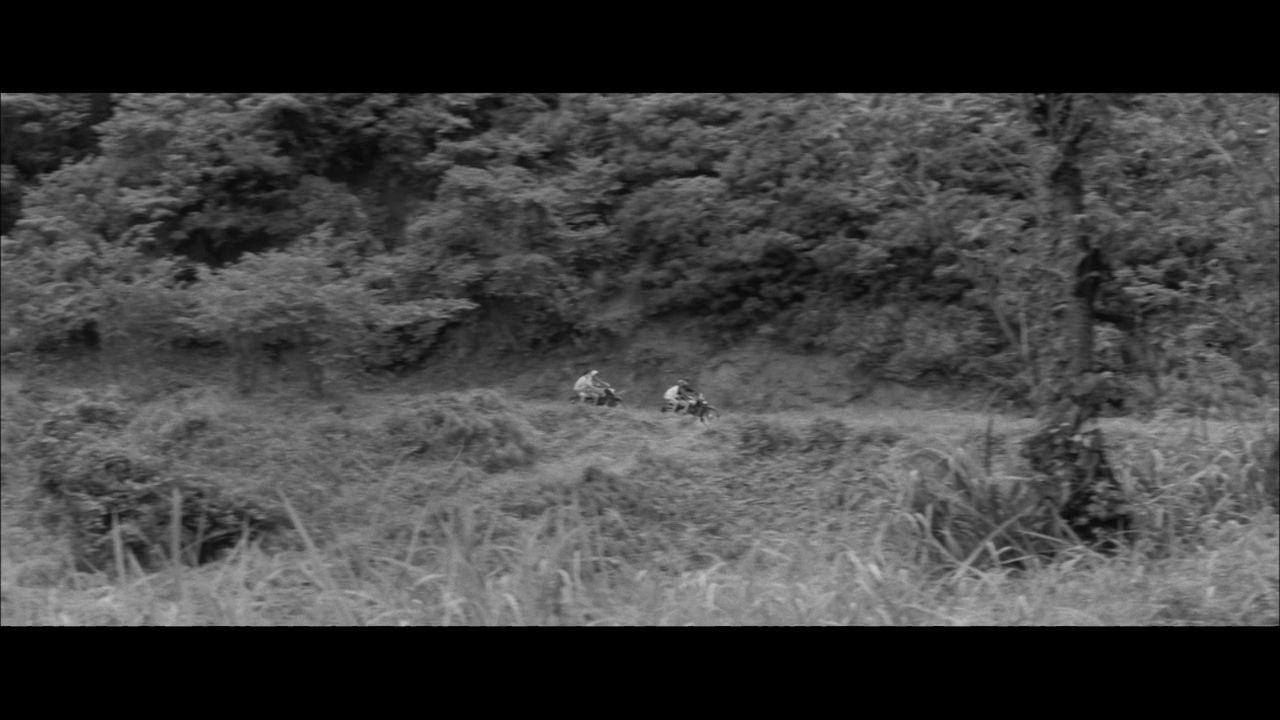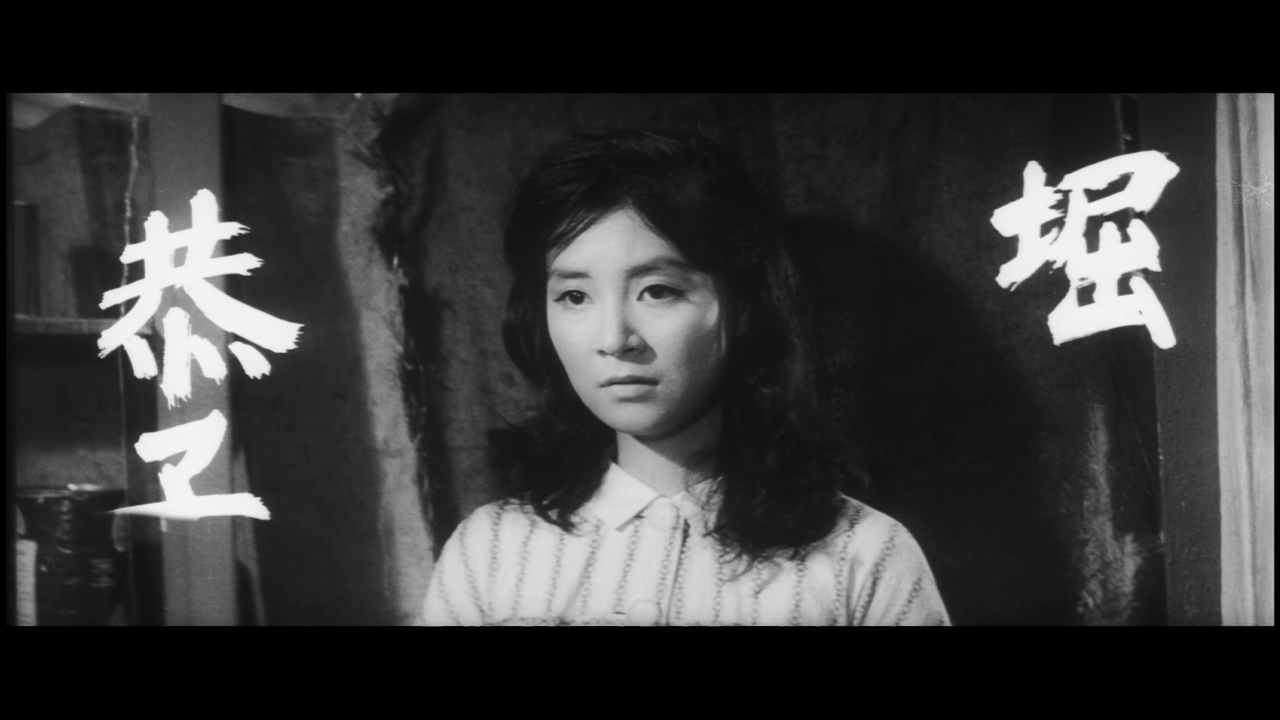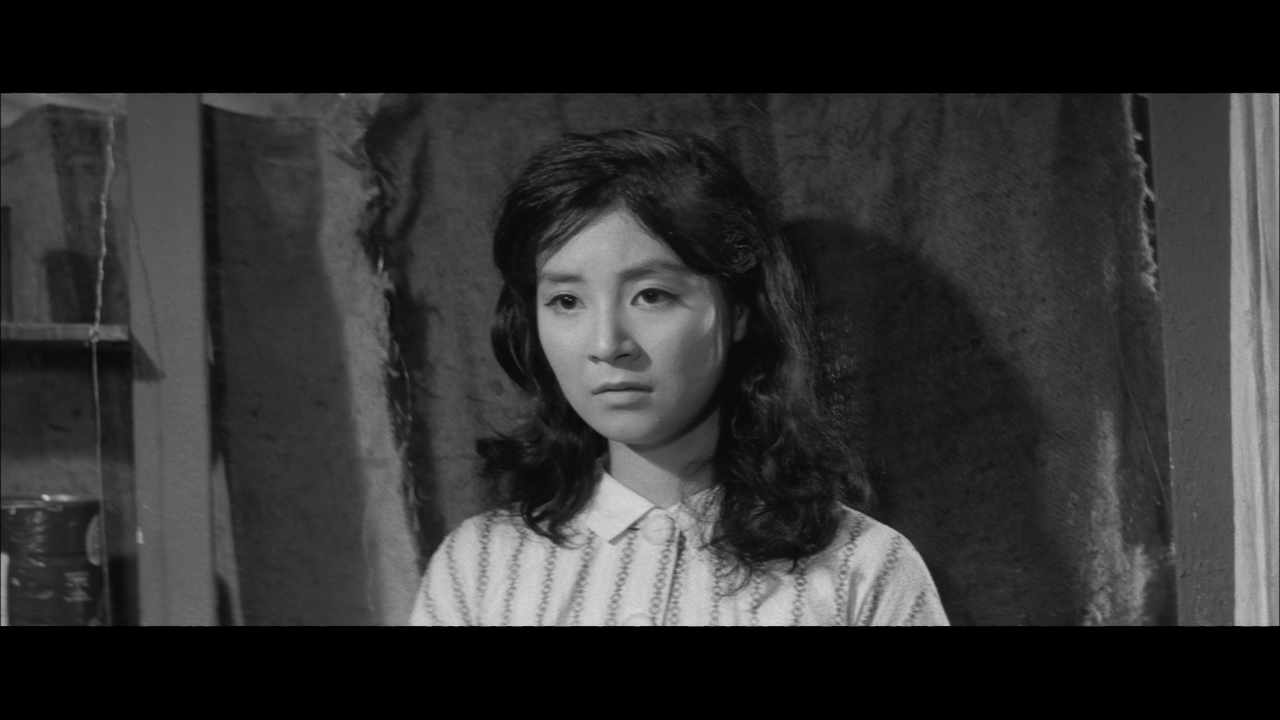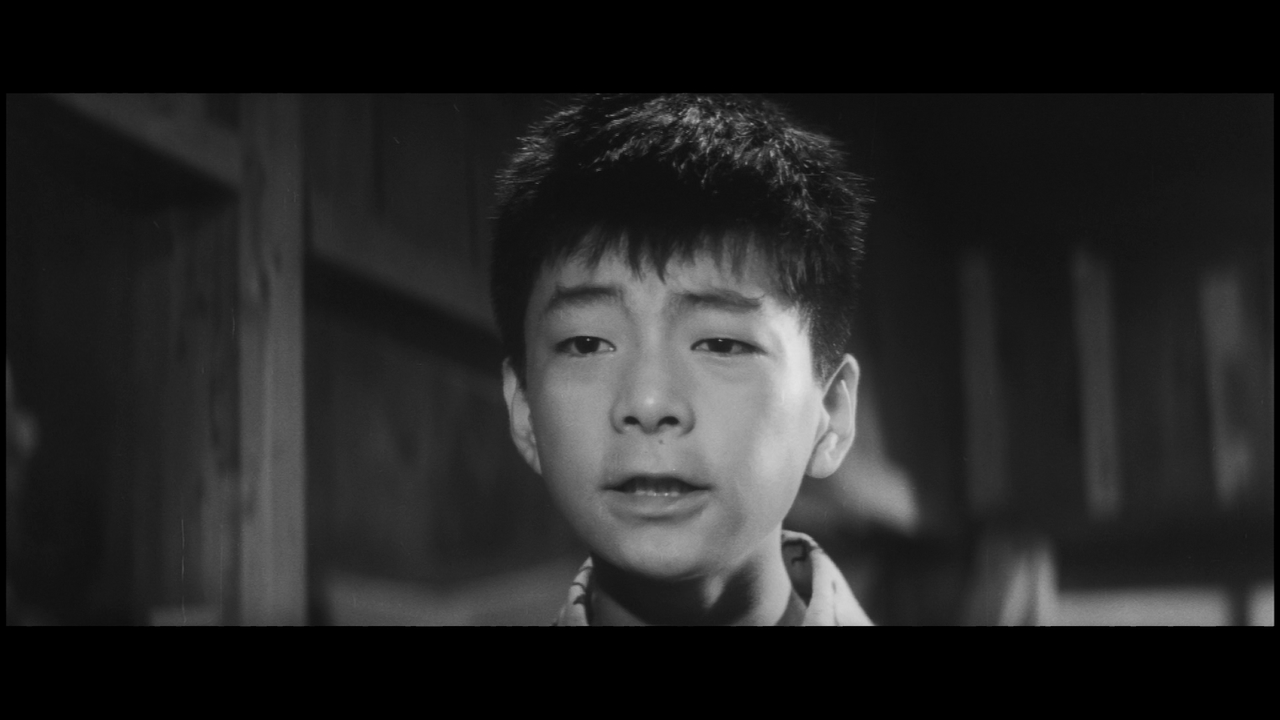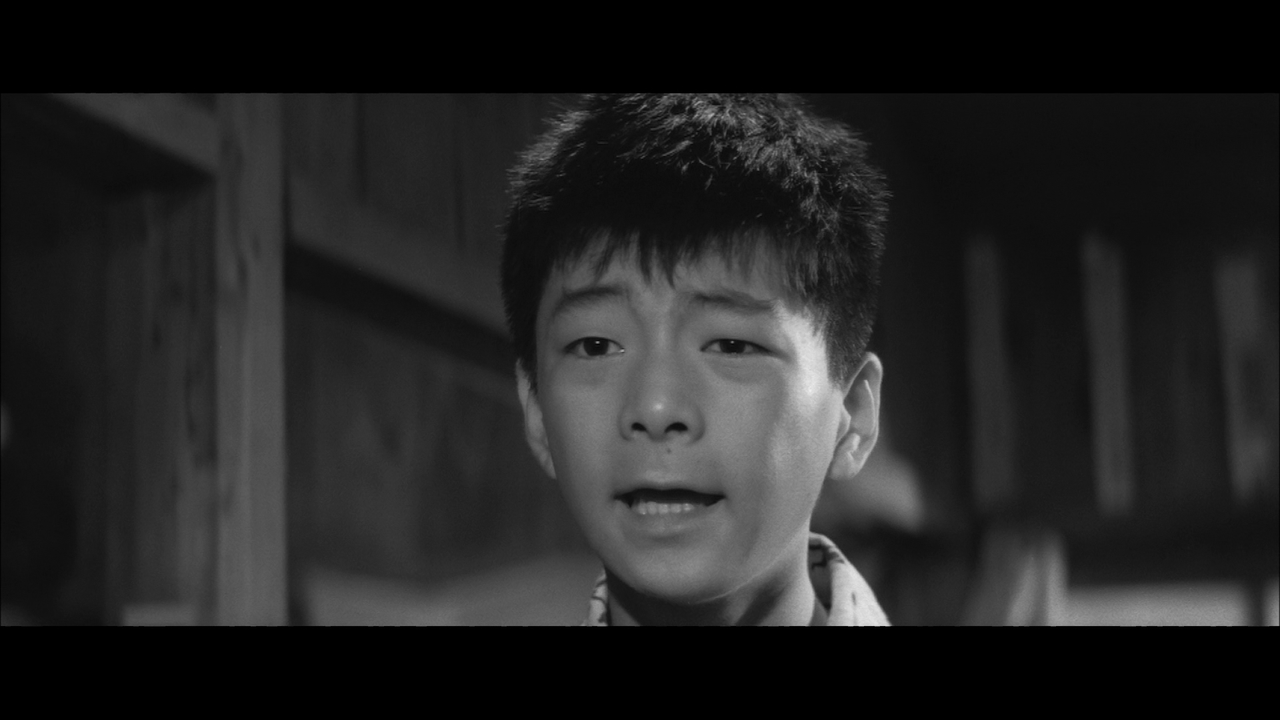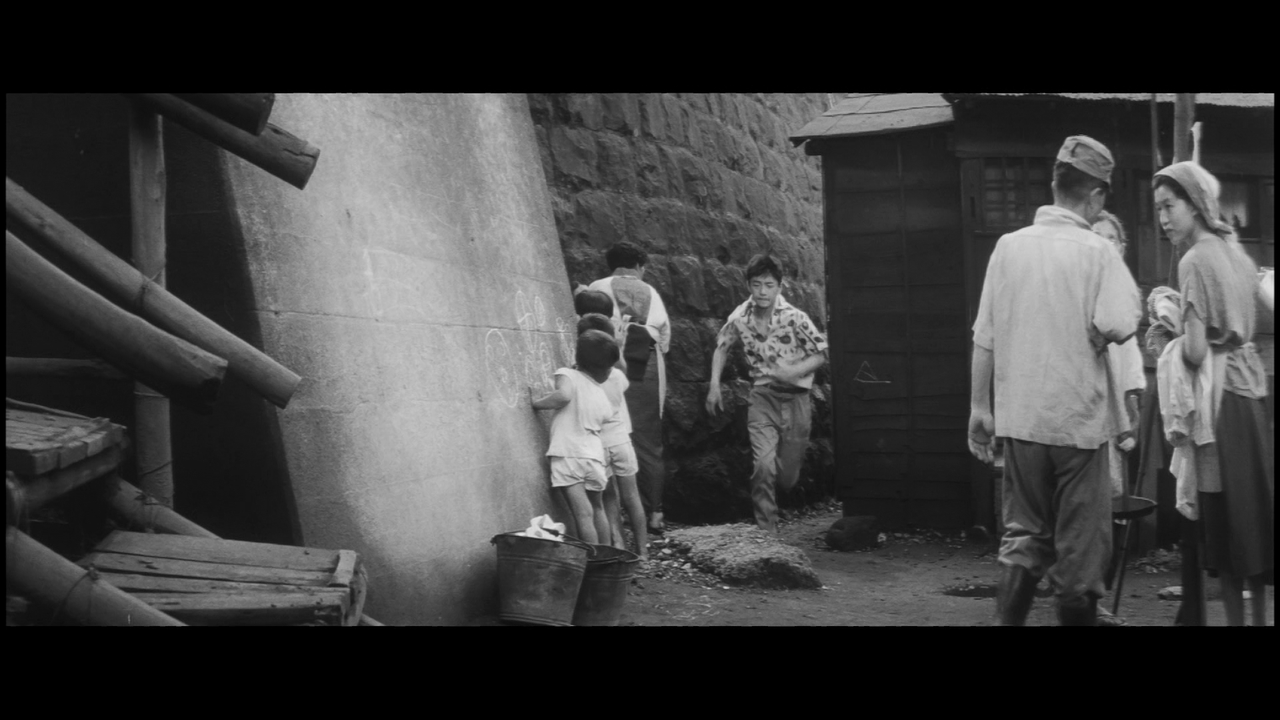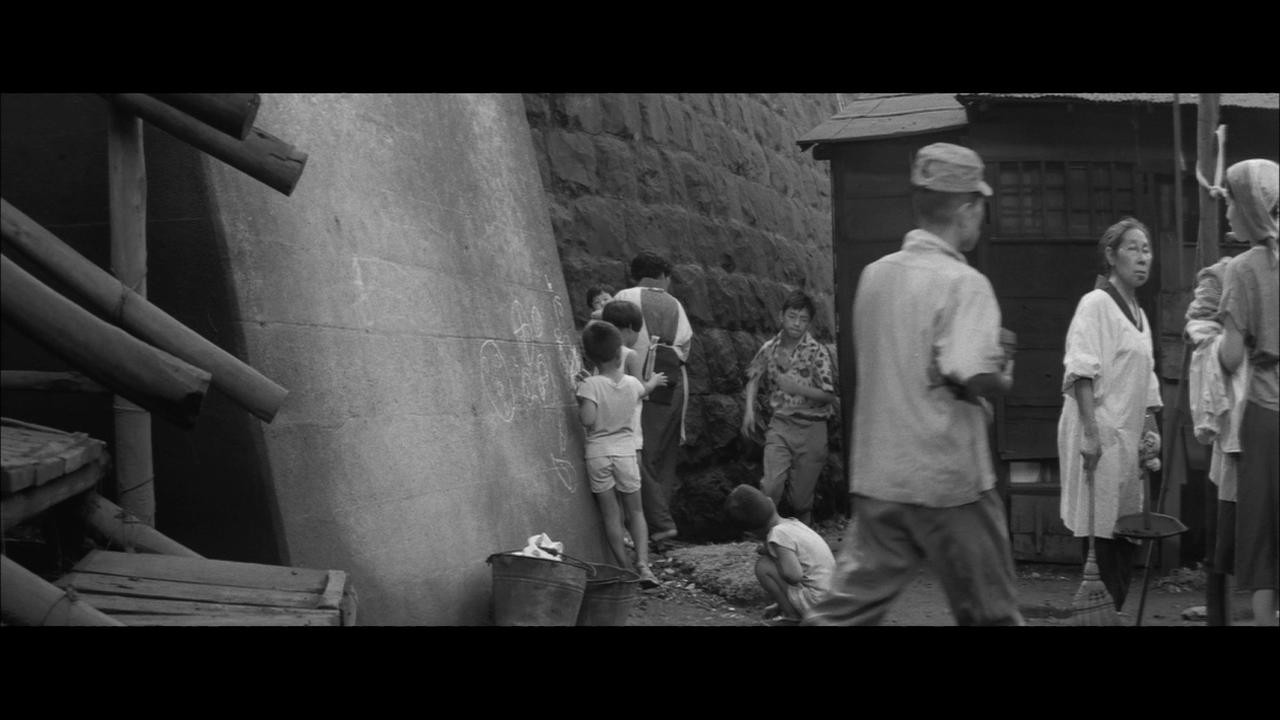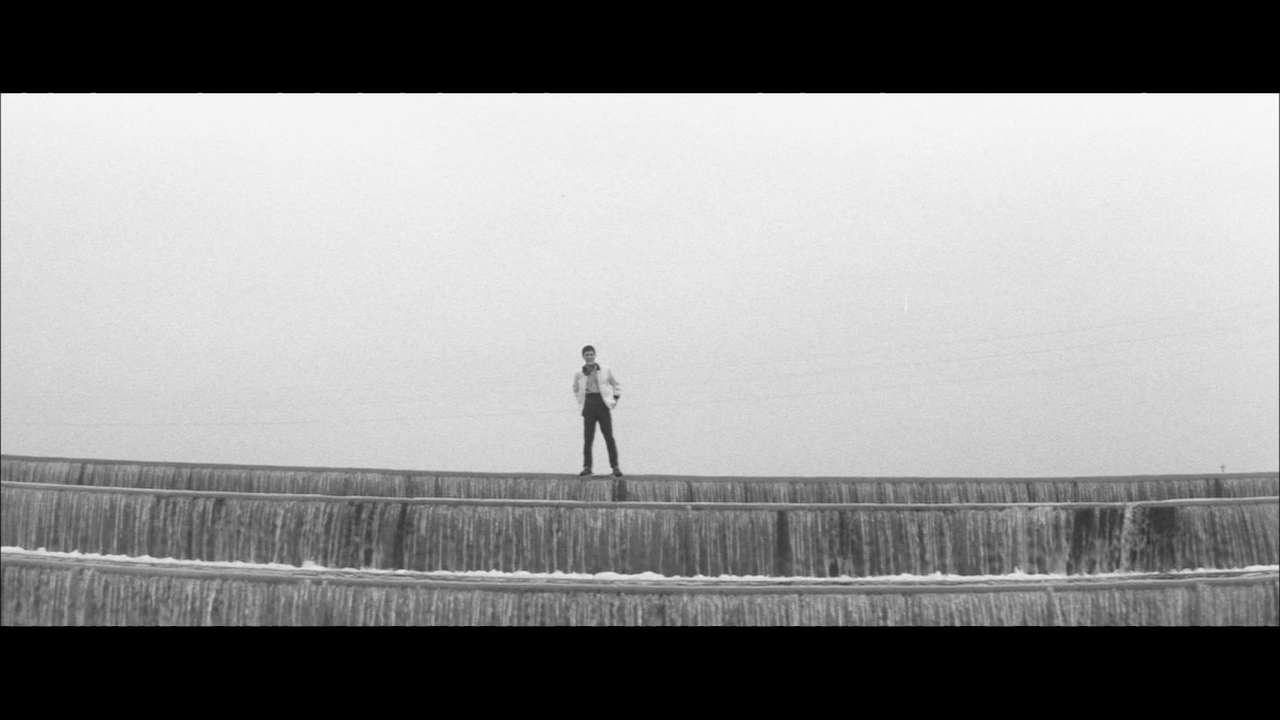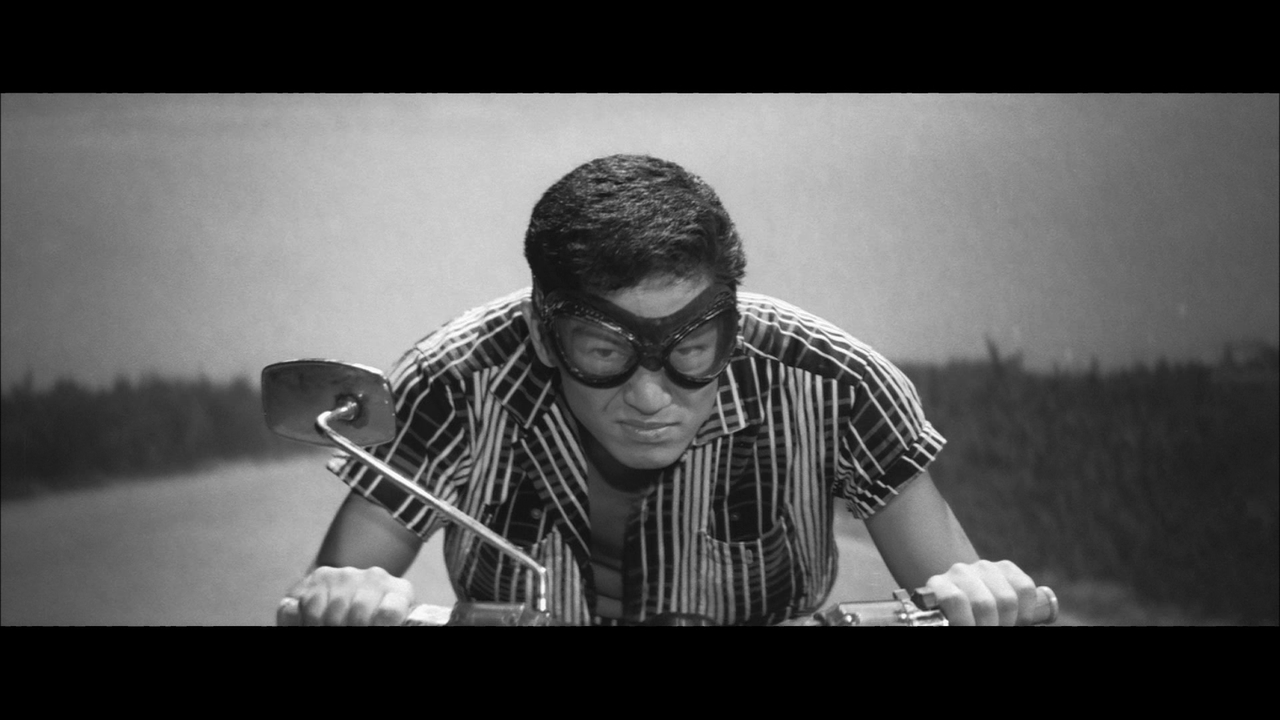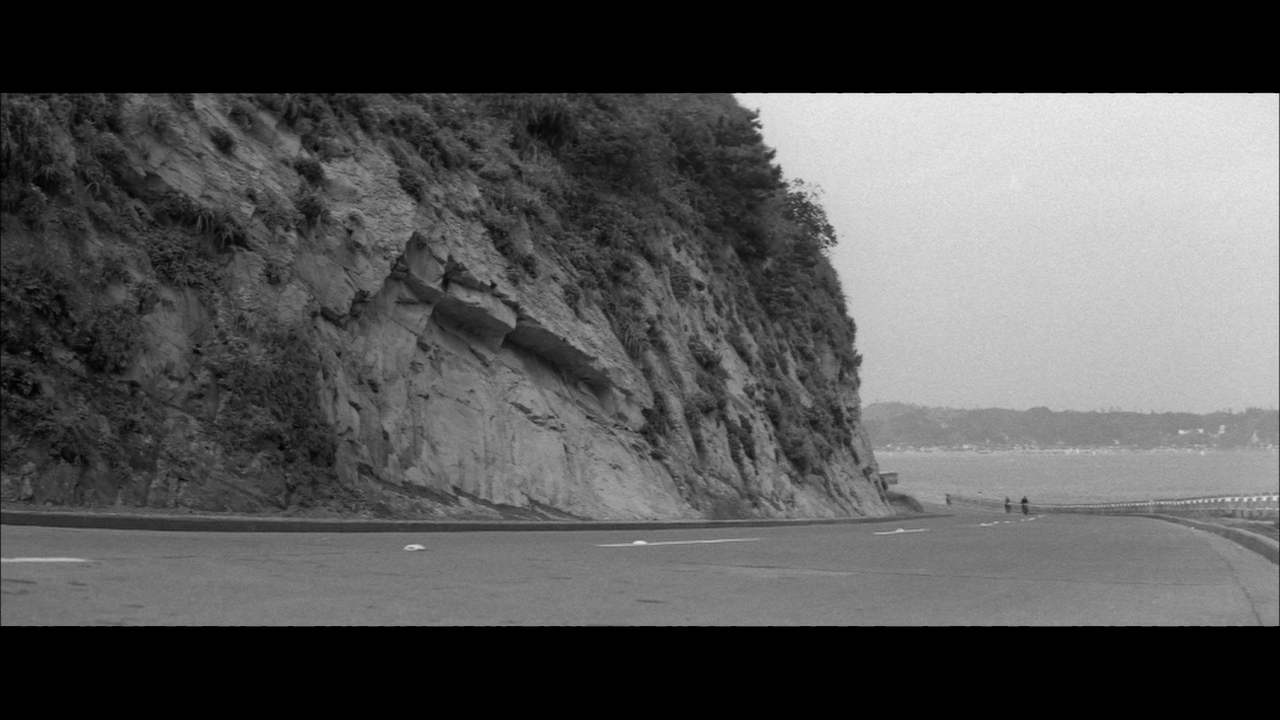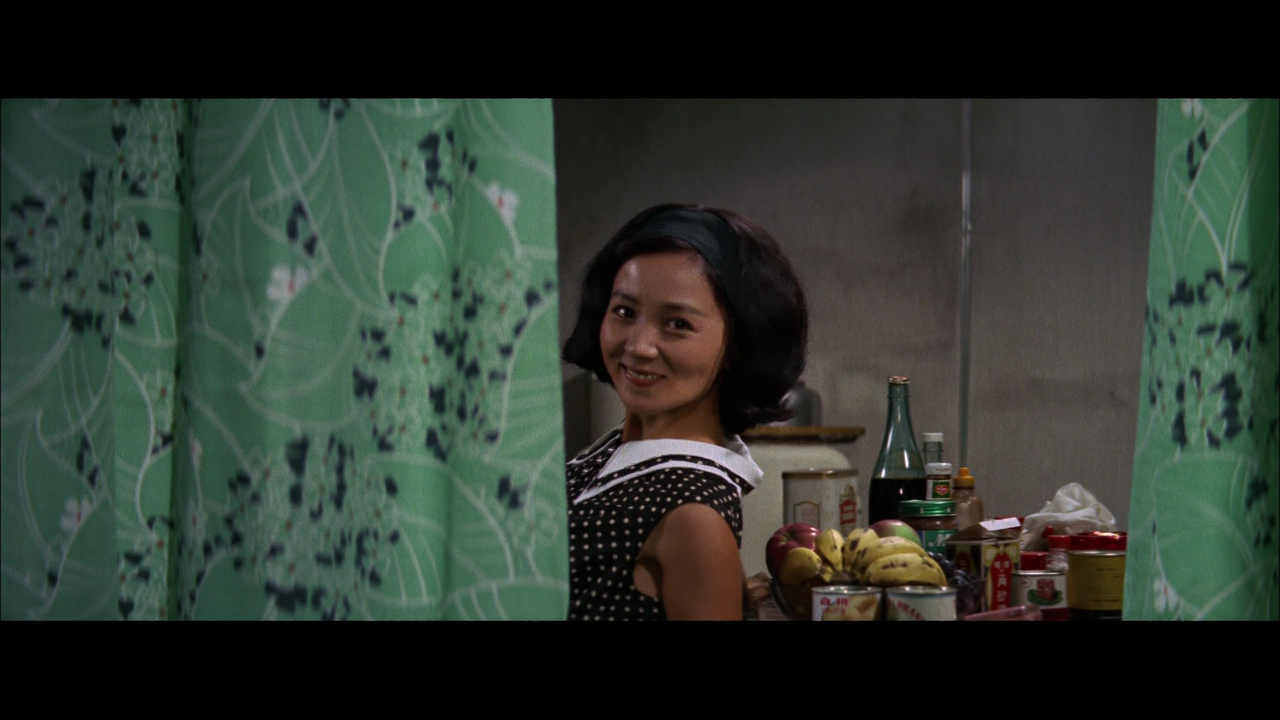
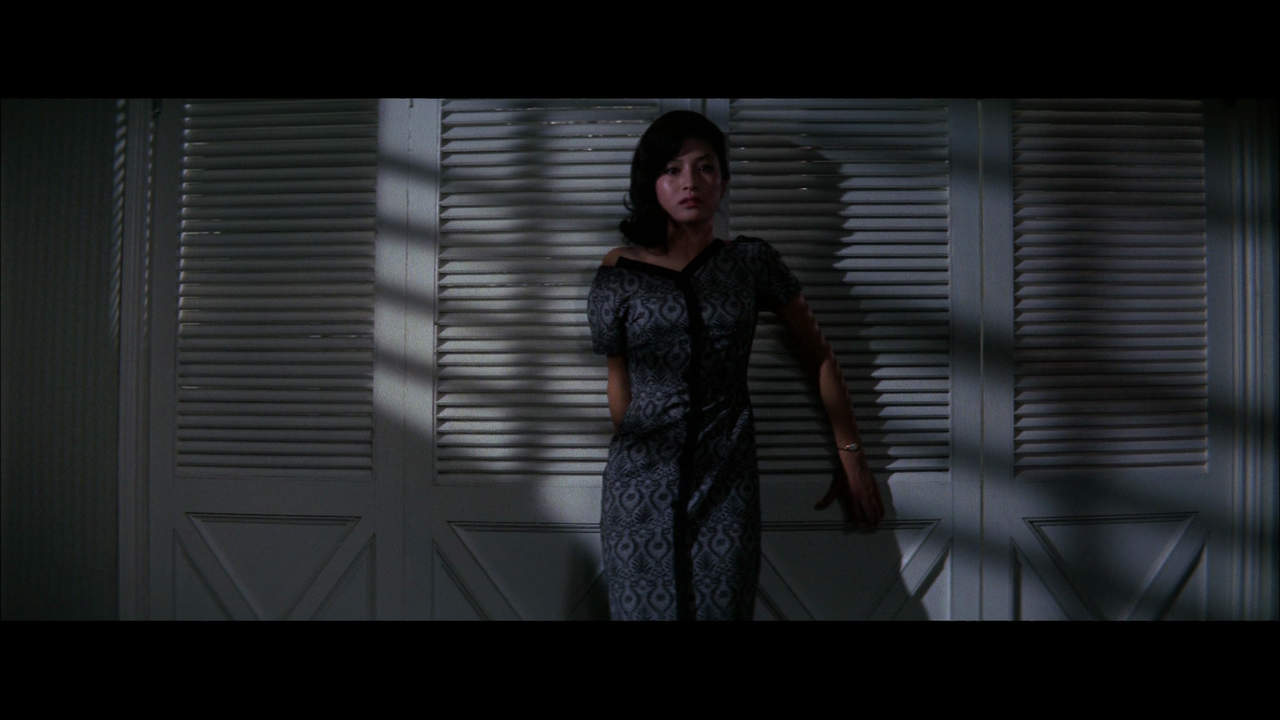
I'll start with some comparisons. The feature on the blu ray is in 1080i, and the trailer is in 1080p. The feature on this disc is very colorful, and the day-for-night scenes look readable for the first time on home video. But my overall impression is that the disc isn't quite as high-quality as Kanto Wanderer. The image looks a lot softer, and while I think the film is largely shot in slight soft-focus (probably to make the characters look a bit younger than they are––in the film Hideki Takahashi especially is meant to be quite young), the result is a lack of some of the depth that color contrast makes on the Kanto Wanderer disc. In addition, maybe this was shot at a humid time of year? Because everyone seems to be red-faced and sweating in this movie, more than in any other Suzuki film. You will see in the trailer screencaps a sharper image; but you'll also see a lot of rosy-looking faces and skin problems. The color on the film is very weird, on a general conceptual level. Often-times, the film's "green, grey and brown" color motif looks swimmy and insubstantial. There is a lot of deliquescent imagery in the film––and you hardly see a clear sky in the film. The shooting of the film seems to likely coincide with the rainy season in Japan, which explains it––but the movie is the only film of Suzuki's that seems quite this wet all over.
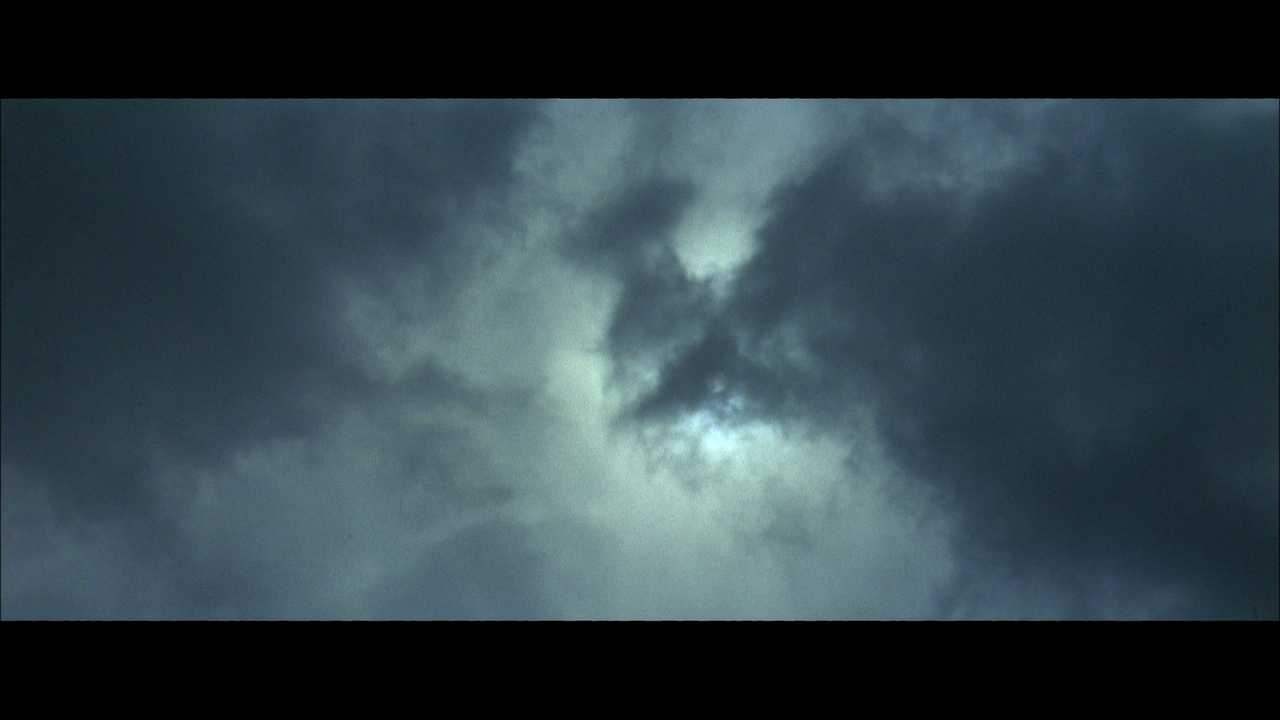
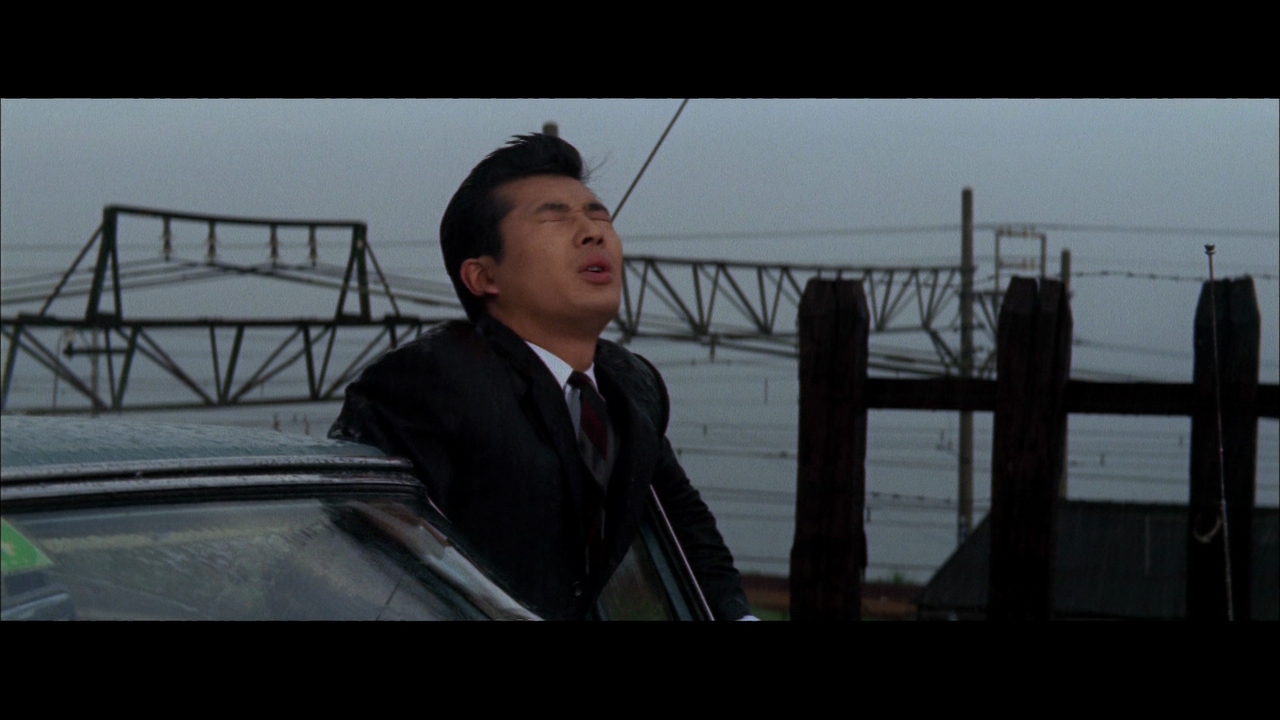
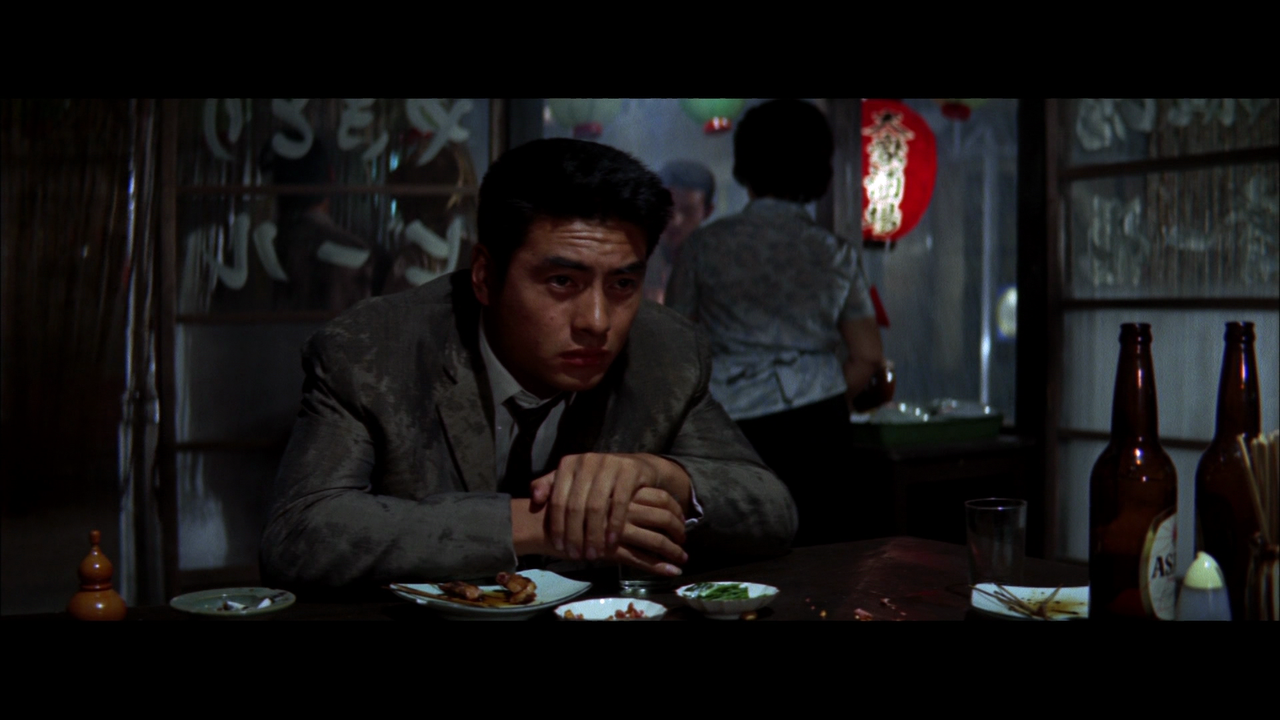 COMPARISONS
As with lots of the other films in these sets, the shots and takes used in the trailer are somewhat different from what is used in the feature, so some of these comparisons won't match perfectly. It tried to get as close as possible, but sometimes the timing just couldn't match too closely.
TRAILER
FEATURE
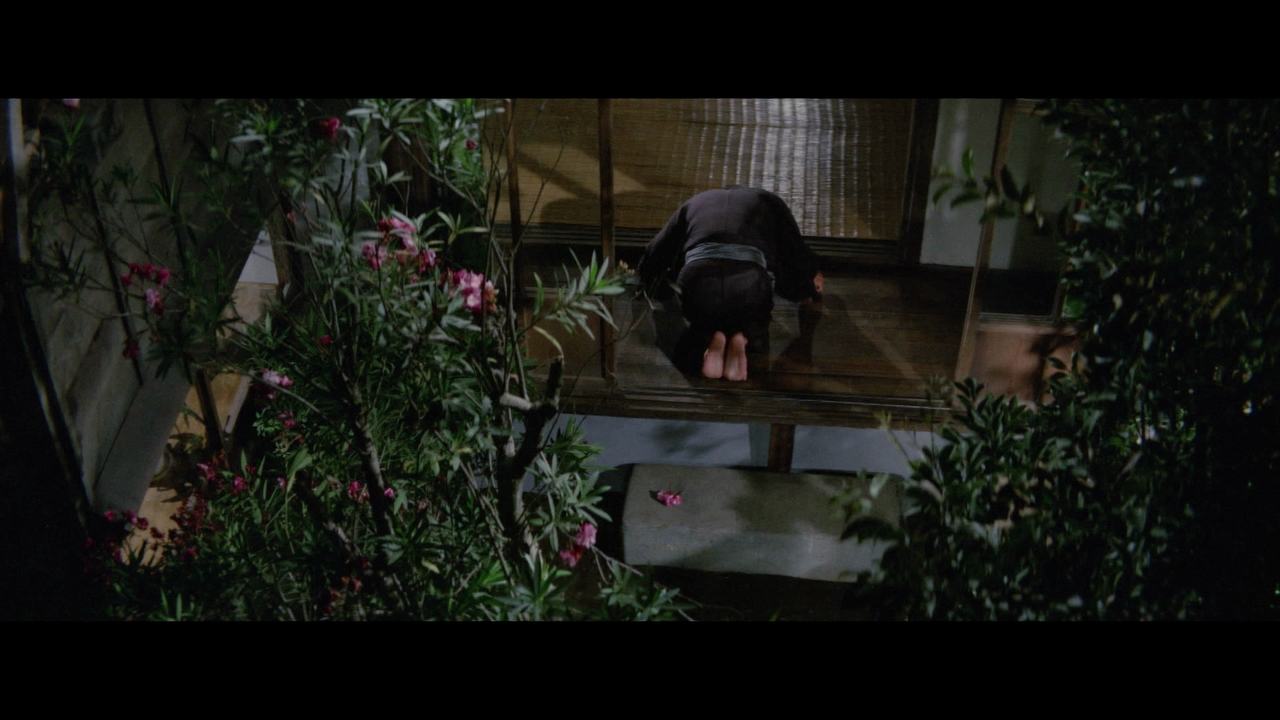
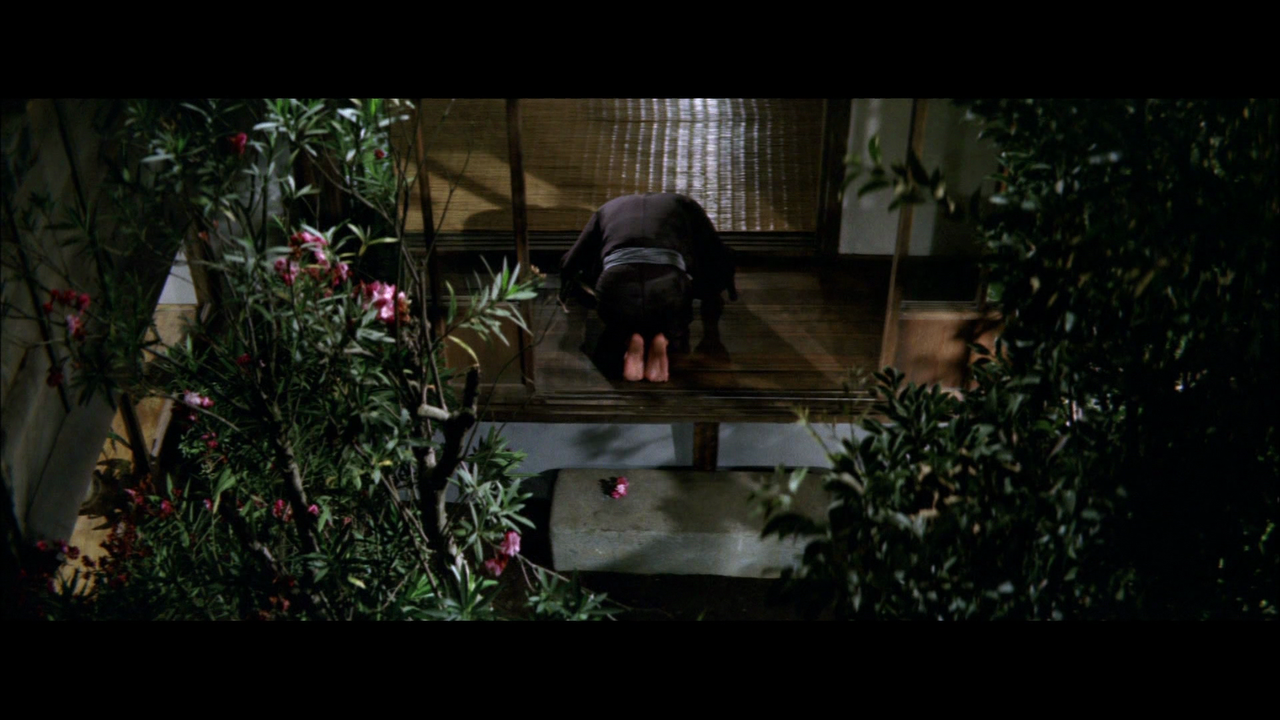
The feature looks scanned in just a bit in general, judging by the shots where I could get the screencaps to line up well.
TRAILER
FEATURE
TRAILER
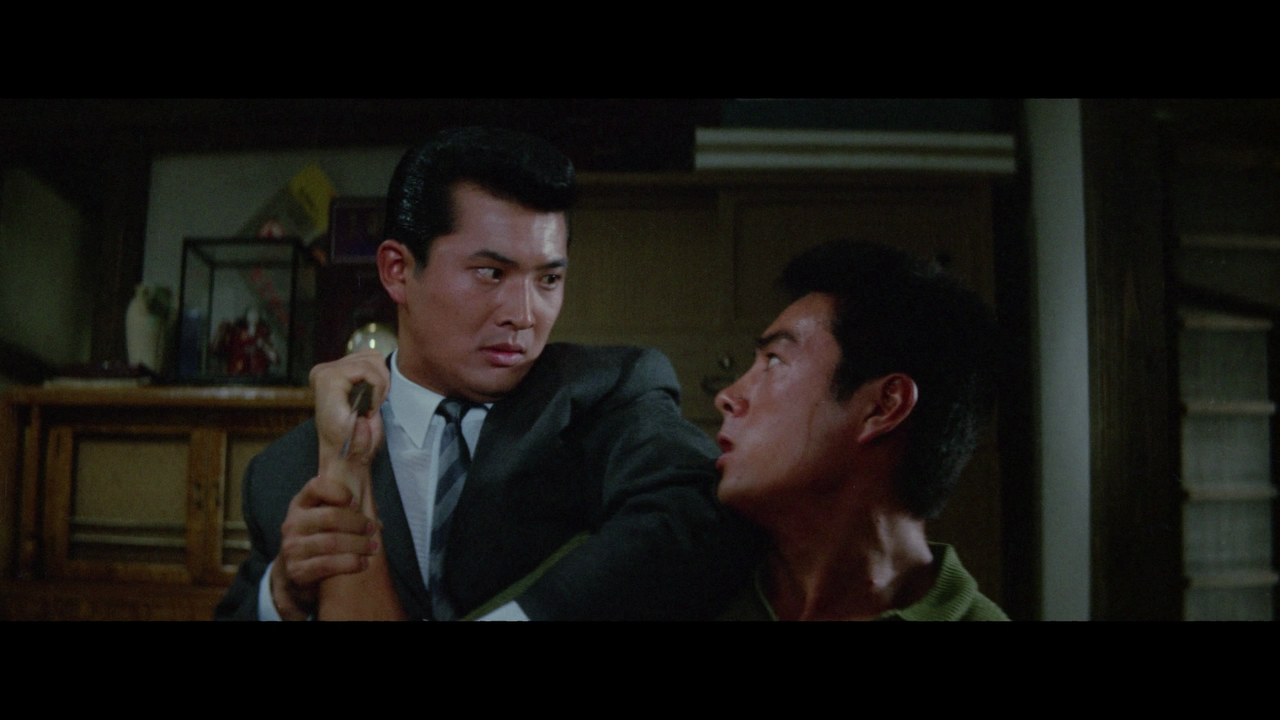
FEATURE
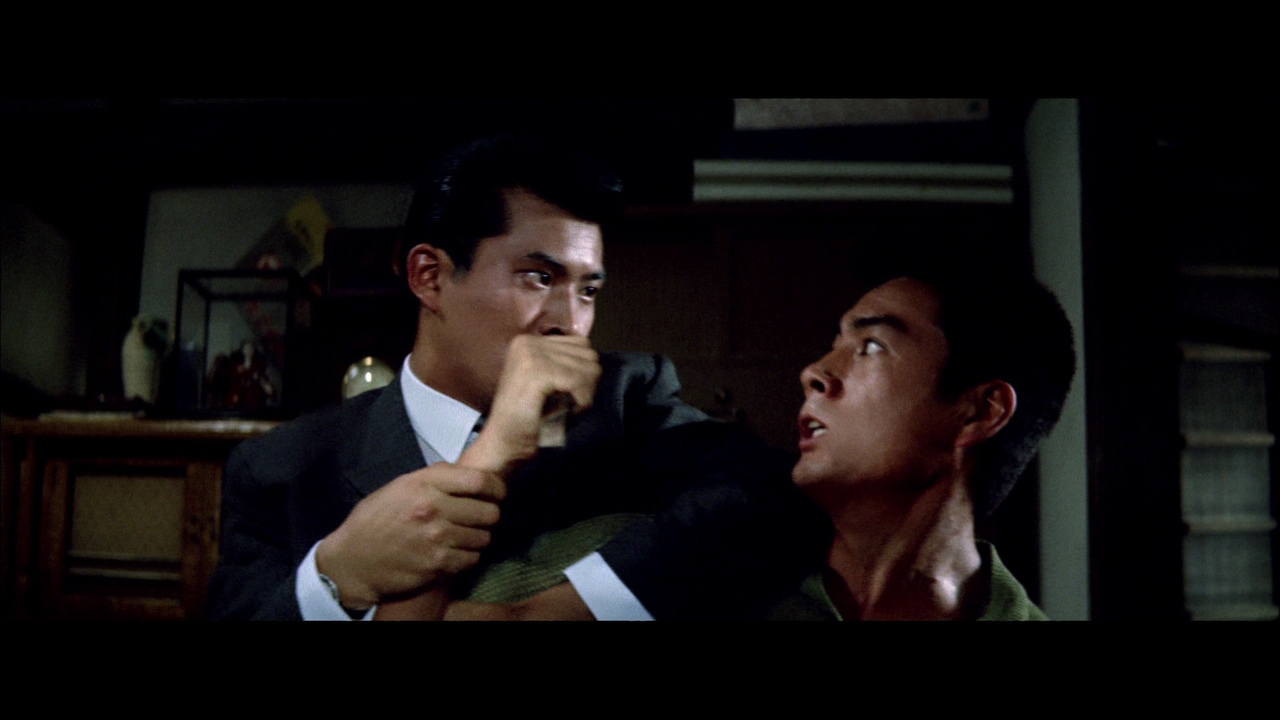
The difference between these two is pretty extreme. This single shot seems so far off even from the others in that scene in the feature. It looks like contrast-boosting to me, except that there are scenes in the beginning and end of the movie that needed contrast-boosting and didn't get it.
TRAILER
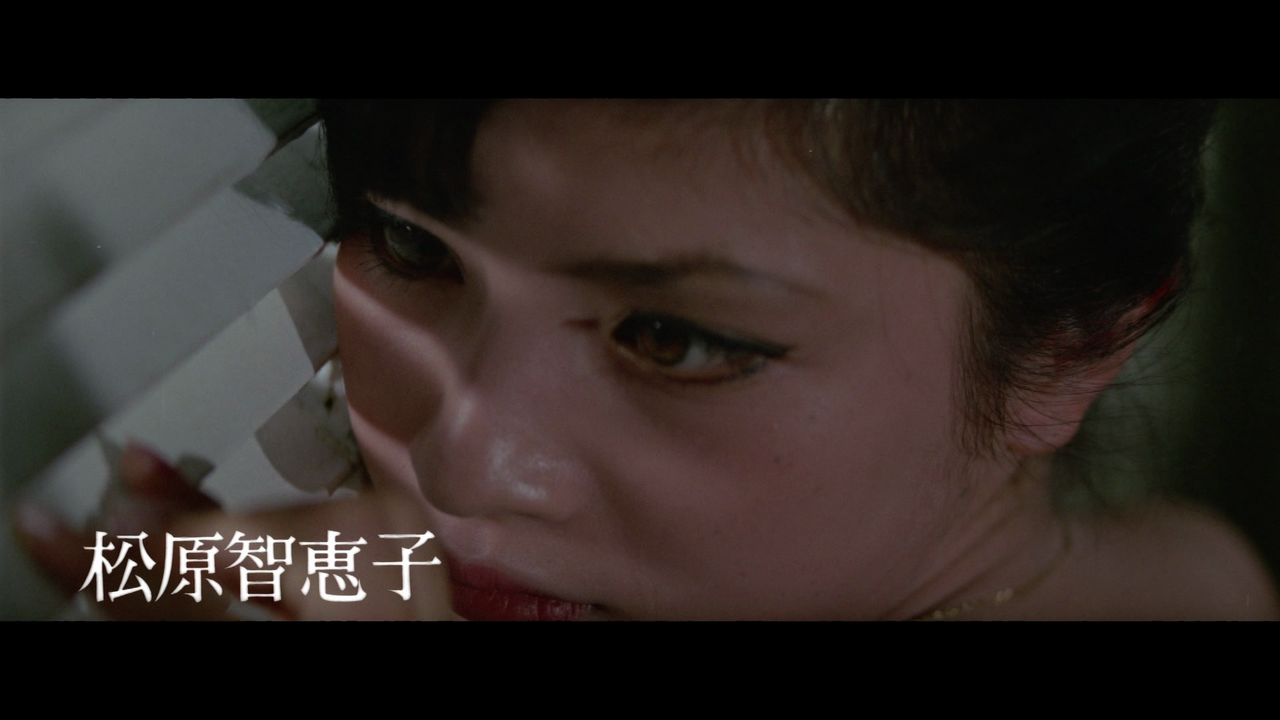
FEATURE
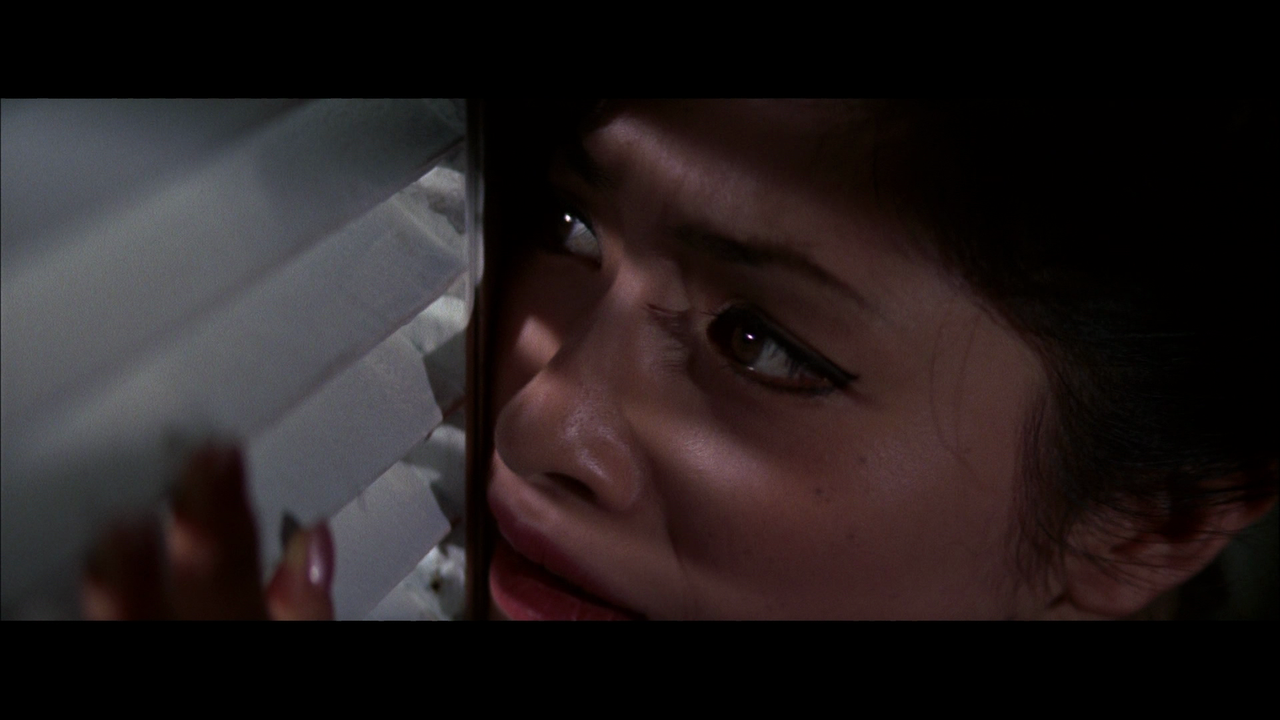
The contrast and color balance seems a lot more pleasing in the trailer, in general.
TRAILER
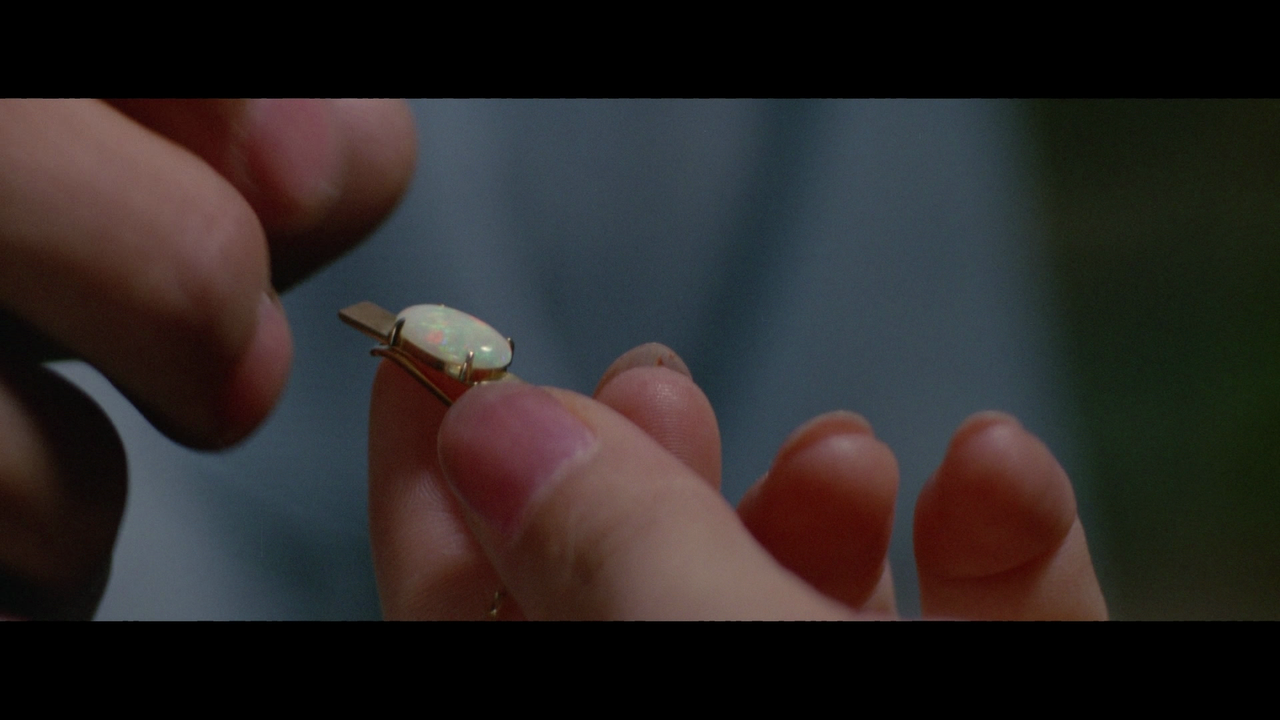
FEATURE
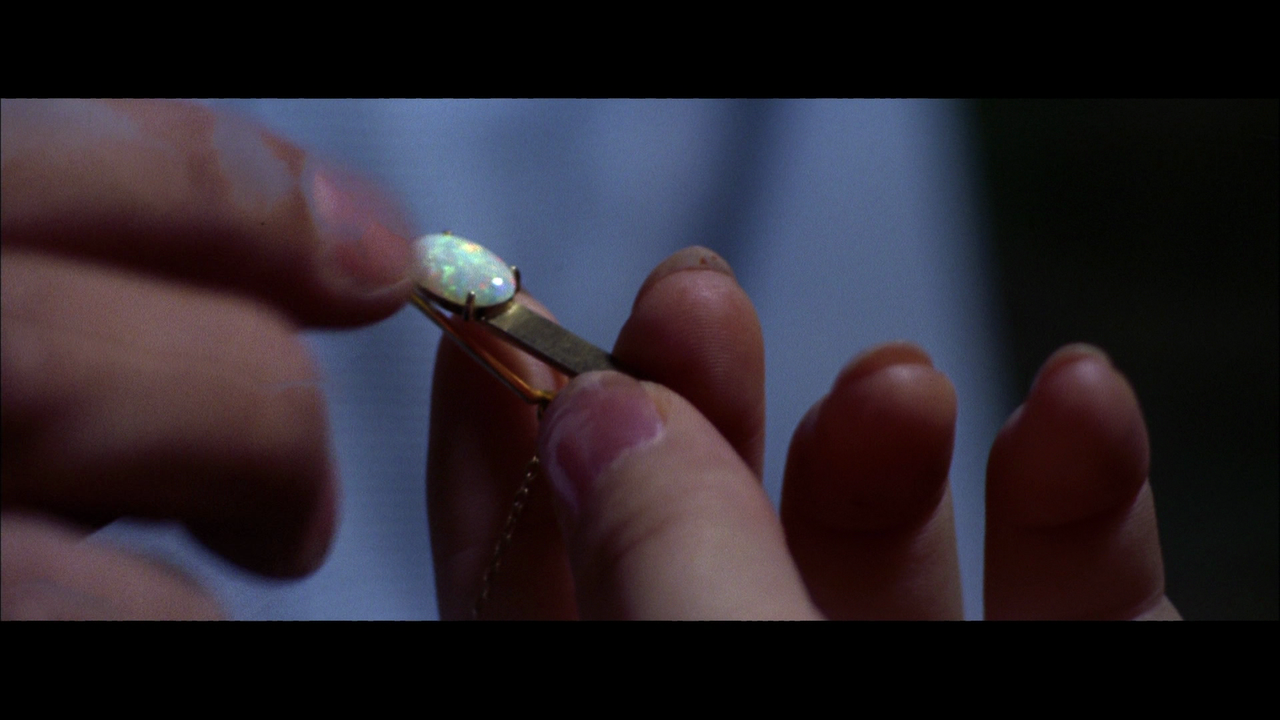
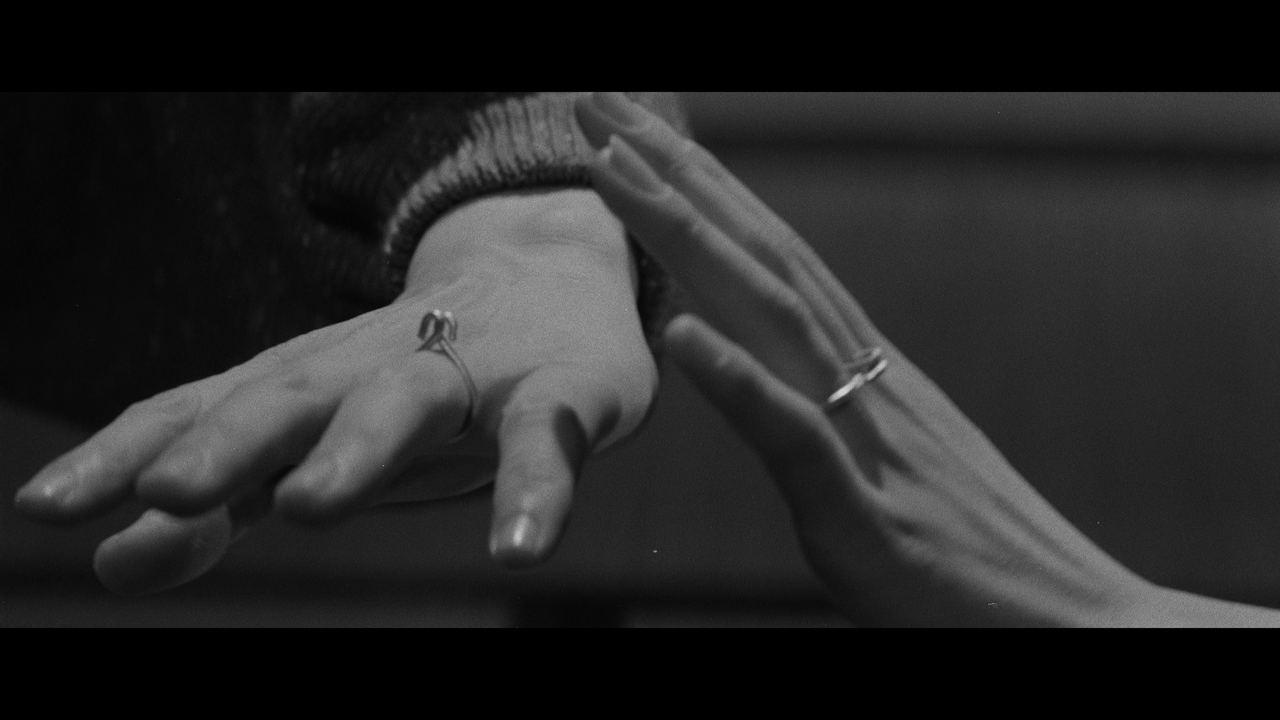
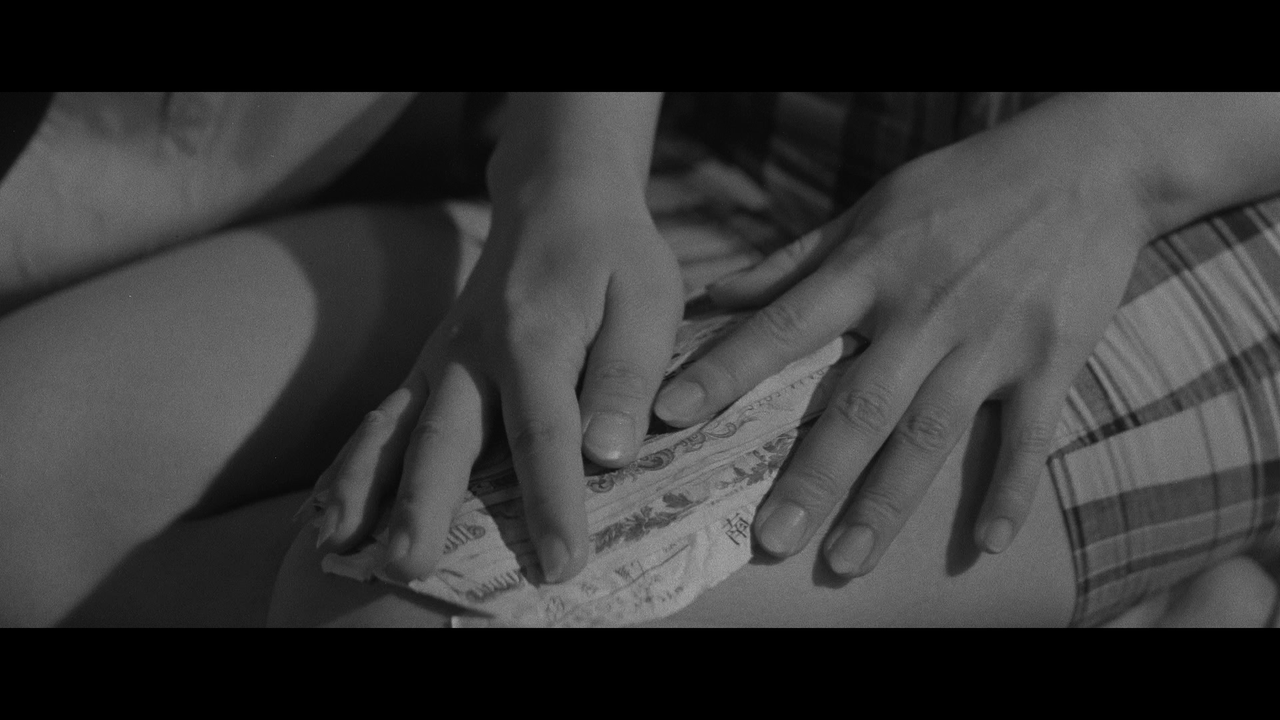
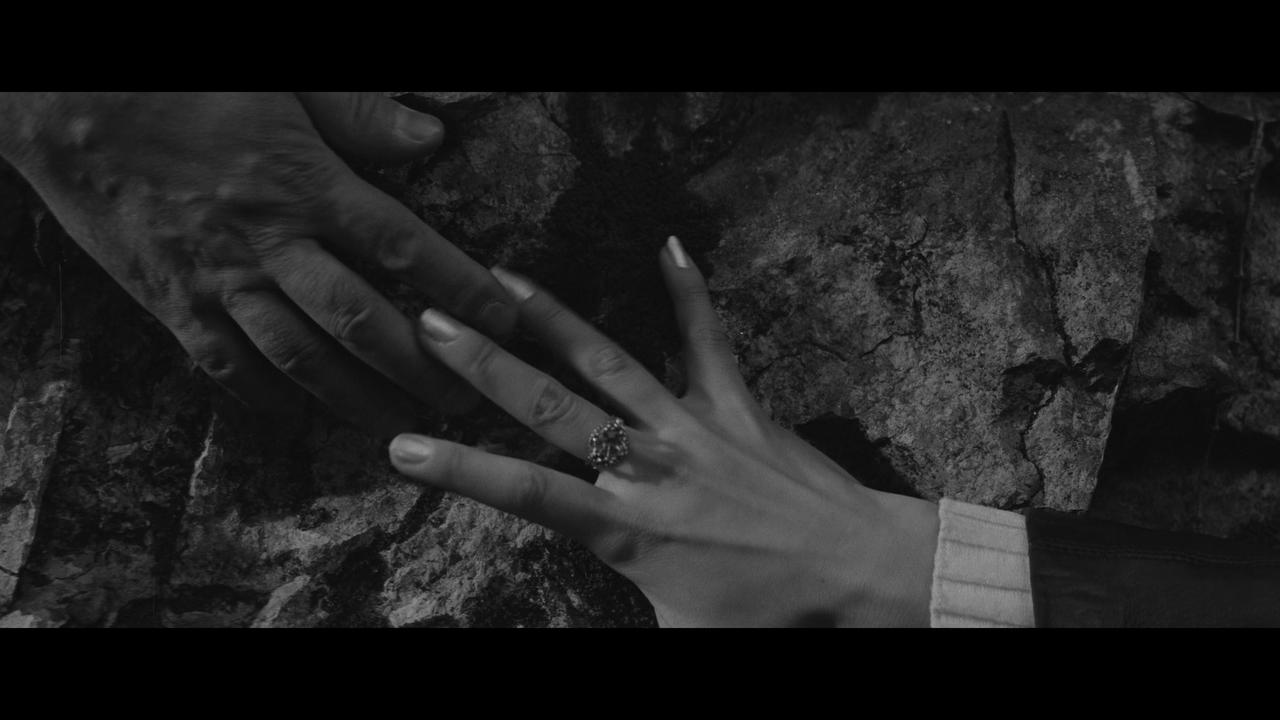
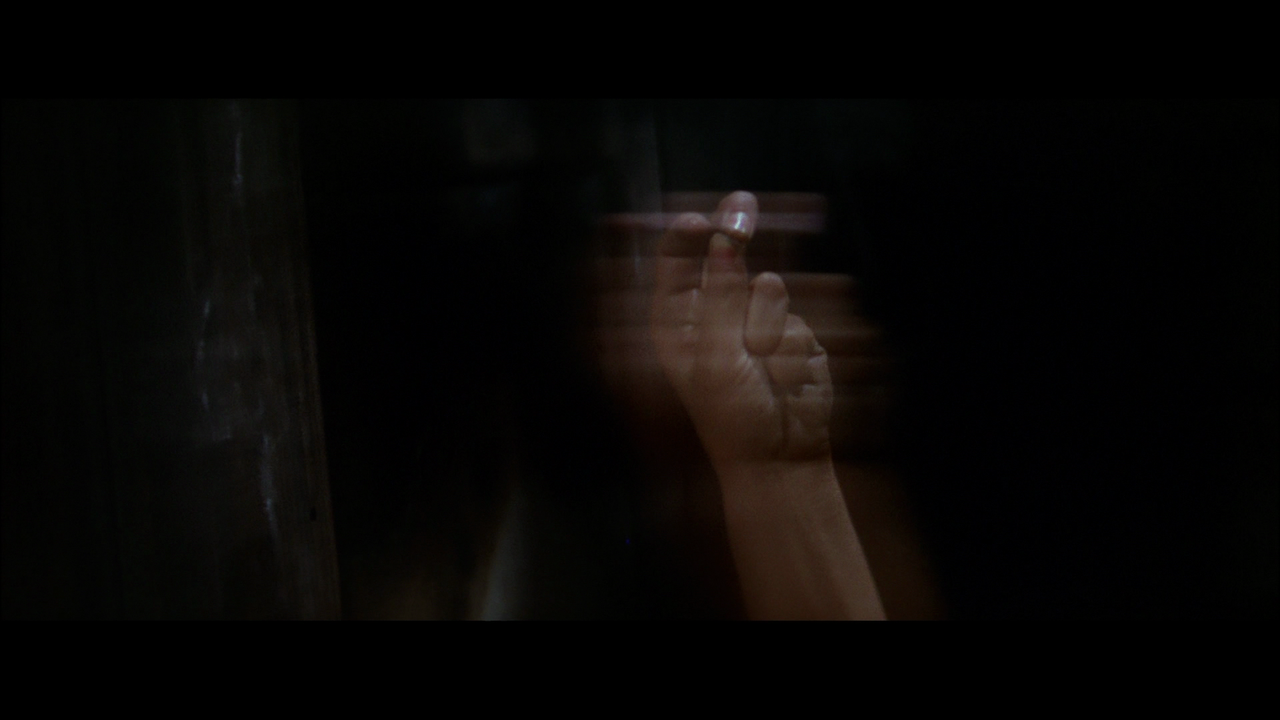
This closeup of the fingers taking the tie-clip looks really exquisite in the trailer––I feel like this is closer to what I saw theatrically, and it's certainly a more visually complex presentation. It's hard to replicate quite what Shigeyoshi does with lighting and color on home video. He loves to play in half-light and shading. It looks a tad insubstantial sometimes on home video. Theatrically, Mine's shots usually just look pretty good.
TRAILER
FEATURE
TRAILER
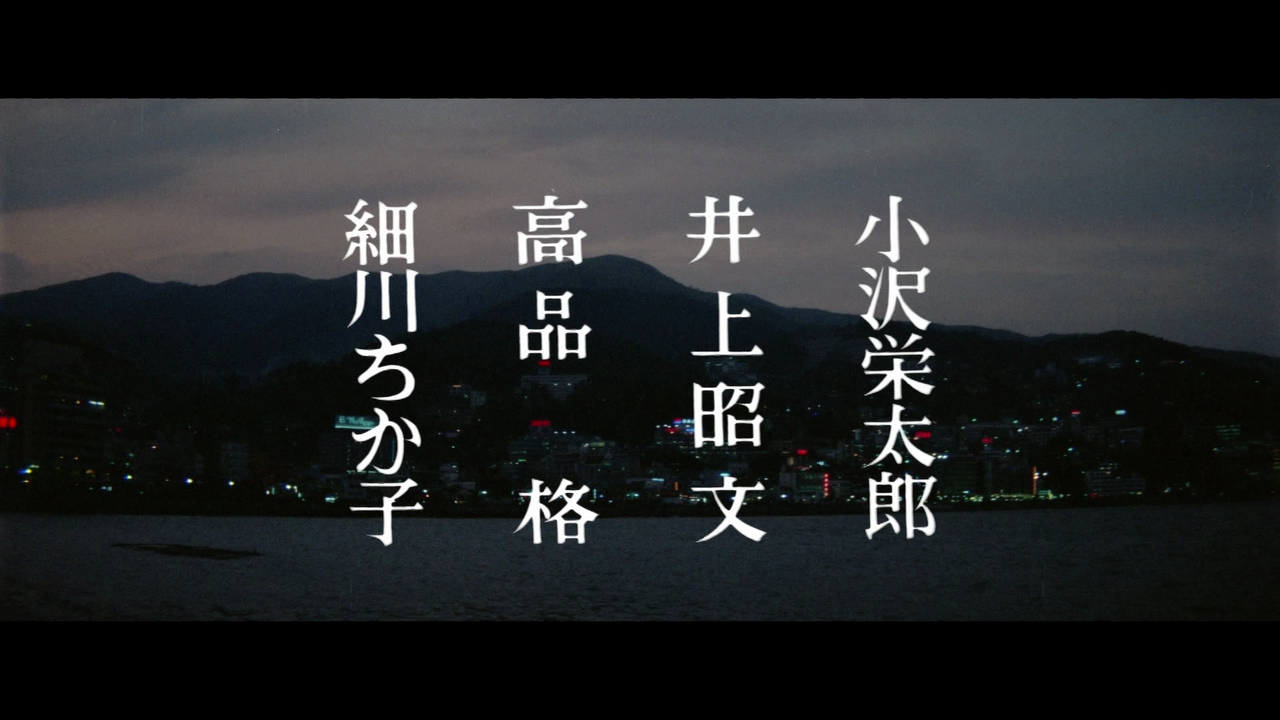
FEATURE
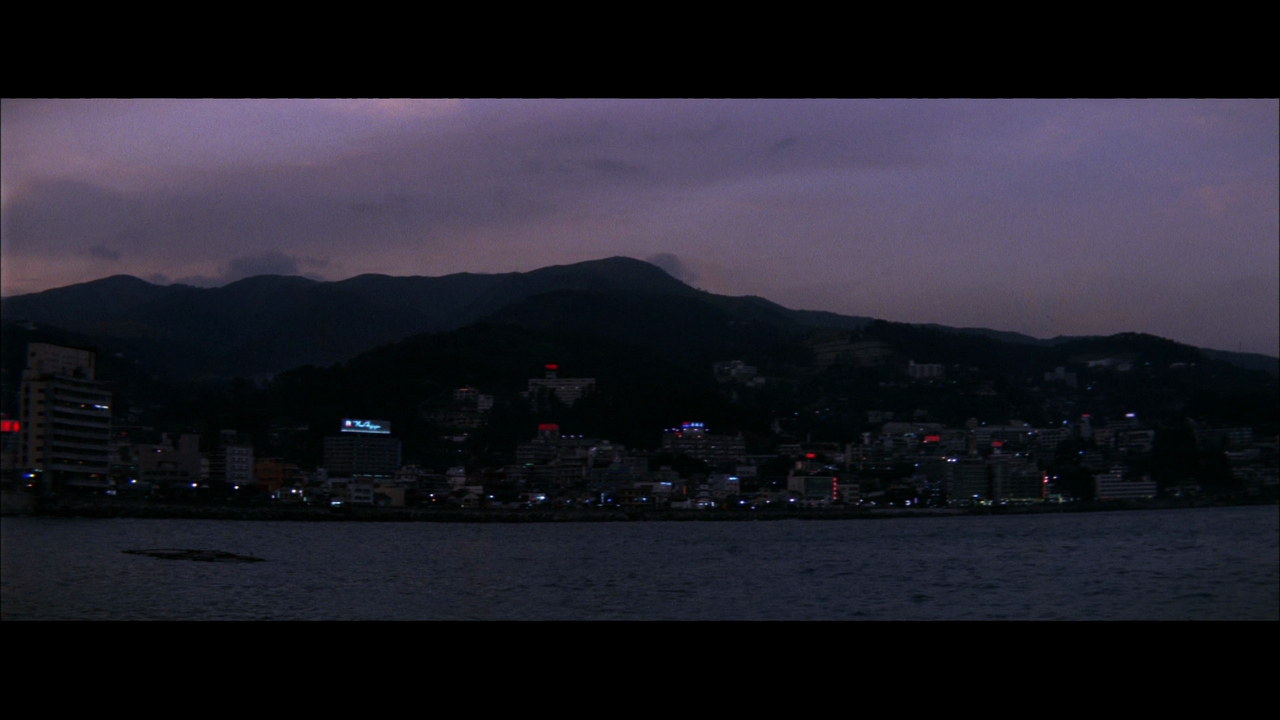
TRAILER
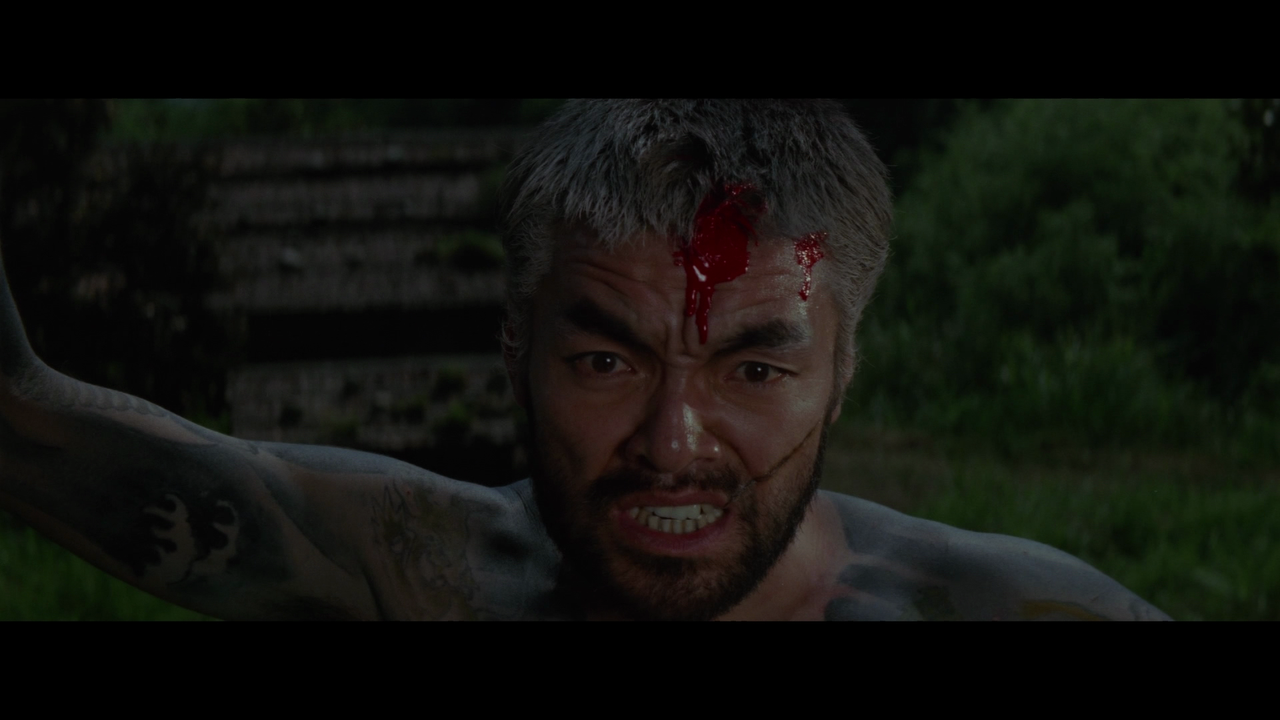
FEATURE
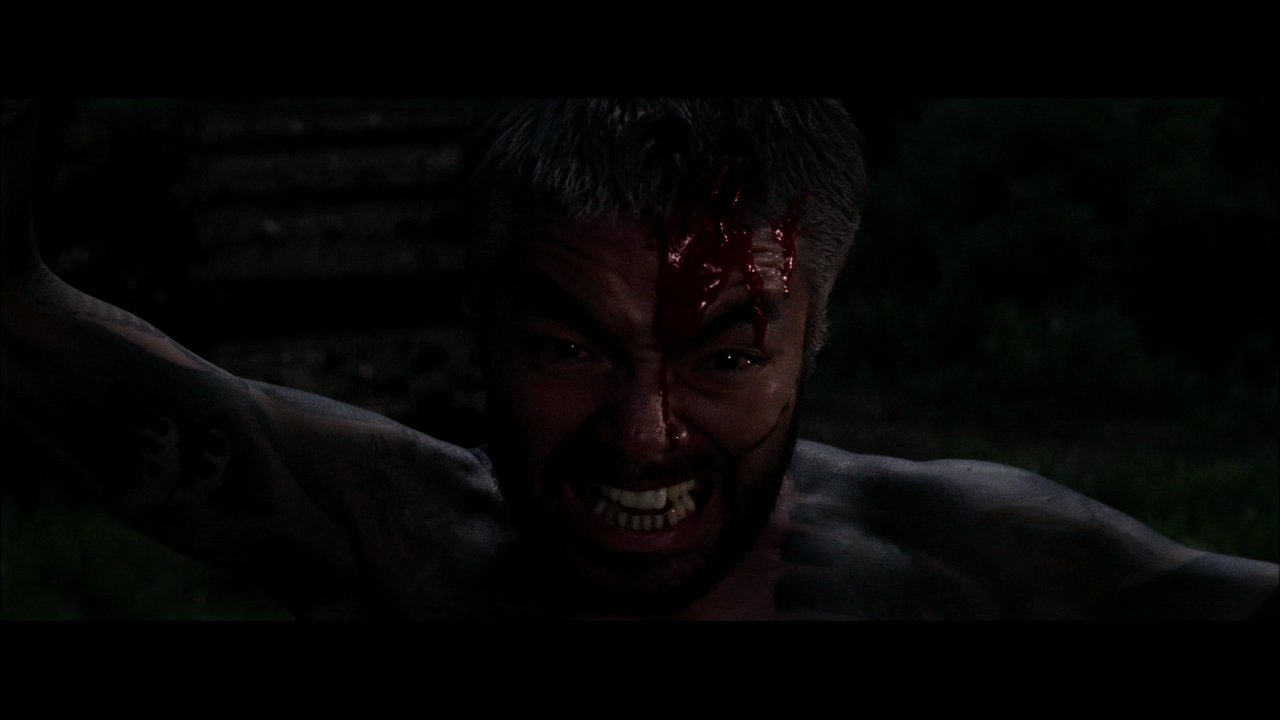
TRAILER
FEATURE
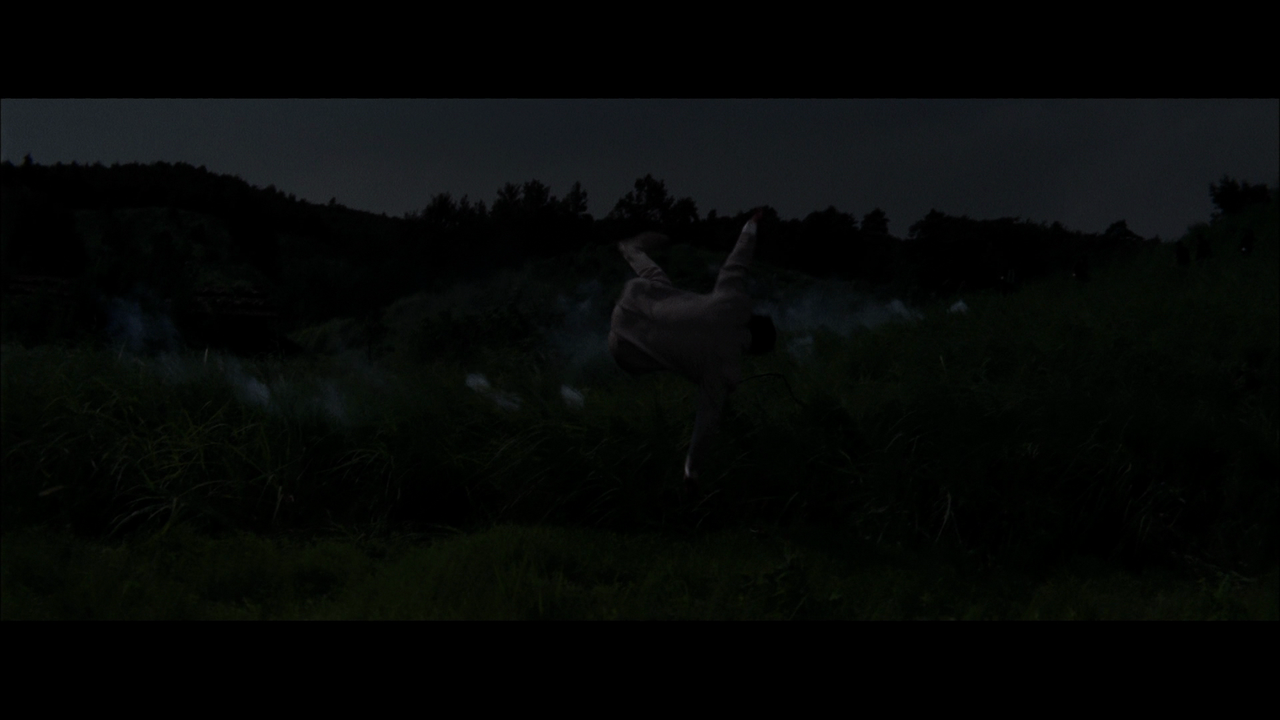
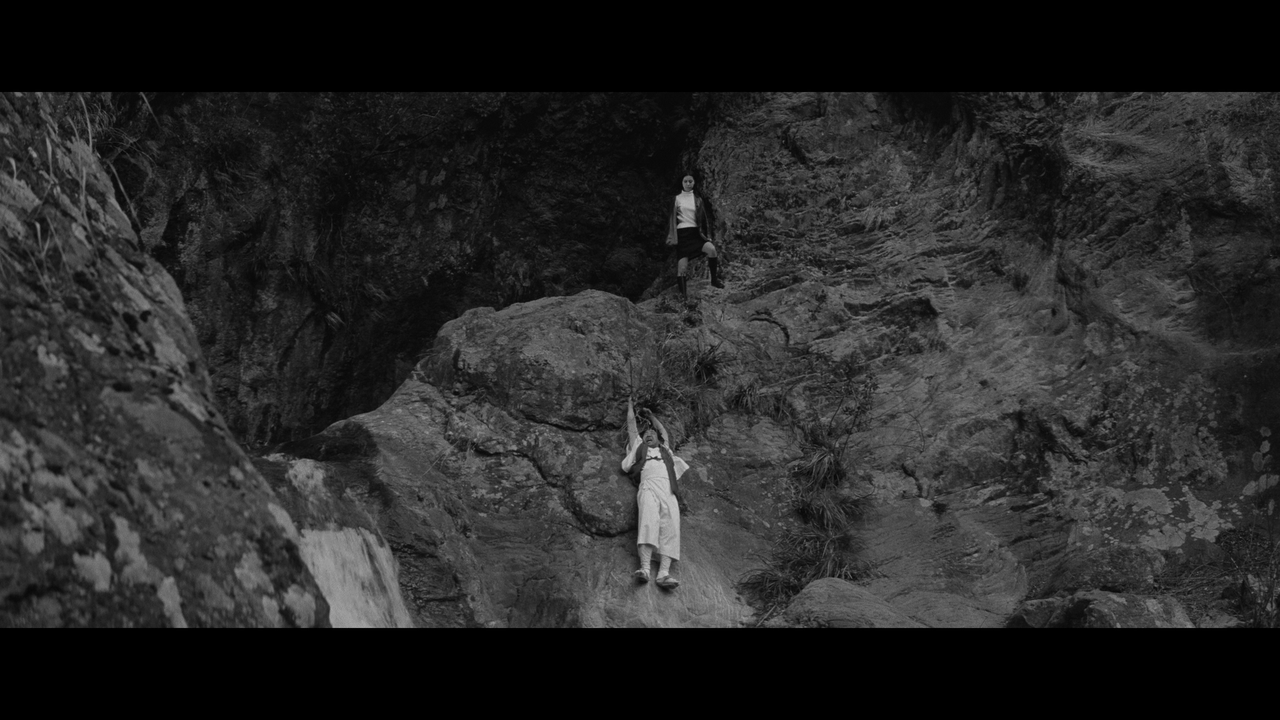
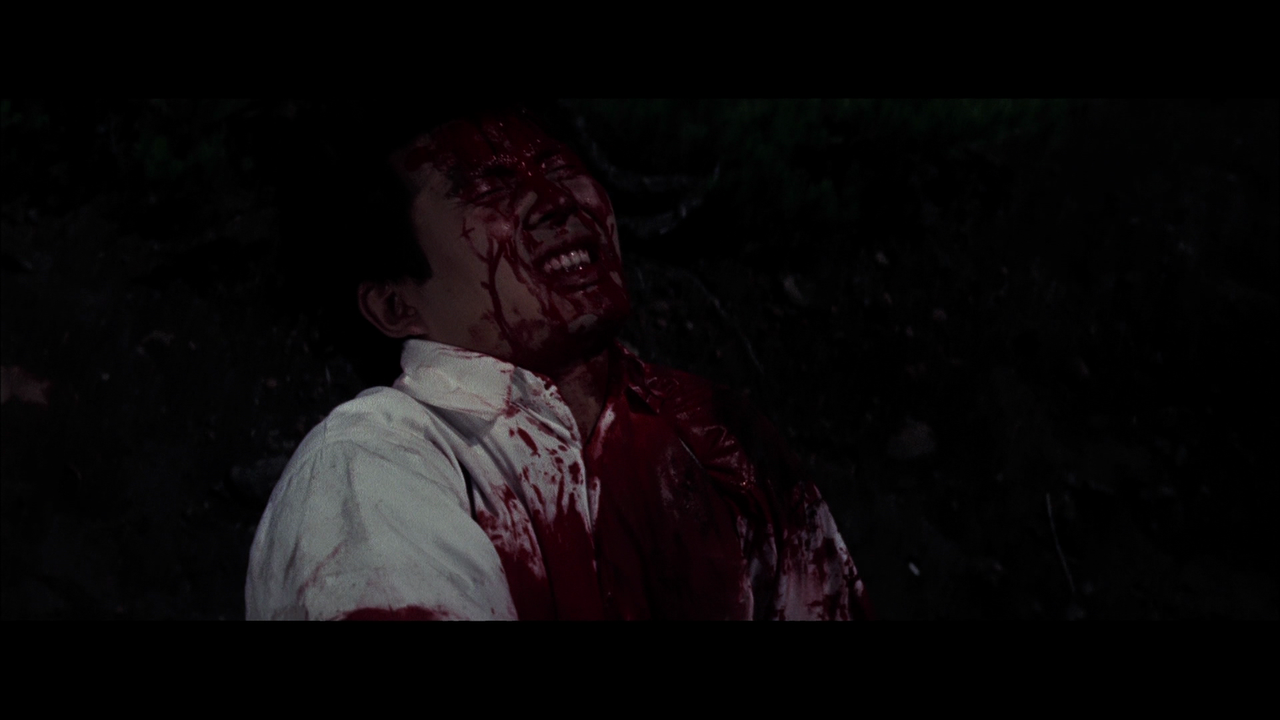
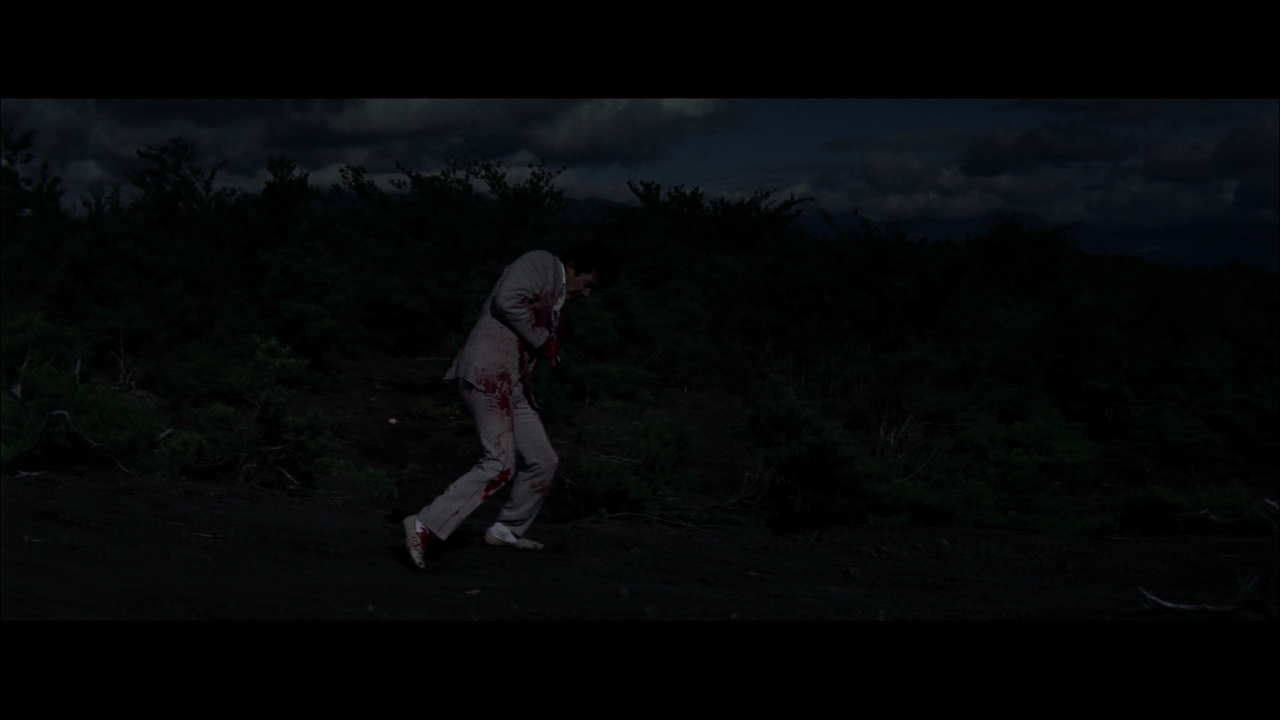
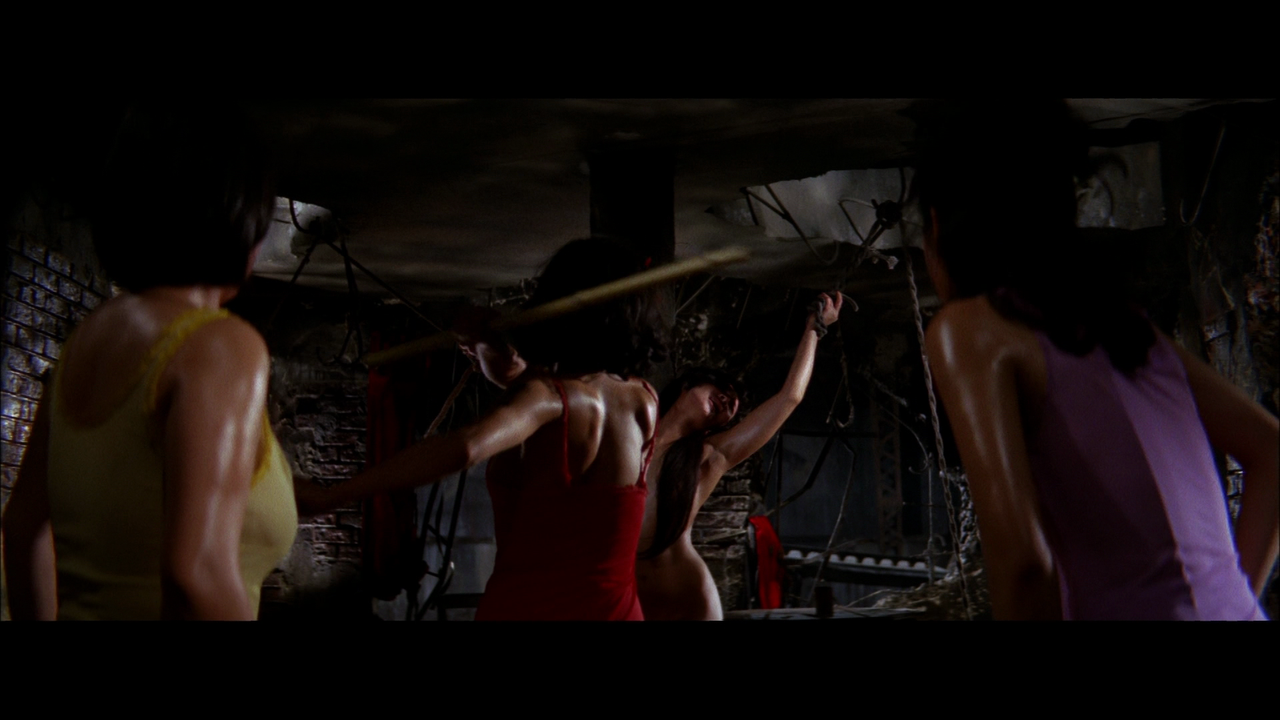
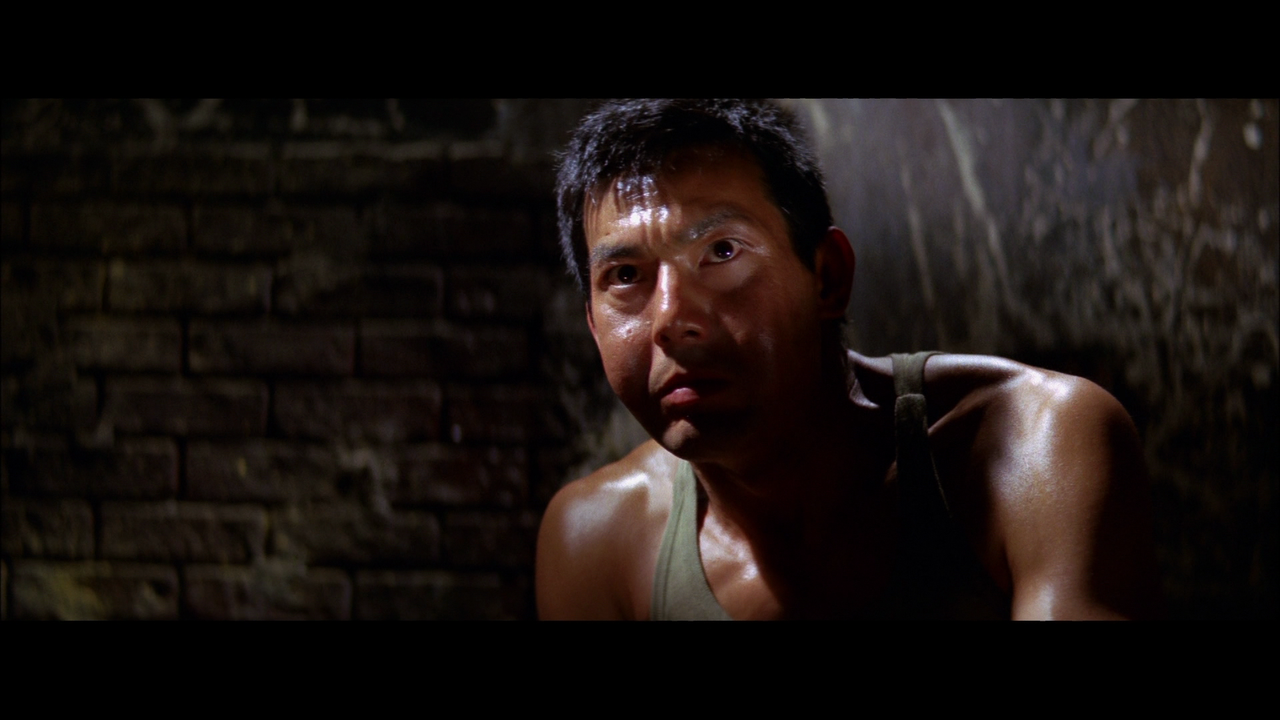
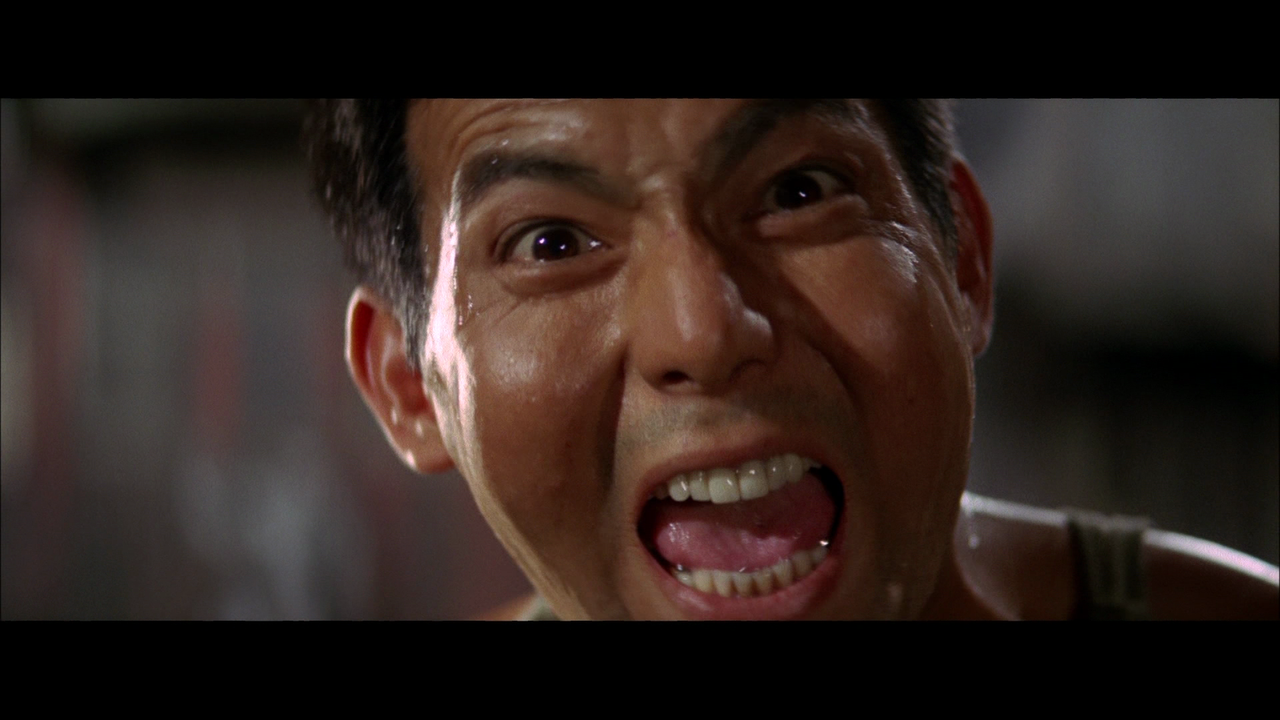
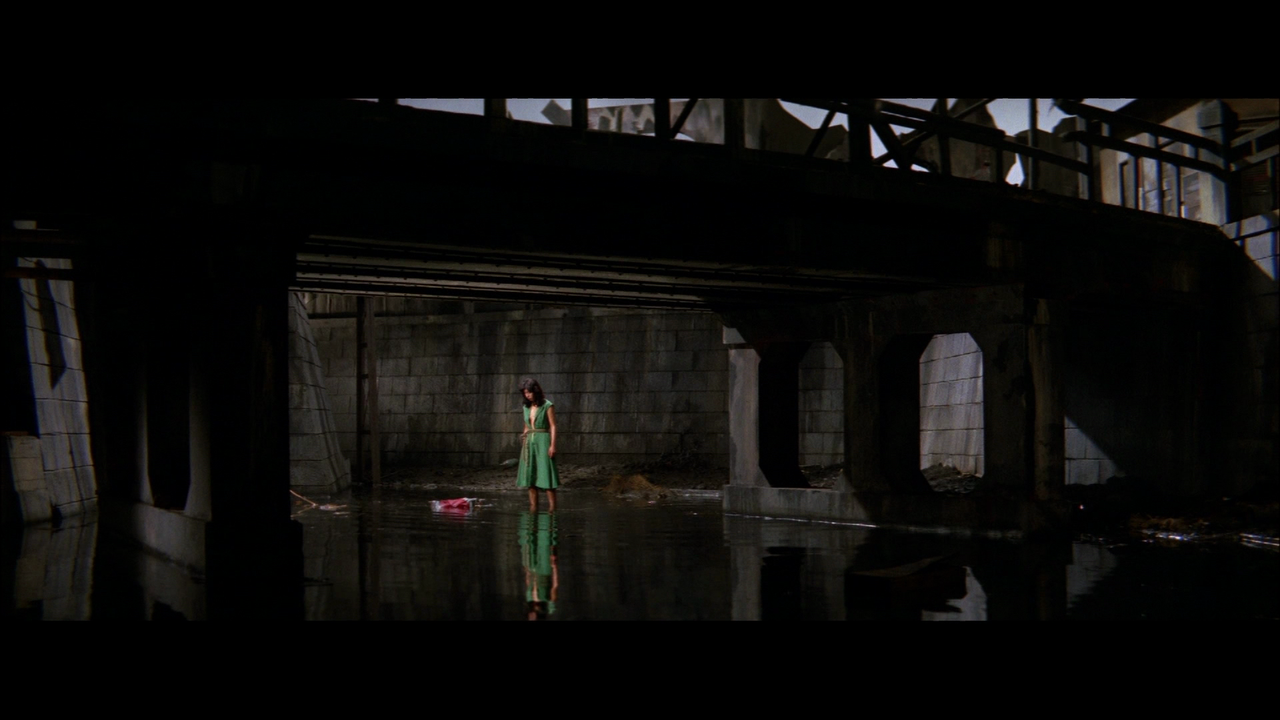
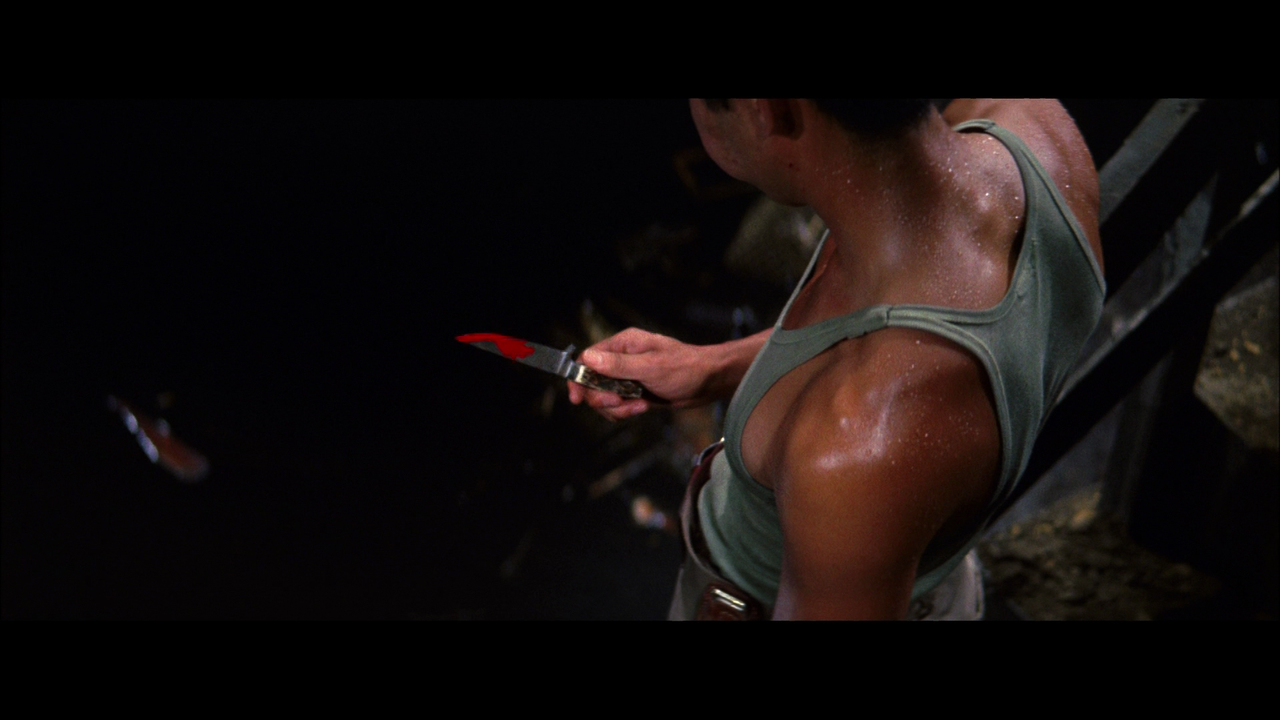
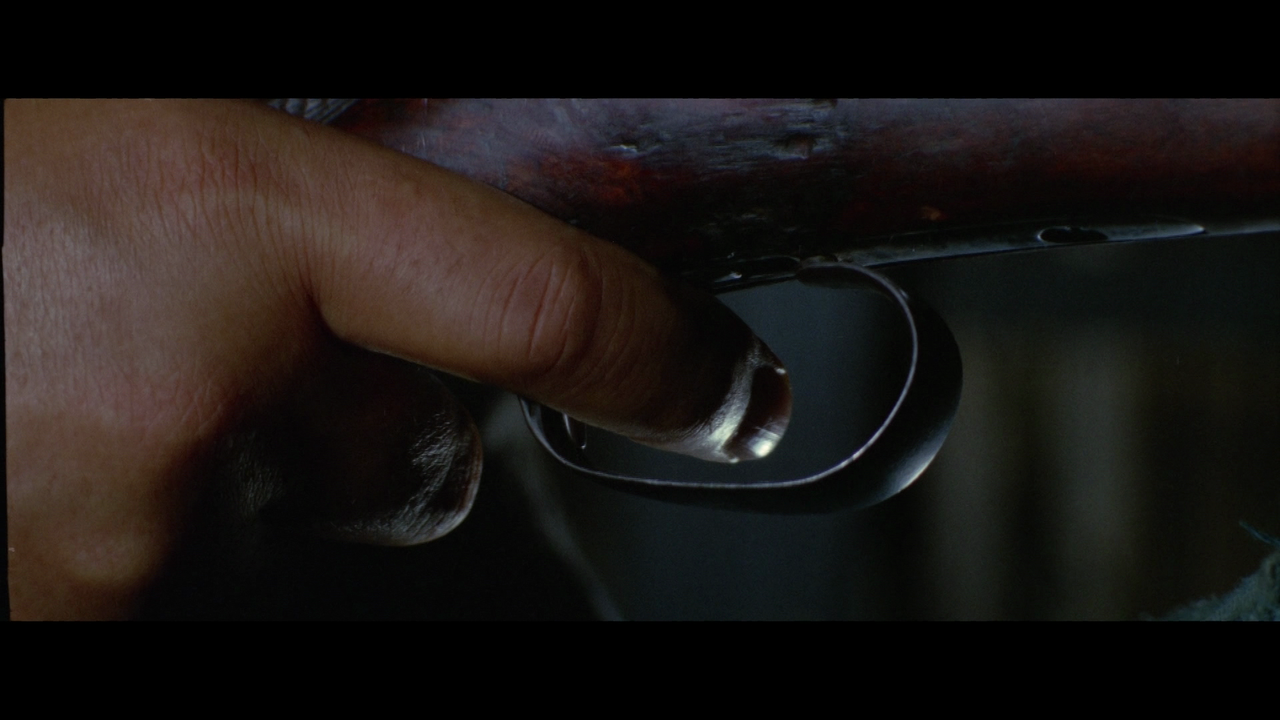
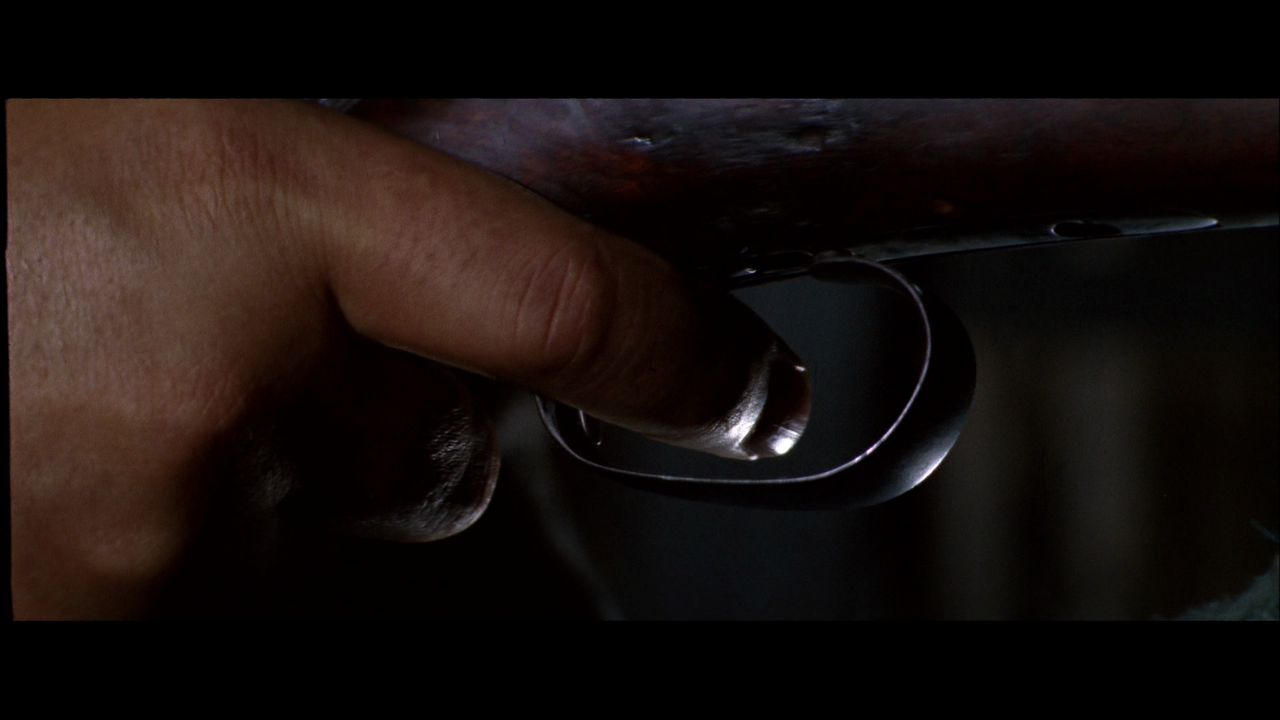
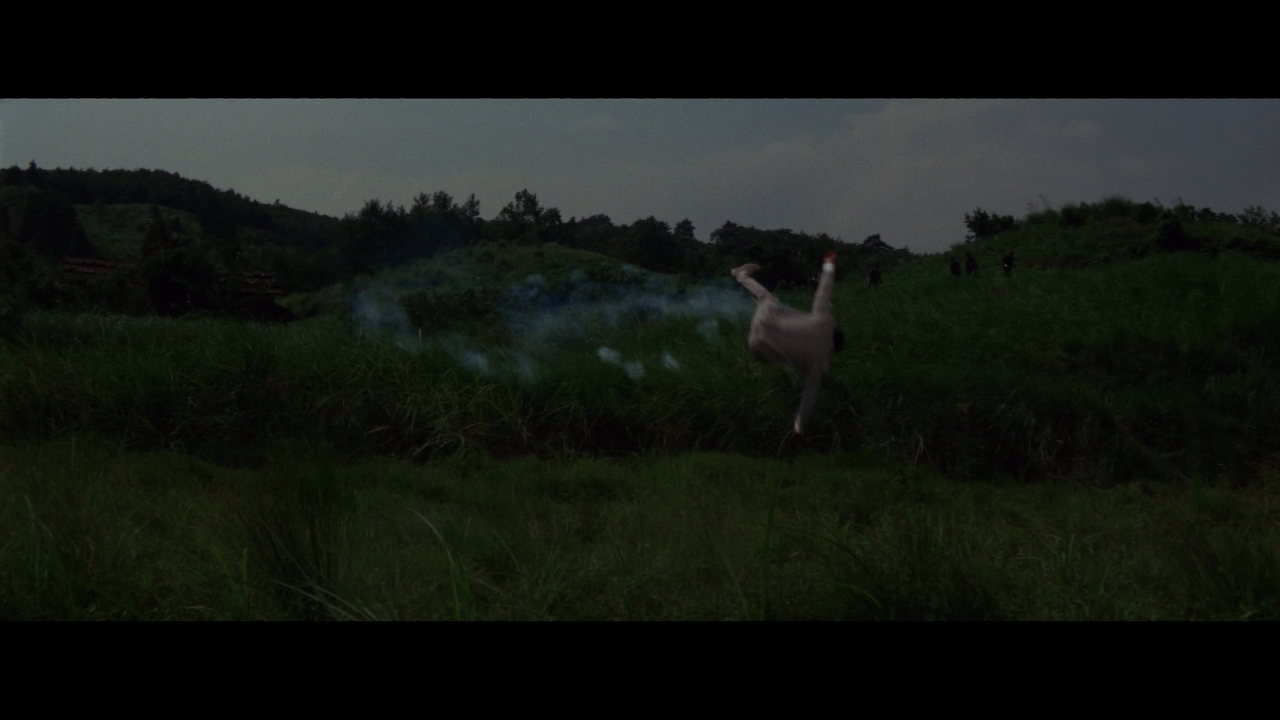
These last two come from The climactic shootout at the end of the movie. The whole extended ending sequence is shot day-for-night like this. This has never been visible on home video before, so both versions we see here are an improvement––and detail can be seen in the feature version, in spite of how dark it looks here. The 35mm presentation I saw looks a lot more like what was in the trailer, though, and the darkness of the feature does make me pretty sad. Shouldn't somebody have noticed what was going on here? I am positive we're meant to see what's going on in the finale of the movie.
 THE MOVIE
Most people have probably not seen this one, either, so here goes: I'll summarize in a very roundabout way.
The picture runs about ten minutes longer than the average Suzuki movie. Even more prestigious pictures Suzuki made––like The Bastard and Kanto Wanderer––run a tight 90 minutes. The additional ten minutes are somewhat conspicuous; Nikkatsu frequently seemed to let their A-pictures run longer than the B-pictures (William Carroll's book includes an exceptional look into the more complex ambiguities of how Nikkatsu structured their A-picture/B-picture setup––the results were often more porous than is suggested when you think of the schema––but for these purposes, we can say that Suzuki's career at Nikkatsu contains more films made to fill the bottom half of a double-bill than the top––which is not to say, though, that some of the B pictures didn't still rise to the top), and this runtime frequently marks the film out as more prestigious. An earlier prestige movie in Suzuki's career––The Boy Who Came Back, also starring Akira Kobayashi––also ran that extra 10 minutes. In spite of the extra implied prestige, Our Blood Will Not Forgive is still not the A-picture––It screened opposite a 2-hour Sayuri Yoshinaga movie, Gazing at Love and Death, directed by that hack, Buichi Saito. But the extra runtime still places Our Blood Will Not Forgive in another echelon of significance than Suzuki's usual picture of the time––at least, for the top brass at the company. Hence the presence of two stars in the picture, of roughly equal stature: Akira Kobayashi and Hideki Takahashi. Kobayashi is still the more prestigious actor, but Hideki Takahashi has already distinguished himself as the star of Nikkatsu's first big hit yakuza movie, Symbol of a man.
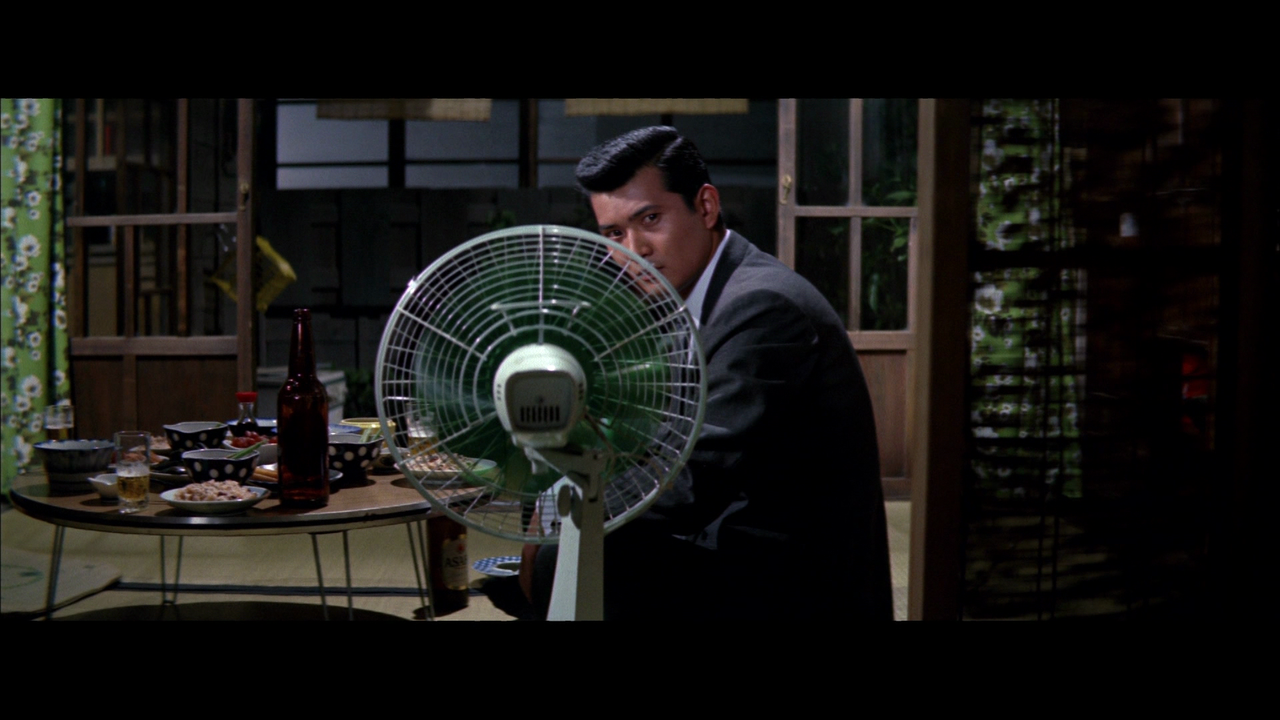
Suzuki had just come off a pair of hit yakuza movies starring Akira Kobayashi. Suzuki, like his mentor Hiroshi Noguchi, and like compatriot Ko Nakahira, tended to be handed riskier assignments Nikkatsu was trying out, and these early yakuza movies seems to have been an attempt on the studio's part to carve out some different, but hopefully equally-profitable terrain as Toei's successful yakuza movies. When Nikkatsu considers Our Blood Will Not Forgive a financial failure (I believe more budget was invested in this film than was standard for Suzuki––it is a slightly larger-scaled movie than his other Nikkatsu movies), Suzuki is forbidden from working with Akira Kobayashi again.
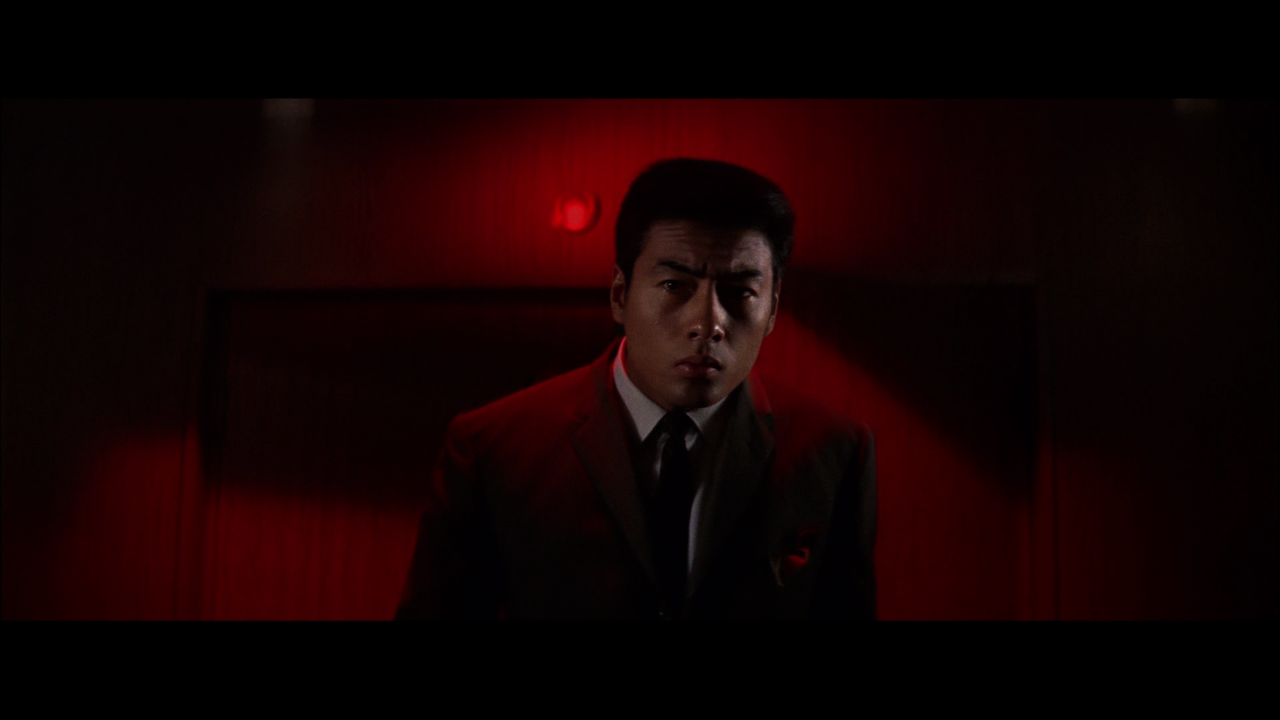
Hideki Takahashi, however, goes on afterwards to make Tattooed Life and Fighting Elegy with Suzuki.
On initial viewing, this is the only Suzuki movie I can recall where you really feel the runtime; those 100 minutes feel like two hours. I can only imagine the double-bill with a likely somnambulant, 2-hr. Buichi Saito-directed movie, must have dragged considerably. There are two large problems with this movie which don't usually afflict Suzuki's pictures. The first is that the film seems to be, for the most part, two movies of significantly different tone and purpose. Two movies––one aimed at Akira Kobayashi fans, made in a glossy, melodramatic and romantic vein, and one showing off the far more comic and physically dynamic Takahashi. And then these halves seem to have been jammed-together without an appropriate attempt to make the diverse tones of the different movie halves work together.
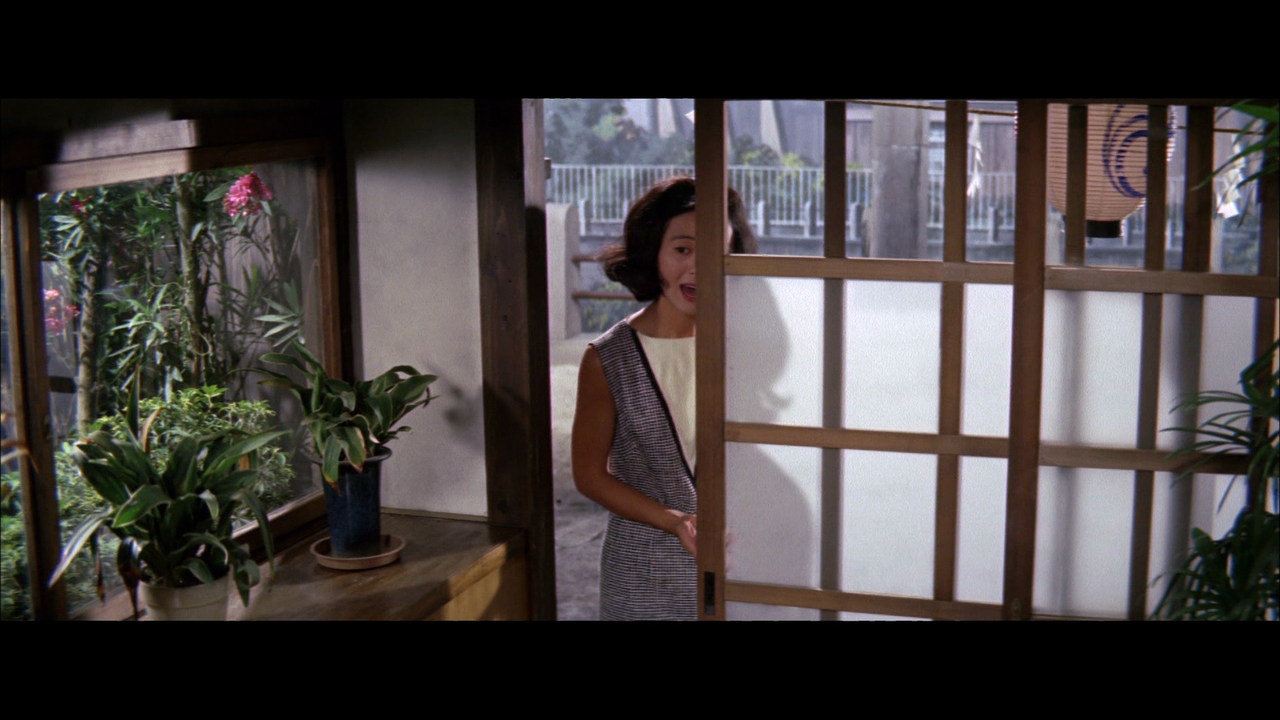
In the theatrical version I saw, a host of screenwriters were listed. We know more and more that Suzuki took a much more active role in editing and rewriting his screenplays than has previously been identified. But on this film, Suzuki's skill with writing seems to have deserted him. Suzuki never seemed to talk about this movie, and hated to recall films where the studio interfered; here it seems very possible, because the two stars' disparate storylines only occasionally succeed in meeting up, that there were two different stories crammed together, to account for the differing appeal of the two stars.
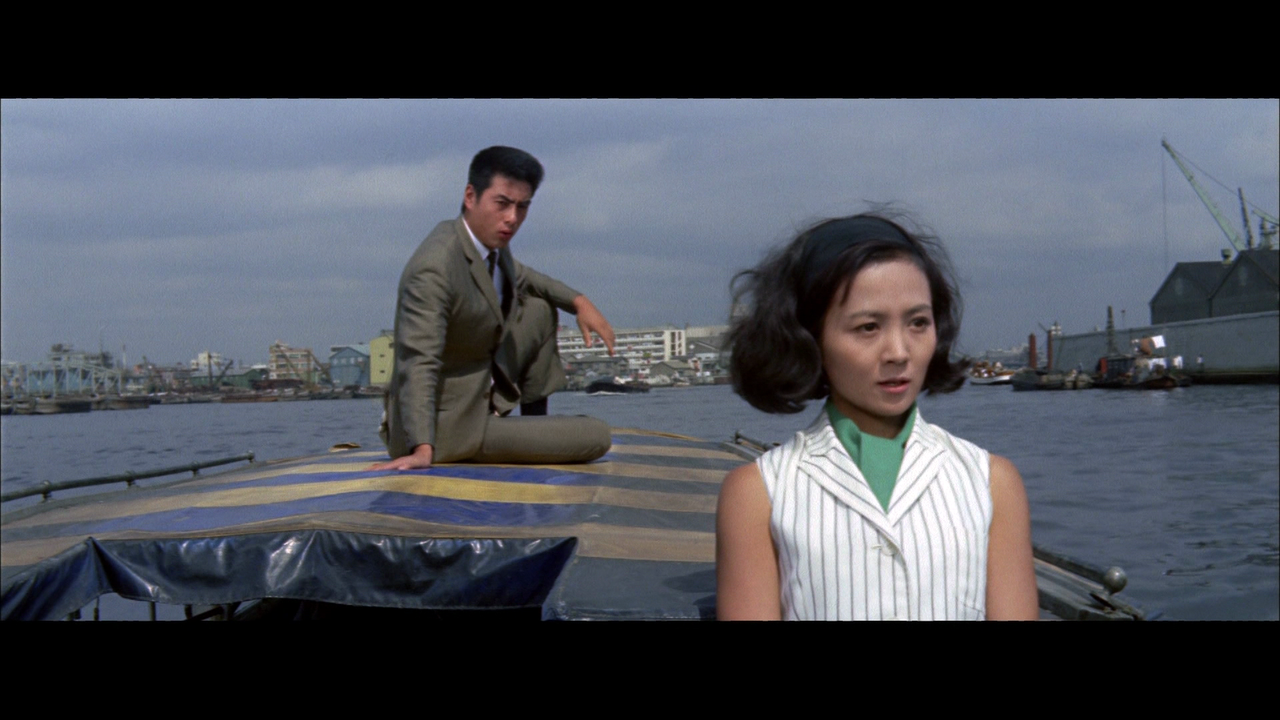
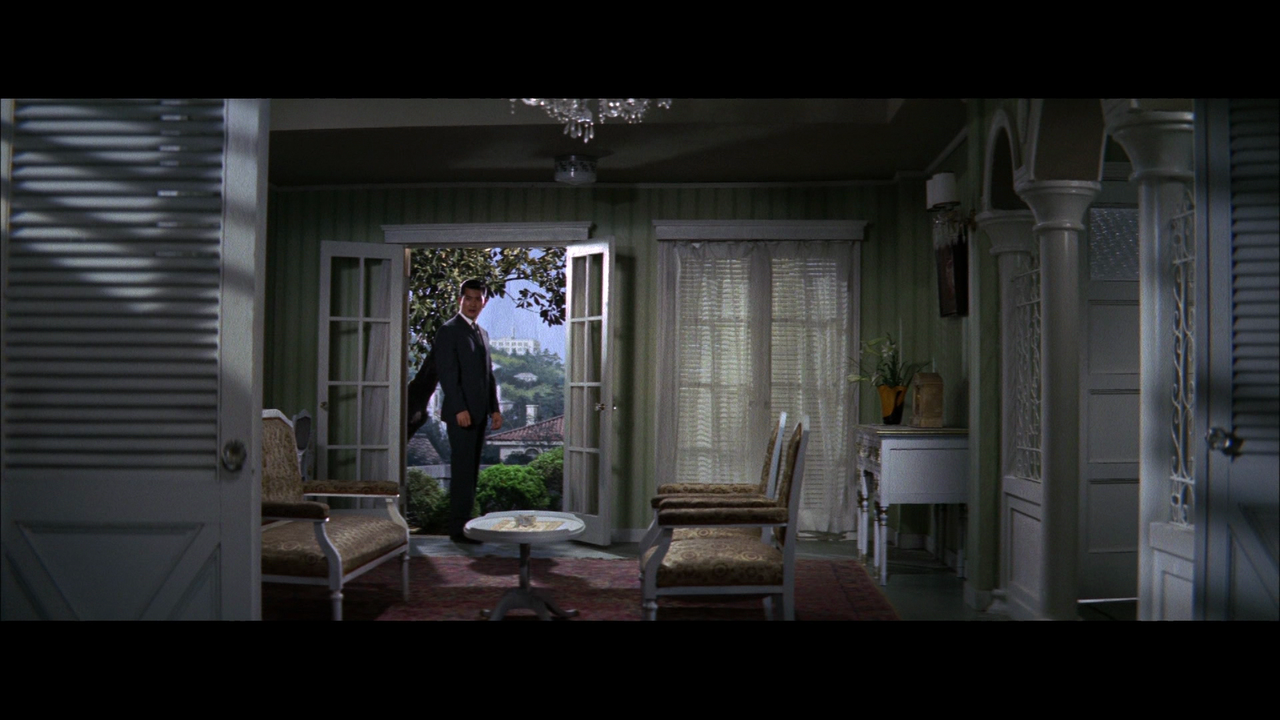
This compound story of two brothers (one a brash, young, extremely boisterous goofball who works in an office building, the other a suave businessman-seeming sort of guy), who are suddenly dragged into seriousness by the revelation that their yakuza boss father was betrayed and murdered by a member of a rival clan, never, ever comes together. The two brothers simply do not ever see eye-to-eye. Suzuki is a very adroit editor of his other scripts––this movie smacks of the studio insisting on particularly incongruous material being fit together, with no regard for the outcome. The main way this lack of cohesion shows up is the way in which the two brothers hardly interact. They are the main characters in the story, and the point is that they live in separate worlds, but that the truth of their righteous vengeance should bring them together. Fine, except...the truth of their righteous vengeance never brings them together. Instead, Akira Kobayashi has a plan for vengeance, and tries to execute it. Hideki Takahashi tries to warn his brother the yakuza are on to him, and Kobayashi won't listen. Kobayashi fights all the yakuza after him, to his ruin (the scene plays out like a suicide-by-yakuza, anyway––Kobayashi's character is already mad with grief over the death of his highly volatile girlfriend, the daughter of Kobayashi's mob boss––the boss who, it just so happens, was the one who had Kobayashi's and Takahashi's characters' father killed. Takahashi just sort of weirdly galavants throughout this entire showdown. His presence does not ultimately make a difference. He also seems to learn nothing about nothing over the course of the movie. Nothing really comes of his bearing witness to the death of his very different brother.
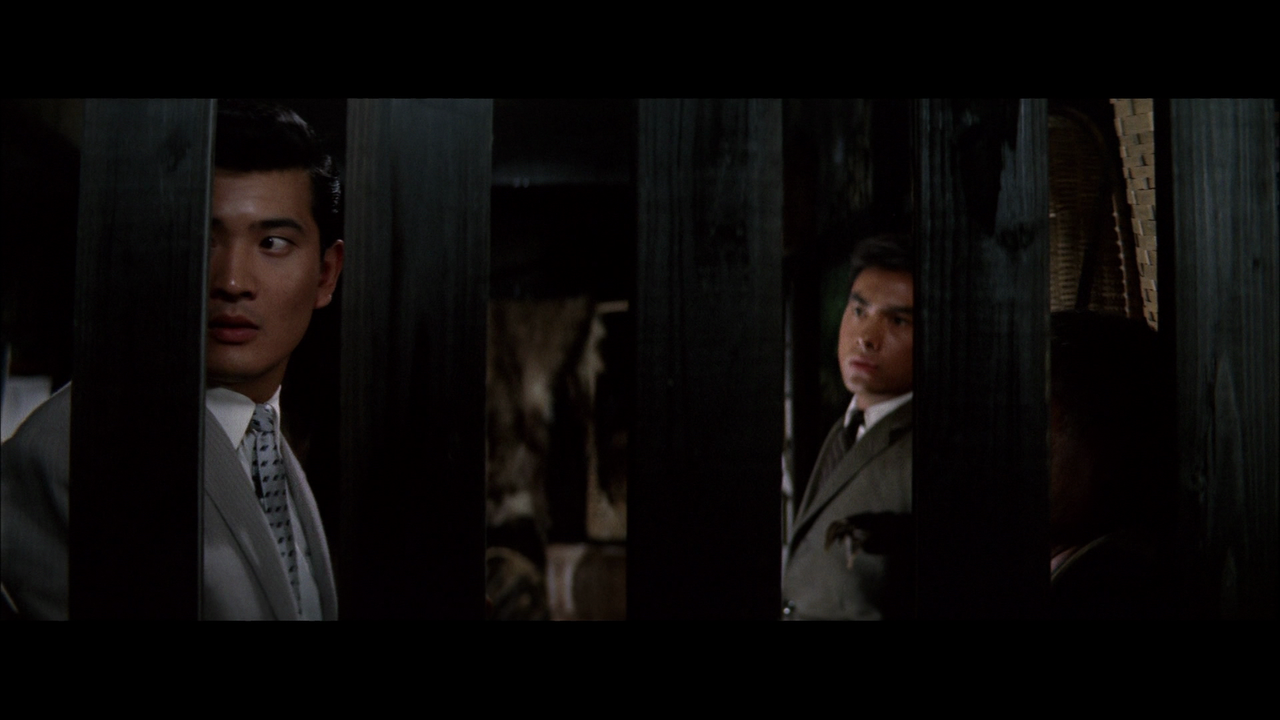
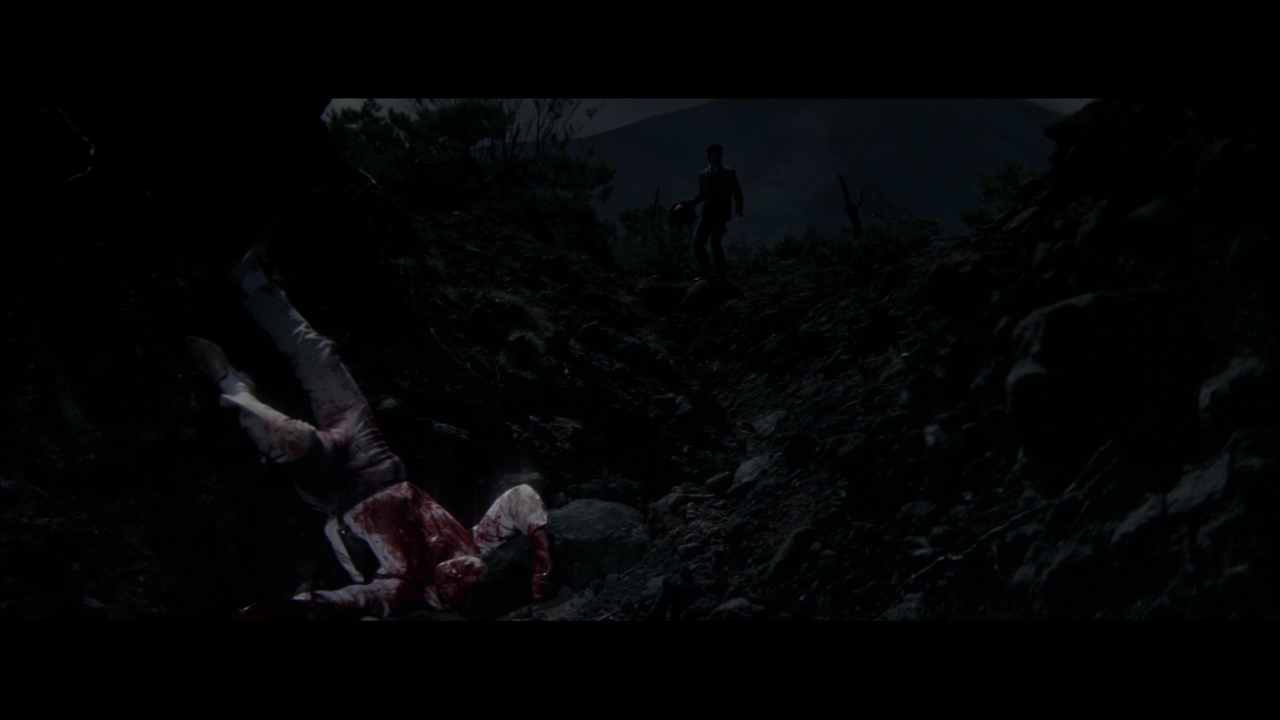
Initially, Nikkatsu seemed to want to find a way to differentiate their yakuza pictures from Toei's. Symbol of a Man worked a lot like a Toei picture, down to the browner, more muted color palette. But with the four Suzuki yakuza movies, Nikkatsu seemed to be reaching for a somewhat different kind of story. Kanto Wanderer is romantic, stylish, and dreamlike, presenting the yakuza as singular actors in a world where they are outmoded, mocking their lifestyle (Toei, allegedly at least partly established to launder money for the yakuza, has a much more romanticized view of the gangster life than Suzuki's––even in their supposedly de-romanticized movies, like the Battle Without Honor and Humanity series). The Flower and the Angry Waves adds intrigue and suspense to the mix, and also a muscular subplot about labor union struggles against the yakuza––to say nothing of the stylized recreation of the late-Taisho/early-Showa era Tokyo. Tattooed Life is a romantic adventure in which being a yakuza is a source of shame and regret, something the hero always has to hide (hard to picture that happening in a Toei movie––they'd rather frequently reveal characters to secretly be yakuza than keep the yakuza identity of the main character (one of the film's only yakuza until the end of the film).
By comparison, Our Blood Will Not Forgive does continue to deliver on Suzuki's obvious disdain for the yakuza (tiresome Scorcese fans, take note––Suzuki is able to disparage these characters in a way where there's no real ambiguity about his intent––and he does it with humor and grace––even in one of his only bad movies), but the look of the film is a lot closer to the Toei pictures. The visual is especially attuned to the Toei preference for zoomed-in telephoto, the penchant for dark brown interiors, the fixation on the yakuza chain of command (something that flitted by so swiftly in Kanto Wanderer, and was hardly an issue in the other two Suzuki yakuza films). There is a languor that would be somewhat louche in the Toei version of this film, which here is cut with a different sort of stroke of the knife. This is where the more Nikkatsu-like elements work their way in. There are a lot of cliches from the era of Nikkatsu Akushon teased in here. There is a mother, who loves one son better than the other (a la The Stormy Man).
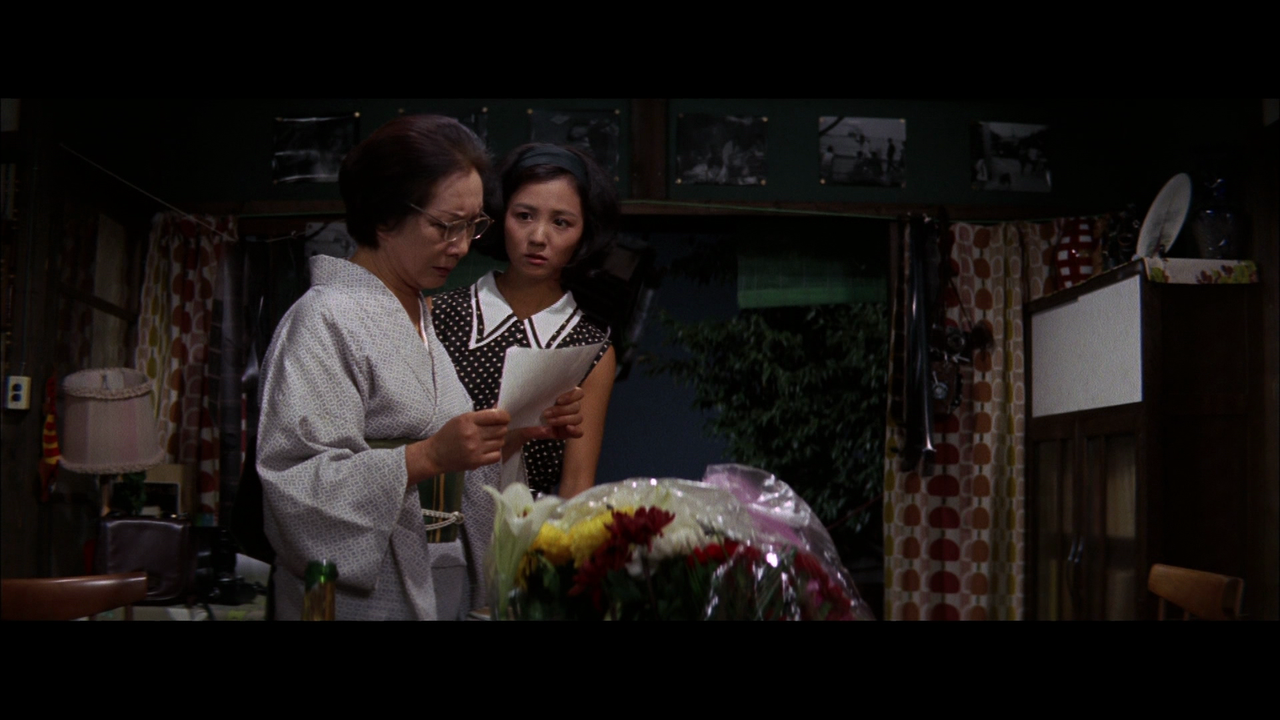
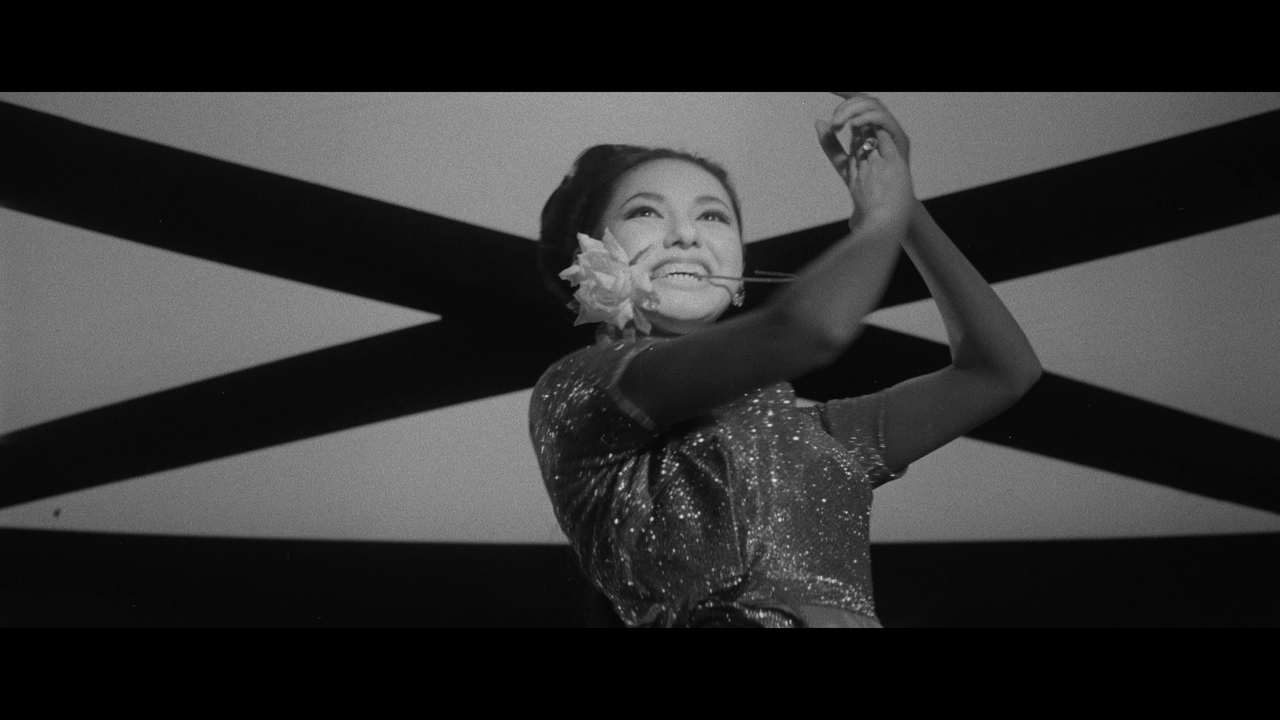
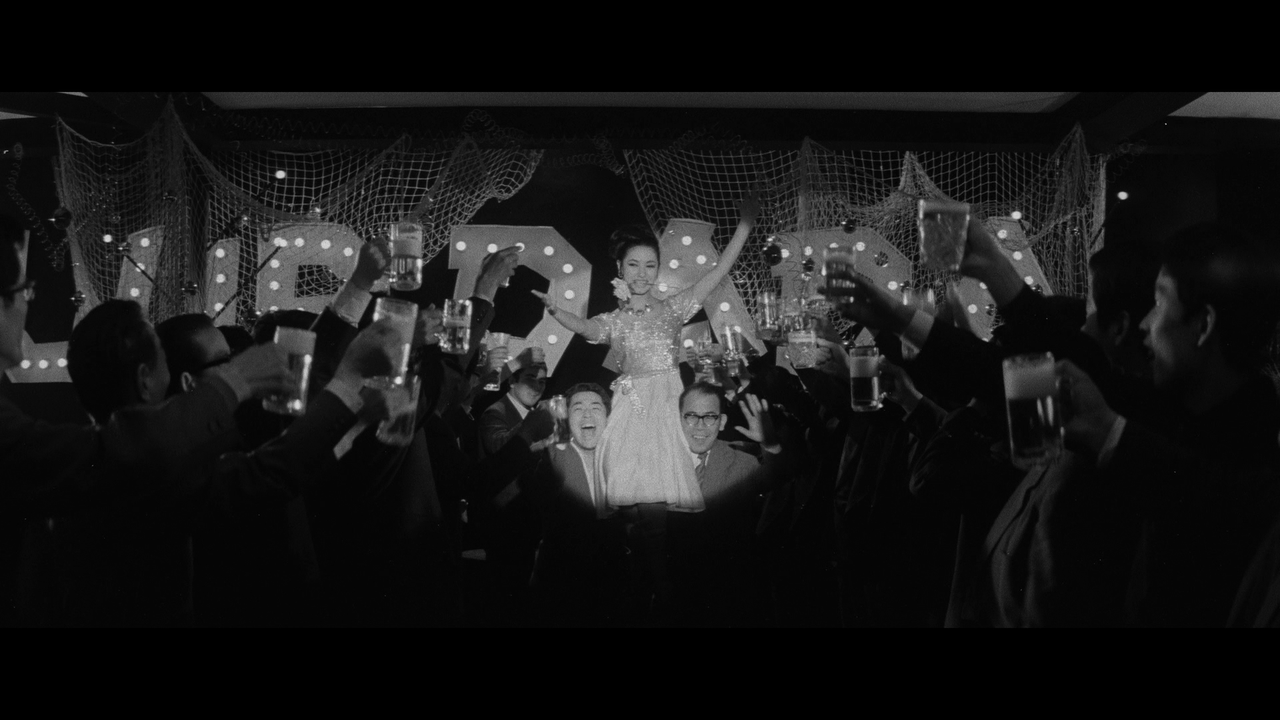
There is a nightclub scene with a vocal performance, which ends in a fistfight (almost too common in the Nikkatsu Akushon movies to name any particular movies).
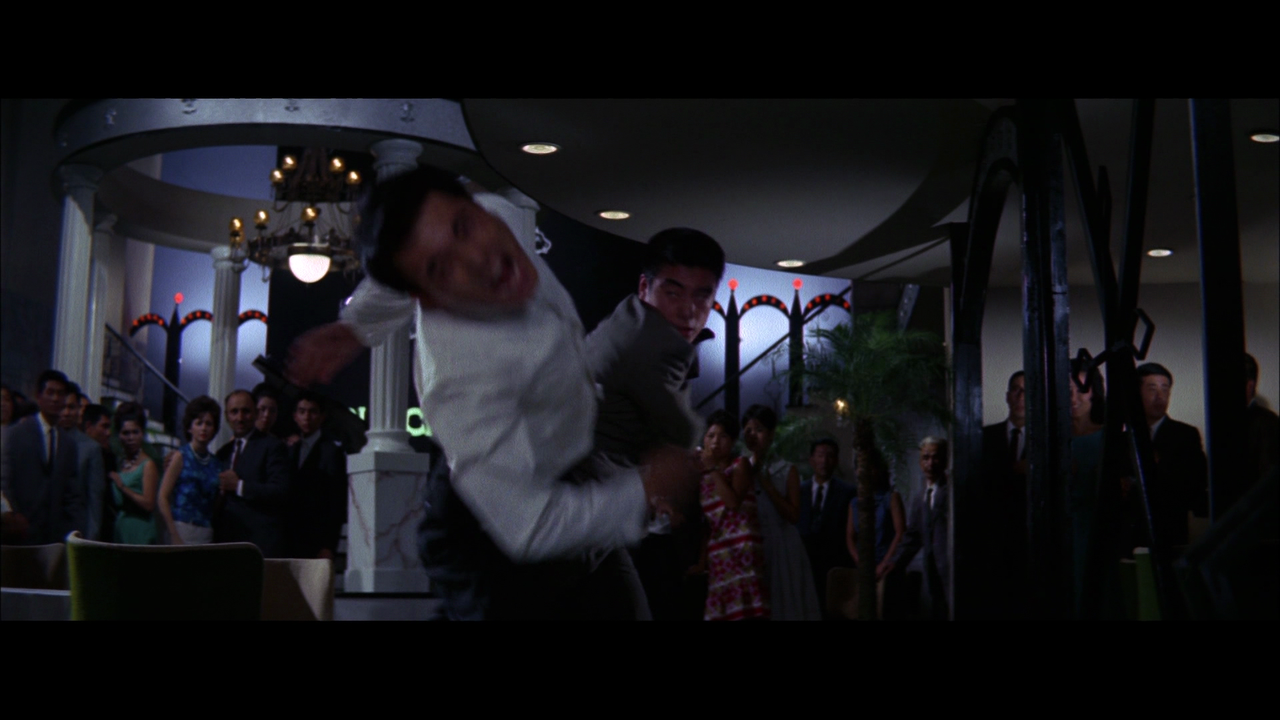
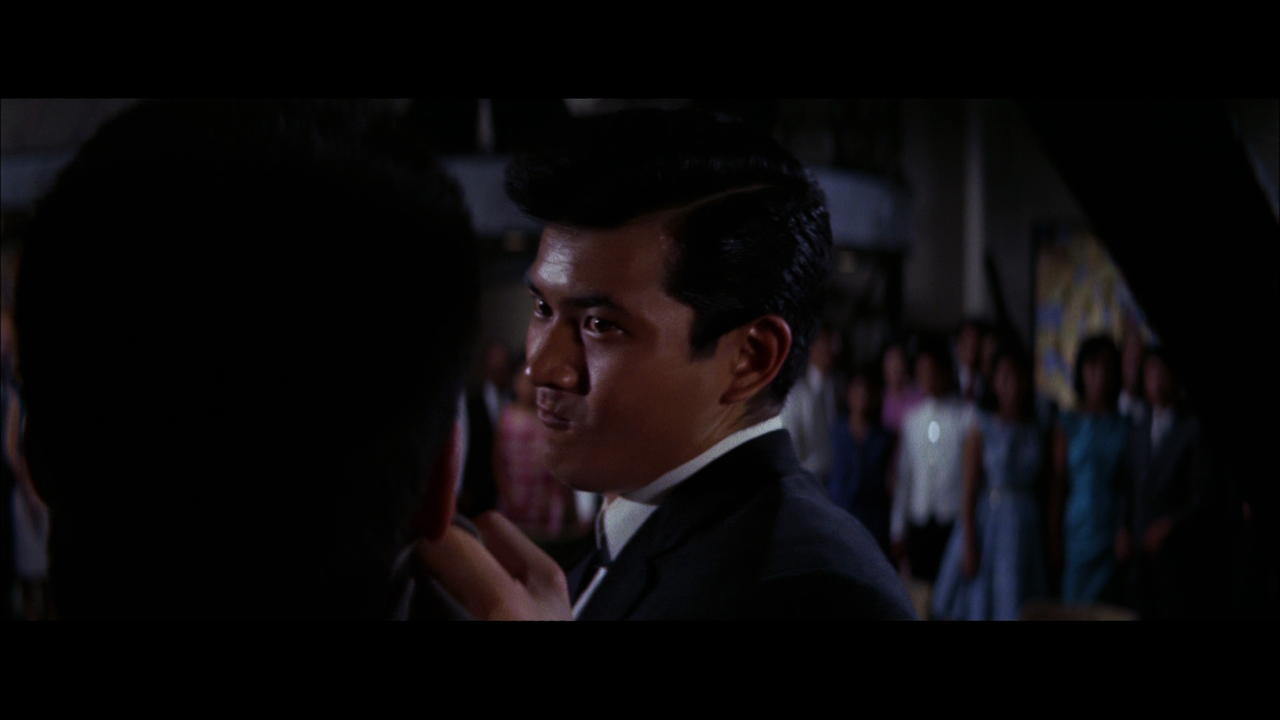
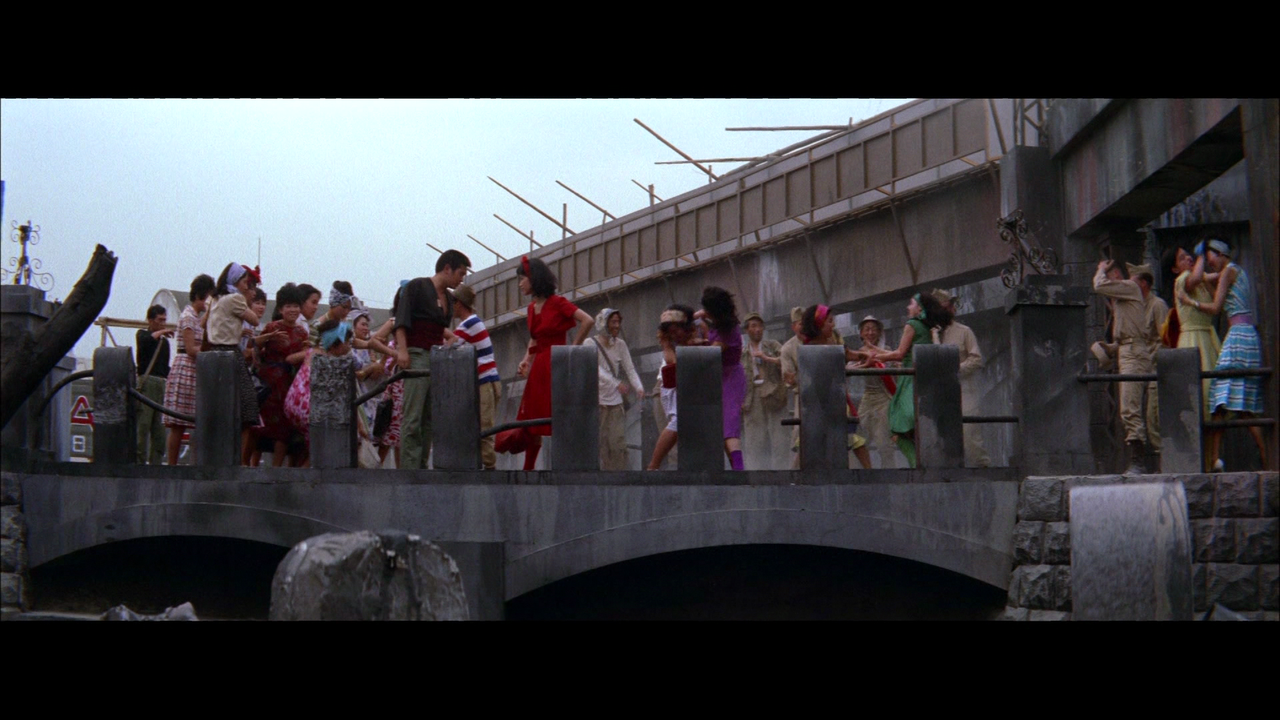
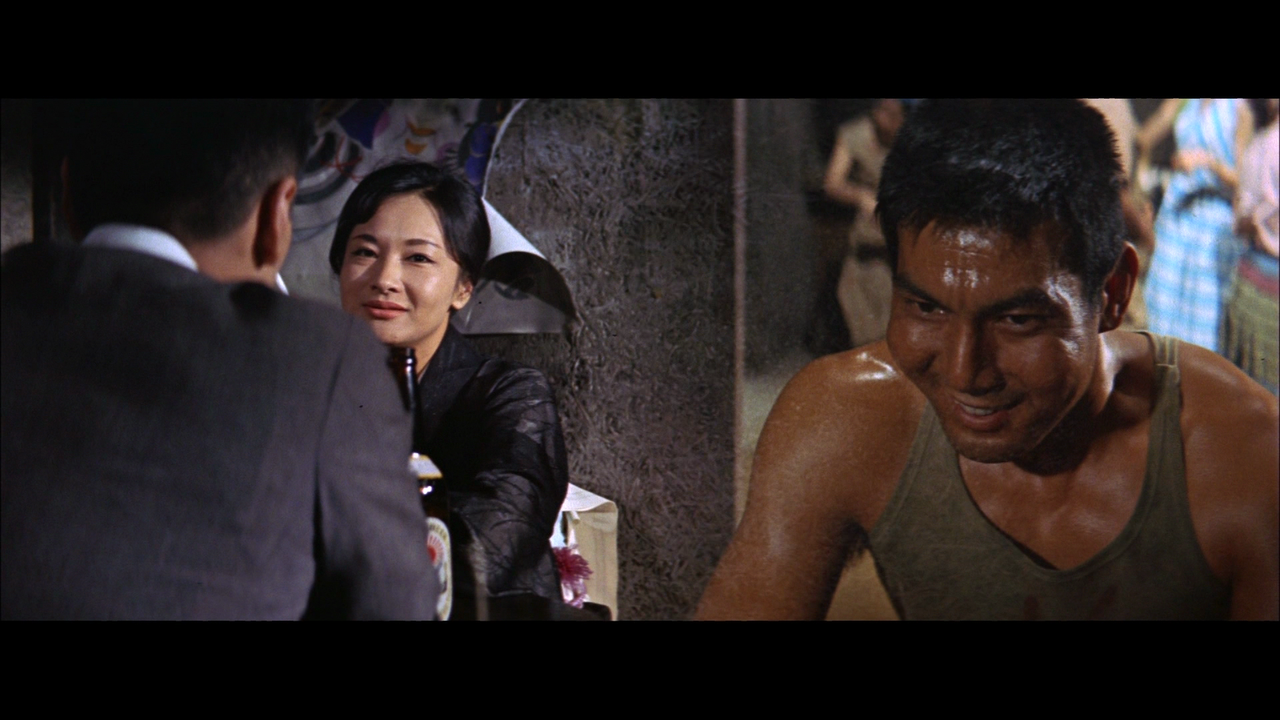
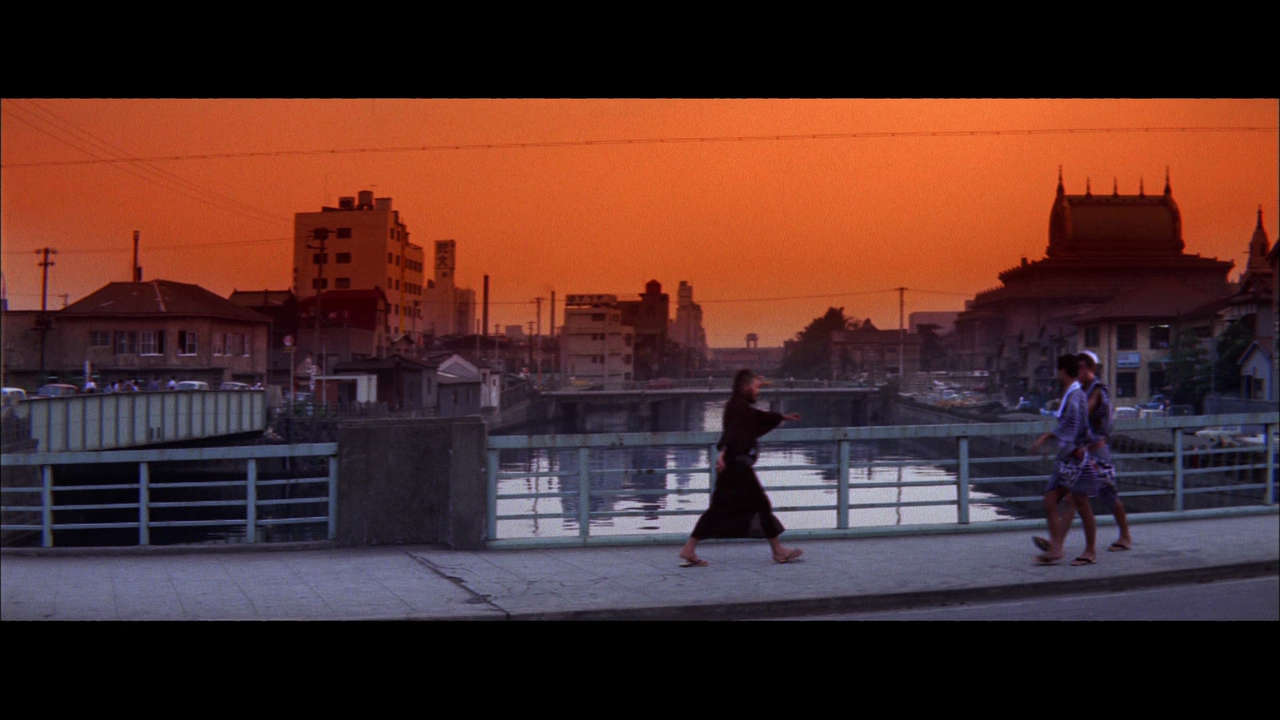
There is a focus on the new, postwar urban environment which is distinctly part of the Nikkatsu Akushon tradition. Hideki Takahashi works in this bizarre office setting. The place is a combination of Mad Men and How To Succeed in Business Without Really Trying, shot with a vaguely Tashlin-esque eye. Takahashi's boss and his peers at work are almost cartoonishly entertained by his antics This is one of those sections where the tone seems to be flown in from another movie, and Takahashi spends nearly half the movie in this sort of environment.
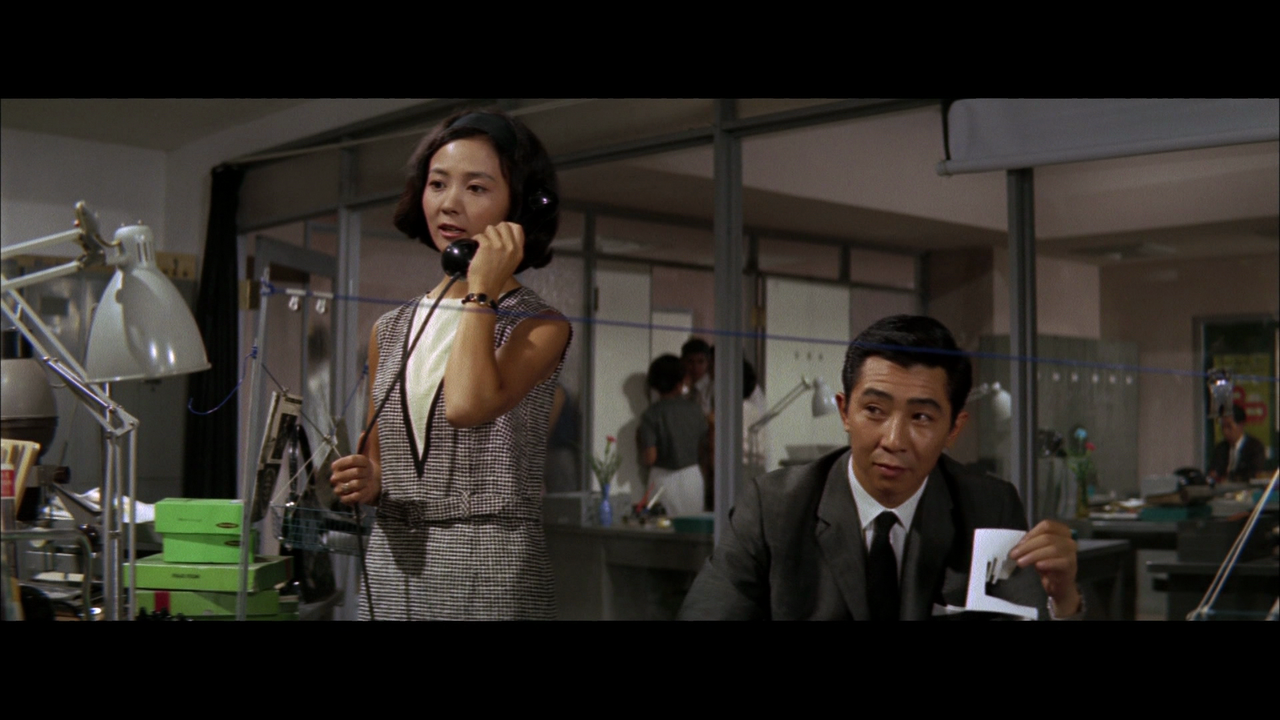
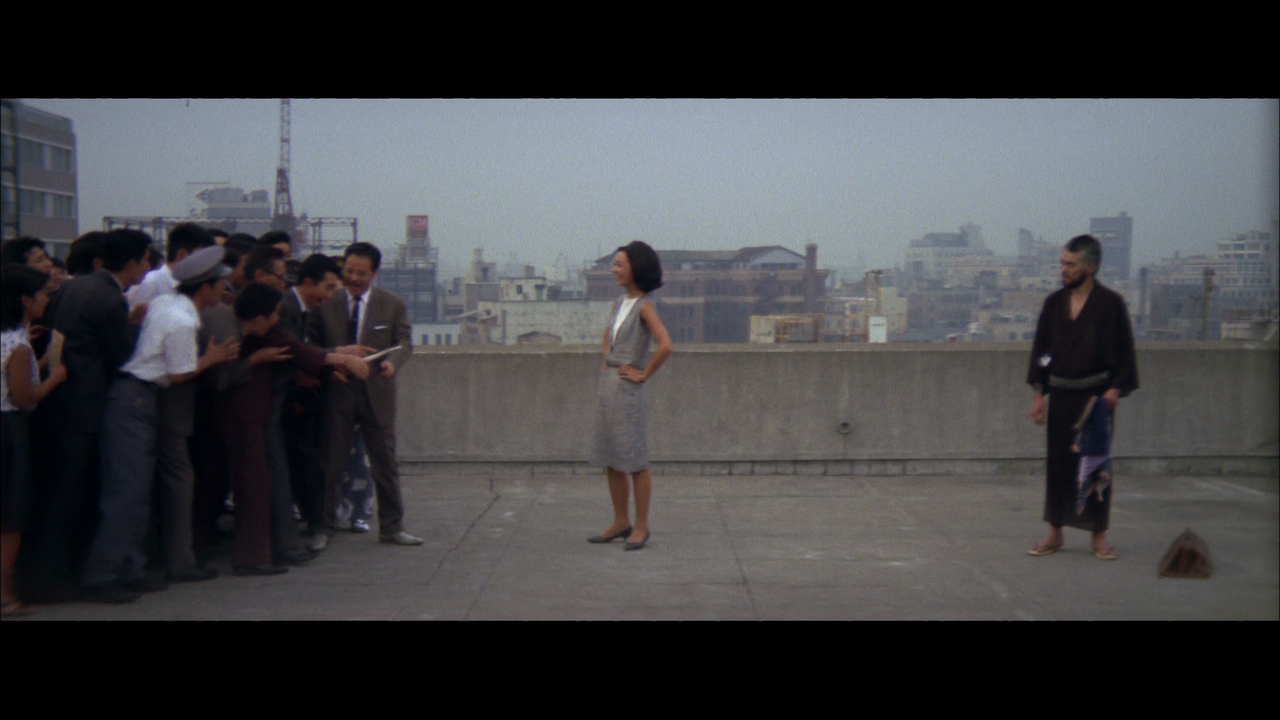
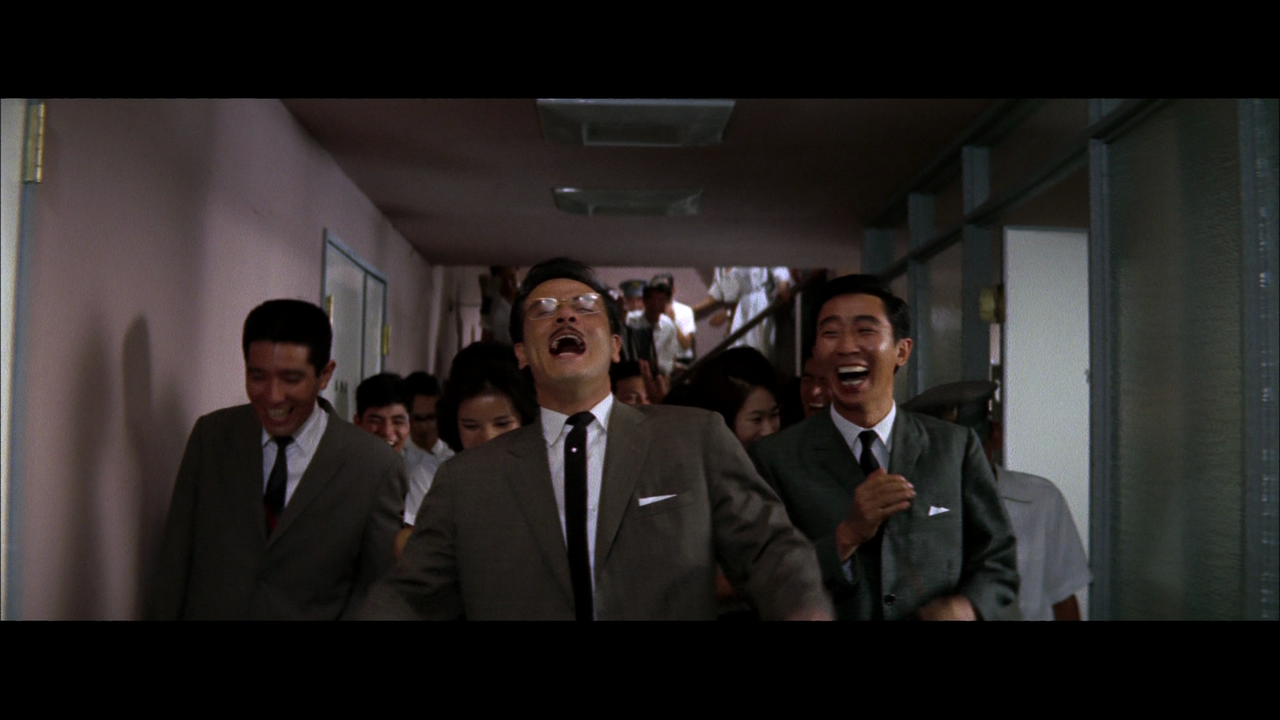
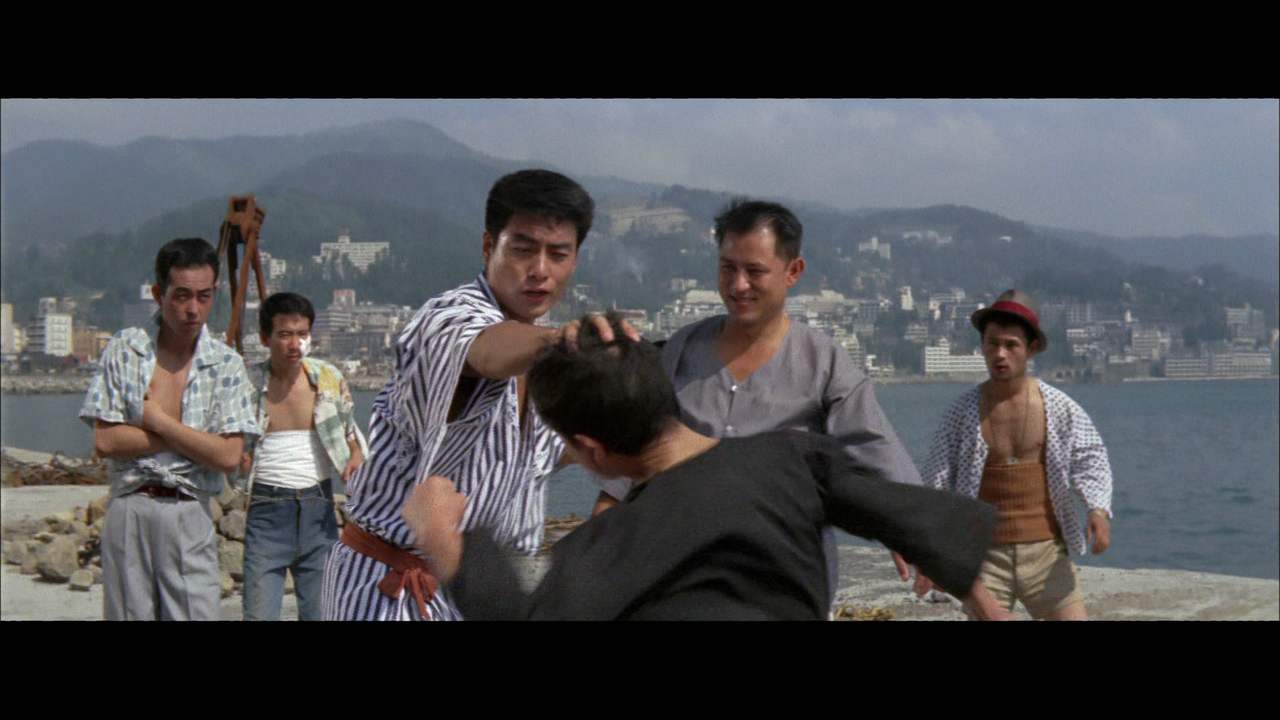
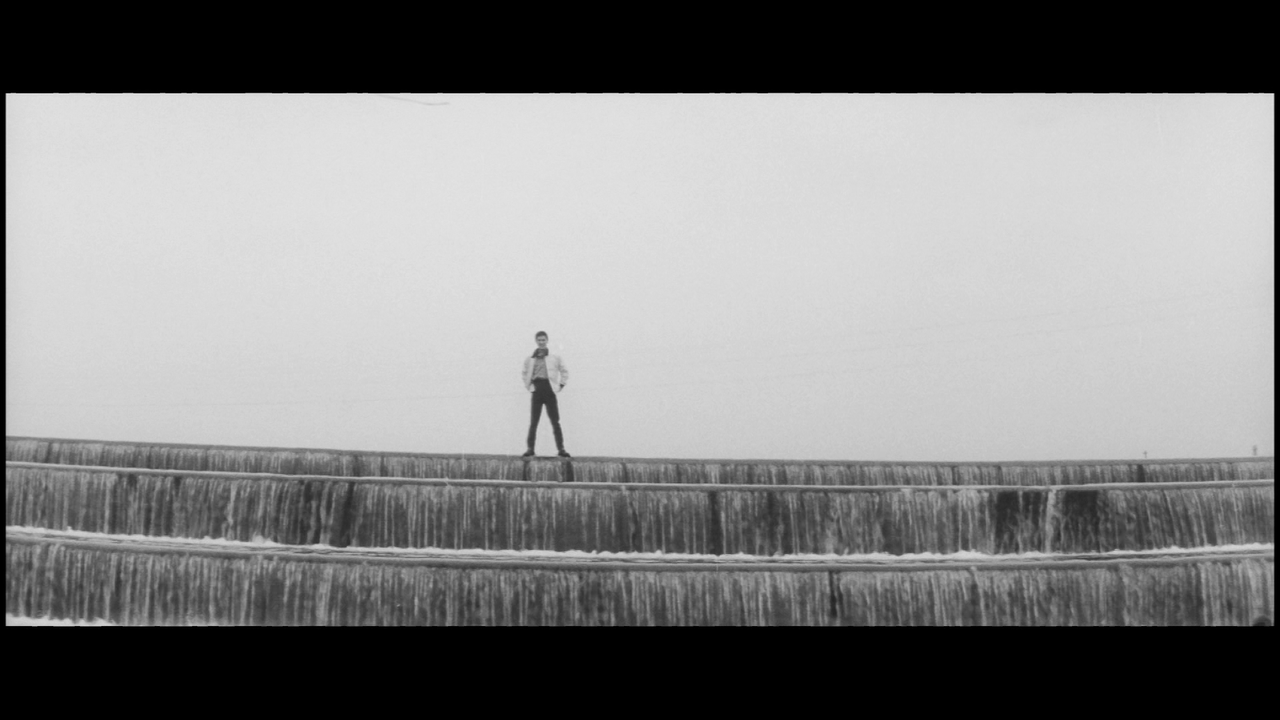
The film even follows Takahashi on a work retreat to another town, resulting in a vibrant fight scene in which Takahashi proves his mettle by scarily picking another actor up off the ground and throwing him over a stone jetty into the harbor.
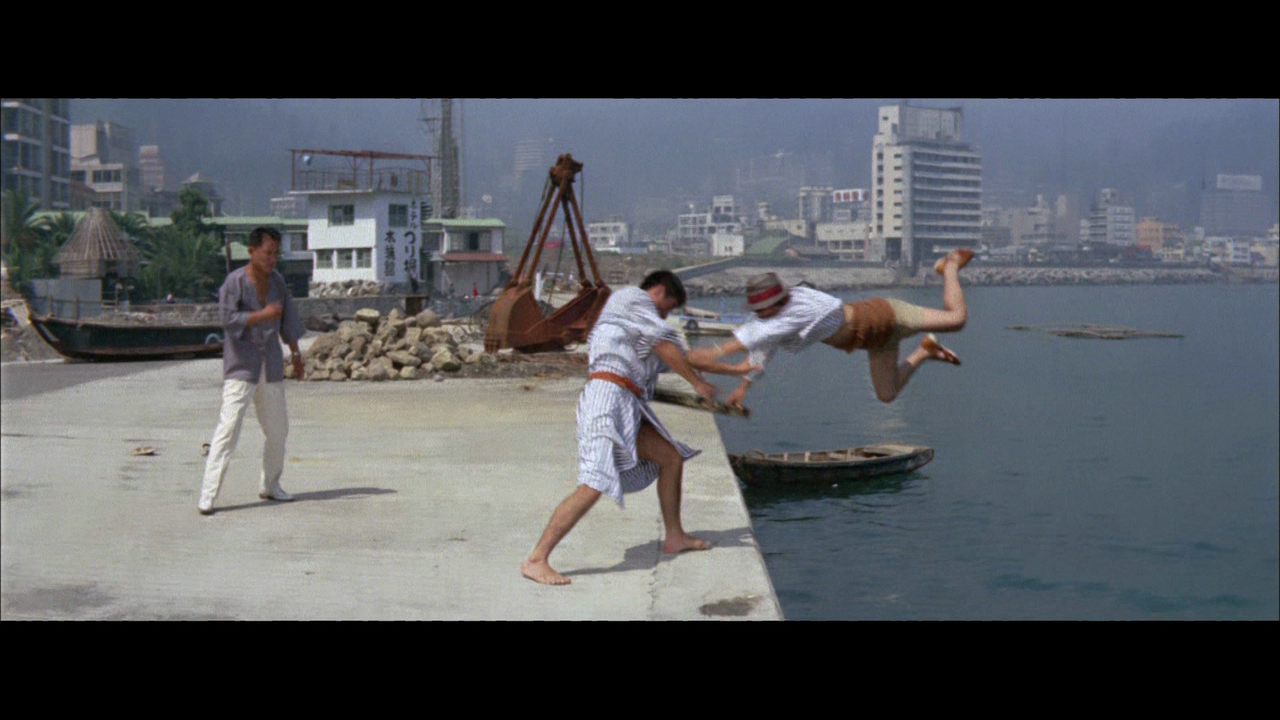
So f*cking scary; that guy's head nearly connects with the concrete before he goes into the water. Crazy that Takahashi could pick a guy up and toss him that far, but also crazy that they tried it in the first place. In the take, Takahashi looks a little freaked-out by the toss.
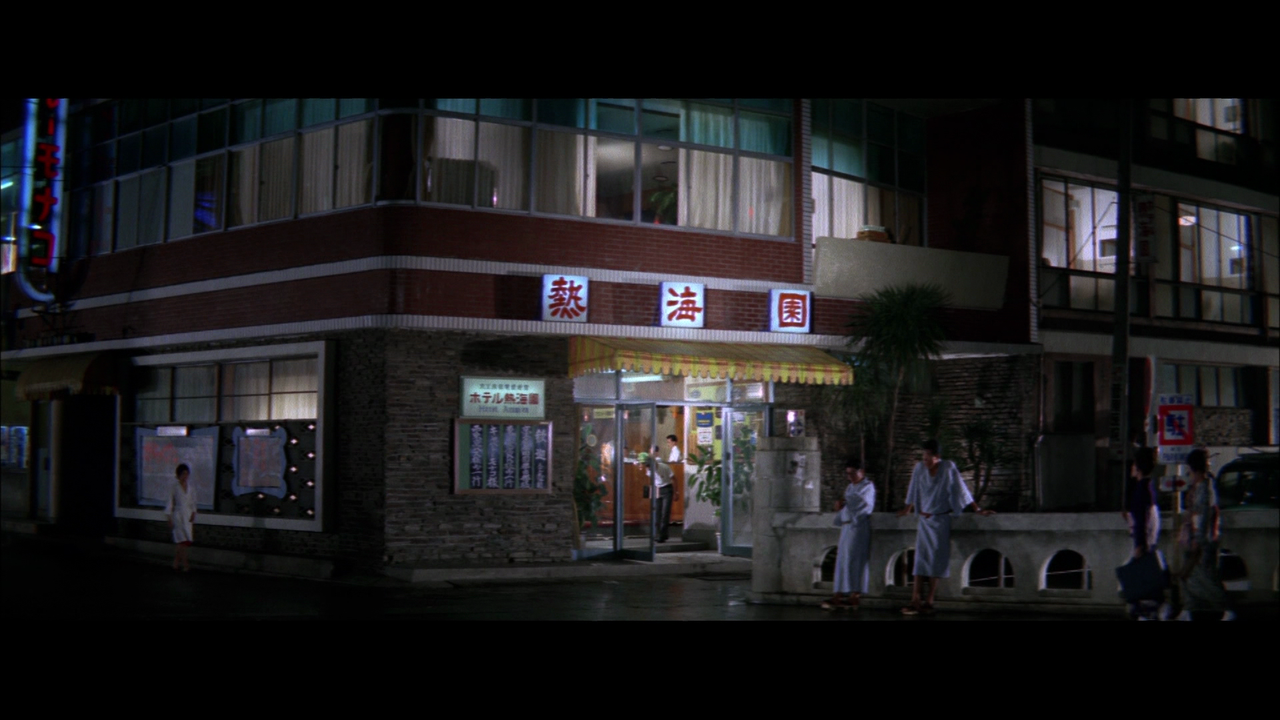
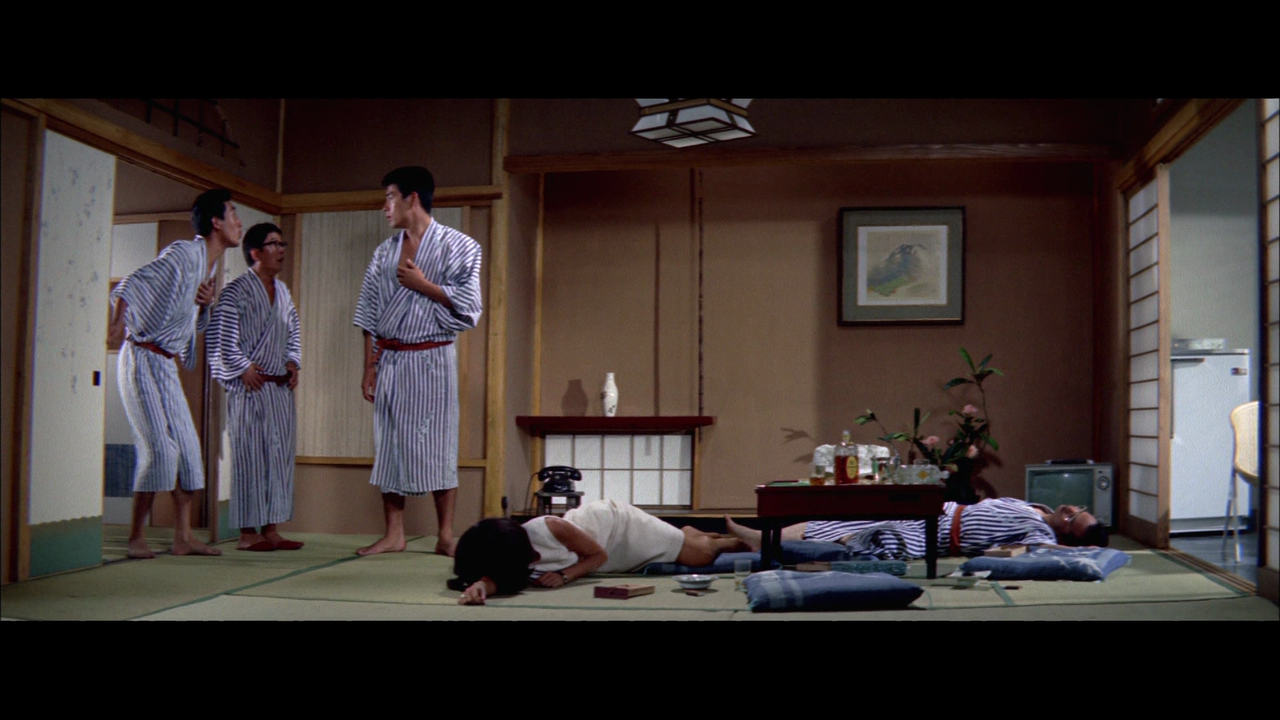
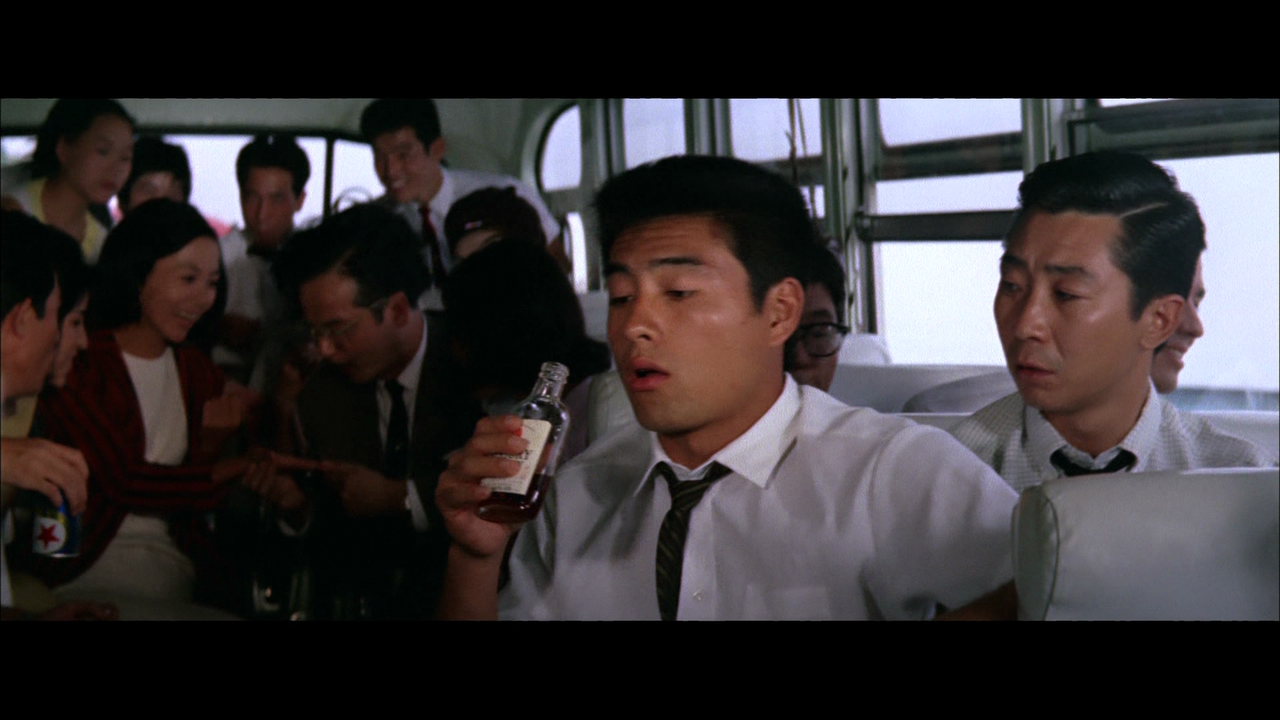
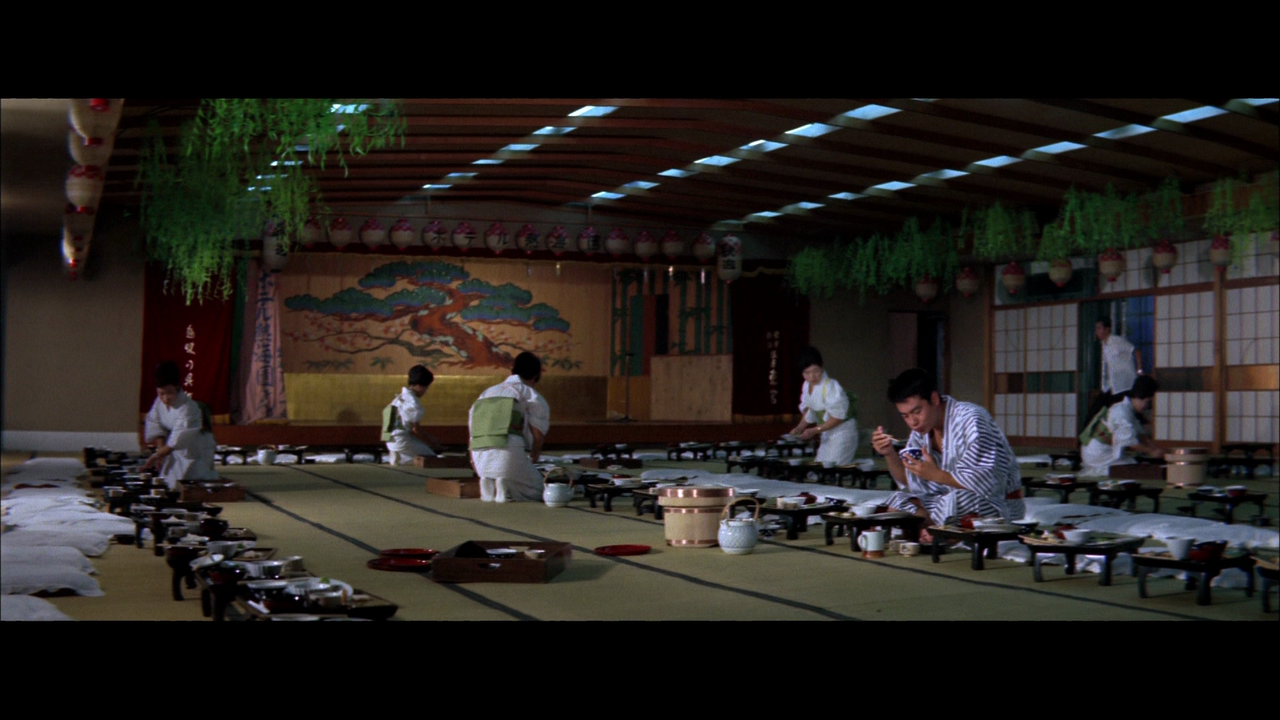
When the yakuza plot starts to take over in the second half of the film, Takahashi still acts like he's in this posh workplace comedy, still, bouncing off the walls exuberantly and refusing to pick up what his elder brother is laying down for him, tonally.
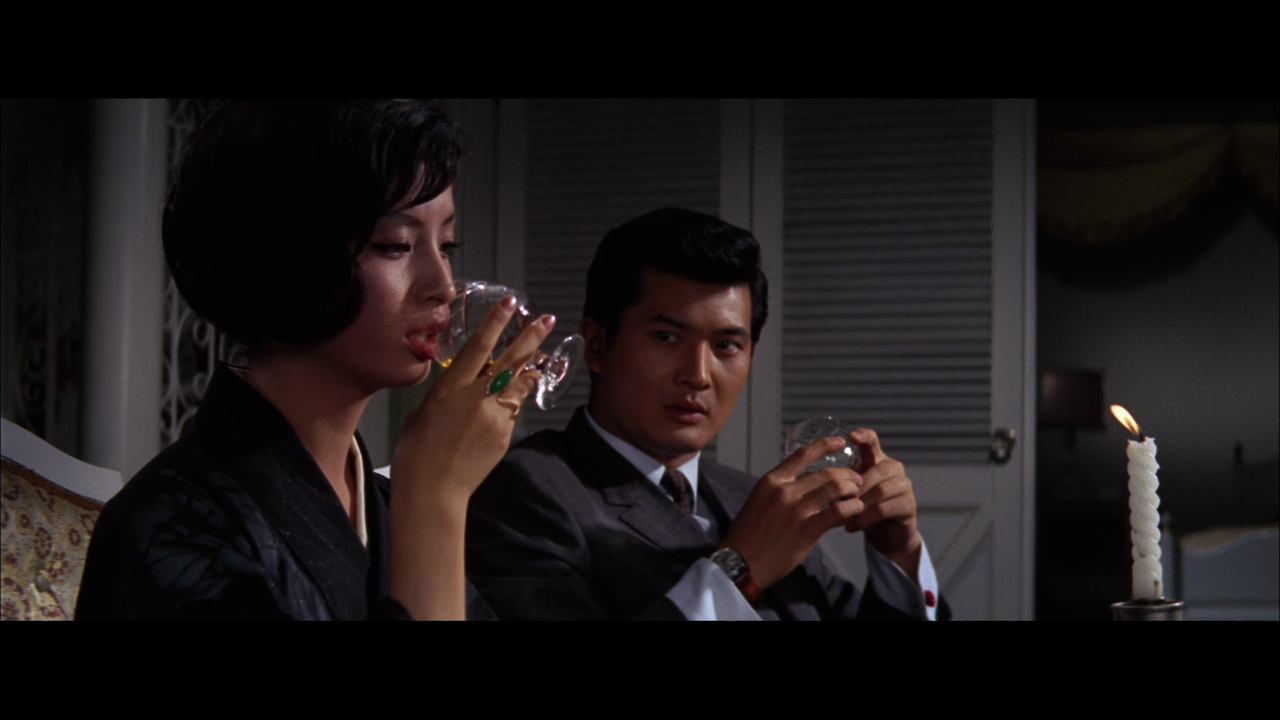
Meanwhile, Kobayashi's storyline mopes in a heroin-chic haze of people smoking languidly, people drinking wine languidly, people handing their mothers fat stacks of cash languidly, etc. Nothing seems to puncture this veil until the mob boss villain––who we've barely seen to this point––buttonholes Takahashi and lets him know that––unbeknownst to Takahashi, unbeknownst to the audience as well, Kobayashi has secretly been working off-camera to bring down the mob-boss he's working for––the one who murdered Kobayashi and Takahashi's parents.
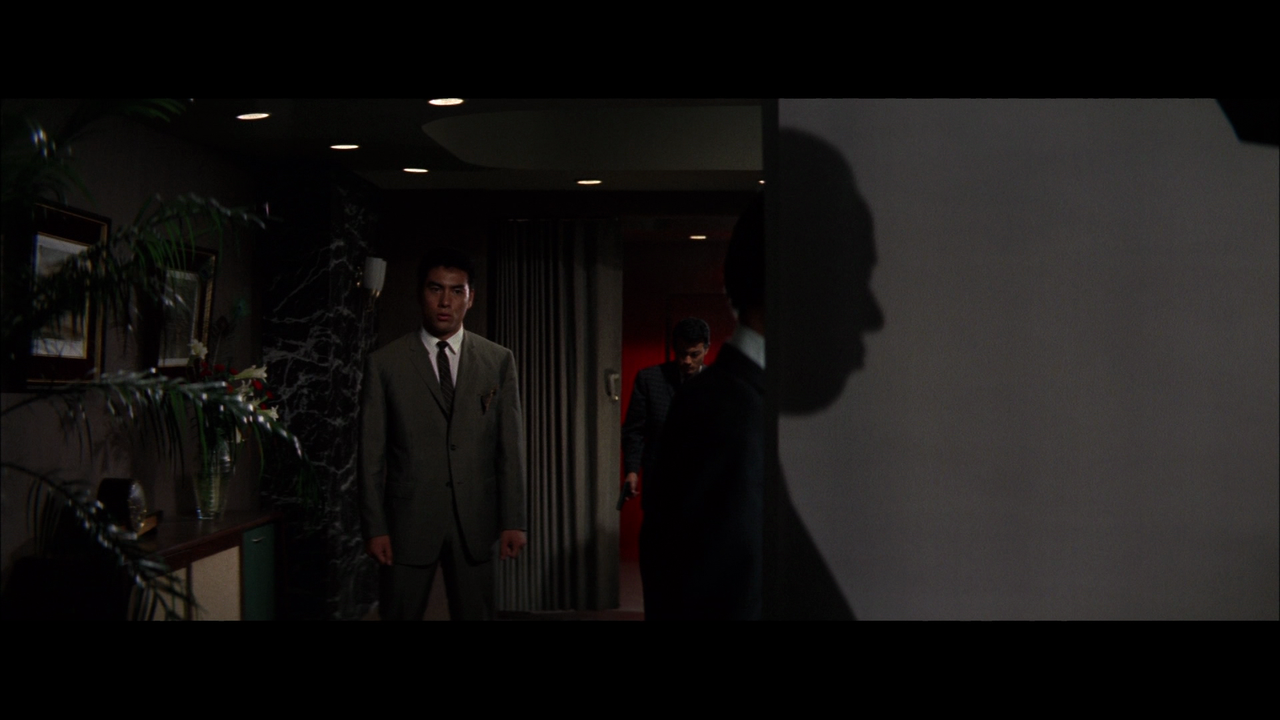
The boss's daughter, Kobayashi's girlfriend, has helped Kobayashi, but feels enormous guilt for betraying her father, and for her father's wrongheaded crimes as well. Her suicide puts a crimp in Kobayashi's plans, leading to a violent shootout in a shack in the mountains (the initial scene, a flashback where the brothers' father gets murdered––also takes place anachronistically, in a mountain cabin). Kobayashi, the good but secretive son, does horribly. Takahashi, the temperamental and impishly destructive son, occasionally bursts out to try and confront the villains, only to be practically dancing to the bullet ricochets at his feet. He makes no major contribution to this final scene, even though the script makes it exceptionally clear that the brothers must come together to resist the evil that led to their father's untimely demise. The goofball Takahashi really has no place in Kobayashi's showdown, which plays like a precursor to a Hong Kong heroic bloodshed movie––specifically The Killer. Suzuki does combat this incongruity some of the time. I kept noticing, in the screencaps, moments where the film would cut from one brother, in a particular scene, to the other brother, posing almost exactly the same way in another scene, elsewhere.
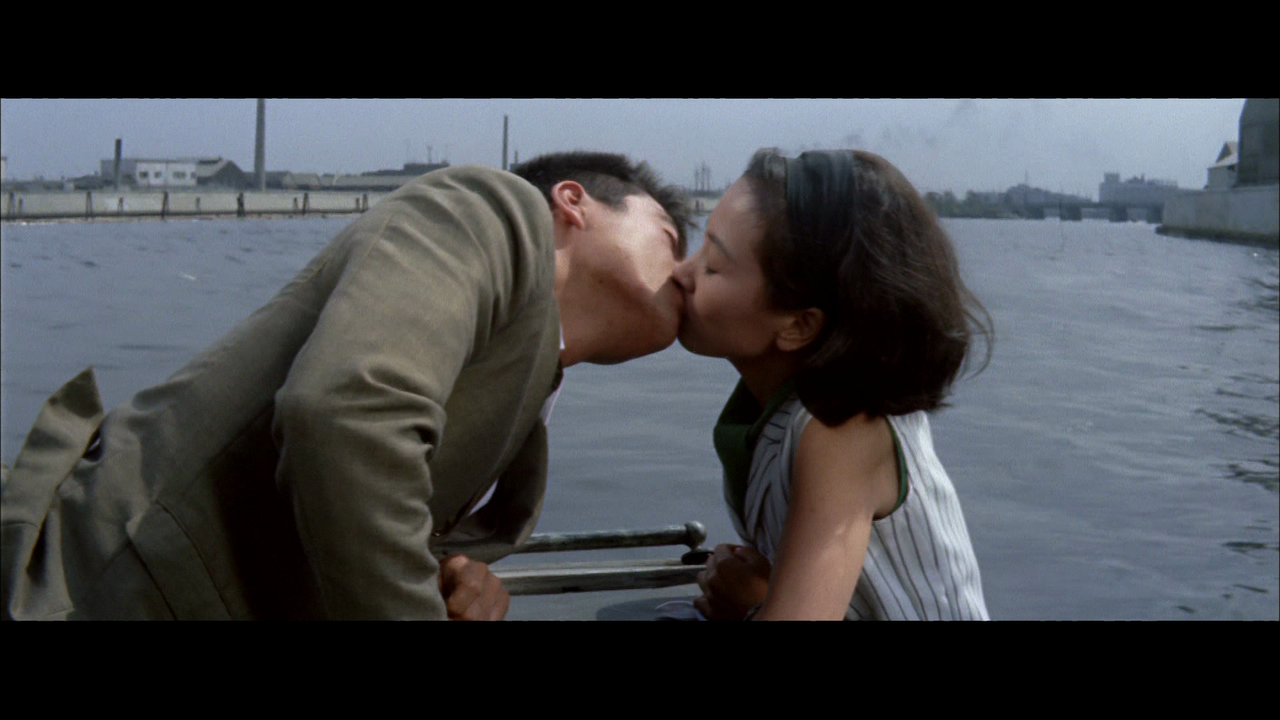
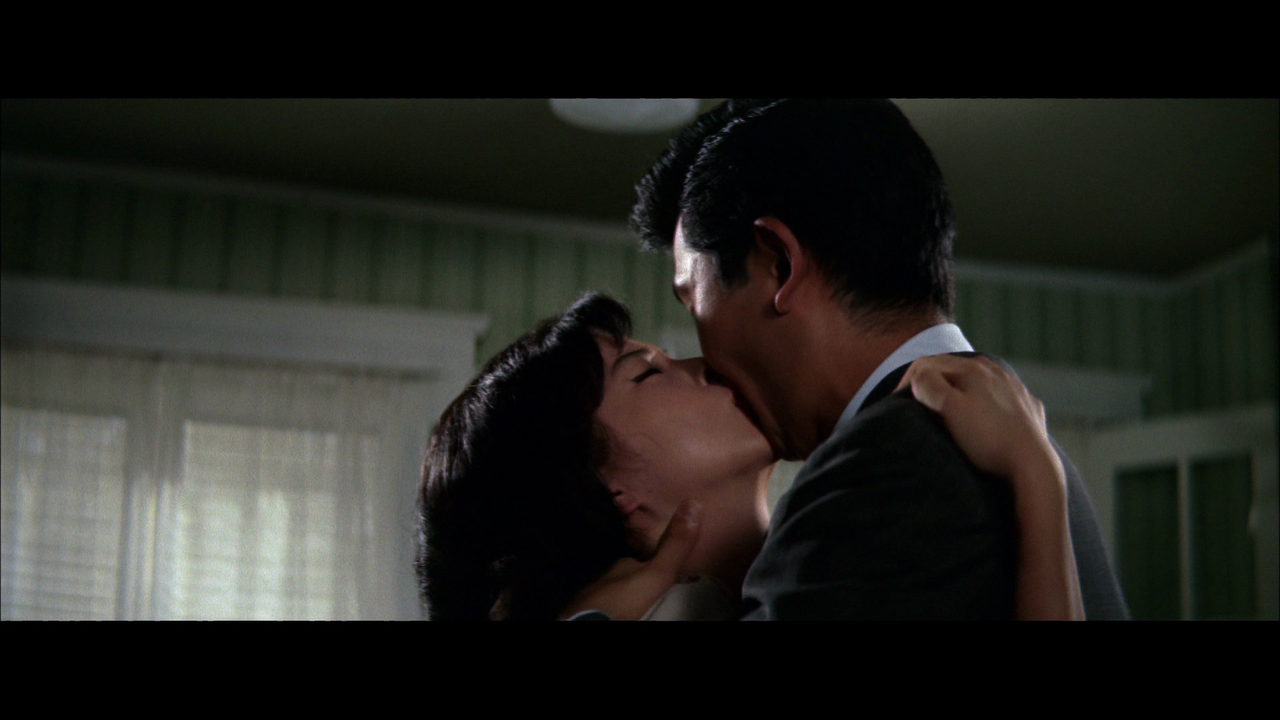
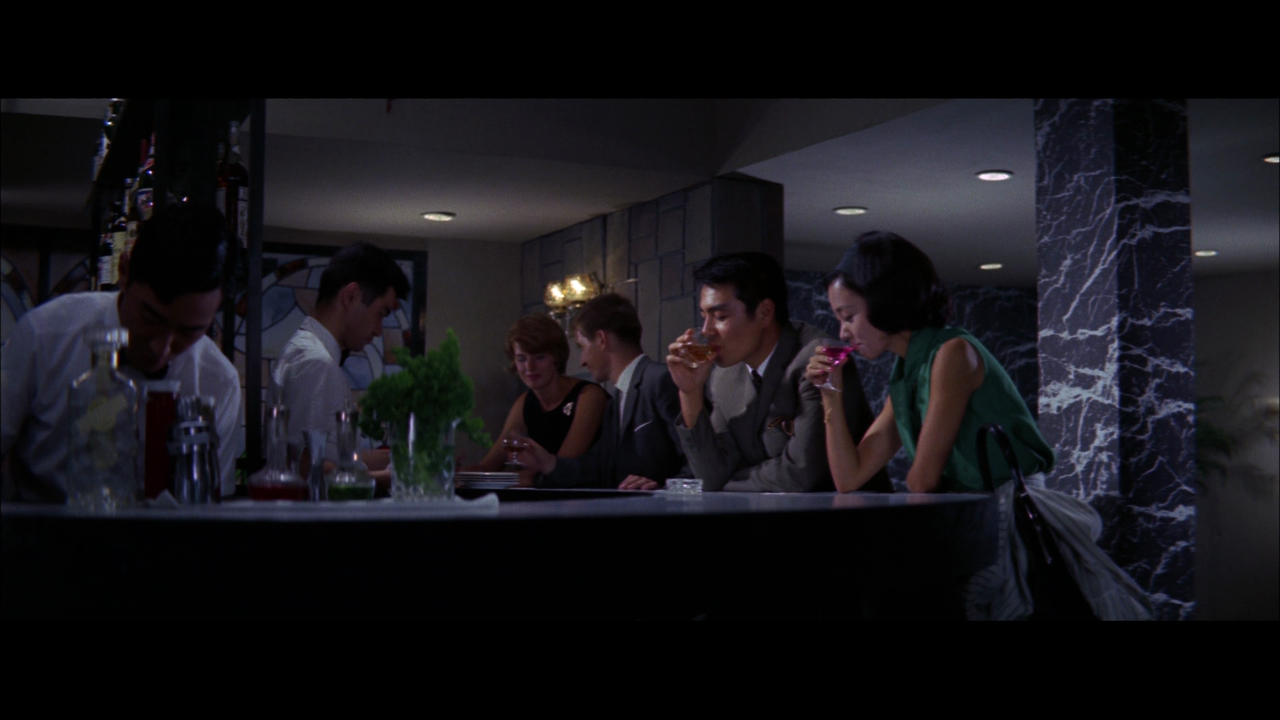
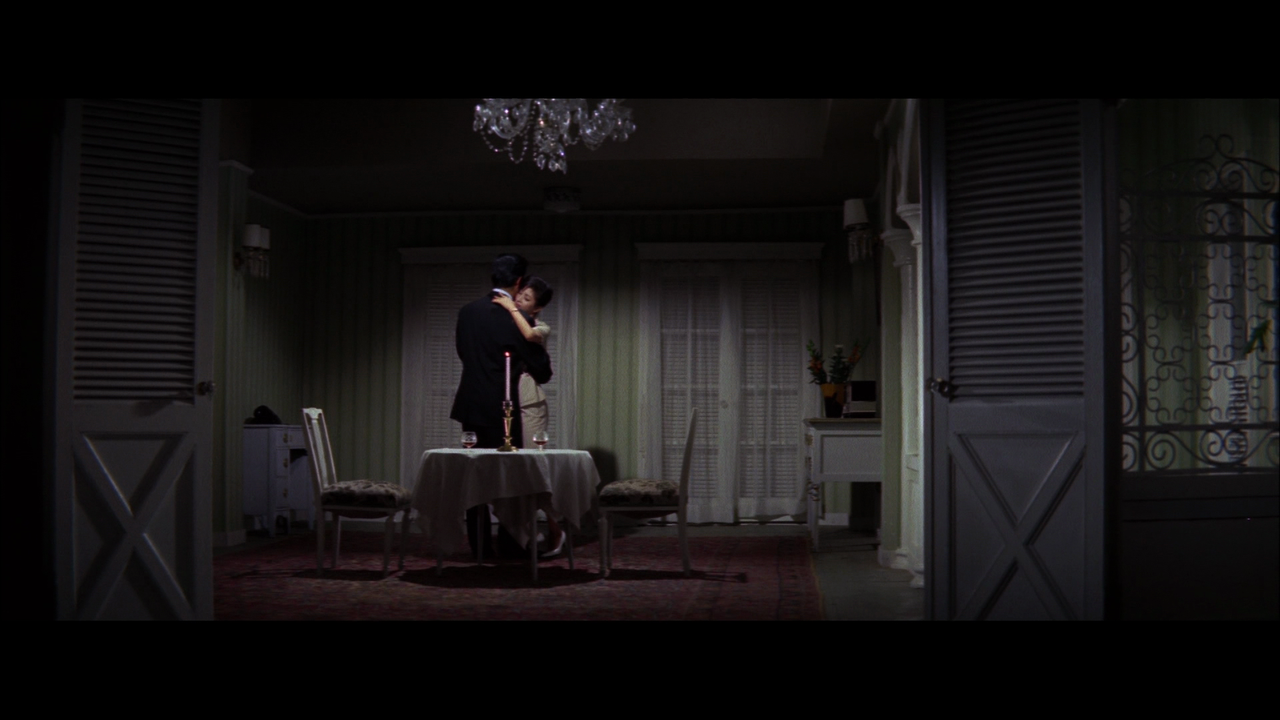
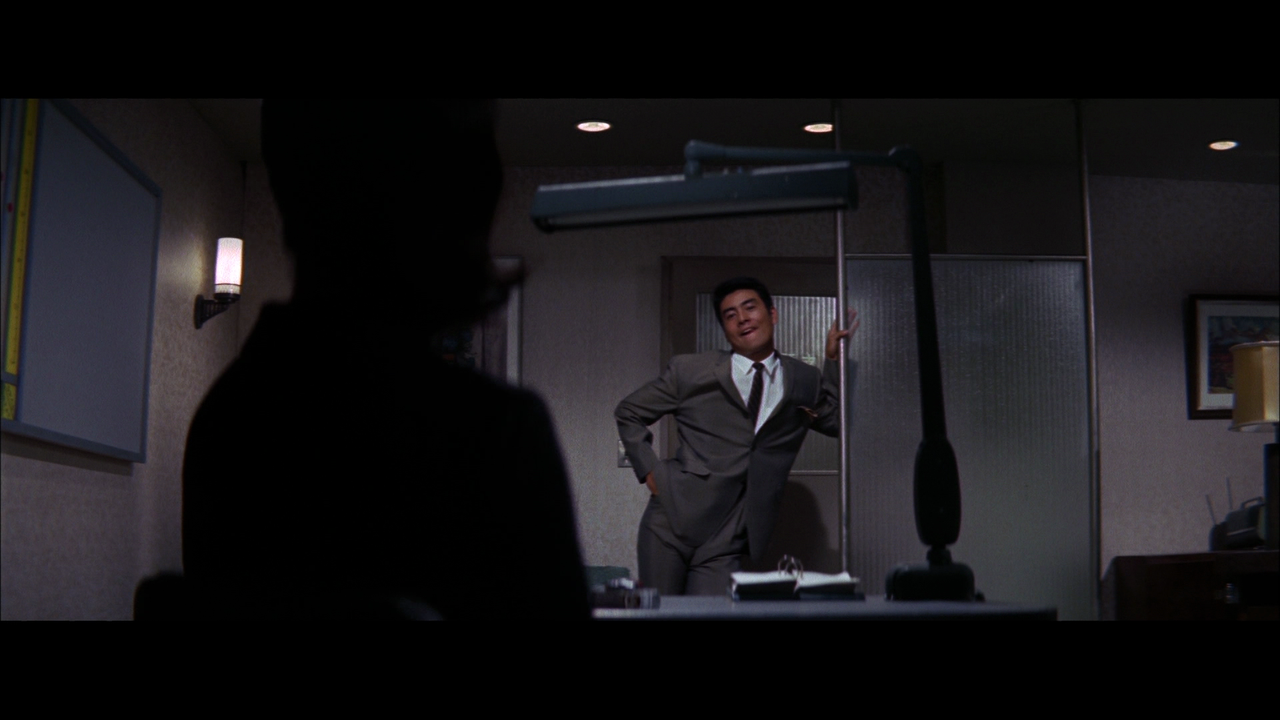
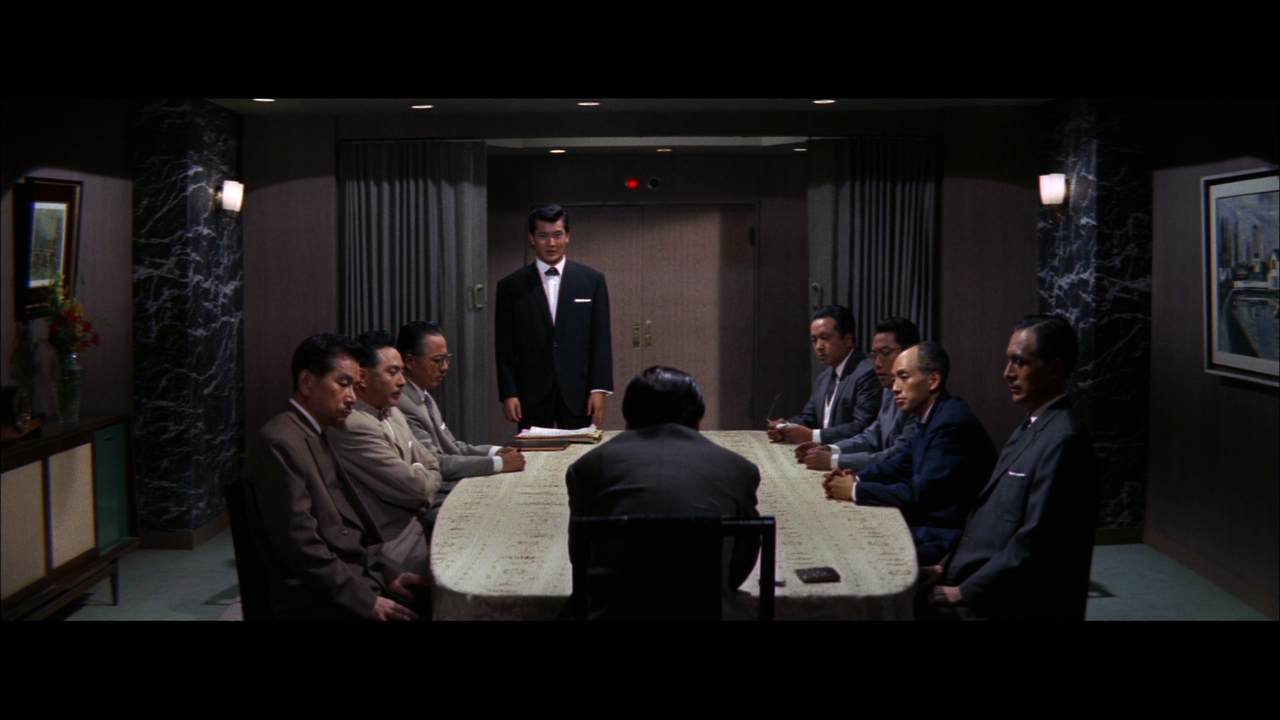
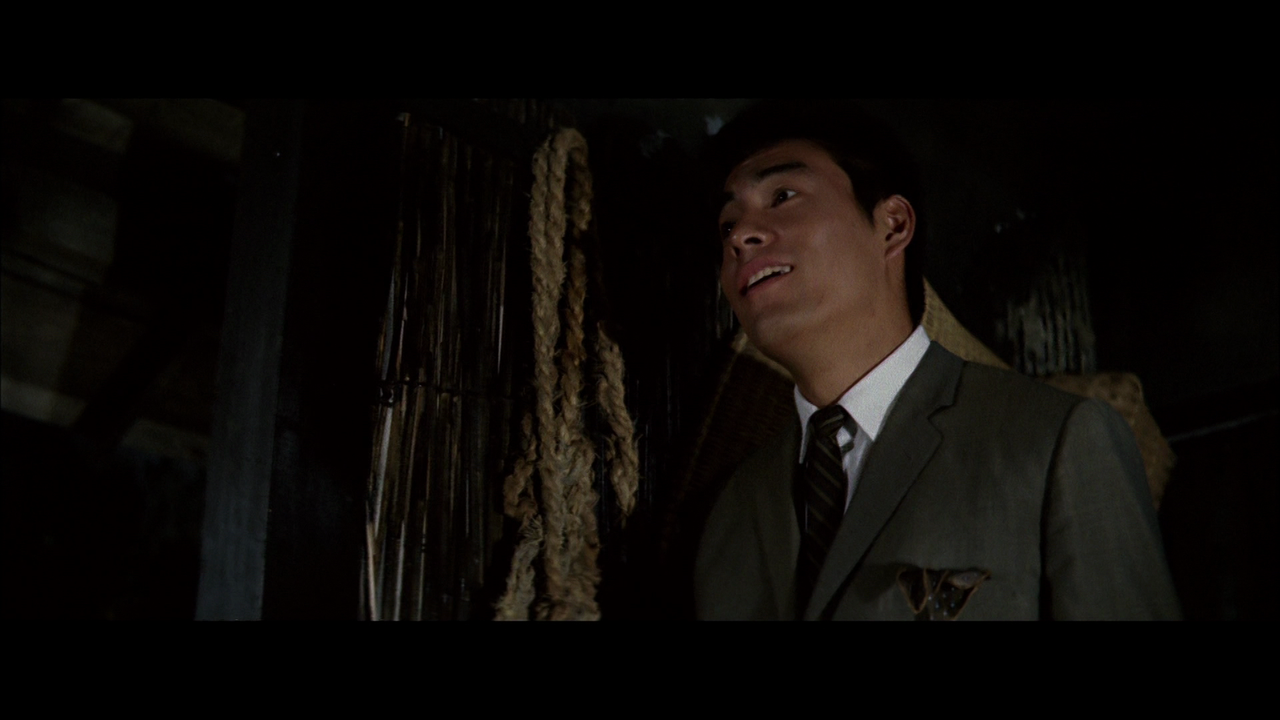
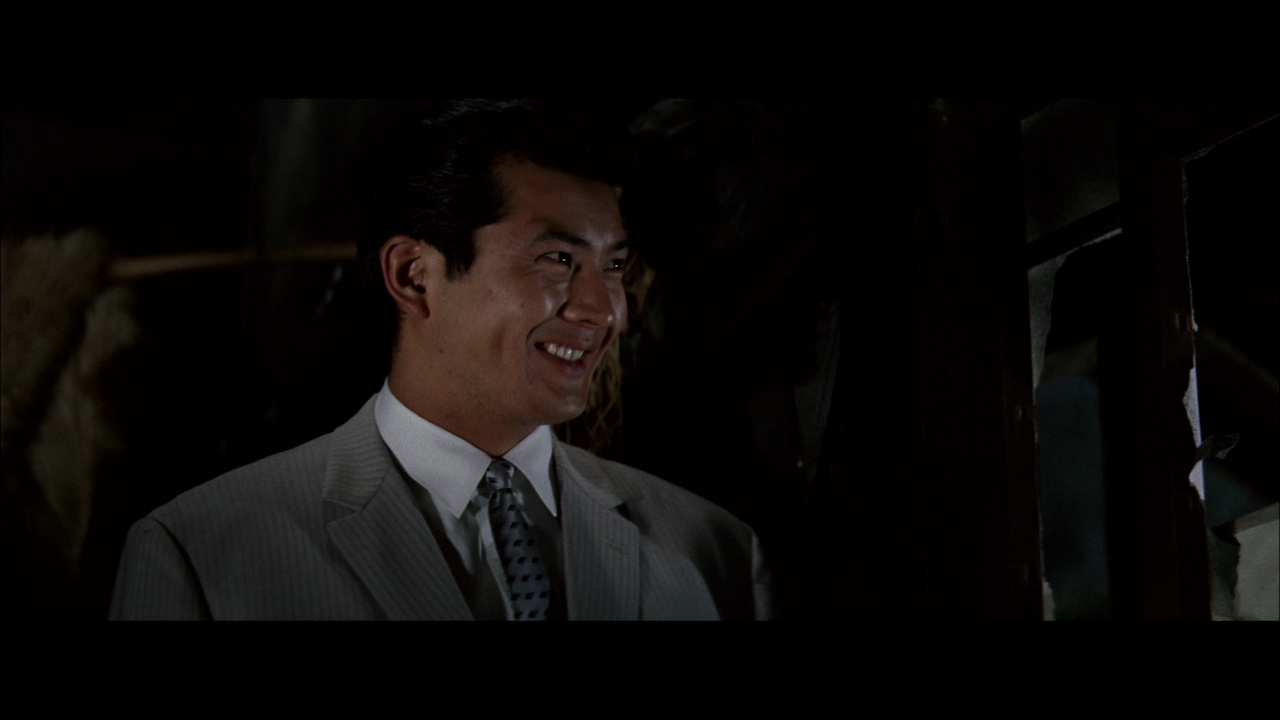
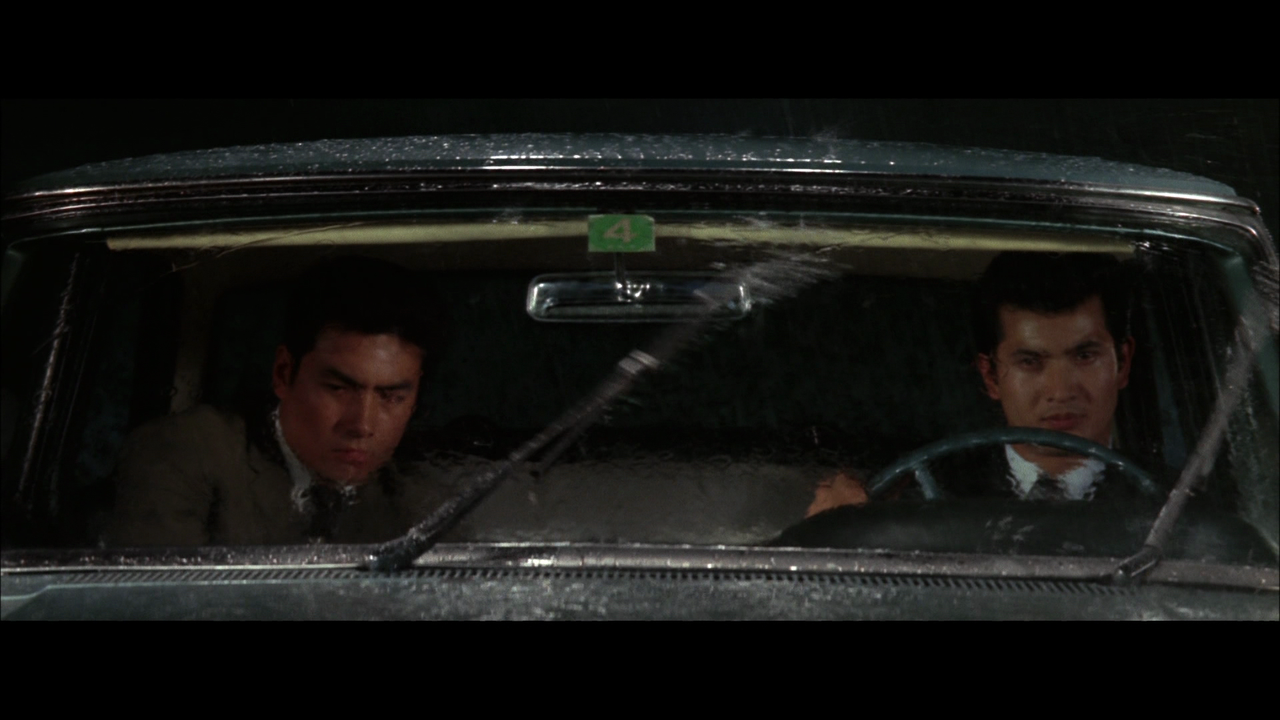
In the scenes where he brings the two of them together, Suzuki seems to be working hard with increasingly stylized visuals to show them inhabiting a world only the two of them can share. The car scene, where the waves roil on all sides of the vehicle, is one of Suzuki's most overt stylizations in that regard.
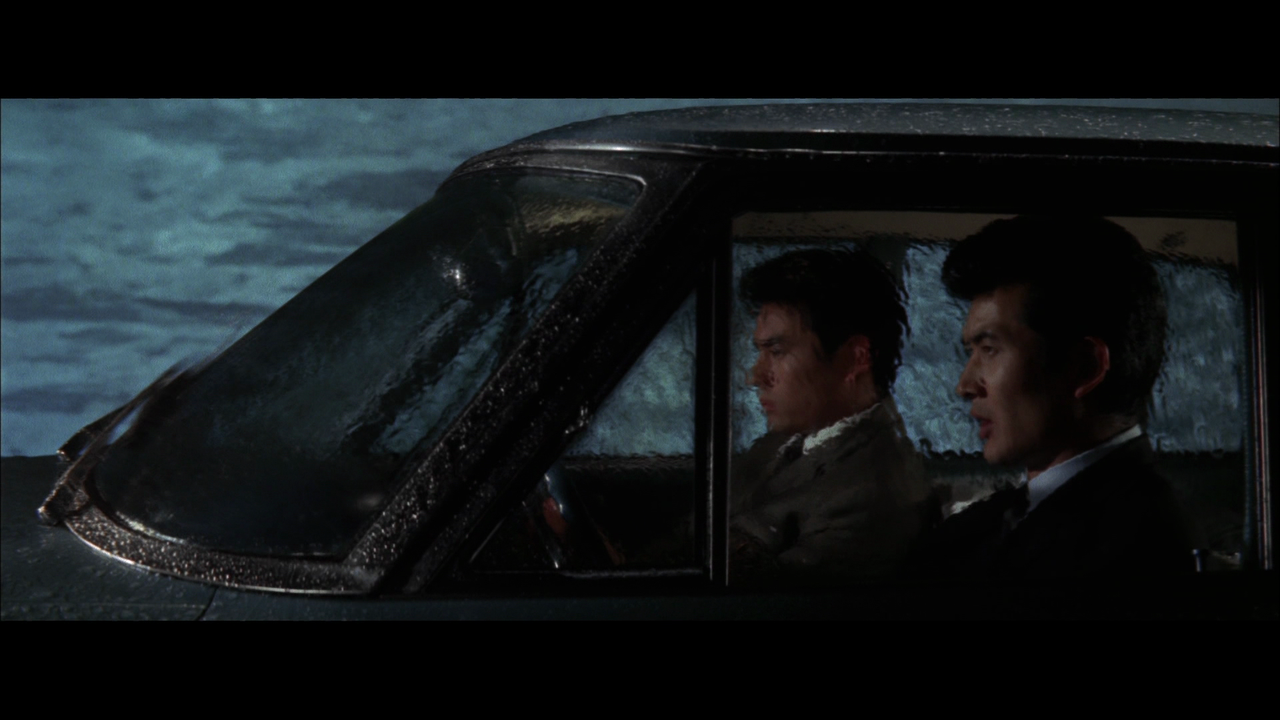
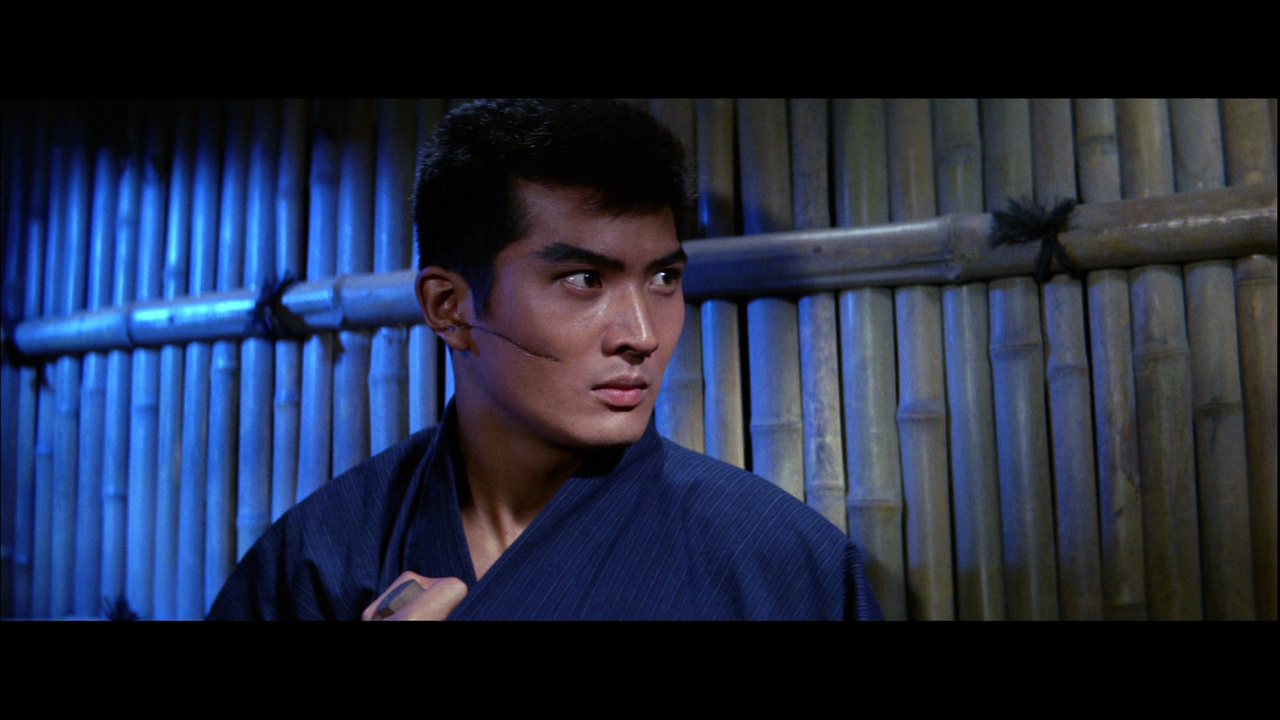
Remarkably, whenever the film cuts from one brother doing something to the other brother doing the same, Suzuki has staged the brothers facing in opposite directions, or occupying opposite halves of the screen. This is obviously meant to tie the brothers together––they are, in essence, no matter what they are doing in the scene, looking at one another––but the effect is so subtle I frankly didn't notice it in the theater. The only time they aren't facing one another is in the rainy car scene, with the torrential waves in the back-projection. Kobayashi tries to persuade Takahashi that he's doing the right thing, his brother wants to believe him, and so, for a moment, they are going in the same direction...but just for a moment.
Ultimately, though, in spite of this really clever visual conceit, the script itself just doesn't create a space these highly contrasting characters can inhabit together. The roughhousing younger brother belongs in one of the earlier Koji Wada films, yucking it up. The elder brother is doing this gravure, mopey, gangster melodrama. The tones don't mesh, and the film doesn't really acknowledge that incongruity. Nor is there any way that Takahashi's antics add to or complicate Kobayashi's drama, or get in the way of his being stuck in a far more boring, typical tragic gangster drama. Suzuki teases some shock out of the ending––there is far, far more blood in this finale than in any other Nikkatsu film I've seen in the era.
However, I can't say that most of this feels especially earned. Kobayashi's character has felt largely like a background player to the more muscular exuberance of the Takahashi scenes. We learn only at the end that he's been doing stuff we haven't even seen in the movie––but that doesn't make him feel more active as a character. As glamorous as the increasingly more solid Kobayashi seems here, he simply doesn't seem to merit this extravagant, bloody end. Maybe if he had fought anyone other than his brother on camera before this in the picture? But he just smokes and drinks and acts cool and reserved. Visually, though, the film is toned more to the Kobayashi scenes, with their morbid languor. The mellow color palette makes the film feel more somber, muting some of the more vibrant comic scenes. And the vitality of the office comedy in Takahashi's earlier scenes melts away as the gangster plot comes to the fore.
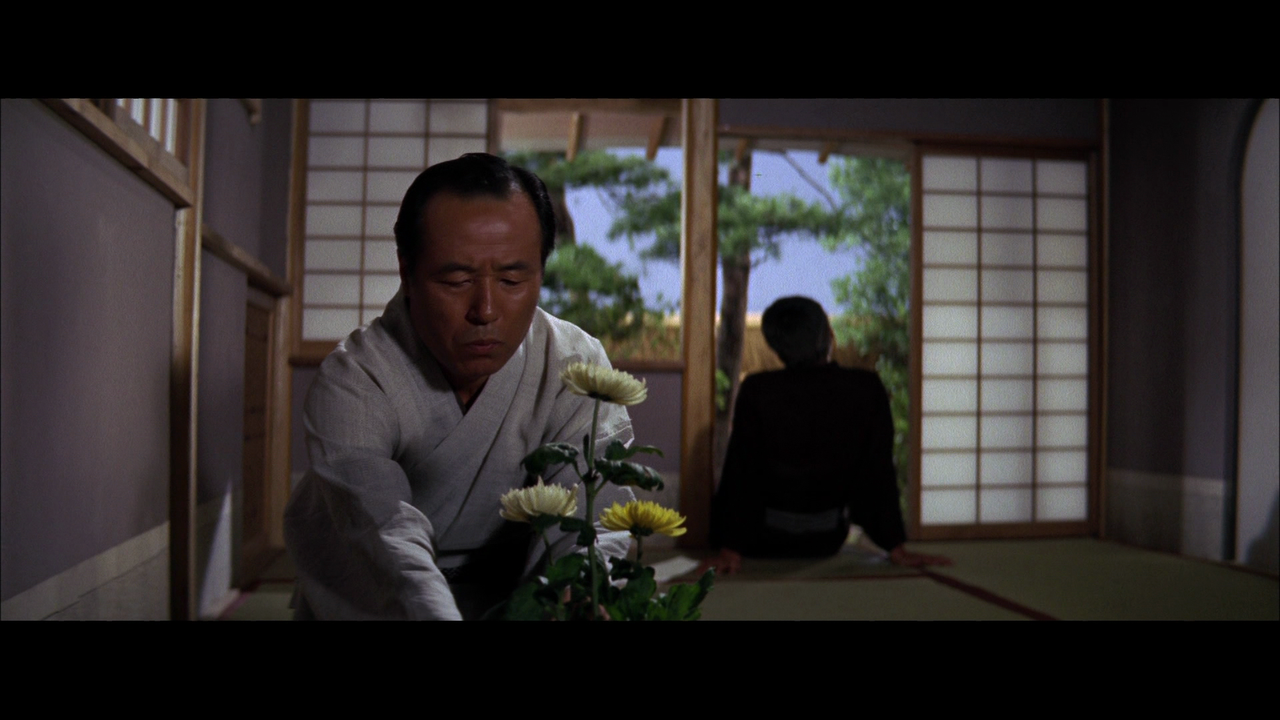
The film doesn't really lack for entertainment; but it's jumbled, vacillating tonality just makes it especially hard to be as engaged as usual. The second element that drags the film down is more related to the kind of material we're dealing with in the film. Yakuza, deeply ensconced in Japanese tradition, to the point it seems corny. The yakuza boss does flower arranging and tea ceremonies. These are things that have never seemed to interest Suzuki. The critique of the yakuza here is more earnest than usual; the film's humor isn't generally related to satirizing the yakuza, as Kanto Wanderer does. Because the office comedy doesn't stick around, the humor seems detachable, airlifted in to liven up the beginning of the picture. Because of this, the critique of the yakuza isn't very hidden in the picture, and it perhaps struck the wrong tone for audiences who were beginning to reject the Nikkatsu Akushon style of filmmaking and embrace Toei's patriotic-but-for-yakuza garbage (hot take: I vastly prefer Nikkatsu's approach to Toei's––I know, big surprise).
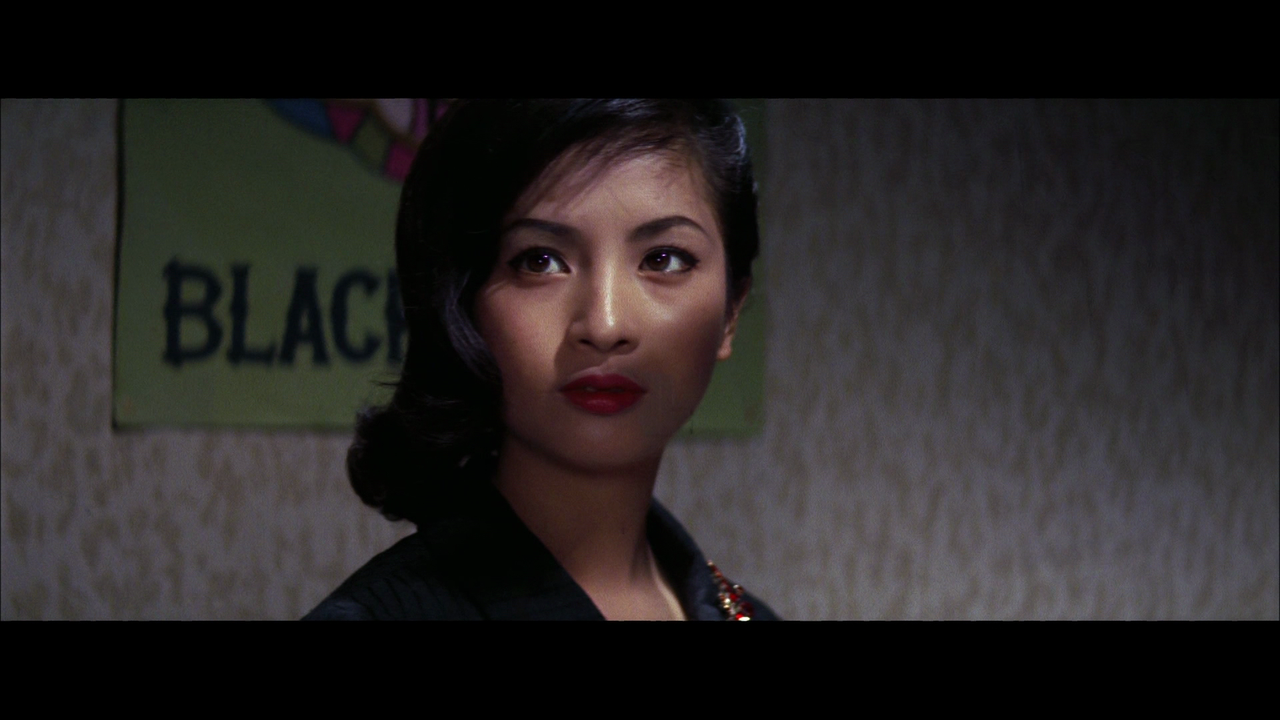
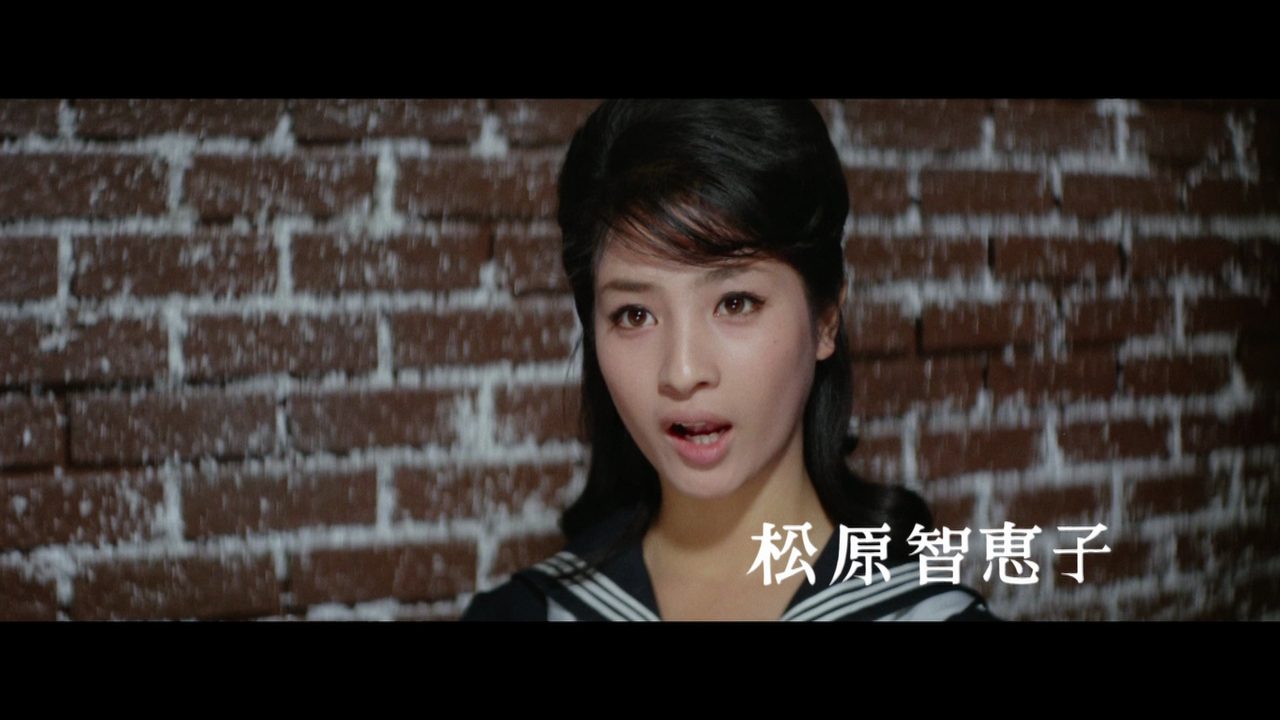
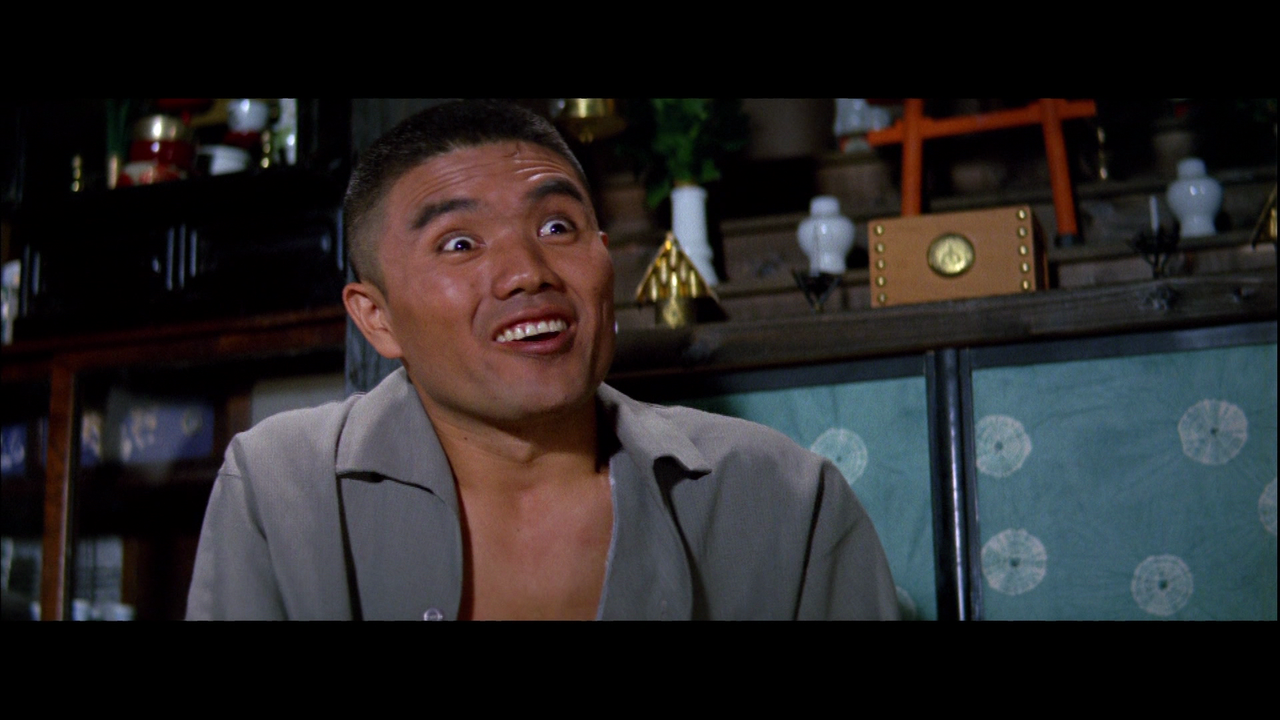
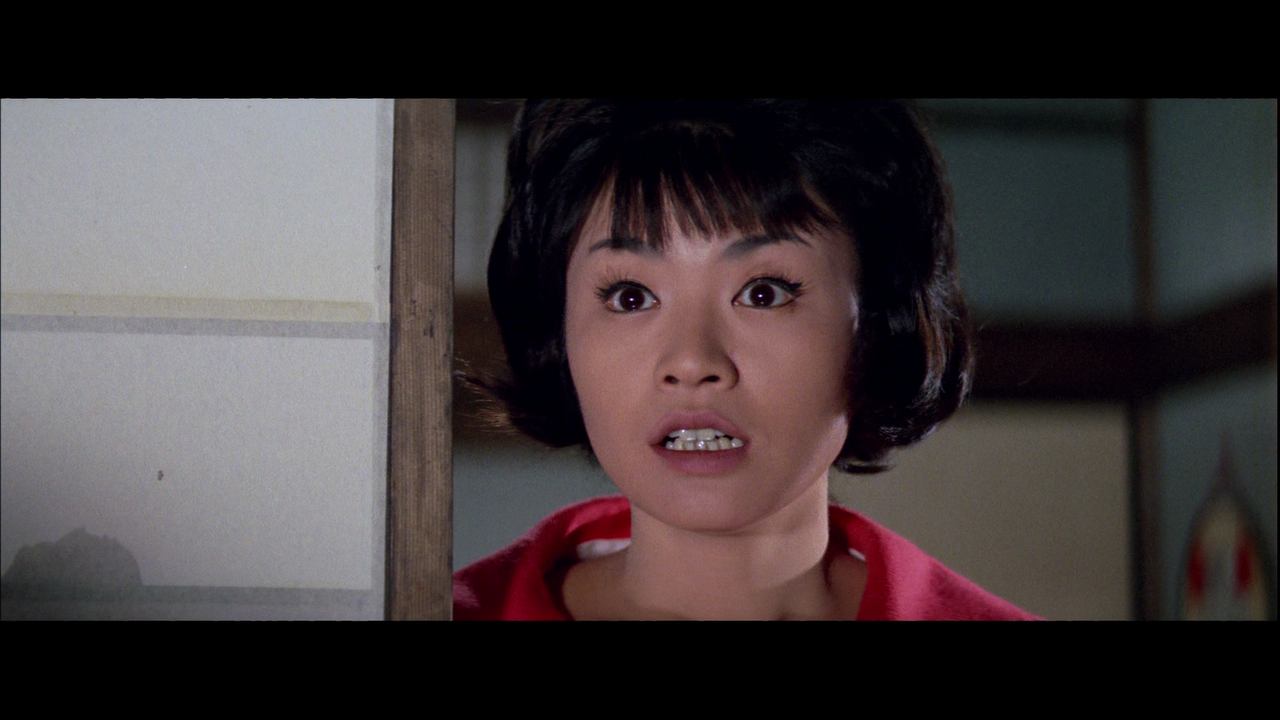
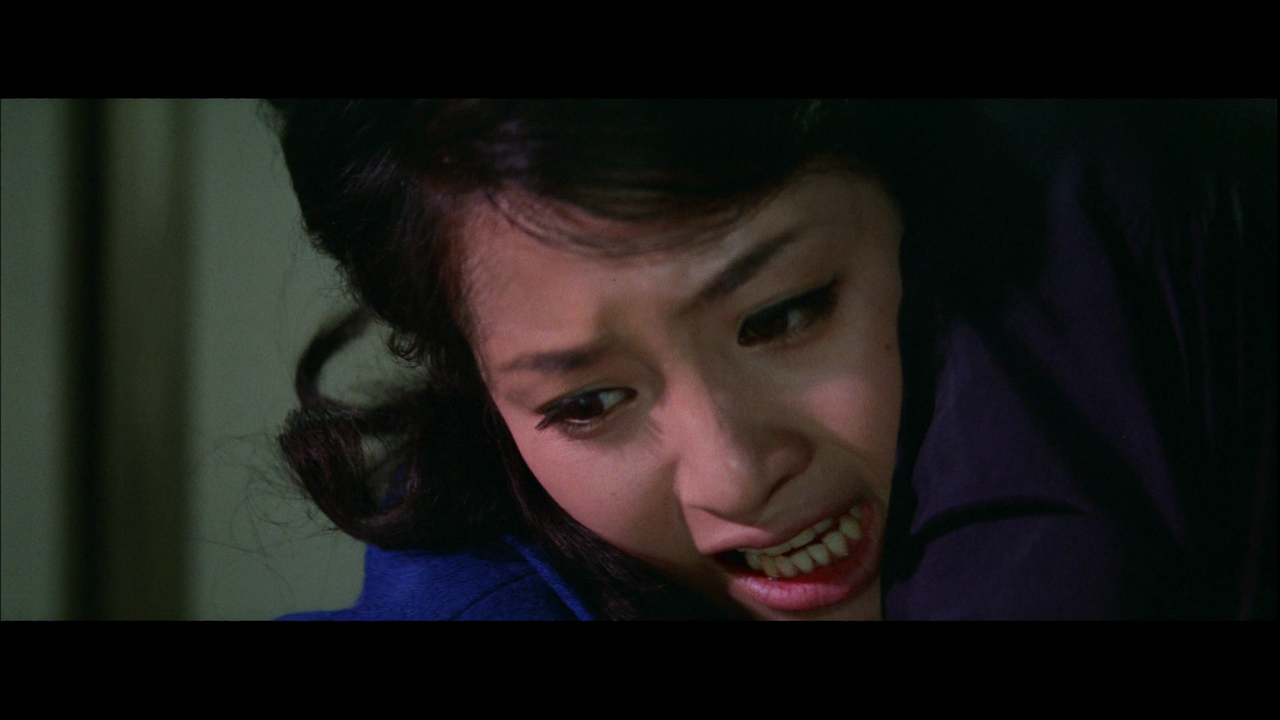
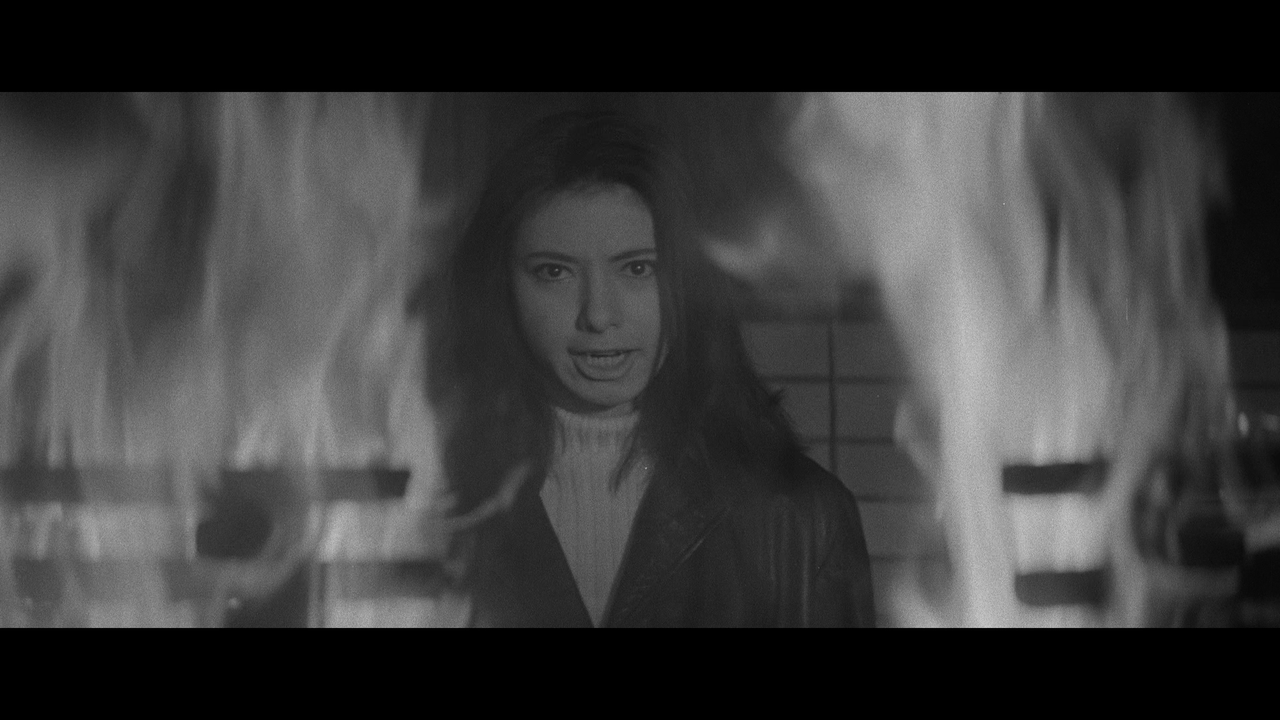
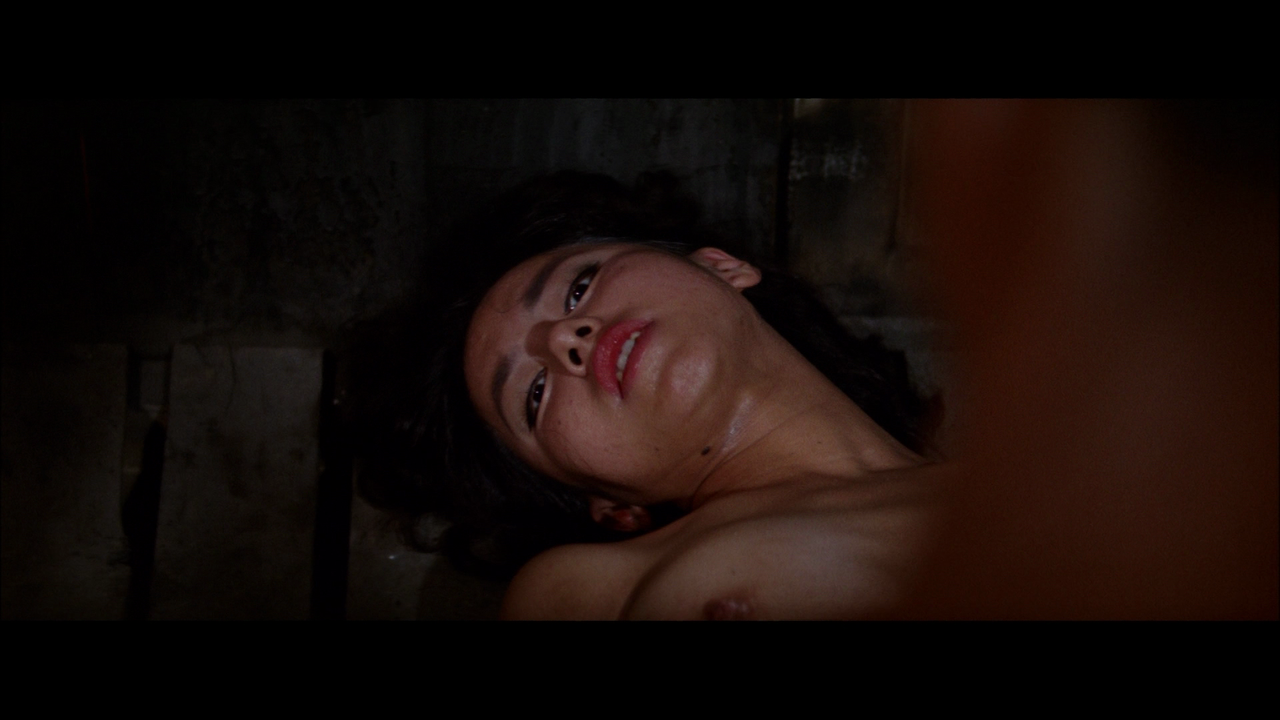
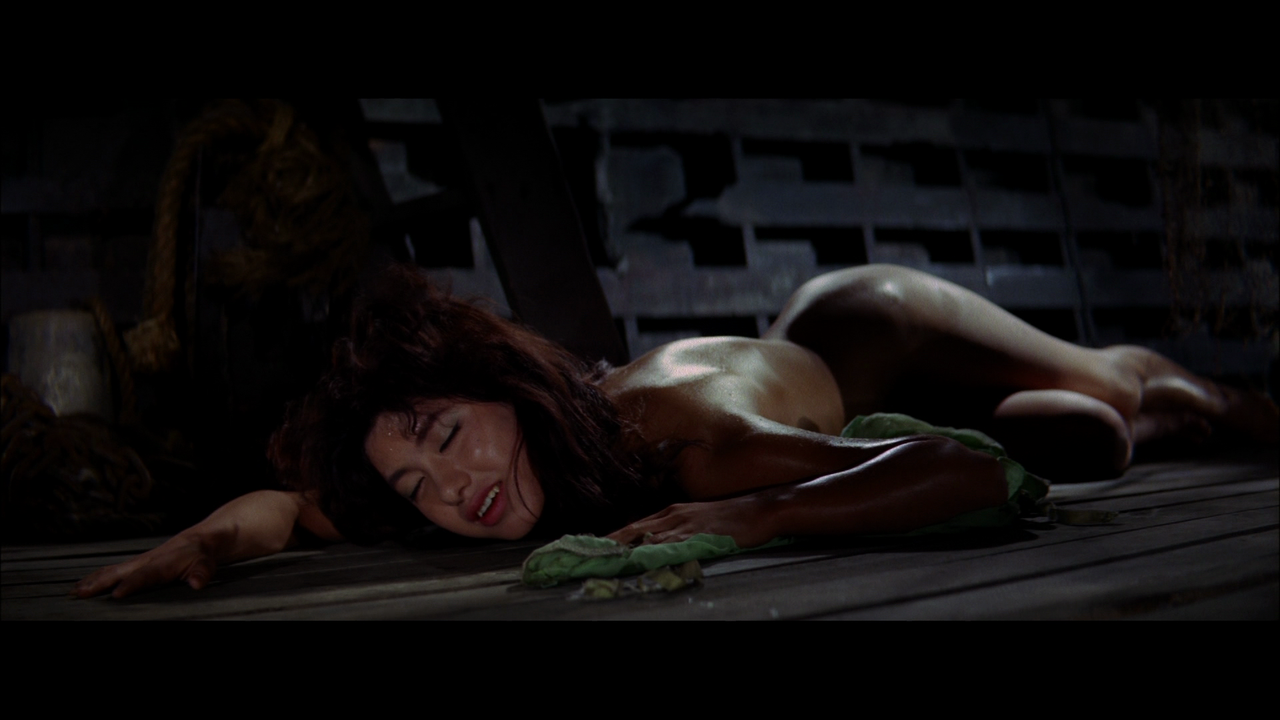
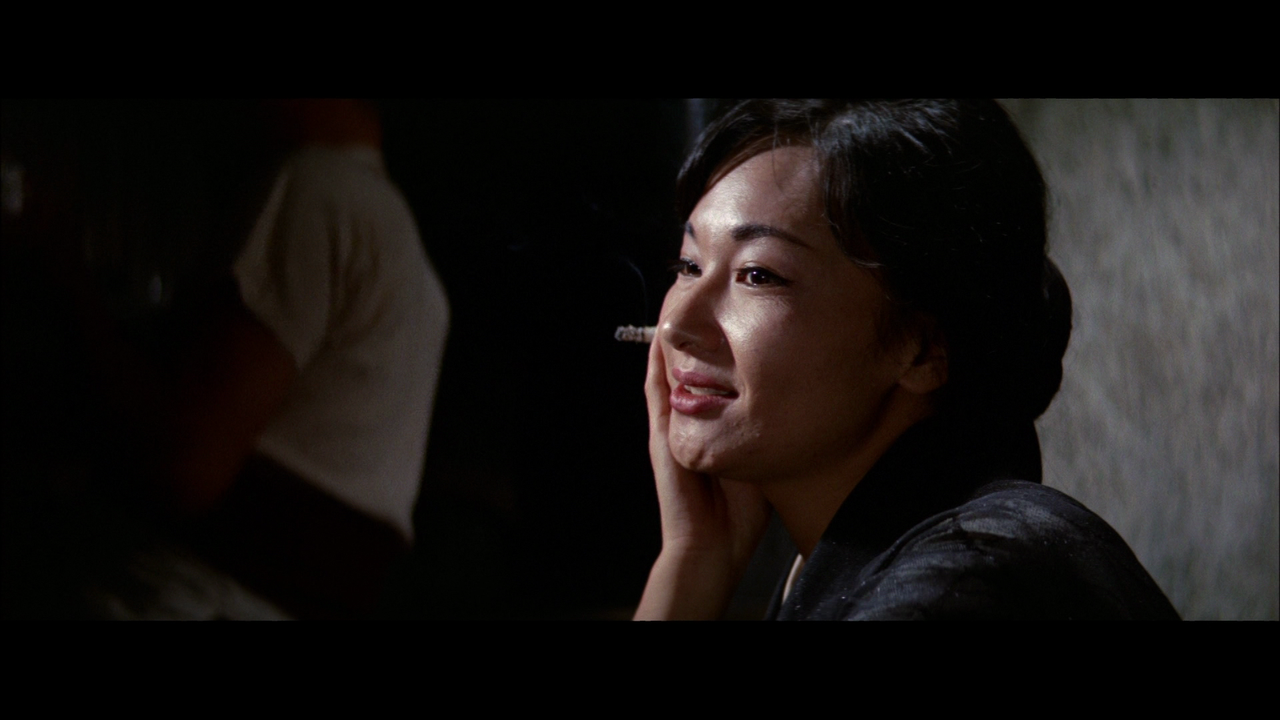
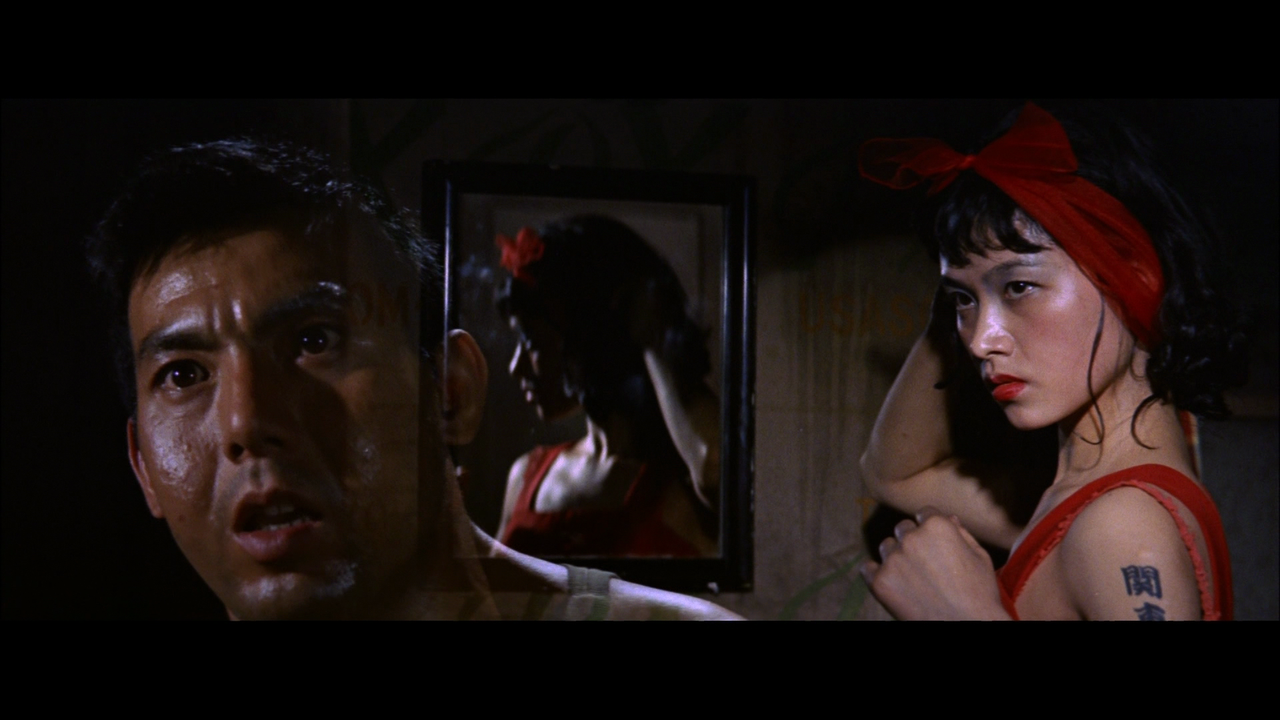
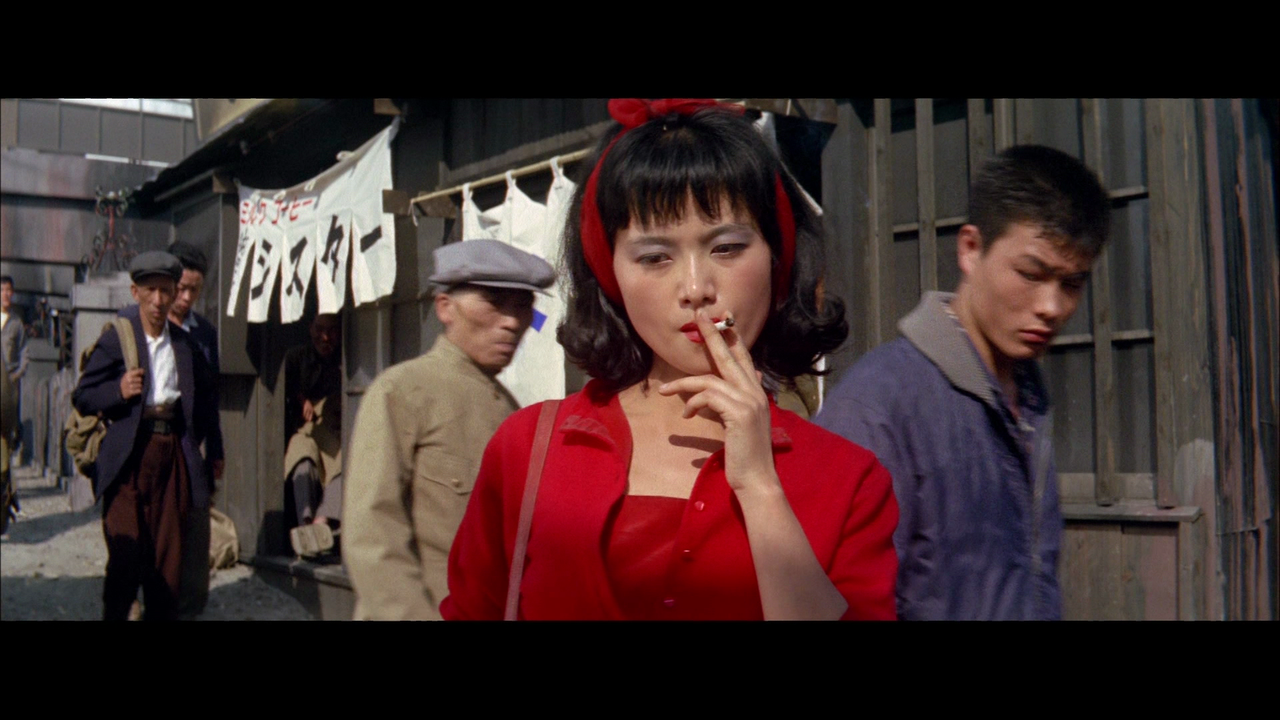
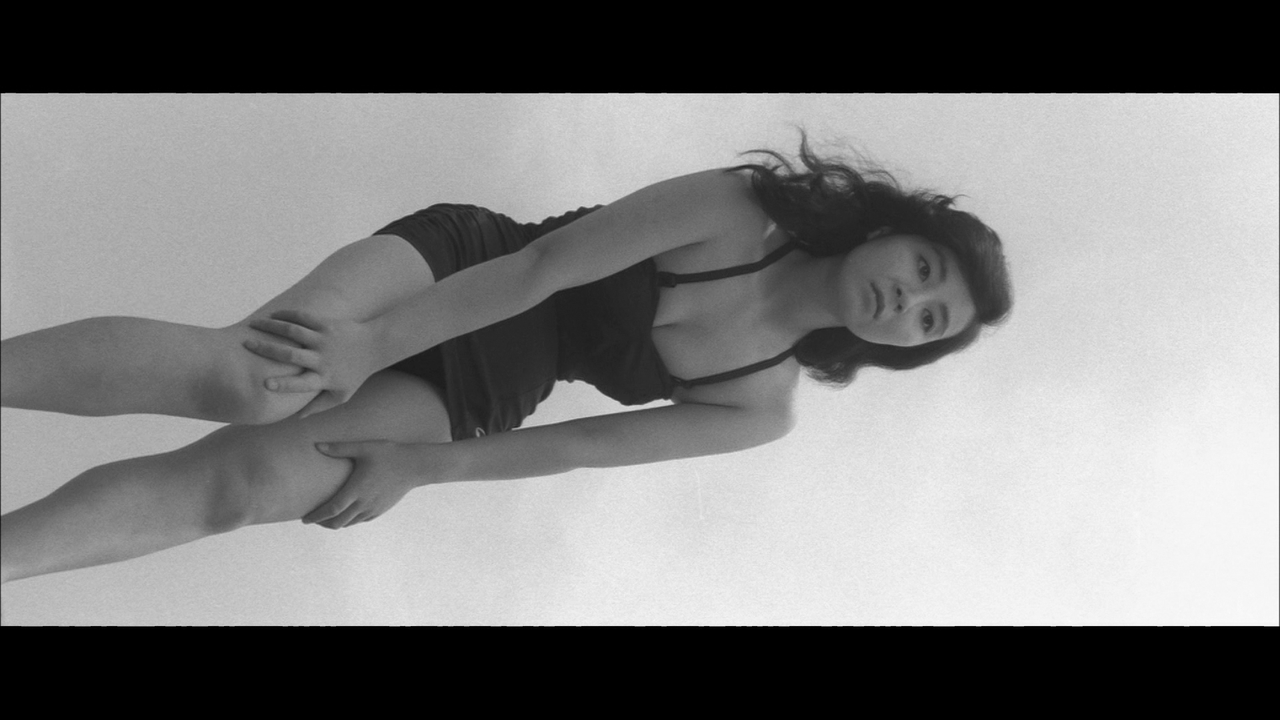
Holy cow, this is Chieko Matsubara! I did not recognize her when I saw this in the theater, and she still is hard to recognize in these shots even after knowing it's her.
In general, the casting isn't that interesting, either. The actors chosen for these roles hardly seem to project anything about what type of character they are. The choice to make Chieko Matsubara the movie's vamp seems a poor one for all involved.
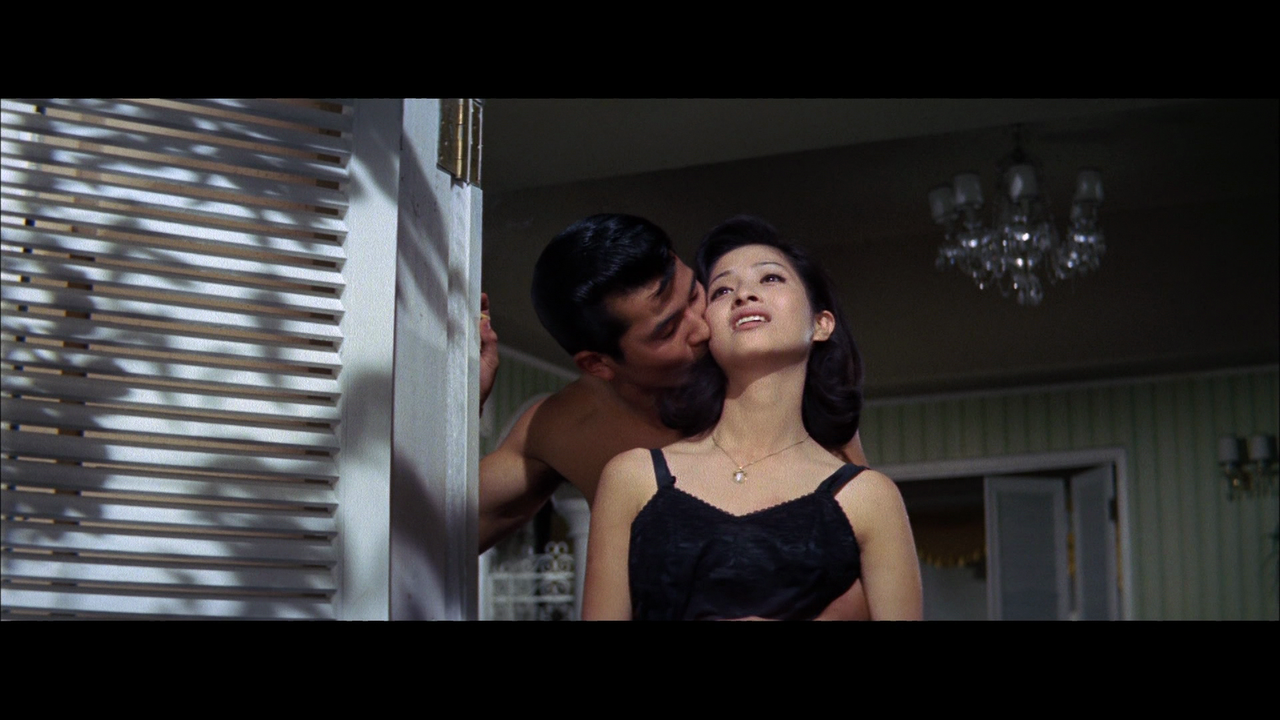
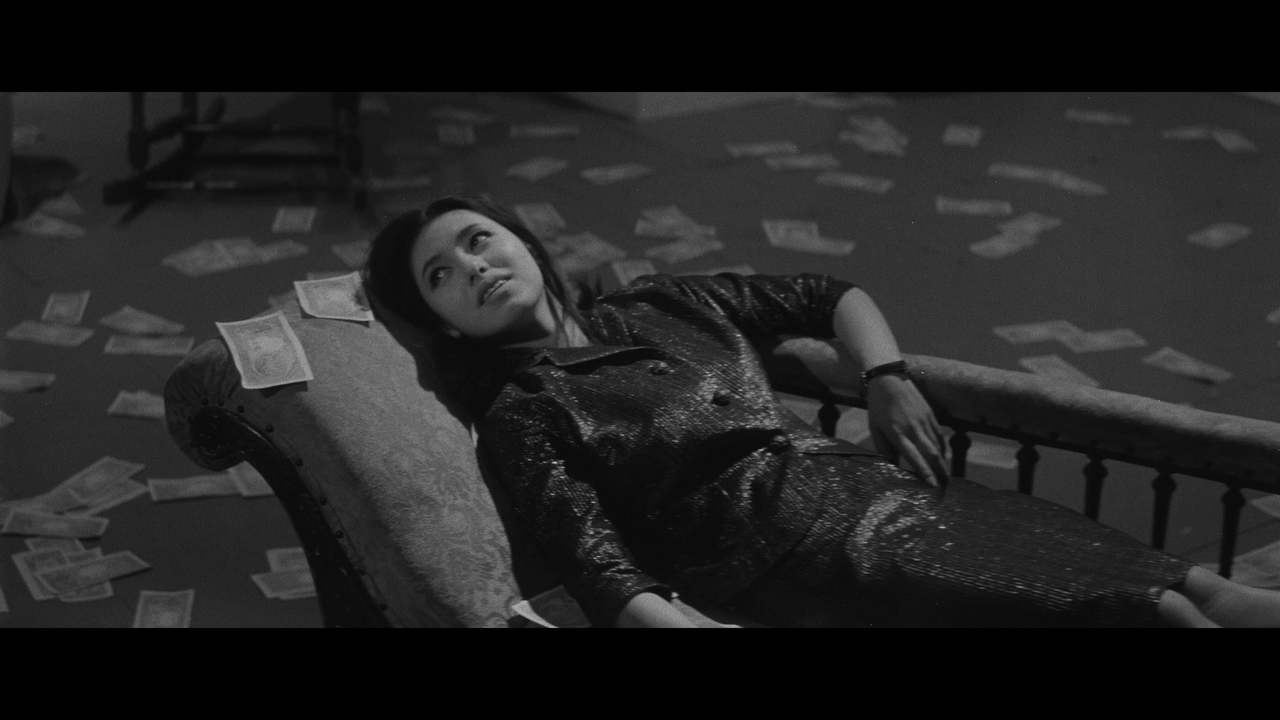
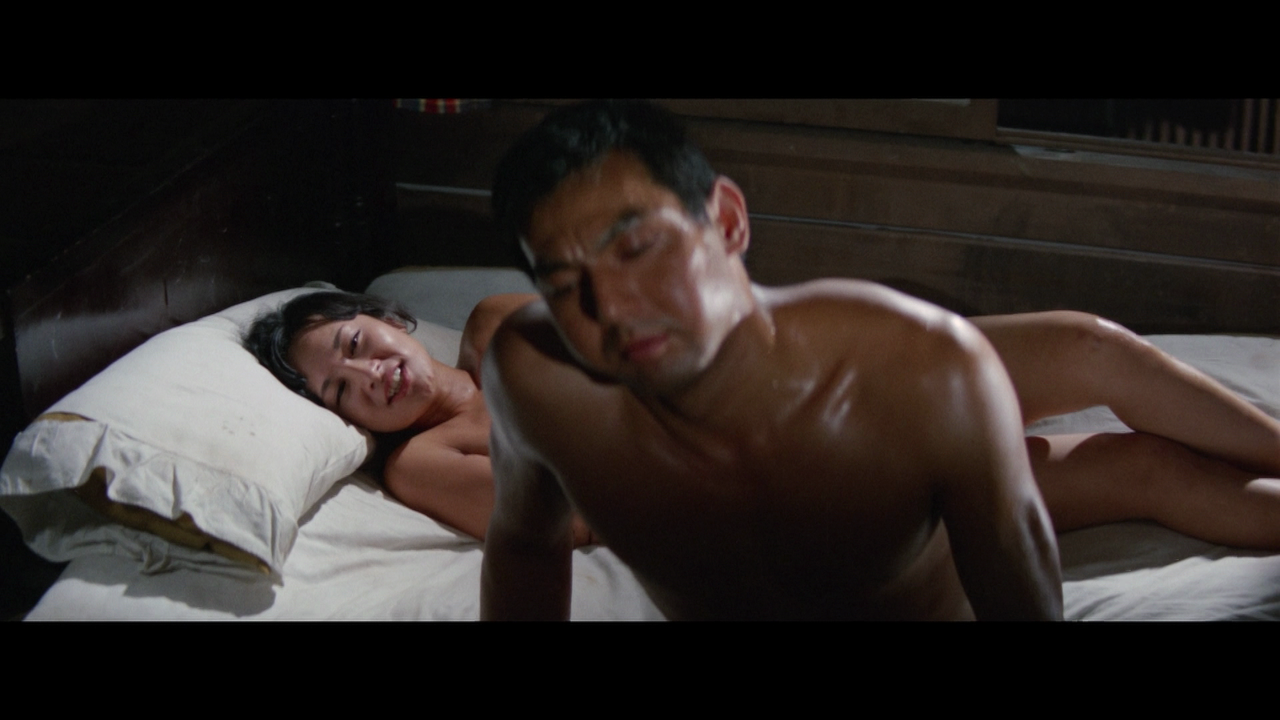
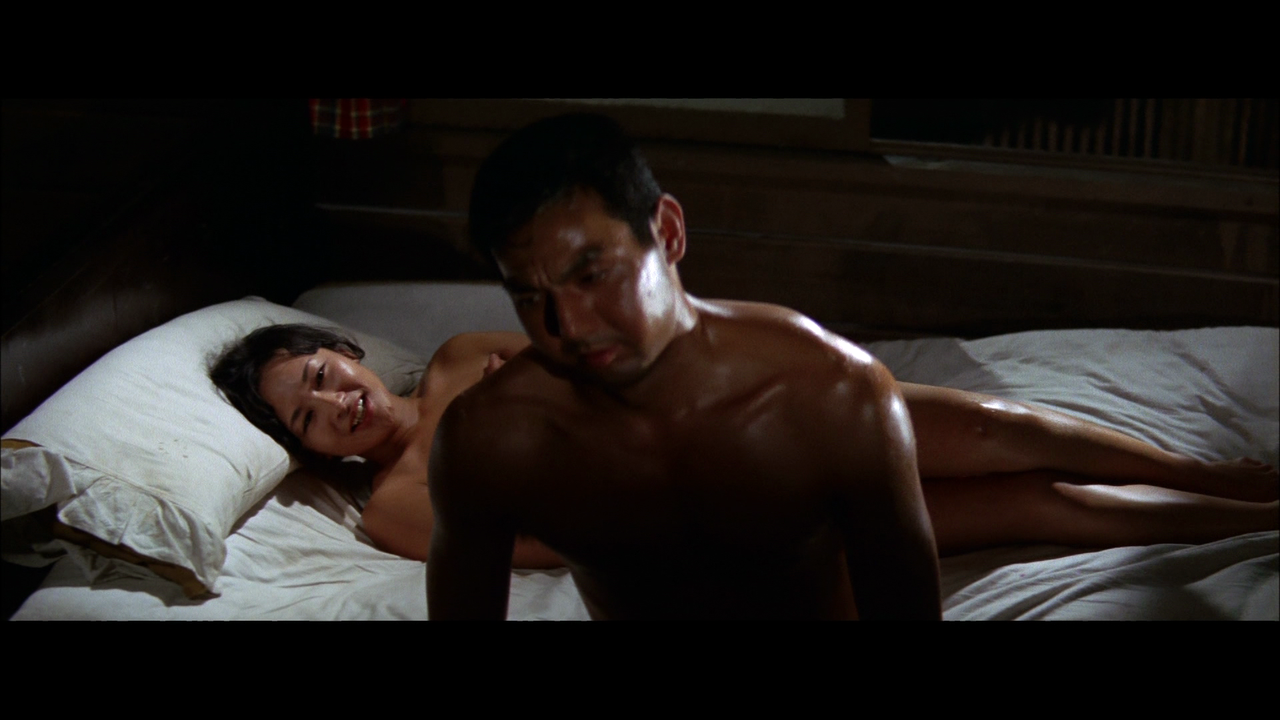
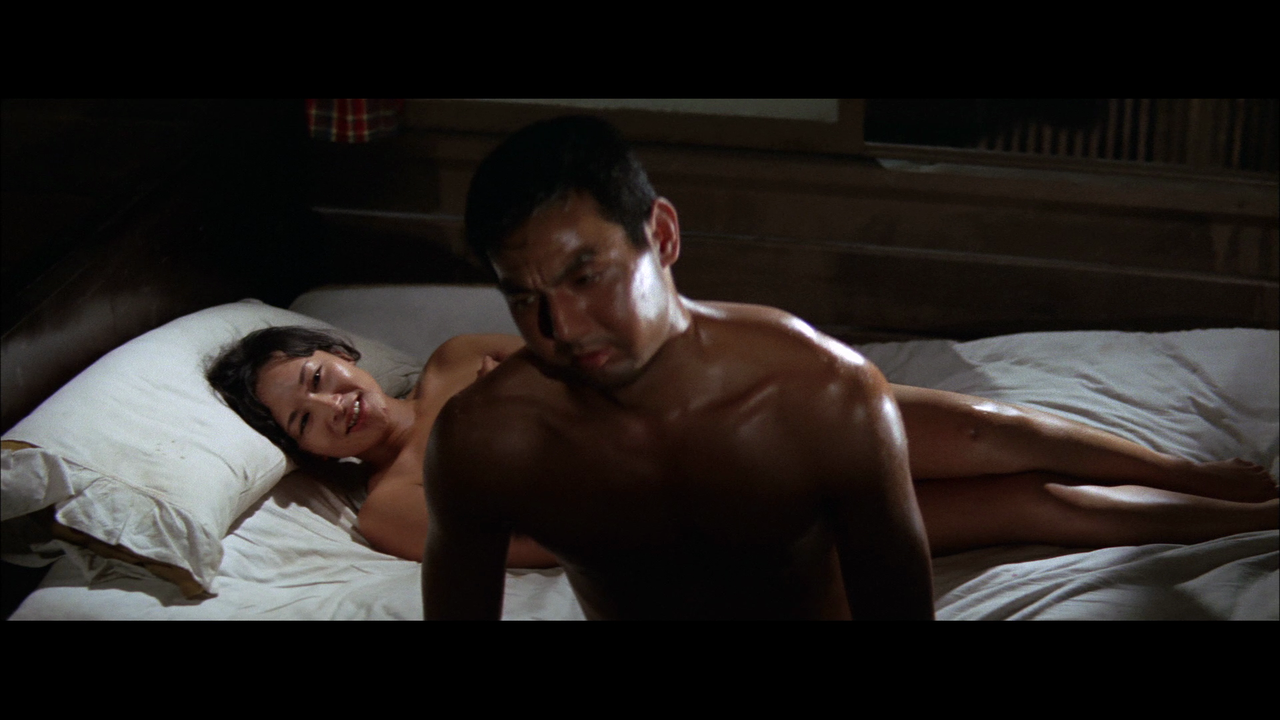
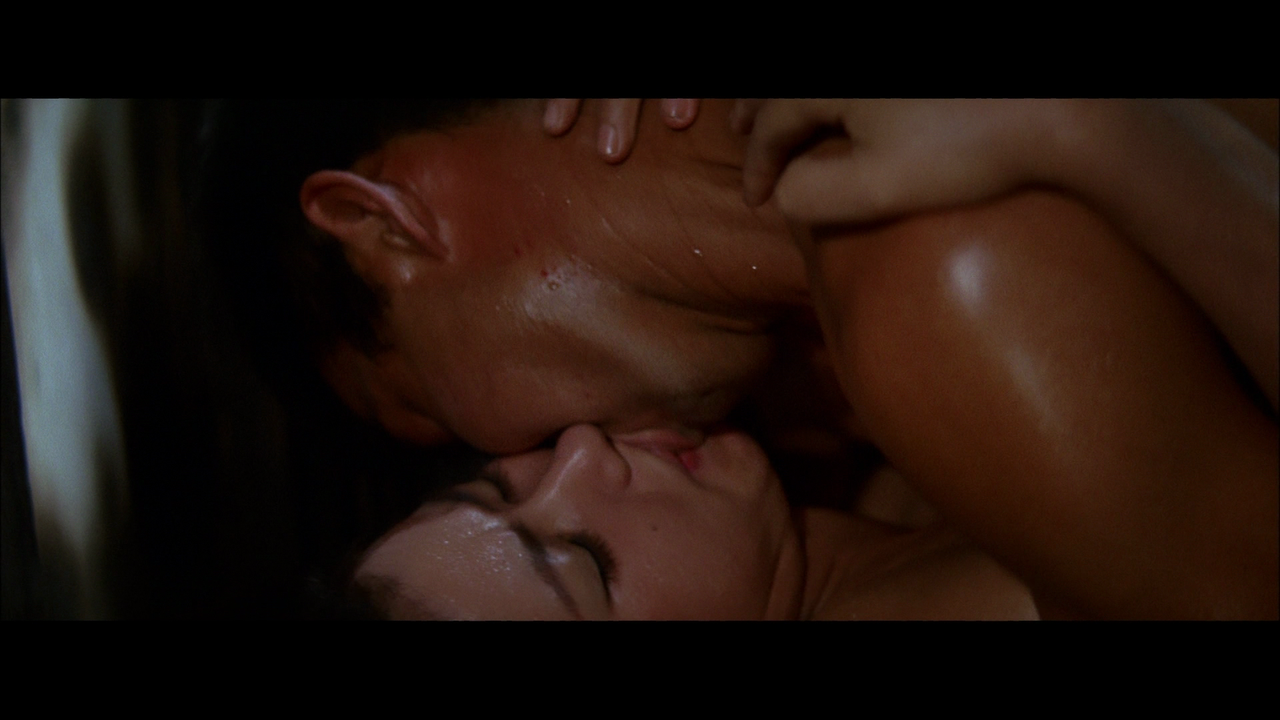
There is this unusual frank sensuality for an Akira Kobayashi/Chieko Matsubara movie...they seem nearly naked to me in this scene, compared to their usual scenes together, and I felt like I should leave the room and give them some alone time. But in the next scene her character is literally on a slab in a mortuary. The pacing of the movie is so strange.
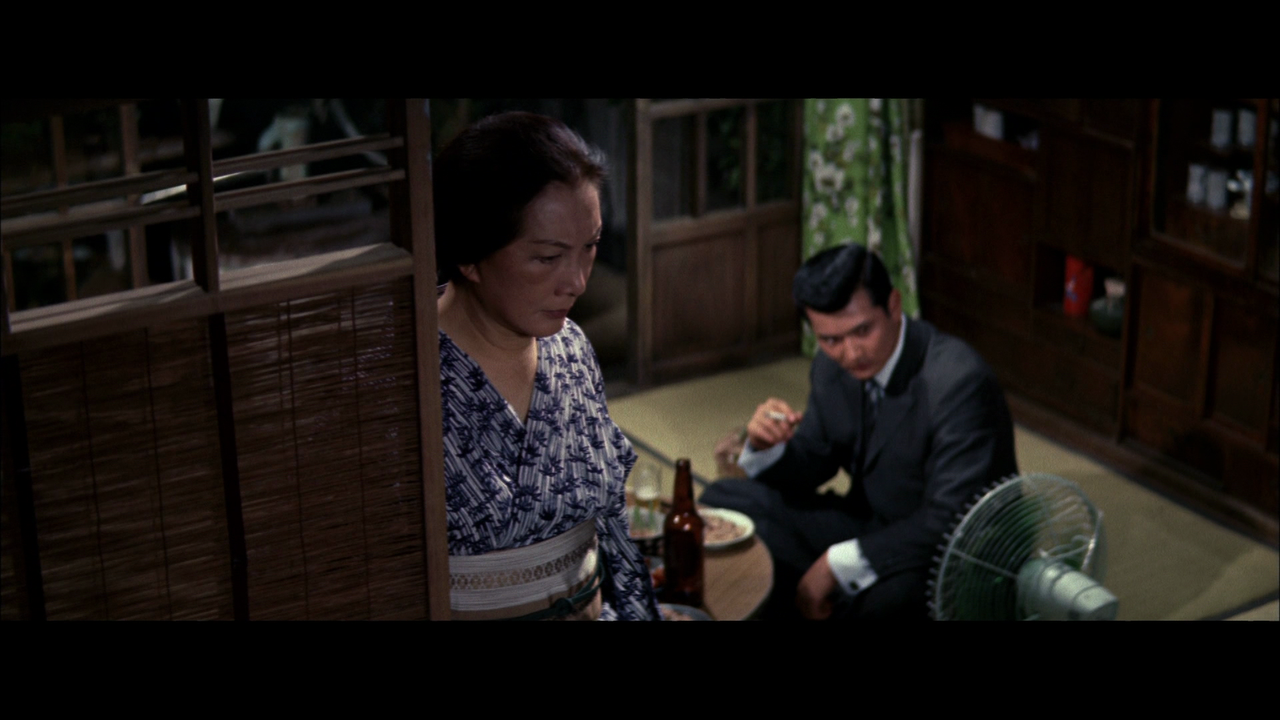
Worst of all is the plot with the mother, which lingers around the film, leaking in at all sides. This lugubrious element of the tale reminds one of the limp melodrama of an Umetsugu Inoue movie (like The Stormy Man, which is where the mother subplot seems to be lifted from). Suzuki is usually a more subtle melodramatist; Kanto Wanderer and Carmen from Kawachi both illustrate the subtle way he brings very unsentimental melodrama into his movies, normally.
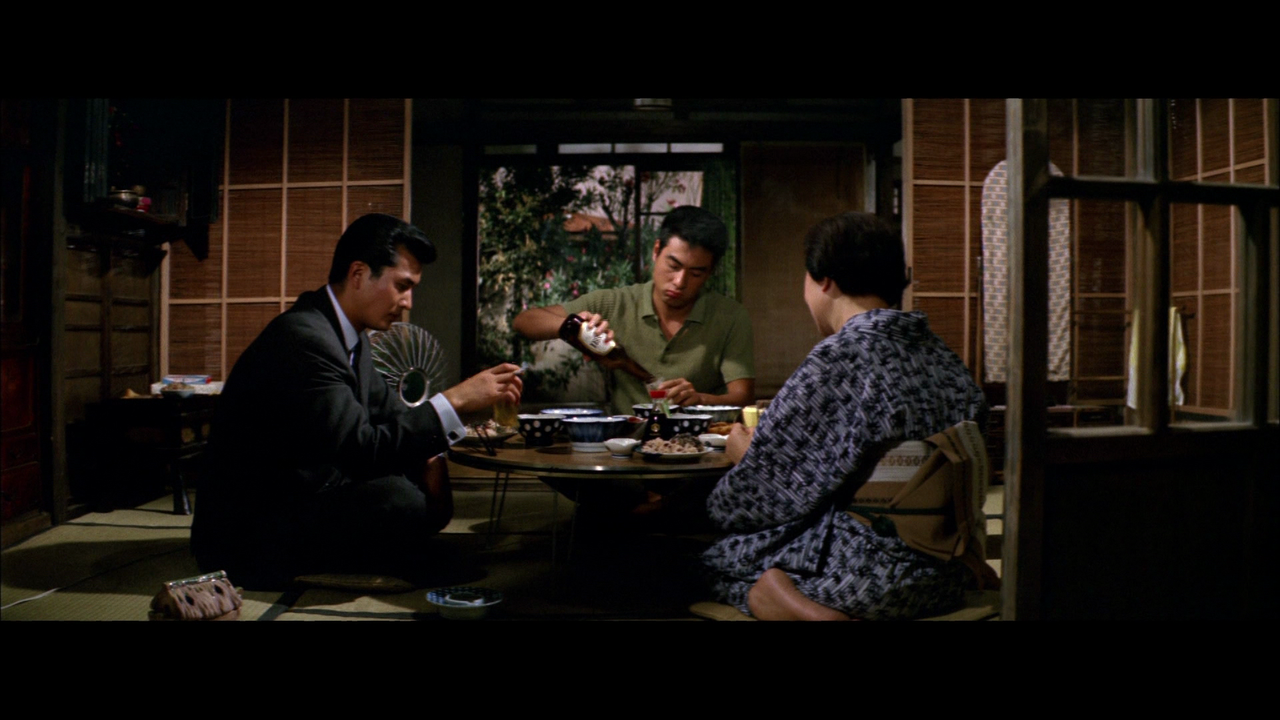
Here, with the brothers competing for their mother's love, it makes the drama feel not just toothless, but deeply square. Save for the raucous comedy and the violence at the end, this could just have been an Umetsugu Inoue movie, actually. The vivid elements that make a Suzuki movie are largely missing from the production (another reason to believe this was intended to be a more prestigious project than Suzuki normally worked on; more interference from the studio, potentially). There are some wonky stylistic choices only Suzuki would make, but Suzuki's particular outlook is almost invisible in this picture. "Revenge for a dead father's legacy" is not a theme Suzuki would normally get behind. The kind of anarchism with which Suzuki normally approaches his subjects is mostly missing here. And the movie's criticism feels more skin-deep than in the other pictures of this era.
In many ways, the film seems to herald the end of Suzuki's Nikkatsu career, or set that end in motion. Ironically, the film follows immediately after Suzuki's biggest hit at Nikkatsu, Gate of Flesh. After this movie, the studio begins very conspicuously disciplining Suzuki, frequently taking away the promise of color cinematography (Story of a Prostitute, made after this, was meant to be in color; on the set the first day, Suzuki and Kazue Nagatsuka discovered they'd been given black-and-white film), more frequently criticizing passages of his filmmaking. Suzuki responds by being more passive/aggressively antagonistic towards his bosses, exercising more control over the scriptwriting and subject matter of his pictures (a subject the Nikkatsu top brass seemed eager to control, or at least, keep a lit on). I really want this to be a good movie. It certainly isn't as bad as I thought when I first saw it. But it doesn't come together in the exciting way of literally all the other Suzuki movies of this time period.
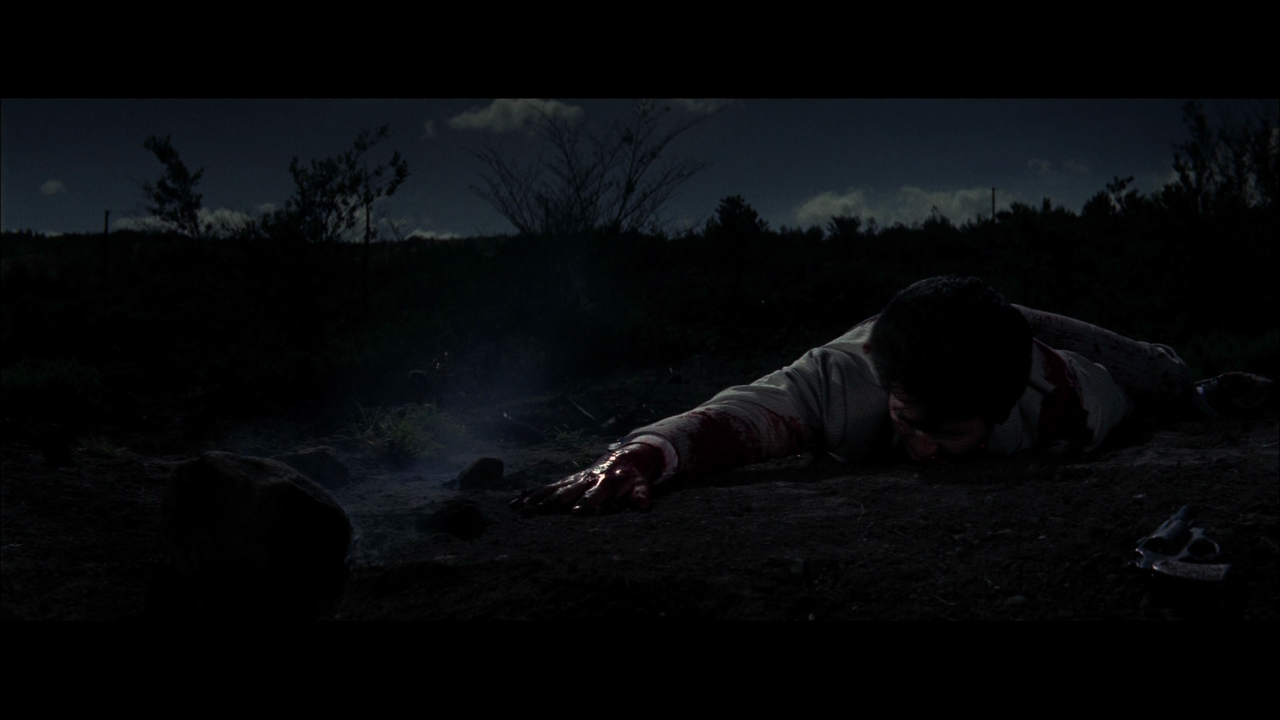
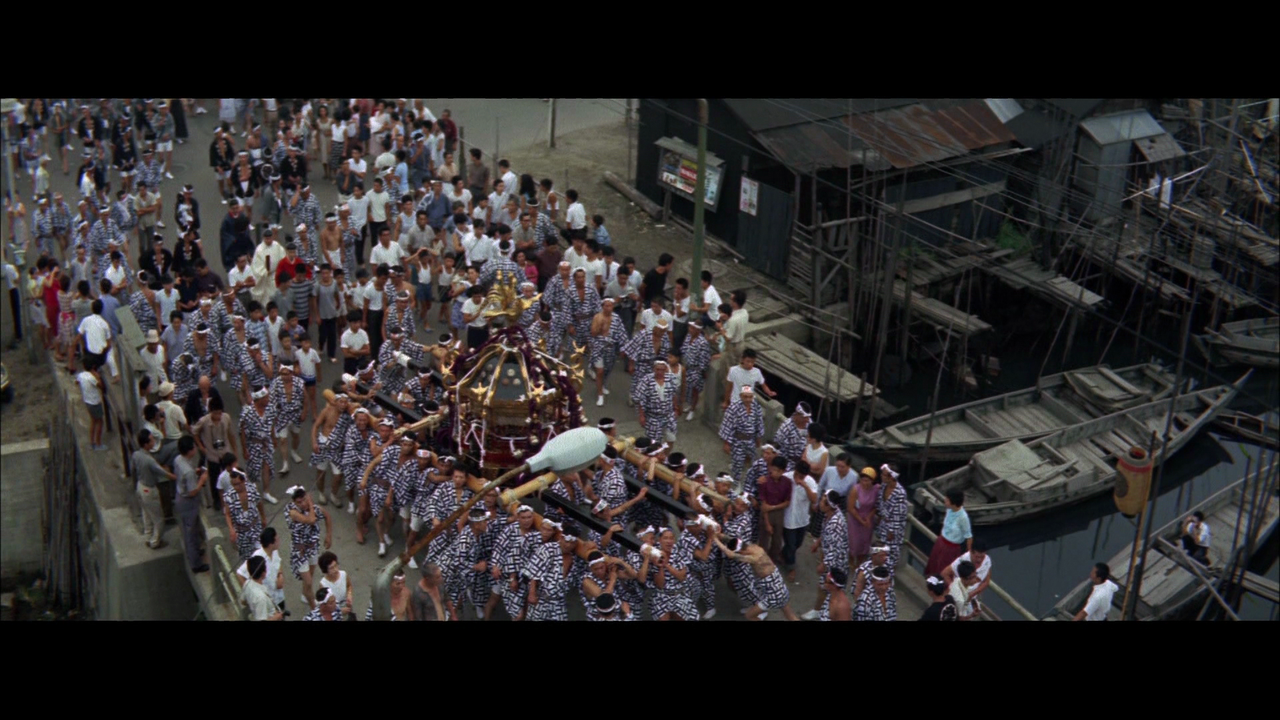
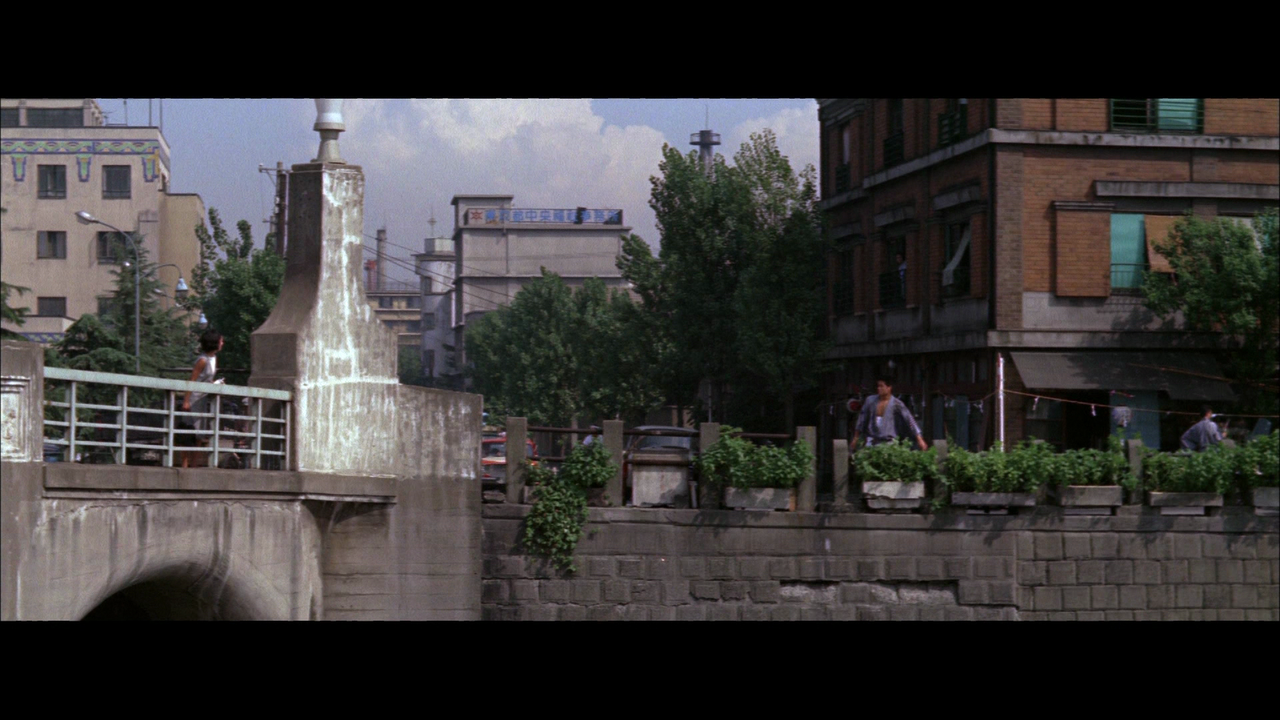
It is visually quite vivid, though. And I am pretty sure John Woo saw this movie, and took a whole aesthetic from it. The romantic look into the gangster world; the epic shootout, with Kobayashi in a nearly white suit (very reminiscent of The Killer); the elegant suits and cigarette breaks––all of it appears in the Woo movies later on. I believe Woo did mention seeing Detective Bureau 2-3 in the an interview, and I believe Our Blood Will Not Forgive got a release in Hong Kong (going some ways to explaining the Hong Kong dvd). At any rate, that's the film. Where do I think the movie turned out more expensive than Suzuki's standard picture? The two star salaries, mostly. That, and there is a considerable amount of location footage with lots of extras, crowds, and unusual scenery. Plus, a lot of rain.
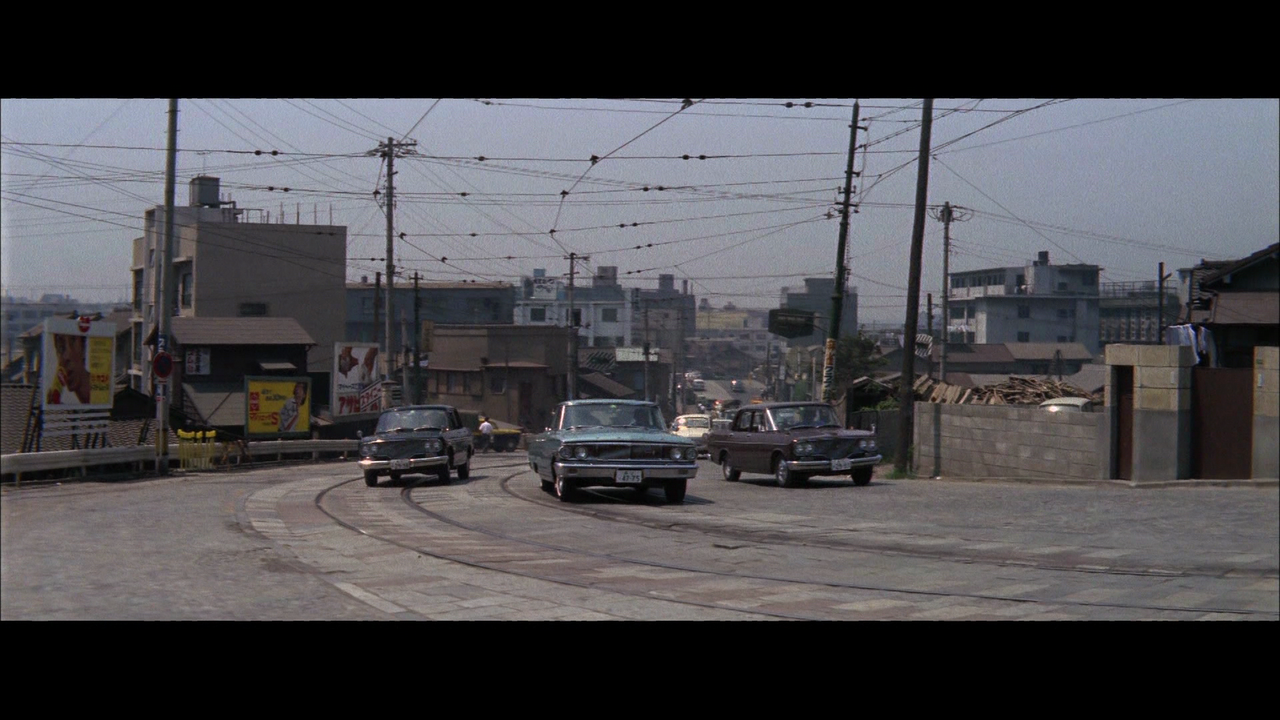
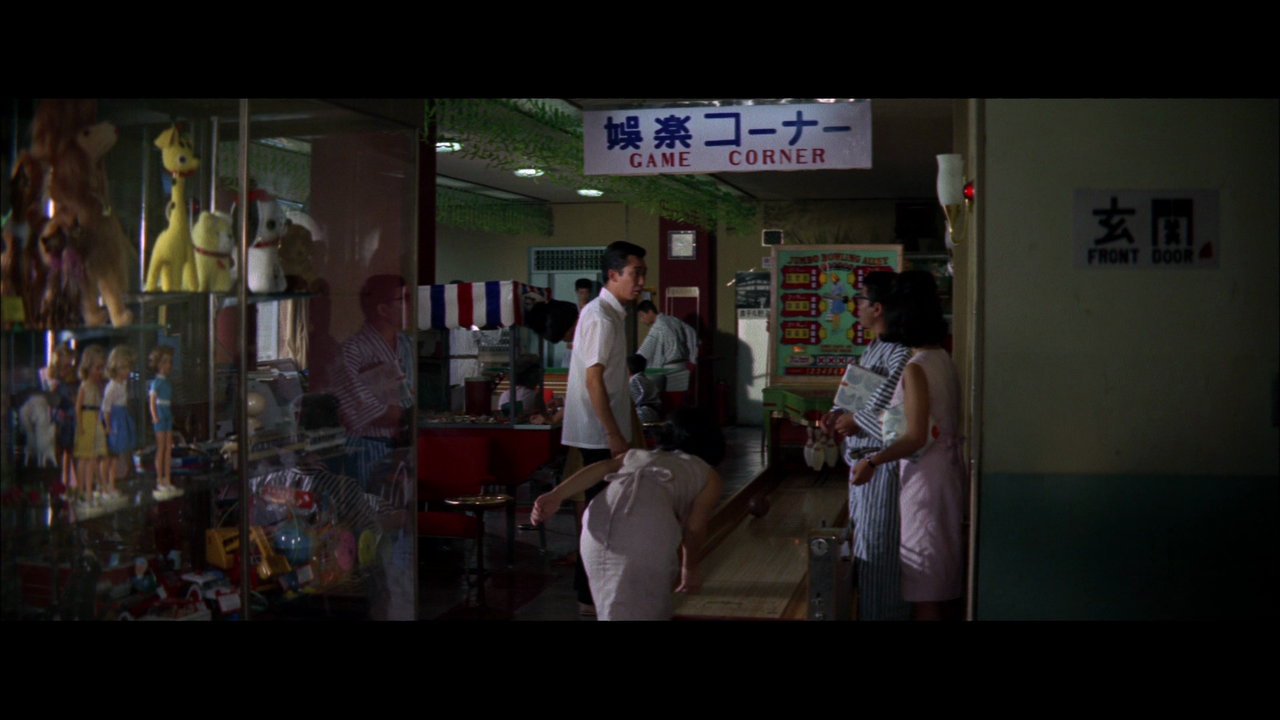
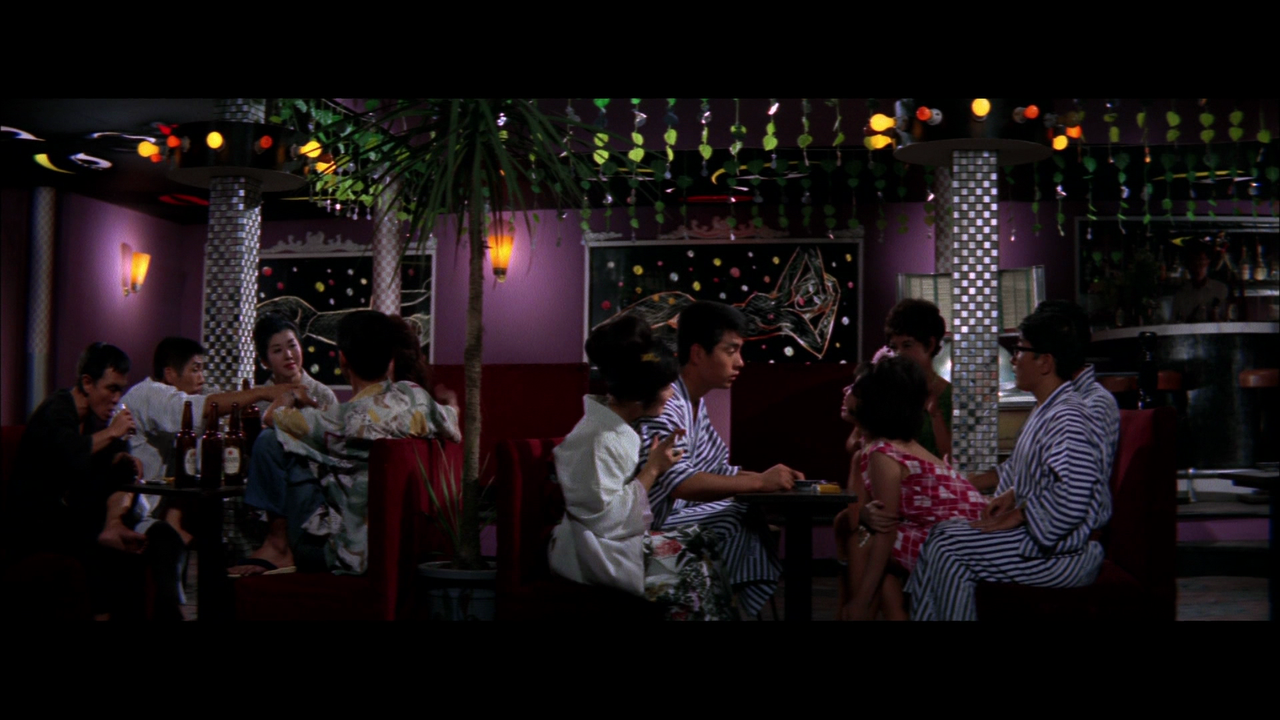
What about the quality of the disc?
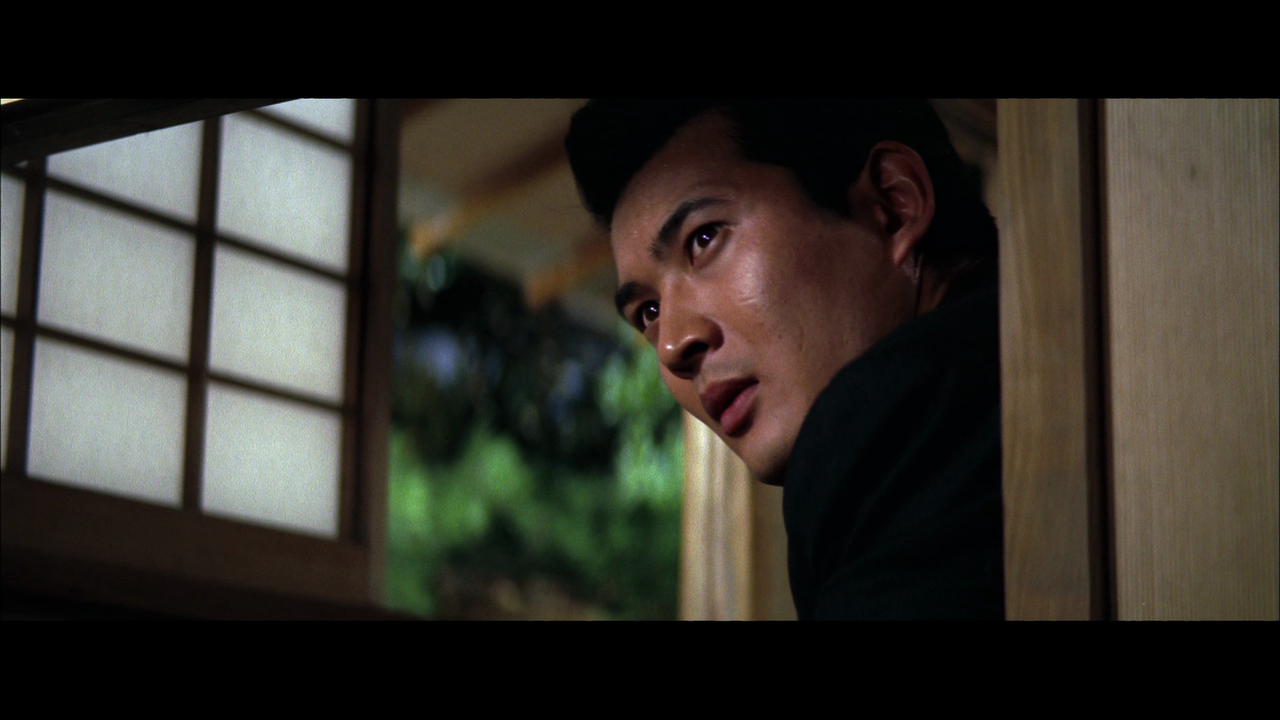
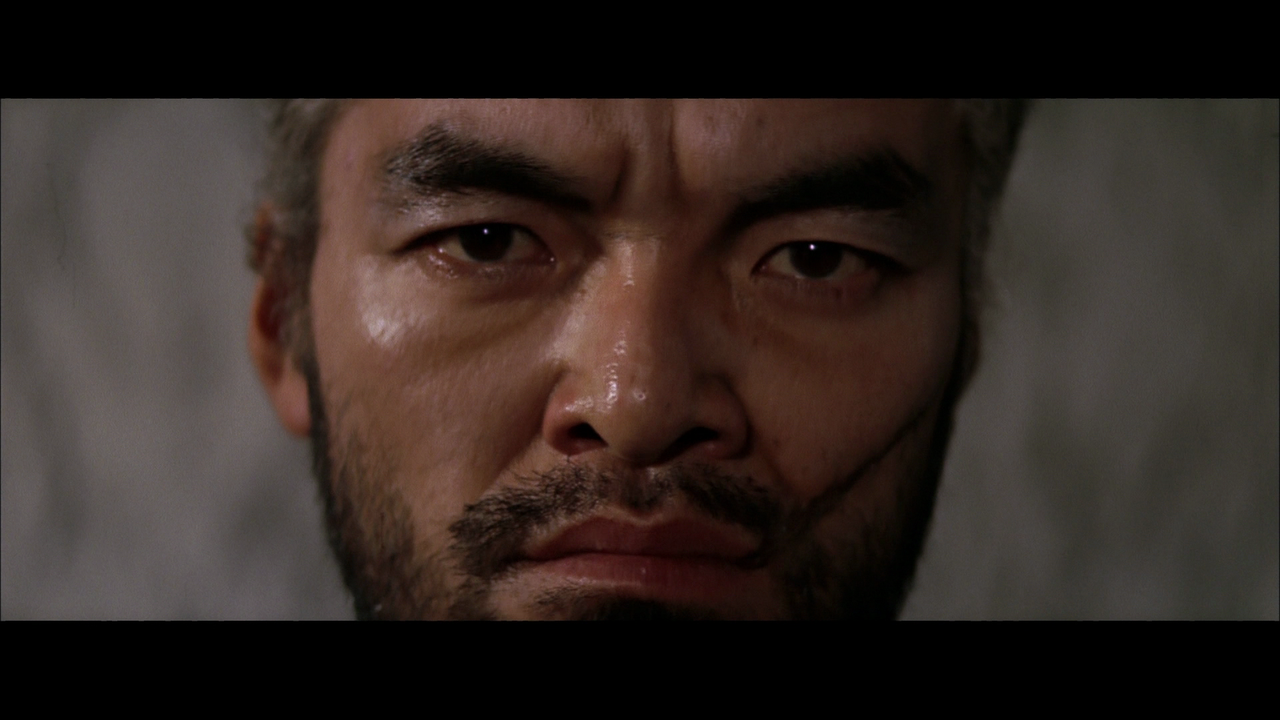
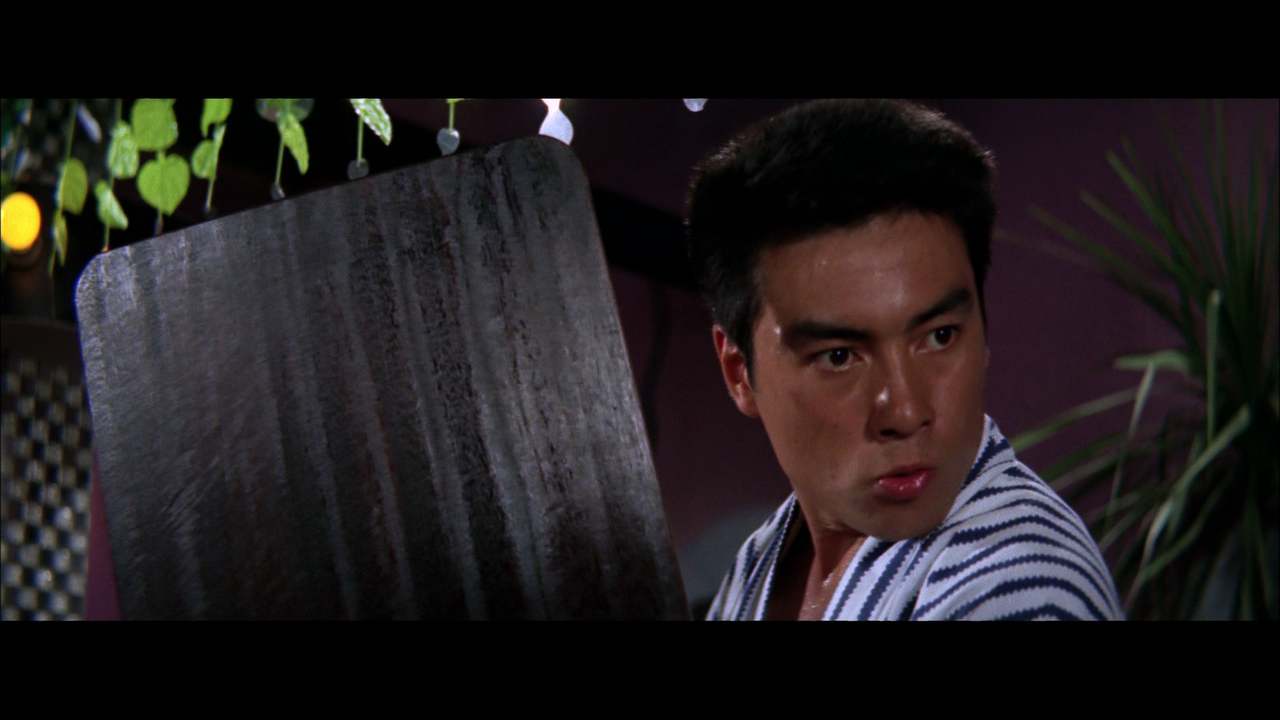
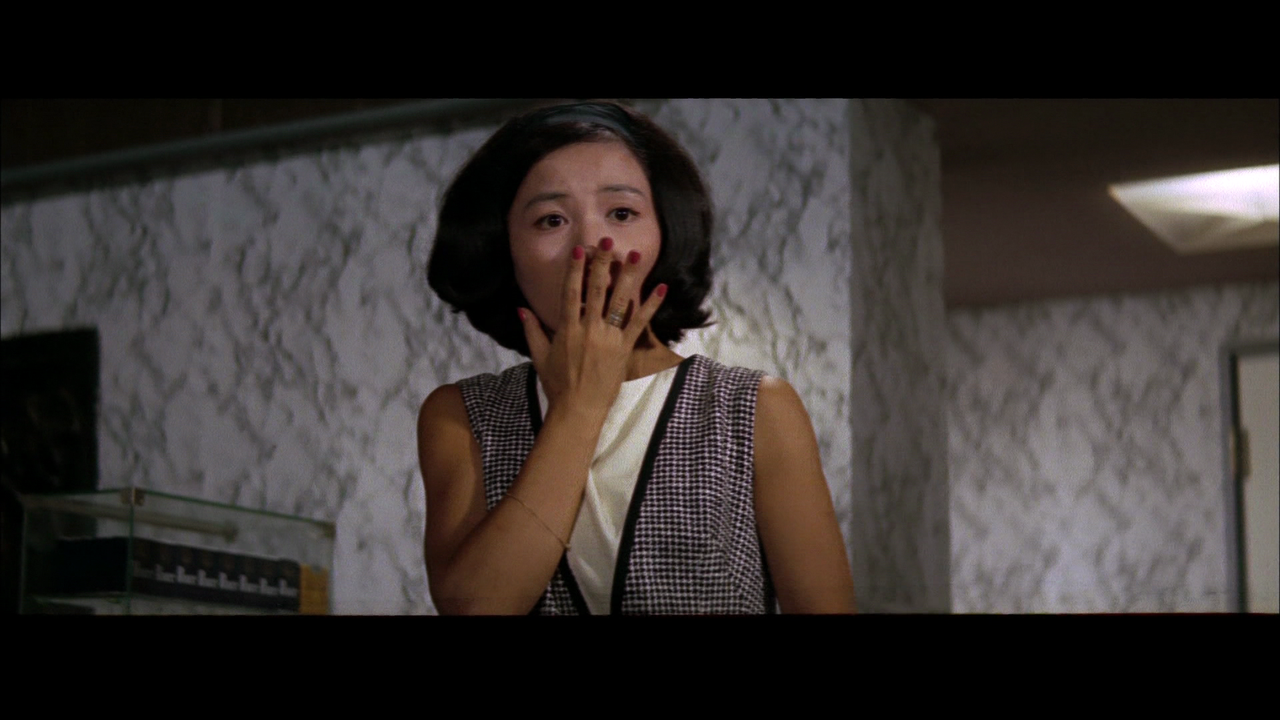
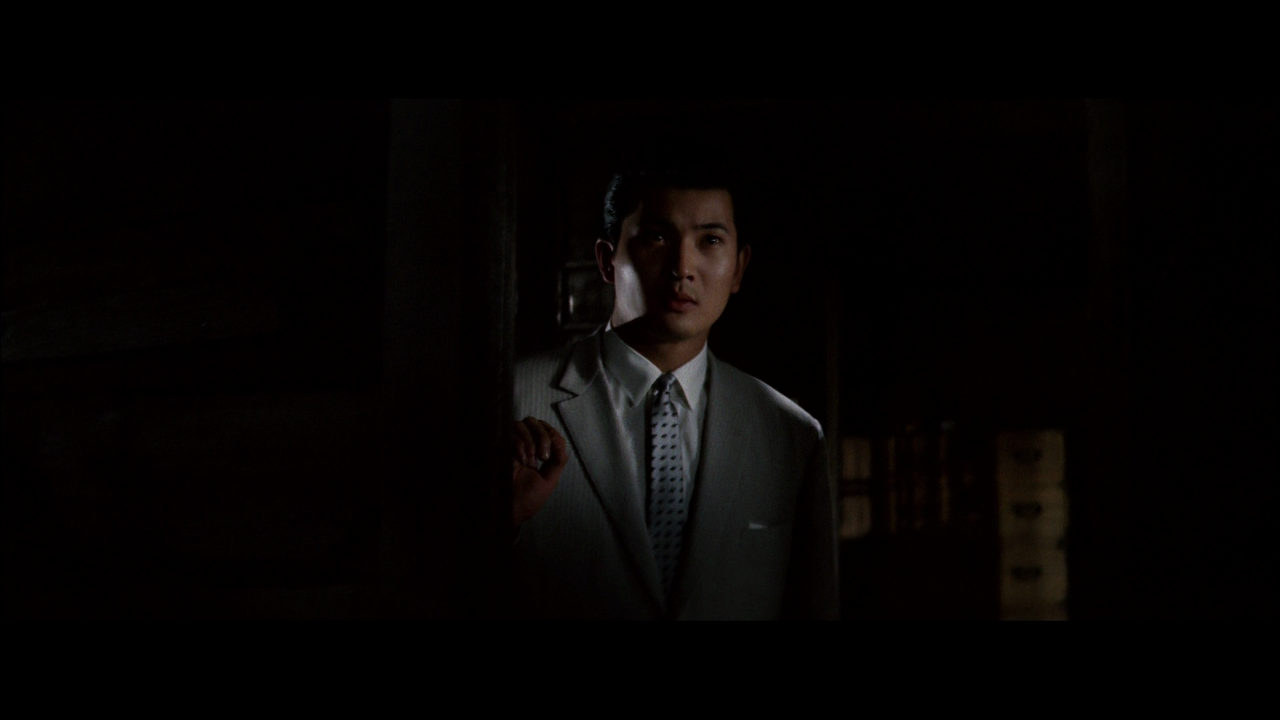
The disc is both prettier and clearer than previous presentations of the movie, and also not really good enough. The picture could look sharper, cleaner, and could especially have more clarity––as the trailer demonstrates. You have seen a number of screenshots in here from the shootout finale. That day-for-night sequence is actually more readable on this version than in the previous home video release. But when I saw the film on 35mm, I could see all the action unfurling. Honestly, in the theater the day-for-night seemed a little more biased on the side of clarity––to the point that I thought it could actually be darker. Give it a few years and a different format, I guess, and I get my capricious wish. I don't think this one is really worth any company picking up for an English-language release; bad movies are not the norm for Suzuki, and this one's Suzuki-esque qualities don't make it quite memorable enough. And while I like Kobayashi a lot as an actor, he doesn't save this movie. There are just as many movies where Kobayashi doesn't brighten up the proceedings (Black Tight Killers, Retaliation, all those Wataridori movies, etc.) and there are great movies where he is well-cast (Kanto Wanderer and The Flower and the Angry Waves). What I think the film is missing is a way to tie the goofy office satire to the gangster melodrama, plot-wise. Something that would bring those two worlds together more; and more of a symbiotic relationship between the brothers.This movie is longer than the standard Suzuki film not because that is merited so much as that the brothers' different stories aren't more efficiently tied together.