Re: Michael Mann
Posted: Wed Aug 24, 2022 10:31 pm
chrisandy007 wrote: Fri Jul 08, 2022 11:15 pm Ferrari is apparently gearing up to shoot this month on location in Italy. I'll believe it when I see it but this has been a long time coming
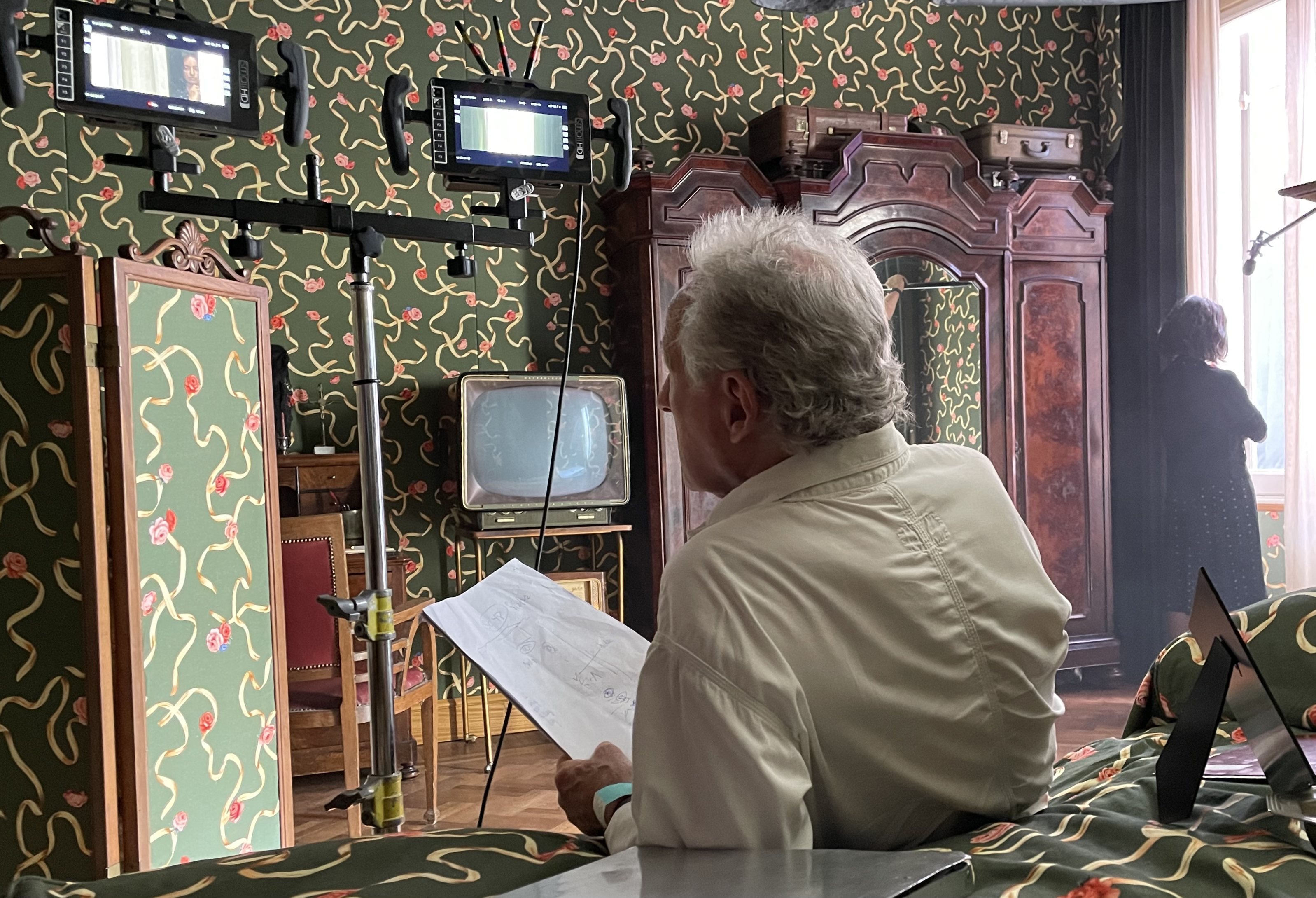
chrisandy007 wrote: Fri Jul 08, 2022 11:15 pm Ferrari is apparently gearing up to shoot this month on location in Italy. I'll believe it when I see it but this has been a long time coming
This is a very interesting comparison, I never would have thought this at all, but it makes sense with the two films you've listed to illustrate your point.knives wrote: Sun Sep 11, 2022 11:51 pm I actually find them both to be incredibly similar, albeit Cronenberg’s expression working better for me. Both are continually fascinated by a trivium of humanity with the emotions and intellect fighting to master the social. Even early on for both you see that. I think Fast Company is a great example of that connecting tissue and Manhunter does a lot of the same illustrations in reverse.
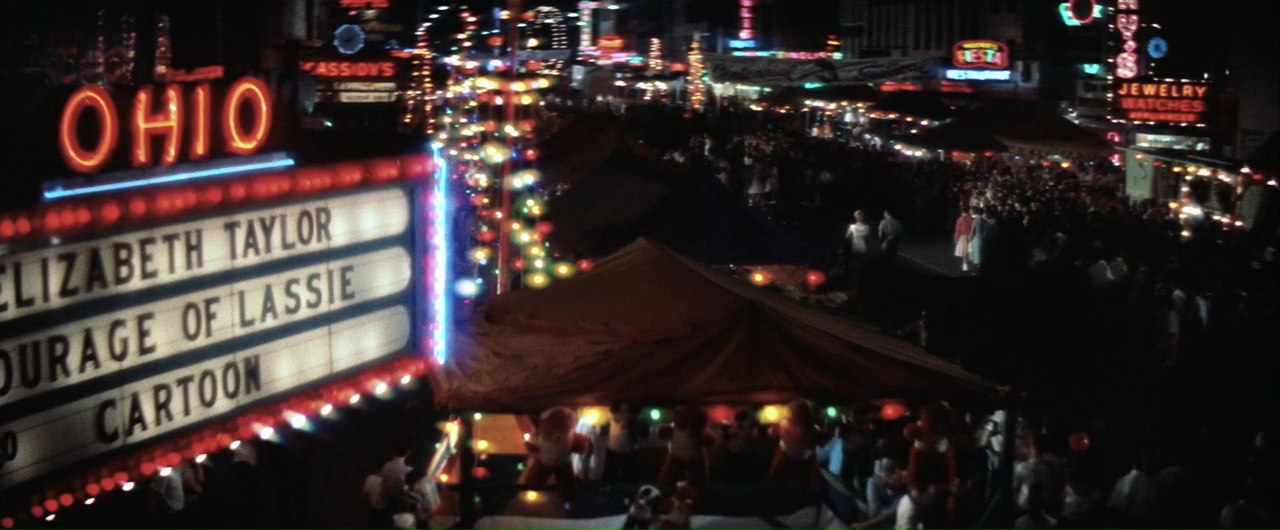
...Vincente Minnelli?flyonthewall2983 wrote: Tue Jul 11, 2023 8:03 pm How fitting a company of that name is in business with the guy responsible for first making neon cinematic.
Truly a wonderful comment on the film, which I resisted reading until seeing the film myself. I wish I could be in agreement though - my experience was vastly different than yours.John Cope wrote: Sun Dec 31, 2023 8:28 am Ferrari recalls a number of cinematic reference points, some, not surprisingly, Michael Mann's own, but stylistically it reminded me most of the great race car centric film Le Mans, not just because of the subject but also because of an emphasis upon textured tone and ambient atmosphere that is predominant over narrative while drawing the pertinent narrative detail out and into the light. For Mann, this association is established right from the start with the events of his film situated explicitly in 1957 and thus providing a kind of snapshot portraiture of the figures involved rather than a more expansive and traditional biopic narrative. Within that framework details reveal a lot, both in terms of character (e.g. Ferrari's purposeful stride vs. his wife Laura's stunted gait) and Mann's distinctive aesthetic technique, his formal figuration (e.g. his unique approach to physicality with the camera right up on the back of the head in intimate intensity or with careful placement of figures at the edge of the frame or from an obscuring angle, all of which gets us to consider physicality differently and associate it with the contours of the cars depicted and to find meaning in that analogy). The film Ferrari then as conceived provides Mann with an opportunity for one of his characteristic concentrated studies, not so much upon the figures as characters but as deeply detailed mythic icons representative of a whole world and its implications.
The figure of Ferrari as the pole around which all else here revolves and whose philosophy or ideology radiates out to encompass all else around him is certainly a version of Mann's archetypal hero, a professional obsessively devoted to his work and who's personal rigor and insistent expectations make great demands upon others even while demonstrating an acknowledgment that he could not and would not live any other way. We see the effects of this in how it plays out in the domestic sphere with all the attendant tensions and how the prospect of a deal furthering his interests is enough to compel a libidinous encounter with his wife that almost acts as reconciliation or restoration of the brokenness between them. Mann's portrait of Ferrari is actually similar to Nolan's portrait of Oppenheimer, both brilliant and driven to a fault and flawed in ways related to what lies outside their immediate and specialized purview but which also may be endemic of it. If Ferrari, for instance, seems to lack sympathy at times for the literal human carnage around him, it is because he simply cannot and will not allow it to distract or detract from a relentless focus; it's not so much that he's incapable of being reached as it is that he cannot afford to allow himself to be reached. In this way, and as with Oppenheimer, his fixations go beyond mere ego satisfaction; he tells his drivers that it is not about the team but about winning and that win, that goal reached, translates finally to the abstract perfectionism of the theoretician (especially as he is no longer a driver himself), which finds a correspondence in Mann's geometric precision. But that should have been obvious right away; Ferrari states at one point that he sells cars in order to race them and not the other way around.
This perfection, finally, is what the figure of Ferrari and the film is all about. The drive for it links him not just to other Mann characters but Mann himself so that the refinement of technique becomes a paramount essential. And thus it shifts into both an esoteric realm and one expressly related to the divine (an early church service scene makes that point). Mann connects spaces of the explicitly mythic (the church, the opera, the race track) and the stakes are certainly and quite literally life and death, implying their existential and metaphysical significance. The drivers may be willing to take on their challenges almost as soldiers in the form of war movie motifs but by the end we recognize the marginality of their committed pursuit. As Ferrari notes, they may all understand how close death is but children don't, families don't. The cost of their accomplishment is not always just upon them.