Page 11 of 39
Re: 1970s List Discussion and Suggestions (Lists Project Vol
Posted: Tue Jun 25, 2013 5:26 pm
by knives
Dang, it seems fun even if very silly.
Re: 1970s List Discussion and Suggestions (Lists Project Vol
Posted: Tue Jun 25, 2013 7:32 pm
by YnEoS
Lau Kar Leung passed away today, and he probably was the most influential HK action choreographer in the 1970s. So if anyone feels like guilt watching any of his films here's a solid list of my favorites of his from this decade.
Executioners from Shaolin (1977)
Heroes of the East (1978)
The 36th Chamber of Shaolin (1978)
Mad Monkey Kung Fu (1979)
Dirty Ho (1979)* *Besides a few hiccups in the form of Lau Kar Leung's awkward attempts at comedy, this is absolutely one of the most outstanding kung fu films ever made. Each fight scene is incredibly innovative, a real master class in elaborate 70s style shapes fight choreography.
And if you want a bit more context on his career, you also add in Chang Cheh's Five Shaolin Masters (1974), which Lau Kar Leung choreographed and was one of the films that switched kung fu films to focus more on fighting forms and more elaborate (though sometimes less realistic) fight scenes. And then The Spiritual Boxer(1975), which isn't one of Lau Kar Leung's best, but showcases a lot of his unique directorial flourishes that he would improve on later in his career.
Re: 1970s List Discussion and Suggestions (Lists Project Vol
Posted: Wed Jun 26, 2013 12:21 am
by bamwc2
domino harvey wrote:And good luck on the interview!
Thanks. I got the job! It's my first FT position even though it's only temporary.
Re: 1970s List Discussion and Suggestions (Lists Project Vol
Posted: Wed Jun 26, 2013 4:46 am
by Mr Sausage
bamwc2 wrote:domino harvey wrote:And good luck on the interview!
Thanks. I got the job! It's my first FT position even though it's only temporary.
Congratulations, man! I wish you luck with your book project as well!
Re: 1970s List Discussion and Suggestions (Lists Project Vol
Posted: Wed Jun 26, 2013 5:36 am
by knives
A further hurrah. In this economy any job is worth a breath of air.
Re: 1970s List Discussion and Suggestions
Posted: Wed Jun 26, 2013 9:13 am
by Cold Bishop
domino harvey wrote:I understand there are a lot of PD versions of these films floating around, but I picked up the OOP BCI boxed set for a ridiculous price from Amazon (
EDIT: It still is stupid-cheap: $7 + shipping for a New copy?!) and can report that the transfers and audio options are great, and the whole thing comes in a handsome digipak case.
I need to thank you for pointing this out. I got my set today, and the packaging alone is impressive. Although it's a bit unnerving to look at my DVD shelf and
not see the original trilogy (which somehow still doesn't have a decent release).
Re: 1970s List Discussion and Suggestions (Lists Project Vol
Posted: Wed Jun 26, 2013 12:35 pm
by YnEoS
It's been years since I've watched them, but I think there's a decent box set of
The Streetfighter films out in the UK. I remember being really excited to find them in the proper aspect ratio with a Japanese audio option. Previously I had only seen them in some crappy generic martial arts movie pack I got in high school, dubbed in English and packaged with some Bruce Lee movies.
Re: 1970s List Discussion and Suggestions (Lists Project Vol
Posted: Wed Jun 26, 2013 6:40 pm
by colinr0380
bamwc2 wrote:10 Rillington Place (Richard Fleischer, 1971): ...It's a shame since I'm a death penalty abolitionist and this movie documents the trial ultimately led to the abandonment of capital punishment in the UK.
It is outside the decade but I guess you are aware of the more recent British capital punishment dramatisations of real events: Let Him Have It (about the Derek Bentley case) and Dance With A Stranger (about Ruth Ellis, the last women to be executed in Britain)?
Re: 1970s List Discussion and Suggestions (Lists Project Vol
Posted: Wed Jun 26, 2013 7:30 pm
by bamwc2
Viewing Log:
Farewell My Lovely (Dick Richards, 1975): Film legend Robert Mitchum stars as hard boiled detective Philip Marlowe in this adaptation of Raymond Chandler's novel of the same name. Like the first film based on the novel--Murder My Sweet--a giant oaf of a man named Moose hires Marlowe to find his missing girlfriend Velma. Nothing is as easy as it sounds in Marlowe's world as the apparent simplicity of the case gives way to intrigue and multiple murders. While it may not be fair, I couldn't help but compare it to the original adaptation when viewing Richards's film. Although I think that the original is the better of the two this one does an admirable job of its own, even staying truer to the book (or so I've heard) by including steamier material that Edward Dmytryk couldn't put in to his adaptation. Mitchum is excellent as Marlowe, and although he is no Dmytryk, Richards does a competent job as well. Oh, and be sure to keep your eyes peeled for a before he was famous Sylvester Stallone who shares a love scene with 70s exploitation queen Cheryl "Rainbeaux" Smith. Somebody really out to do a retrospective on her film for this project. Looking at imdb, I can't believe that I've seen so many of them.
The Return of a Man Called Horse (Irvin Kershner, 1976): Tired of his sedate life in the British countryside, Richard Harris's John Morgan decides to return to visited the Yellow Hand Sioux, who he once ruled as their chief. Upon his return he finds that local trappers working with another Indian tribe has slaughtered the Yellow Hand, taken many as slaves, and scattered the rest into hidden communities. Like it's predecessor, the film revolves on the story of the white man who is the greatestof all the Native Americans. However, in the first film he was merely their leader. Now here he's their savior. This film doubles down on problematic racial politics of the first film, but lacks the beauty and skill of the it. What's more, the film devolves into a fairly pedestrian action flick in the last act. Pass it up.
Who Can Kill A Child (Narciso Ibáñez Serrador, 1976): This slow burning thriller felt like a real punch to the gut. It begins with the rather blunt indictment of the world's populace. Children die everyday based upon the choices of adults. But is this the same as putting a child in the crosshairs and puling the trigger? The film abandons this question as quickly as it introduces it, instead telling the story of Evelyn and Tom, a young couple who travel to the Mediterranean island of Almanzora. While they meet plenty of giggling children, they are unable to find any adults on the island. Something sinister has happened here and although we never find out the exact cause of the extreme violence that gripped the island, the couple soon find themselves fighting for their lives against the young terrors. The film ends on a truly chilling note which is still rolling through my mind twenty-four hours later. This is highly recommended and has a shot at making my final list.
Re: 1970s List Discussion and Suggestions (Lists Project Vol
Posted: Wed Jun 26, 2013 7:32 pm
by bamwc2
colinr0380 wrote:bamwc2 wrote:10 Rillington Place (Richard Fleischer, 1971): ...It's a shame since I'm a death penalty abolitionist and this movie documents the trial ultimately led to the abandonment of capital punishment in the UK.
It is outside the decade but I guess you are aware of the more recent British capital punishment dramatisations of real events: Let Him Have It (about the Derek Bentley case) and Dance With A Stranger (about Ruth Ellis, the last women to be executed in Britain)?
Thanks for bringing them up, Colin. Yes, in a strange bit of coincidence I saw both of those rather good films in the last six months. All three are worth checking out for anyone interested.
Re: 1970s List Discussion and Suggestions (Lists Project Vol
Posted: Wed Jun 26, 2013 7:50 pm
by Mr Sausage
bamwc2 wrote:The Return of a Man Called Horse (Irvin Kershner, 1976): Tired of his sedate life in the British countryside, Richard Harris's John Morgan decides to return to visited the Yellow Hand Sioux, who he once ruled as their chief. Upon his return he finds that local trappers working with another Indian tribe has slaughtered the Yellow Hand, taken many as slaves, and scattered the rest into hidden communities. Like it's predecessor, the film revolves on the story of the white man who is the greatestof all the Native Americans. However, in the first film he was merely their leader. Now here he's their savior. This film doubles down on problematic racial politics of the first film, but lacks the beauty and skill of the it. What's more, the film devolves into a fairly pedestrian action flick in the last act. Pass it up.
I don't mind this aspect so much because I don't think it's particularly motivated by race. It's long been a narrative trope that the saviour or preternatural leader of a group of people is an outsider. Think of Beowulf or the Volsunga Saga/Nibelungenlied, where the hero comes from a different society. These narratives set the pattern for this kind of story. The other alternative is the hero/saviour who is part of society but an outcast from it, like an illegitimate son, or someone from the lower classes, maybe a thief/murderer/rogue, ect. But, in general, in these kinds of stories, the saviour very often isn't a regular member of society.
The kind of narratives wherein the saviour of a people is a regular or elevated member of society are folktales, and this is because the hero is being claimed by that society as a kind of tribal representative.
So while there are unfortunate and unpleasant racial overtones to a white man becoming the saviour of a Native society, it's not motivated chiefly by race--indeed this is likely accidental.
Re: 1970s List Discussion and Suggestions (Lists Project Vol
Posted: Wed Jun 26, 2013 7:56 pm
by knives
Also in both films, not so much the horrible third, he really isn't a savoir so much as a guy who integrates into the population. In the second film there is a sort of Doctor Who aloofness to the character, but I think that humour if anything helps prevent him from being a savoir so much as a bridge between worlds.
Re: 1970s List Discussion and Suggestions (Lists Project Vol
Posted: Fri Jun 28, 2013 2:20 pm
by bamwc2
Viewing Log:
Fiddler on the Roof (Norman Jewison, 1971): Jewison's epic tells the story of a Jewish village at the tail and of Tsarist Russia, with particular attention payed to Tevye's family as his commitment to traditional Jewish norms softens in favor of allowing his daughters to have greater freedom in the first act. While this theme still exists in the second act, the film takes a greater interest there in the effect that the pogroms have on the community. While there is a lot to like here, I don't think that it quite lived up to its popular reputation. The film was overly long with entire plot points that could have easily been eliminated without losing anything of importance, while other aspects simply come off as boring. Still, there are some high points. The wedding scene contained some impressive choreography, and I have to admit enjoying some of the numbers. I'd give it a very moderate recommendation.
The Great Ecstasy of Woodcarver Steiner (Werner Herzog, 1974): Although he's been focused on non-fiction filmmaking for the last few years, it's still easy to overlook Werner Herzog's documentaries. However, he made some extraordinary documentaries in the 1970s, and The Great Ecstasy of Woodcarver Steiner is right up there with the best of them. The film chronicles the "ski flying" (a longer distance version of ski jumping) trials of full time carpenter and part time athlete Walter Steiner. Herzog's documentaries are never about remaining objective, and his admiration for Steiner is front and center throughout the film's short run time. Instead of a verite-style documentary, we get a portrait of Steiner as an extraordinary man accomplishing extraordinary scene's with Herzog's unique eye capturing some of the most interesting skiing footage that I've ever seen. This was amazing.
Leo the Last (John Boorman, 1970): What a strange film. Marcello Mastroianni stars as the last member of a long line of European royalty, living in a poorer area of London. Leo takes an interest in a young African immigrant forced into prostitution, but the film maintains a consistently light tone with a focus on Leo's whimsical adventures. I think that the film is better than its reputation lets on, but it is still often a confusing jumble of ideas anarchically strewn together. Leo's journey is an odd one, but one that I was happy to have taken.
Short Night of Glass Dolls (Aldo Lado, 1971): Jean Sorel stars as a reporter who has been found on the street giving every appearance of being dead. However, for a mysterious reason that I won't spoil, he's actually very much alive and spends most of the movie in flashback trying to remember what led him to this point. Going in I thought that this was going to be a riff on the season 1 episode of Alfred Hitchcock Presents where Joseph Cotton finds himself in a similar situation. Although there's a definite similarity between the two works, Lado's film is far more than a mere retelling. The film does fall into some of the traps of lesser Giallo at times, but is overall a fairly effective thriller.
Re: 1970s List Discussion and Suggestions (Lists Project Vol
Posted: Fri Jun 28, 2013 4:59 pm
by knives
To be honest I genuinely feel that Herzog's documentaries are his A material with even his best fictions being only about as good as his most middling documentaries. Of what I've seen I most highly recommend The Land of Silence and Darkness which is pretty much the only film in which Herzog removes his personality if not self from the proceedings.
Re: 1970s List Discussion and Suggestions (Lists Project Vol
Posted: Fri Jun 28, 2013 5:53 pm
by bamwc2
knives wrote:To be honest I genuinely feel that Herzog's documentaries are his A material with even his best fictions being only about as good as his most middling documentaries. Of what I've seen I most highly recommend The Land of Silence and Darkness which is pretty much the only film in which Herzog removes his personality if not self from the proceedings.
I agree that
Land of Silence and Darkness is an amazing work and certainly in my pick for his top three or four films for the period. To be fair though, I haven't seen any of his 70s TV work.
Re: 1970s List Discussion and Suggestions (Lists Project Vol
Posted: Sat Jun 29, 2013 3:09 am
by bamwc2
A couple that I forgot to add earlier and a couple of new ones that I watched while working today:
Graveyard of Honor (Kinji Fukasaku, 1975): I looooooved this movie! I've only seen a smattering of Fukasaku (including the highly overrated
Battle Royale), but this is far and away my favorite film of his. The film chronicles the real life dealings of post-war yakusa Rikio Ishikawa. Ishikawa is an explosively violent and self-destructive criminal who, despite his intelligence and gift for crime, was always on a collision course with a doom of his own making. Fukasaku's camera is alive throughout the film, always finding something interesting to do. I've seen some great Japanese gangster films and this one is the equal of any of them.
High Plains Drifter (Clint Eastwood, 1973): Eastwood both directs and stars in this western about an unnamed man who is roped in by the town of Lago to defend it against the return of three outlaws who have been released from jail after killing the town's sheriff. Although it’s far less cerebral than some of his other westerns, Eastwood knows how to make solid entertainment. My only complaint is the rape that occurred 15 minutes in. The film gives into the dangerous myth (a very common one at the time) that ‘no’ means ‘yes’ and any woman will cease her protests once the thrusting begins. The film even references this moment later on to make a joke. It’s a glaring black mark on an otherwise great flick.
Was Eastwood implying that he was the ghost of the murdered marshal in his final conversation with Mordecai? He did disappear into the horizon as the credits began to roll.
(Richard Donner, 1976): I wasn't expecting much from Richard Donner's influential horror film going in. Although it received lukewarm reviews upon its release, its reputation seems to have taken a nosedive after three dreadful sequels, a remake, and countless films ripping it off. Combine that with the fact that I've somehow seen all three sequels on cable without having viewed the original, and I knew every twist and turn that the plot was going to take ahead of time. That's why I'm surprised that I actually enjoyed the film for the most part. It wasn't high art, nor was it nearly as frightening as some of its contemporaries, but it did deliver solid suspense in its third act race to uncover Damian's mysterious origins. Gregory Peck was as wooden as ever in his role, but still managed to bring an added dimension to his character as he struggled with the question of whether he could kill a child. It's not a great horror film, but it is a fun one.
Damian's shouts of "Don't do it, Daddy" in the final scene hit me hard as a father. It actually made me want Peck not to kill the antichrist.
(Philip Kaufman, 1979): Philip Kaufman's final film of the decade tells the story of a 50s high school street gang known as The Wanderers whose mouths get them into trouble that their fists can't get them out of. Like the other famous gang film of the same era,
The Warriors, there are plenty of theme gangs in here, mostly broken down by racial/socioeconomic lines. Also, like
The Warriors, it's a fun movie even if there isn't anything too profound going on in it. I certainly enjoyed the story which took some fun twists in the third act, and the sound track was a real hoot (even though I wasn't born for another 30-20 years after the songs). I have to admit that I yelled "Meat" when Tony Ganios made his unexpected appearance (looking at the imdb, it appears that Kaufman also gave Ganios his last onscreen appearance in
Rising Sun as well). Oh, and as a side note unrelated to anything else, my father actually had the film's star Ken Wahl as a student in high school. I once asked him what Wahl was like. His reply: "A punk". Sometimes art imitates life.
Re: 1970s List Discussion and Suggestions (Lists Project Vol
Posted: Sat Jun 29, 2013 3:34 am
by Mr Sausage
RE: High Plains Drifter
The whole movie implies that Eastwood is a metaphysical avenging angel. Hence the odd, ghostly atmosphere of the thing. Eastwood even cast the part of the sheriff with an actor that looks very similar to him, which adds to the ambiguity.
I thought the rape scene unnecessary, too, but I think it's there to alienate you from Eastwood, to suggest he is not an figure of good. It was certainly shot to make him look demonic. I think it was a misguided choice, tho'.
Re: 1970s List Discussion and Suggestions (Lists Project Vol
Posted: Sat Jun 29, 2013 3:44 am
by Cold Bishop
bamwc2 wrote:Graveyard of Honor (Kinji Fukasaku, 1975): I looooooved this movie! I've only seen a smattering of Fukasaku (including the highly overrated Battle Royale), but this is far and away my favorite film of his.
Everyone is going to talk about
Battles Without Honor or Humanity, which kind of fizzles out as a series, but I feel his one-shots are probably his best work.
Sympathy for the Underdog is a solid noirish stab at the "aging gangsters" sub-genre, heavily influenced by both Pontecorvo and Peckinpah, and in turn was the chief inspiration for Kitano's
Sonatine.
Street Mobster may be the most stylishly cool thing he did, and perhaps something of a companion piece to
Graveyard, with a similar focus on a self-destructive social outsider. And
Cops vs. Thugs, whose title obscures the fact the film is more about the symbiosis between police and yakuza. It may be the bleakest film he did: it does for material society what
Graveyard did for personal, spiritual darkness.
Re: 1970s List Discussion and Suggestions (Lists Project Vol
Posted: Sat Jun 29, 2013 11:28 am
by bamwc2
Mr Sausage wrote:RE: High Plains Drifter
The whole movie implies that Eastwood is a metaphysical avenging angel. Hence the odd, ghostly atmosphere of the thing. Eastwood even cast the part of the sheriff with an actor that looks very similar to him, which adds to the ambiguity.
My wife watched the film on and off with me and swore that Eastwood also played the part of the late Marshal. I told her that she was crazy. She'll be happy to hear this news.
Re: 1970s List Discussion and Suggestions (Lists Project Vol
Posted: Sat Jun 29, 2013 5:42 pm
by Forrest Taft
I agree it's pretty clever casting. Buddy Van Horn played the Marshall. He was Eastwood's stunt double from Coogan's Bluff onwards (he previously also doubled for Gregory Peck), stunt coordinator on almost all of Eastwood's films, and director of three of the truly disposable titles in Eastwood's filmography: Any Which Way You Can, The Dead Pool and Pink Cadillac.
I loved High Plains Drifter and it's creepy atmosphere when I saw it in my early teens, but I don't think I've seen it since. Curious as to how it holds up. My impression is that many disregard it as a lesser work where Eastwood spends too much time aping Sergio Leone, in addition to being, as bamwc2 point out, less cerebral than his later westerns (except for the moronic Pale Rider). Fans of Drifter should also check out the pretty effective Django il Bastardo, starring Anthony Steffen, which I'm pretty sure Eastwood must have seen before making his own supernatural western.
Re: 1970s List Discussion and Suggestions (Lists Project Vol
Posted: Sat Jun 29, 2013 5:44 pm
by knives
I actually rather like Pink Cadillac even if it is total B Movie bad comedy.
Re: 1970s List Discussion and Suggestions (Lists Project Vol
Posted: Sat Jun 29, 2013 6:15 pm
by Forrest Taft
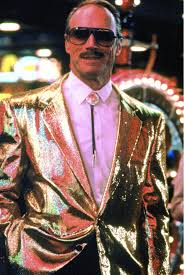
So you're the one!
Re: 1970s List Discussion and Suggestions (Lists Project Vol
Posted: Sat Jun 29, 2013 6:32 pm
by domino harvey
Well, I didn't have any interest in seeing it before that picture
Re: 1970s List Discussion and Suggestions (Lists Project Vol
Posted: Sat Jun 29, 2013 7:03 pm
by knives
Like I said I recognize that it is not the next coming of Hawks, but its fun for its weird aims. Certainly I like it more than the monkey pictures.
Re: 1970s List Discussion and Suggestions (Lists Project Vol
Posted: Sun Jun 30, 2013 4:10 am
by flyonthewall2983
As with the other Horn films it's the wrong decade, but I think The Dead Pool gets a little bit of a bad rap. The Rookie is far worse in comparison. At least in the former you could just sense Clint's boredom from an acting perspective. The Rookie is boredom from a directing perspective which affects everything.