Page 22 of 33
Re: The 1940s List: Discussion and Suggestions
Posted: Mon Oct 14, 2019 4:26 pm
by Feego
I spent the last couple of weeks actually watching films for this project, and here's what I have to show for it:
On the Town (1949, Gene Kelly & Stanley Donen)
One of the most joyful and exuberant film experiences I've had in a while. I smiled from beginning to end with this lighter-than-air confection. It's not the best-choreographed or most spectacular musical I've seen, but the cast give off such infectious enthusiasm that it's hard not to jump on board with them. Every musical performance is perfection, with the big numbers "Prehistoric Man" and the title song being obvious standouts. I also loved Sinatra and Betty Garrett's cute duet "You're Awful." The dream ballet was interesting to me for taking the Oklahoma! approach of featuring actual ballet dancers in place of the film's stars aside from Kelly and Vera-Ellen.
The Treasure of the Sierra Madre (1948, John Huston)
I've heard people refer to this as a western, but to me it's much closer to a noir (without actively being one). Bogart's steady decline, both morally and mentally, under the seduction of gold is a tense watch. The film achieves so much darkness despite taking place mostly in sweltering sunlight. It whips up enough paranoia that even though Bogart is clearly the most unhinged, I found myself questioning the other characters' motives almost up to the end. Walter Huston's performance is justly famous and provides the greatest substance. The film gives its characters a final, cathartic laugh at the bitter irony, but I was still left unnerved by it all.
How Green Was My Valley (1941, John Ford)
A life-affirming masterpiece of familial endurance. The film provides a strong balance of childhood nostalgia and recognition of the darker realities. These are people it was just nice to spend time with, and I liked how outspoken everyone was, particularly the women. Sara Allgood making her way to the men's union meeting to defend her husband, and Maureen O'Hara calling out the deacons of the church for banishing an unwed mother were character highlights. There's quite a bit of suffering, but the film is never bogged down in tragedy or mawkishness. Ford handles the story with honesty and appreciation for beauty where it can be found. This is a gorgeous film, and it deserves more in the general consciousness than just being known as the film that beat Citizen Kane for the Oscar.
The Lodger (1944, John Brahm)
The studio-created Gothic atmosphere is the most noteworthy element in this Jack the Ripper tale. It won't upend Hitchcock's earlier take on the story, which dove deeper into the fetishistic nature of the killer. But Laird Cregar is creepy and tragic, Merle Oberon is a vibrant leading lady, and the murder scenes have some proto-slasher style with the camera lingering on the victims heading toward their doom, sometimes from the killer's POV.
Hangover Square (1945, John Brahm)
This does a lot of the same stuff as The Lodger, but better. The opening murder is definitely looking ahead to the slasher genre with a killer's POV shot of a stabbing. While I think this is too heavily on the Gothic side rather than expressionist to be considered noir, it does have a strong sense of fatalism. Things get pretty nasty for one victim in a development that's still pretty shocking. The pattern of violence followed by purifying fire is intriguing. Once again, Cregar is great as the killer. His character's musical creativity serves the narrative less than it serves to showcase Bernard Herrmann's score, but it's a great score that points the way toward his work for Hitchcock.
The More the Merrier (1943, George Stevens)
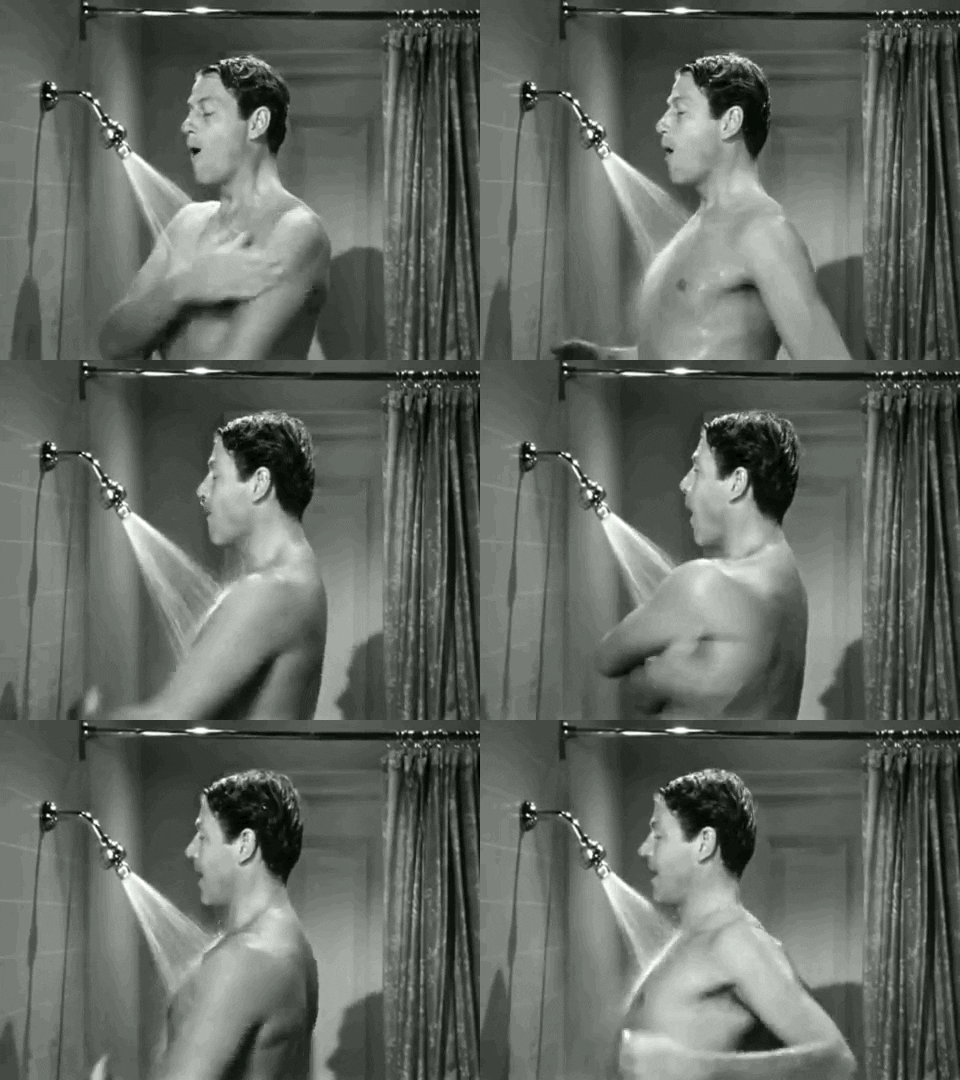
I dread being that person, especially since everyone under the sun loves this movie, but this just didn't work for me. The first act, with Charles Coburn insinuating himself upon Jean Arthur and causing chaos in her detailed schedule, is certainly hilarious. Throwing Joel McCrea into the mix, complete with him barking like a seal in the shower, seems like a recipe for success. But the romance never moved me in any way, and in fact it just came off as unappealing considering how it's basically thrust upon poor Arthur. I'm not familiar with Stevens' other comedies aside from Swing Time, a film that means little to me outside of the musical numbers. But the pace just seemed sluggish, even during its best moments, as though it were giving the audience time to stop laughing before moving on. It seems many here consider this to be Arthur's best performance, but her over-the-top crying toward the end just irritated me. I much prefer her in Only Angels Have Wings and Mr. Smith Goes to Washington.
On the positive side, Arthur and McCrea's kissing scene on the stoop is one of the most erotic things I've seen like ever, and the shots of their "adjoining" beds are delicious. I'm not dismissing this just yet, as it's possible I just wasn't in the right mood, but my first watch was a disappointment.
Rossellini's War Trilogy (1945-1948)
I'm actually not well-versed in Italian Neorealism outside of Bicycle Thieves and my first viewing of Paisan some 17 years ago. I initially attributed my lukewarm response to Rome Open City to the style itself just not working for me, but after making my way through the other two films, I think what kept me from embracing it was its combination of vérité with the rather twisty narrative that seemed to beg for a more florid style. The acting from Magnani and Aldo Fabrizi is highly emotional, quite different from what I usually associate with neorealism. I found myself wishing the rest of the film followed their lead. Paisan, on the other hand, was more satisfying because it was more consistent in style. I remembered very little about it from my viewing years ago, but the different episodes exploring communication barriers between Italians and Americans are all interesting to some degree. I found the first three stories the strongest while the later ones progressively became less engaging, though this may be a case of anthology-film fatigue™. Similar to Open City, the fact that most of these episodes end on an ironic note introduces narrative contrivance that clashes with the sense of banal realism. Germany Year Zero was by far my favorite of the trilogy, one of the most shattering stories of childhood I've seen on film. At this point I stopped really trying to look at this through the lens of neorealism and just accepted it as a story. Flipping the focus to a German family rather than Italians makes this immediately compelling against their depictions in the earlier works. There's no sentimentality at all, but I was deeply touched by the child protagonist's situation. The last stretch of him just wandering amongst the demolished buildings of Berlin is the best case for neorealism I've seen. This one will definitely make my list for its stark treatment of a difficult subject.
Children of Paradise (1945, Marcel Carné)
Life and theatre merge in the comic and tragic movements of a years' long romantic web. The sprawling runtime allows for rich characterizations. The segues into comedy are broad and fun, none better than the first 20 minutes or so of Part 2, in which Pierre Brasseur's Shakespearean actor makes a mockery of the deadly serious play in which he's starring, basically deconstructing the play as he performs. This sequence could work as a brilliant short on its own. But despite these comic interludes, it's melodrama through and through. There's an almost soap opera quality to the various love affairs spiraling from Arletty's enigmatic smile (As Arletty Turns?). The various characters each strike a different personality, and their joys and sorrows invite viewer appreciation just as their onscreen stage performances elicit thunderous applause.
Ivan the Terrible (1944/1958, Sergei Eisenstein)
My memories of this behemoth from a film class several years ago were of a delirious fever dream that overwhelmed my senses. Upon a revisit, this was just a'ight. Part 1 really dragged for me, and while the production and the full-bodied investment of the actors are impressive, it honestly just came off as silly. Reading through the dedicated thread for this movie, I noticed many people saying they vastly prefer this to the baldly propagandistic Alexander Nevsky. I'm of the opposite opinion. I think the cartoonish symbolism and exaggerated style works better in the earlier film because it is so clearly a piece of propaganda. With Ivan, it seems we are being asked to, if not sympathize exactly, at least relate to the story in a more dramatic way. But the stylistic excess just distanced me from the story. It's fascinating on paper for the way it builds up its protagonist and sees him steadily corrupted by power and the various plots against him. Watching the visual essay on the DVD or reading analyses online with screenshots are also illuminating. But the experience of watching the film itself doesn't match the idea of it. Part 2 is better simply because it gives over more gleefully to its bonkers sensibilities. When it turns into a 3-strip Technicolor musical, it's an absolute blast. That sequence justifies the whole endeavor, but overall this was better served by my memories.
Re: The 1940s List: Discussion and Suggestions
Posted: Tue Oct 15, 2019 3:48 am
by Rayon Vert
Feego wrote: Mon Oct 14, 2019 4:26 pmThe More the Merrier (1943, George Stevens)
I dread being that person, especially since everyone under the sun loves this movie, but this just didn't work for me. The first act, with Charles Coburn insinuating himself upon Jean Arthur and causing chaos in her detailed schedule, is certainly hilarious. Throwing Joel McCrea into the mix, complete with him barking like a seal in the shower, seems like a recipe for success. But the romance never moved me in any way, and in fact it just came off as unappealing considering how it's basically thrust upon poor Arthur. I'm not familiar with Stevens' other comedies aside from
Swing Time, a film that means little to me outside of the musical numbers. But the pace just seemed sluggish, even during its best moments, as though it were giving the audience time to stop laughing before moving on. It seems many here consider this to be Arthur's best performance, but her over-the-top crying toward the end just irritated me. I much prefer her in
Only Angels Have Wings and
Mr. Smith Goes to Washington.
On the positive side, Arthur and McCrea's kissing scene on the stoop is one of the most erotic things I've seen like ever, and the shots of their "adjoining" beds are delicious. I'm not dismissing this just yet, as it's possible I just wasn't in the right mood, but my first watch was a disappointment.
FWIW I’m hot and cold with the film. Oddly for me the romantic charm on the whole is one of the stronger points. Laughs-wise, it’s amusing at times but the comedy set-ups are often heavy-handed and laborious.
It’s recognized that Stevens’ comedies lacked in the rhythm department (e.g. Sarris: “his dawdling direction of comedies is the slowest in the business”).
Re: The 1940s List: Discussion and Suggestions
Posted: Tue Oct 15, 2019 3:50 am
by domino harvey
Damn the torpedos, full speed ahead past these wrong opinions
Re: The 1940s List: Discussion and Suggestions
Posted: Tue Oct 15, 2019 1:17 pm
by Feego
Actual footage of Domino preparing to watch
The More the Merrier:
Re: The 1940s List: Discussion and Suggestions
Posted: Tue Oct 15, 2019 3:37 pm
by domino harvey
Very accurate. There's a reason "screen" rhymes with "clean"
Re: The 1940s List: Discussion and Suggestions
Posted: Tue Oct 15, 2019 4:59 pm
by Feego
I will say this is probably my favorite Joel McCrea performance, and that moment is a big reason why I like him in general. He's sort of the perfect middle ground between Gary Cooper and Cary Grant. He's the ordinary guy with a nearly perpetual stone face, but like Grant, he really throws himself physically into comedy roles. I caught a little of Sullivan's Travels the other day, and at one point he does the broadest, most cartoonish sneeze but somehow makes it look perfectly normal.
Re: The 1940s List: Discussion and Suggestions
Posted: Tue Oct 15, 2019 11:05 pm
by therewillbeblus
I’d agree with that statement. The More the Merrier is at least the best ‘use’ of McCrea, as his own distinct personality fits so well in the dynamic of the odd trio that he gets to stretch his subtle talents to more animated places due as much to the diverse assembly of players as the script and direction that amplify the gaps in these relationships.
Re: The 1940s List: Discussion and Suggestions
Posted: Sun Oct 20, 2019 3:33 am
by Rayon Vert
Hold Back the Dawn (Leisen 1941). I didn’t expect this to be this good, to the point that I really rate it quite a bit ahead of the director’s other better-known works (still need to see
To Each His Own when that gets eventually reissued). The film really succeeds in making you care about what’s happening to these characters; from the seduction scene onwards there’s really a strong emotional pull. De Havilland is particularly good at creating an endearing character here, and those exterior sequences and scenes involving the honeymoon trip in the countryside really add a more modern and extra charming touch for a film of this period. Script, acting, directing, it’s all extremely solid. At this stage of the project, I wasn’t expecting a new watch to make my list, but this does.
They Made Me a Fugitive (Cavalcanti 1947). Definitely an enthusiastic reaction from me for this one, though perhaps not to the extremes as expressed by some on this board. I was prepared for the toughness after having read the booklet, but Sally Gray’s character really brings a strong dose of heart and humanity to the film from the moment we first see her face as she visits Clem in prison. HDT early in this thread wrote up already the aspect that struck me most, which was the uniqueness of the many female characters here, that gave the film a lot of different dimensions. A grimly fun yarn, definitely made with great visual flair (plenty of Hitchcockian POV shots), that’s really evocative in terms of time and place.
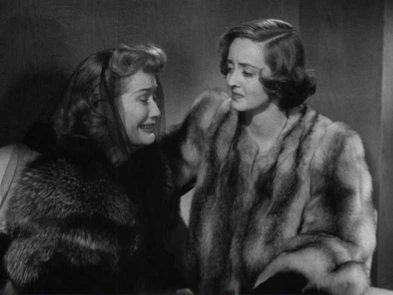 Old Acquaintance (Sherman 1943).
 This is likely the last classic Bette Davis “woman’s film” I hadn’t seen. The casting goes against the grain and in this saga of two childhood friends and their intertwined romantic dramas it’s Miriam Hopkins who plays the histrionic one and Davis her sane and virtuous counterpart. It’s a strange film to some extent, for one thing because for at least the first reel it plays like a comedy, almost screwball, before changing gears and settling into a serious tone for the rest of the running time. It also gets bewildering with its varied, sometimes a little disjointed and progressively more excessive plot developments, but at the same time the tone never gets hysterical. It isn’t even throughout but on the whole this was surprisingly strong, led by one of Davis’s most admirable performances. I’d rate this a bit higher than
Mr. Skeffington, another Davis-Sherman project that I also quite liked, and really among the films I’ve liked most both in the genre and in the actress’ filmography (and quite ahead of other similar Davis fare like
The Great Lie,
All This, and Heaven Too,
Now, Voyager,
Dark Victory and
The Old Maid, the last one being an earlier Hopkins-Davis rivalry flick that didn’t have at all the same vitality).
The Devil and Miss Jones (Wood 1941). This was likeable but at the same time I can’t say I was as enthusiastic about this as several have voiced on the forum recently. I thought it generally had charm but wasn’t necessarily the funniest, and while yes politically progressive to an extent the major plot line felt like something a little small to make a whole film out of. But the performances do overcome the plot limitations. Arthur was OK but the one I liked the most here was Coburn. When the narrative starts with his character deciding to take up the role of the spy to investigate the employees could have become dull but he manages to keep you focused and interested in through the whole thing. There is something a bit surprising that even though he’s the bad guy, it’s his POV we pretty much stick to for a good chunk of the film, with Arthur and the others remaining more on the outside.
Stray Dog (Kurosawa 1949). Really inspired write-up by TWBB earlier. Seeing this after all of the preceding films chronologically, this really is on another level of achievement, even if I occasionally had (very slight) qualms about it hitting all – retrospectively of course - well-worn buddy cop drama tropes – recognizing at the same time they likely originated here! This definitely had the most American feel of his movies thus far, although one of its many strengths is precisely that it locates the action within the reality of the war’s effects and also that it uses that to offer a psycho-philosophical meditation on the origins of criminal activity, thereby adding another layer of depth. It’s a long film and occasionally I felt the film slackened just a bit in between the major sections, but that’s really a minor criticism – there are many memorable scenes, and I especially loved Shimura’s portrayal of the older detective here. I also felt the film really wins by revealing and inhabiting many environments, indoors and outdoors, that really makes it feel grounded in reality.
 The Valley of Decision (Garnett 1945).
 This has some similarities to
How Green Was My Valley – an 1870s family saga in a Irish-immigrant community based around a steel mill in Pittsburgh, also featuring conflicts between the mill owners and workers (and Donald Crisp plays a pater familias here too). The events are more melodramatic however (though not excessively so) and the romantic angle is more front and center for most of it, with Greer Garson’s working-class Mary working as a servant in the mill owners’ home, and becoming romantically entangled with the more responsible son Paul, played by Gregory Peck. I haven’t yet seen a film with Garson that’s anywhere near bad or mediocre and this was no exception – as a romantic drama it was surprisingly potent, to the point where it was threatening to become a list-maker for me. However, Mary makes a few key decisions and a later one is very disappointing for the romantic hopes cultivated in the viewer, but beyond that that development threatens to bring down the spirit of the whole film. Luckily the film recovers by the end. Not a film you hear a lot about, definitely on this forum, but well worth the watch if you come by it.
The Killers (Siodmak 1946). [Rewatch] So I went and watched this again after the exchange a while back with Twbb, and it confirmed my previous less-enthused revisit. That opening diner scene is iconic and terrific, of course, but after that it’s boring for a pretty long stretch. One problem is that Lancaster initially cuts an impressive figure with his bearing but really there’s not a lot that’s revealed or made interesting about the character. You eventually realize that in terms of the film he’s just a pawn in a puzzle that’s being figured out, but there isn’t a lot to make us that interested in that puzzle in the first place. Near the end of the film the sheer complexity gathered eventually manages to create some interest, and the reveal about who double-crossed who creates a bit of a wow factor, but really a small one. Hard to care for Ava Gardner’s character also – not a lot of humanity presented to care about her, she’s really just your typical femme fatale.
This was probably the first time I noticed that the sequence showing the payroll robbery is just one long take (
plan-séquence), maybe an inspiration for
Touch of Evil?
Re: The 1940s List: Discussion and Suggestions
Posted: Wed Oct 23, 2019 11:38 am
by nitin
Not going to make my list but I thought Whisky Galore was a charming little film with a hilariously deadpan performance from Basil Radford of a ‘House Guard’ Captain that takes his ‘duty’ and ‘responsibility’ to the Crown way too seriously in attempting to protect, and ultimately punish, those local townsfolk that attempt to ‘save’, for themselves, some of the whisky from a sinking Crown vessel. Special mention also goes to the actress playing the mother of Radford’s second in command, who takes the word of the Lord just as seriously as Radford’s character takes his duty to the Crown.
Re: The 1940s List: Discussion and Suggestions
Posted: Sun Oct 27, 2019 3:58 am
by Rayon Vert
Last viewings from me for this project.
The Murderers Are Among Us (Staudte 1946). Very admirable for how it reveals life for Berliners immediately after the war, for the depiction of PTSD, and especially for its political honesty. I can’t say I was that impressed just on a cinema level, though. Lead actor Borchert is a bit wooden and not that empathy-evoking and the relationship between Susanne and Hans isn’t really satisfactorily developed. Really the characters are left a bit as abstract figures rather than developed personalities. Then there’s something a little too unsubtle and message-driving in the way the narrative grapples with the grotesquely unrepentant army captain turned bourgeois businessman, but on the other hand it’s hard to fault a film when the message has this type of historical value.
D.O.A. (Maté 1949). Given the comments this got earlier in the thread I went in with extremely low expectations and thought it was pretty good in the early part up until the point O’Brien discovers he’s been poisoned. The premise is fun (I very vaguely remember the Quaid remake), the setting up in Frisco scenes are enjoyable, and Pamela Britton brings an endearing enough performance in the early parts. But then it manages to become quite dull as it focuses exclusively on resolving the mystery, despite the frenetic pace and a few decent action sequences. However O’Brien’s acting is so strangely inadequate that it creates an almost oddly appealing dimension.
Frieda (Dearden 1947). Last year of the war and David Farrar plays a prisoner who escapes a camp with the help of a German girl, and repays her by marrying her in order to bring her to safety in England. The film spotlights the anti-German sentiment that her presence in an Oxfordshire village creates. As if things aren’t complicated enough, at some point her unconverted Nazi brother shows up. It’s war film meets melodrama meets social problem film, with, to compare to the Staudte film, a perspective from the other side of the pond on the question of German guilt (as in the people, not just the regime), done in a relatively sophisticated way, as the film problematizes also the treatment of the German as an Other. Farrar is always good but this character is simple enough so that it doesn’t call on him to reach deep, but Mai Zetterling as Frieda is quite compelling. The melodramatic aspect of the narrative is limited but the themes are quite strong and the film is well-directed so that overall the result is more than merely competent.
Portrait of Jennie (Dieterle 1948). This comes across as more interesting and modern than most of the heaven movies because something more mysterious and unresolved happens, and it also has to do with more scientific notions of “time curving” (mentioned by the narrator at the beginning) rather than religious view holdovers. Some of the photography and framing early on also felt less conventional, and with the presence of Cotten brought to mind Citizen Kane. The script is decent but it’s the really the way that the material is presented and photographed that’s bewitching.
Dieterle really has an impressive slate of good films in his résumé.
Under Capricorn (Hitchcock 1949). [Rewatch] This didn’t stand a chance of making my list but I hadn’t seen the upgrade yet. It’s not a bad film per se but besides the sometimes plodding pace, my impression after this viewing is that the film is hurt by having so many different narrative and thematic strands that tend to disperse the focus. You have the mystery of Henrietta’s condition and what has brought it on, then her rehabilitation, but you also have the threat of a romantic affair, class conflict, Milly’s own derangement, and all of the murder charges at the end and who is to be found guilty of what. The other weak point is the character of Adare, who isn’t well defined as a protagonist (he’s clearly not the villain but then he’s not really appealing either), and the rather bland and emotionless way Wilding plays him – which becomes quite obvious and problematic in the scenes where he plays against the heavily emoting Bergman, who’s one of the better things here. A Montgomery Clift or even a Farley Granger would surely have been more successful.
Re: The 1940s List: Discussion and Suggestions
Posted: Sun Oct 27, 2019 4:21 am
by therewillbeblus
It looks like I’m not going to be able to finish his 40s work in time, so here are a few Renoirs before list submission...
Swamp Water: A strange, dark follow up to his most beloved film, Renoir hits Hollywood with a tale seemingly about separation, specifically the aspect of disjointment, more than any other. Renoir has always been interested in groups, systems, class, and generally socially constructed separatism, but there’s always been a bit of a collective energy in his work that breaks down walls at least in the cinematic space to elicit a warmth. This film, perhaps channeling his own feelings of displacement from his home of France as a result of Hitler’s invasion, is so muddled down by a chaotic and jarring use of space that it’s almost impossible to feel connection between environments seemingly worlds apart. Andrews bridges the gap and Brennan and his friendship produces the humanist optimism pumping through Renoir’s blood. Still, the sets contain plenty of claustrophobic details and characters are written around enough spatial barriers, that there are moments of loneliness and isolation unique to Renoir’s body of work, echoing the separation between a man and his home in content and vibe. Missing is the jovial entertainment, spatial freedom, and even technical prowess of his other films, which stop this from being as enjoyable or impressive as I’d hoped, but it is a historically layered work for the director and vague enough to composite the united experience of the common folk amongst the Allied powers affected by the war.
This Land is Mine: Bleak look at Nazi-occupied Europe (as if there’s any other kind..) with signficant emotional investment and classist nudging. I enjoyed this quite a bit, and it seemed like an acute passion project for Renoir as he examines and processes his own torn feelings of cowardice and responsibility vs. retreat to safety, as well as providing himself an outlet to work through these issues towards catharsis in Laughton’s well-drawn hero. Actually many of these characters are vulnerable, fleshed out people who are complicated, flawed, and constantly prompting us to ask ourselves if they are weak or self-preserving, and through Renoir’s skills at eliciting identification, we come down with more empathy and less judgment. Renoir is working on a more macro interest as well in defining his own understanding of political responsibility to class and the bourgeois passiveness towards moral flexibility as the cause for the horrors of the events occurring in his homeland and across Europe. Of all the films Renoir made in the U.S. that I’ve seen, this feels the most alive and significant.
The Southerner: Unfortunately, as the war ended Renoir’s energy did too. Here is a compassionate and atmospheric take on hard life and times, but there isn’t much more going on to peak my interest. Renoir can’t help but treat the material seriously but with his light touch to keep the mood from sinking too low. This is definitely his most “American” film, but I’m not sure that’s a good thing. There hardly feels to be much connection between Renoir and the milieu on screen, as if he’s removed much of his heart unconsciously. Still, for Renoir that looks like a warmer, and more validating film than most, but this one is not much more engaging than similar movies about the American dream. With nearly all fingerprints removed, this was a pretty big miss.
Re: The 1940s List: Discussion and Suggestions
Posted: Sun Oct 27, 2019 5:47 am
by nitin
Moonrise
This was stunning, top tier film noir in my book. It really shouldn’t work, Dane Clark is fairly one note and weak in the lead role and I didn’t quite buy the initial development of his and Gail Russell’s relationship. But it still really works despite those aspects because all of the other roles outside of Clark are performed with sensitivity and nuance and counterbalance his one note performance to achieve a probably unintended but thematically coherent effect of Clark’s character always raging against everything and everyone. Of course, this is all aided by the much lauded mood and atmosphere created by the expressionist mise en scene, and it really is something to behold, particularly on Criterion’s stunning blu ray. The opening alone should be more famous for having one of the all time great edits but Borzage’s work throughout is first rate (my favorite scenes in this regard were the beginning, the Ferris wheel scene, the raccoon hunt which ends with Clark and the raccoon atop the tree and the impromptu dance in Blackwater mansion).
Will be appearing on my list.
A Matter Of Life and Death
I like it, it has too many clever ideas and inspired visuals to ignore, but to me, relatively, this is the Archers’ weakest work out of their more famous collaborations. The central love story that almost everyone in the movie is trying to preserve is just not given sufficient screen time to carry the emotional weight that it is supposed to bear. Might just be me but it needed more scenes showing the developing love between Niven and Hunter’s characters for it to really hit home.
Still, there is plenty to like with my favorite part being the introduction to Livesey’s character in his observatory where he watches the town in a god like manner. The heavenly scenes, in particular the way the trial is conducted, also cleverly reflect the ‘logical fantasticness’ that is mentioned by Livesey in his diagnosis of Niven.
Re: The 1940s List: Discussion and Suggestions
Posted: Mon Oct 28, 2019 1:43 am
by swo17
A few films that have most left an impression on me since the last 1940s round...
Holiday Affair (Don Hartman, 1949)

I didn't grow up watching this but it gives me serious fuzzy "It's Christmas" vibes that I gather resemble the sensation you humans feel when reminiscing back on holidays past. (Or maybe that's just me crushing hard on Janet Leigh.) Even more satisfying though is the very mature portrayal of a love triangle with no easy Hollywood answers. Wendell Corey's character, who the film sets up for failure, is nonetheless never made into a one-dimensional undesirable mate. His greatest offense I guess is not having managed over the years to endear himself to Leigh's son. He does try with him though, even if it doesn't come as naturally to him as it does to the rival suitor. And when this situation arises, Corey is respectful almost to a fault, inviting Mitchum's character to a family dinner and helping his fiancée to identify her true feelings even if it means losing her forever. And Mitchum is an equally respectful suitor, acknowledging that his feelings are disrupting the status quo and not pursuing Leigh behind Corey's back, and only to the extent that it's what she really wants herself. All this being said, there is one moment of '40s innocent-timesness that plays as almost laughable today--when Mitchum has a bit of a spat with Leigh after having only just met her, and instead of leaving her apartment, quietly enters the son's room, closes the door, and has an up-close, intimate conversation with him in which he learns the way to the boy's heart. Oh if only Corey had tried that approach! I also love the toy train bookends that artfully acknowledge the artifice of the film as well as their relevance to the plot. And speaking of which, is there any gesture more sweet than Mitchum's gift in this movie?
Light Reflections (Jim Davis, 1948)
Davis was my greatest discovery from Flicker Alley's Avant-Garde Masterworks set, enough to seek out the three volumes of his work put out by Anthology Film Archives. (They're DVD-Rs, so I think they would still be available now a couple years later. If anyone is interested, try contacting
[email protected]. They cost me $20 a DVD plus $5 shipping.) You might consider this to be just a really mesmerizing screensaver, and Davis admittedly does even more with this concept in some of his later work, but if you keep in mind the decade under review this is unmistakably ahead of its time.
The Web (Michael Gordon, 1947)
Hey Arrow, here's a Universal noir genuinely in need of rescue (you can even sell it as the work of Joseph Gordon-Levitt's grandfather!) This is just really clever and well written, with villains satisfyingly undone by their own hubris as opposed to any lame plot conveniences. I'm also so used to seeing William Bendix playing a lug that it's refreshing to have him here be by far the most intelligent character. Not to mention, how funny is Price's middle-school-girl doodling of the name "Regan" on a notepad late in the film?
Re: The 1940s List: Discussion and Suggestions
Posted: Mon Oct 28, 2019 4:07 pm
by domino harvey
Been suffering though the George Sanders-starring installments of RKO's the Falcon series and they are so thoroughly awful that it's kind of impressive. Only a madman would cast George Sanders in a role in which he acts like a buffoon, and every character from the top down is just an idiot. I would abandon ship after two miserable voyages but allegedly the third installment is somehow based on Raymond Chandler's Farewell, My Lovely, and I don't think I can possibly pass up seeing this creative team try to tackle that
Re: The 1940s List: Discussion and Suggestions
Posted: Mon Oct 28, 2019 5:10 pm
by therewillbeblus
He's not exactly a buffoon in it, but I enjoyed how Renoir used him in This Land is Mine by taking his sophisticated confident persona and breaking it down to reveal the classist enablers as just as weak, lost, and compromised as anyone during Nazi-occupied Europe. Going full idiot would have been a failure, but these tweaks to his character held more power in the film's deconstruction of moral sacrifice compared to other characters solely based on familiarity with Sanders' other work.
Re: The 1940s List: Discussion and Suggestions
Posted: Tue Oct 29, 2019 1:18 am
by domino harvey
Update: Ward Bond plays the Mike Mazurski role. This ends the list of the Falcon Takes Over’s good ideas. While better than the previous two entries, to say this is no Murder, My Sweet is one big “Duh”... some nascent interest is present in how the noir style is starting to replace the brightly-lit crime programmer style of the earlier entries, but not enough
Re: The 1940s List: Discussion and Suggestions
Posted: Sat Nov 02, 2019 1:03 pm
by Satori
While I know that a long, slightly rambling post about four films is probably not going to be that helpful at the very end of a list project, at least the films are famous enough that I'd imagine most people have seen them. So here is my belated case for four films that function as both film noirs and domestic melodramas and why I find them interesting.
The Melo-Noir
Mildred Pierce
Mildred Pierce's narrative structure sets the melodrama and noir in conversation with each other, but keeps them separate. The flashback structure ensures a clear demarcation between the two genres, which is reflected in the film's style. This also limits how the film is able to bring the genres into conversation, although it does create an interesting historical narrative in that the melodramtic narrative chronologically leads to and ends with the noir one, much in the same way that the concerns of the "women's film" of the 30s and early 40s seem to lead to some of the concerns of noir (which once again seem to lead back into the domestic melodramas of the 50s). Unlike melo-noirs like Reckless Moment and Shadow of a Doubt—in which noir motifs signal what is being repressed under the façade of bourgeois normality—Mildred Pierce is about how the melodrama is the repressed underbelly of film noir.
This suggests an interesting interpretive methodology for noir proper: that under every femme fatale lies a repressed 30s “women’s film” heroine. Because she has no outlet in the postwar American world, she “acts out” against the patriarchy through her sexual dominance over a hapless male protagonist. Instead of suffering as she usually does in the melodrama, she makes others suffer before ultimately being punished.
Shadow of a Doubt and The Reckless Moment
While Mildred Pierce’s narrative structure suggests that aspects of the melodrama are being repressed in film noir—thus causing the “acting out” of the femme fatale who is no longer willing to masochistically internalize the dictates of the patriarchy—Shadow of a Doubt and The Reckless Moment both enact the eruption of film noir within the space of the domestic melodrama.
The Reckless Moment is a more direct example of this: the high contrast noir lighting suffuses the house, especially in shots of the upstairs floor, as if the darkness of noir is invading the household. The Reckless Moment is also a film about constant movement between the city (noir territory) and the domestic home on the bay. Joan Bennett begins the film by going into the city to confront her daughter’s lover; he then invades their beach house to visit the daughter; James Mason comes from the city with the letters; Joan Bennett goes into the city to secure a loan, and so on. Ophuls is the perfect director for such a film because his tracking shots reflect this narrative theme on the level of the individual shot.
Shadow of a Doubt is more complicated, but it begins with a simple reversal of the opening of The Reckless Moment: Joseph Cotton escapes the mean city and arrives in the domestic space of the family in Santa Rosa. Robin Wood’s seminal article “Ideology, Genre, Auteur” takes on Shadow of a Doubt from this angle, brilliantly juxtaposing it with It’s A Wonderful Life’s dystopian alternate reality to show that both films are about the relationship between the small town and the city. His thesis is that both films expose the dark underbelly of bourgeois ideology but that Capra is able to more successfully “contain” it while Hitchcock’s happy ending rings false.
Interestingly, Hitchcock also prefigures The Reckless Moment’s cinematography by also using high contrast lighting when shooting the outside of young Charlie’s room (then occupied by Uncle Charlie) when she goes upstairs to confront him about the newspaper. In both films, the upstairs of the house is figured as slightly askew or even dangerous. (As an aside, this would be interesting for a psychoanalytic reading of the films: Psycho too figures the upstairs as a place of danger, although there the basement functions in a similar way).
In terms of genre, Hitchcock is way too ironic to make Shadow an actual melodrama, but the concerns of the melodrama are acted out symptomatically in the early parts of the film: young Charlie’s tragi-comic denunciation of the bourgeois family and critique of her mother’s domestic labor brings some key melodramatic issues to the forefront. Even more interesting is the way that the family seems to desire their own destruction: not only do they invite “trouble” into their home through Uncle Charlie—despite the father’s protestations that the avoidance of trouble is precisely why he adheres to the superstition of not placing the hat on the bed—but the father’s comic discussions about murder with the neighborhood friend also seem like an interesting symptom here.
The most interesting aspect of these films is how they return agency to women, something that distinguishes them from Mildred Pierce, at least if you focus on how the frame narrative disempowers Mildred as opposed to her temporary empowerment in the melodrama section. Interestingly, Hitchcock is more successful here: while Joan Bennett in The Reckless Moment takes action, it is always accidental and haphazard, and often requires her to then fix the problem that she herself has just created. Despite her absent husband, she is also constrained by the patriarchy when she cannot take out a loan without his approval (unlike the widow in Shadow of a Doubt, she must still have his permission to get money).
The absent patriarch is replaced by a split patriarch in Shadow of a Doubt: on the one hand, the milquetoast father is constantly being intellectually disempowered by the women in the family: one daughter is smarter than he is—she is reading literature while he reads detective fiction—while young Charlie is more philosophical. On the other hand, Uncle Charlie is a monstrous patriarch, using violence to restore order when women get any sense of autonomy: mostly the widows, but also young Charlie when she begins her journey as a detective.
The mystery structure of the film symbolizes Charlie becoming aware of this oppression and gaining the agency to fight back. This is brilliantly figured in the library scene when Charlie discovers the truth, the camera pulling back in a crane shot to symbolize her new awareness of the vast powers aligned against her (Pakula’s famous shot in All the President’s Men fulfills the same function, I think). Of course, this radical potential is contained at the end of the film through her relationship to the cop, displacing her detective ability onto him.
Leave Her To Heaven
While I think that this is an interesting melodrama/noir hybrid, it is so different than the other films that it almost needs to be treated in a separate category. Unlike the others, which take the noir style (low key lighting, crazy angles) and transport it to the realm of the domestic, Leave Her to Heaven is shot in a way that prefigures the Technicolor style of the 1950s domestic melodramas of Sirk, Ray, and Minnelli.
Since this also takes place in a variety of domestic spaces and centers itself on the family, the only thing that makes it a noir is the character reversal.
In the melodrama, the woman is the victim of a patriarchal society; in noir, she takes revenge on that society by bringing down a man (or several men). In Pierce or Reckless Moment, the woman taking revenge is part of what makes them noir, but the films are more concerned with dramatizing the social conditions that led her to that point. The women are still fundamentally victims who are trapped by men. Leave Her to Heaven’s Gene Tierney is more like the femme fatales of Double Indemnity or Scarlet Street: she’s figured as simply evil with a side of crazy.
Cornell Wilde’s character is actually the female character in a melodrama: he sacrifices for his disabled brother (the classic trope of the self-sacrificing mother), he is trapped in the domestic space of the home (he is a writer, so he doesn’t leave for work), and he even falls in love with the gardener, “the gal with the hoe,” who prefigures Rock Hudson in All That Heaven Allows. This is then a reversal of the melodrama trope of the housewife desiring the man who works outdoors and is thus able to temporarily free her from the domestic space.
Re: The 1940s List: Discussion and Suggestions
Posted: Sun Nov 03, 2019 6:32 pm
by Rayon Vert
Serendipitously the Kino thread this week just became an extended exchange on commentaries. Since I’m planning on spending a month’s time largely devoted to watching commentaries for the discs I purchased (and deemed keepers) for this film project, I thought I’d provide some viewing notes – otherwise a huge existential hole will be left gaping in my life… I don’t know if this is welcome here, or better in another thread, so mods feel free to do what thou deem best.
Dragonwyck. (Twilight Time BR: Steve Haberman & Constantine Nasr). Maybe I should say at the onset that what I appreciate best in a commentary, and figure this is likely true for a lot of people here, is first and foremost, analysis of the film and scenes at hand, either on a technical level or through an interpretive lens of whatever kind, so that your eyes and mind stay on the film you’re watching, and hopefully can see more there than you previously had just on your own, and secondarily interesting information about the production history of the film. The least interesting and necessary is definitely the padding with those Wiki-like career summaries and filmographies of the careers of the people on and off screen.
This one started off inauspiciously being frontloaded with a lot of the latter (when they start in on art director Lyle Wheeler, I was thinking: does this mean they will repeat this on every other single Fox feature they do?) But the more it goes on the more it opens up into other areas, unfortunately little of it devoted to analyzing scenes as they play, but the best of it analyzing the film of the basis of the Gothic genre, and spending some time (less interestingly) on some Production Code aspects and Lubitsch’s involvement. Less was said about Mankiewicz as director here than I would have liked, but on the other hand there’s plenty of worthy discussion pointing out the strengths and importance of Price’s performance.
The Mask of Zorro. (Kino BR: Richard Schickel). I know Schickel gets a bad rap sometimes on this forum, although my experience of him so far, and just going on memory, has largely been positive: I tend to feel he’s grown up with these movies, and resorts to his own memories and acquired knowledge rather than turning to the internet for information. Like Bogdanovich, he also had a feel and a talent for describing with insight actors and directors and what they bring to the table, and his intelligence is also on display in his command of sometimes surprisingly flowery language! All of this is definitely on display in the case of this commentary – a solid piece (not spectacular, but then the film has its limits too) that almost always sticks to what’s on screen. He also brings out only what’s relevant or comes to his mind concerning the players’ careers, indicates Mamoulian’s fingerprints where they show up and calls out attention to special shots, provides some gay readings of the character of Zorro and the way he’s portrayed in this film, and generally points out well the strengths and weaknesses of this studio-bound film.
The Ghost and Mrs. Muir. (Fox BR: 1st of 2 commentaries: Greg Kimble & Christopher Husted). Kimble introduces the commentary by saying this is his favorite film, so already we’re off to a good start. This is on another level than the two previous, really extremely solid. Kimble really sticks to the film throughout, its production history but also pointing out and explaining its visual effects, compositions and lighting, making us aware especially of the quality of Charles Lang’s work on this strikingly beautiful film. His occasional tangents on aspects of the Fox studio and its films, and topics like the use of rear projection in classic Hollywood films, are informative and interesting. Meanwhile Husted is a Bernard Hermann expert and pops in regularly to bring equally instructive information about the score and Hermann’s methods.
Meet Me in St. Louis. (WB Archive BR: John Fricke, Irving Brecher, Margaret O’Brien, Hugh Martin & Barbara Freed-Saltzman). A commentary that mostly focuses on the production history, with occasional clips from participants or relatives of. For the most part very well-done for this kind of thing, informative and very detailed on how the script and film (including songs) evolved especially, the asides on the actors’ filmographies not too lengthy. A couple of good moments pointing out especially noteworthy compositions and lighting-and-photography moments, including the innovation in the shooting of the Technicolor night scenes.
Re: The 1940s List: Discussion and Suggestions
Posted: Sun Nov 03, 2019 10:45 pm
by swo17
Rayon Vert wrote: Sun Nov 03, 2019 6:32 pm
Serendipitously the Kino thread this week just became an extended exchange on commentaries. Since I’m planning on spending a month’s time largely devoted to watching commentaries for the discs I purchased (and deemed keepers) for this film project, I thought I’d provide some viewing notes – otherwise a huge existential hole will be left gaping in my life… I don’t know if this is welcome here, or better in another thread, so mods feel free to do what thou deem best.
This is good information for people deciding whether a commentary is worth their time, thanks!
Re: The 1940s List: Discussion and Suggestions
Posted: Sun Nov 03, 2019 10:50 pm
by domino harvey
I believe all of the commentaries RV mentions were ported over from the original studio DVDs, so none of the credit really goes to the current boutique since they weren’t commissioned by them
Re: The 1940s List: Discussion and Suggestions
Posted: Mon Nov 04, 2019 3:06 am
by domino harvey
Submitted my list while I was thinking of it. These things are so arbitrary that I didn't labor too hard over compiling (I just ran through my five star ratings on Letterboxd and then threw in a couple fun ones at the end), but my Top 10 came out a bit surprising for me in just barely excluding one of the top auteurs of the decade-- though I fully expect one of the films I voted for in my top ten to be completely orphaned so it'll likely get bumped back up in round two. As is, though, my submitted Top 10 features: Three Gene Tierneys, three noirs, three war films, two auteurs with two films each, two Best Actress winners, one Best Picture winner, one Best Actor winner, one musical, and one Carole Lombard.
Re: The 1940s List: Discussion and Suggestions
Posted: Mon Nov 04, 2019 3:56 am
by Rayon Vert
I have 4 Tierneys in mind that I think would likely make your list - I'm guessing the 4th is somewhere else in your top 50!
Unfortunately Leave Her to Heaven was just on the outer limits of mine.
Re: The 1940s List: Discussion and Suggestions
Posted: Mon Nov 04, 2019 4:05 am
by domino harvey
There are five total Tierneys on my list, and a sixth just missed making it
Re: The 1940s List: Discussion and Suggestions
Posted: Mon Nov 04, 2019 2:54 pm
by therewillbeblus
domino harvey wrote: Mon Nov 04, 2019 3:06 am
Submitted my list while I was thinking of it. These things are so arbitrary that I didn't labor too hard over compiling (I just ran through my five star ratings on Letterboxd and then threw in a couple fun ones at the end), but my Top 10 came out a bit surprising for me in just barely excluding one of the top auteurs of the decade-- though I fully expect one of the films I voted for in my top ten to be completely orphaned so it'll likely get bumped back up in round two. As is, though, my submitted Top 10 features: Three Gene Tierneys, three noirs, three war films, two auteurs with two films each, two Best Actress winners, one Best Picture winner, one Best Actor winner, one musical, and one Carole Lombard.
Based on these parameters, I'll play the game and guess
Tierneys: Whirlpool, Laura, and Heaven Can Wait
Noirs: Whirlpool, Laura, and Out of the Past
War films: Air Force, Sergeant York, and Mrs. Miniver
Two auteurs with two films each: Preminger and Hawks
Two best actress winners: Greer Garson (Mrs. Miniver) and Jennifer Jones (The Song of Bernadette)
Best actor winner: Gary Cooper Sergeant York
Musical: On the Town
Carole Lombard: Vigil in the Night
Though it's hard to believe you would leave off
Rebecca, Hail the Conquering Hero or The Best Years of Our Lives!
Oh, and I bumped a few Tierneys off at the last minute and only have three left on my submitted list...
Mine surprised me as well, especially given that a few long-time favorites were bumped out of the top 10 at the last minute in favor of some new discoveries. As always, who knows what this would have looked like given more time to sit with all of them, but so it goes. My top 10: Four war films, only one auteur with two films, one best actress winner, one best actor winner, one best picture winner, three noirs (though one has been debated as such), two films produced as horrors that don't exactly fit the classic bill, one Carole Lombard, and one non-English language feature.
Re: The 1940s List: Discussion and Suggestions
Posted: Mon Nov 04, 2019 4:54 pm
by domino harvey
That is in fact my top ten! I bet you’re good at those logic problem grid puzzles
I gather these are some of yours, though I’m not even going to try to top the above
the Best Years of Our Lives: Best pic winner, war film, Best Actor winner
Hail the Conquering Hero: War film
Rebecca: Best pic winner
To Be or Not to Be: War film, Carole Lombard
... and maybe Notorious as debated noir/auteur second appearance/war film