Page 1 of 2
Posted: Sat Sep 02, 2006 8:40 pm
by hearthesilence
All right, I just saw this last night, and I've been thinking about it for a couple of hours now...there's a lot to like about it, I admire what it's trying to do, but I can't agree with the accolades it's gotten. It's a good picture, but I don't think it's that successful or meaningful as some people make it out to be.
I should clarify "meaningful" - a few detractors say that it's empty, it's got little to say. I don't believe that, I think it's saying plenty. Unfortunately, I think what it's trying to say is a little bit naive and too romantic for my tastes.
I dunno, maybe it's the same problem I see in a lot of films where urban characters are immersed in simpler, often rural settings that suddenly open them up to the beauty/meaning of life, etc. But I've lived in rural, isolated areas in Asia, including places that are surrounded by gorgeous desert and people have a similar existance to what you see in The Wind Will Carry Us. Everything does seem infinitely slower and simpler, most if not all of the urban and modern distractions are stripped away, you do appreciate things like the natural landscape around you...but it's not like you're living in paradise away from the modern world. Working out in the fields everyday LOOKS beautiful, but try doing it for your entire life, it's hard, back-breaking work that wears you down physically, mentally, AND spiritually. And while someone raised in that environment may not want to live in the city, the attraction for certain aspects of modern life - everything from modern gadgets to sources of entertainment derived from the modern world - it's certainly there. They may be distractions from everything the real world, but they still appeal to everyone, regardless of their background.
To be fair, we do get some of these details in the film. Just look at the male digger - the fact he and his fiancee basically work in darkness through much of the day, the hole collapse - or the crippled man and the story about his mother and how she was scarred across the face...And of course, Behzad is warned about keeping a camera in his car. But the insights that Behzad draws from everything he sees in the village, they still feel overly romantic.
Posted: Sat Sep 02, 2006 9:33 pm
by John Cope
Interestingly, Kiarostami and particularly this movie just recently came up in a conversation I had about Malick and Erice. Obviously these filmmakers share certain similarities in terms of tone, themes and pure aesthetic style but the argument I was involved in was whether they were, in fact, any good. I believe that they are but the issue at hand was the seeming naivete passing for profundity in their works. To be honest, I think this is simply a case of not looking deeply enough, not contextualizing certain images and ideas or reading the text in an associative way. How many times have I heard the argument that Malick's voice overs for instance (especially in Thin Red Line), are banal and jejune? This often comes from people I respect and I can understand this reaction but I think what is missed is that just because an image or an observation on its own comes across as naive doesn't mean it can't be true, that it can't be an opening into a consideration of events within a larger or different context (the whole shifting facets of the crystal approach which Malick specializes in). Anyway, I tend to believe that artists like Malick, Kiarostami and Erice have refined a true form of cinematic poetics (also seen in sterling detail in Denis' work, for one). What they have perfected is a means of expression in which words and images and all signifiers can be read as simple and direct as you like or as rich and persuasive as the most complex of narrative elements. Certainly, Malick is most directly confrontational in terms of his use of philosophical language which easily tips off a Western viewer as to what his game is but his intent is no different than that which is expressed in Kiarosatmi's immensely controlled poetic vision or the sublimity and grace of Erice's images with their shifting significance and associative reach.
For me, Wind Will Carry Us is Kiarostami's greatest achievement to date as it distills into a comprehensive essence all that he was striving for throughout most of the 90's. I hate to sound evasive but it would take more writing than I am equipped to do at the moment to do justice to what he manages here. Suffice it to say that I marvel every time I see it at moments that would, in other hands, reek of rank sentiment and pat self contained meaning. Here I'm thinking of the scene for instance in which Behzad flips the turtle onto its back and leaves it to struggle or the final toss of the obviously symbolically loaded bone into the stream. These moments could be read so easily as mere poetic extrapolations of the moment but to do so would be to deny them of their cumulative associative power--the way every moment reacts against every other moment in the larger framework and expands the frame. Kiarostami understands that to allow for vast interpretive readings that expand our consciousness and our notions of narrative some risks must be taken. In The Wind Will Carry Us it is the risk to be easily read and easily dismissed.
Posted: Sun Sep 03, 2006 9:46 pm
by zedz
I find The Wind Will Carry Us really satisfying simply because it is so hard to read. The set-up seems to be pretty straightforward (though I don't get any of the 'romanticising the rural' vibe that heartthesilence complains of), but Kiarostami's presentational choices are so unusual (the effacement of the film crew, for one thing, and the mysterious ending) the situation so loaded (a deathwatch for a stranger), and the 'action' so sparse (or ritualistic, as with the cellphone palaver), that as a viewer I feel forced into the realm of symbol or fable. Without imposing any transcendent meaning, Kiarostami sets up a film with metaphysical implications swirling around it (e.g. is the place to which the filmmaker has travelled a physical place at all?)
In several of his best films, Kiarostami manages to lend this kind of potent (and non-specific) spiritual charge to events or situations that can be read in a completely matter-of-fact way (the sublime ending of Life and Nothing More - a vehicle drives up a hill - being the most mysterious and wonderful example), but I never get the sense that he's pushing any particular spiritual wheelbarrow, but rather tapping into and enhancing the viewer's capacity for this kind of heightened perception.
If you want to see Kiarostami really playing with this kind of open-ended symbolism, check out Men at Work, a film made by Mani Haghighi from Kiarostami's idea. It's an extremely funny backroads 2001 pitting man against monolith.
Posted: Mon Sep 04, 2006 7:05 am
by hearthesilence
zedz wrote:I find The Wind Will Carry Us really satisfying simply because it is so hard to read. The set-up seems to be pretty straightforward (though I don't get any of the 'romanticising the rural' vibe that heartthesilence complains of), but Kiarostami's presentational choices are so unusual (the effacement of the film crew, for one thing, and the mysterious ending) the situation so loaded (a deathwatch for a stranger), and the 'action' so sparse (or ritualistic, as with the cellphone palaver), that as a viewer I feel forced into the realm of symbol or fable. Without imposing any transcendent meaning, Kiarostami sets up a film with metaphysical implications swirling around it (e.g. is the place to which the filmmaker has travelled a physical place at all?)
Interesting interpretation...I was reading Jonathan Rosenbaum's take on the film, which he absolutely adored, and his view of it was very earthy. He talked about Iranian cinema and society, the 'ethical' implications in the film - particularly the intrusion or exploitation of a social class by a filmmaker, whether he's someone like Kiarostami or a TV producer, etc...When you question whether or not the place is actually a "physical place," what does that say about the village and landscape around it? That is, what did you get out of that?
What other metaphysical implications did you interpret from the film? I'm really curious because I think there's a wide range of interpretations among people who enjoy this film (I don't say that as criticism against the film or the admiration it's received).
...I never get the sense that he's pushing any particular spiritual wheelbarrow, but rather tapping into and enhancing the viewer's capacity for this kind of heightened perception.
There's one scene where he
sort of breaks from that (towards the end, the doctor on the motorcycle gives some facile philosophy about life and death - it seems to bother Rosenbaum too, but it's a really brief moment, and it hardly defines the whole film)...but otherwise, I agree, that's one of the things I like about this film, the changed or heightened perception it draws from the you, and I feel like I'm seeing this in more and more 'foreign' films and only foreign films, particular Asian films (
The World,
Cafe Lumiere, and
Tropical Malady are probably the three most recent examples I've seen).
Posted: Mon Sep 04, 2006 11:21 pm
by Michael Kerpan
One reason I (and my children) liked this was because it really was quite full of humor (and entertaining). Yes, there may be "deeper" elements -- but I thinhk it is important to also note that the film is hardly all about metaphysics.
Posted: Mon Sep 04, 2006 11:29 pm
by zedz
hearthesilence wrote: When you question whether or not the place is actually a "physical place," what does that say about the village and landscape around it? That is, what did you get out of that?
Well, one possible interpretation is that the village and its surrounding landscape represents some kind of staging post between life and death for the protagonist, that it is his own death at which he is bearing witness, with unseen companions, a recurrent, unseen grave-digger, fading, erratic communication with the 'world of the living', an unseen dying man, and the 'moving on' of the protagonist once the long-awaited death occurs. But this is only one angle, and Kiarostami's insistence on earthy, often humorous, everyday details acts as a brake on such purely symbolic readings.
that's one of the things I like about this film, the changed or heightened perception it draws from the you, and I feel like I'm seeing this in more and more 'foreign' films and only foreign films, particular Asian films (The World, Cafe Lumiere, and Tropical Malady are probably the three most recent examples I've seen).
Tropical Malady is an excellent example of this kind of poised, transcendent filmmaking, and
Goodbye, Dragon Inn may be even better. In that film, Tsai's transformation of glacial, demotic absurdist comedy into metaphysical drama (for example, the epic excursus involving gay cruising in the bowels of the cinema) is pure alchemy. The spectral, spiritual conclusion of
What Time Is It There? has a similar vibe.
Posted: Tue Sep 05, 2006 8:09 pm
by hearthesilence
zedz wrote:hearthesilence wrote: When you question whether or not the place is actually a "physical place," what does that say about the village and landscape around it? That is, what did you get out of that?
Well, one possible interpretation is that the village and its surrounding landscape represents some kind of staging post between life and death for the protagonist, that it is his own death at which he is bearing witness, with unseen companions, a recurrent, unseen grave-digger, fading, erratic communication with the 'world of the living', an unseen dying man, and the 'moving on' of the protagonist once the long-awaited death occurs. But this is only one angle, and Kiarostami's insistence on earthy, often humorous, everyday details acts as a brake on such purely symbolic readings.
Very interesting interpretation, I actually think it works very well, even if Kiarostami does linger on earthbound details of everyday routines and labor. Coincidentally, I saw
Waking Life for the first time less than 36 hours after
The Wind Will Carry Us, which offers a similar possibility, but in a far more overt and direct manner.
Re:
Posted: Wed Aug 19, 2009 3:23 am
by Yojimbo
Michael Kerpan wrote:One reason I (and my children) liked this was because it really was quite full of humor (and entertaining). Yes, there may be "deeper" elements -- but I thinhk it is important to also note that the film is hardly all about metaphysics.
I just watched it for the first time last night and I'd agree totally about its humour: I'm sure there must be plenty of Beckett touches, there: whether about the constant mobile phone interruptions,
although this may be silent slapstick, or Roadrunner/Wile E. Coyote cartoons,or similar ; but certainly the conversations with the disembodied 'assistants', and the man digging underground.
Also to me, and you being an Ozu expert would know better, Michael, but so much of his camera placements in the village were pure Ozu.
I loved the 'reveal' moment towards the very end; more especially that Kiarostami didn't make such a big deal about it.
Its definitely my favourite K. film of the three I've seen so far, although I've the two French-subbed films to watch next.
I only know him through his films but I strongly suspect he's got an impish sense of humour: he might even be a big Three Stooges fan!
Re: The Wind Will Carry Us (Abbas Kiarostami, 1999)
Posted: Wed Aug 19, 2009 10:10 am
by ellipsis7
AK liked this, which I wrote, soon after WIND's release...
Kiarostami has said, “I prefer the kind of filmmaking that relies on the viewers imagination so that they take part themselvesâ€. As an exercise in this way of thinking, ‘The Wind Will Carry Us’ is a deeply lyrical, sharply witty and profoundly revealing reflection on the visit of a TV Director and his crew to a remote Kurdish village. They are there apparently awaiting the imminent death of a 100 year old woman, planning to record the special face lacerating mourning rituals that will follow.
Kiarostami constructs the fictional village out of a composite of two neighbouring communities Shapourabad and Kandoole, which are some ten hours drive from Teheran. That distance is matched by their inhabitant’s unfamiliarity with film, and consequent naturalism when asked to act. Behzad, the TV Director, is played by one of Kiarostami’s urbanite camera assistants, while Farzad, his young guide, is a local shepherd boy.
The interface between tradition and modernity, prompts again a familiar theme in Kiarostami’s filmmaking, a meditation on life and death. But reality refuses to conform to the conceptions and schedules of the visiting city slickers. The unseen old woman resolutely clings on to life, Behzad’s mobile phone will only work on high ground, frustrations build up, and gradually the interlopers sink into the calmer rhythms of the village, realising that they are neither so sophisticated, nor the locals so primitive, to allow any simple relative comparison of values. That polarisation of the urban and rural, the experienced and the innocent, proves to be too basic a model. The privileged outsider does not achieve the superior view, rather becomes enmeshed in the labyrinth of lives and layout of the village, slowly sinking in a quicksand of quietude, while unawares being pointed along a path of spiritual discovery and enlightenment.
In making the film Kiarostami used no formal script, rather consciously following the evocative rhythms of poetry, while emphasising that there is a world beyond the actual frame of the film, with something like eleven characters identified off screen. The existence of these invisible persons is pointed up by the delicately artful intricate soundtrack, as elaborately patterned and clueful as any megamixed Hollywood offering. Kiarostami explains, “We have a saying in Persian, when somebody is looking at something with real intensity, ‘He had two eyes and he borrowed two more’. Those two borrowed eyes are what I want to capture – the eyes that will be borrowed by the viewer to see what’s outside the scene he’s looking at. To see what is there and also what is not there."
And certainly there are echoes of Beckett, insofar as Behzad is searching for a mobile phone signal to speak to Madame Goudarzi - i.e. 'Waiting for Godot', or even 'Godard' maybe...
Re: The Wind Will Carry Us (Abbas Kiarostami, 1999)
Posted: Wed Aug 19, 2009 11:00 am
by mikkelmark
If you have the artificial eye disc, then theres a bonus disc where Kiarostami pretty much explains everything:
- The non moving camera is just how he prefers it. Theres one scene on tracks, thats the one in the forest. Kiarostami explains he did it because of the cameramen, because they were sad, that they never had to do anything, and that he hated it, because he him it looked like when the shot moved through the forest, it cut all the trees of something like that.
- The cellphone is about technology.
- The speaking with people we dont see, was inspired from Iranian books, where sometimes theres a blank page in the middle of a book, then you have to figure out whats on it yourself. He really liked that.
Theres much more, I just cant remember it all. After seeing it, I liked the movie even moore, kinda gave it another dimension. Also its really my favourite extra material, the director being filmed, talking about his movie.
Re: The Wind Will Carry Us (Abbas Kiarostami, 1999)
Posted: Wed Aug 19, 2009 12:06 pm
by accatone
i.e. 'Waiting for Godot', or even 'Godard' maybe...
ellipsis7, i was wondering the same thing - of course! What is the background story - or is it an AK "only" insider?
Re: The Wind Will Carry Us (Abbas Kiarostami, 1999)
Posted: Wed Aug 19, 2009 12:30 pm
by ellipsis7
It is a suggestion that would be neither directly denied nor confirmed - the idea is evanescent - but AK did tell me he has read Beckett, and of course he is an admirer of Godard...
Re: The Wind Will Carry Us (Abbas Kiarostami, 1999)
Posted: Wed Aug 19, 2009 12:43 pm
by Yojimbo
mikkelmark wrote:If you have the artificial eye disc, then theres a bonus disc where Kiarostami pretty much explains everything:
- The speaking with people we dont see, was inspired from Iranian books, where sometimes theres a blank page in the middle of a book, then you have to figure out whats on it yourself. He really liked that.
I like that whole notion: I presume he was at least aware of Beckett, though, because there's a strong undercurrent of humour throughout those scenes.
Even though I especially bought the AE DVD for those extra docs., I want to watch it a few more times before having him 'explain' it.
Although 'Close-Up' was my introduction to Kiarostami and its a great film,wonderfully structured, its the humour in this one, especially, that makes me love it more.
Re: The Wind Will Carry Us (Abbas Kiarostami, 1999)
Posted: Wed Aug 19, 2009 1:07 pm
by accatone
ellipsis7 wrote:It is a suggestion that would be neither directly denied nor confirmed - the idea is evanescent - but AK did tell me he has read Beckett, and of course he is an admirer of Godard...
But why does he want to call "him?, Godard…" from up there on the hill (i am/was just asking myself)? Enormously funny in my opinion - Thanks for the quick response ellipsis7!
Re: The Wind Will Carry Us (Abbas Kiarostami, 1999)
Posted: Wed Aug 19, 2009 2:30 pm
by Sloper
You can read Waiting for Godot as being set in a sort of purgatorial halfway stage between life and death, as zedz reads The Wind Will Carry Us in an earlier post, and in that reading you might feel that the two tramps are awaiting judgement from ‘God’-ot. Remember that the boy who acts as Godot’s messenger looks after the sheep, while his brother looks after the goats (or is it the other way around?), which alludes to Matthew 25 where Jesus foretells the separation of people into sheep and goats at the Last Judgement. Farzad (who I didn’t realise was a shepherd boy in real life – great piece btw, ellipsis) kind of serves a similar go-between role, constantly updating Behzad with the news that there is no news.
One of the things Kiarostami says in one of the AE extras is that he doesn’t see anything wrong with leaving questions unanswered – I think it’s in the context of this remark that he mentions the blank pages in books, which apparently you get a lot of in Iranian publications, and which he suggests lend the book an extra layer of mystery, prompting readers to speculate as to what was supposed to be on the missing page. So we’re clearly not supposed to know who Mrs Godarzi is – and if she’s associated with Beckett or Godard, that makes her more mysterious, not less so! – but perhaps we are meant to speculate…
It’s interesting that Behzad’s scenes on the hilltop all revolve around the theme of death: aside from the actual graves, there’s the labourer digging something like a grave, which almost turns into his own grave; he talks to his family about one of his dying relatives (his mother, yes?), whom he can’t see because he’s too busy waiting for another old woman to die; and he can’t even waste time talking to his family because he needs to keep reassuring Mrs Godarzi that this second old woman is indeed going to die, and soon. The whole film revolves around the constantly postponed making of a film about death, and the rituals surrounding it, and perhaps the allusion to Godard – if that’s what it is – is intended to signal the self-reflexivity of this film-about-death-within-a-film-about-death…
I wasn’t sure what the poem was about – the one Behzad recites for the young woman who gets him milk, and who I think is the one who takes tea up to the labourer on the hill. Anyone have any comments on this? That phrase, ‘the wind will carry us’, might describe what will happen to the soul at the moment of death; somehow it also makes me think of the mobile phone reception, with Behzad only able to communicate with the outside world on the hilltop, where the wind will carry his voice – the same location associated with the death that scatters the soul into the winds… I’d be interested to hear from others who know the film better on what they think about the title.
Re: The Wind Will Carry Us (Abbas Kiarostami, 1999)
Posted: Wed Aug 19, 2009 2:39 pm
by ellipsis7
The title comes so...
Half way through the film, in a striking scene , controversial in Iran, Behzad finds a young cowgirl, Zeynab, in a darkened cellar, where she milks her animals. As she works away, he quotes verses by the famed Iranian feminist poet (and director of the film THE HOUSE IS BLACK) Faroogh Farrokhzaad (b. Jan 5, 1935), who died tragically aged 33, in a motor accident on Feb 14, 1967.
In my night, so brief, alas
The wind is about to meet the leaves.
My night so brief is filled with devastating anguish
Hark! Do you hear the whisper of the shadows?
This happiness feels foreign to me.
I am accustomed to despair.
Hark! Do you hear the whisper of the shadows?
There, in the night, something is happening
The moon is red and anxious.
And, clinging to this roof
That could collapse at any moment
The clouds, like a crowd of mourning women.
Await the birth of the rain.
Behind this window,
The night trembles
And the earth stops spinning.
Behind this window, a stranger worries about me and you.
You, in your greenery.
Lay your hands – those burning memories –
On my loving hands
And entrust your lips, replete with warmth,
To the touch of my loving lips
The wind will carry us!
The wind will carry us!
Re: The Wind Will Carry Us (Abbas Kiarostami, 1999)
Posted: Wed Aug 19, 2009 2:48 pm
by Yojimbo
Sloper wrote:
One of the things Kiarostami says in one of the AE extras is that he doesn’t see anything wrong with leaving questions unanswered – .
Thats actually one of the aspects of his films that I find most appealing; unlike I believe most people, I loved the ending of 'A Taste Of Cherry'
Sloper wrote:
So we’re clearly not supposed to know who Mrs Godarzi is – and if she’s associated with Beckett or Godard, that makes her more mysterious, not less so! – but perhaps we are meant to speculate…
.
He might be an admirer of Godard but I didn't see too much of him in this film: I'd be inclined to think its more a Godot reference, but I like the ambiguity
Sloper wrote:
I wasn’t sure what the poem was about – the one Behzad recites for the young woman who gets him milk, and who I think is the one who takes tea up to the labourer on the hill. Anyone have any comments on this? That phrase, ‘the wind will carry us’, might describe what will happen to the soul at the moment of death; somehow it also makes me think of the mobile phone reception, with Behzad only able to communicate with the outside world on the hilltop, where the wind will carry his voice – the same location associated with the death that scatters the soul into the winds… I’d be interested to hear from others who know the film better on what they think about the title.
You might be interested to know, and I hadn't been aware of the connection prior to watching either, but immediately before watching 'Wind', I had watched a short documentary film, -her only film, I think, 'Khaneh Siah ast' ('The House Is Black'), - made by the poet, Forough Farrokhead
(a beautiful film, highly recommended: in its cadences, and its rhythms, one can't help but get the impression that it could only have been made by a poet).
Its available with an edition of the French language film magazine, 'Cinema', via Amazon France.
As for the poem itself, even its English translation is sublime
Re: The Wind Will Carry Us (Abbas Kiarostami, 1999)
Posted: Wed Aug 19, 2009 3:47 pm
by accatone
He might be an admirer of Godard but I didn't see too much of him in this film: I'd be inclined to think its more a Godot reference, but I like the ambiguity
As a general note i think its not necessarily important to find formal or stylistic similartities when referncing one artist to another - when Godard praises Kiarostami or Makhmalbafs daughter (for The Apple) its not just on a formal technical basis and vica versa i see no need for Kiarostami to juxtapose Elisabeth Tayler to Stevens Auschwitz footage (to give a silly example) to quote JLG - its about the world behind the screen...and thats where the importance and originality of AK comes from in my opinion. (Not that i want to discredit AKs film tech skills!!!)
(i just came to think about that because the level of "references" is sometimes (too often) on a too obvious formal and technical level excluding "the world behind the screen")
Re: The Wind Will Carry Us (Abbas Kiarostami, 1999)
Posted: Wed Aug 19, 2009 4:18 pm
by Yojimbo
accatone wrote:He might be an admirer of Godard but I didn't see too much of him in this film: I'd be inclined to think its more a Godot reference, but I like the ambiguity
As a general note i think its not necessarily important to find formal or stylistic similartities when referncing one artist to another - when Godard praises Kiarostami or Makhmalbafs daughter (for The Apple) its not just on a formal technical basis and vica versa i see no need for Kiarostami to juxtapose Elisabeth Tayler to Stevens Auschwitz footage (to give a silly example) to quote JLG - its about the world behind the screen...and thats where the importance and originality of AK comes from in my opinion. (Not that i want to discredit AKs film tech skills!!!)
(i just came to think about that because the level of "references" is sometimes (too often) on a too obvious formal and technical level excluding "the world behind the screen")
equally though its recognising the benefits that can derive from integrating elements of another artists work that can make for a greater whole, without necessarily making it plagiarism, or even a somehow lesser work, to the extent of not being 100% original
Re: The Wind Will Carry Us (Abbas Kiarostami, 1999)
Posted: Wed Aug 19, 2009 4:54 pm
by accatone
Of course!
Re: The Wind Will Carry Us (Abbas Kiarostami, 1999)
Posted: Wed Aug 19, 2009 8:40 pm
by zedz
Great discussion of a great film. I haven't got much to add (I've already done my Wind Will Carry Us party piece upthread), but I'd like to redouble the recommendation of The House Is Black. It's an incredible film. The Cinema disc is excellent, and also includes Farrokhzad's only other film (as editor). French subs, but the text is very easy to follow. There's apparently a less excellent Facets disc in R1.
I'd also like to reinforce that the Kiarostami supplements on the Wind disc are some of the best I've seen for any film. Superb windows into the film and Kiarostami's filmmaking process.
Re: The Wind Will Carry Us (Abbas Kiarostami, 1999)
Posted: Wed Aug 19, 2009 9:14 pm
by Yojimbo
zedz wrote: I'd like to redouble the recommendation of The House Is Black. It's an incredible film. The Cinema disc is excellent, and also includes Farrokhzad's only other film (as editor). French subs, but the text is very easy to follow. There's apparently a less excellent Facets disc in R1.
.
I should have known you'd have seen it already!

(but I take it you still haven't those Carlotta Oshimas yet.)
The other doc. isn't in the same league as
The House Is Black, although its proper that they should be packaged together.
have you read/translated any of the Cinema articles yet?
zedz wrote:
I'd also like to reinforce that the Kiarostami supplements on the Wind disc are some of the best I've seen for any film. Superb windows into the film and Kiarostami's filmmaking process.
Sufficient reason for me to re-watch 'Wind' fairly quickly, so I can delve into those docs.
Re: The Wind Will Carry Us (Abbas Kiarostami, 1999)
Posted: Thu Aug 20, 2009 12:09 am
by Sloper
Thanks for posting the poem, ellipsis. I just read it about five times in a row. It feels banal to comment on it or analyse it, but it's so appropriate to the film, in both obvious and not-so-obvious ways (the mourning women, the worried figures behind windows, the 'foreignness' of happiness). A wonderful evocation of entrapment, and then liberation, which somehow throws a whole new light (well, new for me) on what the film is about.
Makes me want to see The House Is Black, too!
Was the scene in Kiarostami's film controversial because of the sexual suggestiveness of the poem (which seems to be in the 'aubade' tradition of lovers cursing the brevity of night), especially since Behzad is ostensibly using it to tease the young woman about her love life?
Re: The Wind Will Carry Us (Abbas Kiarostami, 1999)
Posted: Thu Aug 20, 2009 5:34 am
by ellipsis7
I'd say it was a combination of several things, including that sexual subtext you mention, but also relates to the current standing of Farrokhzad and her work in contemporary Iran, and more especially the enclosed intimate setting of the physical encounter between Behzad and the young woman in the darkened cellar, and their interplay against the words of the poem, and the milking of the animals etc... If I remember right, the young woman is betrothed to (or the object of affection of) the unseen gravedigger on the hill (he in a dark underground place too)... Together all these elements make for a potency that could be seen to transgress...
1261 The Wind Will Carry Us
Posted: Fri Feb 14, 2025 4:45 pm
by Finch
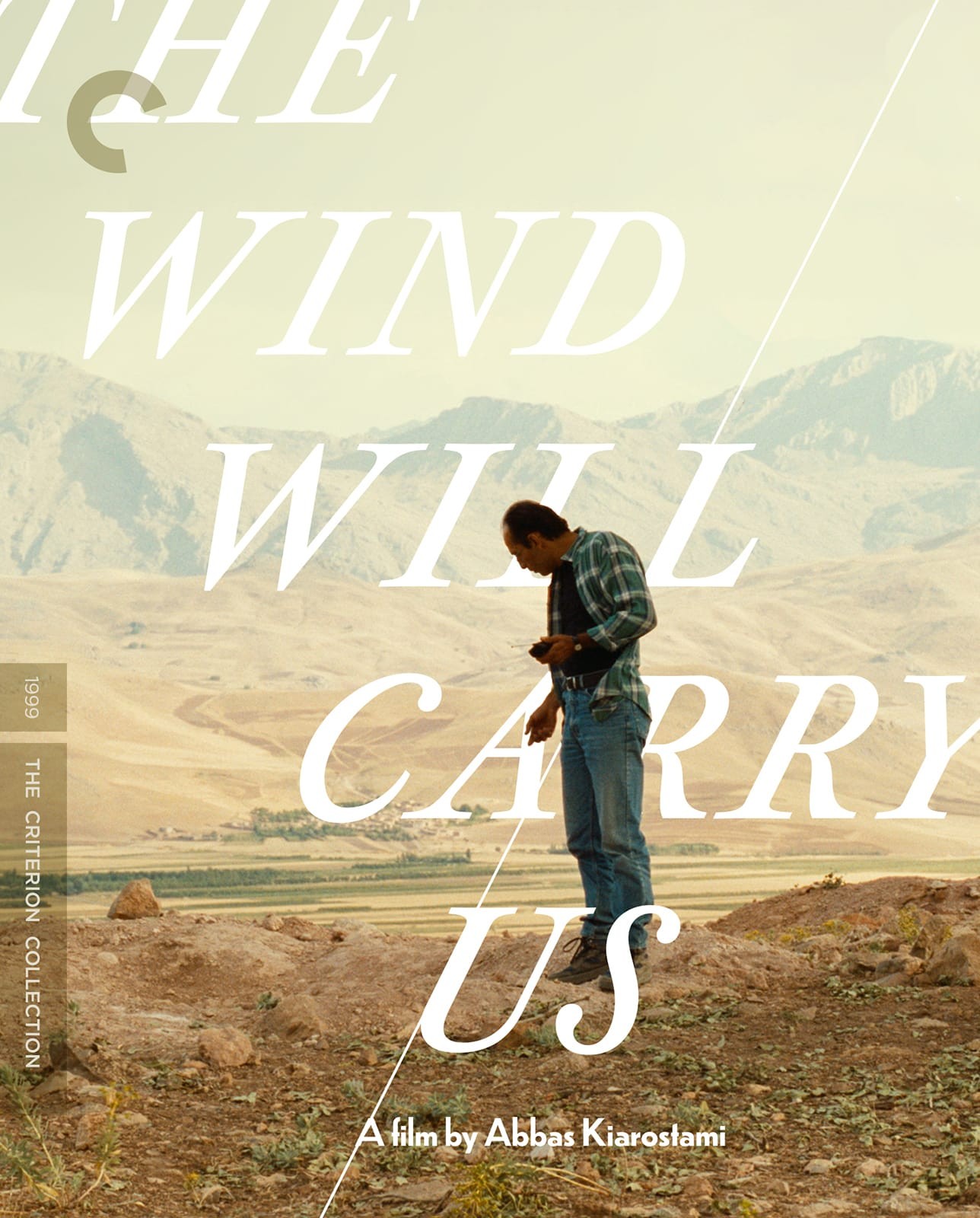
The mysteries of everyday life come into astonishing focus in one of Abbas Kiarostami’s greatest cinematic achievements. A slyly self-reflexive commentary on the director’s own artistic practice, The Wind Will Carry Us unfolds with unhurried majesty as it follows an undercover documentarian (Behzad Dorani) whose assignment to cover a small village’s funeral rites is continually frustrated by an elderly woman’s refusal to die. Along the way, though, he forges surprising, unsettling, and enlightening connections with those he meets. Suffused with Kiarostami’s love for people, poetry, and the arid beauty of rural Iran, this meditative masterpiece reflects upon the boundaries between intimacy and alienation, tradition and modernity, with the utmost grace.
BLU-RAY SPECIAL EDITION FEATURES
4K restoration, with uncompressed monaural soundtrack
A Week with Kiarostami (1999), a documentary by Yuji Mohara on the making of the film
Interview from 2002 with director Abbas Kiarostami
New video essay presenting Kiarostami’s poetry narrated by Massoumeh Lahiji, a longtime translator and creative collaborator of the director’s
Trailer
New English subtitle translation
PLUS: An essay by poet and novelist Kaveh Akbar
New cover by Eric Skillman