607 A Hollis Frampton Odyssey
-
knives

- Joined: Sat Sep 06, 2008 10:49 pm
Re: 607 A Hollis Frampton Odyssey
I promise to comment once I've actually seen more than one of the films.
-
MichaelB

- Joined: Fri Aug 11, 2006 10:20 pm
- Location: Worthing
- Contact:
Re: 607 A Hollis Frampton Odyssey
The BFI had a similar (lack of) reaction to the Jeff Keen box - normally, the Beev and The Digital Fix review just about every BFI release, but they both skipped this one, leaving Blu-ray.com as the only one of the big review sites to dip a cautious toe in the water, and that's not exactly in-depth. I initially assumed that this was because the films were so startlingly different that people were just taking a long time to write their pieces, but the set has been out for well over three years now. And there are just two brief reviews on Amazon - both five-star raves, but they too don't exactly delve deeply into the set.zedz wrote:Those are fair comments, but it's not as if this syndrome is limited to Hollis Frampton. Even Gorin, who'd become a kind of emblem of What Criterion Should Be Releasing, gets only a maimed handful of responses post-release, while people seem to have an infinite amount of ink to spill on Why Tiny Furniture Is Unworthy Of Any Attention Whatsoever.
But I do sympathise - overtly experimental cinema is very hard to write about (which is why I find your posts so invaluable), and even more so when there's little or no critical tradition to draw on.
-
Gregory

- Joined: Tue Nov 02, 2004 8:07 pm
Re: 607 A Hollis Frampton Odyssey
The Frampton set has gotten quite a few reviews in the usual places, many of them really good about approaching the work for the first time and trying to "meet it halfway." A minority are just terrible, however, such as this one and this one. It seems like some are approaching the set with the mindset of expecting to be passively entertained, similar to how they approach conventional movies, and then don't make any real effort to come to grips with what Frampton was doing, even though they're supposed to be watching these to write about them. The whole "problem" with the set is that Frampton just can't tell a story that makes sense, the films aren't accessible enough to anyone but a few art snobs, this Michael Snow guy is really bad at acting, etc. In one of these the condescension even leads to the assumption that in the early films here Frampton was trying to figure out how his camera worked. "And we've all been there, right?" What I find disappointing in what this says about how some are approaching this stuff is not that they didn't meet the challenge of understanding what the films achieve but rather that they apparently weren't interested in trying to do so in the first place and chose to tackle the set anyway. Fortunately, some viewing these films for the first time are getting good things from them.
-
swo17

- Bloodthirsty Butcher
- Joined: Tue Apr 15, 2008 2:25 pm
- Location: SLC, UT
Re: 607 A Hollis Frampton Odyssey
I saw someone on Criterion's Facebook page go so far as to say that these aren't even films!Gregory wrote:It seems like some are approaching the set with the mindset of expecting to be passively entertained, similar to how they approach conventional movies, and then don't make any real effort to come to grips with what Frampton was doing, even though they're supposed to be watching these to write about them. The whole "problem" with the set is that Frampton just can't tell a story that makes sense, the films aren't accessible enough to anyone but a few art snobs, this Michael Snow guy is really bad at acting, etc.
-
MichaelB
- Joined: Fri Aug 11, 2006 10:20 pm
- Location: Worthing
- Contact:
Re: 607 A Hollis Frampton Odyssey
Klymkiw Film Corner:
A Hollis Frampton Odyssey is, without question, one of the seminal achievements in what could be seen as the ART of home entertainment creation, production and distribution. Assembling, restoring and providing a wealth of supplemental materials focusing upon this visionary and highly influential artist has been rendered with such loving care that Criterion continues to maintain their well-deserved reputation of going above and beyond the call of duty in their service to preserving the art of cinema (rivalled only by that of Milestone Film and Video whose recent commitment to the work of Lionel Rogosin and their ongoing restoration of silent cinema also places them in this pantheon).
-
swo17
- Bloodthirsty Butcher
- Joined: Tue Apr 15, 2008 2:25 pm
- Location: SLC, UT
Re: 607 A Hollis Frampton Odyssey
I finally had a chance to dive into this set. You would think that this sort of thing (experimental films, largely constructed as mind puzzles or structured based on obscure mathematical concepts) would be right up my alley. And you would be completely right of course. I can kind of see now though why some have accused these films of not being films, like I noted above, as a big part of what Frampton seems to be doing here is asking what a film is, and stubbornly challenging preconceptions about what a film ought to be. (As Michael Snow reads in the great extra feature A Lecture, "it seems that a film is anything that may be put in a projector that will modulate the emerging beam of light," be it celluloid, nitrate, a cheese sandwich, etc.) One of the films on this set is a half-hour filming of the pages from a script (though granted, the film described is unfilmable, as it stars "you"). Four others are so unlike the traditional conception of film that Criterion presents them as menu screens instead. One of these is just a still shot of a tree. This (what makes something a film) is an interesting topic to dwell on I suppose, especially in the era of YouTube, but the set provokes far greater pleasures as well.
Chief among them is Zorns Lemma, the most epic exploration of the alphabet ever committed to film. (I do not make such a statement lightly.) Now, I will come clean here and admit that the mathematical principle from whence the film was named reads mostly like gibberish to me (the best I can figure is that, like ascending the steps of a family tree, everything leads to one originating element, and so the letters in the alphabet gradually lose their identity until unifying into that great originator: the film montage). But I find the film fascinating in how it uncomfortably forces you to decide whether you will process it as words or as images (try telling your mind not to read the images like words in a book--very difficult!) and in how it dares you to recall and anticipate its patterns. For a film so ordinally structured, there are still an infinite number of ways that each sequence can occur (which words are chosen, which letters are omitted, which letter will convert into an image this time, and whether the pattern will be broken or not--I'm pretty sure I noticed one sequence where the image for 'r' was shown twice). And all of this is of course not even getting into the mental associations that come from the precise juxtaposition of words chosen for this film, as well as the connotations of words given their presentation (font, environment, etc.). There are just so many ways to appreciate this film!
Moving on to the Hapax Legomena series, zedz touched well on the mental acrobatics that ensue while watching something like (nostalgia). For the sake of mathematical equivalence, I replicate his comments here, sans permutation:
A) settling in to watch the film, adjusting to its defined parameters of what this film is going to be;
B) feeling the sneaking suspicion that something is off between the narration and image;
C) cursing your cheap-o Blu-ray player for ruining yet another viewing experience;
D) wondering if Criterion could have made such a glaring mistake, and if other copies might be similarly affected;
E) questioning your entire belief system/place in the universe;
F) realizing the discrepancy was intentional.
I agree it's unfortunate that the rest of Hapax Legomena was not included. The films presented here give a certain idea of what the series is about (depriving the viewer of continuity in time, visuals, or audio) but the only other part of the series that's readily available (Ordinary Matter, which can be seen here) doesn't necessarily fit into this mold. Here's hoping this set sells well enough to warrant a second volume, which will presumably include all of the remaining films except for one, just because.
Finally, the Magellan films mostly serve a whole other purpose entirely, providing eye candy that I certainly enjoy watching, but which doesn't really lend itself to much discussion. I will say I'm a little baffled that, at least going by IMDb ratings, something like Pan 700 would attract so much hate. (It's a minute-long scene, a fairly haunting image of phantom cars passing by an inconspicuous brick wall. It's a fairly obvious camera trick but effective enough--does it really offend some people's sensibilities so much?) Also, perhaps this makes me a heretic, but for films that are completely silent, I do sometimes like to try and find music that matches well. I found that this recent album by Ga'an was a perfect fit over Winter Solstice (if you're favorably disposed to Magma-esque prog). The cover art actually reminds me a lot of (nostalgia):
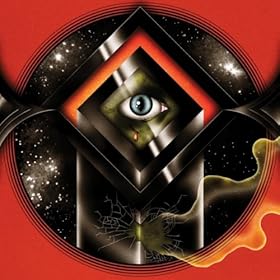
Chief among them is Zorns Lemma, the most epic exploration of the alphabet ever committed to film. (I do not make such a statement lightly.) Now, I will come clean here and admit that the mathematical principle from whence the film was named reads mostly like gibberish to me (the best I can figure is that, like ascending the steps of a family tree, everything leads to one originating element, and so the letters in the alphabet gradually lose their identity until unifying into that great originator: the film montage). But I find the film fascinating in how it uncomfortably forces you to decide whether you will process it as words or as images (try telling your mind not to read the images like words in a book--very difficult!) and in how it dares you to recall and anticipate its patterns. For a film so ordinally structured, there are still an infinite number of ways that each sequence can occur (which words are chosen, which letters are omitted, which letter will convert into an image this time, and whether the pattern will be broken or not--I'm pretty sure I noticed one sequence where the image for 'r' was shown twice). And all of this is of course not even getting into the mental associations that come from the precise juxtaposition of words chosen for this film, as well as the connotations of words given their presentation (font, environment, etc.). There are just so many ways to appreciate this film!
Moving on to the Hapax Legomena series, zedz touched well on the mental acrobatics that ensue while watching something like (nostalgia). For the sake of mathematical equivalence, I replicate his comments here, sans permutation:
I would just add that on top of all of this, there are at least a few other things going on if you are watching this for the first time, and have not already read what I am writing right now:zedz wrote:It's the central works that really get me excited. What I treasure about a good structuralist film such as Zorns Lemma or (nostalgia) (or Sink or Swim, or American Dreams (lost and found)) is that it gets your brain working in thrillingly different ways. And sometimes that's just as, or more, rewarding than getting all involved in a narrative, or being dazzled by aesthetic splendour - not that Frampton's films are devoid of either.
For me, the specific frisson seems to come from having to juggle multiple versions of the film in your mind at the same time. In (nostalgia), the process is reasonably straightforward (although the effect is anything but), as the 'underlying' film you're trying to imaginatively reconstruct is the one in which the narration matches the images. But at the same time, you're also shuttling backward and forward in time in other ways, and micromanaging a whole lot of different, compelling mental tasks:
1) you're trying to process the details of the image before it disappears;
2) you're trying to remember what was previously said about the image before your eyes and relate it to that image;
3) you're trying to process the present narration so you can recall it and utilise it when the next image appears;
4) you're following the biographical narrative implicit in the sequence of photos and their stories;
5) you're appreciating the different patterns of destruction on this image and relate them to past ones - an inevitable consequence of seriality;
6+) you're projecting backward to the beginning of the series and forward to the end: how many images have we seen? Is the narration for the last one going to bring us full circle by describing the first image? Is this film a loop, or a section from a potentially infinite series? Is Frampton going to disrupt the pattern? Is that information we were loaded up with at the beginning strictly accurate or subtly misleading?
Plus, he's delivering humour, suspense and existential dread all at the same time. In under 40 minutes.
A) settling in to watch the film, adjusting to its defined parameters of what this film is going to be;
B) feeling the sneaking suspicion that something is off between the narration and image;
C) cursing your cheap-o Blu-ray player for ruining yet another viewing experience;
D) wondering if Criterion could have made such a glaring mistake, and if other copies might be similarly affected;
E) questioning your entire belief system/place in the universe;
F) realizing the discrepancy was intentional.
I agree it's unfortunate that the rest of Hapax Legomena was not included. The films presented here give a certain idea of what the series is about (depriving the viewer of continuity in time, visuals, or audio) but the only other part of the series that's readily available (Ordinary Matter, which can be seen here) doesn't necessarily fit into this mold. Here's hoping this set sells well enough to warrant a second volume, which will presumably include all of the remaining films except for one, just because.
Finally, the Magellan films mostly serve a whole other purpose entirely, providing eye candy that I certainly enjoy watching, but which doesn't really lend itself to much discussion. I will say I'm a little baffled that, at least going by IMDb ratings, something like Pan 700 would attract so much hate. (It's a minute-long scene, a fairly haunting image of phantom cars passing by an inconspicuous brick wall. It's a fairly obvious camera trick but effective enough--does it really offend some people's sensibilities so much?) Also, perhaps this makes me a heretic, but for films that are completely silent, I do sometimes like to try and find music that matches well. I found that this recent album by Ga'an was a perfect fit over Winter Solstice (if you're favorably disposed to Magma-esque prog). The cover art actually reminds me a lot of (nostalgia):
-
zedz

- Joined: Sun Nov 07, 2004 11:24 pm
Re: 607 A Hollis Frampton Odyssey
I thought these films might appeal to Your Mathematical Mind.
Again, this idea seems to apply less well to Ordinary Matter, though the (impossible) journey in that film also implies a kind of narrative, or at least a protagonist, even though there's no way to reconstruct either in real world terms. The form of the film, with all that forward motion, strongly implies purpose, but the purpose is purely speculative. Rybczynski's Oh, I Can't Stop! has a lot of fun with the same phenomenon of imputing subjectivity to a moving camera.
My take on "Hapax Legomena" is that the common thread is about the process of making meaning in the mind of the viewer, since the three films all present narratives that are dislocated, in different ways, from their natural context, either from temporal disjuncture ((nostalgia)), interruption (Critical Mass), or the omission of essential dimensions (Poetic Justice), while at the same time each film introduces different kinds of cognitive "white noise" that make the process of reconstruction more difficult. For me, this relates to the quality of a hapax legomenon's uncertain meaning: without the context of an entire language, its meaning is always going to be somewhat conjectural, but not indeterminate.swo17 wrote:I agree it's unfortunate that the rest of Hapax Legomena was not included. The films presented here give a certain idea of what the series is about (depriving the viewer of continuity in time, visuals, or audio) but the only other part of the series that's readily available (Ordinary Matter, which can be seen here) doesn't necessarily fit into this mold.
Again, this idea seems to apply less well to Ordinary Matter, though the (impossible) journey in that film also implies a kind of narrative, or at least a protagonist, even though there's no way to reconstruct either in real world terms. The form of the film, with all that forward motion, strongly implies purpose, but the purpose is purely speculative. Rybczynski's Oh, I Can't Stop! has a lot of fun with the same phenomenon of imputing subjectivity to a moving camera.
-
swo17
- Bloodthirsty Butcher
- Joined: Tue Apr 15, 2008 2:25 pm
- Location: SLC, UT
Re: 607 A Hollis Frampton Odyssey
I suppose Ordinary Matter kind of fits in with Critical Mass in the sense that they both present everyday occurrences in a way that cannot be experienced in real life, only through manipulation by the filmmaker.
Can anyone that's seen the other parts of Hapax Legomena speak to their content and/or how they contribute to any kind of overarching theme of the entire series?
Can anyone that's seen the other parts of Hapax Legomena speak to their content and/or how they contribute to any kind of overarching theme of the entire series?
-
zedz
- Joined: Sun Nov 07, 2004 11:24 pm
Re: 607 A Hollis Frampton Odyssey
By the way, a sublime / ridiculous triple feature:
Walking from Munich to Berlin (Fischinger)
Ordinary Matter (Frampton)
Oh, I Can't Stop! (Rybczynski)
Walking from Munich to Berlin (Fischinger)
Ordinary Matter (Frampton)
Oh, I Can't Stop! (Rybczynski)
-
knives
- Joined: Sat Sep 06, 2008 10:49 pm
Re: 607 A Hollis Frampton Odyssey
After Swo's exciting posts today I just had to crack open this set. I only had the time for the early works of which I had already seen and fallen in love with Lemon. The most immediately obvious thing for me, and I do not mean this as an insult to either party, but it seems that Frampton had a larger variety of interests in experimentation than Brakhage who I must admit can drain sometimes with a feeling of sameness. Even as themes and ideas seem to grow and mature along with technique Frampton never seems to do the same thing twice. Even the relative remake of Manuel of Arms and Maxwell's Demon shows a great many differences that I found interesting.
The most obvious connections here are the Lumieres and Deren, but I found that at least as much there is a relation here to McLaren with the teasing of form. Process Red pops and skewdops like Mosaic or the similar exercise while Surface Tension deals with the perception of movement with regards to time much like Pas de deux. It's in this last aspect I was first intrigued by Frampton and must admit I still very much am. Sticking with Surface Tension which is the best of the early films easily having the sound be in 'real' real time while the film's real time is far faster takes me away (I'm sorry for not speaking as intelligently as these films deserve). The sound is as obscured as the image due to the language. I don't want to add anything political to the film since I think it is primarily about rediscovery, but I'm reminded of Lenin's comments on the universal nature of film due to the image and how language obscures. The whole film is obscure of course, but Frampton must destroy and mutate the image to accomplish that and even in the sped up first act and the intertitle filled third the image doesn't really become obscure, just its purpose. You just have to not speak German to miss out on the sound though (this becomes even more extreme in the next film Carrots & Peas). A language as close to German as English still makes gibberish of the sound which must become as any musician knows tones and moods. So if something as obscure as sound contains a great deal of power than the moving image which is as familiar and universal as anything can be should develop too much power to the point of danger.
What I really get from Frampton (and he seems to disagree in a way based on the booklet) is that he is going back to 1899 and running full speed to the present day to really capture how each part of the cinema complicates and makes more obscure the whole. In its simplest form it may be no different from a still image. Broken to its most basic element Carrots & Peas is really just this and is there anything more simple? But then you get the sound which complicates things either by giving the illusion of a narrative or giving it the appearance of a higher purpose. The film becomes a comedy as a result because the whole of the sound is gibberish and the few mutations of the image likewise is gibberish. It is still ultimately Carrots & Peas. There is no movement, no meaning or need for time, and no esoteric purpose. it just is what we get which I suppose is a real nasty joke, but I love it for doing that.
The most obvious connections here are the Lumieres and Deren, but I found that at least as much there is a relation here to McLaren with the teasing of form. Process Red pops and skewdops like Mosaic or the similar exercise while Surface Tension deals with the perception of movement with regards to time much like Pas de deux. It's in this last aspect I was first intrigued by Frampton and must admit I still very much am. Sticking with Surface Tension which is the best of the early films easily having the sound be in 'real' real time while the film's real time is far faster takes me away (I'm sorry for not speaking as intelligently as these films deserve). The sound is as obscured as the image due to the language. I don't want to add anything political to the film since I think it is primarily about rediscovery, but I'm reminded of Lenin's comments on the universal nature of film due to the image and how language obscures. The whole film is obscure of course, but Frampton must destroy and mutate the image to accomplish that and even in the sped up first act and the intertitle filled third the image doesn't really become obscure, just its purpose. You just have to not speak German to miss out on the sound though (this becomes even more extreme in the next film Carrots & Peas). A language as close to German as English still makes gibberish of the sound which must become as any musician knows tones and moods. So if something as obscure as sound contains a great deal of power than the moving image which is as familiar and universal as anything can be should develop too much power to the point of danger.
What I really get from Frampton (and he seems to disagree in a way based on the booklet) is that he is going back to 1899 and running full speed to the present day to really capture how each part of the cinema complicates and makes more obscure the whole. In its simplest form it may be no different from a still image. Broken to its most basic element Carrots & Peas is really just this and is there anything more simple? But then you get the sound which complicates things either by giving the illusion of a narrative or giving it the appearance of a higher purpose. The film becomes a comedy as a result because the whole of the sound is gibberish and the few mutations of the image likewise is gibberish. It is still ultimately Carrots & Peas. There is no movement, no meaning or need for time, and no esoteric purpose. it just is what we get which I suppose is a real nasty joke, but I love it for doing that.

-
knives
- Joined: Sat Sep 06, 2008 10:49 pm
-
AlexHansen

- Joined: Thu Mar 20, 2008 2:39 am
- Location: Idaho
Re: 607 A Hollis Frampton Odyssey
Many thanks to zedz and swo for their posts. I had been holding off on really jumping into the set (only watched a few of the early films thus far) until after I'd read some more of Frampton's writings, but the interview with him in the first volume of MacDonald's Critical Cinema has been the best primer I could have asked for, and fits along with what zedz and swo have mentioned. I can't recommend it enough to anyone who's found themselves befuddled or left cold by what they're seeing.
-
knives
- Joined: Sat Sep 06, 2008 10:49 pm
Re: 607 A Hollis Frampton Odyssey
Just to prove it's not all just mathematical I finally sat down with Zorns Lemma today and I found it to be totally interesting if just on a semantic level. The film seems to be at least in part about how we learn with the three act structure as a coy hint of that. It beautifully shows a death of language for which the concept was only ever born. A R may represent an R, but it could also represent something entirely else making what I'm typing right now amount to fsidfushuf. I was also intensely reminded of John Nash's comments on the mathematical community's stuckness and inherent lack of movement in regards ton symbols. I forget all of the details, but basically he said that π is just a symbol. We say it equals this number, but it really doesn't and we just use it as a shorthand. So even in this film the random images that we use for shorthands of language aren't really the same thing and they change and evolve so that they are inherently different from what we first saw. The orange that is being peeled that first time we see it is ever so slightly different from the next time and so on. Familiarity with an older symbol is all that makes this symbol have any meaning and by themselves they have no purpose. Show π to somebody who has never seen the symbol or similar symbols before and they will not see it as a symbol at all, but rather just what it is: π.
Of course after that I remember what this one theoretician (who's name escapes me at the moment) has to say about symbols inherent meaning to people with the test being that he'd show a nonsense symbol to people and they'd have to guess at what sort of emotion is related to that symbol. Most people agreed on what emotions related to what symbols so maybe even when torn apart from the meaning we give these symbols they'll still be representative of those symbols. Like perhaps there's some unconscious element to the beads being put on in relation to its letter that takes away from the supposed randomness of the whole endeavor? As far as I understand Lemma as a concept does that mean the film is doomed to failure no matter what? when looking at his 24 pieces of footage did he have no choice but to put the beans falling with the letter he did as that is the unconscious connection?
Of course after that I remember what this one theoretician (who's name escapes me at the moment) has to say about symbols inherent meaning to people with the test being that he'd show a nonsense symbol to people and they'd have to guess at what sort of emotion is related to that symbol. Most people agreed on what emotions related to what symbols so maybe even when torn apart from the meaning we give these symbols they'll still be representative of those symbols. Like perhaps there's some unconscious element to the beads being put on in relation to its letter that takes away from the supposed randomness of the whole endeavor? As far as I understand Lemma as a concept does that mean the film is doomed to failure no matter what? when looking at his 24 pieces of footage did he have no choice but to put the beans falling with the letter he did as that is the unconscious connection?
-
MichaelB
- Joined: Fri Aug 11, 2006 10:20 pm
- Location: Worthing
- Contact:
Re: 607 A Hollis Frampton Odyssey
I've just started trawling through the set, and it's superb stuff - and Criterion seem to have done him proud.
I watched part of Zorns Lemma on YouTube when deciding whether or not to shell out for the disc, and it's like night and day compared with the Blu-ray - the difference is even more pronounced than that between the YouTube version of Jeff Keen's Marvo Movie and the BFI Blu-ray, because at least the YouTube version originated from the same digital master so didn't have the same horrible tape rolls and colour fading. Also, because the YouTube version is broken up into several parts you can't watch it in one go, which is absolutely essential.
So far, I've only seen Lemon, Zorns Lemma and (nostalgia) (the three I'd heard namechecked most often), the last two once apiece (I watched Lemon a second time with the commentary, which obligingly confirmed that the lemon's resemblance to a pert female breast was anything but a coincidence), and was gripped throughout. I generally don't like to read up in advance about the guiding principles behind experimental films, because I like to see how they stand up to unprepared scrutiny, but all comfortably passed the test.
The meticulously structured, repetitive patterning of Zorns Lemma seems to be a perfect surrogate for the rote-learning process with the result that when the alphabet has entirely disappeared any engaged viewer should be able to match the unlettered footage with 'its' letter - book/A, vertical tree/F, wall-painting/K, basketball bouncing/O, flames/X, waves/Z, and so on - so, in effect, in less than an hour you've learned a new language and how to "translate" it. Obviously, there's much more going on there too, which repeated viewings should hopefully tease out - I'm sure the montages of words are anything but random (over and above their alphabetical sequence, that is).
(nostalgia) was even more fascinating, as it's one of the most demanding yet intellectually exhilarating explorations of memory and how it functions that I've ever encountered in a film. Unlike this poor sap, who seemed to think the film was completely random, I'd locked into the methodology by the third photo, and from then on I was absolutely hooked, trying to recall key details from the verbal description while simultaneously anticipating the eventual appearance of the photo being described and looking at the then-current photo and trying to recall its own description. Sometimes they turned out pretty much as I'd anticipated (the dried spaghetti), sometimes decidedly not. And the Blu-ray transfer did a terrific job of highlighting the contrasting textures between photographic paper, ash and the brushed metal of the hotplate.
I feel sorry for people who had to review this to a deadline, though - I'm going to be exploring the set at the rate of one or two films a day maximum, which seems a far more sensible approach. Watching Zorns Lemma and (nostalgia) with only a 15-minute dinner break in between was... well, somewhat more demanding than I'm used to on a Friday night after a heavy week!
I watched part of Zorns Lemma on YouTube when deciding whether or not to shell out for the disc, and it's like night and day compared with the Blu-ray - the difference is even more pronounced than that between the YouTube version of Jeff Keen's Marvo Movie and the BFI Blu-ray, because at least the YouTube version originated from the same digital master so didn't have the same horrible tape rolls and colour fading. Also, because the YouTube version is broken up into several parts you can't watch it in one go, which is absolutely essential.
So far, I've only seen Lemon, Zorns Lemma and (nostalgia) (the three I'd heard namechecked most often), the last two once apiece (I watched Lemon a second time with the commentary, which obligingly confirmed that the lemon's resemblance to a pert female breast was anything but a coincidence), and was gripped throughout. I generally don't like to read up in advance about the guiding principles behind experimental films, because I like to see how they stand up to unprepared scrutiny, but all comfortably passed the test.
The meticulously structured, repetitive patterning of Zorns Lemma seems to be a perfect surrogate for the rote-learning process with the result that when the alphabet has entirely disappeared any engaged viewer should be able to match the unlettered footage with 'its' letter - book/A, vertical tree/F, wall-painting/K, basketball bouncing/O, flames/X, waves/Z, and so on - so, in effect, in less than an hour you've learned a new language and how to "translate" it. Obviously, there's much more going on there too, which repeated viewings should hopefully tease out - I'm sure the montages of words are anything but random (over and above their alphabetical sequence, that is).
(nostalgia) was even more fascinating, as it's one of the most demanding yet intellectually exhilarating explorations of memory and how it functions that I've ever encountered in a film. Unlike this poor sap, who seemed to think the film was completely random, I'd locked into the methodology by the third photo, and from then on I was absolutely hooked, trying to recall key details from the verbal description while simultaneously anticipating the eventual appearance of the photo being described and looking at the then-current photo and trying to recall its own description. Sometimes they turned out pretty much as I'd anticipated (the dried spaghetti), sometimes decidedly not. And the Blu-ray transfer did a terrific job of highlighting the contrasting textures between photographic paper, ash and the brushed metal of the hotplate.
I feel sorry for people who had to review this to a deadline, though - I'm going to be exploring the set at the rate of one or two films a day maximum, which seems a far more sensible approach. Watching Zorns Lemma and (nostalgia) with only a 15-minute dinner break in between was... well, somewhat more demanding than I'm used to on a Friday night after a heavy week!
-
Mr Sausage

- Has Risen from the Grave
- Joined: Thu Nov 04, 2004 1:02 am
- Location: Canada
Zorns Lemma (Hollis Frampton, 1970)
DISCUSSION ENDS MONDAY, JULY 7th AT 6:30 AM.
Members have a two week period in which to discuss the film before it's moved to its dedicated thread in The Criterion Collection subforum. Please read the Rules and Procedures.
This thread is not spoiler free. This is a discussion thread; you should expect plot points of the individual films under discussion to be discussed openly. See: spoiler rules.
DISCUSSION QUESTIONS
I encourage members to submit questions, either those designed to elicit discussion and point out interesting things to keep an eye on, or just something you want answered. This will be extremely helpful in getting discussion started. Starting is always the hardest part, all the more so if it's unguided. Questions can be submitted to me via PM.
***PM me if you have any suggestions for additions or just general concerns and questions.***
Members have a two week period in which to discuss the film before it's moved to its dedicated thread in The Criterion Collection subforum. Please read the Rules and Procedures.
This thread is not spoiler free. This is a discussion thread; you should expect plot points of the individual films under discussion to be discussed openly. See: spoiler rules.
DISCUSSION QUESTIONS
I encourage members to submit questions, either those designed to elicit discussion and point out interesting things to keep an eye on, or just something you want answered. This will be extremely helpful in getting discussion started. Starting is always the hardest part, all the more so if it's unguided. Questions can be submitted to me via PM.
***PM me if you have any suggestions for additions or just general concerns and questions.***
-
MichaelB
- Joined: Fri Aug 11, 2006 10:20 pm
- Location: Worthing
- Contact:
Re: Zorns Lemma (Hollis Frampton, 1970)
I'm hoping to find the time to rewatch this later today (currently massively bogged down with the Borowczyk book and impending printer's deadlines), but this was what I wrote after my first viewing about eighteen months ago:
Hollis Frampton's hour-long experimental film is said to be one of the biggest influences on Peter Greenaway's early work, which I can well believe. Most of the running time is made up of repeated visual recitations of a 24-letter alphabet (the film is mostly completely silent), comprising shots of words in their natural habitats: on signs, branded goods, shopfronts, magazine articles, etc. But as the film progresses, you become conscious that individual letters are starting to be replaced by non-alphabetised images - waves breaking, a man painting a room, sausagemeat being ground - each of which are repeated every time "their" letter comes round. So once the waves replace Z, the alphabetical cycle always ends with the same waves, although the actual shot of the waves isn't precisely the same: it's clearly cut from a much longer shot. Eventually, the literal alphabet has become entirely replaced by this new visual one, but because it's been so comprehensively drilled into our heads through repetition that it still makes perfect structural and even semantic sense. (This is much easier to appreciate when it's playing than it is to explain). That's based on a first viewing - I have no doubt that there are all sorts of other things happening with individual words (just to get shamelessly puerile, is it a coincidence that an alphabetical sequence that includes "dildoe" [sic] has an L-M sequence reading "long" and "member"?), shapes, colours and textures that will reveal themselves on the repeated viewings that it's definitely going to get.
-
swo17
- Bloodthirsty Butcher
- Joined: Tue Apr 15, 2008 2:25 pm
- Location: SLC, UT
Re: Zorns Lemma (Hollis Frampton, 1970)




I am by no means an expert on set theory, but here for an introduction is an explanation as I see it of the actual Zorn's lemma in layman's terms. Basically, we start with an overwhelming arrangement of random, disorganized items (let's say films), each of varying degrees of quality. Now let's take a first stab at organizing them by grouping them into like categories. To make things easier on ourselves, let's define our categories in an objective way that removes judgment from the equation (e.g. based on the decade in which the film was released). Now we take each of those categories and rank the items within each one of them in a particular order. (For the purpose of this example, let's go with order of preference.) We needn't concern ourselves much with the specific order of those items that fall toward the lower end of the quality spectrum—focus instead on ordering those that are among the best of their kind. Suddenly, the overwhelming mess of disordered information has become much more manageable, because we're boiling it down to a lot of small comparative decisions. (Is this beginning to sound at all like our lists projects?) OK, so some time later, we have a dozen or so separate groupings of films, each of them ordered. Now say that we want to crown one of all of them the greatest one of all. Do we need to start from scratch and reevaluate each random item, weighing it against all others? Of course not—the best out of all the items should come from the pool of those dozen items that were already determined to be the best in their respective categories. Zorn's lemma is the time saver that comes at the end here, which transforms a daunting and perhaps even impossible question (What is the greatest film of all time?) into a much simpler one (Out of your favorite films from each decade, which is your favorite of all?).
Now, you might say that this is all just common sense muddied up with indecipherable math terminology, but the greater point is that this mathematical concept is merely trying, not unlike many other endeavors (including linguistics and yes, even filmmaking), to make sense of the limitless chaos in the universe by distilling and simplifying it into more manageable portions. A finite vocabulary. A 26 (or 24) letter alphabet. Archetypal characters. A 4x3 cinematic frame. Every effort to process life requires some degree of simplification and containment. And it's a delicate balance—go too far and you risk stereotyping, but don't go far enough and you close yourself off from the possibilities of everything else that's out there.
When we were young enough for everything to be brand new, I'm sure (even if I can't remember it) that there was a great sense of wonder and euphoria from the sparking of your brain cells as you were faced with things as simple as your first brick wall, your first city street, or the first word that you could read and simultaneously picture what it represented. Frampton is capturing the same thrilling process of knowledge acquisition here, only the language that he is teaching us uses the moving image as its elements. The quick scenes that he assigns to take over for each letter in the alphabet may be random, but no more so than, say, defining the letter 'b' as a line with a circle attached to it. And over the course of the film, each of these images begins to take on a sort of stately, iconic quality (all building up to the epic, one-second reveal of the exotic bird that replaces the letter 'c'), the same as any other random configuration of marks, curves, or dots that comes to be recognized as a signifier for something.
-
warren oates

- Joined: Fri Mar 02, 2012 4:16 pm
Re: Zorns Lemma (Hollis Frampton, 1970)
I like what Michael and swo have to say. And it's not that I disagree with your interpretations or doubt the film's serious intellectual agenda. More that I find a kind of rare and playful immediacy and plastic beauty at the surface of the work (a quality that's really sets it apart from other structuralist shorts like Greenaway's comparitvely humorless work) that I'm perfectly content to hang out with. You can think about the film all you want and Frampton certainly invites you to do so. But for me it's also pretty fun to watch just as a kind of city symphony in close-up, a catalog of the way signs and objects looked in 1970s NYC, and as a kind of intuitive visual appreciation of typography not unlike the obsessive cataloging of signs done by photographers like Walker Evans.
-
domino harvey

- Dot Com Dom
- Joined: Wed Jan 11, 2006 6:42 pm
Re: Zorns Lemma (Hollis Frampton, 1970)
I think "playful" is a good word for the work, and a refreshing one to use with regards to such a strict piece of formation like this! One of the things Michael touches on is how the methodology of the piece sounds confusing or oppressive in brief but it's highly intuitive in practice. I was reminded of the French in Action PBS series, where one learned French via repeated exposure without any English being spoken. Here we quickly recognize the pattern and the fun/suspense comes from which letter will be replaced next, and the surprising ease at which we start to associate the image with the missing letter-- yes, suspense! The film's release date is important as well, as it comes in the midst of many of the (still) vogue approaches to language (and film language) by all the usual theorist suspects of late 60s/70s.
I first heard of the film many years ago as an undergrad via David A Cook's chapter on experimental films in Lost Illusions and I went back to read his thoughts again after watching and found this claim by Cook to be an intriguing one, reading the film as a refutation of film semioticians like Christian Metz et al:
I first heard of the film many years ago as an undergrad via David A Cook's chapter on experimental films in Lost Illusions and I went back to read his thoughts again after watching and found this claim by Cook to be an intriguing one, reading the film as a refutation of film semioticians like Christian Metz et al:
David A Cook wrote:This rhythmic, preordained process, which is also a game of guessing and remembering, teaches that although one can read the manifold properties if the shot and the sequence, cinema cannot be reduced to language.
-
YnEoS
- Joined: Fri Oct 08, 2010 2:30 pm
Re: Zorns Lemma (Hollis Frampton, 1970)
Have to strongly agree with everyone at how strong the playful aspect of the film was. I went in completely blind, and so the beginning portion of the experience was more about figuring out what rules the film was playing by. Like first wondering why 2 letters are missing and then wondering if the missing letters are going to keep changing or if it's going to remain fairly stable. If I'm not mistaken one missing letter alternated between I, J, and K but when the replacement image came up it took the place of JK for the rest of the film, and the other I think was just always UV but I could have missed something.
Then after the overall game became clear I put more intention to figuring out specifics like why the letters were replaced in the order they were, which I couldn't figure out any strict rules for but it seemed to vaguely correspond to how common the letters were. I concluded that the footage was probably shot before hand without any rigorous mathematical planning and then assembled according to certain rules, so that when they ran out of "x" words they cut out a piece from one of their shots, so uncommon letters disappeared first, but that was more a feature of the random chance involved in getting the footage. Be interested to know if anyone knows how it was actually assembled.
Once I was comfortable with the structure of the film, as others have said it worked more in terms of the suspense of how the image shots would evolve and which letter would disappear next. Several shots went through some interesting changes towards the end, which helped build up the sense of the climax to the revelation of the letter C.
I could easily see this being enjoyable in other ways on subsequent viewings. If I were to watch it again anytime soon I'd probably focus more on the words and setting in each letter shot and put less effort into determining the structure of the film.
Then after the overall game became clear I put more intention to figuring out specifics like why the letters were replaced in the order they were, which I couldn't figure out any strict rules for but it seemed to vaguely correspond to how common the letters were. I concluded that the footage was probably shot before hand without any rigorous mathematical planning and then assembled according to certain rules, so that when they ran out of "x" words they cut out a piece from one of their shots, so uncommon letters disappeared first, but that was more a feature of the random chance involved in getting the footage. Be interested to know if anyone knows how it was actually assembled.
Once I was comfortable with the structure of the film, as others have said it worked more in terms of the suspense of how the image shots would evolve and which letter would disappear next. Several shots went through some interesting changes towards the end, which helped build up the sense of the climax to the revelation of the letter C.
I could easily see this being enjoyable in other ways on subsequent viewings. If I were to watch it again anytime soon I'd probably focus more on the words and setting in each letter shot and put less effort into determining the structure of the film.
-
swo17
- Bloodthirsty Butcher
- Joined: Tue Apr 15, 2008 2:25 pm
- Location: SLC, UT
Re: Zorns Lemma (Hollis Frampton, 1970)
Frampton was working with the Roman alphabet that fuses 'i' with 'j' and 'u' with 'v'.YnEoS wrote:Like first wondering why 2 letters are missing and then wondering if the missing letters are going to keep changing or if it's going to remain fairly stable. If I'm not mistaken one missing letter alternated between I, J, and K but when the replacement image came up it took the place of JK for the rest of the film, and the other I think was just always UV but I could have missed something.
And yes, I believe that the letters disappear in an order consistent with how common they are in the English language. One thing that's paradoxical about a structuralist film like this (or, say, James Benning's Deseret, where shot lengths are dictated by the number of words read from newspaper articles) is that even when you set such a rigid framework for yourself, the possibilities of how to work within these boundaries are still practically limitless and overwhelming, perhaps even moreso because of how conscious you are of them while working under such a process. (Consider for a moment how there are infinite fractional numbers in between zero and one.) In contrast, if you're shooting a run-of-the-mill romantic comedy, there are any number of things you could include in your film that you couldn't in Zorns Lemma, but most of them would never occur to you!
-
YnEoS
- Joined: Fri Oct 08, 2010 2:30 pm
Re: Zorns Lemma (Hollis Frampton, 1970)
Actually the number of real numbers between 0 and 1 would be an Infinity so big it makes countable Infinity (1, 2, 3, 4, 5...) mathematically nothing in comparison.swo17 wrote:(Consider for a moment how there are infinite fractional numbers in between zero and one.)
I assume the infinities involved in possible film production similarly dwarf those mathematical lists. Which I think brings up an interesting point in how the structure of the film causes us to label each image under a letter. Technically each time a shot is repeated it's completely unique and a computer wouldn't be able to tell they're the same without a human designed algorithm telling it what traits to look for. [Edit: I guess there's a philosophical tangent here that a computer couldn't anything without human telling it to, but I'll let the point stand without trying to untangle that] But we're able to group them together through our faculties of pattern recognition.
One is tempted to group the film structurally by the letters and figure out the logic of the structure, but one could easily appreciate all the nuance and detail of the words/signs choices corresponding to each letter.
-
Gregory
- Joined: Tue Nov 02, 2004 8:07 pm
Re: Zorns Lemma (Hollis Frampton, 1970)
One area that I find comes out of repeat viewings of this film, once one gets past what is going on in terms of the basic structure, is the choices of footage. I like warren oates's description of it as a kind of city symphony—because there's some connection there in the use of location shots, the urban world, and repetitive motions and so much more that are a part of the city symphony, put here to drastically different purposes.
Here are a couple of quotes from the Frampton interview in A Critical Cinema about the choices of shots:
Here are a couple of quotes from the Frampton interview in A Critical Cinema about the choices of shots:
So the cityscape (short-term and human-centered processes) is integrated with images of, and references to, the natural environment (longer-term, organic processes that cannot be readily observed in a short strip of film).When we see and read a written word within the cinematic screen, w tend to equate the space of the screen with the space of the page, so that the succession of images begins to resemble the turning of the pages of a book. It was such labyrinthine thinking that resulted in the image that substitutes for the letter A: the image of hands turning the pages of a book. ...
I can point out a few sketchy axes for the choice of the replacement images. Image B is the frying of an egg; it is, after all, breakfast time; we have turned over a new leaf in the book, and we're at the start of a new day; it's a journey through an urban environment, through night streets where only the lights are visible, and that is the last part of the cycle proper. I did try to take a little care—not quite Joycean care, but a little care—to keep the depicted events in the part of the hourly cycle where they wouldn't seem to outrageous, to present things at appropriate times of day in relation to the frying of an egg and the journey through the night. Another axis had to do with what the activities were. In one way or another, by inference, they are painterly or sculptural. ...
They are all repetitive, yes, but some of them fulfill themselves, some do not. Some cycles end, others do not. The tree, for instance, that replaces F, is undergoing part of a cycle of activity that happens to have a periodicity far longer than the span of the film, so it appears to be in stasis. Of course, it is not. Before our very eyes, even in the actual sixty seconds that we really see the tree, it is going through its own metabolic processes; it is just not doing so very fast
Last edited by Gregory on Tue Jun 24, 2014 12:54 am, edited 1 time in total.
-
warren oates
- Joined: Fri Mar 02, 2012 4:16 pm
Re: Zorns Lemma (Hollis Frampton, 1970)
To me this is a nice way of putting what it is that really separates the great structuralist work from the rest of it. Benning's always coming up with new rules for himself (one mountain sunset in one take, portraits of people smoking with each take lasting as long as their cigarette, a series of shots of trains that last for the time it takes each train to pass through the shot). But the rules are points of departure rather than ends in themselves. A good structuralist filmmaker is really more like a poet working in very particular forms. It's not enough to get the number of lines and rhymes right. You can't forget that the point is still to write a beautiful poem.swo17 wrote: One thing that's paradoxical about a structuralist film like this (or, say, James Benning's Deseret, where shot lengths are dictated by the number of words read from newspaper articles) is that even when you set such a rigid framework for yourself, the possibilities of how to work within these boundaries are still practically limitless and overwhelming, perhaps even moreso because of how conscious you are of them while working under such a process.
-
Sloper

- Joined: Wed May 30, 2007 2:06 am
Re: Zorns Lemma (Hollis Frampton, 1970)
Great discussion so far - I'm woefully unfamiliar with this kind of film-making, but found this a fascinating and powerful experience, and am looking forward to watching it again with some of the above posts in mind... People may also want to visit the film's page on hollisframpton.org.
A few thoughts after a first viewing:
Nice to see Frampton's acknowledgement of the apparent (but not actual) stasis of the 'tree' image that replaces 'f'. It struck me as the odd one out because all the other images seemed to involve movement, but Frampton's comment on this adds an extra layer of significance to the whole project.
Not only are there 24 shots in each cycle, but each shot lasts a second (and I guess there are 24 frames in each second). It's not surprising when we hear a metronome accompanying (and conducting) the final section of the film; by that point, we've effectively got a metronome ticking away in our heads. Whenever we see the girl on the swing, she's always swinging the same way, towards us, as though to suggest that she represents the same 'swing' of the pendulum in each cycle. As you watch the film, you come to depend on this sort of regularity. [I say 'you', but clearly these are just personal responses, and it's already apparent that others respond very differently to this film...]
Anyway, to me there is something deadening about the relentless procession of alphabetised signs, so static and (to me) devoid of meaning, a mindless intrusion of the verbal into a visual medium. It's hard to process or respond to the words appearing on the screen because each only appears for a second, and the sequence in which they are placed encourages us to replace them with the letters they represent - you see 'A, B, C, D', no matter what the actual signs may be saying.
The 'replacement' shots are joltingly, refreshingly dynamic in this context, but there is also a pleasing continuity (and progression, as YnEoS pointed out above) about them. It feels like a new, improved alphabet is being formed to enable a different kind of expression.
However, these dynamic images are never used in the way an alphabet is used, to generate words, and increasingly they seem to express little or nothing. Although, at first, you associate images with the letters they replace, towards the end this becomes harder and harder to do - you forget which letters are represented by which images, and just as you would have had to make an effort to process or find any significance in the words appearing on the screen, so now you would have to make an effort to maintain an association between the images and the letters they replace (by continually reciting precisely what is being eliminated, and chanting 'A, B, C, D' as the images progress). As more and more letters disappear, you respond to each one's demise not with relief but with a sense of loss - another piece of the alphabet bites the dust. What exactly is slipping away from us, and what are we getting in its place? The film seems to play off words (and letters) against images, but the status of each in relation to the other keeps shifting.
The opening sequence primes us to see language in terms of a series of dull, rhyming platitudes: the rhymes seem to be a kind of oppressive structure (akin to the ticking metronome that dominates the rest of the film, first silently then out loud) imposed on human expression that prevents it from signifying or communicating anything. They're also sourced from the Bible - a comment on religion, as purveyed to children in the process of teaching them the alphabet?
And at the end, the five (by my count) women reading out the medieval treatise, under the direction of the metronome, clearly have no conception of or interest in this already obscure text's meaning, nor can we as listeners make sense of it without (again) going against the grain of the film and making an effort to tune out the structure - the rhythm - imposed by the metronome. Perhaps that final image, of a couple walking a dog across a field blanked out by snow, heading away from us towards a forest (which in medieval/Renaissance literature is often a symbol of erring confusion), embodies some sort of rejection of what has come before.
The human figures who appear in the 'alphabet' cycle come to seem increasingly de-humanised - especially the haunting image of the divided face that represents 'e', but also the kid bouncing the ball in the multiple-exposure image, and even the girl on the swing, uncannily always swinging the same way. The same is not true of the couple and their dog at the end, who are allowed to move naturally, in their own time, and not in a straight line. And yet we don't see their faces: if they are allowed to maintain their humanity (and caninity), they are also alienated from us.
There seems to be a total disjunction between sound and image in the final sequence; I'm not sure what to make of the fact that the opening plays out against darkness, and the long middle section against silence (somehow it doesn't feel silent, does it?).
A few thoughts after a first viewing:
Nice to see Frampton's acknowledgement of the apparent (but not actual) stasis of the 'tree' image that replaces 'f'. It struck me as the odd one out because all the other images seemed to involve movement, but Frampton's comment on this adds an extra layer of significance to the whole project.
Not only are there 24 shots in each cycle, but each shot lasts a second (and I guess there are 24 frames in each second). It's not surprising when we hear a metronome accompanying (and conducting) the final section of the film; by that point, we've effectively got a metronome ticking away in our heads. Whenever we see the girl on the swing, she's always swinging the same way, towards us, as though to suggest that she represents the same 'swing' of the pendulum in each cycle. As you watch the film, you come to depend on this sort of regularity. [I say 'you', but clearly these are just personal responses, and it's already apparent that others respond very differently to this film...]
Anyway, to me there is something deadening about the relentless procession of alphabetised signs, so static and (to me) devoid of meaning, a mindless intrusion of the verbal into a visual medium. It's hard to process or respond to the words appearing on the screen because each only appears for a second, and the sequence in which they are placed encourages us to replace them with the letters they represent - you see 'A, B, C, D', no matter what the actual signs may be saying.
The 'replacement' shots are joltingly, refreshingly dynamic in this context, but there is also a pleasing continuity (and progression, as YnEoS pointed out above) about them. It feels like a new, improved alphabet is being formed to enable a different kind of expression.
However, these dynamic images are never used in the way an alphabet is used, to generate words, and increasingly they seem to express little or nothing. Although, at first, you associate images with the letters they replace, towards the end this becomes harder and harder to do - you forget which letters are represented by which images, and just as you would have had to make an effort to process or find any significance in the words appearing on the screen, so now you would have to make an effort to maintain an association between the images and the letters they replace (by continually reciting precisely what is being eliminated, and chanting 'A, B, C, D' as the images progress). As more and more letters disappear, you respond to each one's demise not with relief but with a sense of loss - another piece of the alphabet bites the dust. What exactly is slipping away from us, and what are we getting in its place? The film seems to play off words (and letters) against images, but the status of each in relation to the other keeps shifting.
The opening sequence primes us to see language in terms of a series of dull, rhyming platitudes: the rhymes seem to be a kind of oppressive structure (akin to the ticking metronome that dominates the rest of the film, first silently then out loud) imposed on human expression that prevents it from signifying or communicating anything. They're also sourced from the Bible - a comment on religion, as purveyed to children in the process of teaching them the alphabet?
And at the end, the five (by my count) women reading out the medieval treatise, under the direction of the metronome, clearly have no conception of or interest in this already obscure text's meaning, nor can we as listeners make sense of it without (again) going against the grain of the film and making an effort to tune out the structure - the rhythm - imposed by the metronome. Perhaps that final image, of a couple walking a dog across a field blanked out by snow, heading away from us towards a forest (which in medieval/Renaissance literature is often a symbol of erring confusion), embodies some sort of rejection of what has come before.
The human figures who appear in the 'alphabet' cycle come to seem increasingly de-humanised - especially the haunting image of the divided face that represents 'e', but also the kid bouncing the ball in the multiple-exposure image, and even the girl on the swing, uncannily always swinging the same way. The same is not true of the couple and their dog at the end, who are allowed to move naturally, in their own time, and not in a straight line. And yet we don't see their faces: if they are allowed to maintain their humanity (and caninity), they are also alienated from us.
There seems to be a total disjunction between sound and image in the final sequence; I'm not sure what to make of the fact that the opening plays out against darkness, and the long middle section against silence (somehow it doesn't feel silent, does it?).