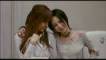
One of the most powerful of the family portraits by Yasujiro Ozu, Late Spring tells the story of a widowed father who feels compelled to marry off his beloved only daughter. Eminent Ozu players Chishu Ryu and Setsuko Hara command this poignant tale of love and loss in postwar Japan, which remains as potent today as ever—and as strong a justification for its maker’s inclusion in the pantheon of cinema’s greatest directors.
Disc Features
- High-definition digital restoration, with uncompressed monaural soundtrack on the Blu-ray edition
- Audio commentary by Richard Peña, program director of New York’s Film Society of Lincoln Center
- Tokyo-Ga (1985), filmmaker Wim Wenders’s ninety-two-minute documentary about director Yasujiro Ozu
- Audio commentary by Richard Peña, program director of New York's Film Society of Lincoln Center- New and improved English subtitle translation
-PLUS: A booklet featuring essays by critic Michael Atkinson and Japanese-film historian Donald Richie
I really wish criterion would just release a Ozu boxset already.
And i wish they would release more box-sets in general. what happened to more beautiful digipak boxes like the BRD trilogy? And if i was being really cynical i would say they want to make more money by releasing them individually.
Ebert wrote:Noriko has a hidden well of disgust about sex, I believe, which is revealed in her strong feelings about remarriage -- once is bad enough.
This is pretty bad conclusion-jumping. It's interesting he doesn't see any need to back this bold claim up with any evidence.
a point of view often representing the eye-level of a person sitting on a tatami mat
Not that it matters much, but this oft-repeated tidbit is not correct. I just dislike the tendency of reviewers to lazily repeat the same unquestioned little judgments and bits of "information" decade after decade until they become folklore.
Ebert wrote:Noriko has a hidden well of disgust about sex, I believe, which is revealed in her strong feelings about remarriage -- once is bad enough.
This is pretty bad conclusion-jumping. It's interesting he doesn't see any need to back this bold claim up with any evidence.
Noriko's character (and attitudes) strike me as extraordinarily complex. After eight or so viewings, I'm still trying to figuere them out.
Gregory wrote:
a point of view often representing the eye-level of a person sitting on a tatami mat
Not that it matters much, but this oft-repeated tidbit is not correct. I just dislike the tendency of reviewers to lazily repeat the same unquestioned little judgments and bits of "information" decade after decade until they become folklore.
Most of what has been written on Ozu in English (until Bordwell) was little more than folklore. And, despite Bordwell's lead, most reviewers still recycle the old canards. ;~{
Gregory wrote:This is pretty bad conclusion-jumping. It's interesting he doesn't see any need to back this bold claim up with any evidence.
Well, he does couch this particular claim with the clause, "I believe," and brings it up in the context of academic papers he thinks others should write. While we may think the idea a stretch (and I do), I don't think he's trying to force it on anyone, just exploring. No need for evidence in this case.
He refers to "an academic paper" that explores the incest angle (in fact there have been several). But where does he say anything about papers he thinks others should write?
I'm not sure what you mean about "forcing the idea" on people. Neither is he, it seems, trying to really explore it or offer anything remotely convincing or even understandable about the idea. He's just lazily throwing it out, asserting it for the sake of adding meat to a review that's mostly just needless summary, received ideas, and unstructured impressions. He's entitled to write this way (thus no evidence of anything is needed in this sense) but I think it's worth neither what he gets paid nor his readers' time.
For that matter, wouldn't it be better for everyone to see the final scene of Late Spring on their own, not knowing already what happens and how Ebert characterizes its emotional impact? I don't mean to be too harsh but much of this kind of writing intended for and read by people who haven't yet seen the film. It seems like this kind of predigestion takes away from the film's impact, but many people are quite used to it.
There's a good deal of evidence that Noriko does NOT feel disgust towards sex per se. Look at her interactions with her father's assistant, with whom she's extremely coquettish and indeed a little flirtatious. The scene where they take a bike ride together on the beach is charged with a real undercurrent of mutual attraction. Problem is, he's already taken!
She clearly feels disgust at the idea of OLD MEN (i.e., her father's age) having sex with women who are not the mothers of their children. She may be rather too prim and fastidious in that regard, but it has very little to do with her feelings towards sex in general.
This disgust at the idea of old men having sex militates strongly against any kind of "incest" reading for this film. Frankly, I get a little tired of Americans projecting their unhealthy conceptions of sexuality (puritanical on the one hand and abusively libertine on the other) onto the entire cosmos of human experience. The unwillingness of these two to part is due to the fact that their love is forged of something far stronger than the whims of sexual attraction: mutual trust, kindness and consideration, the primal link between parent and child. They hold on to it because it has a purity and a durability that the relationship of marriage (based as it is on the self-gratification of fickle sexual desire and the enforced codes of social convention) can never offer.
BTW, Ebert also wrote a glowing review of Mel Gibson's fundamentalist snuff flick. That should give you some idea of where his head is at.
I completely agree about wrongness of the incest claim.
Jimaku wrote:There's a good deal of evidence that Noriko does NOT feel disgust towards sex per se. Look at her interactions with her father's assistant, with whom she's extremely coquettish and indeed a little flirtatious. The scene where they take a bike ride together on the beach is charged with a real undercurrent of mutual attraction. Problem is, he's already taken!
I read that scene as showing the exhilaration of her freedom to associate with whomever she wants in whatever way she chooses (in this case friendship), outside the custom of matching. The only reason she agreed to the seashore with him is because it's established that he's taken, so there being no danger of romantic entanglement isn't a problem rather a prerequisite for their friendship. There may be flirtation going on which Hattori (the assisant) initiates and she responds to. Later, of course when she senses he wants to be more than friends she refuses to see him.
I don't mean to sound too confident about this. Similar to what M. Kerpan said, I still don't have the characters totally figured out after all these years.
All good points, but don't forget the exchange she has with Hattori about jealousy and "pickled radish strung together." The pickles come up again when she refuses to accompany him to the violin recital.
One could just as easily argue that she refuses to go out of a sense of propriety (which we know she has in spades), a sense of loyalty to his fiancee (who was her schoolmate), a refusal to enter into a sordid and jealousy-inducing contest for Hattori's affections, and so on and so forth--all plausible explanations that have nothing to do with a disgust towards sex.
Why would someone disgusted by sex make such a big to-do over the fact that she gets jealous? Why get jealous over something that disgusts you? Okay, sure, it could just be a matter of ego and sense of self-worth. But really now, people being what they are, it would take a pretty traumatic experience to make a person genuinely DISGUSTED by sex. More likely it's just a put-on, a public face assumed to make herself seem chaste. It certainly wouldn't be the first time in human history that THAT'S happened.
Is she conflicted about or perhaps frightened by sex? Sure, understandably so for a woman with no or at most very little actual sexual experience. But truly disgusted? I have serious doubts about that.
Gregory wrote:He refers to "an academic paper" that explores the incest angle (in fact there have been several). But where does he say anything about papers he thinks others should write?
That was my misreading. I've seen him use that formulation before ("there's material for an academic paper here") but on a second look I realize in this case he was referring to a paper already written.
Thanks for your further comments, Gregory. It seems you dislike the genre Ebert writes in, which in my opinion makes nitpicking all the more futile. I also don't have much use for the "digest review" genre but I'm not that worried about it either. I don't think people read Ebert because they think his interpretations are the correct and final ones, I think most people read him to see what they might disagree with (he made his career out of being disagreed with weekly in front of a national audience.) You may find his reviews lazy compared to in-depth analysis but most people aren't interested in reading that.
I not a big fan of "Easy Target" Ebert myself, and in particular his "Great Movies" reviews are almost always useless to me. But that's because they're written for a different audience. I think they help strengthen film culture more than they harm it. I suspect more people will rent Late Spring directly because of Ebert's piece than because of any more substantial writings on the film. And if this DVD does well for Criterion, it will encourage them to bring more Ozu DVDs out of their locker.
And, as inaccurate I think this particular stab in the dark is, I appreciate it because it's an attempt to break down barriers Westerners can have around Ozu's films. I've encountered many people who watch his films and feel timid about trying to understanding his characters and their motivations, as if the temporal, spatial and cultural dislocation means that Noriko is a completely different kind of human being than we are. I welcome anything that tries to erode the mystique of Ozu's impenetrable Japanese-ness.
"Noriko has a hidden well of disgust about sex, I believe, which is
revealed in her strong feelings about remarriage"
This goes somewhat beyond the evidence. What IS clear is that, despite her age, Noriko does not yet have any firm identification as an adult heterosexual female. She lost her mother in her youth, and has typically lived in a largely male environment (her father -- with his students and assistants), but she also spent a long time in a sanitarium just at the point when she should have moved to the adult world from the sheltered high school world. Her attitude toward love and marriage is sstill remarkably childish at the outset of the film. (Remarriage is disgusting because it betrays an idealized eternal bond).
Ebert says:
"It is universally believed, just as in a Jane Austen novel, that a woman of a certain age is in want of a husband. "Late Spring" is a film about two people who desperately do not believe this, and about how they are undone by their tact, their concern for each other, and their need to make others comfortable by seeming to agree with them."
"Want" has more than one meaning -- and the Austen quote plays with this linguistic fact. In this case, the father is convinced that Noriko needs to be married in the long run, regardless of whether she (or he) finds the prospect emotionally desireable, at least in the short run. I think the film is made more poignant by the fact that father and daughter know that (given the applicable social setting), her marriage is, in fact, the only sound and sensible choice.
I think many Ozu films have characters whose main function is to serve
as an reasonably objective moral barometer. In "Tokyo Story", the role was filled by Sugimura's husband. While a bit easy-going, he was fundamentally (and consistently) well-intentioned. The fact that HE approved the Atami plan (in principle) is meant to tell us that the IDEA itself was not per se objectionable (as some seem to assume). Here, the barometer is Noriko's friend. The fact that SHE approves the father's deception is a strong hint that his course of action was, all things considered, the best of the (limited) available alternatives.
I think that the film(s) Ozu actually made for us is (are) far more interesting (and infinitely more complex) than the relatively simple-minded conception presented by Ebert.
Comments I made about the film two a bit more than two years ago --
This serene and moving film has served as sort of pseudo-Aristotelean Procrustean bed into which all other Ozu films are crammed into (and
judged wanting to the extent they don't seem to fit). But this critical maladroitness is hardly the fault of the film. The new Shochiku DVD release is generally quite good (barring a few brief bits of digital weirdness) -- this beautiful film is now more beautiful than ever (note: this was one of the best-looking New Yorker Ozu releases).
This is probably my sixth watching of this film -- and yet I made quite a few new discoveries. Setsuko Hara plays a 20-ish woman, whose mother died in her youth and who is devoted to her father (Chishu Ryu) -- who is equally devoted to her. I had always viewed Hara as a prototypical daddy's girl -- but I noticed something that I had (inexplicably) missed before. The usually most-graceful Hara issurprisingly "graceless" here, much of the time. She galumphs through scenes and sprawls and is generally gawky and awkward. She is more reminiscent of a teen-aged boy than a 20 year old woman. Specifically, she reminds me of Cherubino in Mozart's Marriage of Figaro" -- a teenaged boy played by a soprano (or mezzo), who (for various reasons) often appears disguised as a girl. Hara _can_ act lady-like here (more or less) -- but it is only an act.
Hara is, in fact, as much Ryu's "only son" as she is his only daughter. She has not been fully socialized as a proper "young woman" -- due to the early loss of her mother -- and the fact that she has also spent a significant amount of time in a sanitarium (a year or two?) due to illness contracted near the end of WW2. Her somewhat-ambivalent sexual identity is re-inforced by the fact that she seems to have an unusually strong empathy with a young nephew -- and by the fact that she doesn't blink an eye when her best male friend gets engaged to a hometown girl. Given the above, is it any wonder that she flies into a panic when her relatives push her into marriage (not entirely cruel -- as Ryu correctly understands that Japan had absolutely no place for unmarried elderly ladies who are not independently wealthy -- which Hara would not be, after Ryu died).
The center of this film (almost literally) is a very lengthy scene at a Noh theater -- in which Hara and Ryu not only watch the show but enact a Noh drama of their own, with an attractive older woman as an unknowing extra (Ryu is playing along with a scheme to make his daughter believe that HE is planning to re-marry) -- during which not a word is uttered. I would rate this as one of the greatest scenes in all cinema (others here have described this as one of the most excruciatingly dull scenes they've ever been afflicted by, however). Another observation -- for all its serenity of overall mood, this film seems to have the most camera movement of any Ozu film since the early 30s.
Conclusion
I've seen the film several more times since I wrote the above comments -- and love even more now than then. ;~}
I don't care for Tokyo ga as a whole (not finding Wenders' vision of either Ozu or Tokyo especially convincing or even illuminating) -- but consider the embedded interviews of Chishu Ryu (long-time Ozu star) and Yuharu Atsuta (long-time Ozu cameraman) absolutely priceless.
I was always thinking they would release this as a seperate documentary film in a boxset like the Dreyer, Cassavetes, Bergman sets. Amazing, a two-disc set. They still have material to release.
Same here. Always though Tokyo Ga would make a great companion Doc with an OZU set. Anyway, I'm so happy it will be available on this set. I remember watching this film right after my first experience with Wings of Desire back in the early ninnies. Thanks Criterion!!!
Pena commentary should be good also... Wonder if Bordwell will get a shot on future CC Ozu discs (I think there was talk that Richie has recorded something for THE ONLY SON, but EQUINOX FLOWERS & AN AUTUMN AFTERNOON are mooted also, as are a collection of OZU SILENTS)...
That would be good indeed - I've just been watching an off air VHS and wishing for a decent DVD of EARLY SPRING- is your's an hunch, or do you have more substantial info?
Donald Richie's updated book (Hundred Years of Japanese Film) has it listed coming from Criterion along with Late Spring and Humanity and Paper Balloons.
Great news. I have long wanted to see Tokyo-Ga, and Late Spring of course is a gem itself. I was getting worried that this thread would degenerate into another Ebert bashing thread but release of the specs hopefully stemmed the tide.
I do hope they manage to get in some insights from David Borwell into the package, as he is my favorite Ozu critic, although that doesn't seem promising from the specs.
Last edited by rlendog on Thu Feb 02, 2006 4:27 am, edited 1 time in total.
Michael Kerpan wrote:I don't care for Tokyo ga as a whole (not finding Wenders' vision of either Ozu or Tokyo especially convincing or even illuminating) -- but consider the embedded interviews of Chishu Ryu (long-time Ozu star) and Yuharu Atsuta (long-time Ozu cameraman) absolutely priceless.
This is really more interesting as a Wenders film (or an illumination of how Wenders understands and is inspired by Ozu) than it is a film about Ozu, but I think it's interesting nonetheless. It's main fault, in my mind, is that it's Wenders trying to do a Marker film, and he's neither as smart nor as witty as Marker (who is?). Still, if you're at all interested in Wenders's career, this is a key film insofar as it arrives at his post-Paris crisis point. And for Ozuologists, the interviews are essential.
Oddly enough, Criterion has already posted the transfer information for the disc. Perhaps a trend starting with the May releases? I suppose we'll find out soon enough.