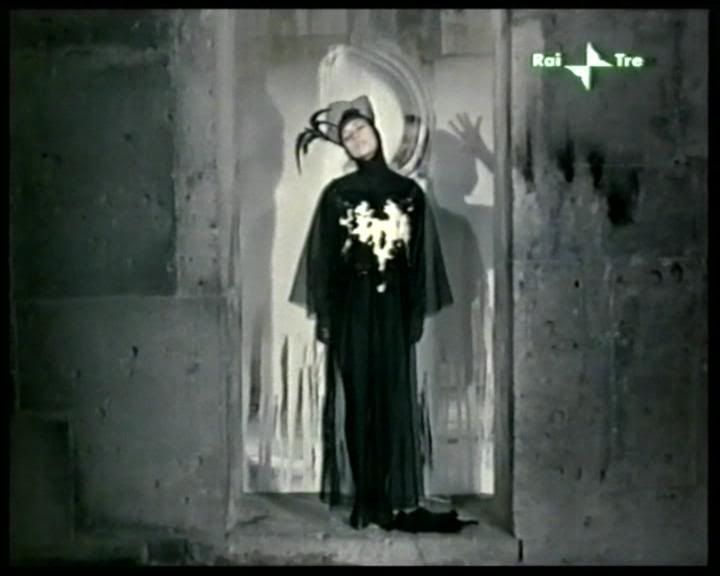
Sergei Parajanov (1924-1990)
"I believe you have to be born a director. It's like a child's adventure:
you take the initiative among other children and become a director creating a mystery.
You mould things into shape and create. You torment
people with your "artistismus" - scaring mother and grandmother in the
middle of the night. You dress yourself up like Charlie's Aunt, or as (Hans
Christian) Andersen's heroes. Using feathers from a trunk, you transform
yourself into a rooster or a firebird. This has always preoccupied me, and
that is what directing is.
A director can't be trained, not even in a film school like VGIK (Soviet All-
Union State School for Film Art and Cinematography). You can't learn it.
You have to be born with it. You have to possess it in your mother's
womb. Your mother must be an actress, so you can inherit it. Both my
mother and father were artistically gifted."
Filmography
The Confession (1990)
Ashug-Karibi (1988)
... aka Ashik Kerib (Soviet Union: Russian title) Available in Kino Films of Sergei Parajanov Box or Individually R1/Kino
Arabeskebi Pirosmanis temaze (1985)
... aka Arabeski na temu Pirosmani (Soviet Union: Russian title)
... aka Arabesques on the Pirosmani Theme (International: English title)
Ambavi Suramis tsikhitsa (1984)
... aka Legenda Suramis tsikheze
... aka Legenda Suramskoy kreposti (Soviet Union: Russian title)
... aka The Legend of the Suram Fortress Available in Kino Parajanov Box or individually R1/Kino
Return to Life (1980)
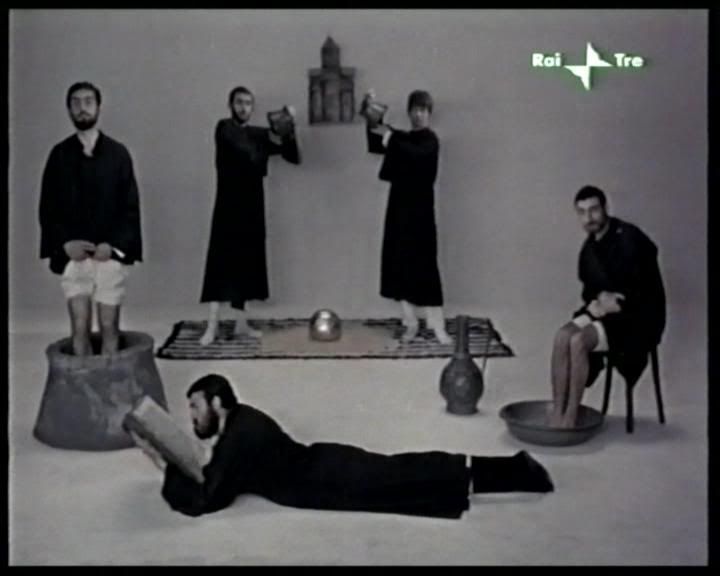
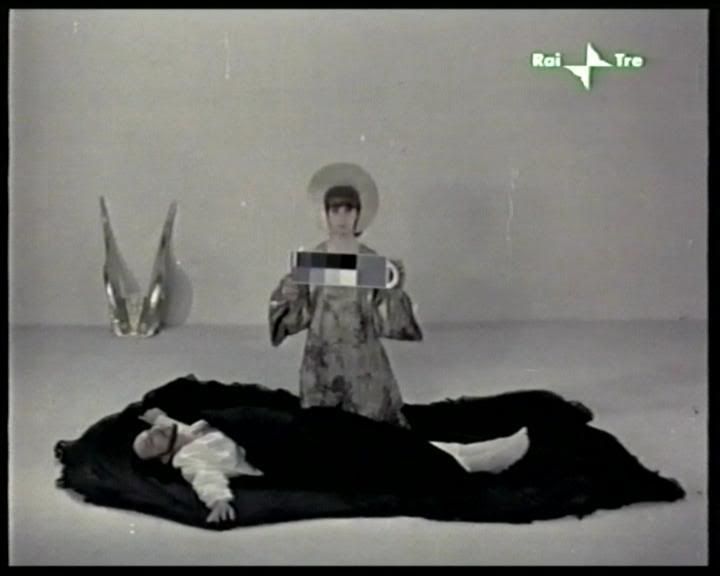
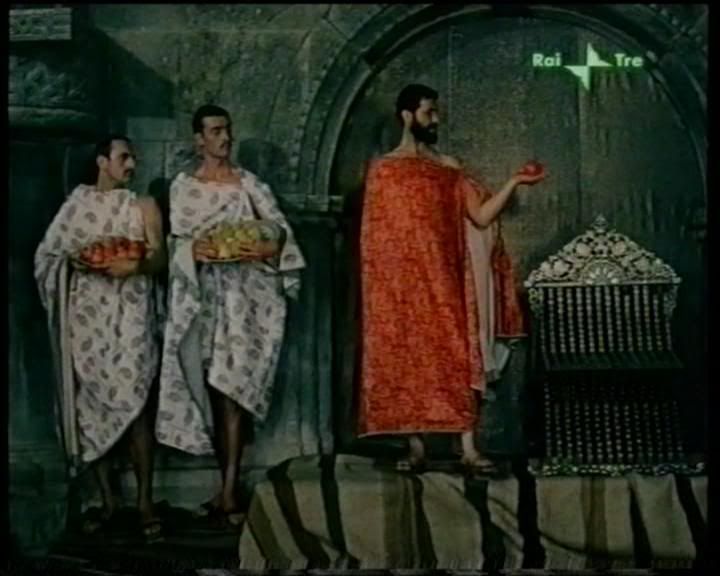
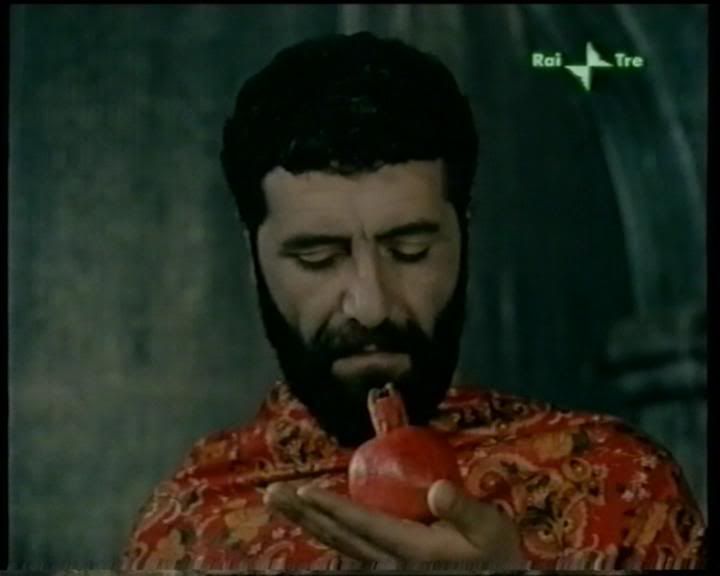
Sayat Nova (1968)
... aka Цвет граната (Soviet Union: Russian title)
... aka Brotseulis kvaviloba (Soviet Union: Georgian title)
... aka Color of Pomegranates (USA)
... aka Nran guyne (Soviet Union: Armenian title)
... aka Red Pomegranate (USA)
... aka Tsvet granata (Soviet Union: Russian title: censored version)Available in Kino Parajanov Box or individually in R1 Kino
Hakob Hovnatanyan (1967)
... aka Akop Ovnatanyan (Soviet Union: Russian title) Available in Kino Parajanov Box or individually in R1 Kino
Tini zabutykh predkiv (1964)
... aka Тени забытых предков (Soviet Union: Russian title)
... aka Shadows of Forgotten Ancestors (USA)
... aka Shadows of Our Forgotten Ancestors
... aka Teni zabytykh predkov (Soviet Union: Russian title)
... aka Wild Horses of Fire
Tsvetok na kamne (1962)
... aka A Little Flower on a Stone
... aka Flower on the Stone
Ukrainskaya rapsodiya (1961)
... aka Ukrainian Rhapsody
Pervyy paren (1959)
... aka The First Lad (International: English title: informal literal title)
Dumka (1957)
Natalya Ushviy (1957)
Zolotye ruki (1957)
... aka Golden Hands
Andriesh (1954)
Moldovskaya skazka (1951)
... aka A Moldavian Tale (International: English title: literal title)
... aka Moldavian Fairy Tale (USA)
Web Resources
parajanov.com
Parajanov imdb page
Sergei Parajanov museum in Armenia
Parajanov museum in Yerevan
Ron Holloway Interview w Parajanov
In Print
By PARAJANOV: articles—"Perpetual Motion," and "Shadows of Our Forgotten Ancestors," in Film Comment (New York), Fall 1968.
Interview with H. Anassian, in Le Monde (Paris), 27 January 1980.
Interview with M. Vartanov, in Cahiers du Cinéma (Paris), March 1986.
Interview with C. Tesson, in Cahiers du Cinéma (Paris), July/August 1988.
Interview with B. Steinborn, in Filmfaust, vol. 15, July-October 1990.
Interview with Ronald Holloway, in Filmrutan (Sundsvall, Sweden), vol. 39, no.1, 1996.
About Parajanove: articles—Marshall, Herbert, "The Case of Sergo Paradjanov," in Sight and Sound (London), Winter 1974/75.
Liehm, Antonin, "A Certain Cowardice," in Film Comment (New York), July/August 1975.
"Film Names Bid Soviets Be Kind to Paradzhanov," in Variety (New York), 17 November 1976.
Fargier, J.P., "Libérons Paradjanian," in Cahiers du Cinéma (Paris), August/September 1977.
Grenier, Richard, "A Soviet Filmmaker's Plight," in the New York Times, 16 July 1981.
Barsky, V., "Uber Sergj Paradschanow und seine Filme," in Filmfaust (Frankfurt), October/November 1985.
Stanbrook, Alan, "The Return of Paradjanov," in Sight and Sound (London), Autumn 1986.
"Ukrainian Rhapsody—Sergei Paradjanov," in Monthly Film Bulletin (London), November 1986.
Williamson, A., "Prisoner: The Essential Paradjanov," in Film Comment (New York), May/June 1989.
Rayns, Tony, "Ashik kerib," in Monthly Film Bulletin (London), September 1989.
Alekseychuk, Leonid, "A Warrior in the Field," in Sight and Sound (London), Winter 1990/91.
Obituary, in Cinéma (Paris), September 1990.
Obituary, in EPD Film (Frankfurt/Main), vol. 7, September 1990.
Olofsson, A., "Bara en forbanned filmmakare," in Chaplin (Stockholm), vol. 32, 1990.
Kopanevora, G., "Dilo a osud Sergeje Paradžanova," in Film Dope (Nottingham), December 1990.
Alekseychuk, L., "A Warrior in the Field," in Sight and Sound (London), vol. 55, Winter 1990–1991.
Picchi, M., "L'arte globale nelle forme espressive di Paradznov," in Cinema Nuovo (Rome), vol. 42, July-October 1993.
Kuncev, G., and others, in Iskusstvo Kino (Moscow), no 8, August 1995.
Books on Parajanov
James Steffen: The Cinema of Sergei Parajanov (Wisconson Film Studies Trade Paper). Available for order now!
Parajanov Special Issue, The Armenian Review, Volume 47 & 48 Number 3-4/1-2 (Spring/Summer 2001/2002). (It's a single issue.)
Description: http://www.armenianreview.org/Fortyeightvolume.htm" onclick="window.open(this.href);return false;
Ordering: http://www.armenianreview.org/ordering.htm" onclick="window.open(this.href);return false; (Must be ordered directly from The Armenian Review)
Seven Visions by Parajanov, Bennett
Parajanov Himself by Garo Keheyan
A collective interior monologue: Sergei Parajanov and Eisenstein's Joyce-inspired vision of cinema.(Critical essay): A digital article in HTML from: The Modern Language Review
Bullot, Érik. Sayat Nova de Serguei Paradjanov: La face et le profil. Crisnée, Belgium: Éditions Yellow Now, 2007.
Cook, David A. “Shadows of Forgotten Ancestors: Film as Religious Art.” Post Script 3, no. 3 (1984): 16–23.
Nebesio, Bohdan. “Shadows of Forgotten Ancestors: Storytelling in the Novel and the Film.” Literature/Film Quarterly 22, no. 1 (1994): 42–49.
Oeler, Karla. "A Collective Interior Monologue: Sergei Parajanov and Eisenstein's Joyce-Inspired Vision of Cinema." The Modern Language Review 101, no. 2 (April 2006): 472-487. (This is already listed above, but the full citation might be useful in case anyone wants to request it through Interlibrary Loan instead of purchasing the article.)
Oeler, Karla. "Nran guyne/The Colour of Pomegranates: Sergo Parajanov, USSR, 1969." In The Cinema of Russia and the Former Soviet Union, 139-148. (Series: 24 Frames.) London, England: Wallflower, 2006. [Book chapter]
Papazian, Elizabeth A. “Ethnography, Fairytale and ‘Perpetual Motion’ in Sergei Paradjanov’s Ashik- Kerib.” Literature/Film Quarterly 34, no. 4 (2006): 303–12.
*some in-print listings thanks to filmreference.com