I found Le Bonheur more disturbing and evocative than I expected to from some of the posts I sampled above. I’ve only read Amy Taubin’s essay among the supplements so far and she makes many of the points that occurred to me. What, it seems to me, the film clearly ISN’T is either a imbecilic paean to free love, or the other equally uninteresting polarity, a portrait of man as unfeeling abuser.
As to what the title is about, it occurs to me the subject of the film goes beyond who’s right or wrong, who’s hurt or blameless—it’s one of Varda’s strengths that she has no moral to beat us over the head with (another is she has no overt, or at least as overt, an idealogic point to make, as in some of Godard’s wink-and-nod-to-the-hip-enough deconstructions). Yes, the husband, a simpering satyr, is ridiculous, his assumption that love (as it applies only to him) is all you need, his self-congratulatory homilies that say nothing except he likes to hear himself talk (“You’re like a new wine to me,” “I have enough joy for us both,”) the hideously elaborate and off the point metaphor of the apple orchard he offers as some sort of explanation to his wife. His inability to speak in anything except metaphor underscores his inability to simply see what’s in front of him, what he thinks he can just have forever, and add to if inspiration hits, all of which he’ll lose.
But I think Varda, who doesn’t “punish” Francois—even the death of his wife doesn’t seem to leave much of a mark
—seems to be going after the ephemerally and unreliability of love itself. Taubin makes smart points about nature and Mozart, how there’s an eternal (-seeming) spring when everything’s going Francois’ way, how Mozart’s music is sprightly and effervescently bubbling. Nature reflects, welcomes, embraces joy’s endless effulgence. The colors all match, everyone keeps breaking into dance, the kids are lovely and tractable and all of it verges on nauseous except for the tension that Varda slowly brews underneath, the feeling that none of this will last:
The marriage,
springtime, the giddy music, the notion that nature itself is in full agreement with François’s delirium of self-love.
At the end, whatever differences there were between the two women before, there’s a weird Kim Hunter/Vertigo hit (or Stepford wives, as Taubin says) to the way Emilie replaces Therese--it may look good but something's wrong; it’s autumn, and the colors, if still balanced, are muted, almost somber; nature, which seemed to bless Francois profusions by offering itself everywhere—to lie in, to make a bower for the kids while the parents fondle, to be fashioned into furniture at the wood shop, is not as compliant—a great shot when he visits Emilie the first time after his wife’s death. She’s bought a table (not waited for him to make her one) and on it is a pot so full of flowers it seems ready to topple. This goes as well to the last shot of the film where they don’t seem so much embraced by nature as swallowed by it. The color schemes, which had most of the movie an almost garishly superficial balance, don’t work as well now, not in Emilie, alone, her robe and the book and the wall somehow failing to blend, or the forced manner in which the couple’s clothes match exactly (never needed to when the wife was alive) or the kids, while matching, clash.
The cuts earlier in the film suggest life’s variety and endless bounty, but at the same time that they can’t last, meaning they were ephemeral all along. The music, lovely and mellifluous, keeps stopping. The scenes end with a blinding wash of saturated color. The (dated) multiple cuts back and forth between François and Emilie staring avidly at each other before they collapse into love’s embrace shows both (a bit clumsily) how powerful the moment is to them, and how they can’t seem to pause long enough to take stock of what they’re seeing. These are contrasted to the slower moving (i.e., more lasting) movements of the Mozart at the end, and in two remarkable shots which show what can’t be skipped over or folded into some narcissistic prance of self-enjoyment (Francois literally dancing through the streets between loves earlier):
the shot of Therese drowning, repeated not to show it is part of a larger consoling pattern but is one image that will not fade; and the photograph of the family taken in the country before Francois and Emilie reunite—it’s fixed, unmovable or erasable, static, what’s missing-Therese--can’t be cut away, effaced, and Francois’s gaze at his children is at least a bit touched by some self-knowledge, even if the handsome boob has little idea what it’s about.
It’s not only a feminist polemic, or a showcase of New Wave technique and sexual sensibility. If it doesn’t reach the same heights as Ophuls in its use of dance, movement, camera sweeps, it aims, I think, for the same target: it’s foolish, even dangerous to love at all.
I’ll go watch and read the supplements now, and the rest of the entries to see where I was wrong or redundant. Just thought I’d slip these in while everyone was occupied beating each other up on the Winter’s Bone thread.










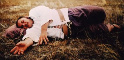

 ) about life, philosophy, music, politics, religion... the world. Turned down all my advances or offers to help her (school, job, money, etc.). Lost touch with her in 1997 and don't know where she went or what became of her. "Vagabond" offers a tragic idea of what became of my homeless-by-choice friend.