Both very interesting essays. Thanks for that Jay.
I won't say I agree entirely, but I do accept most of what has been said, in both essays. I believe that Van Sant is indeed meditating on surfaces, layers of the cinematic image, either visual or sound. He is accepting that the truth is in the case of these events withheld from us forever. At the same time, however, I do feel that such an approach - akin to Hong Sang-Soo's social satires if you like - is limited in that it ignores cinema's power, and in the general the power of art, to pierce the truth, even if it may be a tenuous, abstract, and subjective truth. I don't mean to accuse Van Sant (or Hong for that matter) of cowardice, but just that I prefer a film that takes a stab at the heart of the matter. Eh, I am American though afterall, and I believe someone once said an American is someone who states the obvious. I like emotional honesty, even if it is mainstream to cinema. I'm a sucker for it, and there is a level to Van Sant's stylistic philosophy that I find if not dishonest than just cold.
Still, they're wonderful films he creates. Wonderful to watch, if nothing else. I for one never felt any of them were tedious (though my mother certainly did of "Gerry" : )
Gus Van Sant's Death Trilogy: Gerry, Elephant, Last Days
-
chaddoli

- Joined: Fri Nov 05, 2004 3:41 am
- Location: New York City
- Contact:
Not to be disagreeable, Ed (believe it or not I do like and respect you), but I think that this different approach to cinema, while seemingly distancing, ends up being MORE powerful and truthful than your average film. I am not familiar with Hong yet (Virgin Stripped Bare by Her Bachelors is on my queue), but I believe this is true of Van Sant's most recent work along with its influences, the films of Bela Tarr, Andrei Tarkovsky and Robert Bresson, among others. Their subtlely and pace AID their power in my estimation. I think these films ARE very emotionally honest, and powerful, more so than most other modern filmmaking. Each of the films uses their style to build to a perfect, and powerful climax, one which could never be achieved through other means and one that is rewarding in a completely unique way.
-
jorencain
- Joined: Wed Nov 03, 2004 5:45 am
I've just looked through all of these posts, and I don't think anyone has commented on the detailed sound design of "Last Days" (which I just finished watching). I agree with the majority on here that "Elephant" is a much more successful film overall, and I'm not sure how I feel about "Last Days".
As many others have noted, the cinematography is quite captivating, but it was the attention that Van Sant gives to sound that really held my attention throughout - generally through the use of offscreen sounds (including the singing and bells from the neighboring church, as well as the sounds of nature and the surrounding environment). What really struck me, though, was the sound of water twice in the film: first when he was walking around the house with a shotgun early in the film, and then near the end, again when he was just walking around (both times he is clearly not walking in water).
Spiritual/religious sounds and images clearly appear throughout the movie, from the church sounds, the rising spirit, the motet (or chanson, or whatever it exactly is) over the opening and closing credits, his baptism (?) at the beginning in the waterfall, and I wonder if the splashing water is more of the same. I'm not a religious guy, so I don't know what I'm talking about, but I got some sort of religious sense from the sound of the water. Am I insane?
As many others have noted, the cinematography is quite captivating, but it was the attention that Van Sant gives to sound that really held my attention throughout - generally through the use of offscreen sounds (including the singing and bells from the neighboring church, as well as the sounds of nature and the surrounding environment). What really struck me, though, was the sound of water twice in the film: first when he was walking around the house with a shotgun early in the film, and then near the end, again when he was just walking around (both times he is clearly not walking in water).
Spiritual/religious sounds and images clearly appear throughout the movie, from the church sounds, the rising spirit, the motet (or chanson, or whatever it exactly is) over the opening and closing credits, his baptism (?) at the beginning in the waterfall, and I wonder if the splashing water is more of the same. I'm not a religious guy, so I don't know what I'm talking about, but I got some sort of religious sense from the sound of the water. Am I insane?
-
chaddoli
- Joined: Fri Nov 05, 2004 3:41 am
- Location: New York City
- Contact:
-
miless

- Joined: Sun Apr 02, 2006 1:45 am
For those in the Portland (Oregon) area, The NW Film Center is screening the entire Death Trilogy this weekend (6/13-15).
Fri. 6/13 9:00pm Gerry
Sat. 6/14 9:00pm Elephant
Sun. 6/15 8:00pm Last Days
I cannot wait to see Gerry on the big screen (I've already seen Elephant and Last Days on the big screen)... that is such a gorgeously shot film (especially because it's in scope)
Fri. 6/13 9:00pm Gerry
Sat. 6/14 9:00pm Elephant
Sun. 6/15 8:00pm Last Days
I cannot wait to see Gerry on the big screen (I've already seen Elephant and Last Days on the big screen)... that is such a gorgeously shot film (especially because it's in scope)

-
chaddoli
- Joined: Fri Nov 05, 2004 3:41 am
- Location: New York City
- Contact:
I don't know what this means. And I don't agree with it.james wrote:Gus Van Sant is to Béla Tarr as Quentin Tarantino is to Jean-Luc Godard. That's my opinion and you can take it for what it is worth.
I don't think Quentin is that much of anything to Godard. And Van Sant is so clearly indebted to Tarr with these films, but perhaps only aesthetically (?). Van Sant's Death Trilogy (and presumably is films to come) are so strongly and fascinatingly his own, that no matter what stylistic mode he may be operating in, that I still almost always find his films wonderful and compelling.
-
foggy eyes

- Joined: Fri Sep 01, 2006 1:58 pm
- Location: UK
So, rather than Akerman or Garrel? And, as chaddoli pointed out, what does Tarantino have to do with Godard anyway?james wrote:Gus Van Sant is to Béla Tarr as Quentin Tarantino is to Jean-Luc Godard. That's my opinion and you can take it for what it is worth.
The complex relationship between Akerman, Tarr & Van Sant's formal experimentation (extended/excessive duration, minimalism, observation of the everyday, narrative reduction, focus on materiality) runs considerably deeper than a mere flippant comparison - and if you could find anything similiar going on between Godard and Tarantino I'd be astonished.
-
KeystoneCop
- Joined: Thu Mar 24, 2005 5:55 pm
-
miless
- Joined: Sun Apr 02, 2006 1:45 am
There are a few shots (especially in Gerry) that copy Sátántangó (the main one I'm thinking of is of Damon and Affleck walking through a canyon with tumbleweeds being violently blown past them, shot from behind), but the subject matter is far from being Tarr-esque. If anything, I'd say that Van Sant is using the tracking shots as a way to beautifully capture improvisation within something highly choreographed. I love all three of these films (that bulimia sequence in Elephant seemed completely out of place, however), not because I ache for more Tarr, but because I like seeing the particular style used for different means. Van Sant doesn't even get close to the crushing gloom or monotony of a Tarr film (Gerry's the closest), despite Gus' trilogy being explicitly about death (the B&W cinematography might be a big factor).
There's room for both of them in my book.
There's room for both of them in my book.
-
zedz

- Joined: Sun Nov 07, 2004 11:24 pm
And let's not forget Alan Clarke and the original Elephant in that mix.foggy eyes wrote:So, rather than Akerman or Garrel? And, as chaddoli pointed out, what does Tarantino have to do with Godard anyway?james wrote:Gus Van Sant is to Béla Tarr as Quentin Tarantino is to Jean-Luc Godard. That's my opinion and you can take it for what it is worth.
The complex relationship between Akerman, Tarr & Van Sant's formal experimentation (extended/excessive duration, minimalism, observation of the everyday, narrative reduction, focus on materiality) runs considerably deeper than a mere flippant comparison
-
miless
- Joined: Sun Apr 02, 2006 1:45 am
Gerry on the big screen was fantastic. It shot up into my top 20 immediately. And my perception of it now is much different, as I can see a definite Tarr influence (in certain shots), but what I think he got most from him was the courage to make something this slow (much quicker, however, than say Sátántangó). The cinematography is only at times reminiscent of Tarr's, most of it is quite naturalistic. quite an experience, especially the shots of blue at the beginning and end.
-
Antoine Doinel

- Joined: Sat Mar 04, 2006 5:22 pm
- Location: Montreal, Quebec
- Contact:
After being utterly blown away by Paranoid Park earlier this year, I've begun my catching up with Van Sant and I watched Last Days tonight. In terms of his "experimental" films, I've seen Elephant and thought it was beautiful, but ultimately handicapped by its subject matter and I largely feel the same way about this film. Firstly, the film is shot beautifully. It just looks outstanding and there are several sequences which are just breathtaking (the car ride with Ricky Jay being one of the most memorable). Michael Pitt is absolutely great in the lead, and the rest of the cast is mostly solid as well (even if Asia Argento was just acting with her ass).
But the problem for me with this film, is that Van Sant is almost too reverential of his subject, "Blake" and worse, he employs a few devices throughout the film that are unfortunately far too cliche. The scene with Mormons, and the conversation in which they talk about "sacrificing something pure so we can all be innocent again" was a bit of eye roller. Kim Gordon's cameo as the friend trying to reach out to Blake was just poorly written, and the Harmony Korine cameo is really unnecessary especially at that juncture of the film.
But the two moments that really faltered for me was
Narratively, I think the film fails, but in terms of evoking mood/character etc, the film largely works. The film works best when no one is speaking and I really wish Van Sant had chosen to keep Blake silent for the entire film as he had originally intended as I think it would've made a world of difference. Finally, like Paranoid Park, the sound design here is top notch. There is just no other American filmmaker that is using sound in this way and it's thrilling to watch a film and be genuinely surprised and moved by carefully selected music or incidental sound.
But I have to agree with davidhare in his first post in the thread. Even if it doesn't all work, this definitely a fearless and heartwrenching experience.
But the problem for me with this film, is that Van Sant is almost too reverential of his subject, "Blake" and worse, he employs a few devices throughout the film that are unfortunately far too cliche. The scene with Mormons, and the conversation in which they talk about "sacrificing something pure so we can all be innocent again" was a bit of eye roller. Kim Gordon's cameo as the friend trying to reach out to Blake was just poorly written, and the Harmony Korine cameo is really unnecessary especially at that juncture of the film.
But the two moments that really faltered for me was
Spoiler
the last musical sequence in which Blake is singing a song about his "cold dead face". C'mon, do we really need such a weak scene in which the character we all know is going to commit suicide carefully lays out his state of mind? And worst of all, the ascension of Blake's spirit/ghost up the shed doors into heaven.
But I have to agree with davidhare in his first post in the thread. Even if it doesn't all work, this definitely a fearless and heartwrenching experience.
-
paranoid-knight2008

- Joined: Tue Mar 17, 2009 4:15 am
- Location: USA
Re: Gus Van Sant's Death Trilogy: Gerry, Elephant, Last Days
You know a film is special when it uses so little to say so much, and so much as to make it an emotional experience minus an actual narrative. Gus Van Sant (possibly the best American director working today) delves so far into allegory that "Gerry" becomes something more than a film. And its hard to not watch "Gerry" with awe, as we the viewer is treated to some of the most gorgeous cinematography in American film post-2000 while banking in on a very powerful study of isolation-induced mental pain. It's easy to brand "Gerry" as a boring film based on what is seen at the surface, but when looking deeper, the film is a testing ground for human struggle. A man vs. self conflict that gains its power by using physical pain to symbolize the mental aspects, and in this case, of sexual insecurity. And Gus Van Sant's incredible use of symbolism in the photography, the dialogue, the actual title of the film, and the brutal ending comment, not only on the personal homosexual aspect of Van Sant's story, but also on that of the viewer who faces this journey head-on for the tedious, yet influential experience it is.
To get the full impact of the film, one must think of who Gerry actually is. We are presented in the film with two men, both named Gerry; and we barely see anymore people except for a few outsiders on the path the two characters walk on. It would be best to see that the two Gerry's are really one person, and that the outsiders are really just those who are pushed away, and fail to realize their existence. The true Gerry of the film is a man who is outside of the film, while the film is really a symbol for his own sexual insecurity (the two Gerry's in the film symbolizing the two emotional battles within him). The fact that the true Gerry could very well be a teenager becomes relevant through the dialogue and acting (which includes a discussion on video games by the two characters, who both feature teen characteristics) and this is also an important set-up for the film's final scene. This is, bluntly, the lost struggle of a man, whose true sexual identity has become isolated; lost in this world that is eaten up by rock, sand, wind, and the bluest of sky.
Many have questioned by view on this, but I think it holds its ground seeing as the film includes many scenes that hint at the topic such as a discussion about which direction to go (symbolizing the confusion of whether to be gay, straight, or bi) to a scene where one Gerry is stranded miraculously and mysteriously on a rock. "I'll make a bed and you can jump," the other Gerry says. "It should break the fall." This also leads up to the climax and resolution of the film which shows a battle with both Gerry's, which involves a highly sexualized, homoerotic, yet brutal strangulation one Gerry does on the other. But what makes this death the more chilling is when the strangled Gerry nods his head for the killing to go on. This shows that the actual Gerry may have found his footing, he has fought this inner battle, and has chosen a path to be on. And as we get our final scene, we see the living Gerry making it out of the desert alive (finding the right path), in the back seat of a car, being stared at by what seems to be an angry father, maddened at his child. Could this be Gerry's "coming out"? Could the Gerry that lived symbolize the homosexuality that the true Gerry was repressing? (Think back to an earlier scene in which the dead Gerry stares out at the mirage of the other Gerry. Could this be him looking at this homosexuality as something fake - i.e. shameful?)
All in all, "Gerry" is open to many, many interpretations, but knowing Gus Van Sant as a gay director who connects well with gay audiences (many of his films feature homosexual and/or homoerotic themes) I feel that what I see "Gerry" as, in this case an internal presentation of a repressed gay man, is very justified. And this also leads up to why "Gerry" is, to me, one of the greatest allegorical stories ever filmed.
Your thoughts?
Bumping this up in hopes of getting some replies.
To get the full impact of the film, one must think of who Gerry actually is. We are presented in the film with two men, both named Gerry; and we barely see anymore people except for a few outsiders on the path the two characters walk on. It would be best to see that the two Gerry's are really one person, and that the outsiders are really just those who are pushed away, and fail to realize their existence. The true Gerry of the film is a man who is outside of the film, while the film is really a symbol for his own sexual insecurity (the two Gerry's in the film symbolizing the two emotional battles within him). The fact that the true Gerry could very well be a teenager becomes relevant through the dialogue and acting (which includes a discussion on video games by the two characters, who both feature teen characteristics) and this is also an important set-up for the film's final scene. This is, bluntly, the lost struggle of a man, whose true sexual identity has become isolated; lost in this world that is eaten up by rock, sand, wind, and the bluest of sky.
Many have questioned by view on this, but I think it holds its ground seeing as the film includes many scenes that hint at the topic such as a discussion about which direction to go (symbolizing the confusion of whether to be gay, straight, or bi) to a scene where one Gerry is stranded miraculously and mysteriously on a rock. "I'll make a bed and you can jump," the other Gerry says. "It should break the fall." This also leads up to the climax and resolution of the film which shows a battle with both Gerry's, which involves a highly sexualized, homoerotic, yet brutal strangulation one Gerry does on the other. But what makes this death the more chilling is when the strangled Gerry nods his head for the killing to go on. This shows that the actual Gerry may have found his footing, he has fought this inner battle, and has chosen a path to be on. And as we get our final scene, we see the living Gerry making it out of the desert alive (finding the right path), in the back seat of a car, being stared at by what seems to be an angry father, maddened at his child. Could this be Gerry's "coming out"? Could the Gerry that lived symbolize the homosexuality that the true Gerry was repressing? (Think back to an earlier scene in which the dead Gerry stares out at the mirage of the other Gerry. Could this be him looking at this homosexuality as something fake - i.e. shameful?)
All in all, "Gerry" is open to many, many interpretations, but knowing Gus Van Sant as a gay director who connects well with gay audiences (many of his films feature homosexual and/or homoerotic themes) I feel that what I see "Gerry" as, in this case an internal presentation of a repressed gay man, is very justified. And this also leads up to why "Gerry" is, to me, one of the greatest allegorical stories ever filmed.
Your thoughts?
Bumping this up in hopes of getting some replies.
-
j99
- Joined: Wed May 27, 2009 2:18 pm
Re:
David Ehrenstein wrote:Gerry is much closer to Philippe Garrel than Bela Tarr. Elephant is Gus Bela Tarr movie.
Gerry also appears to be heavily influenced by Samuel Beckett's novel Molloy, itself part of a "death trilogy" along with Malone Dies and The Unnameable. To me, Gerry is a loose adaptation of the Beckett novel.
-
knives

- Joined: Sat Sep 06, 2008 10:49 pm
Re: Gus Van Sant's Death Trilogy: Gerry, Elephant, Last Days
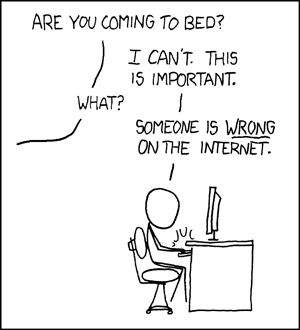
Does anyone know of a good essay on Gerry that I can post to elsewhere. I've been arguing with anti-intellectual assholes all day on the subject of the film and I hope that maybe if they hear it from someone more coherent they might understand what I'm saying.
-
Tom Hagen
- Joined: Mon Apr 14, 2008 4:35 pm
- Location: Salt Lake City, Utah
-
knives
- Joined: Sat Sep 06, 2008 10:49 pm
Re: Gus Van Sant's Death Trilogy: Gerry, Elephant, Last Days
When this is over I'm going to have to use that. Thank god I don't sleep. Also thank you for the essay. Haven't read it yet obviously, but I assume it's good coming from you.
-
Tom Hagen
- Joined: Mon Apr 14, 2008 4:35 pm
- Location: Salt Lake City, Utah
Re: Gus Van Sant's Death Trilogy: Gerry, Elephant, Last Days
It's less an essay than actual reporting of interviews with Affleck, Damon, and Gus explaining what the hell they were doing. Which is probably more helpful for you (in dealing with these guys) at this point!
-
knives
- Joined: Sat Sep 06, 2008 10:49 pm
Re: Gus Van Sant's Death Trilogy: Gerry, Elephant, Last Days
That is probably better actually. I tend to think in spreadsheets so when the situation came up (and I'm less coherent than usual with this film) my first thought was academia.
-
tarpilot

- Joined: Thu Jan 20, 2011 2:48 pm
Re: Gus Van Sant's Death Trilogy: Gerry, Elephant, Last Days
I know this request is a day old, but, uh, Fujiwara's piece from the time of release is pretty good...
-
colinr0380

- Joined: Mon Nov 08, 2004 8:30 pm
- Location: Chapel-en-le-Frith, Derbyshire, UK
Re: Gus Van Sant's Death Trilogy: Gerry, Elephant, Last Days
Watching Last Days again over the weekend I was struck by how much of a black comedy it was, from the opening "Home on the Range" attempt to fill the silence through to the final scene intercut with the end credits involving
A few jumbled thoughts follow:
I particularly liked the way that this is a great film for Lukas Haas's character - he gets to sleep with most of the cast and even play a touching instrumental ballad tribute to close out the film. That more than compensates for my assumption that it was the mix tape he foists on Blake at the mid-point of the film which turned out to be so terrible that it contributed to Blake's suicide! Although, as with Elephant, that is just one superficial 'potential explanation' thrown into the film along with the hectoring telephone calls from both agent, band members and girlfriend. Plus if I'm making comparisons with Elephant, I presume that the schmaltzy Boyz II Men music video that gets lingered on as if to suggest the horrors of the song writing machine while Blake has a My Own Private Idaho-esque narcoleptic fit in the corner is this film's equivalent of the Hitler documentary playing on the TV in Elephant! (Perhaps this connection is strengthened by the significant presence of guns in both scenes) Both films use the footage as a thrown in 'possible superficial explanation' whilst both pieces of material show horror (albeit just the horror of blandly packaged boy bands!) being played out on a wider scale set against the more limited, localised events that occur in the films themselves.
And of course I love the matched pair of performance shots, one showing the camera retreating from a private jam session as Blake is alone in the house, complemented by the push forward in the nighttime performance with Blake seeming to be performing to the empty chair (I particularly like the way that the almost imperceptible push in keeps the image almost totally unchanged, placing as much emphasis on the chair - the absent individual audience member - as it does on Blake himself).
Finally, while Bela Tarr gets mentioned a lot as an influence for these films, I did start thinking that the one shot early in the film of Blake struggling through the swamp and briefly stopping to watch the modern high speed train passing in the background could have been an amusingly ironic version of a similar, painterly shot that takes place in Sokurov's Mother and Son, a quite different film about approaching and accepting an inevitable death!
Spoiler
a classic piece of corpse-falling-off-the-gurney physical comedy!
I particularly liked the way that this is a great film for Lukas Haas's character - he gets to sleep with most of the cast and even play a touching instrumental ballad tribute to close out the film. That more than compensates for my assumption that it was the mix tape he foists on Blake at the mid-point of the film which turned out to be so terrible that it contributed to Blake's suicide! Although, as with Elephant, that is just one superficial 'potential explanation' thrown into the film along with the hectoring telephone calls from both agent, band members and girlfriend. Plus if I'm making comparisons with Elephant, I presume that the schmaltzy Boyz II Men music video that gets lingered on as if to suggest the horrors of the song writing machine while Blake has a My Own Private Idaho-esque narcoleptic fit in the corner is this film's equivalent of the Hitler documentary playing on the TV in Elephant! (Perhaps this connection is strengthened by the significant presence of guns in both scenes) Both films use the footage as a thrown in 'possible superficial explanation' whilst both pieces of material show horror (albeit just the horror of blandly packaged boy bands!) being played out on a wider scale set against the more limited, localised events that occur in the films themselves.
And of course I love the matched pair of performance shots, one showing the camera retreating from a private jam session as Blake is alone in the house, complemented by the push forward in the nighttime performance with Blake seeming to be performing to the empty chair (I particularly like the way that the almost imperceptible push in keeps the image almost totally unchanged, placing as much emphasis on the chair - the absent individual audience member - as it does on Blake himself).
Finally, while Bela Tarr gets mentioned a lot as an influence for these films, I did start thinking that the one shot early in the film of Blake struggling through the swamp and briefly stopping to watch the modern high speed train passing in the background could have been an amusingly ironic version of a similar, painterly shot that takes place in Sokurov's Mother and Son, a quite different film about approaching and accepting an inevitable death!
-
bunuelian

- Joined: Wed Nov 03, 2004 3:49 pm
- Location: San Diego
Re: Gus Van Sant's Death Trilogy: Gerry, Elephant, Last Days
Unless I'm woefully mistaken, the term "Gerry" is used in the film as a hipster term for "stupid mistake." The guys call each other Gerry as a stand-in for "dumbass" and refer to things they screwed up as "I Gerried it." The film tells the story of a particularly bad Gerry.paranoid-knight2008 wrote:To get the full impact of the film, one must think of who Gerry actually is.