cinemartin wrote:What do you mean by original film?
Sorry. The original cut, rather. I was wondering if credits rolling after each segment, and the flashback sequences were part of Rivette's initial vision with regards to presentation.
The film only screened once in '71 as an unfinished work print. He then used that as the basis for Spectre. But in all accounts of the film being talked about in 1973, there was mention of the black and white stills. He even used them in Spectre, just dispersed (at random?) throughout the narrative.
I watched the "Mysteries Of Paris" docu last night and, from that, it would seem that the stills were added during the 90s restoration. The workprint which was screened once in the 70s did not have any title card or credits, and these were added in the 90s as well.
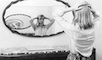
"Originally the idea was to do four parallel feuilleton stories, linked at the beginning of each episode by
still shots connecting with the other episodes, rather like the old serials. We later abandoned this idea, but in
the four-hour version we made use of black-and-white stills, either as a recall or an ellipse, a connection or a
pause; in some cases the stills match with moments already seen, in others with scenes to come, occasionally with
sequences that have been removed from this version entirely."
Based on Rivette's interview included on the disc, it seems that the original full-length cut (shown to television companies for prospective sale and once to the general public in Le Havre), did not include the episodic structure of the "noli me tangere" version, even though it was assumed it would be broken up in that way when eventually screened on television. The long version as originally screened didn't even have credits. The individual episode titles and credits and black-and-white stills recaps were added during the 90s reconstruction, along with 45 minutes of missing sound. This is also when the "noli me tangere" subtitle was officially adopted.
Saw Out 1 at the Harvard Film Archive this past weekend in two large chunks (2:30 pm-11:00 pm Saturday, 2:30-10:15 Sunday). I can really only echo the comments that others here have made: it's an extraordinary, exhausting, baffling experience. I feel like I'm still very much swimming in the film two days later. It does have its dull moments; I agree that many of the improv rehearsal scenes go on far too long. But there is a lot to love and enjoy here, and a lot of it has a delayed effect. I'm finding that the power of certain moments (such as that mind-bending conversation between Leaud and Lafont) is only now hitting me. I still prefer Celine and Julie, but it's impossible to deny that this is a major work on every level. As it progresses, it feels like it keeps expanding endlessly to include new characters, new locations, and new possibilities for interpretation. Every time two previously "unrelated" characters crossed paths or it was revealed that they knew each other, I felt myself wanting to gasp. The world of this film feels almost overwhelming in its vastness and instability. At the same time, I doubt whether I will ever have the stamina to get through it again--a feeling I also had after I finished reading Infinite Jest.
I think this may be my favorite Leaud performance. I found myself compulsively grinning at his recitation of "The Hunting of the Snark" ("le s-NAR-que!") as well as during his stoned giggling with Bulle Ogier. Michael Lonsdale is also excellent, playing a character who I found endlessly mutable and difficult to read. I found the combination of his unconventional looks and his quietly powerful sexuality--which he exacts over no less than three of the film's female characters--to be fascinating. I'm left wondering whether he was actually serious about his theater experiments or whether he's simply been using them as a way to score with as many hippie chicks as possible.
It's amazing to read back to the beginning of this thread, when Out 1 was considered to be more or less a lost film and the possibility of seeing it in its complete form seemed all but impossible. It's now available on Blu-ray throughout Europe and North America and many of us have had (or will have) the opportunity to see it screened theatrically. We're lucky, folks.
Leaud cracks me up constantly during this film, even when doing things as mundane as envelope stamping. (Watched Ep. 1 last night -- beginning my first viewing with English rather than Italian subs).
Yes, that was a highlight, too. It's made all the more uncomfortably funny by the faces of the cafe patrons, who don't appear to have agreed to be involved in this stunt.
ianthemovie wrote:Yes, that was a highlight, too. It's made all the more uncomfortably funny by the faces of the cafe patrons, who don't appear to have agreed to be involved in this stunt.
You think that the harmonica scenes were guerilla cinema?
I guess I don't know for sure, but it really looks like a lot of those cafe patrons are random strangers. Many of them glance directly at the camera and seem genuinely confused about what is happening. It's possible that some of them were plants/actors and others were unsuspecting "extras." As someone else pages back noted, the street kids in the background of Leaud's "Snark" monologue also look like strangers tagging along with him and the crew. I got the same feeling from the scenes in which the actors stop people on the street to ask if they've seen Renaud. All of those people looked like random passersby.
I'd be curious to hear more from someone who knows more about how these scenes were filmed. Given the improvisatory nature of the film I just assumed these scenes were shot verite style.
ianthemovie wrote:I guess I don't know for sure, but it really looks like a lot of those cafe patrons are random strangers. Many of them glance directly at the camera and seem genuinely confused about what is happening. It's possible that some of them were plants/actors and others were unsuspecting "extras." As someone else pages back noted, the street kids in the background of Leaud's "Snark" monologue also look like strangers tagging along with him and the crew. I got the same feeling from the scenes in which the actors stop people on the street to ask if they've seen Renaud. All of those people looked like random passersby.
I'd be curious to hear more from someone who knows more about how these scenes were filmed. Given the improvisatory nature of the film I just assumed these scenes were shot verite style.
Somebody in the Out 1 doc--Pierre-William Glenn, I believe--says that these scenes were all filmed without the cafe patrons' knowledge. I think he even comments on how remarkable it was that they rarely looked into the lens during filming.
One of my favourite bits of DUELLE is all the standers-by shamelessly gawping into the camera during the early sequence where the characters are moving through the crowds at the train station. It's both very funny and thematically on-point with Rivette's obsessive consideration of the thin line between reality and art and the manner in which both intrude on each other.
Michael Kerpan wrote:Leaud cracks me up constantly during this film, even when doing things as mundane as envelope stamping. (Watched Ep. 1 last night -- beginning my first viewing with English rather than Italian subs).
His line "If you can hear me, it is because I am speaking" got me.
Well, I just finished OUT 1, watching two chapters a night over 4 nights. I don't know quite what to say. I guess that is it's own form of critique.
Adjectives that come to mind are brilliant, boring, magical, blasphemous, incisive, ravishing, and hypnotic (perhaps hypnotically boring?).
The performance of Michael Lonsdale was something else. I wish it would have been a financial success so we could have OUT 2 in which we learn about Pierre and how he is using Marie to set things in motion.
I really came to the realization two nights ago (through episode 5) that this is very similar to what Robert Kramer was aiming for in Milestones. Rivette though makes it a lighter and more fun ride through reality. I'm sure the actual point of reference if Rouch, but running with something Zedz was saying it is really about Rivette's critical fight between the ideals of documentary and purely staged cinema wondering which will take over the other (staged seems to win so far, but I have two more episodes left). Honestly all of this just leaves me wishing for a film of staged Rivette characters interacting with the real world. We get a lot of that here, probably actually a feature's worth, but just the idea of Leaud harassing the unsuspecting with Lewis Carol quotes and conspiracies in a tightly structured way makes me sad we won't be getting more Rivette.
ianthemovie wrote:Yes, that was a highlight, too. It's made all the more uncomfortably funny by the faces of the cafe patrons, who don't appear to have agreed to be involved in this stunt.
You think that the harmonica scenes were guerilla cinema?
It never occurred to me that these street scenes weren't shot guerrilla style. As ianthemovie points out, background characters constantly look directly into the lens, and people can even be seen stopping in their tracks, gawking at the actors and camera. My favorite moment is when Colin walks through the street reciting the clue about the "crew," and the group of kids tag along wit him the entire time. I feel almost certain that those are just some kids who saw a cameraman and wanted to be caught on film. "Look ma, I'm on TV!"
Also, has there even been another film with more dirt/hair stuck in the film gate? Almost every shot has some grime at the top or bottom of the screen. It definitely adds to that guerrilla flavor.
The Stockholm cinemateque had a screening of the restored version of noli me tangere over the weekend and I had tickets for the entire twelve+ hours.
On one hand I get what Rosenbaum is getting at when he comments on moviegoers rejection of longer films - especially nowadays when "binge-watching" series is all the rage. However, he fails to put in writing just how awfully teadious those theatre exercises are. I understand that Out 1 is his darling, and maybe it would've been mine too had I bothered to watch the second half today. But its legendary status feels unwarrented and largely the result of its rarity. I don't require narrative cohesion nor a rapid tempo (Resnais and Tarr are both household gods, for instance).
And maybe I should reserve judgement until I've seen it in its entirety, but what Rosenbaum said would only be applicable to Out 1 if you cut the many, many hours of screaming and ridiculous mumbo-jumbo. Colin and Frederique both have interesting stories, but I can only take so much of those theatre exercises before I wish for a bullet in my head.
Does the film get remarkably better in the second half, or am I beyond saving and doomed to be a philistine for all of eternity?
The film does get a lot more conventional in the second half and would be easier to consider great if it is specifically the theatrical exercises that put you off.