
Proving that good biographers don't make good film critics...Lino wrote:Antonia Fraser's thoughts on the film
1335 Marie Antoinette

-
foggy eyes

- Joined: Fri Sep 01, 2006 1:58 pm
- Location: UK
-
hangthadj
- Joined: Wed Aug 16, 2006 1:40 pm
- Contact:
I saw this today. I didn't read much about this film going into it, but it was one that I anticipated more than almost any American fil this year, save maybe A Scanner Darkly. What I had read led me to go into this film without any expectations of a focus on the politics of the era.
That all said, I LOVED this film. There was nearly nothing about this film that I didn't like. I am unsure I'd go as far as Lino is going mentioning it as something that will be looked back on years later as one of the more important films of the era, but it will still be one of my favorites, if that makes any sense.
I could see why people wouldn't like this film. I saw it with four others and I was the only one who walked out of the theater who didn't find it "boring." I didn't find it boring at all, but that may have had to do with my expectations of it being a bit of a fluff piece coming in.
I'm not sure that we could have had an "insider" view of what was going in in Marie Antoinette's head during this period. I think nearly any attempt would be subject to the revisionist history claims. While ambitious, if Antoinette is as shallow as some throughout history have claimed, that would become a bore. Instead, Coppola gave us an insider view of Versailles. As important as any of the dialogue of Antoinette's or Louis was that of the side characters, which seemed always to be gossip and nothing more. At once it provided comic relief, a sense of empathy (at least in me) for Antoinette, and played as to the ridiculousness of the world inside of Versailles.
The Malick-isms that were mentioned earlier on were beautiful and wonderful. I found those sections to be very stylized, and at the same time showed the restraint needed in a period piece. Until those moments when Antoinette was at her retreat I ound myself wishing at times maybe for a little more style as well. But those moments did the job for me.
Truthfully, this film exceeded expectations for me, and I would love to see it again.
That all said, I LOVED this film. There was nearly nothing about this film that I didn't like. I am unsure I'd go as far as Lino is going mentioning it as something that will be looked back on years later as one of the more important films of the era, but it will still be one of my favorites, if that makes any sense.
I could see why people wouldn't like this film. I saw it with four others and I was the only one who walked out of the theater who didn't find it "boring." I didn't find it boring at all, but that may have had to do with my expectations of it being a bit of a fluff piece coming in.
I'm not sure that we could have had an "insider" view of what was going in in Marie Antoinette's head during this period. I think nearly any attempt would be subject to the revisionist history claims. While ambitious, if Antoinette is as shallow as some throughout history have claimed, that would become a bore. Instead, Coppola gave us an insider view of Versailles. As important as any of the dialogue of Antoinette's or Louis was that of the side characters, which seemed always to be gossip and nothing more. At once it provided comic relief, a sense of empathy (at least in me) for Antoinette, and played as to the ridiculousness of the world inside of Versailles.
The Malick-isms that were mentioned earlier on were beautiful and wonderful. I found those sections to be very stylized, and at the same time showed the restraint needed in a period piece. Until those moments when Antoinette was at her retreat I ound myself wishing at times maybe for a little more style as well. But those moments did the job for me.
Truthfully, this film exceeded expectations for me, and I would love to see it again.
-
marty
I just saw this earlier today and I thought it was excellent. What a great film. It still lingers after several hours. Kirsten Dunst, while at first glimpse may be superficial, is the best thing she has ever done. She is mesmerising. I fell in love with this film and I will be seeing it again very soon. Two hours never passed so quickly. Pure joy.
Last edited by marty on Fri Jan 05, 2007 3:11 am, edited 1 time in total.

-
lord_clyde
- Joined: Thu Dec 23, 2004 8:22 am
- Location: Ogden, UT
Me too! Me too! Criminally ignored by pretty much all the awards circuits, and yet tripe like Little Miss Sunshine is heaped with praise.Abulafia wrote:I'm going to have to agree with Marty, I thought this was a great film.
Just having watched Rosemary's Baby for the first time I am inclined to agree, God is dead.
-
marty
-
Michael

- Joined: Wed Nov 03, 2004 4:09 pm
It's not like Sofia Coppola was ever neglected or ignored. Lost in Translation was nominated for Best Pic and one of the best reviewed films of the year it came out. Marie Antoinette is not as great as LiT. I was impressed with MA mostly for its art direction and costumes when I first saw it but since then, the movie dissolved completely, meaning that I can't remember a thing about it except for the wallpapers. It fails to keep a lasting effect on me. Not so with LiT.Yes, the more "acclaimed" films I see that people are raving about, the more I love Marie Antoinette. It is clearly the best film out of the sad bunch desperately vying for awards. It is akin to The Magnificent Ambersons being shunned and overlooked by mainstream and even arthouse audiences.
If I have to pick one recent movie that's disturbingly neglected: The New World.
As for The Magnificent Ambersons being overlooked, whose fault was it?

-
scalesojustice
- Joined: Tue Jul 25, 2006 3:25 pm
- Contact:

-
AnamorphicWidescreen
- Joined: Tue Apr 16, 2013 4:21 am
Re: Marie Antoinette (Sofia Coppola, 2006)
I just re-watched the Marie Antoinette DVD - this film is truly sublime; amazing period costumes, setting, attitudes, etc. The colors are also amazing here.
The '80's punk/pop/new wave soundtrack is extraordinary - though some may think the modern songs don't fit into a period piece, IMHO they work really well here - especially Bow Wow Wow's "I Want Candy" - playing over the scene when Marie Antoinette & her retinue eat the elegant French desserts. Also liked the inclusion of Sixousie & the Banshees & New Order (one of my all-time favorite bands)....
And, Kirsten Dunst has never been cuter than in this film....
Disappointed that this masterpiece is still not on Region 1 (U.S.) Blu-ray yet; I believe it was supposed to be released in 2006 (in the early days of the format), but got cancelled...with all of the bright colors in this film, it's tailor made for Blu...
MA is SC's best film, hands down.
The '80's punk/pop/new wave soundtrack is extraordinary - though some may think the modern songs don't fit into a period piece, IMHO they work really well here - especially Bow Wow Wow's "I Want Candy" - playing over the scene when Marie Antoinette & her retinue eat the elegant French desserts. Also liked the inclusion of Sixousie & the Banshees & New Order (one of my all-time favorite bands)....
And, Kirsten Dunst has never been cuter than in this film....
Disappointed that this masterpiece is still not on Region 1 (U.S.) Blu-ray yet; I believe it was supposed to be released in 2006 (in the early days of the format), but got cancelled...with all of the bright colors in this film, it's tailor made for Blu...
MA is SC's best film, hands down.
Last edited by AnamorphicWidescreen on Sun Apr 19, 2015 6:05 am, edited 1 time in total.
-
Zot!
- Joined: Wed Jan 20, 2010 4:09 am
Re: Marie Antoinette (Sofia Coppola, 2006)
Humble or otherwise, you don't need to keep stating that something is your opinion when offering a critique, it is sufficiently implied.
-
domino harvey

- Dot Com Dom
- Joined: Wed Jan 11, 2006 6:42 pm
Re: Marie Antoinette (Sofia Coppola, 2006)
I guess there's always hope of a sequel

-
therewillbeblus

- Joined: Tue Dec 22, 2015 7:40 pm
Re: Marie Antoinette (Sofia Coppola, 2006)
I shouldn't have been surprised at liking an undervalued Sofia Coppola film, but having heard mostly criticisms even from her fanbase, I thought this was terrific. Coppola has made a career out of presenting people (often, but not always, women) as specifically enigmatic and only broadly knowable with humility, not allowing us to escape into these characters and instead granting them supreme independence and empathy within her narrative, a difficulty feat considering that fragile detachment. Marie Antoinette is no different, as Coppola establishes and the raw experience of sociological alienation and then swims in the reciprocal individualized power of attitude to change the tone of her reality with equal parts joy and tragedy.
I appreciated the choices of aesthetic modernization through music, because they helped facilitate Coppola’s subtle push/pull dance of drawing us intimately into the scene to juxtapose the social mores that repel us from it. The all-nighter set to New Order felt straight out of a personal memory or current film about youth culture, and made the oppressive behaviors barring Dunst from feeding her own baby, for example, all the more jarring as a result. As Ebert pointed out, these characters are modern in their own context, so bridging that for us supports the compassion and elusiveness of experience at once. And how bold to undercut all the hate thrown at this historical figure by destroying and then creating her own myth- but still a myth at that. We empathize from afar, and by shifting the aim into a sensitivity for the unknowability of this restrictive social context, we must render any judgments of selfishness and cake-sayings as meaningless. This myth serves to challenge that myth, and exposes both as only a fraction of truth, if that at all.
In a sense it's a statement about history in general, how image is distorted and thinly summarized with anti-humanist simplification for the ironic purpose of compressed "knowledge", which is unfair as all people deserve empathy, even if the ones who died centuries ago slip farther from being afforded that chance. Well Coppola is giving- hell, gently forcing- that opportunity, and ends with a wonderful moment of self-actualized confidence, only to then show us a horrific image that is oddly upsetting and violent without showing any gore or death. It's the only "true" moment and objective shot in the film, a sinking reminder of this brutality outside of the narrative- and one that, given our two-hour journey of sympathies and postured identification, carries a connotation of mourning instead of the aloof satisfaction at the culmination of a story we might feel from a traditional, paint-by-numbers biopic. Coppola manages to evoke more emotion from an atypical quiet-violence ending than another filmmaker would from a chaotically violent one, and that is something to be championed- she has recontextualized our relationship with history almost entirely by focusing on and amplifying the key ingredient of humanity, in all its subjective bliss. We know our subjectivity matters, but (sadly) rarely do most people extend that charity outward. It may have been partly a trick, but it's an important and generous one.
I appreciated the choices of aesthetic modernization through music, because they helped facilitate Coppola’s subtle push/pull dance of drawing us intimately into the scene to juxtapose the social mores that repel us from it. The all-nighter set to New Order felt straight out of a personal memory or current film about youth culture, and made the oppressive behaviors barring Dunst from feeding her own baby, for example, all the more jarring as a result. As Ebert pointed out, these characters are modern in their own context, so bridging that for us supports the compassion and elusiveness of experience at once. And how bold to undercut all the hate thrown at this historical figure by destroying and then creating her own myth- but still a myth at that. We empathize from afar, and by shifting the aim into a sensitivity for the unknowability of this restrictive social context, we must render any judgments of selfishness and cake-sayings as meaningless. This myth serves to challenge that myth, and exposes both as only a fraction of truth, if that at all.
In a sense it's a statement about history in general, how image is distorted and thinly summarized with anti-humanist simplification for the ironic purpose of compressed "knowledge", which is unfair as all people deserve empathy, even if the ones who died centuries ago slip farther from being afforded that chance. Well Coppola is giving- hell, gently forcing- that opportunity, and ends with a wonderful moment of self-actualized confidence, only to then show us a horrific image that is oddly upsetting and violent without showing any gore or death. It's the only "true" moment and objective shot in the film, a sinking reminder of this brutality outside of the narrative- and one that, given our two-hour journey of sympathies and postured identification, carries a connotation of mourning instead of the aloof satisfaction at the culmination of a story we might feel from a traditional, paint-by-numbers biopic. Coppola manages to evoke more emotion from an atypical quiet-violence ending than another filmmaker would from a chaotically violent one, and that is something to be championed- she has recontextualized our relationship with history almost entirely by focusing on and amplifying the key ingredient of humanity, in all its subjective bliss. We know our subjectivity matters, but (sadly) rarely do most people extend that charity outward. It may have been partly a trick, but it's an important and generous one.
-
Michael Kerpan
- Spelling Bee Champeen
- Joined: Wed Nov 03, 2004 5:20 pm
- Location: New England
- Contact:
Re: Marie Antoinette (Sofia Coppola, 2006)
There is a low-budget Blu-ray of this, paired with the 1990s (Winona Ryder) version of Little Women. I bought this release for the latter, but did watch Coppola's film (since I had it on hand). I could sort of see what she was trying to do, but very little about it worked for me (and the music annoyed me immensely). It did look pretty, however. Rohmer's Lady and the Duke does a far better job of capturing this era for me.
-
therewillbeblus
- Joined: Tue Dec 22, 2015 7:40 pm
Re: Marie Antoinette (Sofia Coppola, 2006)
I think anyone looking for a film that "captures the era" is going to be disappointed by this. Its wavelength is entirely humanistic and accesses such a dimension between past and present, acknowledging the intimate and dissonant components of that relationship as dressing for a vision of flexible empathy.Michael Kerpan wrote: Thu Jan 28, 2021 3:42 pm Rohmer's Lady and the Duke does a far better job of capturing this era for me.
I'd put this closer to The Social Network's use of loose history as a device to meditate on psychosocial themes than any face-value example of historically-accurate costume drama.
-
dustybooks
- Joined: Thu Mar 15, 2007 2:52 pm
- Location: Wilmington, NC
Re: Marie Antoinette (Sofia Coppola, 2006)
This is one of my favorite films and I loved your appreciation, therewillbeblus, although I have yet to try and organize my thoughts about it any length. Like a lot of Coppola's work, it's one of those things that was so much on my wavelength it was more like a piece of music than a movie. But quickly - I agree that it is a fundamentally humanist film, and it accesses the pangs of adolescence as astutely as any non-period film on the subject, and in a context that I find quite bracing.
-
therewillbeblus
- Joined: Tue Dec 22, 2015 7:40 pm
Re: Marie Antoinette (Sofia Coppola, 2006)
That's a really insightful point about adolescence, and I think you've come closest to 'cracking the case' on the challenge that I, and many of us, have expressing what Coppola is doing in her films that's so moving. Her characters are stuck in developmental stages of life that emulate that adolescent nebulosity, whether they're actual children or adults, and she treats them in a way that's humanistic but also humbly removed in allowing the humanity to exist as an enigma, which consequently only helps support that respect of one's singularity. Coppola always seems to be coming at her characters from a place of unconditional interest, where even in The Bling Ring -a film that I can understand the hate for but find myself magnetically drawn to- these characters' ethical behavior must be shared with a contradictory but equally valid curiosity about what's important to them and why, forming a eccentrically compassionate satire than in another filmmaker's hands would be garbage.dustybooks wrote: Thu Jan 28, 2021 4:14 pm I agree that it is a fundamentally humanist film, and it accesses the pangs of adolescence as astutely as any non-period film on the subject, and in a context that I find quite bracing.
-
dustybooks
- Joined: Thu Mar 15, 2007 2:52 pm
- Location: Wilmington, NC
Re: Marie Antoinette (Sofia Coppola, 2006)
Very well said -- I've found that film, for all its plastic ugliness, a subject of continued fascination for this exact reason: the contradiction of finding the absurdity in their limited worldview and taking them seriously as individuals (while also challenging the problems of environment and neglect that have partially or even mostly led them to become this way).therewillbeblus wrote: Thu Jan 28, 2021 5:13 pmeven in The Bling Ring -a film that I can understand the hate for but find myself magnetically drawn to- these characters' ethical behavior must be shared with a contradictory but equally valid curiosity about what's important to them and why, forming a eccentrically compassionate satire than in another filmmaker's hands would be garbage.
-
The Narrator Returns
- Joined: Tue Nov 15, 2011 10:35 pm
Re: Marie Antoinette (Sofia Coppola, 2006)
Coppola just posted on Instagram about a Marie restoration premiering at the Paris Theater on September 10.
-
The Elegant Dandy Fop
- Joined: Thu Dec 09, 2004 7:25 am
- Location: Los Angeles, CA
Re: Marie Antoinette (Sofia Coppola, 2006)
Also coinciding with the new making of book coming out in September.
-
Toby Dammit

- Joined: Tue Sep 02, 2008 2:03 pm
- Location: Santiago de Chile
Re: Marie Antoinette (Sofia Coppola, 2006)
I’m surprised that, in all the years this thread has been active, no one has mentioned "The Rose of Versailles" franchise (which spans the manga, anime series, and films). It is an extraordinarily relevant touchstone when analyzing Sofia Coppola's film.
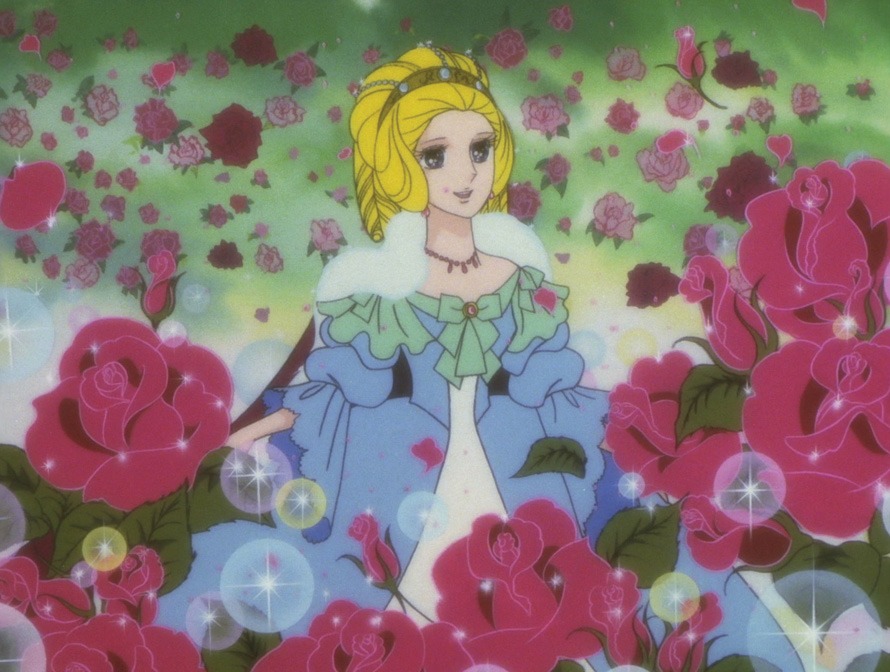
The approach Riyoko Ikeda took toward the queen in her original 1972 manga aligns perfectly with Coppola’s sympathetic gaze: both portray an innocent young girl thrown into a hostile court, attempting to fill her existential void with luxury before being swept away by the gears of history. Apparently, Coppola was unfamiliar with this work—immensely popular in Japan, Europe, and Latin America, but virtually unknown in the US—so we cannot speak of a direct influence. However, it is well known that Japanese journalists explicitly asked her about this connection during the film's promotional tour in Japan.
A posteriori, a fascinating feedback loop has emerged between both works. Fans of "The Rose of Versailles" adore Coppola’s film and spiritually integrate it into their own universe, adopting it as the live-action feature that Jacques Demy’s failed 1979 adaptation ("Lady Oscar") never managed to be—a film now widely considered a botched attempt at bringing the manga's soul to the screen with real actors.Furthermore, the visual dialogue between both works remains alive: the excellent animated feature released by MAPPA in 2025 (available globally on Netflix) very clearly adopts aesthetic choices that directly reference the 2006 film. This is highly noticeable in the color palette—favoring those pastel tones so characteristic of Coppola—and in a costume design that prioritizes stylized opulence and a pop sensibility over strict historical accuracy.

The approach Riyoko Ikeda took toward the queen in her original 1972 manga aligns perfectly with Coppola’s sympathetic gaze: both portray an innocent young girl thrown into a hostile court, attempting to fill her existential void with luxury before being swept away by the gears of history. Apparently, Coppola was unfamiliar with this work—immensely popular in Japan, Europe, and Latin America, but virtually unknown in the US—so we cannot speak of a direct influence. However, it is well known that Japanese journalists explicitly asked her about this connection during the film's promotional tour in Japan.
A posteriori, a fascinating feedback loop has emerged between both works. Fans of "The Rose of Versailles" adore Coppola’s film and spiritually integrate it into their own universe, adopting it as the live-action feature that Jacques Demy’s failed 1979 adaptation ("Lady Oscar") never managed to be—a film now widely considered a botched attempt at bringing the manga's soul to the screen with real actors.Furthermore, the visual dialogue between both works remains alive: the excellent animated feature released by MAPPA in 2025 (available globally on Netflix) very clearly adopts aesthetic choices that directly reference the 2006 film. This is highly noticeable in the color palette—favoring those pastel tones so characteristic of Coppola—and in a costume design that prioritizes stylized opulence and a pop sensibility over strict historical accuracy.