Flag Day
Liked this very much though that was not entirely a surprise as I've liked and admired all of Penn's directorial work including even the much maligned The Last Face. This was no exception to the high quality I think he puts into all of it. I wouldn't necessarily claim that he is or will be the inheritor of Eastwood's mantle for virtuoso actor/director especially as their styles are so different but I really don't see much in the way of competition.
Watching this I wondered why it was received so poorly and what I came up with is what may also be key to the work and key to its successful accomplishment if you perceive it that way. I'm sure that many will think this is obvious and overwrought but that hardly seems like a flaw to me when it was clearly designed that way as unapologetic melodrama. The intensity of the domestic scenes recalls similar such sequences from Cassavetes or Vincent Gallo's pictures; the lyrically aloft ones recall Malick. The rough hewn look of the film also carries an overall aesthetic of immediacy and a signature style that unifies it cohesively to Penn's overall body of directorial work as much as the foregrounded prominence of music and song montages. He's simply operating in a form or mode that is unfashionable, maybe even deeply unfashionable at present; that doesn't reflect on the actual quality of the work at all. Having said that though, and as receptive to what he is doing as I am, even I have to concede that the grand climactic scene here is incredibly over the top to a degree that may actually be counter-productive as it diverted me from the obviously intended emotional impact and into the realm of simply recognizing, "Well, yeah, he took it all the way alright," and wondering just how true to the underlying "true story" all this was.
Still, director Penn's performance throughout is great and very impressive; it takes a lot of guts to be willing to present oneself through one's character as so incredibly desperate and pathetic and he is certainly willing to go there. Meanwhile, he has not misjudged in terms of placing his daughter at center stage here; Dylan Penn reveals herself as more than capable of handling that spotlight and really carrying the film (she has to age over a significant span of years and does so very convincingly). Her nuanced take matches that of her father both in terms of his performance and the perhaps more obscured accomplishment of his direction. The parallel between the real life father-daughter relationship (both the Penns own and the figures their characters are modeled upon) and the one we see on screen is daring in its own way, not just for what it may risk or reveal but because since Dylan is the product of a very public celebrity relationship we all feel like we've lived through more of this than the film itself acknowledges.
The Films of 2021
-
John Cope
- Joined: Thu Dec 15, 2005 9:40 pm
- Location: where the simulacrum is true
-
John Cope
- Joined: Thu Dec 15, 2005 9:40 pm
- Location: where the simulacrum is true
Re: The Films of 2021
The Killing of Two Lovers
A model independent film, made with great craft, maturity and wisdom. Picture opens with a startling moment (it won't be the only one) which it then proceeds to immediately subvert in terms of dramatic sensationalism through an overall aesthetic strategy of distance and remove. Actually though part of the film's unique, small scale domestic genius is exactly in its aesthetic which matches and complements the tone of the substance of the picture. This is a very serious consideration of the damage done to partners in a relationship during and after a break up (the "killing" of the title while also teased in a literal sense too) and the film expresses this through a back and forth tension between the many long distance compositions which isolate the characters from one another and within an unyielding landscape and the claustrophobic 4: 3 format which suggests the noose tightening tension of lessening possibilities and the confinement of impending doom. Film is also excellent at conveying information through set ups such as the one in which the husband gets incontrovertible evidence of his wife's lover that do not provide the comforting familiarity of cutting back and forth between observed and observer but rather force us into the psychic space of the observer taking in a miserable reality and unable to look away from it or deny it. This is one of those rare films in American cinema (indie or otherwise) which I've alluded to before that actually offers up fully realized, multi-dimensional portraits of mature adult characters and the filmmaking is equally mature, delivering that portraiture through sophisticated means that accrues detail gradually and naturally and often just below the surface, surprising us finally with what we come to understand about these characters and their circumstances. The end is not an end but wisely recognized as just the resolution we've reached now; there will surely be more to come that we and they cannot know and is most assuredly unresolved. Really wish more of director Machoian's earlier work would get a release and I greatly look forward to whatever is next. For me, easily among the very finest films of last year.
A model independent film, made with great craft, maturity and wisdom. Picture opens with a startling moment (it won't be the only one) which it then proceeds to immediately subvert in terms of dramatic sensationalism through an overall aesthetic strategy of distance and remove. Actually though part of the film's unique, small scale domestic genius is exactly in its aesthetic which matches and complements the tone of the substance of the picture. This is a very serious consideration of the damage done to partners in a relationship during and after a break up (the "killing" of the title while also teased in a literal sense too) and the film expresses this through a back and forth tension between the many long distance compositions which isolate the characters from one another and within an unyielding landscape and the claustrophobic 4: 3 format which suggests the noose tightening tension of lessening possibilities and the confinement of impending doom. Film is also excellent at conveying information through set ups such as the one in which the husband gets incontrovertible evidence of his wife's lover that do not provide the comforting familiarity of cutting back and forth between observed and observer but rather force us into the psychic space of the observer taking in a miserable reality and unable to look away from it or deny it. This is one of those rare films in American cinema (indie or otherwise) which I've alluded to before that actually offers up fully realized, multi-dimensional portraits of mature adult characters and the filmmaking is equally mature, delivering that portraiture through sophisticated means that accrues detail gradually and naturally and often just below the surface, surprising us finally with what we come to understand about these characters and their circumstances. The end is not an end but wisely recognized as just the resolution we've reached now; there will surely be more to come that we and they cannot know and is most assuredly unresolved. Really wish more of director Machoian's earlier work would get a release and I greatly look forward to whatever is next. For me, easily among the very finest films of last year.
-
Finch

- Joined: Mon Jul 07, 2008 9:09 pm
- Location: United States
Re: The Films of 2021
Petite Mamman is getting a UK BD & DVD release from MUBI who've branched out into physical media about two or three years ago. This may be a good alternative to the NEON/Decal disc that, if their previous discs are anything to go by, is likely to be poorly compressed.
-
Michael Kerpan
- Spelling Bee Champeen
- Joined: Wed Nov 03, 2004 5:20 pm
- Location: New England
- Contact:
Re: The Films of 2021
Belle (Ryū to Sobakasu no Hime / The Dragon and The Freckled Princess) (Mamoru HOSODA, 2021)
This finally got its US theatrical premiere (a year or so after it first appeared). Hosoda is possibly my favorite current anime movie director -- and this did nothing to damage my esteem. While he previously did an internet game-themed movie (Summer Wars), this one had the added attraction of being a musical which borrowed motifs from Beauty and the Beast (albeit with a distinctly different focus overall). Our heroine is a girl who loved music (and singing) but has suffered from depression (and a significant degree of social isolation) since the tragic death of her mother. She is introduced to an online virtual world -- where one can create an ideal alternate self -- and her online avatar is stunningly lovely (instead of "plain" -- like her real self) sharing only her freckles and her love of singing (something she can no longer do in real life). She becomes wildly popular for her looks and her songs (with the help of her one confidant -- who acts as her "producer")-- but then her existence there is disturbed an over-powered dragon and the self-appointed justice warrior who wants to destroy that dragon. The plot juggles (perhaps) a few more balls than it can fully handle -- but no one in our party of six (including 2 Japanese college girls) were bothered much by this. The visual beauty and the very lovely music -- and the momentum generated by the appealing characters made this a very pleasing movie experience.
This finally got its US theatrical premiere (a year or so after it first appeared). Hosoda is possibly my favorite current anime movie director -- and this did nothing to damage my esteem. While he previously did an internet game-themed movie (Summer Wars), this one had the added attraction of being a musical which borrowed motifs from Beauty and the Beast (albeit with a distinctly different focus overall). Our heroine is a girl who loved music (and singing) but has suffered from depression (and a significant degree of social isolation) since the tragic death of her mother. She is introduced to an online virtual world -- where one can create an ideal alternate self -- and her online avatar is stunningly lovely (instead of "plain" -- like her real self) sharing only her freckles and her love of singing (something she can no longer do in real life). She becomes wildly popular for her looks and her songs (with the help of her one confidant -- who acts as her "producer")-- but then her existence there is disturbed an over-powered dragon and the self-appointed justice warrior who wants to destroy that dragon. The plot juggles (perhaps) a few more balls than it can fully handle -- but no one in our party of six (including 2 Japanese college girls) were bothered much by this. The visual beauty and the very lovely music -- and the momentum generated by the appealing characters made this a very pleasing movie experience.
-
therewillbeblus

- Joined: Tue Dec 22, 2015 7:40 pm
Re: The Films of 2021
House of Gucci
This film doesn’t work too well- it’s Scott trying to emulate a continually pivoting Scorsese/Russell style of narrative propulsion, only without an enticing aroma or alluring details in the margins to keep us high on the fumes. Instead he opts entirely for ham in performance to sell this ironically as camp, but the problem with this strategy is that he’s also presenting a half-serious pic. So in trying to have his cake and eat it too, his efforts result in half-measures, and those tools for investment are transparently lacking in depth, incongruous with the heightened fun being implemented every other stitch.
Despite not enjoying the film, and generally loathing Jared Leto’s approach to his roles, he is easily the best part of this film and seemingly the only actor who understands what the right wavelength is to operate on here, and is brazenly fully committed to doing just that. Even knowing going in what a joke his performance would be didn’t dilute the sheer amusement cementing my smile every time he was on screen. Sometimes you need to make choices, and if everyone else took a page from his unapologetic full-step(/leap*) into this vision, the film would have fared much better.
This film doesn’t work too well- it’s Scott trying to emulate a continually pivoting Scorsese/Russell style of narrative propulsion, only without an enticing aroma or alluring details in the margins to keep us high on the fumes. Instead he opts entirely for ham in performance to sell this ironically as camp, but the problem with this strategy is that he’s also presenting a half-serious pic. So in trying to have his cake and eat it too, his efforts result in half-measures, and those tools for investment are transparently lacking in depth, incongruous with the heightened fun being implemented every other stitch.
Despite not enjoying the film, and generally loathing Jared Leto’s approach to his roles, he is easily the best part of this film and seemingly the only actor who understands what the right wavelength is to operate on here, and is brazenly fully committed to doing just that. Even knowing going in what a joke his performance would be didn’t dilute the sheer amusement cementing my smile every time he was on screen. Sometimes you need to make choices, and if everyone else took a page from his unapologetic full-step(/leap*) into this vision, the film would have fared much better.
-
brundlefly
- Joined: Fri Jun 13, 2014 4:55 pm
Re: The Films of 2021
The Beta Test (Jim Cummings and P.J. McCabe)
“The Scarlet Letter. Yeah. The public used to be the bad guy. Remember that?”
In terms of Cummings’ output – I’m a big fan of The Wolf of Snow Hollow – this tale of weaponized adultery and Judgment Day offers a broad jump, a couple steps backward, some stern jogging in place; its jarring jumble of genres and barks about scattershot concerns leave a frustrating mess that both deters and invites untangling.
(The movie can’t even choose a score. There are three credited composers, plus a healthy dose of uncredited catalog classical – including the Lacrimosa dies illa from Mozart’s Requiem, now the cliché Carmina Burana was in the 1990s.)
The canvas seems bigger here by dint of moving action from the towns of Wolf and Thunder Road to Los Angeles and by making the central fruit and threat pervasive and anonymous. Cummings’ Jordan Hines is less a character to study than (a) a partner in a (committed, but not yet finalized) relationship in a piece where gender politics are in play and (b) a representative of a squirming, squirm-inducing mid-management level of power broker whose power is presented as an imminently dissipating illusion. When Cummings cast himself as cops, he presented his co-workers with varying degrees of dedication and competency. Here, Cummings and his co-writer/director McCabe play talent agents and openly loathe that entire occupation. They find some sympathy for the traditional desperate capitalist hustle that rules agents’ lives, but there’s nothing but contempt for their two-faced kowtowing toward courted clients and shit treatment of everyone else. They’re chasing something universal about the masculine reaction to the crumbling of the patriarchal power structure, and the #MeToo movement may have sprung out of the Harvey Weinstein assaults (he’s name-checked here, a couple times), but Beta Test often narrows itself to industry concerns – how much do you care about WGA fights against package deals? how many nights’ sleep did you lose after the Sony hacks? – and attitudes.
There are bald problems with the plot; the mechanics of the anonymous hook-up service depends on believing that everyone of every stripe would be too afraid to remove their blindfold yet too unguarded to suspect any kind of surveillance (and sure, I get this is as unimportant as the werewolf mystery in Wolf, and that the point is that no one wants to be seen as they are, but still... yeah, no). And problems with the filmmaking, which can get desperately choppy, sometimes with cheap stock footage cutaways.
The particulars that bolstered Cummings’ character studies are forcefully shoved away, here; as his fiancée Caroline offers a hint of backstory at a dinner, Jordan drifts off to stare at another woman. Because they were what they were, Wolf and Road could stay focused on Cummings’ characters and let the behavior around the edges of the action flesh out the supporting characters; here, other than one key scene, Virginia Newcomb isn’t given much to do other than react to Cummings and it’s a major problem. McCabe’s at best a functional presence. Few others get much screen time.
But it’s still fun watching Cummings fall apart. His agent has all the ticks of his cops, but is frankly meaner. Lazy stress indicators are doubled up, he has drinking and smoking problems. (Why not sex addiction? It’s. right. there.) He keeps his front teeth white-stripped while the back ones rot out. (Image over substance isn’t a theme so much as a constant topic of conversation.) He has an ulcer that, he casually tells people, is killing him. Because he’s at heart a sort of salesman, he will shamelessly lie, and Cummings leans into that to mad effect. Halfway through, there’s an amazing sequence where he’s arguing his way into a security area and he brazenly resets his story like three times (it's a pitch meeting!) before shifting to naked threats. After he starts at cub detective – he’s played enough cops that it’s easy enough for him to play someone impersonating them – every confrontation shows someone used to acting beyond consequence, who melts when the possibility of one becomes real. His final monologue is jaw-dropping, a fractured confessional in which he physically twists himself into the deformed monster of his own making.
“The Scarlet Letter. Yeah. The public used to be the bad guy. Remember that?”
In terms of Cummings’ output – I’m a big fan of The Wolf of Snow Hollow – this tale of weaponized adultery and Judgment Day offers a broad jump, a couple steps backward, some stern jogging in place; its jarring jumble of genres and barks about scattershot concerns leave a frustrating mess that both deters and invites untangling.
(The movie can’t even choose a score. There are three credited composers, plus a healthy dose of uncredited catalog classical – including the Lacrimosa dies illa from Mozart’s Requiem, now the cliché Carmina Burana was in the 1990s.)
The canvas seems bigger here by dint of moving action from the towns of Wolf and Thunder Road to Los Angeles and by making the central fruit and threat pervasive and anonymous. Cummings’ Jordan Hines is less a character to study than (a) a partner in a (committed, but not yet finalized) relationship in a piece where gender politics are in play and (b) a representative of a squirming, squirm-inducing mid-management level of power broker whose power is presented as an imminently dissipating illusion. When Cummings cast himself as cops, he presented his co-workers with varying degrees of dedication and competency. Here, Cummings and his co-writer/director McCabe play talent agents and openly loathe that entire occupation. They find some sympathy for the traditional desperate capitalist hustle that rules agents’ lives, but there’s nothing but contempt for their two-faced kowtowing toward courted clients and shit treatment of everyone else. They’re chasing something universal about the masculine reaction to the crumbling of the patriarchal power structure, and the #MeToo movement may have sprung out of the Harvey Weinstein assaults (he’s name-checked here, a couple times), but Beta Test often narrows itself to industry concerns – how much do you care about WGA fights against package deals? how many nights’ sleep did you lose after the Sony hacks? – and attitudes.
There are bald problems with the plot; the mechanics of the anonymous hook-up service depends on believing that everyone of every stripe would be too afraid to remove their blindfold yet too unguarded to suspect any kind of surveillance (and sure, I get this is as unimportant as the werewolf mystery in Wolf, and that the point is that no one wants to be seen as they are, but still... yeah, no). And problems with the filmmaking, which can get desperately choppy, sometimes with cheap stock footage cutaways.
The particulars that bolstered Cummings’ character studies are forcefully shoved away, here; as his fiancée Caroline offers a hint of backstory at a dinner, Jordan drifts off to stare at another woman. Because they were what they were, Wolf and Road could stay focused on Cummings’ characters and let the behavior around the edges of the action flesh out the supporting characters; here, other than one key scene, Virginia Newcomb isn’t given much to do other than react to Cummings and it’s a major problem. McCabe’s at best a functional presence. Few others get much screen time.
But it’s still fun watching Cummings fall apart. His agent has all the ticks of his cops, but is frankly meaner. Lazy stress indicators are doubled up, he has drinking and smoking problems. (Why not sex addiction? It’s. right. there.) He keeps his front teeth white-stripped while the back ones rot out. (Image over substance isn’t a theme so much as a constant topic of conversation.) He has an ulcer that, he casually tells people, is killing him. Because he’s at heart a sort of salesman, he will shamelessly lie, and Cummings leans into that to mad effect. Halfway through, there’s an amazing sequence where he’s arguing his way into a security area and he brazenly resets his story like three times (it's a pitch meeting!) before shifting to naked threats. After he starts at cub detective – he’s played enough cops that it’s easy enough for him to play someone impersonating them – every confrontation shows someone used to acting beyond consequence, who melts when the possibility of one becomes real. His final monologue is jaw-dropping, a fractured confessional in which he physically twists himself into the deformed monster of his own making.
Spoiler
Cummings (who also edited) cuts away from himself during his monologues, something he was smart enough to not do in his first two films. Sometimes these cutaways are unnecessary reaction shots (though Newcomb does wonders with hers at the end) and sometimes they’re meant to be flashes of subjective fantasy or recall. It’s a big problem during the film’s first sex scene, the anonymous meet in the hotel room. It’s constantly interrupted with funny-adjacent supercuts of Cummings’ go-to work catchphrases (“There’s my guy!” “We’re excited!”) that work euphemistically. Those give way to other shots of him at work and with his fiancée and… it seems to imply a stream-of-consciousness, that Jordan’s incapable of being in the moment. But he later describes the liaison as a moment of pure escape. Confusing, and also ruins what starts off as a pretty great sex scene! As uncomfortable and silly and then passionate as two blindfolded adults feeling each other out can be. It may be a way for Cummings to include quick ranty bits he couldn’t fit anywhere else. May be his way of differentiating it from a later sex scene with the fiancée, meant to be a moment of grunty, unfettered honesty between those two.
(Never clear if his search for the woman from the hotel is to relive the experience or to find another person he can somehow blame for his actions. But whether or not she shelled out the $5K for his info, she dodged a bullet by not looking to reconnect. That cafe scene is a rich, cringey staredown.)
What to make of the quick cut to a purple envelope with his fiancée’s name on it during his parking garage monologue? Are we supposed to assume he’s wondering what his reaction would have been had she gotten the invite instead of him? (Also, how does he show his original envelope and invite to McCabe after having mailed it in?)
(There’s no not thinking about Eyes Wide Shut during this, especially with a redheaded partner. And it’s weird that, having aped Silence of the Lambs at the end of Wolf, a late confrontation here seems meant to recall either Manhunter or Red Dragon. (It’s been a while since I’ve seen those.) And I assume what with all the Vivaldi, one of the white-strip montages is a quick show of All That Jazz.)
The thing about The Beta Test I wish survived its distractions more – for me, at least, maybe it’s a clearer throughline for others – is the idea that the revelation of this encouraged infidelity is literally apocalyptic. The opening scene with the Swedes (whose last names are… Rafferty? and they don’t fit Johnny Paypal’s profile of the recently engaged?) bookends and contrasts with Cummings’ parking garage confessional, only Jordan’s and Caroline’s is a forgiveness cures all/honesty wins out kind of thing. (Not a clean comparison, the woman standing by her man v. a husband stabbing his unfaithful wife.) Throughout the film people are killing their partners and sometimes themselves when they discover or are told about the indiscretion. There’s at least one bit of random background violence where a woman is taking a bat to a parked car and we can assume it’s part of this. During the low-key Lovers on the Run coda, Newcomb’s character mentions “eight more dead.” It’s ridiculous and unsettling, but perhaps not too far from a pure fantasy of #MeToo fallout, the dread and desire of people getting their comeuppance. So much more engaging than WGA leverage and the mechanics of targeted advertising.
(Never clear if his search for the woman from the hotel is to relive the experience or to find another person he can somehow blame for his actions. But whether or not she shelled out the $5K for his info, she dodged a bullet by not looking to reconnect. That cafe scene is a rich, cringey staredown.)
What to make of the quick cut to a purple envelope with his fiancée’s name on it during his parking garage monologue? Are we supposed to assume he’s wondering what his reaction would have been had she gotten the invite instead of him? (Also, how does he show his original envelope and invite to McCabe after having mailed it in?)
(There’s no not thinking about Eyes Wide Shut during this, especially with a redheaded partner. And it’s weird that, having aped Silence of the Lambs at the end of Wolf, a late confrontation here seems meant to recall either Manhunter or Red Dragon. (It’s been a while since I’ve seen those.) And I assume what with all the Vivaldi, one of the white-strip montages is a quick show of All That Jazz.)
The thing about The Beta Test I wish survived its distractions more – for me, at least, maybe it’s a clearer throughline for others – is the idea that the revelation of this encouraged infidelity is literally apocalyptic. The opening scene with the Swedes (whose last names are… Rafferty? and they don’t fit Johnny Paypal’s profile of the recently engaged?) bookends and contrasts with Cummings’ parking garage confessional, only Jordan’s and Caroline’s is a forgiveness cures all/honesty wins out kind of thing. (Not a clean comparison, the woman standing by her man v. a husband stabbing his unfaithful wife.) Throughout the film people are killing their partners and sometimes themselves when they discover or are told about the indiscretion. There’s at least one bit of random background violence where a woman is taking a bat to a parked car and we can assume it’s part of this. During the low-key Lovers on the Run coda, Newcomb’s character mentions “eight more dead.” It’s ridiculous and unsettling, but perhaps not too far from a pure fantasy of #MeToo fallout, the dread and desire of people getting their comeuppance. So much more engaging than WGA leverage and the mechanics of targeted advertising.
Last edited by brundlefly on Sun Feb 06, 2022 5:52 am, edited 4 times in total.
-
Fiery Angel

- Joined: Sun Jan 11, 2009 5:59 pm
Re: The Films of 2021
Leto's and Pacino's scenes (together and separately) are the most entertaining parts of the film.therewillbeblus wrote: Wed Feb 02, 2022 4:36 pm House of Gucci
This film doesn’t work too well- it’s Scott trying to emulate a continually pivoting Scorsese/Russell style of narrative propulsion, only without an enticing aroma or alluring details in the margins to keep us high on the fumes. Instead he opts entirely for ham in performance to sell this ironically as camp, but the problem with this strategy is that he’s also presenting a half-serious pic. So in trying to have his cake and eat it too, his efforts result in half-measures, and those tools for investment are transparently lacking in depth, incongruous with the heightened fun being implemented every other stitch.
Despite not enjoying the film, and generally loathing Jared Leto’s approach to his roles, he is easily the best part of this film and seemingly the only actor who understands what the right wavelength is to operate on here, and is brazenly fully committed to doing just that. Even knowing going in what a joke his performance would be didn’t dilute the sheer amusement cementing my smile every time he was on screen. Sometimes you need to make choices, and if everyone else took a page from his unapologetic full-step(/leap*) into this vision, the film would have fared much better.
-
therewillbeblus
- Joined: Tue Dec 22, 2015 7:40 pm
Re: The Films of 2021
That's true, Pacino was second-best here, and earns gravitas in the only intentionally-dramatic scene that worked for me late in the film. Driver's silliness in the opening act was also great but his unidimensional (by design, of course) character shifts gears quickly, and deflates that lighthearted aura into banality, becoming the most boring aspect of the film.
-
John Cope
- Joined: Thu Dec 15, 2005 9:40 pm
- Location: where the simulacrum is true
Re: The Films of 2021
Mass
A tremendous accomplishment. Beautifully done by everyone involved but this is perhaps inevitably most remarkable for being the writing-directing debut of Fran Kranz who I had only ever known up to this point for goofball comedy roles. This puts the definitiveness of that association to bed just as it puts just about every other film on the subject of school shootings to shame. Because really this is about as fine a treatment of that incredibly difficult subject as I have ever seen. And it makes you realize too just how much less is accomplished by most of those other films (only Vox Lux and We Need to Talk About Kevin measure up to this but in their own very different ways). I also realize here that I probably would have been impressed just by the daring and ambition of this film in its set up alone regardless of the follow through and it is therefore that much more amazing that Kranz and company are absolutely able to follow through at the highest level. It may be the best American film I saw from last year and should certainly be an awards contender for multiple awards though that it is not is unfortunately hardly a shock (maybe Ann Dowd if we get lucky but really it should be everybody).
Film is structured overtly like a play with an initial stretch devoted to secondary characters at a small church preparing a space for the meeting of two sets of parents on opposite sides of a school shooting incident. But the assumption of this is part of what Kranz and his actors set about to challenge and take apart during the course of the film's long central section utterly devoted to this sustained encounter. Incredibly careful and meticulous scripting seeks both to be sensitive to the subject while also reflective of the delicacy of this particular process and the efforts at mutual respect involved. Through that intricacies are able to be reached and considered that rarely ever are and raw and exposed portraits of human suffering and vulnerability are arrived at as well. The film is very distinctly cinematic too, it's not just a filmed play, though this is always managed with the same level of understatement as all the rest. There's a great moment early on when the camera is panning slowly between the couples as they are speaking and we linger briefly in an empty space charged with a recognition of the ultimate futility of finding conclusively ultimate answers (and this is another reflection of the film's seriousness--that it directly challenges us to consider the worthwhileness of this entire healing process: what can really be healed?). Film is also sensitive in its handling of religious imagery, which is replete throughout considering the setting. Compositions at times accent symbols such as the crucifix hanging over the entire proceedings but instead of seeming heavy handed Kranz's deep seriousness offsets the portentousness, realigning our sensibilities toward those symbols and considering what they could mean rather than what they presumably obviously do.
The spiritual element is a heavy presence here but similarly woven throughout in infusing understatement. Another factor that distinguishes this film is its rare ability to bring the dead children under discussion to vivid life again so that they are as much presences in the room as the actors. The intensity of those performances and the stark refinements of the script provide a kind of almost incantatory conjuration that positions this room and this space as a haunted place representative of a larger reality. And that is appropriate too as the central room within the church where this meeting occurs is virtually consecrated as a holy space, an experiential center that is traveled into and emerged from (a favorite subject of mine) but one ultimately in which the experience seeps out beyond any established boundaries or parameters.
The Mass of the title is then of course a reference to both the school slaying and this intimate meeting in its wake, a restorative communion touched by grace but so very hard won. The film then is a pean to the most terrible of pain undenied. But there is light touch luminous grace strung throughout, not the least of which emerges in a frankly awesome final shot, awesome in the majesty of what it accomplishes through characteristic understatement, and that quietly emphasizes what was always there but had not been seen.
A tremendous accomplishment. Beautifully done by everyone involved but this is perhaps inevitably most remarkable for being the writing-directing debut of Fran Kranz who I had only ever known up to this point for goofball comedy roles. This puts the definitiveness of that association to bed just as it puts just about every other film on the subject of school shootings to shame. Because really this is about as fine a treatment of that incredibly difficult subject as I have ever seen. And it makes you realize too just how much less is accomplished by most of those other films (only Vox Lux and We Need to Talk About Kevin measure up to this but in their own very different ways). I also realize here that I probably would have been impressed just by the daring and ambition of this film in its set up alone regardless of the follow through and it is therefore that much more amazing that Kranz and company are absolutely able to follow through at the highest level. It may be the best American film I saw from last year and should certainly be an awards contender for multiple awards though that it is not is unfortunately hardly a shock (maybe Ann Dowd if we get lucky but really it should be everybody).
Film is structured overtly like a play with an initial stretch devoted to secondary characters at a small church preparing a space for the meeting of two sets of parents on opposite sides of a school shooting incident. But the assumption of this is part of what Kranz and his actors set about to challenge and take apart during the course of the film's long central section utterly devoted to this sustained encounter. Incredibly careful and meticulous scripting seeks both to be sensitive to the subject while also reflective of the delicacy of this particular process and the efforts at mutual respect involved. Through that intricacies are able to be reached and considered that rarely ever are and raw and exposed portraits of human suffering and vulnerability are arrived at as well. The film is very distinctly cinematic too, it's not just a filmed play, though this is always managed with the same level of understatement as all the rest. There's a great moment early on when the camera is panning slowly between the couples as they are speaking and we linger briefly in an empty space charged with a recognition of the ultimate futility of finding conclusively ultimate answers (and this is another reflection of the film's seriousness--that it directly challenges us to consider the worthwhileness of this entire healing process: what can really be healed?). Film is also sensitive in its handling of religious imagery, which is replete throughout considering the setting. Compositions at times accent symbols such as the crucifix hanging over the entire proceedings but instead of seeming heavy handed Kranz's deep seriousness offsets the portentousness, realigning our sensibilities toward those symbols and considering what they could mean rather than what they presumably obviously do.
The spiritual element is a heavy presence here but similarly woven throughout in infusing understatement. Another factor that distinguishes this film is its rare ability to bring the dead children under discussion to vivid life again so that they are as much presences in the room as the actors. The intensity of those performances and the stark refinements of the script provide a kind of almost incantatory conjuration that positions this room and this space as a haunted place representative of a larger reality. And that is appropriate too as the central room within the church where this meeting occurs is virtually consecrated as a holy space, an experiential center that is traveled into and emerged from (a favorite subject of mine) but one ultimately in which the experience seeps out beyond any established boundaries or parameters.
The Mass of the title is then of course a reference to both the school slaying and this intimate meeting in its wake, a restorative communion touched by grace but so very hard won. The film then is a pean to the most terrible of pain undenied. But there is light touch luminous grace strung throughout, not the least of which emerges in a frankly awesome final shot, awesome in the majesty of what it accomplishes through characteristic understatement, and that quietly emphasizes what was always there but had not been seen.
-
Never Cursed

- Such is life on board the Redoutable
- Joined: Sun Aug 14, 2016 4:22 am
Re: The Films of 2021
Petrov's Flu (Kirill Serebrennikov): Accused of indulging too much in nostalgia with his previous film Leto, Serebrennikov offers the complete inverse of that perspective on Russian history with this very Gondry-ish prestige book adaptation concerning the misfortunes of a broken family during a flu pandemic. This is one of the most boundlessly unhappy films of recent memory, a work that combines COVID-era communal anxieties with the equally-relevant subject of discontent with the current Russian state into a depiction of clashing subjectivities at their most grotesque. The film works best when it is able to really exploit its scuzziness, crafting in its first half a series of agonizing low-rent obstacles for its beleaguered protagonist to solve in the only way open to a despaired person like him; to the film's credit, Serebrennikov has put a lot of work into imbuing these set-pieces (particularly an 18-minute-long single take of self-destructive violence early on) with tactility and unpleasant pathos. Unfortunately, he can't fully walk the walk, and the second half of the film indulges an unnecessary nostalgic tangent (and no matter if you're familiar with the turn the film takes or not, you'll know exactly what is happening and why it's so cloyingly stupid the moment the filmstock switches over) to the point where it completely undermines the already shaky foundations of the movie's reality. The film is still worth seeing, but it's always disappointing to realize that one is watching something so determined to have a disjointed and dissatisfying conclusion, no matter how thematically fitting.
-
flyonthewall2983

- Joined: Mon Jun 27, 2005 7:31 pm
- Location: Indiana
- Contact:
Re: The Films of 2021
Nobody is a welcome throwback to action movies that weren’t afraid to be simple but not insulting to the audience. Bob Odenkirk as the foil for this is only surprising in how adept he became at the physical stuff, but is otherwise not so dissimilar to the dramatic roles he’s best known and rightly celebrated for. But somehow it’s still funny too. Also great seeing guys like Christopher Lloyd and Michael Ironside bring their gravitas and presence to this.
-
Finch
- Joined: Mon Jul 07, 2008 9:09 pm
- Location: United States
Re: The Films of 2021
The Sadness:
This takes the gore and atrocities of Peter Jackson's Braindead (Dead Alive) and presents them with the utmost seriousness, with no or very little black humor to make it a bit more palatable (which is in and of itself not problematic but it does make the whole thing a lot more exhausting to watch). The sexual violence is thankfully largely implied but the implication alone of some of the acts could be enough to drive some people to the exits. There is a scene where the film points the finger at the government and it feels heavy handed and tired, tired because so many horror films have already beaten this particular horse to a bloody pulp. But the gorehounds will love the homage to/lift from (take your pick) Scanners.
Some observations feel true to life: the businessman who is turned has been sick all along, and a security guard later on has sexually suggestive pictures of women on his phone; a lot of the barriers have already broken down and the virus just removes our very last inhibitions. I see stories on the news of stewardesses being sexually assaulted and people mowing others down with their cars, and so the first half of the subway train sequence feels like a documentary and the carnage a spelling out of the consequences of letting civilised norms collapse completely.
And yet, this feels like someone screaming at you for 90 minutes, "this world is a HORRIBLE SHITTY PLACE because WE MADE IT SO and we are all FUCKED!", and my reaction is a bit like Mr Garrison going, "mmmkayyyy". Maybe this will play better when we are more at a remove from the pandemic and Russia's war on Ukraine and maybe I am too much of an optimist to want to buy wholesale into this film's anger, nihilism and cynicism. I don't know. This thing is blunt and crass and it never pretends to be anything other than what it is but I'm still sitting here half an hour after finishing it and thinking, is that all there is to it?
This takes the gore and atrocities of Peter Jackson's Braindead (Dead Alive) and presents them with the utmost seriousness, with no or very little black humor to make it a bit more palatable (which is in and of itself not problematic but it does make the whole thing a lot more exhausting to watch). The sexual violence is thankfully largely implied but the implication alone of some of the acts could be enough to drive some people to the exits. There is a scene where the film points the finger at the government and it feels heavy handed and tired, tired because so many horror films have already beaten this particular horse to a bloody pulp. But the gorehounds will love the homage to/lift from (take your pick) Scanners.
Some observations feel true to life: the businessman who is turned has been sick all along, and a security guard later on has sexually suggestive pictures of women on his phone; a lot of the barriers have already broken down and the virus just removes our very last inhibitions. I see stories on the news of stewardesses being sexually assaulted and people mowing others down with their cars, and so the first half of the subway train sequence feels like a documentary and the carnage a spelling out of the consequences of letting civilised norms collapse completely.
And yet, this feels like someone screaming at you for 90 minutes, "this world is a HORRIBLE SHITTY PLACE because WE MADE IT SO and we are all FUCKED!", and my reaction is a bit like Mr Garrison going, "mmmkayyyy". Maybe this will play better when we are more at a remove from the pandemic and Russia's war on Ukraine and maybe I am too much of an optimist to want to buy wholesale into this film's anger, nihilism and cynicism. I don't know. This thing is blunt and crass and it never pretends to be anything other than what it is but I'm still sitting here half an hour after finishing it and thinking, is that all there is to it?
-
brundlefly
- Joined: Fri Jun 13, 2014 4:55 pm
Re: The Films of 2021
There is an uncritical sequence in American Underdog devoted to pummeling Zachary Levi’s Warner at the behest of his University of Northern Iowa coach (Levi’s Chuck co-star Adam Baldwin), who demands he learn to stay in the pocket. The movie makes sure that doesn’t make any sense in terms of UNI schematics by showing their other QBs roll out to pass. It’s strictly ham-fisted metaphorical stuff about resilience, not even lazily set to that one Chumbawamba hit (possibly b/c politics).Walter Kurtz wrote: Tue Dec 21, 2021 5:15 am Warner always ranked very high on my "TD's + INT's = EXCITEMENT!" score.
I fell into 'like' with him the first season when he stood tall with a LB blitzing at him full speed and he hit Holt or Bruce 55 yards away in the hands on a TD as he was completely levelled. Cajones + Stupidity = 7 Points!
Underdog ends with the Rams’ first Super Bowl win so never gets into the series of concussions that may have factored into the team’s decision to move on from him. But the movie doesn’t paint him as a clear thinker. It’s mentioned without comment that Warner’s a fifth-year senior at UNI, he runs out of gas in the middle of a snowstorm, his relationship with Brenda – the crux of the movie is their romance – starts with some hazy bar fixation. A deleted scene on the DVD has his brother calling him “slow.” He immediately bonds with Brenda’s developmentally disabled, legally blind son (whose condition is the result of being dropped on his head by his father). Levi’s go-to reaction pose in dialogue scenes is to lean back from the conversation and look confused. He’s allowed to be good at football, but articulating even football smarts isn’t in the playbook.
The directors like to talk in taglines and a lot of the dialogue is stitched together aphorisms. (“Life is not about what you can achieve, it’s about what you can become. It’s a journey, son. It’s not an event.” That is a single speech!) Some of the dialogue is just bad enough to distract from the terrible hair and make-up, some of the hair and make-up just bad enough to distract from the terrible dialogue.
“You know what they say. Sometimes you gotta do what you gotta do until you can do what you want to do. You know?” That is a thing someone typed into a computer and printed out and handed to someone who then agreed to say it aloud into a recording device. It’s like we’re all being levelled by that linebacker. But don’t worry, Isaac Bruce is down there somewhere.
That restraint proves both a problem and a boon. The most interesting parts of the movie are when someone’s on the verge of talking about their faith; they give Brenda a line about her faith “being a relationship” – but cut her off there, either worried to offend or unable to expound. But near the end, when Warner takes a final knee in his first winning NFL game, he simply says, “Thank you.” He looks skyward a moment later, and of course gets all Great God Above at the Super Bowl, but for that one quick beat a self-contained moment of modest relief feels refreshing.cdnchris wrote: Tue Dec 21, 2021 2:45 am It was clear from the production companies that popped up it was a Christian movie, but the trailer that played before Spider-Man for American Underdog made sure not to push any Christian angle and just push it as a, well, underdog story, coming out all the blander.
It’s not a terrible movie, just middling unexamined inspirational twaddle built for people whose walls order them to Live Laugh Love.
-
Matt

- Joined: Tue Nov 02, 2004 4:58 pm
Re: The Films of 2021
Has anyone seen Yuri Ancarani’s Atlantide (aka Atlantis)? I bookmarked the NY Times review back in March because it looked intriguing, but I haven’t seen any mention of the film since then.
-
brundlefly
- Joined: Fri Jun 13, 2014 4:55 pm
Re: The Films of 2021
Strawberry Mansion (Albert Birney & Kentucker Audley).
I do not take to twee. Still can’t watch a Wes Anderson film without wanting to beat it up and take its lunch money. Which is why I was surprised how hard I fell for Birney & Audley’s 2017 Vine alumnus Sylvio, a gorilla who wants to share his kindly hand-puppet shows with a world that instead encourages its preconceptions and his worst instincts. It’s assuredly minimal, ambitiously gentle, and maintains a tonal purity that prevents it from being an overlong SNL short or a perpetual round with The Nairobi Trio. But oh man it is cuddly. Even as I welcomed its missive to be the art you want to make, my inner cynic chose to see its ending as more delusional than aspirational
Mansion is more ambitious and complicated, its sore spots showier, its purity too often forced into battle with logic. But its heart is a good one and the struggles produce a humble win.
It’s 2035. Our dreams are taxed and secretly infused with advertisements. Our hero is an I.R.S. agent (Audley) who audits others’ dreams but whose own exude existential rot. His job takes him to meet an eccentric (but of course cuddly) outsider artist whose dreams, thanks to a Lite Brite-festooned tin foil hat, are off the grid.
Most of the movie takes place in dream-space. The practical effects and costumes are fun and impressive and unfortunately sometimes feel like the best results of the film’s creativity. The filmmakers cite Eraserhead and early Burtons as influences, name drop Švankmajer. Perhaps raise one to Time Bandits. The handmade feel and the inclination to go handheld at tense moments can seem very Gondry, though the fantasy elements never feel as recklessly desperate as, say, The Science of Sleep. But even when they distract, you can’t begrudge Birney and Audley flashing their influences because their sensibility is modest and disarming.
There’s a scene with a Blue Demon that seems meant to invoke Lynch and his Black Lodge – it’s got an industrial hum and backmasked dialogue – but it takes place in an unassuming kitchen. The demon wears giallo gloves and rockstar leather pants, but he watches local news while eating TV dinners (an extended version on the blu-ray has him losing that night’s lotto draw) and says his prayers before bed. Mansion's dream ads may recall The World of Tomorrow, but unlike the burden of Herzfeldt’s depressive pop-up accumulation they’re pitched as glitchy, unwanted friends. And even though Crass Commercialism is a Big Bad, evils and joys often feel mundane. (This can make quick glimpses of genuine darkness that much more disturbing.) Audley’s performance is the very definition of mild-mannered. “Epic fantasy romance” is a not a natural fit for these guys. The waking and dreaming worlds can seem similar, and neither is particularly convincing. But as long as everything’s casual that can be okay. Even when things aren’t dreamlike, you’re encouraged to accept everything, as you would in a dream.
They work hard at patching it all together and that grates. Both their features may concern artistic integrity, but the material demands its own integrity and when their idea of dream logic collapses into cotton candy stoner ramblings (or worse, brainstorming) it’s at best sufferable. Taints “Dream your dreams, boy!” takeaways with wishes Birney and Audley had more impractical confidence in their own lesson. I wish the romance actually worked, there’s a boldness somewhere in there, and instead the love interest winds up being a sort of spirit animal. I wish a lot of things. But frustrations fall away because there’s an innocence in how under-examined this feels. They made me really concerned for their adorable turtle. A feat. So should you need a precious bubble in Baltimore – Dan Deacon did Mansion’s score – to offset David Simon’s troubling dissertations, this is out there; and if you want to take the movie's lunch money you’re going to have to get through me first.
I do not take to twee. Still can’t watch a Wes Anderson film without wanting to beat it up and take its lunch money. Which is why I was surprised how hard I fell for Birney & Audley’s 2017 Vine alumnus Sylvio, a gorilla who wants to share his kindly hand-puppet shows with a world that instead encourages its preconceptions and his worst instincts. It’s assuredly minimal, ambitiously gentle, and maintains a tonal purity that prevents it from being an overlong SNL short or a perpetual round with The Nairobi Trio. But oh man it is cuddly. Even as I welcomed its missive to be the art you want to make, my inner cynic chose to see its ending as more delusional than aspirational
Mansion is more ambitious and complicated, its sore spots showier, its purity too often forced into battle with logic. But its heart is a good one and the struggles produce a humble win.
It’s 2035. Our dreams are taxed and secretly infused with advertisements. Our hero is an I.R.S. agent (Audley) who audits others’ dreams but whose own exude existential rot. His job takes him to meet an eccentric (but of course cuddly) outsider artist whose dreams, thanks to a Lite Brite-festooned tin foil hat, are off the grid.
Most of the movie takes place in dream-space. The practical effects and costumes are fun and impressive and unfortunately sometimes feel like the best results of the film’s creativity. The filmmakers cite Eraserhead and early Burtons as influences, name drop Švankmajer. Perhaps raise one to Time Bandits. The handmade feel and the inclination to go handheld at tense moments can seem very Gondry, though the fantasy elements never feel as recklessly desperate as, say, The Science of Sleep. But even when they distract, you can’t begrudge Birney and Audley flashing their influences because their sensibility is modest and disarming.
There’s a scene with a Blue Demon that seems meant to invoke Lynch and his Black Lodge – it’s got an industrial hum and backmasked dialogue – but it takes place in an unassuming kitchen. The demon wears giallo gloves and rockstar leather pants, but he watches local news while eating TV dinners (an extended version on the blu-ray has him losing that night’s lotto draw) and says his prayers before bed. Mansion's dream ads may recall The World of Tomorrow, but unlike the burden of Herzfeldt’s depressive pop-up accumulation they’re pitched as glitchy, unwanted friends. And even though Crass Commercialism is a Big Bad, evils and joys often feel mundane. (This can make quick glimpses of genuine darkness that much more disturbing.) Audley’s performance is the very definition of mild-mannered. “Epic fantasy romance” is a not a natural fit for these guys. The waking and dreaming worlds can seem similar, and neither is particularly convincing. But as long as everything’s casual that can be okay. Even when things aren’t dreamlike, you’re encouraged to accept everything, as you would in a dream.
They work hard at patching it all together and that grates. Both their features may concern artistic integrity, but the material demands its own integrity and when their idea of dream logic collapses into cotton candy stoner ramblings (or worse, brainstorming) it’s at best sufferable. Taints “Dream your dreams, boy!” takeaways with wishes Birney and Audley had more impractical confidence in their own lesson. I wish the romance actually worked, there’s a boldness somewhere in there, and instead the love interest winds up being a sort of spirit animal. I wish a lot of things. But frustrations fall away because there’s an innocence in how under-examined this feels. They made me really concerned for their adorable turtle. A feat. So should you need a precious bubble in Baltimore – Dan Deacon did Mansion’s score – to offset David Simon’s troubling dissertations, this is out there; and if you want to take the movie's lunch money you’re going to have to get through me first.
-
therewillbeblus
- Joined: Tue Dec 22, 2015 7:40 pm
Re: The Films of 2021
All I could think about while trudging through Strawberry Mansion was a retroactive warning to myself and my cinephile peers, that we've collectively been so busy focusing on and calling out Lynch-aping filmmakers that we're ignoring the Gondry/Kaufman acolytes making cheap knockoffs! I should have loved this film. It's right up my alley in nearly every respect. And yet nothing clicked, not even within an eccentric internal logic, nor did it capture or communicate a cerebral or emotional punch. All budgetary restraints yielding photoshop art in service of an impulsive regurgitation of imagination doesn't even allow Style Over Substance arguments to hold much water before it leaks through the cracks either. That might not be a fair criticism since money doesn't grow on trees, but it also is a fair one because the film has ambitions, goes full-swing into them, and fails. I do admire the attempt, though it's not worth a whole lot when I'm tuned into the headache still pulsating at the other end of the experience.
-
brundlefly
- Joined: Fri Jun 13, 2014 4:55 pm
Re: The Films of 2021
I'm sorry you feel that way! While my post is almost a list of qualifications and asterisks, and I do wish it were a better film, I did find much to enjoy. Those're some nifty rat sailor heads. A certain amount of low-to-the-ground ingenuity will always win me over -- embrace Photoshop Art as part of the aesthetic-- as will an open display of modesty. (As much as they may be aping Eternal Sunshine and observing Gondry's style, I don't think they're capable of or aspire to the layered depth of Kaufman.) And I think those are there and are genuine.
-
knives

- Joined: Sat Sep 06, 2008 10:49 pm
Re: The Films of 2021
Glad there are at least a couple of others who liked this. Thought I was the lone insane person. In particular Taylor-Joy and the olds did this for me. Something about the way they convey history and emotion was perfectly in tune with me.therewillbeblus wrote: Sun Oct 31, 2021 12:04 am I came here to post my thoughts on Last Night in Soho, and to my delight found that Pavel's excellent writeup already cited many of them much more eloquently! This film follows a rather fascinating progression that could be deceptively read as a superficial mess. Wright initially postures at nostalgia under the guise that this will be a fetishization exercise, and then we witness his own ignorant comfort sourced in juvenile love unravel to greet his latency age of transitional discomfort, to mirror the fractured, ugly process of maturity his protagonist endures. Wright's cleaved attention finds a schizophrenic rhythm, refracted into the style of oscillating chaos and composure in Thomasin McKenzie's perspective. This development may reflect Wright's own chronological acclimation to certain movies, from the unsuspecting naivete of dreamy children's 'happy-ending' fare into 60s British horror, as Eloise's journey is very much one emulating the destruction of idealism; and while the film uses idiosyncratic signifiers for this experience, the resonance casts itself into the universality of growing up. Imagination is an alluring form of escapism for the young, whether blindly following dreams towards an actionable life path, or forfeiting opportunities for real social contact to go back in time and vicariously live through another life, in another time, hiding from the real world. This is a movie about youthful innocence broken by sobriety to the realism of powerlessness, cued by one's overwhelming and frightening social environment, utilizing horror as a mechanism to communicate the acute consequences of its psychological wreckage on the individual.
Wright himself remains split between his connotations to this personal history filtered through shine-colored memory, given a present-seasoned mindset of concern, but he's never been one to hide his intentions with subtlety (the 'reveals' here are often obvious miles before they come to light, and of course the OST spells out the action/emotions for us without apology), so he leans into this conflict with full throttle. When the tone begins to change, Wright somehow manages to pair deglamourization with sensationalism, which may seem like an oxymoron but these viewpoints absolutely coexisted and overlapped side by side in the era, just as free love and manipulation were twisted together, confused for one another, and co-occurred under the same roofs. Wright executes this mesh in form to concoct thematic temporal bending, mixing nostalgia with #metoo hyper awareness, often within the very same shots. This is not an easy accomplishment to pull off, and Wright again proves himself to be a master of applying tone into mise en scene. And even still, with all the winking going on, the film isn't presented as a thin metaphor demanding how we are to feel about it. Instead, Wright presents an aesthetically clear point in impuissant awareness of contextual feminine paralysis wrestling with an admitted romanticization of the period from a male filmmaker, who admirably restrains himself from the safer route of going full-tilt towards a comfortable extreme in disclosing this incongruous cognitive dissonance either apologetically or unapologetically.
On a more specific level, this is a film studying the shattered fantasy of an artist by the history of repellent truth the doe-eyed optimist is blind to, be it the ubiquitous patriarchal oppression suffocating the upward mobility of women, or the broader modification of worldliness that forcibly exposes any artist to the necessity of their dreams as compromised creations. Just as Eloise imagines her Dream Dress being worn by a specific person elusively out of reach, Wright cannot make the film completely as it exists in his mind. Though with a leap of faith and a healthy degree of flexible self-delusion, he can be happy with his final product just as she is (ahem, that final shot?)
In general, I think Wright partially chose to employ a disturbing exposition of a small piece of history highlighting Western sexism as a secondary sheen to help McKenzie tangibly identify her woes. The film wouldn't have worked nearly as well for me if the focus defaulted magnetically back to the violent exploitation as superseding McKenzie's more pervasive experience of hellish rollercoaster of psychosocial maturation.Spoiler
The significance of the horrific subjects is a bit muddled for me, though I don't think it's particularly dense so much as inclusively ambiguous. Are these ghosts of misogynistic men functioning as a reminder that history is inescapable, or perhaps- in a sick joke- that men are so empowered in their dominance that they keep coming back from beyond the grave to get what's theirs(!)? Or are the ghosts emulations of the death of idealism and rigid dreams, as a flooding reality-check on Eloise that her innocent worldview is lost forever and cannot be mended with absolute evasions into delusion (at least not until she becomes self-actualized like Wright, and she does in the end, to find a devil-struck bargain within her own psychology to acknowledge the self-deception, horrors of the world, and stable will to persevere within those confines at once)?
And what of the intimacy between Eloise and her landlord in the very end... is it at once an empowering self-aware fantasy that women need to band together to defeat these men, and a depressing eulogy for all the women who are inherently isolated and alone in their struggles behind closed doors of the movements that bind them; doomed to suffering by the pervasive terrors perpetrated by men in the dark of night and in locked invisible chambers, no matter how much public progress we make in safe open spaces of daylight? I certainly took the sympathy aimed at madness and validation of murder (including the forgiveness for one woman turning on another) to be metaphorical for a relentless life history of being imprisoned and unsupported whilst enduring trauma and pain, rather than the film's internal logic rationalizing Rigg's actions. I mean, of course Wright isn't murder-positive, but I could see how this film could rub people the wrong way if any part of that final act is taken at face value.
A quick word about Thomasin McKenzie: I can 100% see how her performance could be viewed as a series of clichés, but even if that is the case, she nails every stage of development asked of her, which is a lot! I personally thought the actress embodied a very honest portrayal of reacting to the various bruises that aggressively storm on one as they move from a familiar place of security and enter a foreign, lonely, intimidating physical and psychological space of being. Without her aptitude- both in learned range of skills and innate temperament- this movie would not have been nearly as effective in successfully landing the ambitious reaches it takes, and I can't wait to see where she takes her talents next.
-
therewillbeblus
- Joined: Tue Dec 22, 2015 7:40 pm
Re: The Films of 2021
Exactly, why am I not surprised we see eye to eye on this one? I've seen it twice now, and while Taylor-Joy's perf is deliberately aloof, her development and the empathy we feel as she sheds the cool, confident exteriors into vulnerability is directly proportional to McKenzie's own awakening. At first McKenzie is shy and timid and cautiously intrigued, but as she becomes more willing to engage outside of egocentric experience and with her milieu, she experiences depths of truth in her peripheries. The film is in part about the world humbling us forcibly, but it's also about how when we choose to accept and engage with it, we can exert power and achieve meaningful shreds of self-actualization and collectivistic emotional intelligence too. For me, though, it's McKenzie who steals this show. She essentially moves through every stage of emerging adulthood in two hours, and it's a tremendous feat.
-
knives
- Joined: Sat Sep 06, 2008 10:49 pm
Re: The Films of 2021
I think, as well, it’s concerned with love and not letting history be a ghost (looks to avatar). For all we learn the killer is not a villain exclusively, but someone that should be loved for the good they are. Both good and bad exist in the body and self actualization comes from an acceptance to work with both in the people you meet. To not see victim and victimizer as one is the difficulty people have.
-
therewillbeblus
- Joined: Tue Dec 22, 2015 7:40 pm
Re: The Films of 2021
Completely agree, and as I mentioned earlier I think Wright is really leaning into the challenging space of holding these -and many more- seemingly opposing dualities together, including his own love for the time period and awareness that there are elements to critique and learn from instead of just unabashed adoration, just like when we are in and reflect upon our youth.
-
Quote Perf Unquote

- Joined: Tue Jul 19, 2022 6:57 pm
Re: The Films of 2021
MAD GOD by Phil Tippet
Absolutely overwhelming in its total, Hellish vision of senseless/ordered randomness, and depth upon depth of membranous realities and unrealities, yet cozy in its astonishing, analog human craft. I don't even have a preference for stop motion in and of itself outside of genre utilization, but this completely submerged me in a nightmare I never wanted to leave.
So many nods (drug reference intentional) assembled into one epic island hallucination: 2001, Brazil, Alien, Blade Runner, Fulci, Quay Bros, Svankmajer, James Cameron, Eraserhead, Brakhage, Greenaway, Cronenberg, The Matrix, Harryhausen, Koyaanisqatsi, Wayne Barlowe's Inferno, Goya, Derek Riggs, Rick Baker, Jim Henson, Karel Zeman, Malick's Tree of Life and Voyage of Time, Lovecraft, Metropolis, Nosferatu, Aleksei German, endless...
There's some live action work with Alex Cox (?) that is well integrated but nonetheless breaks the spell, but mostly this is one clay-bodied Matryoshka doll catastrophe after another. It all works under the hypnotic, almost gentle industrial soundtrack and haunting voicework (the bleatings of babies and indecipherable adults) to become a broken lullaby for a lamentable world.
BITCHIN'!
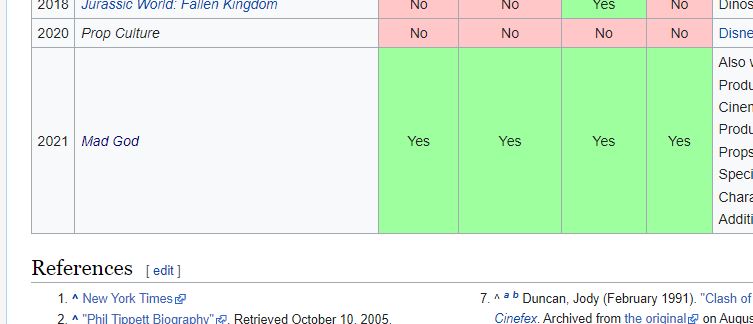
Absolutely overwhelming in its total, Hellish vision of senseless/ordered randomness, and depth upon depth of membranous realities and unrealities, yet cozy in its astonishing, analog human craft. I don't even have a preference for stop motion in and of itself outside of genre utilization, but this completely submerged me in a nightmare I never wanted to leave.
So many nods (drug reference intentional) assembled into one epic island hallucination: 2001, Brazil, Alien, Blade Runner, Fulci, Quay Bros, Svankmajer, James Cameron, Eraserhead, Brakhage, Greenaway, Cronenberg, The Matrix, Harryhausen, Koyaanisqatsi, Wayne Barlowe's Inferno, Goya, Derek Riggs, Rick Baker, Jim Henson, Karel Zeman, Malick's Tree of Life and Voyage of Time, Lovecraft, Metropolis, Nosferatu, Aleksei German, endless...
There's some live action work with Alex Cox (?) that is well integrated but nonetheless breaks the spell, but mostly this is one clay-bodied Matryoshka doll catastrophe after another. It all works under the hypnotic, almost gentle industrial soundtrack and haunting voicework (the bleatings of babies and indecipherable adults) to become a broken lullaby for a lamentable world.
BITCHIN'!
-
knives
- Joined: Sat Sep 06, 2008 10:49 pm
Re: The Films of 2021
I also really loved this. The internet has been an interest for Hosoda from the beginning with the Digimon series. This so brilliantly and honestly goes into everything I see with children and how the internet has hurt and helped them. I also love how this mutates the fairy tale to a new set of themes. It’s so good in such a particular way that I’m having trouble formulating why it’s great. It just is.Michael Kerpan wrote: Mon Jan 17, 2022 4:22 pm Belle (Ryū to Sobakasu no Hime / The Dragon and The Freckled Princess) (Mamoru HOSODA, 2021)
This finally got its US theatrical premiere (a year or so after it first appeared). Hosoda is possibly my favorite current anime movie director -- and this did nothing to damage my esteem. While he previously did an internet game-themed movie (Summer Wars), this one had the added attraction of being a musical which borrowed motifs from Beauty and the Beast (albeit with a distinctly different focus overall). Our heroine is a girl who loved music (and singing) but has suffered from depression (and a significant degree of social isolation) since the tragic death of her mother. She is introduced to an online virtual world -- where one can create an ideal alternate self -- and her online avatar is stunningly lovely (instead of "plain" -- like her real self) sharing only her freckles and her love of singing (something she can no longer do in real life). She becomes wildly popular for her looks and her songs (with the help of her one confidant -- who acts as her "producer")-- but then her existence there is disturbed an over-powered dragon and the self-appointed justice warrior who wants to destroy that dragon. The plot juggles (perhaps) a few more balls than it can fully handle -- but no one in our party of six (including 2 Japanese college girls) were bothered much by this. The visual beauty and the very lovely music -- and the momentum generated by the appealing characters made this a very pleasing movie experience.
-
domino harvey

- Dot Com Dom
- Joined: Wed Jan 11, 2006 6:42 pm
Re: The Films of 2021
I enjoyed Belle too, though not as much as the two of you. I think it has a lot of problems and tonal shifts and narrative conveniences and confusing elisions (what's up with the fairy godmothers?) and every facet of the plot strains credibility way past breaking, even for a fantasy like this. But it also has some terrific large-scale set pieces involving the titular musician, and I certainly didn't expect the film to end with a Breakfast at Tiffany's riff. I don't know, it won me over as it went on, but between this and Ready Player One and the actual MetaVerse, every "open world" VR universe seems to have the same limited ideas and barriers when these new worlds literally have access to anything
-
Mr Sausage

- Has Risen from the Grave
- Joined: Thu Nov 04, 2004 1:02 am
- Location: Canada
Re: The Films of 2021
The Novice (Lauren Hadaway)
Anyone remember that dumb Sean Astin sports movie, Rudy? The one where a terminally mediocre football player decides to apply a psychotic level of commitment to the game, and the movie rewards him for it with a tidy bit of luck at the end to make it seem as tho' it were worth it? I always hated that movie. Not only because, to any right thinking person, it's a fantasy that seems to celebrate sysiphean irrationality, but because they showed it to us in social studies in grade 12(?), and the trite didactic point behind that irked me.
So here's a wonderful corrective, The Novice, a movie that understands the exact psychological and physiological costs of the kind of obsessive, irrational commitment that Rudy tried to celebrate. Isabelle Fuhrman, the titular orphan from the horror series of the same name, is a college freshman named Alex who, for reasons she cannot articulate, joins the rowing team and becomes consumed with the activity to the point of total collapse. The film offers no explanations: it doesn't psychologize, or apply sociology, ideology, or any broader narrative form to give a wider shape to what's happening or ground it in ready-made concepts. What it does it send you deep into the subjective experience of insistent, driving obsession whose sheer will to control increasingly implies a total lack of it. The visual style is expressive and subjective; it renders the world from its main character's eyes, a world often drowned out or distorted by her monomania, often in subtle but occasionally unsubtle ways (this movie has one of the best and most oddly unsettling uses of rack focus I've ever seen in a movie). The movie focuses on what Alex sees and how she sees it, sticking closely to her point of view. But the filmmakers are clever: they avoid the temptation to make a closed system, where the only values in the film are the ones of the subject. Alex's experience dominates the film, but it gets punctured every so often, so we get a chance to see outside her subjectivity to appreciate what she, and by extension we the audience, have been missing, or even what Alex has kept hidden. That is, we see very clearly and in depth how Alex views herself and others, but we are not forced to share those same feelings and values out of a lack of anything else to hold on to.
This is a worrying, sometimes harrowing experience; you watch, helpless, as someone drives themselves into unhealth for reasons they cannot begin to acknowledge, and that you as an audience member can hardly begin to unpack. And, again, there is no explanation offered beyond a few hints and suggestions, and you are otherwise left free to wonder at the unknowable depths of another person's brain. This is not exactly a horror movie, but it does share something with movies like May and In My Skin, movies that treat worrying and unhealthy subjectivities as they collapse into themselves in distressing ways. The Novice is less horrific than either of those two, but shares their commitment to empathizing with difficult and unknowable psychological states shared by characters who are often unsympathetic, but who you come to know deeply and worry for. And, like both, it has a powerful central performance, one that anchors the entire movie and never falters amid the difficult and complex emotions on display. I hope Fuhrman continues to get interesting and intense roles like this. This is as affecting a movie I've seen in a while. It's carefully made, with often subtle, detailed storytelling that rewards rewatching (later context illuminates earlier actions that I thought nothing of at the time).
Anyone remember that dumb Sean Astin sports movie, Rudy? The one where a terminally mediocre football player decides to apply a psychotic level of commitment to the game, and the movie rewards him for it with a tidy bit of luck at the end to make it seem as tho' it were worth it? I always hated that movie. Not only because, to any right thinking person, it's a fantasy that seems to celebrate sysiphean irrationality, but because they showed it to us in social studies in grade 12(?), and the trite didactic point behind that irked me.
So here's a wonderful corrective, The Novice, a movie that understands the exact psychological and physiological costs of the kind of obsessive, irrational commitment that Rudy tried to celebrate. Isabelle Fuhrman, the titular orphan from the horror series of the same name, is a college freshman named Alex who, for reasons she cannot articulate, joins the rowing team and becomes consumed with the activity to the point of total collapse. The film offers no explanations: it doesn't psychologize, or apply sociology, ideology, or any broader narrative form to give a wider shape to what's happening or ground it in ready-made concepts. What it does it send you deep into the subjective experience of insistent, driving obsession whose sheer will to control increasingly implies a total lack of it. The visual style is expressive and subjective; it renders the world from its main character's eyes, a world often drowned out or distorted by her monomania, often in subtle but occasionally unsubtle ways (this movie has one of the best and most oddly unsettling uses of rack focus I've ever seen in a movie). The movie focuses on what Alex sees and how she sees it, sticking closely to her point of view. But the filmmakers are clever: they avoid the temptation to make a closed system, where the only values in the film are the ones of the subject. Alex's experience dominates the film, but it gets punctured every so often, so we get a chance to see outside her subjectivity to appreciate what she, and by extension we the audience, have been missing, or even what Alex has kept hidden. That is, we see very clearly and in depth how Alex views herself and others, but we are not forced to share those same feelings and values out of a lack of anything else to hold on to.
This is a worrying, sometimes harrowing experience; you watch, helpless, as someone drives themselves into unhealth for reasons they cannot begin to acknowledge, and that you as an audience member can hardly begin to unpack. And, again, there is no explanation offered beyond a few hints and suggestions, and you are otherwise left free to wonder at the unknowable depths of another person's brain. This is not exactly a horror movie, but it does share something with movies like May and In My Skin, movies that treat worrying and unhealthy subjectivities as they collapse into themselves in distressing ways. The Novice is less horrific than either of those two, but shares their commitment to empathizing with difficult and unknowable psychological states shared by characters who are often unsympathetic, but who you come to know deeply and worry for. And, like both, it has a powerful central performance, one that anchors the entire movie and never falters amid the difficult and complex emotions on display. I hope Fuhrman continues to get interesting and intense roles like this. This is as affecting a movie I've seen in a while. It's carefully made, with often subtle, detailed storytelling that rewards rewatching (later context illuminates earlier actions that I thought nothing of at the time).