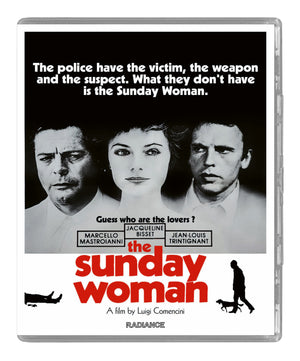
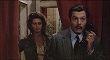
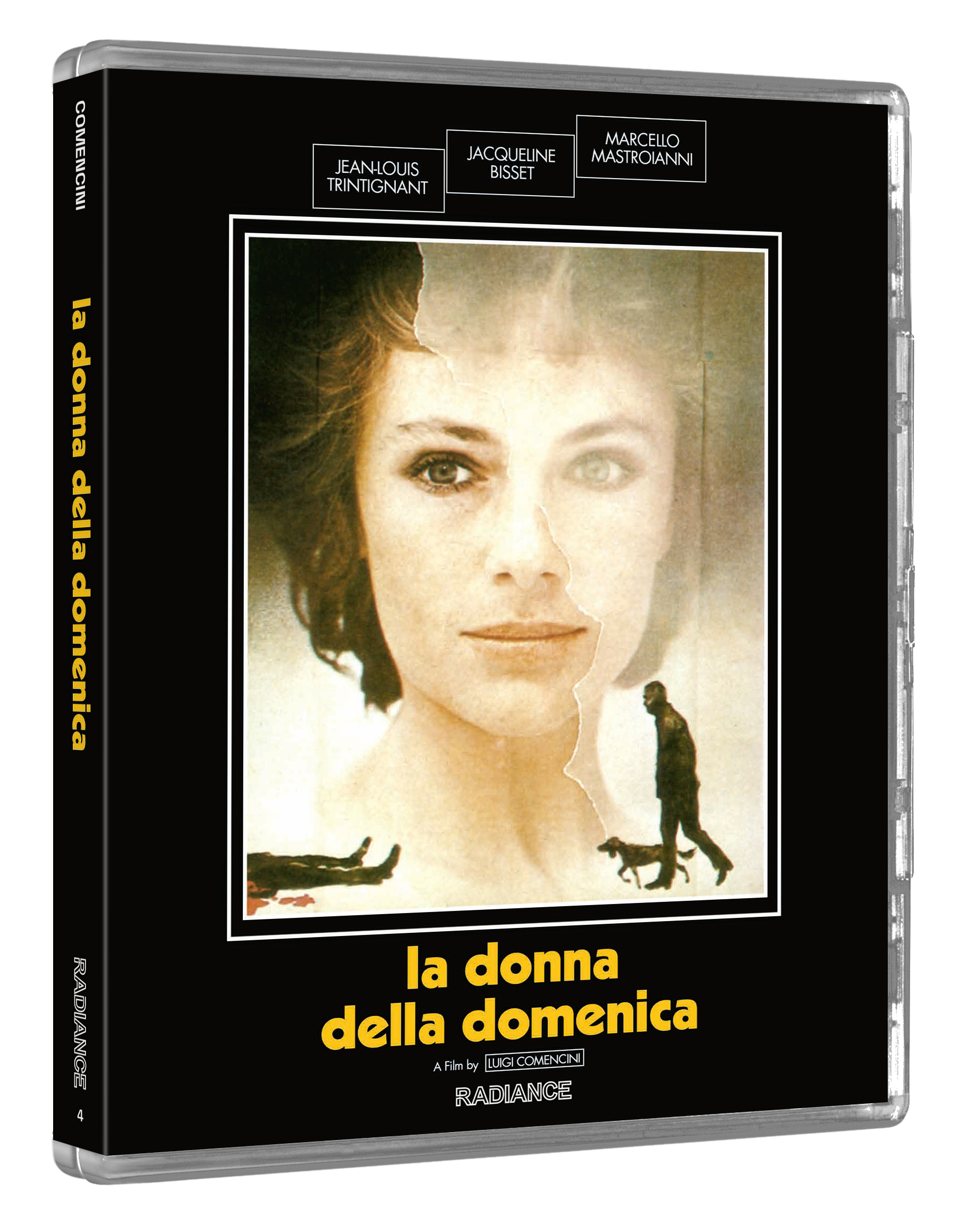
I liked this a lot more than I anticipated, but that's probably because it's actually a loose-fitting pulp thriller adaptation that can't resist the urge to become a
commedia all'italiana - a type of film I rarely find amusing, but gets a lot of mileage here for flaunting its lazy immaturity with an almost-accidental reflexivity, breaking into laughable theatrics every time it attempts to take itself as seriously as the source material. Right off the bat, we get a montage full of familiar signs and motifs of sex comedies and whodunit page-turners, blended together to create a sense of cheeky self-consciousness, but under a leisurely current that doesn't look to pronounce some acidic, satirical bent. It's a lot more fun for its irreverent imprudence through evasion of grandeur.
We're casually introduced to a society desensitized to murder. Regardless of class or status, every individual in this film treats the crime as a game or fantasy, like participants in a movie, for (often-ignorantly) egocentric reasons. The 'help' dismiss the murder's significance and try to negotiate a selfish financial lawsuit out of found 'evidence'. The boyfriend attempts to solve the murder, not just out of love, but because he anxiously perceives that his lover's interest may be wilting, and these selfish concerns prompt a grand gesture to try to secure allegiance, affection, and attachment. It's manipulative love bombing passed off as love. The elitist Bisset and Trintignant insult the deceased, invalidate the crime's utility, publicly gawk at the idiosyncratic instruments of the crime, and in turn mock the value of the detective's job in the process. They go a step further by coercing him into including them as principals in solving a case that they're prime suspects in - not because they're craftily trying to exonerate themselves, but because they crave involvement in a 'mystery' to give them a gossipy break of stimulation to divert their attention from the boredom of their vapid, unfulfilling lives. And as for the detective, well, he doesn't really care about any of this either (which is why it's permitted to occur at all), but he wants to pretend he does. This is a movie made by someone who knows this shtick has been done a million times over, and if you’re going to film the nth dimestore paperback mystery, you may as well allow the characters to treat its gravitas with the same lackadaisical temperament as the breezy spirit warrants. No one cares about the architect, so why should we? They only care about themselves, and inserting themselves into positions of surrogates to distract from everyday life, just as the audience is doing by watching or reading such programmatic trash.
The film's ethos is constantly felt in its blithe attitude, never allowing dramatic sincerity to oust the comic tone. A great example is the mid-film exchange between Mastroianni and Trintignant, which erupts into a yelling match that entertains the intimate artifice of shot-reverse-shot, emphasizing Trintignant's escalation at being placed in a position of vulnerability. But these bits of melodrama are continuously interrupted with zoom outs to medium shots of cartoonish interplay - complete with voice-tones rapidly shifting to provoke the other. Such alienating tactics seem planted to remind us of the irony that the very guy who laughed off murder (but takes petty city pronunciations seriously) would expect the same detective he taunted to stop the carnival when he's feeling at risk.. Your classic infantile 'everything's fair game until it's my turn to be teased' playground conflict. And of course Mastroianni can't help but float into a quasi-romantic subplot with a prime murder suspect/faux-femme fatale, as if the fatalism of the genre trappings humorously filters these non-characters into situations without their awareness or consent. They all think they're more complex, serious, and autonomous beings than they actually are, because the film and story reduce their worth from achieving that detail at every opportunity.
I suppose this is where I differ from Pauline Kael in my takeaway from the film - I don't think it's attempting to be a rich satire full of larger-than-life "glazed" characters, excitedly partaking in an exercise of suspense or romp. Rather, the focus is on exhibiting a milieu too tired and lost; uninspired to care, and unskilled to enliven their surroundings, in the manner they delude themselves into believing they can do. It can be a commentary on the insipid artifice of performing roles as actors, just as much as social and institutional roles (I did appreciate one of the more pointed, but still rather understated mirroring gags, where the late scene of the elite in the lockup resembled the earlier scene with the prostitutes in a similar scenario). I got a similar thing out of this as I do from the Paul Verhoeven vehicles that share its reflexive engagement with such material, only
The Sunday Woman seems to be thinner by design, and not as skilled in venturing to extremities, or ambitious about balancing them (often reflecting the characters' investments and the genres' sincere heights) to deliver its purpose. This film appropriately takes a middling route of a shrug, because it's not about locating importance but implicitly about fruitlessly avoiding the
lack of importance embedded in any of this. The project is a joke, but I suppose it needs to adopt a steadily simmering vibe to follow through on its dull safari of anti-humanist punchlines in order to reveal these vacancies. I have no idea what Aunt Peg is referring to by the 'ahead-of-its-time surprise ending' either (I must've missed the shock in the surprise, too) but I did love how the title of the film refers to something so inconsequential to any of the goings-on, that it serves as the ultimate punchline to what this film is 'about'.
The look of Mastroianni, emasculated and confused, as Bisset, a woman, leaves him in bed on a Sunday, off to a trivial tryst with Trintignant's trivial beau to talk about trivial things says everything about how the filmmaker sees this film and its character's trivial existences... the film's title indicates the least significant aspect of the least significant character in the least significant scene of an insignificant story.