therewillbeblus wrote: Sun Jul 21, 2019 6:31 am
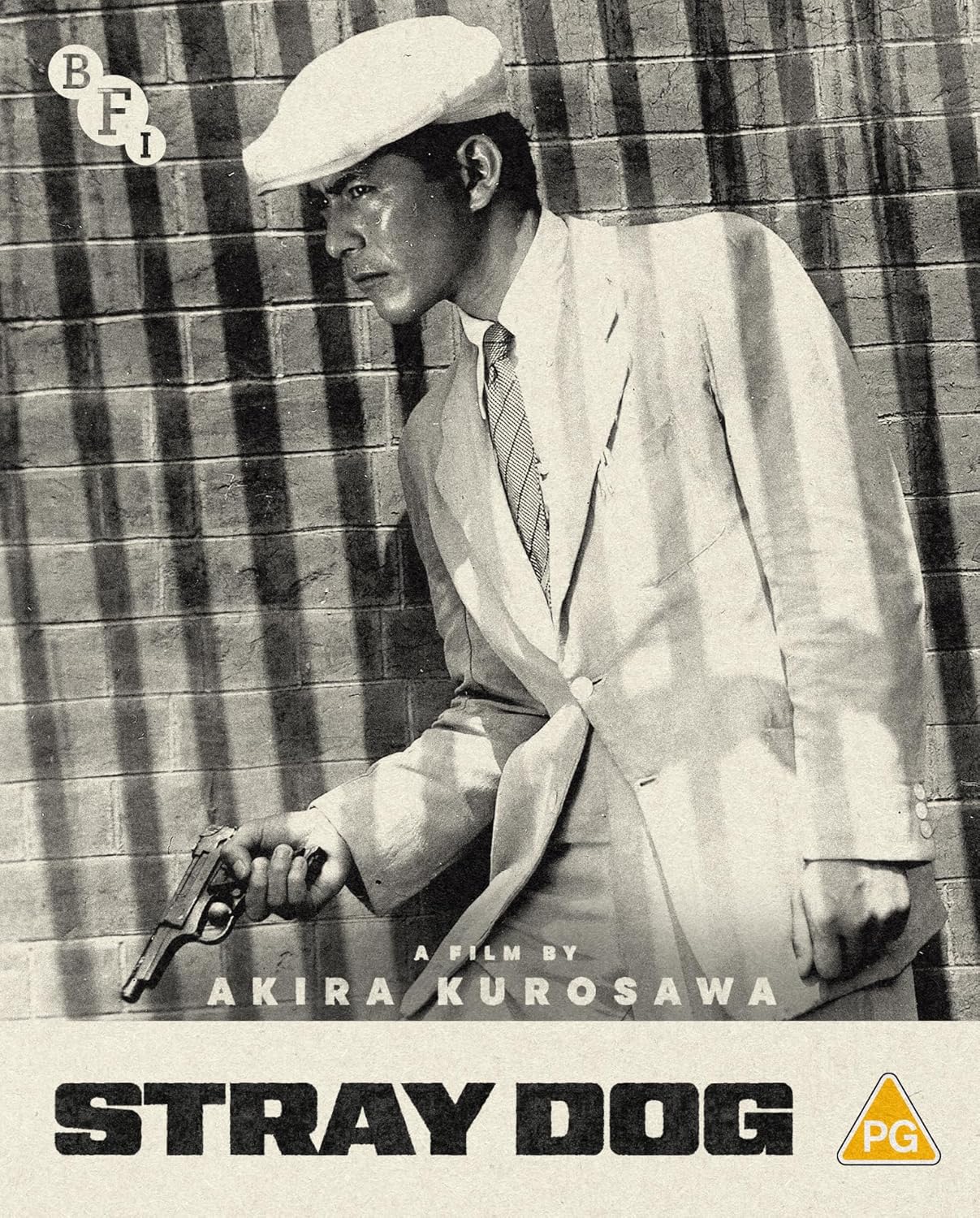
Stray Dog: Arguably the best “buddy cop” movie, and understandably so since many have pointed to it as the initial entry into the subgenre, with plenty of noir and police-procedural elements overshadowing this categorical assignment. Mifune and Shimura have excellent chemistry, not just between one another but with all the other actors they encounter, with Shimura’s presence particularly striking in its reserved wisdom with doses of pathos against Mifune’s young, intense novice. What really sells this, though, is the engrossing story with plenty of exciting twists, turns, and setpieces, and Kurosawa’s use of mise-en-scène effectively transports the viewer into the story. The most consistent example of this is that, much like
Do the Right Thing, we feel the strength of the heat wave as if side by side with the characters, watching them vigorously sweat, wave their fans, break down and lose tempers under the beating sun, as if we were right there with them.
The noir plot effectively provides many seedy hidden cultures of criminals, and watching our detectives move through them is exhilarating, with some minor characters exhibiting bizarre behavior that could be part of a horror film out of context (and within context, descending into unknown spaces and disrupting our sense of cultural competency is quite a scary experience even for our ‘heroic’ policemen). The high stakes are always felt throughout the narrative, and we find ease in reason to care about the mission and our protagonists. This isn’t a ‘good guys vs. bad guys’ story in celebrating the protectors of the state vs. its enemies for nationalist reasons, but one where Mifune makes a mistake by losing his gun (or allowing it to be taken), emasculating himself, and the rest of the film is spent trying to get it back and retrieve his manhood, the bolt holding all of his self-worth together, while unknown assailants use it to hurt or kill others. Despite the obviously Japanese-specific cultural norms emphasizing the effects of shame, losing face, the ease of losing one’s masculinity, and loyalty to one’s profession forged with identity, there are universal humanistic principles at play here that make the entire film relatable. The sense of ‘responsibility,’ significant for most viewers in both individually existential and social realms, is omnipresent, and we have as much stake in this mission as the police, suspended against the uncontrollable nature of time, and the unknown forces who may be using this weapon to bear more weight on our hero’s, and our collective, conscious. Kurosawa’s camera compulsively details suspects, increasing movement to focus on clues as the film continues, as if to match Mifune’s desperation, obsession, and skill, as he remains in the field and models his veteran partner’s habits while simultaneously exhausting his energy. In the end, we feel how tired everyone is, and as the showdown ends, laying in the grass, crying and screaming, that exasperation, the final depletion of all will power to hold onto social norms, masculine ideals, ideologies of purpose, mission, duty, is all expressed vividly in one of the most strikingly real depictions of ‘surrender’ on screen; humble, stripped, and beaten, even if arguably having ‘won’ in the aims of the mission.
While I consider myself a Kurosawa fan, my mileage varies considerably within his filmography, though this is close to the top, and while I prefer
High and Low overall as a film, this utilizes the detective mystery design to concoct the more purely fun film of the two, and possibly within his entire canon.