Can't wait to hear your assessment if you're able to be there! I hope the smoothing is only an artifact of the disc's presentation.tenia wrote: Sat Sep 13, 2025 8:52 am I might see Tokyo Drifter's new restoration next month at Lyon Film Festival. If so, I'll report on how the restorations looks in a theatrical screening context.
Seijun Suzuki
-
feihong

- Joined: Thu Nov 04, 2004 4:20 pm
Re: Seijun Suzuki
-
tenia

- Ask Me About My Bassoon
- Joined: Wed Apr 29, 2009 3:13 pm
Re: Seijun Suzuki
So, actually... it turns out the one showing I could go to is already sold out. It was clashing with another movie I wanted to go to, so I guess the choice has been forced onto me anyway.
-
hearthesilence

- Joined: Fri Mar 04, 2005 8:22 am
- Location: NYC
-
feihong
- Joined: Thu Nov 04, 2004 4:20 pm
Re: Seijun Suzuki
THE BOY WHO CAME BACK aka THE SPRING THAT DIDN'T COME
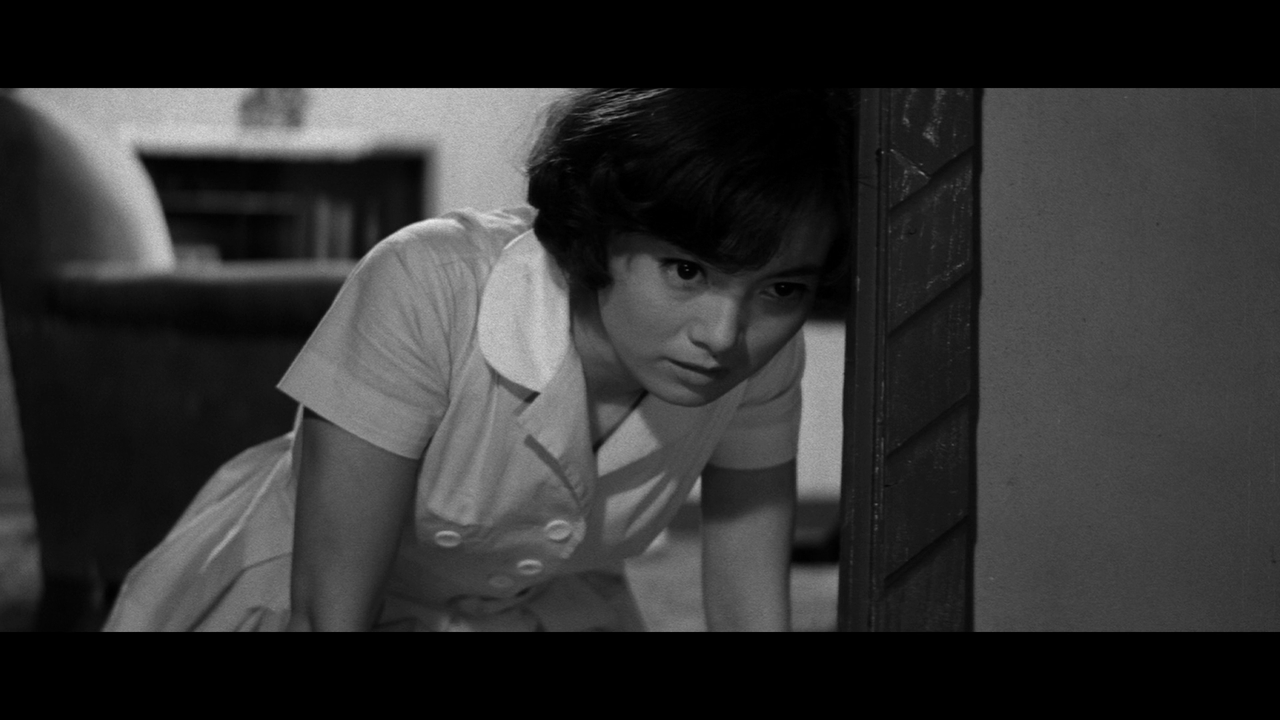
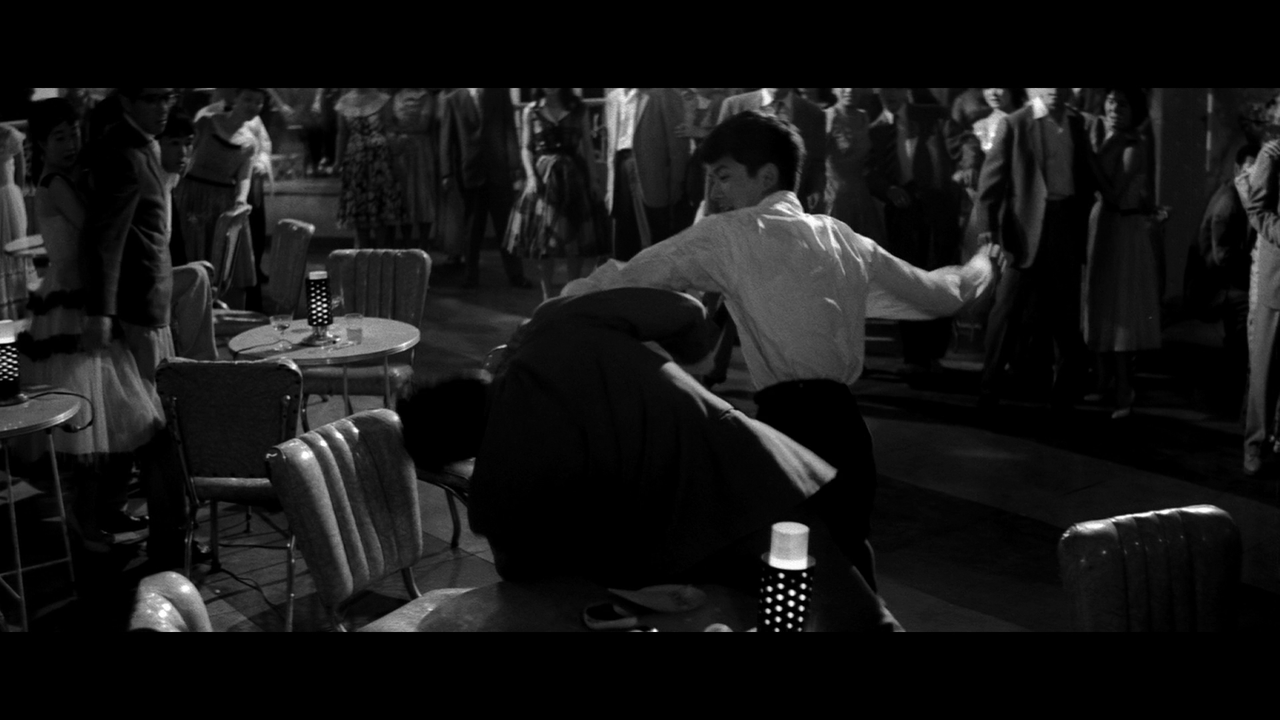
The thread of "kids gone wild" scenarios winds its way through at least 14 of Suzuki's Nikkatsu films––because it was Nikkatsu's great animating theme of the era, too. Starting with Season of the Sun and Crazed Fruit, Nikkatsu's stock rose on a tide of "kids gone wild" material, initially in the "taiyozoku" subgenre the studio and author Shintaro Ishihara contrived together. While Crazed Fruit saved Nikkatsu from impending bankruptcy, there were 6 movies that were marketed as "Taiyozoku" pictures before the Eiren asked Nikkatsu to stop inspiring kids to go wild for real. After there's a scramble, in which Nikkatsu first dissolves the subgenre, then immediately rejiggers elements of Sun Tribe glamour, sex, or danger into nearly all of its existing productions. While the Sun Tribe's prime exponent, Shintaro's younger brother Yujiro, was being massaged into a leading man with a softer touch, taking the heat of moral condemnation off the studio, Nikkatsu looked to their Diamond Line of Yujiro-inspired stars to pick up the torch of Taiyozoku wildness, piece by discreet piece. The goal was to bring things in just under the radar, by offering productions where Taiyozoku elements, but where the film itself extends the overhang of some other genre convincingly enough that the Eiren will back off, already. The first of Suzuki's projects positioned that way is Underworld Beauty, which presents itself as a noir picture with a Taiyozoku character, played by Mari Shiraki, and her Taiyozoku world, stuffed in (the Taiyozoku community is one Shiraki shows up in for just a couple of scenes, between long bouts of film noir). The next Suzuki project to be Sun-Tribe-adjacent in this way is The Boy Who Came Back––which presents to us a young Akira Kobayashi as a wayward kid, rehabilitated from––though it's never mentioned––what is presumably a Taiyozoku–style world. Is he really a Sun Tribe guy? Certainly, though he seems more lower-middle-class than the Sun Tribe characters from other films, he trails with him the violence so commonly associated with the Sun Tribe movies. The pieces fall into place, even if it's just one or two pieces of the whole equation.
[TEXT ONLY]
[TEXT & IMAGES]
The thread of "kids gone wild" scenarios winds its way through at least 14 of Suzuki's Nikkatsu films––because it was Nikkatsu's great animating theme of the era, too. Starting with Season of the Sun and Crazed Fruit, Nikkatsu's stock rose on a tide of "kids gone wild" material, initially in the "taiyozoku" subgenre the studio and author Shintaro Ishihara contrived together. While Crazed Fruit saved Nikkatsu from impending bankruptcy, there were 6 movies that were marketed as "Taiyozoku" pictures before the Eiren asked Nikkatsu to stop inspiring kids to go wild for real. After there's a scramble, in which Nikkatsu first dissolves the subgenre, then immediately rejiggers elements of Sun Tribe glamour, sex, or danger into nearly all of its existing productions. While the Sun Tribe's prime exponent, Shintaro's younger brother Yujiro, was being massaged into a leading man with a softer touch, taking the heat of moral condemnation off the studio, Nikkatsu looked to their Diamond Line of Yujiro-inspired stars to pick up the torch of Taiyozoku wildness, piece by discreet piece. The goal was to bring things in just under the radar, by offering productions where Taiyozoku elements, but where the film itself extends the overhang of some other genre convincingly enough that the Eiren will back off, already. The first of Suzuki's projects positioned that way is Underworld Beauty, which presents itself as a noir picture with a Taiyozoku character, played by Mari Shiraki, and her Taiyozoku world, stuffed in (the Taiyozoku community is one Shiraki shows up in for just a couple of scenes, between long bouts of film noir). The next Suzuki project to be Sun-Tribe-adjacent in this way is The Boy Who Came Back––which presents to us a young Akira Kobayashi as a wayward kid, rehabilitated from––though it's never mentioned––what is presumably a Taiyozoku–style world. Is he really a Sun Tribe guy? Certainly, though he seems more lower-middle-class than the Sun Tribe characters from other films, he trails with him the violence so commonly associated with the Sun Tribe movies. The pieces fall into place, even if it's just one or two pieces of the whole equation.
[TEXT ONLY]
Spoiler
As we see in Underworld Beauty and in later films-–especially Everything Goes Wrong, which is made at a time when Nikkatsu is attempting to resurrect the moribund subgenre––Suzuki has a peculiar take on the Sun Tribe, which manages to make the censors happy without diminishing the violence inherent in the subject. Though if the Eiren spent a little more time scrutinizing Suzuki's pictures, they might discover that the reason they seem fundamentally palatable in spite of their violence is that Suzuki is discreetly casting the blame for that violence back on the society from which the Taiyozoku emerges––the hypercapitalist reformation of postwar Japan––so it might give the defenders of orthodoxy a little pause, all the same.
A lot of this is sub rosa in The Spring That Didn't Come, which is outwardly one of the most conventional of Suzuki's Nikkatsu pictures, and which maybe seems the least like something he might create if left to his own devices. But there was some form of precedent, in the Nikkatsu top brass' thinking by assigning this to Suzuki. As in another more conventional-seeming film of the period, Love Letter, Suzuki is being tapped to create a made-to-order melodrama, apparently utilizing his perceived skills with the genre, which were believed to come from his particular filmmaking lineage.
OFUNA MELO
Unlike most of the discontented Shochiku assistant directors who were Suzuki's peers Suzuki spent a lot of his time as an AD in that company's satellite studio in Ofuna. The Ofuna studio was famous for melodramas, and at Nikkatsu it seemed Suzuki was believed to be the inheritor of that particular style. Nikkatsu had others amongst its young cadre of directors it thought of as being particular specialists––that hack, Buichi Saito, was thought to have some capacity for domestic realism from his time as an assistant director under Yasujiro Ozu. But the company more often contrived to have these filmmakers work in one of it's more popular house genres, incorporating the touch of whatever experience they had picked up elsewhere. That's why Suzuki more frequently ends up incorporating melodramatic elements into films of other genres––into noir fare like An Inn of Floating Weeds, or into Taiyozoku revival fare like Everything Goes Wrong, or into a yakuza movie like Kanto Wanderer.
But in this case, Suzuki is being promoted, sort of––or more likely, the studio is attempting to "fit" him into a specialty of some dependable genre. Suzuki's mentor, Noguchi, is always directing hard-boiled crime pictures for the studio. That hack, Buichi Saito, directs a lot of the borderless westerns. Umetsugu Inoue becomes known for musicals. Immamura becomes the studio's "art movie" director, doing Nikkatsu's equivalent of the "Nuberu Bagu" or "New Wave" films coming out of Shochiku. Suzuki had just done well with the hard-boiled noir Nude Girl with a Gun––his first box-office hit––and Nikkatsu responds here by giving him a bigger budget and the biggest stars he's had yet, maybe hoping to make him their in-house melodrama guy. The Boy Who Came Back is full of expressive new crane shots. It utilizes conspicuously metaphorically-charged rain effects, has more fight scenes than were common for Suzuki's movies of the time, and the trailer for the movie makes an eye-opening note, with a text card advertising "the genius of director Suzuki Seijun" as one of the film's special features––this at a time when no critics and really no audience members were familiar with said genius, even if they had seen any of his films. The Spring That Didn't Come is one of the most sure-handed movies Suzuki has crafted to this point. Underworld Beauty is by far a more interesting artistic achievement, but The Boy Who Came Back is an affective and affecting melodrama, stealthily sneaking a Sun Tribe resonance into the story of a young, enthusiastic social worker, taking on her first case: a disaffected young man who proves to be hot, violent trouble. Can she change him into someone that can fit in with polite society?
REAL STARS FOR ONCE
Sachiko Hidari––the biggest star of the picture at this point in 1958––plays the social worker, Keiko. She's definitely the most versatile, most highly-professional actress Suzuki has been able to work with to this point. Hidari dives straight into the intensely physical style of acting Suzuki prefers, and which he has such a hard time getting from other actresses at Nikkatsu throughout his career there.
Hidari's playful animus warms the entire picture. She's high-spirited and exuberant when she gets her first case as a social worker, thrilled and inquisitive when she first meets problem child Kobayashi, and steadfast in spite of everything once she gets it in her mind that she can help him steer back to the straight-and-narrow. Many of her scenes are sharp and striking, but she makes the biggest meals out of the most potentially florid material, deftly making melodramatic scenes come alive with fresh and unexpected energy.
Hidari's force and control are so strong and precise, it leaves her co-star, Akira Kobayashi, not quite as much to do. This seems like a careful calculation on Suzuki's part; Kobayashi is sometimes gawky and awkward in this film, and he doesn't seem too sure of himself in all the scenes. What always worked about Kobayashi though, more than any of the other Diamond Guys, was his polymorphous-seeming sexuality. Until he bulks his way into yakuza roles, Kobayashi has a lot of the ambiguous sexuality of a young Montgomery Clift or Alain Delon. He is definitely the most handsome of the Diamond Guys, and his sexuality is a lot more overwhelming than the only other really good-looking Diamond Guy, Hideaki Nitani (also in this movie as Sachiko Hidari's supervisor who seems to be in love with her from afar).
SEX & VIOLENCE
From her playful introduction to him, as Hidari's social worker Keiko finds Kobayashi's delinquent Nobuo lounging on a dentist's chair under single-source lighting, playing with a toy spider, the two are flirting with one another, hard. This byplay seems casual, but it turns out to be the key that makes this movie better than average for the genre. This is Keiko's first case, she wants to make a splash; she connects with Nobuo first with flirtation, with fawning attention. He responds by essentially seducing and abandoning her, playing to her eagerness to see what his life of underworld loutishness is all about. It looks as if he'll end up bedding her in a seedy hotel, but she takes refuge in the bathroom and he uses the chance to escape. Keiko comes to recognize that Nobuo views his own sexuality in an entirely negative light––women, including his bar-girl fling, including so many other girls like her, the film seems to imply, want a sexual performance from him which leaves him disinterested. Keiko learns Nobuo had a girlfriend, Kazue, who has given up Nobuo and gone on the straight-and-narrow as a teacher for young children. So begins Keiko's dual seduction, playfully nudging Nobuo back towards Kazue, and on the other side building Kazue's gumption to be the romantic foil Keiko thinks Nobuo needs.
There is some of what was fast becoming the standard Nikkatsu melodrama surrounding this story; Nobuo knows a bunch of guys his own age who are getting deeper into thug life, including his pal, Keisuke Noro, and an acquaintance of more remove, played by Jo Shishido. These guys are the kind of droogs Nobuo might become, the film implies. They act as temptations towards the dark side for Nobuo, and as antagonists once Nobuo, charmed anew by Kazue (and by Keiko's increasingly flirtatious interest in his welfare), tries to trod the straight-and-narrow himself, pursuing some sort of career in illustration, from the look of things.
Again, the melodrama is fairly standard. Twisting around it is a more subtle love story, in which the active romantic, Keiko, plays cupid and in the process has to sublimate her own increasingly heated affection for Nobuo. Suzuki is working with what he's given in terms of actors. Ruriko Asaoka is only 18 here, and not especially striking in her role––and Kazue, the former girlfriend, is a similarly wan figure, shy and retiring, reticent to act, pretty but conventional. The more dynamic and original Hidari lights up every scene, bringing her own unconventional energy to an unconventionally energetic personality.
We sense immediately that Keiko and Nobuo are on the same wavelength, but on different sides of the track; she is able to successfully repress in herself the wildness he gives riot to at every opportunity, and we can see as the film goes on how her work to temper him fulfills her need for danger and excitement, even as she is reigning in what we feel is really her ideal opposite number, tying him to a dull girl, making him into a conventional person. The risk to Keiko is the most exciting unspoken element of this movie; she comes close to losing her job frequently, crossing the line from consultant to quasi-lover of Nobuo's most antisocial qualities.
SERIOUS BUSINESS
What this means in terms of melodrama is that Hidari and Kobayashi share all of the most emotionally-charged scenes in the film. Hidari manages to draw a lot out of Kobayashi in these scenes, and the two match one another in physical intensity as the characters attempt to draw out of one another the feelings they spend all their time expertly hiding from society.
The film doesn't shy away from the bleakness of Nobuo's surroundings, and how that works on him. Kobayashi's own more challenging scenes aren't the scenes of vibrant acting as much as the dynamic visuals Suzuki deploys at key moments.
Ruriko Asaoka, by contrast, sort of drifts into the film. Kazue is reluctant to get back together with Nobuo, until Keiko convinces her to go to the beach with Keiko's younger sister and Nobuo and herself. Watching Keiko's sister cavorting in the water, Kazue is torn what to do, and Keiko completes a delicate seduction, convincing Kazue that underneath Nobuo's rough coping mechanisms is a good heart that yearns for her.
Finally, there is an exceptional scene. Keiko has gone to the mattresses to help Nobuo, convinced him against all odds that he isn't being set up to fall when the police pick him up thanks to Shishido's manipulation. Thanks to her propping him up, Nobuo can stand firm and help the police crack Keisuke Noro, who spills the beans on the whole plot and exonerates Nobuo in the process. Keiko is there waiting for Nobuo to get out of jail. Though her supervisor is with her, watching over her, we get the sense that Keiko is waiting not for her professional charge, but for the object of her affection––and her supervisor clearly knows it, too.
Nobuo emerges, looks off to the side, and we see Kazue waiting for him. The two talk, and walk off, arm in arm. Keiko follows them, hiding behind cars. Her supervisor follows her, looking concerned for her. Alone in the scene, in spite of everyone else being there, Keiko crouches on the ground as Nobuo and Kazue leave.
She tries tying her shoe to excuse the gesture, but her face tilts up and we see the recapitulation of the gesture from the middle of the film––only this time, as her head contorts, the expression on her face is pained, romantic agony. In doing her job well, Keiko has fallen in love. In order to do her job well, she can never acknowledge it, never realize her passion. She has set up another woman to fill her place, one which we sense will never really be for Nobuo what Keiko would and could be for him.
But it all has to be put away somewhere. Keiko ducks down again, and her face springs up once more, a huge, forced smile on it. She gets up and strides forward down the street, ready for her next case, as the movie ends. This last sequence of Keiko alone is all a single crane shot which racks between a long shot and an extreme closeup, then pulls back into a long dolly shot. I don't talk about camera moves much, and this isn't one Suzuki will ever repeat, exactly. But it is exceptional, and ties off the film's most intriguing theme in a really satisfying way. To work in this world means to sublimate one's feelings, and Keiko is striding into a society where work at the expense of any other life is an increasingly tangible value. Incidentally, none of the jobs Nobuo gets set up with by the end of the film look all that promising. It's interesting to imagine what the future will hold for Nobuo and Kazue. This may be a shortcoming of the script not to imply much in this regard, but I suspect Suzuki might have liked the ambiguity of it. This is a happy ending, but Suzuki manages to flavor it with a bitter aftertaste.
A lot of this is sub rosa in The Spring That Didn't Come, which is outwardly one of the most conventional of Suzuki's Nikkatsu pictures, and which maybe seems the least like something he might create if left to his own devices. But there was some form of precedent, in the Nikkatsu top brass' thinking by assigning this to Suzuki. As in another more conventional-seeming film of the period, Love Letter, Suzuki is being tapped to create a made-to-order melodrama, apparently utilizing his perceived skills with the genre, which were believed to come from his particular filmmaking lineage.
OFUNA MELO
Unlike most of the discontented Shochiku assistant directors who were Suzuki's peers Suzuki spent a lot of his time as an AD in that company's satellite studio in Ofuna. The Ofuna studio was famous for melodramas, and at Nikkatsu it seemed Suzuki was believed to be the inheritor of that particular style. Nikkatsu had others amongst its young cadre of directors it thought of as being particular specialists––that hack, Buichi Saito, was thought to have some capacity for domestic realism from his time as an assistant director under Yasujiro Ozu. But the company more often contrived to have these filmmakers work in one of it's more popular house genres, incorporating the touch of whatever experience they had picked up elsewhere. That's why Suzuki more frequently ends up incorporating melodramatic elements into films of other genres––into noir fare like An Inn of Floating Weeds, or into Taiyozoku revival fare like Everything Goes Wrong, or into a yakuza movie like Kanto Wanderer.
But in this case, Suzuki is being promoted, sort of––or more likely, the studio is attempting to "fit" him into a specialty of some dependable genre. Suzuki's mentor, Noguchi, is always directing hard-boiled crime pictures for the studio. That hack, Buichi Saito, directs a lot of the borderless westerns. Umetsugu Inoue becomes known for musicals. Immamura becomes the studio's "art movie" director, doing Nikkatsu's equivalent of the "Nuberu Bagu" or "New Wave" films coming out of Shochiku. Suzuki had just done well with the hard-boiled noir Nude Girl with a Gun––his first box-office hit––and Nikkatsu responds here by giving him a bigger budget and the biggest stars he's had yet, maybe hoping to make him their in-house melodrama guy. The Boy Who Came Back is full of expressive new crane shots. It utilizes conspicuously metaphorically-charged rain effects, has more fight scenes than were common for Suzuki's movies of the time, and the trailer for the movie makes an eye-opening note, with a text card advertising "the genius of director Suzuki Seijun" as one of the film's special features––this at a time when no critics and really no audience members were familiar with said genius, even if they had seen any of his films. The Spring That Didn't Come is one of the most sure-handed movies Suzuki has crafted to this point. Underworld Beauty is by far a more interesting artistic achievement, but The Boy Who Came Back is an affective and affecting melodrama, stealthily sneaking a Sun Tribe resonance into the story of a young, enthusiastic social worker, taking on her first case: a disaffected young man who proves to be hot, violent trouble. Can she change him into someone that can fit in with polite society?
REAL STARS FOR ONCE
Sachiko Hidari––the biggest star of the picture at this point in 1958––plays the social worker, Keiko. She's definitely the most versatile, most highly-professional actress Suzuki has been able to work with to this point. Hidari dives straight into the intensely physical style of acting Suzuki prefers, and which he has such a hard time getting from other actresses at Nikkatsu throughout his career there.
Hidari's playful animus warms the entire picture. She's high-spirited and exuberant when she gets her first case as a social worker, thrilled and inquisitive when she first meets problem child Kobayashi, and steadfast in spite of everything once she gets it in her mind that she can help him steer back to the straight-and-narrow. Many of her scenes are sharp and striking, but she makes the biggest meals out of the most potentially florid material, deftly making melodramatic scenes come alive with fresh and unexpected energy.
Hidari's force and control are so strong and precise, it leaves her co-star, Akira Kobayashi, not quite as much to do. This seems like a careful calculation on Suzuki's part; Kobayashi is sometimes gawky and awkward in this film, and he doesn't seem too sure of himself in all the scenes. What always worked about Kobayashi though, more than any of the other Diamond Guys, was his polymorphous-seeming sexuality. Until he bulks his way into yakuza roles, Kobayashi has a lot of the ambiguous sexuality of a young Montgomery Clift or Alain Delon. He is definitely the most handsome of the Diamond Guys, and his sexuality is a lot more overwhelming than the only other really good-looking Diamond Guy, Hideaki Nitani (also in this movie as Sachiko Hidari's supervisor who seems to be in love with her from afar).
SEX & VIOLENCE
From her playful introduction to him, as Hidari's social worker Keiko finds Kobayashi's delinquent Nobuo lounging on a dentist's chair under single-source lighting, playing with a toy spider, the two are flirting with one another, hard. This byplay seems casual, but it turns out to be the key that makes this movie better than average for the genre. This is Keiko's first case, she wants to make a splash; she connects with Nobuo first with flirtation, with fawning attention. He responds by essentially seducing and abandoning her, playing to her eagerness to see what his life of underworld loutishness is all about. It looks as if he'll end up bedding her in a seedy hotel, but she takes refuge in the bathroom and he uses the chance to escape. Keiko comes to recognize that Nobuo views his own sexuality in an entirely negative light––women, including his bar-girl fling, including so many other girls like her, the film seems to imply, want a sexual performance from him which leaves him disinterested. Keiko learns Nobuo had a girlfriend, Kazue, who has given up Nobuo and gone on the straight-and-narrow as a teacher for young children. So begins Keiko's dual seduction, playfully nudging Nobuo back towards Kazue, and on the other side building Kazue's gumption to be the romantic foil Keiko thinks Nobuo needs.
There is some of what was fast becoming the standard Nikkatsu melodrama surrounding this story; Nobuo knows a bunch of guys his own age who are getting deeper into thug life, including his pal, Keisuke Noro, and an acquaintance of more remove, played by Jo Shishido. These guys are the kind of droogs Nobuo might become, the film implies. They act as temptations towards the dark side for Nobuo, and as antagonists once Nobuo, charmed anew by Kazue (and by Keiko's increasingly flirtatious interest in his welfare), tries to trod the straight-and-narrow himself, pursuing some sort of career in illustration, from the look of things.
Again, the melodrama is fairly standard. Twisting around it is a more subtle love story, in which the active romantic, Keiko, plays cupid and in the process has to sublimate her own increasingly heated affection for Nobuo. Suzuki is working with what he's given in terms of actors. Ruriko Asaoka is only 18 here, and not especially striking in her role––and Kazue, the former girlfriend, is a similarly wan figure, shy and retiring, reticent to act, pretty but conventional. The more dynamic and original Hidari lights up every scene, bringing her own unconventional energy to an unconventionally energetic personality.
We sense immediately that Keiko and Nobuo are on the same wavelength, but on different sides of the track; she is able to successfully repress in herself the wildness he gives riot to at every opportunity, and we can see as the film goes on how her work to temper him fulfills her need for danger and excitement, even as she is reigning in what we feel is really her ideal opposite number, tying him to a dull girl, making him into a conventional person. The risk to Keiko is the most exciting unspoken element of this movie; she comes close to losing her job frequently, crossing the line from consultant to quasi-lover of Nobuo's most antisocial qualities.
SERIOUS BUSINESS
What this means in terms of melodrama is that Hidari and Kobayashi share all of the most emotionally-charged scenes in the film. Hidari manages to draw a lot out of Kobayashi in these scenes, and the two match one another in physical intensity as the characters attempt to draw out of one another the feelings they spend all their time expertly hiding from society.
The film doesn't shy away from the bleakness of Nobuo's surroundings, and how that works on him. Kobayashi's own more challenging scenes aren't the scenes of vibrant acting as much as the dynamic visuals Suzuki deploys at key moments.
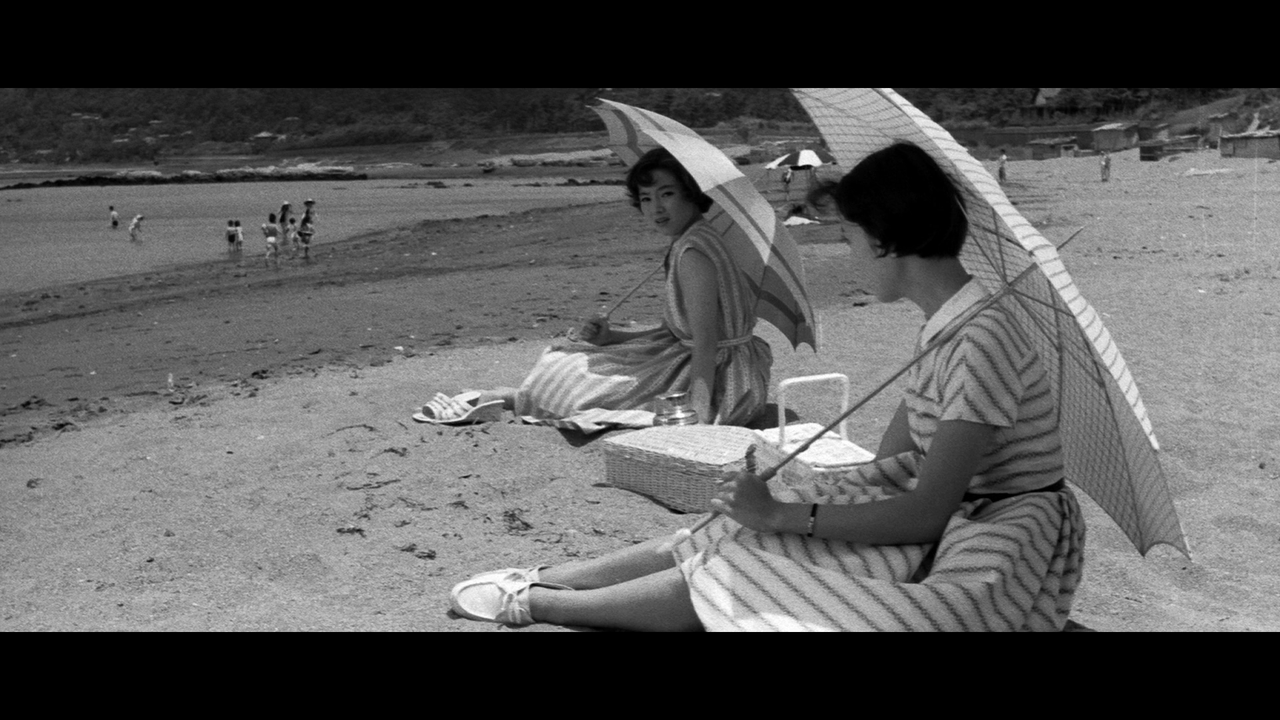
Ruriko Asaoka, by contrast, sort of drifts into the film. Kazue is reluctant to get back together with Nobuo, until Keiko convinces her to go to the beach with Keiko's younger sister and Nobuo and herself. Watching Keiko's sister cavorting in the water, Kazue is torn what to do, and Keiko completes a delicate seduction, convincing Kazue that underneath Nobuo's rough coping mechanisms is a good heart that yearns for her.
Finally, there is an exceptional scene. Keiko has gone to the mattresses to help Nobuo, convinced him against all odds that he isn't being set up to fall when the police pick him up thanks to Shishido's manipulation. Thanks to her propping him up, Nobuo can stand firm and help the police crack Keisuke Noro, who spills the beans on the whole plot and exonerates Nobuo in the process. Keiko is there waiting for Nobuo to get out of jail. Though her supervisor is with her, watching over her, we get the sense that Keiko is waiting not for her professional charge, but for the object of her affection––and her supervisor clearly knows it, too.
Nobuo emerges, looks off to the side, and we see Kazue waiting for him. The two talk, and walk off, arm in arm. Keiko follows them, hiding behind cars. Her supervisor follows her, looking concerned for her. Alone in the scene, in spite of everyone else being there, Keiko crouches on the ground as Nobuo and Kazue leave.
She tries tying her shoe to excuse the gesture, but her face tilts up and we see the recapitulation of the gesture from the middle of the film––only this time, as her head contorts, the expression on her face is pained, romantic agony. In doing her job well, Keiko has fallen in love. In order to do her job well, she can never acknowledge it, never realize her passion. She has set up another woman to fill her place, one which we sense will never really be for Nobuo what Keiko would and could be for him.
But it all has to be put away somewhere. Keiko ducks down again, and her face springs up once more, a huge, forced smile on it. She gets up and strides forward down the street, ready for her next case, as the movie ends. This last sequence of Keiko alone is all a single crane shot which racks between a long shot and an extreme closeup, then pulls back into a long dolly shot. I don't talk about camera moves much, and this isn't one Suzuki will ever repeat, exactly. But it is exceptional, and ties off the film's most intriguing theme in a really satisfying way. To work in this world means to sublimate one's feelings, and Keiko is striding into a society where work at the expense of any other life is an increasingly tangible value. Incidentally, none of the jobs Nobuo gets set up with by the end of the film look all that promising. It's interesting to imagine what the future will hold for Nobuo and Kazue. This may be a shortcoming of the script not to imply much in this regard, but I suspect Suzuki might have liked the ambiguity of it. This is a happy ending, but Suzuki manages to flavor it with a bitter aftertaste.
Spoiler
As we see in Underworld Beauty and in later films-–especially Everything Goes Wrong, which is made at a time when Nikkatsu is attempting to resurrect the moribund subgenre––Suzuki has a peculiar take on the Sun Tribe, which manages to make the censors happy without diminishing the violence inherent in the subject. Though if the Eiren spent a little more time scrutinizing Suzuki's pictures, they might discover that the reason they seem fundamentally palatable in spite of their violence is that Suzuki is discreetly casting the blame for that violence back on the society from which the Taiyozoku emerges––the hypercapitalist reformation of postwar Japan––so it might give the defenders of orthodoxy a little pause, all the same.
A lot of this is sub rosa in The Spring That Didn't Come, which is outwardly one of the most conventional of Suzuki's Nikkatsu pictures, and which maybe seems the least like something he might create if left to his own devices. But there was some form of precedent, in the Nikkatsu top brass' thinking by assigning this to Suzuki. As in another more conventional-seeming film of the period, Love Letter, Suzuki is being tapped to create a made-to-order melodrama, apparently utilizing his perceived skills with the genre, which were believed to come from his particular filmmaking lineage.
OFUNA MELO
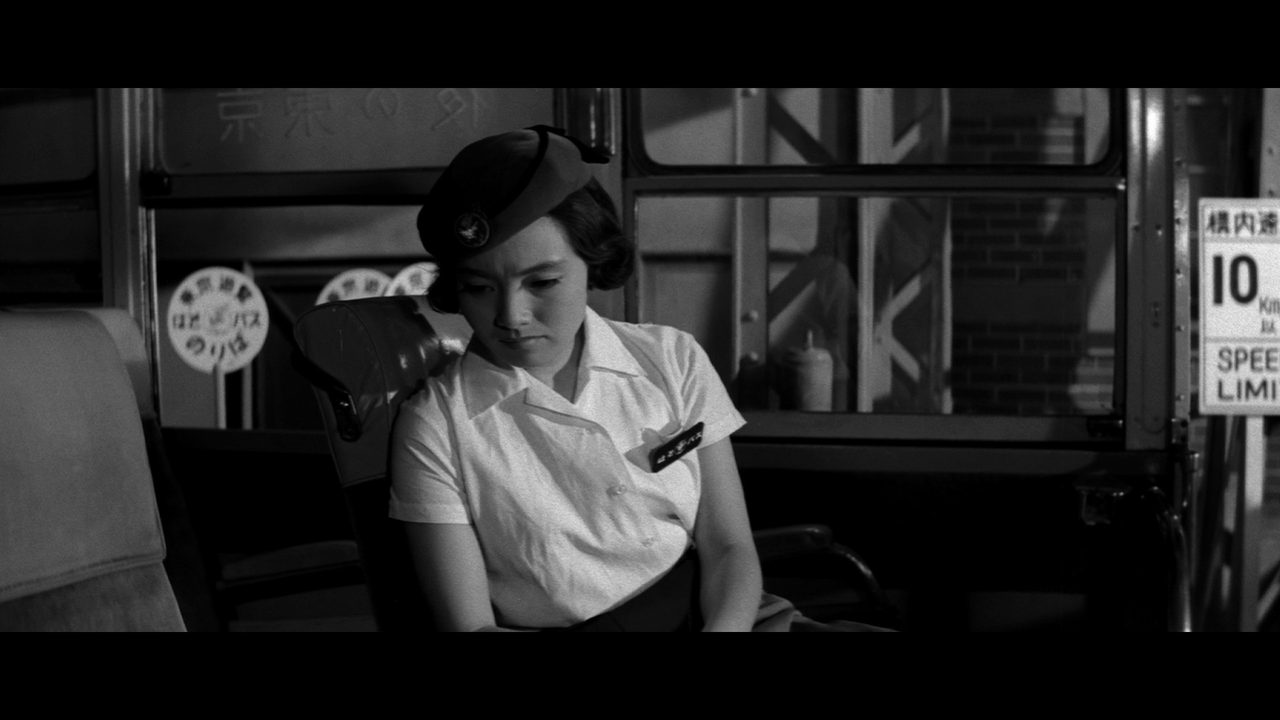
Unlike most of the discontented Shochiku assistant directors who were Suzuki's peers (Oshima, Yoshihige, Shinoda, Immamura, Kurahara, et al) Suzuki spent a lot of his time as an AD in that company's satellite studio in Ofuna. The Ofuna studio was famous for melodramas, and at Nikkatsu it seemed Suzuki was thought the inheritor of that style. Nikkatsu had others amongst its young directors it thought of as specialists––that hack, Buichi Saito, was thought to have capacity for domestic realism from his time as assistant director under Ozu. But the company more often contrived to have these filmmakers work in one of it's more popular house genres, incorporating the touch of whatever experience they had picked up elsewhere. That's why Suzuki more frequently ends up incorporating melodramatic elements into films of other genres––into noir fare like An Inn of Floating Weeds, or into Taiyozoku revival fare like Everything Goes Wrong, or into a yakuza movie like Kanto Wanderer.
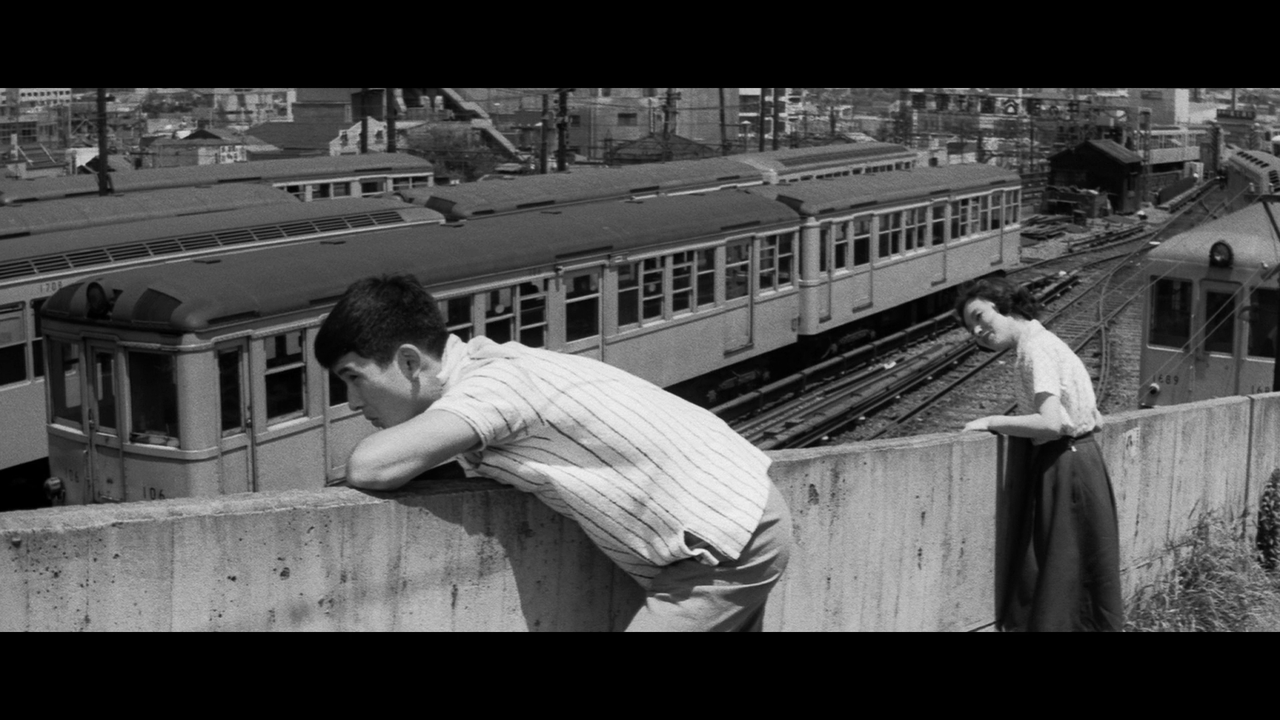
But in this case, Suzuki is being promoted, sort of––or more likely, the studio is attempting to "fit" him into a specialty of some dependable genre. Suzuki's mentor, Noguchi, is always directing hard-boiled crime pictures for the studio. That hack, Buichi Saito, directs a lot of the borderless westerns. Umetsugu Inoue becomes known for musicals. Immamura becomes the studio's "art movie" director, doing Nikkatsu's equivalent of the "Nuberu Bagu" or "New Wave" films coming out of Shochiku. Suzuki had just done well with the hard-boiled noir Nude Girl with a Gun––his first box-office hit––and Nikkatsu responds here by giving him a bigger budget and the biggest stars he's had yet, maybe hoping to make him their in-house melodrama guy.
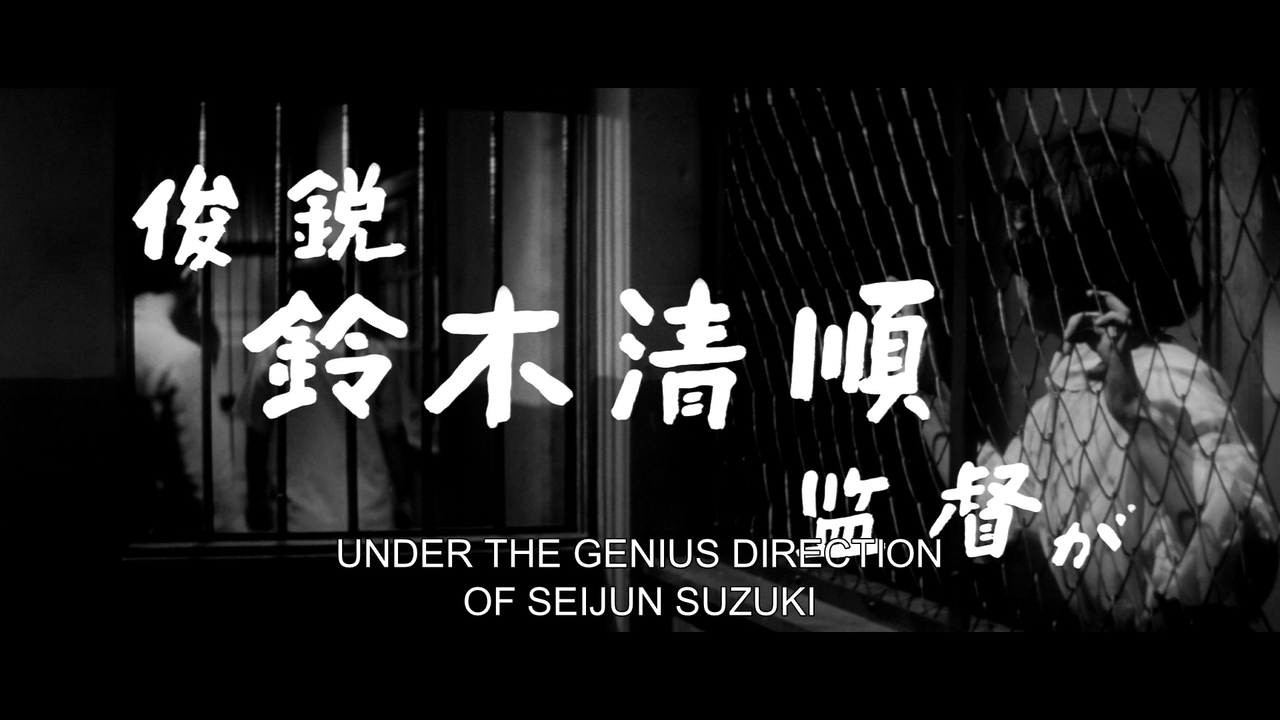
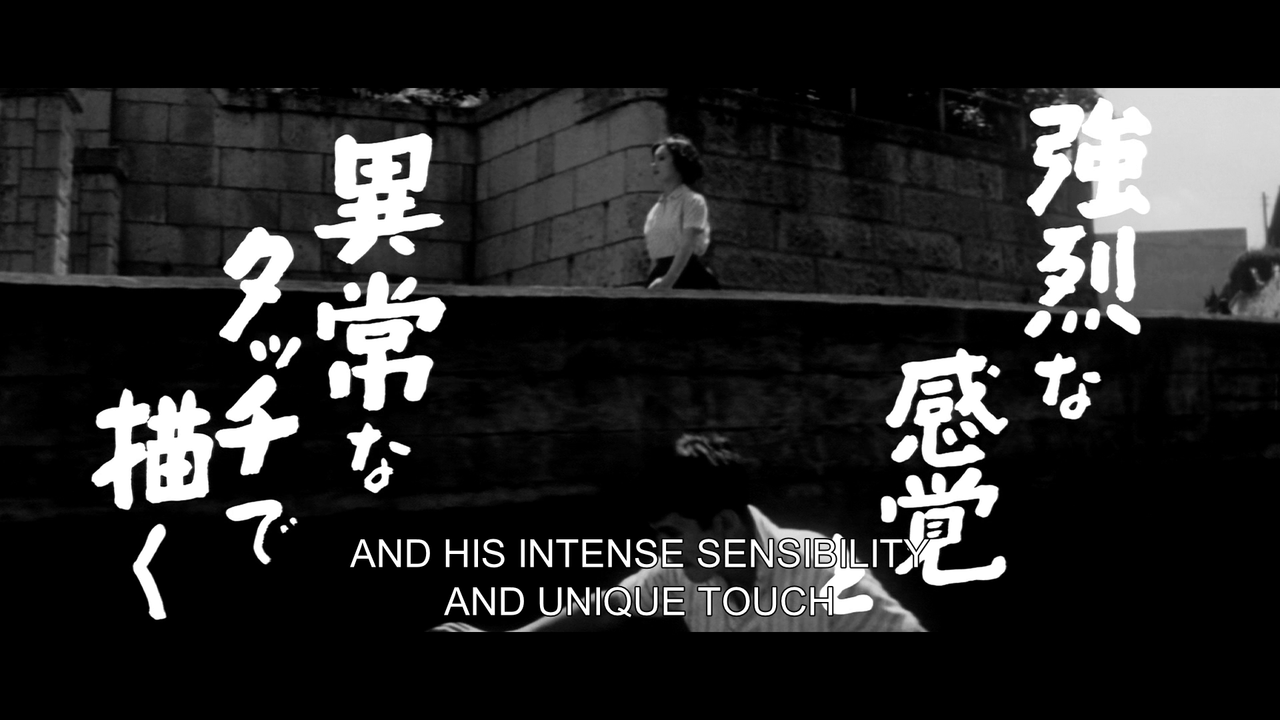
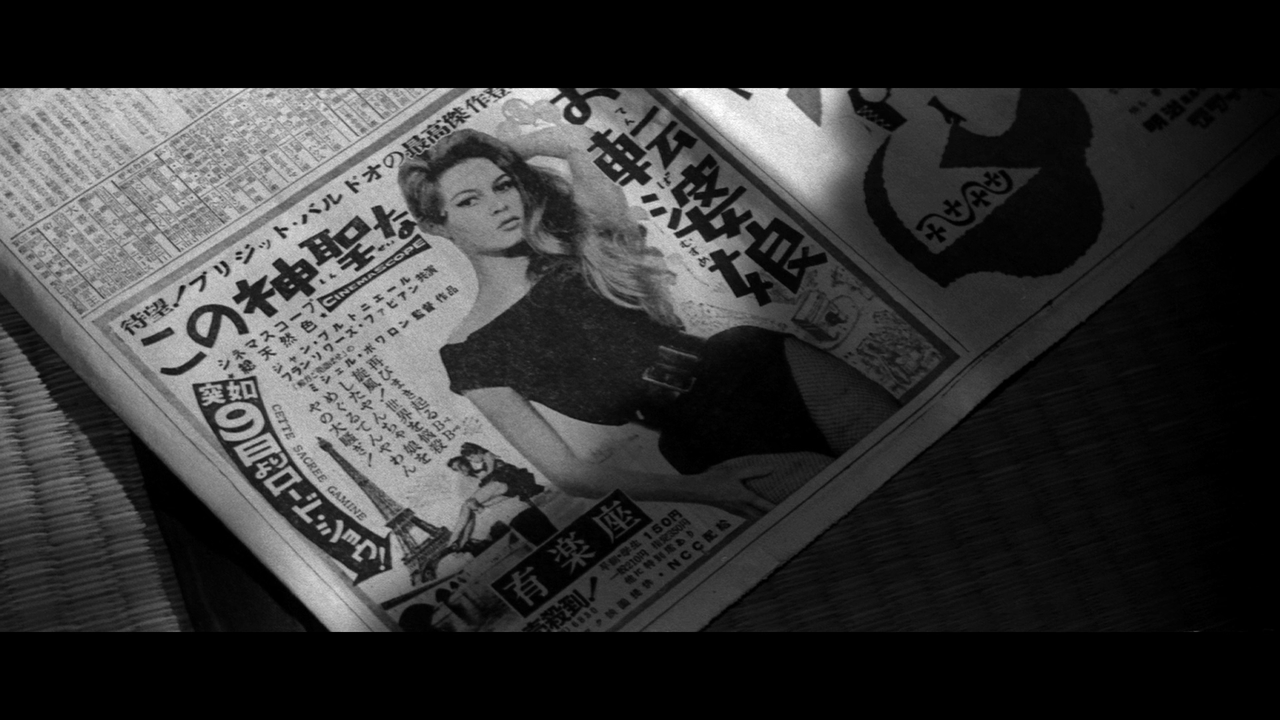
The Boy Who Came Back is full of expressive new crane shots. It utilizes conspicuously metaphorically-charged rain effects, has more fight scenes than were common for Suzuki's movies of the time, and the trailer for the movie makes an eye-opening note, with a text card advertising "the genius of director Suzuki Seijun" as one of the film's special features––this at a time when no critics and really no audience members were familiar with said genius, even if they had seen any of his films.
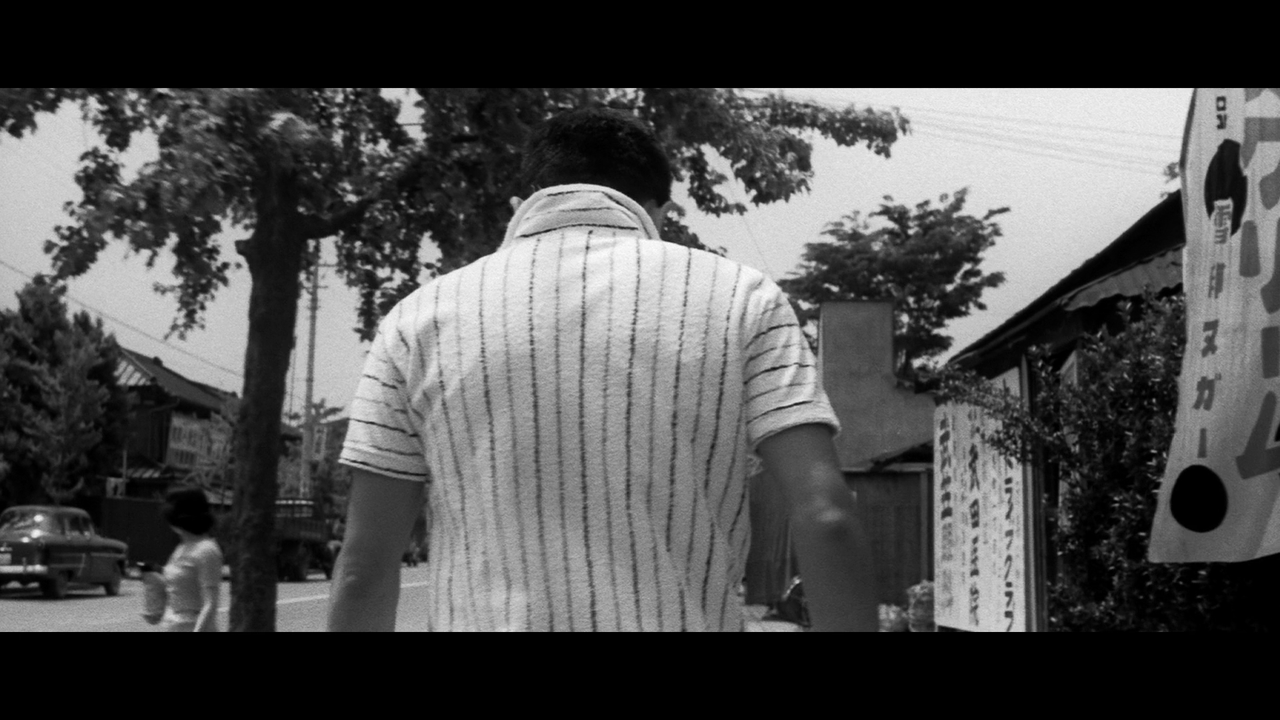
I kind of wonder if this wasn't the work of some specific people in the Nikkatsu office, like maybe Toshiya Fujita––who was likely working publicity at the time. Suzuki is clearly given a more promising project here than he had so far, but it turns out the most sure-handed movie Suzuki has crafted to this point. Underworld Beauty is far more interesting, but The Boy Who Came Back is an affecting melodrama, stealthily sneaking Sun Tribe resonance into the story of a young, enthusiastic social worker, taking on her first case: a disaffected young man who proves to be hot, violent trouble. Can she change him into someone that can fit in with polite society?
REAL STARS FOR ONCE
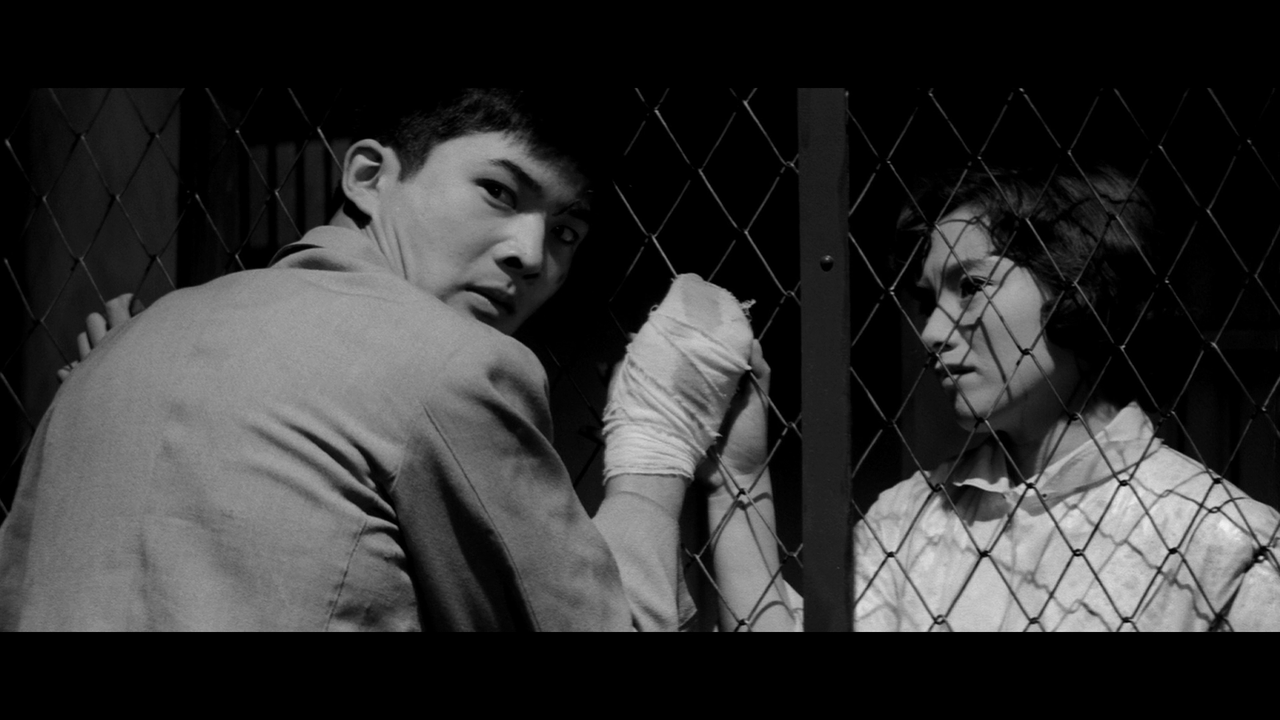
Sachiko Hidari––the biggest star of the picture at this point in 1958––plays the social worker, Keiko. Hidari taught music and gymnastics before becoming an actress at the age of 22. Older and more seasoned, Hidari comes from an age essentially before the Nikkatsu starlet (Ruriko Asaoka, co-starring here, debuts at the ripe old age of 15) and seems a prepossessed person earlier on. She debuts in 1952 for Shintoho, in what looks like a lesbian skiing romance which I now have to see, called Wakaki hi no Ayamachi, or "The Young Lady's Mistake." Awesome. From there she works mostly for Shintoho until she signs on with Nikkatsu in 1954. Her initial Nikkatsu films are a mix of hard-boiled thrillers and melodramas––basically the studio's stock-in-trade before the Taiyozoku movies break down the doors and change everything. By the time she does The Boy Who Came Back in '58 Hidari has already started working for other companies, especially Daiei at this point. Her efforts to break her Nikkatsu contract and become a free agent were revolutionary; it seems Nikkatsu even sent yakuza after her to stop her. But Hidari went solo anyway, becoming a freelancer and starring in memorable movies all over the Japanese film industry. Her most striking performances include the lead in Immamura's The Insect Woman, the lead in her husband Susumu Hani's films She and He and Bride of the Andes, and memorable roles in The Straights of Hunger (now somehow known by the much less sexy title The Fugitive from the Past), Masamura's Double Suicide at Sonezaki, Fukasaku's Under the Flag of the Rising Sun, and Mishima: A Life in Four Chapters. She is known as the second female actor/director in Japan, after Kinuyo Tanaka (who would be third?...maybe...Kei Fujiwara, director of Organ?), directing a lengthy, very well-regarded domestic drama about the wife of a national railway worker, called The Far Road, in 1977. She had over 90 acting credits.
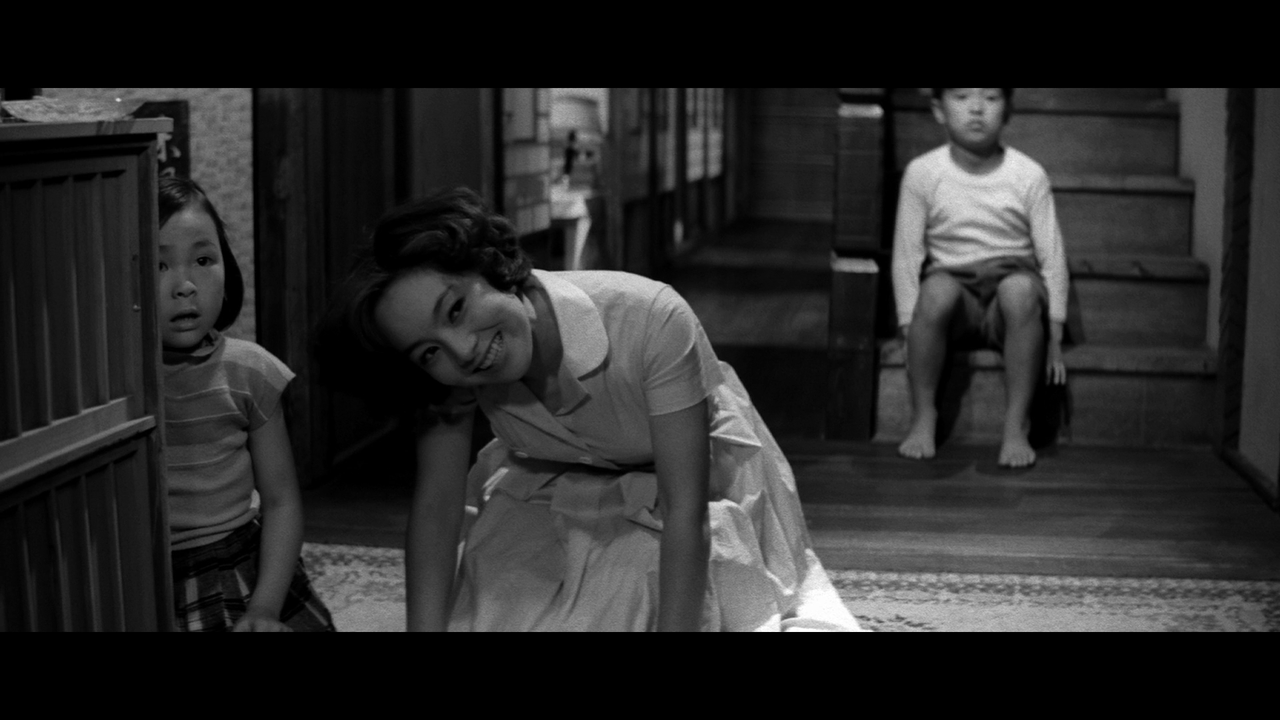
What's not in that recount is the unique figure Hidari struck in the film industry, and on-screen. She was an independent woman in every respect. She had a unique look, a small, not very sexy stature, and she attacked roles of all different types without demure. She wasn't merely an independent actress; she presented in all her roles a unique person, rather than a "genre type." Even with a particular, nearly fixed "look," which only got more set as she got older, it didn't seem to matter; Hidari could be anything in front of the camera, anything she wanted to be.
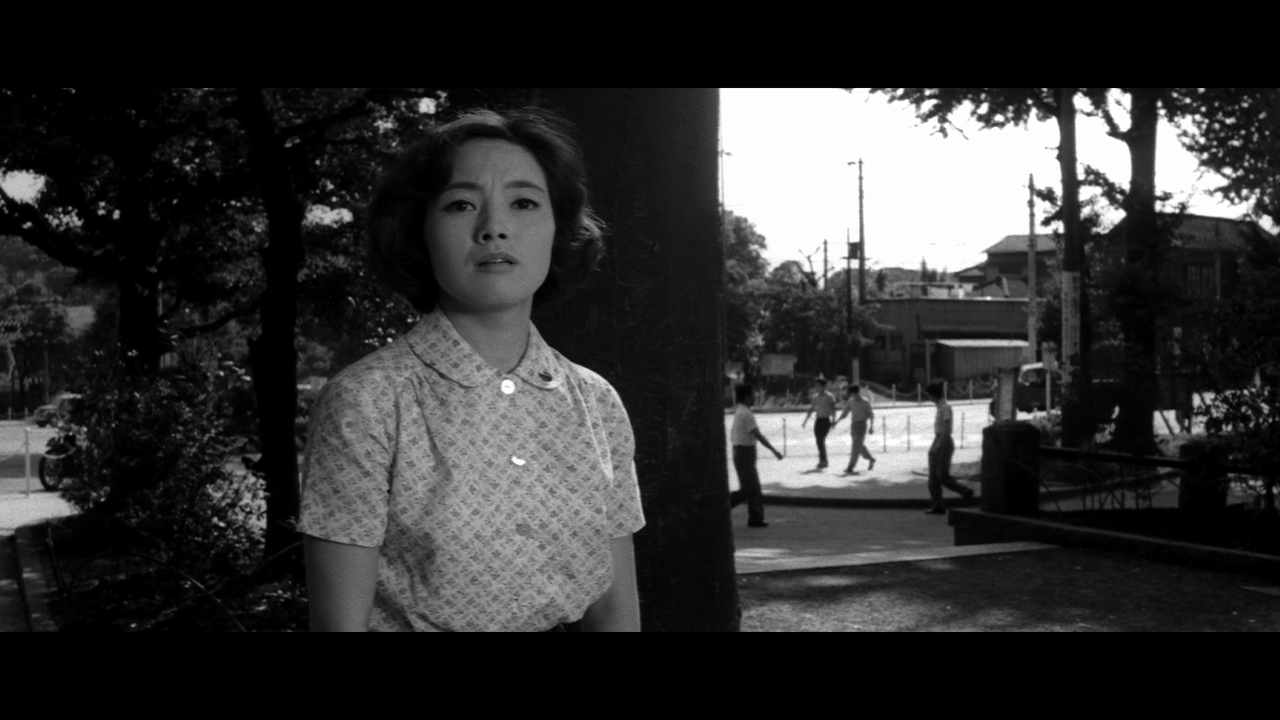
She's definitely the most versatile, most highly-professional actress Suzuki has been able to work with to this point. Mari Shiraki is a wonderful presence, but her husky, provincial accent––which will one day endear her to fans of the long-running Samurai-Colombo TV show Sure Death!––is a mark against her for versatility (in fact, Nikkatsu won't really know what to do with her after Underworld Beauty, and will typically sideline her as various ladies of the night as a result). Misako Watanabe is definitely a more subtle and intellectually adventurous actress than Hidari, who is quirky and personal in her playing but who reaches for psychological realism without the kind of imaginative, adventurous literary quality of Watanabe, but Hidari dives straight into the intensely physical style of acting Suzuki prefers, and which he has such a hard time getting from other actresses at Nikkatsu throughout his career there.
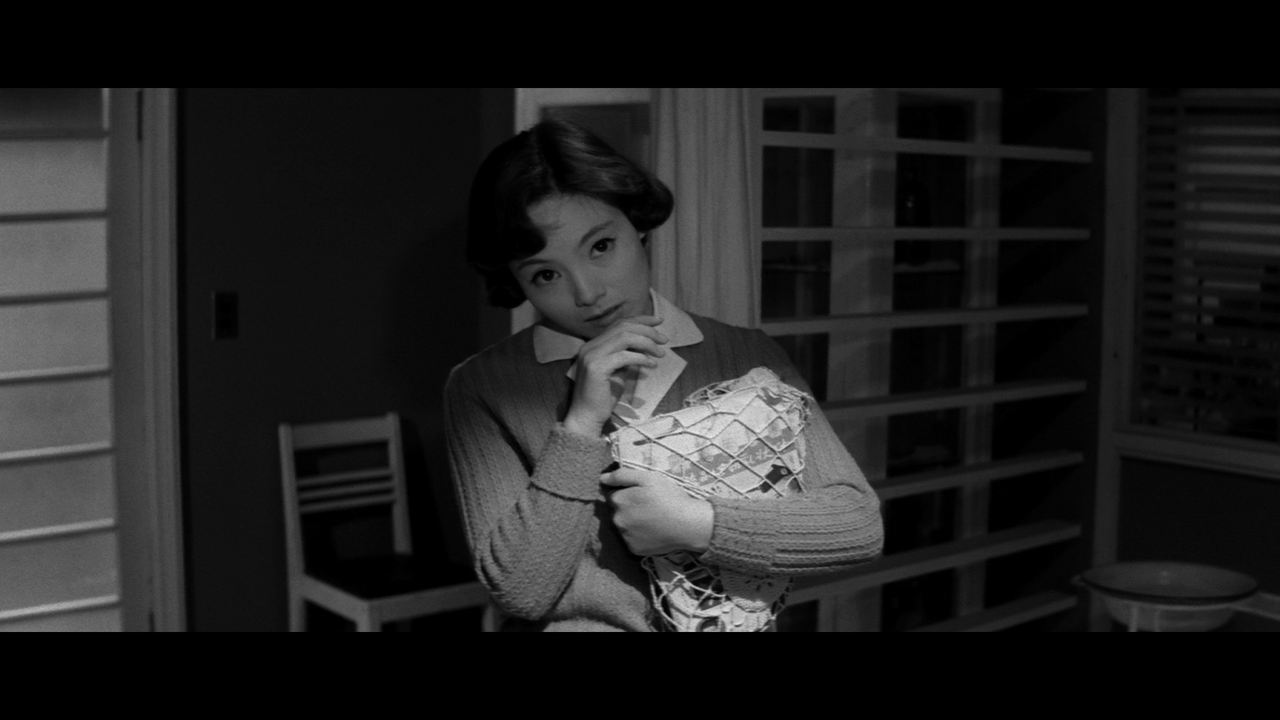
Hidari's playful animus warms the entire picture. She's high-spirited and exuberant when she gets her first case as a social worker, thrilled and inquisitive when she first meets problem child Kobayashi, and steadfast in spite of everything once she gets it in her mind that she can help him steer back to the straight-and-narrow. Many of her scenes are sharp and striking, but she makes the biggest meals out of the most potentially florid material, deftly making melodramatic scenes come alive with fresh and unexpected energy.
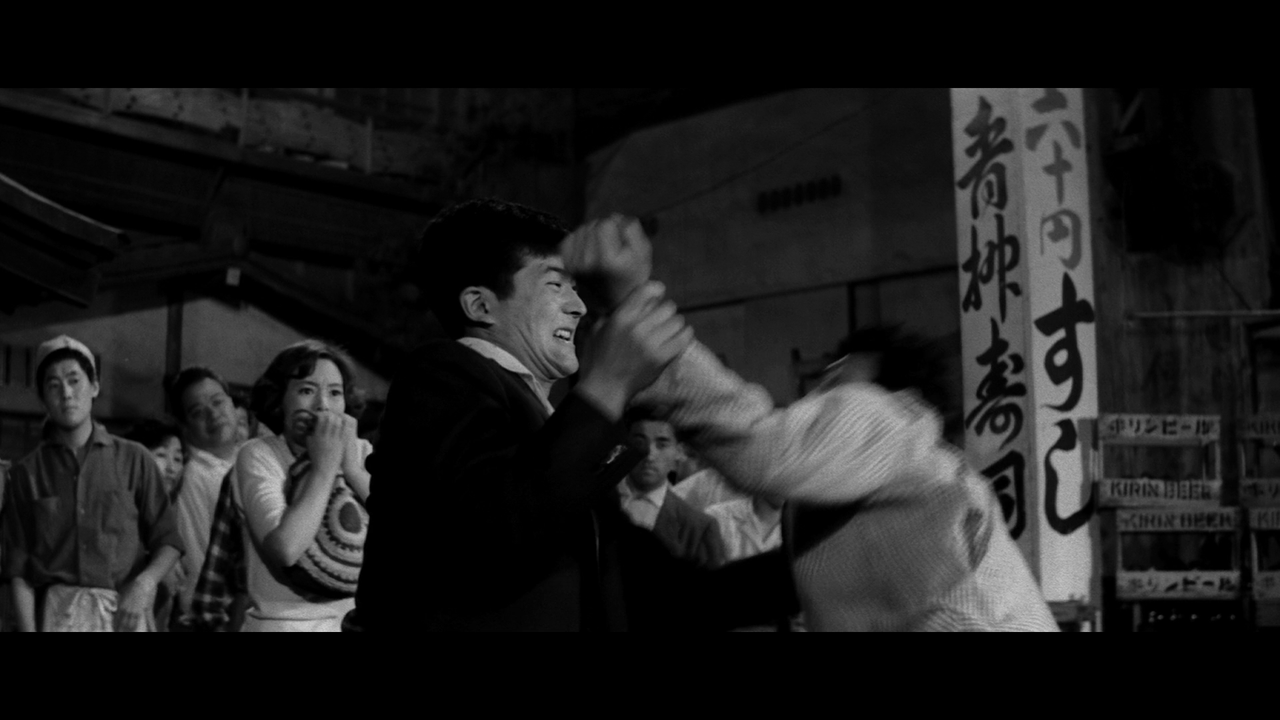
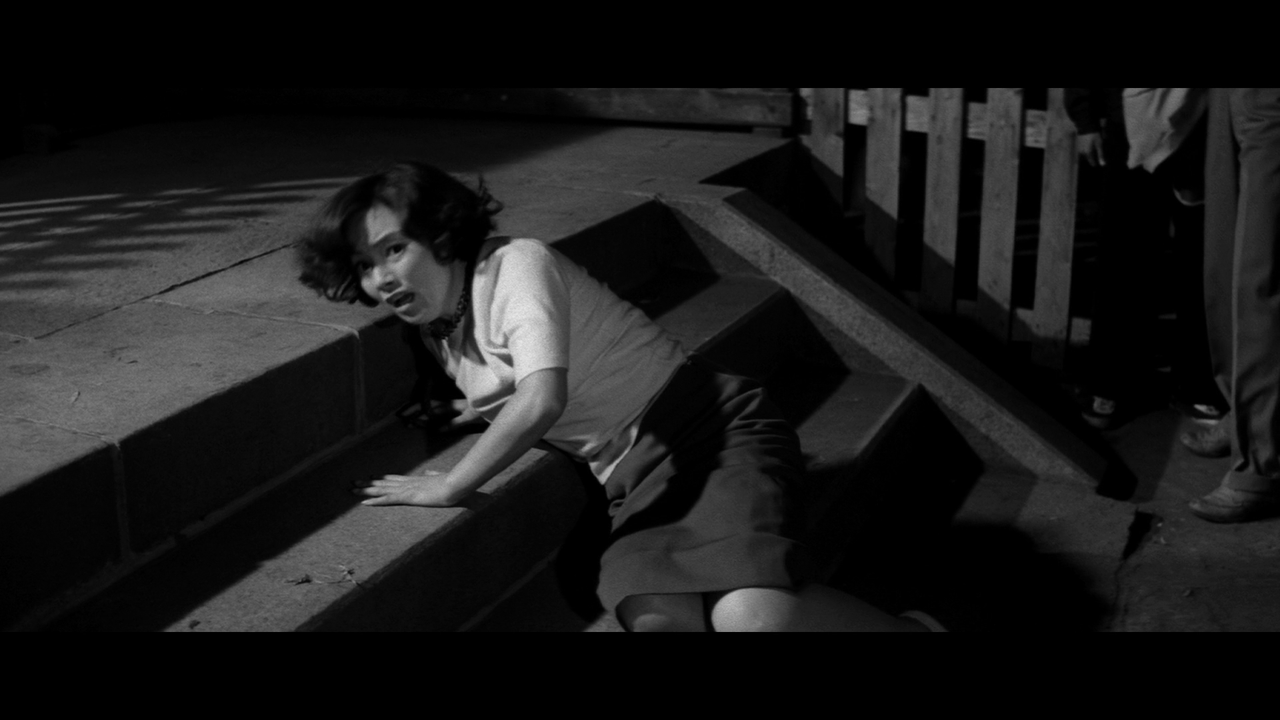
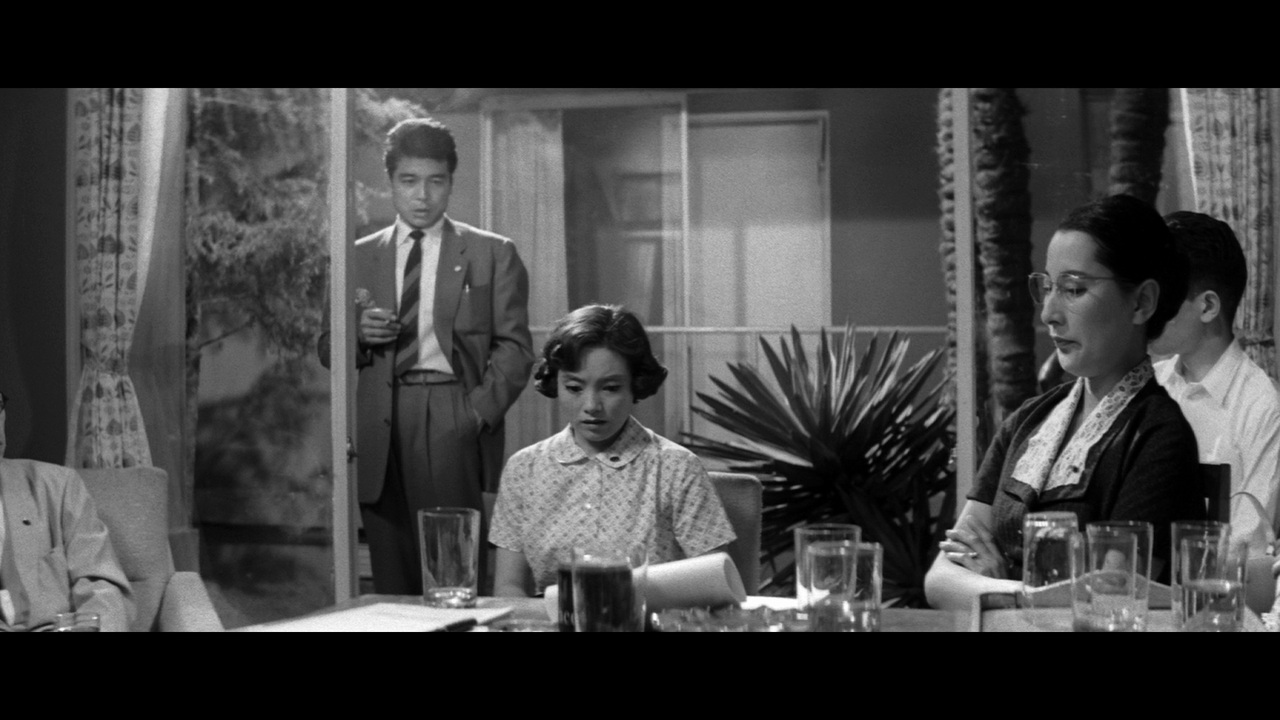
I especially love the sequence of scenes where Kobayashi takes her out on the town, gets her drunk, and gets in a fight, and then Hidari has to argue with her indignant colleagues that the social workers' intervention should continue, rather than them shipping Kobayashi off to jail. The sequence underlines the way Hidari, in an attempt to seduce her young charge into trusting her, has been counter-seduced and humiliated in front of her boss and her coworkers.
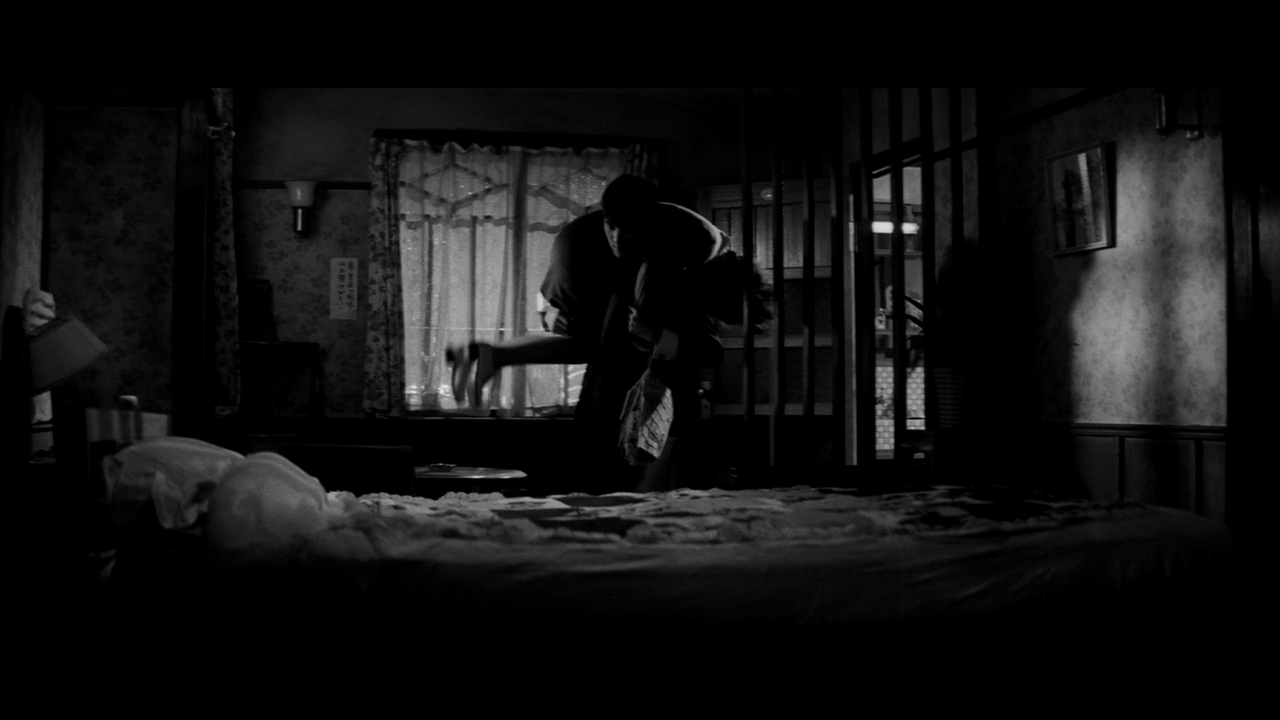
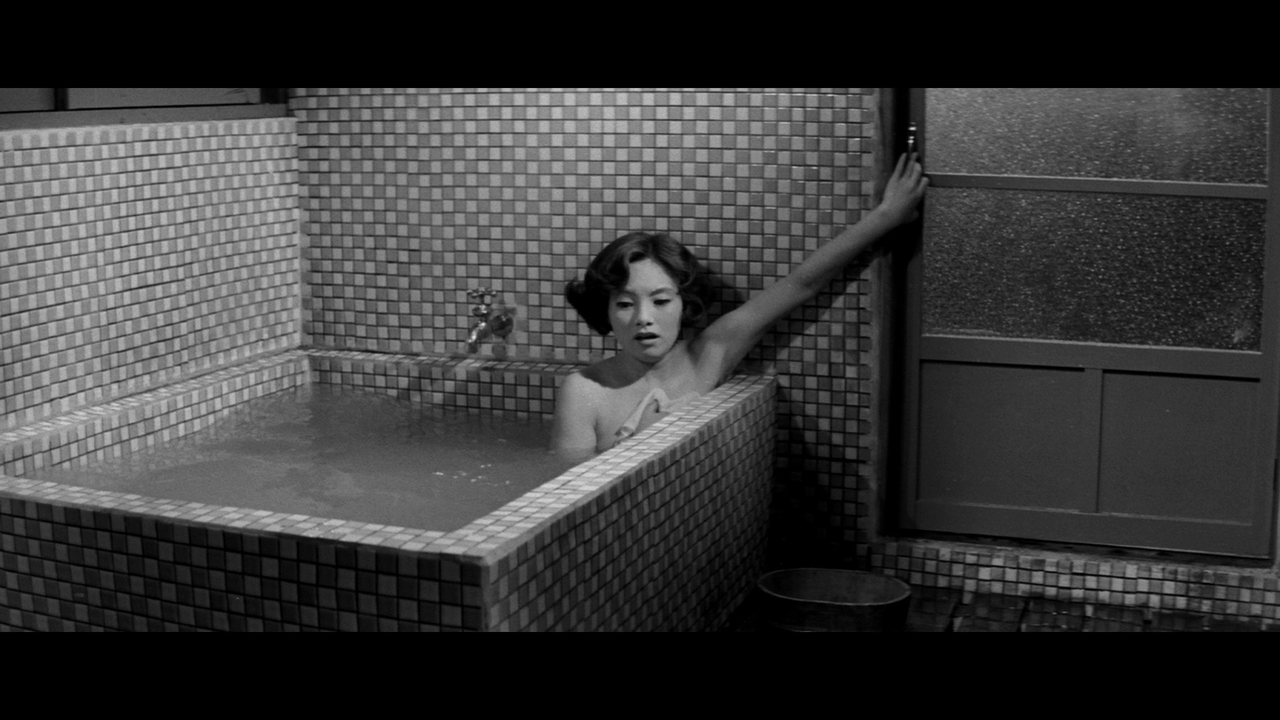
The playing of the crisis is so precise, we get Hidari's humiliation, her worry that she's going to lose her charge or her job, and her desperate bid to turn this failure around into something she can use to recoup her losses and re-establish the trust of her colleagues.
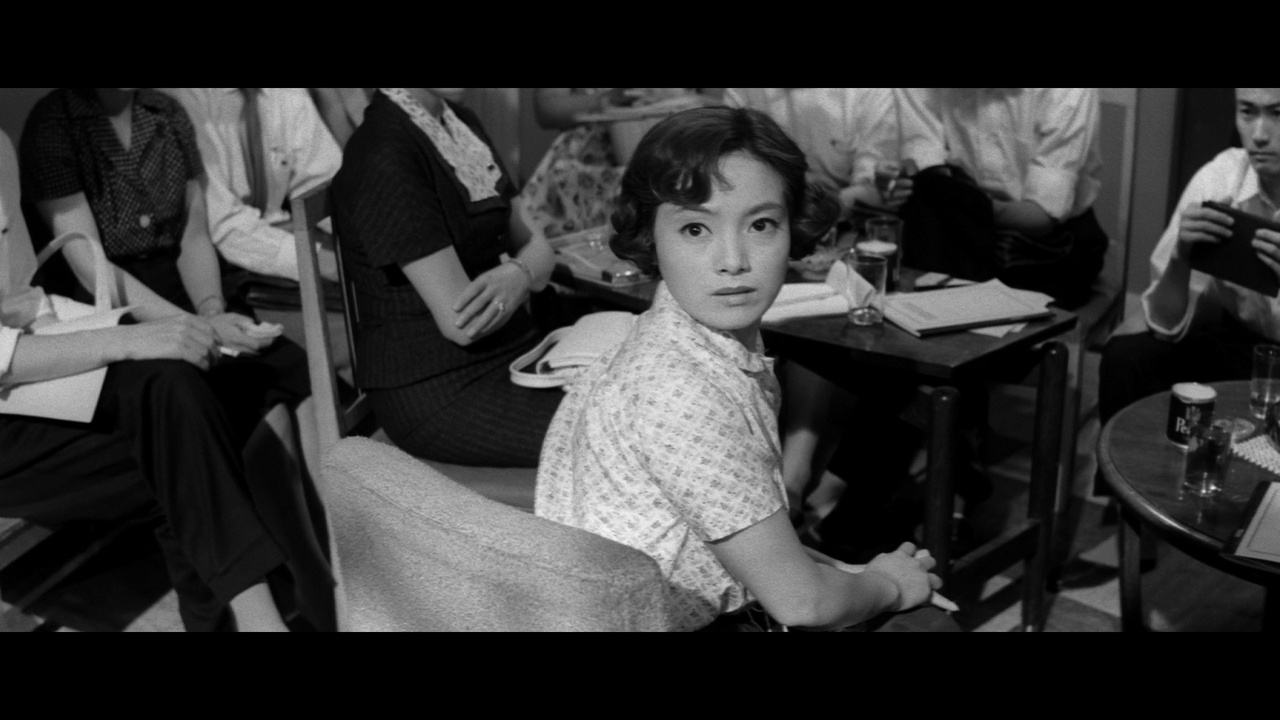
The risk she takes in doing this is written all over Hidari's performance. She is possibly a little florid at times, but she gives us everything her character is grappling with within a minute of being on-screen.
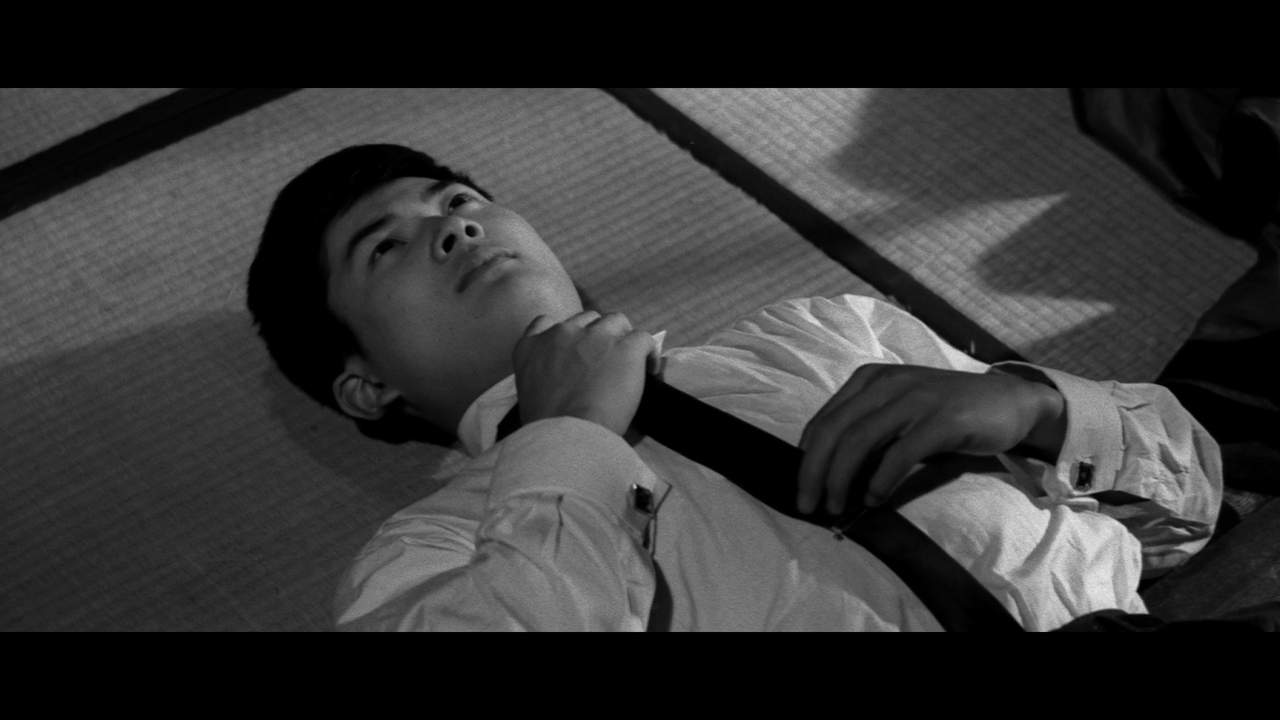
Hidari's force and control are so strong and precise, it leaves her co-star, Akira Kobayashi, not quite as much to do. This seems like a careful calculation on Suzuki's part; Kobayashi is sometimes gawky and awkward in this film, and he doesn't seem too sure of himself in all the scenes.
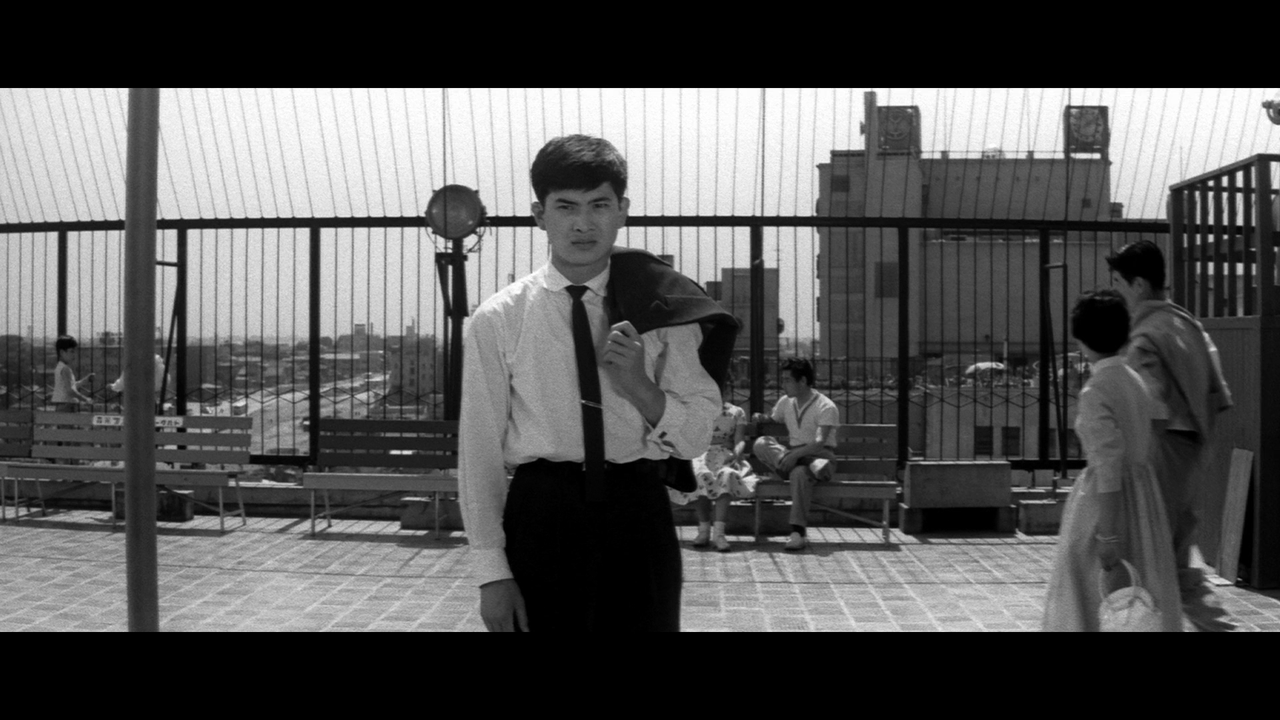
Kobayashi never really becomes the best actor out there, though he is the last-living and the longest-lasting of Nikkatsu's fabled Diamond Line of stars. Like the others, Kobayashi was featured initially as a supporting player in Ishihara vehicles. In this case, he followed Ishihara in The Champion, Sun Tribe in the Last Days of the Shogunate, and Rusty Knife, and his first leading role was in a Ren Yoshimura melodrama called The Way of Youth. Then Nikkatsu drops back and has him co-star in several more melodramas, including The Nun, opposite Izumi Ashikawa, and the two Suzuki movies, The Boy Who Came Back and Blue Breasts. He's in Toshio Masuda's dull The Perfect Game (a bland remake of the already pretty lousy Hollywood heist movie Five Against the House), playing the guy who folds and rats on his buddies who rob a race track because he feels it's allegedly the "right thing to do" after guilt overwhelms him. Then he gradually ascends to leading roles in his own right, opposite Mari Shiraki in Dynamite Costs Extra, and in three big hits from that hack, Buichi Saito: Farewell to Southern Tosa (a formative hit for Nikkatsu, solidifying what "Nikkatsu Akushon" will become as a genre), The Rambling Guitarist, and Tokyo Mighty Guy.

Now he has hit his stride, and he ends up married to these long-running series of incredibly formulaic and successful films, from the Rambling Guitarist pictures to the Vagabond series, and following a photo shoot for the Rambling Guitarist series where he dresses in black leather cowboy togs to look like Montgomery Clift he becomes the company's chief exponent of the "No-Nationality Western."
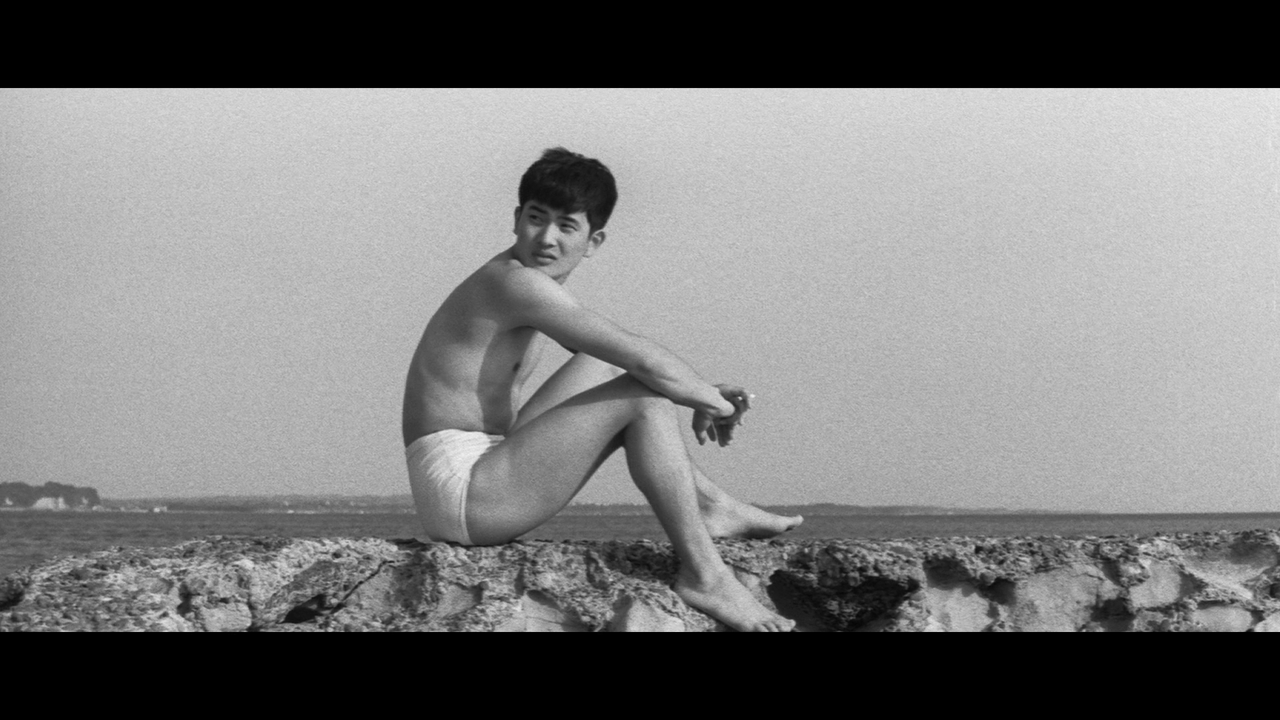
Fortuitous timing or some innate business instinct leads to Kobayashi steadily gaining weight over his career, allowing him to slip undetected into genre after genre. These first movies show him as a reedy, even gangly teenager, but when he returns to Suzuki to make Nikkatsu's early yakuza pictures Kanto Wanderer and The Flower and the Angry Waves, he has filled out enough to look a sort of indeterminate age suitable to those characters, where he is at once romantic in his aspect and also experienced-seeming beyond his actual years. Then as the yakuza movie craze begins to dominate, Kobayashi gets heavier and heavier-set, until he looks like a chunky and successful career gangster, scowling over inexpressive jowls at whatever plot the movie has to ensnare him. By the later Nikkatsu yakuza films, like Retaliation, he already looks like an old gangster dude, and by Hideo Gosha's The Violent Streets he seems suitably reprehensible, a gangster one feels is marinated in whiskey and cigarettes. He hangs on for as long as possible at Nikkatsu, starring in increasingly grungy-looking-and-sounding yakuza titles, up until the stanky-sounding title Women Smell of Night. His last picture for Nikkatsu is The Killer in 1971, and just in time to escape the shift to pinku eiga, he joins Toei for a further run of yakuza classics.
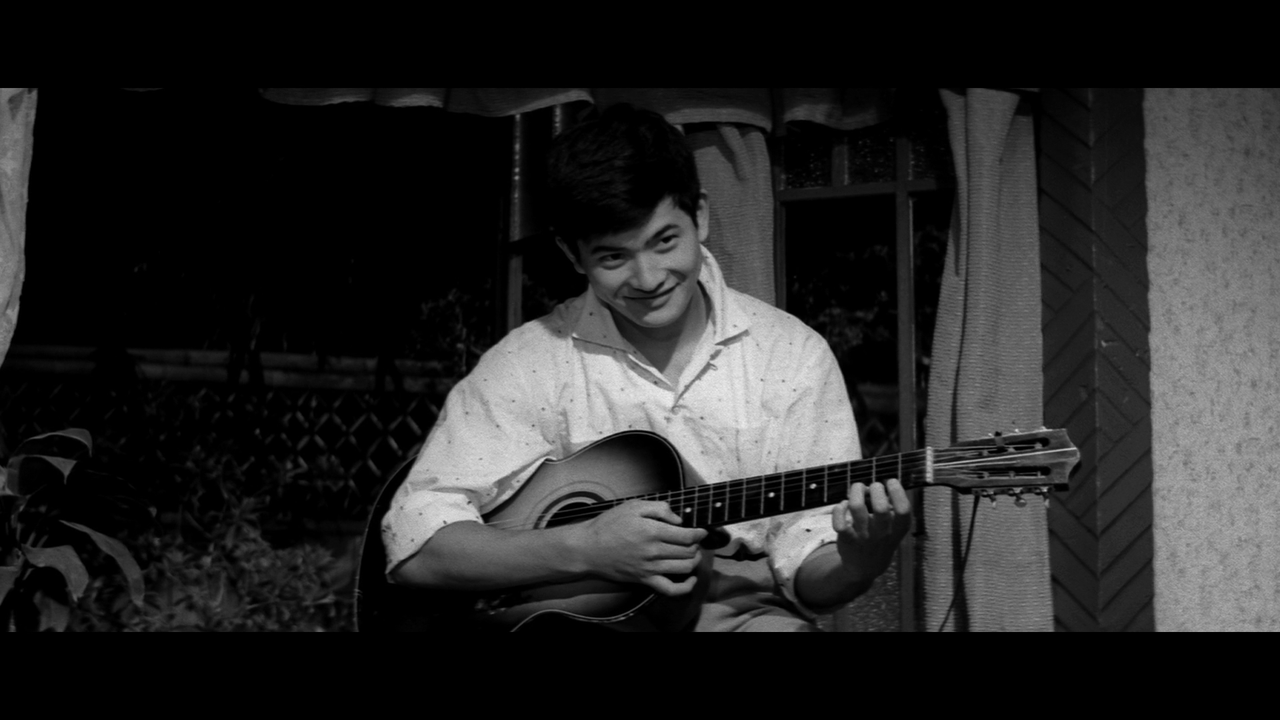
In spite of the way Yujiro Ishihara continued on as Nikkatsu's biggest box-office star, Kobayashi was the actually more reliable number two and did end up essentially the successor to Ishihara's legacy at Nikkatsu, such as could be done. He frequently delivered big hits to the studio, and helped make its image in each new genre Nikkatsu tackled. He was also a custodian of Nikkatsu's reputation long after it was likely profitable to him, and was known to be a friend to the other Diamond Guys in real life. Joe Shishido clearly had affection for him, noting he was the only person from the Nikkatsu days to call Joe and offer condolences when a fire destroyed the elderly Shishido's house and his copious memorabilia from his beloved time in the movies. Kobayashi showed loyalty to Suzuki by remembering him five years after these films and requesting Suzuki direct his first forays into the yakuza genre. His eulogy to Suzuki in the newspapers was perhaps the most generic and inspecific of those who made any comment, but it was respectful; Kobayashi always presented a sort of class act––even if he never delivered anything like a master class in acting. He seems to me a visual model of broad-shouldered cool for Chow Yun-Fat decades later––though he never had the nimble grace of that far superior later actor. While he always had a star's presence, Kobayashi is often sort of off-key or awkward when tested in a role. He liked physical acting scenes, but he doesn't have the exuberance of Joe Shishido, or the self-possession of Ishihara or the physical grace of Koji Wada. He is very good at making explosions of violence in his films seem calculated––as in his enormous burst of violence at the end of Kanto Wanderer. In The Boy Who Came Back, his violence seems more explosive, and he seems more taciturn than usual.
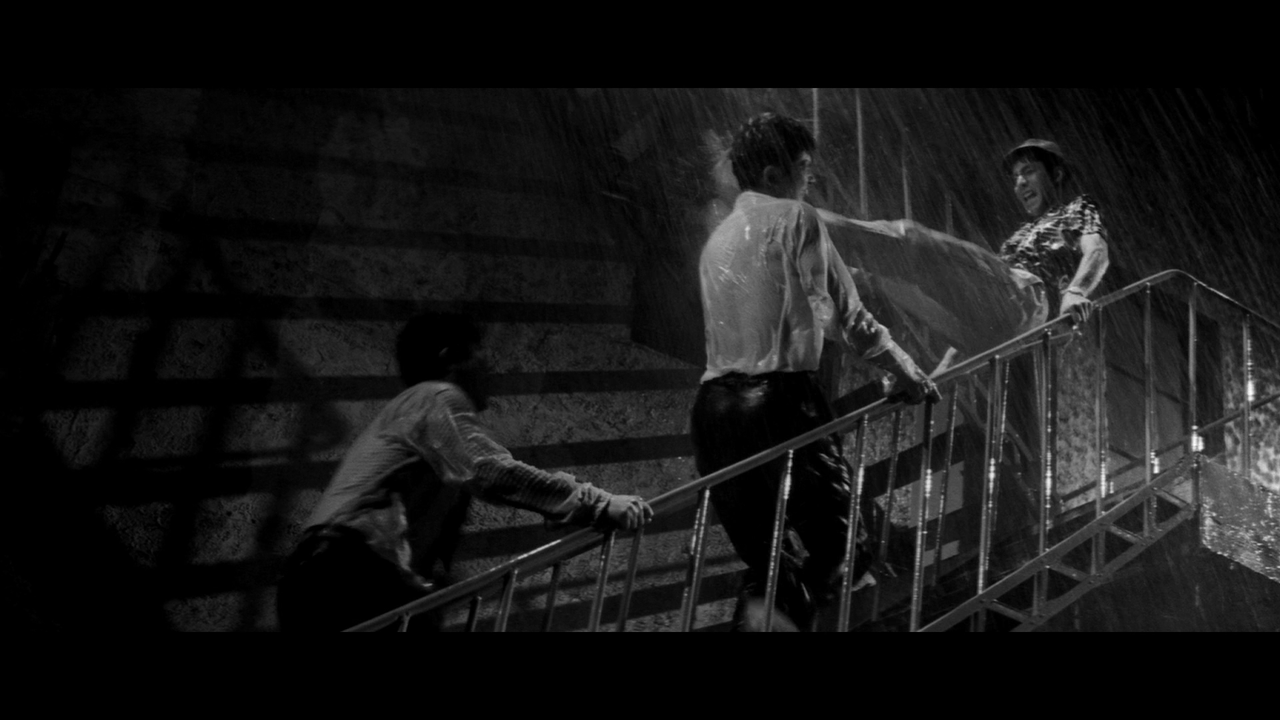
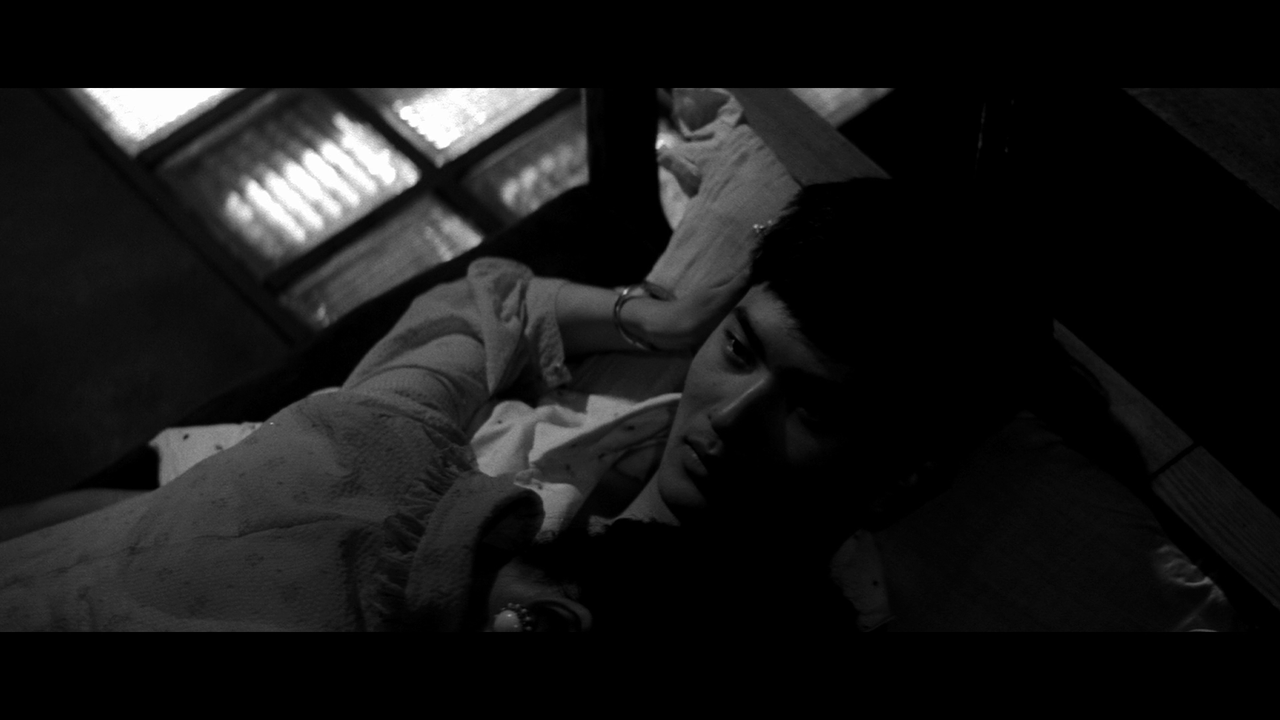
What always worked about Kobayashi though, more than any of the other Diamond Guys, was his polymorphous-seeming sexuality. Until he bulks his way into yakuza roles, Kobayashi has a lot of the ambiguous sexuality of a young Montgomery Clift or Alain Delon.
SEX & VIOLENCE
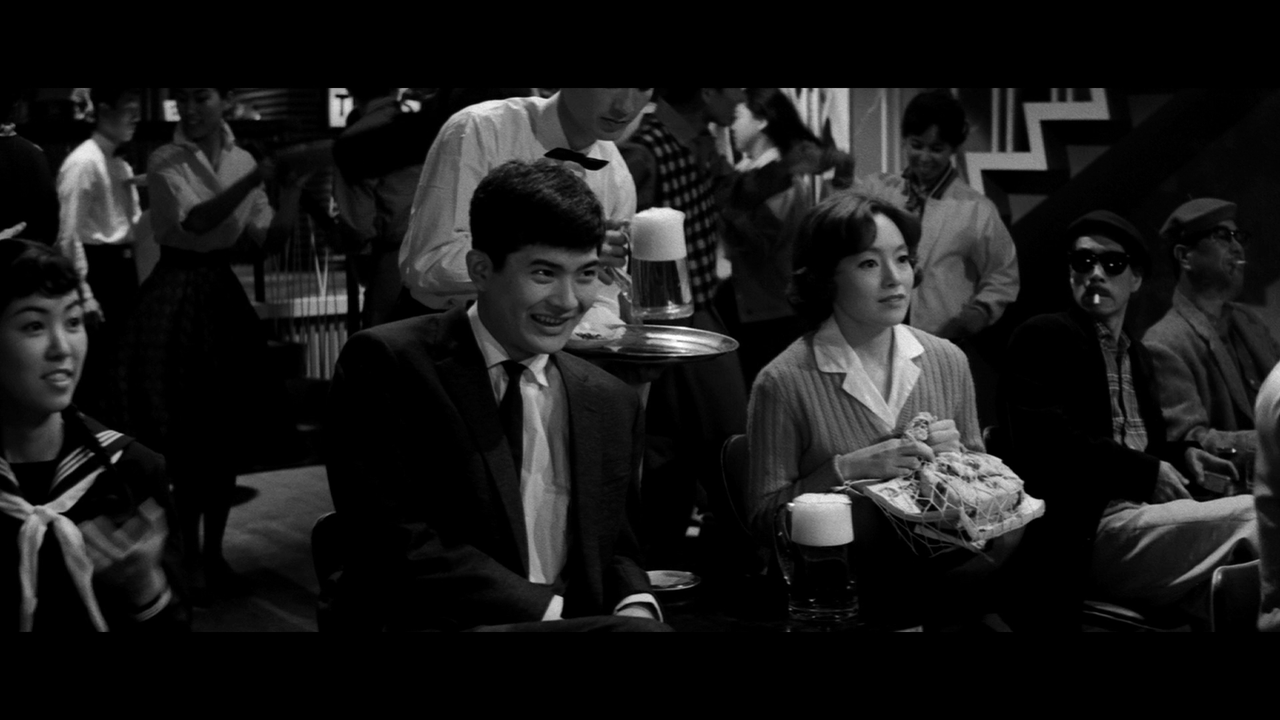
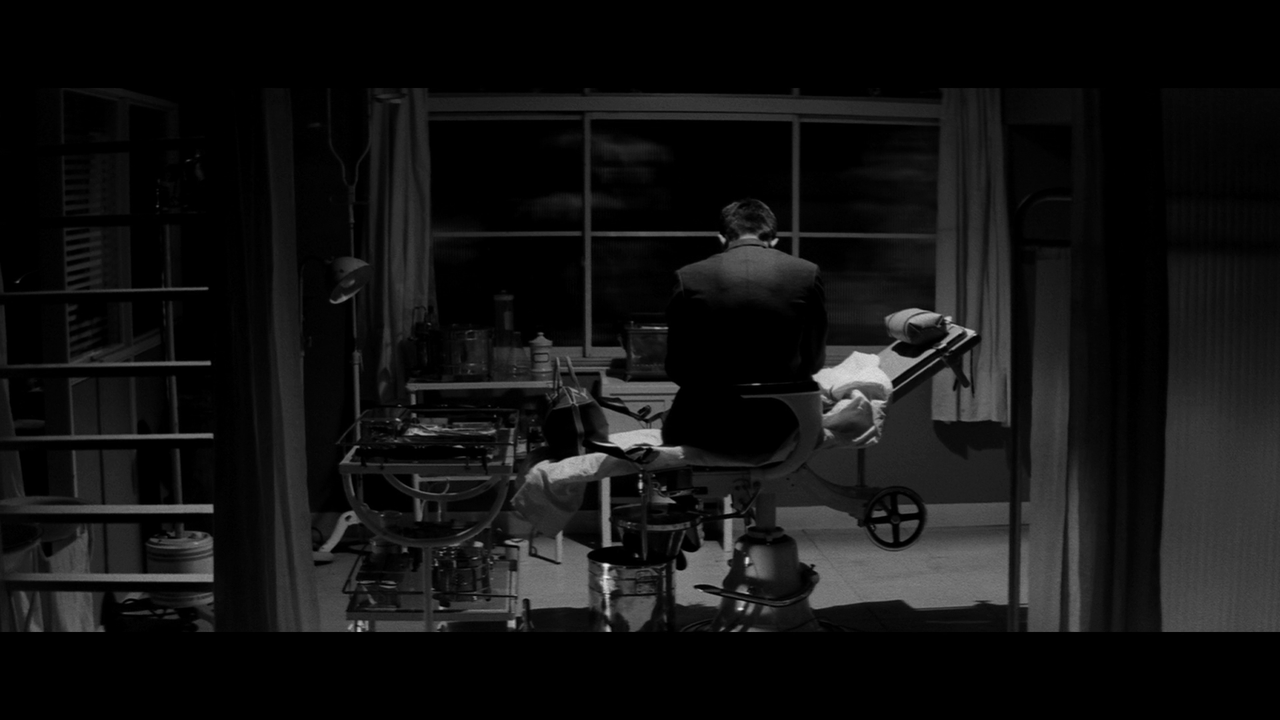
In a way, that sexuality is what is turned up to 11 here. From her playful introduction to him, as Hidari's social worker Keiko finds Kobayashi's delinquent Nobuo lounging on a dentist's chair, playing with a toy spider, the two are flirting with one another, hard.
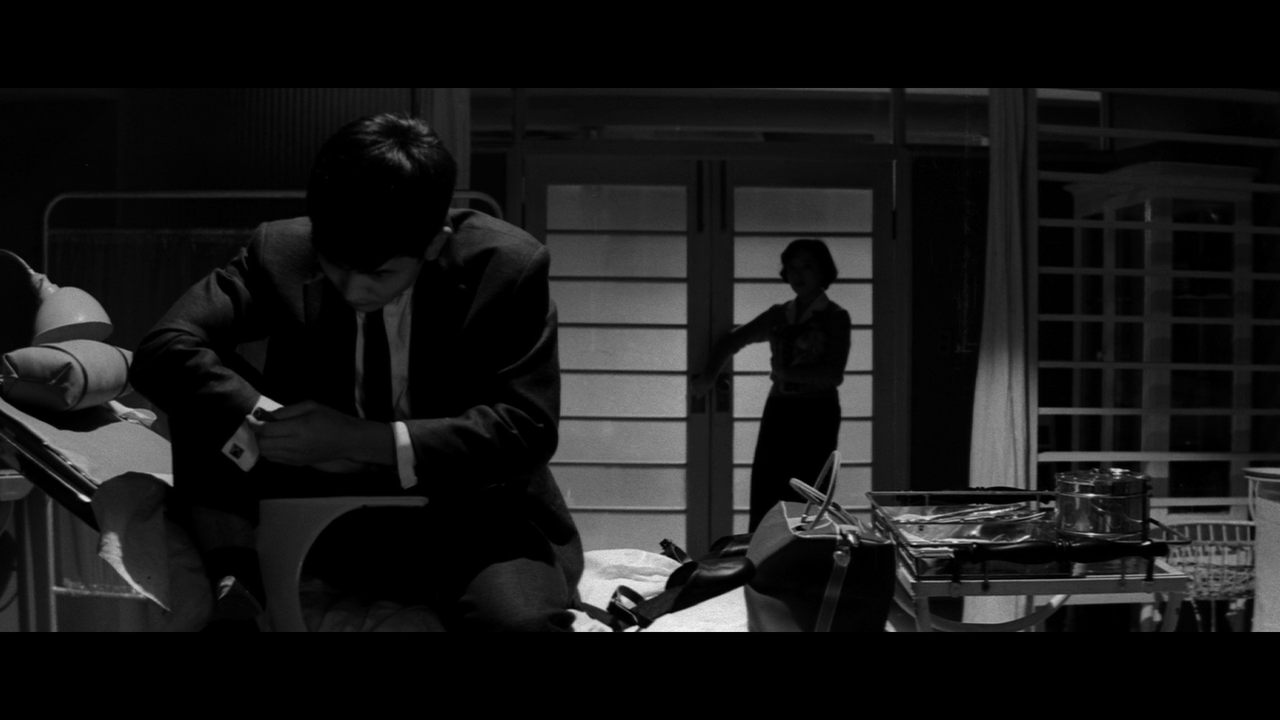
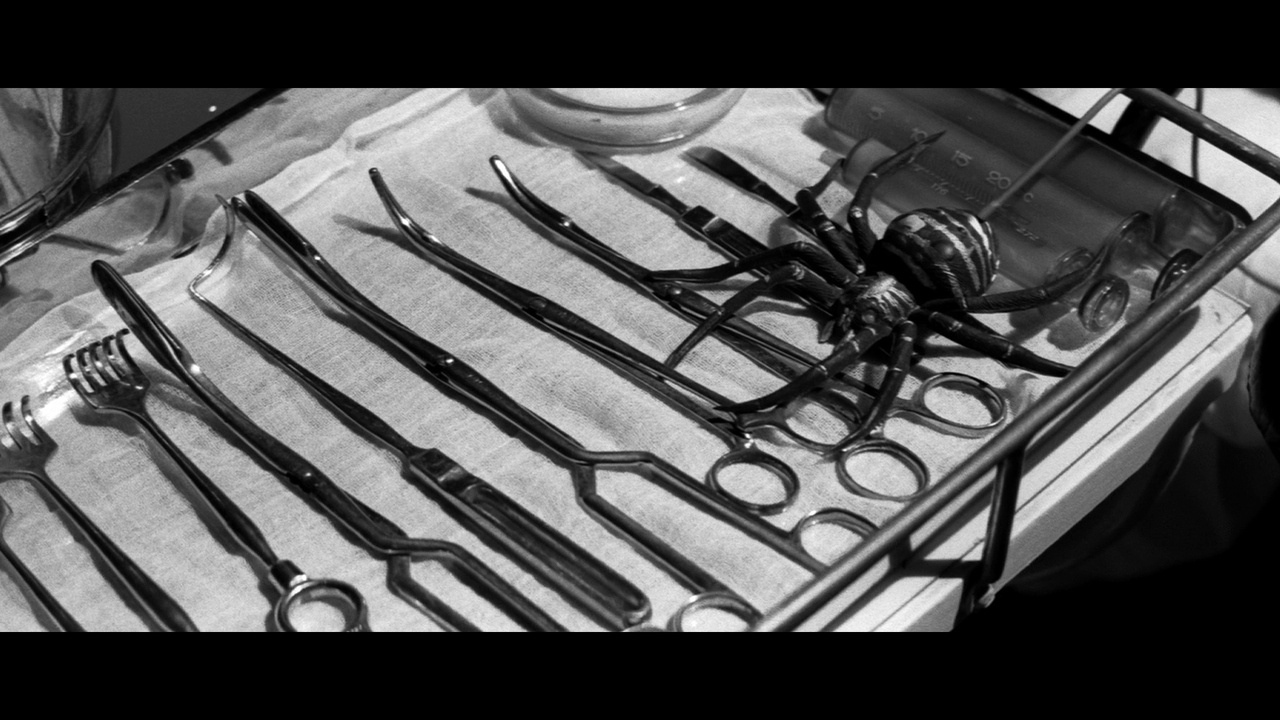
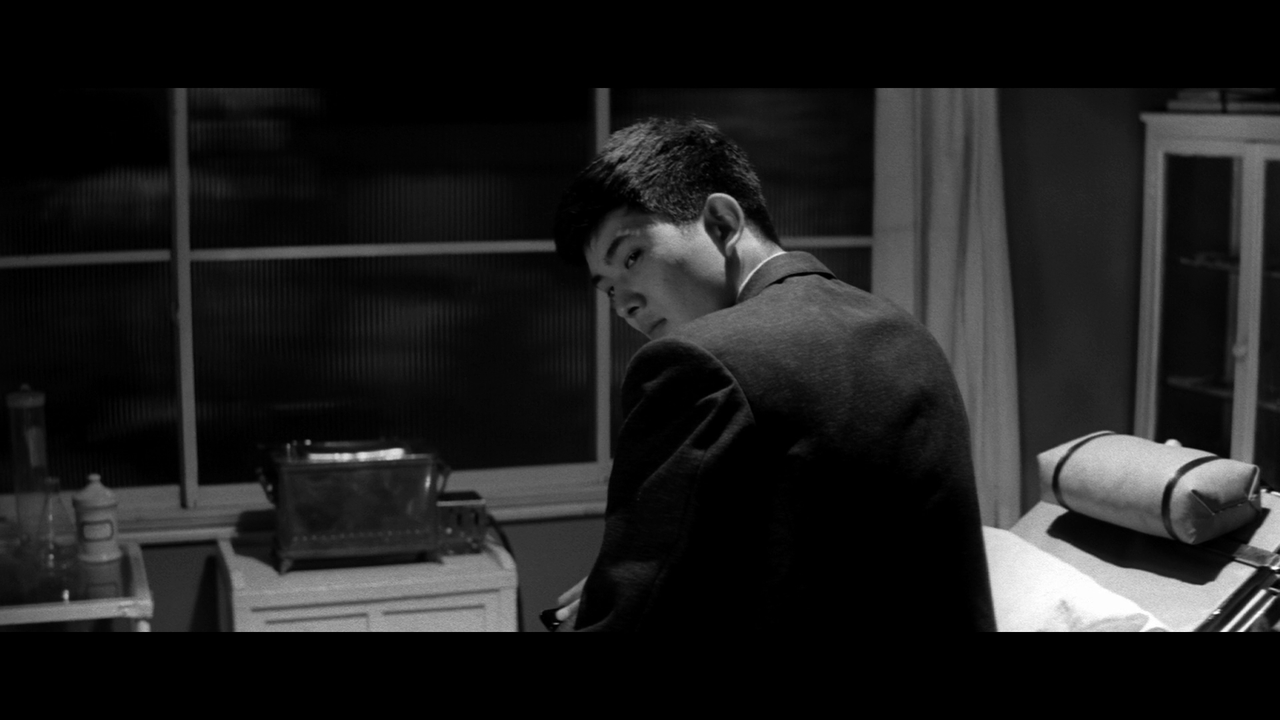
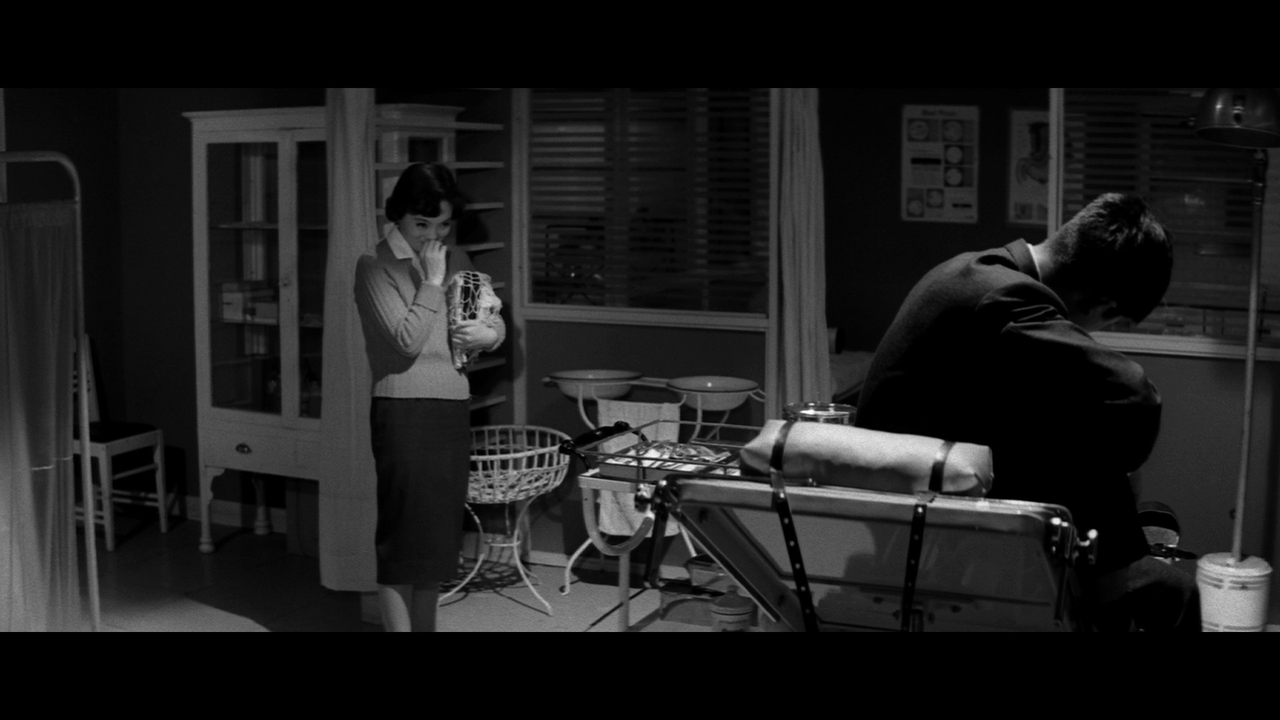
This byplay seems casual at first, but it turns out to be the key that makes this movie better than average for the genre. This is Keiko's first case, and she wants to make a splash; she connects with Nobuo first with flirtation, with fawning attention. He responds by essentially seducing and abandoning her, playing to her eagerness to see what his life of underworld loutishness is all about. It looks as if he'll end up bedding her in a seedy hotel, but she takes refuge in the bathroom and he uses the chance to escape. Keiko comes to recognize that Nobuo views his own sexuality in an entirely negative light––women, including his bar-girl fling, including so many other girls like her, the film seems to imply, want a sexual performance from him which leaves him disinterested. Keiko learns Nobuo had a girlfriend, Kazue, who has given up Nobuo and gone on the straight-and-narrow as a teacher for young children. So begins Keiko's dual seduction, playfully nudging Nobuo back towards Kazue, and on the other side building Kazue's gumption to be the romantic foil Keiko thinks Nobuo needs.
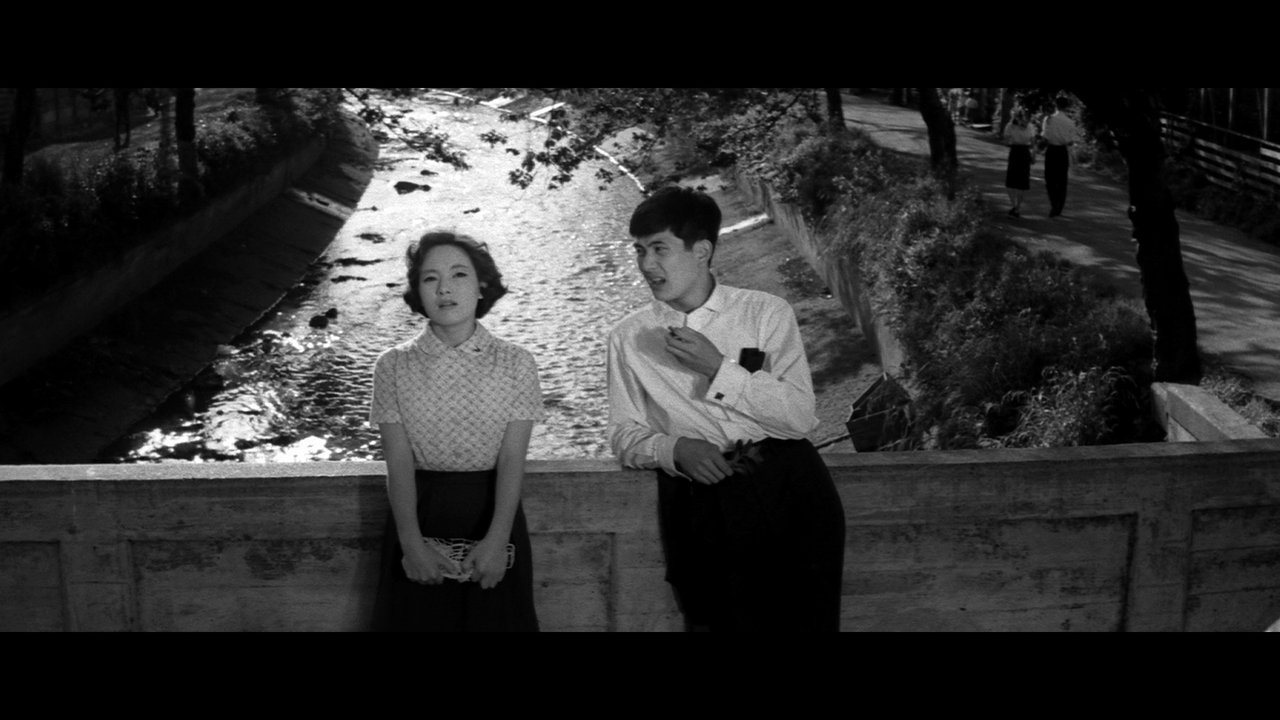
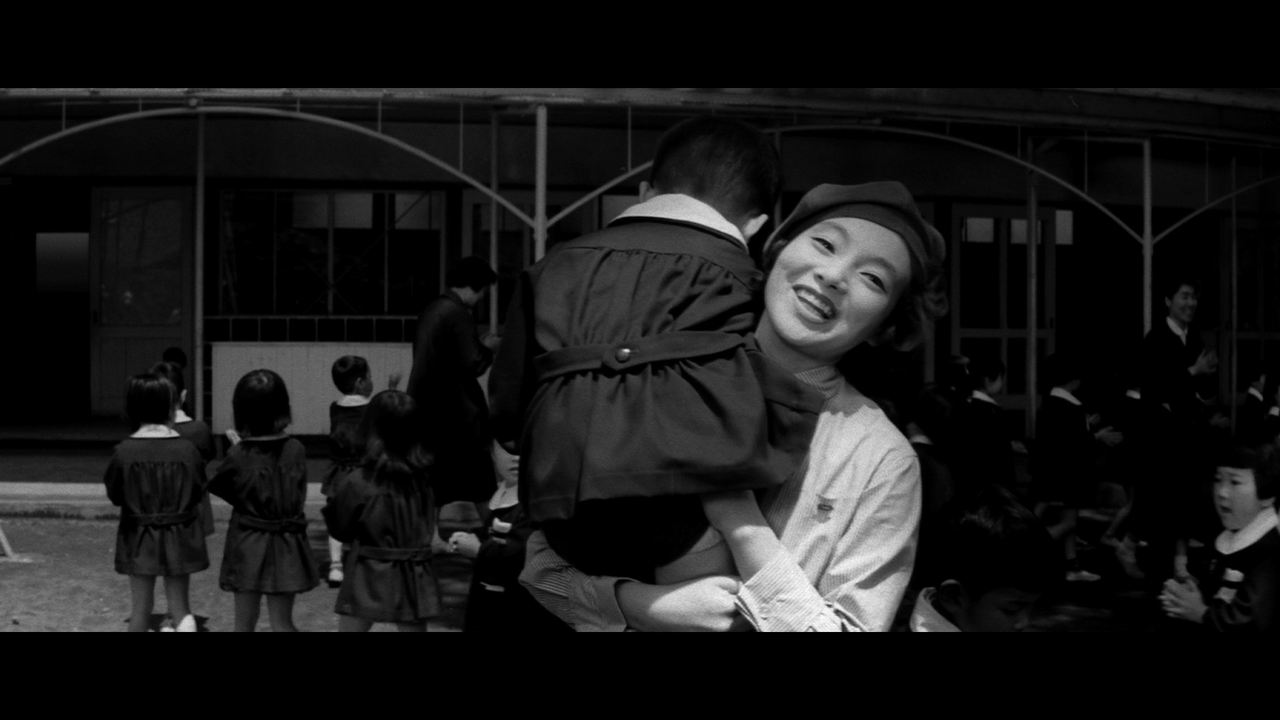
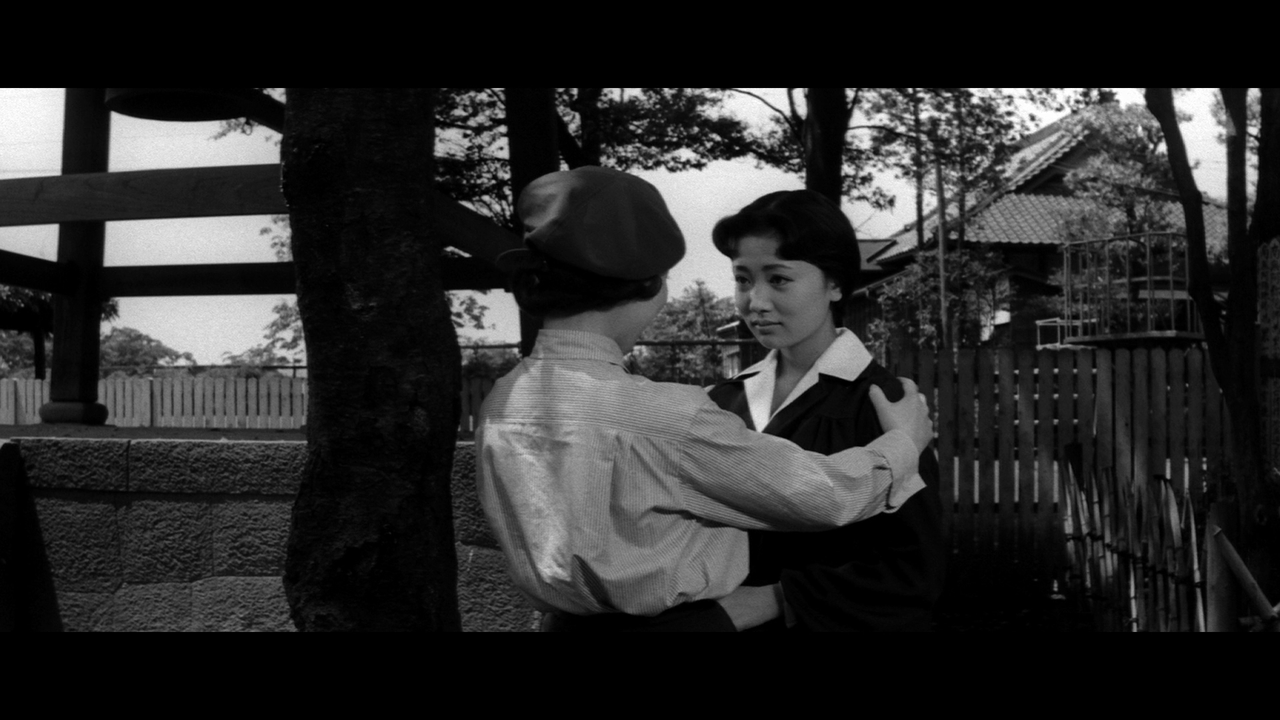
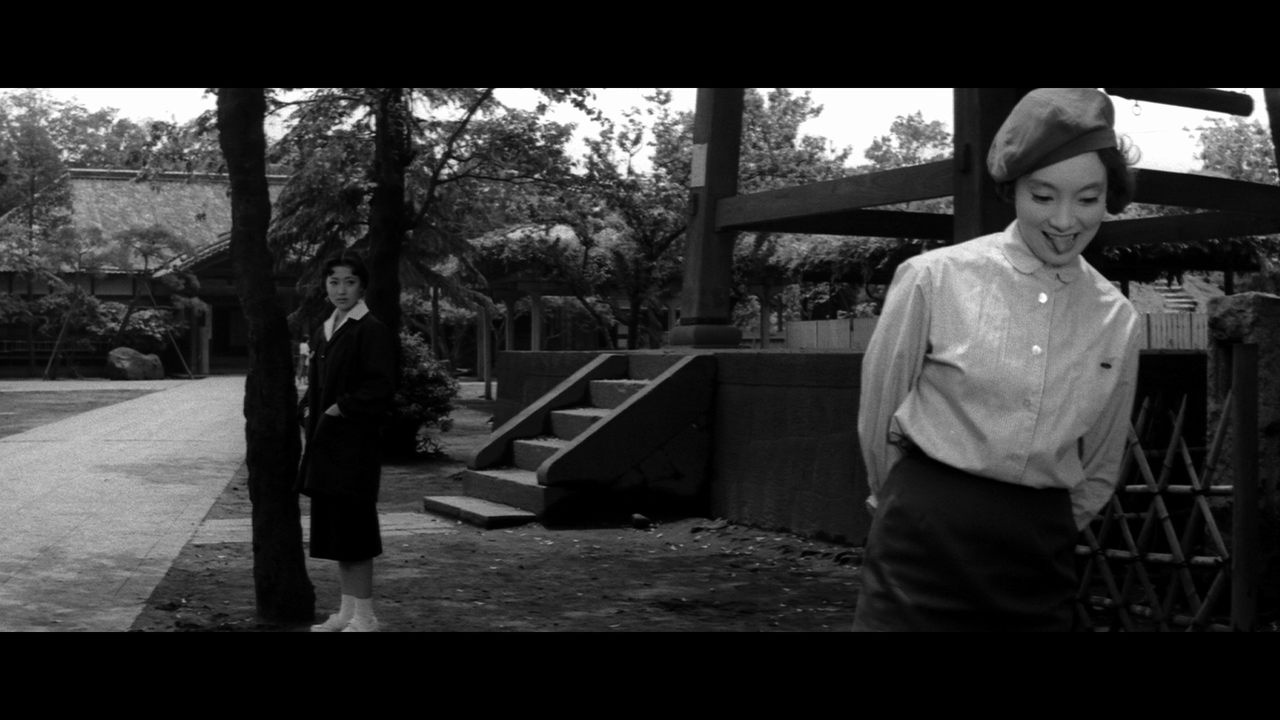
Some of what was becoming standard Nikkatsu melodrama surrounds this story; Nobuo knows a bunch of guys his own age who are getting deeper into thug life, including his pal, Keisuke Noro, and an acquaintance of more remove, played by Jo Shishido. These guys are the kind of droogs Nobuo might become, the film implies. They act as temptations towards the dark side for Nobuo, and as antagonists once Nobuo, charmed anew by Kazue (and by Keiko's increasingly flirtatious interest in his welfare), tries to trod the straight-and-narrow himself, pursuing some sort of career in illustration, from the look of things.
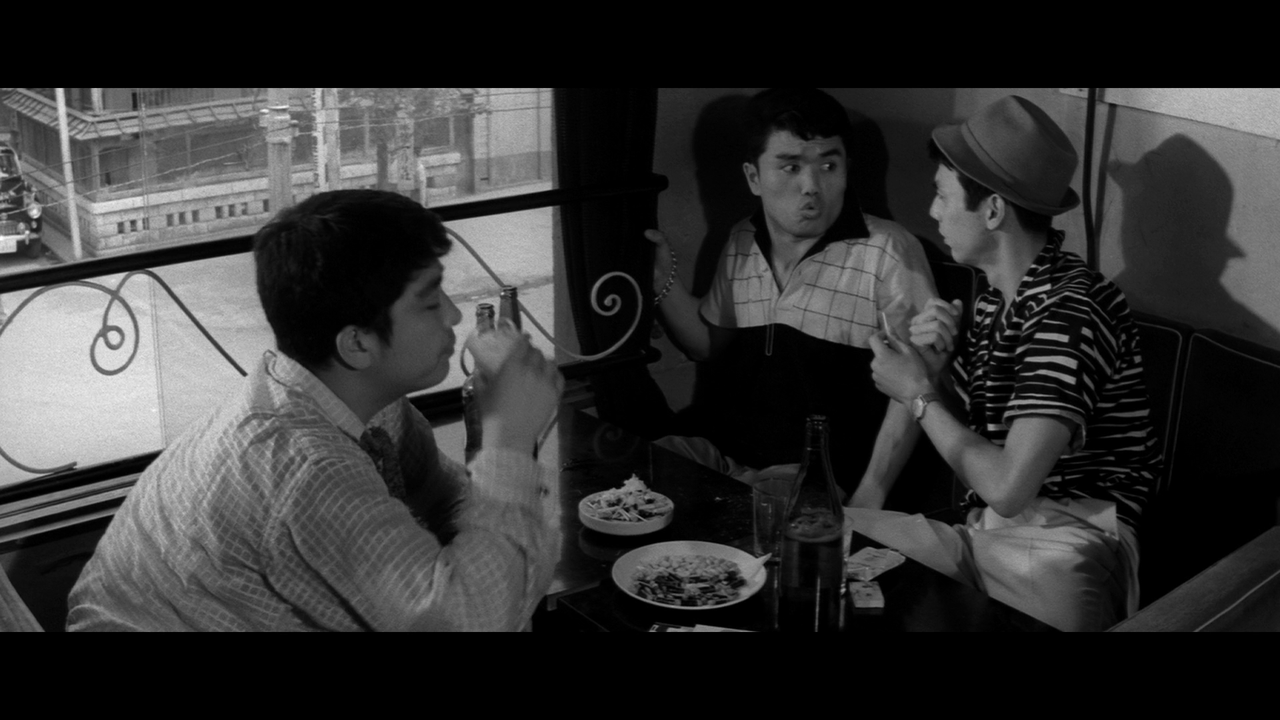
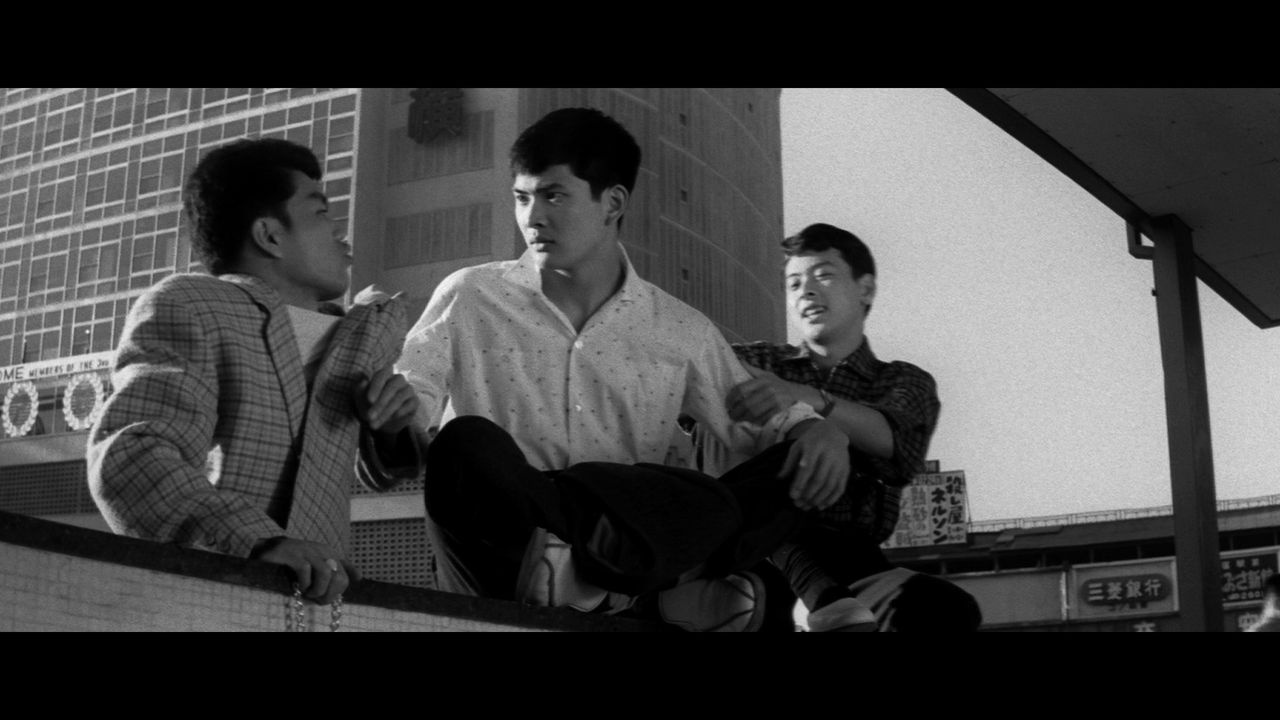
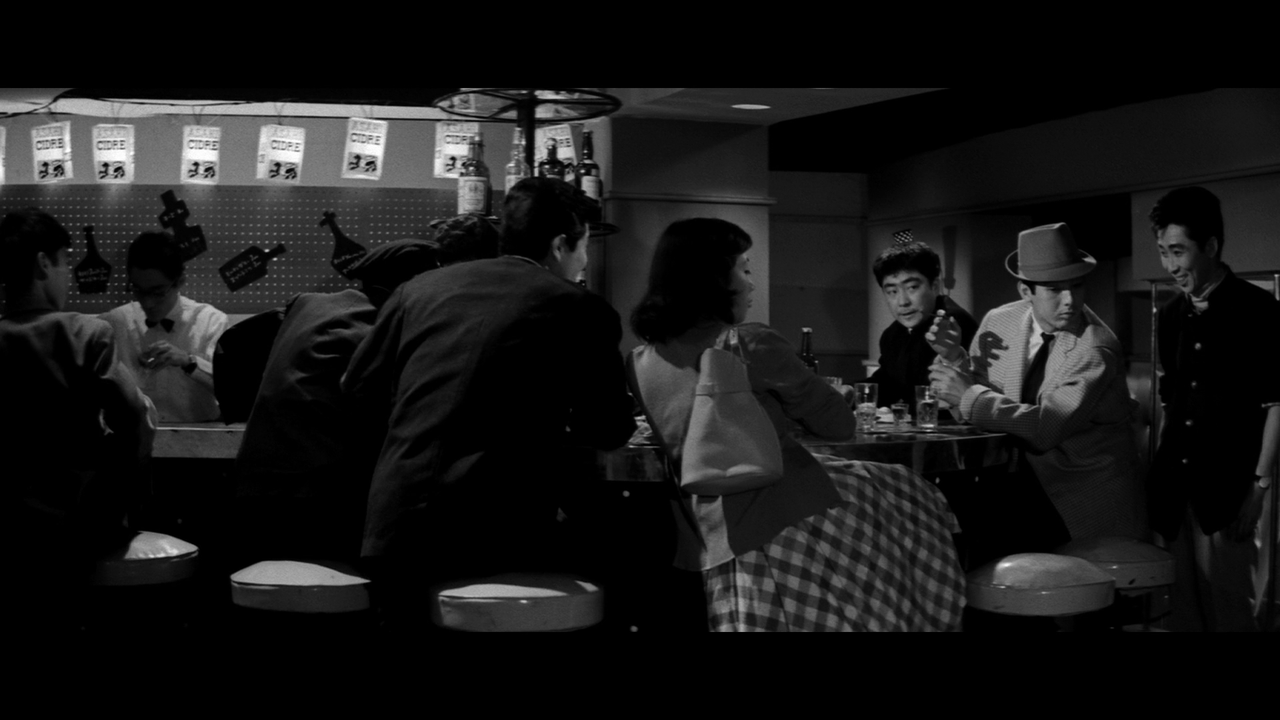
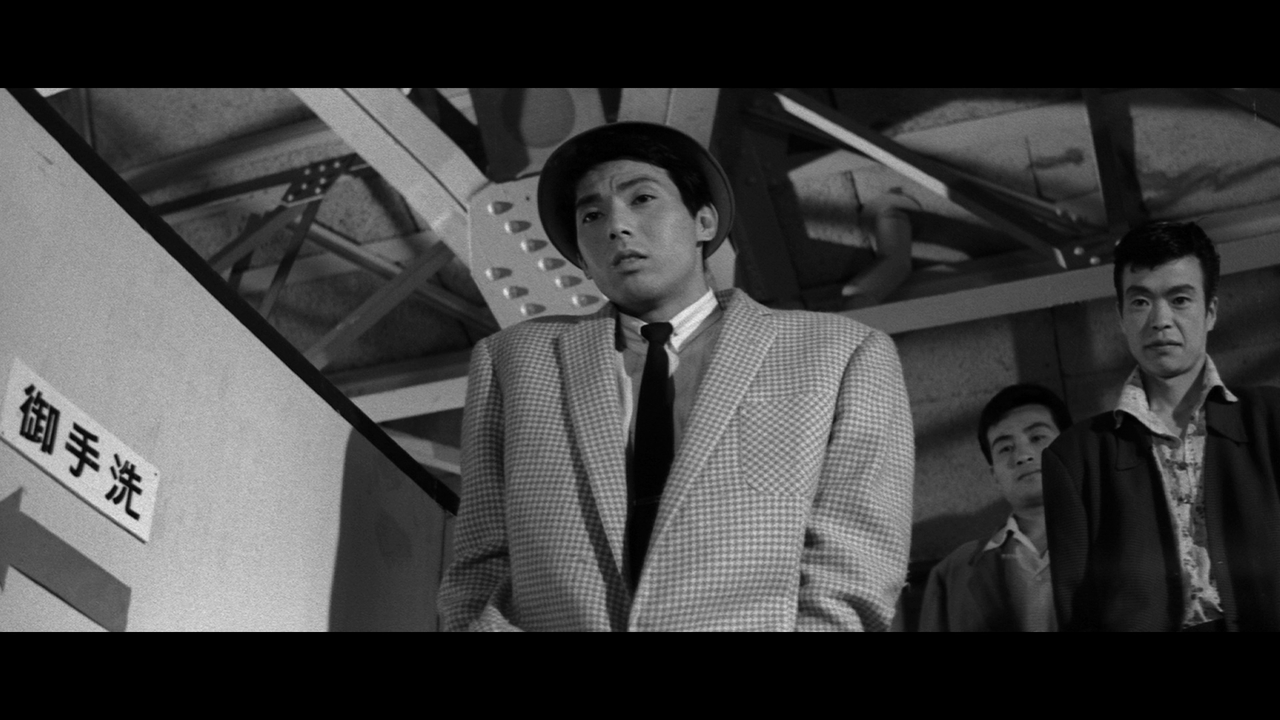
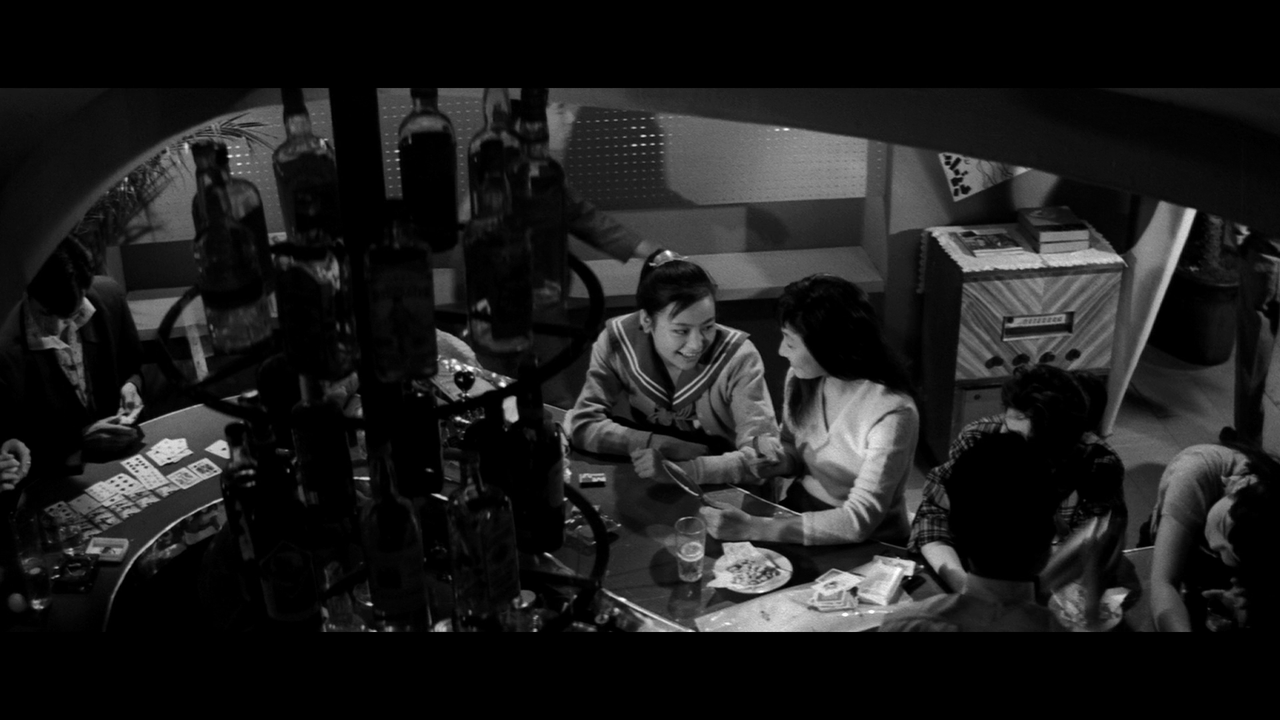
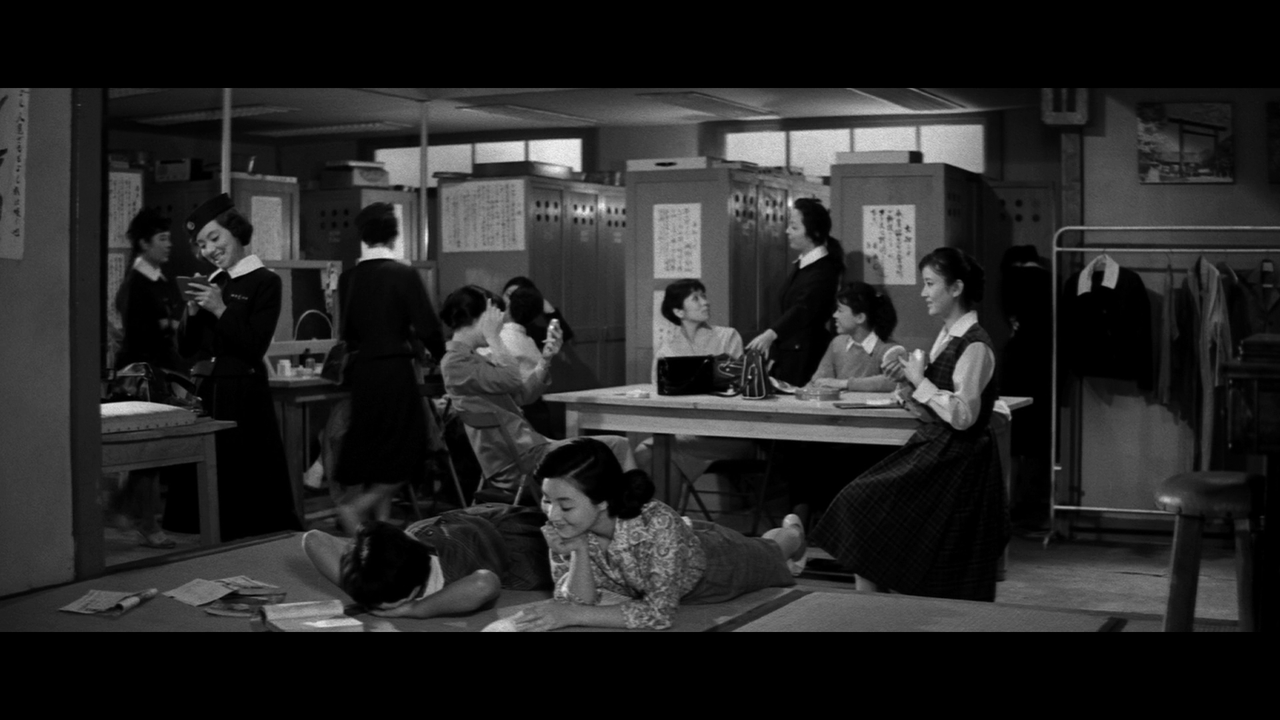
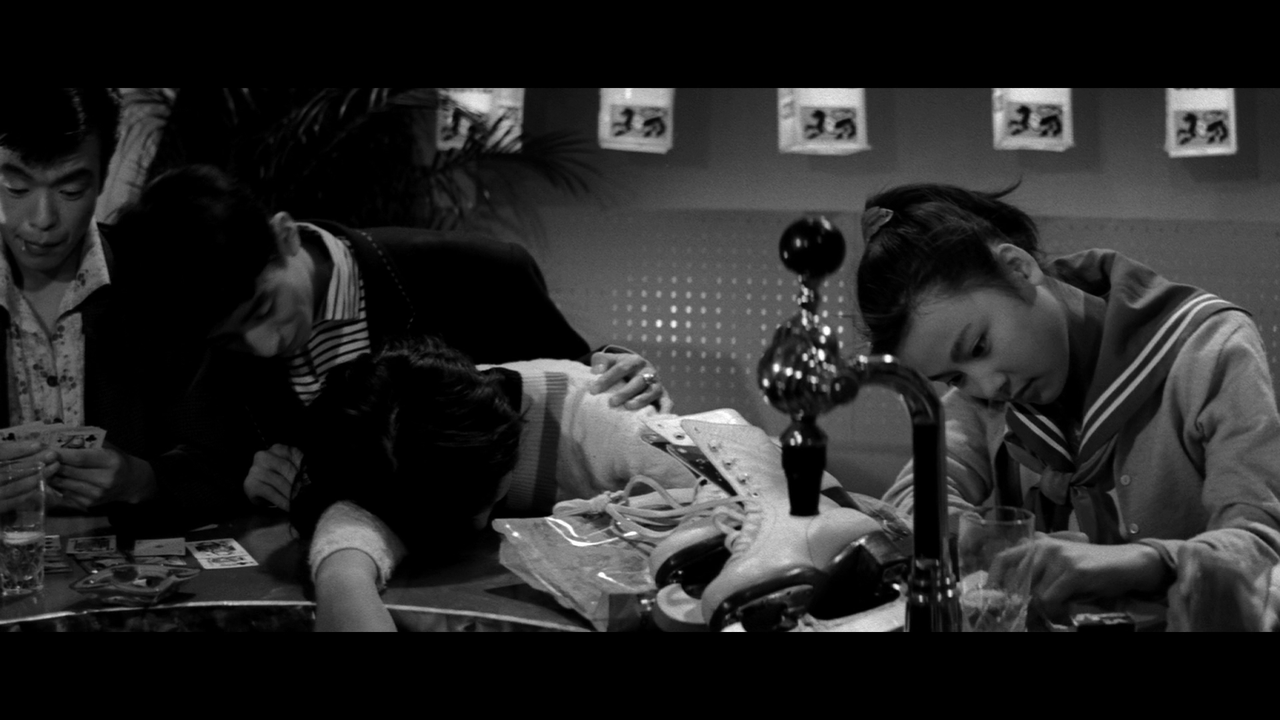
Wait a second, there's Mayumi Shimizu! She isn't in the credits, but I'm almost positive this is her. She started working in film a little less than a year before, under the name Mariko Shimizu. Here she is closer up:
Again, the melodrama is fairly standard. Twisting around it is a more subtle love story, in which the active romantic, Keiko, plays cupid and in the process has to sublimate her own increasingly heated affection for Nobuo. Suzuki is working with what he's given in terms of actors. Ruriko Asaoka is only 18 here, and not especially striking in her role––and Kazue, the former girlfriend, is a similarly wan figure, shy and retiring, reticent to act, pretty but conventional. The more dynamic and original Hidari lights up every scene, bringing her own unconventional energy to an unconventionally energetic personality.
We sense immediately that Keiko and Nobuo are on the same wavelength, but on different sides of the track; she is able to successfully repress in herself the wildness he gives riot to at every opportunity, and we can see as the film goes on how her work to temper him fulfills her need for danger and excitement, even as she is reigning in what we feel is really her ideal opposite number, tying him to a dull girl, making him into a conventional person. The risk to Keiko is the most exciting unspoken element of this movie; she comes close to losing her job frequently, crossing the line from consultant to quasi-lover of Nobuo's most antisocial qualities.
SERIOUS BUSINESS
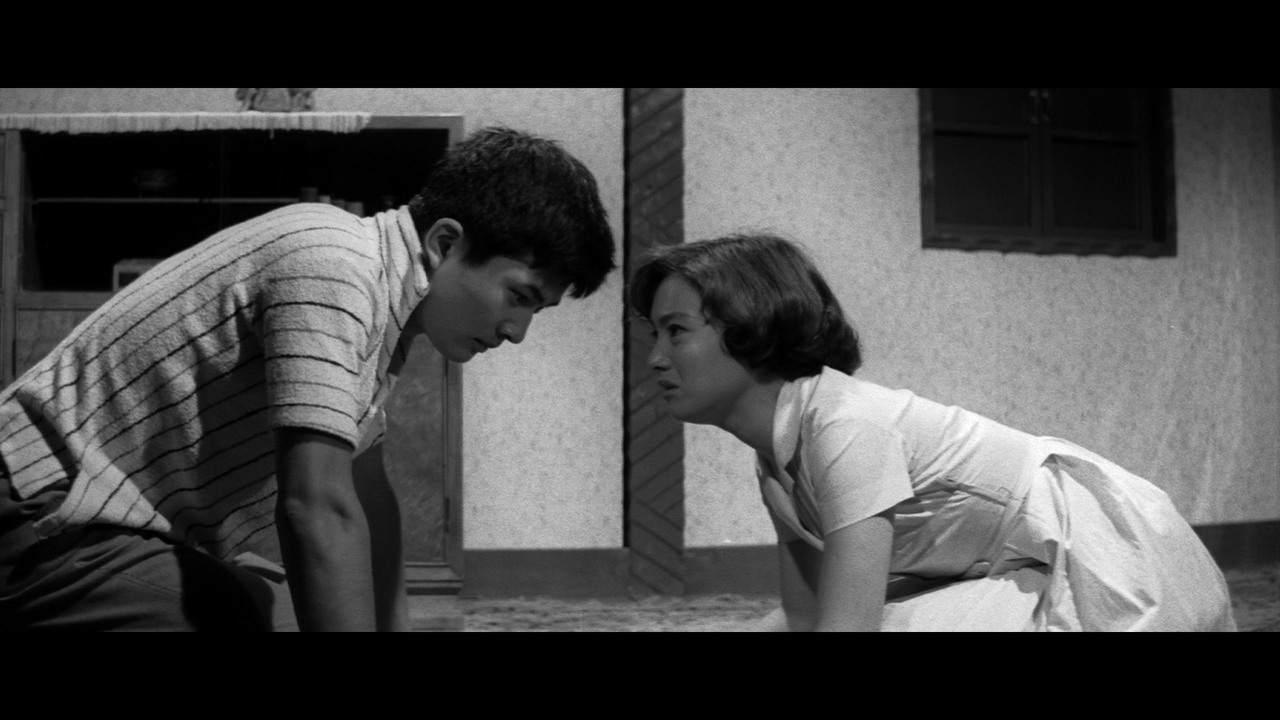
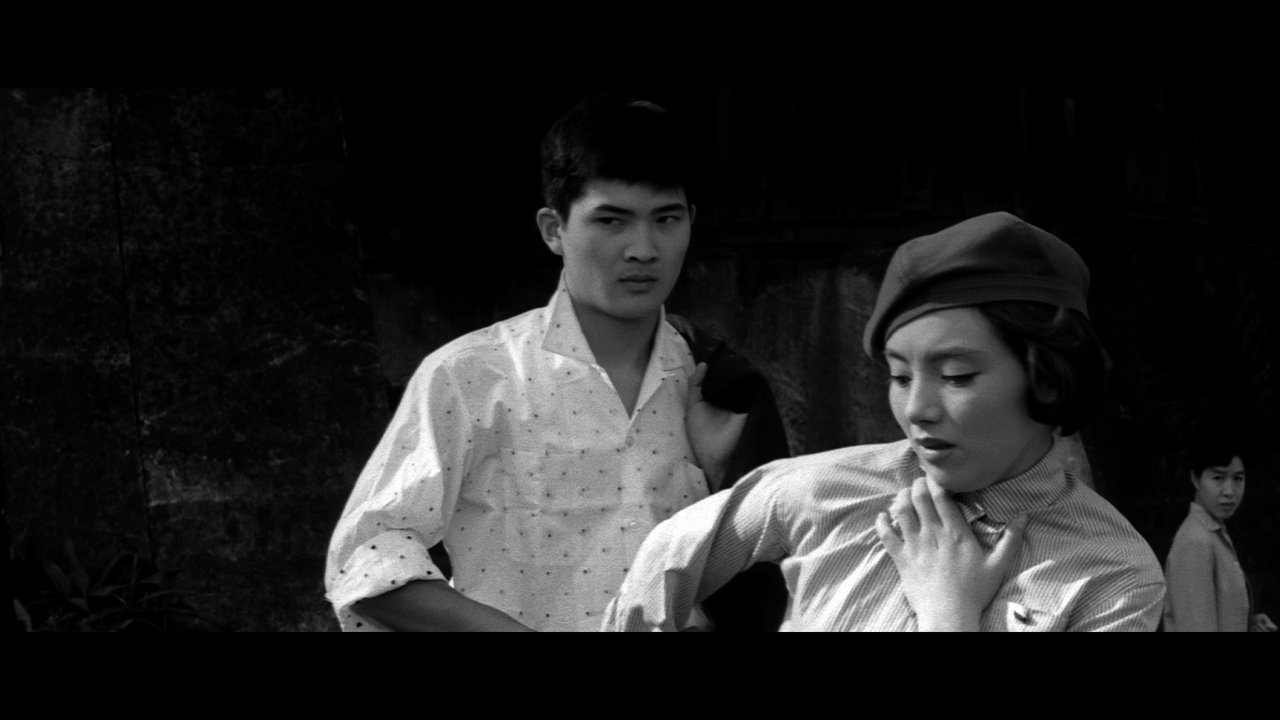
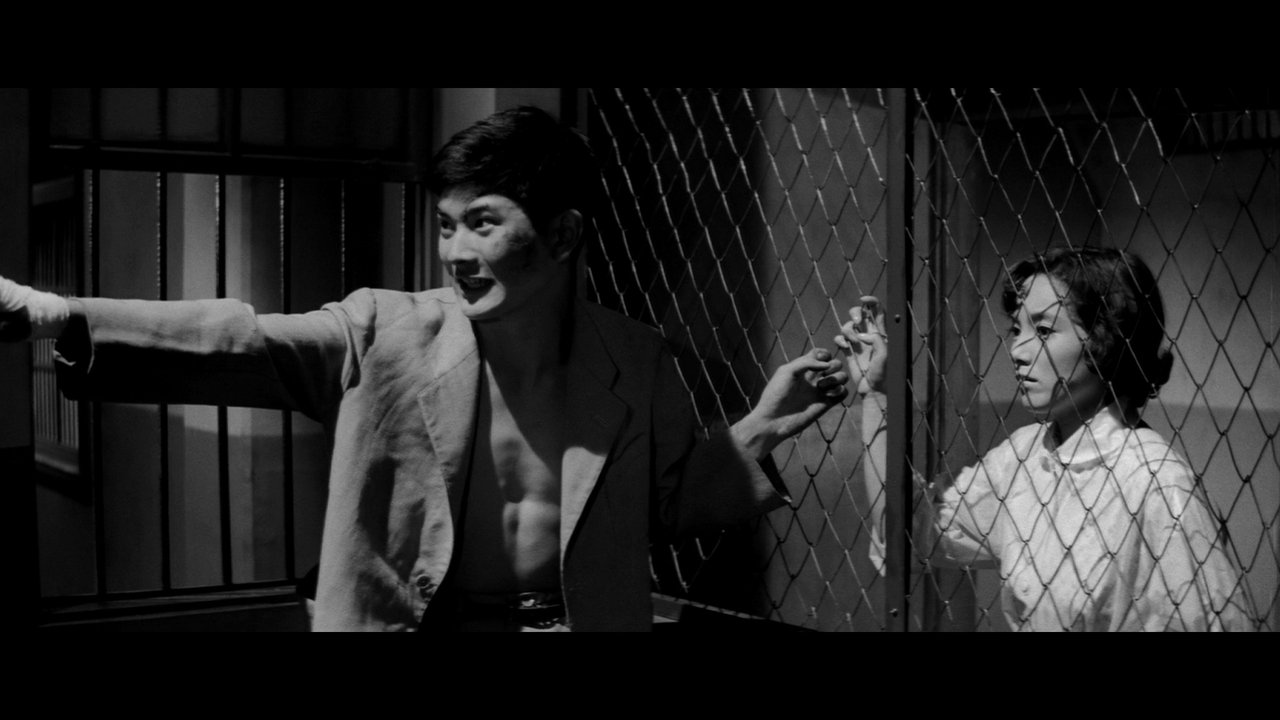
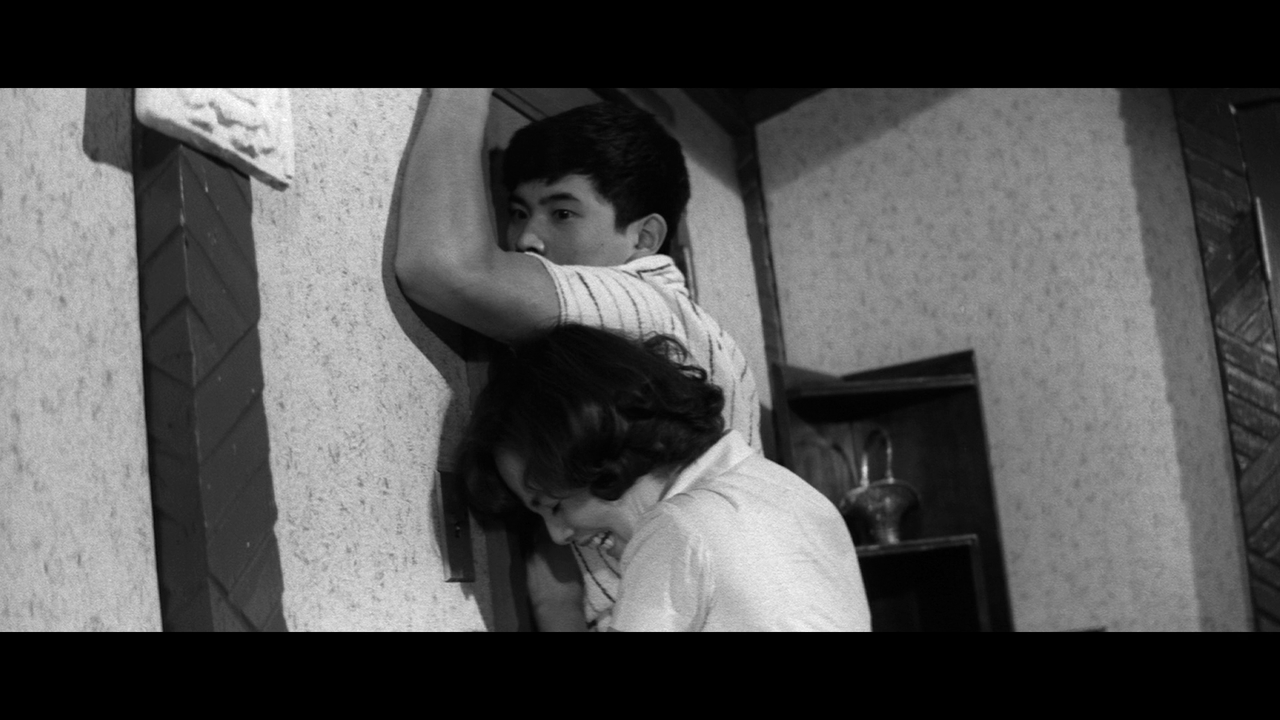
What this means in terms of melodrama is that Hidari and Kobayashi share all of the most emotionally-charged scenes in the film. Hidari manages to draw a lot out of Kobayashi in these scenes, and the two match one another in physical intensity as the characters attempt to draw out of one another the feelings they spend all their time expertly hiding from society. The confrontation in the police's holding cell, as Keiko tries desperately to keep Nobuo from giving in to despair at his own persection, and the wonderful scene where Keiko invites Nobuo to her mother's house.
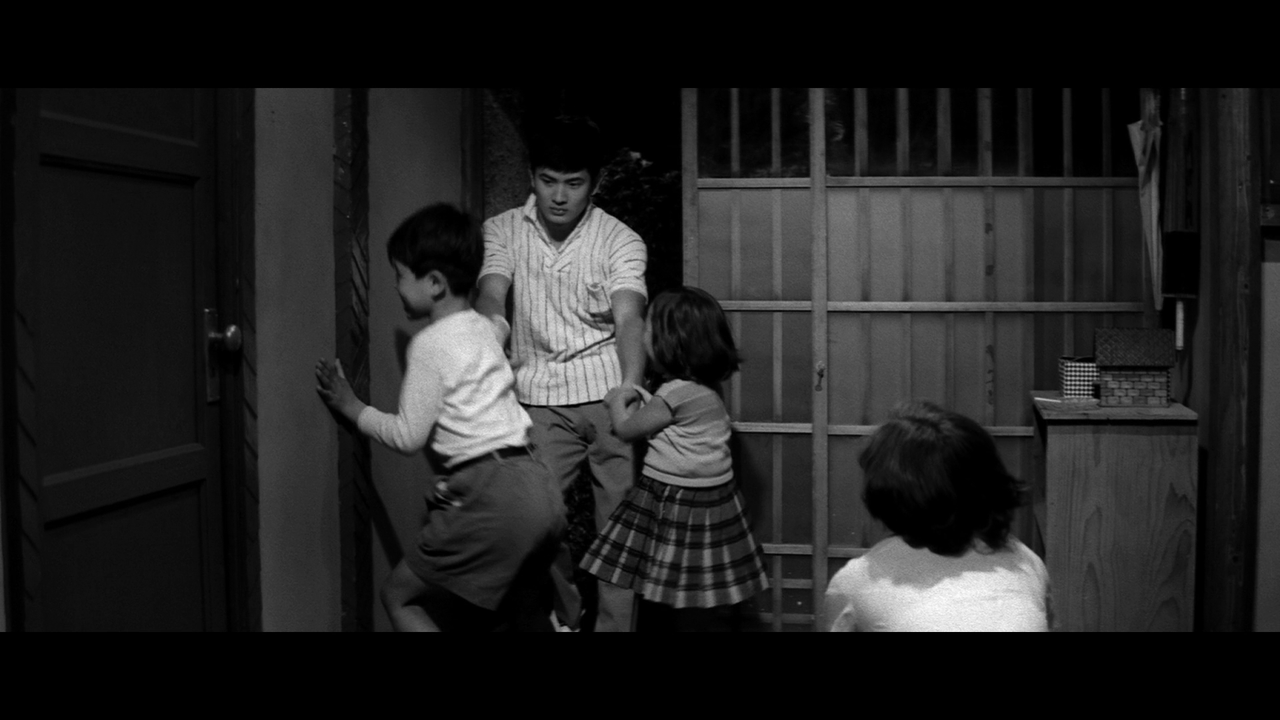
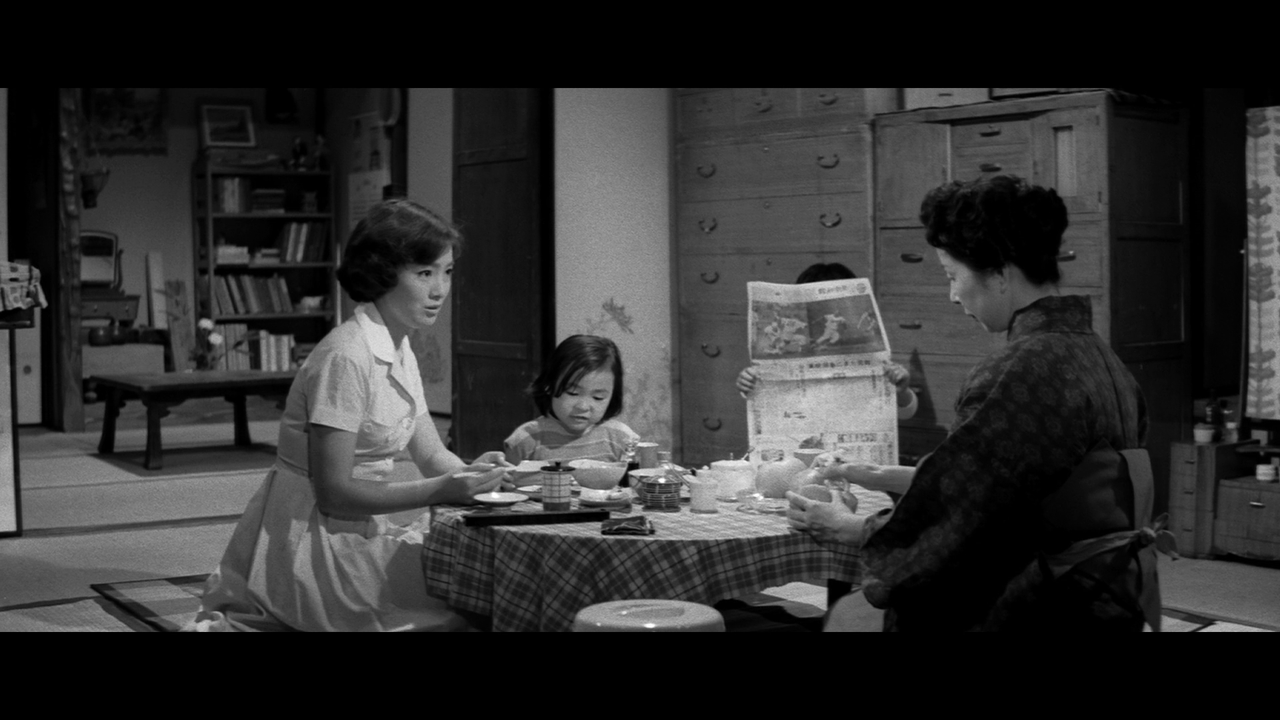
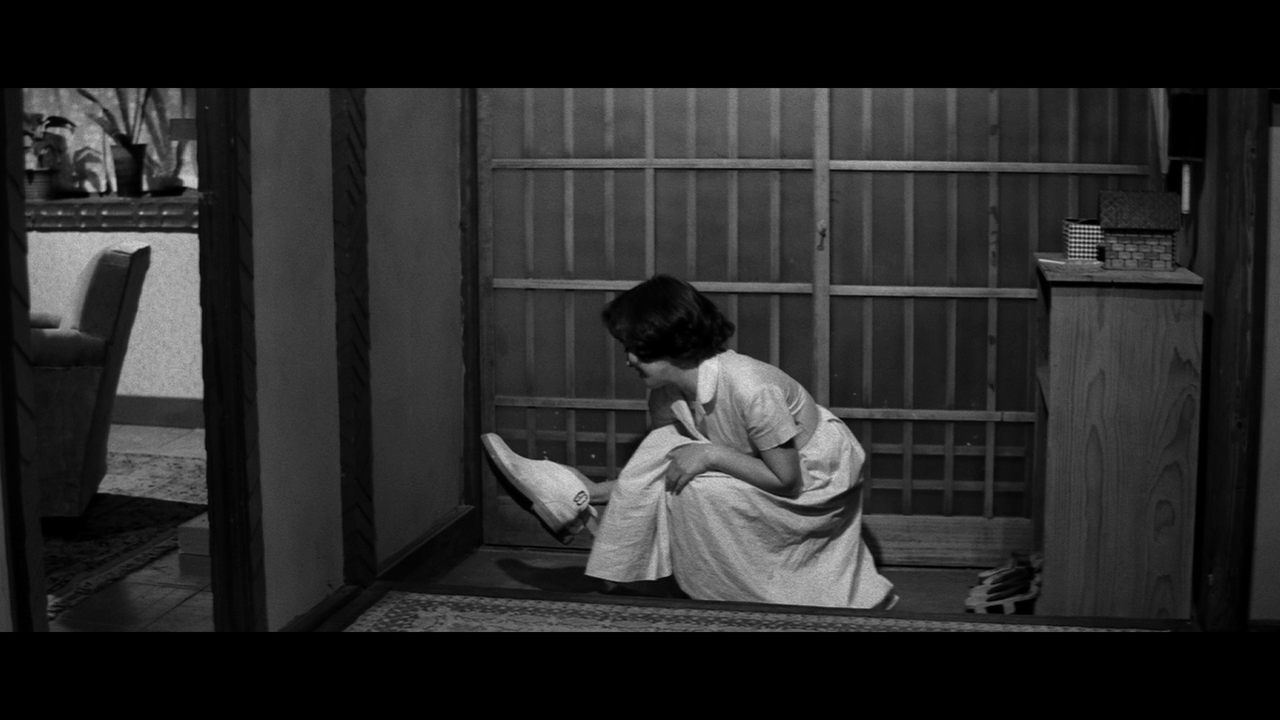
This scene is full of awkward warmth, and we see a physical gesture on Keiko's part which will be repeated at the end of the film. As she moves Nobuo's shoes out of the front walkway, she's in a crouch, laughing to herself, shaking her head in circles, her gaze traveling up the transom and down again, a kind of whimsical expression of bottled energy which lets us know, in no uncertain terms, that Keiko is falling for her younger charge. Eventually the scene becomes a more serious disquisition of Nobuo's own childhood, and as he plumbs the depths of his life's early insults, he crouches on the floor, and Keiko joins him. The attitude is serious, the kind of thing the melo crowd are in the theater for, but Suzuki adds this interesting touch, the way the characters appear to be children at play, mimicking one another's movements. The richness of the movie comes from the way Keiko goes beyond just charming and loving Nobuo, and buoys him up by believing in him, supporting him emotionally, and in the way she shows him tantalizing glimpses of other ways to live. The scene in which Nobuo feels for the first time the warmth of a happy middle-class family is inspiring to him.
Some commentary goes on here. Keiko is a little bit of a disaster tourist, and the film gently mocks her eagerness to plunge into the depths, to find a diamond in the rough –– no coincidence perhaps that the first lower-class person she finds is the "diamond" for her, since he's hot and seems to like her. The film is in one sense a test of Keiko's commitment to reform Nobuo, but in another sense, she is clearly overlaying a set of middle-class values on a kid who has a kind of working-class doomer outlook. We know Nobuo is bored with the violent and sexual flourishes of his like as a young punk, and what Keiko brings him are basically middle-class values. Enlisting Kazue's help, she gets Nobuo a job as a sketch artist, which Nobuo takes to immediately once Kazue buys him art supplies.
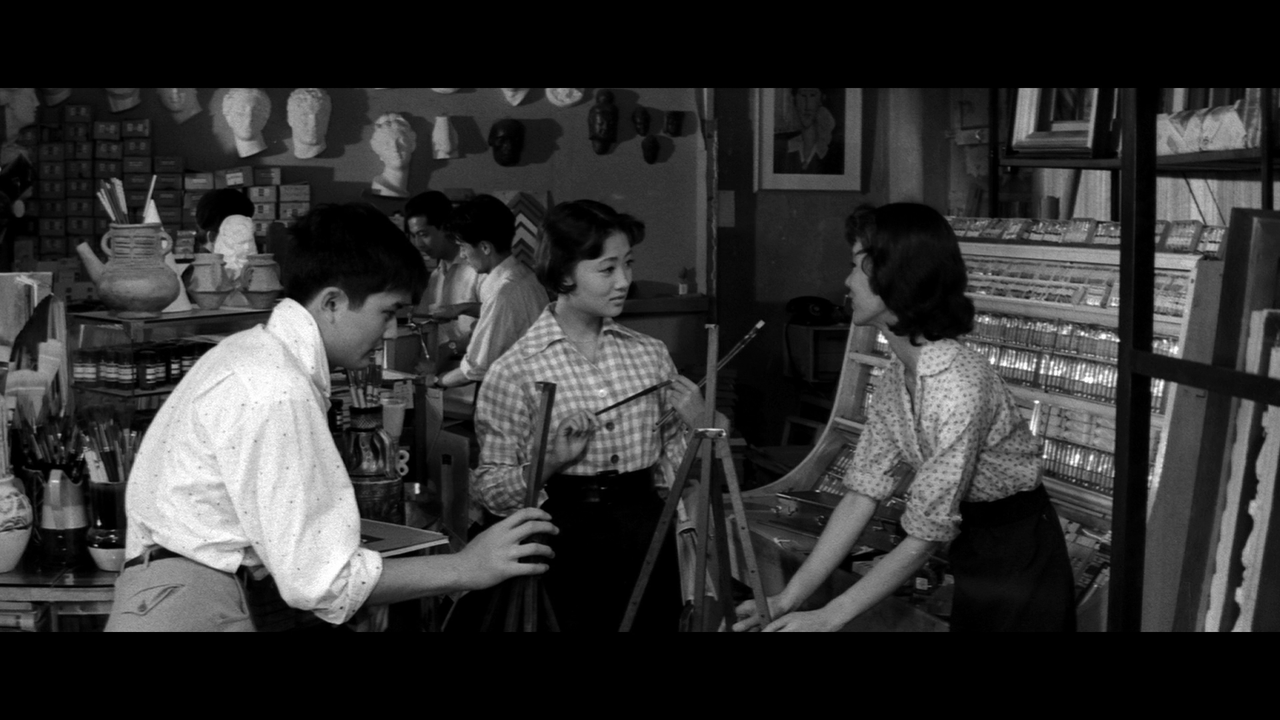
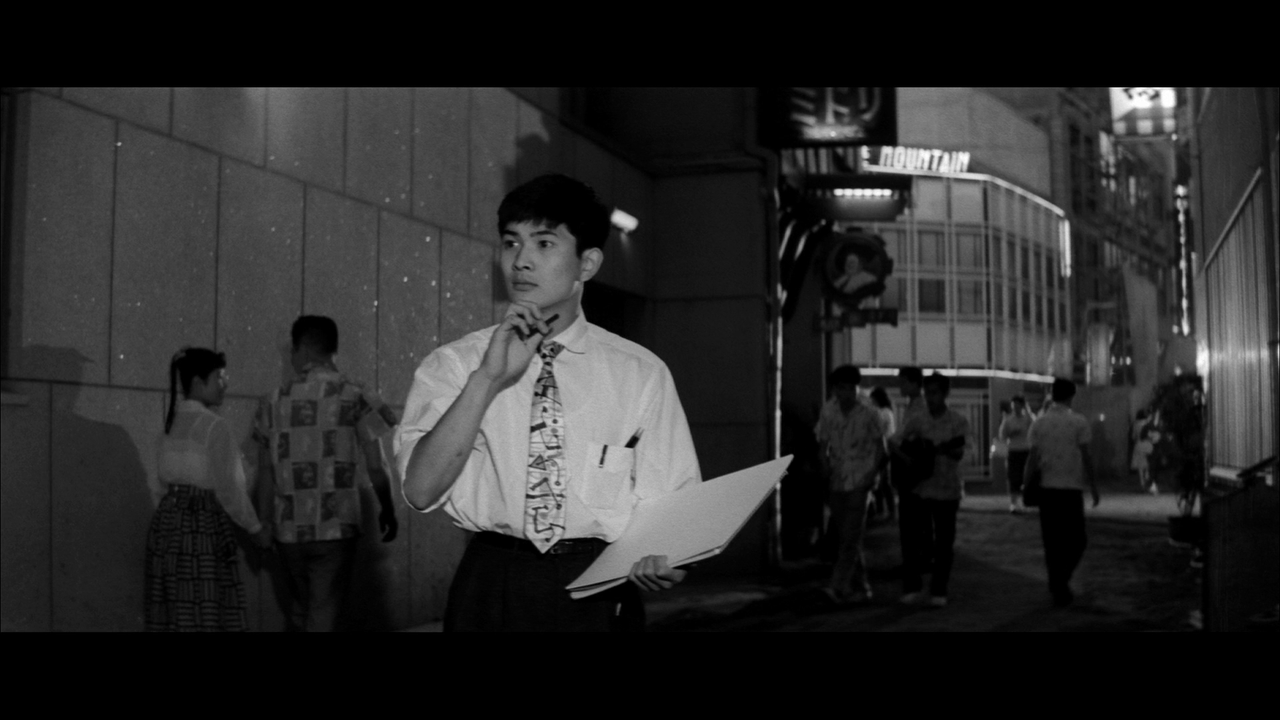
This is a small thing in the context of this film, but it looms larger in the follow-up, Blue Breasts, so I think we're meant to pay attention here; Nobuo doesn't have any art training; he crashes right into a job doing this (basically hustling on the street to draw people's portraits), and he is immediately good enough for the job. That, or the businesspeople he's sketching don't really care how good his art is, and view the drawing of their portrait as a transaction and a symbol of their elevated status as someone who merits a portrait. The value of art is very uncertain in the film, dangerously unstable for a young man who is still mired in poverty to be pursuing (something Suzuki knew enough about from his days before going to Shochiku Ofuna, and even his days working there––the pay was not apparently much to live on). When Nobuo is assaulted by jealous thugs later, his art supplies are dashed on the street in the rain and just disintegrate into nothing. So while Keiko endeavors to change Nobuo, make him into her own ideal man, she is doing so by trying to bing Nobuo "up" to her level of polite society. But Suzuki contrasts Keiko's ambitions for her charge with the harsh setting in which Nobuo has to make his choices.
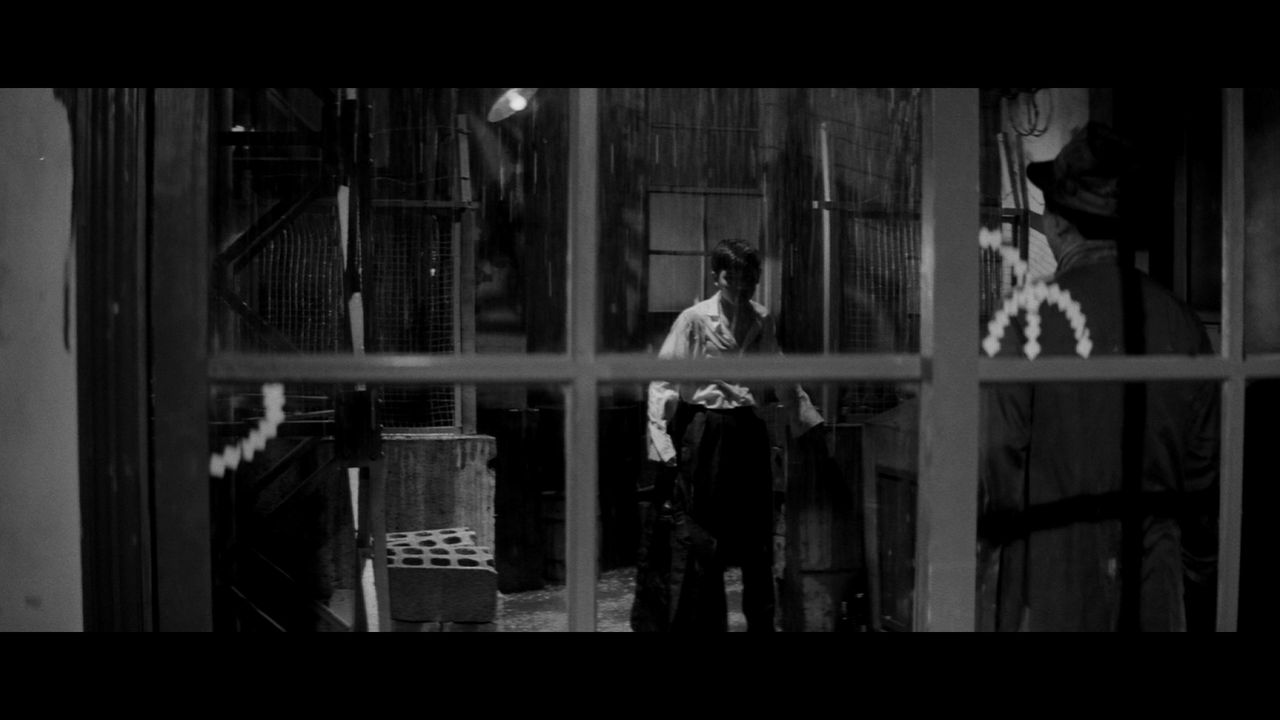
The film doesn't shy away from the bleakness of Nobuo's surroundings, and how that works on him. Kobayashi's own more challenging scenes aren't the scenes of vibrant acting as much as the dynamic visuals Suzuki deploys at key moments.
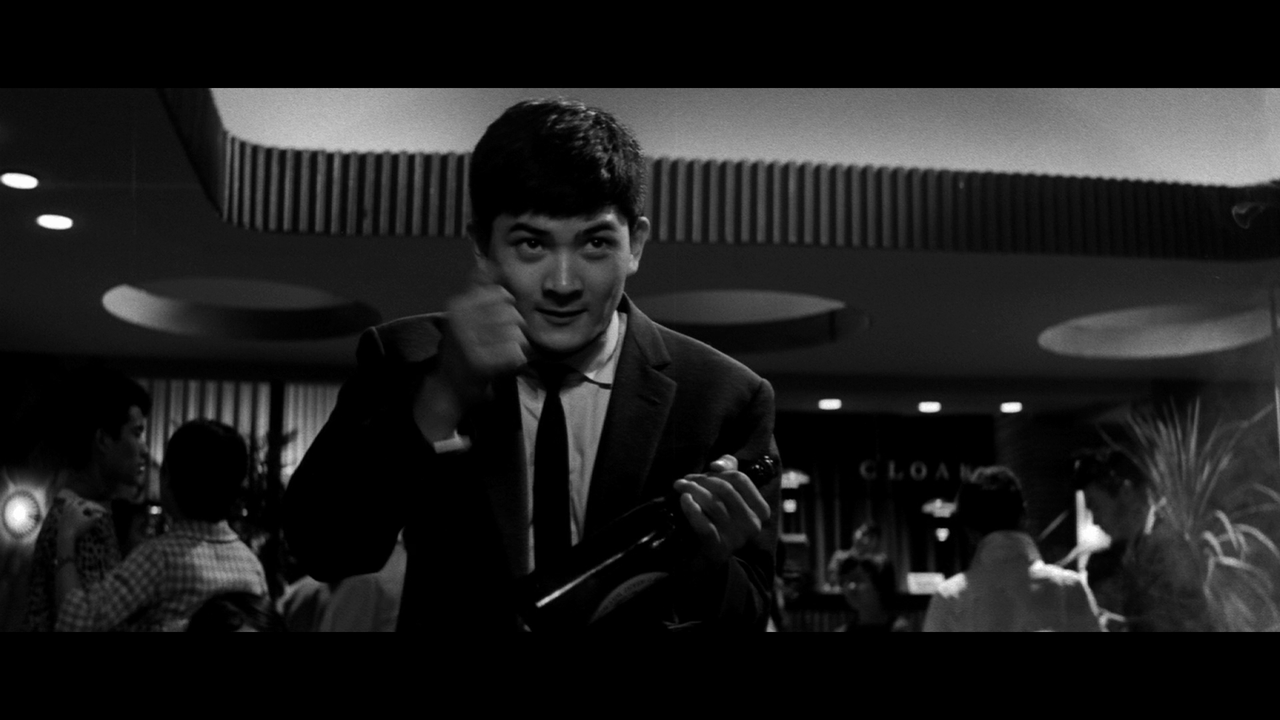
The close-up pushing in as Nobuo thrills to a drum solo in the club, the way he drifts through the street, walking by as his old pal Keisuke Noro spots him; the visuals carry so much of Nobuo's disillusionment and frustrated energy, his desire to find something new and worthwhile to do with himself.
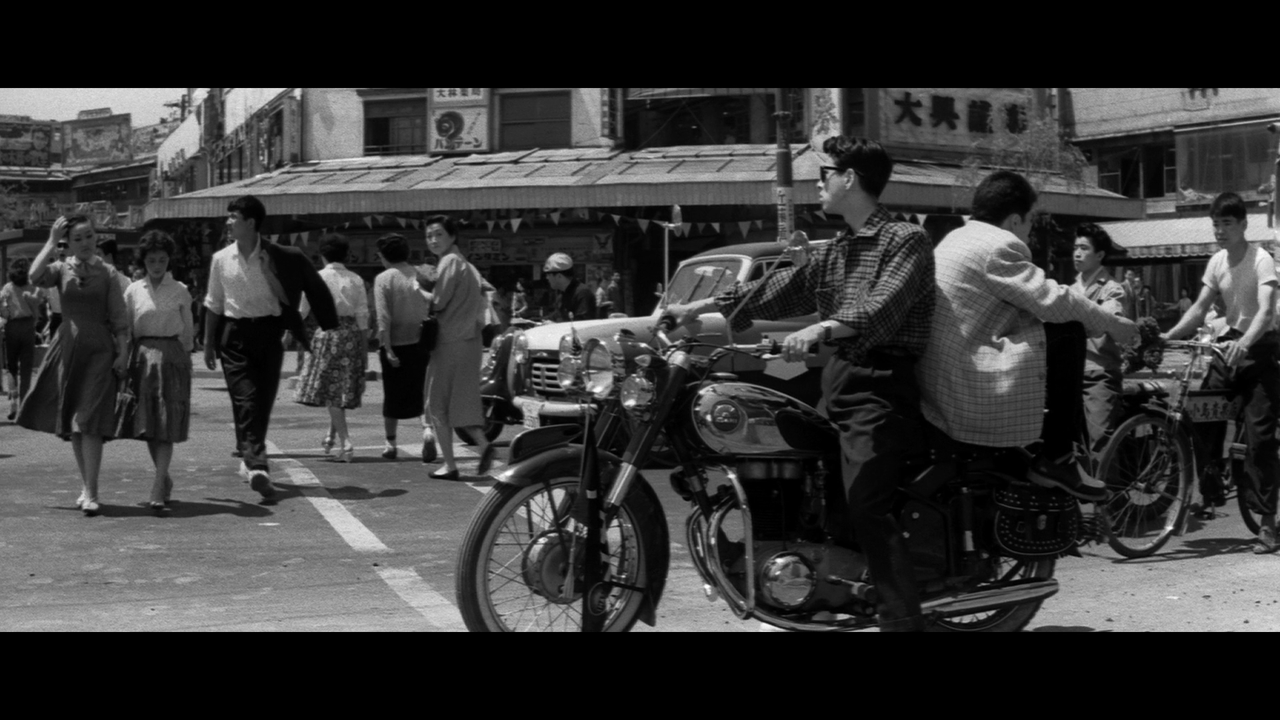
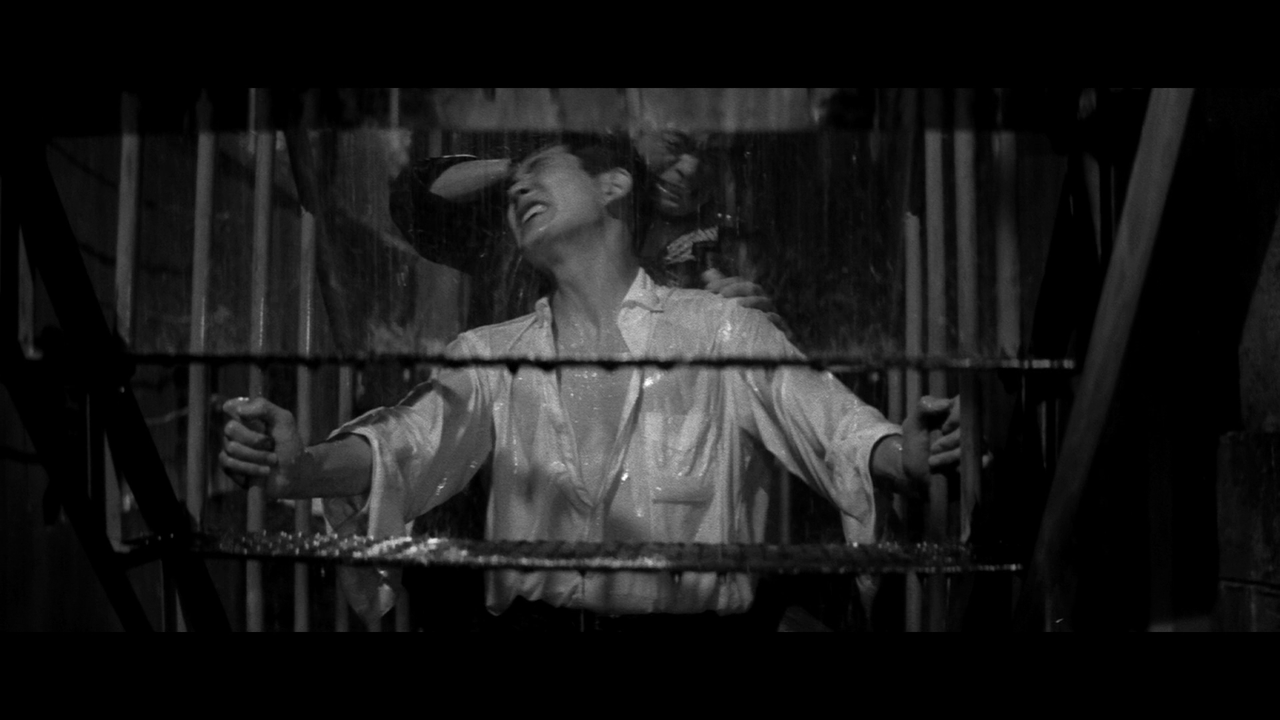
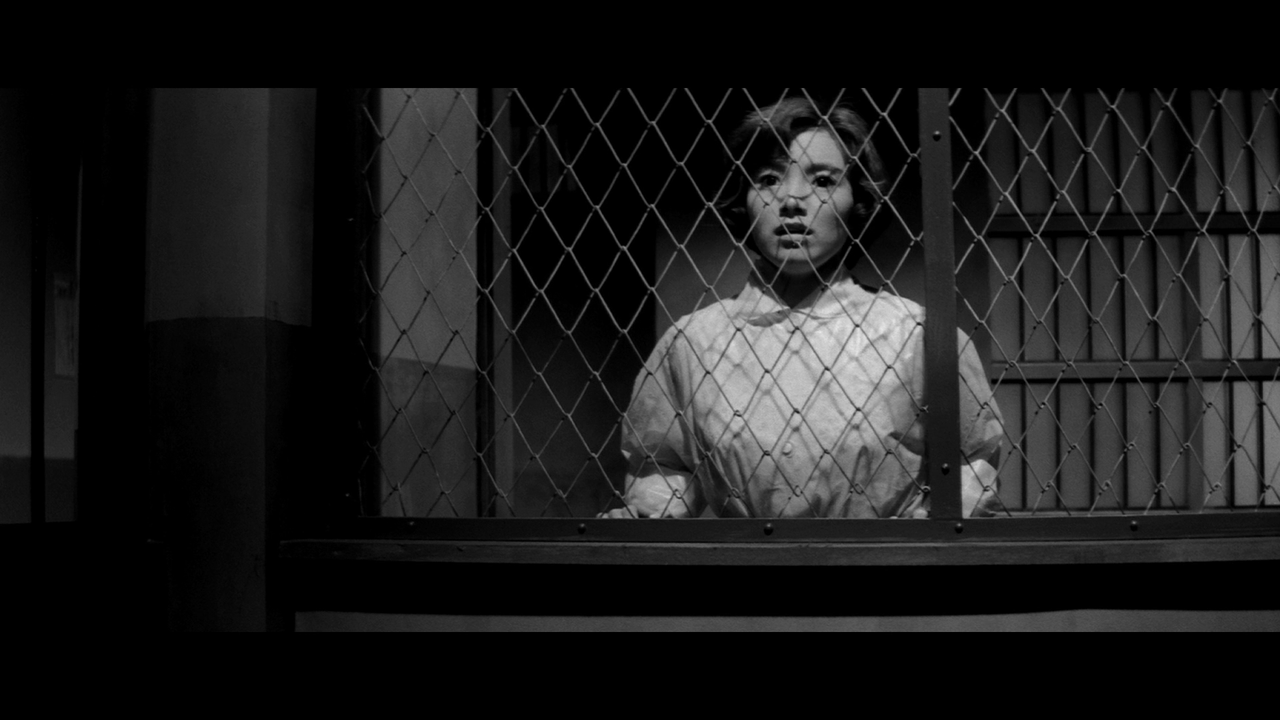
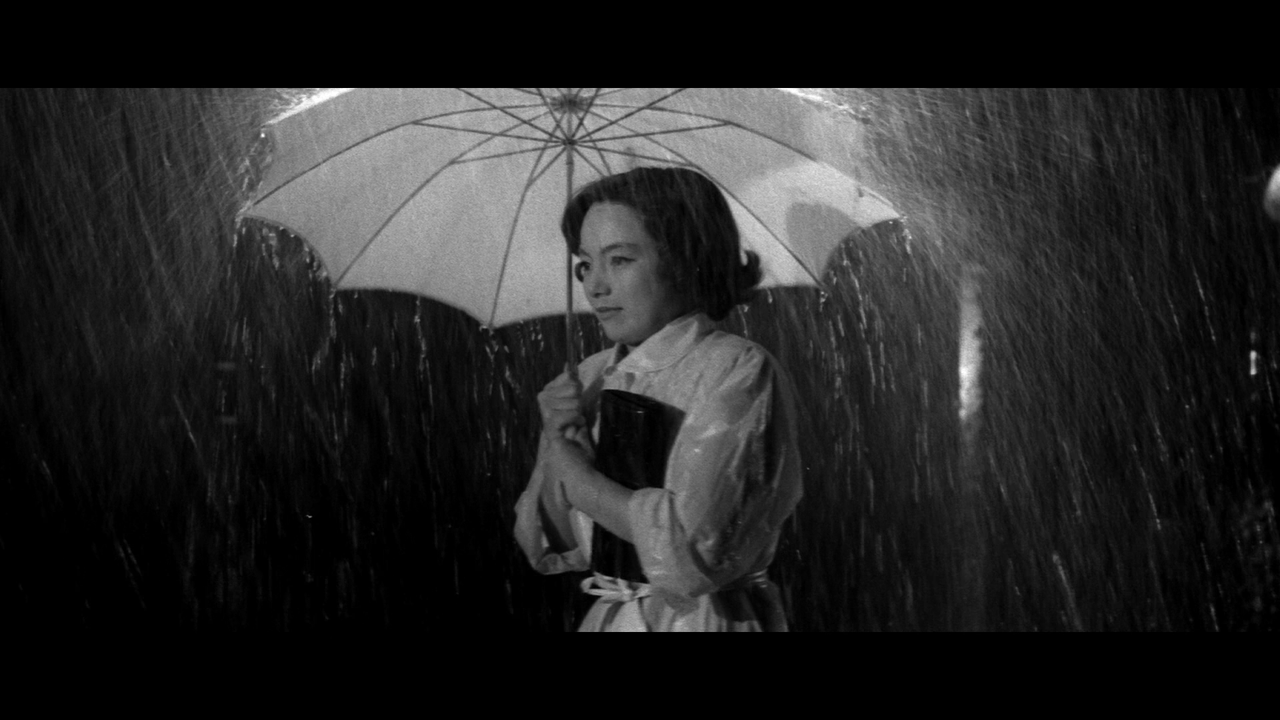
The most effective image of this is the way once Nobuo has turned over a new leaf, become a street portrait artist, his old antagonist Jo Shishido and his pals corner Nobuo and knock him off a fire escape in the rain.
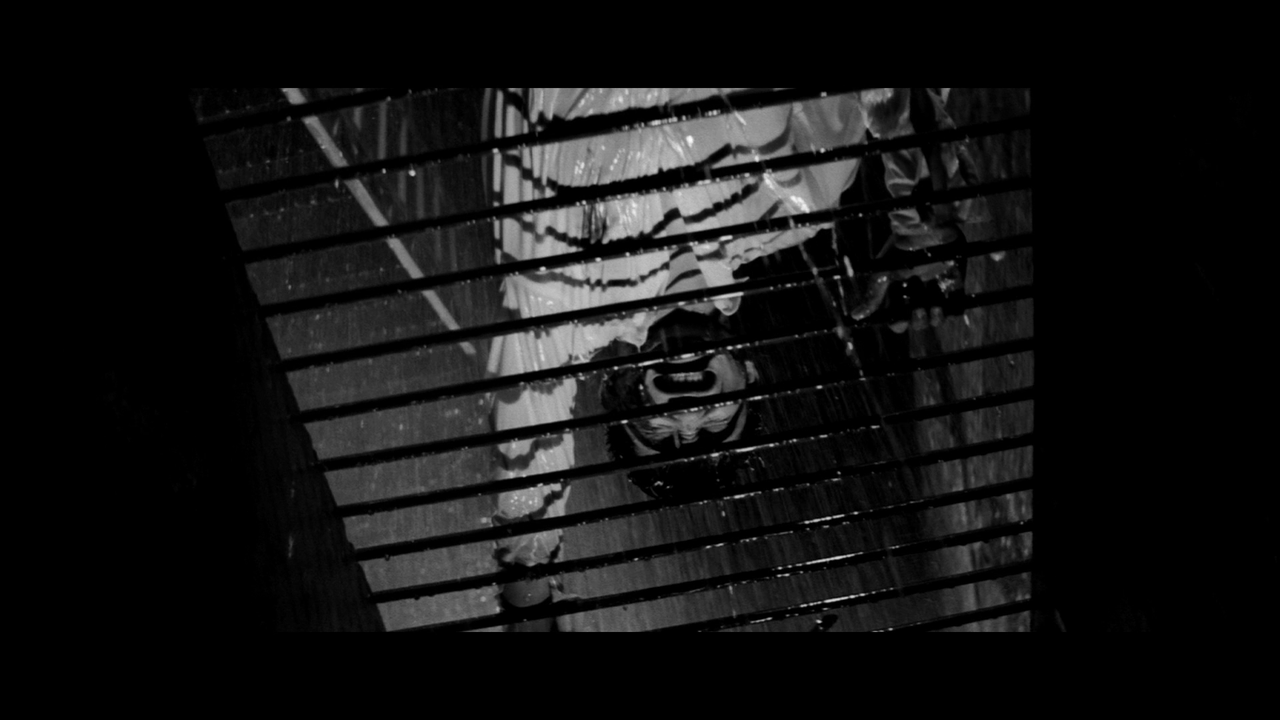
The visual of Kobayashi transfixed on the grating, with the rain pouring through his ruined art supplies, a look of agony on his face, is probably the film's most striking image, proof of the way Suzuki's control of traditional melodrama was really fully-evolved, even though this was his first pure melo.
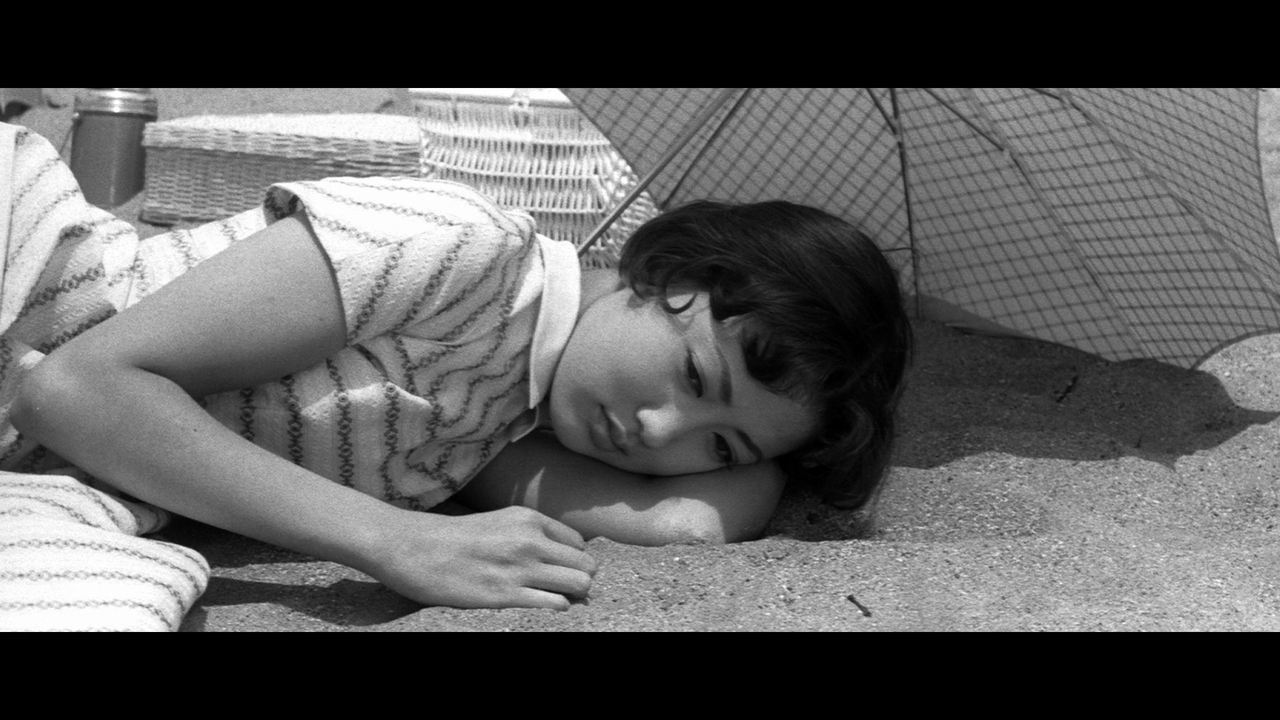
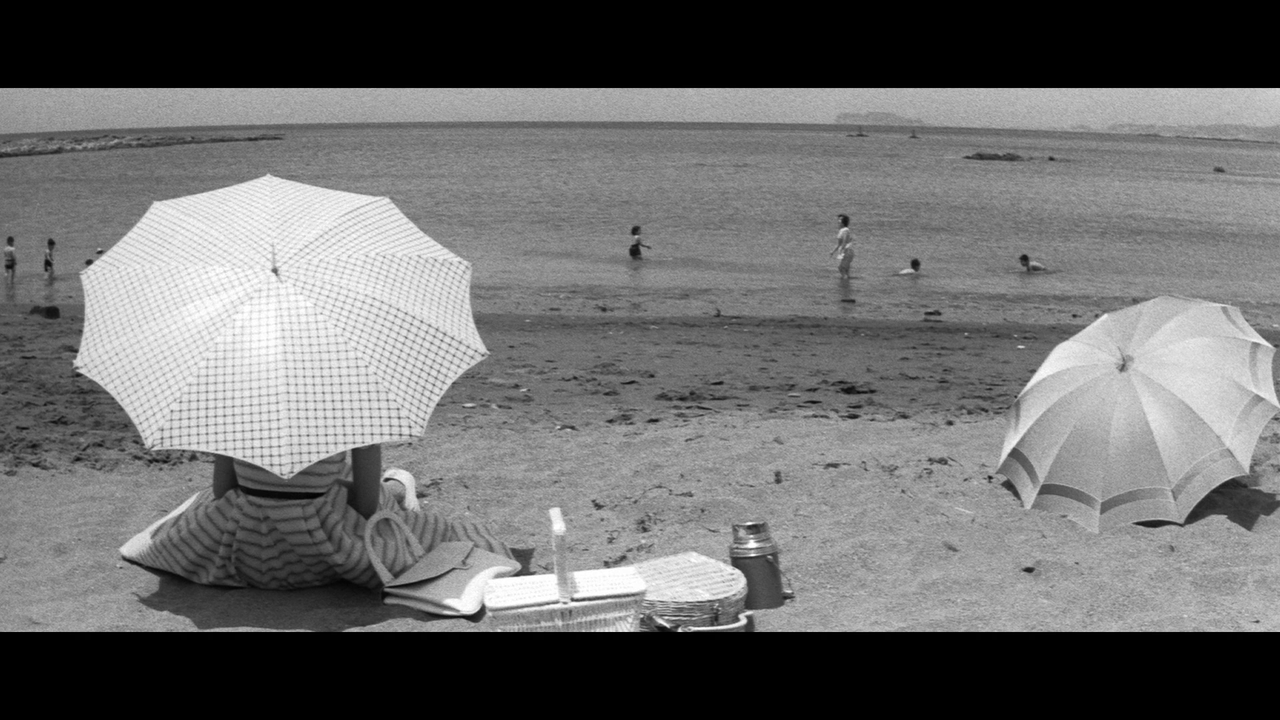
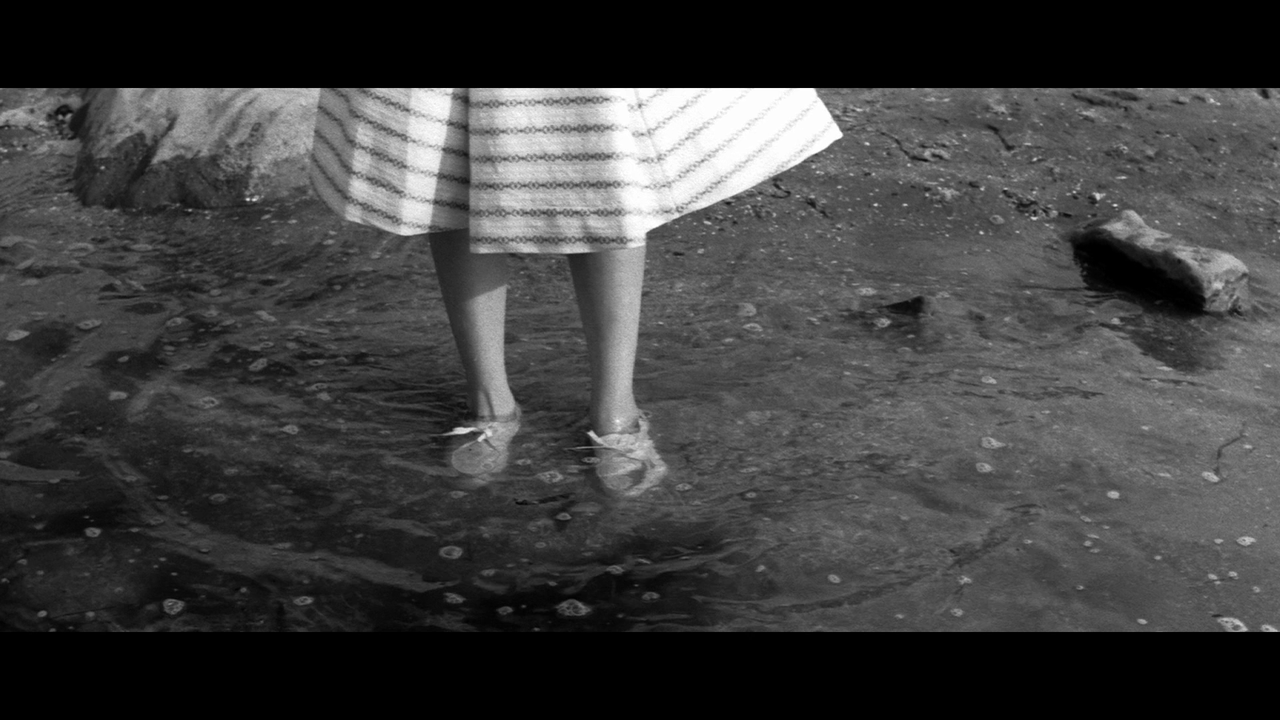
Ruriko Asaoka, by contrast, sort of drifts into the film, and has a dreamy passage in the middle of it, which is her best contribution, and which she carries off handsomely. Kazue is reluctant to get back together with Nobuo, until Keiko convinces her to go to the beach with Keiko's younger sister and Nobuo and herself. Watching Keiko's sister cavorting in the water, Kazue is torn what to do, and Keiko completes a delicate seduction, convincing Kazue that underneath Nobuo's rough coping mechanisms is a good heart that yearns for her.
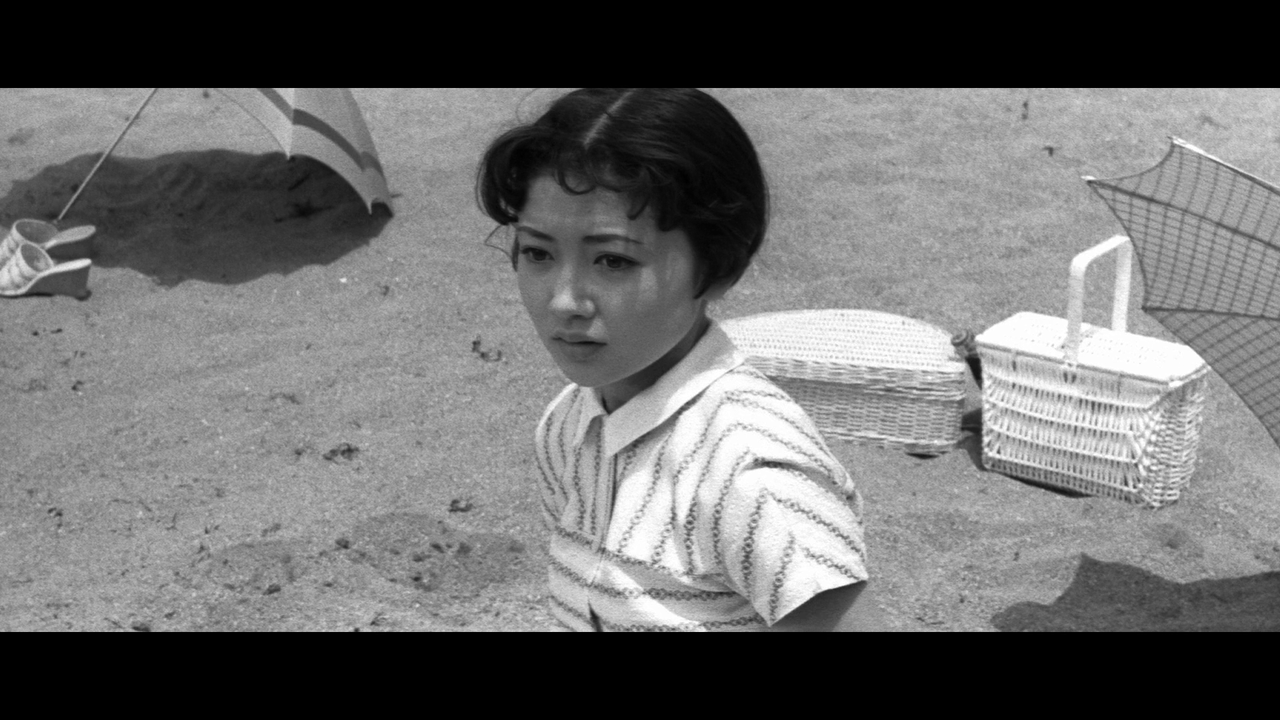
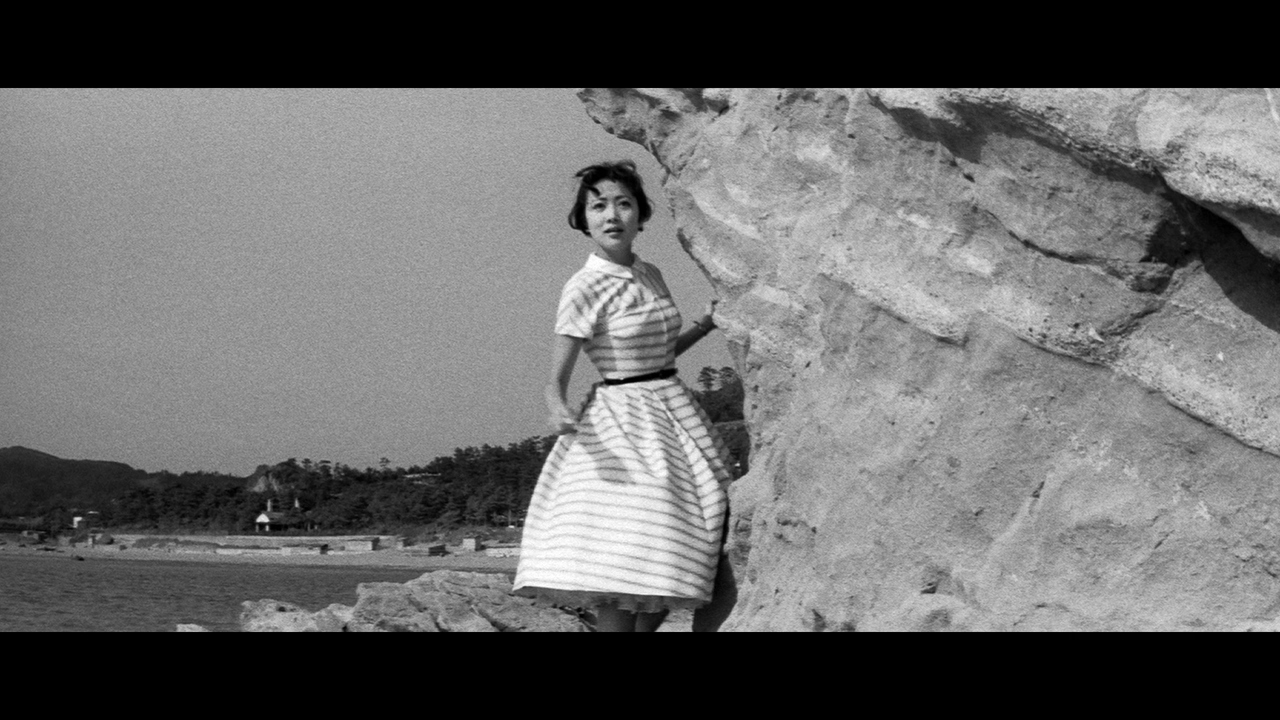
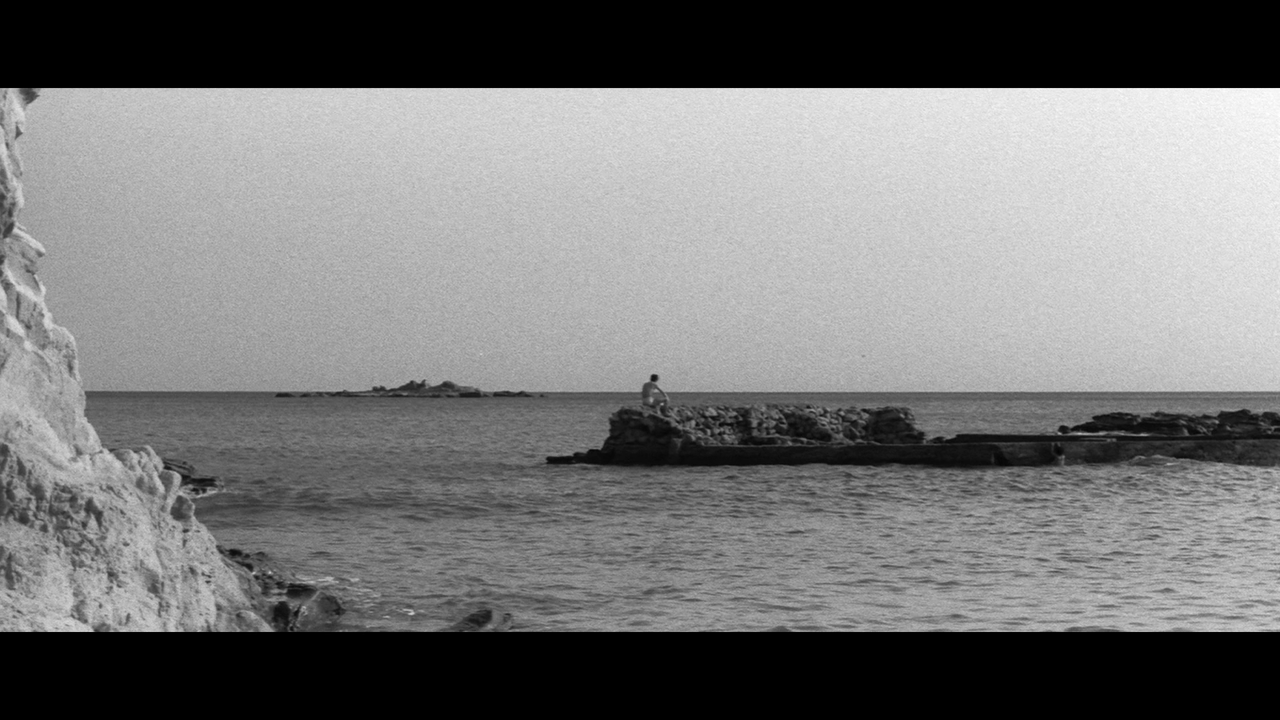
Kazue wanders along the rocks at the shore, and Nobuo comes up from beneath the waves and trips her into the water. Afterwards, they laugh about their reunion.
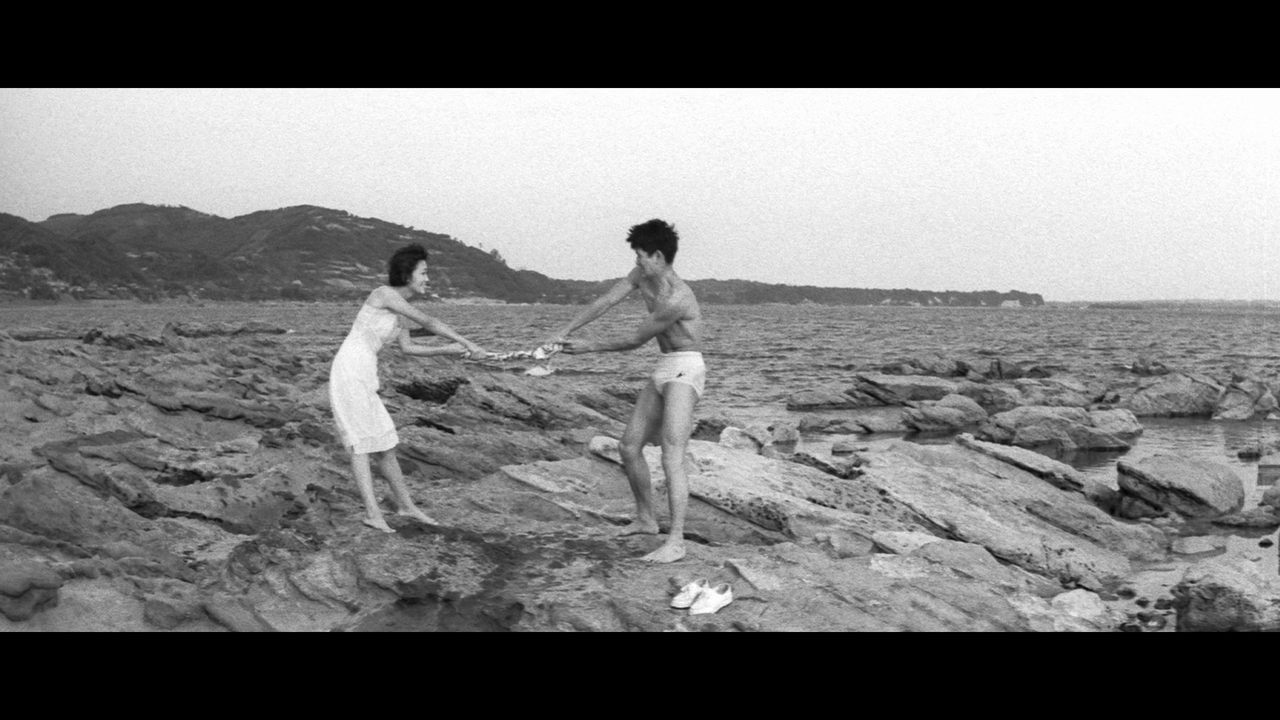
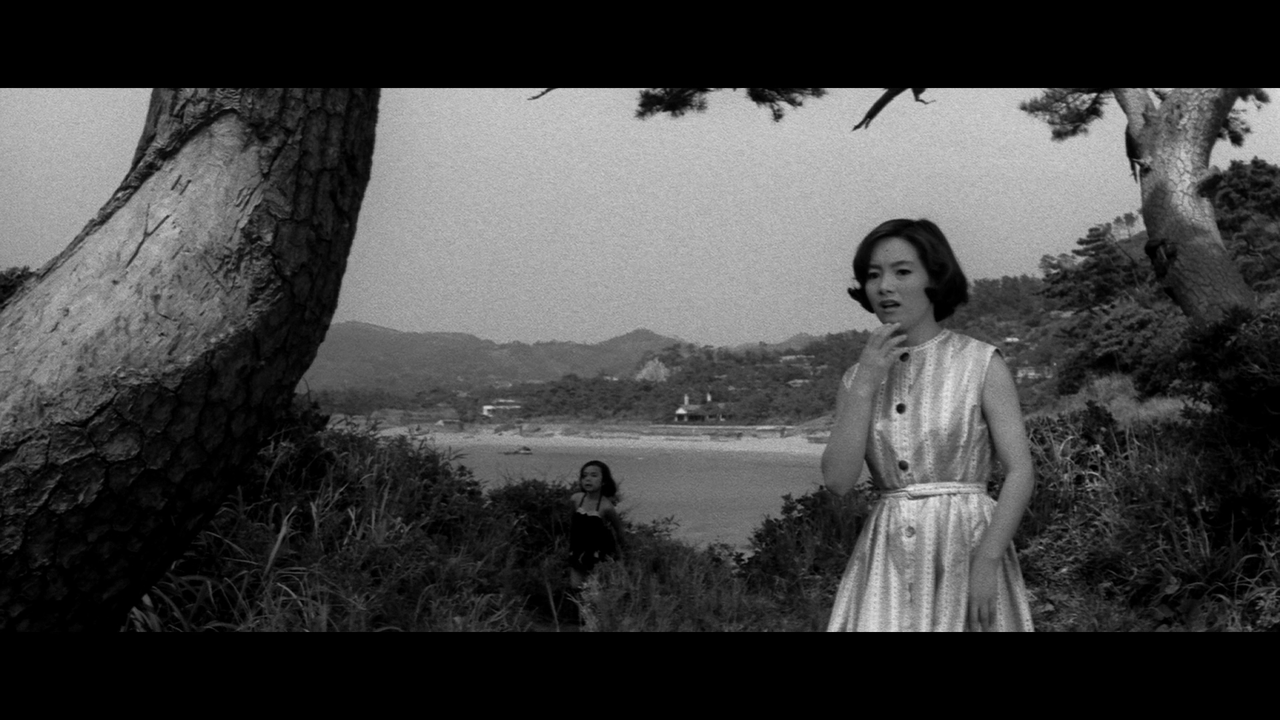
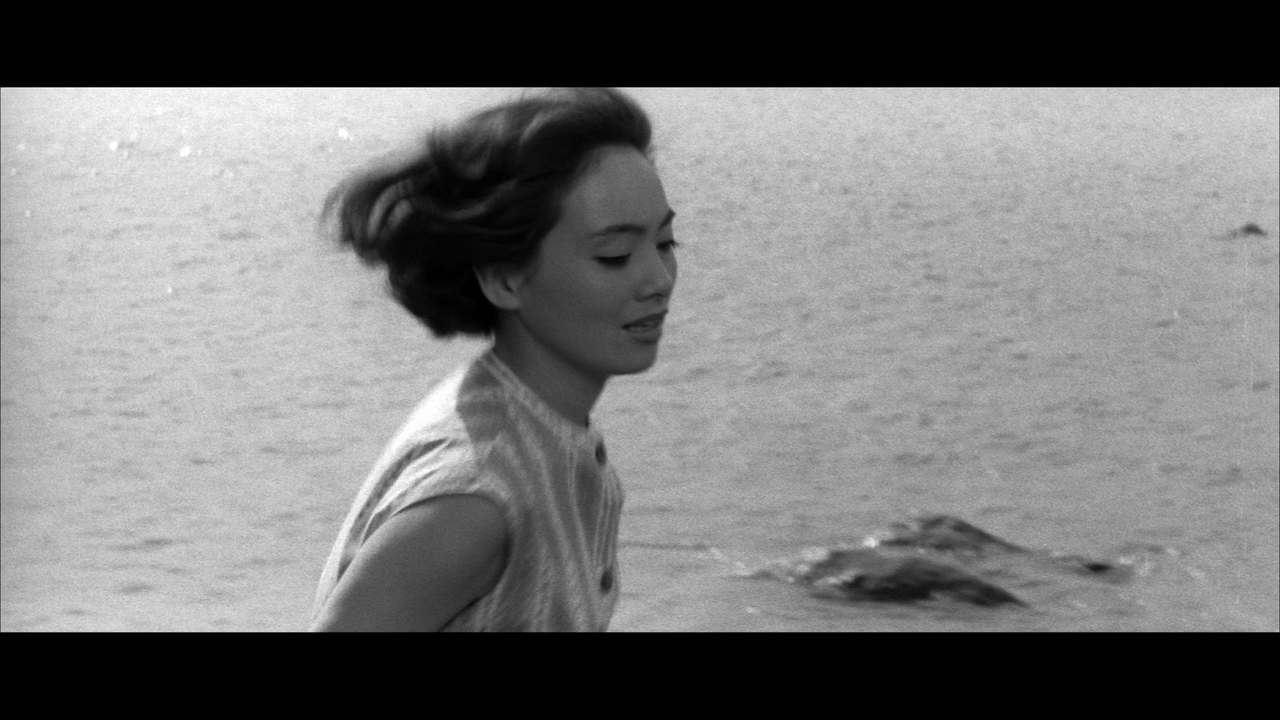
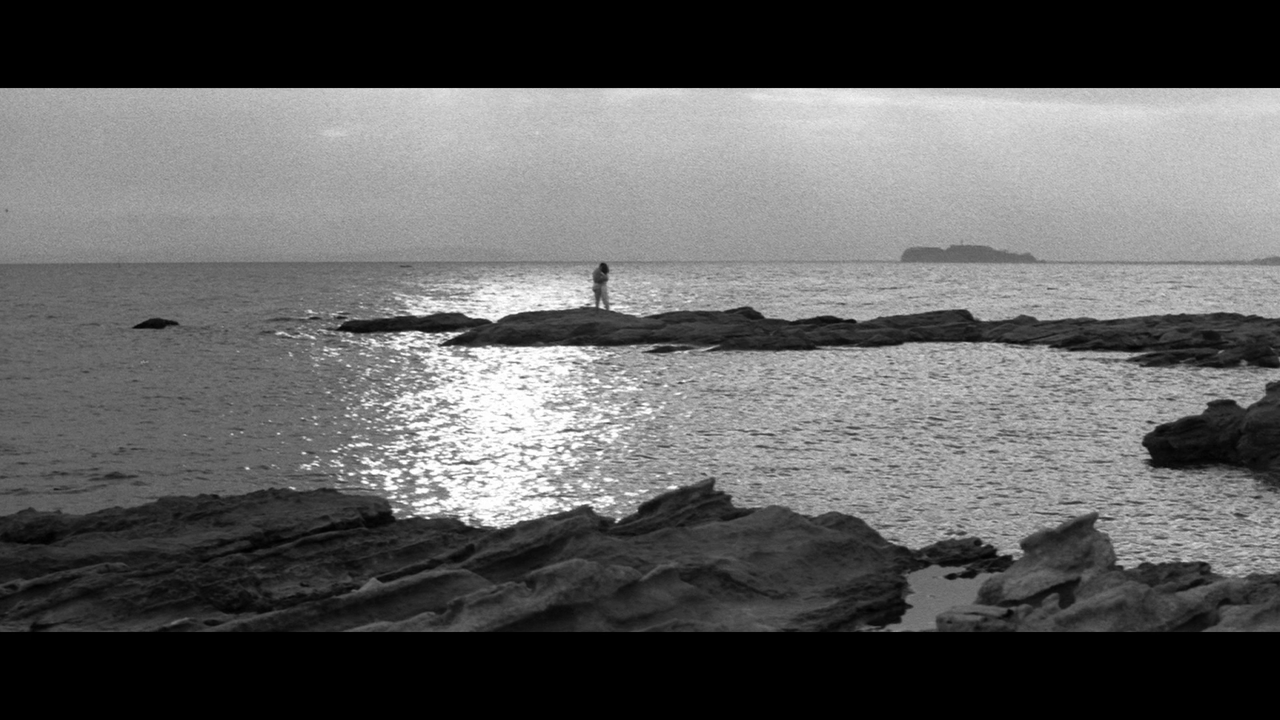
Then one of Suzuki's most obvious early editing ellipses occurs––something which critics at the time took note of for its subtle nonlinear construction and the rapidly dilating camera positioning (juggling closeups and ultra-long-shots to stagger our sense of continuity even more). Keiko goes looking for Kazue, leading her sister by the hand. Then we immediately see Keiko running breathlessly in the opposite direction, fluster and hurt splashed across her face. Only afterwards do we cut back to the rocks and see what caused her retreat: Kazue on the rocks, kissing Nobuo. In the gesture, Suzuki conveys swiftly the double-seduction of Kazue, and the surprise for Keiko that her own genius scheme has brought this flushed pang of jealousy.
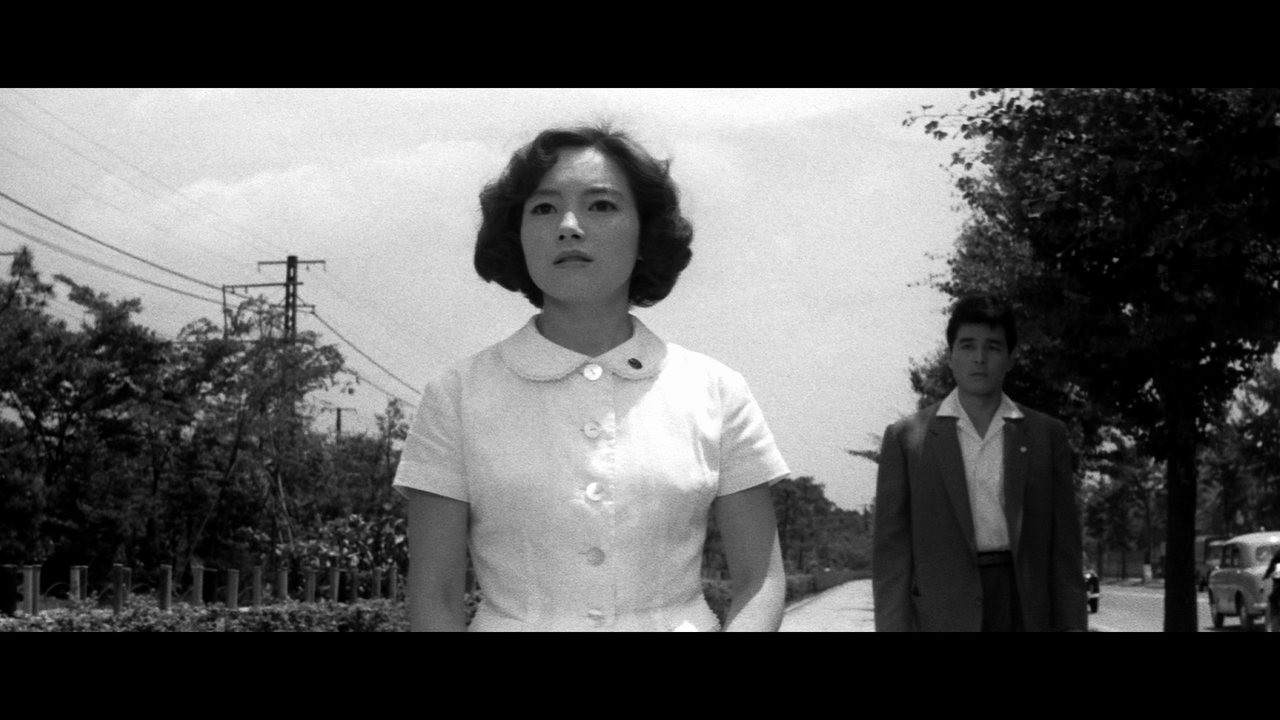
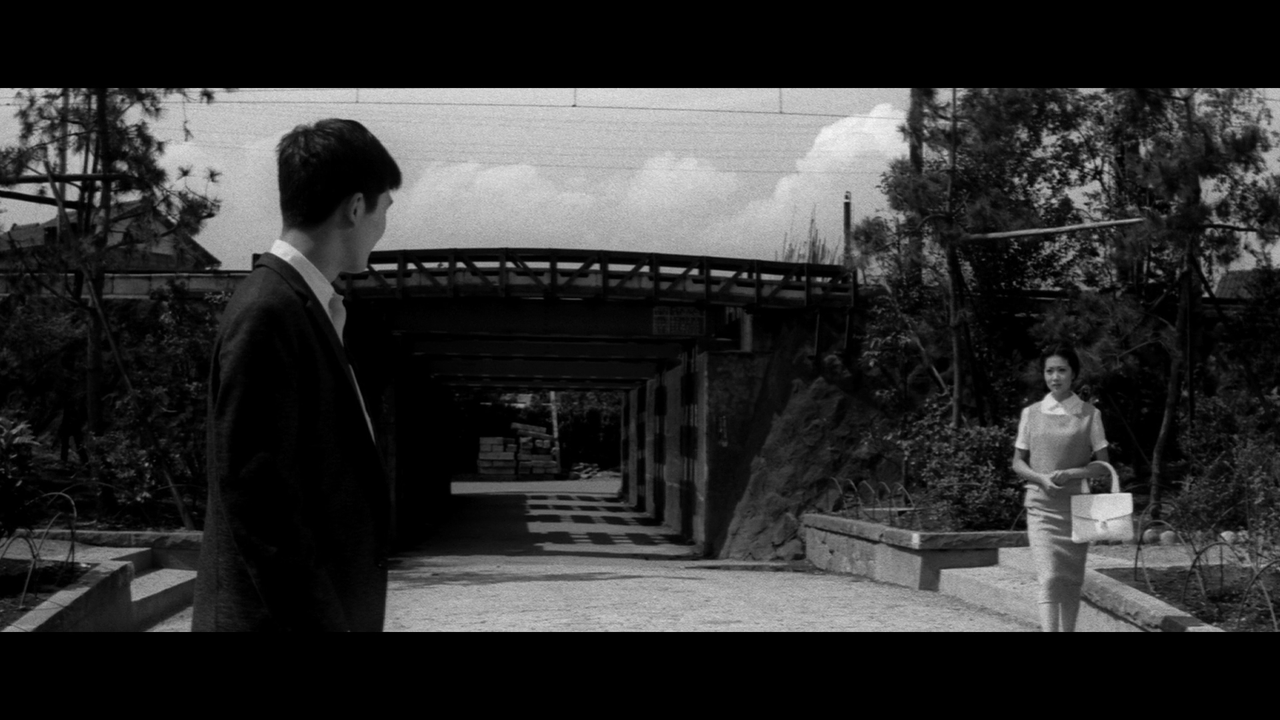
Finally, there is an exceptional scene. Keiko has gone to the mattresses to help Nobuo, convinced him against all odds that he isn't being set up to fall when the police pick him up thanks to Shishido's manipulation. Thanks to her propping him up, Nobuo can stand firm and help the police crack Keisuke Noro, who spills the beans on the whole plot and exonerates Nobuo in the process. Keiko is there waiting for Nobuo to get out of jail. Though her supervisor is with her, watching over her, we get the sense that Keiko is waiting not for her professional charge, but for the object of her affection––and her supervisor clearly knows it, too.
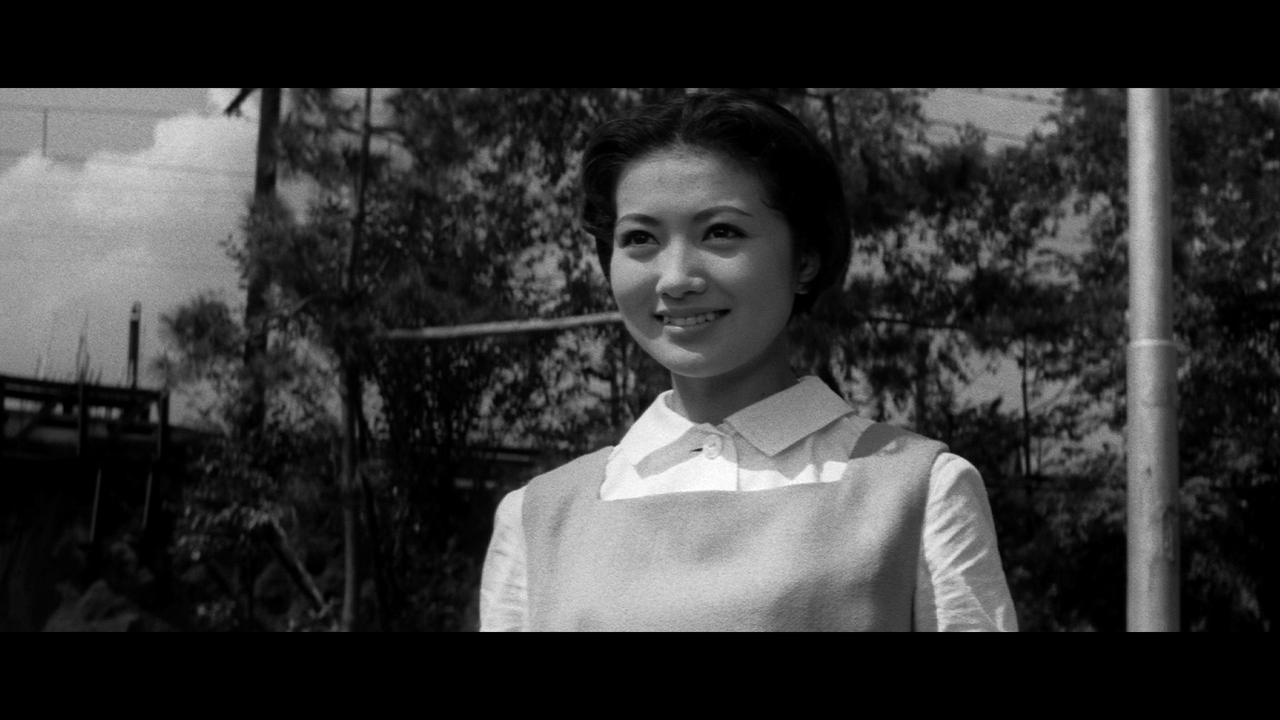
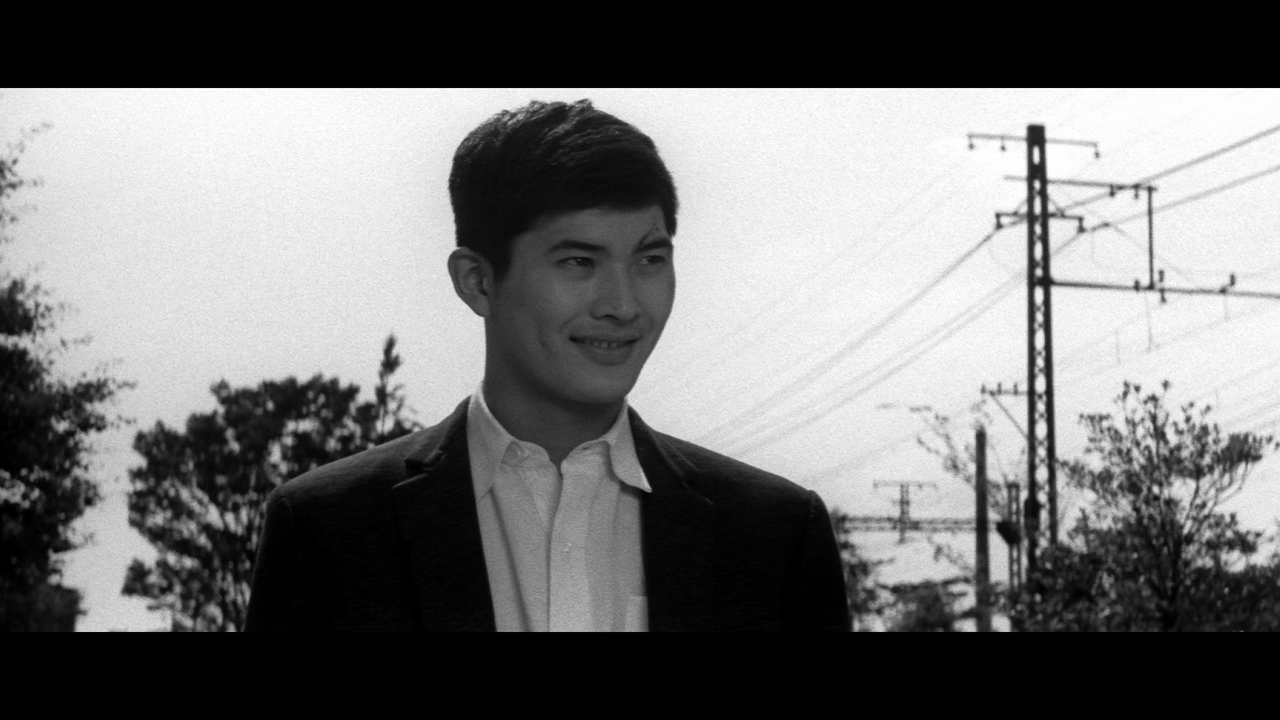
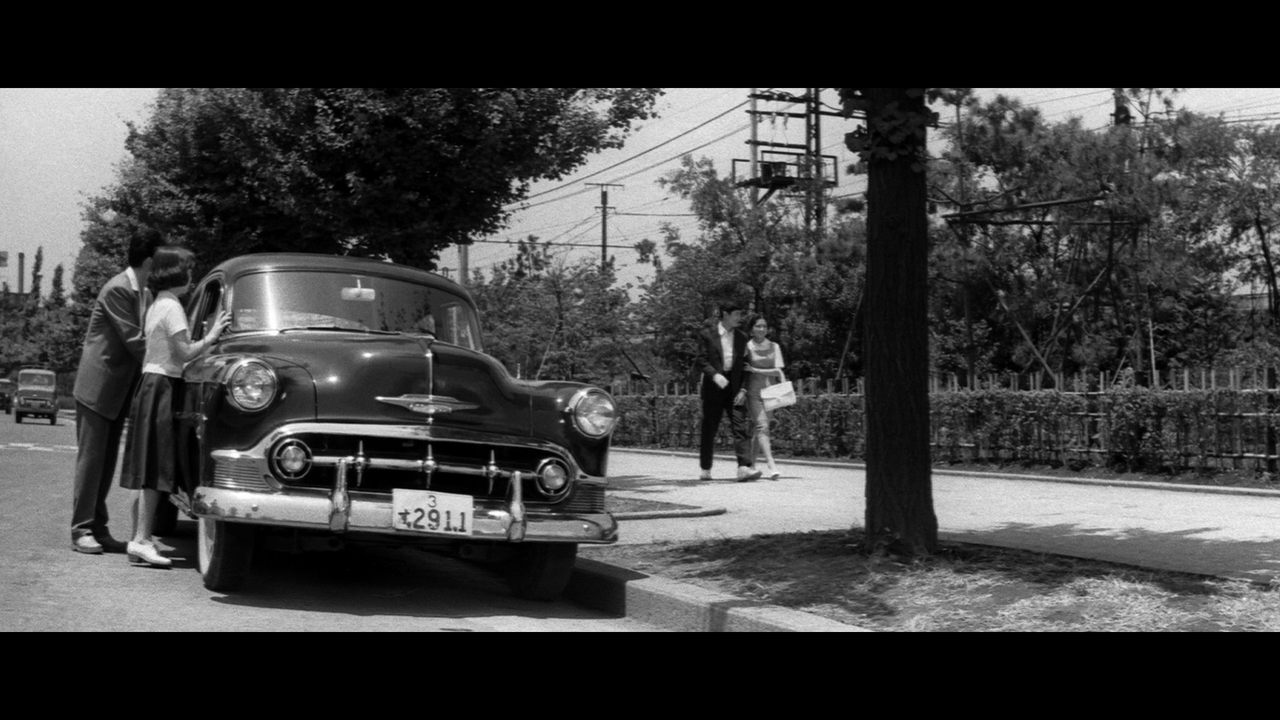
Nobuo emerges, looks off to the side, and we see Kazue waiting for him. The two talk, and walk off, arm in arm. Keiko follows them, hiding behind cars. Her supervisor follows her, looking concerned for her. Alone in the scene, in spite of everyone else being there, Keiko crouches on the ground as Nobuo and Kazue leave.
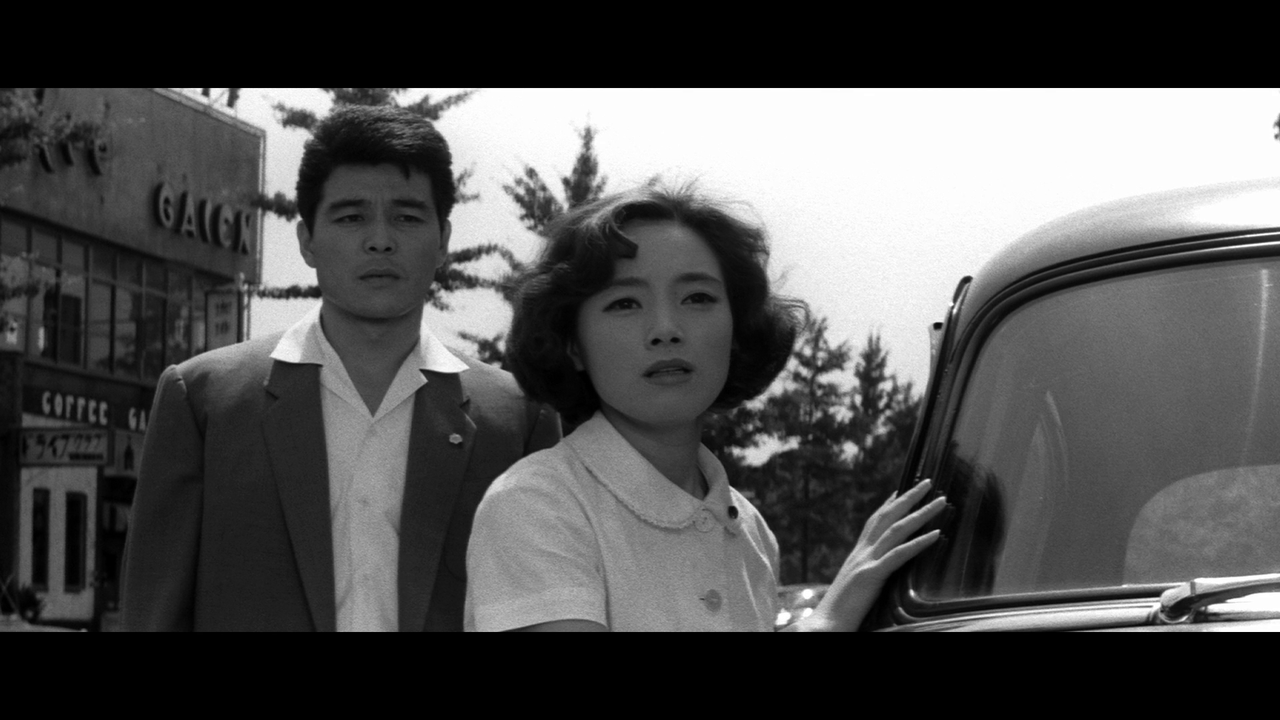
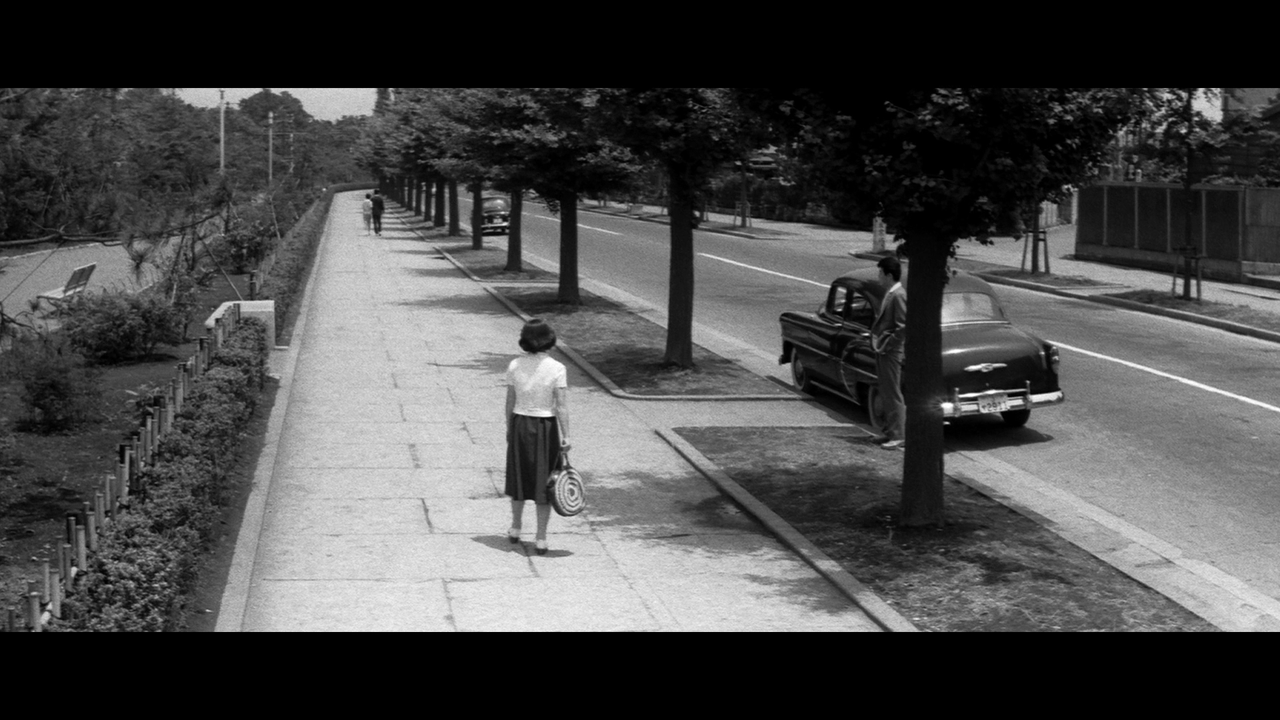
She tries tying her shoe to excuse the gesture, but her face tilts up and we see the recapitulation of the gesture from the middle of the film––only this time, as her head contorts, the expression on her face is pained, romantic agony. In doing her job well, Keiko has fallen in love. In order to keep her job, she can never acknowledge it, or realize her passion. She has set up another woman to fill her place, one which we sense will never really be for Nobuo what Keiko would be for him.
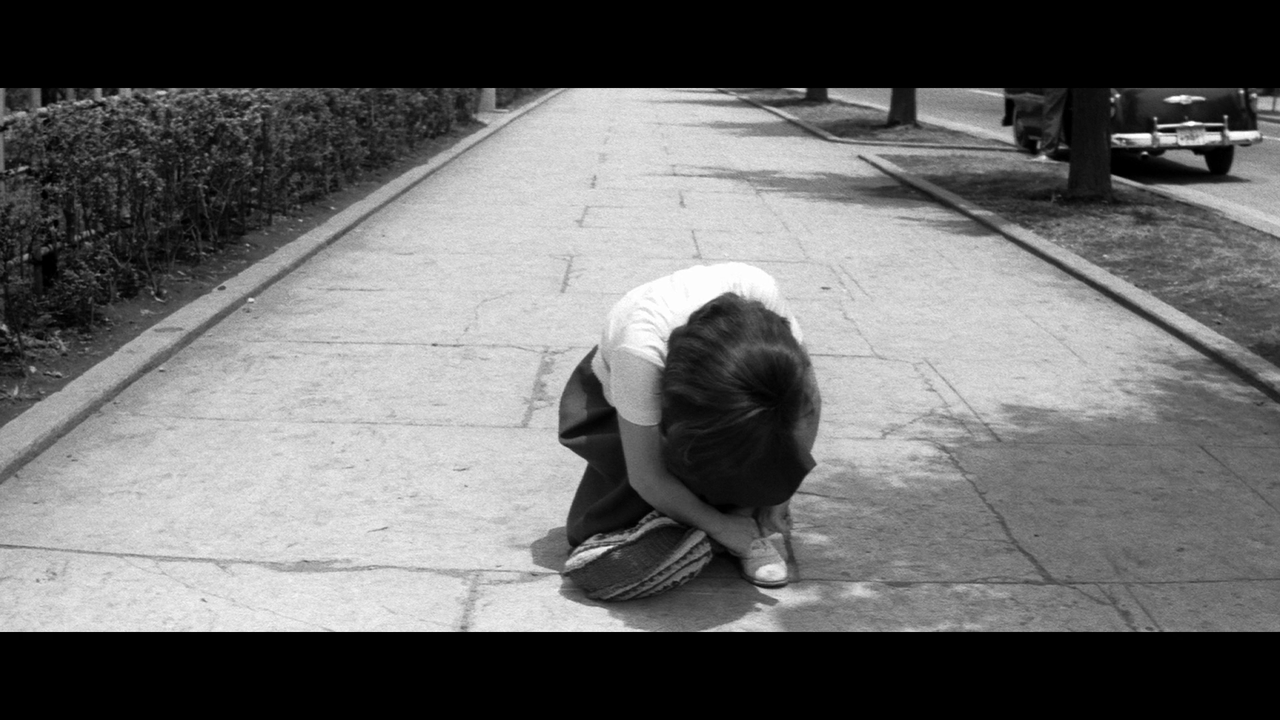
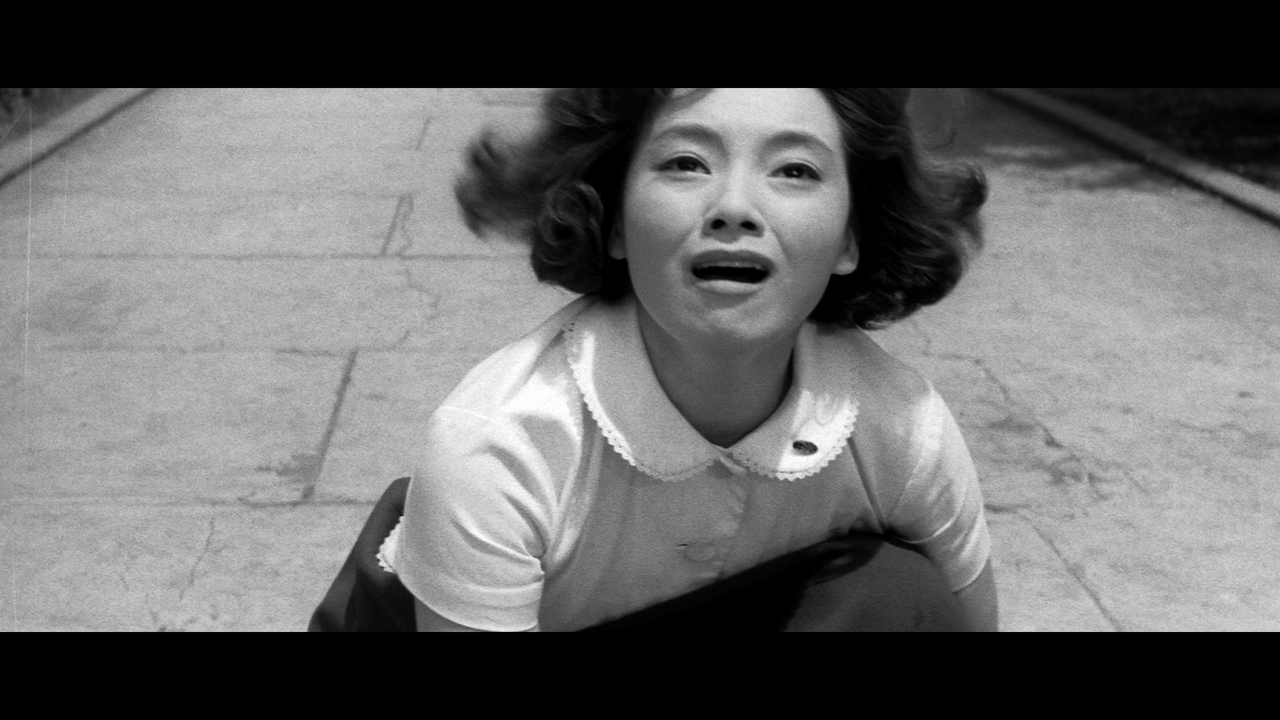
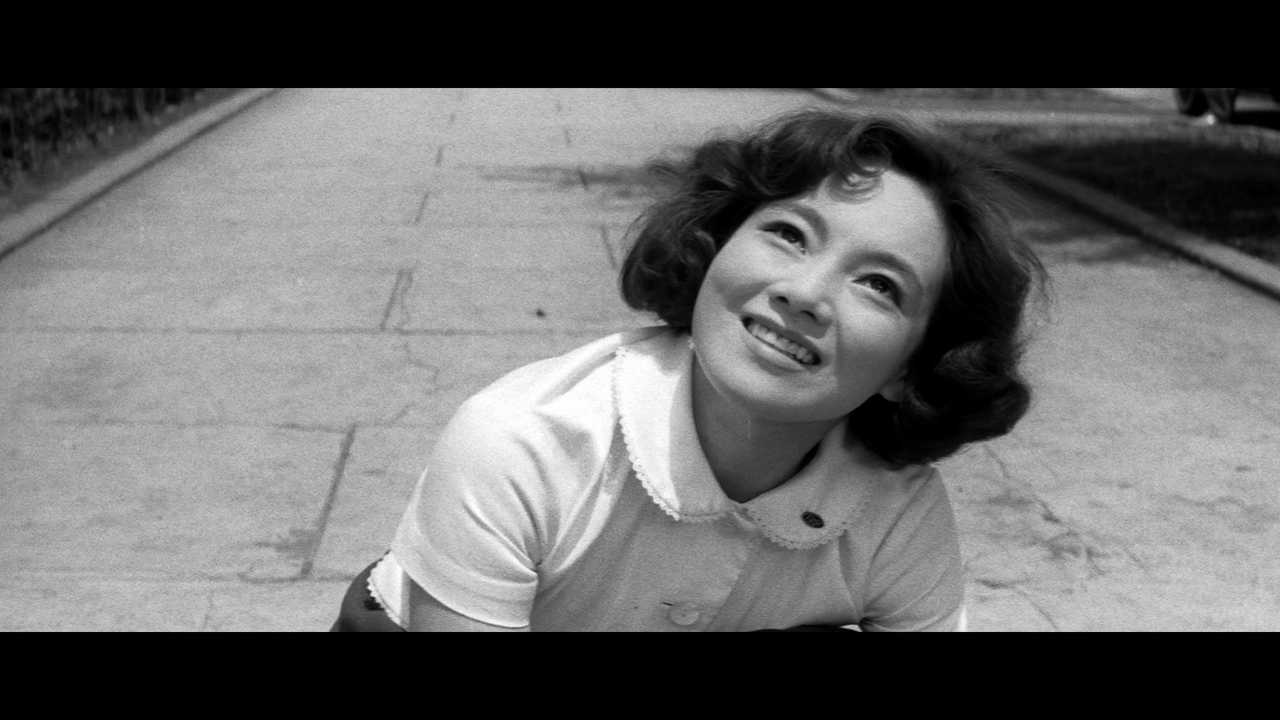
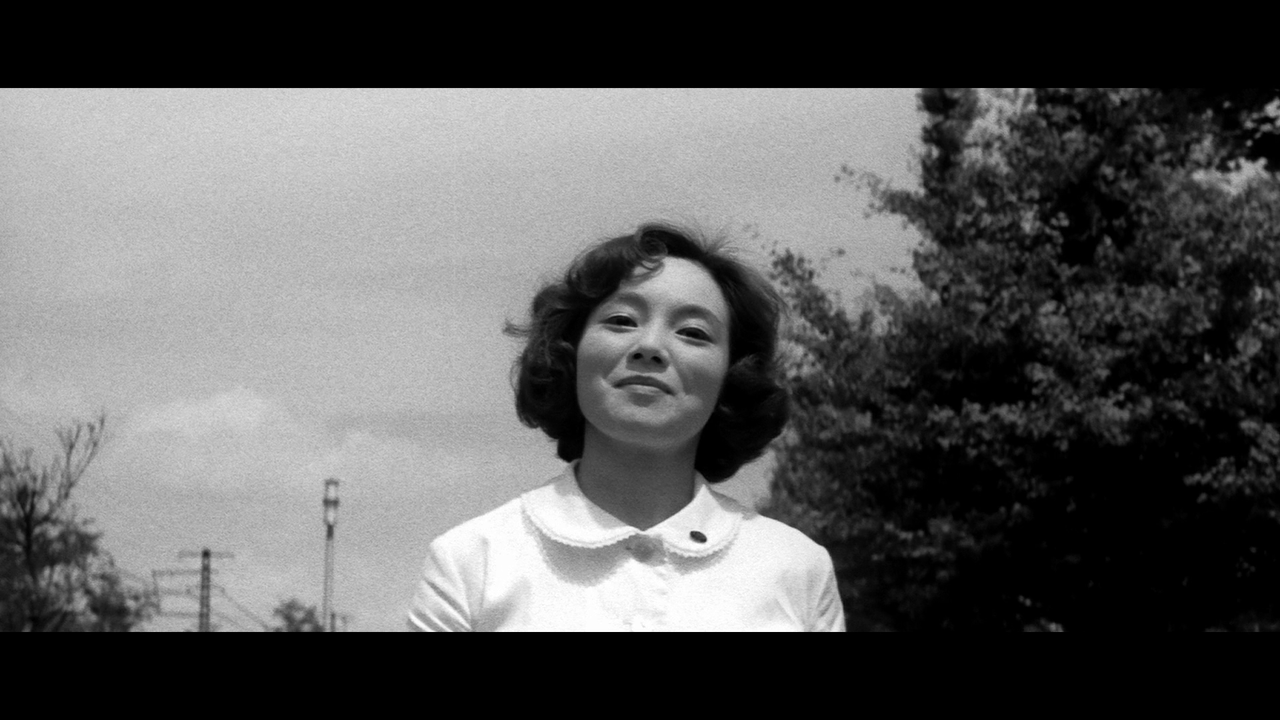
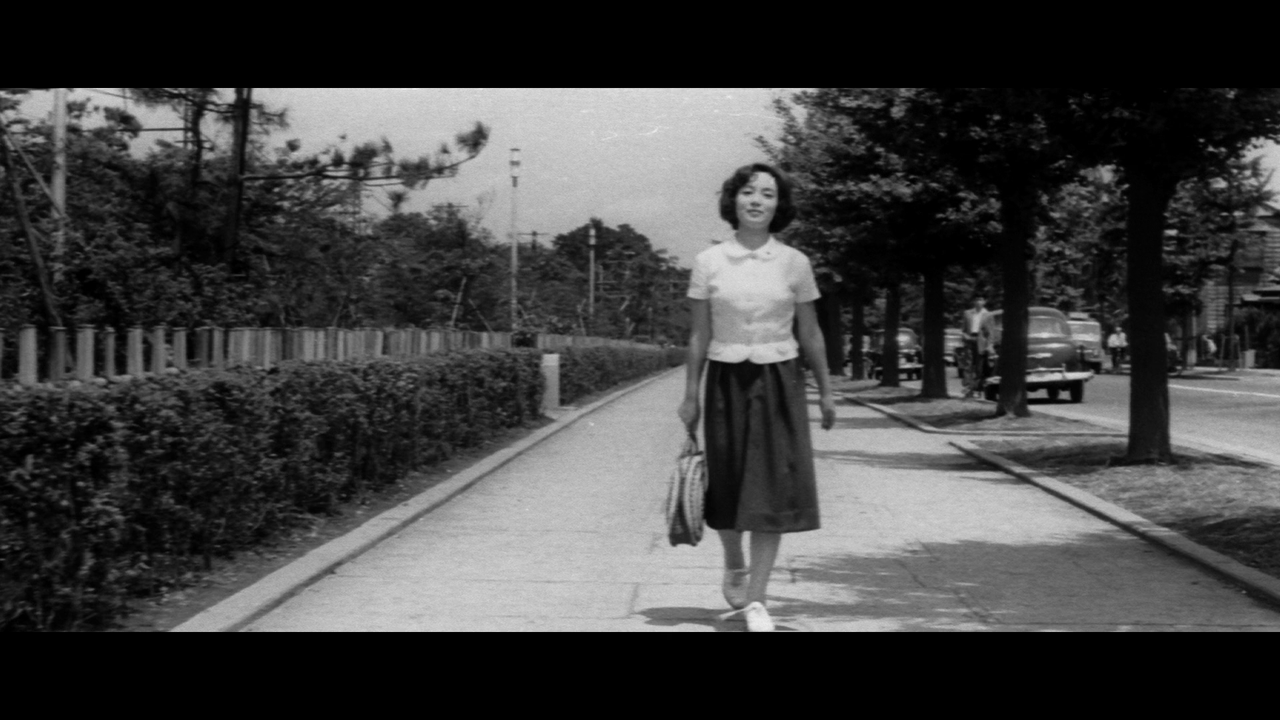
But it all has to be put away somewhere. Keiko ducks down again, and her face springs up once more, a huge, forced smile on it. She gets up and strides forward down the street, ready for her next case, as the movie ends. This last sequence of Keiko alone is all a single crane shot which racks between a long shot and an extreme closeup, then pulls back into a long dolly shot.To work in this world means to sublimate one's feelings, and Keiko is striding into a society where work at the expense of any other life is an increasingly tangible value. Incidentally, none of the jobs Nobuo gets set up with by the end of the film look all that promising. It's interesting to imagine what the future will hold for Nobuo and Kazue. This may be a shortcoming of the script not to imply much in this regard, but I suspect Suzuki might have liked the ambiguity of it. This is a happy ending, but Suzuki manages to flavor it with a bitter aftertaste.
The follow-up film, Blue Breasts, will either echo or invert a lot of the plot and character beats and the themes of this movie, and will end up with a much darker ending, but I put that largely down to the difference between a film anchored by Sachiko Hidari's boundless energy and one woven around a far more mysterious and searching performance by Misako Watanabe. Kobayashi is the constant between the two, but far from really constant; his character in this film balances his relationships towards women, from his weak, worn-down mother to his docile girlfriend, to the dynamic social worker who saves him. In Blue Breasts, his character will be searching to resolve his relationships with male characters––at the frighteningly palpable expense of the women in his life. It's interesting the films have this relationship, like two sides of a coin.
CINEMATOGRAPHY
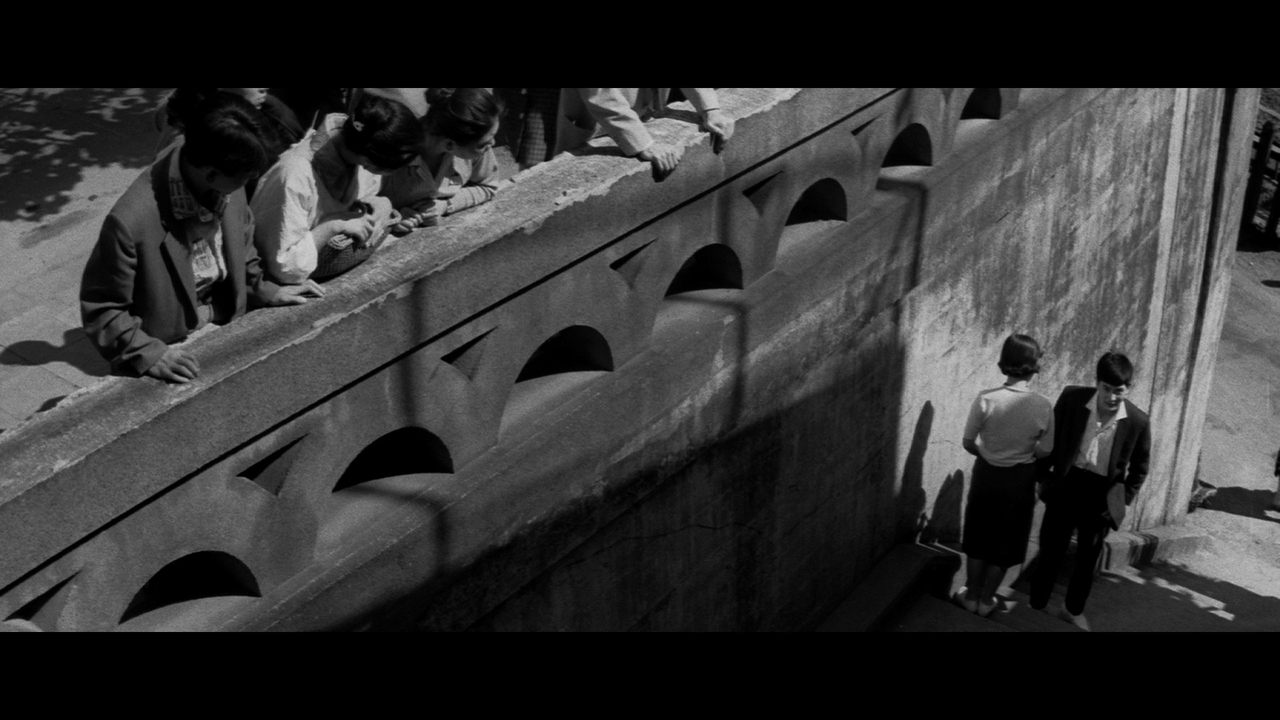
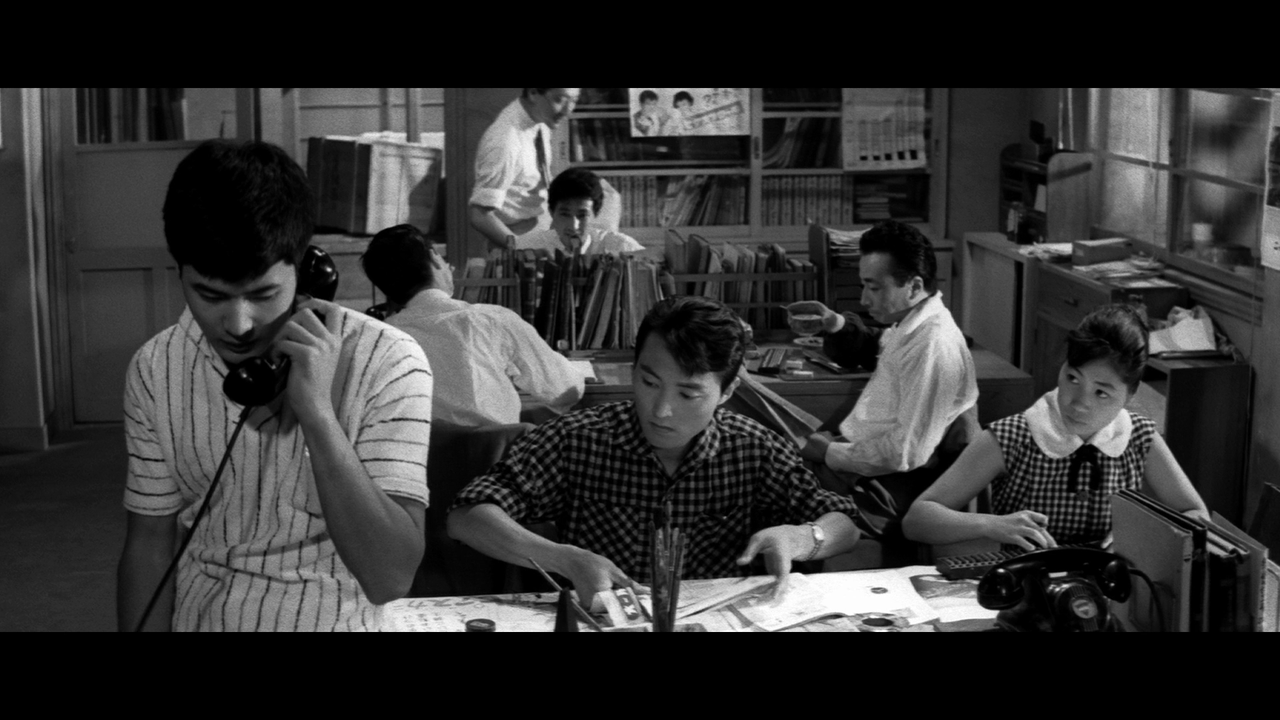
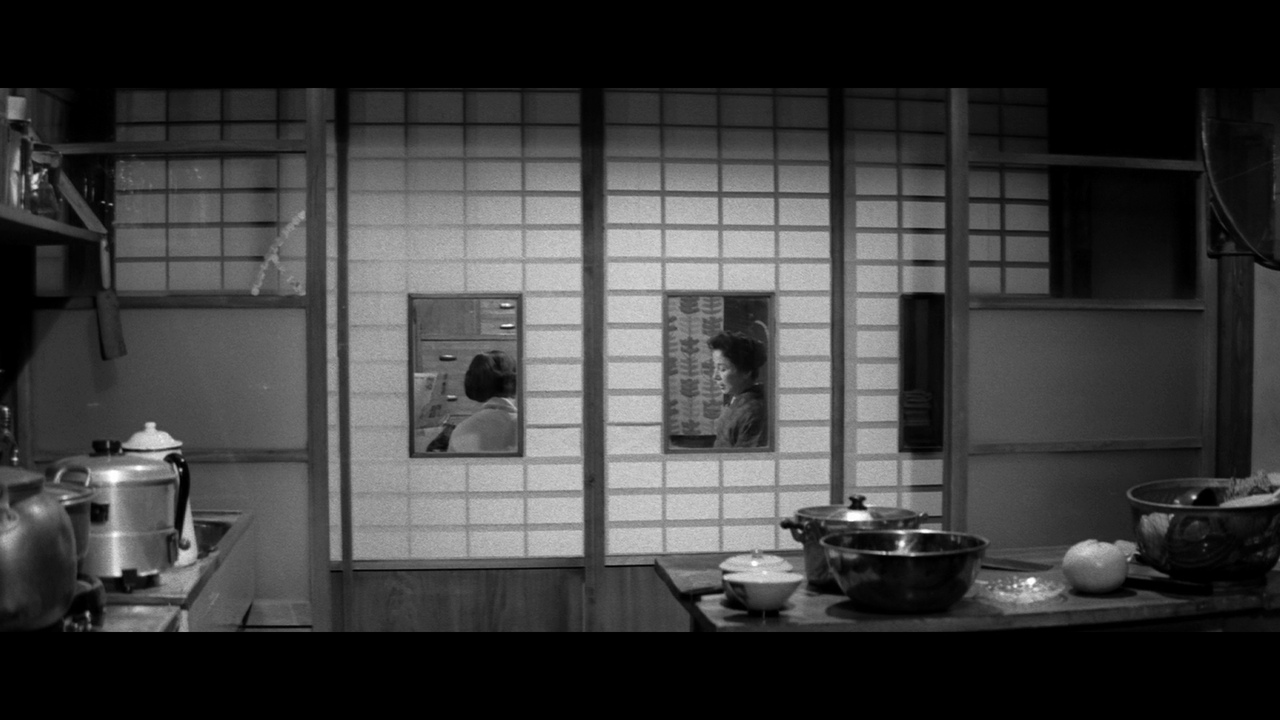
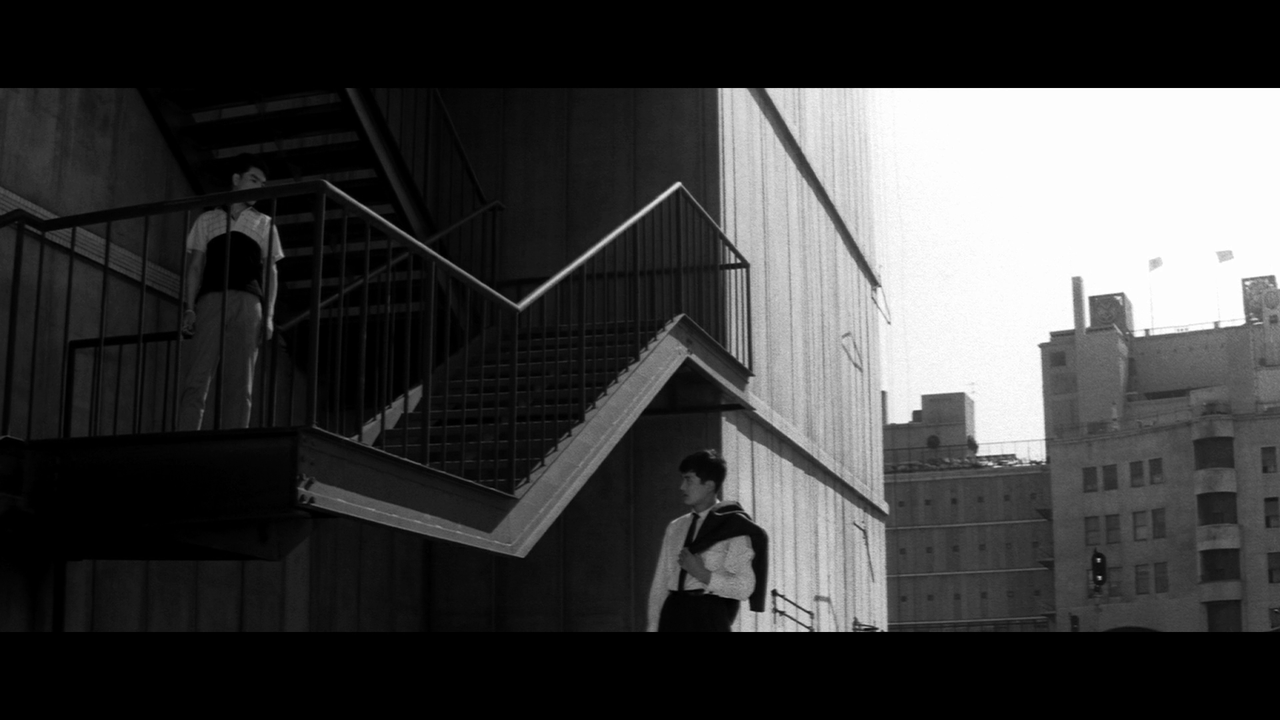
A sign of the bigger budget attached to the picture or simply an odd scheduling one-off, The Boy Who Came Back is lensed by Yoshihiro Yamazaki. He's Ko Nakahira's preferred cinematographer, starting from his first job on Temptation. For Nakahira he shoots The Jungle Block, Storm of Arabia, Crimson Wings, Only on Mondays, The Hunter's Diary, Flora on the Sand, Whirpool of Flesh, The Black Gambler, The Passionate Spinster, Bastards Without Borders, Red Glass, and The Mud-Spattered Pure Heart.
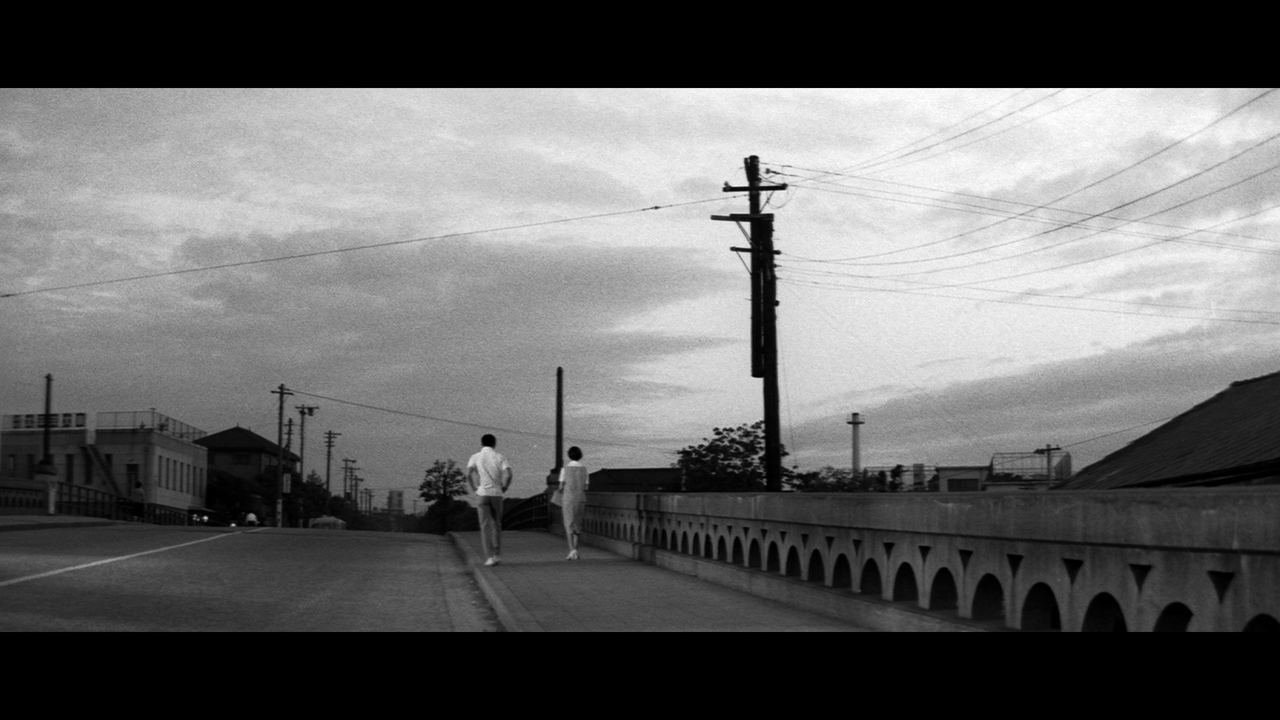
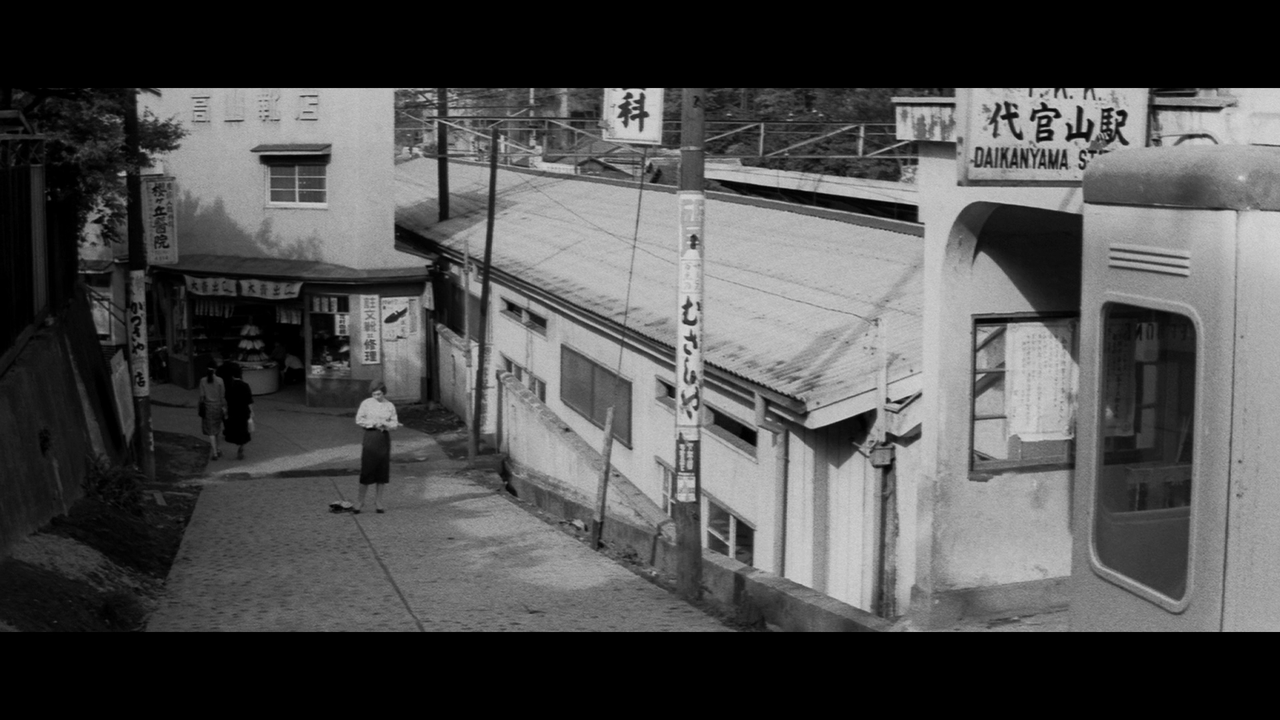
The Boy Who Came Back is expensive for Suzuki, but probably not for what Yamazaki is used to. The result is the most crane-work of Suzuki's career.
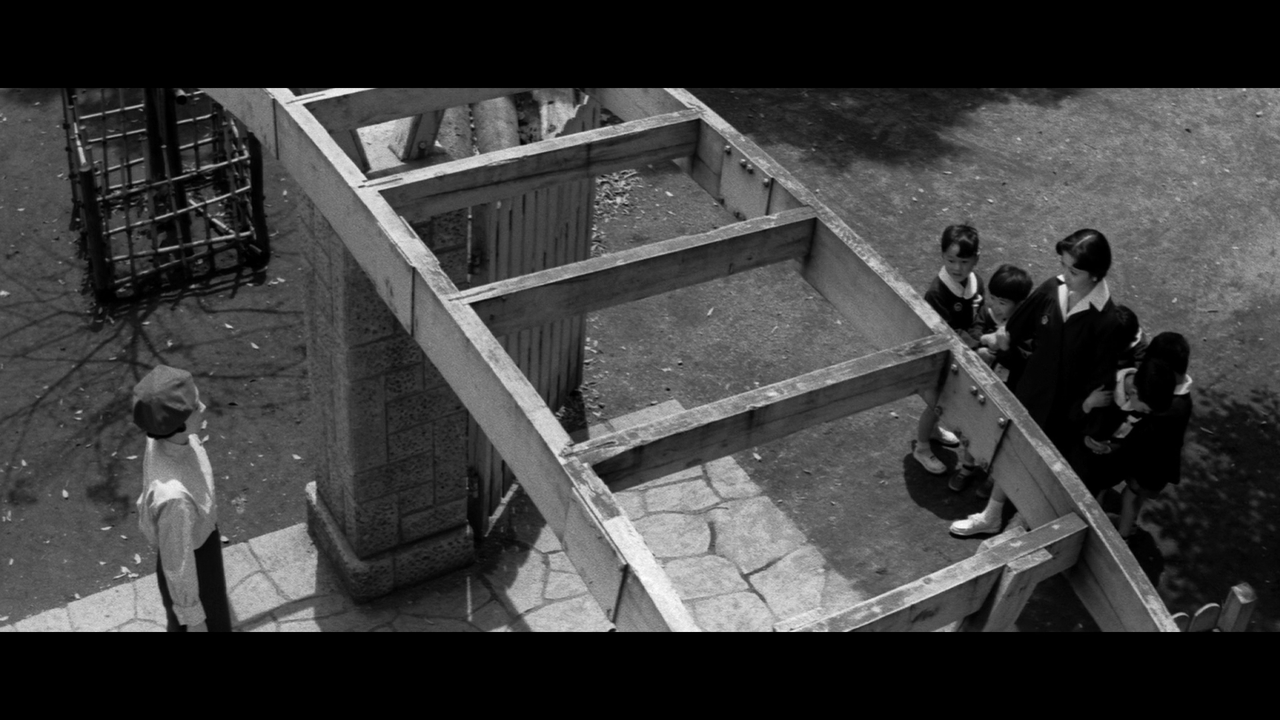
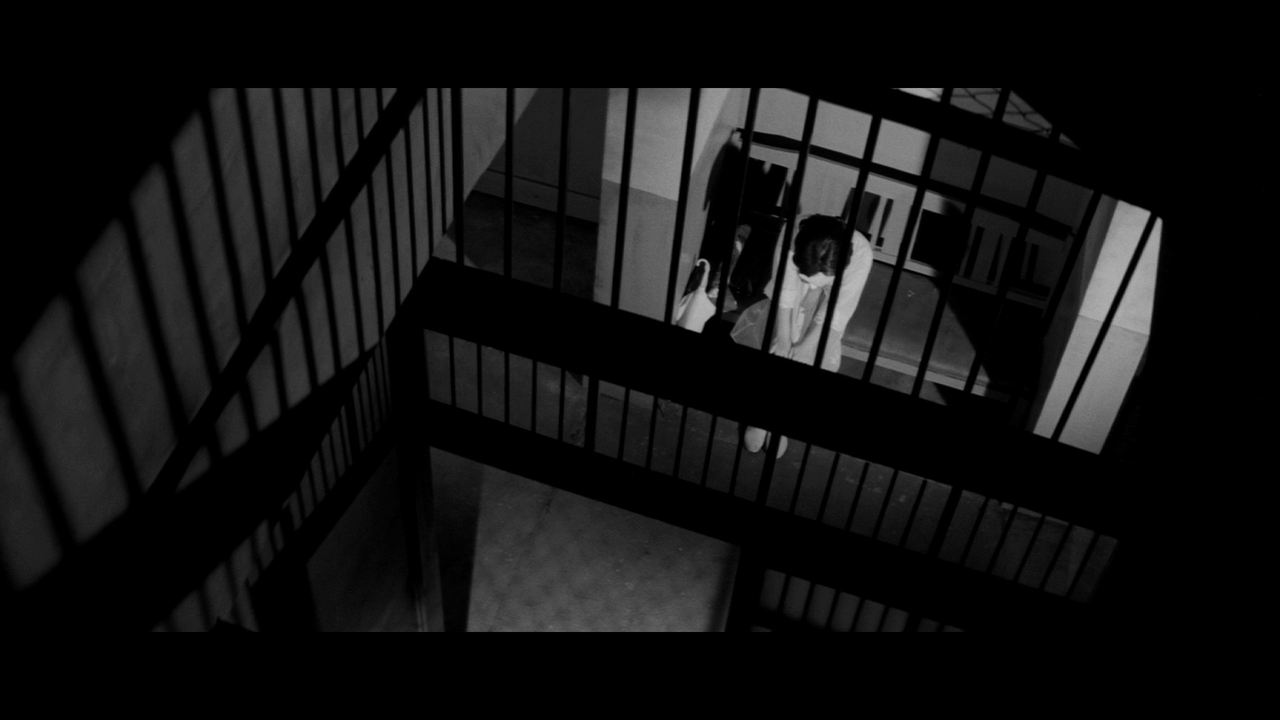
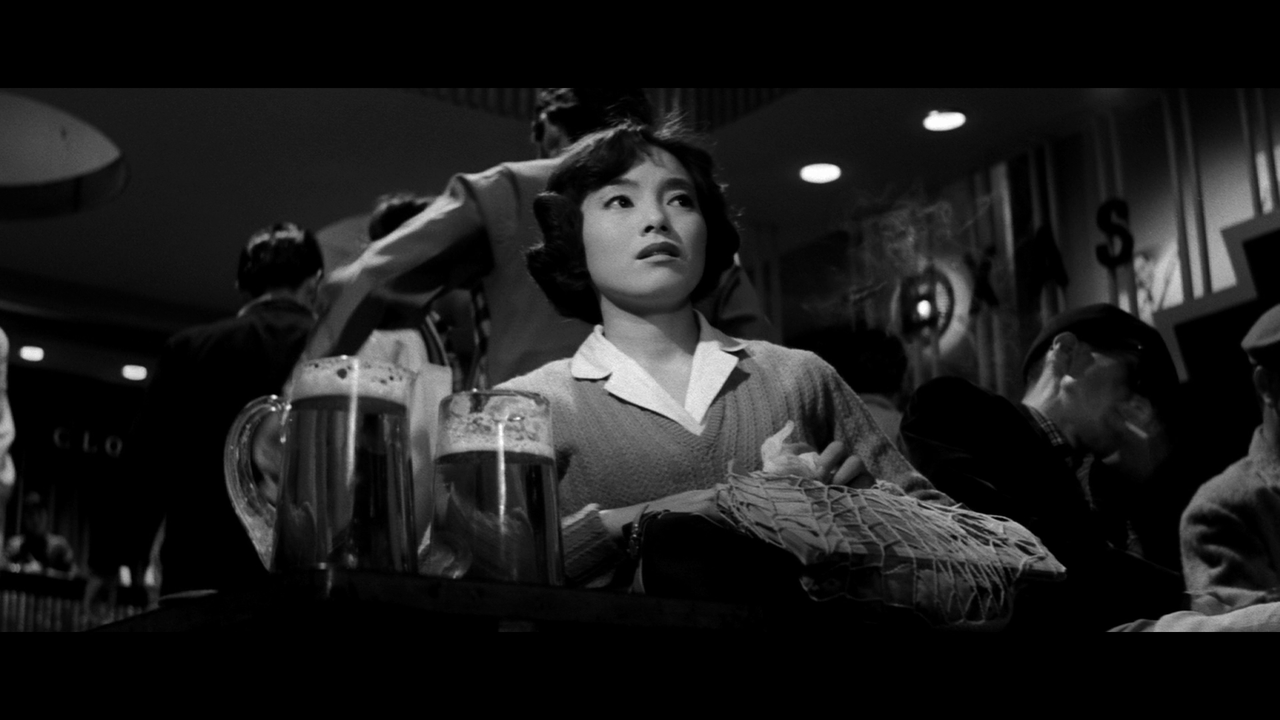
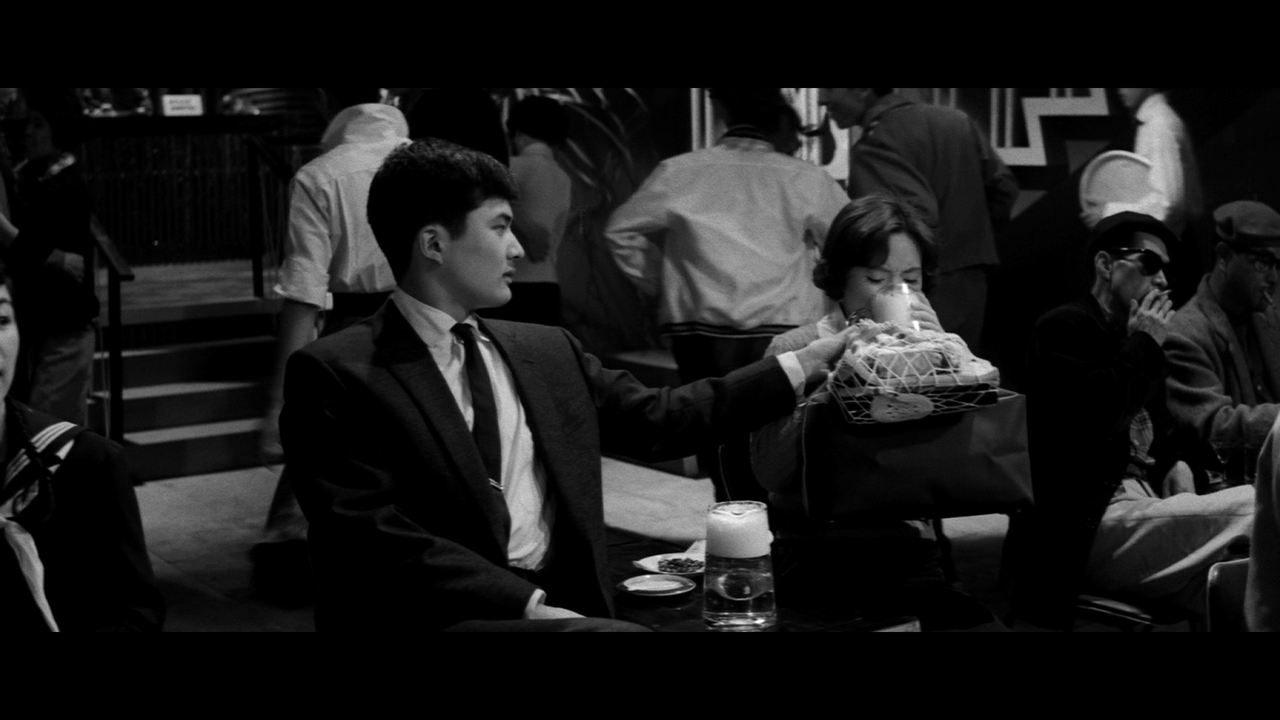
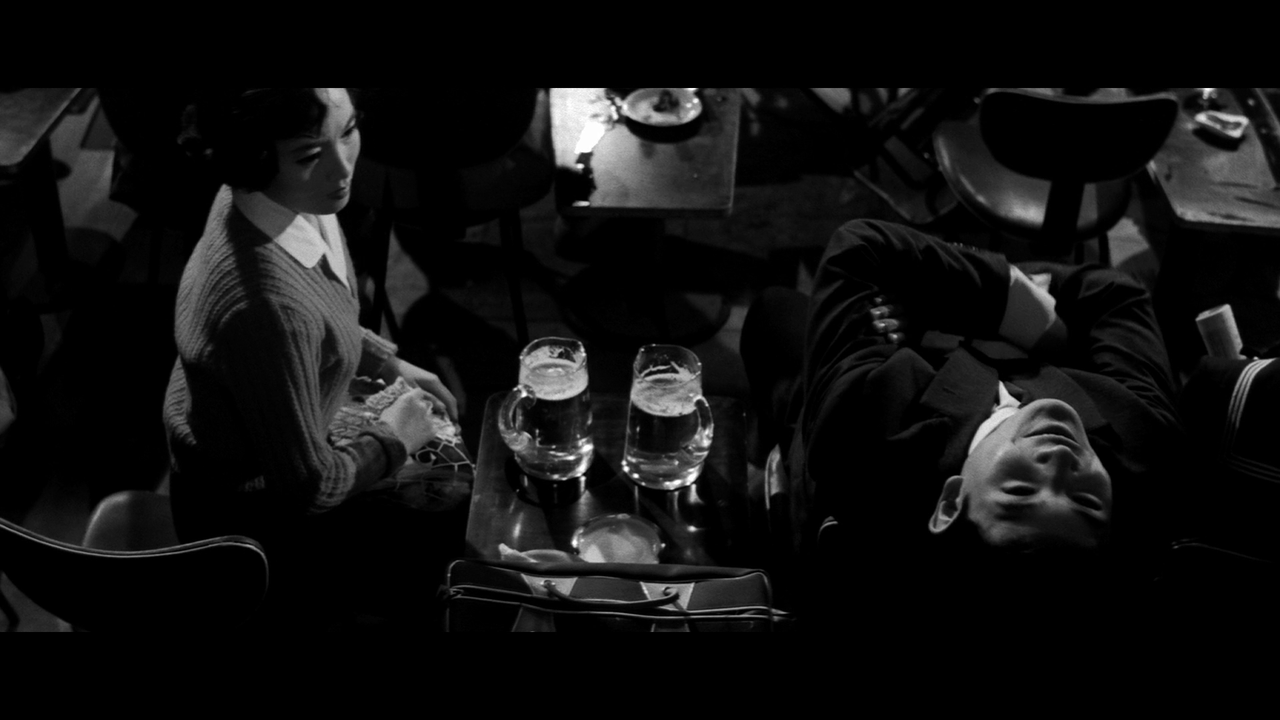
Those crane shots are what stand out the most in this film – especially the one early on in the club, where Nobuo gets Keiko drunk, and the camera twists over and around the characters, swooningly distorting our sense of firm ground.
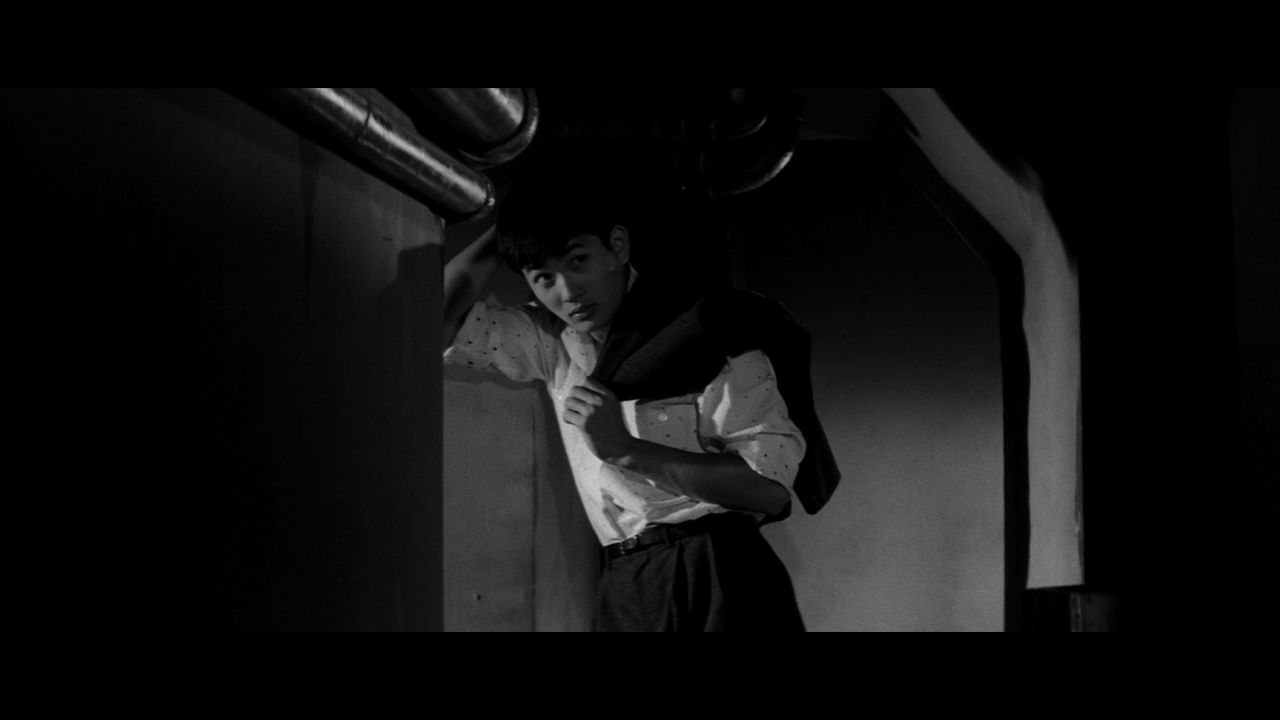
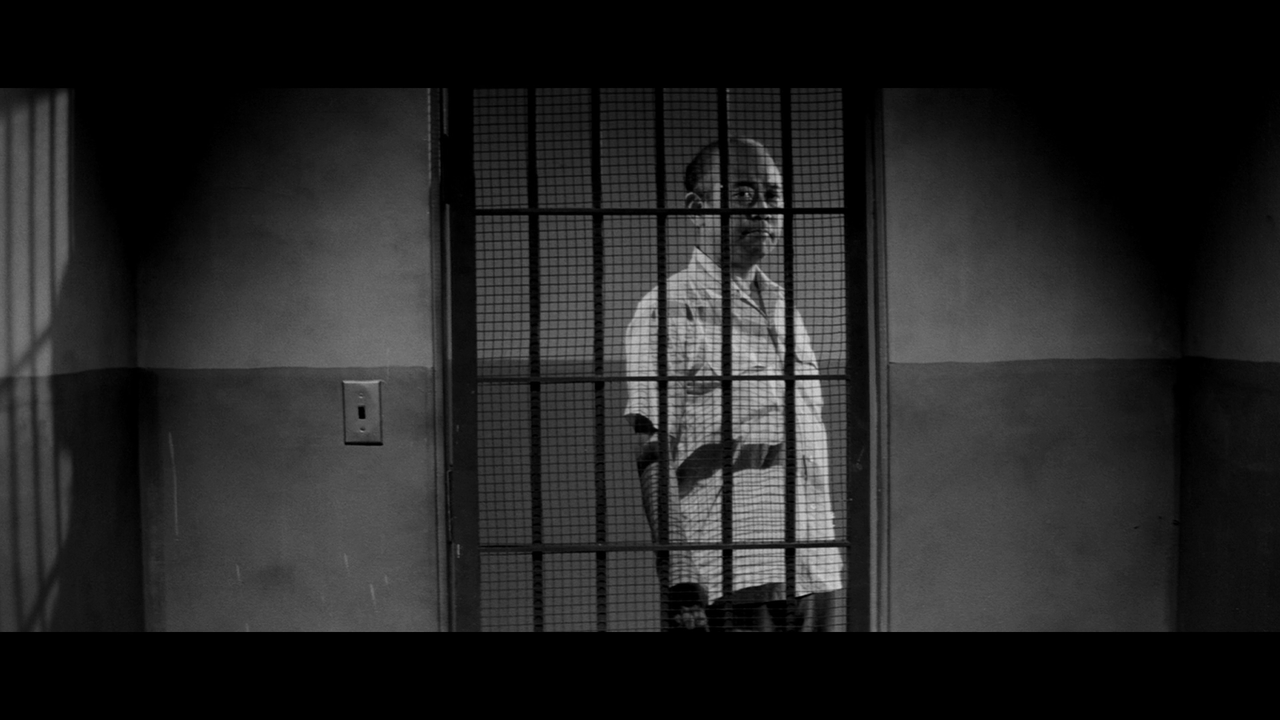
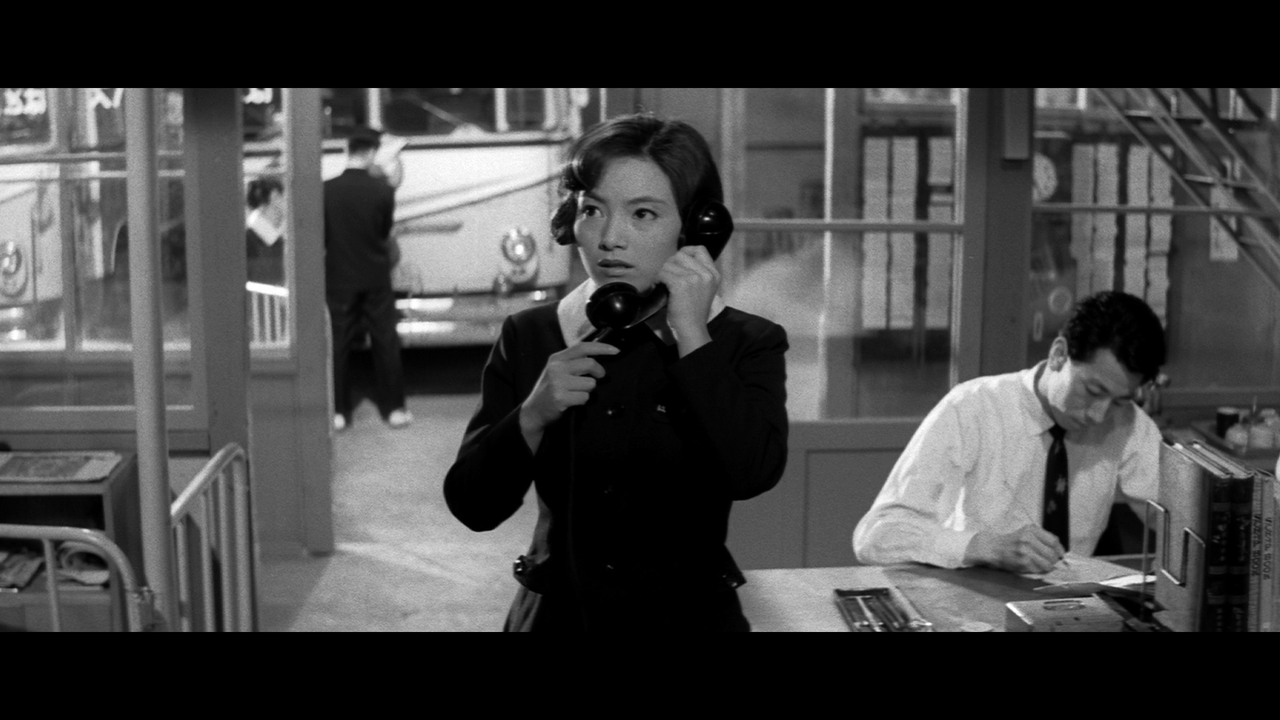
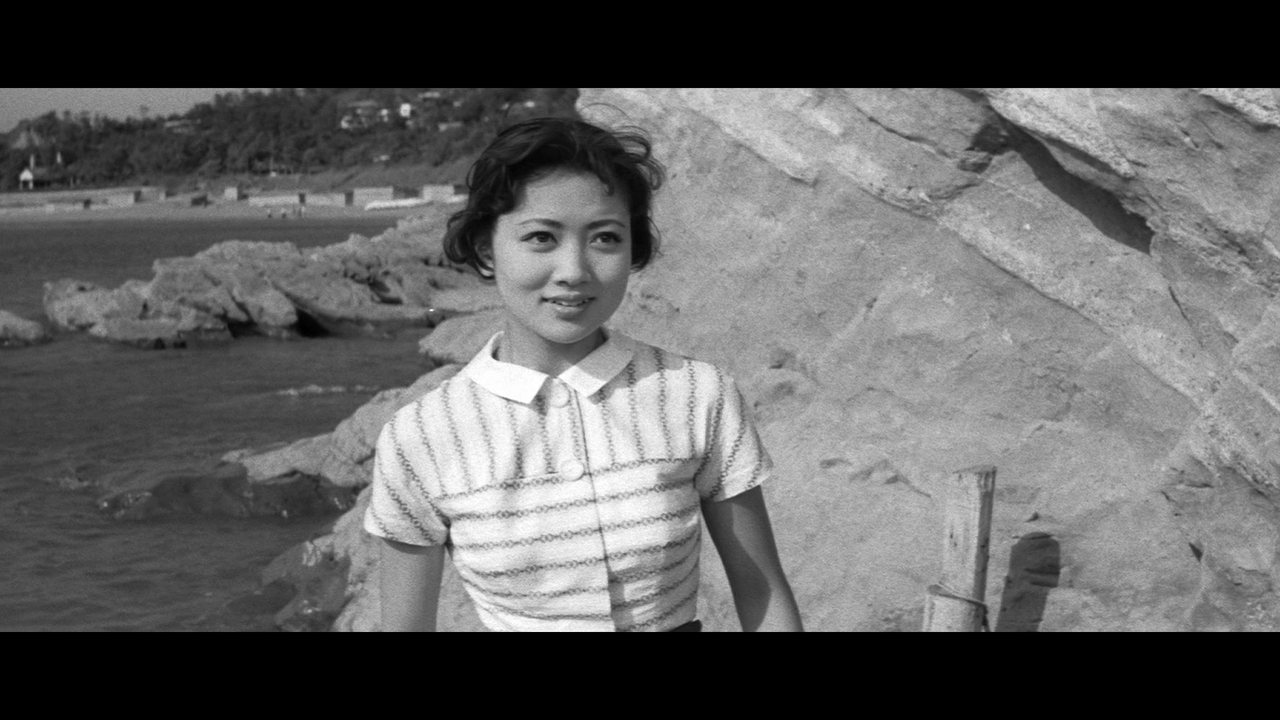
Avoiding Suzuki's more challenging framing style, Yamazaki keeps positioning figures center frame. He seems Nikkatsu's generic standard for a cinematographer, the work is sometimes good enough, mostly unspectacular.
THE DISC
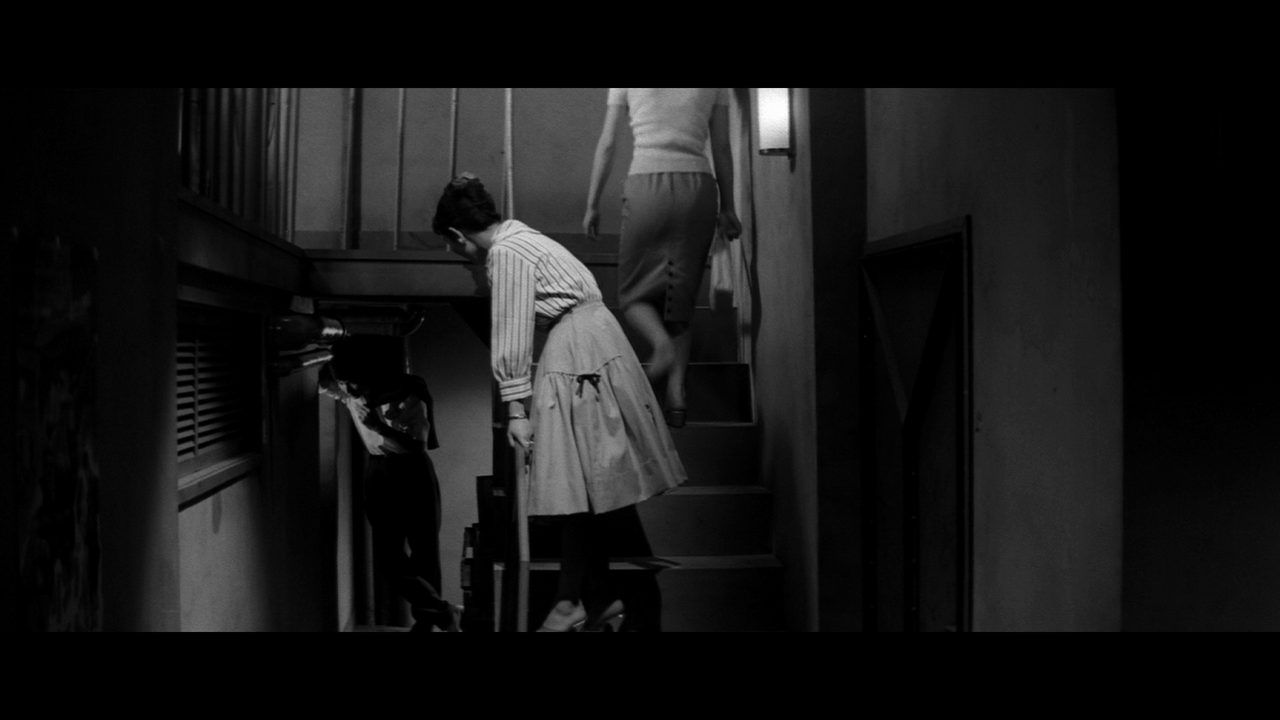
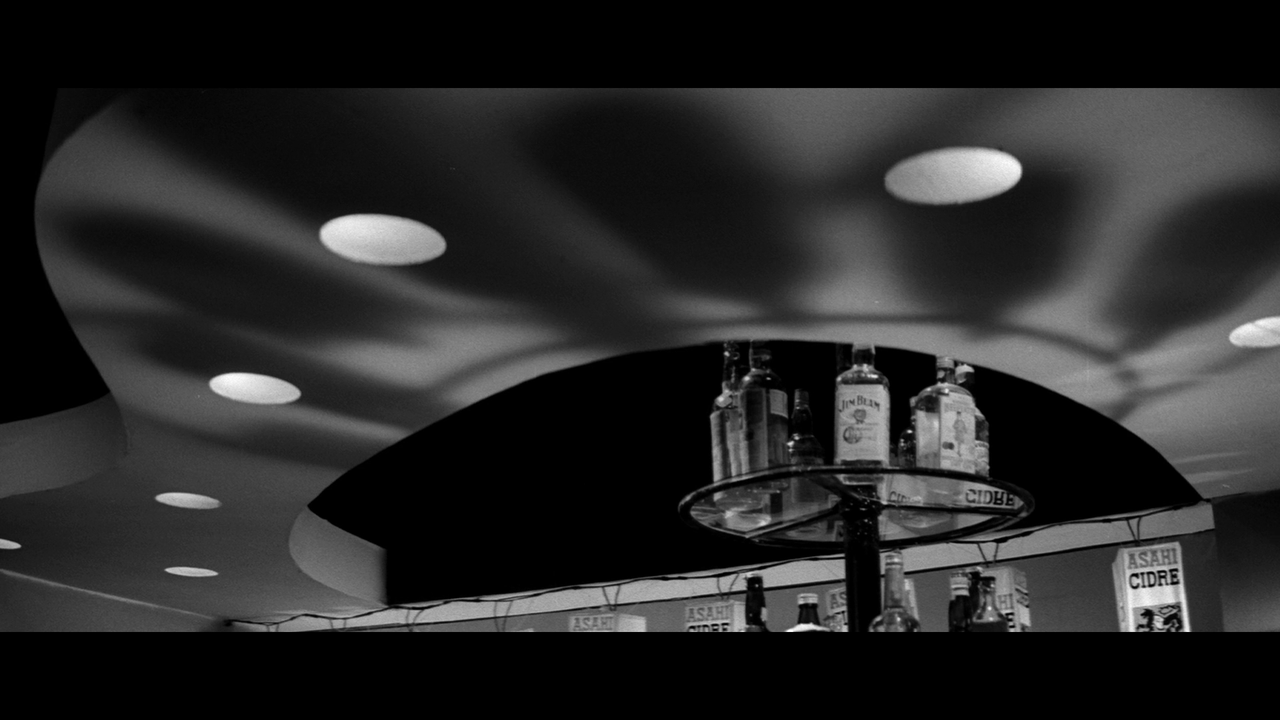
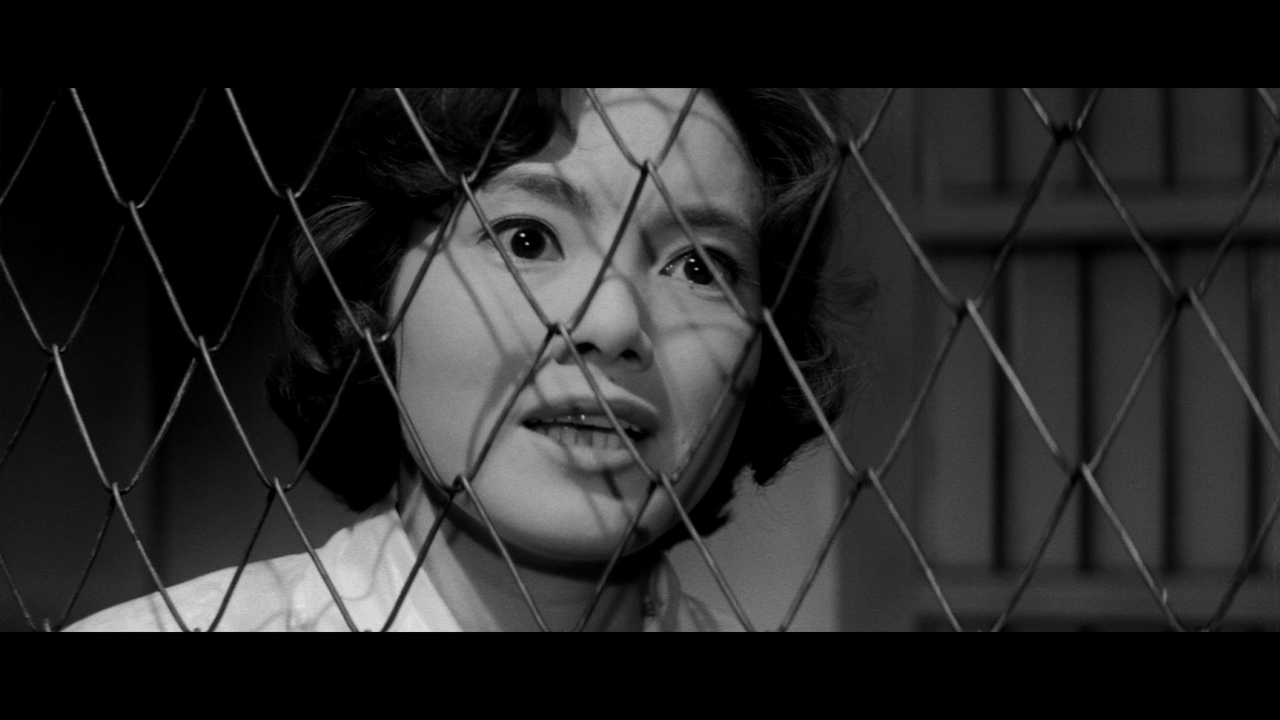
Part of the 10 films in Arrow's two "Seijun Suzuki: The Early Years" blu ray sets: grain, sharpness, depth-of-field...all great. These Arrow "Early Years" sets have been OOP for a while, sadly, so whatever the technical limitations, they're the best versions we have.
MY TAKE
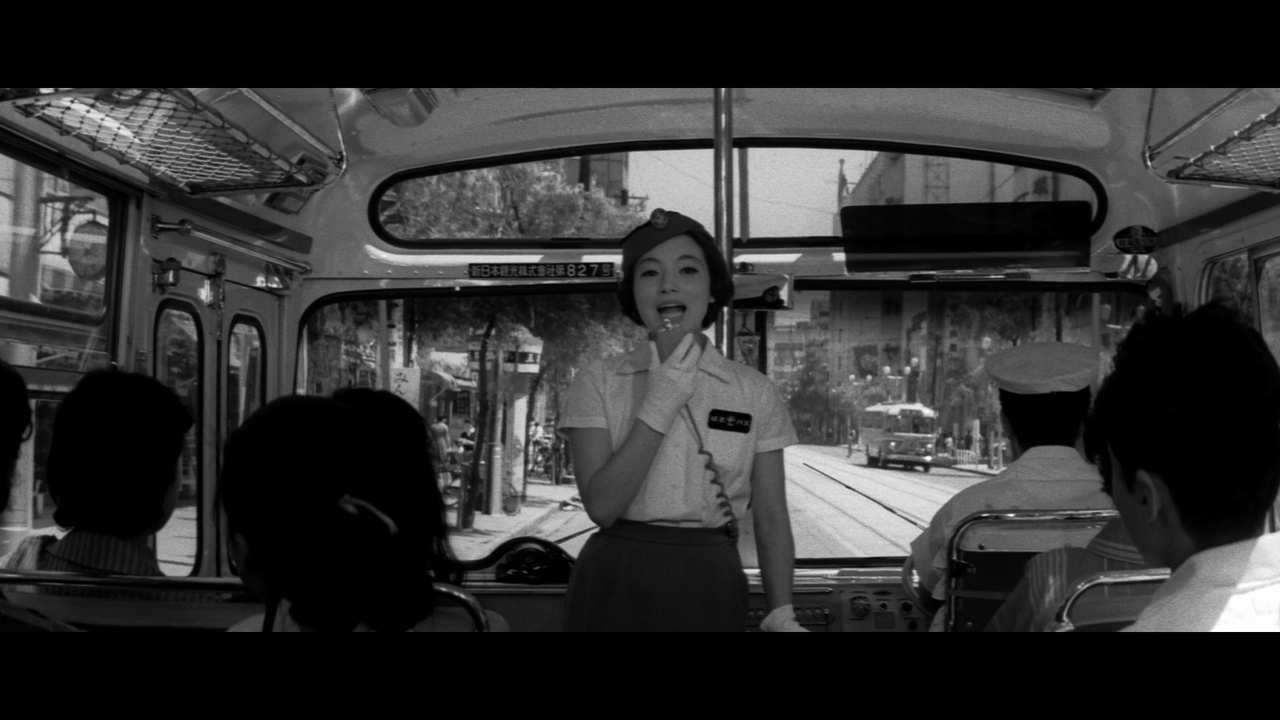
Given his first opportunity to work with one of Nikkatsu's A-list stars seems to mean Suzuki is feeling the pressure to toe the line. Of the generic films, though –– I'd count it in cohort with Love Letter, Blood-Red Water in the Channel, and Million-Dollar Smash-and-Grab –– this shows the deftest hand at making something standard compelling, in a standard way. While they don't succeed in individualizing the movie––they add to the craftsmanshipto make the film absorbing. Still, I wouldn't be surprised to see it made nearly the same way by Ko Nakahira or Koreyoshi Kurahara.
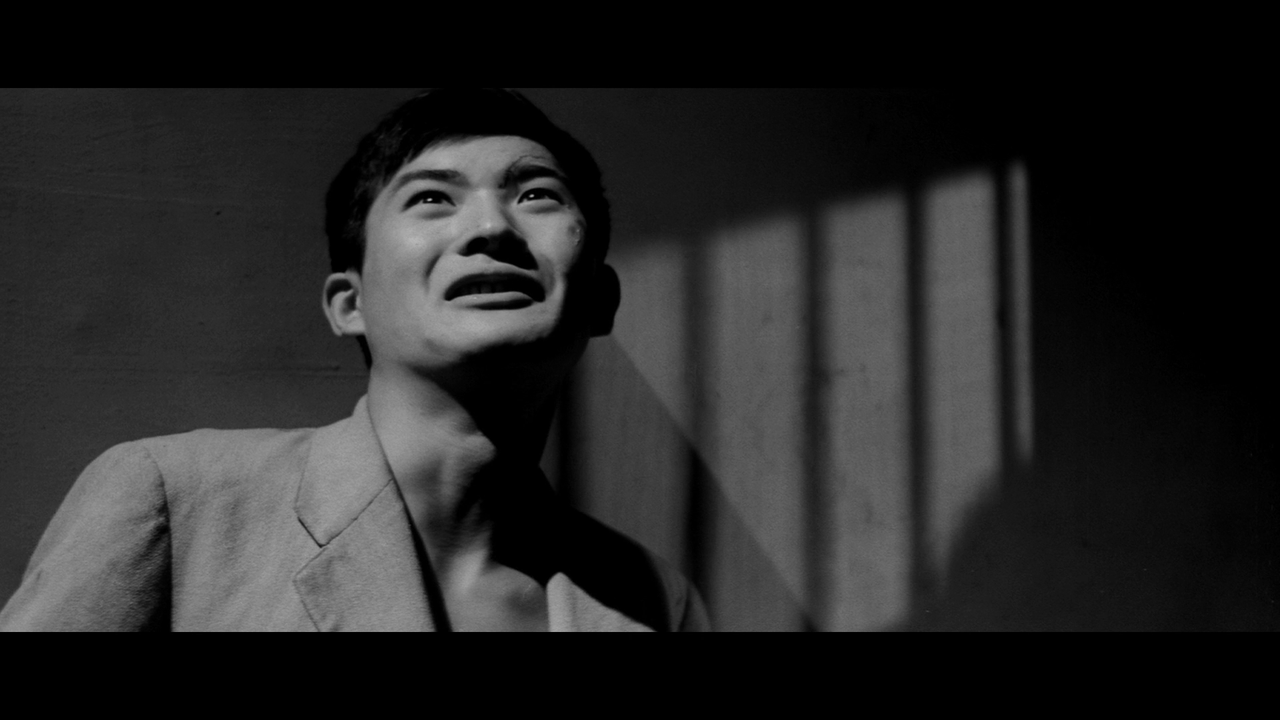
The film glimpses what it might have been if Suzuki had been favored earlier at Nikkatsu, or if the company had succeeded in placing him in a particular genre going forward. Often Suzuki's best films strain the formula Nikkatsu has set up for them. Underworld Beauty is a darker, twistier, funnier, more perverted movie than the hard-boiled noir Nikkatsu was used to. Passport to Darkness and Smashing the O-Line are edgier than other noirs of the time. Blue Breasts will offer something more surreal and psychologically and thematically disturbing than what the company wants from any of their filmmakers, save Shohei Immamura, and Everything Goes Wrong will offer up a view of the Sun Tribe too acid for the genre to recover.
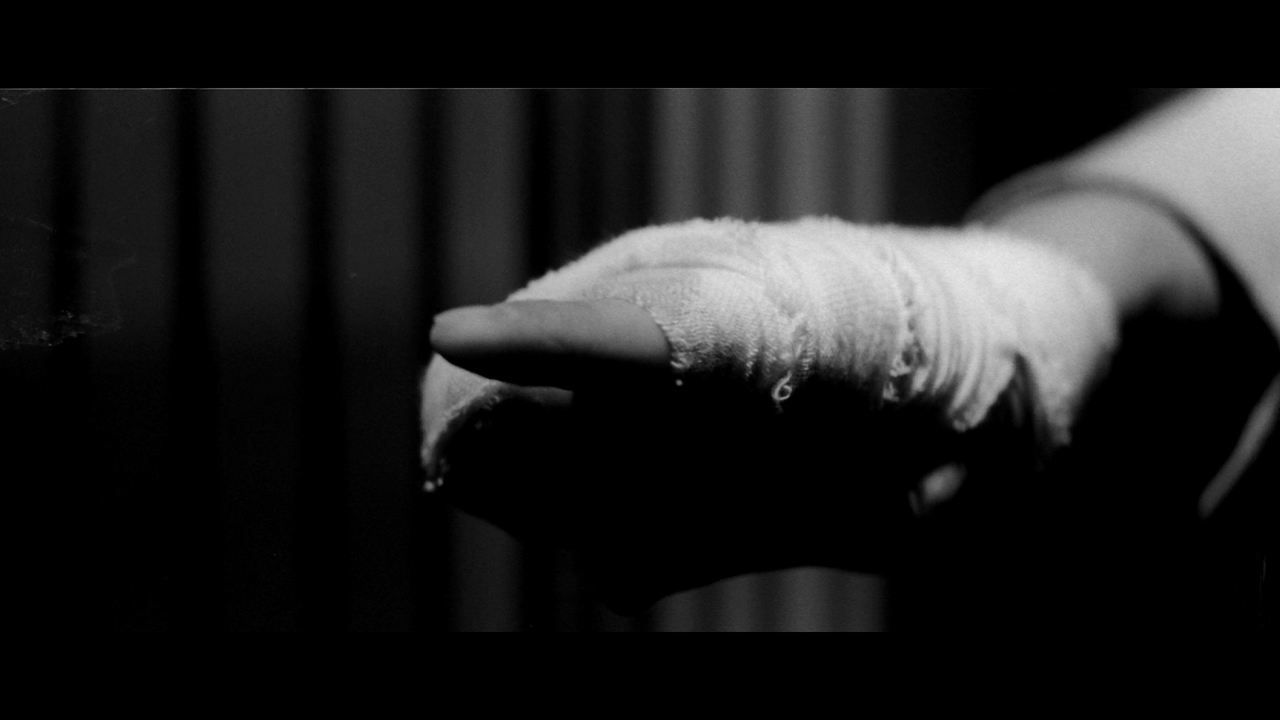
Nikkatsu tries Suzuki out in different genres, until he starts rebelling against a system trying to fit him into a confining space––and in the process he'll find a full-throated artistic voice. Once that happens, he actually becomes as successful as the more favored directors at the company. But it's interesting to wonder what if The Boy Who Came Back was a hit? One could imagine a career for Suzuki like that of Toshio Masuda or Umetsugu Inoue, but in melodrama. But he wouldn't be the postmodern visionary in that environment, without the pressure and antagonism of his role in the company. The Boy Who Came Back is made with a sure hand, and it is very entertaining; but it feels very far from what will make Suzuki a great, unique filmmaker. Suzuki's follow-up to this film, Blue Breasts, is another melodrama with Akira Kobayashi, but it's remarkable to see how kinky and experimentally daring that movie is compared to this one. That film's contrast with this one will be the best argument that he would simply never have been tied down to a become a genre specialist.
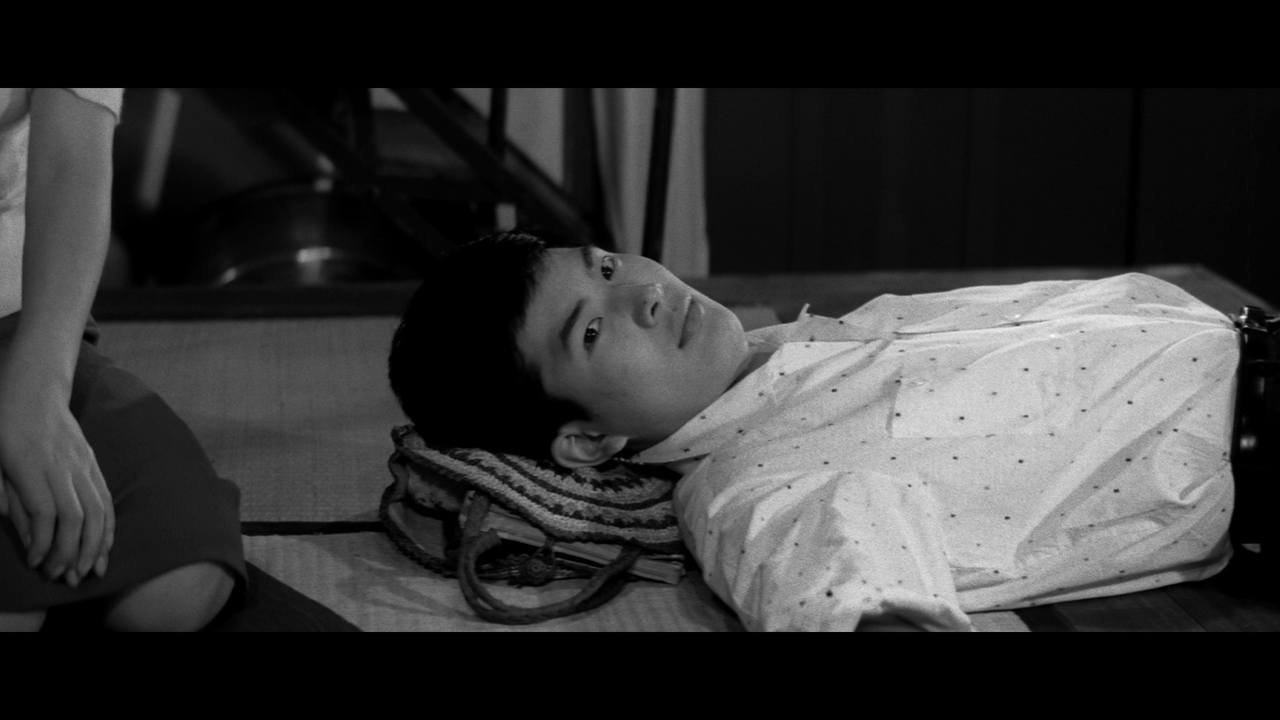
A lot of this is sub rosa in The Spring That Didn't Come, which is outwardly one of the most conventional of Suzuki's Nikkatsu pictures, and which maybe seems the least like something he might create if left to his own devices. But there was some form of precedent, in the Nikkatsu top brass' thinking by assigning this to Suzuki. As in another more conventional-seeming film of the period, Love Letter, Suzuki is being tapped to create a made-to-order melodrama, apparently utilizing his perceived skills with the genre, which were believed to come from his particular filmmaking lineage.
OFUNA MELO
Unlike most of the discontented Shochiku assistant directors who were Suzuki's peers (Oshima, Yoshihige, Shinoda, Immamura, Kurahara, et al) Suzuki spent a lot of his time as an AD in that company's satellite studio in Ofuna. The Ofuna studio was famous for melodramas, and at Nikkatsu it seemed Suzuki was thought the inheritor of that style. Nikkatsu had others amongst its young directors it thought of as specialists––that hack, Buichi Saito, was thought to have capacity for domestic realism from his time as assistant director under Ozu. But the company more often contrived to have these filmmakers work in one of it's more popular house genres, incorporating the touch of whatever experience they had picked up elsewhere. That's why Suzuki more frequently ends up incorporating melodramatic elements into films of other genres––into noir fare like An Inn of Floating Weeds, or into Taiyozoku revival fare like Everything Goes Wrong, or into a yakuza movie like Kanto Wanderer.
But in this case, Suzuki is being promoted, sort of––or more likely, the studio is attempting to "fit" him into a specialty of some dependable genre. Suzuki's mentor, Noguchi, is always directing hard-boiled crime pictures for the studio. That hack, Buichi Saito, directs a lot of the borderless westerns. Umetsugu Inoue becomes known for musicals. Immamura becomes the studio's "art movie" director, doing Nikkatsu's equivalent of the "Nuberu Bagu" or "New Wave" films coming out of Shochiku. Suzuki had just done well with the hard-boiled noir Nude Girl with a Gun––his first box-office hit––and Nikkatsu responds here by giving him a bigger budget and the biggest stars he's had yet, maybe hoping to make him their in-house melodrama guy.
The Boy Who Came Back is full of expressive new crane shots. It utilizes conspicuously metaphorically-charged rain effects, has more fight scenes than were common for Suzuki's movies of the time, and the trailer for the movie makes an eye-opening note, with a text card advertising "the genius of director Suzuki Seijun" as one of the film's special features––this at a time when no critics and really no audience members were familiar with said genius, even if they had seen any of his films.
I kind of wonder if this wasn't the work of some specific people in the Nikkatsu office, like maybe Toshiya Fujita––who was likely working publicity at the time. Suzuki is clearly given a more promising project here than he had so far, but it turns out the most sure-handed movie Suzuki has crafted to this point. Underworld Beauty is far more interesting, but The Boy Who Came Back is an affecting melodrama, stealthily sneaking Sun Tribe resonance into the story of a young, enthusiastic social worker, taking on her first case: a disaffected young man who proves to be hot, violent trouble. Can she change him into someone that can fit in with polite society?
REAL STARS FOR ONCE
Sachiko Hidari––the biggest star of the picture at this point in 1958––plays the social worker, Keiko. Hidari taught music and gymnastics before becoming an actress at the age of 22. Older and more seasoned, Hidari comes from an age essentially before the Nikkatsu starlet (Ruriko Asaoka, co-starring here, debuts at the ripe old age of 15) and seems a prepossessed person earlier on. She debuts in 1952 for Shintoho, in what looks like a lesbian skiing romance which I now have to see, called Wakaki hi no Ayamachi, or "The Young Lady's Mistake." Awesome. From there she works mostly for Shintoho until she signs on with Nikkatsu in 1954. Her initial Nikkatsu films are a mix of hard-boiled thrillers and melodramas––basically the studio's stock-in-trade before the Taiyozoku movies break down the doors and change everything. By the time she does The Boy Who Came Back in '58 Hidari has already started working for other companies, especially Daiei at this point. Her efforts to break her Nikkatsu contract and become a free agent were revolutionary; it seems Nikkatsu even sent yakuza after her to stop her. But Hidari went solo anyway, becoming a freelancer and starring in memorable movies all over the Japanese film industry. Her most striking performances include the lead in Immamura's The Insect Woman, the lead in her husband Susumu Hani's films She and He and Bride of the Andes, and memorable roles in The Straights of Hunger (now somehow known by the much less sexy title The Fugitive from the Past), Masamura's Double Suicide at Sonezaki, Fukasaku's Under the Flag of the Rising Sun, and Mishima: A Life in Four Chapters. She is known as the second female actor/director in Japan, after Kinuyo Tanaka (who would be third?...maybe...Kei Fujiwara, director of Organ?), directing a lengthy, very well-regarded domestic drama about the wife of a national railway worker, called The Far Road, in 1977. She had over 90 acting credits.
What's not in that recount is the unique figure Hidari struck in the film industry, and on-screen. She was an independent woman in every respect. She had a unique look, a small, not very sexy stature, and she attacked roles of all different types without demure. She wasn't merely an independent actress; she presented in all her roles a unique person, rather than a "genre type." Even with a particular, nearly fixed "look," which only got more set as she got older, it didn't seem to matter; Hidari could be anything in front of the camera, anything she wanted to be.
She's definitely the most versatile, most highly-professional actress Suzuki has been able to work with to this point. Mari Shiraki is a wonderful presence, but her husky, provincial accent––which will one day endear her to fans of the long-running Samurai-Colombo TV show Sure Death!––is a mark against her for versatility (in fact, Nikkatsu won't really know what to do with her after Underworld Beauty, and will typically sideline her as various ladies of the night as a result). Misako Watanabe is definitely a more subtle and intellectually adventurous actress than Hidari, who is quirky and personal in her playing but who reaches for psychological realism without the kind of imaginative, adventurous literary quality of Watanabe, but Hidari dives straight into the intensely physical style of acting Suzuki prefers, and which he has such a hard time getting from other actresses at Nikkatsu throughout his career there.
Hidari's playful animus warms the entire picture. She's high-spirited and exuberant when she gets her first case as a social worker, thrilled and inquisitive when she first meets problem child Kobayashi, and steadfast in spite of everything once she gets it in her mind that she can help him steer back to the straight-and-narrow. Many of her scenes are sharp and striking, but she makes the biggest meals out of the most potentially florid material, deftly making melodramatic scenes come alive with fresh and unexpected energy.
I especially love the sequence of scenes where Kobayashi takes her out on the town, gets her drunk, and gets in a fight, and then Hidari has to argue with her indignant colleagues that the social workers' intervention should continue, rather than them shipping Kobayashi off to jail. The sequence underlines the way Hidari, in an attempt to seduce her young charge into trusting her, has been counter-seduced and humiliated in front of her boss and her coworkers.
The playing of the crisis is so precise, we get Hidari's humiliation, her worry that she's going to lose her charge or her job, and her desperate bid to turn this failure around into something she can use to recoup her losses and re-establish the trust of her colleagues.
The risk she takes in doing this is written all over Hidari's performance. She is possibly a little florid at times, but she gives us everything her character is grappling with within a minute of being on-screen.
Hidari's force and control are so strong and precise, it leaves her co-star, Akira Kobayashi, not quite as much to do. This seems like a careful calculation on Suzuki's part; Kobayashi is sometimes gawky and awkward in this film, and he doesn't seem too sure of himself in all the scenes.
Kobayashi never really becomes the best actor out there, though he is the last-living and the longest-lasting of Nikkatsu's fabled Diamond Line of stars. Like the others, Kobayashi was featured initially as a supporting player in Ishihara vehicles. In this case, he followed Ishihara in The Champion, Sun Tribe in the Last Days of the Shogunate, and Rusty Knife, and his first leading role was in a Ren Yoshimura melodrama called The Way of Youth. Then Nikkatsu drops back and has him co-star in several more melodramas, including The Nun, opposite Izumi Ashikawa, and the two Suzuki movies, The Boy Who Came Back and Blue Breasts. He's in Toshio Masuda's dull The Perfect Game (a bland remake of the already pretty lousy Hollywood heist movie Five Against the House), playing the guy who folds and rats on his buddies who rob a race track because he feels it's allegedly the "right thing to do" after guilt overwhelms him. Then he gradually ascends to leading roles in his own right, opposite Mari Shiraki in Dynamite Costs Extra, and in three big hits from that hack, Buichi Saito: Farewell to Southern Tosa (a formative hit for Nikkatsu, solidifying what "Nikkatsu Akushon" will become as a genre), The Rambling Guitarist, and Tokyo Mighty Guy.
Now he has hit his stride, and he ends up married to these long-running series of incredibly formulaic and successful films, from the Rambling Guitarist pictures to the Vagabond series, and following a photo shoot for the Rambling Guitarist series where he dresses in black leather cowboy togs to look like Montgomery Clift he becomes the company's chief exponent of the "No-Nationality Western."
Fortuitous timing or some innate business instinct leads to Kobayashi steadily gaining weight over his career, allowing him to slip undetected into genre after genre. These first movies show him as a reedy, even gangly teenager, but when he returns to Suzuki to make Nikkatsu's early yakuza pictures Kanto Wanderer and The Flower and the Angry Waves, he has filled out enough to look a sort of indeterminate age suitable to those characters, where he is at once romantic in his aspect and also experienced-seeming beyond his actual years. Then as the yakuza movie craze begins to dominate, Kobayashi gets heavier and heavier-set, until he looks like a chunky and successful career gangster, scowling over inexpressive jowls at whatever plot the movie has to ensnare him. By the later Nikkatsu yakuza films, like Retaliation, he already looks like an old gangster dude, and by Hideo Gosha's The Violent Streets he seems suitably reprehensible, a gangster one feels is marinated in whiskey and cigarettes. He hangs on for as long as possible at Nikkatsu, starring in increasingly grungy-looking-and-sounding yakuza titles, up until the stanky-sounding title Women Smell of Night. His last picture for Nikkatsu is The Killer in 1971, and just in time to escape the shift to pinku eiga, he joins Toei for a further run of yakuza classics.
In spite of the way Yujiro Ishihara continued on as Nikkatsu's biggest box-office star, Kobayashi was the actually more reliable number two and did end up essentially the successor to Ishihara's legacy at Nikkatsu, such as could be done. He frequently delivered big hits to the studio, and helped make its image in each new genre Nikkatsu tackled. He was also a custodian of Nikkatsu's reputation long after it was likely profitable to him, and was known to be a friend to the other Diamond Guys in real life. Joe Shishido clearly had affection for him, noting he was the only person from the Nikkatsu days to call Joe and offer condolences when a fire destroyed the elderly Shishido's house and his copious memorabilia from his beloved time in the movies. Kobayashi showed loyalty to Suzuki by remembering him five years after these films and requesting Suzuki direct his first forays into the yakuza genre. His eulogy to Suzuki in the newspapers was perhaps the most generic and inspecific of those who made any comment, but it was respectful; Kobayashi always presented a sort of class act––even if he never delivered anything like a master class in acting. He seems to me a visual model of broad-shouldered cool for Chow Yun-Fat decades later––though he never had the nimble grace of that far superior later actor. While he always had a star's presence, Kobayashi is often sort of off-key or awkward when tested in a role. He liked physical acting scenes, but he doesn't have the exuberance of Joe Shishido, or the self-possession of Ishihara or the physical grace of Koji Wada. He is very good at making explosions of violence in his films seem calculated––as in his enormous burst of violence at the end of Kanto Wanderer. In The Boy Who Came Back, his violence seems more explosive, and he seems more taciturn than usual.
What always worked about Kobayashi though, more than any of the other Diamond Guys, was his polymorphous-seeming sexuality. Until he bulks his way into yakuza roles, Kobayashi has a lot of the ambiguous sexuality of a young Montgomery Clift or Alain Delon.
SEX & VIOLENCE
In a way, that sexuality is what is turned up to 11 here. From her playful introduction to him, as Hidari's social worker Keiko finds Kobayashi's delinquent Nobuo lounging on a dentist's chair, playing with a toy spider, the two are flirting with one another, hard.
This byplay seems casual at first, but it turns out to be the key that makes this movie better than average for the genre. This is Keiko's first case, and she wants to make a splash; she connects with Nobuo first with flirtation, with fawning attention. He responds by essentially seducing and abandoning her, playing to her eagerness to see what his life of underworld loutishness is all about. It looks as if he'll end up bedding her in a seedy hotel, but she takes refuge in the bathroom and he uses the chance to escape. Keiko comes to recognize that Nobuo views his own sexuality in an entirely negative light––women, including his bar-girl fling, including so many other girls like her, the film seems to imply, want a sexual performance from him which leaves him disinterested. Keiko learns Nobuo had a girlfriend, Kazue, who has given up Nobuo and gone on the straight-and-narrow as a teacher for young children. So begins Keiko's dual seduction, playfully nudging Nobuo back towards Kazue, and on the other side building Kazue's gumption to be the romantic foil Keiko thinks Nobuo needs.
Some of what was becoming standard Nikkatsu melodrama surrounds this story; Nobuo knows a bunch of guys his own age who are getting deeper into thug life, including his pal, Keisuke Noro, and an acquaintance of more remove, played by Jo Shishido. These guys are the kind of droogs Nobuo might become, the film implies. They act as temptations towards the dark side for Nobuo, and as antagonists once Nobuo, charmed anew by Kazue (and by Keiko's increasingly flirtatious interest in his welfare), tries to trod the straight-and-narrow himself, pursuing some sort of career in illustration, from the look of things.
Wait a second, there's Mayumi Shimizu! She isn't in the credits, but I'm almost positive this is her. She started working in film a little less than a year before, under the name Mariko Shimizu. Here she is closer up:
Again, the melodrama is fairly standard. Twisting around it is a more subtle love story, in which the active romantic, Keiko, plays cupid and in the process has to sublimate her own increasingly heated affection for Nobuo. Suzuki is working with what he's given in terms of actors. Ruriko Asaoka is only 18 here, and not especially striking in her role––and Kazue, the former girlfriend, is a similarly wan figure, shy and retiring, reticent to act, pretty but conventional. The more dynamic and original Hidari lights up every scene, bringing her own unconventional energy to an unconventionally energetic personality.
We sense immediately that Keiko and Nobuo are on the same wavelength, but on different sides of the track; she is able to successfully repress in herself the wildness he gives riot to at every opportunity, and we can see as the film goes on how her work to temper him fulfills her need for danger and excitement, even as she is reigning in what we feel is really her ideal opposite number, tying him to a dull girl, making him into a conventional person. The risk to Keiko is the most exciting unspoken element of this movie; she comes close to losing her job frequently, crossing the line from consultant to quasi-lover of Nobuo's most antisocial qualities.
SERIOUS BUSINESS
What this means in terms of melodrama is that Hidari and Kobayashi share all of the most emotionally-charged scenes in the film. Hidari manages to draw a lot out of Kobayashi in these scenes, and the two match one another in physical intensity as the characters attempt to draw out of one another the feelings they spend all their time expertly hiding from society. The confrontation in the police's holding cell, as Keiko tries desperately to keep Nobuo from giving in to despair at his own persection, and the wonderful scene where Keiko invites Nobuo to her mother's house.
This scene is full of awkward warmth, and we see a physical gesture on Keiko's part which will be repeated at the end of the film. As she moves Nobuo's shoes out of the front walkway, she's in a crouch, laughing to herself, shaking her head in circles, her gaze traveling up the transom and down again, a kind of whimsical expression of bottled energy which lets us know, in no uncertain terms, that Keiko is falling for her younger charge. Eventually the scene becomes a more serious disquisition of Nobuo's own childhood, and as he plumbs the depths of his life's early insults, he crouches on the floor, and Keiko joins him. The attitude is serious, the kind of thing the melo crowd are in the theater for, but Suzuki adds this interesting touch, the way the characters appear to be children at play, mimicking one another's movements. The richness of the movie comes from the way Keiko goes beyond just charming and loving Nobuo, and buoys him up by believing in him, supporting him emotionally, and in the way she shows him tantalizing glimpses of other ways to live. The scene in which Nobuo feels for the first time the warmth of a happy middle-class family is inspiring to him.
Some commentary goes on here. Keiko is a little bit of a disaster tourist, and the film gently mocks her eagerness to plunge into the depths, to find a diamond in the rough –– no coincidence perhaps that the first lower-class person she finds is the "diamond" for her, since he's hot and seems to like her. The film is in one sense a test of Keiko's commitment to reform Nobuo, but in another sense, she is clearly overlaying a set of middle-class values on a kid who has a kind of working-class doomer outlook. We know Nobuo is bored with the violent and sexual flourishes of his like as a young punk, and what Keiko brings him are basically middle-class values. Enlisting Kazue's help, she gets Nobuo a job as a sketch artist, which Nobuo takes to immediately once Kazue buys him art supplies.
This is a small thing in the context of this film, but it looms larger in the follow-up, Blue Breasts, so I think we're meant to pay attention here; Nobuo doesn't have any art training; he crashes right into a job doing this (basically hustling on the street to draw people's portraits), and he is immediately good enough for the job. That, or the businesspeople he's sketching don't really care how good his art is, and view the drawing of their portrait as a transaction and a symbol of their elevated status as someone who merits a portrait. The value of art is very uncertain in the film, dangerously unstable for a young man who is still mired in poverty to be pursuing (something Suzuki knew enough about from his days before going to Shochiku Ofuna, and even his days working there––the pay was not apparently much to live on). When Nobuo is assaulted by jealous thugs later, his art supplies are dashed on the street in the rain and just disintegrate into nothing. So while Keiko endeavors to change Nobuo, make him into her own ideal man, she is doing so by trying to bing Nobuo "up" to her level of polite society. But Suzuki contrasts Keiko's ambitions for her charge with the harsh setting in which Nobuo has to make his choices.
The film doesn't shy away from the bleakness of Nobuo's surroundings, and how that works on him. Kobayashi's own more challenging scenes aren't the scenes of vibrant acting as much as the dynamic visuals Suzuki deploys at key moments.
The close-up pushing in as Nobuo thrills to a drum solo in the club, the way he drifts through the street, walking by as his old pal Keisuke Noro spots him; the visuals carry so much of Nobuo's disillusionment and frustrated energy, his desire to find something new and worthwhile to do with himself.
The most effective image of this is the way once Nobuo has turned over a new leaf, become a street portrait artist, his old antagonist Jo Shishido and his pals corner Nobuo and knock him off a fire escape in the rain.
The visual of Kobayashi transfixed on the grating, with the rain pouring through his ruined art supplies, a look of agony on his face, is probably the film's most striking image, proof of the way Suzuki's control of traditional melodrama was really fully-evolved, even though this was his first pure melo.
Ruriko Asaoka, by contrast, sort of drifts into the film, and has a dreamy passage in the middle of it, which is her best contribution, and which she carries off handsomely. Kazue is reluctant to get back together with Nobuo, until Keiko convinces her to go to the beach with Keiko's younger sister and Nobuo and herself. Watching Keiko's sister cavorting in the water, Kazue is torn what to do, and Keiko completes a delicate seduction, convincing Kazue that underneath Nobuo's rough coping mechanisms is a good heart that yearns for her.
Kazue wanders along the rocks at the shore, and Nobuo comes up from beneath the waves and trips her into the water. Afterwards, they laugh about their reunion.
Then one of Suzuki's most obvious early editing ellipses occurs––something which critics at the time took note of for its subtle nonlinear construction and the rapidly dilating camera positioning (juggling closeups and ultra-long-shots to stagger our sense of continuity even more). Keiko goes looking for Kazue, leading her sister by the hand. Then we immediately see Keiko running breathlessly in the opposite direction, fluster and hurt splashed across her face. Only afterwards do we cut back to the rocks and see what caused her retreat: Kazue on the rocks, kissing Nobuo. In the gesture, Suzuki conveys swiftly the double-seduction of Kazue, and the surprise for Keiko that her own genius scheme has brought this flushed pang of jealousy.
Finally, there is an exceptional scene. Keiko has gone to the mattresses to help Nobuo, convinced him against all odds that he isn't being set up to fall when the police pick him up thanks to Shishido's manipulation. Thanks to her propping him up, Nobuo can stand firm and help the police crack Keisuke Noro, who spills the beans on the whole plot and exonerates Nobuo in the process. Keiko is there waiting for Nobuo to get out of jail. Though her supervisor is with her, watching over her, we get the sense that Keiko is waiting not for her professional charge, but for the object of her affection––and her supervisor clearly knows it, too.
Nobuo emerges, looks off to the side, and we see Kazue waiting for him. The two talk, and walk off, arm in arm. Keiko follows them, hiding behind cars. Her supervisor follows her, looking concerned for her. Alone in the scene, in spite of everyone else being there, Keiko crouches on the ground as Nobuo and Kazue leave.
She tries tying her shoe to excuse the gesture, but her face tilts up and we see the recapitulation of the gesture from the middle of the film––only this time, as her head contorts, the expression on her face is pained, romantic agony. In doing her job well, Keiko has fallen in love. In order to keep her job, she can never acknowledge it, or realize her passion. She has set up another woman to fill her place, one which we sense will never really be for Nobuo what Keiko would be for him.
But it all has to be put away somewhere. Keiko ducks down again, and her face springs up once more, a huge, forced smile on it. She gets up and strides forward down the street, ready for her next case, as the movie ends. This last sequence of Keiko alone is all a single crane shot which racks between a long shot and an extreme closeup, then pulls back into a long dolly shot.To work in this world means to sublimate one's feelings, and Keiko is striding into a society where work at the expense of any other life is an increasingly tangible value. Incidentally, none of the jobs Nobuo gets set up with by the end of the film look all that promising. It's interesting to imagine what the future will hold for Nobuo and Kazue. This may be a shortcoming of the script not to imply much in this regard, but I suspect Suzuki might have liked the ambiguity of it. This is a happy ending, but Suzuki manages to flavor it with a bitter aftertaste.
The follow-up film, Blue Breasts, will either echo or invert a lot of the plot and character beats and the themes of this movie, and will end up with a much darker ending, but I put that largely down to the difference between a film anchored by Sachiko Hidari's boundless energy and one woven around a far more mysterious and searching performance by Misako Watanabe. Kobayashi is the constant between the two, but far from really constant; his character in this film balances his relationships towards women, from his weak, worn-down mother to his docile girlfriend, to the dynamic social worker who saves him. In Blue Breasts, his character will be searching to resolve his relationships with male characters––at the frighteningly palpable expense of the women in his life. It's interesting the films have this relationship, like two sides of a coin.
CINEMATOGRAPHY
A sign of the bigger budget attached to the picture or simply an odd scheduling one-off, The Boy Who Came Back is lensed by Yoshihiro Yamazaki. He's Ko Nakahira's preferred cinematographer, starting from his first job on Temptation. For Nakahira he shoots The Jungle Block, Storm of Arabia, Crimson Wings, Only on Mondays, The Hunter's Diary, Flora on the Sand, Whirpool of Flesh, The Black Gambler, The Passionate Spinster, Bastards Without Borders, Red Glass, and The Mud-Spattered Pure Heart.
The Boy Who Came Back is expensive for Suzuki, but probably not for what Yamazaki is used to. The result is the most crane-work of Suzuki's career.
Those crane shots are what stand out the most in this film – especially the one early on in the club, where Nobuo gets Keiko drunk, and the camera twists over and around the characters, swooningly distorting our sense of firm ground.
Avoiding Suzuki's more challenging framing style, Yamazaki keeps positioning figures center frame. He seems Nikkatsu's generic standard for a cinematographer, the work is sometimes good enough, mostly unspectacular.
THE DISC
Part of the 10 films in Arrow's two "Seijun Suzuki: The Early Years" blu ray sets: grain, sharpness, depth-of-field...all great. These Arrow "Early Years" sets have been OOP for a while, sadly, so whatever the technical limitations, they're the best versions we have.
MY TAKE
Given his first opportunity to work with one of Nikkatsu's A-list stars seems to mean Suzuki is feeling the pressure to toe the line. Of the generic films, though –– I'd count it in cohort with Love Letter, Blood-Red Water in the Channel, and Million-Dollar Smash-and-Grab –– this shows the deftest hand at making something standard compelling, in a standard way. While they don't succeed in individualizing the movie––they add to the craftsmanshipto make the film absorbing. Still, I wouldn't be surprised to see it made nearly the same way by Ko Nakahira or Koreyoshi Kurahara.
The film glimpses what it might have been if Suzuki had been favored earlier at Nikkatsu, or if the company had succeeded in placing him in a particular genre going forward. Often Suzuki's best films strain the formula Nikkatsu has set up for them. Underworld Beauty is a darker, twistier, funnier, more perverted movie than the hard-boiled noir Nikkatsu was used to. Passport to Darkness and Smashing the O-Line are edgier than other noirs of the time. Blue Breasts will offer something more surreal and psychologically and thematically disturbing than what the company wants from any of their filmmakers, save Shohei Immamura, and Everything Goes Wrong will offer up a view of the Sun Tribe too acid for the genre to recover.
Nikkatsu tries Suzuki out in different genres, until he starts rebelling against a system trying to fit him into a confining space––and in the process he'll find a full-throated artistic voice. Once that happens, he actually becomes as successful as the more favored directors at the company. But it's interesting to wonder what if The Boy Who Came Back was a hit? One could imagine a career for Suzuki like that of Toshio Masuda or Umetsugu Inoue, but in melodrama. But he wouldn't be the postmodern visionary in that environment, without the pressure and antagonism of his role in the company. The Boy Who Came Back is made with a sure hand, and it is very entertaining; but it feels very far from what will make Suzuki a great, unique filmmaker. Suzuki's follow-up to this film, Blue Breasts, is another melodrama with Akira Kobayashi, but it's remarkable to see how kinky and experimentally daring that movie is compared to this one. That film's contrast with this one will be the best argument that he would simply never have been tied down to a become a genre specialist.
Last edited by feihong on Fri Nov 14, 2025 8:42 am, edited 1 time in total.
-
feihong
- Joined: Thu Nov 04, 2004 4:20 pm
Re: Seijun Suzuki
A MUMMY'S LOVE
Thought I'd open with some of the striking images in A Mummy's Love...
...the way the film's grainy 16mm images engage with the uncanny in a way Suzuki hadn't done in the past.
[TEXT ONLY]
[TEXT & IMAGES]
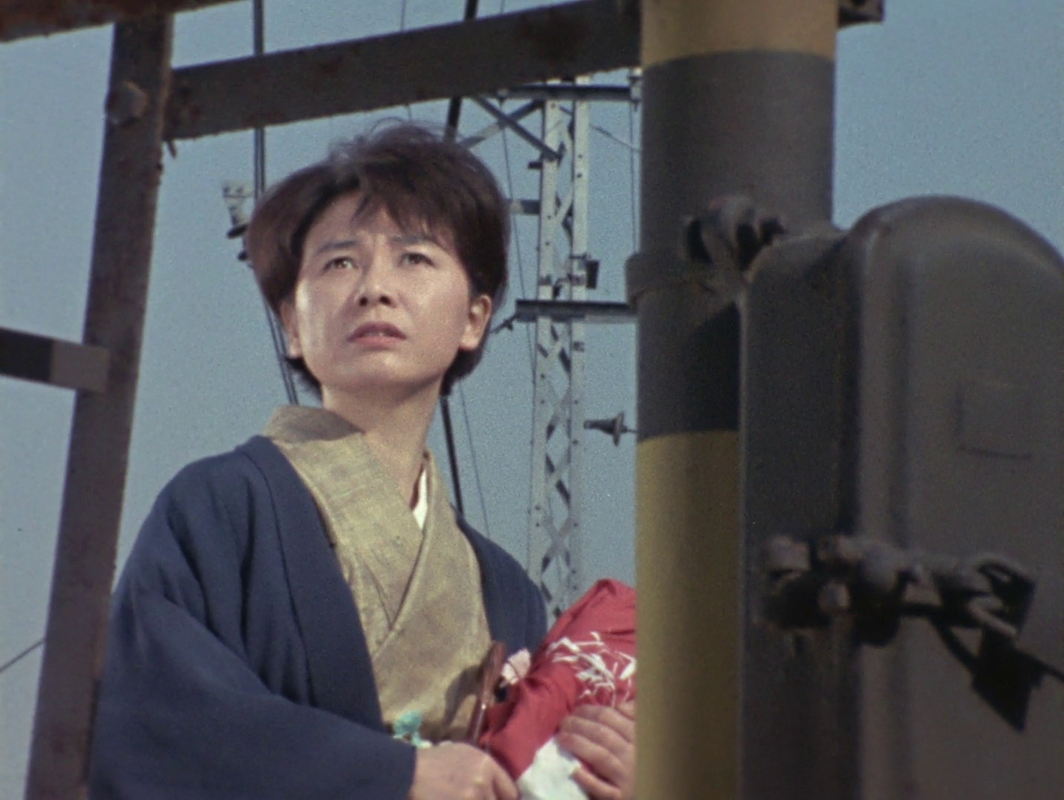
In case the Taisho Trilogy seemed like it came out of nowhere, here's a glimpse of the way Suzuki was actually ramping up to the supernatural surrealism of those movies, as well as the intellectual level on which Suzuki was now trying to engage his audience.
When Suzuki was fired from Nikkatsu and black-balled by the studios, he found work directing commercials and television episodes/made-for-tv movies. A Mummy's Love was his second TV movie after his firing (Good Evening, Dear Husband: A Duel was made for Nikkatsu before Suzuki learned he had been fired, There is a Bird Inside a Man was held back by sponsor Nissan because the episode featured a car crash). It's the debut episode of an anthology series, Horror Theater Unbalance.
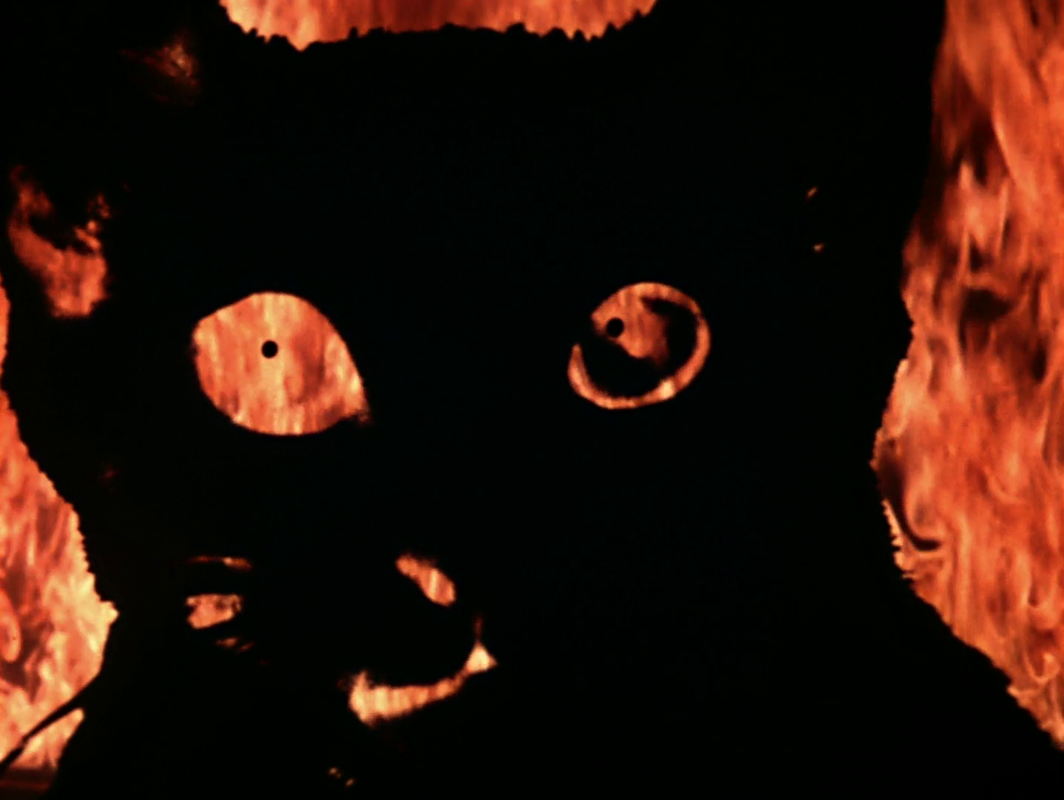
Because these TV productions remained obscure and inaccessible for years, the later independent era where Suzuki directs the Taisho Trilogy seems only a departure. In fact, the television productions chart very clearly the development of many of the dominant themes and techniques Suzuki will employ in the Taisho films, especially Zigeunerweisen. A Mummy's Love and, to an equal extent, the later TV movie The Fang in the Hole, chart a very clear path to that later masterpiece, and are intriguing films in their own rights.
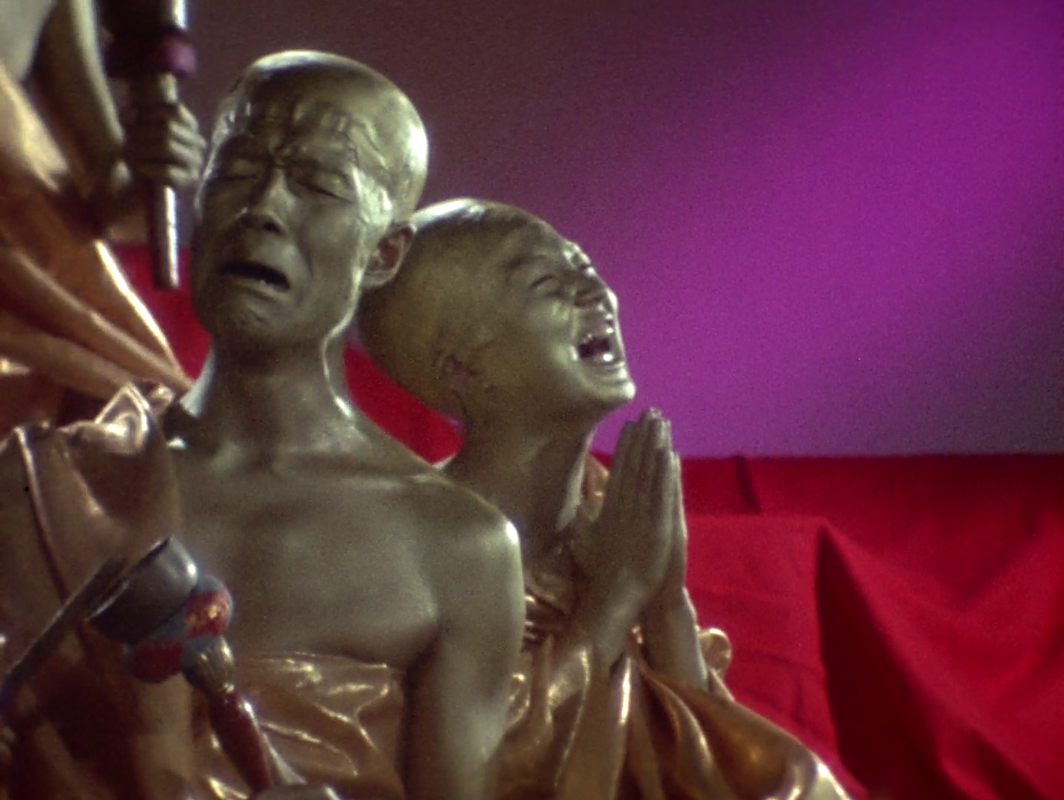
Horror Theater Unbalance was created for Tsuburaya Productions, the special effects production company of Eiji Tsuburaya –– famous effects artist and co-creator of Godzilla and Ultraman. Production began in 1969, when Tsuburaya was still alive, but the filming of episodes continued after his death and the series ended up debuting in 1973. Presumably the series was meant to showcase Tsuburaya's FX work, and A Mummy's Love does have a number of effects, both in-camera and post-processing effects. These are delightful, I think they look great, and no one ever expected them to be shown in high-definition anyway, so I can overlook the rough edges. I know there are some younger readers on the board, so it might be worth saying that back in the day we tended to just accept the errors and anomalies in negative-cutting and similar effects, and we let our imaginations just go with it. I've heard lots of people criticize the Brownie effects in Willow, but to a child in 1988 those looked amazing. The little gold buddha babies in this show, crawling all over their dead mother, getting blown out of Yusuke Kawazu's hand and crumbling to dust on the floor is a pretty amazing effect for its day, and one you can imagine as the result of Suzuki's particular sense of creative visualization.
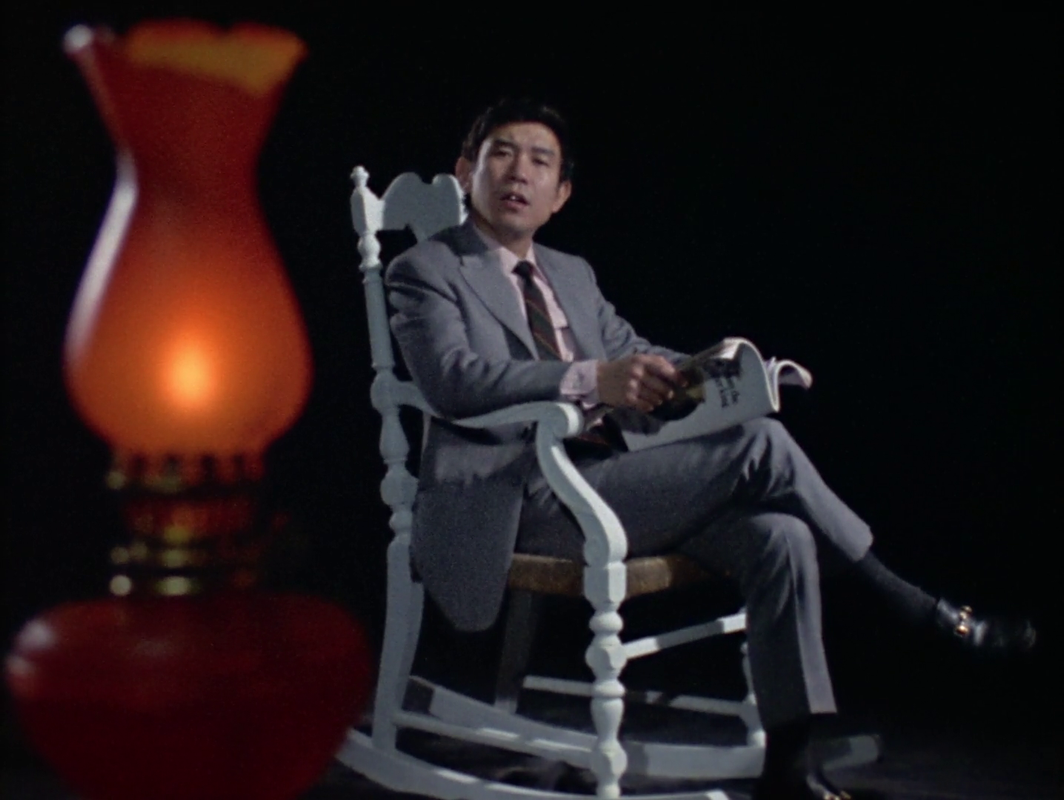
"Have you ever seen a MUMMY?"
This Narrator introduces the episodes, each of which is written and directed by different filmmakers. This is Yukio Aoshima, at the time a television host, actor, comedy writer, independent filmmaker, and novelist, who would later become a politician, and, in the 90s, the governor of Tokyo. Later episodes would be directed by former members of the Suzuki-gumi, like Yasuharu Hasebe, and Nikkatsu regulars acquainted with Suzuki, like Toshiya Fujita. Suzuki's episode is written by Yozo Tanaka, and it features the other principal member of the Guru Hachiro writing team, Atsushi Yamatoya, playing the mummy in a demented mania –– though he doesn't have a writing credit.
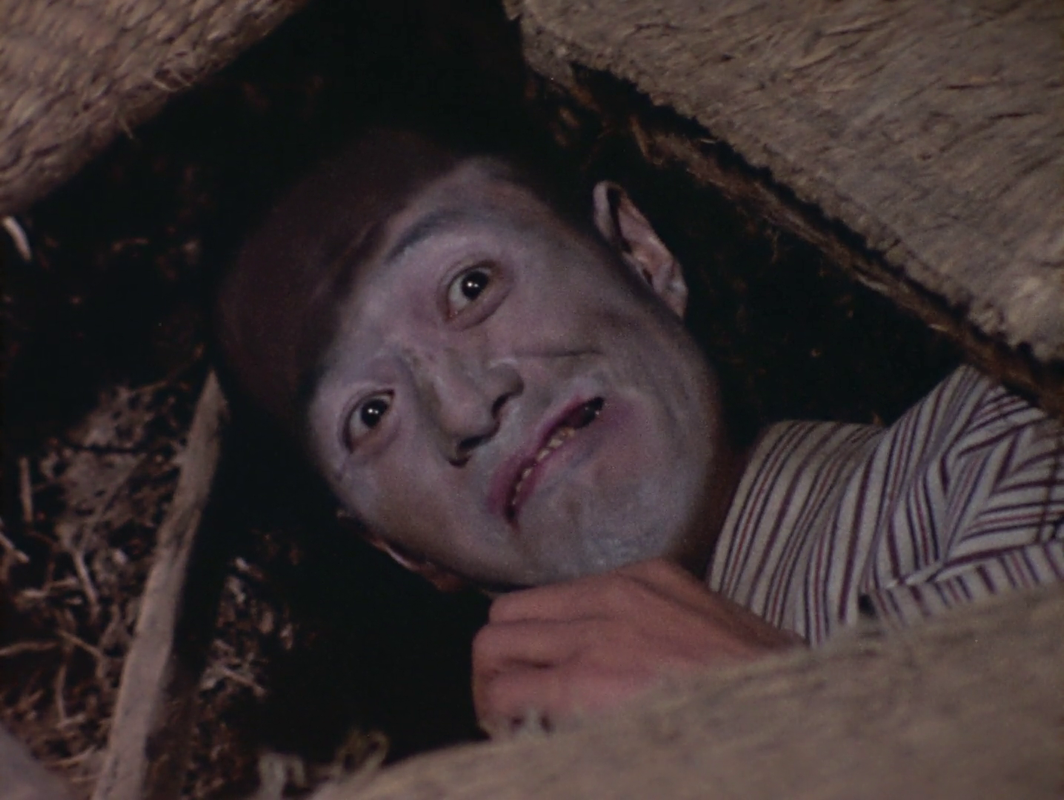
A Mummy's Love is a real departure from what Suzuki had been doing at Nikkatsu, even in his TV film which was his final project for the company (which plays like a recap of all the challenging narrative techniques and structures of Branded to Kill, minus nearly all of the kink). Most obviously different here is the supernatural premise. The supernatural didn't figure in Suzuki's Nikkatsu movies –– though Suzuki wanted to include a scene at the end of Carmen from Kawachi where a bonze's evil spirit molests Fuyuko, and the studio refused, allegedly for budgetary reasons. Of course the supernatural comes with the territory for a show like this, but what would be a surprise is how much it would remain a dominant element of most Suzuki productions going forward from this point.
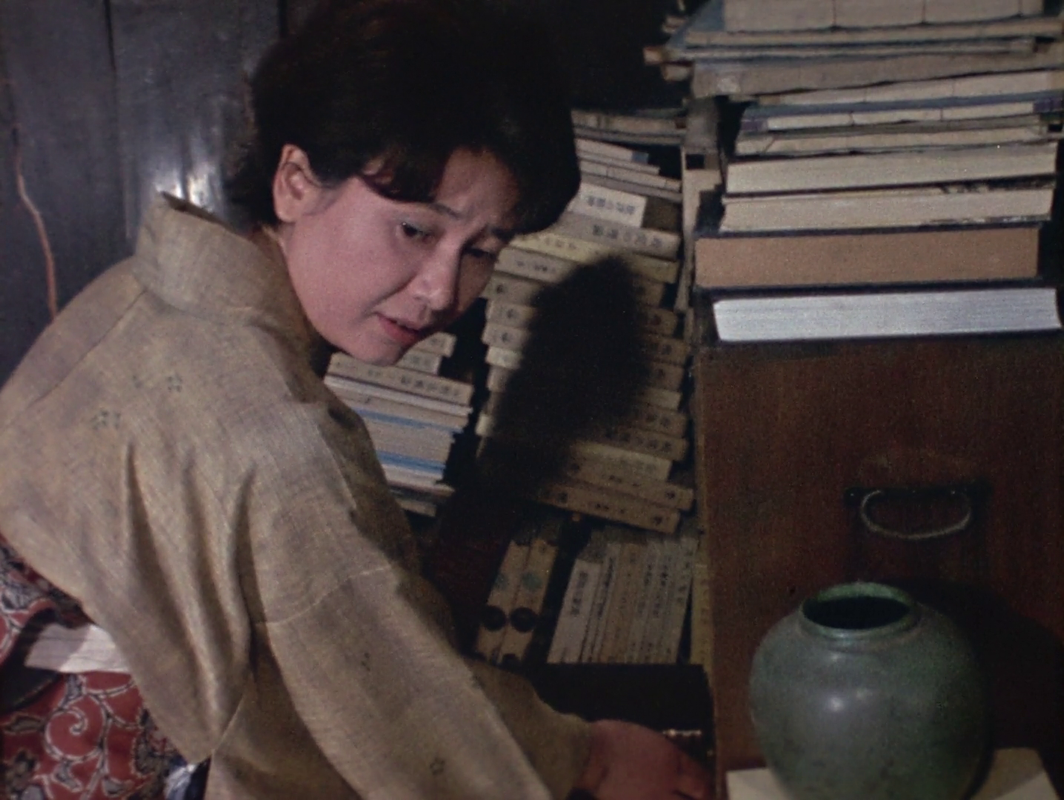
Secondly, the film features a complex narrative structure unlike anything in the Nikkatsu movies. In spite of what people think of Branded to Kill and Tokyo Drifter when they first see them, these films and the other Nikkatsu productions move in a straightforward narrative direction, charting a linear development of the drama.
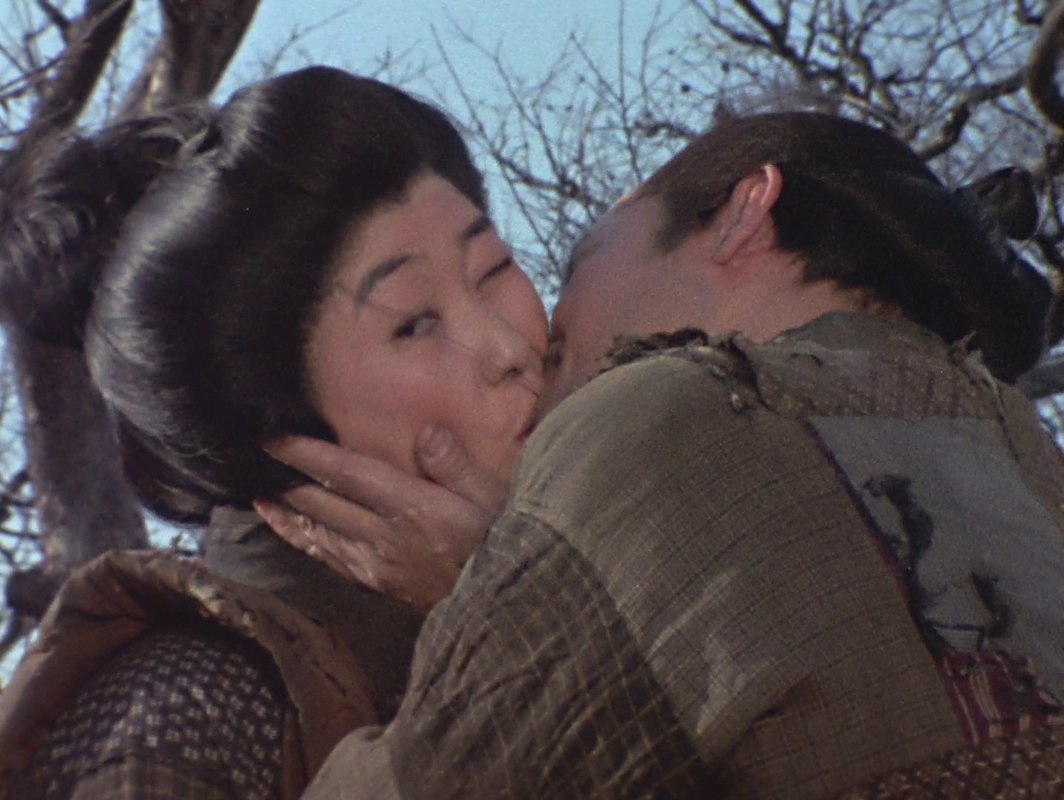
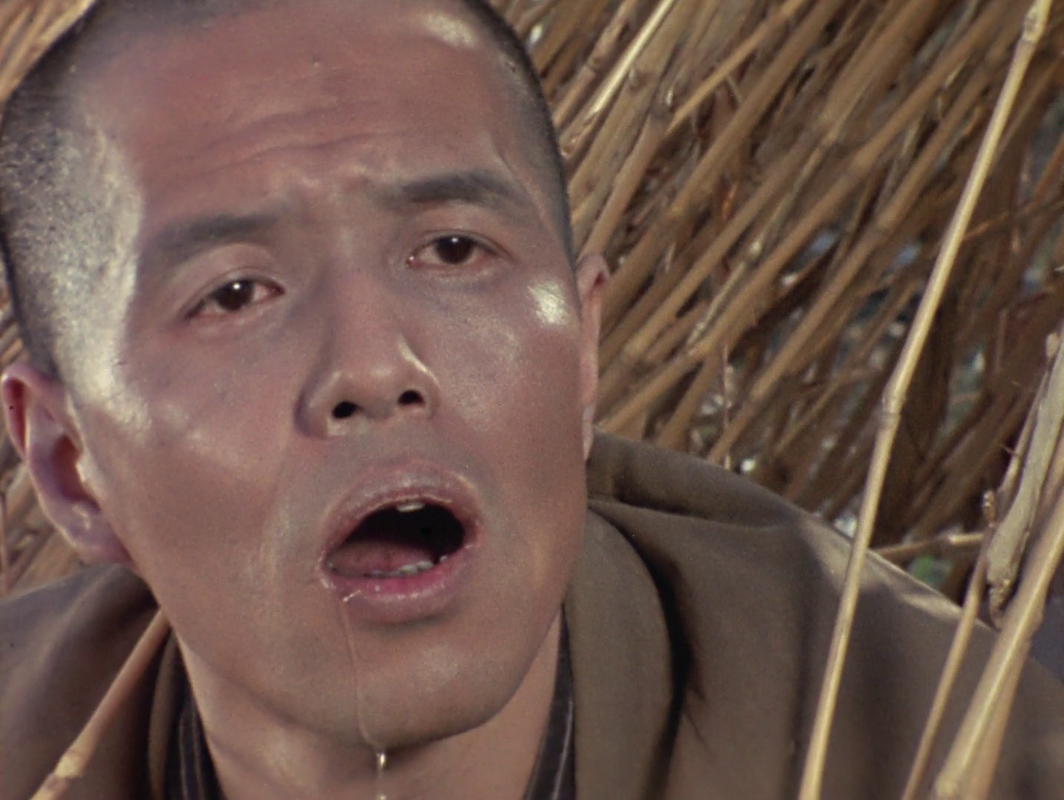
A Mummy's Love features a wraparound narrative that contains the bawdy story of the mummy, but which becomes the central, important narrative in the second half of the episode. This container story frames the comic tale of the mummy as a piece of literature, and then relates it to the real-life drama the main characters of that container narrative experience –– a dark romantic drama of desire and possession, punctuated by an altogether different supernatural encounter. The playful exchange between registers –– two different types of stories mashed together, challenging the reader to make sense of their implied interrelation –– offers a level of literary engagement that was a sort of sublimated virtue of Suzuki's Nikkatsu pictures, which from this point on becomes one of the dominant modes of Suzuki's storytelling from here on out. It's like Suzuki the student of literature is being freed from the strict demands of popular cinema and allowed to let his imagination drive the projects in a lot of instances. The results are the "new kind of cinema" Suzuki arrives at with Zigeunerweisen, Mirage Theater, and Cherry Blossoms in Spring, especially.
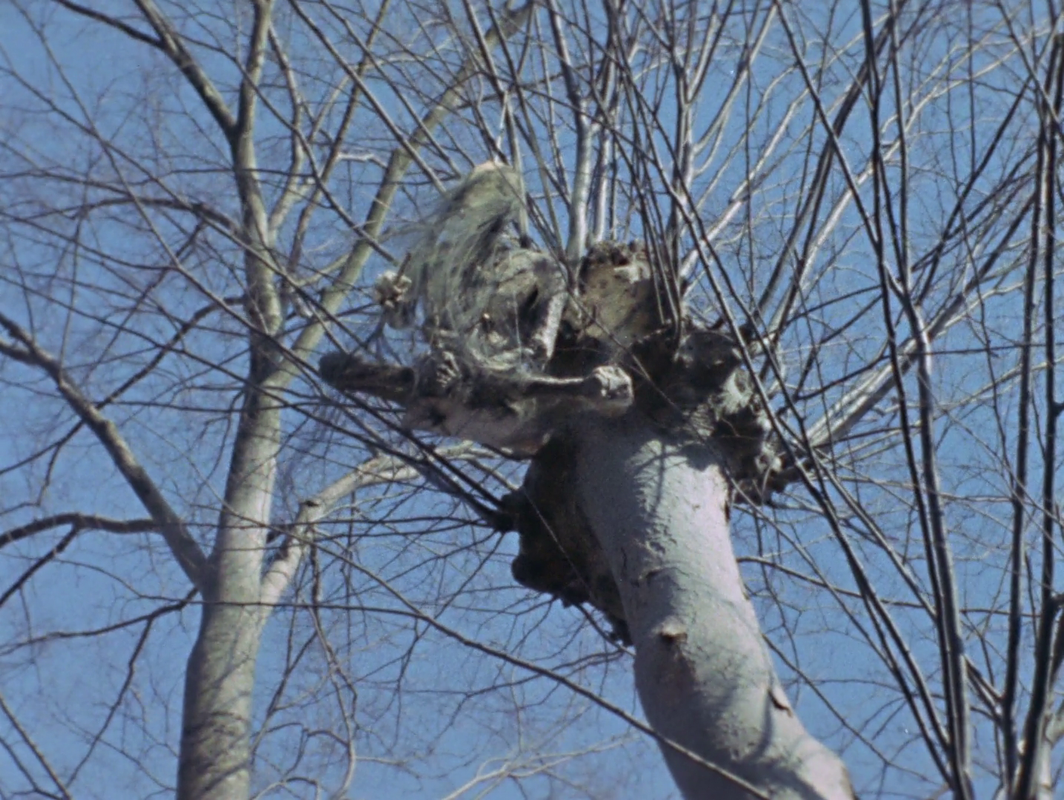
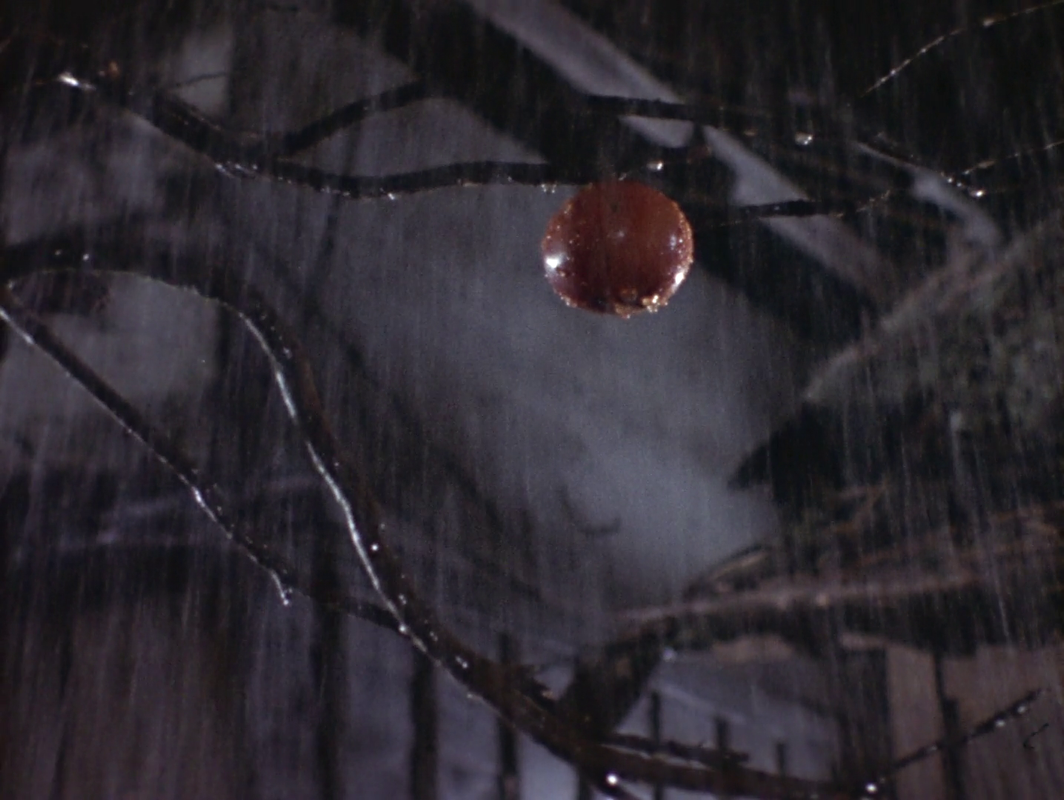
Screenwriter Yozo Tanaka is the lever that makes this transformation possible. Tanaka's literary bent and talent for making the complicated and esoteric clear on-screen enables Suzuki to give his own complex intellectual ideas vivid dramatic expression. Some of Tanaka's other screenplays are relatively simple and melodramatic –– Shinji Somai's The Catch is a good example of something much less intellectually complex –– but Tanaka is especially good in these Suzuki films at adapting multiple literary sources into an intriguing melange that has its own subject and meaning.
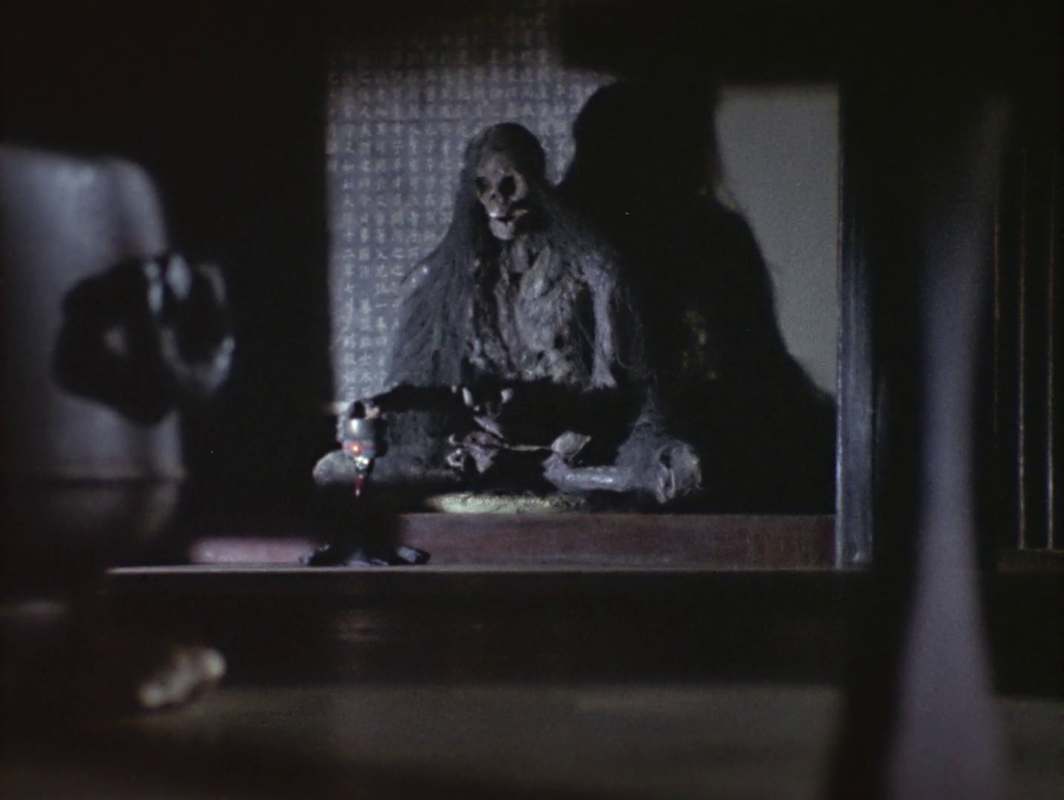
In the early 60s, Tanaka studied literature at Waseda University, along with Atsushi Yamatoya. Both students met as members of Waseda's film research society. Yamatoya joined Nikkatsu's assistant director program in 1962, and Tanaka did...something else, I guess. At some point both writers began working for Koji Watamatsu, and their first credited work is a Wakamatsu project, Season of Betrayal, written by Tanaka, directed by Yamatoya (Tanaka picks up his only assistant director credit on this production, too). Also moonlighting at Wakamatsu Pro is former Suzuki A.D. Chusei Sone, who invites the two to meet Suzuki, whereupon they band together with other Suzuki cohorts Takeo Kimura, Yutaka Okada, Seiichiro Yamaguchi, and Yasuaki Hangai to make Guru Hachiro, Suzuki's dedicated screenwriting group. Together, the group does an uncredited total rewrite of Kaneto Shindo's script to Fighting Elegy, works on some part of Carmen from Kawachi, and submits their first credited script, to Branded to Kill.
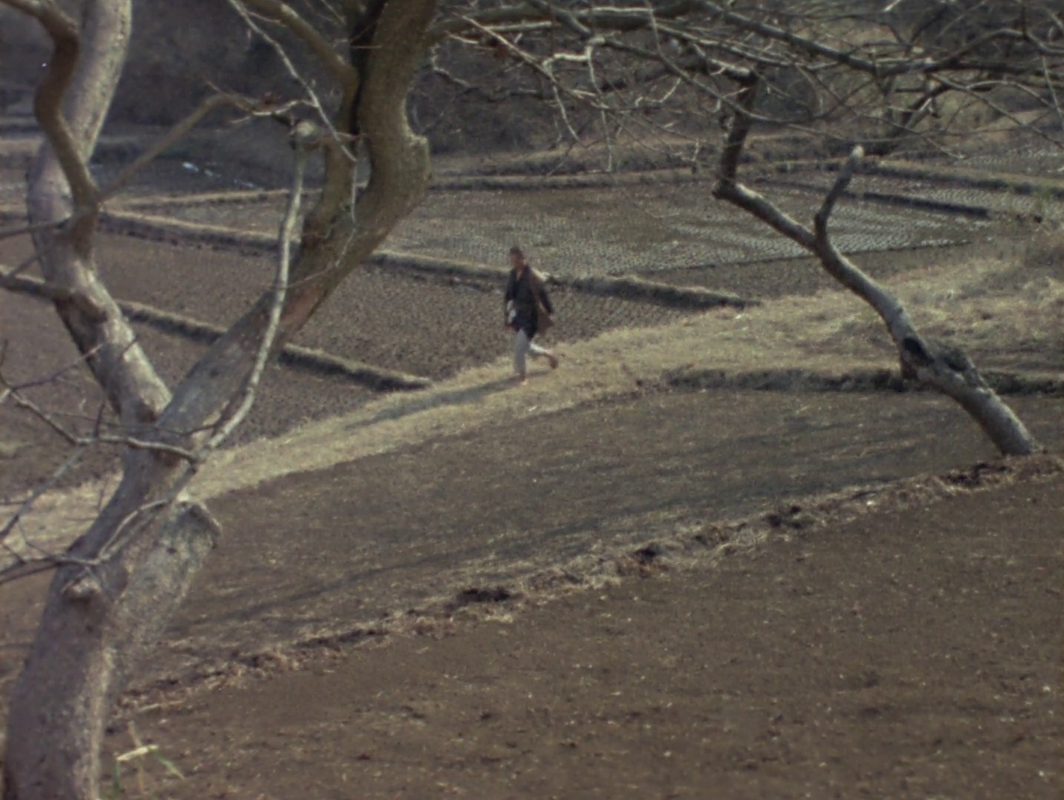
When Suzuki is fired, Guru Hachiro stays together, writing screenplays for Suzuki and Chusei Sone through about the early 80s. There are a ton of unproduced screenplays they write from that time, and a few of them go to other directors (Daughter of Time, etc.), and the members work separately, as well. Yamatoya does the screenplay rewrite for Story of Sorrow & Sadness solo, and gets Suzuki hired on to Lupin the 3rd as series supervisor for season 2, once Yamatoya became head writer for the series.
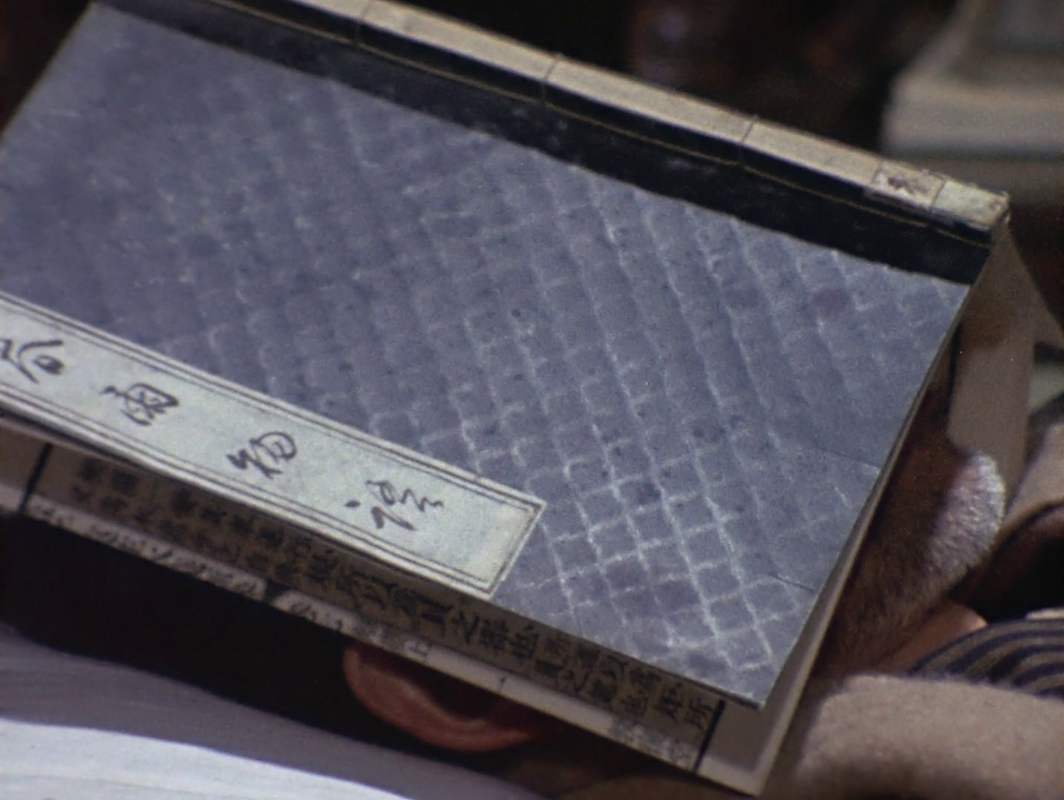
In the meantime, as he participates in the Guru Hachiro projects, works on Zigeunerweisen and writes A Mummy's Love, Tanaka is somehow still at Nikkatsu, helping to define the parameters of the new Roman Poruno genre. He writes tons of early Pinku Eiga, first for Chusei Sone, then for Masaru Konuma, Shogoro Nishimura, Noboru Tanaka, Akira Kato and more. His most influential contribution is to the BDSM pink films, scripting both Flower & Snake and Wife to be Sacrificed. He writes Trapped in Lust for Atsushi Yamatoya, and others. Tanaka's writing for Chusei Sone continues into Sone's more "respectable" films, and he begins writing frequently for a former Sone assistant, Shinji Somai. Tanaka works for Suzuki through 1991's Yumeji, and for Somai through 1994's The Friends, but his output slows after 1994 to a crawl. My impression is that the 1987 Somai movie Luminous Woman –– a large-budget fable-like fantasy romance picture that seems to flop hard –– does lasting damage to both filmmaker's careers. Somai directs after this only on much lower budgets, and the kind of film he makes changes, as well. Tanaka just seems to stop working in 1996 for about 8 years, and has only written four-to-five films after that.
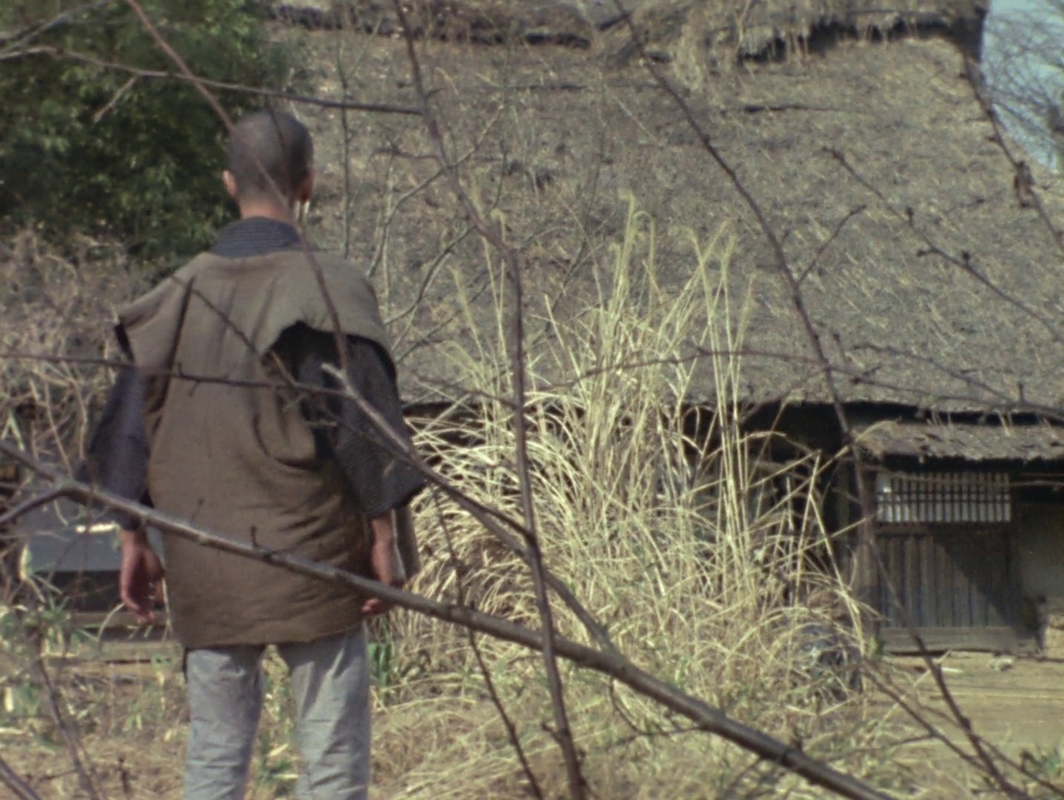
Tanaka's range is very broad, tackling everything from romantic melodrama to fantasy and sci-fi, to action films, to some of the most challenging art films to emerge from Japan. His taste for early modern literature is something he shares with Suzuki, but which seldom appears in his work for other authors. His only really consistent theme is one contrasting city life with country life –– this happens in endless screenplays, and it appears for a little bit in A Mummy's Love. He is something of a magical-realist, a strong element he brings into Suzuki's canon to exceptional effect.
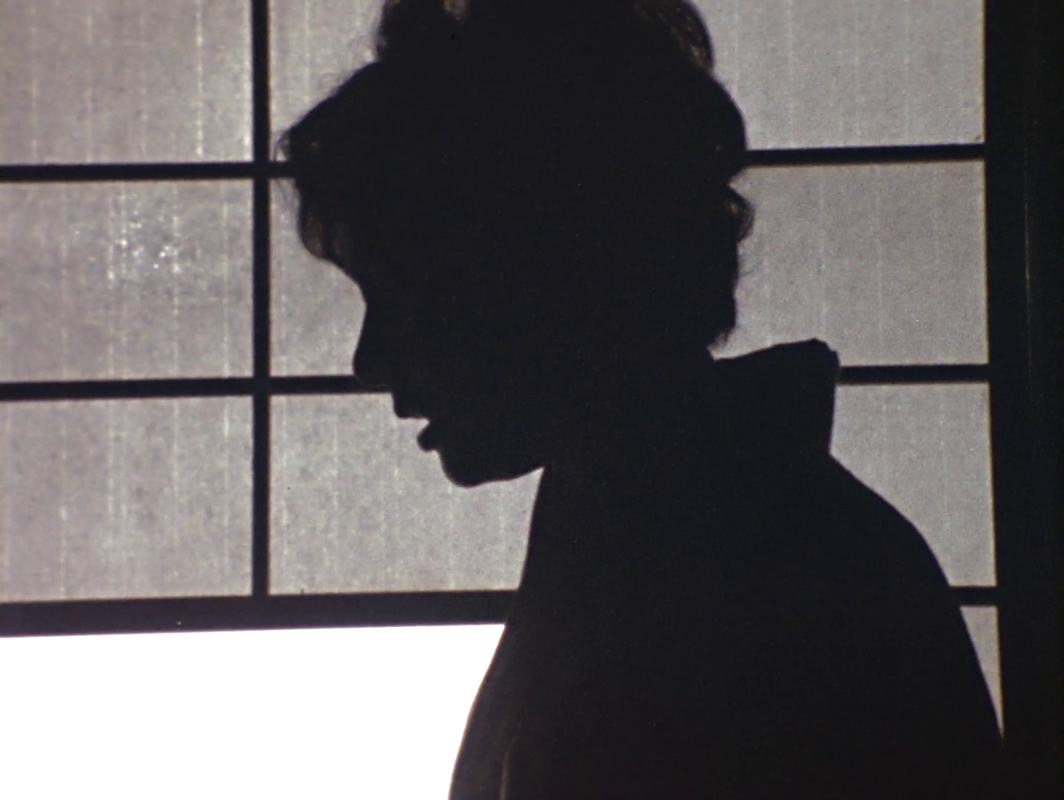
In A Mummy's Love, Tanaka and Suzuki conflate separate stories as they will in Zigeunerweisen (by separate authors, in this case), and create a framing story which binds the material together (as in Zigeunerweisen) –– one which also offer commentary and interpretation on the stories we've already heard in a way similar to how Aochi, Nakasago and Sono attempt to "read" the relationship of the blind singers in Zigeunerweisen, who are a metaphorical retelling of their own relationship to one another. The mix of self-reflexive narrative registers is a conceit of Zigeunerweisen and Mirage Theater especially –– one which Tanaka is beginning to explore in A Mummy's Love ahead of those later achievements. The primary source for A Mummy's Love is Nisei no Enishi-shu, by early Showa-era writer Fumiko Enchi. Enchi was a rare woman novelist from the time, whose work includes original novels, plays and short stories, as well as a translation of Tale of Genji into modern Japanese. According to Wikipedia, her work explores ideas of sexuality, gender, and spirituality. Enchi provides the story of the mummy, which, while it is the central text of the story, is in a way a kind of metaphorical placeholder for what will unfurl in Tanaka's clever framing story.
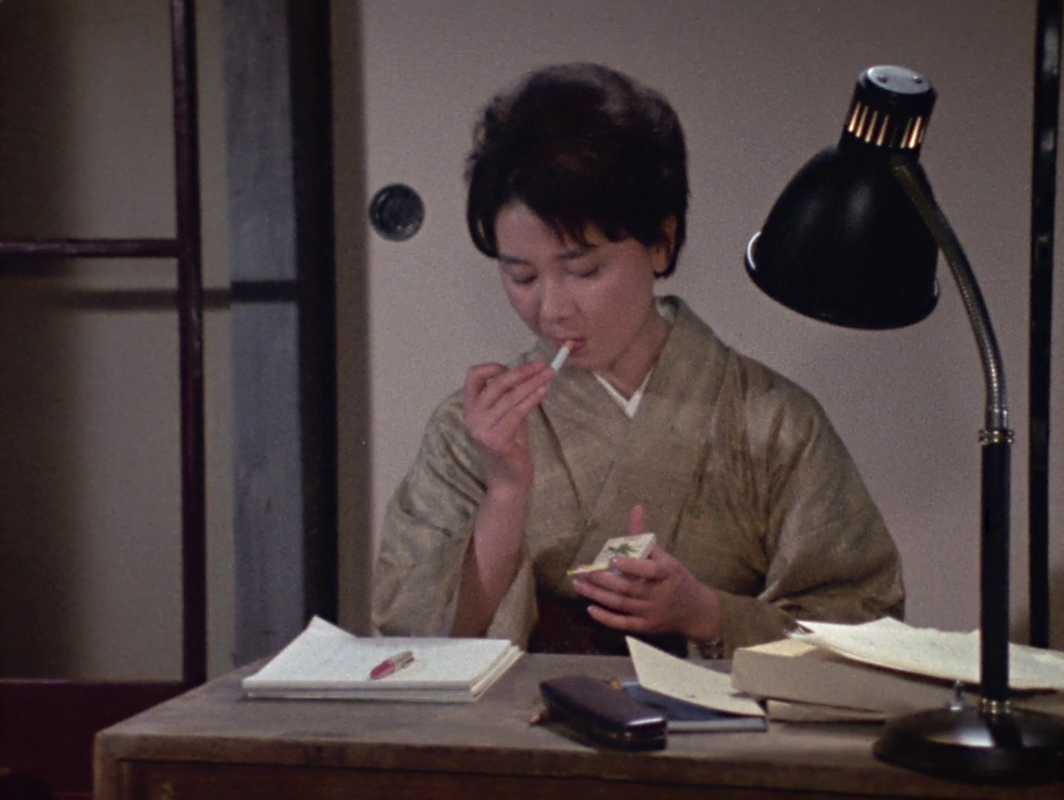
Strangely, Tanaka and Suzuki have chosen to credit Enchi's story within the film to Akinari Ueda, author of Ugetsu, and another volume, Tales of Spring Rain –– which the story is credited as appearing within. In the framing story, a professor is reading the Enchi story from out of an old copy of Tales of Spring Rain. The ambiguity of the source material –– or in another sense, the outright misrepresentation by the filmmakers –– relates thematically to what's being done here, the fundamental "borrowing" of energy that is what this whole story is all about. The professor reading the story will attempt to borrow the energy of the story itself in order to seduce his former student, Shoko. More on that later.
We begin the story with hardly any introduction to the framing device. Shoko, an assistant editor at a publishing house, walks out of the woods, on the way to the home of her former professor. She's going to collect from him a story from Ueda's Tales of Spring Rain –– the first attempt in this brief drama to borrow energy from someone else –– and already a complicated one. Shoko will get the story for her editor, for her job, consciously trading on the way her former professor lusted after her in the past. We hear the professor's narration already, describing the story of the mummy as one from Ueda's text. Of course, we know too that the text Tanaka has actually used is Enchi's, so another sort of borrowing is happening here. I don't know if Enchi was retelling a story from Ueda, or if this is a kind of weird literary appropriation, but either way, the effect is to obscure authorship of the original article, and that ambiguity will continue throughout the story.
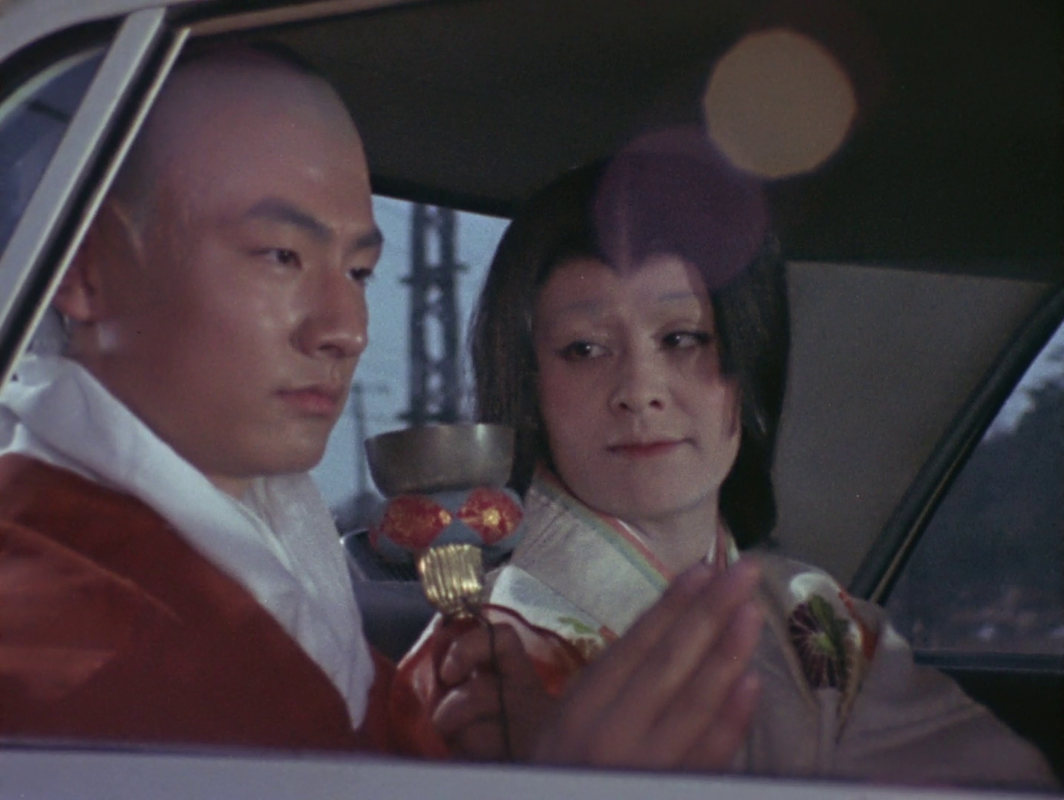
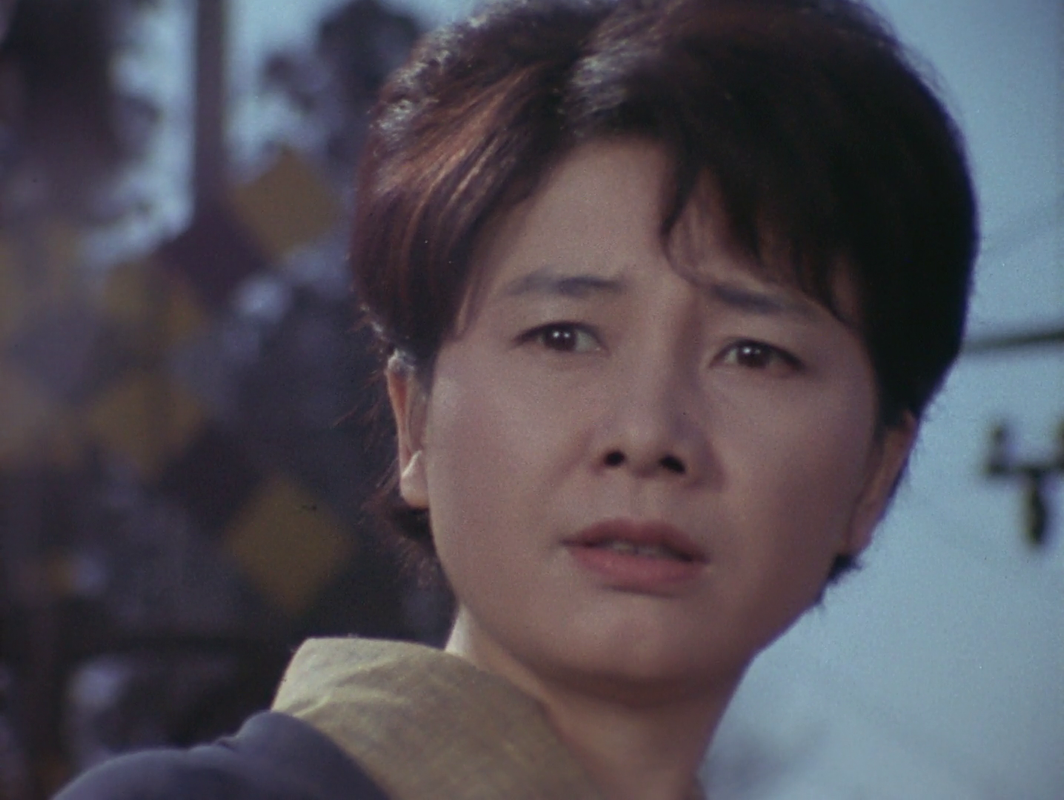
At a railroad crossing, Shoko sees a monk in the back-seat of a chauffeured car, and is struck by his doll-like appearance. In the narration, the professor describes the monk Shoko sees as the kind of mummy figure we see in the Enchi/Ueda tale; a monk who has buried himself alive in order to achieve enlightenment. The idea is that the monk rings a bell when he has achieved it, and can be excavated. Then we plunge into the mummy story proper, with a young man wandering around the grounds of his family home listening for the sound of a distant bell.
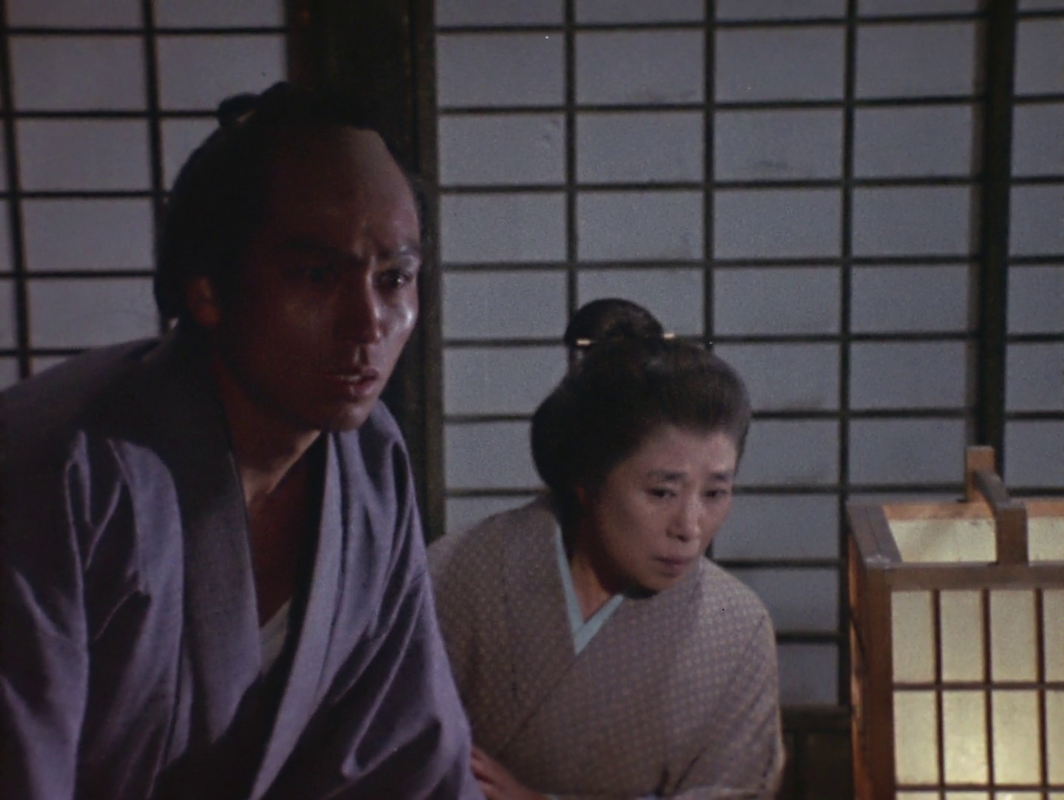
This is Yusuke Kawazu, a star of Shochiku films in the 60s. You might recognize him as the lead in Oshima's Cruel Story of Youth. His other big movies include The Human Condition, The Sun's Burial, Killers on Parade, Manji, Black Lizard, and, apparently, Fighting Elegy. He brings a suitable amount of existential perplexity to his role as the villager who discovers the mummy buried in an old well, drawn to the ringing bell.
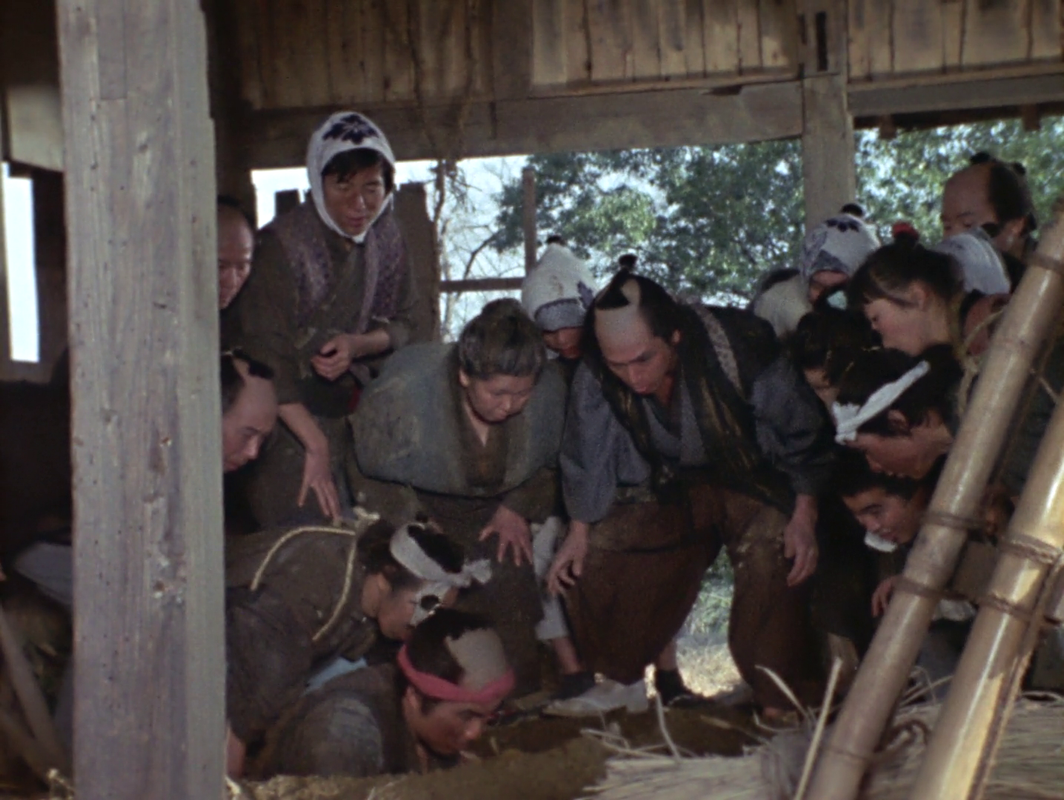
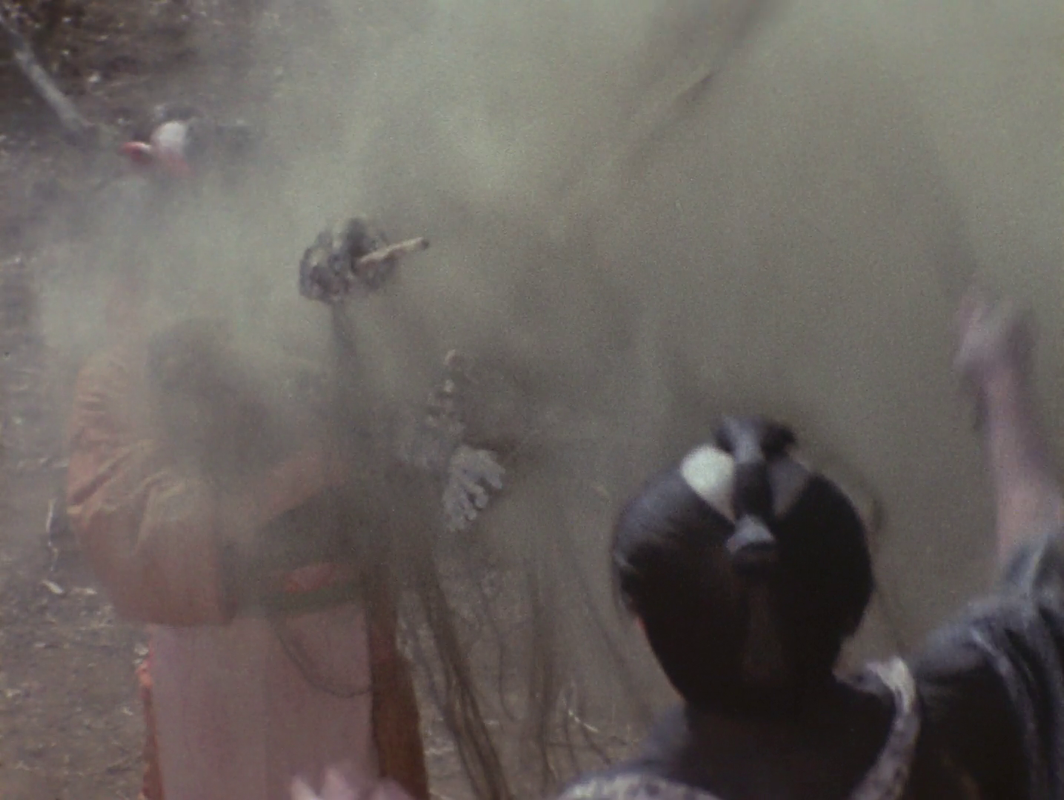
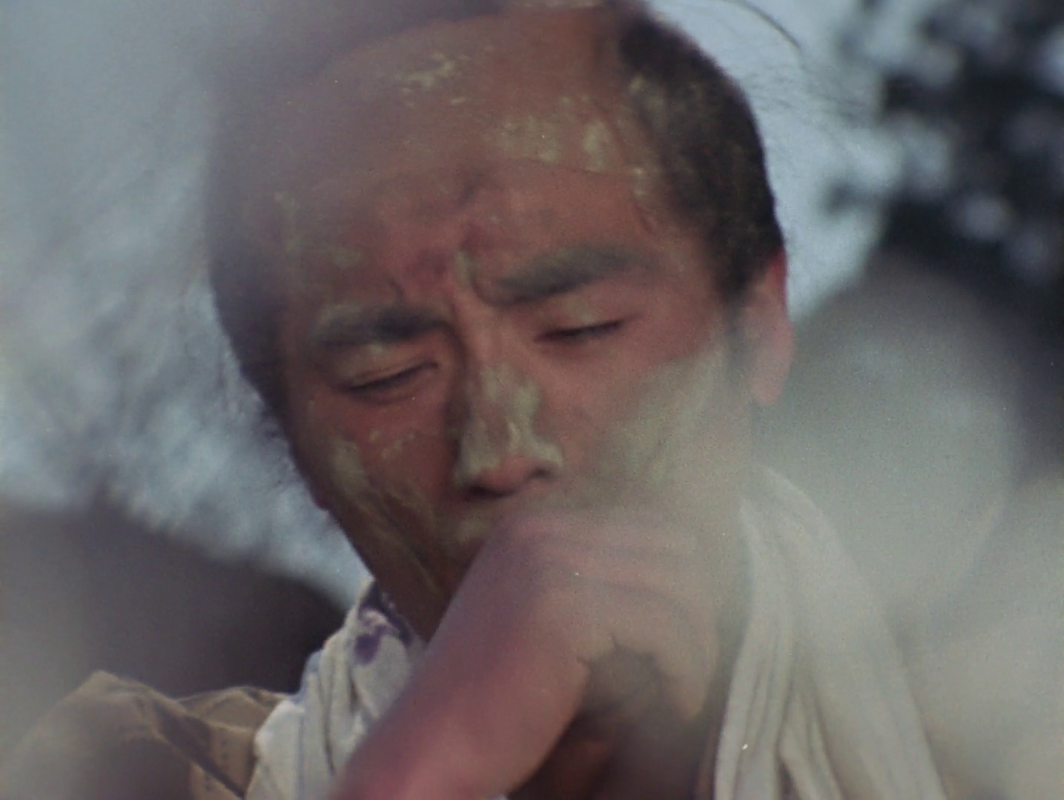
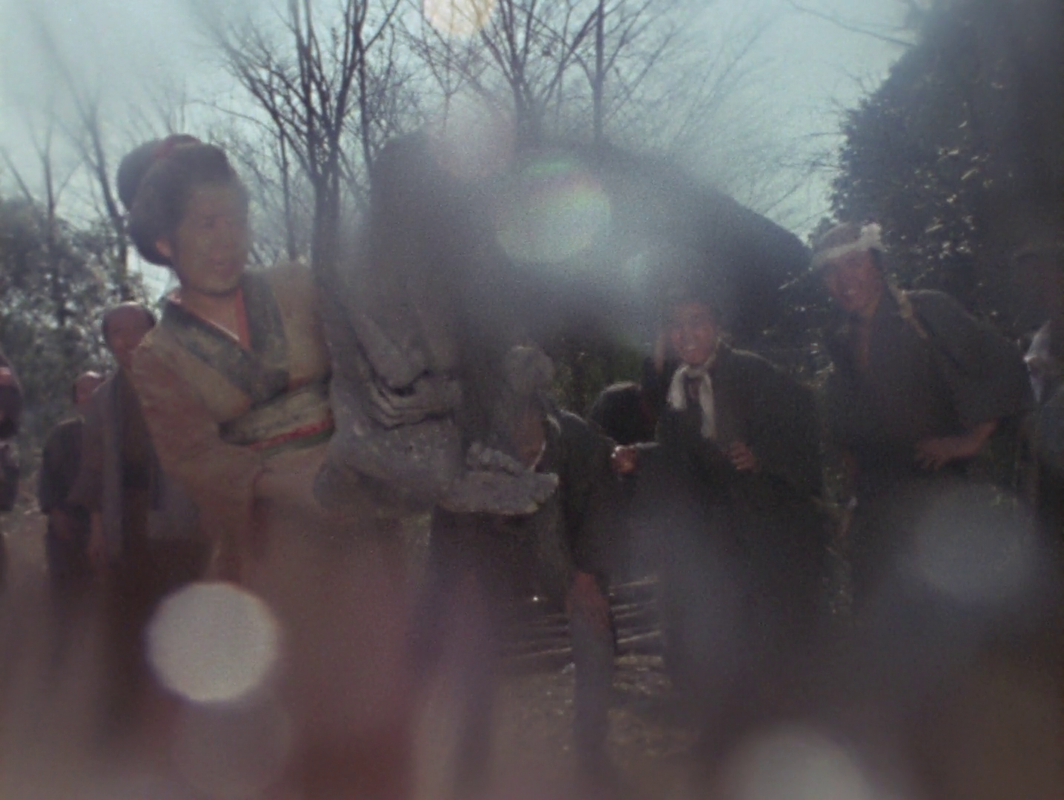
It's probably Suzuki's idea that the villagers don't know what the mummy is at first, are both grossed-out and amused by it, and end up playing soccer with the corpse in a deliriously-shot hand-held scene. Throughout the retelling of this story, Suzuki mocks the solemnity of the resurrection of this monk, underlining the question of what these villagers are really going to do with this alleged treasure? The story, as the professor tells it, is surprisingly bawdy for television. Eroticism is in Suzuki's movies from early on, but it becomes much more central to the point of the films once Guru Hachiro, with their roots in Wakamatsu productions, enters the picture.
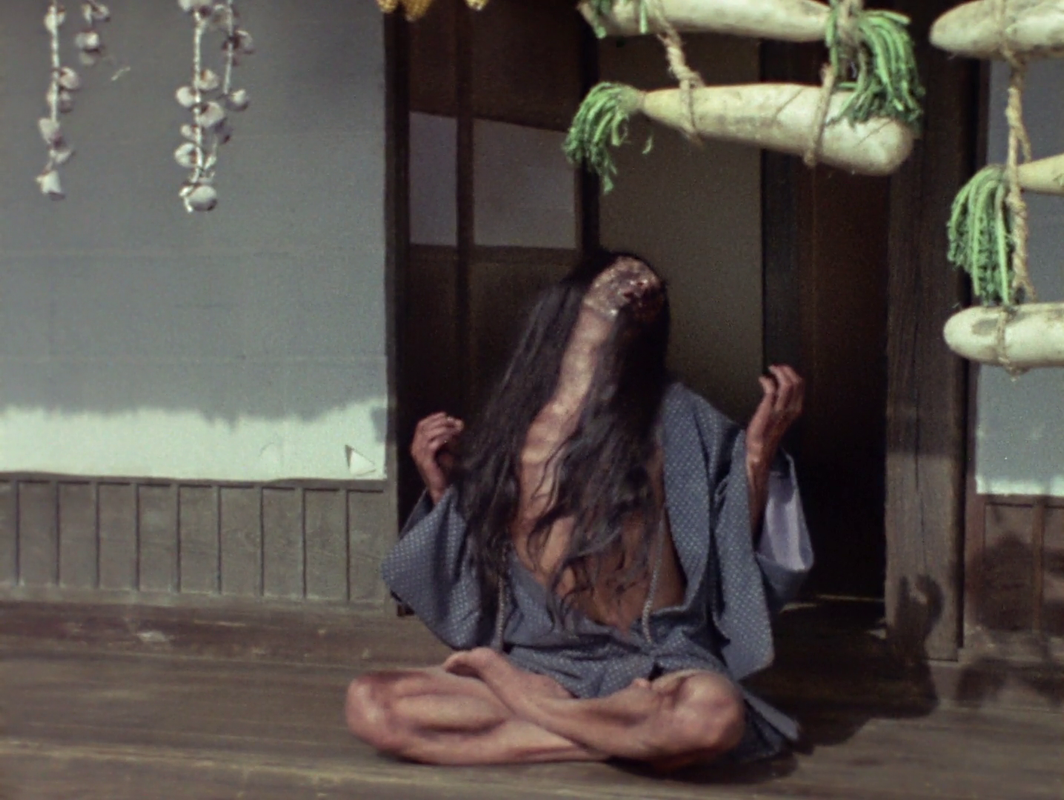
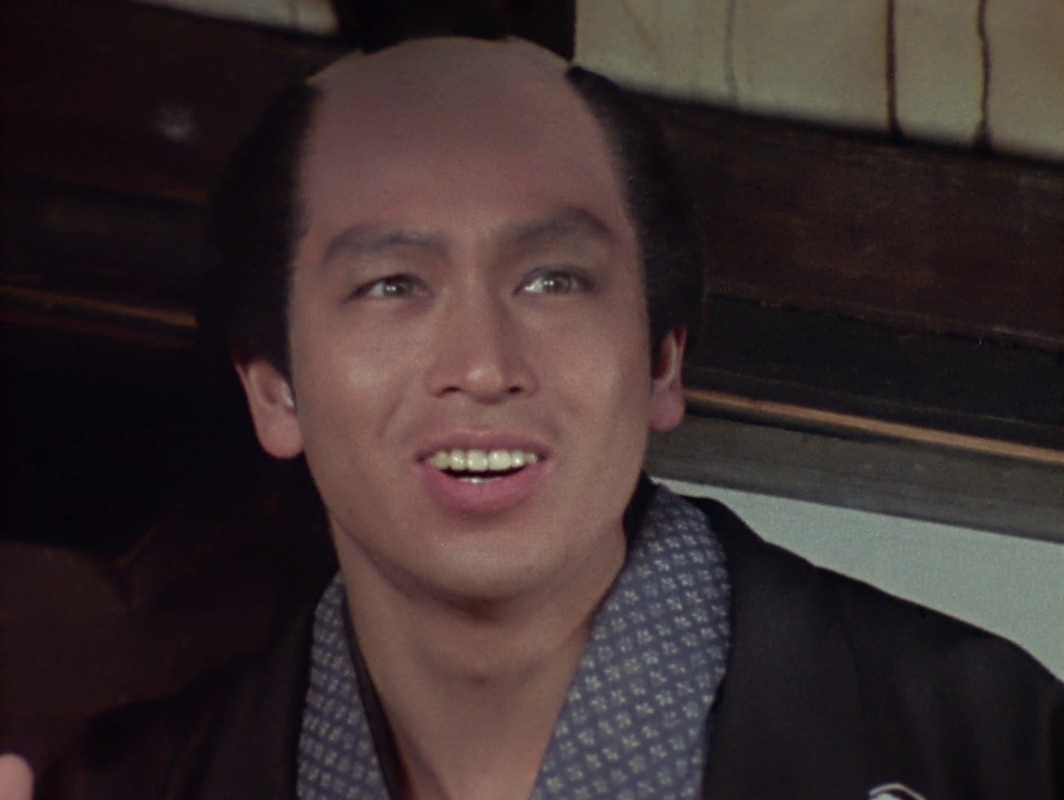
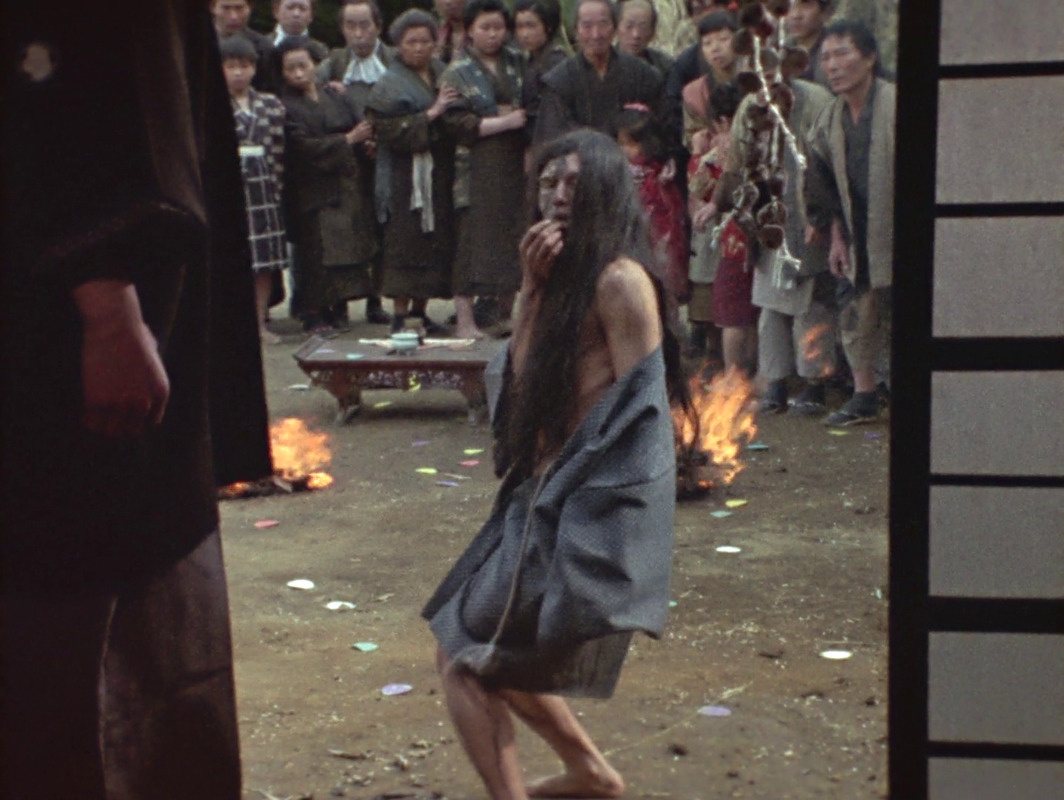
Kawazu adopts the mummy, and his mother feeds it, revivifying the corpse. Over the course of some time the mummy begins to move, listen, speak, and, pretty soon afterwards, it starts hungering for sex. The village is full of randy residents, and the mummy starts making clumsy moves on bemused residents. Eventually he is married, and, after a week-long bought of sex, his wife is in the family way.
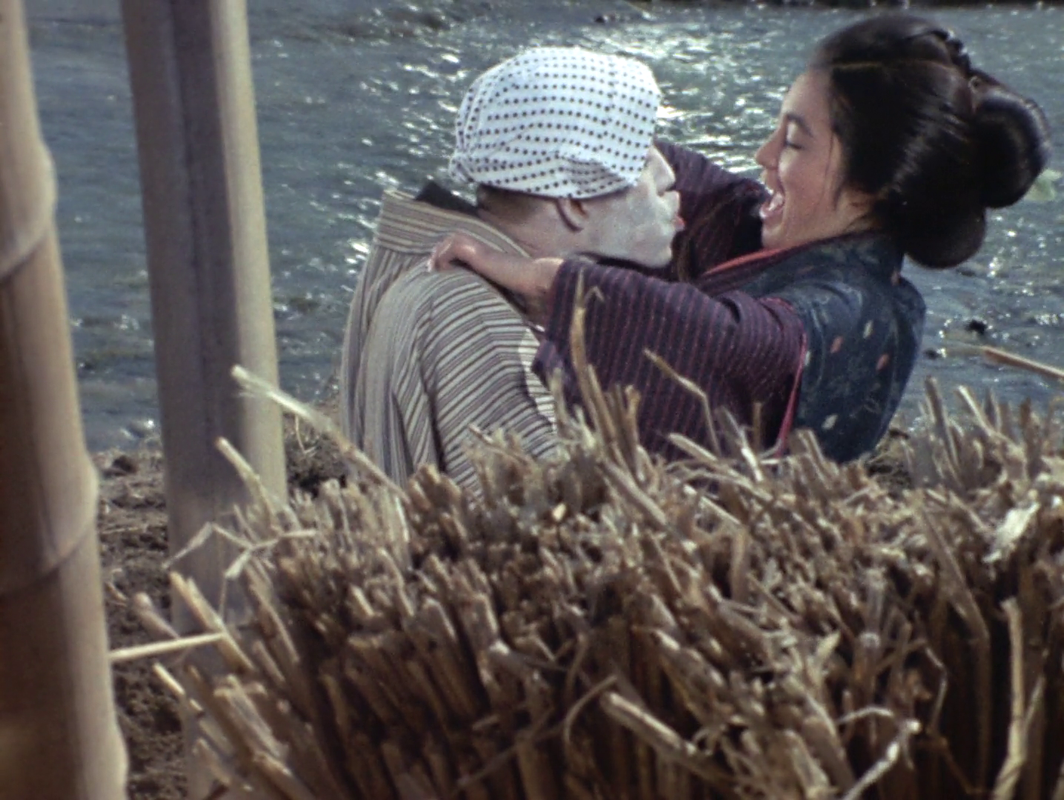
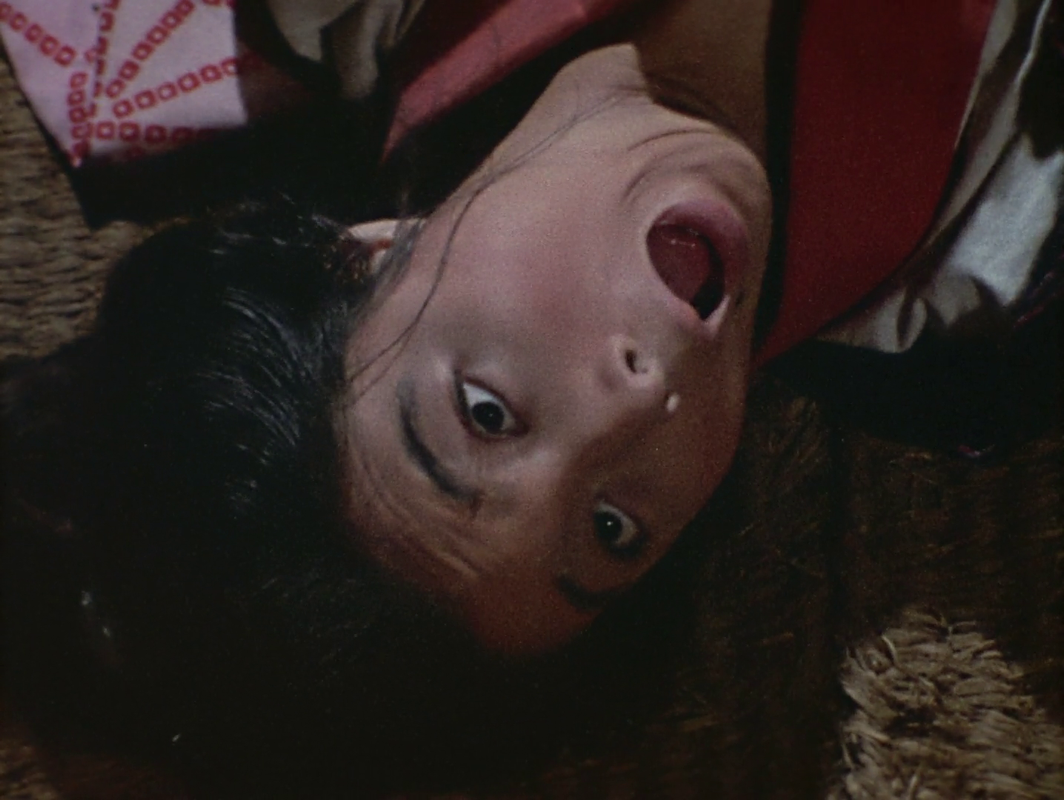
This proves the undoing of the mummy's second chance at life. The wife dies in a cloud of purple haze, giving birth to dozens of giddy little raving golden buddha creatures. Kawazu brushes them off his hand and they evaporate into dust.
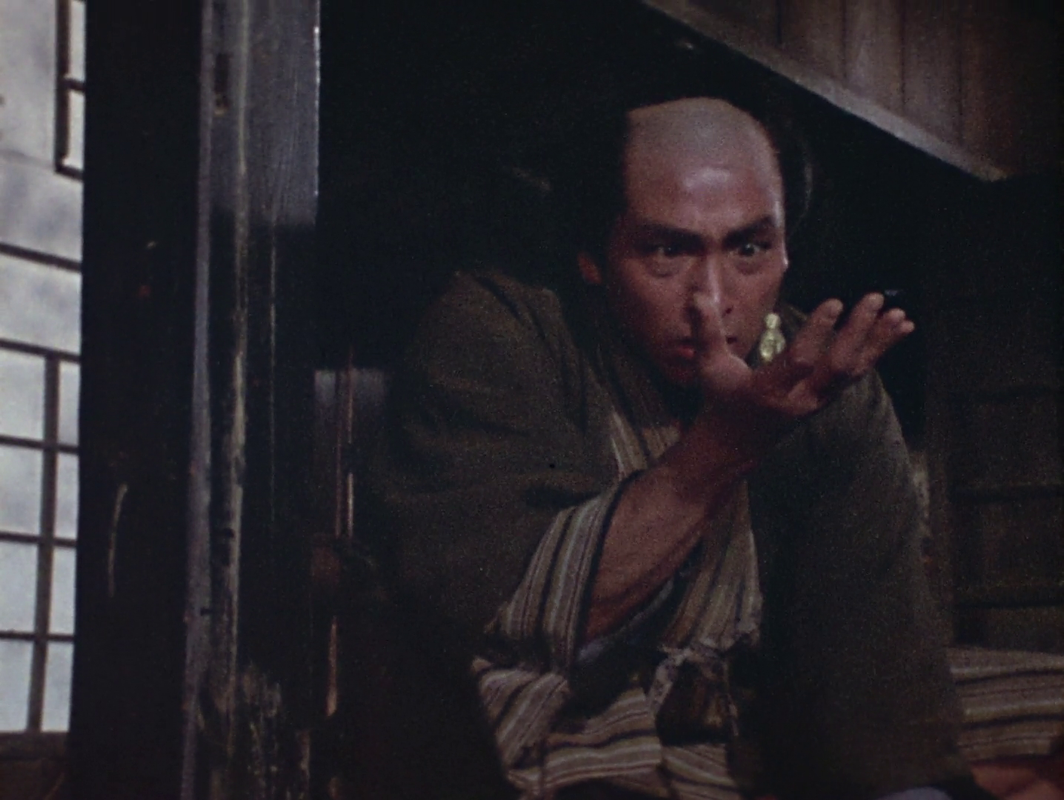
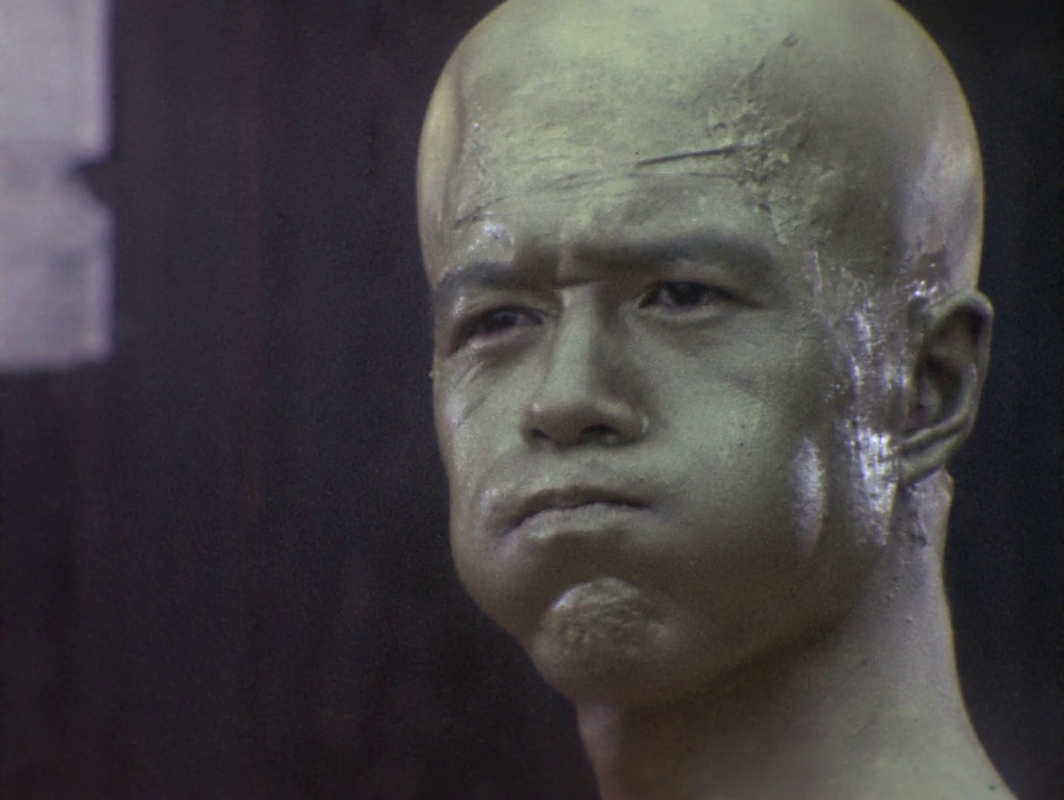
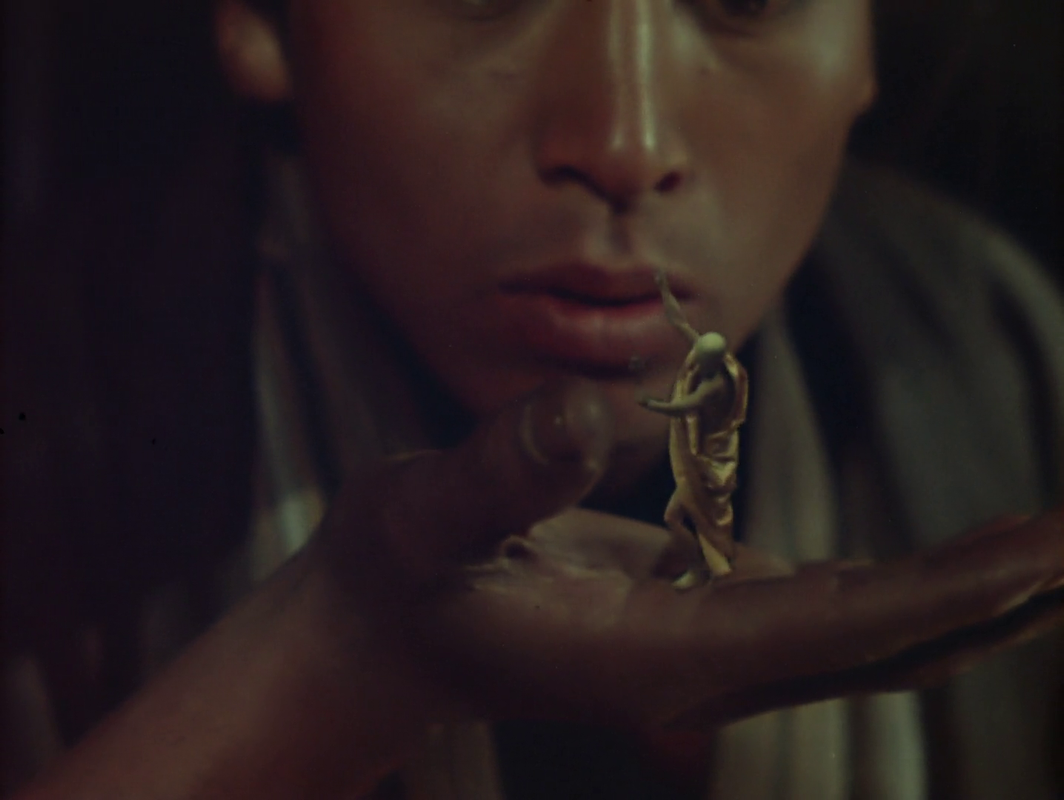
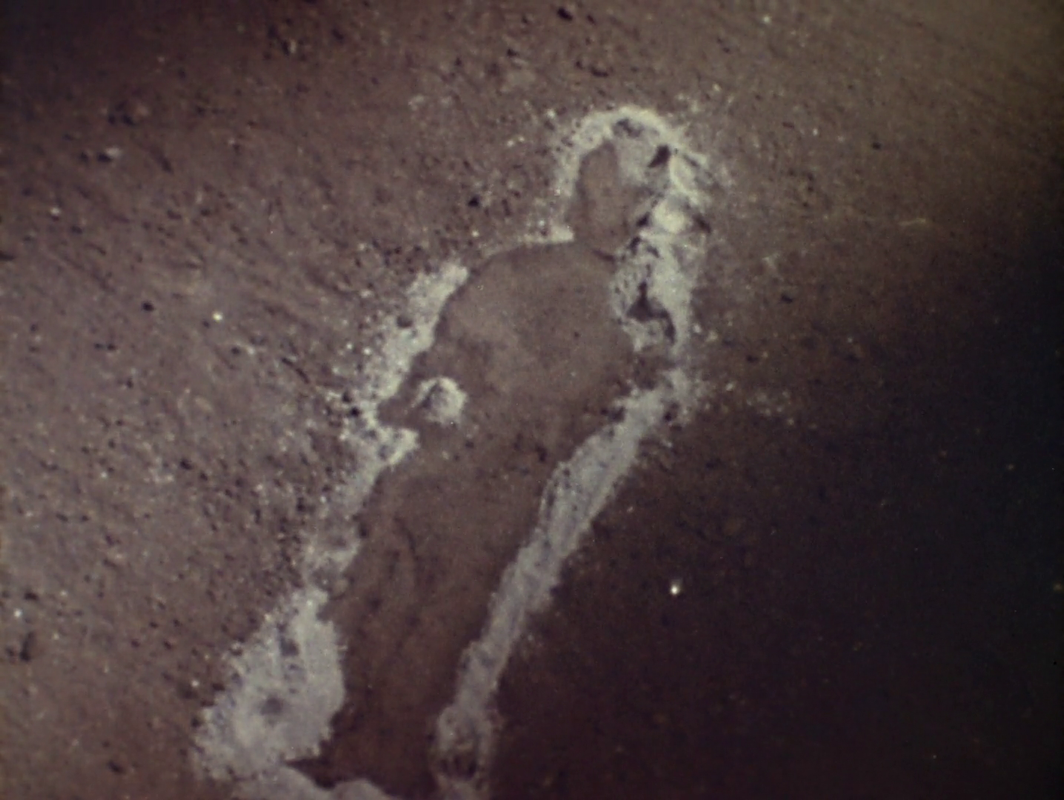
Kawazu here loses his mind; none of these seemingly symbolic supernatural happenings can be explained by the village priest, by following the edicts of family living, following anything he has believed. "What were we worshipping, then?" he shouts, and the villagers, incensed by the death of the mummy's wife, descend upon the cackling children, stomping them to dust. They chase the mummy across the countryside and he eventually blows up in a poof of dust as well.
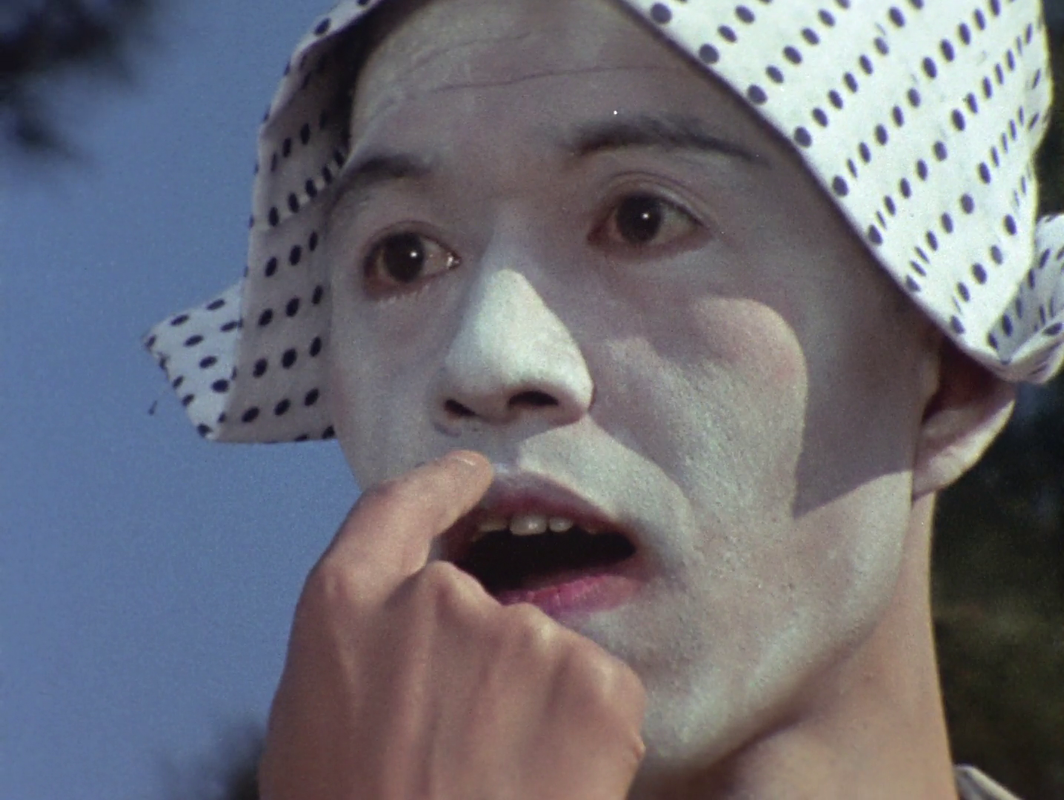
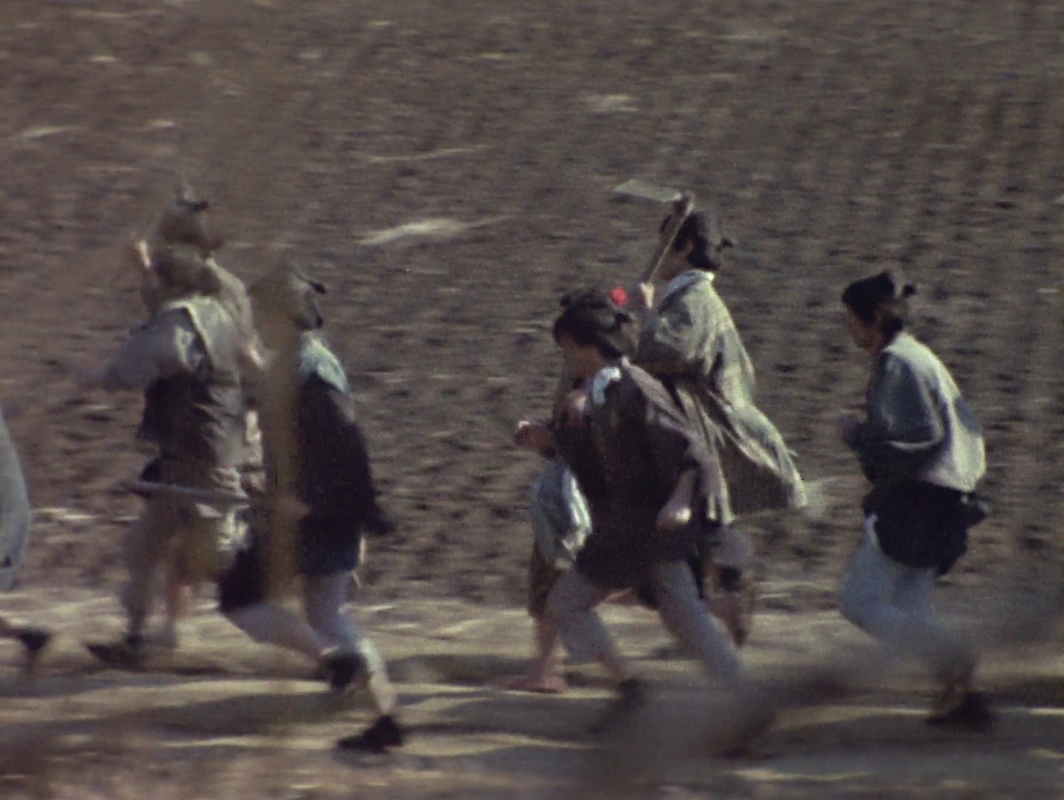
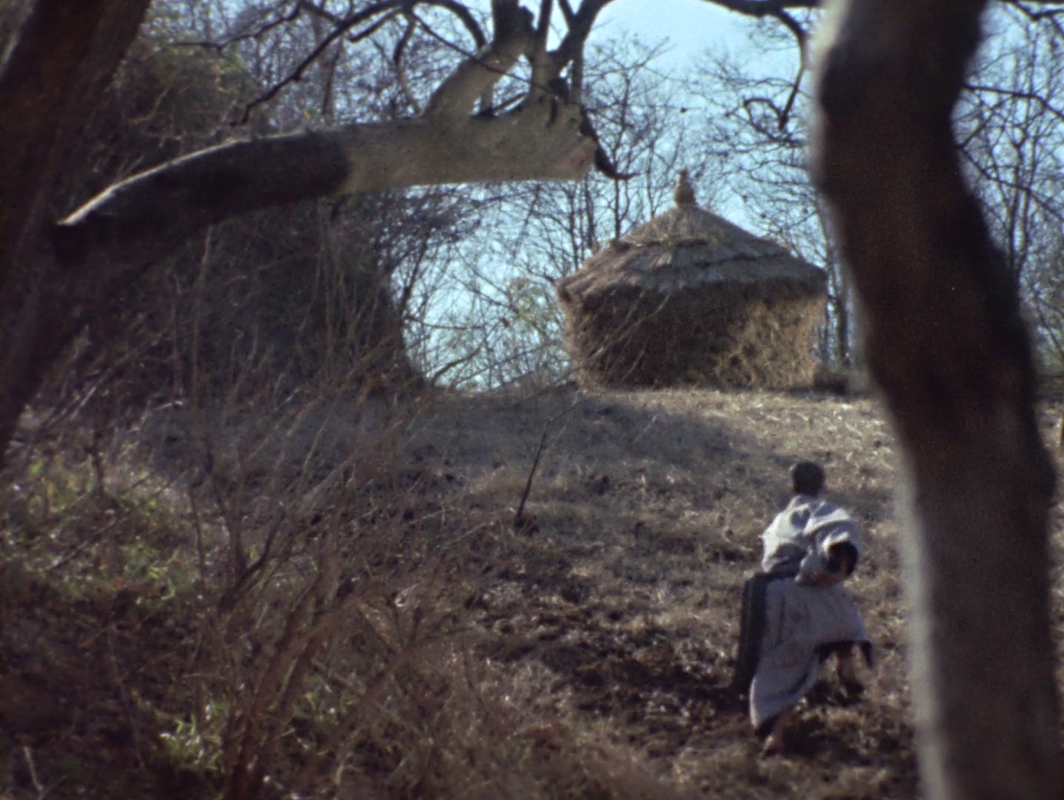
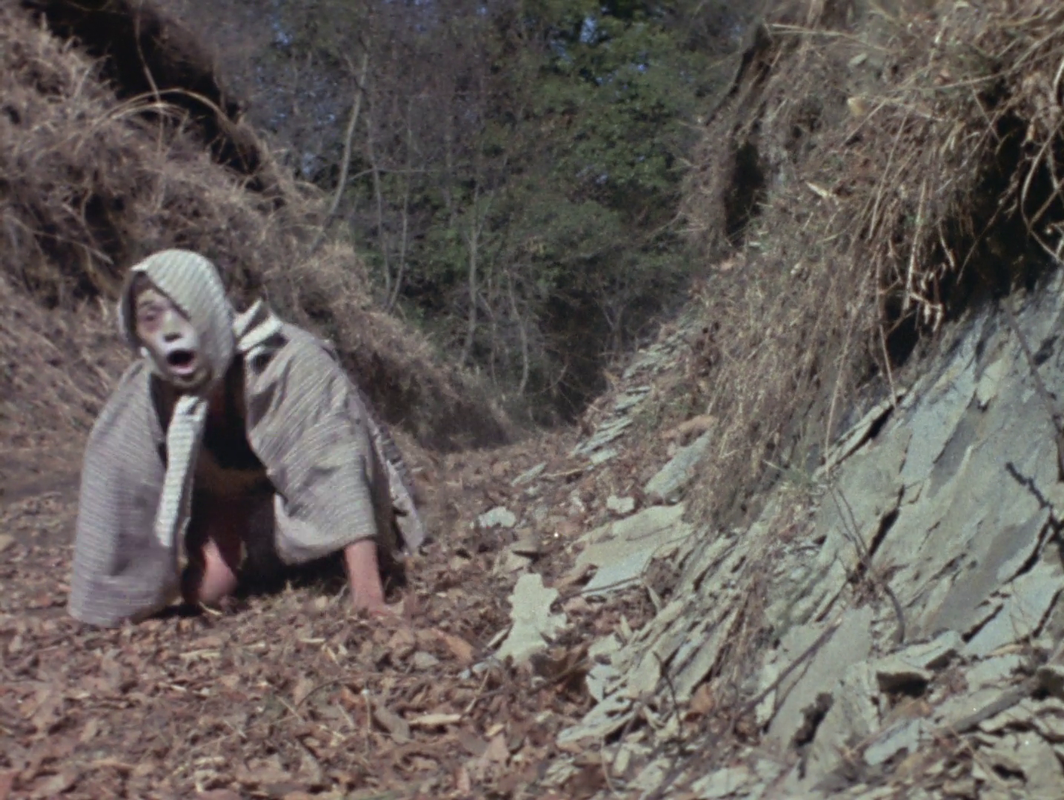
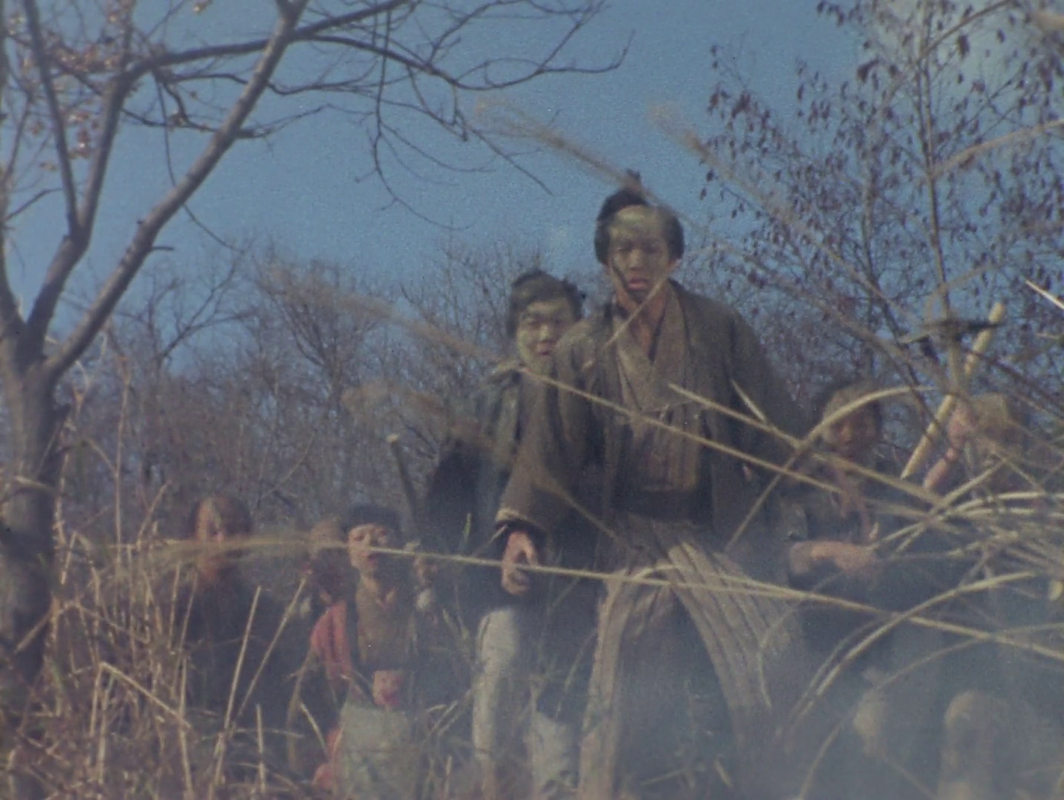
In the end of the story, Kawazu goes on with his life, gets married, and then on his wedding night, hears the mummy's bell ringing again. Haunted by the ringing, Kawazu abandons his marriage and seems to retreat into himself for the remainder of the character's life. He saw the mummy revivified as a miracle, then was brought to earth by the realization that none of the values he attached to this supposed miracle obtained. Now he no longer has the intellectual tools necessary to understand the ringing he hears in his ears. Is it a mystical ringing, a religious sign, after all? Is it even real?
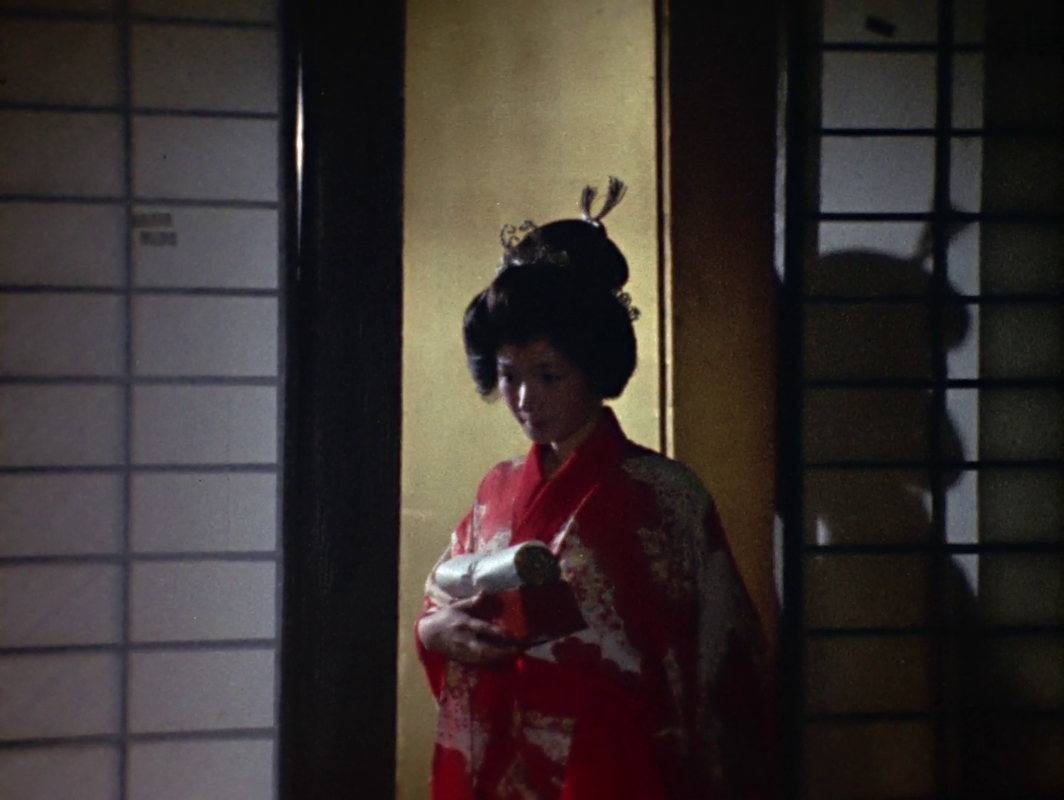
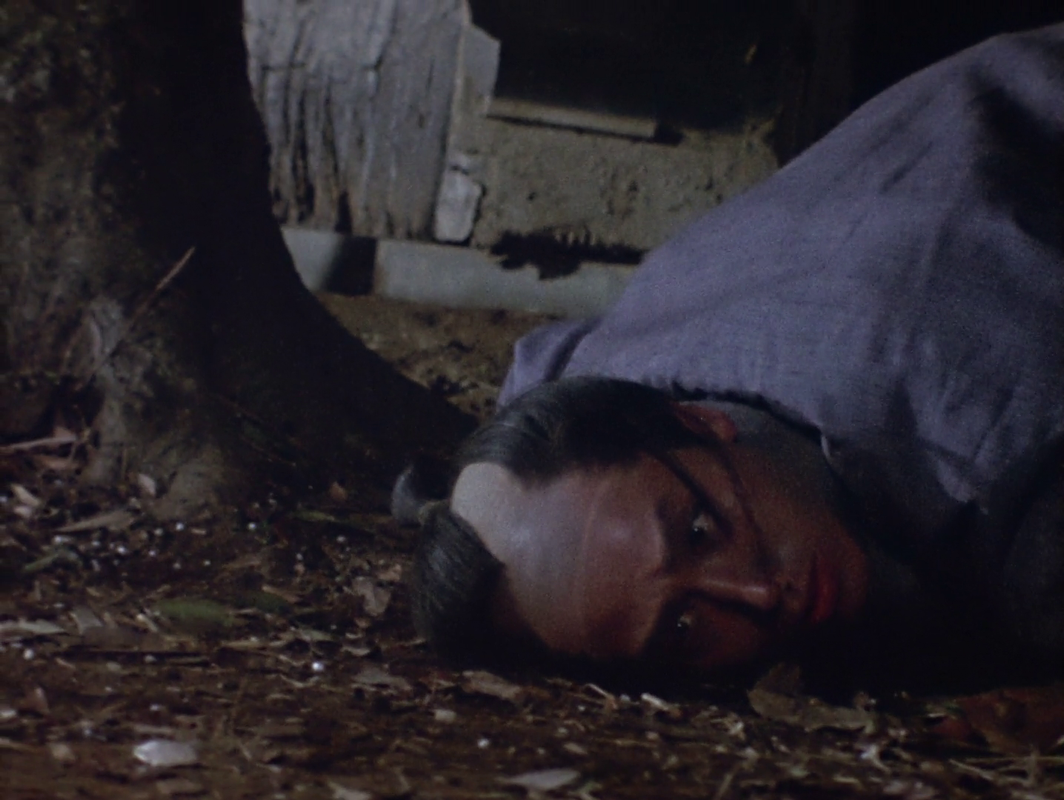
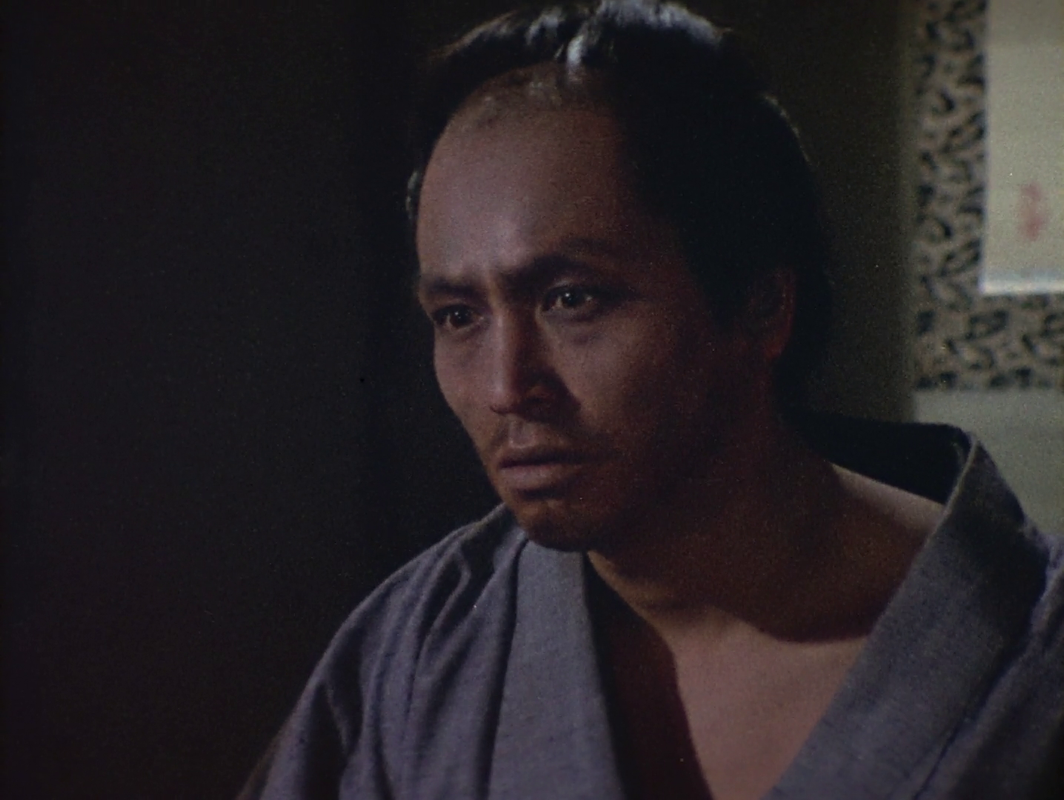
With deft simplicity we cut to the professor's study, where Shoko, who has moved temporally and physically behind the scenes, stops taking dictation and has a smoke. At this point, Shoko becomes the narrator, explaining to us the nature of the exchange taking place. Shoko's professor now needles her first on what she thinks of the baldly erotic story, then how long it's been since her husband was alive. Shoko's husband, we're to understand, died in an air raid in an area near the professor's house. WWII appears again, at the periphery of Suzuki's mind always.
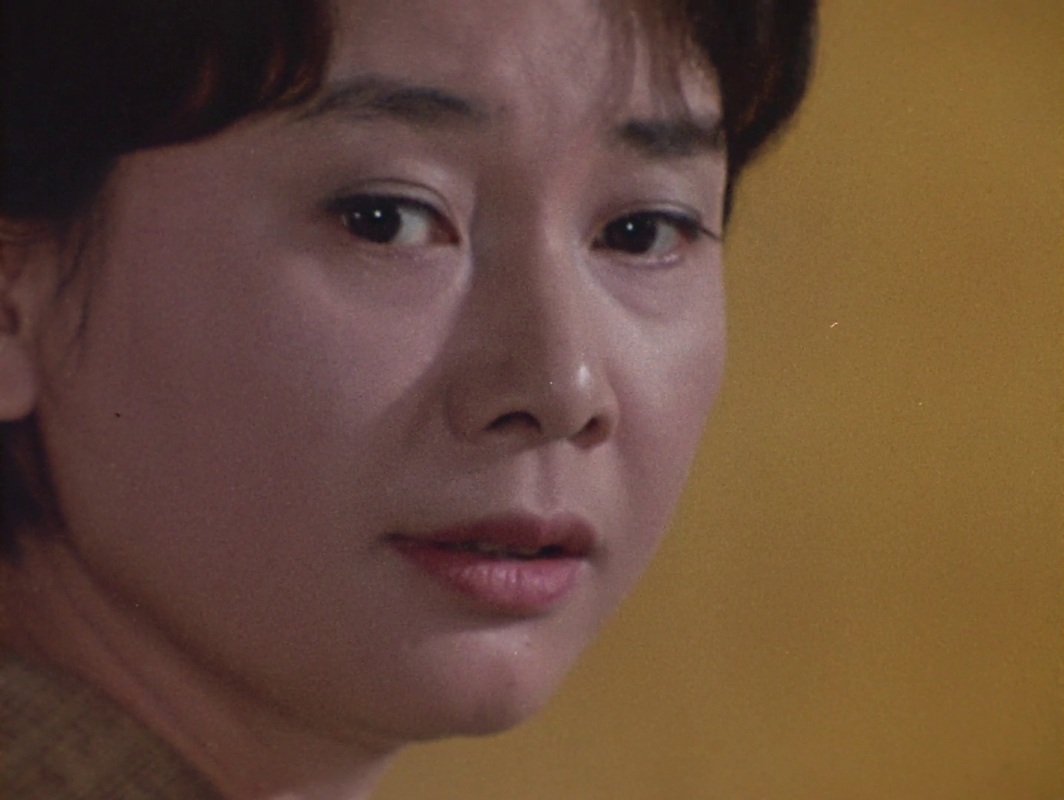
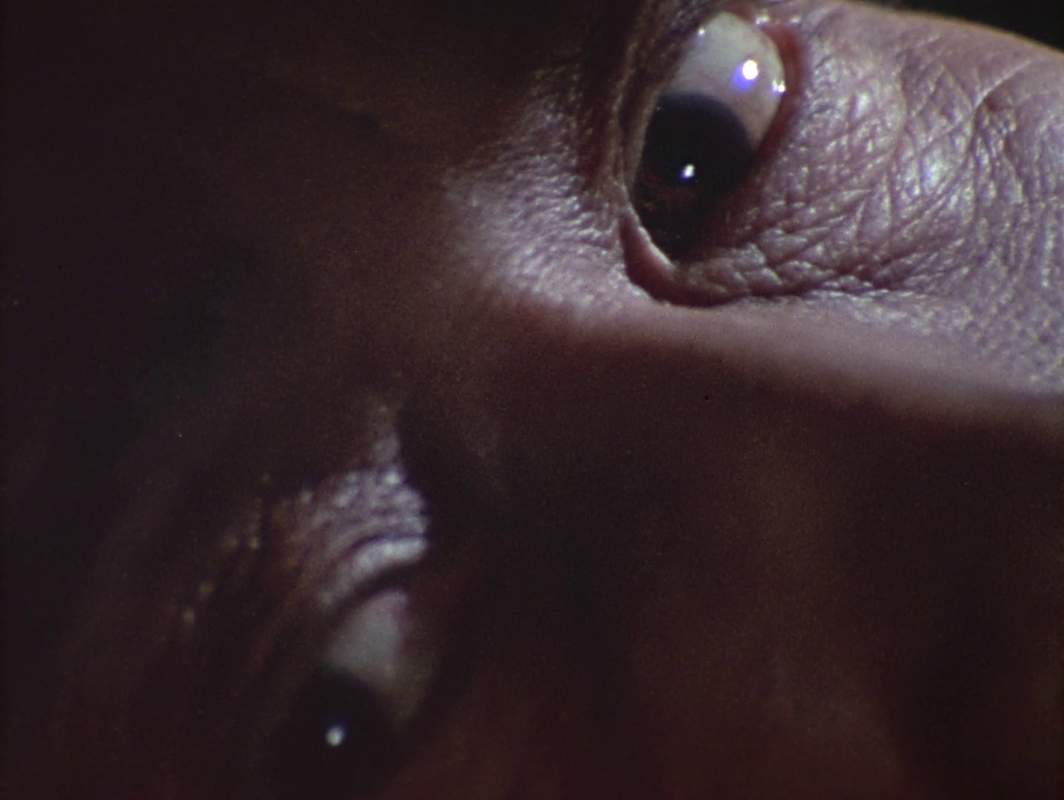
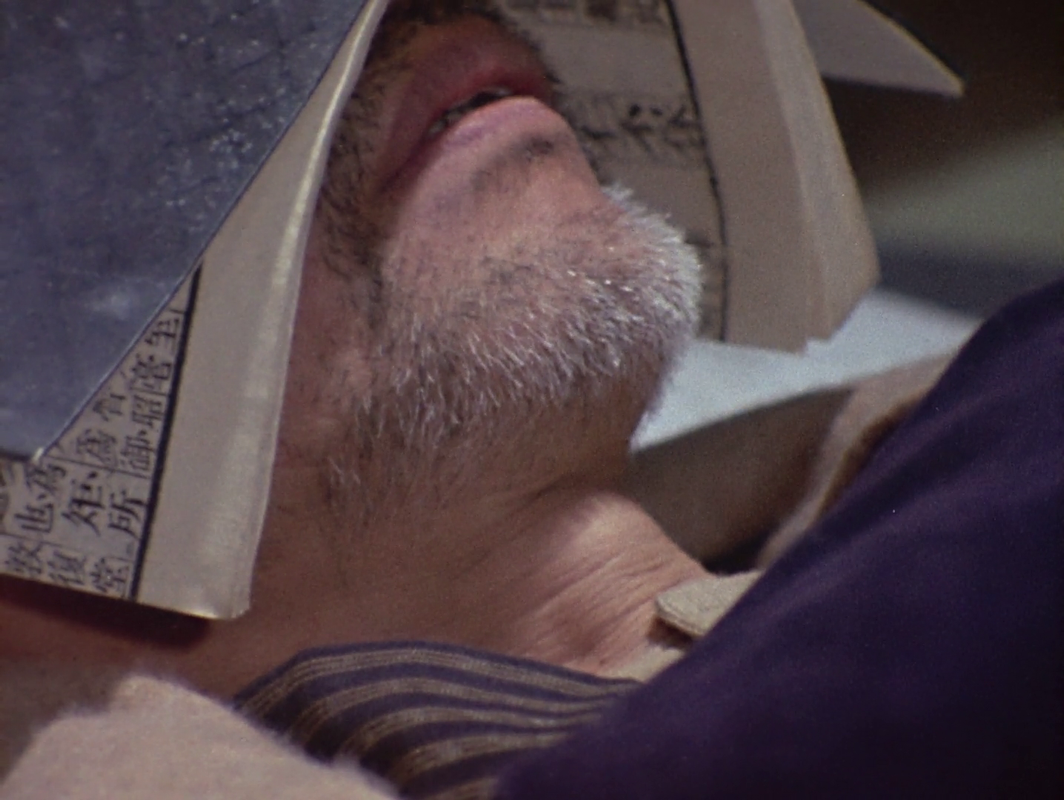
The professor has a wedding photo of Shoko and her husband, which he suddenly reveals. He claims it found it's way to him, he kept it as a prank, and then simply held on to it after the war. The professor now starts interpreting the story, and we get the sense of his ulterior motive. As the professor sees it, the mummy got another shot at life through the power of sex. He wants to experiment along those lines, with Shoko.
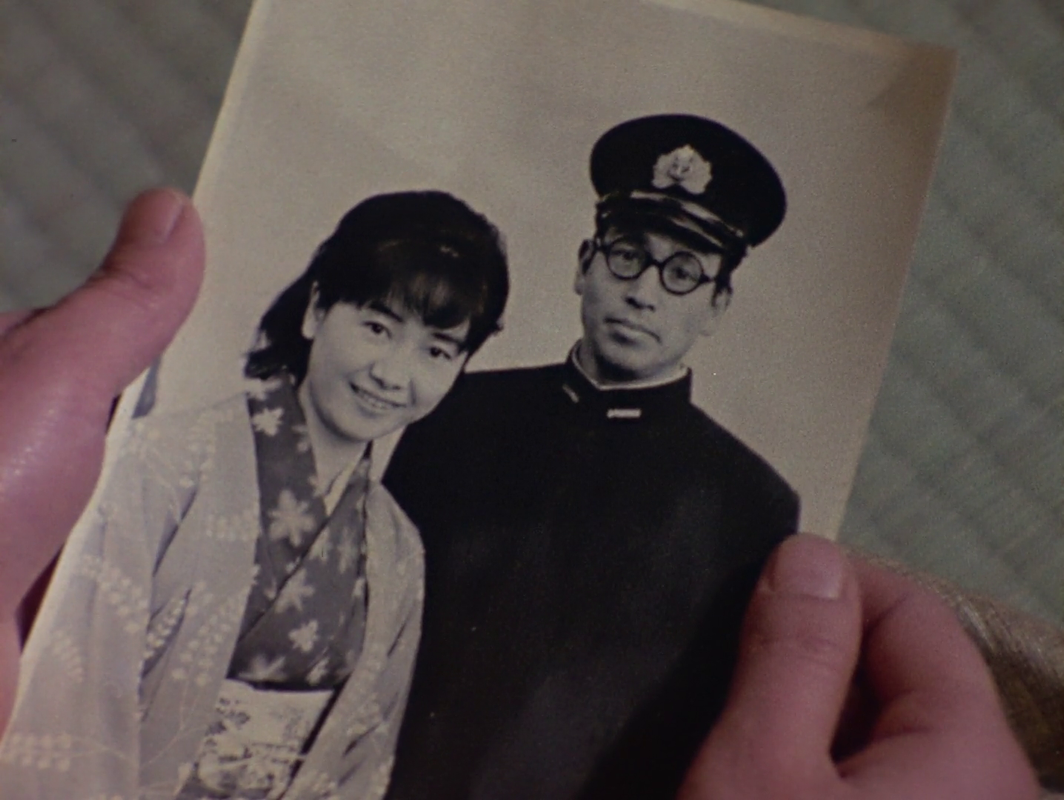
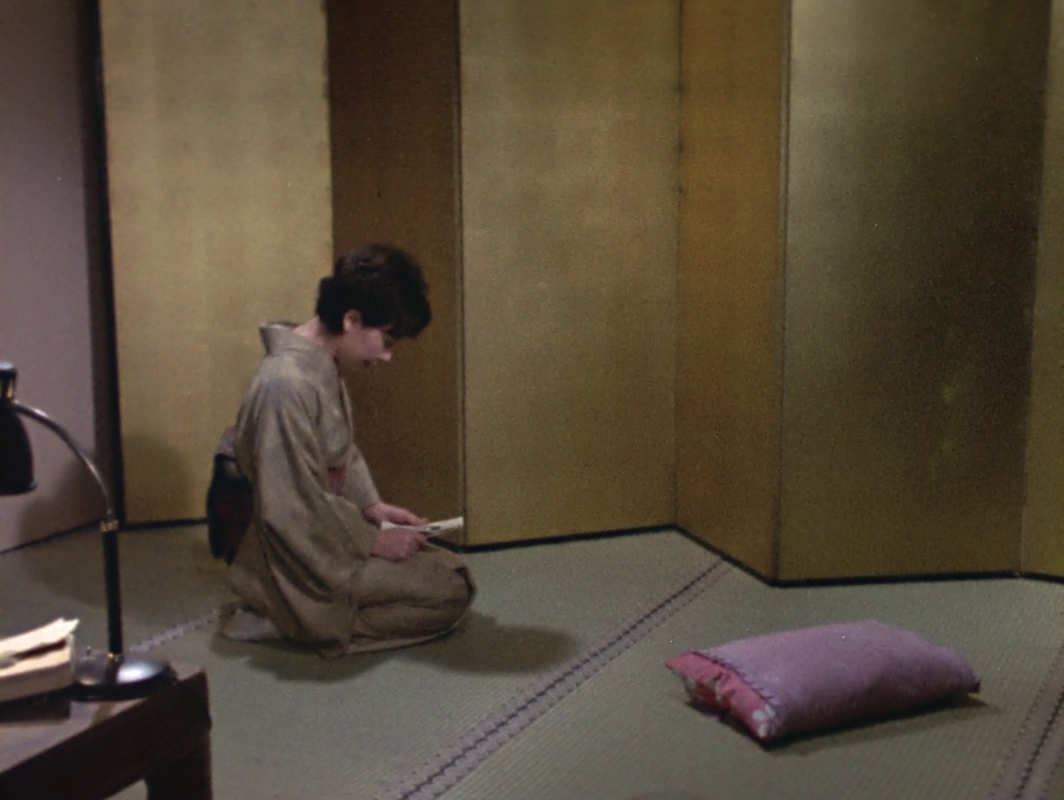
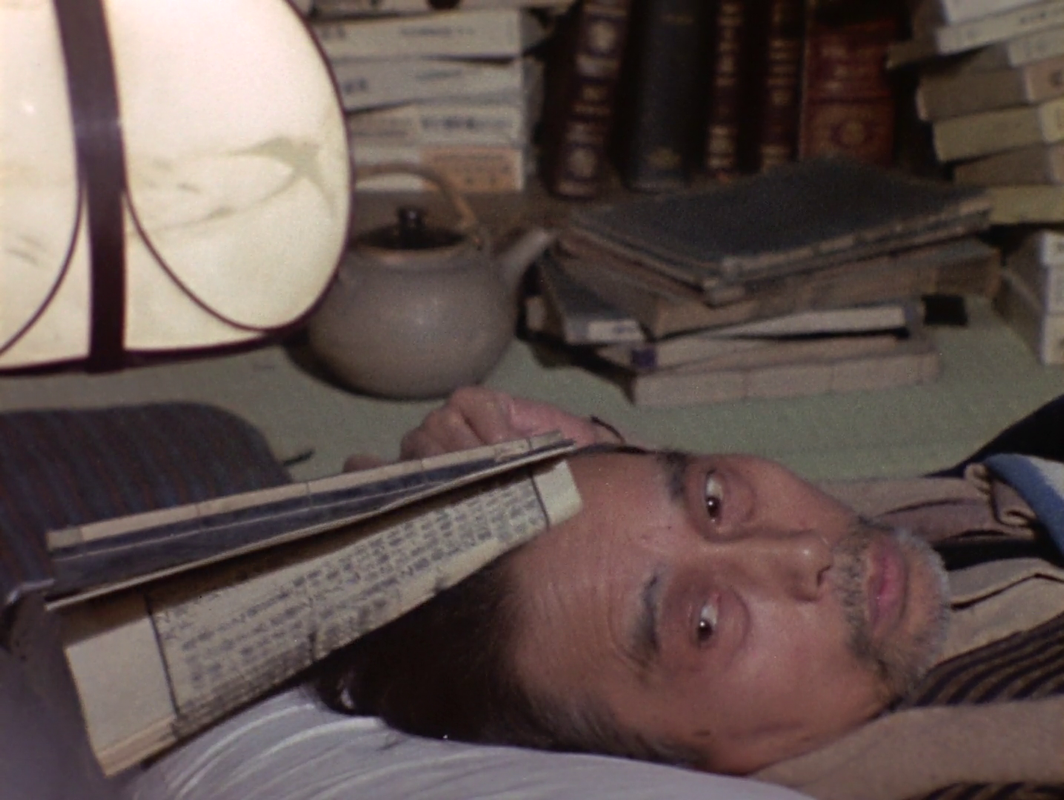
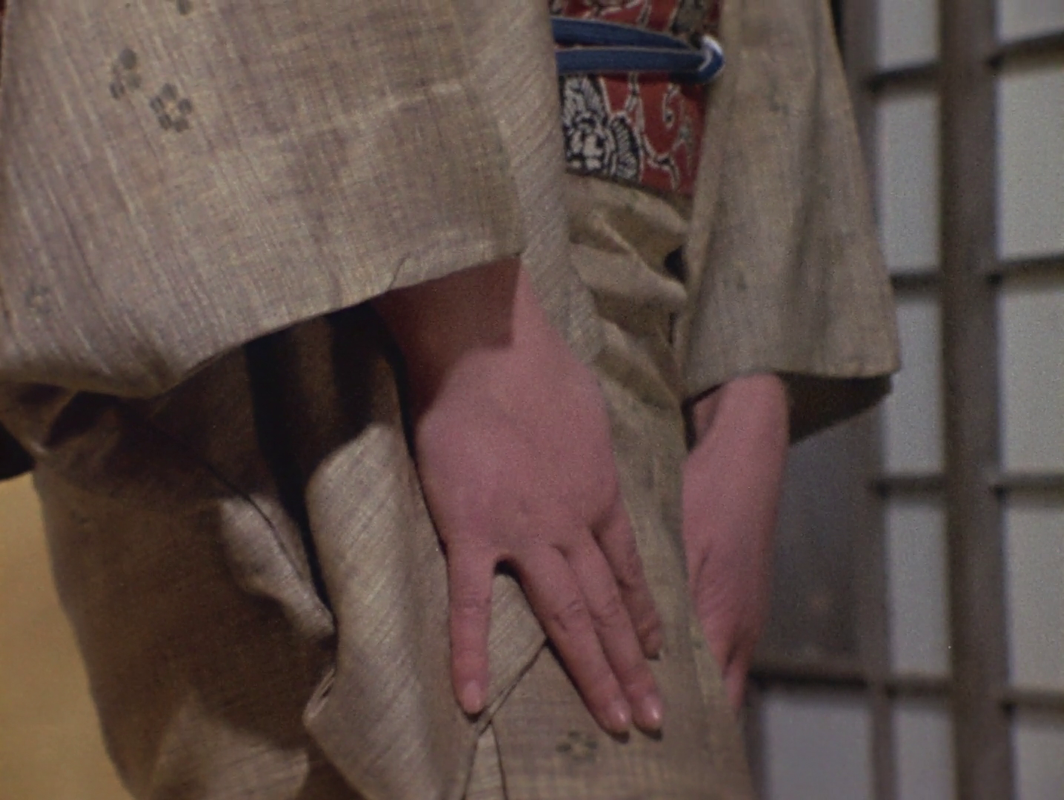
Shoko has no trouble fending the professor off –– he appears to be dying, and is in no shape to force Shoko into the "exchange" he proposes, taking the place of Shoko's dead husband and essentially stealing life from Shoko through sex, the way the mummy essentially vampirized his wife. But thanks to Misako Watanabe's deft performance (her last role in a Suzuki film), we feel that Shoko is moved by words to manifest their ideas in her mind. And the film makes it clear she is sexually deprived – she has remained chaste apart from her relationship with her husband, which lasted only a year and a half before he died. So as the professor urges her to make love, we can tell she is wavering.
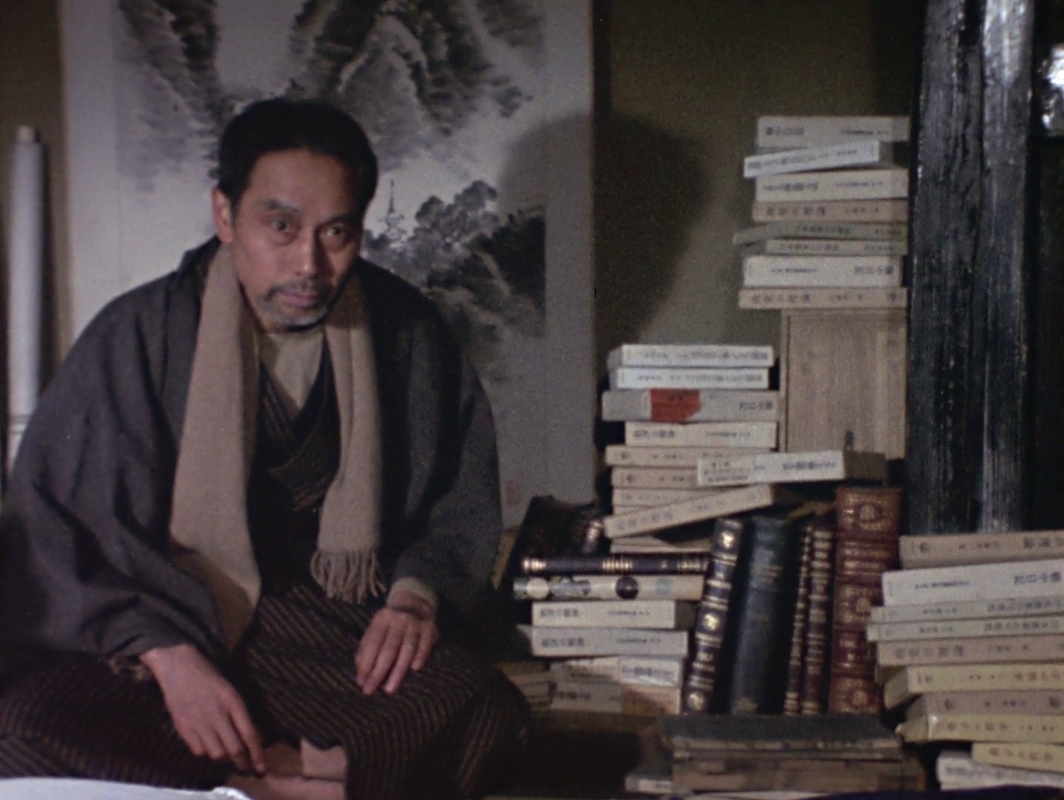
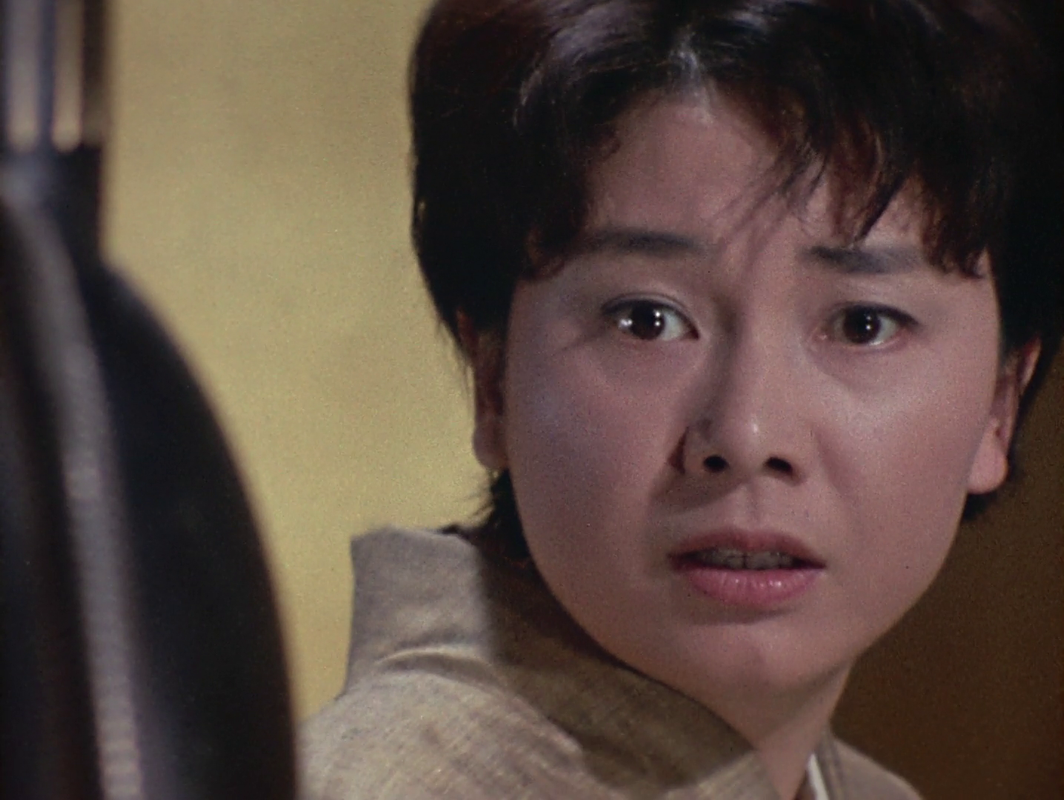
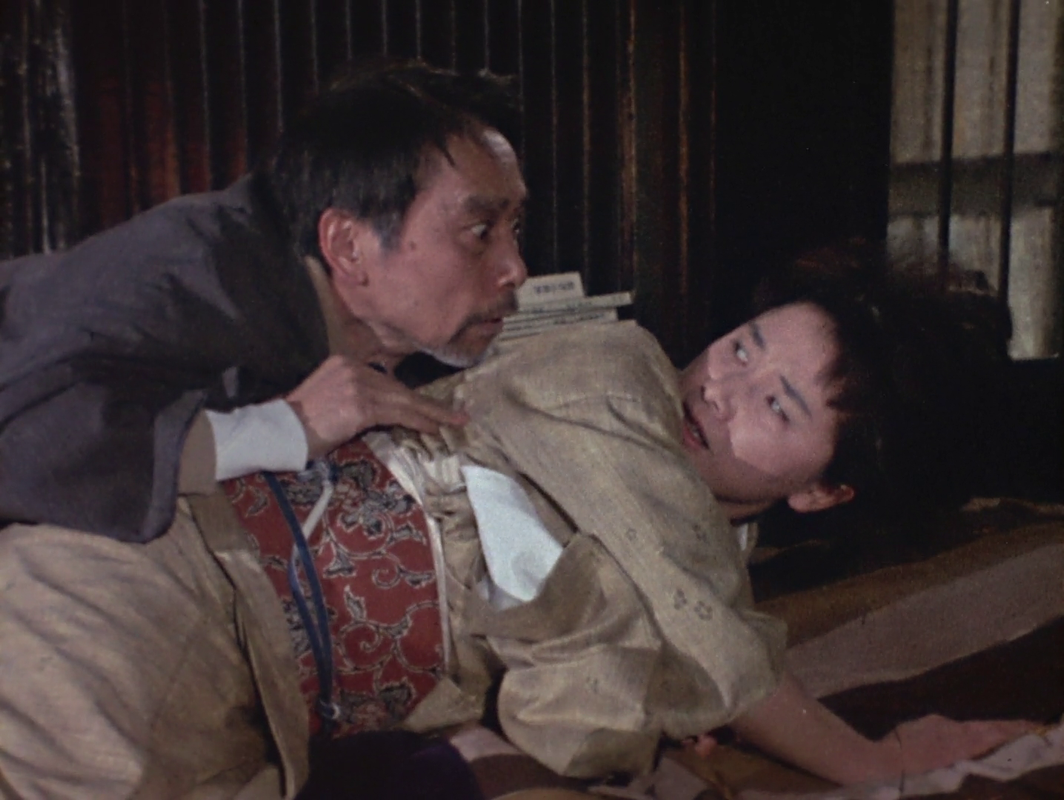
The professor says he believes her husband has returned to life, and that he himself can be her husband, and live again. Shoko is clearly in distress, compounded upon distress. What stops this going further is the professor doubling over in a coughing fit. His nursemaid, an actress who also played the wife of the mummy in the initial story, helps him painfully urinate, and Shoko escapes with her dignity intact.
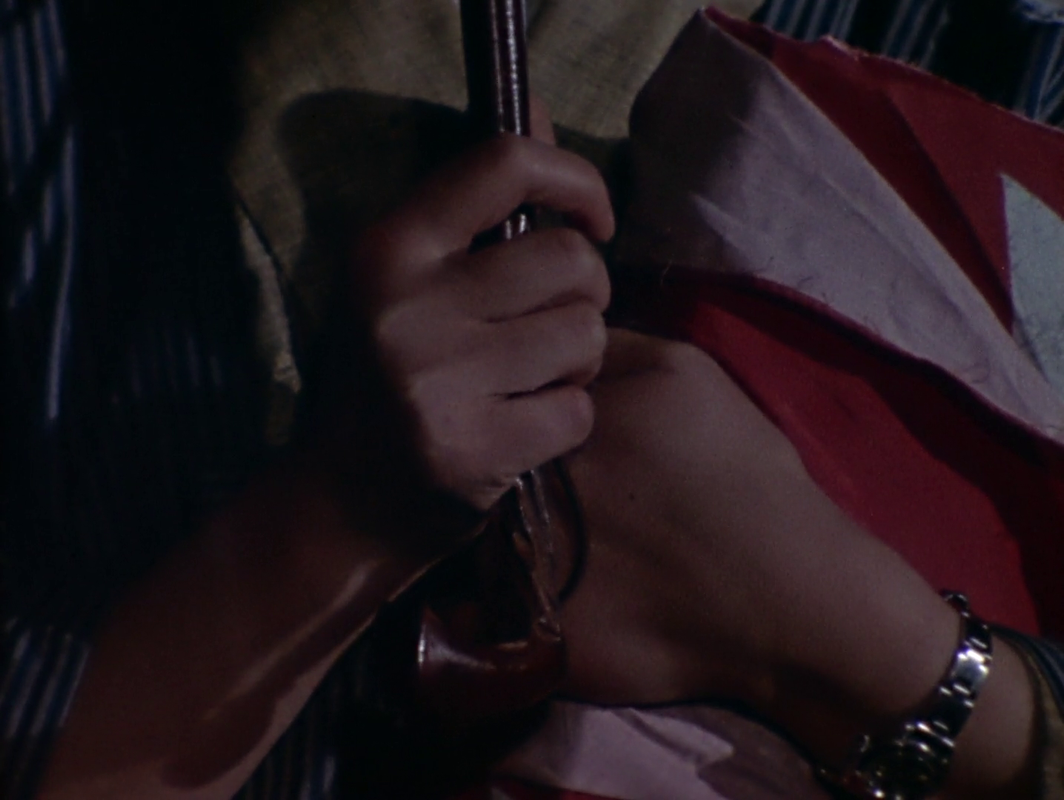
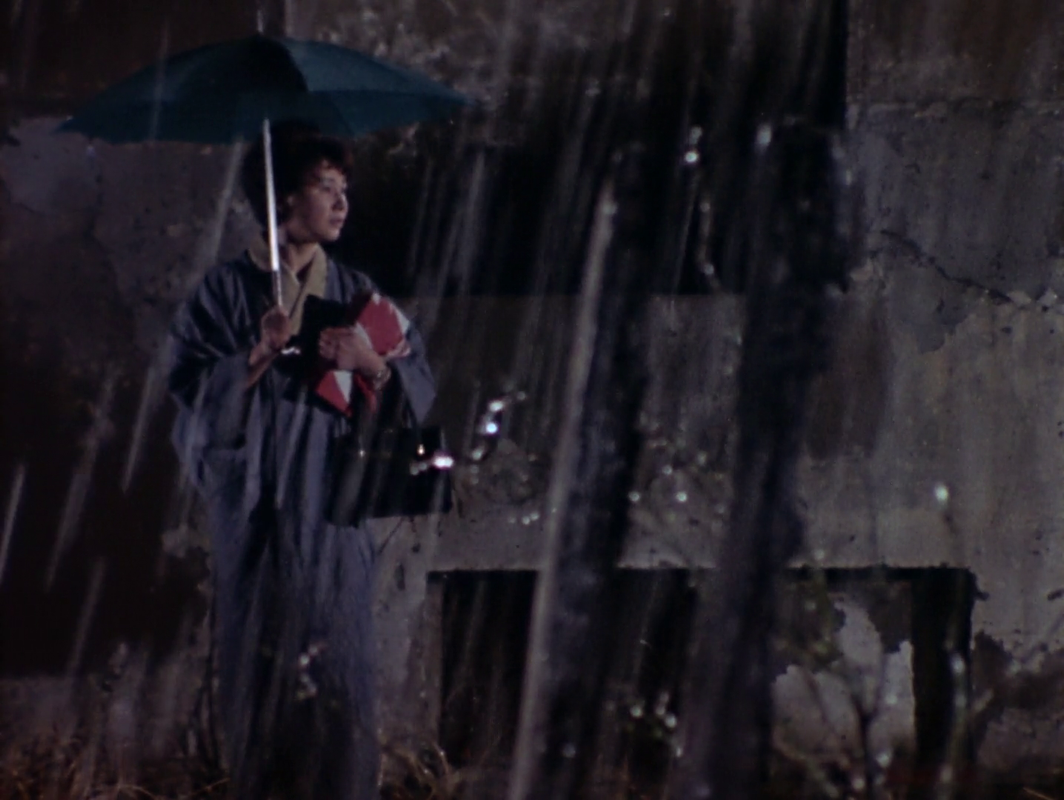
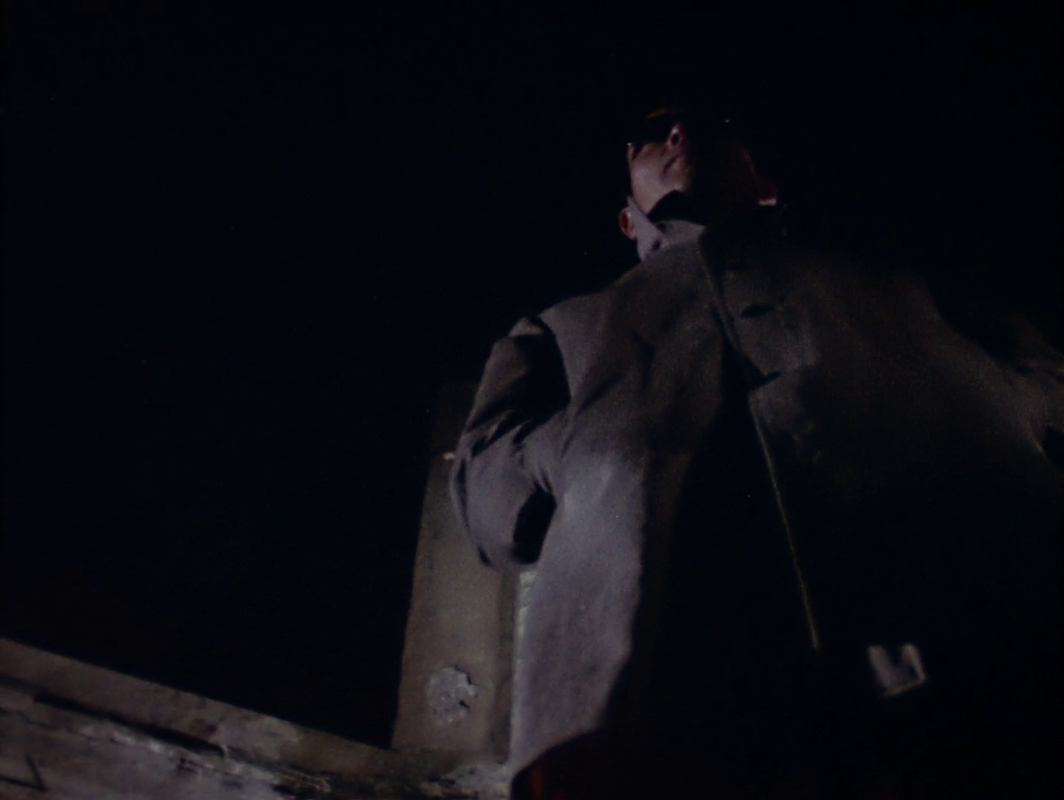
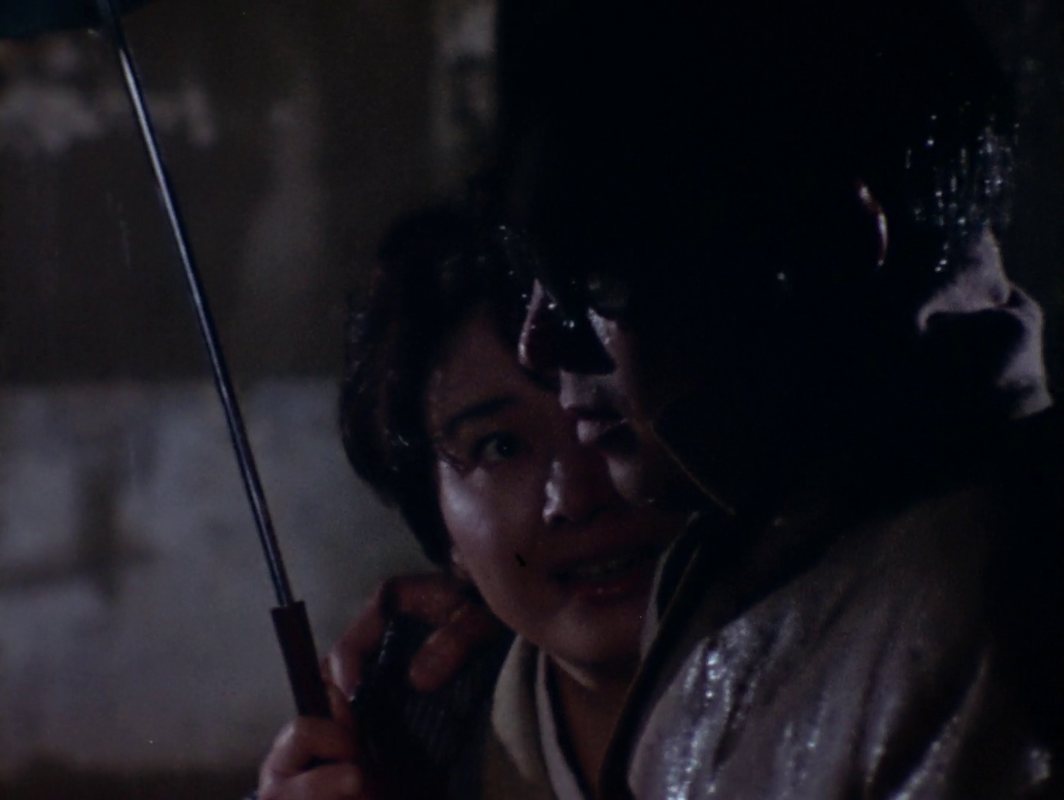
The film's final sequence draws everything together exceptionally well. Shoko walks out into the rain, and without thinking about it, crosses through the vacant lot where her husband died. A man in dark glasses and a large overcoat steps from the shadows and takes Shoko's hand.
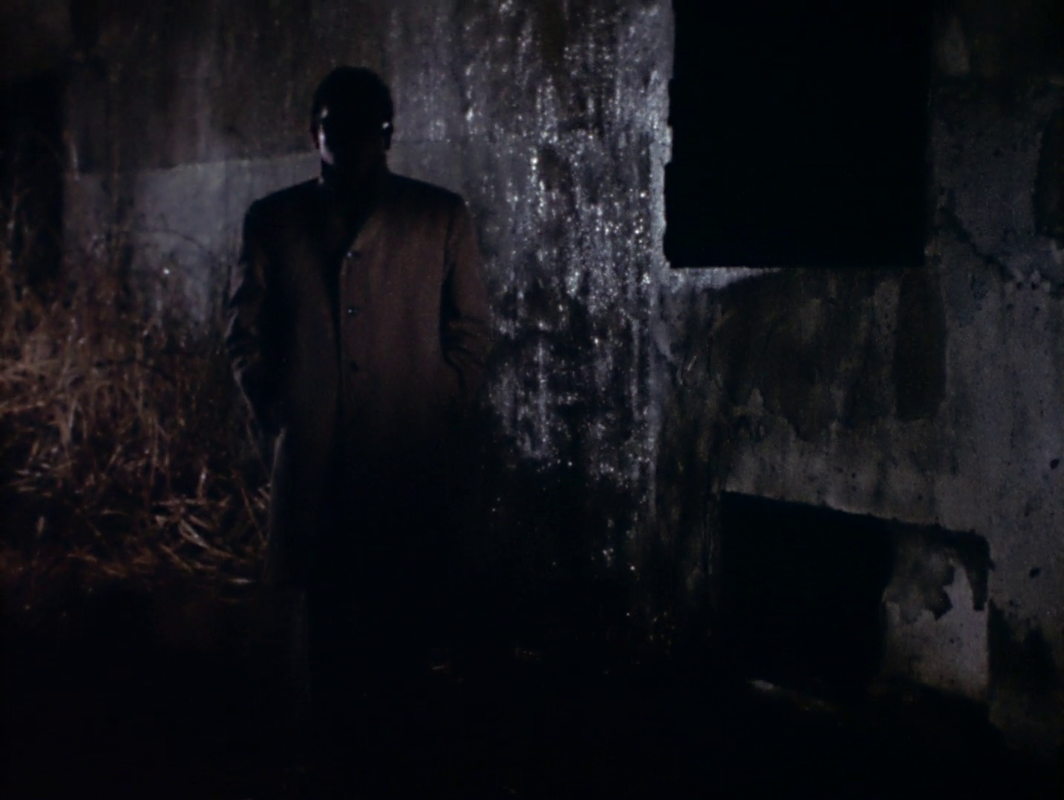
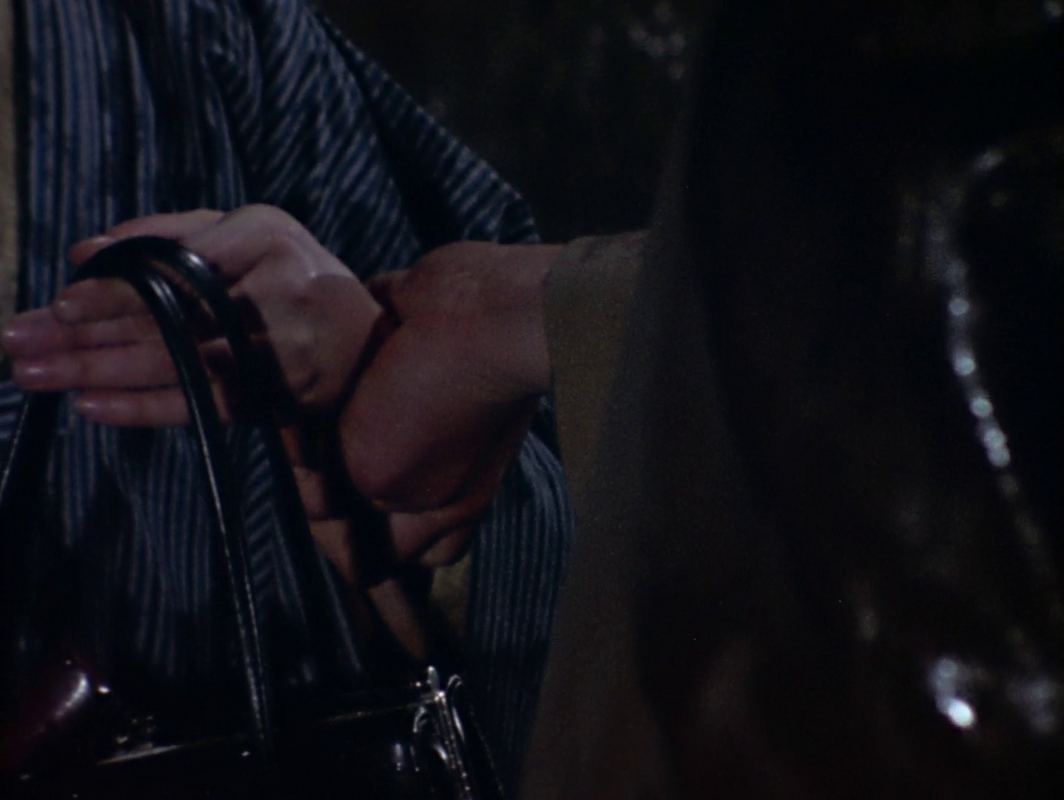
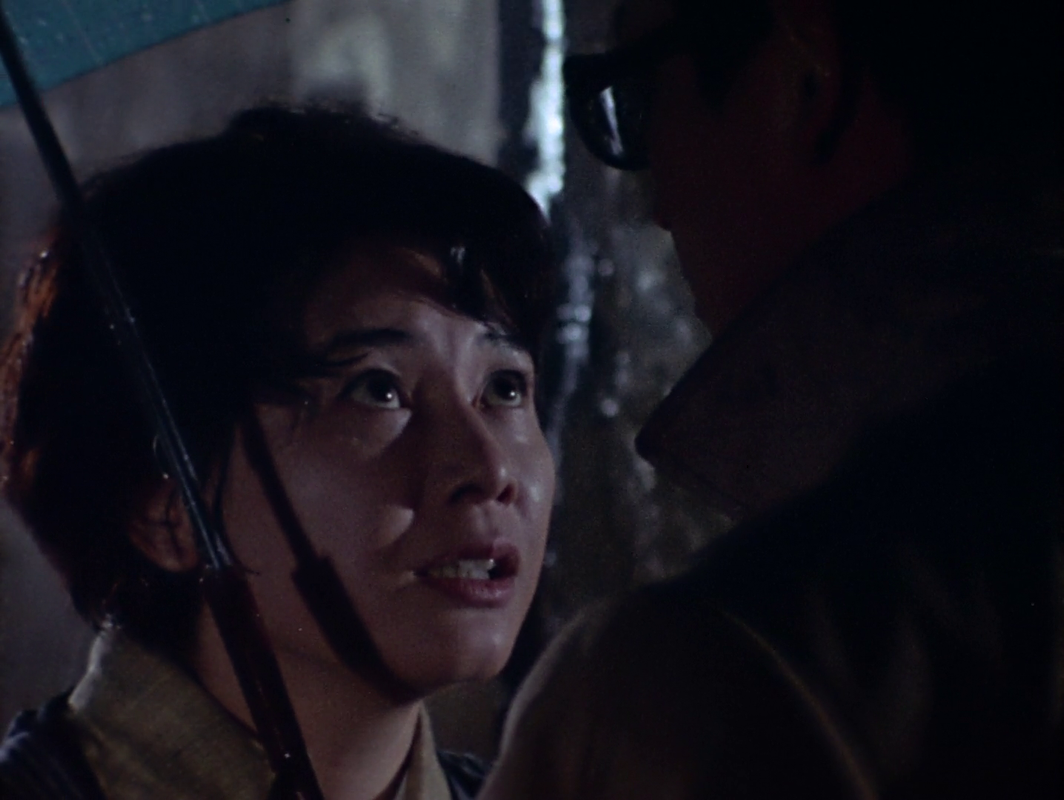
Shoko looks at him and seems to take it that this is her husband, returned to her. Even though this section of the film is past the Enchi adaptation, it's interesting that the sepulchral romantic/erotic drama that unfolds within Shoko in this scene is so redolent of one of Enchi's recurring interests, an older woman's sexuality. Shoko's loneliness and need emerges in a heated exchange.
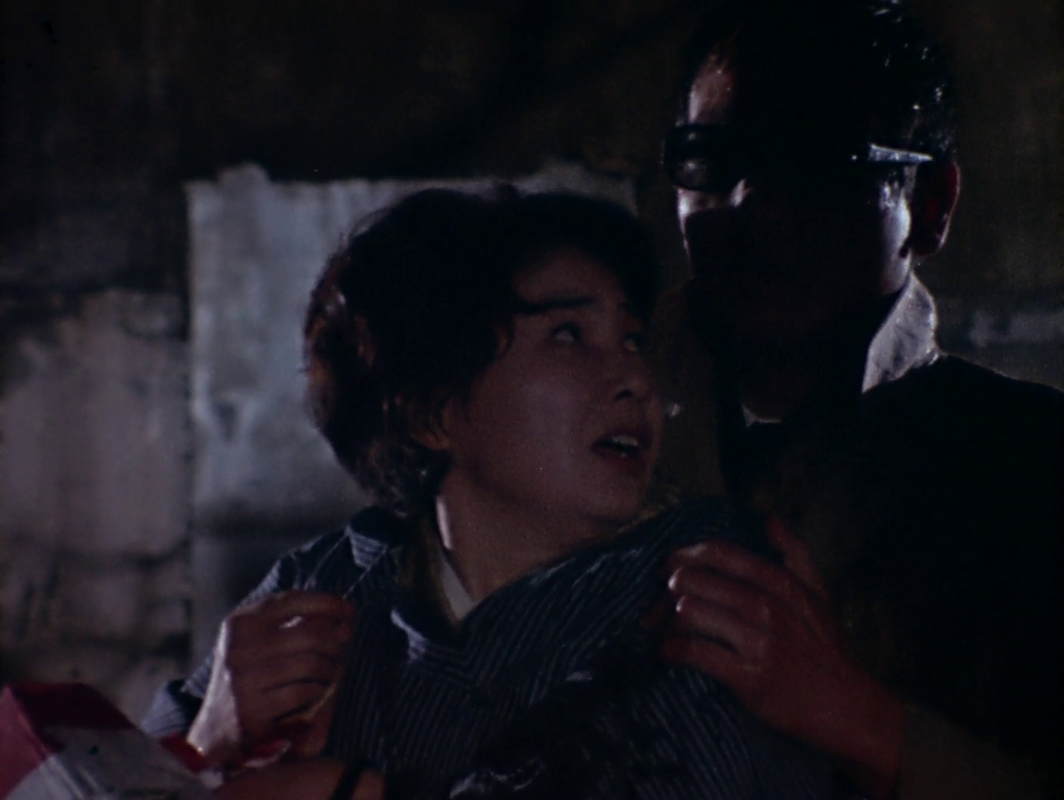
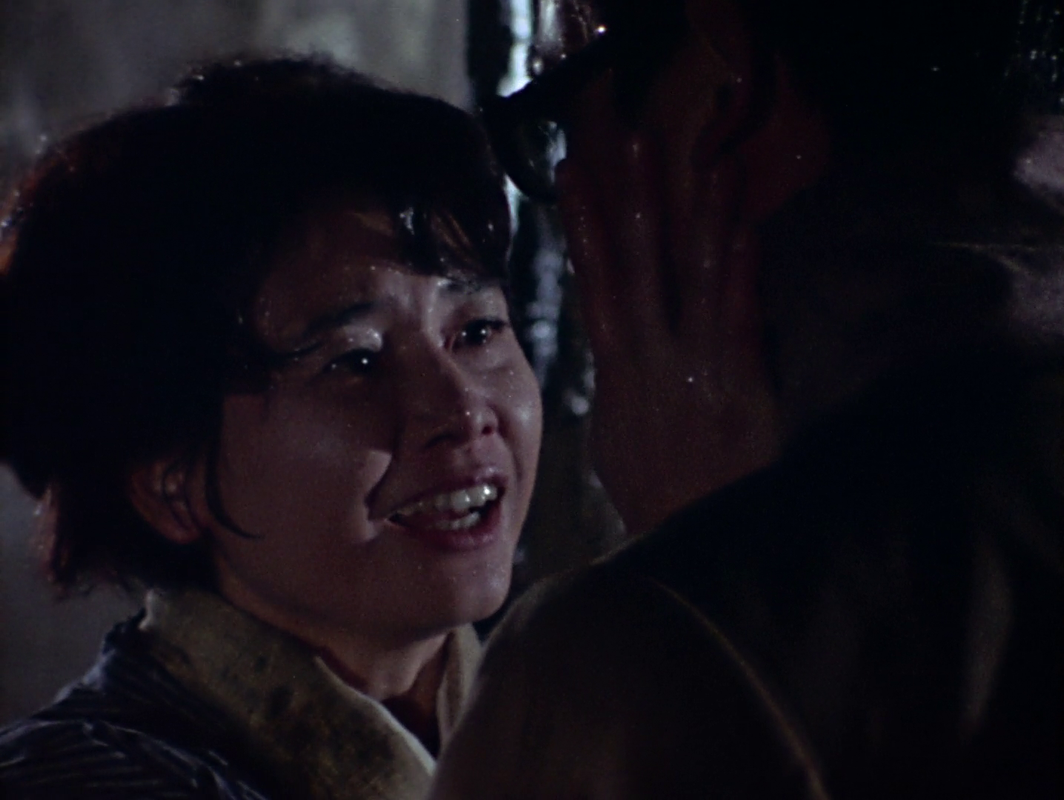
"I know you! You're the man I love!"
"That's right. These are the immaculate treasures that only you knew!"
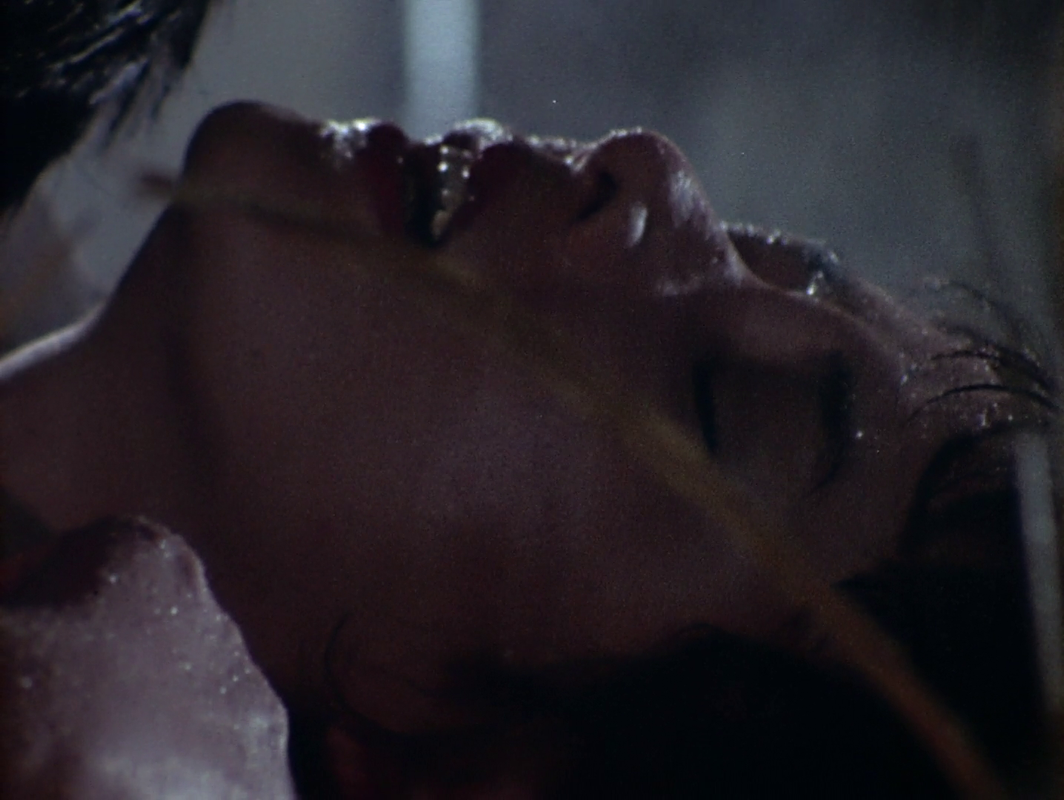
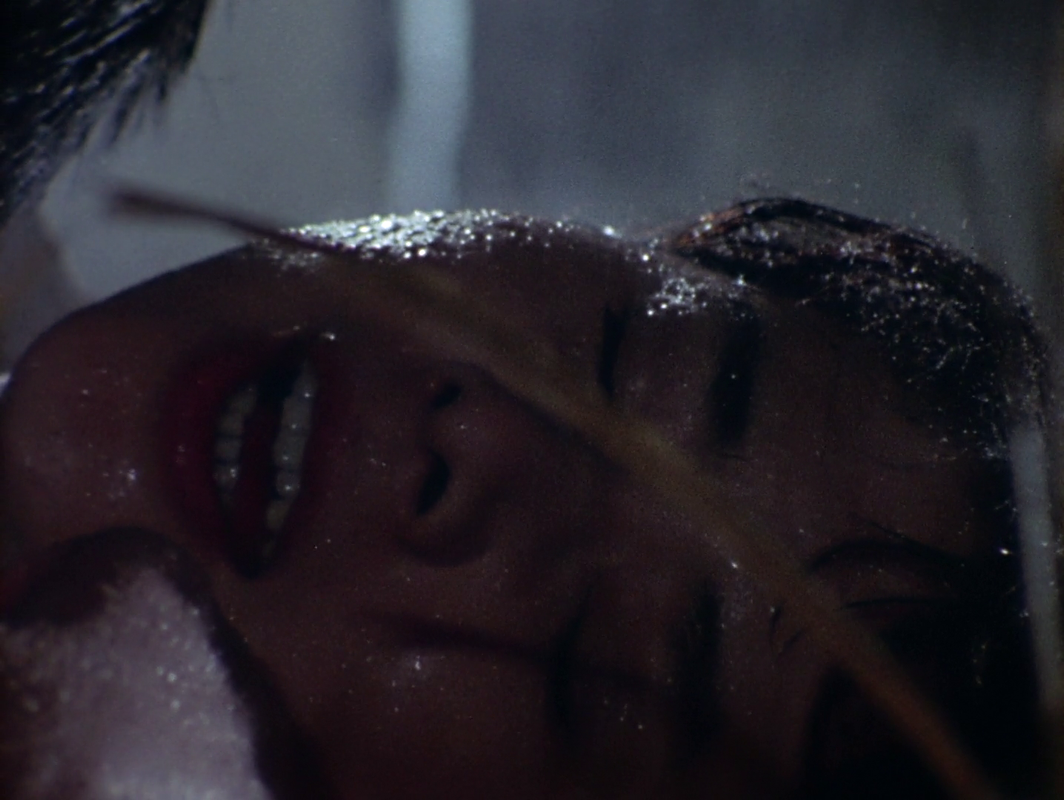
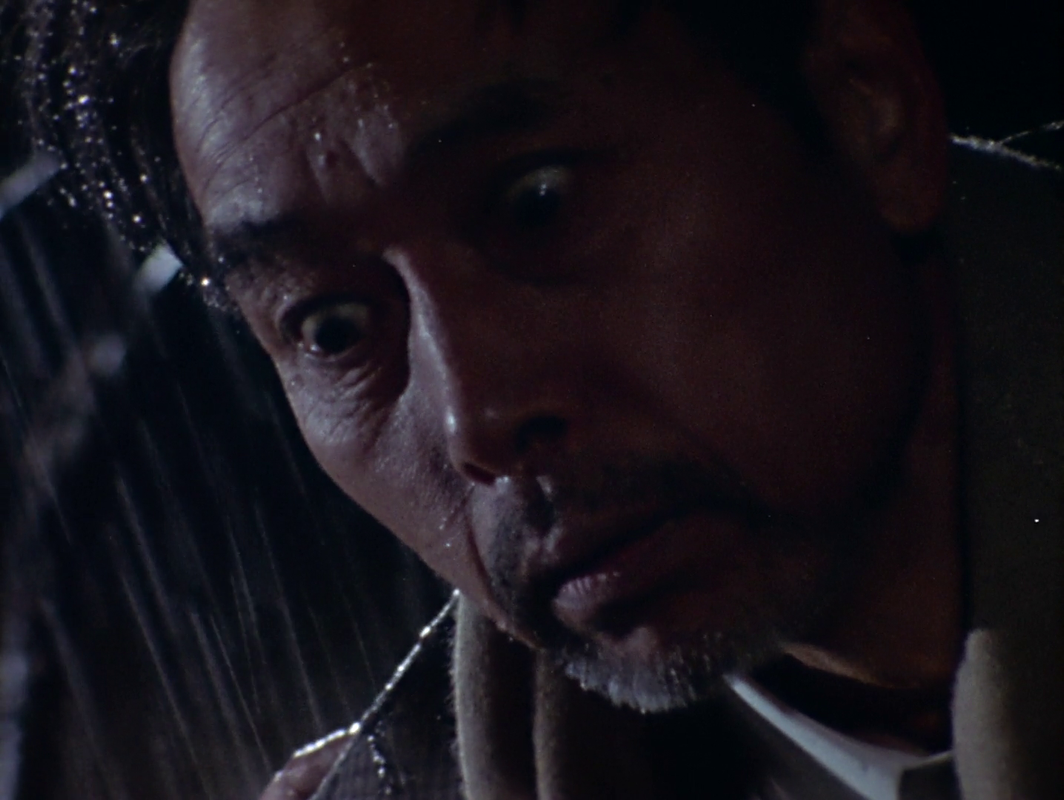
Overcome with the situation, Shoko surrenders to her husband's embrace, only to see as the sunglasses fall from his face, that she's in the arms of the professor! She retreats, and her engagement photo burns away before our eyes, and the apparition of husband/professor vanishes.
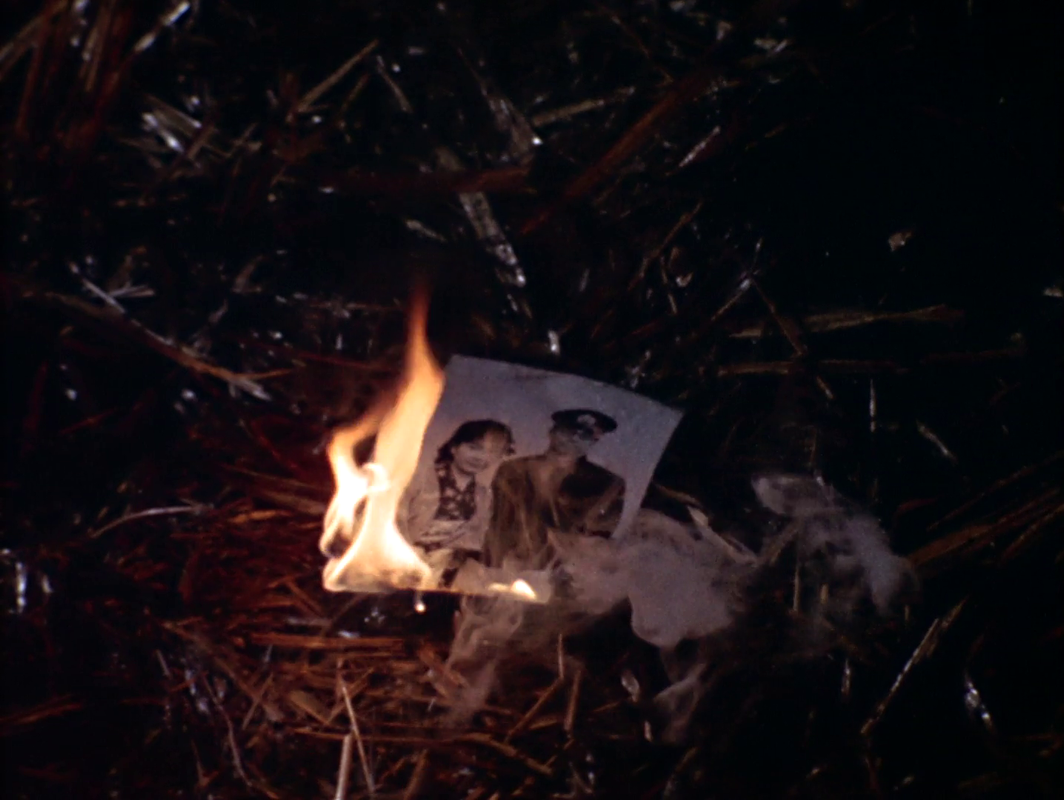
In the last few seconds of the story, the professor's nursemaid arrives and tells Shoko the professor died at home, moments before, suffering from a prolonged attack from when Shoko left.
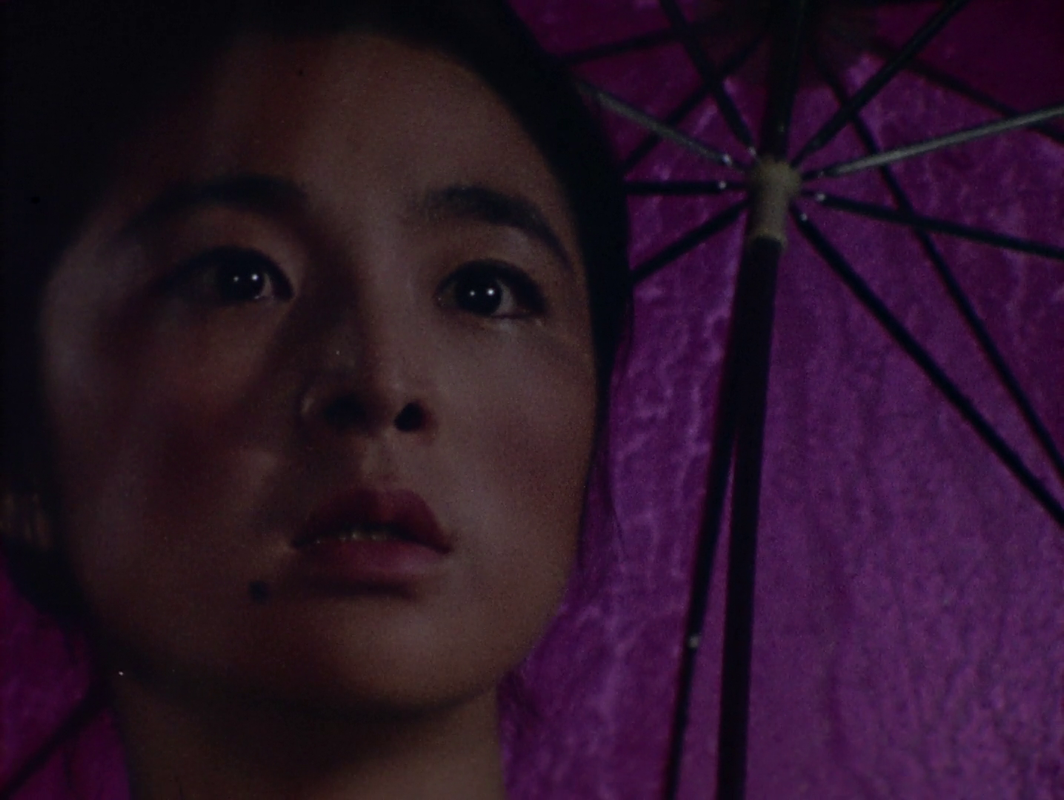
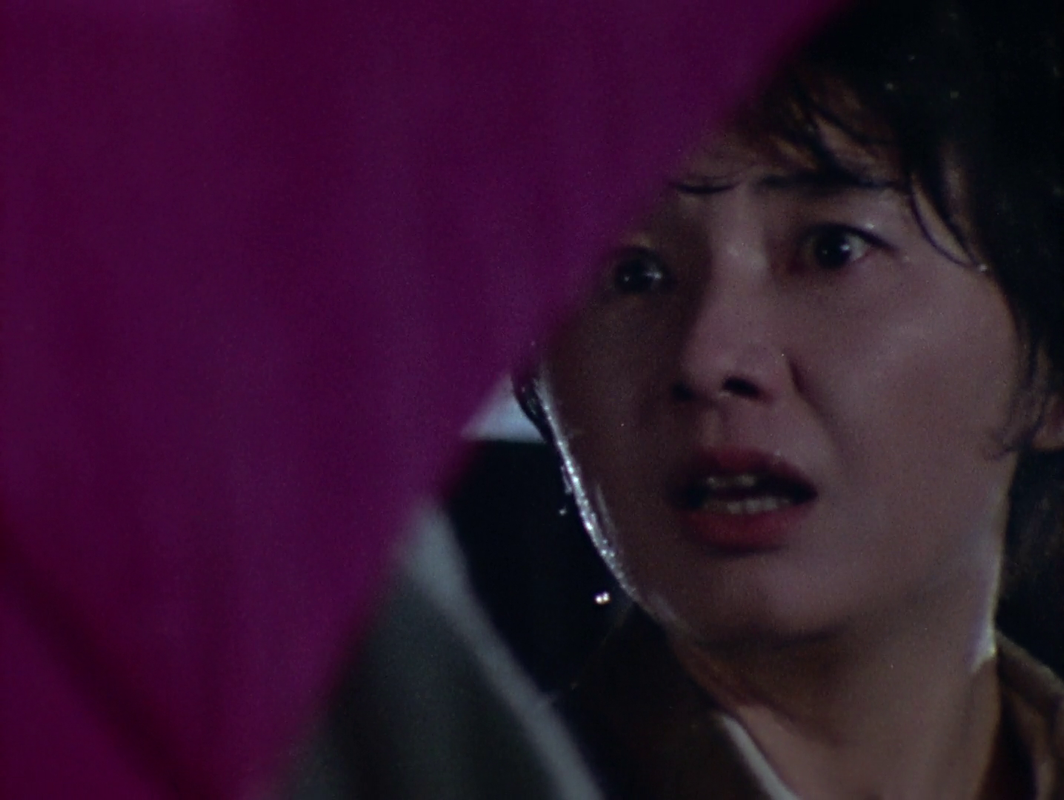
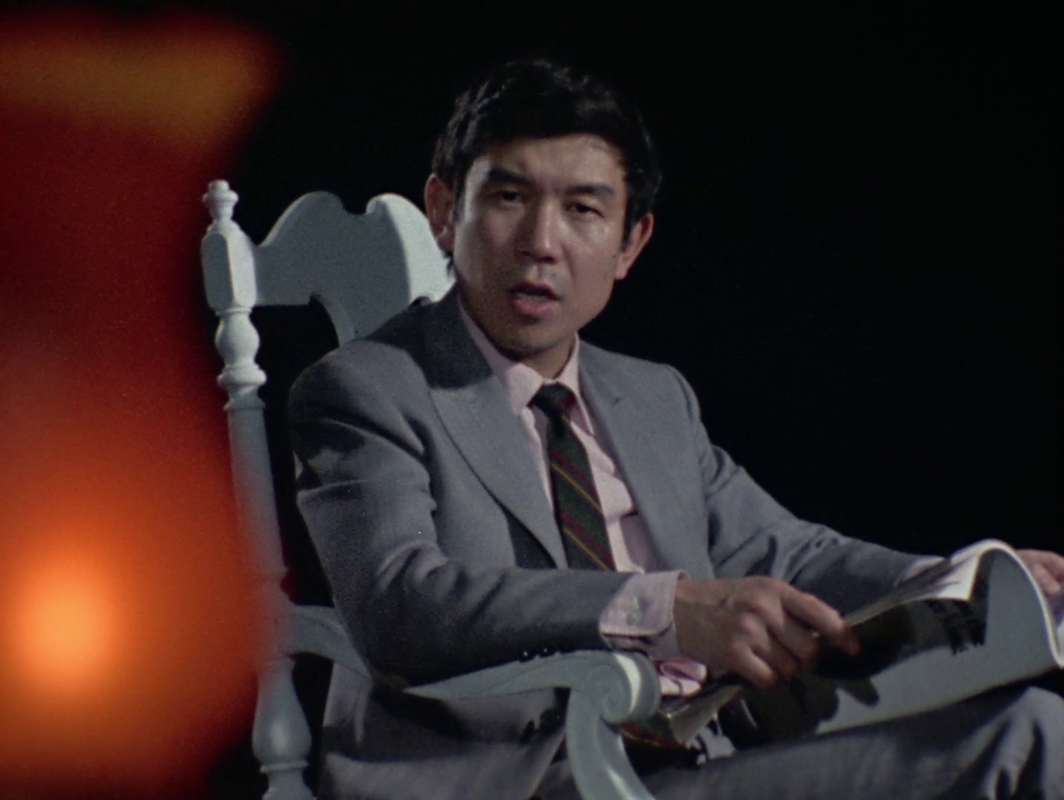
We cut back to the future governor of Tokyo, who raises an eyebrow and asks, "well, and what did you make of that?" What, indeed was real, beyond a widow's loneliness and erotic need awakened by an encounter with fiction, death, and the possibility of sex?
THE DISC
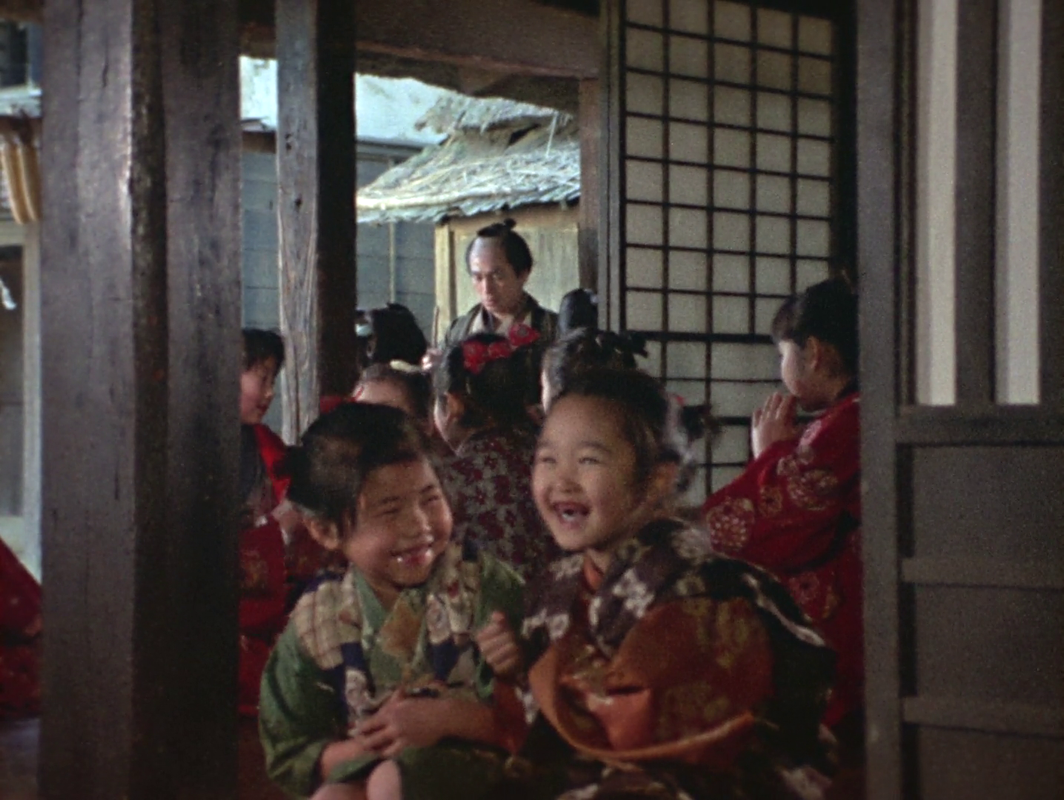
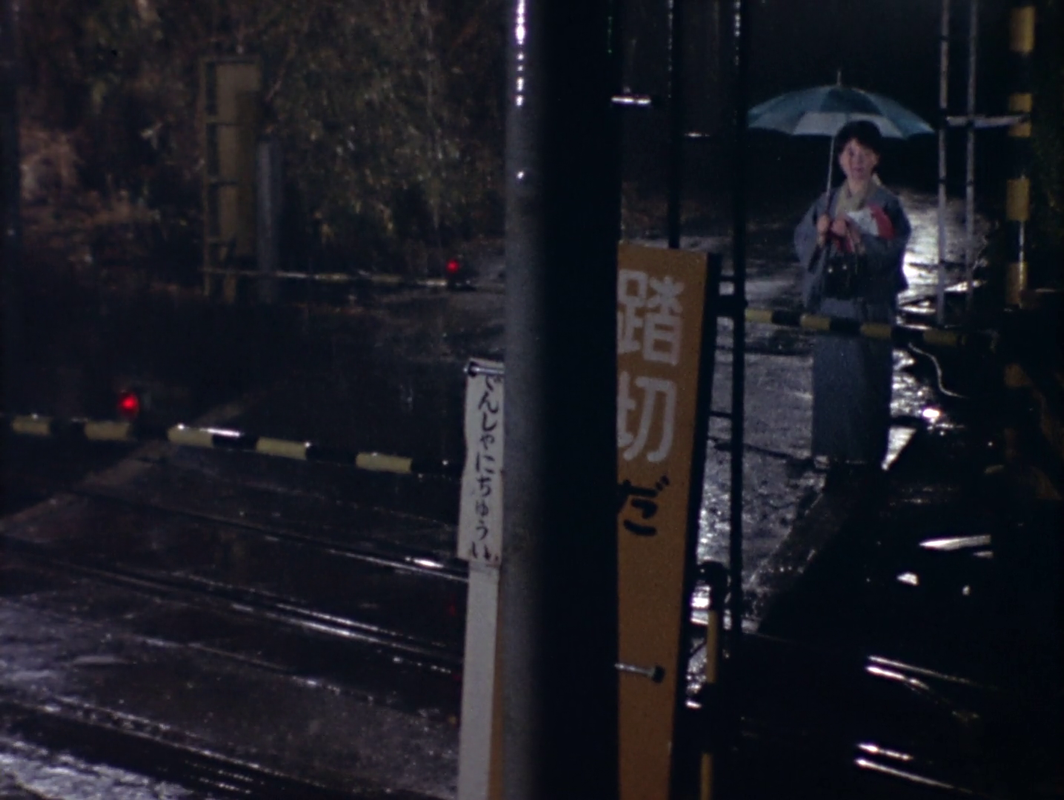
This whole series is only 13 episodes, all of about 45 minutes in length. Toei Video put these together in a 4-bluray set. The quality is...pretty awesome? Probably the best we can expect to get from a show shot in 1973 at the latest. No English subtitles, and the set is quite expensive, and there are no fansubs for the other 12 episodes. Also, I can't tell for sure, but it looks like episodes 10 and 13 might be incomplete. The language makes it look like they have excerpts of those episodes.
CINEMATOGRAPHY
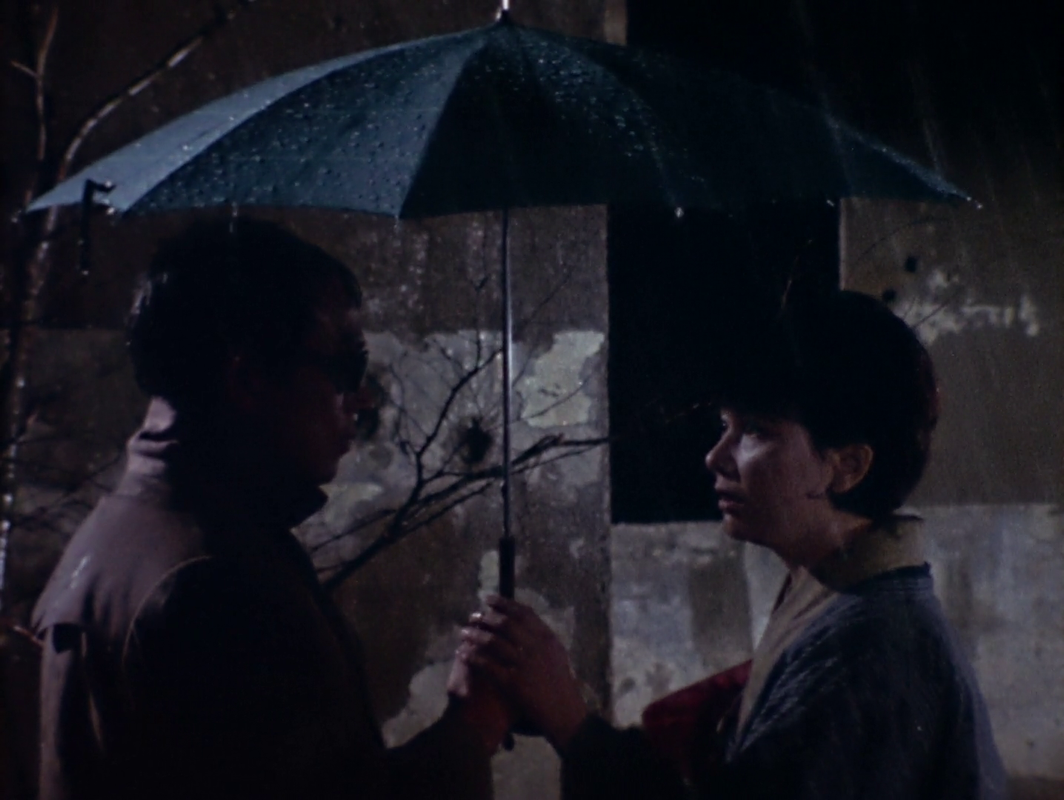
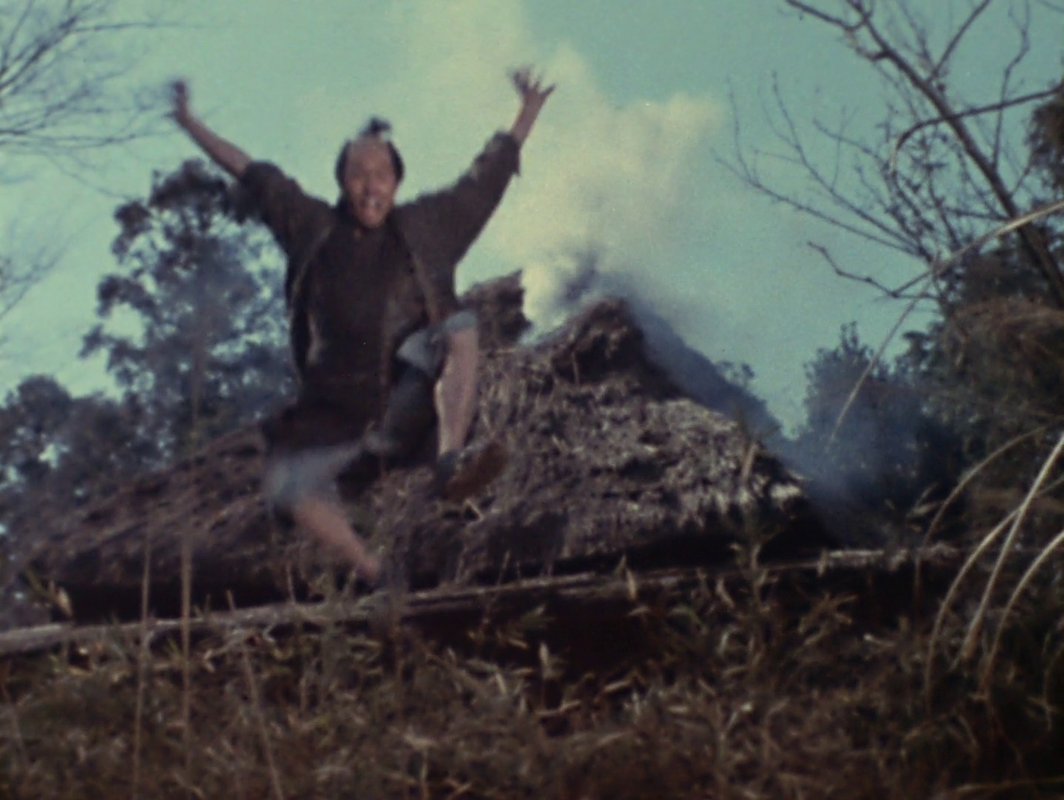
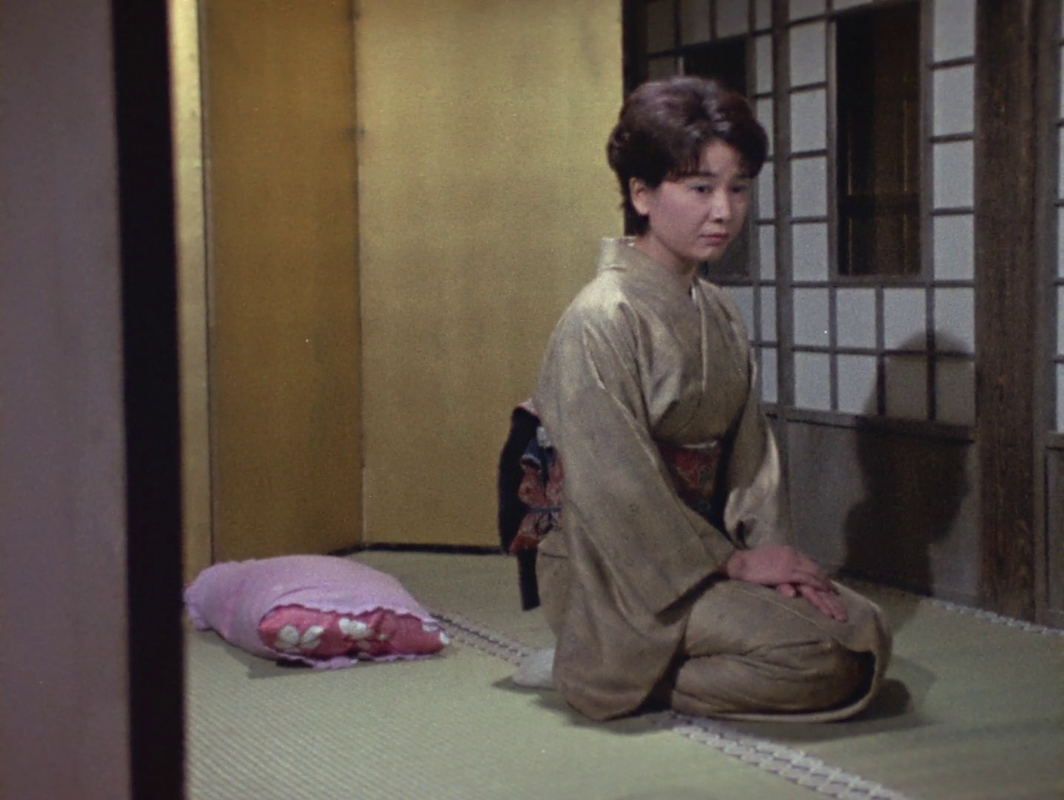
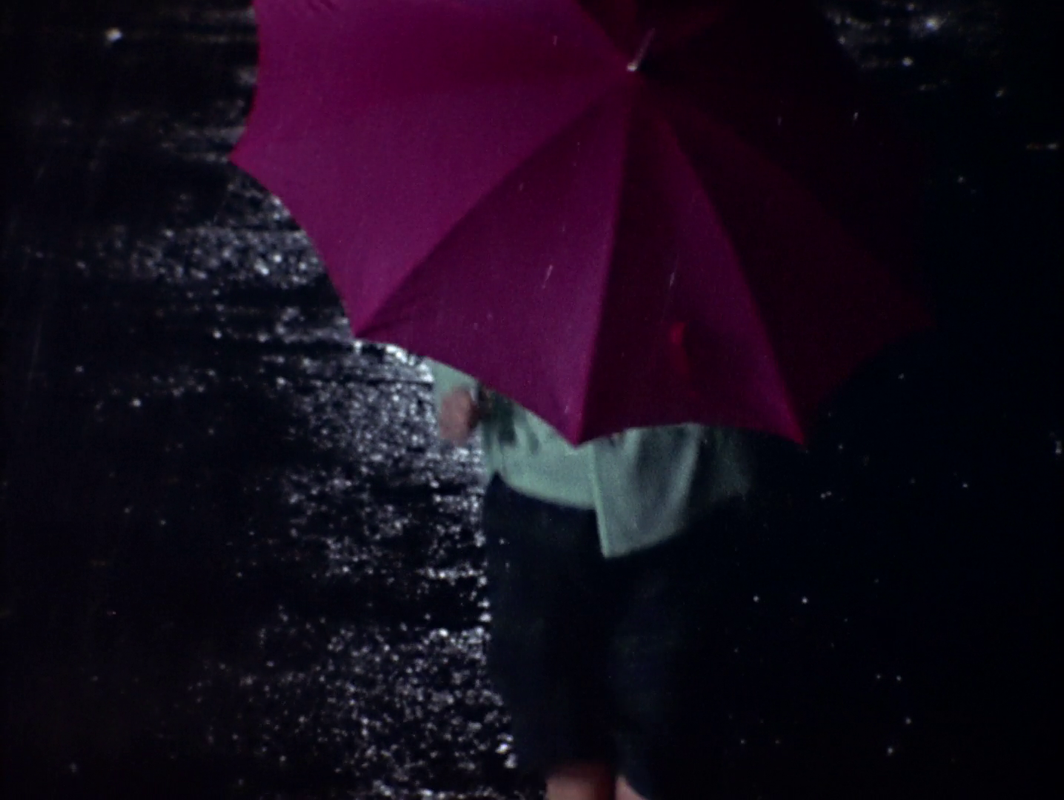
Yoshihiro Mori is the cinematographer for the production. There's very little listed about this guy, but he seems to be a very active TV cinematographer of the era. His long-running credits are for Wild 7, a popular 70s show about fascist bikers turned cops, and a show called Army of Apes, apparently a rip-off of Conquest of the Planet of the Apes. In an interview Suzuki complains about the quality of color on television productions.
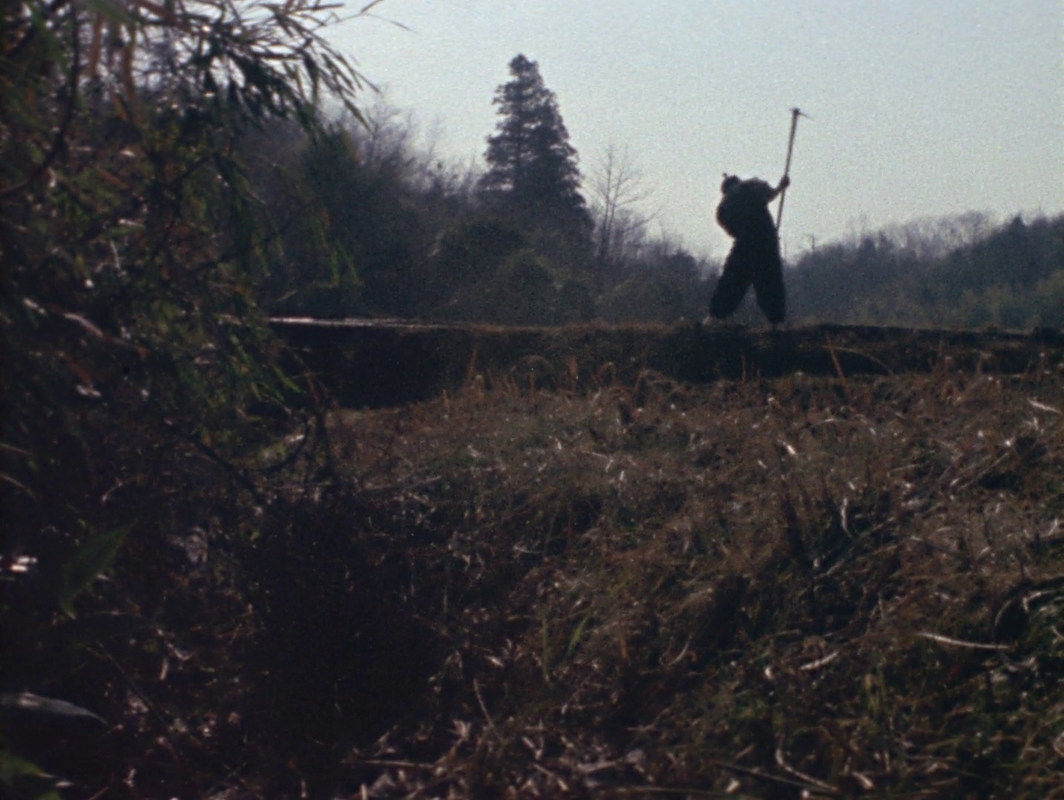
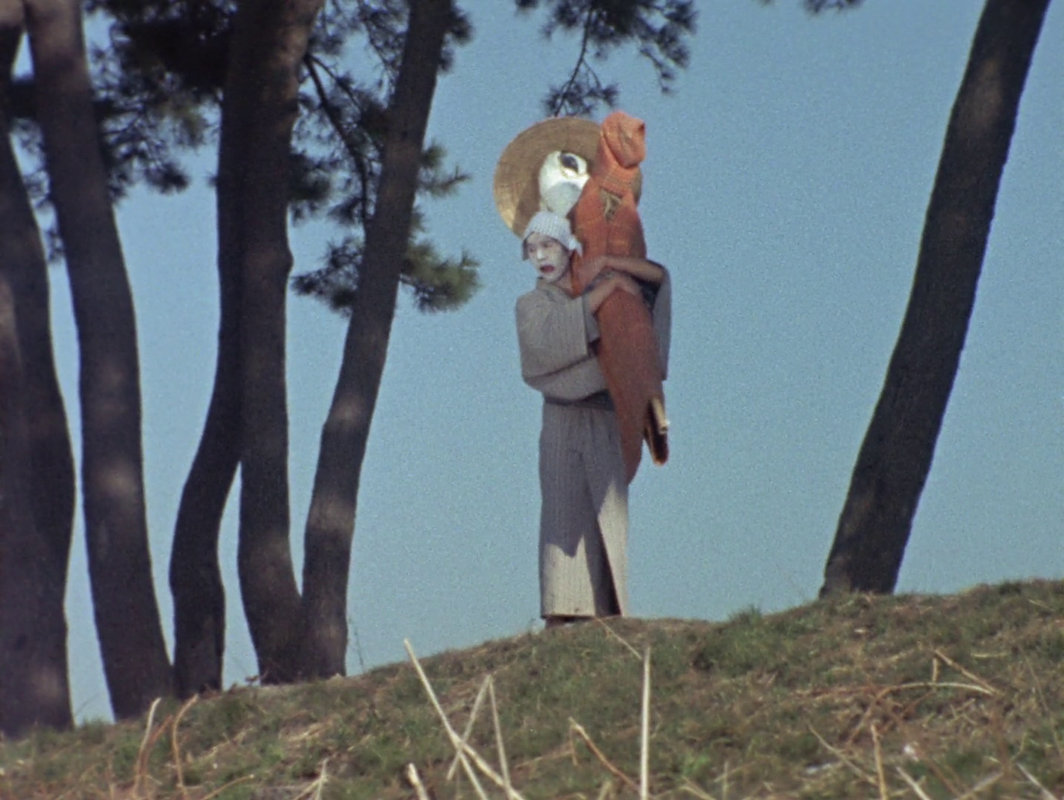
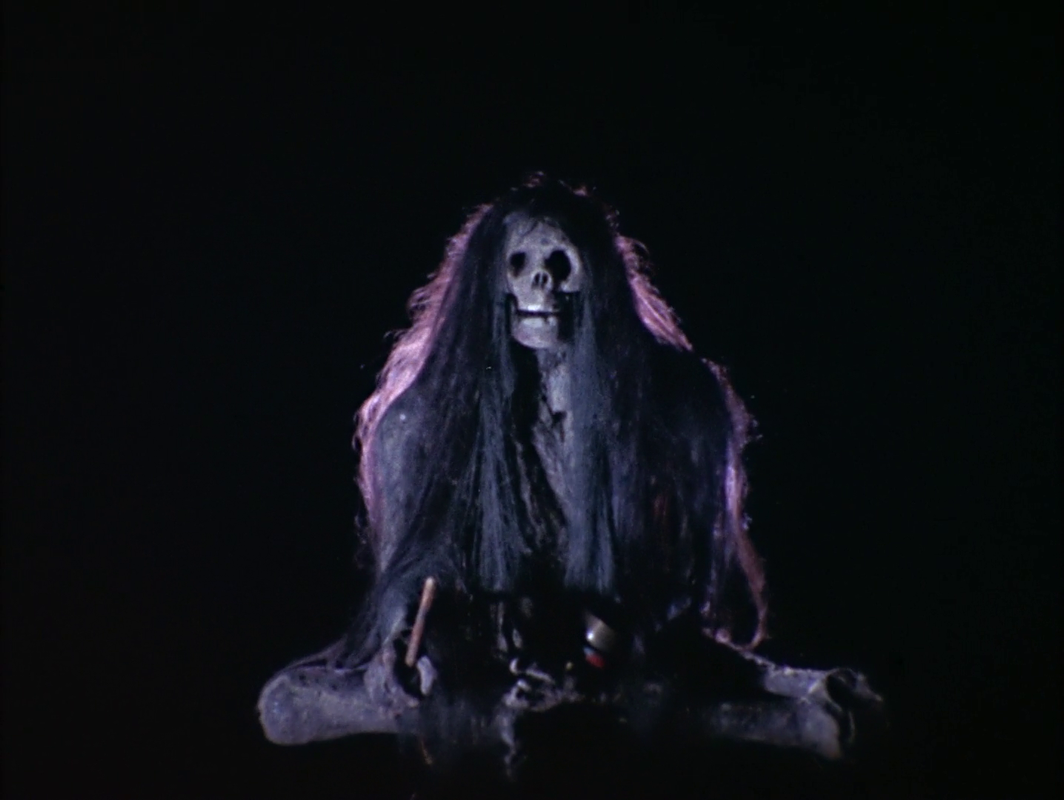
From the bluray it's clear A Mummy's love was shot with very precise and artistic color choices, of the kind we'd see in Zigeunerweisen and Mirage Theater later on. The standard color palette is greyed-down and altogether brownish, and Suzuki saves the intense color effects for the most supernatural happenings. When we get into Shoko's story, she is sitting in front of a muted gold screen. Later on in the vacant lot the color of Shoko's umbrella is an indicator of the magic experience she's about to encounter. I can imagine broadcasting in 1973, some of the intense colors Suzuki wanted for the hauntings probably rendered poorly. He could also have been talking about The Fang in the Hole, which utilizes an intense green in the background for most of the film. But the frustration sounded very general on Suzuki's part.
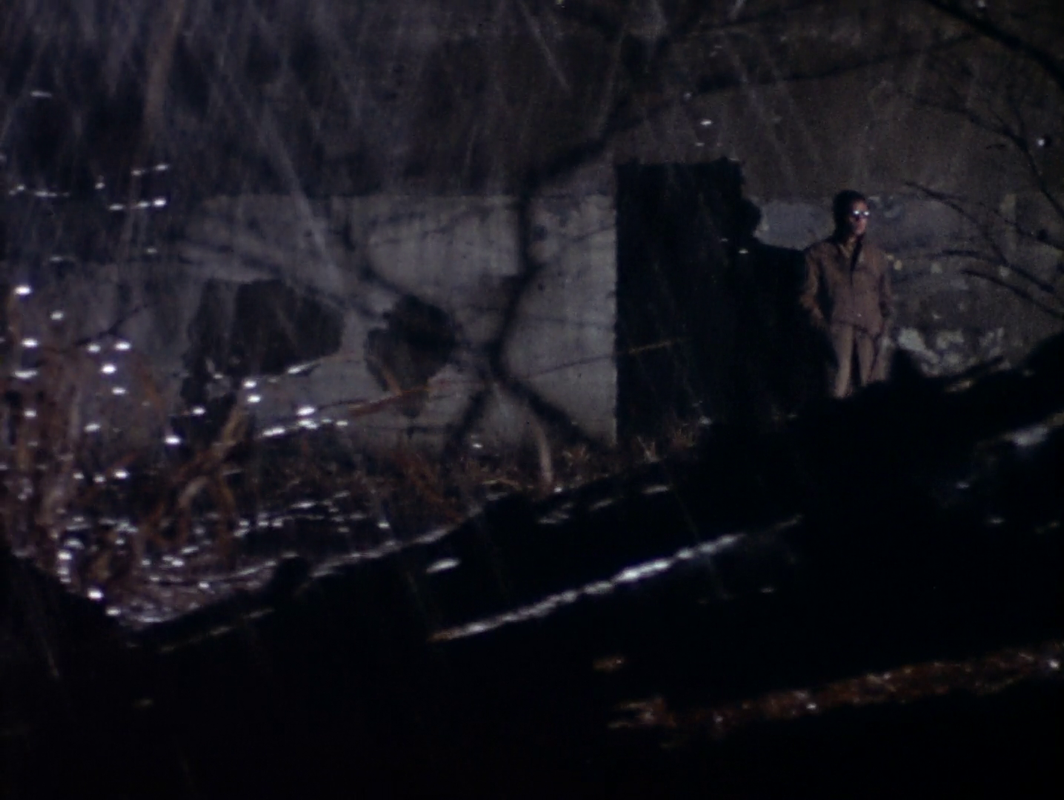
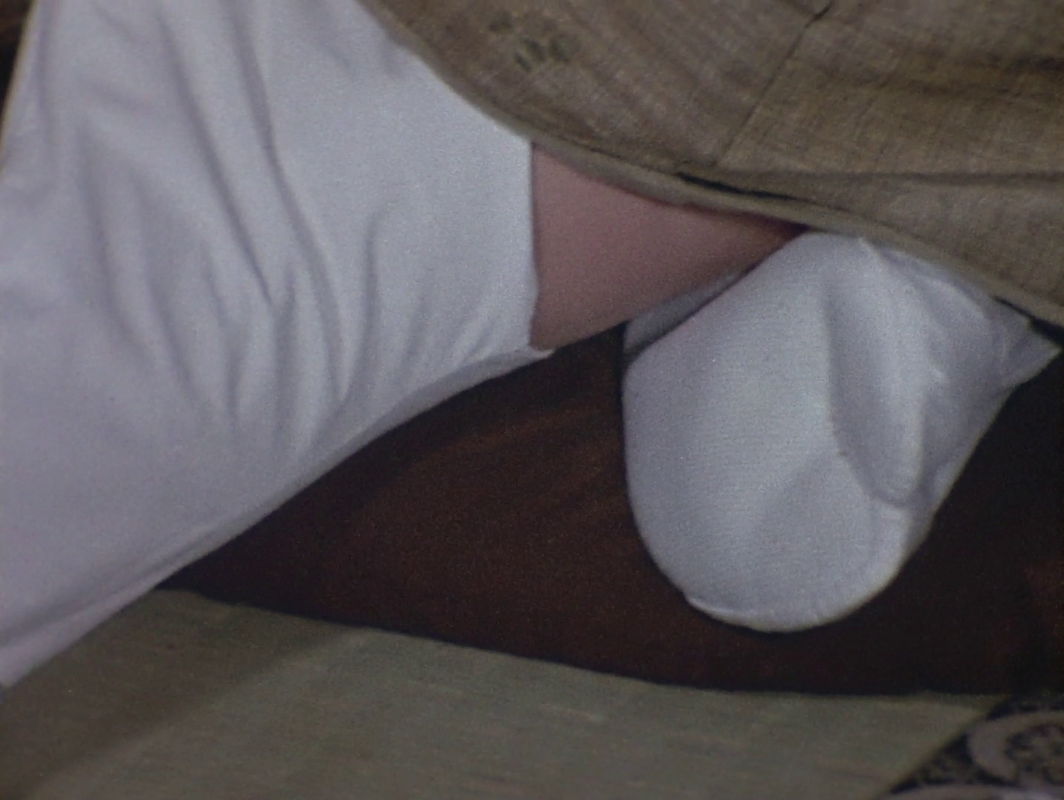
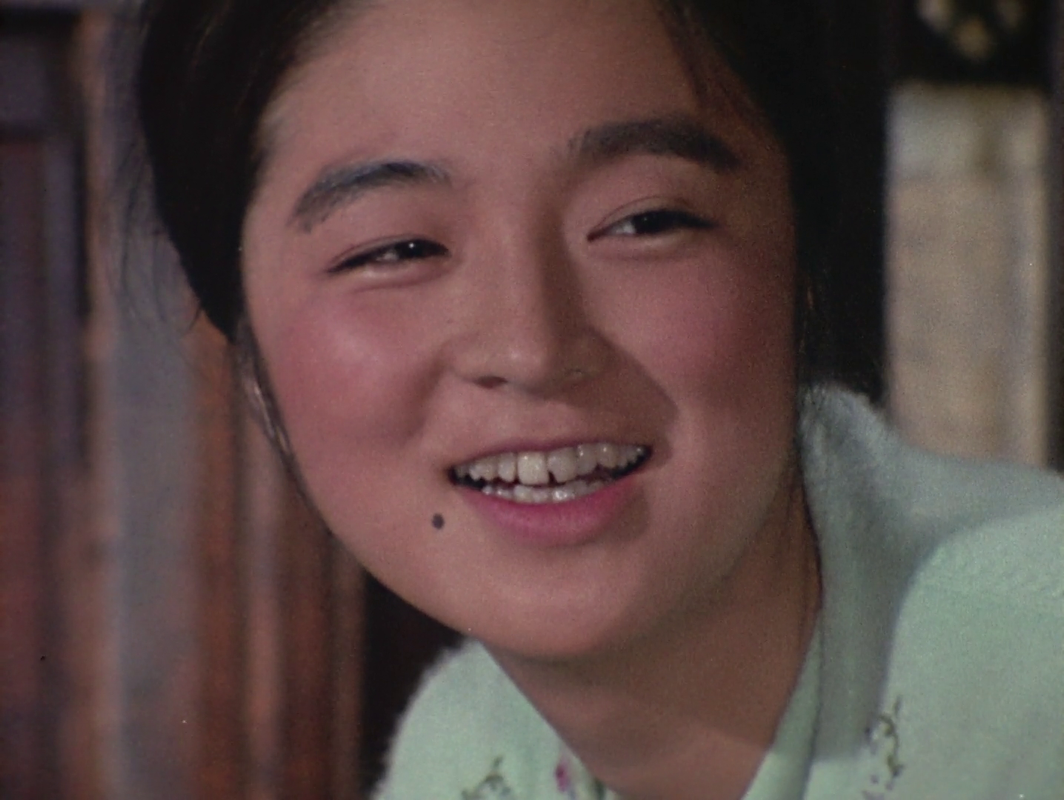
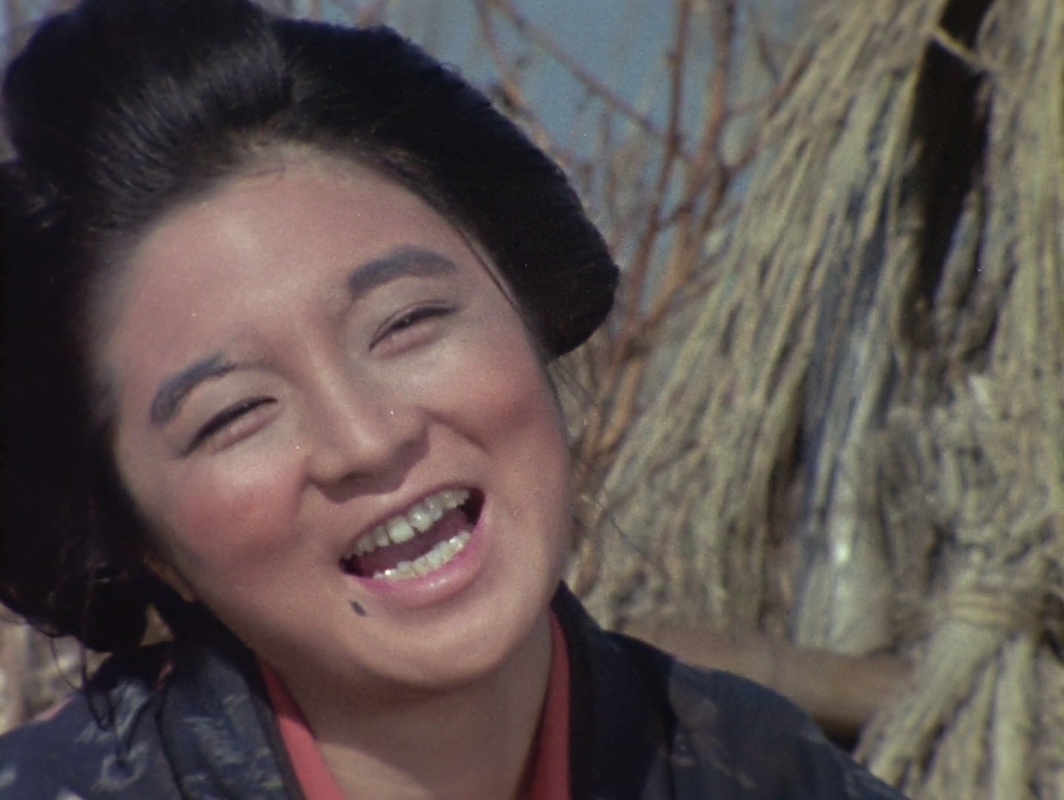
So obviously, there isn't much to point out specifically about Mori's work, except to say that the film has the visual qualities one associates with a Suzuki picture by this point –– Tight, angular framing, rich, Sternbergian closeups, expressionistic, pop-art handling of color, and occasionally surprising camera effects seemingly outside the mode of Suzuki's normal repertoire, like the hand-held footage of the soccer game with the corpse, which also is show with a bizarre lens full of blurry occlusions for some reason. Things which normally seem like the result of Kazue Nagatsuka's involvement, like the complex background shadows and silhouettes through screens turn out to have become the kind of thing Suzuki can get from a definitively TV-grade cinematographer as readily as from his Nikkatsu-era cinematic pros. It seems clear Suzuki––well known for asking associates of any rank for artistic contributions––is very purposefully crafting the visualization of the movie.
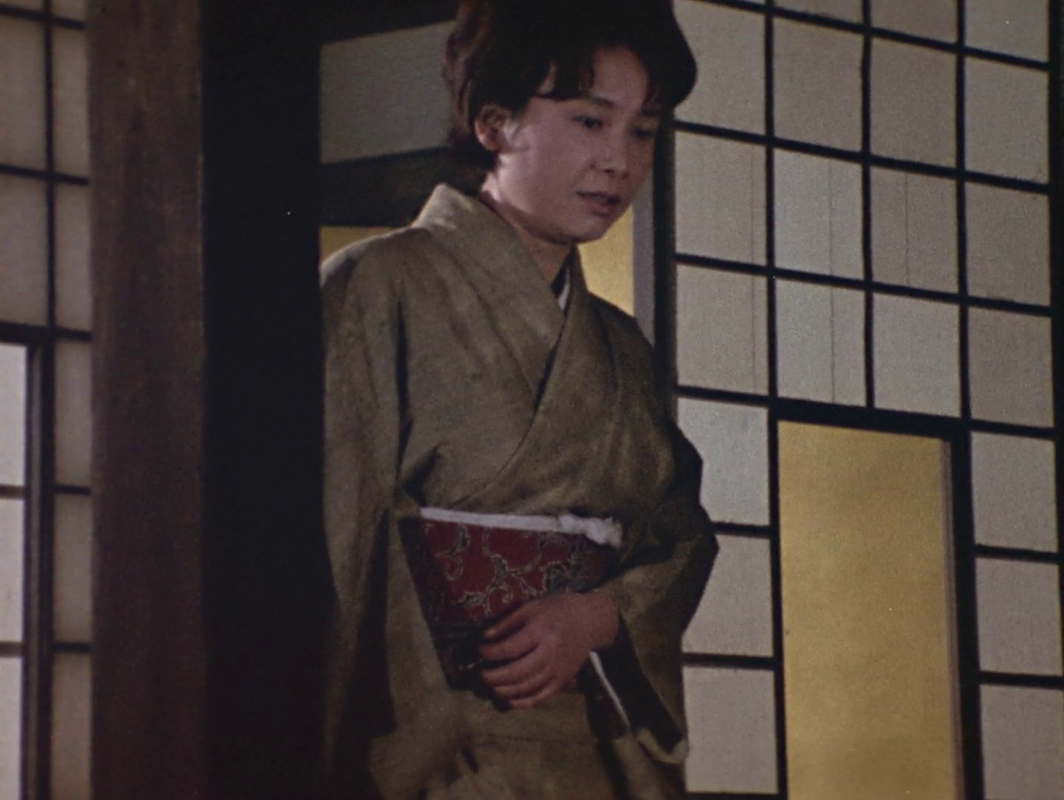
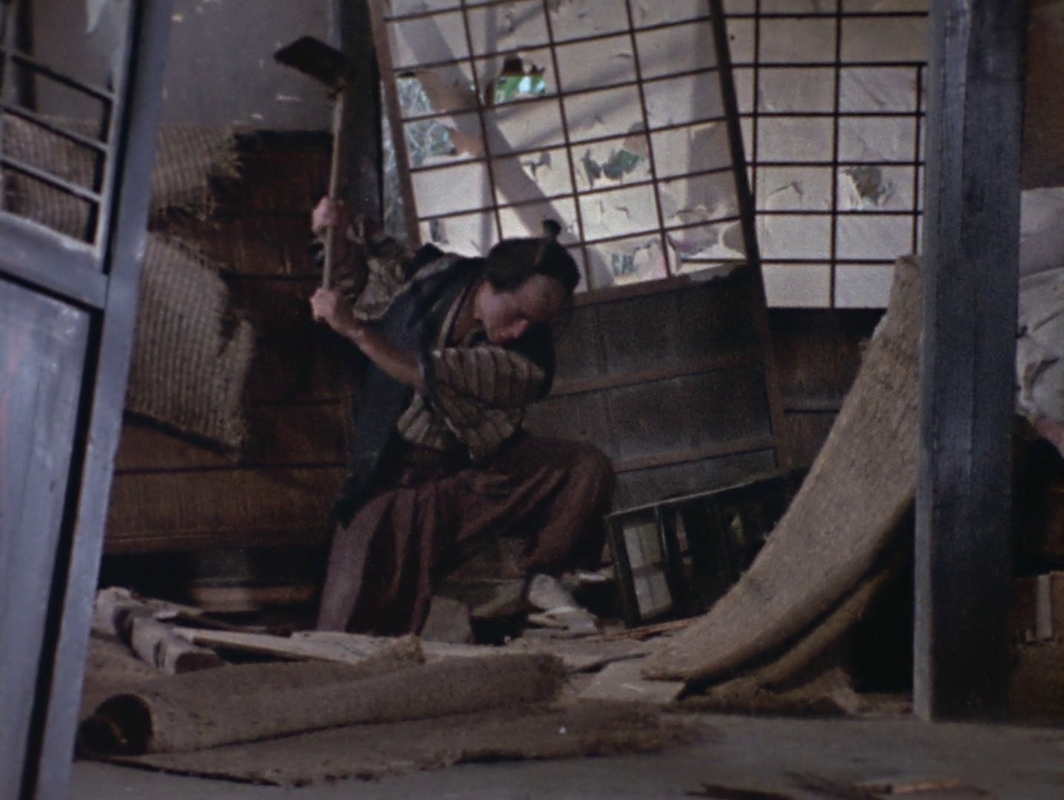
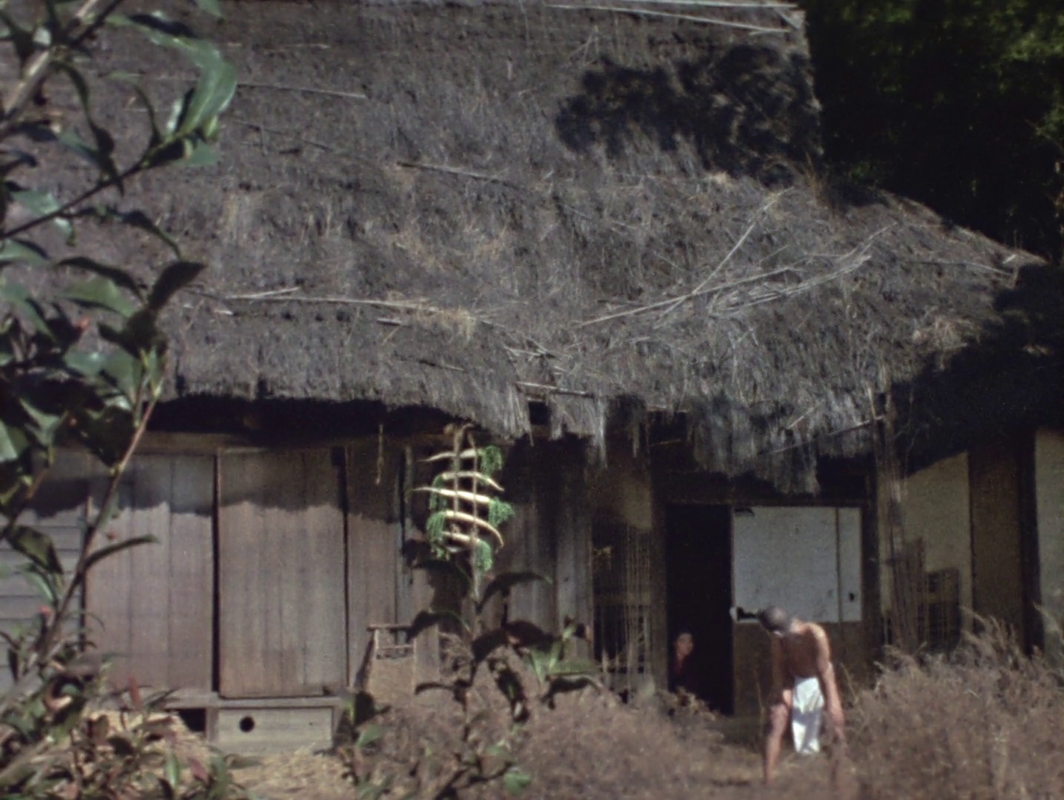
The framing is especially playful and experimental, jostling between closeups, extreme closeups, and very long shots frequently, employing Suzuki's typical aligning of lines and angles in the background to direct our eye through the action. There's also a lot of play with depth and flatness in the picture, something Suzuki wasn't often big on in his feature films prior to this, but which will become a critical aspect of his visualization from the Taisho Trilogy onwards. The main thing to note here is the way the visual approach for Zigeunerweisen is set out here, seven years in advance, in a much more modest project.
MY TAKE
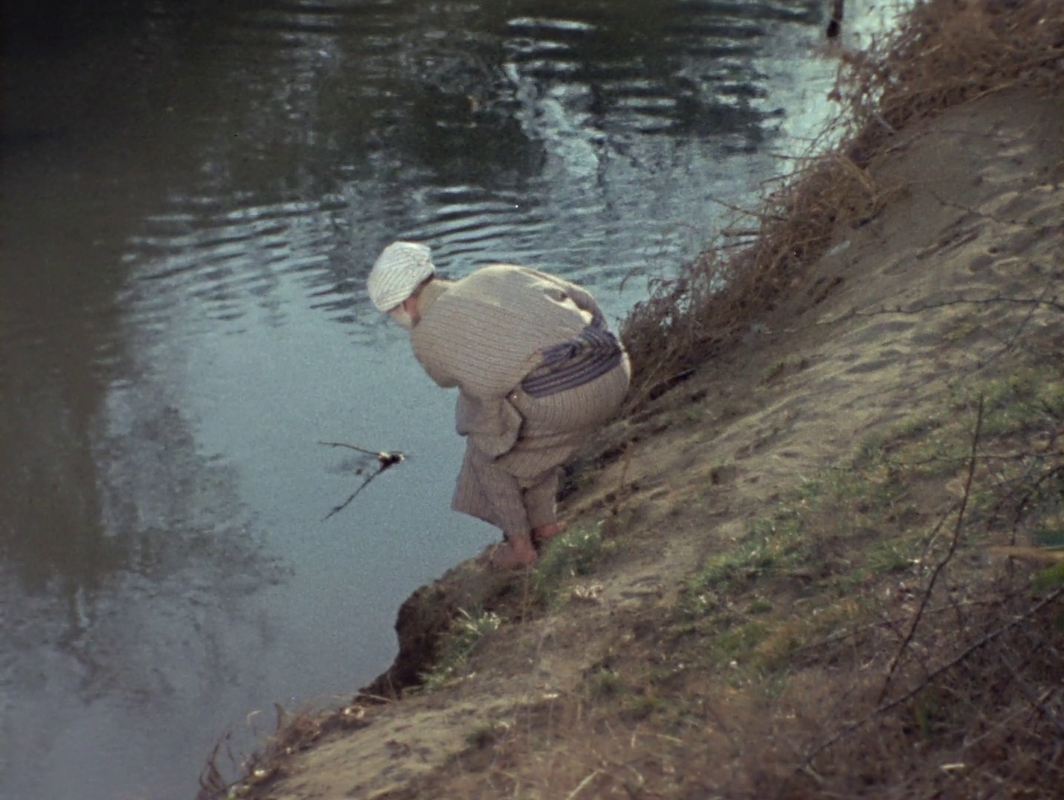
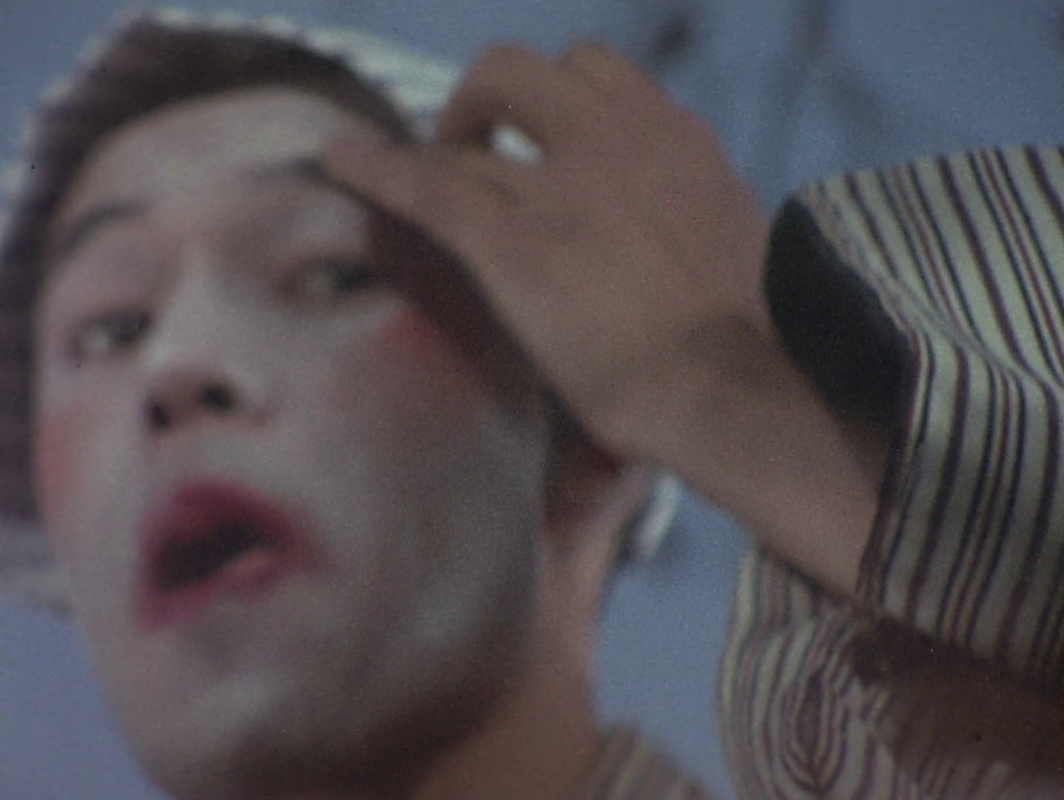
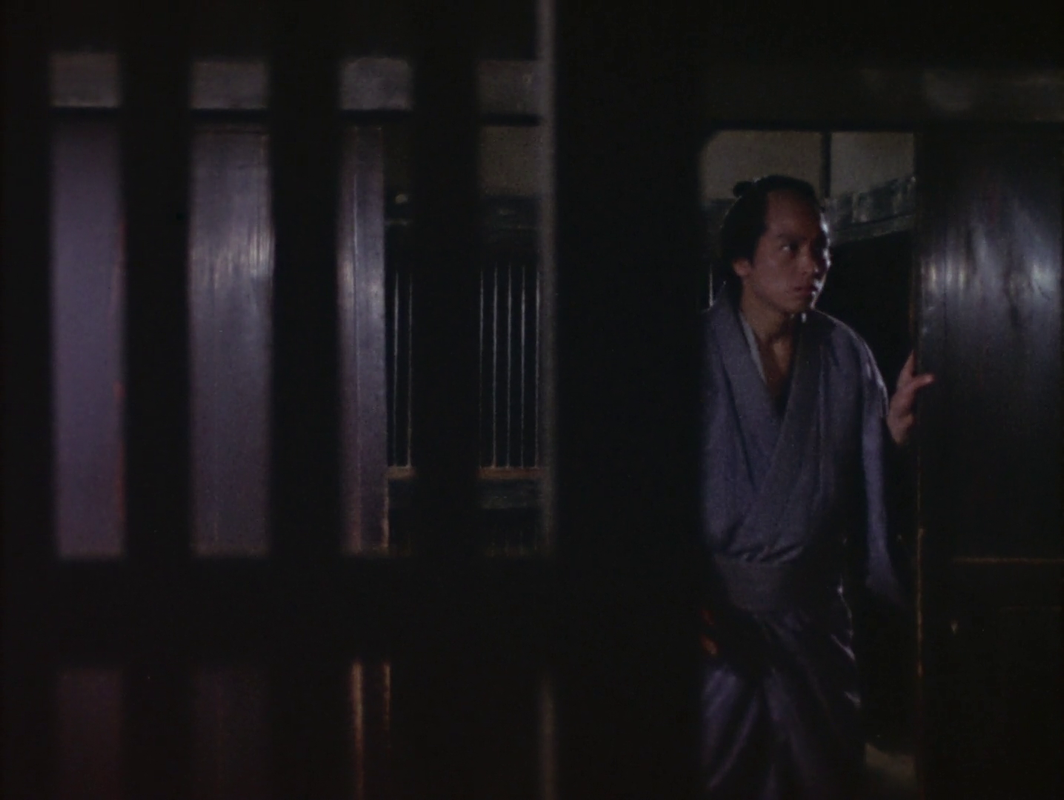
Is this really so modest a movie, though? When I first saw A Mummy's Love, it seemed very of-a-piece with the later Taisho Trilogy films, with a very similar approach. I thought the movie was a fascinating miniature of the approach Suzuki and Tanaka would take on Zigeunerweisen and Mirage Theater, especially. The discursive use of adaptation to get at the uncanny, and then the treatment of the haunting as a sort of metafictional device that crosses us between different diegetic spaces in what are essentially two texts, running at once.
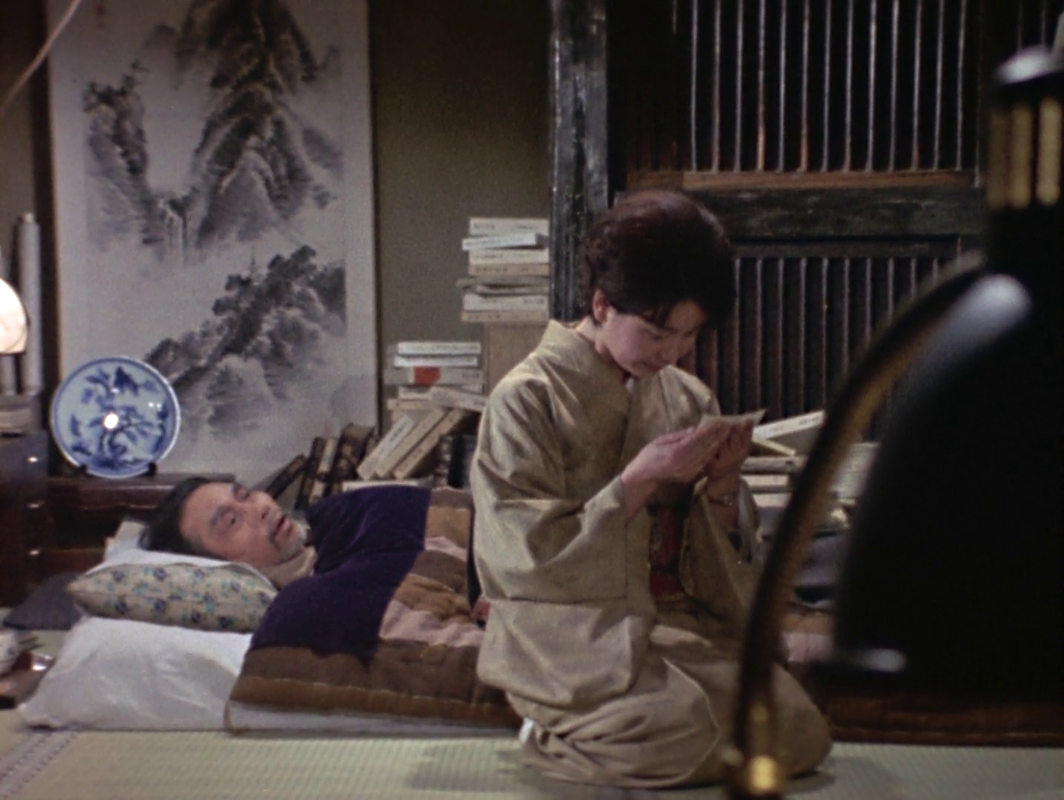
The professor narrates the story of the mummy, and borrows its energy to put the moves on the former student who is essentially attempting to borrow his energy for her work. Meanwhile, the woman, Shoko's emotional and sensual life have been, in essence, stolen from her, by who, by what? By the war. For her, the story of the mummy underlines what her life is lacking, and awakens her to the possibility of rejuvenating a part of her life she had thought to be closed off for good. Being haunted by a story isn't a common narrative for a movie, but it's a good indicator of where Suzuki is headed after this, how his artistic approach is moving into a self-reflexive mode, where the nature of art and its relation to our lives, our culture, our history, proves to be Suzuki's richest subject matter. For most of the rest of his career, Suzuki's larger film projects will have this self-reflexive quality, commenting on his own process and his way of interpreting the world through film. A Mummy's Love seems like the starting block of that edifice.
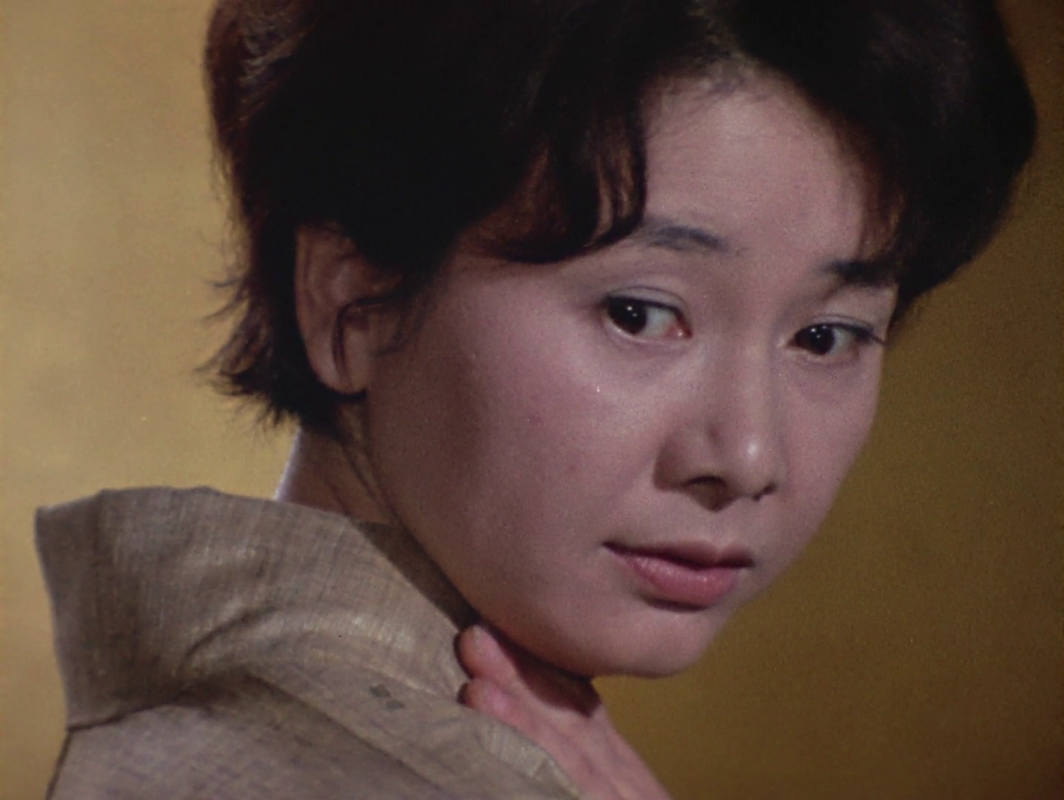
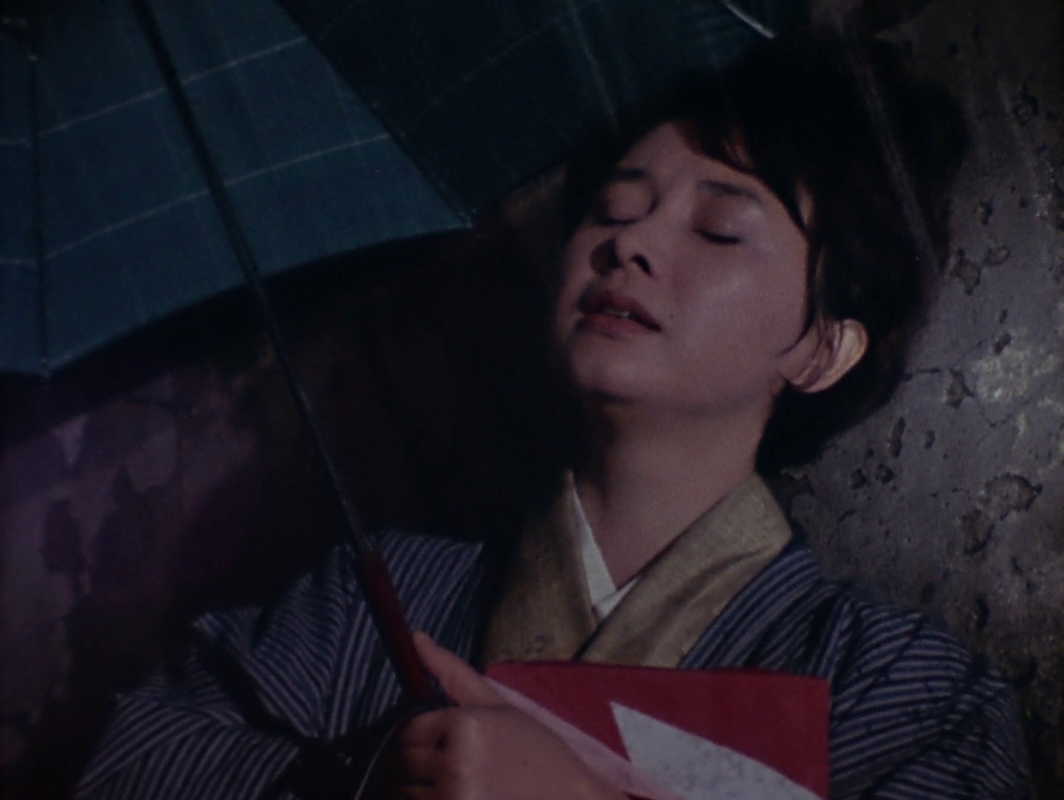
Besides all that, Misako Watanabe's last role for Suzuki is another only she could make so rich with subtext. I don't know what Watanabe was doing when Suzuki was making the Taisho Trilogy, but it's a shame we didn't see her uniquely literary and adventurously surreal talent in those films. Here she plays an early character haunted by one of Suzuki's liminal apparitions, and she communicates a rich undercurrent of feeling for this character in just a few minutes of screentime. I plan to cover Watanabe's first role for Suzuki after this, in Blue Breasts, where she takes over as defacto lead in an Akira Kobayashi movie. After that I have a few more films I intend to cover before I tackle Mirage Theater. Trying to spread these Taisho Trilogy films out over the whole project.
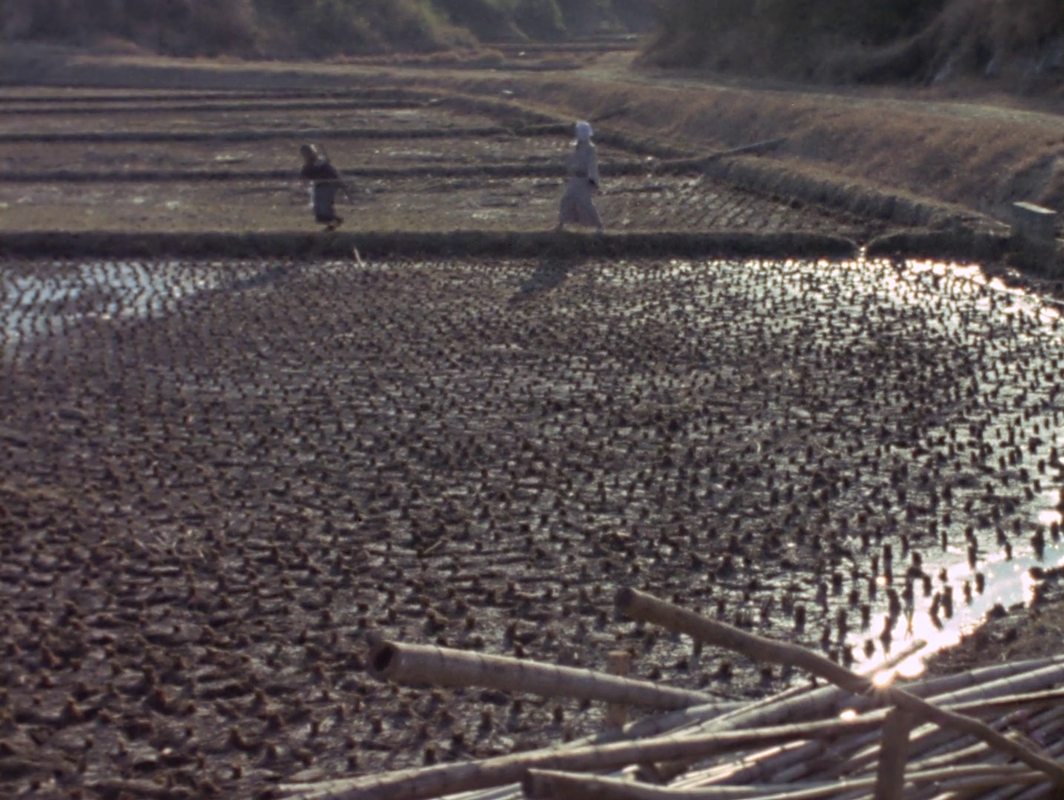
Thought I'd open with some of the striking images in A Mummy's Love...
...the way the film's grainy 16mm images engage with the uncanny in a way Suzuki hadn't done in the past.
[TEXT ONLY]
Spoiler
In case the Taisho Trilogy seemed like it came out of nowhere, here's a glimpse of the way Suzuki was actually ramping up to the supernatural surrealism of those movies, as well as the intellectual level on which Suzuki was now trying to engage his audience.
When Suzuki was fired from Nikkatsu and black-balled by the studios, he found work directing commercials and television episodes/made-for-tv movies. A Mummy's Love was his second TV movie after his firing (Good Evening, Dear Husband: A Duel was made for Nikkatsu before Suzuki learned he had been fired, There is a Bird Inside a Man was held back by sponsor Nissan because the episode featured a car crash). It's the debut episode of an anthology series, Horror Theater Unbalance.
Because these TV productions remained obscure and inaccessible for years, the later independent era where Suzuki directs the Taisho Trilogy seems only a departure. In fact, the television productions chart very clearly the development of many of the dominant themes and techniques Suzuki will employ in the Taisho films, especially Zigeunerweisen. A Mummy's Love and, to an equal extent, the later TV movie The Fang in the Hole, chart a very clear path to that later masterpiece, and are intriguing films in their own rights.
Horror Theater Unbalance was created for Tsuburaya Productions, the special effects production company of Eiji Tsuburaya –– famous effects artist and co-creator of Godzilla and Ultraman. Production began in 1969, when Tsuburaya was still alive, but the filming of episodes continued after his death and the series ended up debuting in 1973. Presumably the series was meant to showcase Tsuburaya's FX work, and A Mummy's Love does have a number of effects, both in-camera and post-processing effects. These are delightful, I think they look great, and no one ever expected them to be shown in high-definition anyway, so I can overlook the rough edges. I know there are some younger readers on the board, so it might be worth saying that back in the day we tended to just accept the errors and anomalies in negative-cutting and similar effects, and we let our imaginations just go with it. I've heard lots of people criticize the Brownie effects in Willow, but to a child in 1988 those looked amazing. The little gold buddha babies in this show, crawling all over their dead mother, getting blown out of Yusuke Kawazu's hand and crumbling to dust on the floor is a pretty amazing effect for its day, and one you can imagine as the result of Suzuki's particular sense of creative visualization.
"Have you ever seen a MUMMY?"
This Narrator introduces the episodes, each of which is written and directed by different filmmakers. This is Yukio Aoshima, at the time a television host, actor, comedy writer, independent filmmaker, and novelist, who would later become a politician, and, in the 90s, the governor of Tokyo. Later episodes would be directed by former members of the Suzuki-gumi, like Yasuharu Hasebe, and Nikkatsu regulars acquainted with Suzuki, like Toshiya Fujita. Suzuki's episode is written by Yozo Tanaka, and it features the other principal member of the Guru Hachiro writing team, Atsushi Yamatoya, playing the mummy in a demented mania –– though he doesn't have a writing credit.
A Mummy's Love is a real departure from what Suzuki had been doing at Nikkatsu, even in his TV film which was his final project for the company (which plays like a recap of all the challenging narrative techniques and structures of Branded to Kill, minus nearly all of the kink). Most obviously different here is the supernatural premise. The supernatural didn't figure in Suzuki's Nikkatsu movies –– though Suzuki wanted to include a scene at the end of Carmen from Kawachi where a bonze's evil spirit molests Fuyuko, and the studio refused, allegedly for budgetary reasons. Of course the supernatural comes with the territory for a show like this, but what would be a surprise is how much it would remain a dominant element of most Suzuki productions going forward from this point.
Secondly, the film features a complex narrative structure unlike anything in the Nikkatsu movies. In spite of what people think of Branded to Kill and Tokyo Drifter when they first see them, these films and the other Nikkatsu productions move in a straightforward narrative direction, charting a linear development of the drama.
A Mummy's Love features a wraparound narrative that contains the bawdy story of the mummy, but which becomes the central, important narrative in the second half of the episode. This container story frames the comic tale of the mummy as a piece of literature, and then relates it to the real-life drama the main characters of that container narrative experience –– a dark romantic drama of desire and possession, punctuated by an altogether different supernatural encounter. The playful exchange between registers –– two different types of stories mashed together, challenging the reader to make sense of their implied interrelation –– offers a level of literary engagement that was a sort of sublimated virtue of Suzuki's Nikkatsu pictures, which from this point on becomes one of the dominant modes of Suzuki's storytelling from here on out. It's like Suzuki the student of literature is being freed from the strict demands of popular cinema and allowed to let his imagination drive the projects in a lot of instances. The results are the "new kind of cinema" Suzuki arrives at with Zigeunerweisen, Mirage Theater, and Cherry Blossoms in Spring, especially.
Screenwriter Yozo Tanaka is the lever that makes this transformation possible. Tanaka's literary bent and talent for making the complicated and esoteric clear on-screen enables Suzuki to give his own complex intellectual ideas vivid dramatic expression. Some of Tanaka's other screenplays are relatively simple and melodramatic –– Shinji Somai's The Catch is a good example of something much less intellectually complex –– but Tanaka is especially good in these Suzuki films at adapting multiple literary sources into an intriguing melange that has its own subject and meaning.
In the early 60s, Tanaka studied literature at Waseda University, along with Atsushi Yamatoya. Both students met as members of Waseda's film research society. Yamatoya joined Nikkatsu's assistant director program in 1962, and Tanaka did...something else, I guess. At some point both writers began working for Koji Watamatsu, and their first credited work is a Wakamatsu project, Season of Betrayal, written by Tanaka, directed by Yamatoya (Tanaka picks up his only assistant director credit on this production, too). Also moonlighting at Wakamatsu Pro is former Suzuki A.D. Chusei Sone, who invites the two to meet Suzuki, whereupon they band together with other Suzuki cohorts Takeo Kimura, Yutaka Okada, Seiichiro Yamaguchi, and Yasuaki Hangai to make Guru Hachiro, Suzuki's dedicated screenwriting group. Together, the group does an uncredited total rewrite of Kaneto Shindo's script to Fighting Elegy, works on some part of Carmen from Kawachi, and submits their first credited script, to Branded to Kill.
When Suzuki is fired, Guru Hachiro stays together, writing screenplays for Suzuki and Chusei Sone through about the early 80s. There are a ton of unproduced screenplays they write from that time, and a few of them go to other directors (Daughter of Time, etc.), and the members work separately, as well. Yamatoya does the screenplay rewrite for Story of Sorrow & Sadness solo, and gets Suzuki hired on to Lupin the 3rd as series supervisor for season 2, once Yamatoya became head writer for the series.
In the meantime, as he participates in the Guru Hachiro projects, works on Zigeunerweisen and writes A Mummy's Love, Tanaka is somehow still at Nikkatsu, helping to define the parameters of the new Roman Poruno genre. He writes tons of early Pinku Eiga, first for Chusei Sone, then for Masaru Konuma, Shogoro Nishimura, Noboru Tanaka, Akira Kato and more. His most influential contribution is to the BDSM pink films, scripting both Flower & Snake and Wife to be Sacrificed. He writes Trapped in Lust for Atsushi Yamatoya, and others. Tanaka's writing for Chusei Sone continues into Sone's more "respectable" films, and he begins writing frequently for a former Sone assistant, Shinji Somai. Tanaka works for Suzuki through 1991's Yumeji, and for Somai through 1994's The Friends, but his output slows after 1994 to a crawl. My impression is that the 1987 Somai movie Luminous Woman –– a large-budget fable-like fantasy romance picture that seems to flop hard –– does lasting damage to both filmmaker's careers. Somai directs after this only on much lower budgets, and the kind of film he makes changes, as well. Tanaka just seems to stop working in 1996 for about 8 years, and has only written four-to-five films after that.
Tanaka's range is very broad, tackling everything from romantic melodrama to fantasy and sci-fi, to action films, to some of the most challenging art films to emerge from Japan. His taste for early modern literature is something he shares with Suzuki, but which seldom appears in his work for other authors. His only really consistent theme is one contrasting city life with country life –– this happens in endless screenplays, and it appears for a little bit in A Mummy's Love. He is something of a magical-realist, a strong element he brings into Suzuki's canon to exceptional effect.
In A Mummy's Love, Tanaka and Suzuki conflate separate stories as they will in Zigeunerweisen (by separate authors, in this case), and create a framing story which binds the material together (as in Zigeunerweisen) –– one which also offer commentary and interpretation on the stories we've already heard in a way similar to how Aochi, Nakasago and Sono attempt to "read" the relationship of the blind singers in Zigeunerweisen, who are a metaphorical retelling of their own relationship to one another. The mix of self-reflexive narrative registers is a conceit of Zigeunerweisen and Mirage Theater especially –– one which Tanaka is beginning to explore in A Mummy's Love ahead of those later achievements. The primary source for A Mummy's Love is Nisei no Enishi-shu, by early Showa-era writer Fumiko Enchi. Enchi was a rare woman novelist from the time, whose work includes original novels, plays and short stories, as well as a translation of Tale of Genji into modern Japanese. According to Wikipedia, her work explores ideas of sexuality, gender, and spirituality. Enchi provides the story of the mummy, which, while it is the central text of the story, is in a way a kind of metaphorical placeholder for what will unfurl in Tanaka's clever framing story.
Strangely, Tanaka and Suzuki have chosen to credit Enchi's story within the film to Akinari Ueda, author of Ugetsu, and another volume, Tales of Spring Rain –– which the story is credited as appearing within. In the framing story, a professor is reading the Enchi story from out of an old copy of Tales of Spring Rain. The ambiguity of the source material –– or in another sense, the outright misrepresentation by the filmmakers –– relates thematically to what's being done here, the fundamental "borrowing" of energy that is what this whole story is all about. The professor reading the story will attempt to borrow the energy of the story itself in order to seduce his former student, Shoko. More on that later.
We begin the story with hardly any introduction to the framing device. Shoko, an assistant editor at a publishing house, walks out of the woods, on the way to the home of her former professor. She's going to collect from him a story from Ueda's Tales of Spring Rain –– the first attempt in this brief drama to borrow energy from someone else –– and already a complicated one. Shoko will get the story for her editor, for her job, consciously trading on the way her former professor lusted after her in the past. We hear the professor's narration already, describing the story of the mummy as one from Ueda's text. Of course, we know too that the text Tanaka has actually used is Enchi's, so another sort of borrowing is happening here. I don't know if Enchi was retelling a story from Ueda, or if this is a kind of weird literary appropriation, but either way, the effect is to obscure authorship of the original article, and that ambiguity will continue throughout the story.
At a railroad crossing, Shoko sees a monk in the back-seat of a chauffeured car, and is struck by his doll-like appearance. In the narration, the professor describes the monk Shoko sees as the kind of mummy figure we see in the Enchi/Ueda tale; a monk who has buried himself alive in order to achieve enlightenment. The idea is that the monk rings a bell when he has achieved it, and can be excavated. Then we plunge into the mummy story proper, with a young man wandering around the grounds of his family home listening for the sound of a distant bell.
This is Yusuke Kawazu, a star of Shochiku films in the 60s. You might recognize him as the lead in Oshima's Cruel Story of Youth. His other big movies include The Human Condition, The Sun's Burial, Killers on Parade, Manji, Black Lizard, and, apparently, Fighting Elegy. He brings a suitable amount of existential perplexity to his role as the villager who discovers the mummy buried in an old well, drawn to the ringing bell.
It's probably Suzuki's idea that the villagers don't know what the mummy is at first, are both grossed-out and amused by it, and end up playing soccer with the corpse in a deliriously-shot hand-held scene. Throughout the retelling of this story, Suzuki mocks the solemnity of the resurrection of this monk, underlining the question of what these villagers are really going to do with this alleged treasure? The story, as the professor tells it, is surprisingly bawdy for television. Eroticism is in Suzuki's movies from early on, but it becomes much more central to the point of the films once Guru Hachiro, with their roots in Wakamatsu productions, enters the picture.
Kawazu adopts the mummy, and his mother feeds it, revivifying the corpse. Over the course of some time the mummy begins to move, listen, speak, and, pretty soon afterwards, it starts hungering for sex. The village is full of randy residents, and the mummy starts making clumsy moves on bemused residents. Eventually he is married, and, after a week-long bought of sex, his wife is in the family way.
This proves the undoing of the mummy's second chance at life. The wife dies in a cloud of purple haze, giving birth to dozens of giddy little raving golden buddha creatures. Kawazu brushes them off his hand and they evaporate into dust.
Kawazu here loses his mind; none of these seemingly symbolic supernatural happenings can be explained by the village priest, by following the edicts of family living, following anything he has believed. "What were we worshipping, then?" he shouts, and the villagers, incensed by the death of the mummy's wife, descend upon the cackling children, stomping them to dust. They chase the mummy across the countryside and he eventually blows up in a poof of dust as well.
In the end of the story, Kawazu goes on with his life, gets married, and then on his wedding night, hears the mummy's bell ringing again. Haunted by the ringing, Kawazu abandons his marriage and seems to retreat into himself for the remainder of the character's life. He saw the mummy revivified as a miracle, then was brought to earth by the realization that none of the values he attached to this supposed miracle obtained. Now he no longer has the intellectual tools necessary to understand the ringing he hears in his ears. Is it a mystical ringing, a religious sign, after all? Is it even real?
With deft simplicity we cut to the professor's study, where Shoko, who has moved temporally and physically behind the scenes, stops taking dictation and has a smoke. At this point, Shoko becomes the narrator, explaining to us the nature of the exchange taking place. Shoko's professor now needles her first on what she thinks of the baldly erotic story, then how long it's been since her husband was alive. Shoko's husband, we're to understand, died in an air raid in an area near the professor's house. WWII appears again, at the periphery of Suzuki's mind always.
The professor has a wedding photo of Shoko and her husband, which he suddenly reveals. He claims it found it's way to him, he kept it as a prank, and then simply held on to it after the war. The professor now starts interpreting the story, and we get the sense of his ulterior motive. As the professor sees it, the mummy got another shot at life through the power of sex. He wants to experiment along those lines, with Shoko.
Shoko has no trouble fending the professor off –– he appears to be dying, and is in no shape to force Shoko into the "exchange" he proposes, taking the place of Shoko's dead husband and essentially stealing life from Shoko through sex, the way the mummy essentially vampirized his wife. But thanks to Misako Watanabe's deft performance (her last role in a Suzuki film), we feel that Shoko is moved by words to manifest their ideas in her mind. And the film makes it clear she is sexually deprived – she has remained chaste apart from her relationship with her husband, which lasted only a year and a half before he died. So as the professor urges her to make love, we can tell she is wavering.
The professor says he believes her husband has returned to life, and that he himself can be her husband, and live again. Shoko is clearly in distress, compounded upon distress. What stops this going further is the professor doubling over in a coughing fit. His nursemaid, an actress who also played the wife of the mummy in the initial story, helps him painfully urinate, and Shoko escapes with her dignity intact.
The film's final sequence draws everything together exceptionally well. Shoko walks out into the rain, and without thinking about it, crosses through the vacant lot where her husband died. A man in dark glasses and a large overcoat steps from the shadows and takes Shoko's hand.
Shoko looks at him and seems to take it that this is her husband, returned to her. Even though this section of the film is past the Enchi adaptation, it's interesting that the sepulchral romantic/erotic drama that unfolds within Shoko in this scene is so redolent of one of Enchi's recurring interests, an older woman's sexuality. Shoko's loneliness and need emerges in a heated exchange.
"I know you! You're the man I love!"
"That's right. These are the immaculate treasures that only you knew!"
Overcome with the situation, Shoko surrenders to her husband's embrace, only to see as the sunglasses fall from his face, that she's in the arms of the professor! She retreats, and her engagement photo burns away before our eyes, and the apparition of husband/professor vanishes.
In the last few seconds of the story, the professor's nursemaid arrives and tells Shoko the professor died at home, moments before, suffering from a prolonged attack from when Shoko left.
We cut back to the future governor of Tokyo, who raises an eyebrow and asks, "well, and what did you make of that?" What, indeed was real, beyond a widow's loneliness and erotic need awakened by an encounter with fiction, death, and the possibility of sex?
MY TAKE
When I first saw A Mummy's Love, it seemed very of-a-piece with the later Taisho Trilogy films, with a very similar approach. I thought the movie was a fascinating miniature of the approach Suzuki and Tanaka would take on Zigeunerweisen and Mirage Theater, especially. The discursive use of adaptation to get at the uncanny, and then the treatment of the haunting as a sort of metafictional device that crosses us between different diegetic spaces in what are essentially two texts, running at once.
The professor narrates the story of the mummy, and borrows its energy to put the moves on the former student who is essentially attempting to borrow his energy for her work. Meanwhile, the woman, Shoko's emotional and sensual life have been, in essence, stolen from her, by who, by what? By the war. For her, the story of the mummy underlines what her life is lacking, and awakens her to the possibility of rejuvenating a part of her life she had thought to be closed off for good. Being haunted by a story isn't a common narrative for a movie, but it's a good indicator of where Suzuki is headed after this, how his artistic approach is moving into a self-reflexive mode, where the nature of art and its relation to our lives, our culture, our history, proves to be Suzuki's richest subject matter. For most of the rest of his career, Suzuki's larger film projects will have this self-reflexive quality, commenting on his own process and his way of interpreting the world through film. A Mummy's Love seems like the starting block of that edifice.
Besides all that, Misako Watanabe's last role for Suzuki is another only she could make so rich with subtext. I don't know what Watanabe was doing when Suzuki was making the Taisho Trilogy, but it's a shame we didn't see her uniquely literary and adventurously surreal talent in those films. Here she plays an early character haunted by one of Suzuki's liminal apparitions, and she communicates a rich undercurrent of feeling for this character in just a few minutes of screentime. I plan to cover Watanabe's first role for Suzuki after this, in Blue Breasts, where she takes over as defacto lead in an Akira Kobayashi movie. After that I have a few more films I intend to cover before I tackle Mirage Theater. Trying to spread these Taisho Trilogy films out over the whole project.
When Suzuki was fired from Nikkatsu and black-balled by the studios, he found work directing commercials and television episodes/made-for-tv movies. A Mummy's Love was his second TV movie after his firing (Good Evening, Dear Husband: A Duel was made for Nikkatsu before Suzuki learned he had been fired, There is a Bird Inside a Man was held back by sponsor Nissan because the episode featured a car crash). It's the debut episode of an anthology series, Horror Theater Unbalance.
Because these TV productions remained obscure and inaccessible for years, the later independent era where Suzuki directs the Taisho Trilogy seems only a departure. In fact, the television productions chart very clearly the development of many of the dominant themes and techniques Suzuki will employ in the Taisho films, especially Zigeunerweisen. A Mummy's Love and, to an equal extent, the later TV movie The Fang in the Hole, chart a very clear path to that later masterpiece, and are intriguing films in their own rights.
Horror Theater Unbalance was created for Tsuburaya Productions, the special effects production company of Eiji Tsuburaya –– famous effects artist and co-creator of Godzilla and Ultraman. Production began in 1969, when Tsuburaya was still alive, but the filming of episodes continued after his death and the series ended up debuting in 1973. Presumably the series was meant to showcase Tsuburaya's FX work, and A Mummy's Love does have a number of effects, both in-camera and post-processing effects. These are delightful, I think they look great, and no one ever expected them to be shown in high-definition anyway, so I can overlook the rough edges. I know there are some younger readers on the board, so it might be worth saying that back in the day we tended to just accept the errors and anomalies in negative-cutting and similar effects, and we let our imaginations just go with it. I've heard lots of people criticize the Brownie effects in Willow, but to a child in 1988 those looked amazing. The little gold buddha babies in this show, crawling all over their dead mother, getting blown out of Yusuke Kawazu's hand and crumbling to dust on the floor is a pretty amazing effect for its day, and one you can imagine as the result of Suzuki's particular sense of creative visualization.
"Have you ever seen a MUMMY?"
This Narrator introduces the episodes, each of which is written and directed by different filmmakers. This is Yukio Aoshima, at the time a television host, actor, comedy writer, independent filmmaker, and novelist, who would later become a politician, and, in the 90s, the governor of Tokyo. Later episodes would be directed by former members of the Suzuki-gumi, like Yasuharu Hasebe, and Nikkatsu regulars acquainted with Suzuki, like Toshiya Fujita. Suzuki's episode is written by Yozo Tanaka, and it features the other principal member of the Guru Hachiro writing team, Atsushi Yamatoya, playing the mummy in a demented mania –– though he doesn't have a writing credit.
A Mummy's Love is a real departure from what Suzuki had been doing at Nikkatsu, even in his TV film which was his final project for the company (which plays like a recap of all the challenging narrative techniques and structures of Branded to Kill, minus nearly all of the kink). Most obviously different here is the supernatural premise. The supernatural didn't figure in Suzuki's Nikkatsu movies –– though Suzuki wanted to include a scene at the end of Carmen from Kawachi where a bonze's evil spirit molests Fuyuko, and the studio refused, allegedly for budgetary reasons. Of course the supernatural comes with the territory for a show like this, but what would be a surprise is how much it would remain a dominant element of most Suzuki productions going forward from this point.
Secondly, the film features a complex narrative structure unlike anything in the Nikkatsu movies. In spite of what people think of Branded to Kill and Tokyo Drifter when they first see them, these films and the other Nikkatsu productions move in a straightforward narrative direction, charting a linear development of the drama.
A Mummy's Love features a wraparound narrative that contains the bawdy story of the mummy, but which becomes the central, important narrative in the second half of the episode. This container story frames the comic tale of the mummy as a piece of literature, and then relates it to the real-life drama the main characters of that container narrative experience –– a dark romantic drama of desire and possession, punctuated by an altogether different supernatural encounter. The playful exchange between registers –– two different types of stories mashed together, challenging the reader to make sense of their implied interrelation –– offers a level of literary engagement that was a sort of sublimated virtue of Suzuki's Nikkatsu pictures, which from this point on becomes one of the dominant modes of Suzuki's storytelling from here on out. It's like Suzuki the student of literature is being freed from the strict demands of popular cinema and allowed to let his imagination drive the projects in a lot of instances. The results are the "new kind of cinema" Suzuki arrives at with Zigeunerweisen, Mirage Theater, and Cherry Blossoms in Spring, especially.
Screenwriter Yozo Tanaka is the lever that makes this transformation possible. Tanaka's literary bent and talent for making the complicated and esoteric clear on-screen enables Suzuki to give his own complex intellectual ideas vivid dramatic expression. Some of Tanaka's other screenplays are relatively simple and melodramatic –– Shinji Somai's The Catch is a good example of something much less intellectually complex –– but Tanaka is especially good in these Suzuki films at adapting multiple literary sources into an intriguing melange that has its own subject and meaning.
In the early 60s, Tanaka studied literature at Waseda University, along with Atsushi Yamatoya. Both students met as members of Waseda's film research society. Yamatoya joined Nikkatsu's assistant director program in 1962, and Tanaka did...something else, I guess. At some point both writers began working for Koji Watamatsu, and their first credited work is a Wakamatsu project, Season of Betrayal, written by Tanaka, directed by Yamatoya (Tanaka picks up his only assistant director credit on this production, too). Also moonlighting at Wakamatsu Pro is former Suzuki A.D. Chusei Sone, who invites the two to meet Suzuki, whereupon they band together with other Suzuki cohorts Takeo Kimura, Yutaka Okada, Seiichiro Yamaguchi, and Yasuaki Hangai to make Guru Hachiro, Suzuki's dedicated screenwriting group. Together, the group does an uncredited total rewrite of Kaneto Shindo's script to Fighting Elegy, works on some part of Carmen from Kawachi, and submits their first credited script, to Branded to Kill.
When Suzuki is fired, Guru Hachiro stays together, writing screenplays for Suzuki and Chusei Sone through about the early 80s. There are a ton of unproduced screenplays they write from that time, and a few of them go to other directors (Daughter of Time, etc.), and the members work separately, as well. Yamatoya does the screenplay rewrite for Story of Sorrow & Sadness solo, and gets Suzuki hired on to Lupin the 3rd as series supervisor for season 2, once Yamatoya became head writer for the series.
In the meantime, as he participates in the Guru Hachiro projects, works on Zigeunerweisen and writes A Mummy's Love, Tanaka is somehow still at Nikkatsu, helping to define the parameters of the new Roman Poruno genre. He writes tons of early Pinku Eiga, first for Chusei Sone, then for Masaru Konuma, Shogoro Nishimura, Noboru Tanaka, Akira Kato and more. His most influential contribution is to the BDSM pink films, scripting both Flower & Snake and Wife to be Sacrificed. He writes Trapped in Lust for Atsushi Yamatoya, and others. Tanaka's writing for Chusei Sone continues into Sone's more "respectable" films, and he begins writing frequently for a former Sone assistant, Shinji Somai. Tanaka works for Suzuki through 1991's Yumeji, and for Somai through 1994's The Friends, but his output slows after 1994 to a crawl. My impression is that the 1987 Somai movie Luminous Woman –– a large-budget fable-like fantasy romance picture that seems to flop hard –– does lasting damage to both filmmaker's careers. Somai directs after this only on much lower budgets, and the kind of film he makes changes, as well. Tanaka just seems to stop working in 1996 for about 8 years, and has only written four-to-five films after that.
Tanaka's range is very broad, tackling everything from romantic melodrama to fantasy and sci-fi, to action films, to some of the most challenging art films to emerge from Japan. His taste for early modern literature is something he shares with Suzuki, but which seldom appears in his work for other authors. His only really consistent theme is one contrasting city life with country life –– this happens in endless screenplays, and it appears for a little bit in A Mummy's Love. He is something of a magical-realist, a strong element he brings into Suzuki's canon to exceptional effect.
In A Mummy's Love, Tanaka and Suzuki conflate separate stories as they will in Zigeunerweisen (by separate authors, in this case), and create a framing story which binds the material together (as in Zigeunerweisen) –– one which also offer commentary and interpretation on the stories we've already heard in a way similar to how Aochi, Nakasago and Sono attempt to "read" the relationship of the blind singers in Zigeunerweisen, who are a metaphorical retelling of their own relationship to one another. The mix of self-reflexive narrative registers is a conceit of Zigeunerweisen and Mirage Theater especially –– one which Tanaka is beginning to explore in A Mummy's Love ahead of those later achievements. The primary source for A Mummy's Love is Nisei no Enishi-shu, by early Showa-era writer Fumiko Enchi. Enchi was a rare woman novelist from the time, whose work includes original novels, plays and short stories, as well as a translation of Tale of Genji into modern Japanese. According to Wikipedia, her work explores ideas of sexuality, gender, and spirituality. Enchi provides the story of the mummy, which, while it is the central text of the story, is in a way a kind of metaphorical placeholder for what will unfurl in Tanaka's clever framing story.
Strangely, Tanaka and Suzuki have chosen to credit Enchi's story within the film to Akinari Ueda, author of Ugetsu, and another volume, Tales of Spring Rain –– which the story is credited as appearing within. In the framing story, a professor is reading the Enchi story from out of an old copy of Tales of Spring Rain. The ambiguity of the source material –– or in another sense, the outright misrepresentation by the filmmakers –– relates thematically to what's being done here, the fundamental "borrowing" of energy that is what this whole story is all about. The professor reading the story will attempt to borrow the energy of the story itself in order to seduce his former student, Shoko. More on that later.
We begin the story with hardly any introduction to the framing device. Shoko, an assistant editor at a publishing house, walks out of the woods, on the way to the home of her former professor. She's going to collect from him a story from Ueda's Tales of Spring Rain –– the first attempt in this brief drama to borrow energy from someone else –– and already a complicated one. Shoko will get the story for her editor, for her job, consciously trading on the way her former professor lusted after her in the past. We hear the professor's narration already, describing the story of the mummy as one from Ueda's text. Of course, we know too that the text Tanaka has actually used is Enchi's, so another sort of borrowing is happening here. I don't know if Enchi was retelling a story from Ueda, or if this is a kind of weird literary appropriation, but either way, the effect is to obscure authorship of the original article, and that ambiguity will continue throughout the story.
At a railroad crossing, Shoko sees a monk in the back-seat of a chauffeured car, and is struck by his doll-like appearance. In the narration, the professor describes the monk Shoko sees as the kind of mummy figure we see in the Enchi/Ueda tale; a monk who has buried himself alive in order to achieve enlightenment. The idea is that the monk rings a bell when he has achieved it, and can be excavated. Then we plunge into the mummy story proper, with a young man wandering around the grounds of his family home listening for the sound of a distant bell.
This is Yusuke Kawazu, a star of Shochiku films in the 60s. You might recognize him as the lead in Oshima's Cruel Story of Youth. His other big movies include The Human Condition, The Sun's Burial, Killers on Parade, Manji, Black Lizard, and, apparently, Fighting Elegy. He brings a suitable amount of existential perplexity to his role as the villager who discovers the mummy buried in an old well, drawn to the ringing bell.
It's probably Suzuki's idea that the villagers don't know what the mummy is at first, are both grossed-out and amused by it, and end up playing soccer with the corpse in a deliriously-shot hand-held scene. Throughout the retelling of this story, Suzuki mocks the solemnity of the resurrection of this monk, underlining the question of what these villagers are really going to do with this alleged treasure? The story, as the professor tells it, is surprisingly bawdy for television. Eroticism is in Suzuki's movies from early on, but it becomes much more central to the point of the films once Guru Hachiro, with their roots in Wakamatsu productions, enters the picture.
Kawazu adopts the mummy, and his mother feeds it, revivifying the corpse. Over the course of some time the mummy begins to move, listen, speak, and, pretty soon afterwards, it starts hungering for sex. The village is full of randy residents, and the mummy starts making clumsy moves on bemused residents. Eventually he is married, and, after a week-long bought of sex, his wife is in the family way.
This proves the undoing of the mummy's second chance at life. The wife dies in a cloud of purple haze, giving birth to dozens of giddy little raving golden buddha creatures. Kawazu brushes them off his hand and they evaporate into dust.
Kawazu here loses his mind; none of these seemingly symbolic supernatural happenings can be explained by the village priest, by following the edicts of family living, following anything he has believed. "What were we worshipping, then?" he shouts, and the villagers, incensed by the death of the mummy's wife, descend upon the cackling children, stomping them to dust. They chase the mummy across the countryside and he eventually blows up in a poof of dust as well.
In the end of the story, Kawazu goes on with his life, gets married, and then on his wedding night, hears the mummy's bell ringing again. Haunted by the ringing, Kawazu abandons his marriage and seems to retreat into himself for the remainder of the character's life. He saw the mummy revivified as a miracle, then was brought to earth by the realization that none of the values he attached to this supposed miracle obtained. Now he no longer has the intellectual tools necessary to understand the ringing he hears in his ears. Is it a mystical ringing, a religious sign, after all? Is it even real?
With deft simplicity we cut to the professor's study, where Shoko, who has moved temporally and physically behind the scenes, stops taking dictation and has a smoke. At this point, Shoko becomes the narrator, explaining to us the nature of the exchange taking place. Shoko's professor now needles her first on what she thinks of the baldly erotic story, then how long it's been since her husband was alive. Shoko's husband, we're to understand, died in an air raid in an area near the professor's house. WWII appears again, at the periphery of Suzuki's mind always.
The professor has a wedding photo of Shoko and her husband, which he suddenly reveals. He claims it found it's way to him, he kept it as a prank, and then simply held on to it after the war. The professor now starts interpreting the story, and we get the sense of his ulterior motive. As the professor sees it, the mummy got another shot at life through the power of sex. He wants to experiment along those lines, with Shoko.
Shoko has no trouble fending the professor off –– he appears to be dying, and is in no shape to force Shoko into the "exchange" he proposes, taking the place of Shoko's dead husband and essentially stealing life from Shoko through sex, the way the mummy essentially vampirized his wife. But thanks to Misako Watanabe's deft performance (her last role in a Suzuki film), we feel that Shoko is moved by words to manifest their ideas in her mind. And the film makes it clear she is sexually deprived – she has remained chaste apart from her relationship with her husband, which lasted only a year and a half before he died. So as the professor urges her to make love, we can tell she is wavering.
The professor says he believes her husband has returned to life, and that he himself can be her husband, and live again. Shoko is clearly in distress, compounded upon distress. What stops this going further is the professor doubling over in a coughing fit. His nursemaid, an actress who also played the wife of the mummy in the initial story, helps him painfully urinate, and Shoko escapes with her dignity intact.
The film's final sequence draws everything together exceptionally well. Shoko walks out into the rain, and without thinking about it, crosses through the vacant lot where her husband died. A man in dark glasses and a large overcoat steps from the shadows and takes Shoko's hand.
Shoko looks at him and seems to take it that this is her husband, returned to her. Even though this section of the film is past the Enchi adaptation, it's interesting that the sepulchral romantic/erotic drama that unfolds within Shoko in this scene is so redolent of one of Enchi's recurring interests, an older woman's sexuality. Shoko's loneliness and need emerges in a heated exchange.
"I know you! You're the man I love!"
"That's right. These are the immaculate treasures that only you knew!"
Overcome with the situation, Shoko surrenders to her husband's embrace, only to see as the sunglasses fall from his face, that she's in the arms of the professor! She retreats, and her engagement photo burns away before our eyes, and the apparition of husband/professor vanishes.
In the last few seconds of the story, the professor's nursemaid arrives and tells Shoko the professor died at home, moments before, suffering from a prolonged attack from when Shoko left.
We cut back to the future governor of Tokyo, who raises an eyebrow and asks, "well, and what did you make of that?" What, indeed was real, beyond a widow's loneliness and erotic need awakened by an encounter with fiction, death, and the possibility of sex?
MY TAKE
When I first saw A Mummy's Love, it seemed very of-a-piece with the later Taisho Trilogy films, with a very similar approach. I thought the movie was a fascinating miniature of the approach Suzuki and Tanaka would take on Zigeunerweisen and Mirage Theater, especially. The discursive use of adaptation to get at the uncanny, and then the treatment of the haunting as a sort of metafictional device that crosses us between different diegetic spaces in what are essentially two texts, running at once.
The professor narrates the story of the mummy, and borrows its energy to put the moves on the former student who is essentially attempting to borrow his energy for her work. Meanwhile, the woman, Shoko's emotional and sensual life have been, in essence, stolen from her, by who, by what? By the war. For her, the story of the mummy underlines what her life is lacking, and awakens her to the possibility of rejuvenating a part of her life she had thought to be closed off for good. Being haunted by a story isn't a common narrative for a movie, but it's a good indicator of where Suzuki is headed after this, how his artistic approach is moving into a self-reflexive mode, where the nature of art and its relation to our lives, our culture, our history, proves to be Suzuki's richest subject matter. For most of the rest of his career, Suzuki's larger film projects will have this self-reflexive quality, commenting on his own process and his way of interpreting the world through film. A Mummy's Love seems like the starting block of that edifice.
Besides all that, Misako Watanabe's last role for Suzuki is another only she could make so rich with subtext. I don't know what Watanabe was doing when Suzuki was making the Taisho Trilogy, but it's a shame we didn't see her uniquely literary and adventurously surreal talent in those films. Here she plays an early character haunted by one of Suzuki's liminal apparitions, and she communicates a rich undercurrent of feeling for this character in just a few minutes of screentime. I plan to cover Watanabe's first role for Suzuki after this, in Blue Breasts, where she takes over as defacto lead in an Akira Kobayashi movie. After that I have a few more films I intend to cover before I tackle Mirage Theater. Trying to spread these Taisho Trilogy films out over the whole project.
Spoiler
In case the Taisho Trilogy seemed like it came out of nowhere, here's a glimpse of the way Suzuki was actually ramping up to the supernatural surrealism of those movies, as well as the intellectual level on which Suzuki was now trying to engage his audience.
When Suzuki was fired from Nikkatsu and black-balled by the studios, he found work directing commercials and television episodes/made-for-tv movies. A Mummy's Love was his second TV movie after his firing (Good Evening, Dear Husband: A Duel was made for Nikkatsu before Suzuki learned he had been fired, There is a Bird Inside a Man was held back by sponsor Nissan because the episode featured a car crash). It's the debut episode of an anthology series, Horror Theater Unbalance.
Because these TV productions remained obscure and inaccessible for years, the later independent era where Suzuki directs the Taisho Trilogy seems only a departure. In fact, the television productions chart very clearly the development of many of the dominant themes and techniques Suzuki will employ in the Taisho films, especially Zigeunerweisen. A Mummy's Love and, to an equal extent, the later TV movie The Fang in the Hole, chart a very clear path to that later masterpiece, and are intriguing films in their own rights.
Horror Theater Unbalance was created for Tsuburaya Productions, the special effects production company of Eiji Tsuburaya –– famous effects artist and co-creator of Godzilla and Ultraman. Production began in 1969, when Tsuburaya was still alive, but the filming of episodes continued after his death and the series ended up debuting in 1973. Presumably the series was meant to showcase Tsuburaya's FX work, and A Mummy's Love does have a number of effects, both in-camera and post-processing effects. These are delightful, I think they look great, and no one ever expected them to be shown in high-definition anyway, so I can overlook the rough edges. I know there are some younger readers on the board, so it might be worth saying that back in the day we tended to just accept the errors and anomalies in negative-cutting and similar effects, and we let our imaginations just go with it. I've heard lots of people criticize the Brownie effects in Willow, but to a child in 1988 those looked amazing. The little gold buddha babies in this show, crawling all over their dead mother, getting blown out of Yusuke Kawazu's hand and crumbling to dust on the floor is a pretty amazing effect for its day, and one you can imagine as the result of Suzuki's particular sense of creative visualization.
"Have you ever seen a MUMMY?"
This Narrator introduces the episodes, each of which is written and directed by different filmmakers. This is Yukio Aoshima, at the time a television host, actor, comedy writer, independent filmmaker, and novelist, who would later become a politician, and, in the 90s, the governor of Tokyo. Later episodes would be directed by former members of the Suzuki-gumi, like Yasuharu Hasebe, and Nikkatsu regulars acquainted with Suzuki, like Toshiya Fujita. Suzuki's episode is written by Yozo Tanaka, and it features the other principal member of the Guru Hachiro writing team, Atsushi Yamatoya, playing the mummy in a demented mania –– though he doesn't have a writing credit.
A Mummy's Love is a real departure from what Suzuki had been doing at Nikkatsu, even in his TV film which was his final project for the company (which plays like a recap of all the challenging narrative techniques and structures of Branded to Kill, minus nearly all of the kink). Most obviously different here is the supernatural premise. The supernatural didn't figure in Suzuki's Nikkatsu movies –– though Suzuki wanted to include a scene at the end of Carmen from Kawachi where a bonze's evil spirit molests Fuyuko, and the studio refused, allegedly for budgetary reasons. Of course the supernatural comes with the territory for a show like this, but what would be a surprise is how much it would remain a dominant element of most Suzuki productions going forward from this point.
Secondly, the film features a complex narrative structure unlike anything in the Nikkatsu movies. In spite of what people think of Branded to Kill and Tokyo Drifter when they first see them, these films and the other Nikkatsu productions move in a straightforward narrative direction, charting a linear development of the drama.
A Mummy's Love features a wraparound narrative that contains the bawdy story of the mummy, but which becomes the central, important narrative in the second half of the episode. This container story frames the comic tale of the mummy as a piece of literature, and then relates it to the real-life drama the main characters of that container narrative experience –– a dark romantic drama of desire and possession, punctuated by an altogether different supernatural encounter. The playful exchange between registers –– two different types of stories mashed together, challenging the reader to make sense of their implied interrelation –– offers a level of literary engagement that was a sort of sublimated virtue of Suzuki's Nikkatsu pictures, which from this point on becomes one of the dominant modes of Suzuki's storytelling from here on out. It's like Suzuki the student of literature is being freed from the strict demands of popular cinema and allowed to let his imagination drive the projects in a lot of instances. The results are the "new kind of cinema" Suzuki arrives at with Zigeunerweisen, Mirage Theater, and Cherry Blossoms in Spring, especially.
Screenwriter Yozo Tanaka is the lever that makes this transformation possible. Tanaka's literary bent and talent for making the complicated and esoteric clear on-screen enables Suzuki to give his own complex intellectual ideas vivid dramatic expression. Some of Tanaka's other screenplays are relatively simple and melodramatic –– Shinji Somai's The Catch is a good example of something much less intellectually complex –– but Tanaka is especially good in these Suzuki films at adapting multiple literary sources into an intriguing melange that has its own subject and meaning.
In the early 60s, Tanaka studied literature at Waseda University, along with Atsushi Yamatoya. Both students met as members of Waseda's film research society. Yamatoya joined Nikkatsu's assistant director program in 1962, and Tanaka did...something else, I guess. At some point both writers began working for Koji Watamatsu, and their first credited work is a Wakamatsu project, Season of Betrayal, written by Tanaka, directed by Yamatoya (Tanaka picks up his only assistant director credit on this production, too). Also moonlighting at Wakamatsu Pro is former Suzuki A.D. Chusei Sone, who invites the two to meet Suzuki, whereupon they band together with other Suzuki cohorts Takeo Kimura, Yutaka Okada, Seiichiro Yamaguchi, and Yasuaki Hangai to make Guru Hachiro, Suzuki's dedicated screenwriting group. Together, the group does an uncredited total rewrite of Kaneto Shindo's script to Fighting Elegy, works on some part of Carmen from Kawachi, and submits their first credited script, to Branded to Kill.
When Suzuki is fired, Guru Hachiro stays together, writing screenplays for Suzuki and Chusei Sone through about the early 80s. There are a ton of unproduced screenplays they write from that time, and a few of them go to other directors (Daughter of Time, etc.), and the members work separately, as well. Yamatoya does the screenplay rewrite for Story of Sorrow & Sadness solo, and gets Suzuki hired on to Lupin the 3rd as series supervisor for season 2, once Yamatoya became head writer for the series.
In the meantime, as he participates in the Guru Hachiro projects, works on Zigeunerweisen and writes A Mummy's Love, Tanaka is somehow still at Nikkatsu, helping to define the parameters of the new Roman Poruno genre. He writes tons of early Pinku Eiga, first for Chusei Sone, then for Masaru Konuma, Shogoro Nishimura, Noboru Tanaka, Akira Kato and more. His most influential contribution is to the BDSM pink films, scripting both Flower & Snake and Wife to be Sacrificed. He writes Trapped in Lust for Atsushi Yamatoya, and others. Tanaka's writing for Chusei Sone continues into Sone's more "respectable" films, and he begins writing frequently for a former Sone assistant, Shinji Somai. Tanaka works for Suzuki through 1991's Yumeji, and for Somai through 1994's The Friends, but his output slows after 1994 to a crawl. My impression is that the 1987 Somai movie Luminous Woman –– a large-budget fable-like fantasy romance picture that seems to flop hard –– does lasting damage to both filmmaker's careers. Somai directs after this only on much lower budgets, and the kind of film he makes changes, as well. Tanaka just seems to stop working in 1996 for about 8 years, and has only written four-to-five films after that.
Tanaka's range is very broad, tackling everything from romantic melodrama to fantasy and sci-fi, to action films, to some of the most challenging art films to emerge from Japan. His taste for early modern literature is something he shares with Suzuki, but which seldom appears in his work for other authors. His only really consistent theme is one contrasting city life with country life –– this happens in endless screenplays, and it appears for a little bit in A Mummy's Love. He is something of a magical-realist, a strong element he brings into Suzuki's canon to exceptional effect.
In A Mummy's Love, Tanaka and Suzuki conflate separate stories as they will in Zigeunerweisen (by separate authors, in this case), and create a framing story which binds the material together (as in Zigeunerweisen) –– one which also offer commentary and interpretation on the stories we've already heard in a way similar to how Aochi, Nakasago and Sono attempt to "read" the relationship of the blind singers in Zigeunerweisen, who are a metaphorical retelling of their own relationship to one another. The mix of self-reflexive narrative registers is a conceit of Zigeunerweisen and Mirage Theater especially –– one which Tanaka is beginning to explore in A Mummy's Love ahead of those later achievements. The primary source for A Mummy's Love is Nisei no Enishi-shu, by early Showa-era writer Fumiko Enchi. Enchi was a rare woman novelist from the time, whose work includes original novels, plays and short stories, as well as a translation of Tale of Genji into modern Japanese. According to Wikipedia, her work explores ideas of sexuality, gender, and spirituality. Enchi provides the story of the mummy, which, while it is the central text of the story, is in a way a kind of metaphorical placeholder for what will unfurl in Tanaka's clever framing story.
Strangely, Tanaka and Suzuki have chosen to credit Enchi's story within the film to Akinari Ueda, author of Ugetsu, and another volume, Tales of Spring Rain –– which the story is credited as appearing within. In the framing story, a professor is reading the Enchi story from out of an old copy of Tales of Spring Rain. The ambiguity of the source material –– or in another sense, the outright misrepresentation by the filmmakers –– relates thematically to what's being done here, the fundamental "borrowing" of energy that is what this whole story is all about. The professor reading the story will attempt to borrow the energy of the story itself in order to seduce his former student, Shoko. More on that later.
We begin the story with hardly any introduction to the framing device. Shoko, an assistant editor at a publishing house, walks out of the woods, on the way to the home of her former professor. She's going to collect from him a story from Ueda's Tales of Spring Rain –– the first attempt in this brief drama to borrow energy from someone else –– and already a complicated one. Shoko will get the story for her editor, for her job, consciously trading on the way her former professor lusted after her in the past. We hear the professor's narration already, describing the story of the mummy as one from Ueda's text. Of course, we know too that the text Tanaka has actually used is Enchi's, so another sort of borrowing is happening here. I don't know if Enchi was retelling a story from Ueda, or if this is a kind of weird literary appropriation, but either way, the effect is to obscure authorship of the original article, and that ambiguity will continue throughout the story.
At a railroad crossing, Shoko sees a monk in the back-seat of a chauffeured car, and is struck by his doll-like appearance. In the narration, the professor describes the monk Shoko sees as the kind of mummy figure we see in the Enchi/Ueda tale; a monk who has buried himself alive in order to achieve enlightenment. The idea is that the monk rings a bell when he has achieved it, and can be excavated. Then we plunge into the mummy story proper, with a young man wandering around the grounds of his family home listening for the sound of a distant bell.
This is Yusuke Kawazu, a star of Shochiku films in the 60s. You might recognize him as the lead in Oshima's Cruel Story of Youth. His other big movies include The Human Condition, The Sun's Burial, Killers on Parade, Manji, Black Lizard, and, apparently, Fighting Elegy. He brings a suitable amount of existential perplexity to his role as the villager who discovers the mummy buried in an old well, drawn to the ringing bell.
It's probably Suzuki's idea that the villagers don't know what the mummy is at first, are both grossed-out and amused by it, and end up playing soccer with the corpse in a deliriously-shot hand-held scene. Throughout the retelling of this story, Suzuki mocks the solemnity of the resurrection of this monk, underlining the question of what these villagers are really going to do with this alleged treasure? The story, as the professor tells it, is surprisingly bawdy for television. Eroticism is in Suzuki's movies from early on, but it becomes much more central to the point of the films once Guru Hachiro, with their roots in Wakamatsu productions, enters the picture.
Kawazu adopts the mummy, and his mother feeds it, revivifying the corpse. Over the course of some time the mummy begins to move, listen, speak, and, pretty soon afterwards, it starts hungering for sex. The village is full of randy residents, and the mummy starts making clumsy moves on bemused residents. Eventually he is married, and, after a week-long bought of sex, his wife is in the family way.
This proves the undoing of the mummy's second chance at life. The wife dies in a cloud of purple haze, giving birth to dozens of giddy little raving golden buddha creatures. Kawazu brushes them off his hand and they evaporate into dust.
Kawazu here loses his mind; none of these seemingly symbolic supernatural happenings can be explained by the village priest, by following the edicts of family living, following anything he has believed. "What were we worshipping, then?" he shouts, and the villagers, incensed by the death of the mummy's wife, descend upon the cackling children, stomping them to dust. They chase the mummy across the countryside and he eventually blows up in a poof of dust as well.
In the end of the story, Kawazu goes on with his life, gets married, and then on his wedding night, hears the mummy's bell ringing again. Haunted by the ringing, Kawazu abandons his marriage and seems to retreat into himself for the remainder of the character's life. He saw the mummy revivified as a miracle, then was brought to earth by the realization that none of the values he attached to this supposed miracle obtained. Now he no longer has the intellectual tools necessary to understand the ringing he hears in his ears. Is it a mystical ringing, a religious sign, after all? Is it even real?
With deft simplicity we cut to the professor's study, where Shoko, who has moved temporally and physically behind the scenes, stops taking dictation and has a smoke. At this point, Shoko becomes the narrator, explaining to us the nature of the exchange taking place. Shoko's professor now needles her first on what she thinks of the baldly erotic story, then how long it's been since her husband was alive. Shoko's husband, we're to understand, died in an air raid in an area near the professor's house. WWII appears again, at the periphery of Suzuki's mind always.
The professor has a wedding photo of Shoko and her husband, which he suddenly reveals. He claims it found it's way to him, he kept it as a prank, and then simply held on to it after the war. The professor now starts interpreting the story, and we get the sense of his ulterior motive. As the professor sees it, the mummy got another shot at life through the power of sex. He wants to experiment along those lines, with Shoko.
Shoko has no trouble fending the professor off –– he appears to be dying, and is in no shape to force Shoko into the "exchange" he proposes, taking the place of Shoko's dead husband and essentially stealing life from Shoko through sex, the way the mummy essentially vampirized his wife. But thanks to Misako Watanabe's deft performance (her last role in a Suzuki film), we feel that Shoko is moved by words to manifest their ideas in her mind. And the film makes it clear she is sexually deprived – she has remained chaste apart from her relationship with her husband, which lasted only a year and a half before he died. So as the professor urges her to make love, we can tell she is wavering.
The professor says he believes her husband has returned to life, and that he himself can be her husband, and live again. Shoko is clearly in distress, compounded upon distress. What stops this going further is the professor doubling over in a coughing fit. His nursemaid, an actress who also played the wife of the mummy in the initial story, helps him painfully urinate, and Shoko escapes with her dignity intact.
The film's final sequence draws everything together exceptionally well. Shoko walks out into the rain, and without thinking about it, crosses through the vacant lot where her husband died. A man in dark glasses and a large overcoat steps from the shadows and takes Shoko's hand.
Shoko looks at him and seems to take it that this is her husband, returned to her. Even though this section of the film is past the Enchi adaptation, it's interesting that the sepulchral romantic/erotic drama that unfolds within Shoko in this scene is so redolent of one of Enchi's recurring interests, an older woman's sexuality. Shoko's loneliness and need emerges in a heated exchange.
"I know you! You're the man I love!"
"That's right. These are the immaculate treasures that only you knew!"
Overcome with the situation, Shoko surrenders to her husband's embrace, only to see as the sunglasses fall from his face, that she's in the arms of the professor! She retreats, and her engagement photo burns away before our eyes, and the apparition of husband/professor vanishes.
In the last few seconds of the story, the professor's nursemaid arrives and tells Shoko the professor died at home, moments before, suffering from a prolonged attack from when Shoko left.
We cut back to the future governor of Tokyo, who raises an eyebrow and asks, "well, and what did you make of that?" What, indeed was real, beyond a widow's loneliness and erotic need awakened by an encounter with fiction, death, and the possibility of sex?
THE DISC
This whole series is only 13 episodes, all of about 45 minutes in length. Toei Video put these together in a 4-bluray set. The quality is...pretty awesome? Probably the best we can expect to get from a show shot in 1973 at the latest. No English subtitles, and the set is quite expensive, and there are no fansubs for the other 12 episodes. Also, I can't tell for sure, but it looks like episodes 10 and 13 might be incomplete. The language makes it look like they have excerpts of those episodes.
CINEMATOGRAPHY
Yoshihiro Mori is the cinematographer for the production. There's very little listed about this guy, but he seems to be a very active TV cinematographer of the era. His long-running credits are for Wild 7, a popular 70s show about fascist bikers turned cops, and a show called Army of Apes, apparently a rip-off of Conquest of the Planet of the Apes. In an interview Suzuki complains about the quality of color on television productions.
From the bluray it's clear A Mummy's love was shot with very precise and artistic color choices, of the kind we'd see in Zigeunerweisen and Mirage Theater later on. The standard color palette is greyed-down and altogether brownish, and Suzuki saves the intense color effects for the most supernatural happenings. When we get into Shoko's story, she is sitting in front of a muted gold screen. Later on in the vacant lot the color of Shoko's umbrella is an indicator of the magic experience she's about to encounter. I can imagine broadcasting in 1973, some of the intense colors Suzuki wanted for the hauntings probably rendered poorly. He could also have been talking about The Fang in the Hole, which utilizes an intense green in the background for most of the film. But the frustration sounded very general on Suzuki's part.
So obviously, there isn't much to point out specifically about Mori's work, except to say that the film has the visual qualities one associates with a Suzuki picture by this point –– Tight, angular framing, rich, Sternbergian closeups, expressionistic, pop-art handling of color, and occasionally surprising camera effects seemingly outside the mode of Suzuki's normal repertoire, like the hand-held footage of the soccer game with the corpse, which also is show with a bizarre lens full of blurry occlusions for some reason. Things which normally seem like the result of Kazue Nagatsuka's involvement, like the complex background shadows and silhouettes through screens turn out to have become the kind of thing Suzuki can get from a definitively TV-grade cinematographer as readily as from his Nikkatsu-era cinematic pros. It seems clear Suzuki––well known for asking associates of any rank for artistic contributions––is very purposefully crafting the visualization of the movie.
The framing is especially playful and experimental, jostling between closeups, extreme closeups, and very long shots frequently, employing Suzuki's typical aligning of lines and angles in the background to direct our eye through the action. There's also a lot of play with depth and flatness in the picture, something Suzuki wasn't often big on in his feature films prior to this, but which will become a critical aspect of his visualization from the Taisho Trilogy onwards. The main thing to note here is the way the visual approach for Zigeunerweisen is set out here, seven years in advance, in a much more modest project.
MY TAKE
Is this really so modest a movie, though? When I first saw A Mummy's Love, it seemed very of-a-piece with the later Taisho Trilogy films, with a very similar approach. I thought the movie was a fascinating miniature of the approach Suzuki and Tanaka would take on Zigeunerweisen and Mirage Theater, especially. The discursive use of adaptation to get at the uncanny, and then the treatment of the haunting as a sort of metafictional device that crosses us between different diegetic spaces in what are essentially two texts, running at once.
The professor narrates the story of the mummy, and borrows its energy to put the moves on the former student who is essentially attempting to borrow his energy for her work. Meanwhile, the woman, Shoko's emotional and sensual life have been, in essence, stolen from her, by who, by what? By the war. For her, the story of the mummy underlines what her life is lacking, and awakens her to the possibility of rejuvenating a part of her life she had thought to be closed off for good. Being haunted by a story isn't a common narrative for a movie, but it's a good indicator of where Suzuki is headed after this, how his artistic approach is moving into a self-reflexive mode, where the nature of art and its relation to our lives, our culture, our history, proves to be Suzuki's richest subject matter. For most of the rest of his career, Suzuki's larger film projects will have this self-reflexive quality, commenting on his own process and his way of interpreting the world through film. A Mummy's Love seems like the starting block of that edifice.
Besides all that, Misako Watanabe's last role for Suzuki is another only she could make so rich with subtext. I don't know what Watanabe was doing when Suzuki was making the Taisho Trilogy, but it's a shame we didn't see her uniquely literary and adventurously surreal talent in those films. Here she plays an early character haunted by one of Suzuki's liminal apparitions, and she communicates a rich undercurrent of feeling for this character in just a few minutes of screentime. I plan to cover Watanabe's first role for Suzuki after this, in Blue Breasts, where she takes over as defacto lead in an Akira Kobayashi movie. After that I have a few more films I intend to cover before I tackle Mirage Theater. Trying to spread these Taisho Trilogy films out over the whole project.
-
feihong
- Joined: Thu Nov 04, 2004 4:20 pm
Re: Seijun Suzuki
BLUE BREASTS aka YOUNG BREASTS
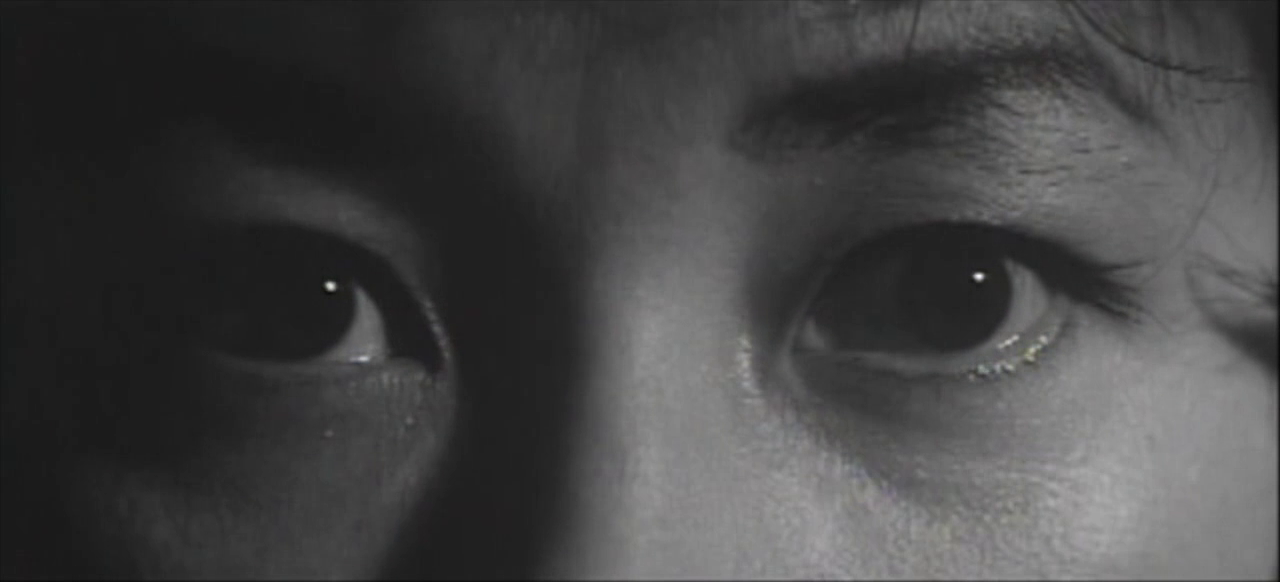
Blue Breasts was made right after The Boy Who Came Back. Anticipating a hit with Suzuki's first Akira Kobayashi melodrama, Nikkatsu set up a follow-up which was not a true sequel, but rather, a complete inversion of the previous movie. The Boy Who Came Back was a story of a poor boy saved from a wild life by an attractive social worker––one who had to learn to keep her hands to herself on the job. Blue Breasts will present us with a fully opposite tale, of an upper-middle-class boy who drags his stepmother into his wild life when she attempts to become closer to him –– igniting a descent into sexual exploitation for the young woman, who couldn't leave well enough alone. In the first film, Sachiko Hidari's social worker saves Kobayashi's endangered, violent teen by reuniting him with his age-appropriate girlfriend, dashing her own romantic prospects with him. In this second film, Kobayashi has an age-appropriate girlfriend, but here he leads her into danger, unwittingly making her the target of his vicious, Sun-Tribe-coded friends. Each drama leads to an opposite conclusion, as well; in The Boy Who Came Back, Kobayashi convinces the police he's on the straight-and-narrow, leading them to help him finger his former Sun Tribe associates and send them to jail. In Blue Breasts, one of the villains has a baby and an accompanying, somewhat implausible change-of-heart, no one goes to prison (though the villains of this film really deserve it more than in the first film, even), but the stepmother confronts her exploiters, gets her own back in a way, and then is rescued from the brink of despair not by Kobayashi, but by Kobayashi's very pure-hearted girlfriend, who was hurt by Kobayashi's friends as well.
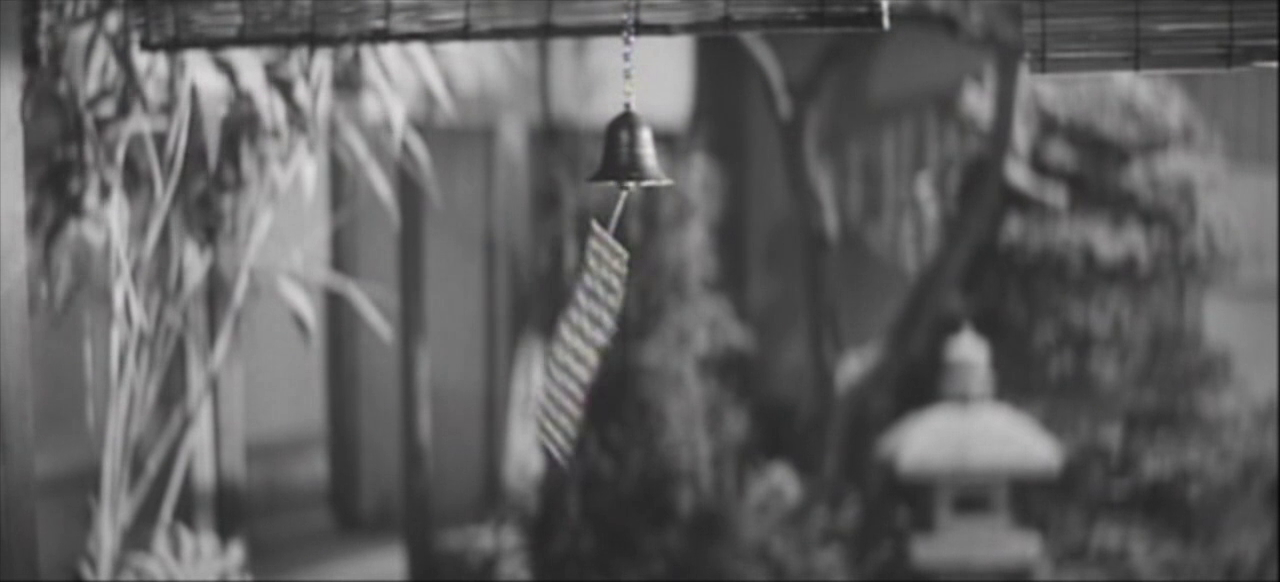
In spite of all these uncanny similarities and reversals, the film that results is considerably different than The Boy Who Came Back, much truer to Suzuki's personality and point-of-view, and in spite of a somewhat unsatisfying ending twist, a far better viewing experience. And in yet another inversion, while The Boy Who Came Back is Suzuki's most generic movie to date––undoubtedly soaked in new pressures as a result of a bigger budget and two significant stars attached––Blue Breasts is Suzuki's most experimental movie to this point in his filmography, featuring a centerpiece sequence more formally surreal and unprecedented than anything Suzuki had done or would do until Youth of the Beast, 5 years and 18 films later.
[TEXT ONLY]
[TEXT & IMAGES]
Blue Breasts was made right after The Boy Who Came Back. Anticipating a hit with Suzuki's first Akira Kobayashi melodrama, Nikkatsu set up a follow-up which was not a true sequel, but rather, a complete inversion of the previous movie. The Boy Who Came Back was a story of a poor boy saved from a wild life by an attractive social worker––one who had to learn to keep her hands to herself on the job. Blue Breasts will present us with a fully opposite tale, of an upper-middle-class boy who drags his stepmother into his wild life when she attempts to become closer to him –– igniting a descent into sexual exploitation for the young woman, who couldn't leave well enough alone. In the first film, Sachiko Hidari's social worker saves Kobayashi's endangered, violent teen by reuniting him with his age-appropriate girlfriend, dashing her own romantic prospects with him. In this second film, Kobayashi has an age-appropriate girlfriend, but here he leads her into danger, unwittingly making her the target of his vicious, Sun-Tribe-coded friends. Each drama leads to an opposite conclusion, as well; in The Boy Who Came Back, Kobayashi convinces the police he's on the straight-and-narrow, leading them to help him finger his former Sun Tribe associates and send them to jail. In Blue Breasts, one of the villains has a baby and an accompanying, somewhat implausible change-of-heart, no one goes to prison (though the villains of this film really deserve it more than in the first film, even), but the stepmother confronts her exploiters, gets her own back in a way, and then is rescued from the brink of despair not by Kobayashi, but by Kobayashi's very pure-hearted girlfriend, who was hurt by Kobayashi's friends as well.
In spite of all these uncanny similarities and reversals, the film that results is considerably different than The Boy Who Came Back, much truer to Suzuki's personality and point-of-view, and in spite of a somewhat unsatisfying ending twist, a far better viewing experience. And in yet another inversion, while The Boy Who Came Back is Suzuki's most generic movie to date––undoubtedly soaked in new pressures as a result of a bigger budget and two significant stars attached––Blue Breasts is Suzuki's most experimental movie to this point in his filmography, featuring a centerpiece sequence more formally surreal and unprecedented than anything Suzuki had done or would do until Youth of the Beast, 5 years and 18 films later.
[TEXT ONLY]
Spoiler
SUBTITLES SCHNUBTITLES, QUALITY CAVEATS
Because of that artistic innovation, it's a shame this film has been so buried, even amongst the rarities of Suzuki's filmography. Years ago, when all I had from which to see these films were VHS recordings off of television, even though they all looked wan and bad, Blue Breasts looked demonstrably worse. At the moment, the film is streaming in hi-def in Japan, but you can see the 720p quality in the caps here.
It looks better than the old television recording, but this is still the worst presentation I've yet seen for a Suzuki picture. You can see chromatic aberrations all over the place, and the image is horribly soft and indistinct. This is the best I've ever seen it, though.
This is another of the occasional movies in these writeups where I don't have an English subtitle source for the picture. I've used every various description of the film I could find to figure out what was going on as I watched it, including William Carroll's analysis of the film from his book (more thorough than for any other Suzuki film in the book, actually). And the film is very visually clear –– much moreso than its immediate predecessor, thanks to the return of much of Suzuki's more skilled team behind the camera.
STARS ALIGN
The Boy Who Came Back was not a hit, but Nikkatsu obviously had high hopes for it, and it did adequate business for the era (like most moderately successful Nikkatsu films, it stayed in theaters for a week). Blue Breasts hits theaters three-and-a-half months later, meaning that the company already knew the first film didn't do gangbusters, and yet they went ahead with this second film, to see if they could build some heat based on the pairing of director Suzuki, star Kobayashi, and a female co-star. In The Boy Who Came Back, Kobayashi's female co-star, Sachiko Hidari, arguably had a higher public profile than he did at that point. Probably the reverse is true here, as Kobayashi is paired with theater actress and recent Nikkatsu hire Misako Watanabe. Nonetheless, just as Hidari's role was the focal one, with probably more screen-time and with the empathy of the mis-en-scene behind her, in Blue Breasts Watanabe's role is clearly the focal one over Kobayashi's.
This is Watanabe's first film directed by Suzuki, and her largest role in one of his films. Wisely, Suzuki uses the exceptional actress' face as a measure of the movie's dramatic temperature throughout. The picture is really about Watanabe's character; her goals and ambitions drive the film, revealing other characters and their agendas, and the central narrative drives with laser-like focus towards Watanabe's character's story conclusion. Her character has a vivid past, which emerges unexpected in the midst of the movie and overlays the more casual action of the movie with a much darker meaning. Kobayashi, meanwhile, lurks around the edges of this picture. He isn't the violent figure, the magnet for sex, jealousy, and fights he was in the first film. In this one, he idolizes a guy who is essentially like that––albeit one with a lot less charisma.
This figure is played by Yuji Odaka, an only mildly successful matinee idol at Nikkatsu during this era. Odaka will go on to appear as the less dynamic and interesting lead in Smashing the O-Line (next to a far more intense Hiroyuki Nagato), and he'll be Hideaki Nitani's bete noir in Man with a Shotgun.
Blue Breasts is only Odaka's fifth film –– his 4th in 1958 –– and it's easy to see why this guy is so useful at Nikkatsu. He just steams machismo out of his pores, with a glimmering, tanned look and a very muscular, sensual strength. This character will be an unrepentant rapist for most of this film, but bear with me here; this is how he's portrayed; it isn't a very PC movie; amongst Suzuki's early pictures, this is one that feels closest to, say, a David Lynch film. The film endlessly sexualizes Odaka's character for a reason; he is Kobayashi's role model, the version of manhood Kobayashi's young man longs to become.
TIME FOR A PLOT
Misako Watanabe is Yoko, the younger, recently-wed wife of a wealthy older man, a company president. Why has she agreed to this marriage? The film will suggest that she's looking for a kind of sexless security; the husband is portrayed as dippy, unalert, and seemingly somewhat impotent. He looks after his pretty young wife like a treasure. Misako wants to be a good wife in return, and that means becoming a mother to her husband's teenaged son. In the first action of the movie, Misako volunteers to take the son Hiroshi, played by Akira Kobayashi, shopping.
This seems like a sweet and innocent outing, a chance to leave the affluent suburbs and head into town. The outing takes a dark turn immediately once Yoko and Hiroshi are off on their shopping trip. Hiroshi takes money from Yoko's handbag, and gives her an invitation to an art show, and announces he has somewhere else to be. We realize that, outside of Hiroshi's father's home, he's a delinquent, an aspiring Sun-Tribe thug. He leaves Yoko in the shopping center, goes out, and picks up a girl named Setsuko. Setsuko, we come to learn, wants to be a delinquent in order to get back at her oversexed-seeming mother. She and Hiroshi hook up very quickly here, and Hiroshi introduces Setsuko to his brother Ken.
Ken makes a rough impression, living with his pregnant girlfriend in the girlfriend's cafe, pocketing the money Hiroshi has taken from Yoko (at, we learn, Ken's suggestion). He appears to be editing a porno film in back of the cafe, and he's sort of the leader of a rough group of Sun-Tribe-coded kids who hang out at the cafe. Ken seems dangerous, eyeing everyone with a predatory look, flexing frightening amounts of muscle, and giving very angry vibes. He obviously exploits Hiroshi, and we see him abuse Michi, his pregnant girlfriend, and cheat on her. Yuji Odaka as Ken seems to almost suck the life out of the room every time he enters, radiating aggression. Hiroshi, though, is enthralled by this big brother. We can tell pretty quickly he would like nothing more than to be like Ken himself.
Setsuko seems bothered by all these cross-jangling vibes. Does she really want to be a delinquent? Does Hiroshi? We can see that Michi looks at them both with a baleful eye.
Yoko, meanwhile, with nothing to do as the rain sets in, heads to the art gallery to see the paintings. Here the movie starts to get into much stranger territory. Yoko wanders the art gallery, looking at pictures, perhaps trying to figure out what Hiroshi wants her to get from this experience. Then she comes upon a particular painting of a post-industrial landscape, and she freezes. Yoko stares intently, and becomes transfixed, horrified. She starts to swoon, and the lights of the gallery fade behind her. As she faints, all the paintings in the gallery crash to the floor.
Yoko wakes up in an office behind the gallery, with the painter, Takamura. We get some insight into what happened, I assume, and we discover Takamura's identity, but the upshot of this sequence is the connection Yoko makes with Takamura, who Yoko seems to respond to almost intimately. The connection between Takamura and Yoko develops from this point throughout the movie, leading Yoko closer and closer to an affair with the landscape painter.
Slowly, disparate-seeming strands of this story start to connect together. Yoko gets a letter asking her down to the cafe. There she meets Ken, who wants to blackmail her. He has film of Yoko, you see, from 7 years prior, being raped in a desolate factory by a man who stalked her in there. Ken is sexually suggestive to Yoko, who retreats into the arms of the sympathetic painter, whom she is drawn towards an affair with. Hiroshi struggles with how to treat Setsuko.
In a gorgeous scene of sailing at an eerily empty, cold-looking beach, we see Hiroshi wavering between the gentle lightness Setsuko seems to really value in him (Setsuko herself seems less and less like the delinquent she professed to admire) and the aggressive way his older brother handles women, using them for his own desires without doing "girly" things like...going on dates, I guess.
Hiroshi petulantly capsizes their sailboat, forcing the couple to swim to shore. But Setsuko is unflappable –– this is the best date she's ever been on, she's excited for the future, everything is looking up. In the face of this, Hiroshi is clearly very conflicted.
HELL OF SOMEONE'S MAKING
As the blackmail plot unfolds, Yoko makes a connection between Takamura's painting and her rape 7 years ago. The painting is of the very spot where she was molested. Here is the most proto-Suzukian stylistic innovation of the era; Yoko stares at the painting of the factory, and her vision of the painting dissolves into her flashback, remembering her pursuit and rape by the mystery man. Then...
...The flashback, is interrupted by Ken's Taiyozoku friends, watching it as a film projection, commenting on it. Yoko is in the crowd with them. The men in the audience lust after the scene, but Setsuko stands up and demands the film be shut off. The men in the room shout her down, all seized by a kind of hot-blooded attitude. The women in the crowd are clearly distressed at the scene.
Yoko does her best to hold her composure, as Ken looks back at her, waiting for a reaction. Somehow, we have crossed from the painting to Yoko's memory, to the blackmail film Ken has on her, in an uninterrupted sequence. There are no clear markers that denote the transitions between elements, or the passage of time, or the movement of characters. The effect is swooningly surreal, but it serves an important purpose, tying the themes of the film together around these varied events. We realize Ken was there, and filmed the rape of Yoko, and that it's part of Ken's collection of pornographic films he uses like currency amongst his social set, throwing screening parties off-hours in the cafe. Suzuki is pretty clear here: Yoko's trauma is being packaged and exploited as entertainment, as the art of the budding filmmaker, Ken.
On the flip-side, we come to learn that Takamura, the painter of the factory where Yoko was molested, is more than he seems. A deeply disturbed creep, Takamura is revealed as the rapist who molested Yoko in the factory. He painted the factory almost as a trophy, a memento of his crime. It amuses him to taunt Yoko with the painting, stirring up her memories.
What's more? Takamura and Ken are half-brothers, partners in the crime against Yoko –– and both of them male artists, exploiting a woman's suffering at their own hands as part of their art. From Narita in Underworld Beauty to the titular Yumeji, Suzuki never goes easy on artists, but I think in this film his critique starts to clarify in a way that echoes in portrayals of artists in the films before and after this one. It's clear Suzuki is very alert to the sexism of the art world.
What's even more more, Blue Breasts posits a world in which women's roles are being consciously restricted by the selfishness and violence of a male-oriented, capitalist society. Yoko is trapped between a husband who can't meet her needs and the husband's three, hideous, horrifically misogynist sons –– all of whom exploit her and other women for their art, their business, or to build up their fragile egos. She can't tell her husband what has happened, and yet, we have to sense that in some way the husband is largely responsible for what his children are like; after all, he occupies the principal position of exploitation –– indeed, his corporate success is based upon the capitalism's naked capacity for rapacious consumption, the model for all his children's most aberrant behaviors (we might also assume that the husband's inconstancy has resulted in the fracture of all these young mens' psyches, resulting in their propensities for sadism –– I wouldn't be surprised if that was the emphasis of some of the dialogue in these scenes).
And now Setsuko is being lined up as Ken's next target. She is raped while Hiroshi is otherwise occupied, and Yoko is able to confront a distraught Hiroshi. Together, they resolve to get to the bottom of this creche of rape and exploitation.
Hiroshi confronts Ken, but the result is more that Hiroshi reveals himself than anything else. Hiroshi weeps and whines at his brother, struggling to give up the macho personality Hiroshi admired and emulated in his brother, but that was ultimately not what he held in his own heart. We see Hiroshi for the vulnerable, even pitiable, sensitive boy he is, and Ken seems embarrassed by the confrontation. What breaks the dam here is that Michi suddenly has her baby. This is the part of the film that feels a little implausible, because looking at this new generation of this f*cked-up family, Ken has a kind of conversion. He seems to know himself for who he is, and he seems to confess to Yoko that he wants to change. I guess, charitably, the thunderclap of responsibility for a life other than his own has knocked Ken sideways; a little corny, but stranger things have happened?
Yoko moves on to confront Takamura, but the painter is a much slicker sort of pervert than his younger brothers. Takamura clearly won't give up his conceited position until Yoko, fighting back against her trauma, grabs a palette knife and rends open the painting of her violation. Takamura is horrified, and is going to become violent.
Hiroshi, who arrives here, isn't able to fend off the bigger, stronger man. But then Ken appears, and says something to his brother. I would love to know what is said here. It basically ends the threat of the film; Ken just stops it cold. Hiroshi and Setsuko join Yoko, leaving the painters house and wandering into the woods.
Yoko appears devastated. Freeing herself from her psychic persecution has not solved any of her material problems, the fact that she was raped by her husband's eldest son, almost had an affair with him, was almost raped by the middle son, and was being extorted by them both...she can't very well just tell her husband about this. She seems to be considering dying, but here Setsuko steps in, talking to Yoko woman to woman, and seems to convince her that they have to struggle on, somehow. That's the end of the film. It's pretty freaking dark.
MY TAKE
More and more strongly I feel this film as a significant artistic benchmark in Suzuki's early career. Underworld Beauty in the same year shows Suzuki's expanded confidence with and control over what and how his movie is communicating; within a rigid genre structure, he starts to be able to say very personal things, to leverage his sardonic wit and his unique sense of humor as he crafts unique themes without completely rewriting the picture (as he tried to do on Eight Hours of Fear). In Blue Breasts Suzuki, freed from the constraints of a more rigid entertainment genre, can use the more expressionistic, even phantasmagorical aspects of melodrama to create a film with something unique and probing to say. That the film dwells upon the responsibility of artists and uses that to illuminate the reckless harm of macho male self-centeredness, is really unusual. So this is one of the first Suzuki films to be hypercharged, through and through, by Suzuki's unique and transformative intellect and creative capacity.
Because of that artistic innovation, it's a shame this film has been so buried, even amongst the rarities of Suzuki's filmography. Years ago, when all I had from which to see these films were VHS recordings off of television, even though they all looked wan and bad, Blue Breasts looked demonstrably worse. At the moment, the film is streaming in hi-def in Japan, but you can see the 720p quality in the caps here.
It looks better than the old television recording, but this is still the worst presentation I've yet seen for a Suzuki picture. You can see chromatic aberrations all over the place, and the image is horribly soft and indistinct. This is the best I've ever seen it, though.
This is another of the occasional movies in these writeups where I don't have an English subtitle source for the picture. I've used every various description of the film I could find to figure out what was going on as I watched it, including William Carroll's analysis of the film from his book (more thorough than for any other Suzuki film in the book, actually). And the film is very visually clear –– much moreso than its immediate predecessor, thanks to the return of much of Suzuki's more skilled team behind the camera.
STARS ALIGN
The Boy Who Came Back was not a hit, but Nikkatsu obviously had high hopes for it, and it did adequate business for the era (like most moderately successful Nikkatsu films, it stayed in theaters for a week). Blue Breasts hits theaters three-and-a-half months later, meaning that the company already knew the first film didn't do gangbusters, and yet they went ahead with this second film, to see if they could build some heat based on the pairing of director Suzuki, star Kobayashi, and a female co-star. In The Boy Who Came Back, Kobayashi's female co-star, Sachiko Hidari, arguably had a higher public profile than he did at that point. Probably the reverse is true here, as Kobayashi is paired with theater actress and recent Nikkatsu hire Misako Watanabe. Nonetheless, just as Hidari's role was the focal one, with probably more screen-time and with the empathy of the mis-en-scene behind her, in Blue Breasts Watanabe's role is clearly the focal one over Kobayashi's.
This is Watanabe's first film directed by Suzuki, and her largest role in one of his films. Wisely, Suzuki uses the exceptional actress' face as a measure of the movie's dramatic temperature throughout. The picture is really about Watanabe's character; her goals and ambitions drive the film, revealing other characters and their agendas, and the central narrative drives with laser-like focus towards Watanabe's character's story conclusion. Her character has a vivid past, which emerges unexpected in the midst of the movie and overlays the more casual action of the movie with a much darker meaning. Kobayashi, meanwhile, lurks around the edges of this picture. He isn't the violent figure, the magnet for sex, jealousy, and fights he was in the first film. In this one, he idolizes a guy who is essentially like that––albeit one with a lot less charisma.
This figure is played by Yuji Odaka, an only mildly successful matinee idol at Nikkatsu during this era. Odaka will go on to appear as the less dynamic and interesting lead in Smashing the O-Line (next to a far more intense Hiroyuki Nagato), and he'll be Hideaki Nitani's bete noir in Man with a Shotgun.
Blue Breasts is only Odaka's fifth film –– his 4th in 1958 –– and it's easy to see why this guy is so useful at Nikkatsu. He just steams machismo out of his pores, with a glimmering, tanned look and a very muscular, sensual strength. This character will be an unrepentant rapist for most of this film, but bear with me here; this is how he's portrayed; it isn't a very PC movie; amongst Suzuki's early pictures, this is one that feels closest to, say, a David Lynch film. The film endlessly sexualizes Odaka's character for a reason; he is Kobayashi's role model, the version of manhood Kobayashi's young man longs to become.
TIME FOR A PLOT
Misako Watanabe is Yoko, the younger, recently-wed wife of a wealthy older man, a company president. Why has she agreed to this marriage? The film will suggest that she's looking for a kind of sexless security; the husband is portrayed as dippy, unalert, and seemingly somewhat impotent. He looks after his pretty young wife like a treasure. Misako wants to be a good wife in return, and that means becoming a mother to her husband's teenaged son. In the first action of the movie, Misako volunteers to take the son Hiroshi, played by Akira Kobayashi, shopping.
This seems like a sweet and innocent outing, a chance to leave the affluent suburbs and head into town. The outing takes a dark turn immediately once Yoko and Hiroshi are off on their shopping trip. Hiroshi takes money from Yoko's handbag, and gives her an invitation to an art show, and announces he has somewhere else to be. We realize that, outside of Hiroshi's father's home, he's a delinquent, an aspiring Sun-Tribe thug. He leaves Yoko in the shopping center, goes out, and picks up a girl named Setsuko. Setsuko, we come to learn, wants to be a delinquent in order to get back at her oversexed-seeming mother. She and Hiroshi hook up very quickly here, and Hiroshi introduces Setsuko to his brother Ken.
Ken makes a rough impression, living with his pregnant girlfriend in the girlfriend's cafe, pocketing the money Hiroshi has taken from Yoko (at, we learn, Ken's suggestion). He appears to be editing a porno film in back of the cafe, and he's sort of the leader of a rough group of Sun-Tribe-coded kids who hang out at the cafe. Ken seems dangerous, eyeing everyone with a predatory look, flexing frightening amounts of muscle, and giving very angry vibes. He obviously exploits Hiroshi, and we see him abuse Michi, his pregnant girlfriend, and cheat on her. Yuji Odaka as Ken seems to almost suck the life out of the room every time he enters, radiating aggression. Hiroshi, though, is enthralled by this big brother. We can tell pretty quickly he would like nothing more than to be like Ken himself.
Setsuko seems bothered by all these cross-jangling vibes. Does she really want to be a delinquent? Does Hiroshi? We can see that Michi looks at them both with a baleful eye.
Yoko, meanwhile, with nothing to do as the rain sets in, heads to the art gallery to see the paintings. Here the movie starts to get into much stranger territory. Yoko wanders the art gallery, looking at pictures, perhaps trying to figure out what Hiroshi wants her to get from this experience. Then she comes upon a particular painting of a post-industrial landscape, and she freezes. Yoko stares intently, and becomes transfixed, horrified. She starts to swoon, and the lights of the gallery fade behind her. As she faints, all the paintings in the gallery crash to the floor.
Yoko wakes up in an office behind the gallery, with the painter, Takamura. We get some insight into what happened, I assume, and we discover Takamura's identity, but the upshot of this sequence is the connection Yoko makes with Takamura, who Yoko seems to respond to almost intimately. The connection between Takamura and Yoko develops from this point throughout the movie, leading Yoko closer and closer to an affair with the landscape painter.
Slowly, disparate-seeming strands of this story start to connect together. Yoko gets a letter asking her down to the cafe. There she meets Ken, who wants to blackmail her. He has film of Yoko, you see, from 7 years prior, being raped in a desolate factory by a man who stalked her in there. Ken is sexually suggestive to Yoko, who retreats into the arms of the sympathetic painter, whom she is drawn towards an affair with. Hiroshi struggles with how to treat Setsuko.
In a gorgeous scene of sailing at an eerily empty, cold-looking beach, we see Hiroshi wavering between the gentle lightness Setsuko seems to really value in him (Setsuko herself seems less and less like the delinquent she professed to admire) and the aggressive way his older brother handles women, using them for his own desires without doing "girly" things like...going on dates, I guess.
Hiroshi petulantly capsizes their sailboat, forcing the couple to swim to shore. But Setsuko is unflappable –– this is the best date she's ever been on, she's excited for the future, everything is looking up. In the face of this, Hiroshi is clearly very conflicted.
HELL OF SOMEONE'S MAKING
As the blackmail plot unfolds, Yoko makes a connection between Takamura's painting and her rape 7 years ago. The painting is of the very spot where she was molested. Here is the most proto-Suzukian stylistic innovation of the era; Yoko stares at the painting of the factory, and her vision of the painting dissolves into her flashback, remembering her pursuit and rape by the mystery man. Then...
...The flashback, is interrupted by Ken's Taiyozoku friends, watching it as a film projection, commenting on it. Yoko is in the crowd with them. The men in the audience lust after the scene, but Setsuko stands up and demands the film be shut off. The men in the room shout her down, all seized by a kind of hot-blooded attitude. The women in the crowd are clearly distressed at the scene.
Yoko does her best to hold her composure, as Ken looks back at her, waiting for a reaction. Somehow, we have crossed from the painting to Yoko's memory, to the blackmail film Ken has on her, in an uninterrupted sequence. There are no clear markers that denote the transitions between elements, or the passage of time, or the movement of characters. The effect is swooningly surreal, but it serves an important purpose, tying the themes of the film together around these varied events. We realize Ken was there, and filmed the rape of Yoko, and that it's part of Ken's collection of pornographic films he uses like currency amongst his social set, throwing screening parties off-hours in the cafe. Suzuki is pretty clear here: Yoko's trauma is being packaged and exploited as entertainment, as the art of the budding filmmaker, Ken.
On the flip-side, we come to learn that Takamura, the painter of the factory where Yoko was molested, is more than he seems. A deeply disturbed creep, Takamura is revealed as the rapist who molested Yoko in the factory. He painted the factory almost as a trophy, a memento of his crime. It amuses him to taunt Yoko with the painting, stirring up her memories.
What's more? Takamura and Ken are half-brothers, partners in the crime against Yoko –– and both of them male artists, exploiting a woman's suffering at their own hands as part of their art. From Narita in Underworld Beauty to the titular Yumeji, Suzuki never goes easy on artists, but I think in this film his critique starts to clarify in a way that echoes in portrayals of artists in the films before and after this one. It's clear Suzuki is very alert to the sexism of the art world.
What's even more more, Blue Breasts posits a world in which women's roles are being consciously restricted by the selfishness and violence of a male-oriented, capitalist society. Yoko is trapped between a husband who can't meet her needs and the husband's three, hideous, horrifically misogynist sons –– all of whom exploit her and other women for their art, their business, or to build up their fragile egos. She can't tell her husband what has happened, and yet, we have to sense that in some way the husband is largely responsible for what his children are like; after all, he occupies the principal position of exploitation –– indeed, his corporate success is based upon the capitalism's naked capacity for rapacious consumption, the model for all his children's most aberrant behaviors (we might also assume that the husband's inconstancy has resulted in the fracture of all these young mens' psyches, resulting in their propensities for sadism –– I wouldn't be surprised if that was the emphasis of some of the dialogue in these scenes).
And now Setsuko is being lined up as Ken's next target. She is raped while Hiroshi is otherwise occupied, and Yoko is able to confront a distraught Hiroshi. Together, they resolve to get to the bottom of this creche of rape and exploitation.
Hiroshi confronts Ken, but the result is more that Hiroshi reveals himself than anything else. Hiroshi weeps and whines at his brother, struggling to give up the macho personality Hiroshi admired and emulated in his brother, but that was ultimately not what he held in his own heart. We see Hiroshi for the vulnerable, even pitiable, sensitive boy he is, and Ken seems embarrassed by the confrontation. What breaks the dam here is that Michi suddenly has her baby. This is the part of the film that feels a little implausible, because looking at this new generation of this f*cked-up family, Ken has a kind of conversion. He seems to know himself for who he is, and he seems to confess to Yoko that he wants to change. I guess, charitably, the thunderclap of responsibility for a life other than his own has knocked Ken sideways; a little corny, but stranger things have happened?
Yoko moves on to confront Takamura, but the painter is a much slicker sort of pervert than his younger brothers. Takamura clearly won't give up his conceited position until Yoko, fighting back against her trauma, grabs a palette knife and rends open the painting of her violation. Takamura is horrified, and is going to become violent.
Hiroshi, who arrives here, isn't able to fend off the bigger, stronger man. But then Ken appears, and says something to his brother. I would love to know what is said here. It basically ends the threat of the film; Ken just stops it cold. Hiroshi and Setsuko join Yoko, leaving the painters house and wandering into the woods.
Yoko appears devastated. Freeing herself from her psychic persecution has not solved any of her material problems, the fact that she was raped by her husband's eldest son, almost had an affair with him, was almost raped by the middle son, and was being extorted by them both...she can't very well just tell her husband about this. She seems to be considering dying, but here Setsuko steps in, talking to Yoko woman to woman, and seems to convince her that they have to struggle on, somehow. That's the end of the film. It's pretty freaking dark.
MY TAKE
More and more strongly I feel this film as a significant artistic benchmark in Suzuki's early career. Underworld Beauty in the same year shows Suzuki's expanded confidence with and control over what and how his movie is communicating; within a rigid genre structure, he starts to be able to say very personal things, to leverage his sardonic wit and his unique sense of humor as he crafts unique themes without completely rewriting the picture (as he tried to do on Eight Hours of Fear). In Blue Breasts Suzuki, freed from the constraints of a more rigid entertainment genre, can use the more expressionistic, even phantasmagorical aspects of melodrama to create a film with something unique and probing to say. That the film dwells upon the responsibility of artists and uses that to illuminate the reckless harm of macho male self-centeredness, is really unusual. So this is one of the first Suzuki films to be hypercharged, through and through, by Suzuki's unique and transformative intellect and creative capacity.
Spoiler
SUBTITLES SCHNUBTITLES, QUALITY CAVEATS
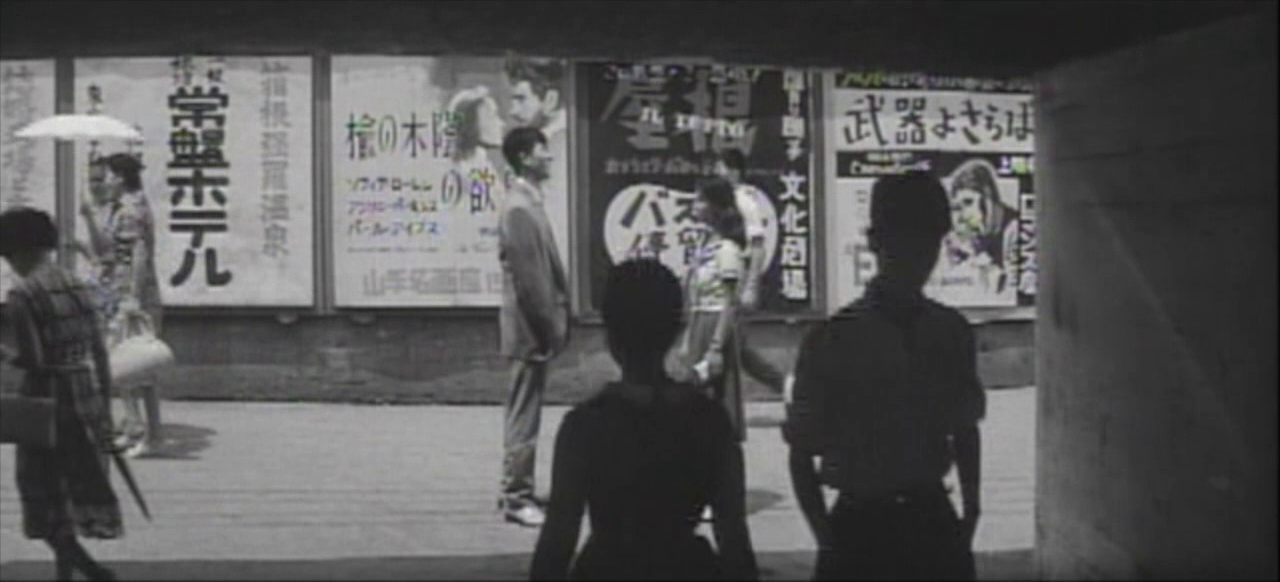
Because of that artistic innovation, it's a shame this film has been so buried, even amongst the rarities of Suzuki's filmography. Years ago, when all I had from which to see these films were VHS recordings off of television, even though they all looked wan and bad, Blue Breasts looked demonstrably worse. At the moment, the film is streaming in hi-def in Japan, but you can see the 720p quality in the caps here.
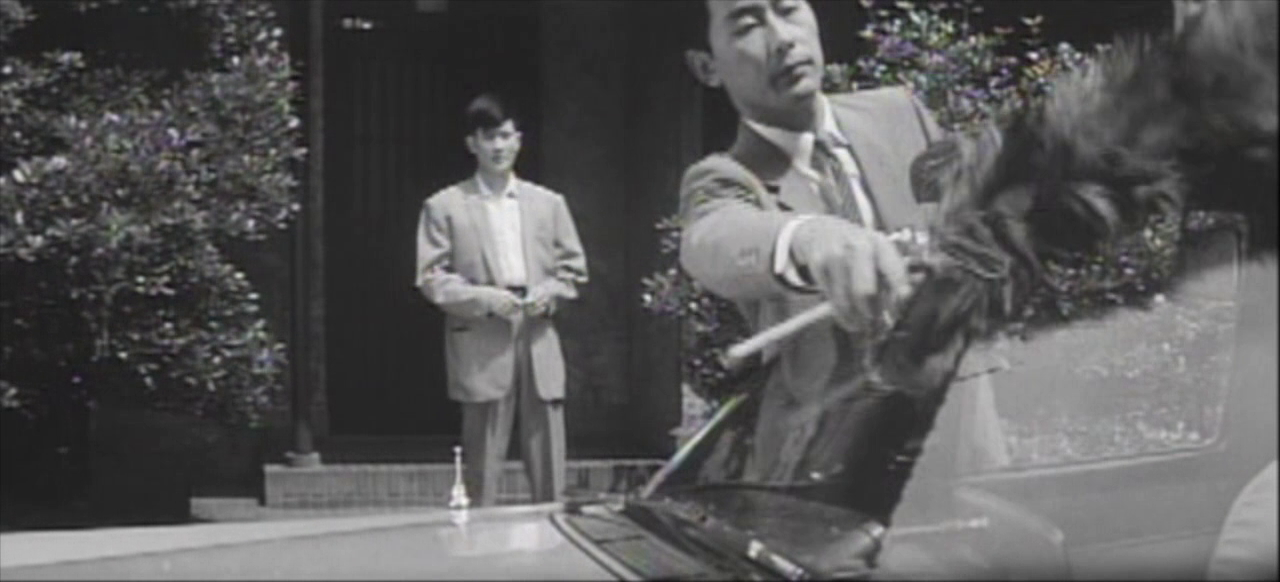
It looks better than the old television recording, but this is still the worst presentation I've yet seen for a Suzuki picture. The Japanese distributor is planning to release Blue Breasts on DVD in January, but if the other DVD releases from this tranche are anything to go by –– Passport to Darkness, for instance, or Million-Dollar Smash-and-Grab –– the quality won't be much of an improvement over the old television broadcasts. For some reason, this C-track of Suzuki titles are not getting new scans in Japan, I think, and we just get what we get. For that reason, I decided not to hold out, and I'll add some of those DVD screencaps for comparison later, if I can get my hands on the discs. But that means one of the caveats here is that the quality is particularly bad here. You can see chromatic aberrations all over the place, and the image is horribly soft and indistinct. This is the best I've ever seen it, though.
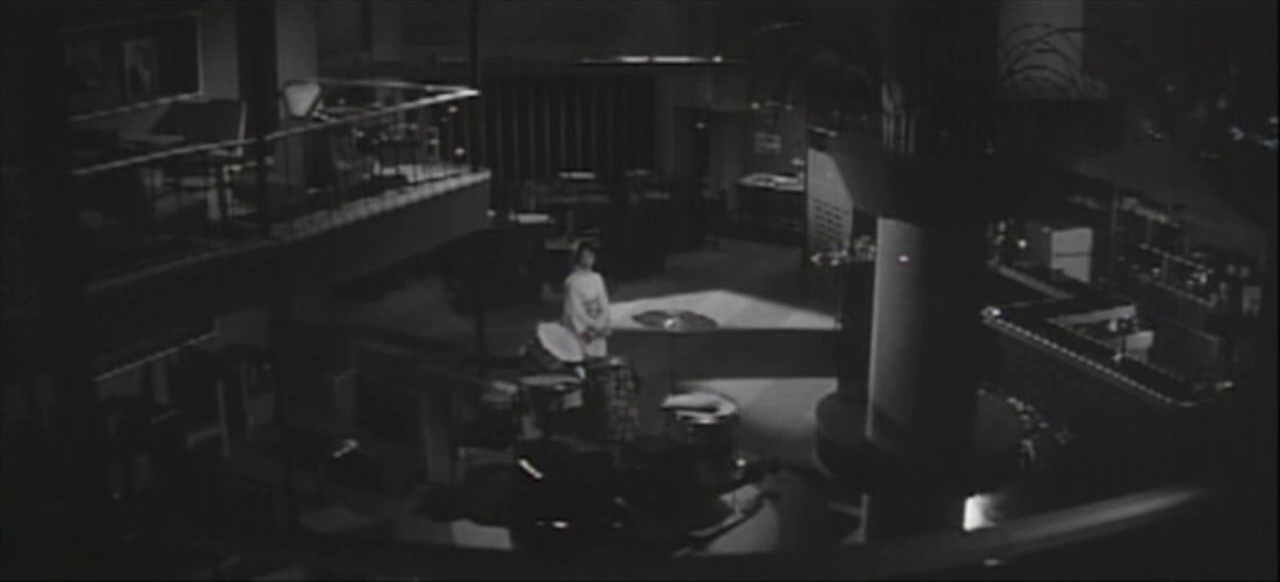
I don't think this is a lost film; I know English subtitled-prints have screened of it in other places, though I don't think it's played in L.A. (and if it has, I really don't want to know). But that leads to the second caveat; this is another of the occasional movies in these writeups where I don't have an English subtitle source for the picture. There's never been a home video release before; fans have translated some of the great obscure curios in Suzuki's filmography (like A Mummy's Love, A Hell of a Guy, Million-Dollar Smash-and-Grab and Fang in the Hole), but the undercard of Suzuki movies haven't been the subject of any more translation –– including some of Suzuki's most experimental and seemingly artistically significant films leading up to Youth of the Beast, like this, Cheers at the Harbor, and Those Who Bet on Me. I've used every various description of the film I could find to figure out what was going on as I watched it, including William Carroll's analysis of the film from his book (more thorough than for any other Suzuki film in the book, actually). And the film is very visually clear –– much moreso than its immediate predecessor, thanks to the return of much of Suzuki's more skilled team behind the camera. So I think I know what I'm doing, but we'll just have to roll the dice again! F*ck it.
STARS ALIGN
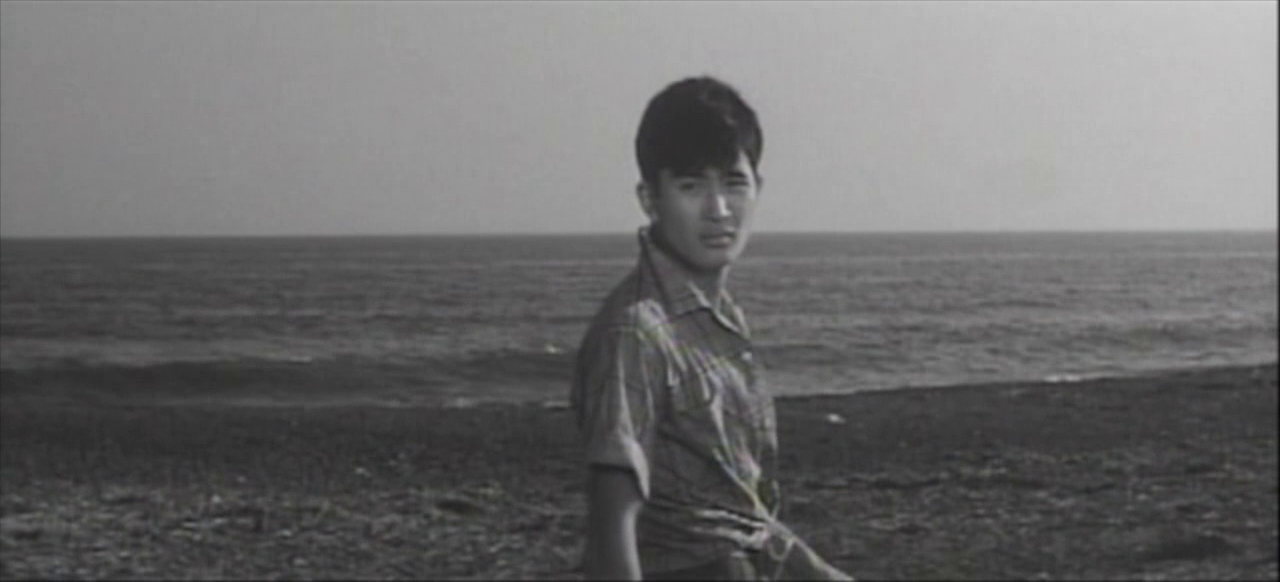
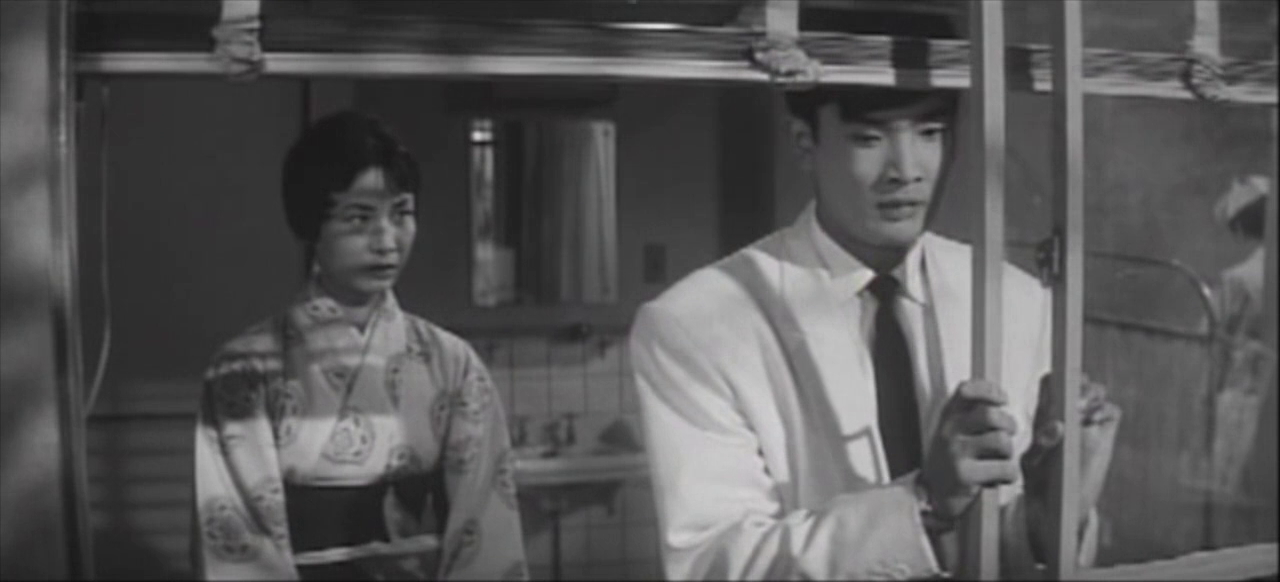
The Boy Who Came Back was not a hit, but Nikkatsu obviously had high hopes for it, and it did adequate business for the era (like most moderately successful Nikkatsu films, it stayed in theaters for a week). Blue Breasts hits theaters three-and-a-half months later, meaning that the company already knew the first film didn't do gangbusters, and yet they went ahead with this second film, to see if they could build some heat based on the pairing of director Suzuki, star Kobayashi, and a female co-star. After this film does worse than the first, they pivot Suzuki off into harder-boiled crime dramas. In The Boy Who Came Back, Kobayashi's female co-star, Sachiko Hidari, arguably had a higher public profile than he did at that point. Probably the reverse is true here, as Kobayashi is paired with theater actress and recent Nikkatsu hire Misako Watanabe. Nonetheless, just as Hidari's role was the focal one, with probably more screen-time and with the empathy of the mis-en-scene behind her, in Blue Breasts Watanabe's role is clearly the focal one over Kobayashi's.
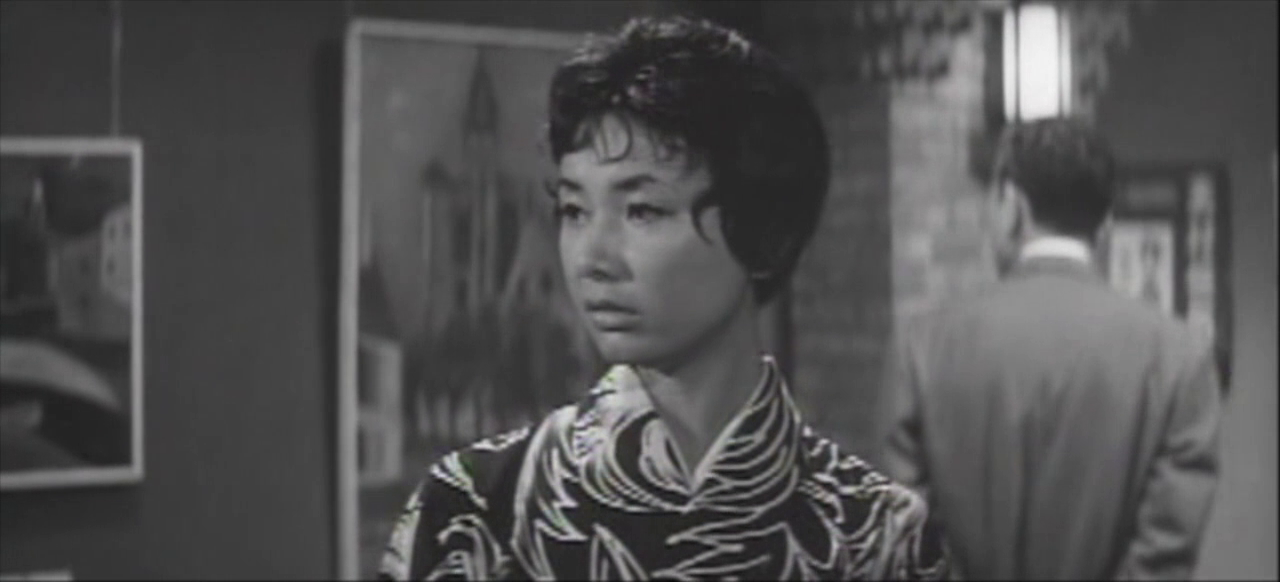
This is Watanabe's first film directed by Suzuki, and her largest role in one of his films. Wisely, Suzuki uses the exceptional actress' face as a measure of the movie's dramatic temperature throughout.
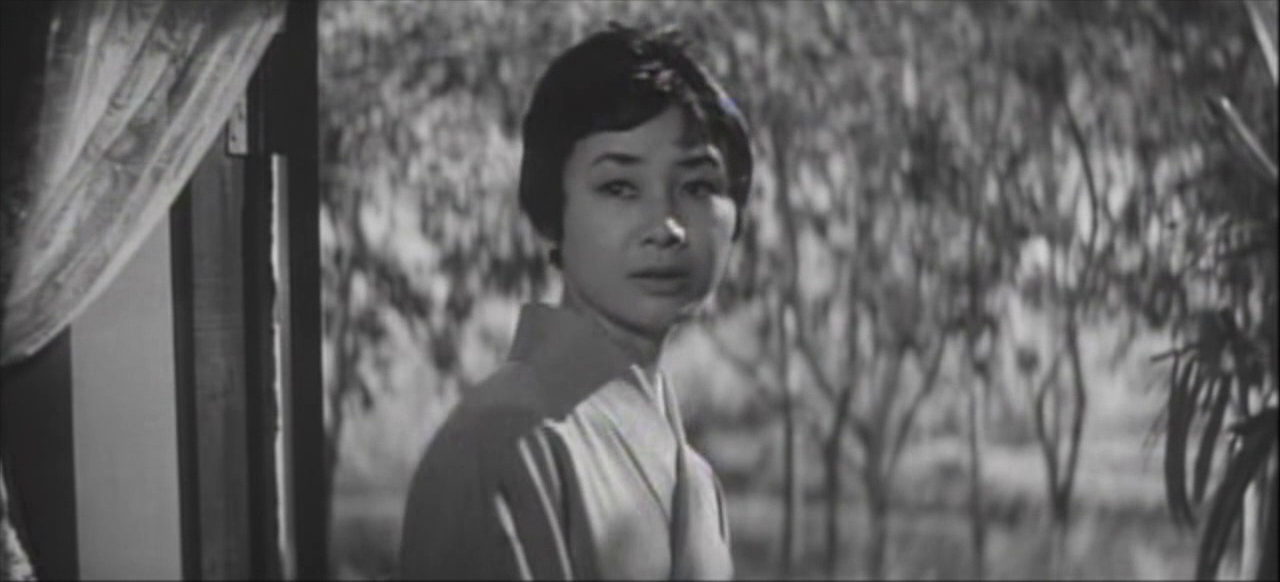
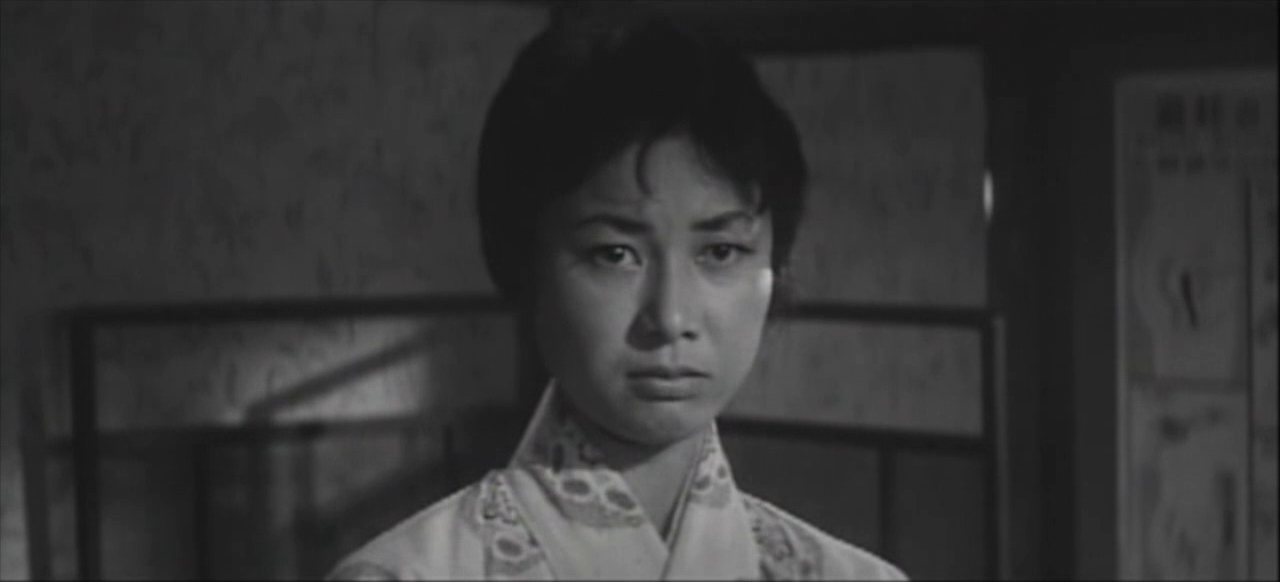
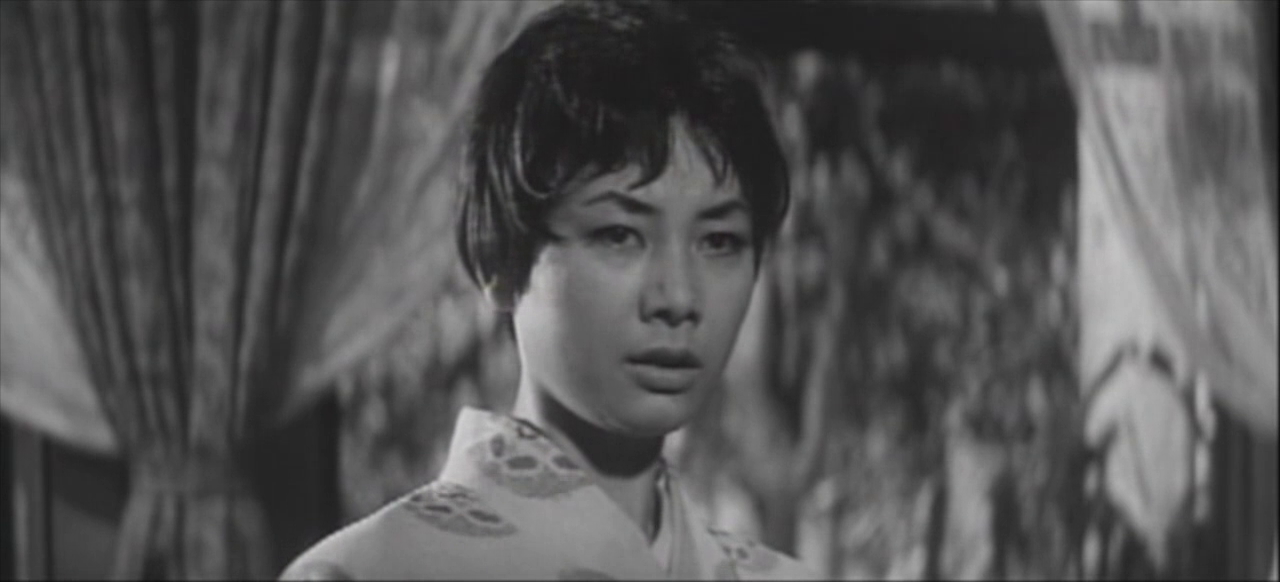
More than that, the picture is really about Watanabe's character; her goals and ambitions drive the film, revealing other characters and their agendas, and the central narrative drives with laser-like focus towards Watanabe's character's story conclusion. Her character has a vivid past, which emerges unexpected in the midst of the movie and overlays the more casual action of the movie with a much darker meaning. Kobayashi, meanwhile, lurks around the edges of this picture. He isn't the violent figure, the magnet for sex, jealousy, and fights he was in the first film. In this one, he idolizes a guy who is essentially like that––albeit one with a lot less charisma.
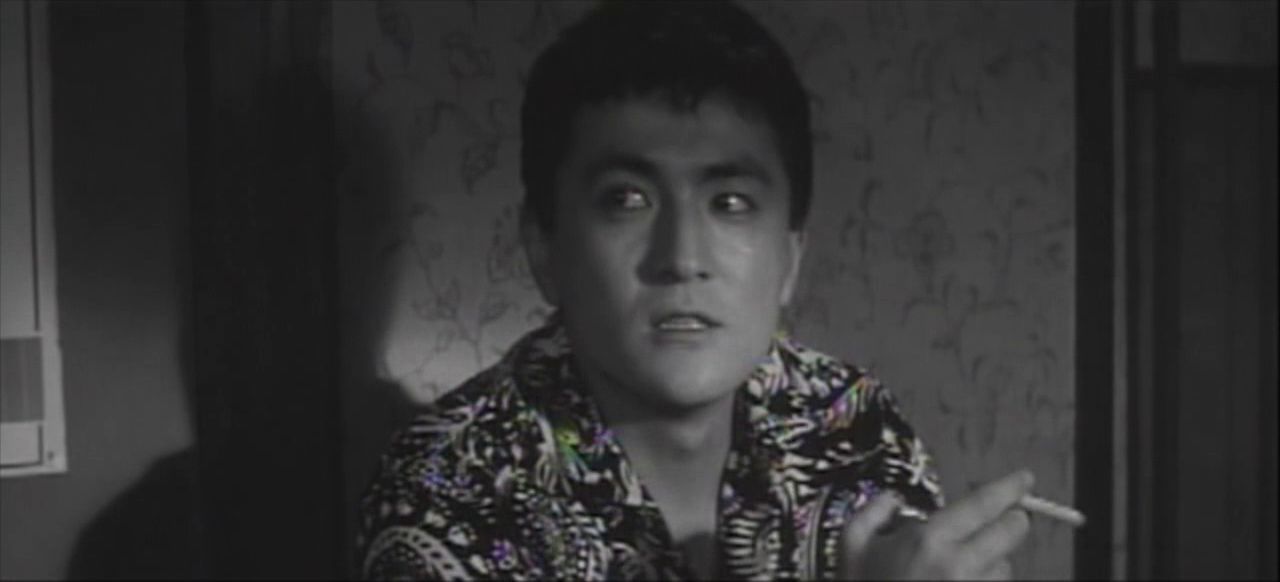
This figure is played by Yuji Odaka, an only mildly successful matinee idol at Nikkatsu during this era. Odaka will go on to appear as the less dynamic and interesting lead in Smashing the O-Line (next to a far more intense Hiroyuki Nagato), and he'll be Hideaki Nitani's bete noir in Man with a Shotgun. Odaka comes from the Haiyuza Theatre Company, one of Tokyo's "Big Three" classical theater companies. His movie debut is in the company's production of Samuil Marshak's Twelve Months, a movie called The Forest is Alive, and his next film, two years later, is for Nikkatsu.
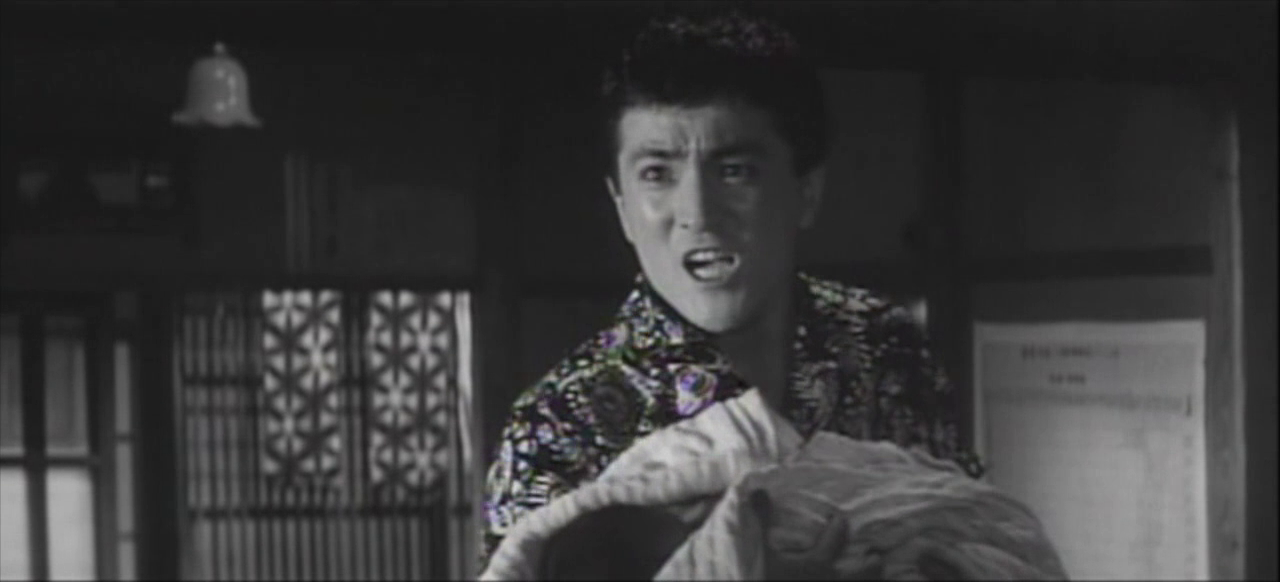
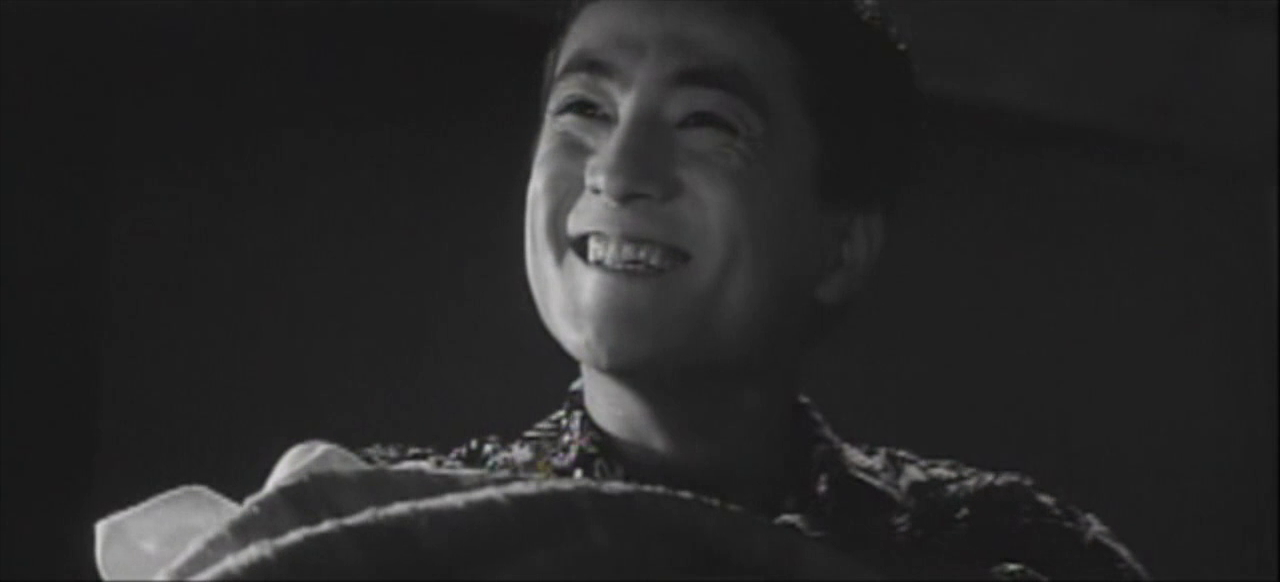
The rest of his 106-film career will be entirely at Nikkatsu, with the last two films at Yujiro Ishihara's company as it still shares production and distribution with Ishihara Pro. Odaka is mostly a supporting player in Ishihara films from early on, but he expands his 3rd-or-4th-billed presence into Izumi Ashikawa pictures and Akira Kobayashi pictures pretty quickly. In 1959 and 1960 there's a serious attempt to make Odaka a star in his own right, but after that it's on to supporting roles in Jo Shishido and Hideaki Nitani pictures. He does one last Suzuki film –– Tattooed Life. His career in film ends around 1971, but it looks like he pivoted into television afterwards. Purportedly he died in 2016.
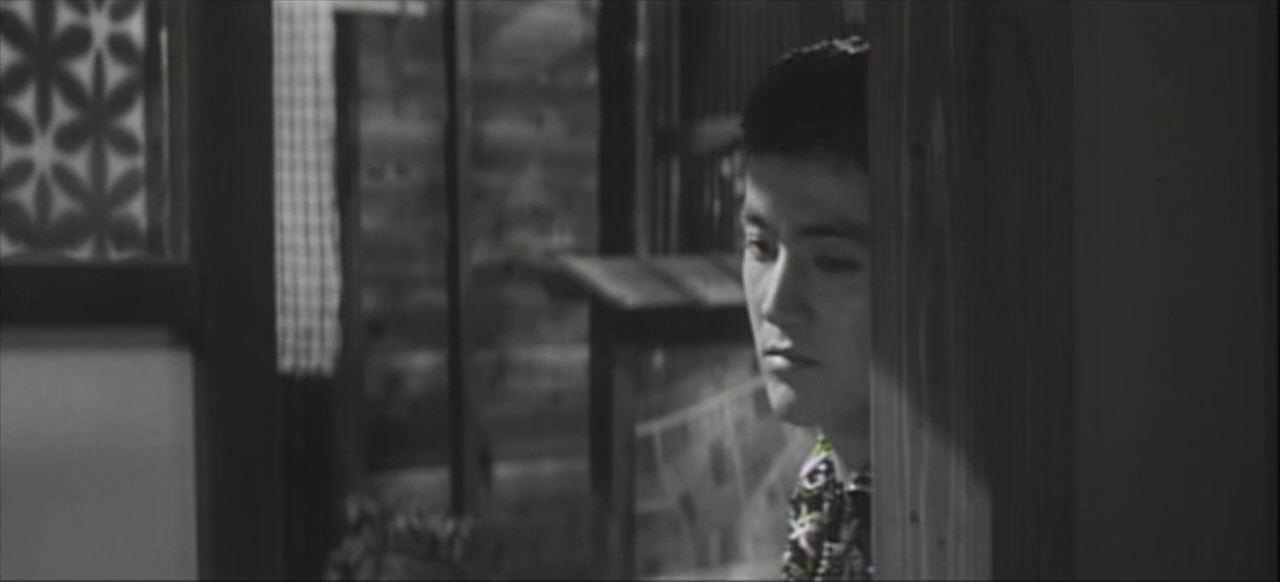
Blue Breasts is only Odaka's fifth film –– his 4th in 1958 –– and it's easy to see why this guy is so useful at Nikkatsu, just as it's a little baffling why he wasn't a bigger star. In Blue Breasts, Odaka creeps around, slouching, loafing, insinuating himself into scenes, then rippling with anger, with a very sexual violence that is honestly a little hard to take. And yet, he's just steams machismo out of his pores, with a glimmering, tanned look and a very muscular, sensual strength. This character will be an unrepentant rapist for most of this film, but bear with me here; this is how he's portrayed; it isn't a very PC movie; amongst Suzuki's early pictures, this is one that feels closest to, say, a David Lynch movie.
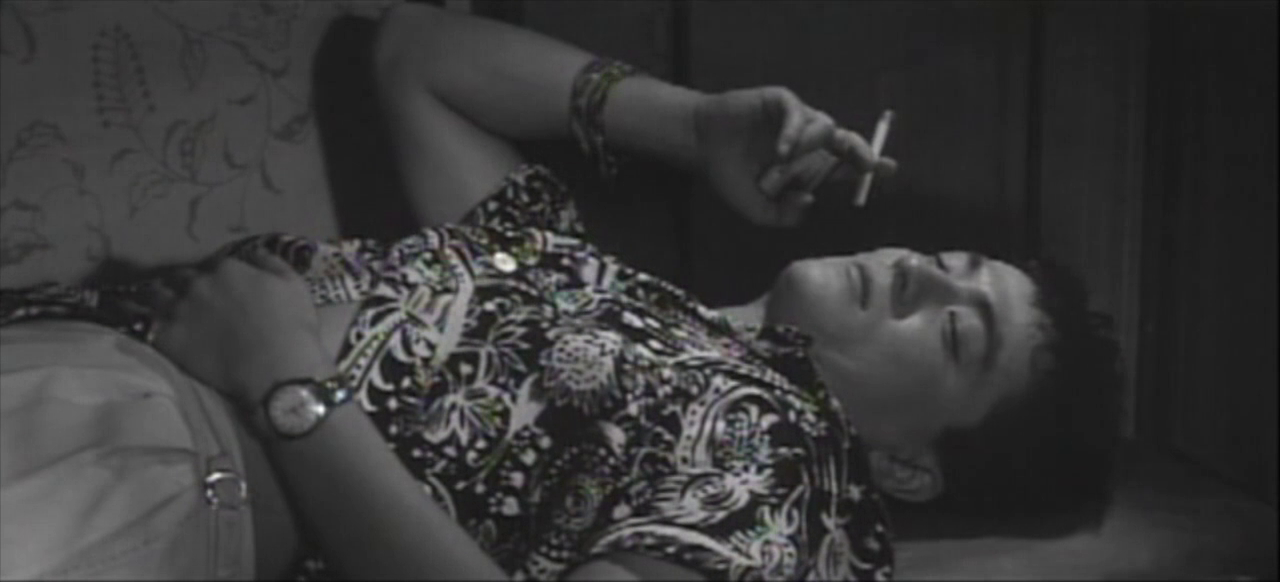
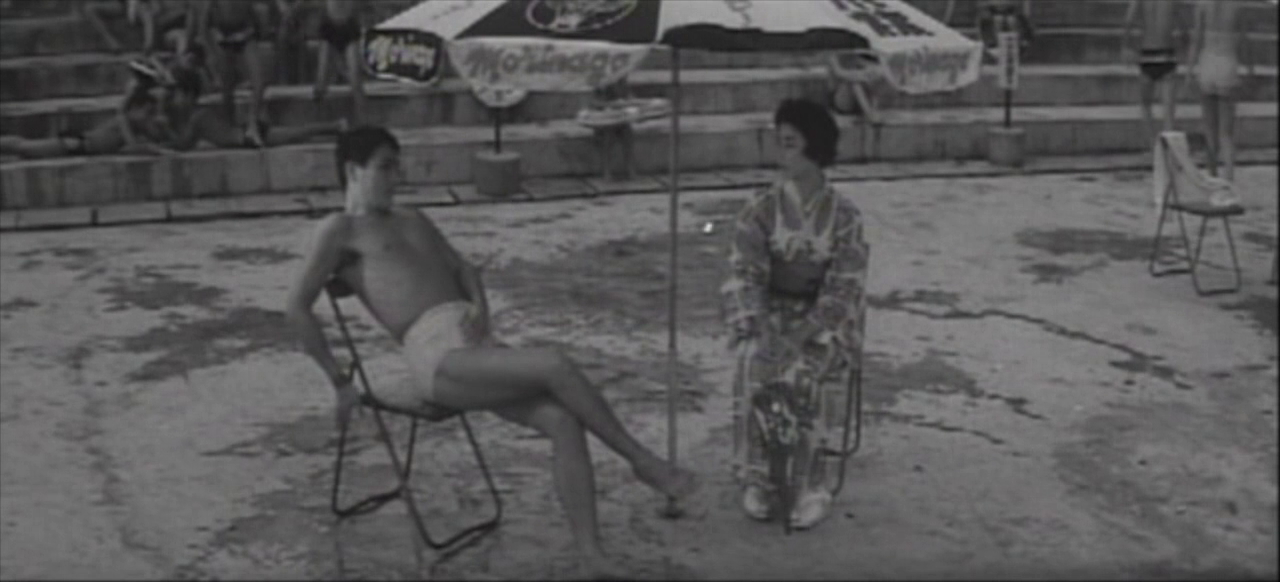
The film endlessly sexualizes Odaka's character for a reason; he is Kobayashi's role model, the version of manhood Kobayashi's young man longs to become.
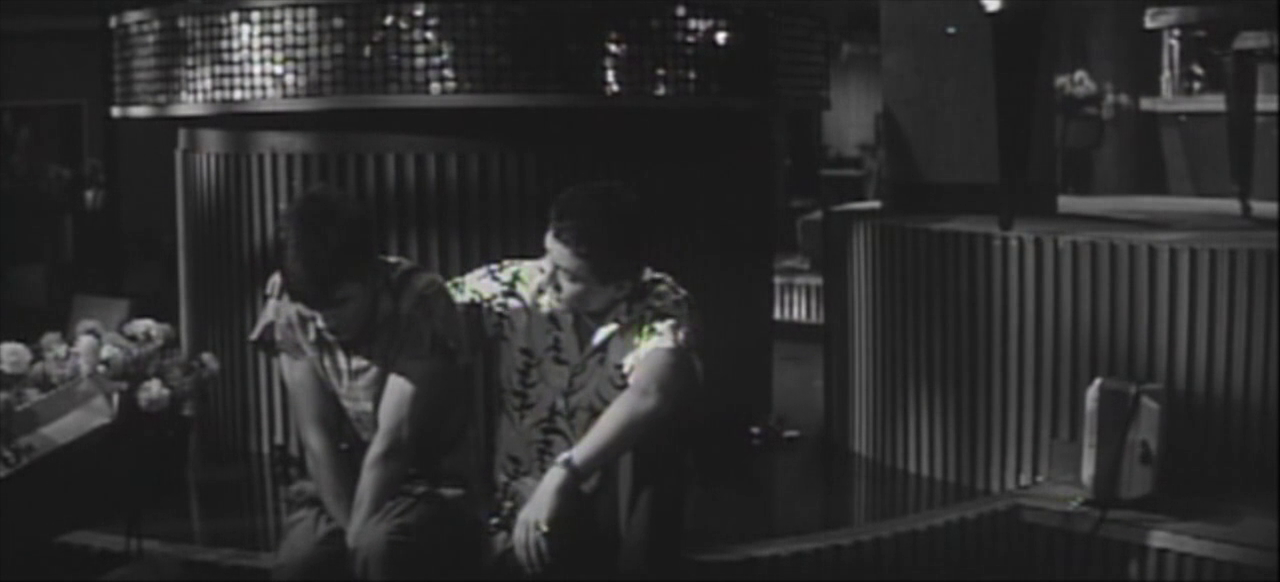
TIME FOR A PLOT
Let's get to the story, then. This isn't going to be an easy movie to see, and just so we better understand what's happening in this writeup, here's how I understand the plot to unfold:
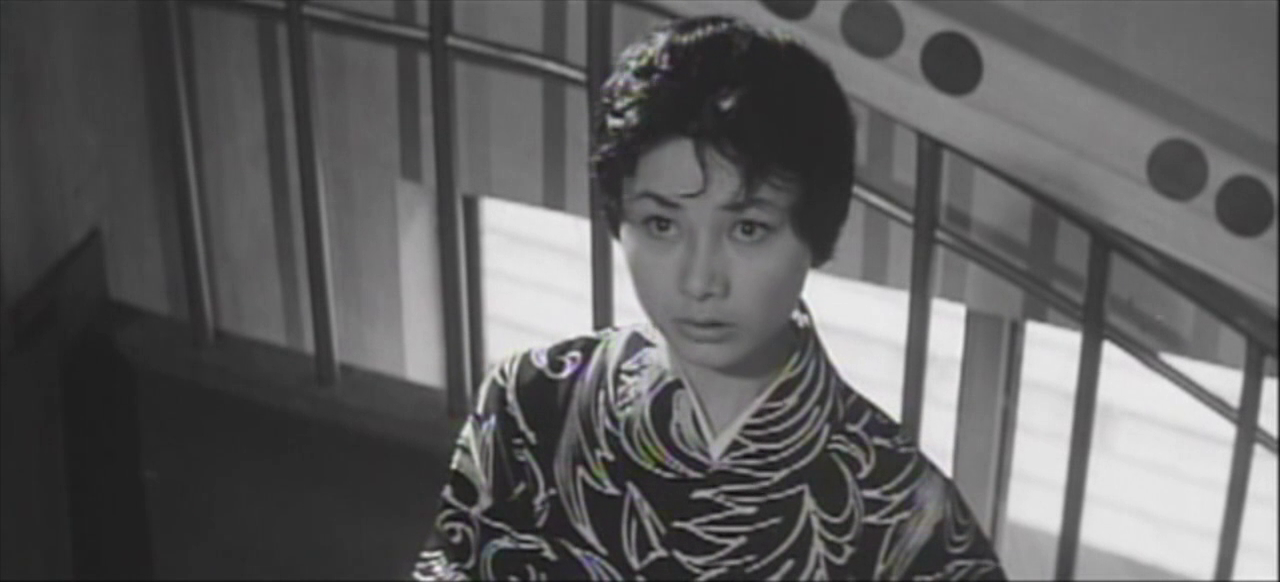
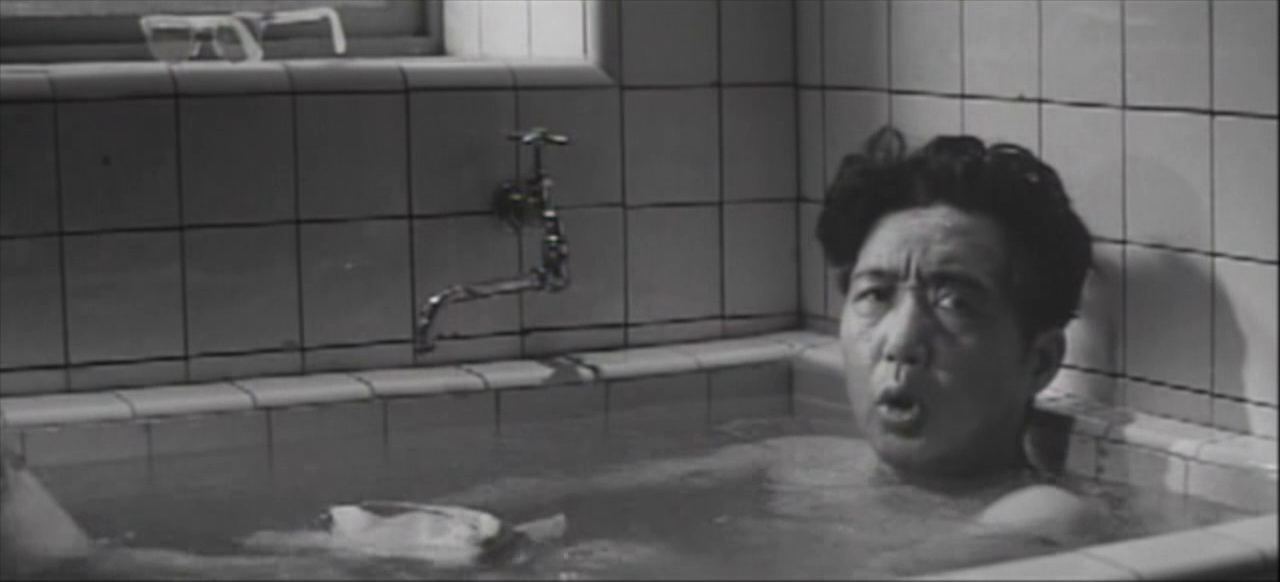
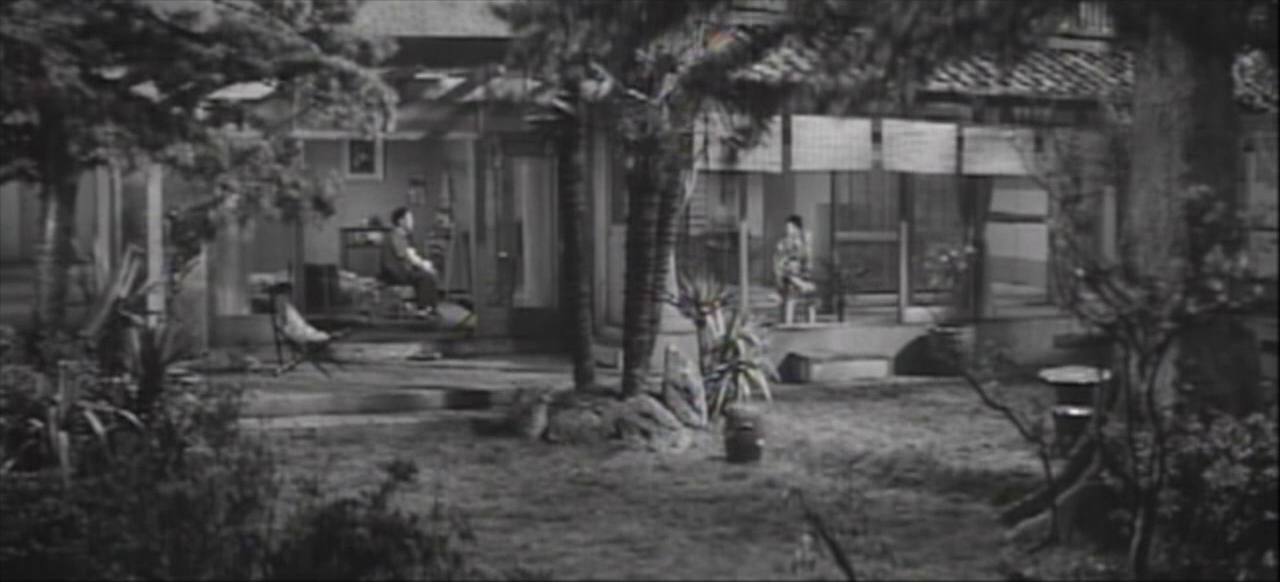
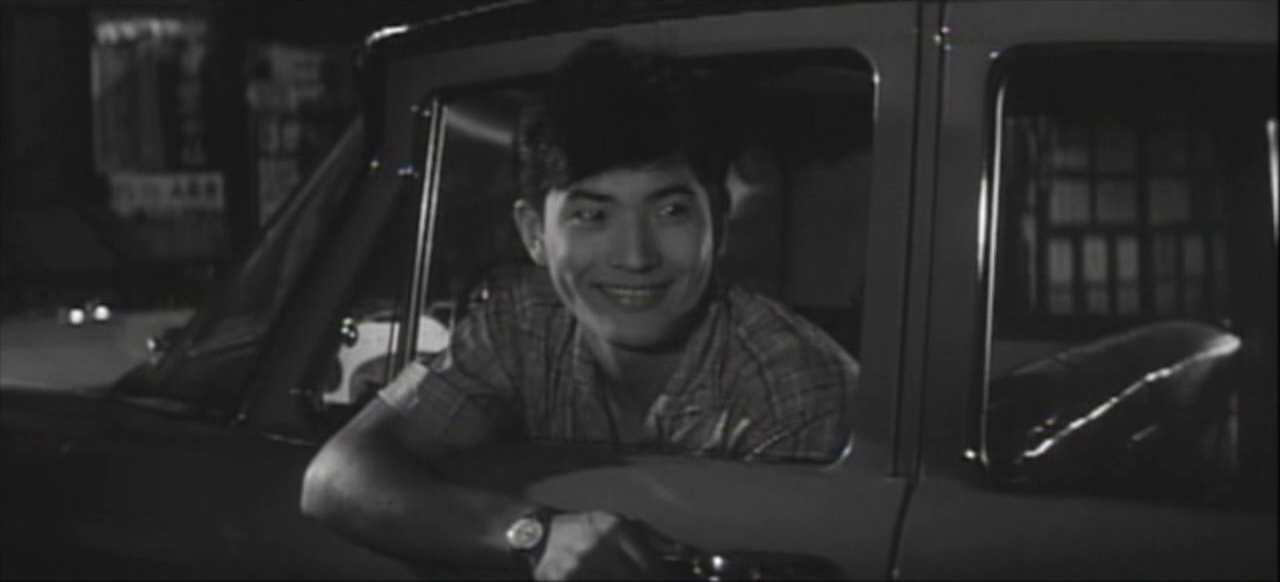
Misako Watanabe is Yoko, the younger, recently-wed wife of a wealthy older man, a company president. Why has she agreed to this marriage? The film will suggest that she's looking for a kind of sexless security; the husband is portrayed as dippy, unalert, and seemingly somewhat impotent. He looks after his pretty young wife like a treasure. Misako wants to be a good wife in return, and that means becoming a mother to her husband's teenaged son. In the first action of the movie, Misako volunteers to take the son Hiroshi, played by Akira Kobayashi, shopping.
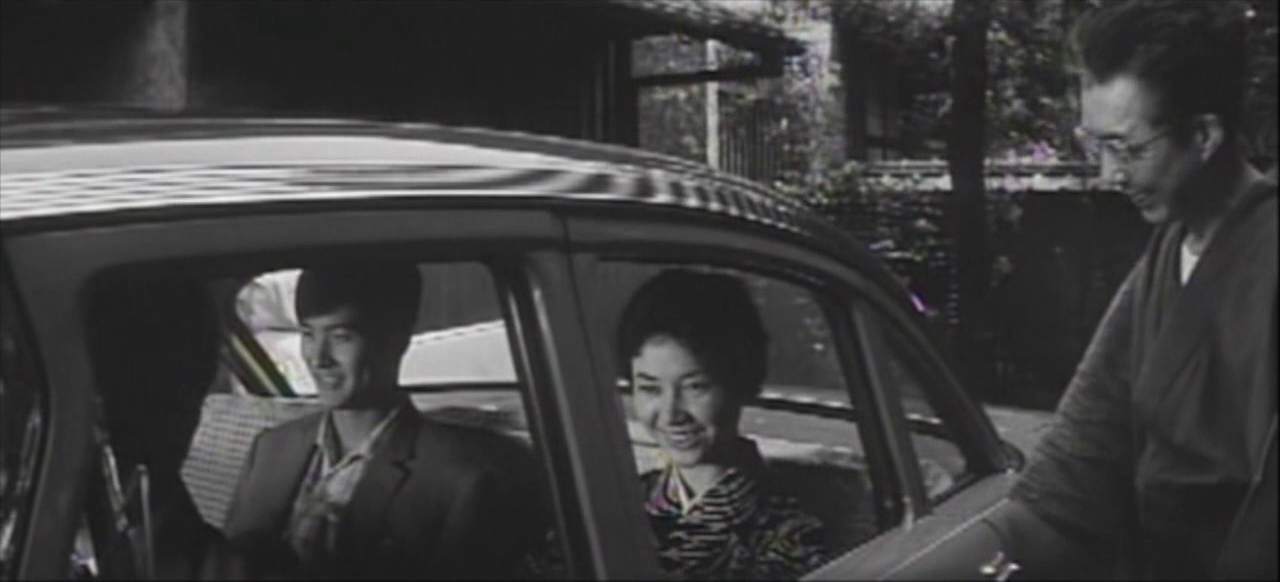
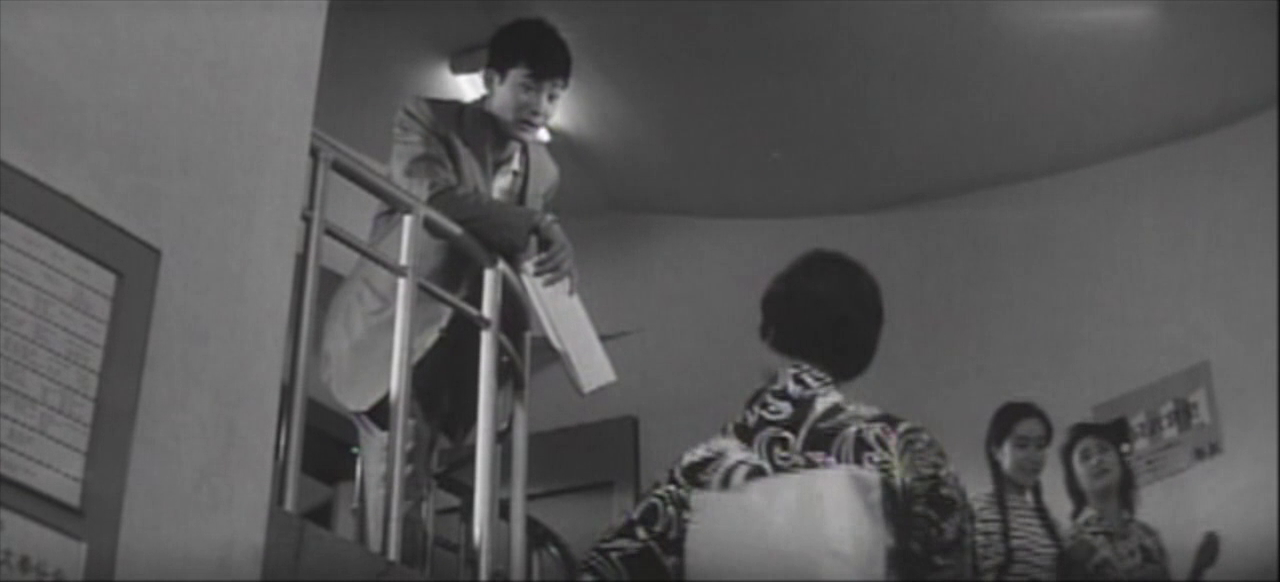
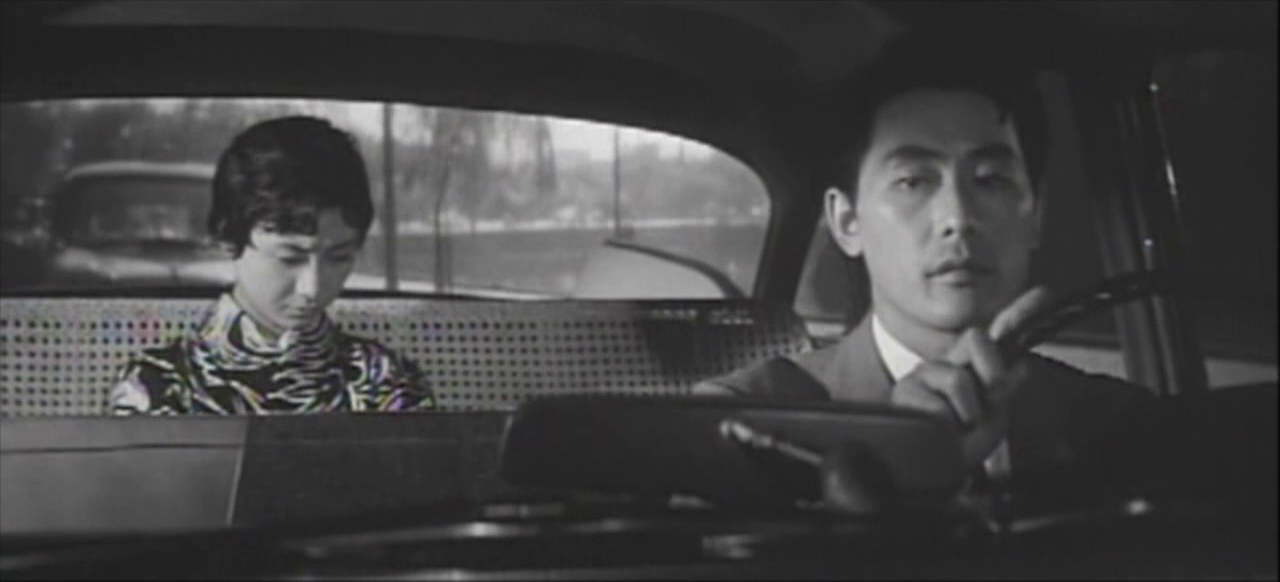
This seems like a sweet and innocent outing, a chance to leave the affluent suburbs and head into town. The setting of the film is somewhat indeterminate, but it's patched together from different greater-Tokyo-based locations, especially Ikebukuro and Nerima Ward (both seen again later in A Hell of a Guy), and Fujisawa City. The combination is one of a sort of short-stacked, older section of a city and a very bleak nearby beachfront, mimicking the settings of several of Nikkatsu's Taiyozoku, or "Sun-Tribe" films, based around beachfront towns. But it's interesting how liminal all the spaces seem, in subtle transition between an old place and a more commercial, modern one––or a place meant to be full of people, eerily deserted.
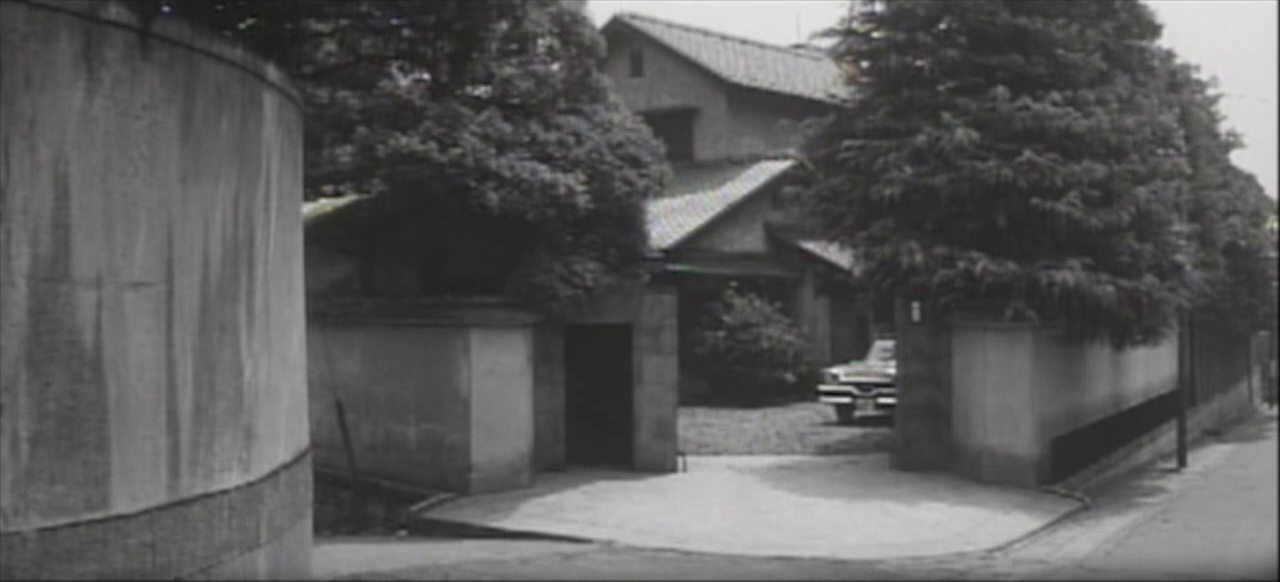
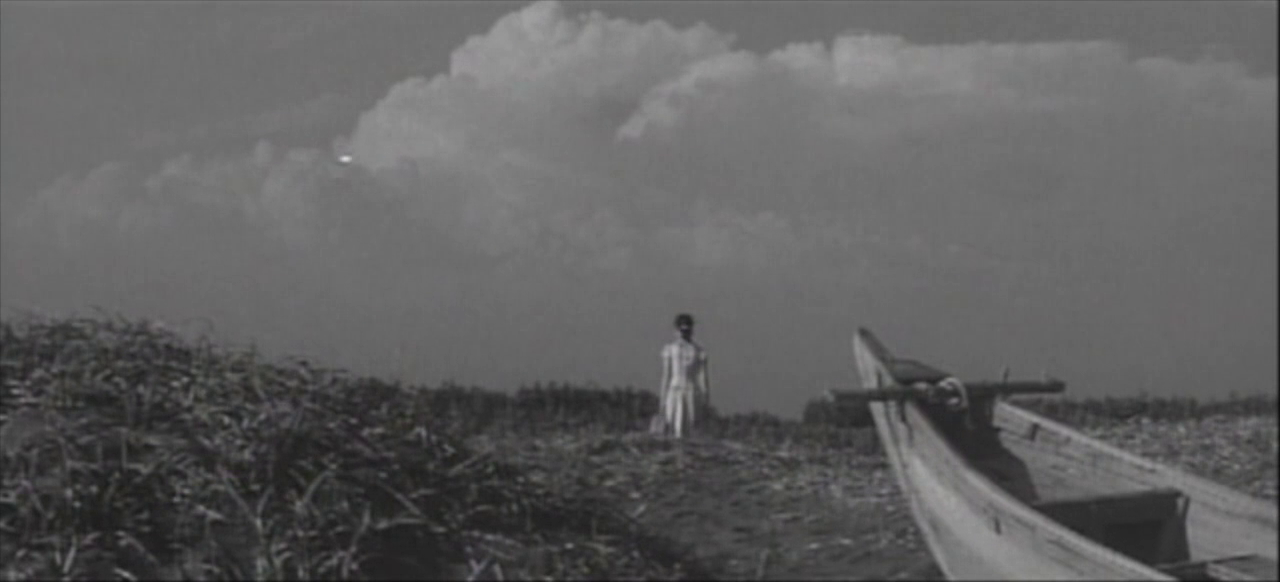
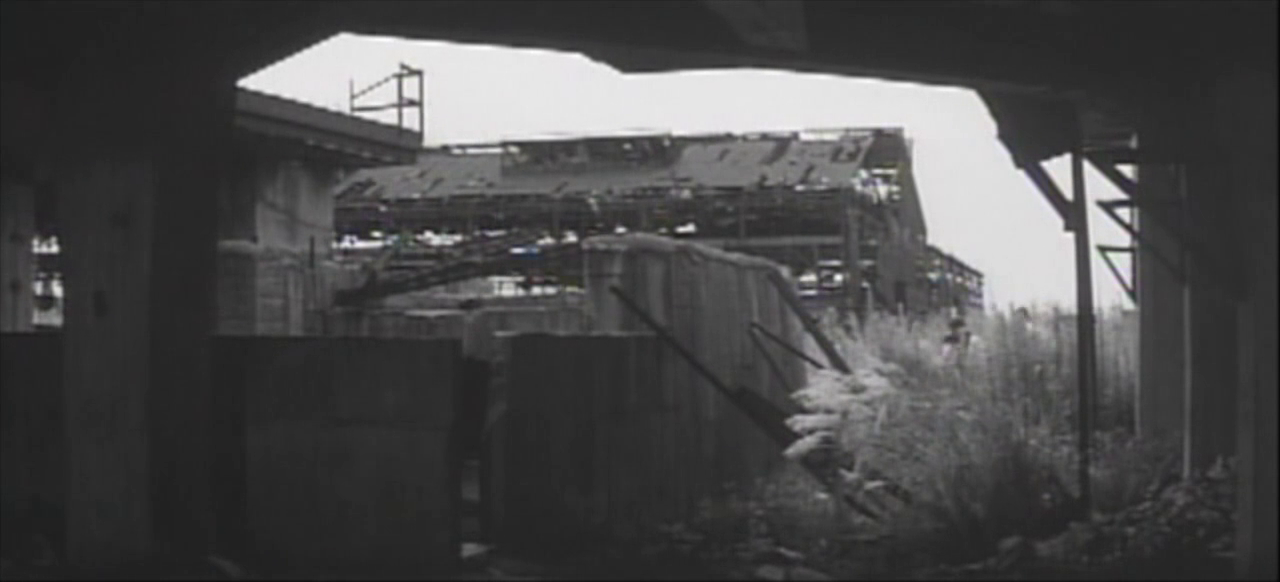
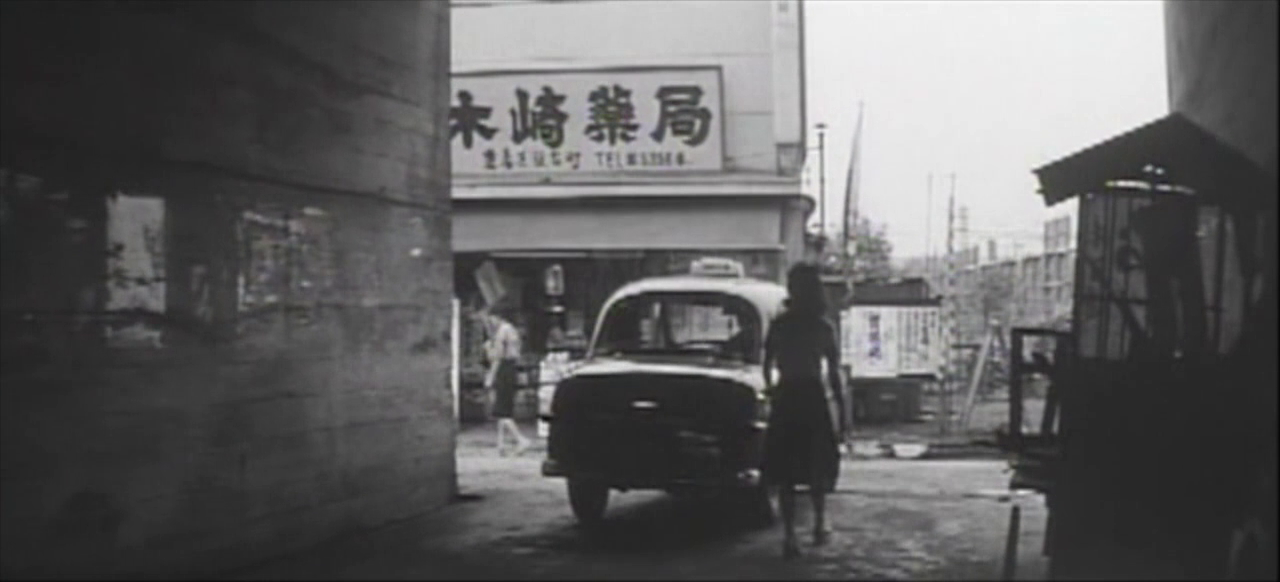
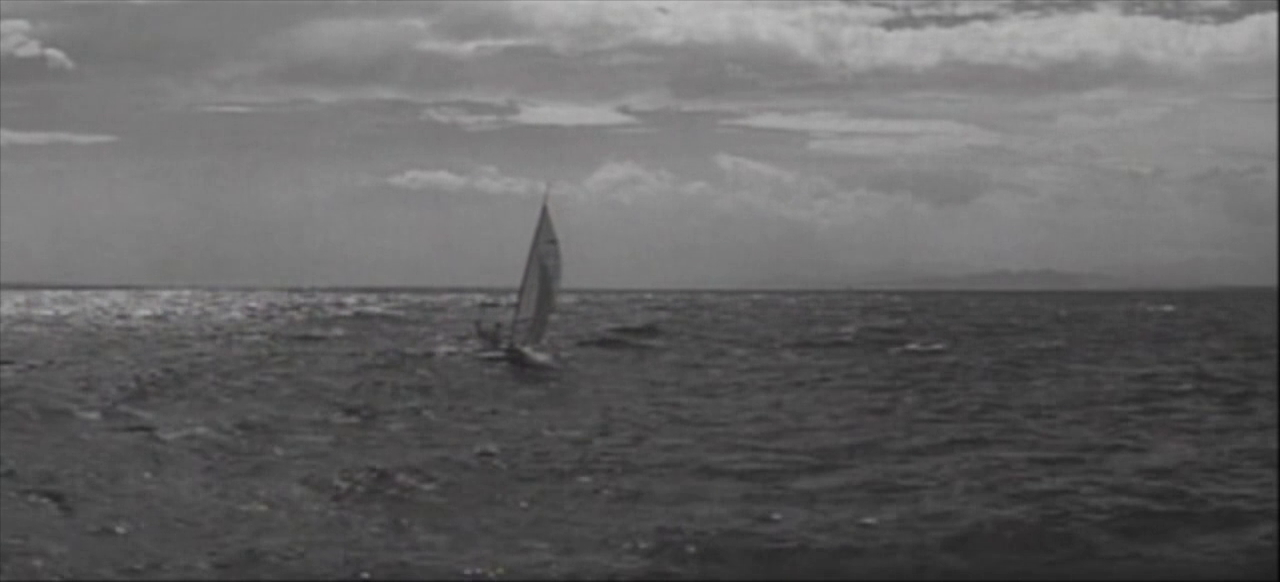
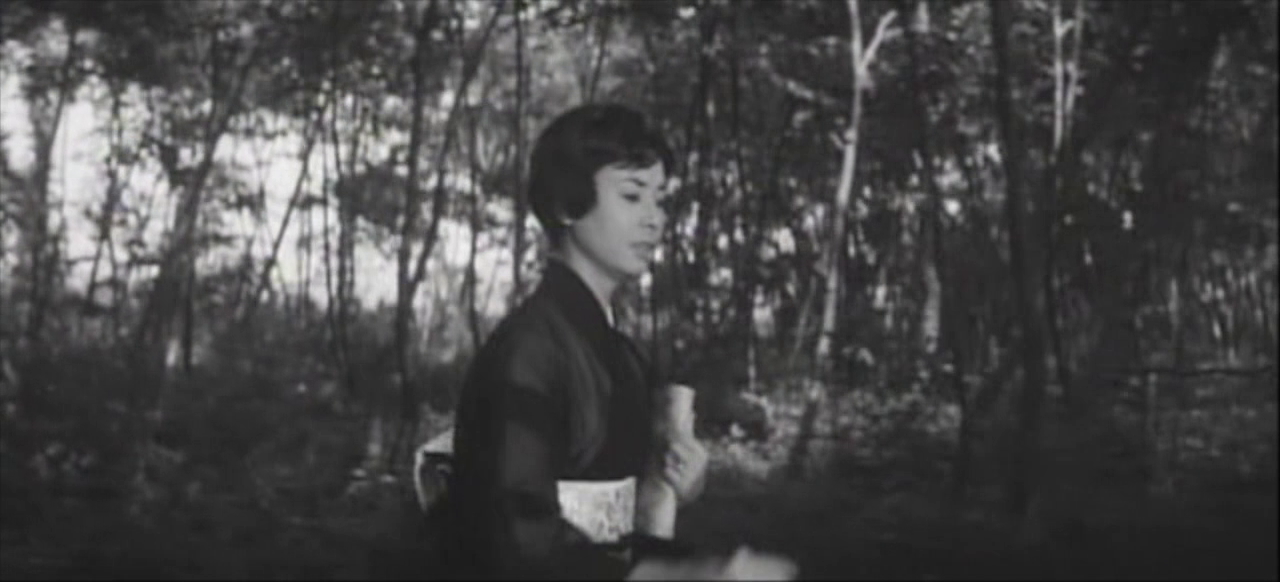
The outing takes a dark turn immediately once Yoko and Hiroshi are off on their shopping trip. Hiroshi takes money from Yoko's handbag, and gives her an invitation to an art show, and announces he has somewhere else to be. We realize that, outside of Hiroshi's father's home, he's a delinquent, an aspiring Sun-Tribe thug. He leaves Yoko in the shopping center, goes out, and picks up a girl named Setsuko. Setsuko, we come to learn, wants to be a delinquent in order to get back at her oversexed-seeming mother. She and Hiroshi hook up very quickly here, and Hiroshi introduces Setsuko to his brother Ken.
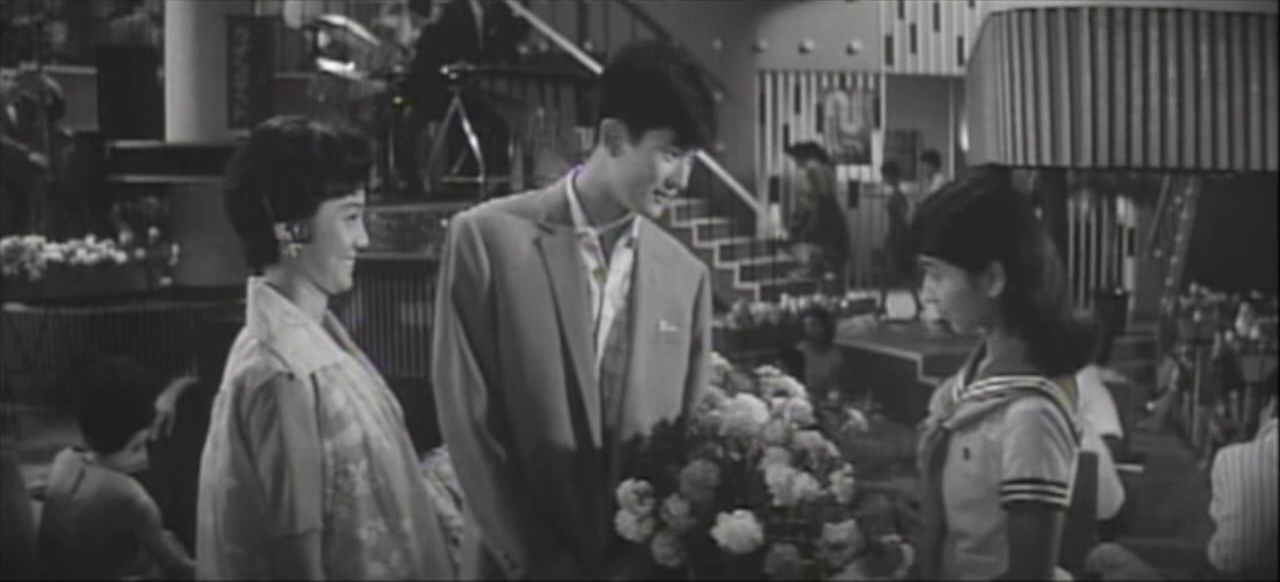
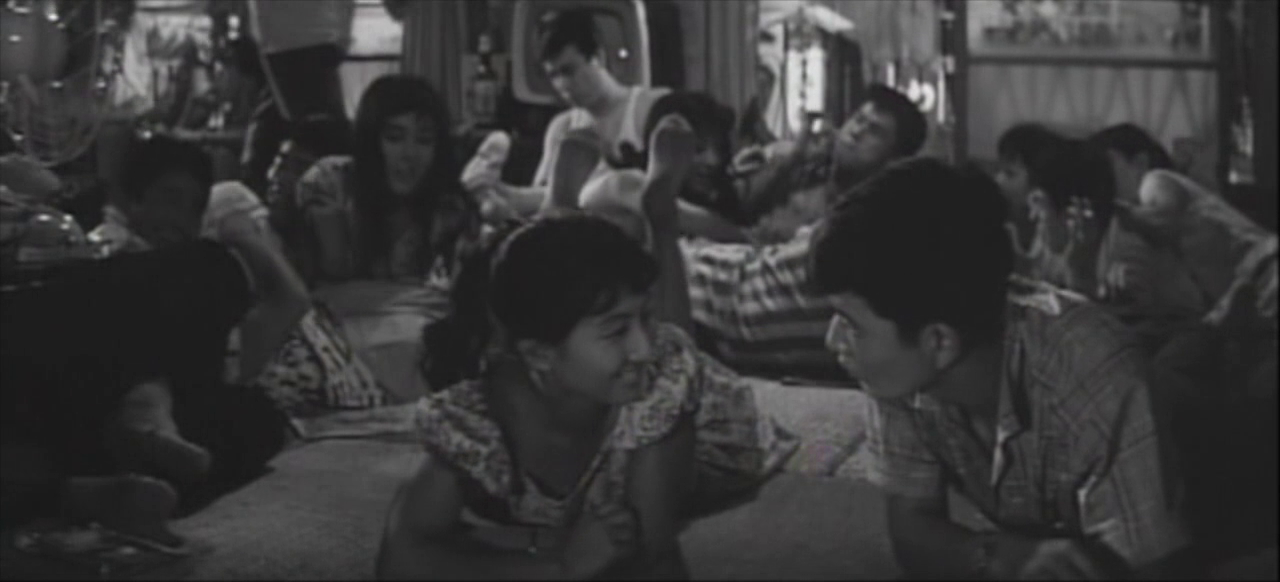
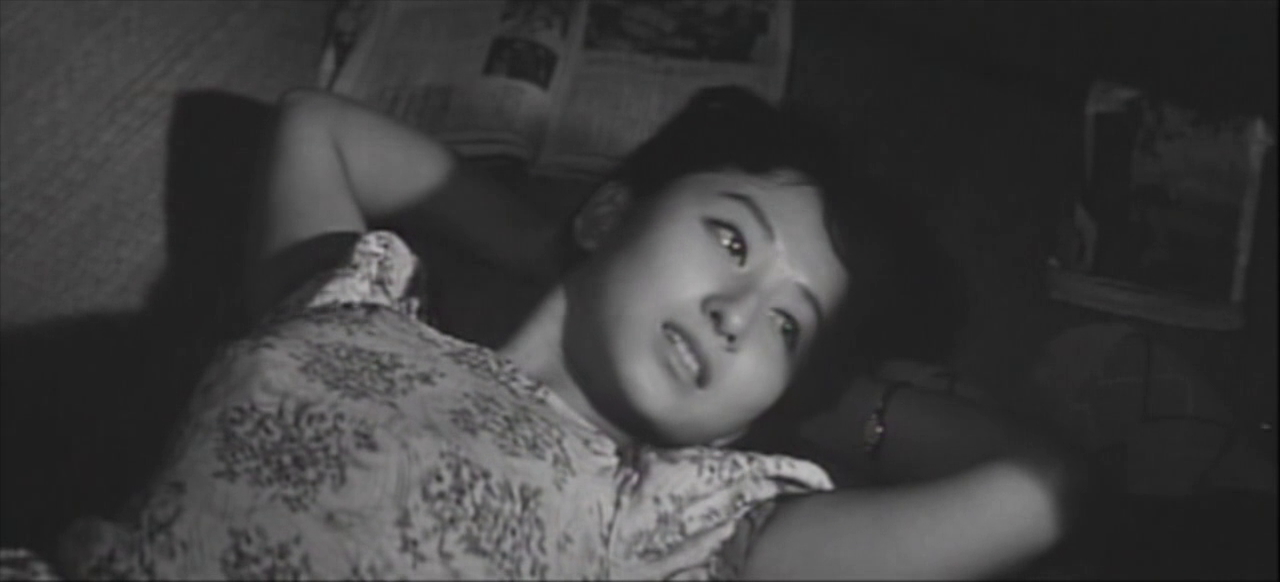
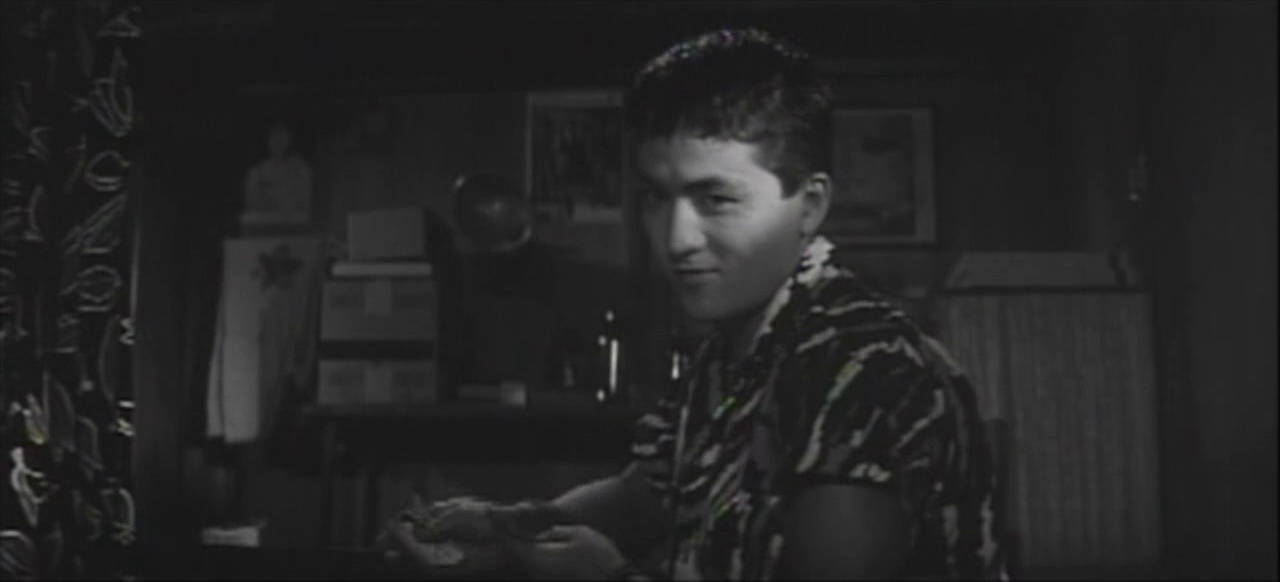
Ken makes a rough impression, living with his pregnant girlfriend in the girlfriend's cafe, pocketing the money Hiroshi has taken from Yoko (at, we learn, Ken's suggestion). He appears to be editing a porno film in back of the cafe, and he's sort of the leader of a rough group of Sun-Tribe-coded kids who hang out at the cafe. Ken seems dangerous, eyeing everyone with a predatory look, flexing frightening amounts of muscle, and giving very angry vibes. He obviously exploits Hiroshi, and we see him abuse Michi, his pregnant girlfriend, and cheat on her. Yuji Odaka as Ken seems to almost suck the life out of the room every time he enters, radiating aggression.
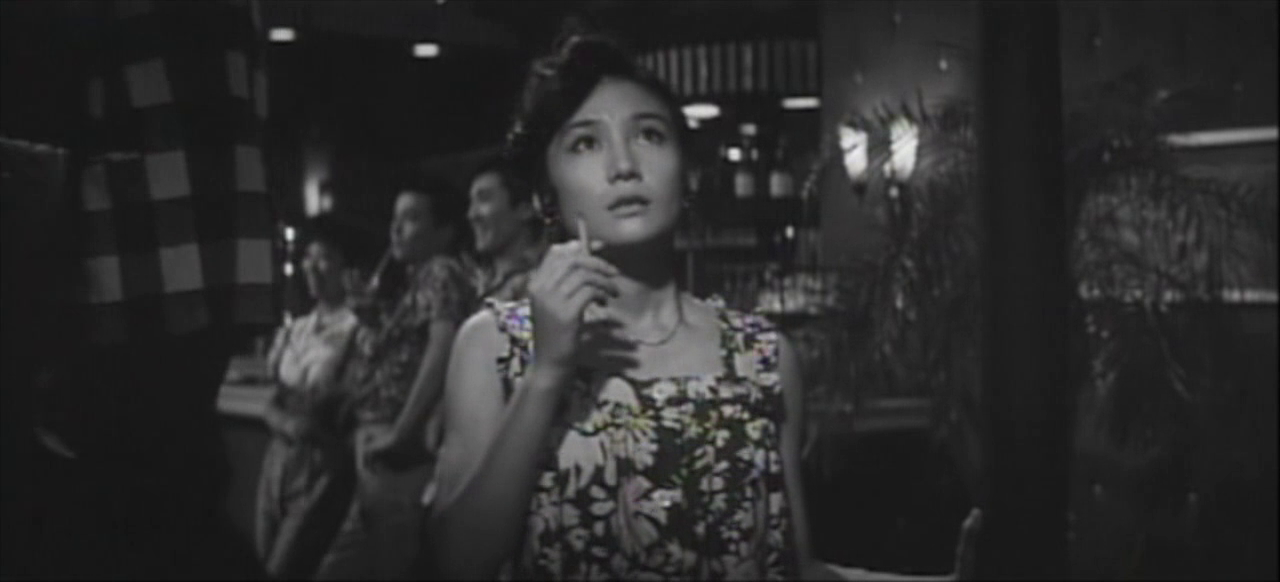
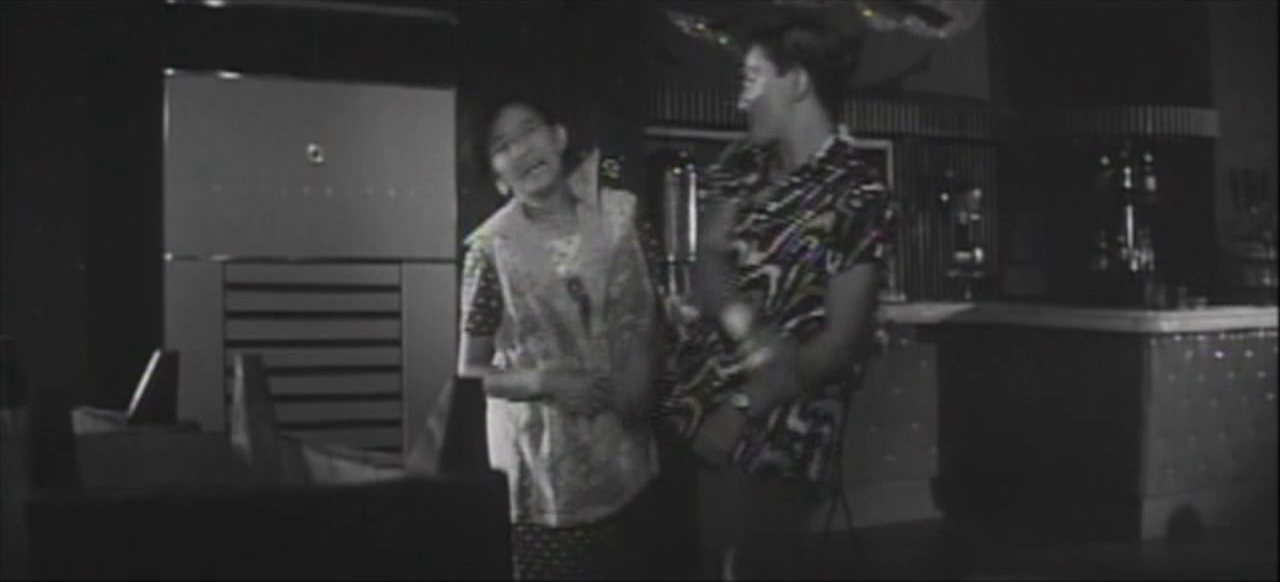
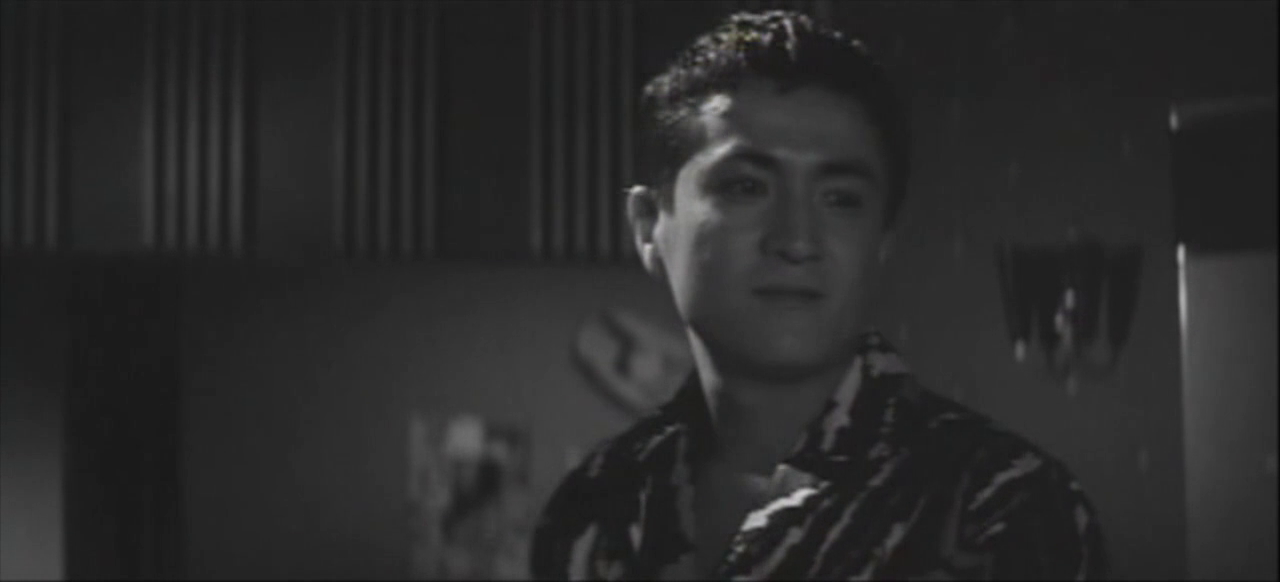
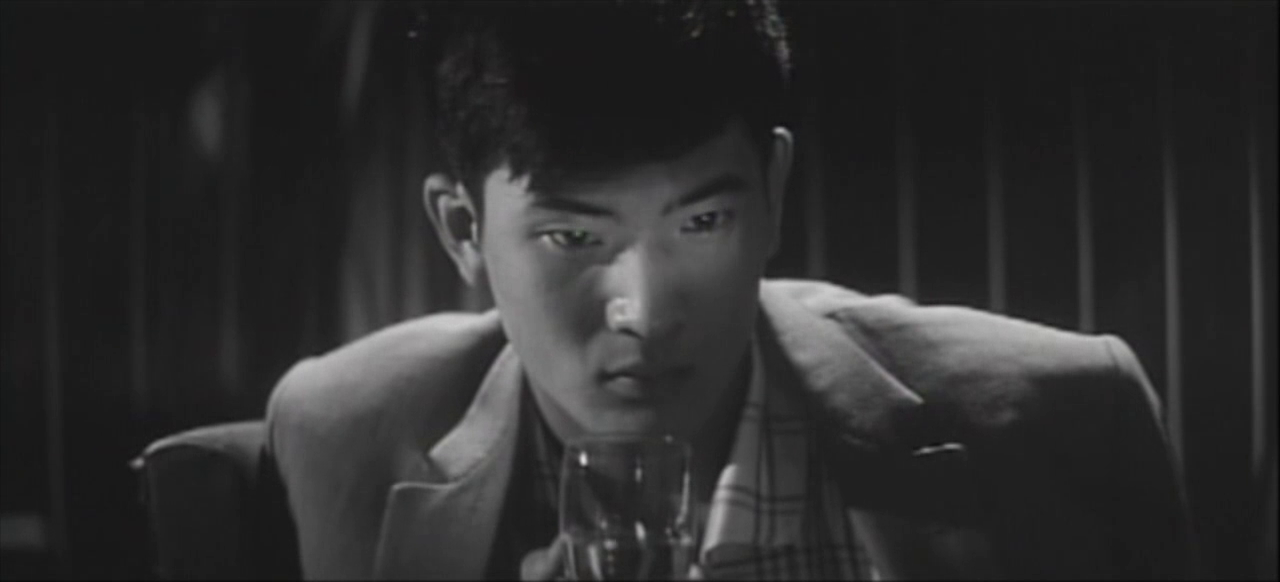
Hiroshi, though, is enthralled by this big brother. We can tell pretty quickly he would like nothing more than to be like Ken himself.
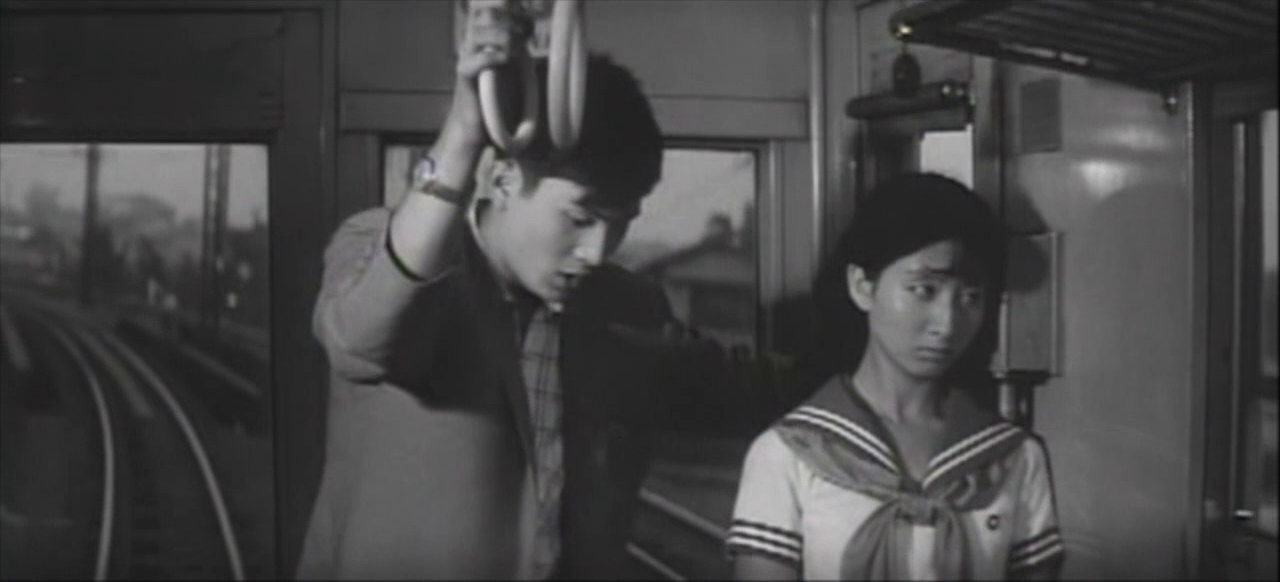
Setsuko seems bothered by all these cross-jangling vibes. Does she really want to be a delinquent? Does Hiroshi? We can see that Michi looks at them both with a baleful eye.
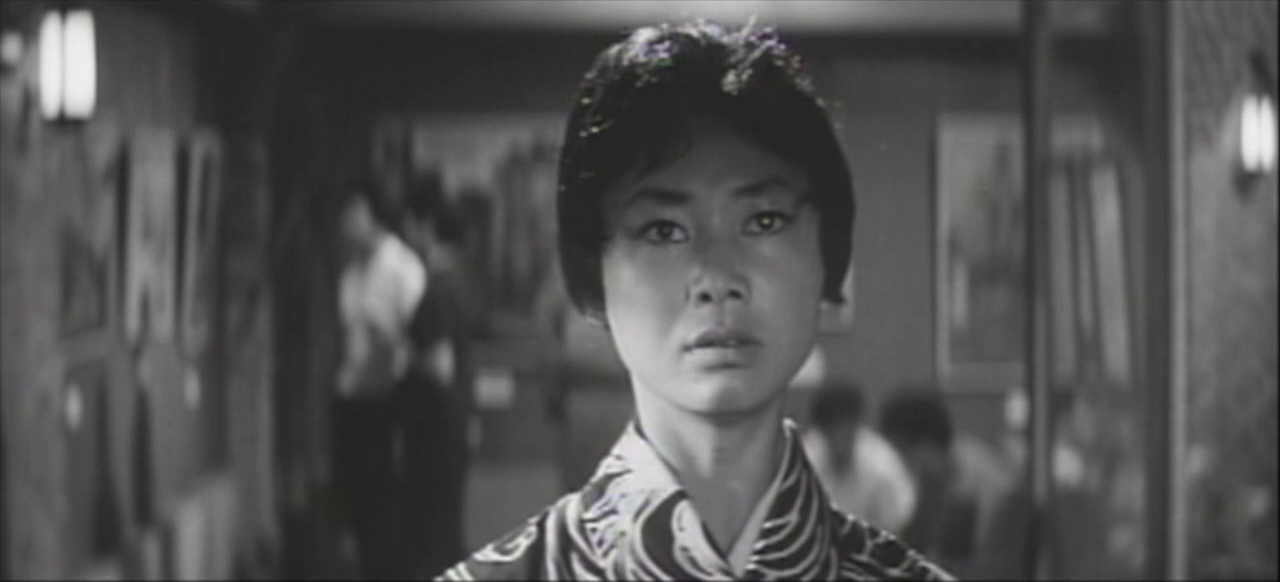
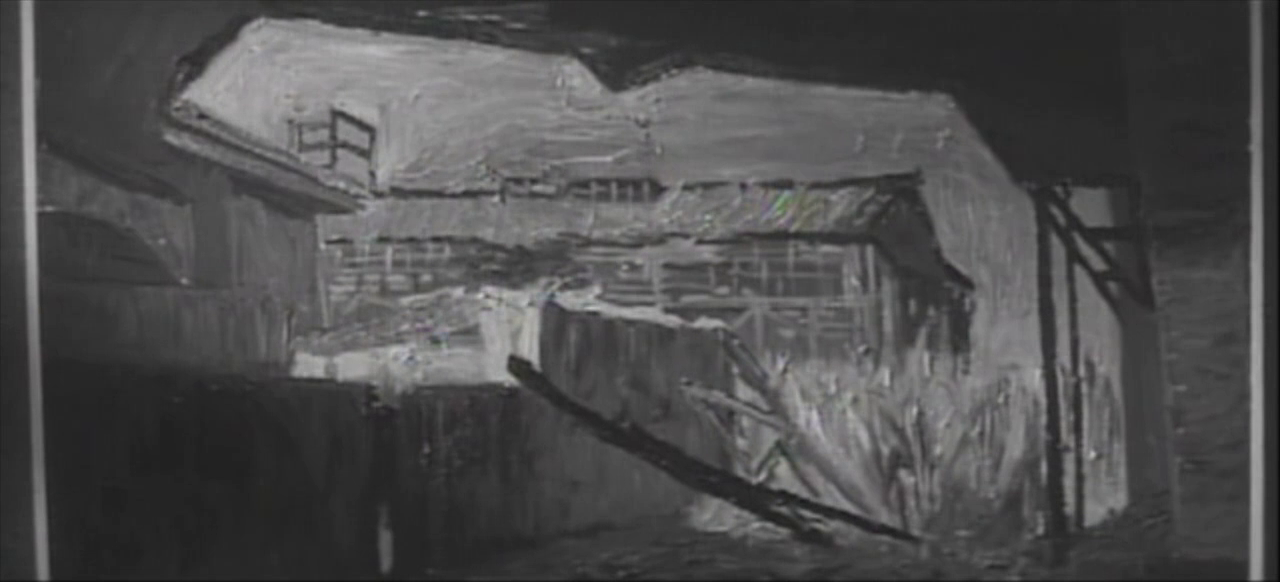
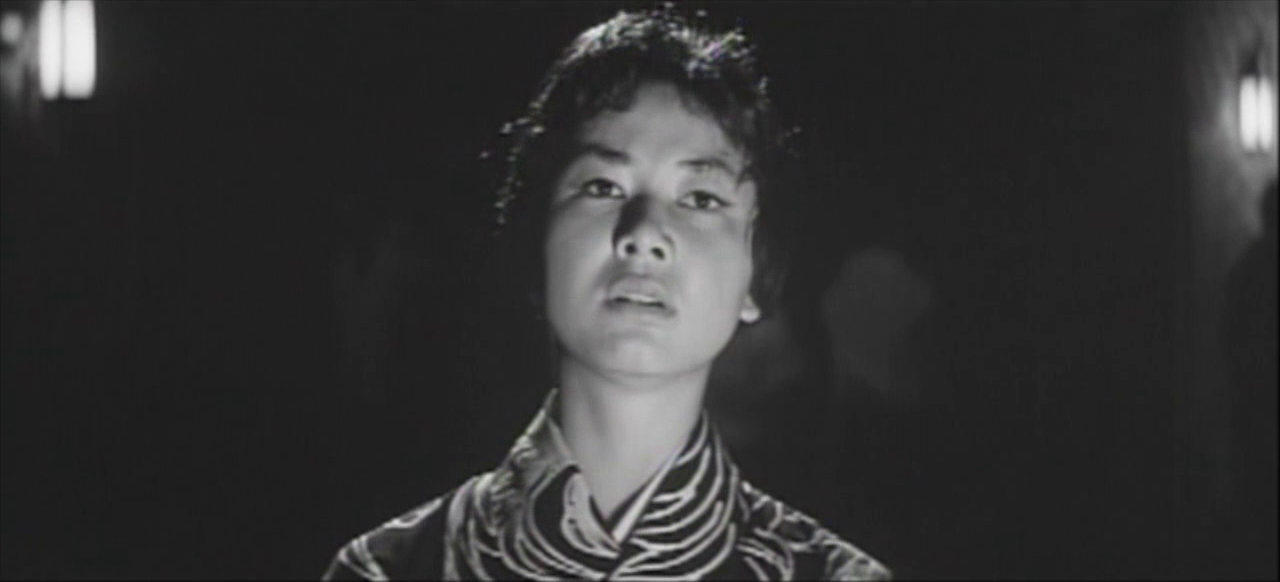
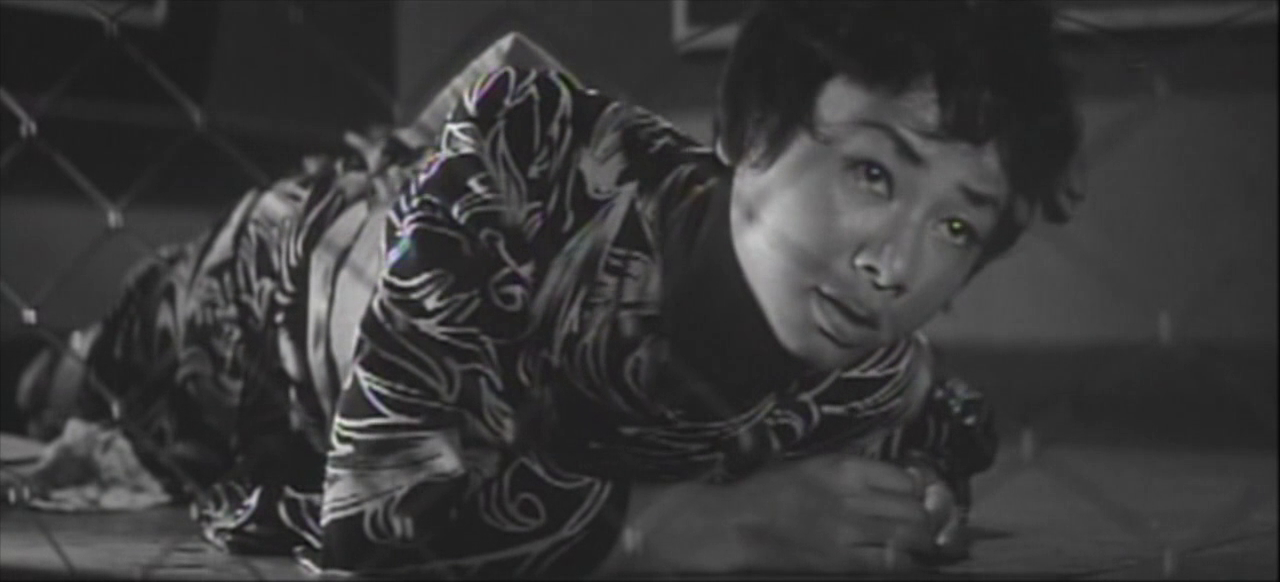
Yoko, meanwhile, with nothing to do as the rain sets in, heads to the art gallery to see the paintings. Here the movie starts to get into much stranger territory. Yoko wanders the art gallery, looking at pictures, perhaps trying to figure out what Hiroshi wants her to get from this experience. Then she comes upon a particular painting of a post-industrial landscape, and she freezes. Yoko stares intently, and becomes transfixed, horrified. She starts to swoon, and the lights of the gallery fade behind her. As she faints, all the paintings in the gallery crash to the floor.
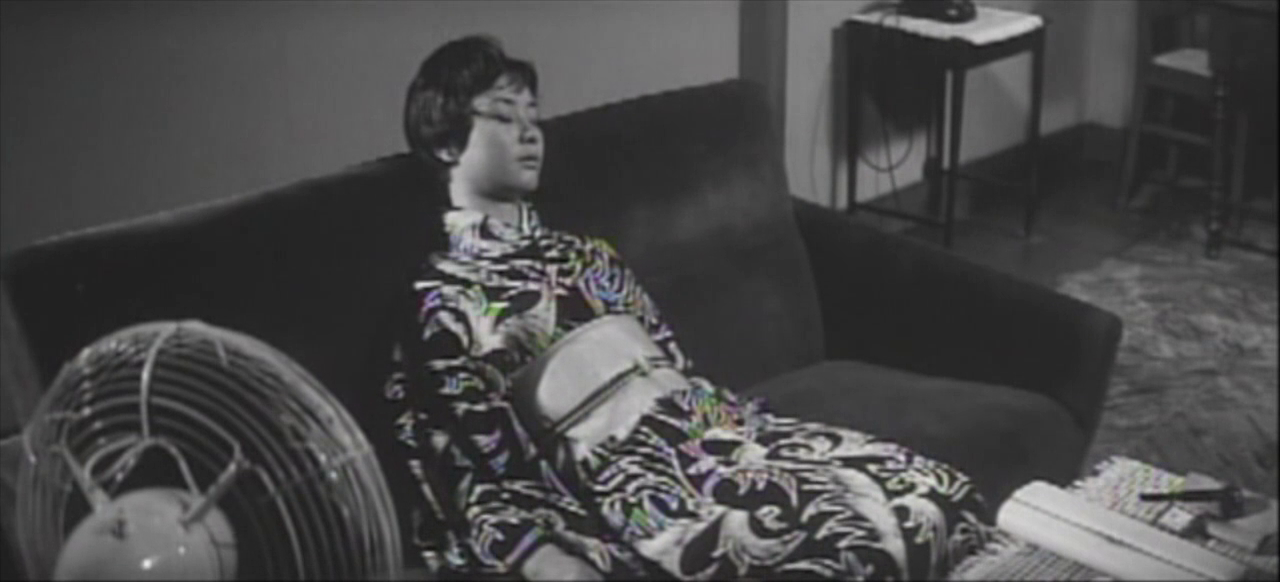
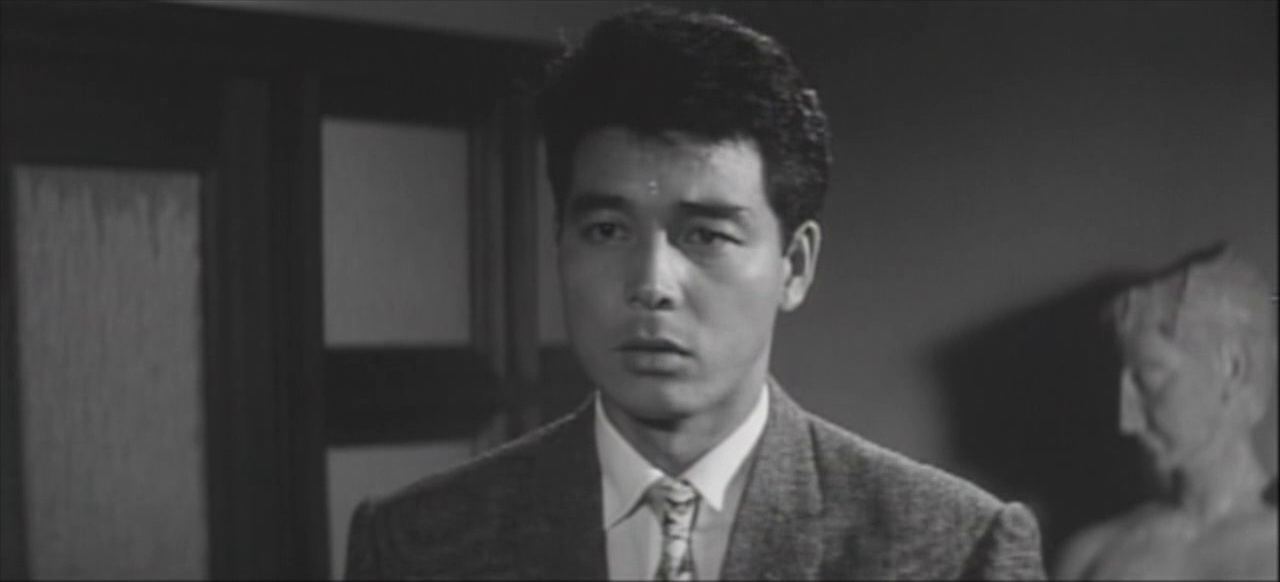
Yoko wakes up in an office behind the gallery, with the painter, Takamura. We get some insight into what happened, I assume, and we discover Takamura's identity, but the upshot of this sequence is the connection Yoko makes with Takamura, who Yoko seems to respond to almost intimately. The connection between Takamura and Yoko develops from this point throughout the movie, leading Yoko closer and closer to an affair with the landscape painter.
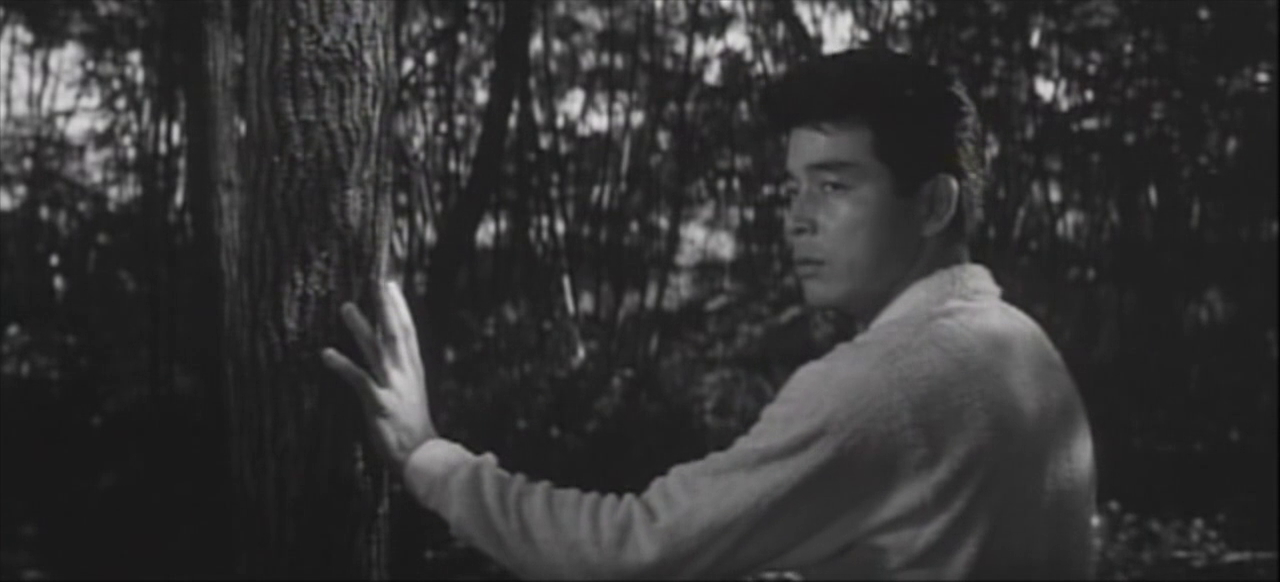
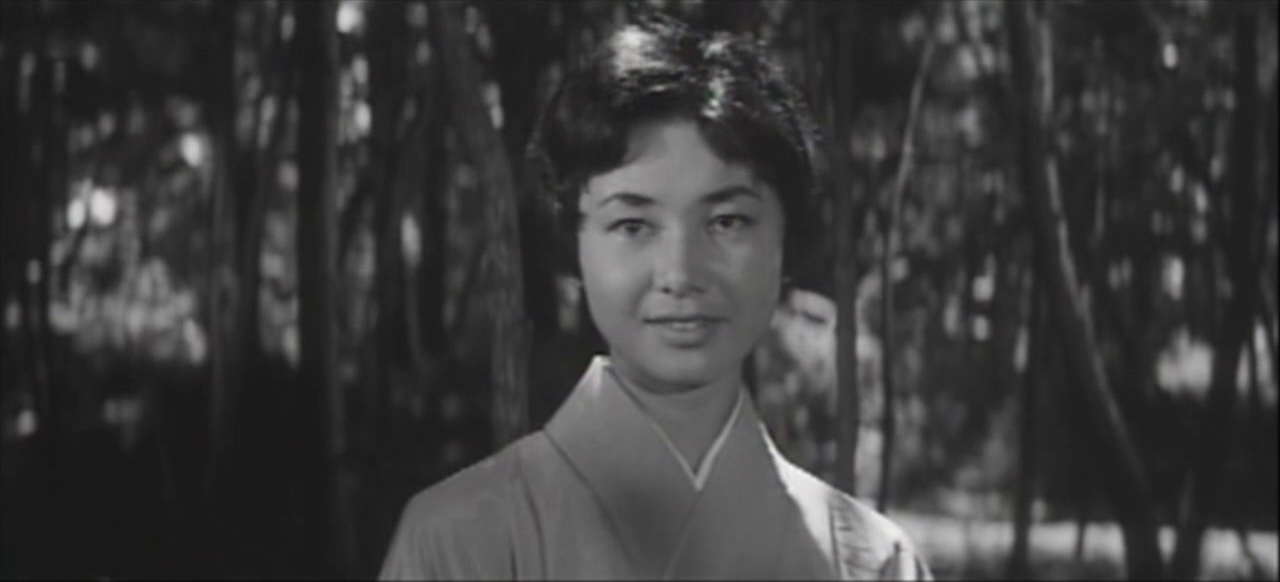
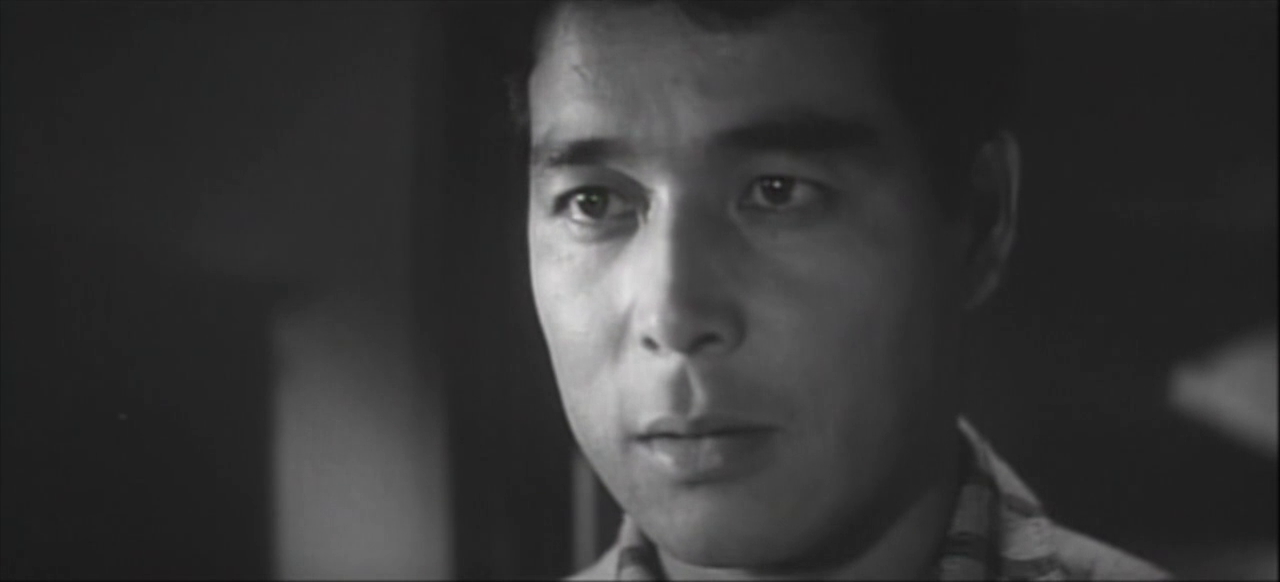
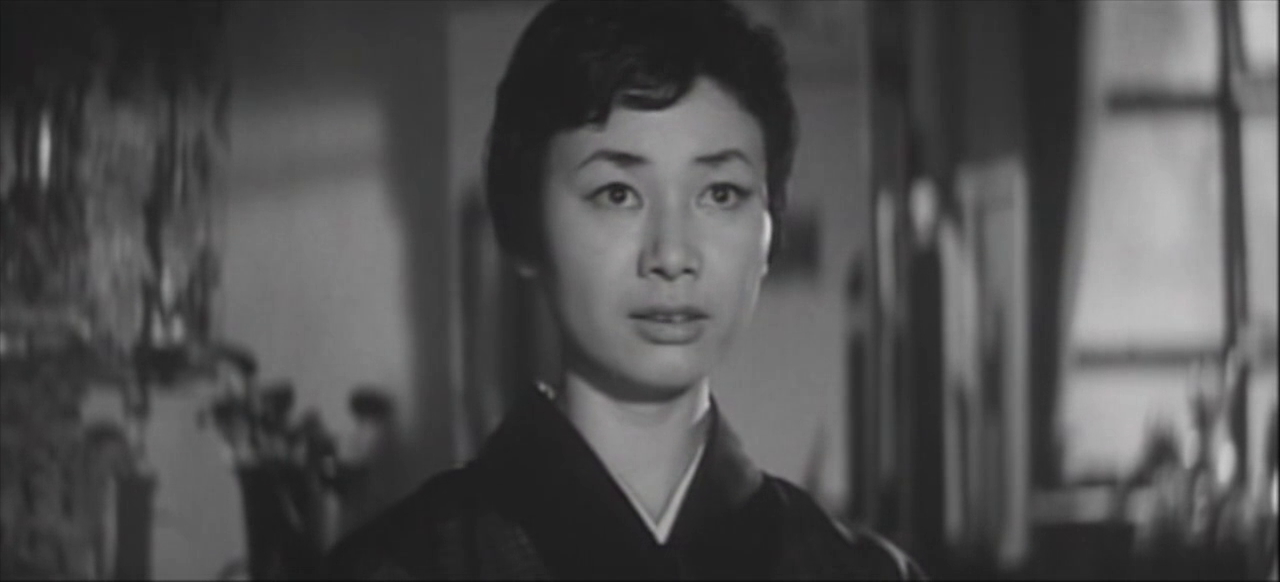
Slowly, disparate-seeming strands of this story start to connect together. Yoko gets a letter asking her down to the cafe. There she meets Ken, who wants to blackmail her. He has film of Yoko, you see, from 7 years prior, being raped in a desolate factory by a man who stalked her in there. Ken is sexually suggestive to Yoko, who retreats into the arms of the sympathetic painter, whom she is drawn towards an affair with. Hiroshi struggles with how to treat Setsuko.
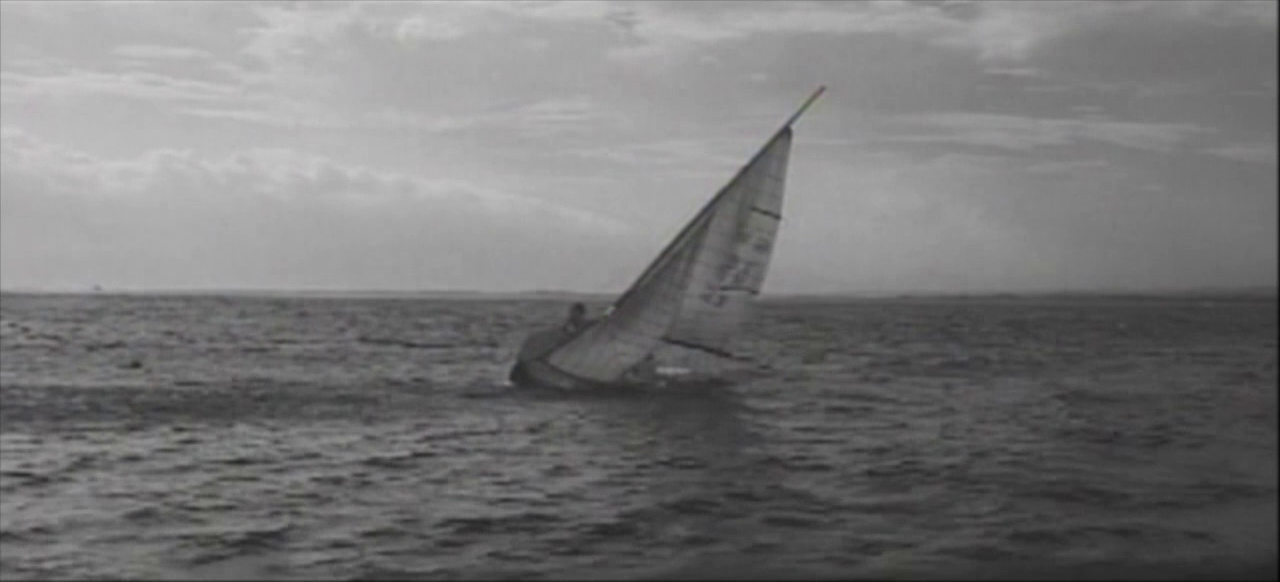
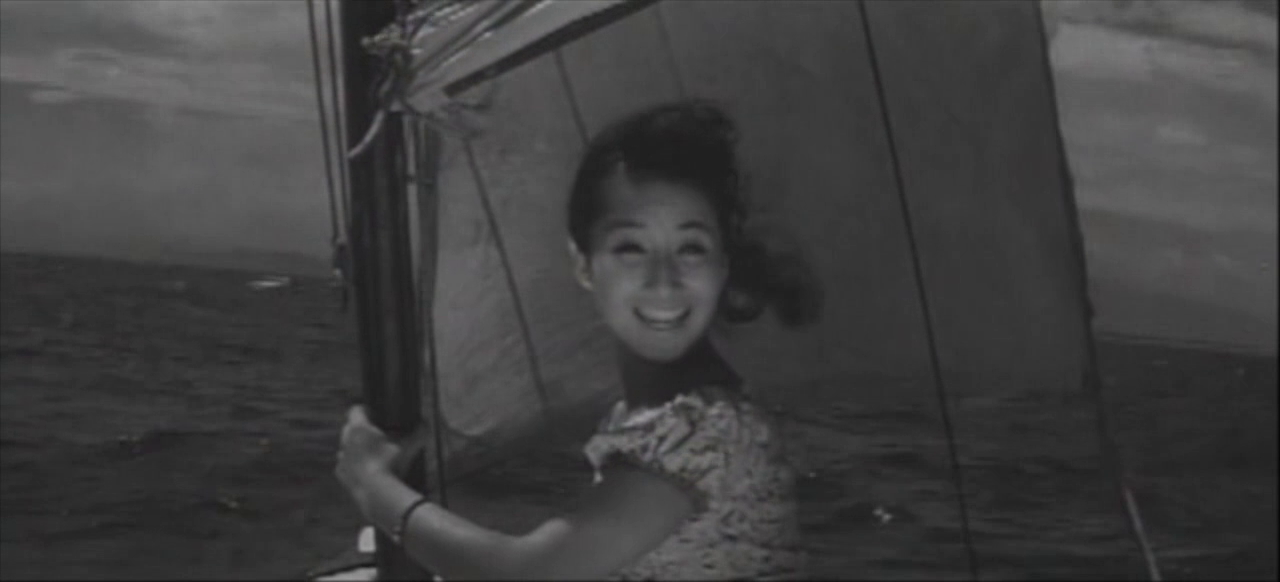
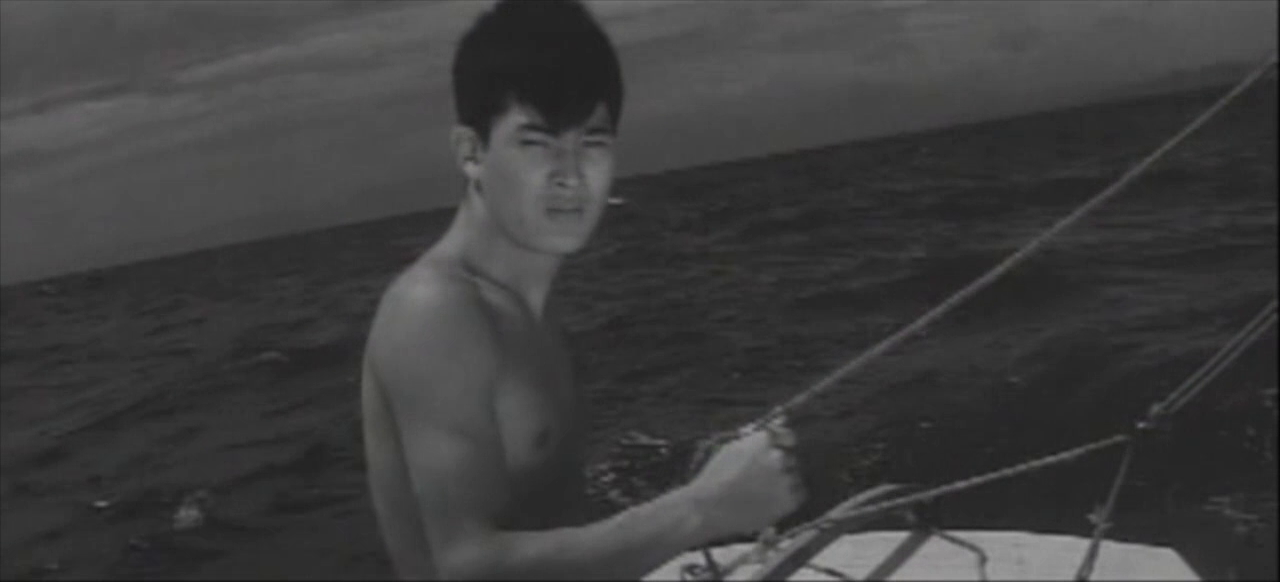
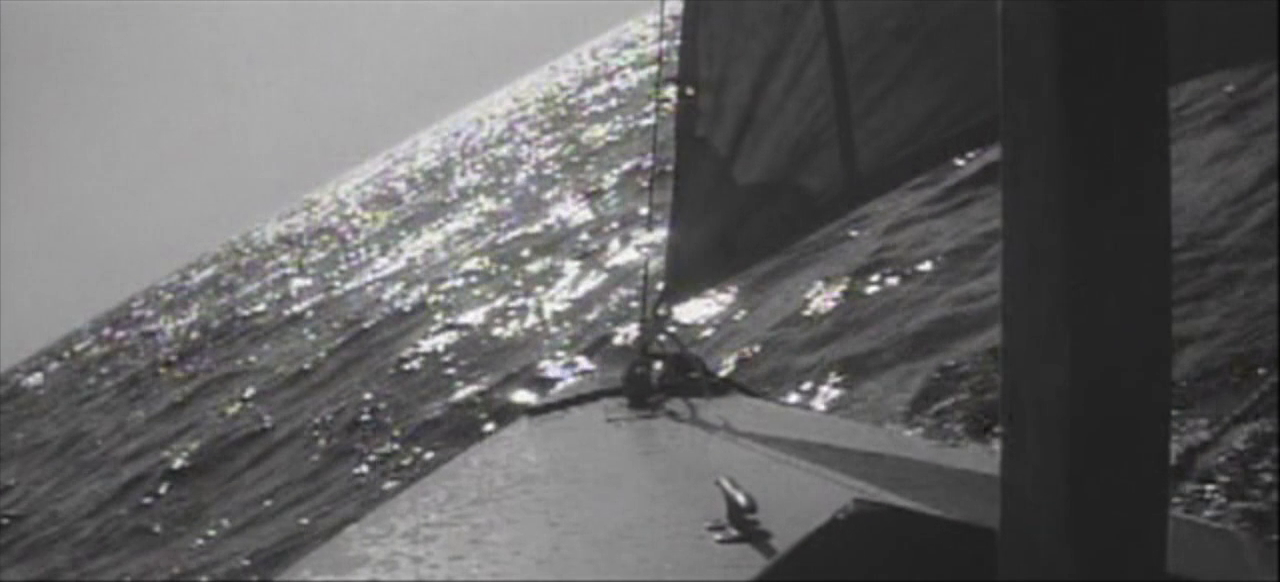
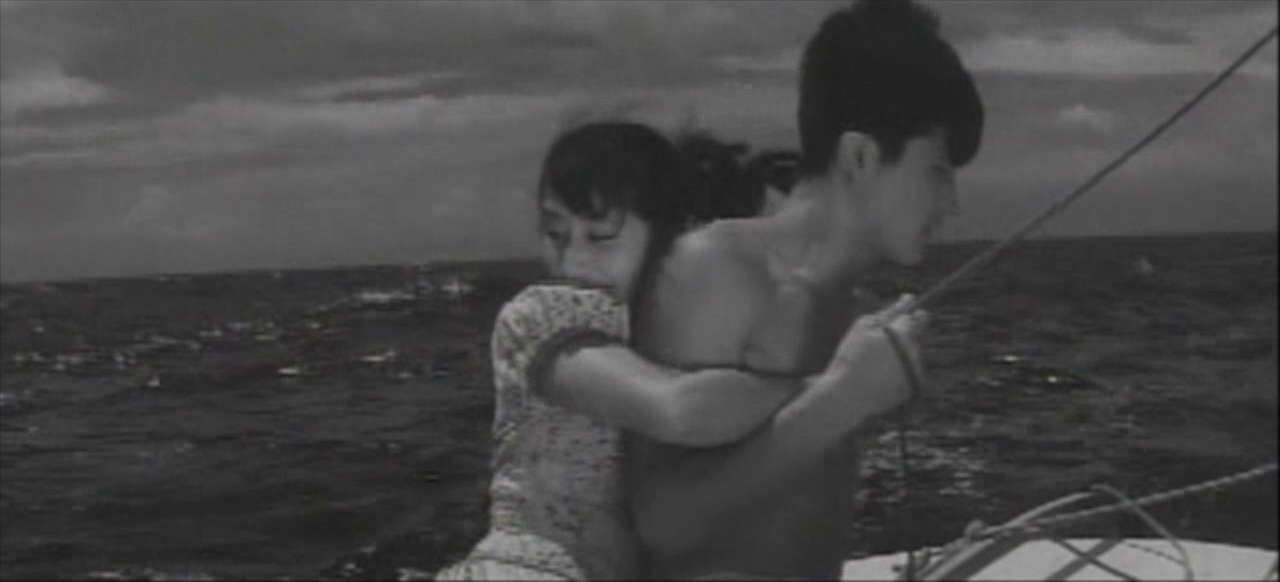
In a gorgeous scene of sailing at an eerily empty, cold-looking beach, we see Hiroshi wavering between the gentle lightness Setsuko seems to really value in him (Setsuko herself seems less and less like the delinquent she professed to admire) and the aggressive way his older brother handles women, using them for his own desires without doing "girly" things like...going on dates, I guess.
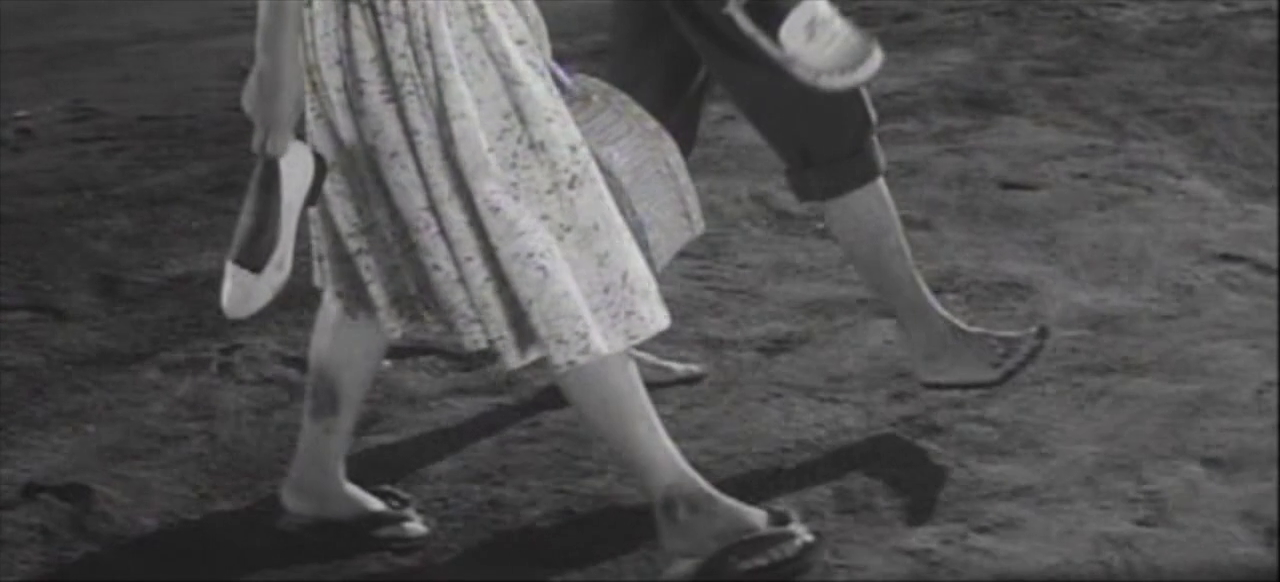
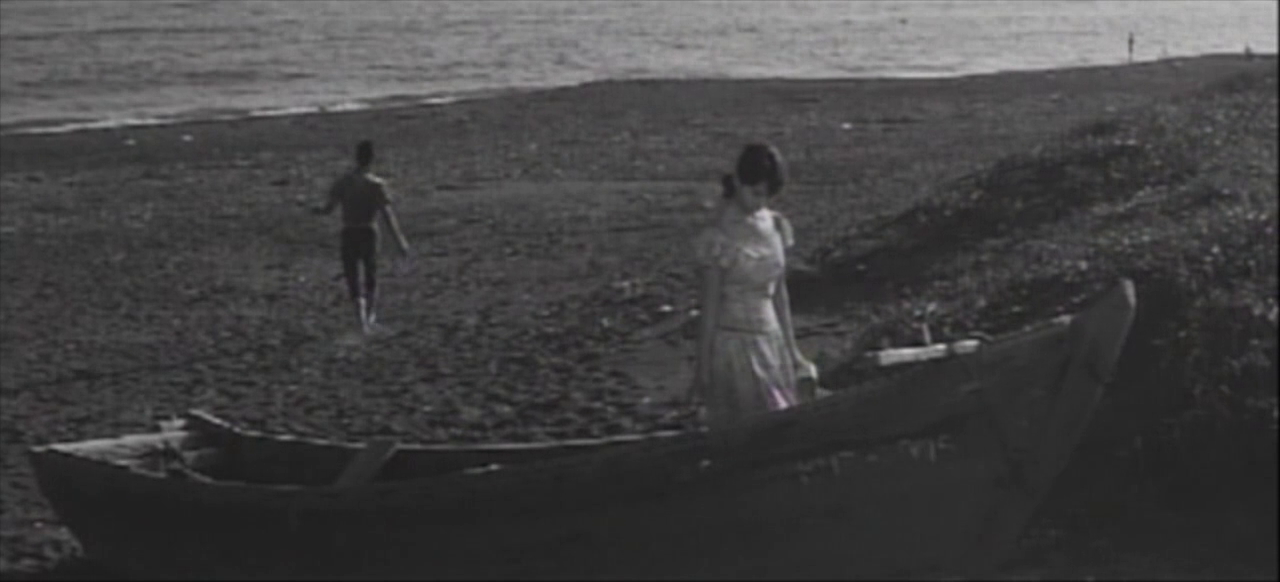
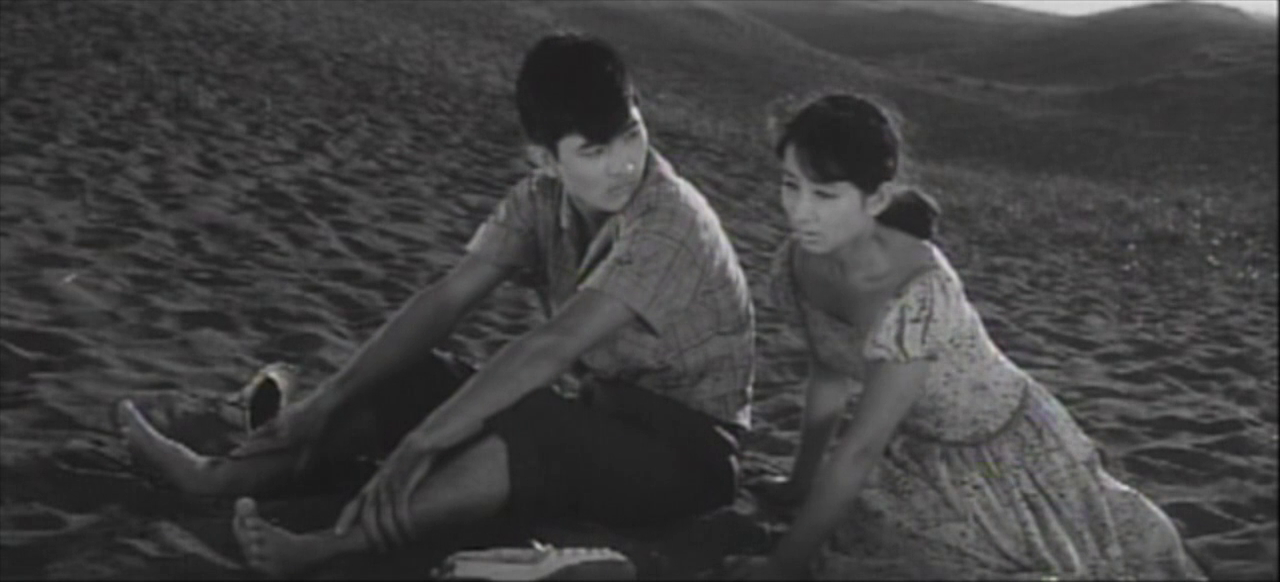
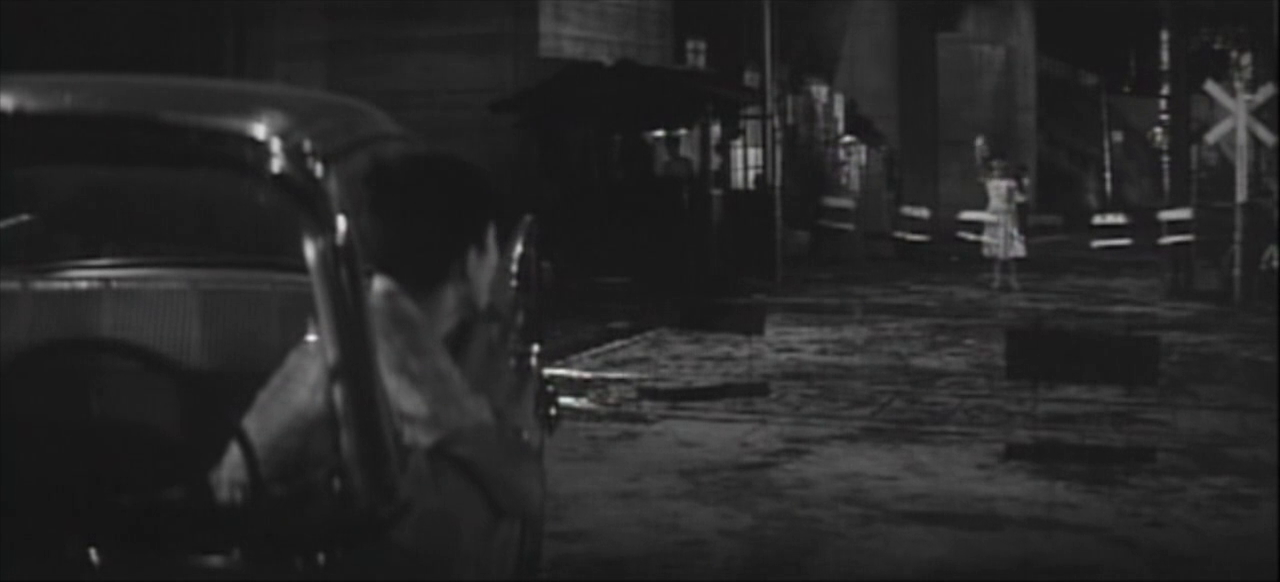
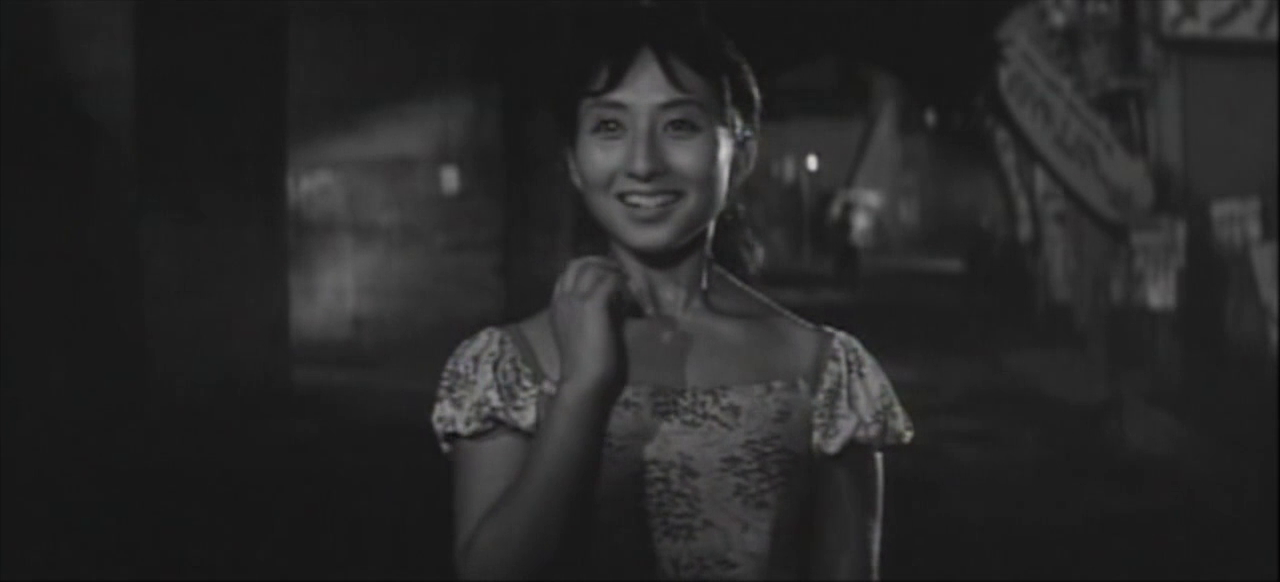
Hiroshi petulantly capsizes their sailboat, forcing the couple to swim to shore. But Setsuko is unflappable –– this is the best date she's ever been on, she's excited for the future, everything is looking up. In the face of this, Hiroshi is clearly very conflicted.
HELL OF SOMEONE'S MAKING
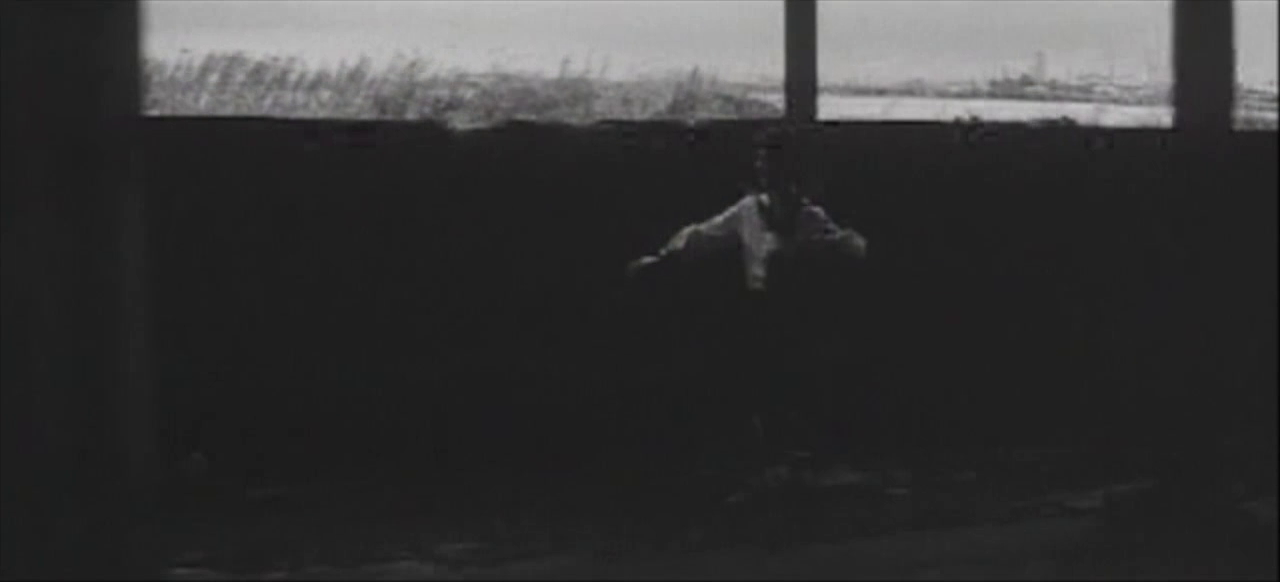
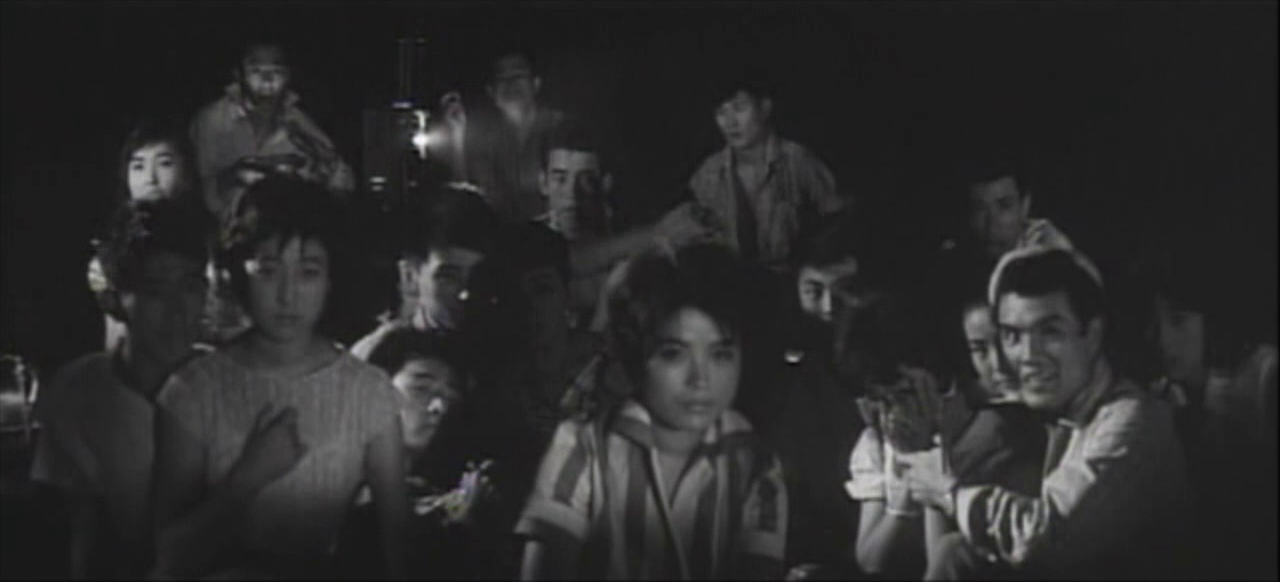
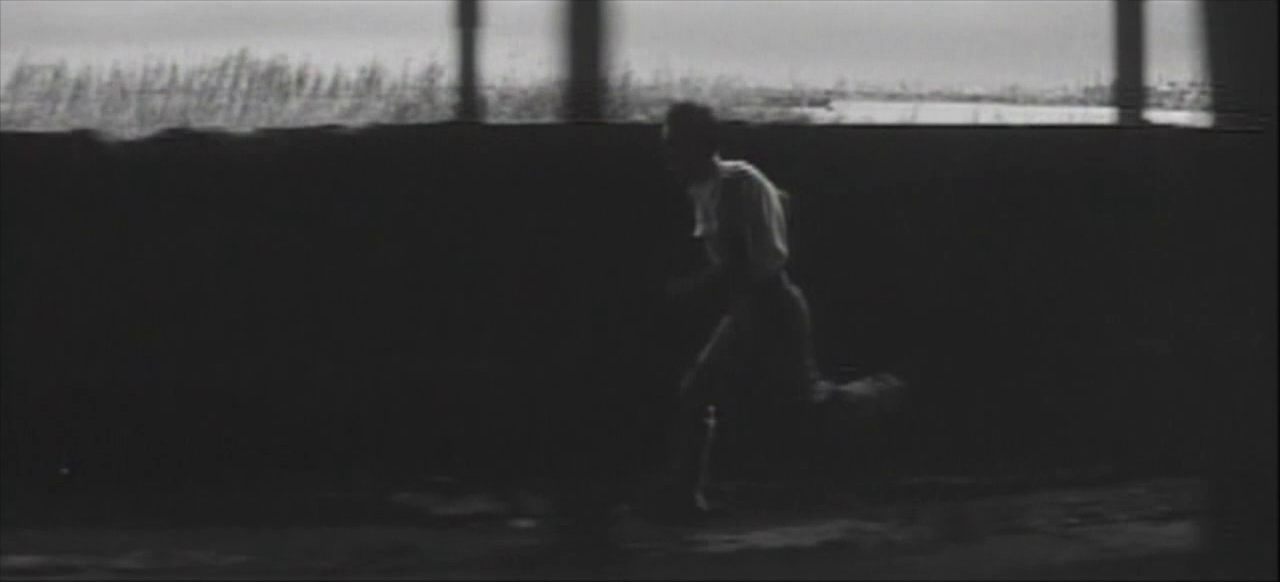
As the blackmail plot unfolds, Yoko makes a connection between Takamura's painting and her rape 7 years ago. The painting is of the very spot where she was molested. Here is the most proto-Suzukian stylistic innovation of the era; Yoko stares at the painting of the factory, and her vision of the painting dissolves into her flashback, remembering her pursuit and rape by the mystery man. Then...
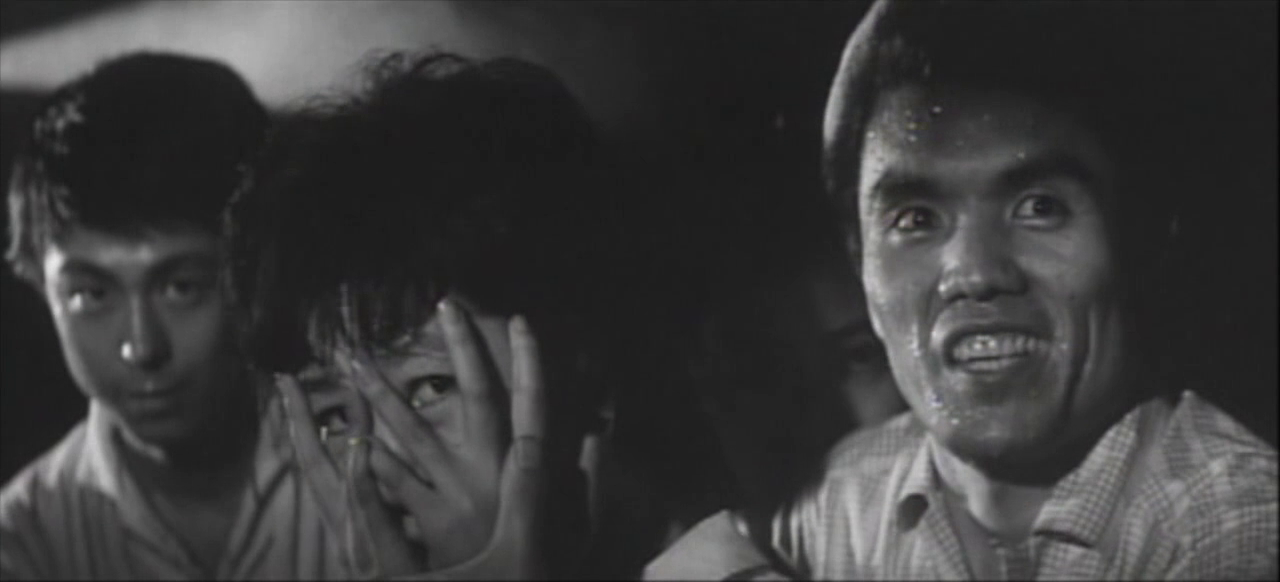
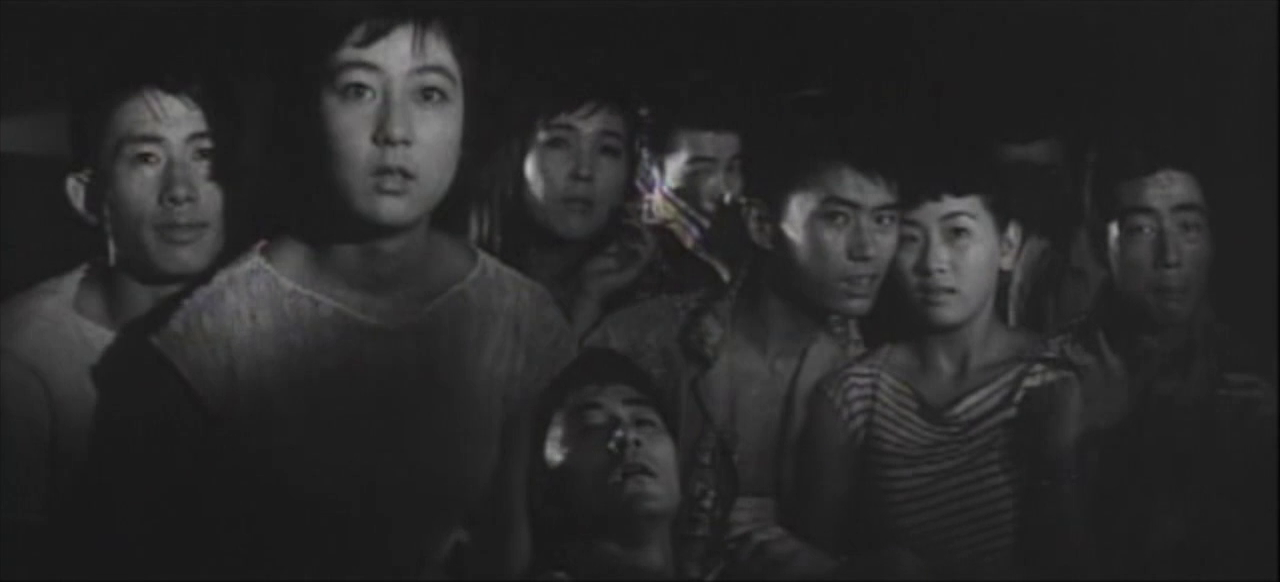
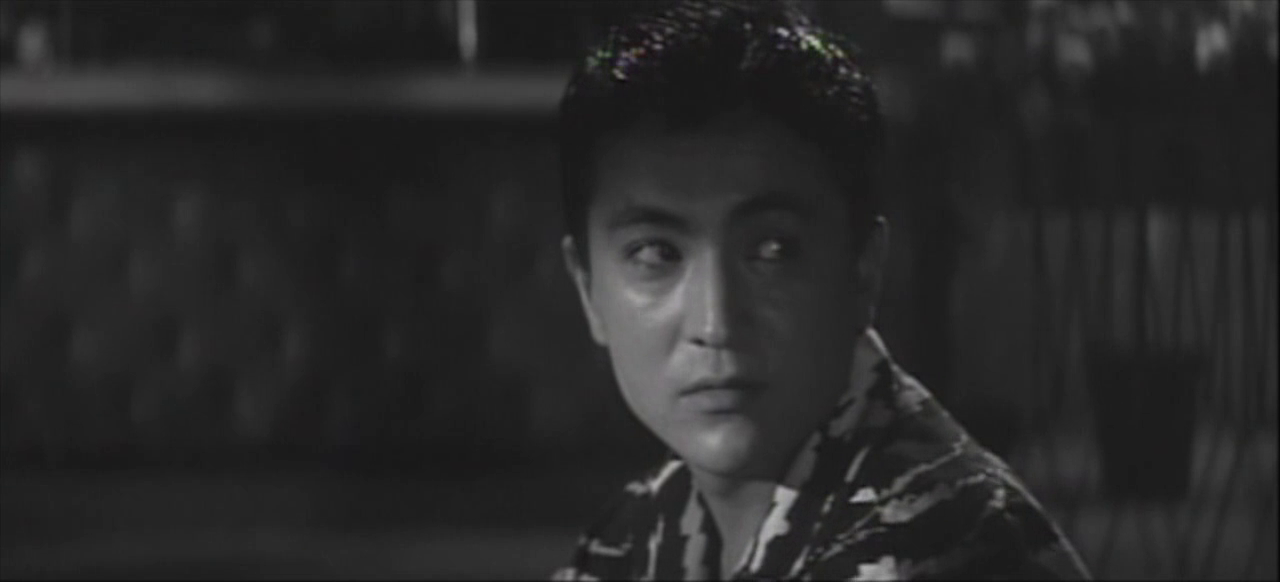
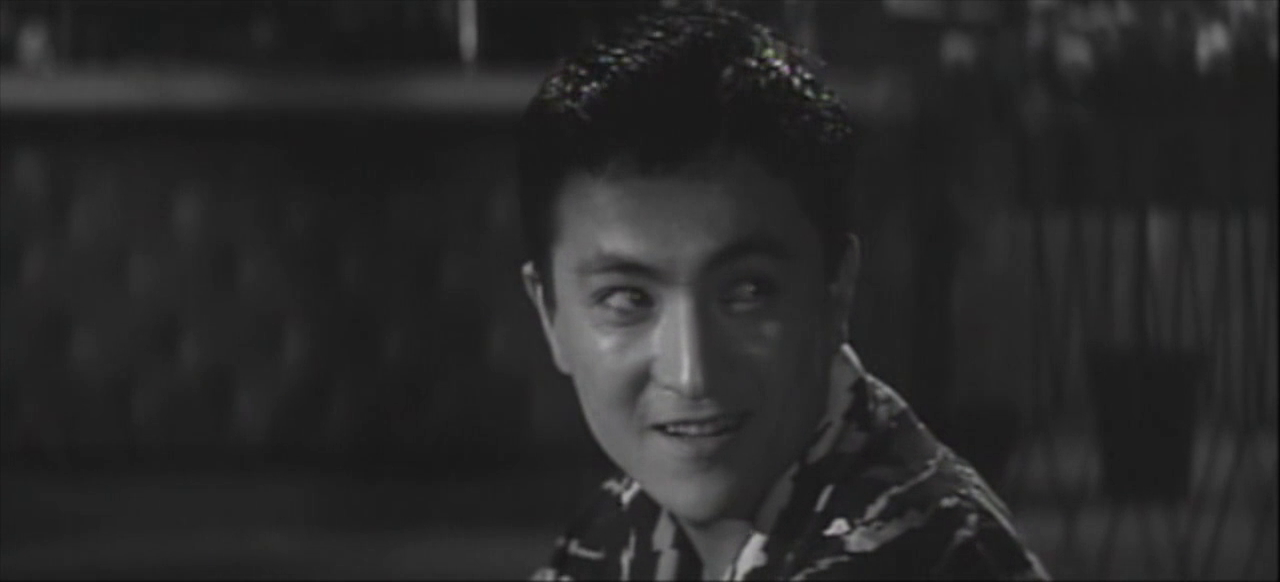
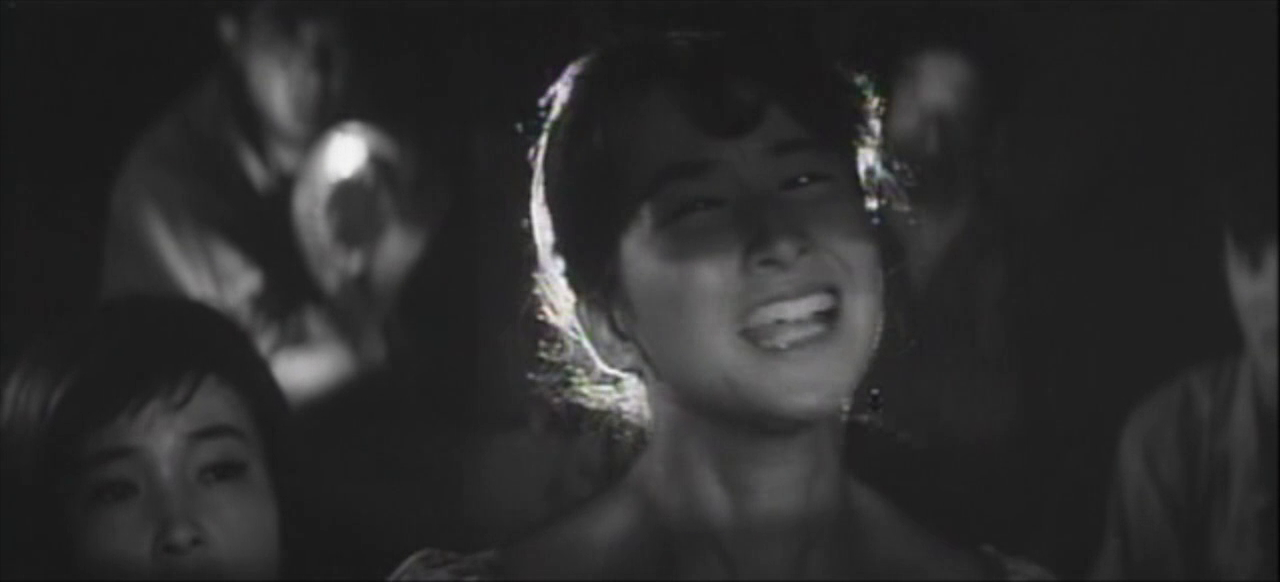
...The flashback, is interrupted by Ken's Taiyozoku friends, watching it as a film projection, commenting on it. Yoko is in the crowd with them. The men in the audience lust after the scene, but Setsuko stands up and demands the film be shut off. The men in the room shout her down, all seized by a kind of hot-blooded attitude. The women in the crowd are clearly distressed at the scene.
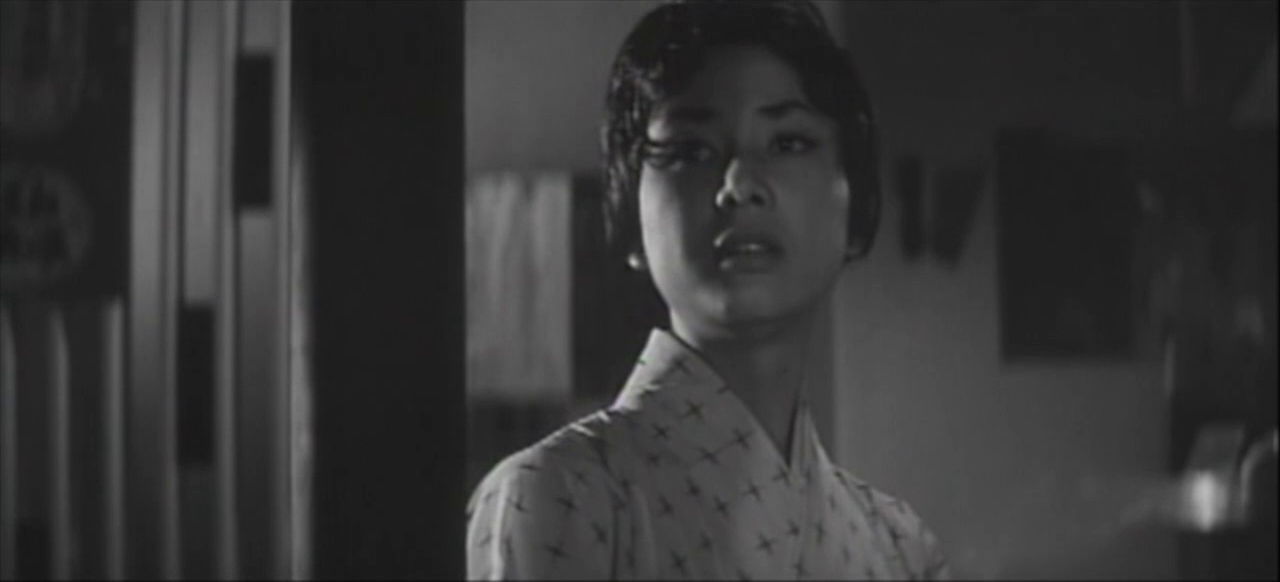
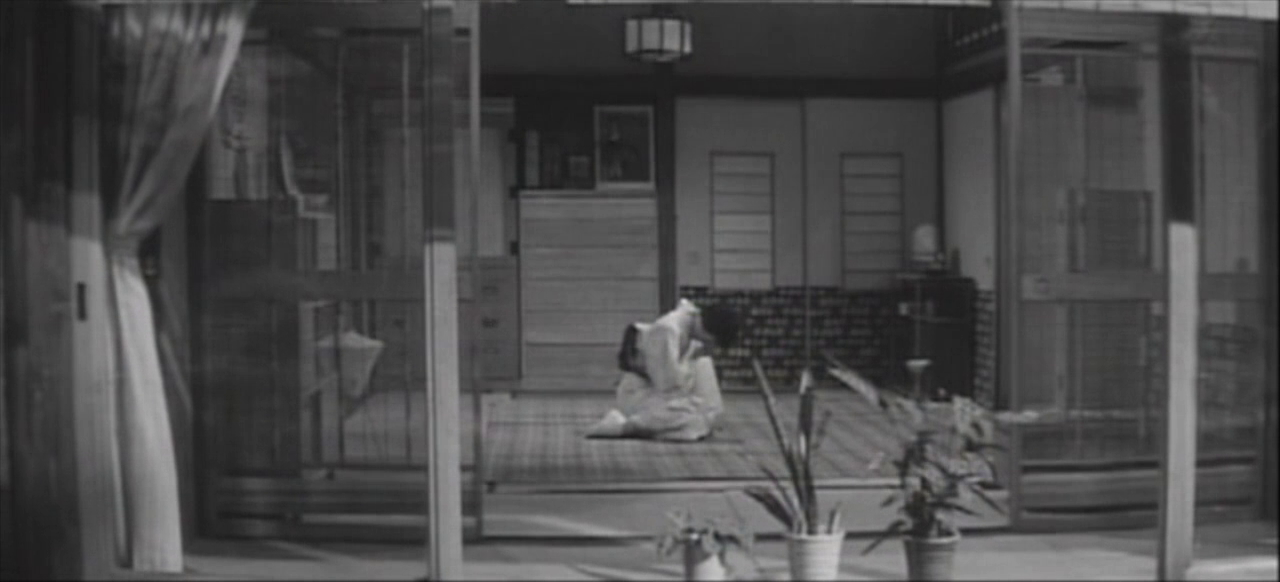
Yoko does her best to hold her composure, as Ken looks back at her, waiting for a reaction. Somehow, we have crossed from the painting to Yoko's memory, to the blackmail film Ken has on her, in an uninterrupted sequence. There are no clear markers that denote the transitions between elements, or the passage of time, or the movement of characters. The effect is swooningly surreal, but it serves an important purpose, tying the themes of the film together around these varied events. We realize Ken was there, and filmed the rape of Yoko, and that it's part of Ken's collection of pornographic films he uses like currency amongst his social set, throwing screening parties off-hours in the cafe. Suzuki is pretty clear here: Yoko's trauma is being packaged and exploited as entertainment, as the art of the budding filmmaker, Ken.
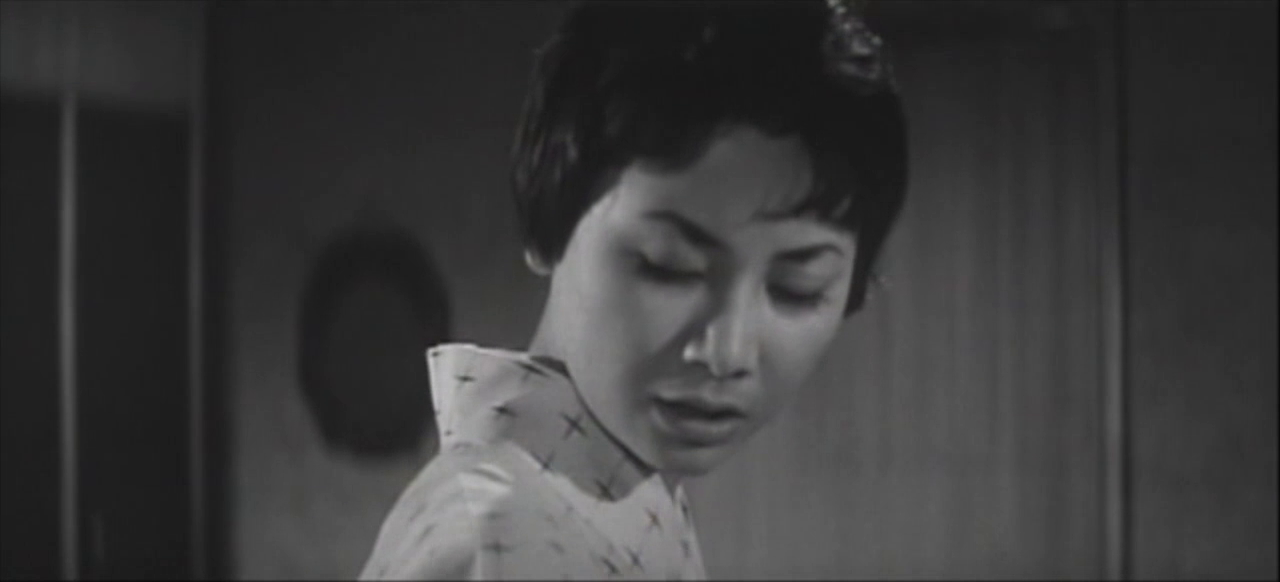
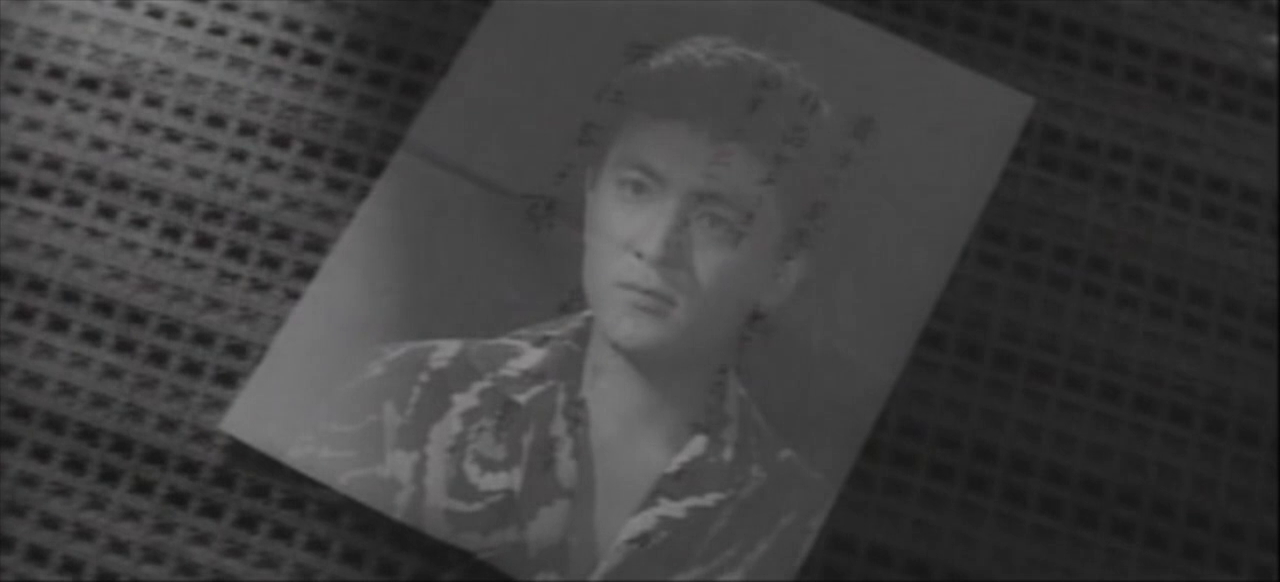
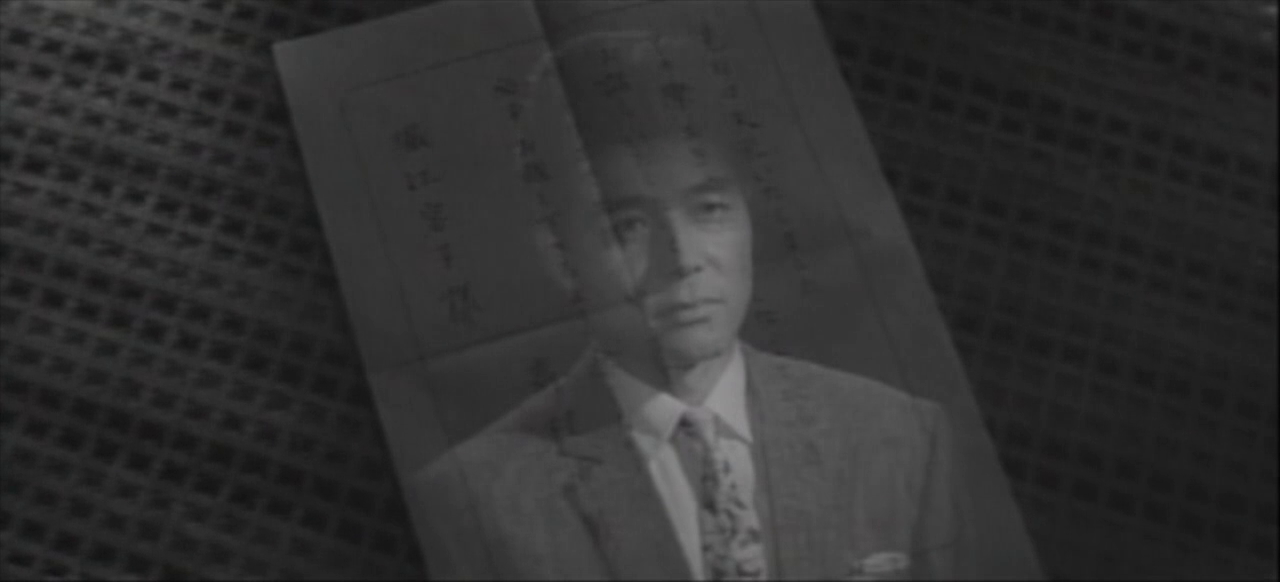
On the flip-side, we come to learn that Takamura, the painter of the factory where Yoko was molested, is more than he seems. A deeply disturbed creep, Takamura is revealed as the rapist who molested Yoko in the factory. He painted the factory almost as a trophy, a memento of his crime. It amuses him to taunt Yoko with the painting, stirring up her memories.
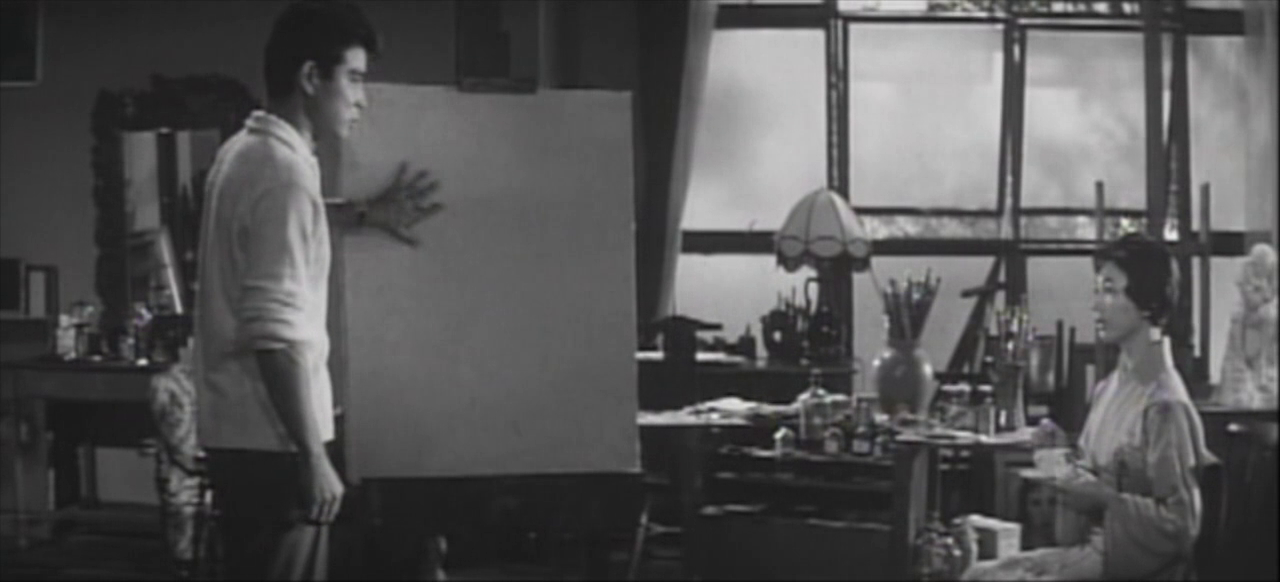
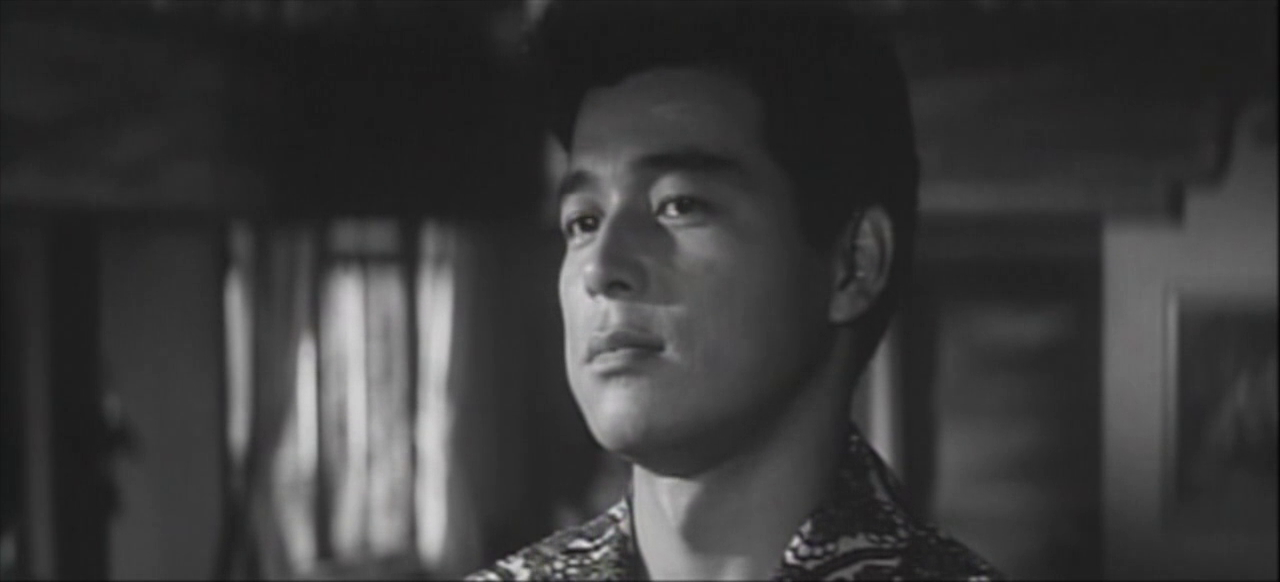
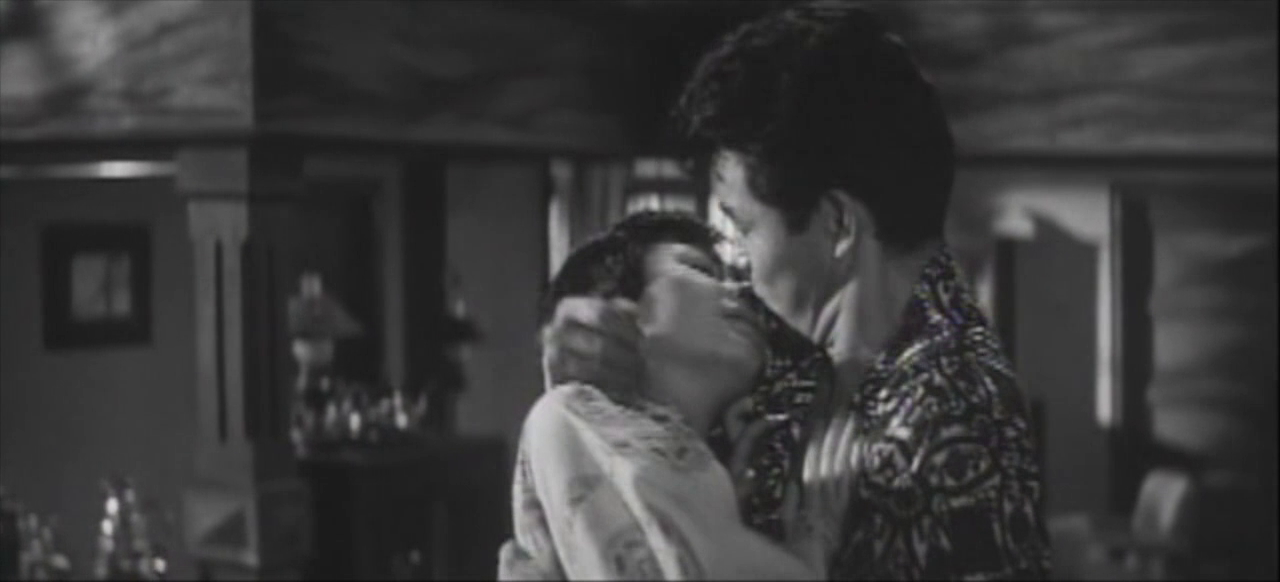
What's more? Takamura and Ken are half-brothers, partners in the crime against Yoko –– and both of them male artists, exploiting a woman's suffering at their own hands as part of their art. From Narita in Underworld Beauty to the titular Yumeji, Suzuki never goes easy on artists, but I think in this film his critique starts to clarify in a way that echoes in portrayals of artists in the films before and after this one. It's clear Suzuki is very alert to the sexism of the art world.
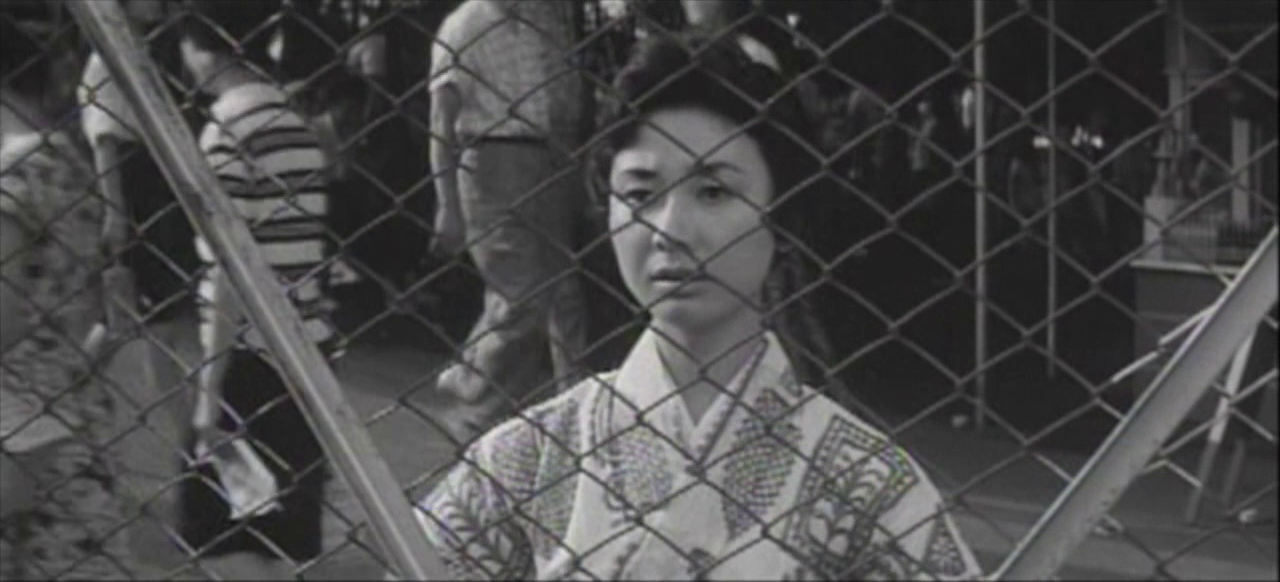
What's even more more, Blue Breasts posits a world in which women's roles are being consciously restricted by the selfishness and violence of a male-oriented, capitalist society. Yoko is trapped between a husband who can't meet her needs and the husband's three, hideous, horrifically misogynist sons –– all of whom exploit her and other women for their art, their business, or to build up their fragile egos. She can't tell her husband what has happened, and yet, we have to sense that in some way the husband is largely responsible for what his children are like; after all, he occupies the principal position of exploitation –– indeed, his corporate success is based upon the capitalism's naked capacity for rapacious consumption, the model for all his children's most aberrant behaviors (we might also assume that the husband's inconstancy has resulted in the fracture of all these young mens' psyches, resulting in their propensities for sadism –– I wouldn't be surprised if that was the emphasis of some of the dialogue in these scenes).
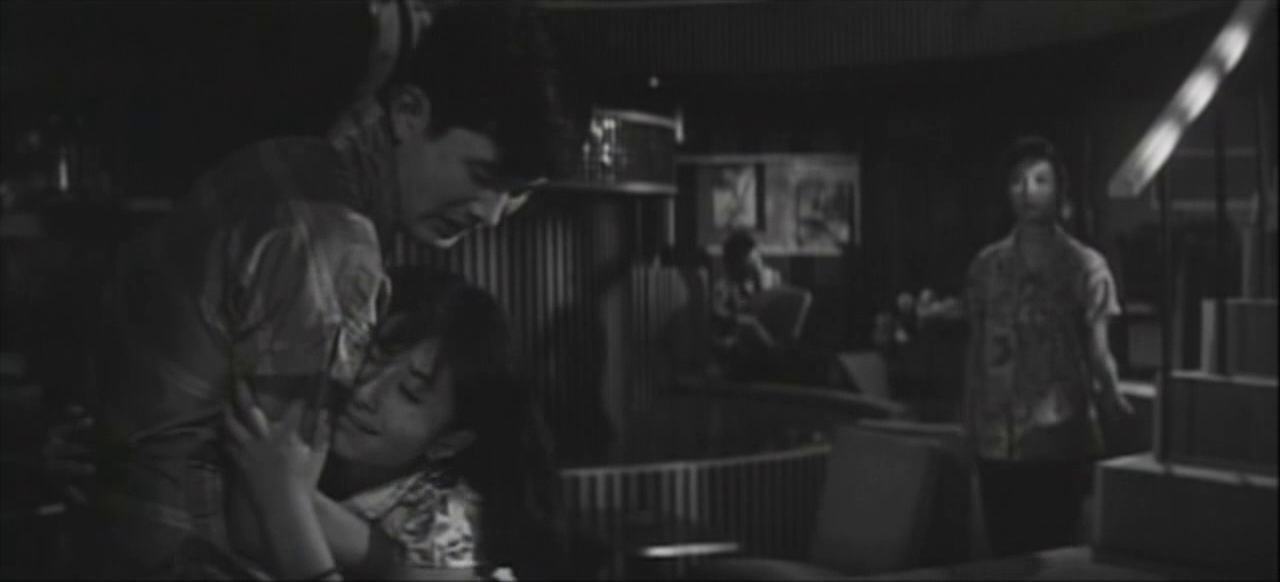
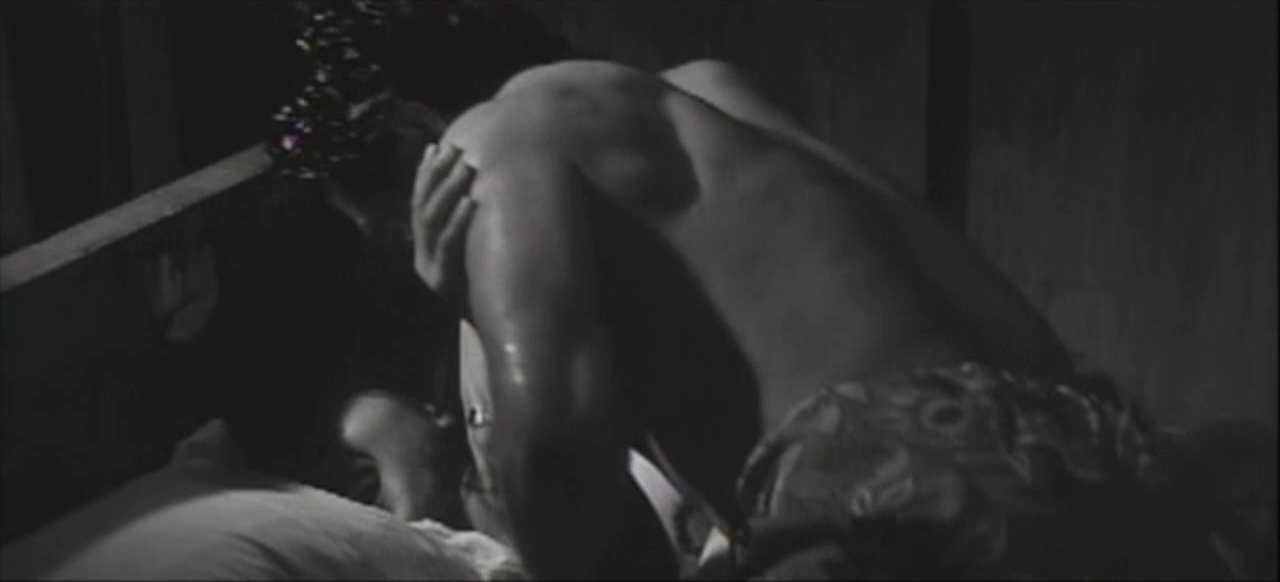
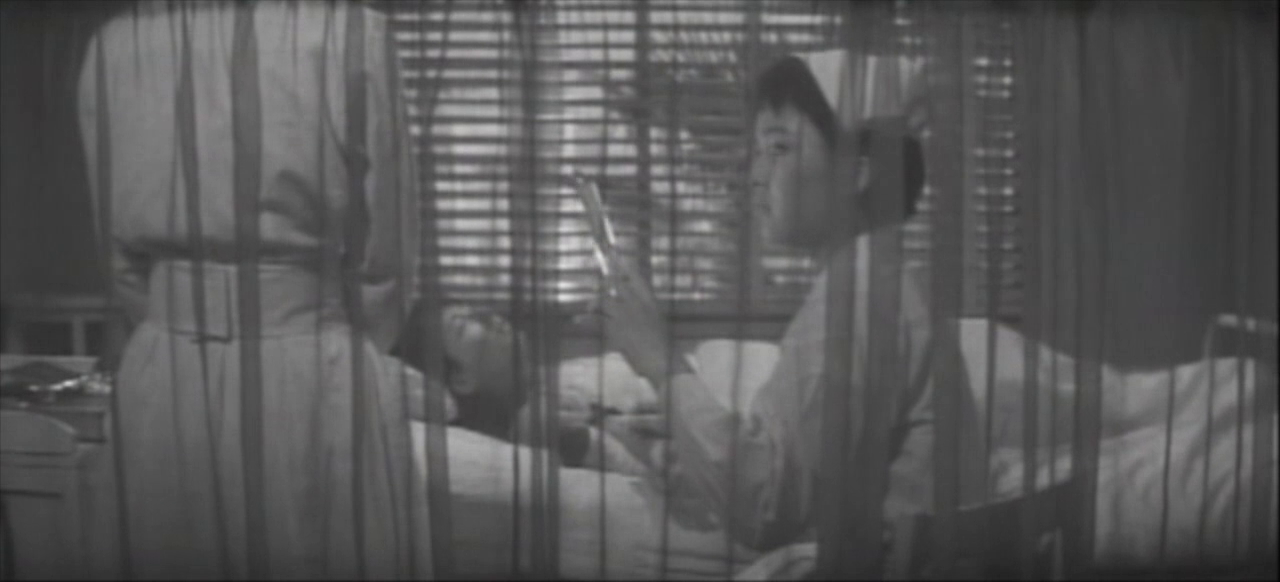
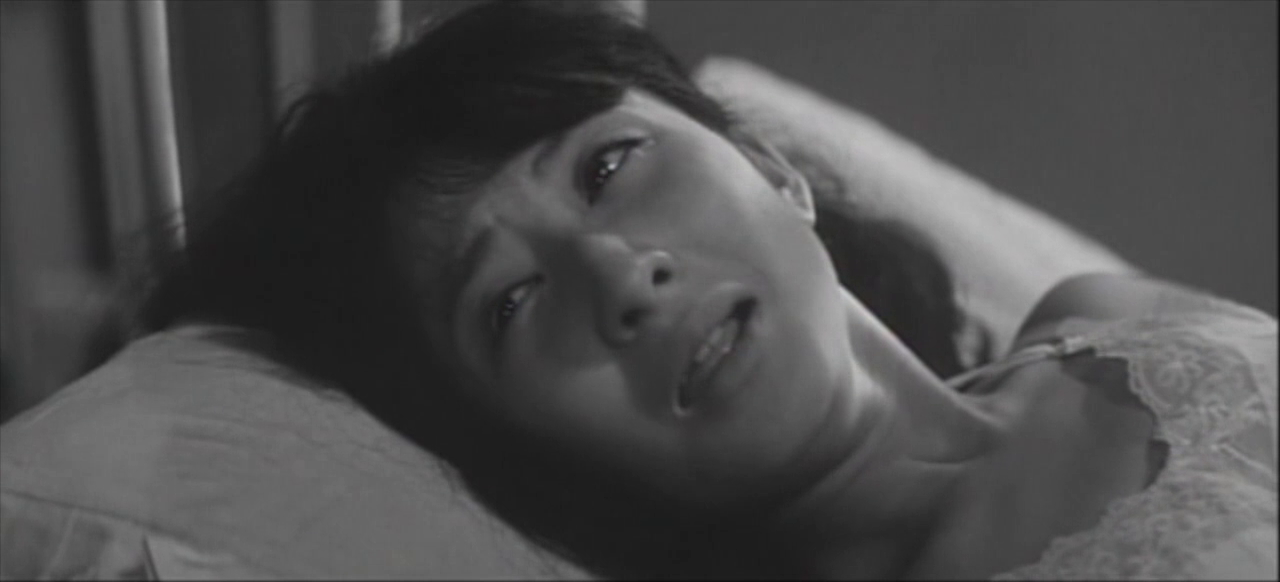
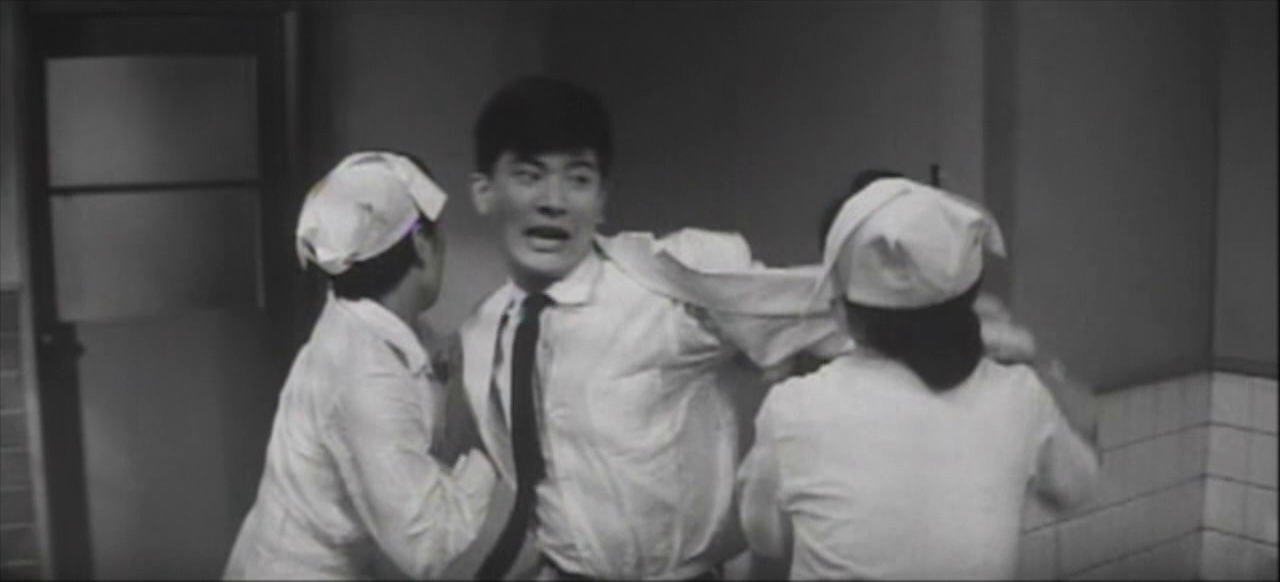
And now Setsuko is being lined up as Ken's next target. She is raped while Hiroshi is otherwise occupied, and Yoko is able to confront a distraught Hiroshi. Together, they resolve to get to the bottom of this creche of rape and exploitation.
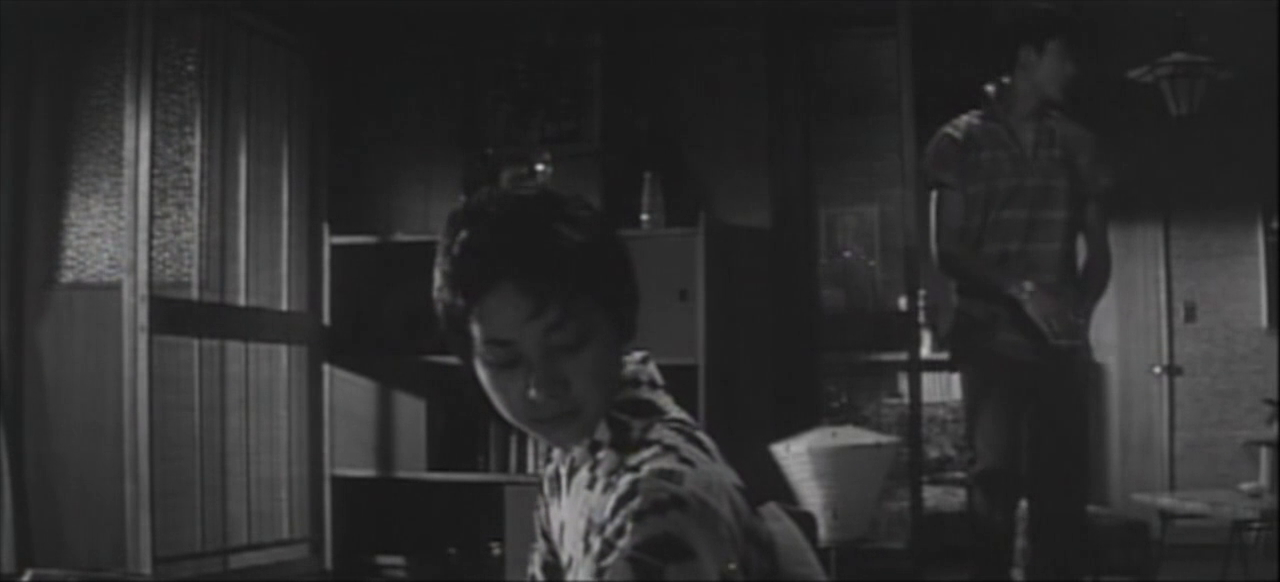
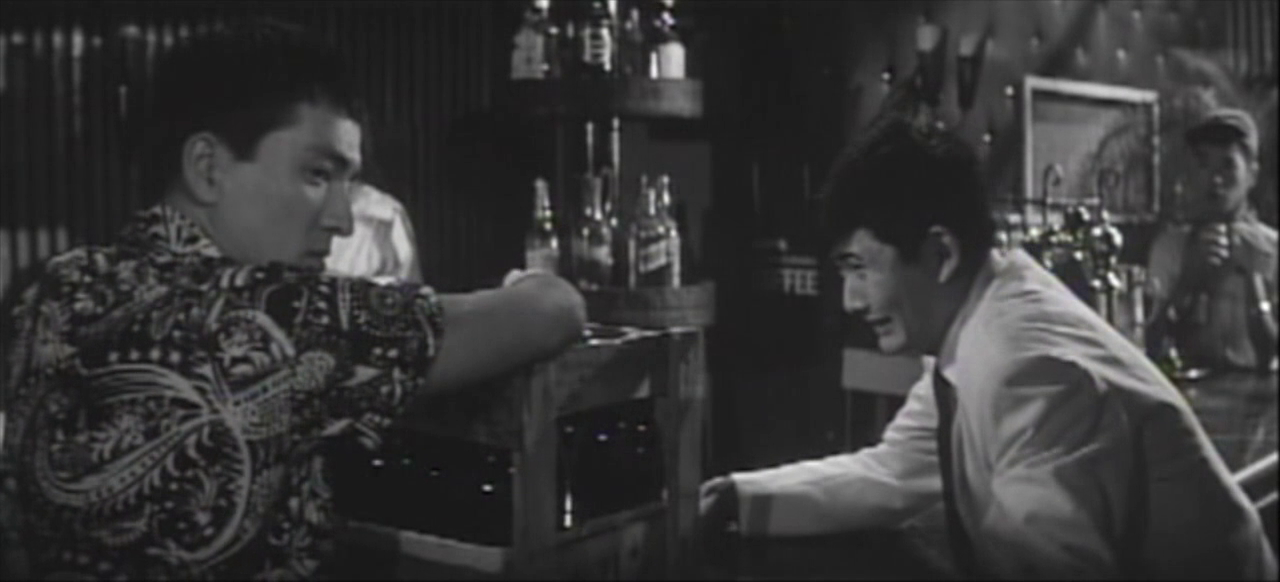
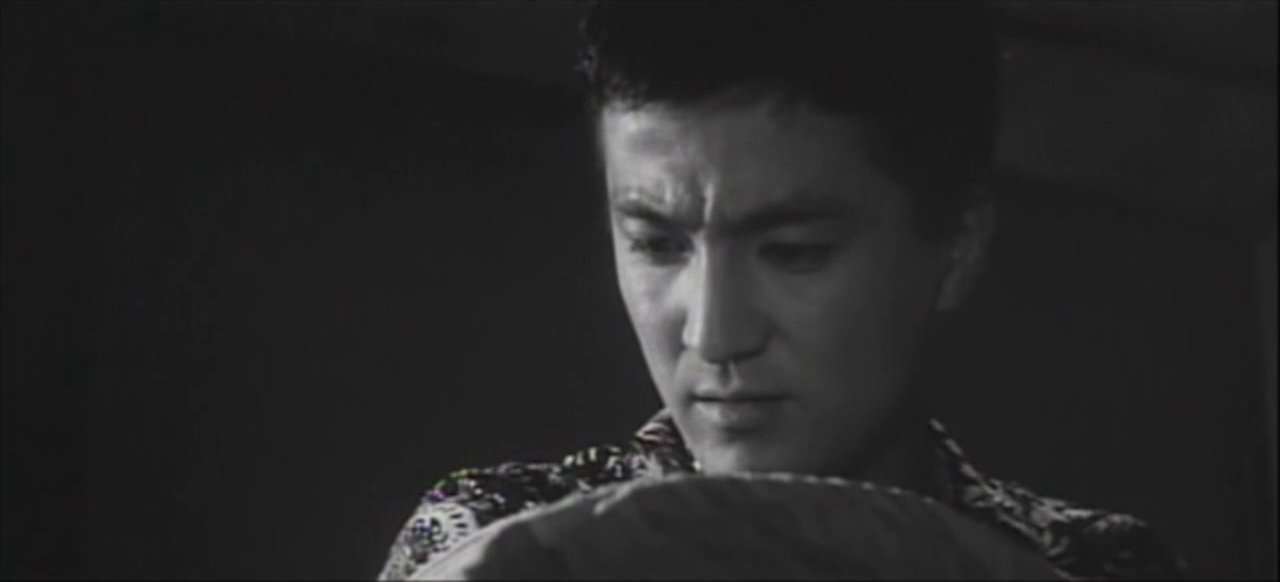
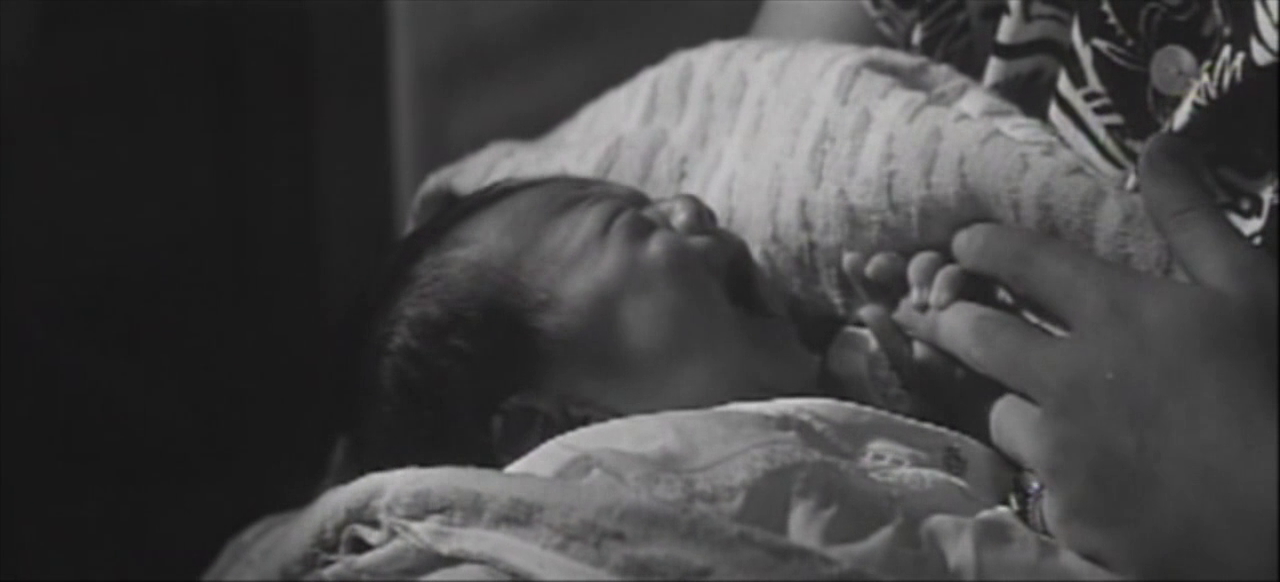
Hiroshi confronts Ken, but the result is more that Hiroshi reveals himself than anything else. Hiroshi weeps and whines at his brother, struggling to give up the macho personality Hiroshi admired and emulated in his brother, but that was ultimately not what he held in his own heart. We see Hiroshi for the vulnerable, even pitiable, sensitive boy he is, and Ken seems embarrassed by the confrontation. What breaks the dam here is that Michi suddenly has her baby. This is the part of the film that feels a little implausible, because looking at this new generation of this f*cked-up family, Ken has a kind of conversion. He seems to know himself for who he is, and he seems to confess to Yoko that he wants to change. I guess, charitably, the thunderclap of responsibility for a life other than his own has knocked Ken sideways; a little corny, but stranger things have happened?
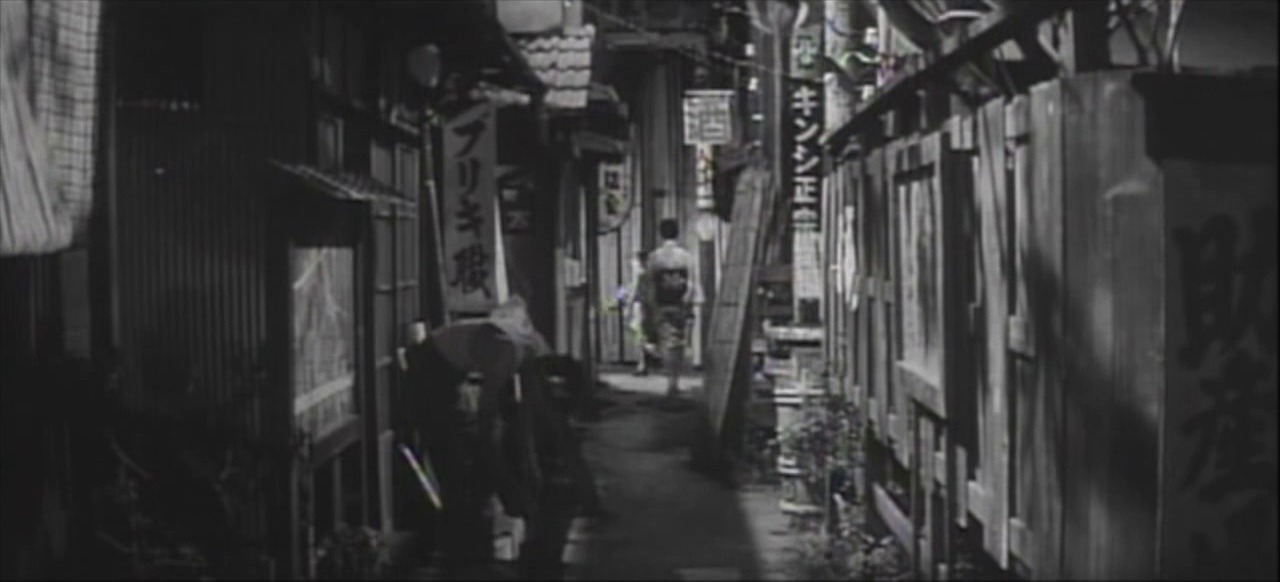
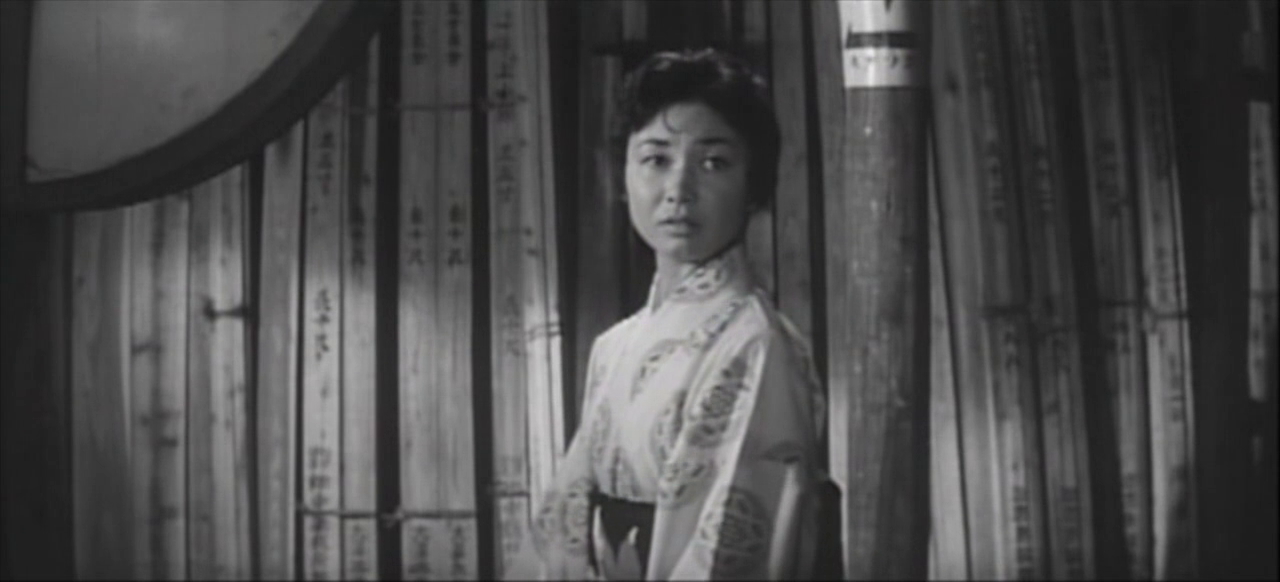
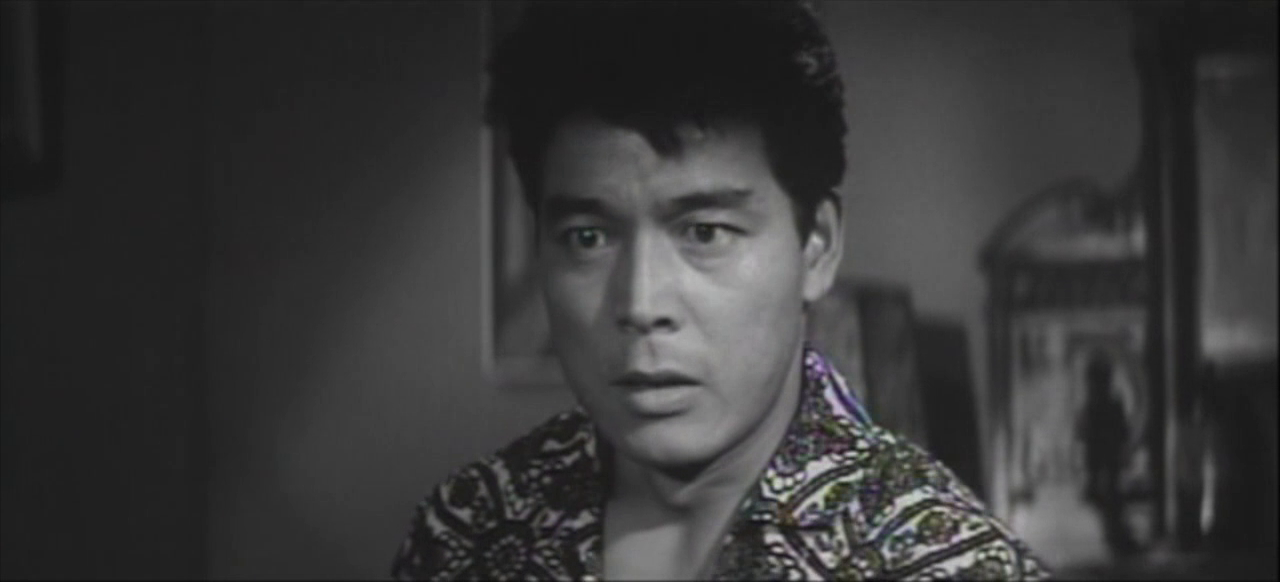
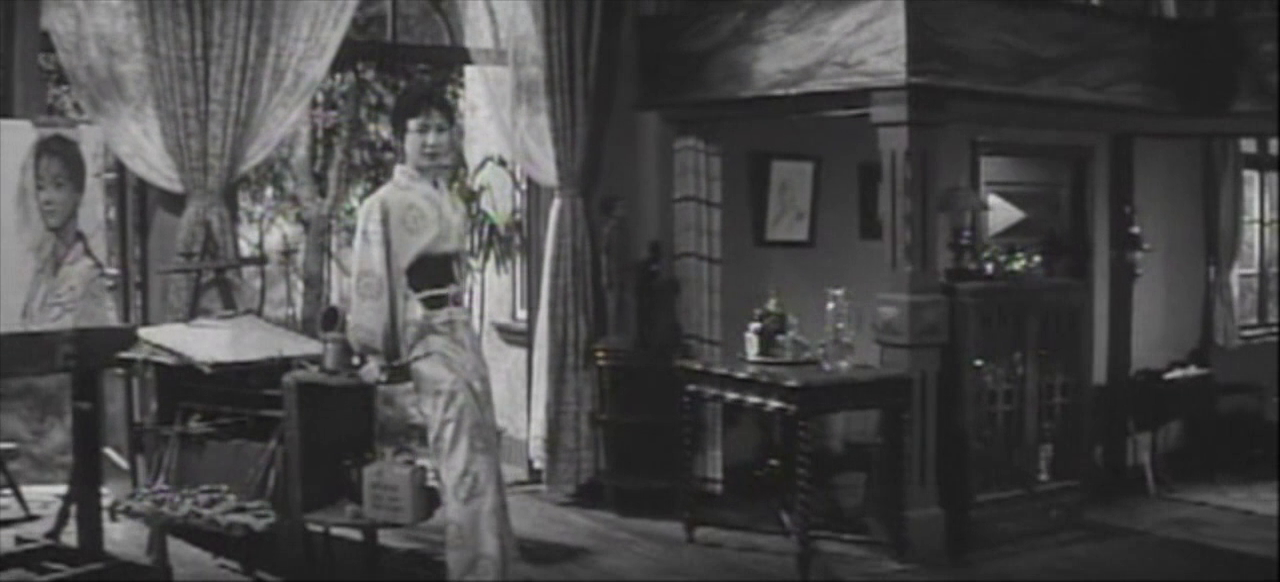
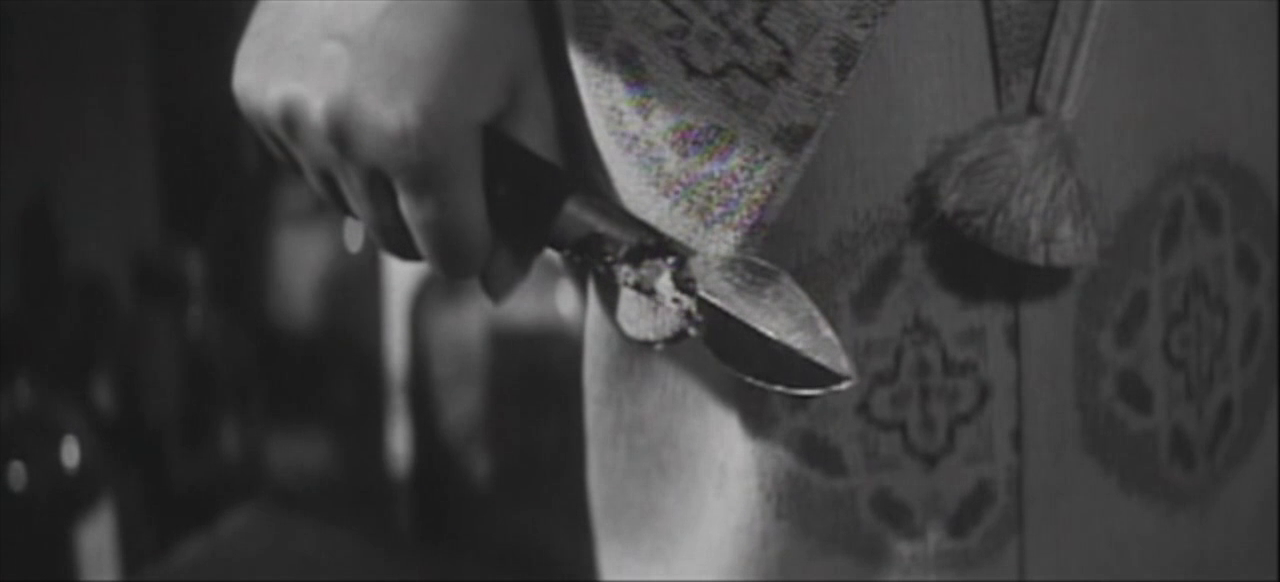
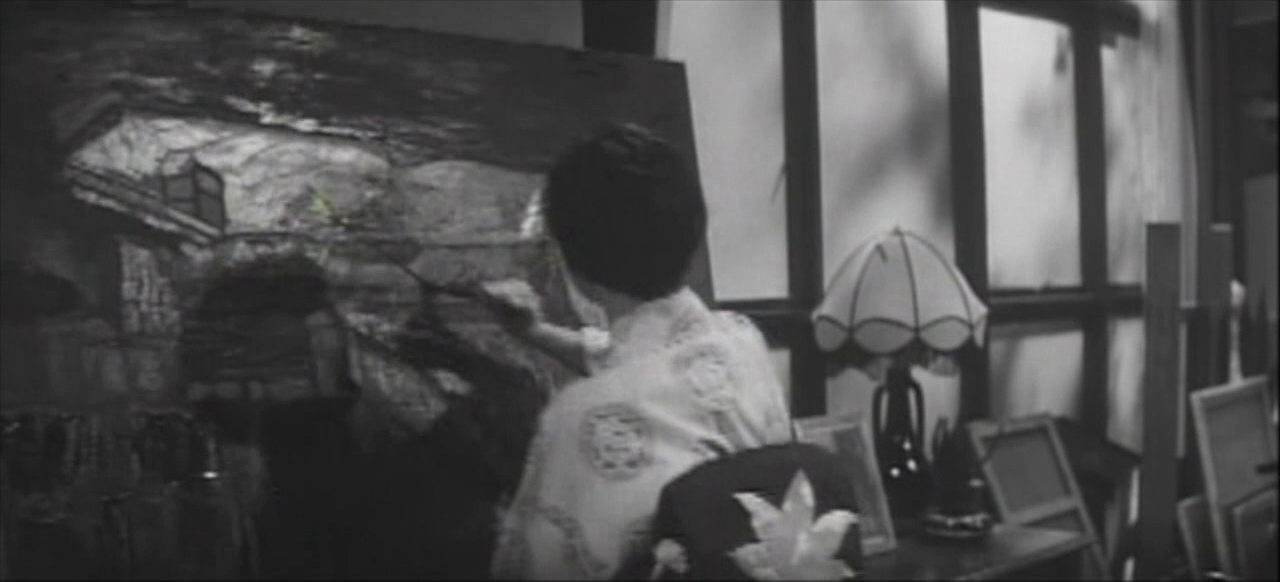
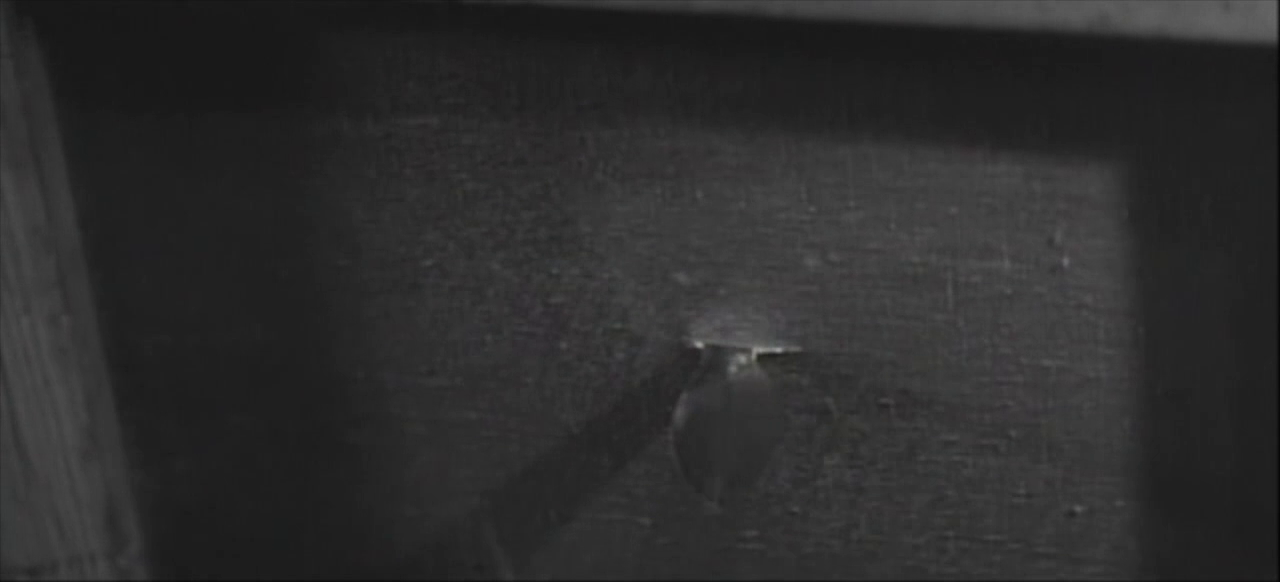
Yoko moves on to confront Takamura, but the painter is a much slicker sort of pervert than his younger brothers. Takamura clearly won't give up his conceited position until Yoko, fighting back against her trauma, grabs a palette knife and rends open the painting of her violation. Takamura is horrified, and is going to become violent.
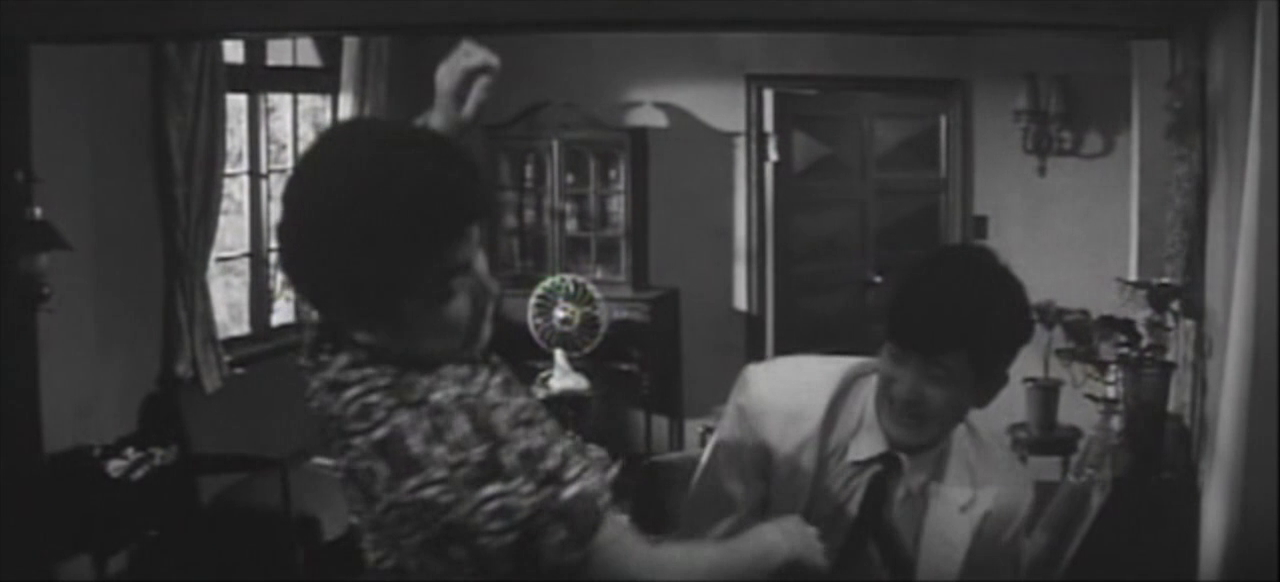
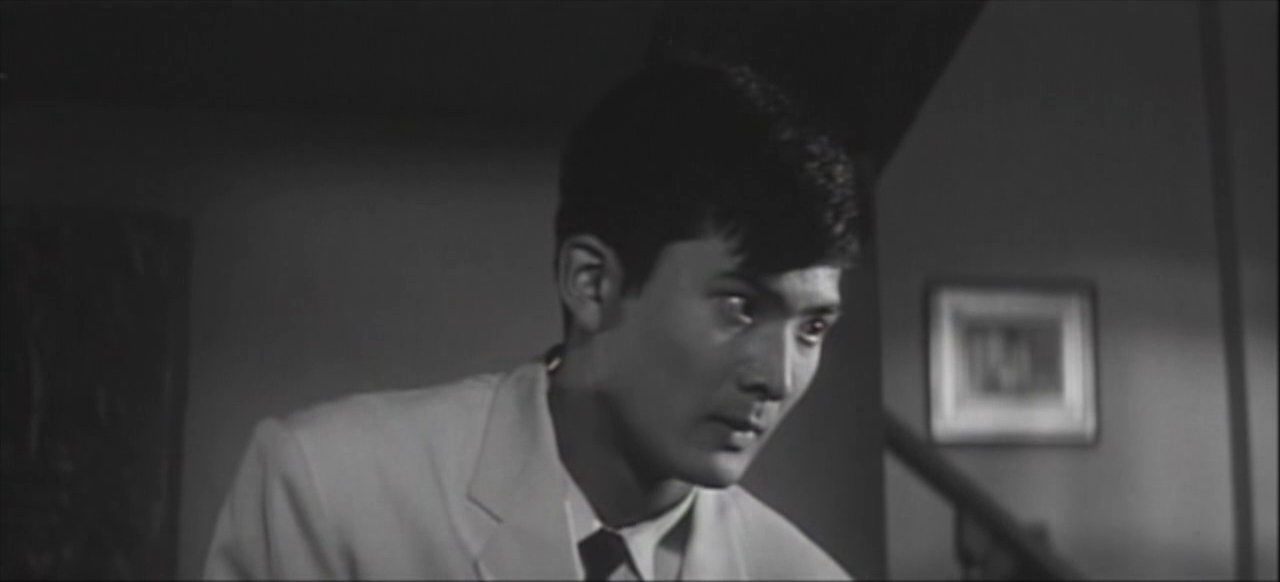
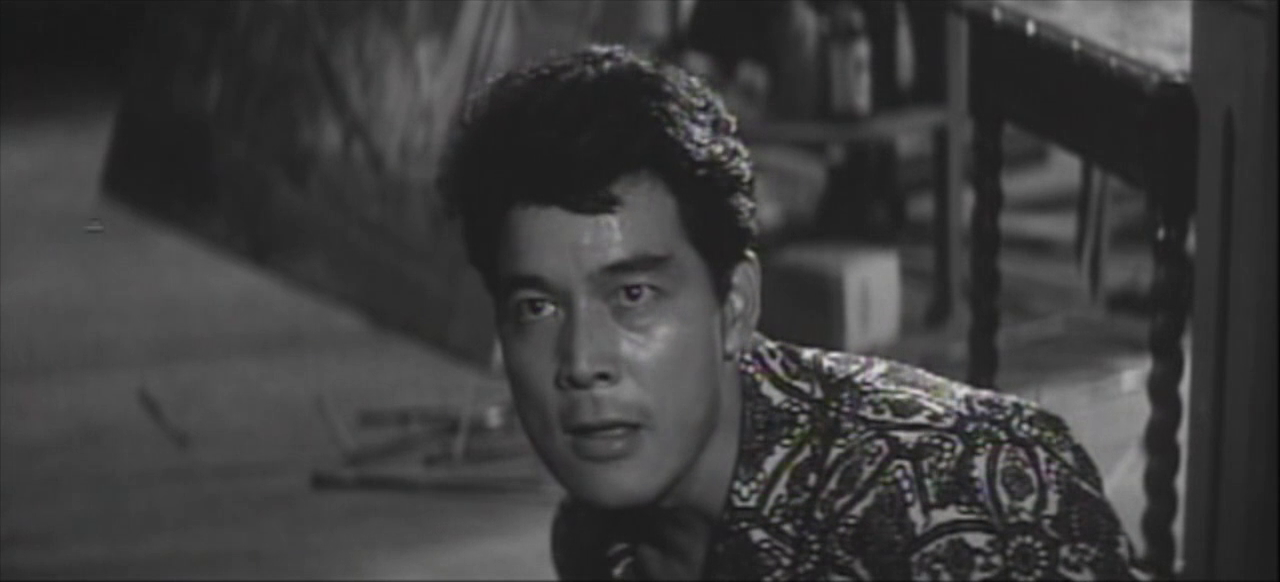
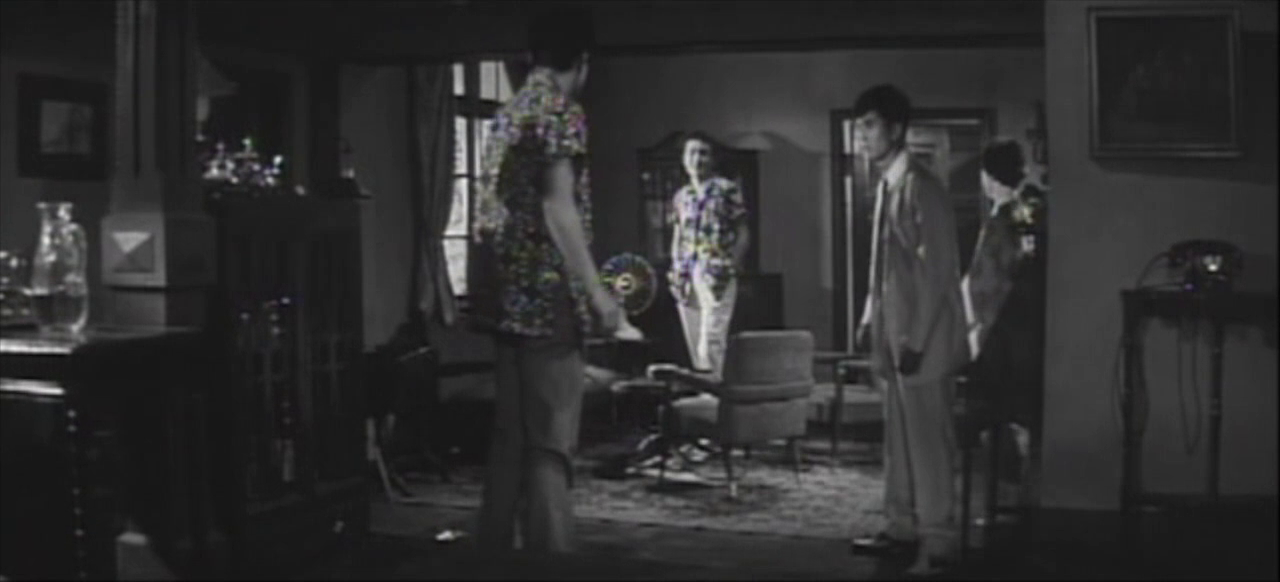
Hiroshi, who arrives here, isn't able to fend off the bigger, stronger man. But then Ken appears, and says something to his brother. I would love to know what is said here. It basically ends the threat of the film; Ken just stops it cold. Hiroshi and Setsuko join Yoko, leaving the painters house and wandering into the woods.
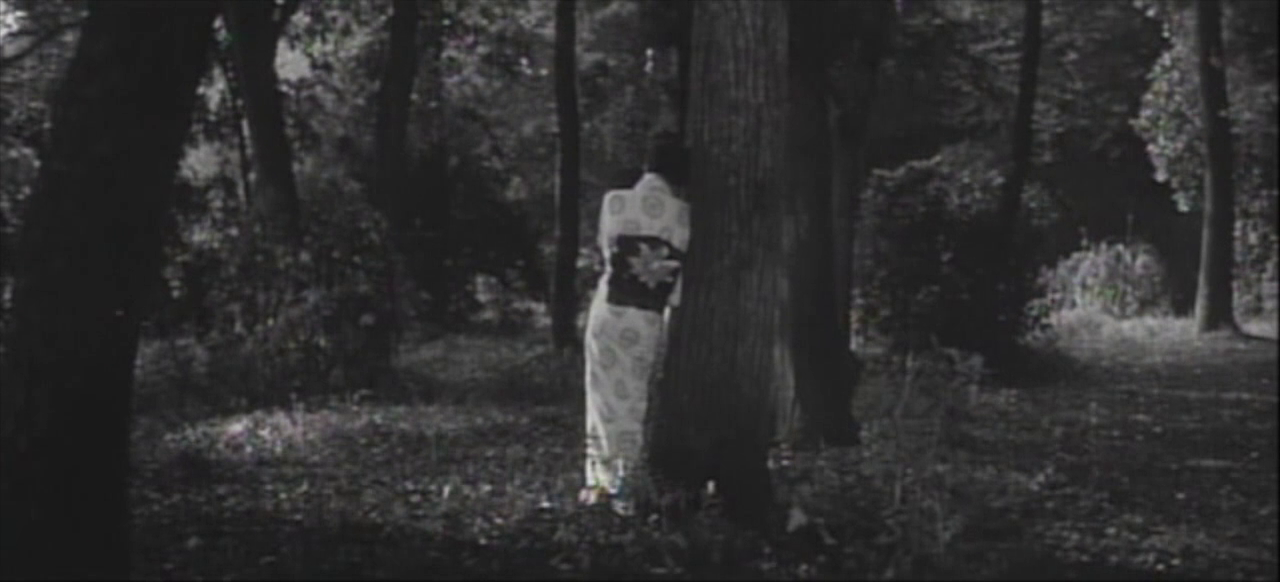
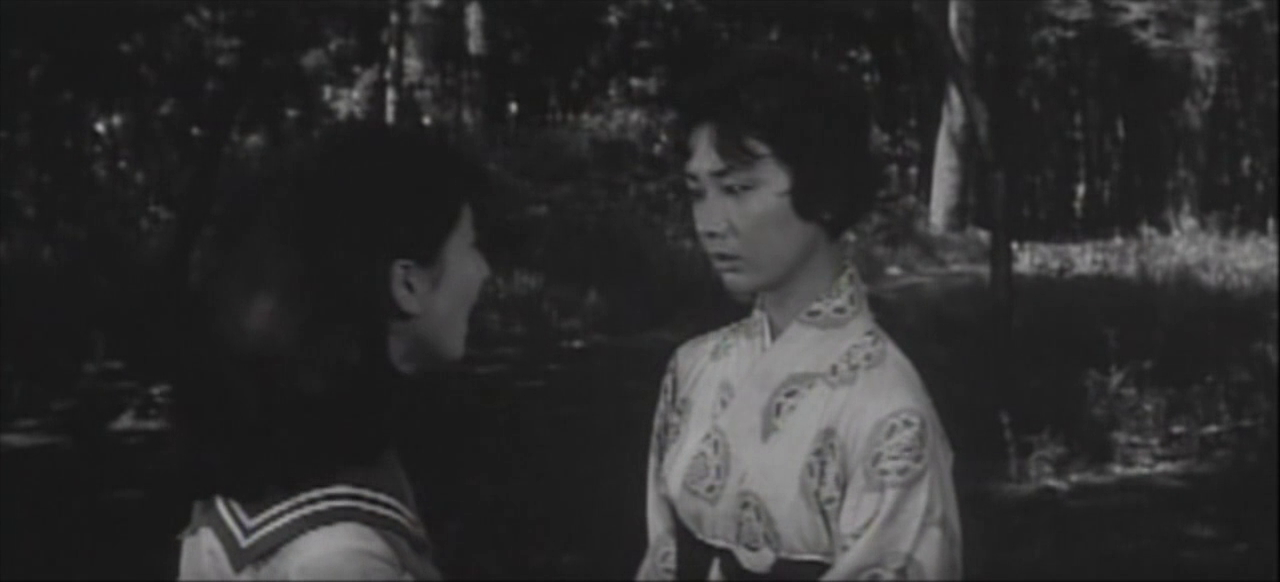
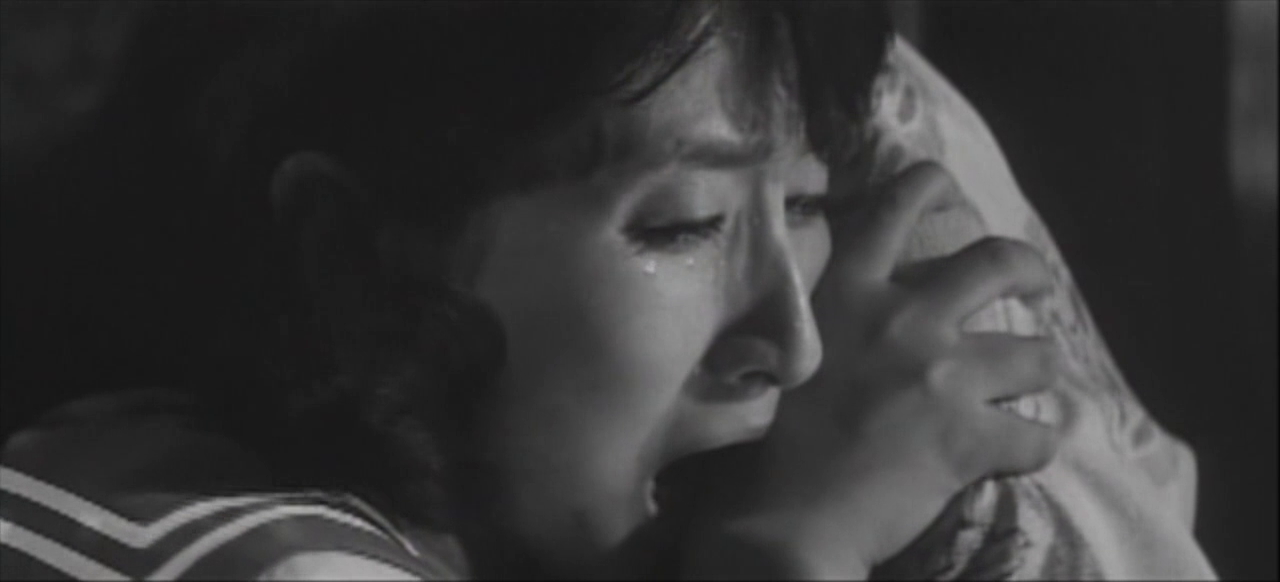
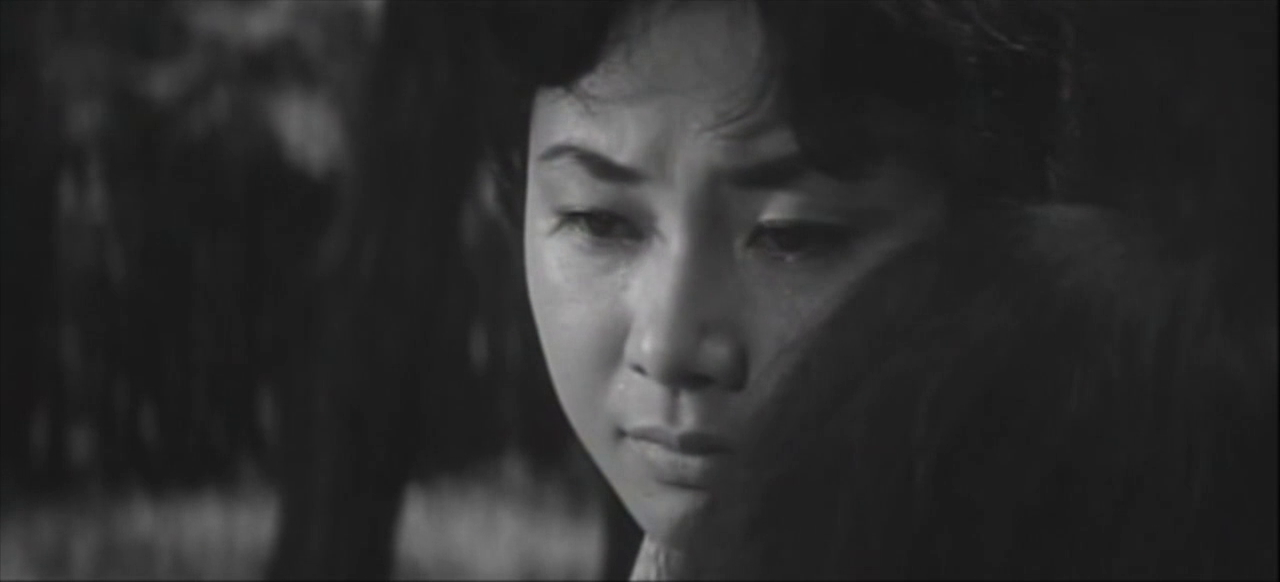
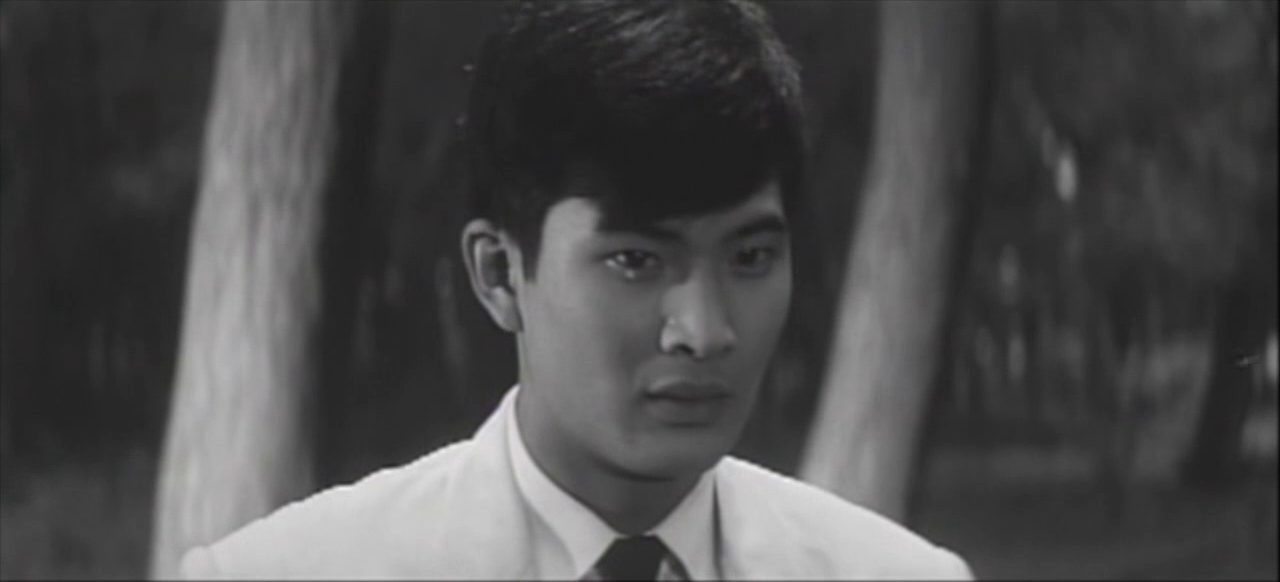
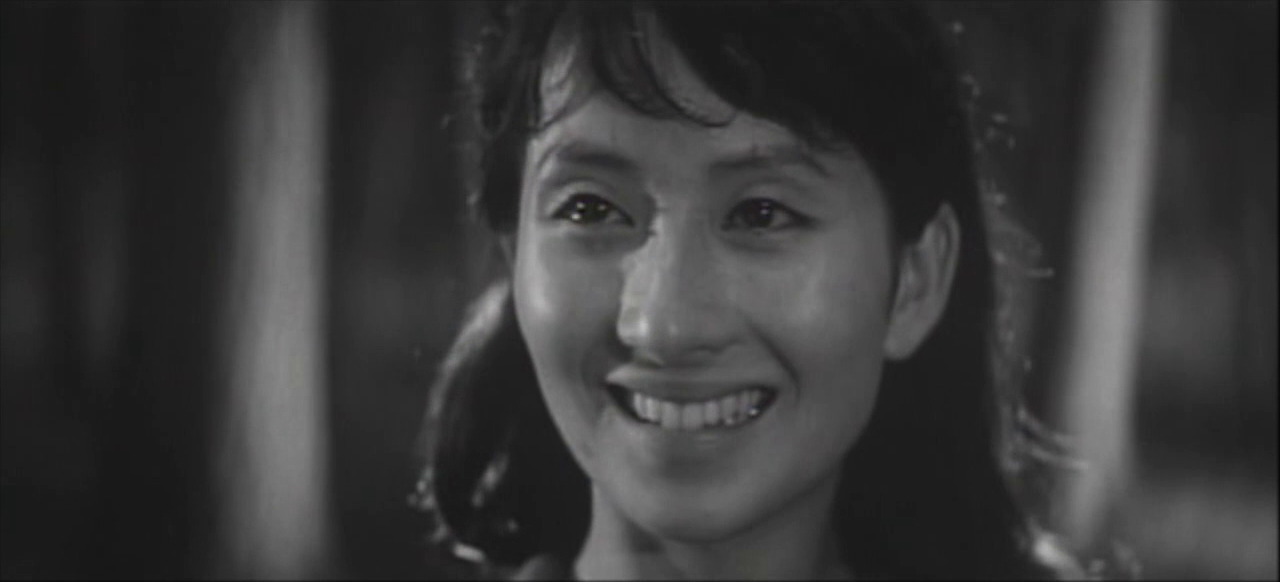
Yoko appears devastated. Freeing herself from her psychic persecution has not solved any of her material problems, the fact that she was raped by her husband's eldest son, almost had an affair with him, was almost raped by the middle son, and was being extorted by them both...she can't very well just tell her husband about this. She seems to be considering dying, but here Setsuko steps in, talking to Yoko woman to woman, and seems to convince her that they have to struggle on, somehow. That's the end of the film. It's pretty freaking dark.
CINEMATOGRAPHY
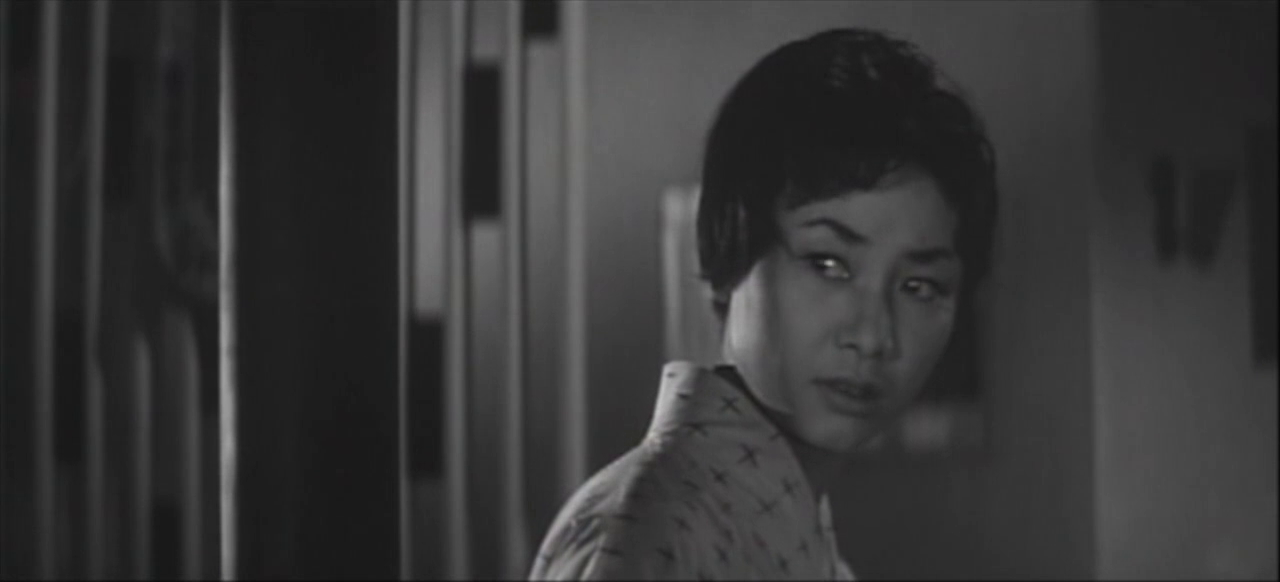
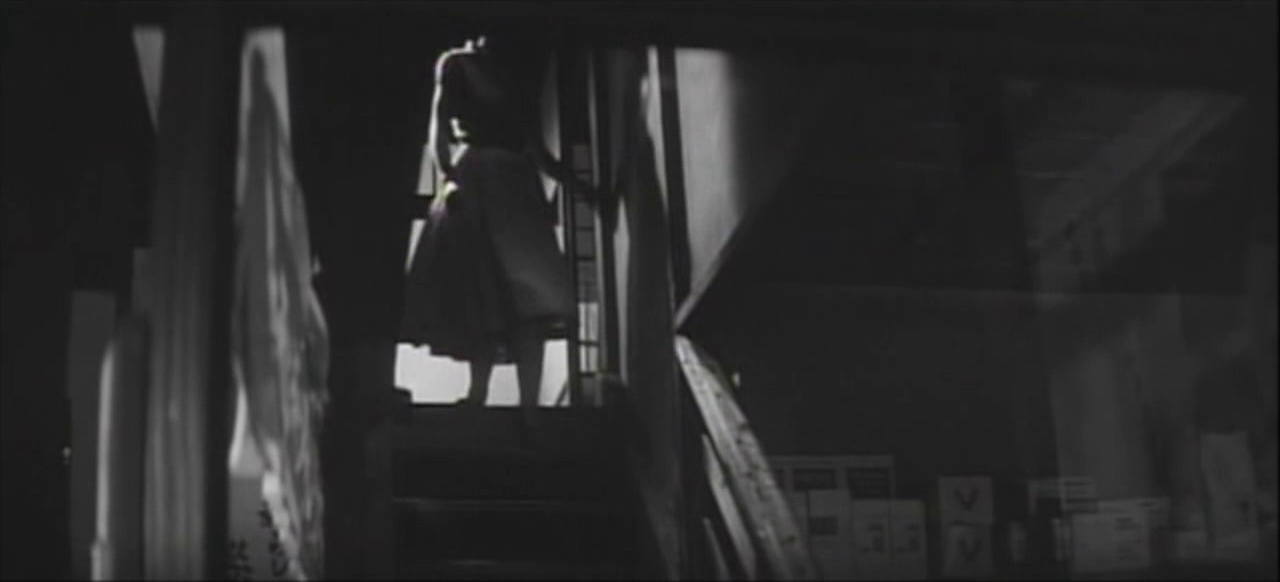
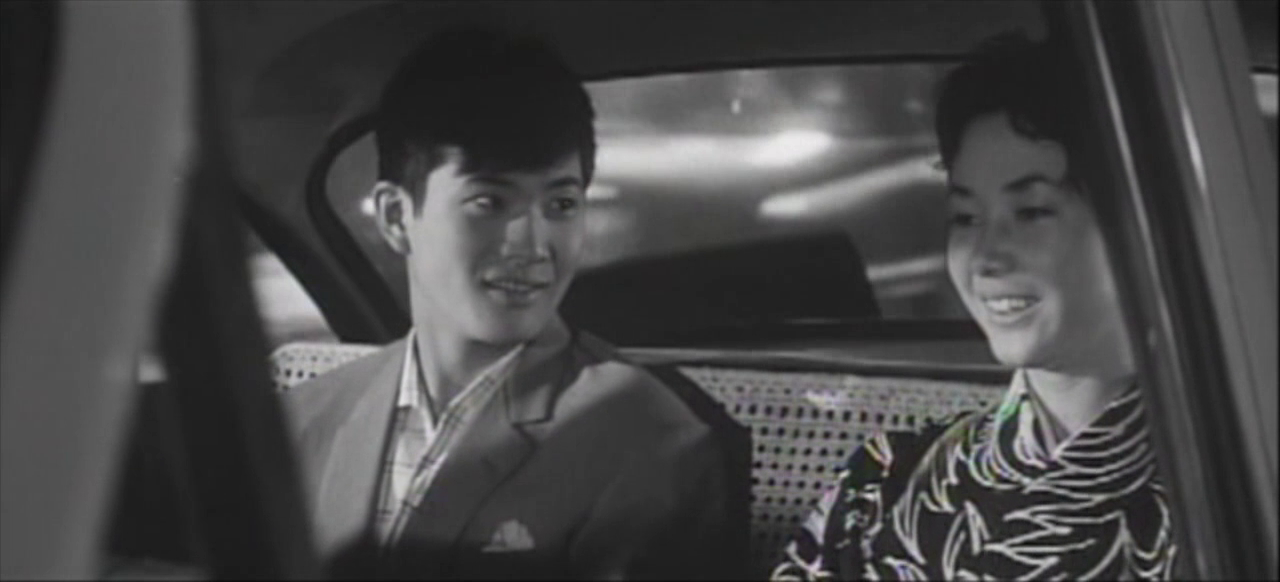
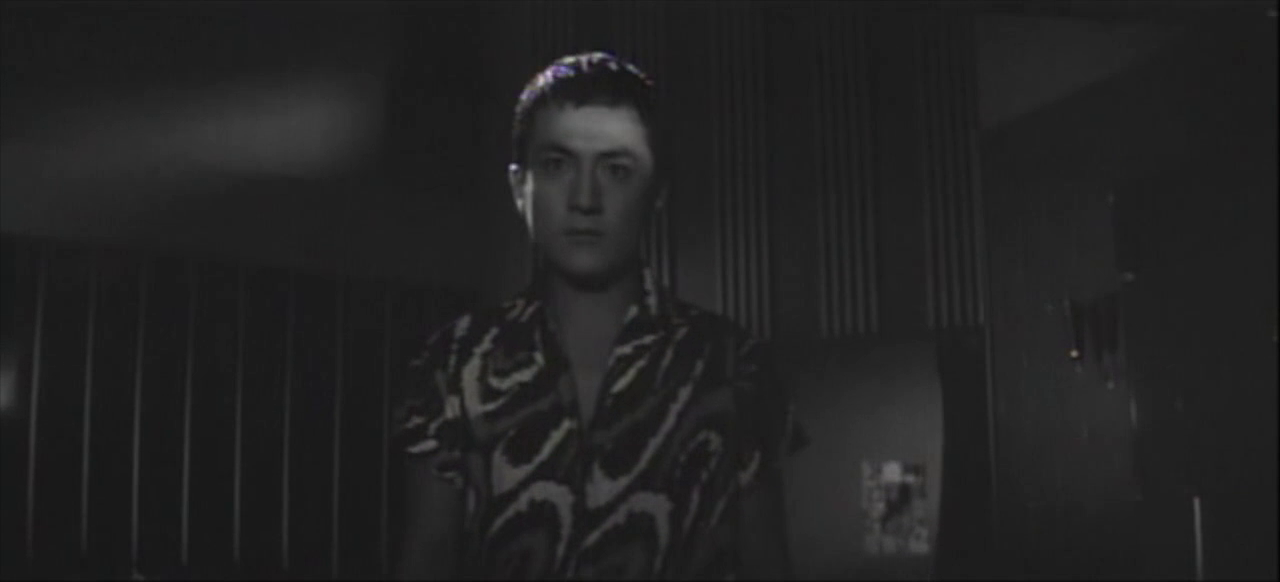
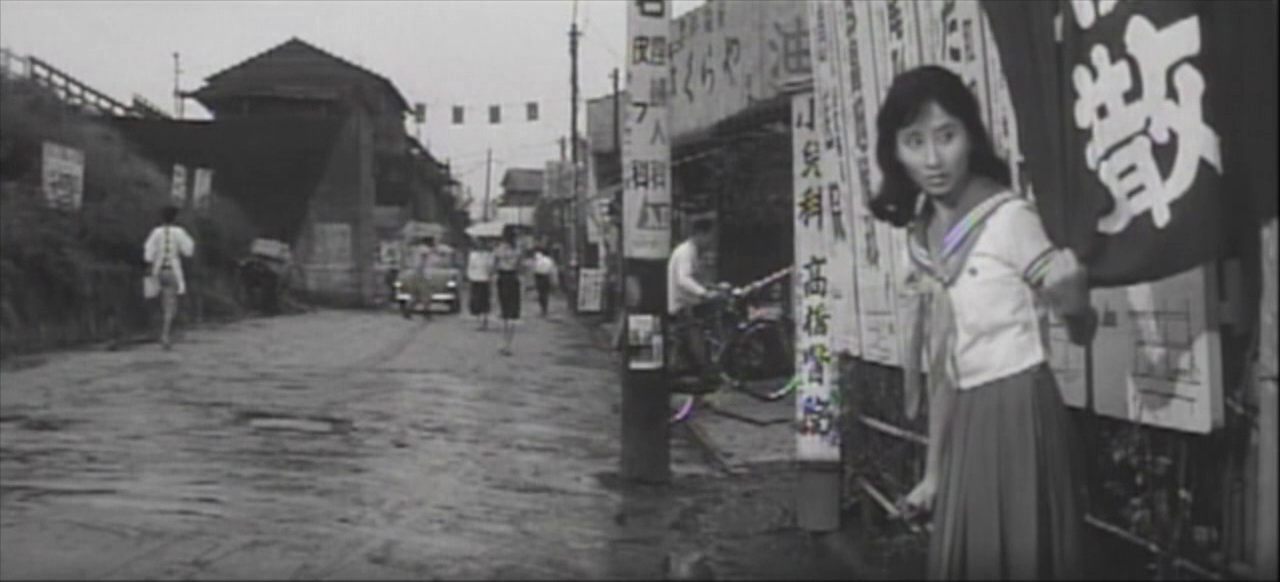
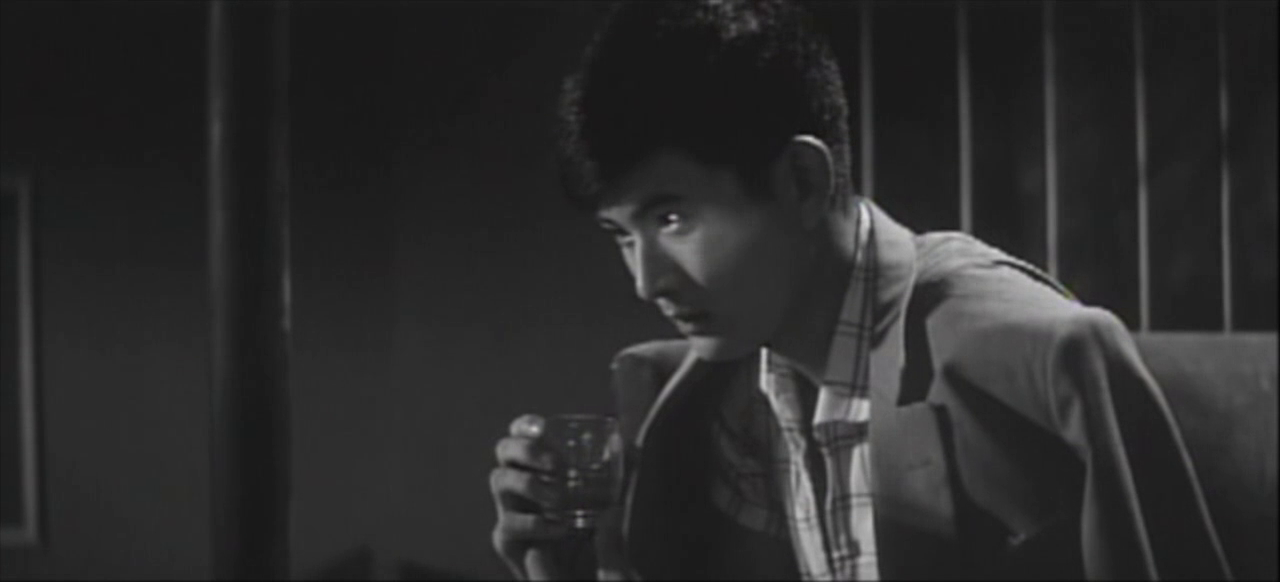
After missing the last three films from his emerging favorite director, cinematographer Kazue Nagatsuka is back just in time, making Blue Breasts a huge visual advance upon its' predecessor. I said a lot before about Yoshihiro Yamazaki's "Nikkatsu boilerplate" cinematography for The Boy Who Came Back, well, Nagatsuka proves here why he is the cinematographer who really establishes Suzuki's signature visual style.
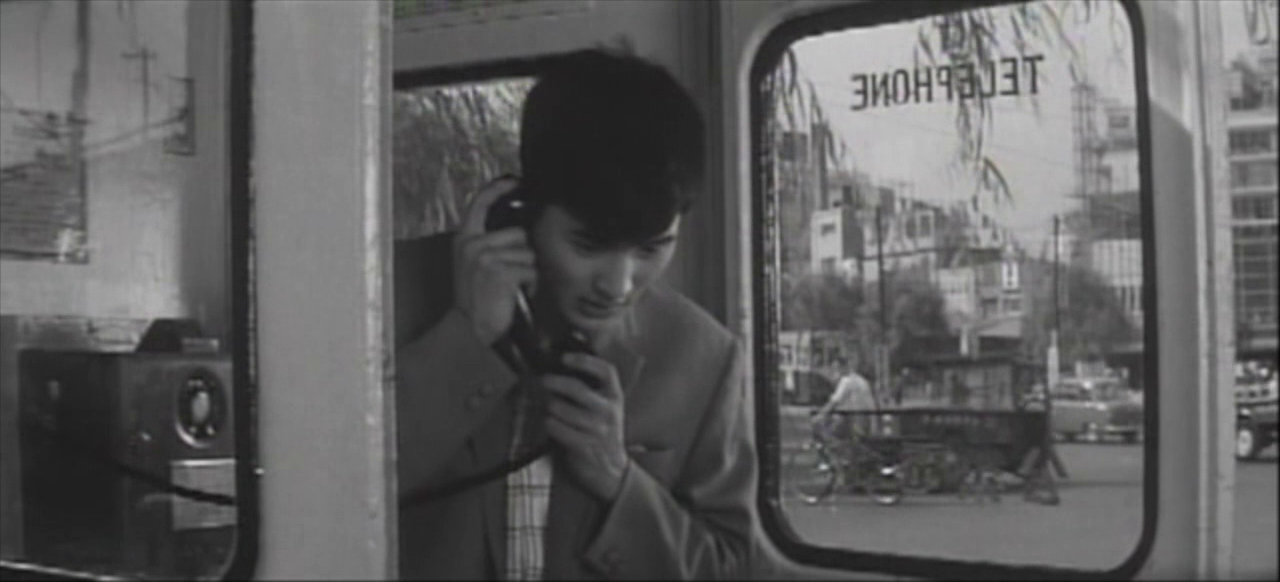
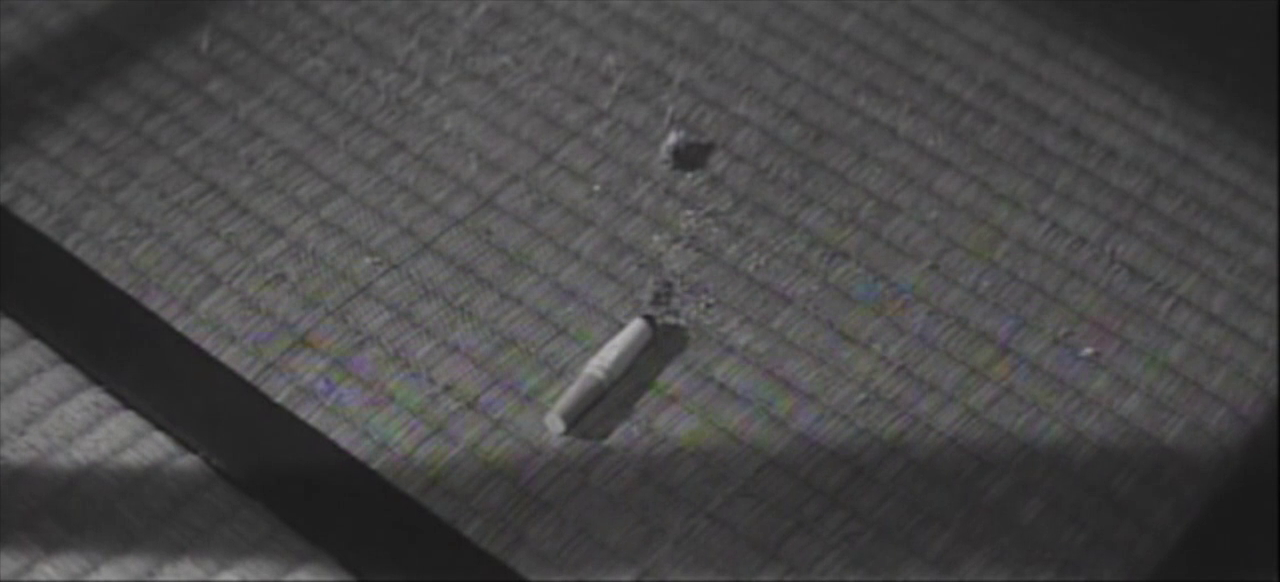
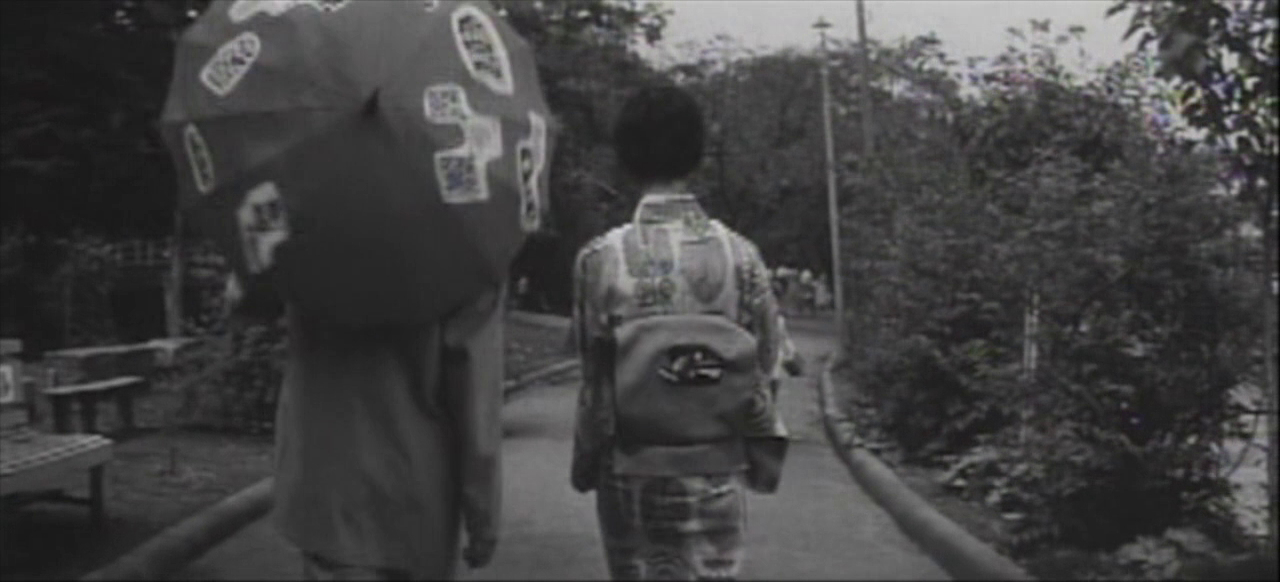
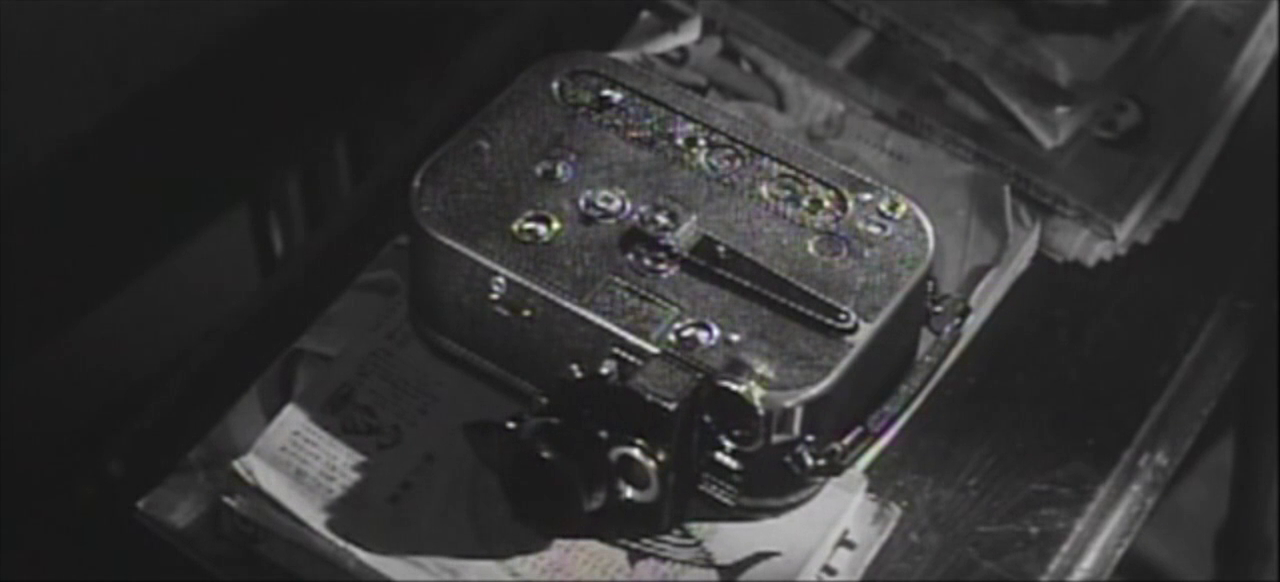
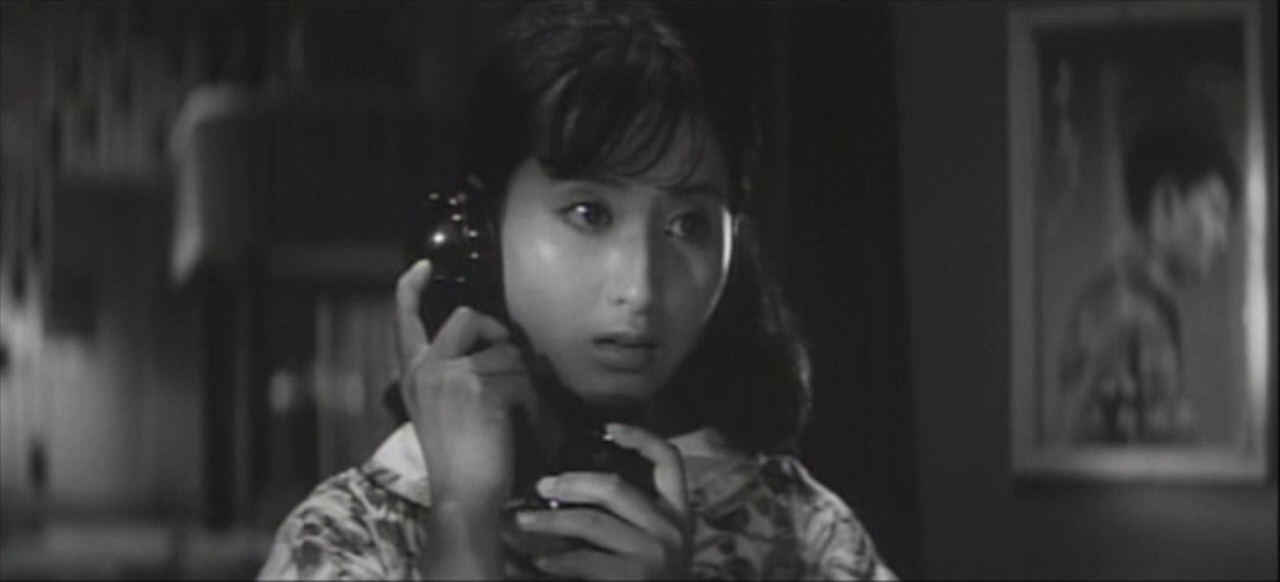
That these screencaps are crap simply will not hide the genius of Nagatsuka's compositions, his talent for multiple-source-but-still-noirish lighting, his use of non-diegetic light sources to amplify Suzuki's surreal effects –– and, most importantly for this kind of melodrama, his exceptional, quick elegance with closeups –– a conspicuous attribute of Suzuki's movies most people don't credit him for, and that Yamazki in particular doesn't handle well at all. The closeups of Misako Watanabe here are so subtle, sensitively and creatively lit, mixing glamour with a disturbing psychological undertow. Watanabe's hairstyle in this film is quite particular. I'll be honest, I think it's really ugly, but deliberately-so. Watanabe is looking fresh, modern, young, but this haircut says that she doing it all "while married." There's this homely settling, this self-conscious abandonment of passion in favor of a kind of untouchable, non-sensual glamor that speaks from that hairdo. It kind of screams "trauma victim." ...Am I going overboard, here? But I think there is something deliberate to how close-cropped and denuded it looks. Watanabe's hair is much longer and bushier after this in Take Aim at the Police Van, Million-Dollar Smash-and-Grab, Youth of the Beast, and A Mummy's Love. And the kind of odd-looking Mihoko Inagaki has much more femme-coded hair, which makes me think this is a deliberate choice of how to make Watanabe look like she's sort of trapped in the wrong place, in the wrong role. She's too young to be much of a mother to Hiroshi, really, too young for her older husband, but she's imprisoned in this role because, unlike Setsuko for most of the movie, she is "damaged goods" –– in her own mind as much as in the judgemental gaze of her society. There, I think I dredged some meaning from that mad scramble. And Nagatsuka is the perfect director of photography to capture the perilous nature of Yoko's position. His closeups reveal dread and revulsion even as they conjure glamour and romanticism.
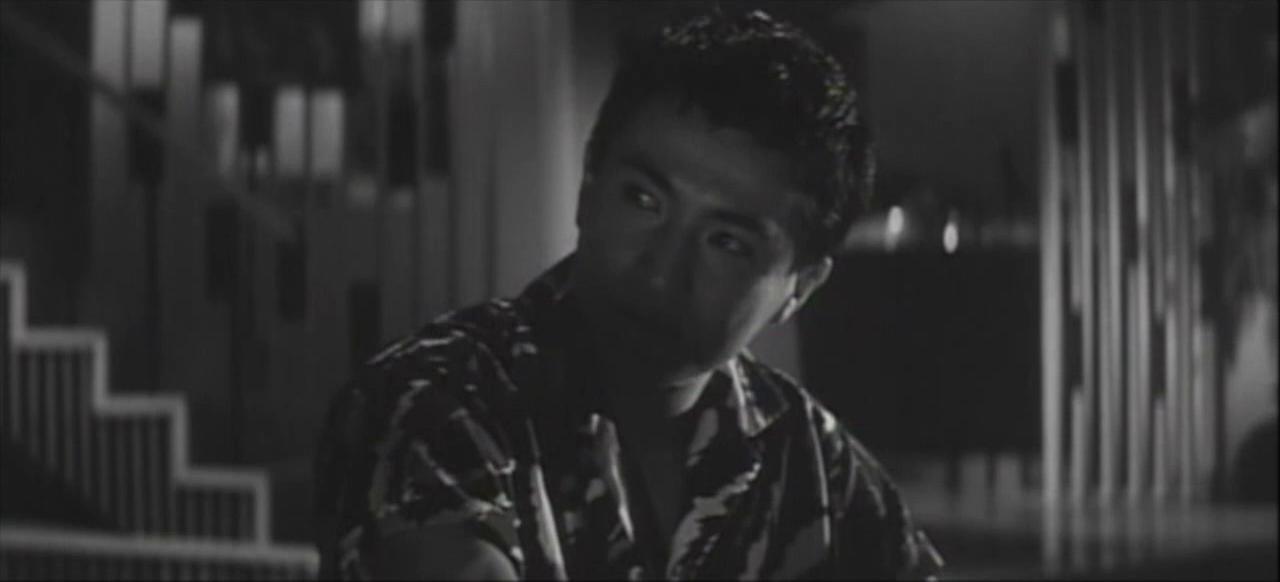
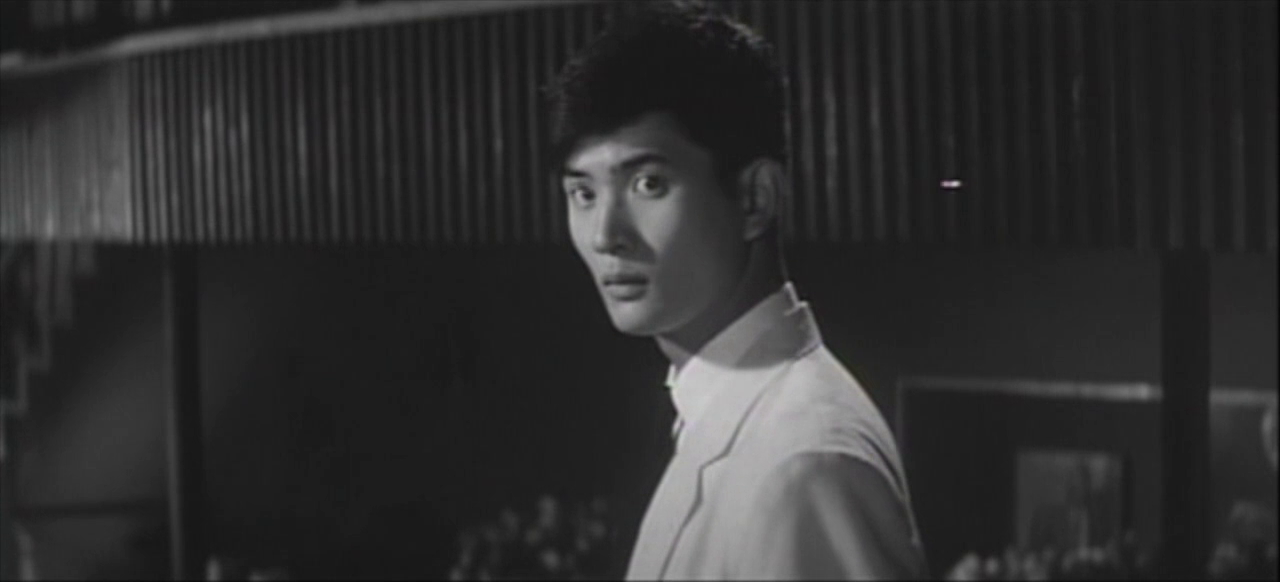
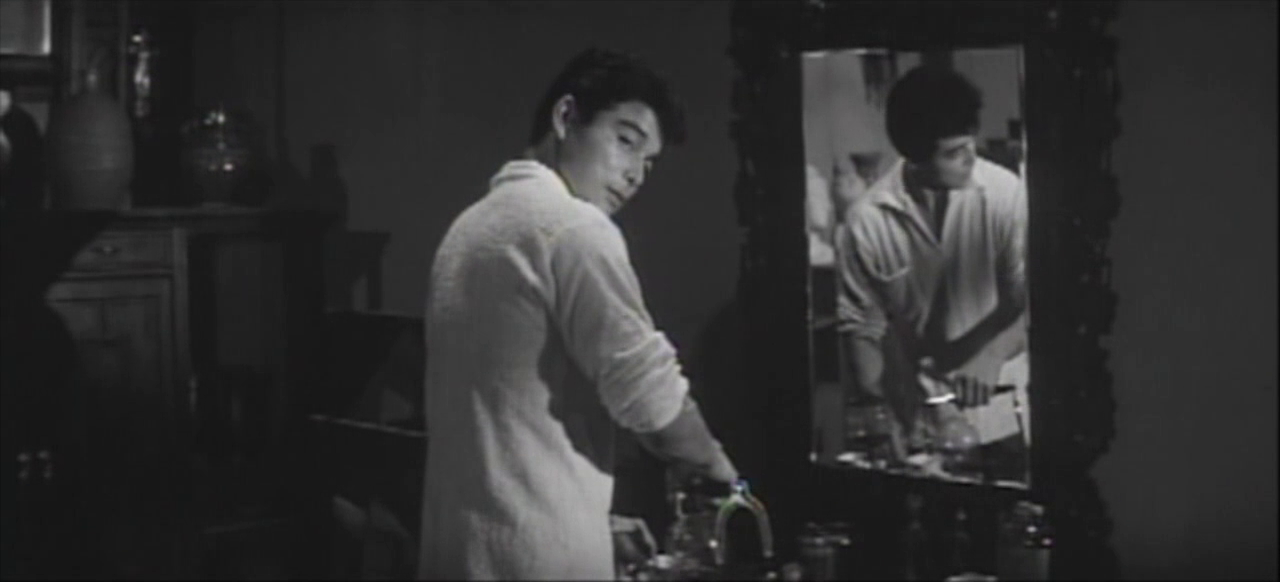
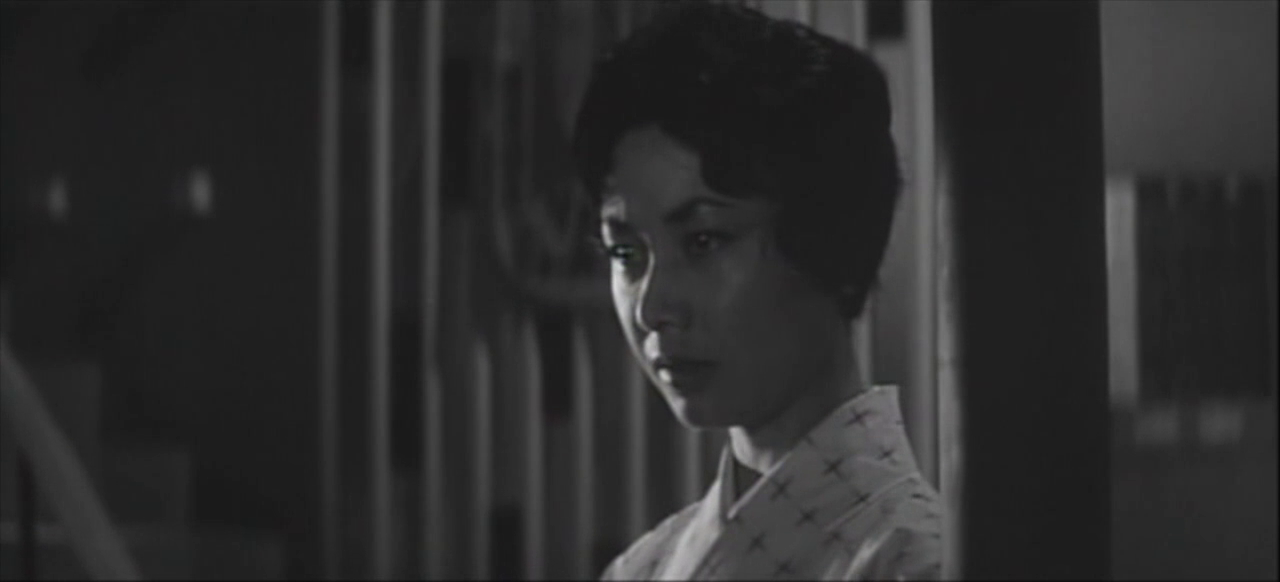
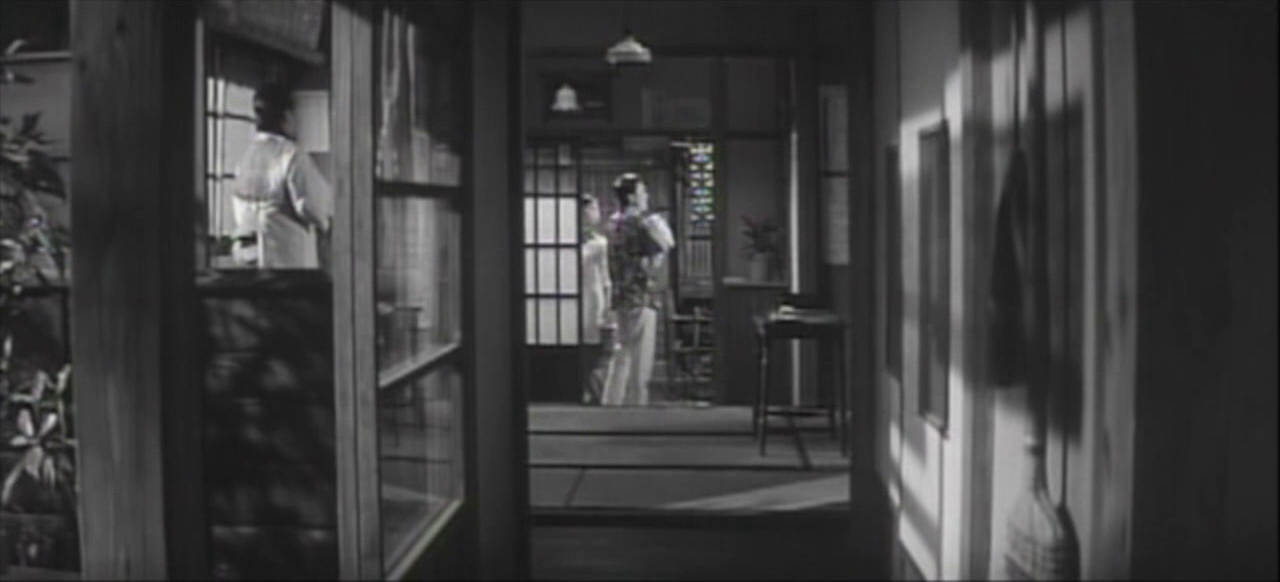
This is also Nagatsuka's first widescreen film for Suzuki, and it shows off how much more daring and accomplished Nagatsuka was with widescreen composition than the standard Nikkatsu cinematographer. Nakao is great with this in Underworld Beauty as well, but Nagatsuka has this particular kind of polish to his widescreen compositions that allows storytelling and themes to emerge unobstructed by the film's elaborate, full-throated stylization. Suzuki experiments with widescreen composition a lot in this era, and Nagatsuka is there for it.
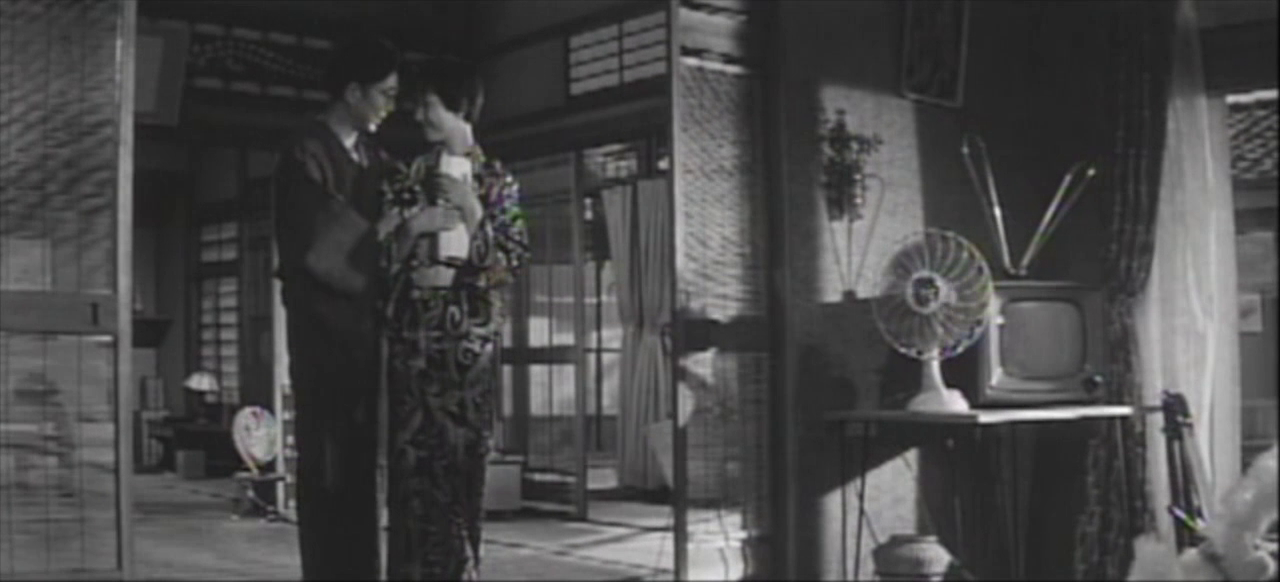
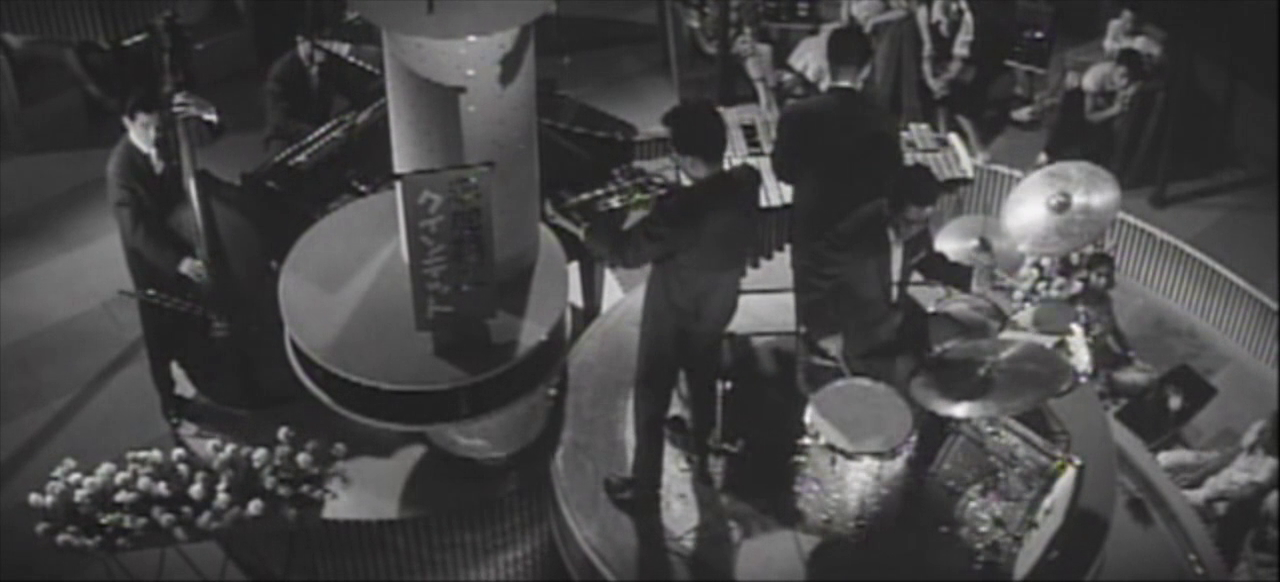
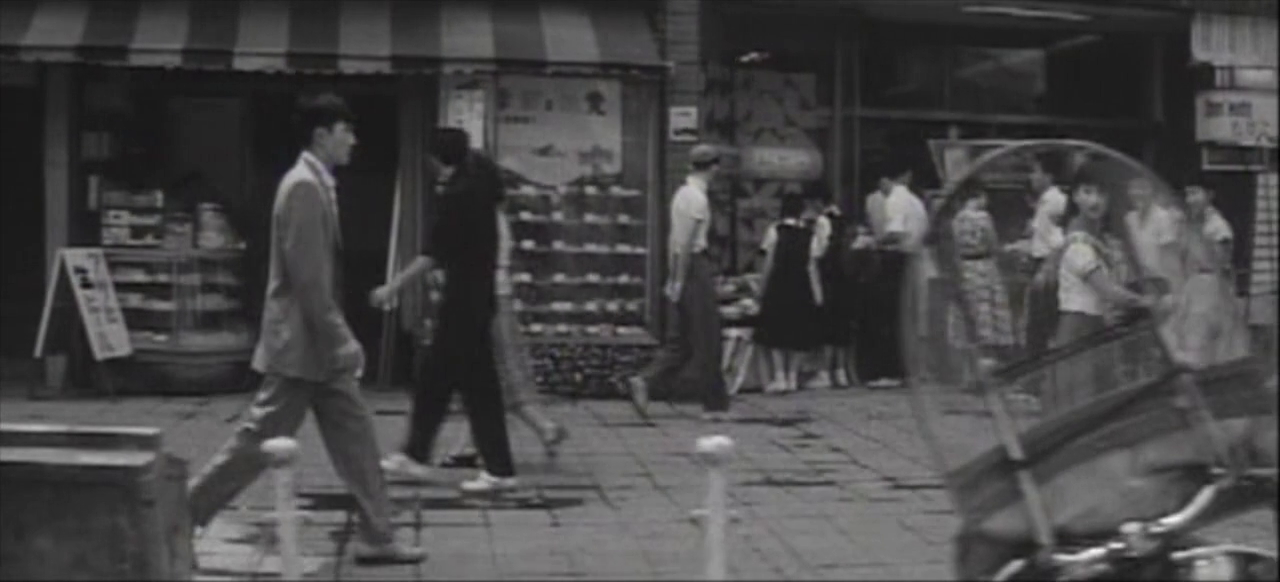
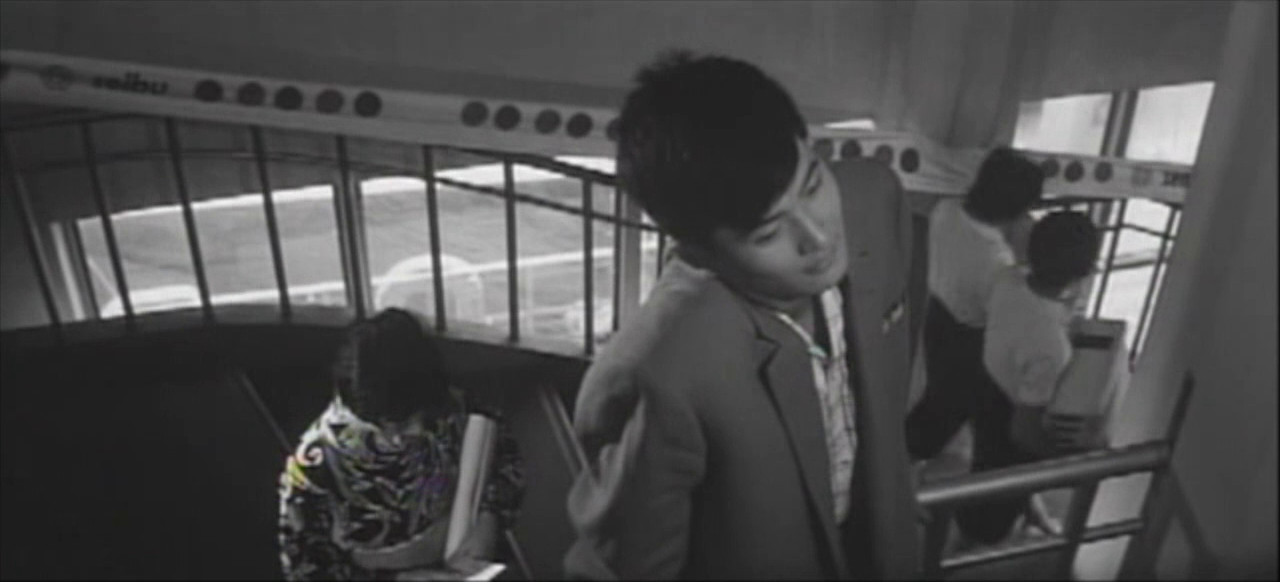
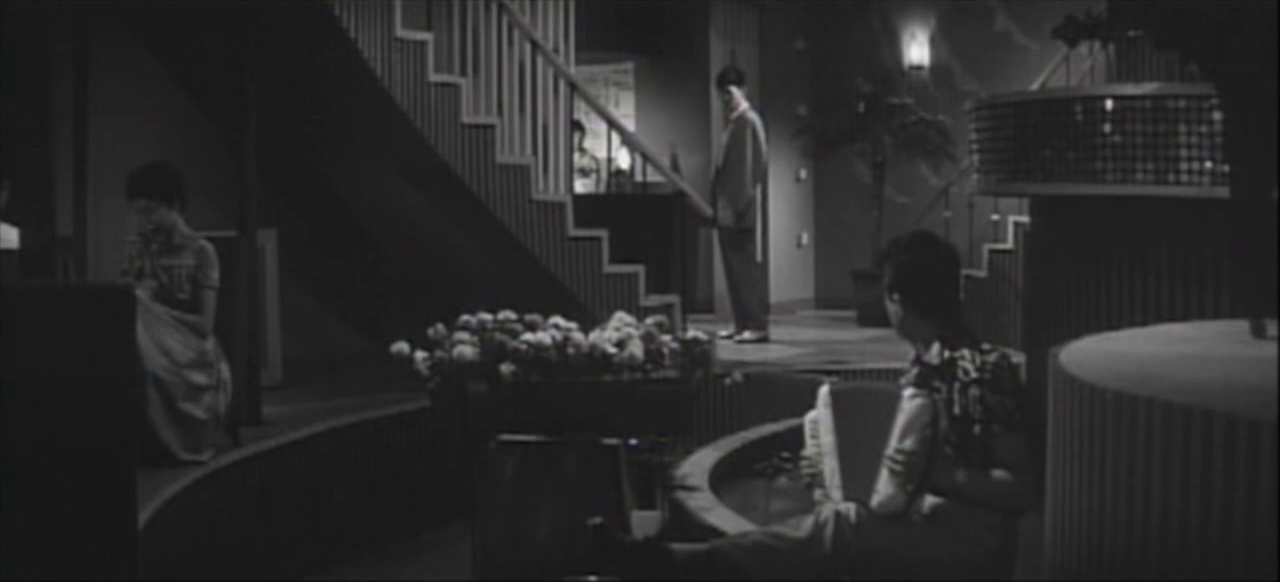
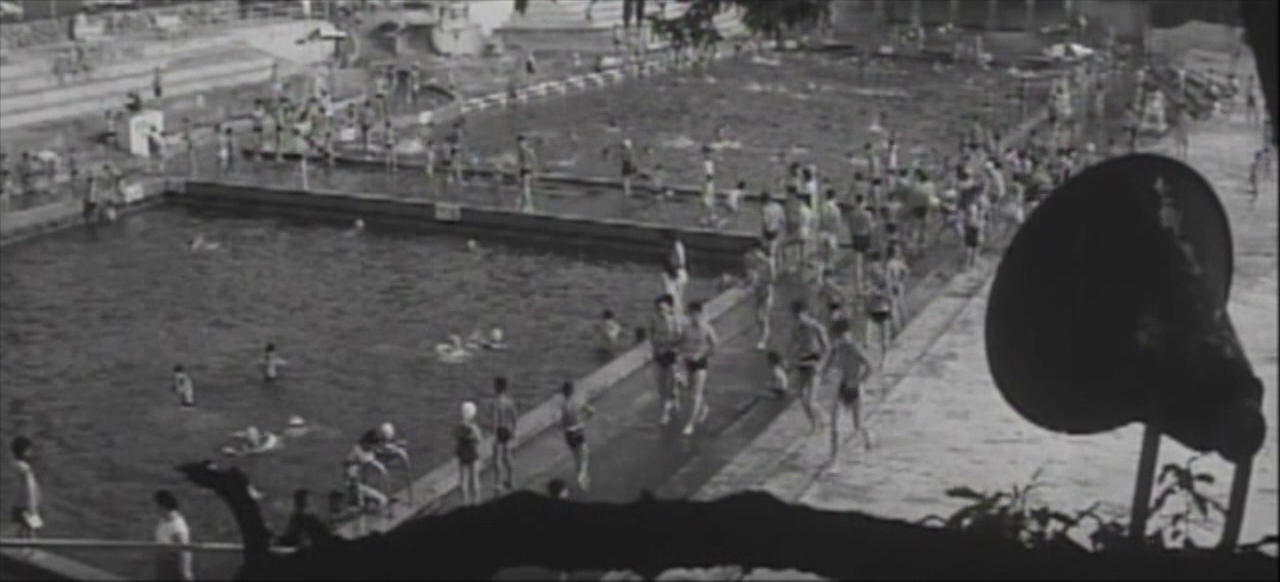
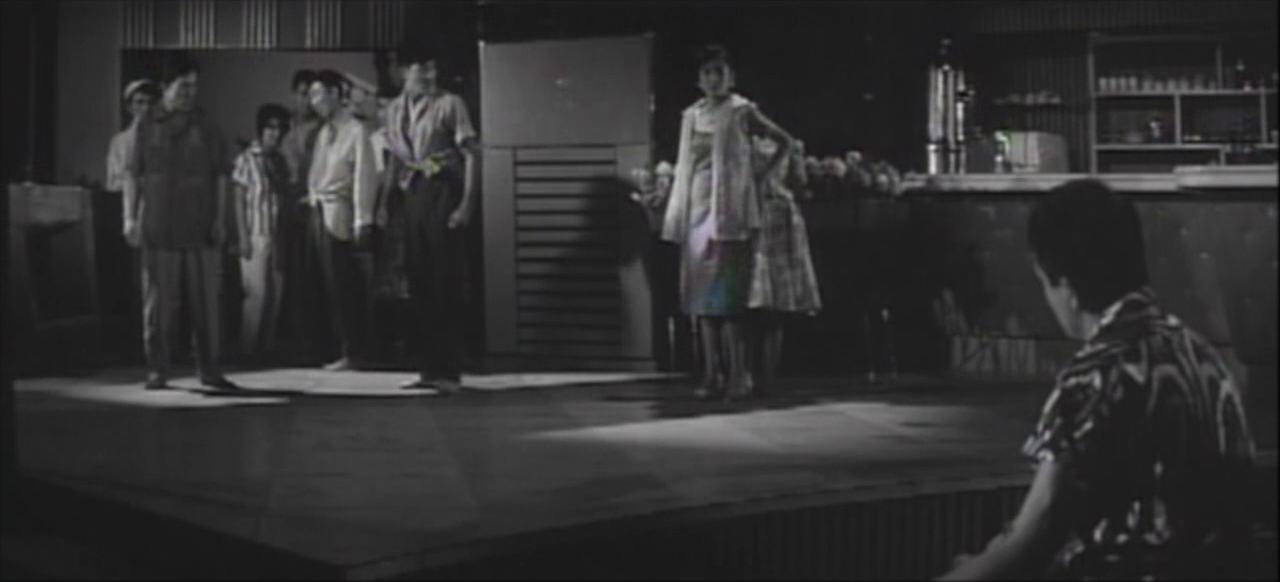
Also, after a cinematographer like Yamazaki, who does black-and-white with a kind of off-puttingly high-contrast look, I have to point out once again how amazing Nagatsuka is with black-and-white. Shigeyoshi Mine tends to use more gradations of tone in his compositions, Yamazaki uses less, but Nagatsuka hits this perfect balance of dark and light tones, creating a contrast-y, photogravure finish which showers texture and sophistication on his images. The decisive contrast creates exceptional clarity Yamazaki and even Mine can only dream about, but more than that, the graphical fullness of the images is just breathtakingly pleasing and exciting. I'm not sure you could say Nagatsuka had defined the Suzuki look before this –– Blue Breasts is only his 4th film for Suzuki. But this is definitely a moment in which the look and feel of a Suzuki movie starts to really crystallize –– and for me it's one of Suzuki's most visually ravishing early films. Nagatsuka will shoot two crime films for Suzuki next, Voice Without a Shadow and Passport to Darkness, both of which look ravishing as well. When he appears after that, it will be in color for Fighting Delinquents (his absence from this era of Suzuki films can be credited to his work on Hiroshi Noguchi pictures, especially on Nikkatsu's early color/Nikkatsuscope film projects). If anything, this film deserves a bluray to show off the spectacular photography. This is maybe Nagatsuka's best black-and-white Suzuki film prior to, say, Story of a Prostitute.
MY TAKE
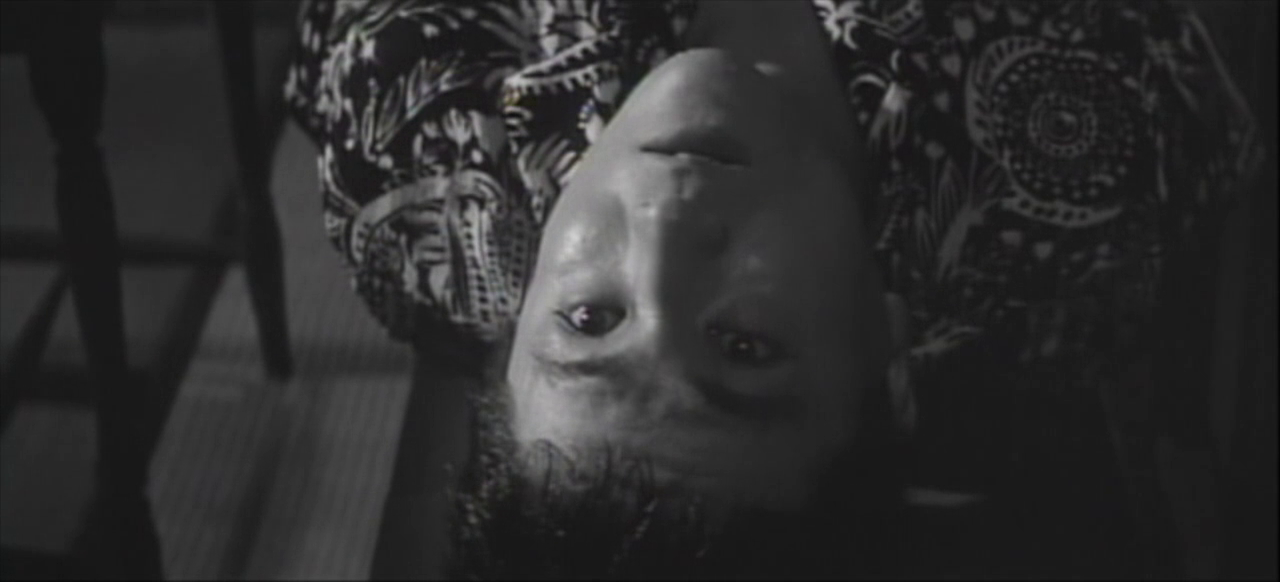
More and more strongly I feel this film as a significant artistic benchmark in Suzuki's early career. Underworld Beauty in the same year shows Suzuki's expanded confidence with and control over what and how his movie is communicating; within a rigid genre structure, he starts to be able to say very personal things, to leverage his sardonic wit and his unique sense of humor as he crafts unique themes without completely rewriting the picture (as he tried to do on Eight Hours of Fear). In Blue Breasts Suzuki, freed from the constraints of a more rigid entertainment genre, can use the more expressionistic, even phantasmagorical aspects of melodrama to create a film with something unique and probing to say. That the film dwells upon the responsibility of artists and uses that to illuminate the reckless harm of macho male self-centeredness, is really unusual.
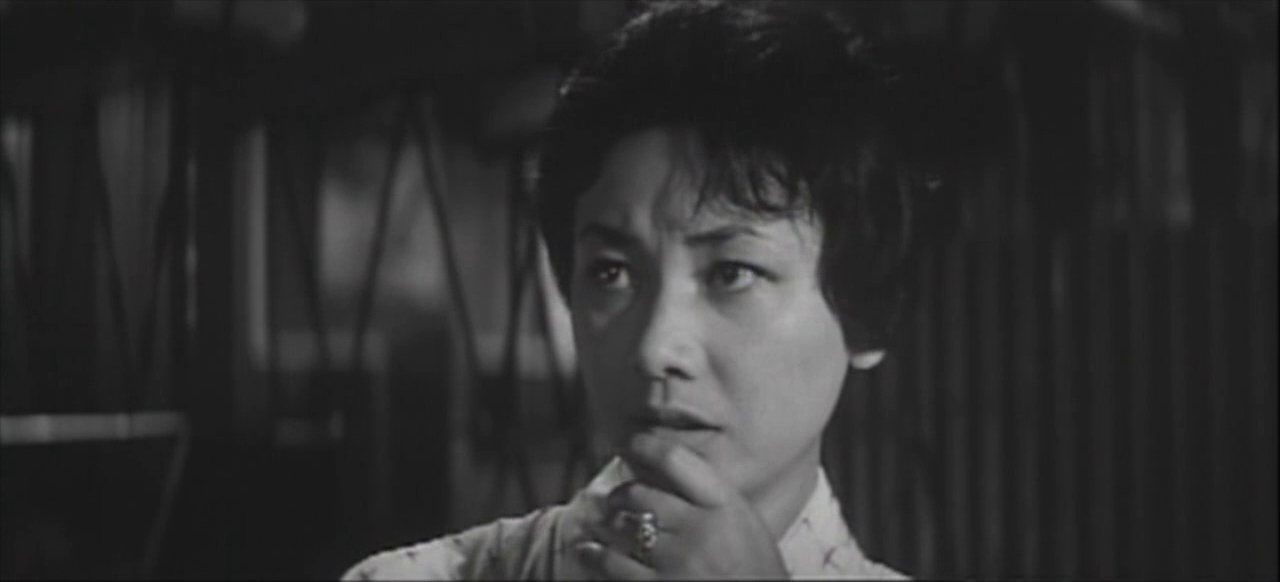
Catch Toshio Masuda doing anything so sophisticated in even his best movies. No shade to Masuda there; but the difference between this film and one of Masuda's own goes a ways to illustrate how different an less-restrained Seijun Suzuki was than his nominal peers, how much that was original he really had to say beyond simple entertainment. So this is one of the first Suzuki films to be hypercharged, through and through, by Suzuki's unique and transformative intellect and creative capacity. Previous films before Underworld Beauty –– and including this picture's predecessor as well –– were mostly more self-consciously aimed to hit the ball straight down the middle in terms of artistry and entertainment.
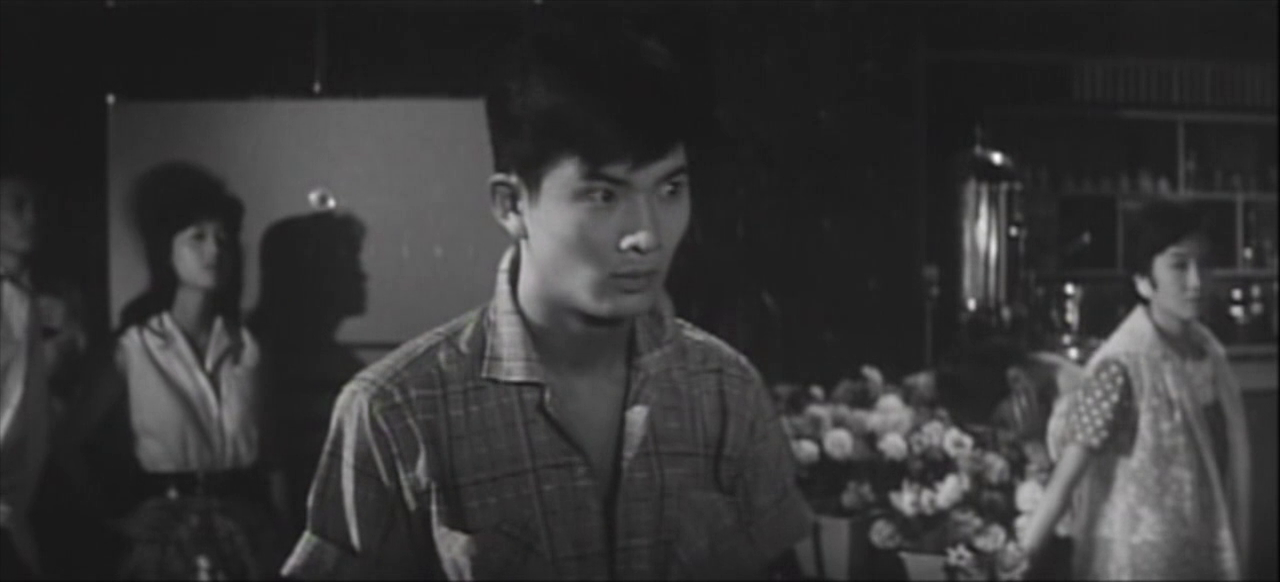
The films around this time in 1958 start really becoming the product of Suzuki, made for Suzuki to communicate directly with the audience, with less of the studio's interfering mediation. Of course, the studio will keep mediating in a succession of less-effective waves of control. The next time they try and rein him in, Suzuki will be much more sophisticated and prepared, and the later films made unquestionably for entertainment value will still almost all radiate Suzuki's particular touch, until Nikkatsu can hardly see themselves reflected in the result. The pivot to crime pictures after this isn't definitive; there is one more melodrama after this –– Love Letter –– and then 4 years and 17 pictures will go by before another Suzuki melo, The Bastard.
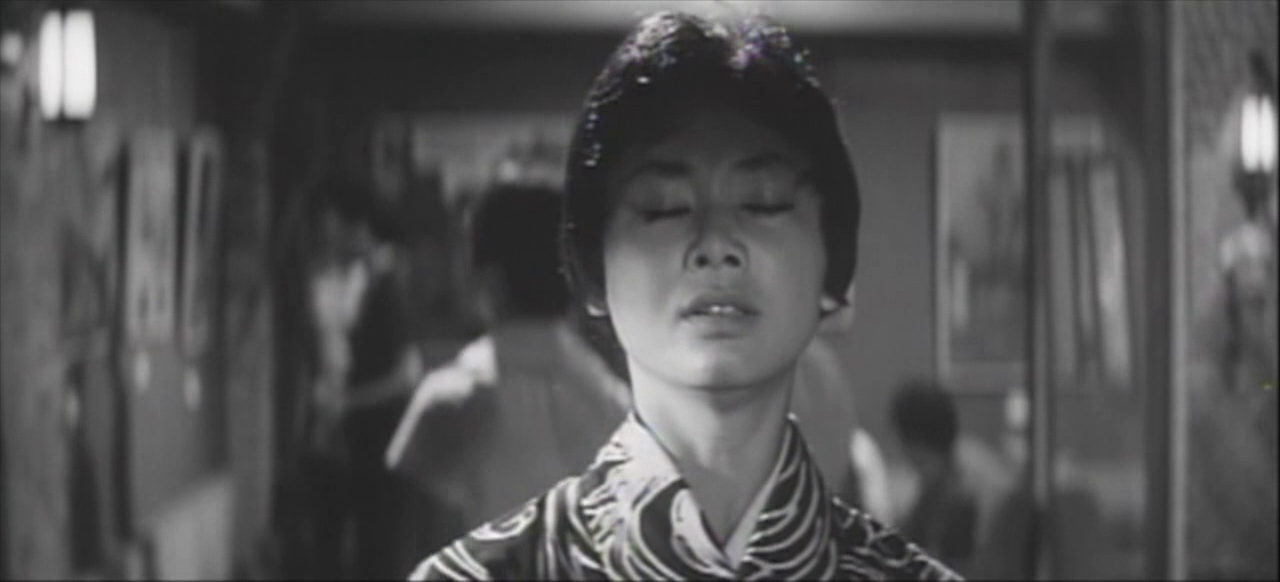
I'll be honest: I've never watched The Bastard all the way through without falling asleep. We'll see how that goes, once I eventually succeed at it. Next on here I plan to cover Everything Goes Wrong, Passport to Darkness, and The Wind-of-Youth-Group Goes Over the Mountain Pass –– and maybe Choice of Family: I'll Kill Your Husband For You! and Story of Fallen Petals: Battle of a Fireman in Flames, building up to Mirage Theater. So, onward we go!
Because of that artistic innovation, it's a shame this film has been so buried, even amongst the rarities of Suzuki's filmography. Years ago, when all I had from which to see these films were VHS recordings off of television, even though they all looked wan and bad, Blue Breasts looked demonstrably worse. At the moment, the film is streaming in hi-def in Japan, but you can see the 720p quality in the caps here.
It looks better than the old television recording, but this is still the worst presentation I've yet seen for a Suzuki picture. The Japanese distributor is planning to release Blue Breasts on DVD in January, but if the other DVD releases from this tranche are anything to go by –– Passport to Darkness, for instance, or Million-Dollar Smash-and-Grab –– the quality won't be much of an improvement over the old television broadcasts. For some reason, this C-track of Suzuki titles are not getting new scans in Japan, I think, and we just get what we get. For that reason, I decided not to hold out, and I'll add some of those DVD screencaps for comparison later, if I can get my hands on the discs. But that means one of the caveats here is that the quality is particularly bad here. You can see chromatic aberrations all over the place, and the image is horribly soft and indistinct. This is the best I've ever seen it, though.
I don't think this is a lost film; I know English subtitled-prints have screened of it in other places, though I don't think it's played in L.A. (and if it has, I really don't want to know). But that leads to the second caveat; this is another of the occasional movies in these writeups where I don't have an English subtitle source for the picture. There's never been a home video release before; fans have translated some of the great obscure curios in Suzuki's filmography (like A Mummy's Love, A Hell of a Guy, Million-Dollar Smash-and-Grab and Fang in the Hole), but the undercard of Suzuki movies haven't been the subject of any more translation –– including some of Suzuki's most experimental and seemingly artistically significant films leading up to Youth of the Beast, like this, Cheers at the Harbor, and Those Who Bet on Me. I've used every various description of the film I could find to figure out what was going on as I watched it, including William Carroll's analysis of the film from his book (more thorough than for any other Suzuki film in the book, actually). And the film is very visually clear –– much moreso than its immediate predecessor, thanks to the return of much of Suzuki's more skilled team behind the camera. So I think I know what I'm doing, but we'll just have to roll the dice again! F*ck it.
STARS ALIGN
The Boy Who Came Back was not a hit, but Nikkatsu obviously had high hopes for it, and it did adequate business for the era (like most moderately successful Nikkatsu films, it stayed in theaters for a week). Blue Breasts hits theaters three-and-a-half months later, meaning that the company already knew the first film didn't do gangbusters, and yet they went ahead with this second film, to see if they could build some heat based on the pairing of director Suzuki, star Kobayashi, and a female co-star. After this film does worse than the first, they pivot Suzuki off into harder-boiled crime dramas. In The Boy Who Came Back, Kobayashi's female co-star, Sachiko Hidari, arguably had a higher public profile than he did at that point. Probably the reverse is true here, as Kobayashi is paired with theater actress and recent Nikkatsu hire Misako Watanabe. Nonetheless, just as Hidari's role was the focal one, with probably more screen-time and with the empathy of the mis-en-scene behind her, in Blue Breasts Watanabe's role is clearly the focal one over Kobayashi's.
This is Watanabe's first film directed by Suzuki, and her largest role in one of his films. Wisely, Suzuki uses the exceptional actress' face as a measure of the movie's dramatic temperature throughout.
More than that, the picture is really about Watanabe's character; her goals and ambitions drive the film, revealing other characters and their agendas, and the central narrative drives with laser-like focus towards Watanabe's character's story conclusion. Her character has a vivid past, which emerges unexpected in the midst of the movie and overlays the more casual action of the movie with a much darker meaning. Kobayashi, meanwhile, lurks around the edges of this picture. He isn't the violent figure, the magnet for sex, jealousy, and fights he was in the first film. In this one, he idolizes a guy who is essentially like that––albeit one with a lot less charisma.
This figure is played by Yuji Odaka, an only mildly successful matinee idol at Nikkatsu during this era. Odaka will go on to appear as the less dynamic and interesting lead in Smashing the O-Line (next to a far more intense Hiroyuki Nagato), and he'll be Hideaki Nitani's bete noir in Man with a Shotgun. Odaka comes from the Haiyuza Theatre Company, one of Tokyo's "Big Three" classical theater companies. His movie debut is in the company's production of Samuil Marshak's Twelve Months, a movie called The Forest is Alive, and his next film, two years later, is for Nikkatsu.
The rest of his 106-film career will be entirely at Nikkatsu, with the last two films at Yujiro Ishihara's company as it still shares production and distribution with Ishihara Pro. Odaka is mostly a supporting player in Ishihara films from early on, but he expands his 3rd-or-4th-billed presence into Izumi Ashikawa pictures and Akira Kobayashi pictures pretty quickly. In 1959 and 1960 there's a serious attempt to make Odaka a star in his own right, but after that it's on to supporting roles in Jo Shishido and Hideaki Nitani pictures. He does one last Suzuki film –– Tattooed Life. His career in film ends around 1971, but it looks like he pivoted into television afterwards. Purportedly he died in 2016.
Blue Breasts is only Odaka's fifth film –– his 4th in 1958 –– and it's easy to see why this guy is so useful at Nikkatsu, just as it's a little baffling why he wasn't a bigger star. In Blue Breasts, Odaka creeps around, slouching, loafing, insinuating himself into scenes, then rippling with anger, with a very sexual violence that is honestly a little hard to take. And yet, he's just steams machismo out of his pores, with a glimmering, tanned look and a very muscular, sensual strength. This character will be an unrepentant rapist for most of this film, but bear with me here; this is how he's portrayed; it isn't a very PC movie; amongst Suzuki's early pictures, this is one that feels closest to, say, a David Lynch movie.
The film endlessly sexualizes Odaka's character for a reason; he is Kobayashi's role model, the version of manhood Kobayashi's young man longs to become.
TIME FOR A PLOT
Let's get to the story, then. This isn't going to be an easy movie to see, and just so we better understand what's happening in this writeup, here's how I understand the plot to unfold:
Misako Watanabe is Yoko, the younger, recently-wed wife of a wealthy older man, a company president. Why has she agreed to this marriage? The film will suggest that she's looking for a kind of sexless security; the husband is portrayed as dippy, unalert, and seemingly somewhat impotent. He looks after his pretty young wife like a treasure. Misako wants to be a good wife in return, and that means becoming a mother to her husband's teenaged son. In the first action of the movie, Misako volunteers to take the son Hiroshi, played by Akira Kobayashi, shopping.
This seems like a sweet and innocent outing, a chance to leave the affluent suburbs and head into town. The setting of the film is somewhat indeterminate, but it's patched together from different greater-Tokyo-based locations, especially Ikebukuro and Nerima Ward (both seen again later in A Hell of a Guy), and Fujisawa City. The combination is one of a sort of short-stacked, older section of a city and a very bleak nearby beachfront, mimicking the settings of several of Nikkatsu's Taiyozoku, or "Sun-Tribe" films, based around beachfront towns. But it's interesting how liminal all the spaces seem, in subtle transition between an old place and a more commercial, modern one––or a place meant to be full of people, eerily deserted.
The outing takes a dark turn immediately once Yoko and Hiroshi are off on their shopping trip. Hiroshi takes money from Yoko's handbag, and gives her an invitation to an art show, and announces he has somewhere else to be. We realize that, outside of Hiroshi's father's home, he's a delinquent, an aspiring Sun-Tribe thug. He leaves Yoko in the shopping center, goes out, and picks up a girl named Setsuko. Setsuko, we come to learn, wants to be a delinquent in order to get back at her oversexed-seeming mother. She and Hiroshi hook up very quickly here, and Hiroshi introduces Setsuko to his brother Ken.
Ken makes a rough impression, living with his pregnant girlfriend in the girlfriend's cafe, pocketing the money Hiroshi has taken from Yoko (at, we learn, Ken's suggestion). He appears to be editing a porno film in back of the cafe, and he's sort of the leader of a rough group of Sun-Tribe-coded kids who hang out at the cafe. Ken seems dangerous, eyeing everyone with a predatory look, flexing frightening amounts of muscle, and giving very angry vibes. He obviously exploits Hiroshi, and we see him abuse Michi, his pregnant girlfriend, and cheat on her. Yuji Odaka as Ken seems to almost suck the life out of the room every time he enters, radiating aggression.
Hiroshi, though, is enthralled by this big brother. We can tell pretty quickly he would like nothing more than to be like Ken himself.
Setsuko seems bothered by all these cross-jangling vibes. Does she really want to be a delinquent? Does Hiroshi? We can see that Michi looks at them both with a baleful eye.
Yoko, meanwhile, with nothing to do as the rain sets in, heads to the art gallery to see the paintings. Here the movie starts to get into much stranger territory. Yoko wanders the art gallery, looking at pictures, perhaps trying to figure out what Hiroshi wants her to get from this experience. Then she comes upon a particular painting of a post-industrial landscape, and she freezes. Yoko stares intently, and becomes transfixed, horrified. She starts to swoon, and the lights of the gallery fade behind her. As she faints, all the paintings in the gallery crash to the floor.
Yoko wakes up in an office behind the gallery, with the painter, Takamura. We get some insight into what happened, I assume, and we discover Takamura's identity, but the upshot of this sequence is the connection Yoko makes with Takamura, who Yoko seems to respond to almost intimately. The connection between Takamura and Yoko develops from this point throughout the movie, leading Yoko closer and closer to an affair with the landscape painter.
Slowly, disparate-seeming strands of this story start to connect together. Yoko gets a letter asking her down to the cafe. There she meets Ken, who wants to blackmail her. He has film of Yoko, you see, from 7 years prior, being raped in a desolate factory by a man who stalked her in there. Ken is sexually suggestive to Yoko, who retreats into the arms of the sympathetic painter, whom she is drawn towards an affair with. Hiroshi struggles with how to treat Setsuko.
In a gorgeous scene of sailing at an eerily empty, cold-looking beach, we see Hiroshi wavering between the gentle lightness Setsuko seems to really value in him (Setsuko herself seems less and less like the delinquent she professed to admire) and the aggressive way his older brother handles women, using them for his own desires without doing "girly" things like...going on dates, I guess.
Hiroshi petulantly capsizes their sailboat, forcing the couple to swim to shore. But Setsuko is unflappable –– this is the best date she's ever been on, she's excited for the future, everything is looking up. In the face of this, Hiroshi is clearly very conflicted.
HELL OF SOMEONE'S MAKING
As the blackmail plot unfolds, Yoko makes a connection between Takamura's painting and her rape 7 years ago. The painting is of the very spot where she was molested. Here is the most proto-Suzukian stylistic innovation of the era; Yoko stares at the painting of the factory, and her vision of the painting dissolves into her flashback, remembering her pursuit and rape by the mystery man. Then...
...The flashback, is interrupted by Ken's Taiyozoku friends, watching it as a film projection, commenting on it. Yoko is in the crowd with them. The men in the audience lust after the scene, but Setsuko stands up and demands the film be shut off. The men in the room shout her down, all seized by a kind of hot-blooded attitude. The women in the crowd are clearly distressed at the scene.
Yoko does her best to hold her composure, as Ken looks back at her, waiting for a reaction. Somehow, we have crossed from the painting to Yoko's memory, to the blackmail film Ken has on her, in an uninterrupted sequence. There are no clear markers that denote the transitions between elements, or the passage of time, or the movement of characters. The effect is swooningly surreal, but it serves an important purpose, tying the themes of the film together around these varied events. We realize Ken was there, and filmed the rape of Yoko, and that it's part of Ken's collection of pornographic films he uses like currency amongst his social set, throwing screening parties off-hours in the cafe. Suzuki is pretty clear here: Yoko's trauma is being packaged and exploited as entertainment, as the art of the budding filmmaker, Ken.
On the flip-side, we come to learn that Takamura, the painter of the factory where Yoko was molested, is more than he seems. A deeply disturbed creep, Takamura is revealed as the rapist who molested Yoko in the factory. He painted the factory almost as a trophy, a memento of his crime. It amuses him to taunt Yoko with the painting, stirring up her memories.
What's more? Takamura and Ken are half-brothers, partners in the crime against Yoko –– and both of them male artists, exploiting a woman's suffering at their own hands as part of their art. From Narita in Underworld Beauty to the titular Yumeji, Suzuki never goes easy on artists, but I think in this film his critique starts to clarify in a way that echoes in portrayals of artists in the films before and after this one. It's clear Suzuki is very alert to the sexism of the art world.
What's even more more, Blue Breasts posits a world in which women's roles are being consciously restricted by the selfishness and violence of a male-oriented, capitalist society. Yoko is trapped between a husband who can't meet her needs and the husband's three, hideous, horrifically misogynist sons –– all of whom exploit her and other women for their art, their business, or to build up their fragile egos. She can't tell her husband what has happened, and yet, we have to sense that in some way the husband is largely responsible for what his children are like; after all, he occupies the principal position of exploitation –– indeed, his corporate success is based upon the capitalism's naked capacity for rapacious consumption, the model for all his children's most aberrant behaviors (we might also assume that the husband's inconstancy has resulted in the fracture of all these young mens' psyches, resulting in their propensities for sadism –– I wouldn't be surprised if that was the emphasis of some of the dialogue in these scenes).
And now Setsuko is being lined up as Ken's next target. She is raped while Hiroshi is otherwise occupied, and Yoko is able to confront a distraught Hiroshi. Together, they resolve to get to the bottom of this creche of rape and exploitation.
Hiroshi confronts Ken, but the result is more that Hiroshi reveals himself than anything else. Hiroshi weeps and whines at his brother, struggling to give up the macho personality Hiroshi admired and emulated in his brother, but that was ultimately not what he held in his own heart. We see Hiroshi for the vulnerable, even pitiable, sensitive boy he is, and Ken seems embarrassed by the confrontation. What breaks the dam here is that Michi suddenly has her baby. This is the part of the film that feels a little implausible, because looking at this new generation of this f*cked-up family, Ken has a kind of conversion. He seems to know himself for who he is, and he seems to confess to Yoko that he wants to change. I guess, charitably, the thunderclap of responsibility for a life other than his own has knocked Ken sideways; a little corny, but stranger things have happened?
Yoko moves on to confront Takamura, but the painter is a much slicker sort of pervert than his younger brothers. Takamura clearly won't give up his conceited position until Yoko, fighting back against her trauma, grabs a palette knife and rends open the painting of her violation. Takamura is horrified, and is going to become violent.
Hiroshi, who arrives here, isn't able to fend off the bigger, stronger man. But then Ken appears, and says something to his brother. I would love to know what is said here. It basically ends the threat of the film; Ken just stops it cold. Hiroshi and Setsuko join Yoko, leaving the painters house and wandering into the woods.
Yoko appears devastated. Freeing herself from her psychic persecution has not solved any of her material problems, the fact that she was raped by her husband's eldest son, almost had an affair with him, was almost raped by the middle son, and was being extorted by them both...she can't very well just tell her husband about this. She seems to be considering dying, but here Setsuko steps in, talking to Yoko woman to woman, and seems to convince her that they have to struggle on, somehow. That's the end of the film. It's pretty freaking dark.
CINEMATOGRAPHY
After missing the last three films from his emerging favorite director, cinematographer Kazue Nagatsuka is back just in time, making Blue Breasts a huge visual advance upon its' predecessor. I said a lot before about Yoshihiro Yamazaki's "Nikkatsu boilerplate" cinematography for The Boy Who Came Back, well, Nagatsuka proves here why he is the cinematographer who really establishes Suzuki's signature visual style.
That these screencaps are crap simply will not hide the genius of Nagatsuka's compositions, his talent for multiple-source-but-still-noirish lighting, his use of non-diegetic light sources to amplify Suzuki's surreal effects –– and, most importantly for this kind of melodrama, his exceptional, quick elegance with closeups –– a conspicuous attribute of Suzuki's movies most people don't credit him for, and that Yamazki in particular doesn't handle well at all. The closeups of Misako Watanabe here are so subtle, sensitively and creatively lit, mixing glamour with a disturbing psychological undertow. Watanabe's hairstyle in this film is quite particular. I'll be honest, I think it's really ugly, but deliberately-so. Watanabe is looking fresh, modern, young, but this haircut says that she doing it all "while married." There's this homely settling, this self-conscious abandonment of passion in favor of a kind of untouchable, non-sensual glamor that speaks from that hairdo. It kind of screams "trauma victim." ...Am I going overboard, here? But I think there is something deliberate to how close-cropped and denuded it looks. Watanabe's hair is much longer and bushier after this in Take Aim at the Police Van, Million-Dollar Smash-and-Grab, Youth of the Beast, and A Mummy's Love. And the kind of odd-looking Mihoko Inagaki has much more femme-coded hair, which makes me think this is a deliberate choice of how to make Watanabe look like she's sort of trapped in the wrong place, in the wrong role. She's too young to be much of a mother to Hiroshi, really, too young for her older husband, but she's imprisoned in this role because, unlike Setsuko for most of the movie, she is "damaged goods" –– in her own mind as much as in the judgemental gaze of her society. There, I think I dredged some meaning from that mad scramble. And Nagatsuka is the perfect director of photography to capture the perilous nature of Yoko's position. His closeups reveal dread and revulsion even as they conjure glamour and romanticism.
This is also Nagatsuka's first widescreen film for Suzuki, and it shows off how much more daring and accomplished Nagatsuka was with widescreen composition than the standard Nikkatsu cinematographer. Nakao is great with this in Underworld Beauty as well, but Nagatsuka has this particular kind of polish to his widescreen compositions that allows storytelling and themes to emerge unobstructed by the film's elaborate, full-throated stylization. Suzuki experiments with widescreen composition a lot in this era, and Nagatsuka is there for it.
Also, after a cinematographer like Yamazaki, who does black-and-white with a kind of off-puttingly high-contrast look, I have to point out once again how amazing Nagatsuka is with black-and-white. Shigeyoshi Mine tends to use more gradations of tone in his compositions, Yamazaki uses less, but Nagatsuka hits this perfect balance of dark and light tones, creating a contrast-y, photogravure finish which showers texture and sophistication on his images. The decisive contrast creates exceptional clarity Yamazaki and even Mine can only dream about, but more than that, the graphical fullness of the images is just breathtakingly pleasing and exciting. I'm not sure you could say Nagatsuka had defined the Suzuki look before this –– Blue Breasts is only his 4th film for Suzuki. But this is definitely a moment in which the look and feel of a Suzuki movie starts to really crystallize –– and for me it's one of Suzuki's most visually ravishing early films. Nagatsuka will shoot two crime films for Suzuki next, Voice Without a Shadow and Passport to Darkness, both of which look ravishing as well. When he appears after that, it will be in color for Fighting Delinquents (his absence from this era of Suzuki films can be credited to his work on Hiroshi Noguchi pictures, especially on Nikkatsu's early color/Nikkatsuscope film projects). If anything, this film deserves a bluray to show off the spectacular photography. This is maybe Nagatsuka's best black-and-white Suzuki film prior to, say, Story of a Prostitute.
MY TAKE
More and more strongly I feel this film as a significant artistic benchmark in Suzuki's early career. Underworld Beauty in the same year shows Suzuki's expanded confidence with and control over what and how his movie is communicating; within a rigid genre structure, he starts to be able to say very personal things, to leverage his sardonic wit and his unique sense of humor as he crafts unique themes without completely rewriting the picture (as he tried to do on Eight Hours of Fear). In Blue Breasts Suzuki, freed from the constraints of a more rigid entertainment genre, can use the more expressionistic, even phantasmagorical aspects of melodrama to create a film with something unique and probing to say. That the film dwells upon the responsibility of artists and uses that to illuminate the reckless harm of macho male self-centeredness, is really unusual.
Catch Toshio Masuda doing anything so sophisticated in even his best movies. No shade to Masuda there; but the difference between this film and one of Masuda's own goes a ways to illustrate how different an less-restrained Seijun Suzuki was than his nominal peers, how much that was original he really had to say beyond simple entertainment. So this is one of the first Suzuki films to be hypercharged, through and through, by Suzuki's unique and transformative intellect and creative capacity. Previous films before Underworld Beauty –– and including this picture's predecessor as well –– were mostly more self-consciously aimed to hit the ball straight down the middle in terms of artistry and entertainment.
The films around this time in 1958 start really becoming the product of Suzuki, made for Suzuki to communicate directly with the audience, with less of the studio's interfering mediation. Of course, the studio will keep mediating in a succession of less-effective waves of control. The next time they try and rein him in, Suzuki will be much more sophisticated and prepared, and the later films made unquestionably for entertainment value will still almost all radiate Suzuki's particular touch, until Nikkatsu can hardly see themselves reflected in the result. The pivot to crime pictures after this isn't definitive; there is one more melodrama after this –– Love Letter –– and then 4 years and 17 pictures will go by before another Suzuki melo, The Bastard.
I'll be honest: I've never watched The Bastard all the way through without falling asleep. We'll see how that goes, once I eventually succeed at it. Next on here I plan to cover Everything Goes Wrong, Passport to Darkness, and The Wind-of-Youth-Group Goes Over the Mountain Pass –– and maybe Choice of Family: I'll Kill Your Husband For You! and Story of Fallen Petals: Battle of a Fireman in Flames, building up to Mirage Theater. So, onward we go!
-
Stefan Andersson
- Joined: Thu Nov 15, 2007 5:02 am
Re: Seijun Suzuki
Restored Suzuki films, 2026 theatrical re-releases in France:
https://carlottafilms.com/wp-content/up ... SUZUKI.pdf
https://carlottafilms.com/wp-content/up ... AWACHI.pdf
https://carlottafilms.com/wp-content/up ... SUZUKI.pdf
https://carlottafilms.com/wp-content/up ... AWACHI.pdf
-
DeprongMori

- Joined: Fri Apr 04, 2014 5:59 am
- Location: San Francisco
Re: Seijun Suzuki
Kani Releasing has just announced on IG a forthcoming release of Capone Cries a Lot.
-
The Elegant Dandy Fop

- Joined: Thu Dec 09, 2004 7:25 am
- Location: Los Angeles, CA
Re: Seijun Suzuki
It’s been a long while since I saw this, but recall other than a few striking visuals toward the end, it’s Suzuki’s worst film
-
beamish14
- Joined: Fri May 18, 2018 7:07 pm
Re: Seijun Suzuki
I can’t believe he directed this, Kagero-Za, and (IMO), the best Lupin the III film all in 1985The Elegant Dandy Fop wrote: Sat Jul 04, 2026 8:55 pm It’s been a long while since I saw this, but recall other than a few striking visuals toward the end, it’s Suzuki’s worst film
-
feihong
- Joined: Thu Nov 04, 2004 4:20 pm
Re: Seijun Suzuki
Gotta disagree with that, and in my defense link my appreciation of the film here. At the screening where I saw it the audience was laughing the whole time.The Elegant Dandy Fop wrote: Sat Jul 04, 2026 8:55 pm It’s been a long while since I saw this, but recall other than a few striking visuals toward the end, it’s Suzuki’s worst film