I realised that Domino's tastes and mine were pretty much irreconcilably apart at least fifteen years ago when he described Michelangelo Frammartino's wonderful
Le quattro volte, still easily one of my favourite films of the 21st century as "
straight-up trolling the film world".
Which is why I generally shrug every time he takes an ostentatious and sometimes aggressive dump on a film whose Blu-ray edition I've spent months working on, sometimes within minutes of the announcement being made. If anything, it's encouraging!
(I can't promise that my colleagues are quite that understanding, mind...)
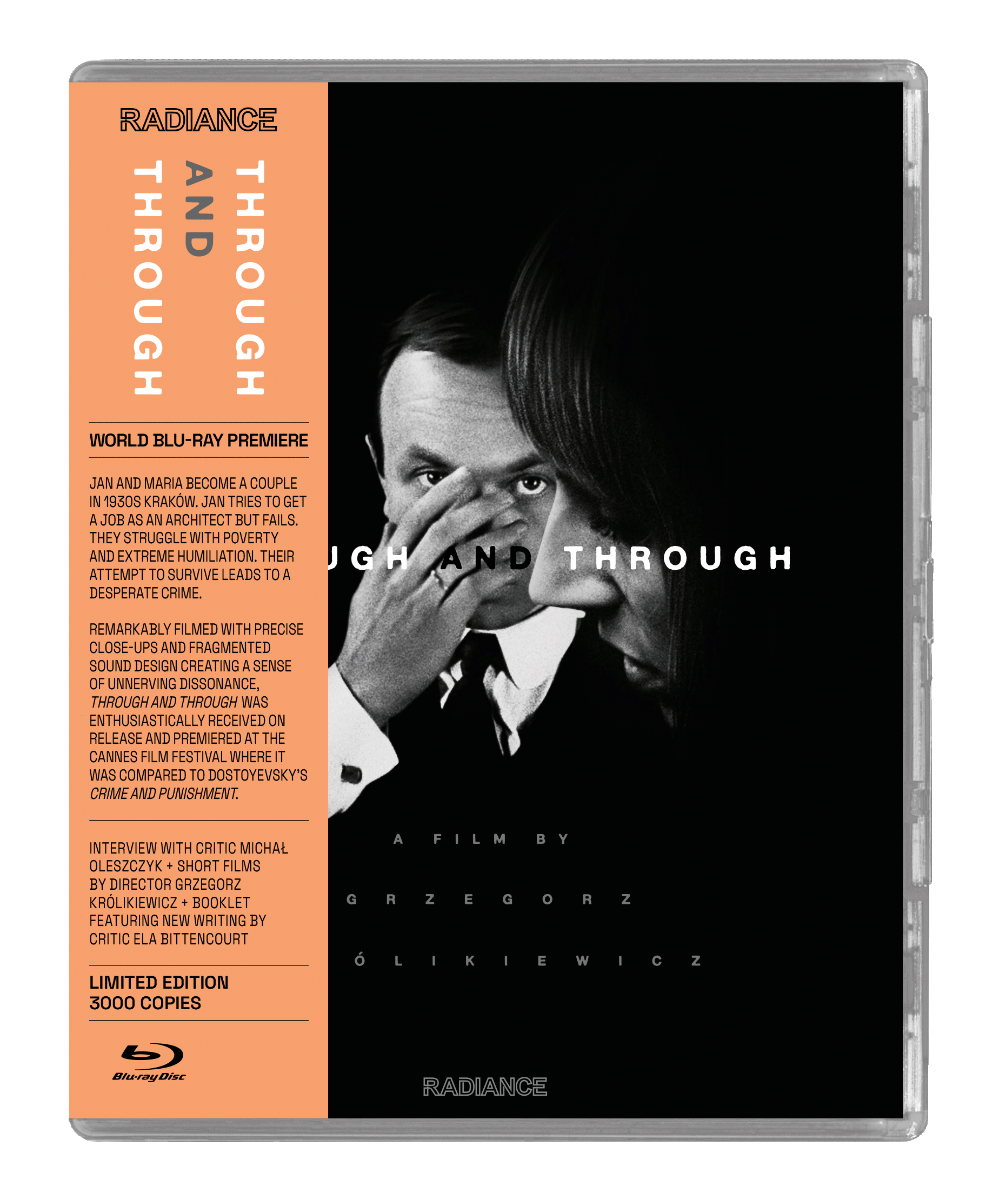
Incidentally, for various reasons—chiefly Radiance sending me a review copy, it not arriving, me chasing it up close to deadline, them sending me another one, both turning up on the same day and them cheerfully saying I could keep them—I have a spare copy of
Through and Through (the full shrinkwrapped retail edition) that I'd be only too happy to pass on free of charge.
So the first person to PM me gets it*, and you can find out where you sit on the scale between Domino's total dismissal and Michał Oleszczyk's claim that it's the greatest Polish film ever made. I personally wouldn't go
quite that far, although I've been a firm Grzegorz Królikiewicz fan ever since I discovered his work a couple of decades ago, very possibly on Michał's personal recommendation!
(*
UPDATE: It was claimed within minutes.)
Come to think of it, I also namecheck it in passing in my upcoming commentary for Radiance's
The Hourglass Sanatorium:
[00:46:22]
Now, the Silesia Film Unit, befitting its name, had a specific remit to produce films of regional interest, which it largely did, but [Kazimierz] Kutz also wanted the film unit to produce work of significant artistic merit that would be noticed outside Silesia and possibly even abroad. An early example of this was Kutz’s decision to support Through and Through in 1972, the first fiction feature by the avant-garde documentary filmmaker Grzegorz Królikiewicz, and if you’ve seen that you’ll know that it’s about as uncompromising as films get. Kutz was very happy with how that turned out, and wanted to aim even higher—hence The Hourglass Sanatorium, which unlike Królikiewicz’ film was made by someone who was already well established as one of Poland’s most important filmmakers. And also, Has hadn’t made a feature since 1968, so there was the comeback aspect to it too. Between starting work on his first feature The Noose in 1957 and the premiere of The Doll in 1968, Has had made nine features, or only slightly less than one per year, including two large-scale productions in The Saragossa Manuscript and The Doll, so a break of several years was unprecedented for him.
[00:47:32]
I really can’t emphasise enough how vital Kazimierz Kutz was to getting The Hourglass Sanatorium made at all. Even though his films aren’t that well known outside Poland, he’s a very distinguished director in his own right: I can certainly recommend Cross of Valour from 1958, Nobody’s Calling from 1960, Silence from 1963, and the three films in his Silesia Trilogy that he made between 1969 and 1979, Salt of the Black Earth, Pearl in the Crown, and The Beads of One Rosary, and there are plenty more that I haven’t seen yet. Kutz also cut his teeth in the mid-1950s working as an assistant to Andrzej Wajda, including shooting a fair chunk of the logistically demanding Kanal, which acted as a stepping stone to his own first feature. And aside from his creative abilities, he was also a very deft politician—indeed, in 1997, so after the collapse of Communism, he’d be elected to three consecutive terms as a senator in the Polish Parliament, representing Katowice, and by then he was so widely recognised as a champion of all things Silesian that a poll organised by the Gazeta Wyborcza newspaper even voted him the third greatest Silesian ever, and the highest-placed person that was still alive at the time.