Town Bloody Hall
BUY AT:


See more details, packaging, or compare
Synopsis
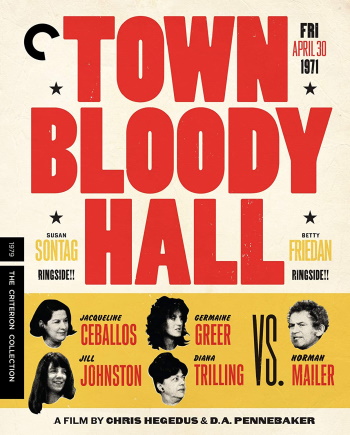
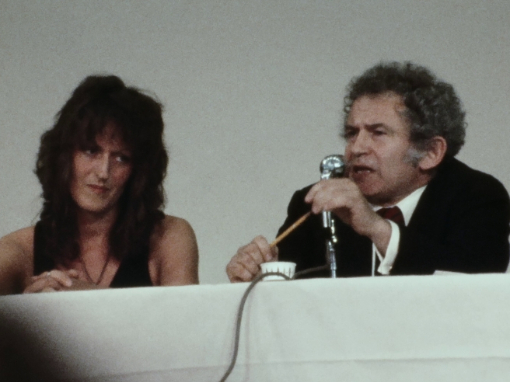
On April 30, 1971, a standing-room-only crowd of New York’s intellectual elite packed the city’s Town Hall theater to see Norman Mailer—fresh from the controversy over his essay “The Prisoner of Sex” and the backlash it received from leaders of the women’s movement—tangle with a panel of four prominent female thinkers and activists: Jacqueline Ceballos, Germaine Greer, Jill Johnston, and Diana Trilling. Part intellectual death match, part three-ring circus, the proceedings were captured with crackling, fly-on-the-wall immediacy by the documentary great D. A. Pennebaker and a small crew, with Chris Hegedus later condensing the three-and-a-half-hour affair into this briskly entertaining snapshot of a singular cultural moment. Heady, heated, and hilarious, Town Bloody Hall is a dazzling display of feminist firepower courtesy of some of the most influential figures of the era, with Mailer plainly relishing his role as the pugnacious rabble-rouser and literary lion at the center of it all.
Picture 8/10
Chris Hegedus’ and D.A. Pennebaker’s Town Bloody Hall receives its first major home video release in North America from The Criterion Collection. This new Blu-ray presents the film on a dual-layer disc with a 1080p/24hz high-definition encode in the aspect ratio of 1.33:1. A new 4K restoration is the source for the presentation, which in turn was scanned from the 16mm A/B reversal.
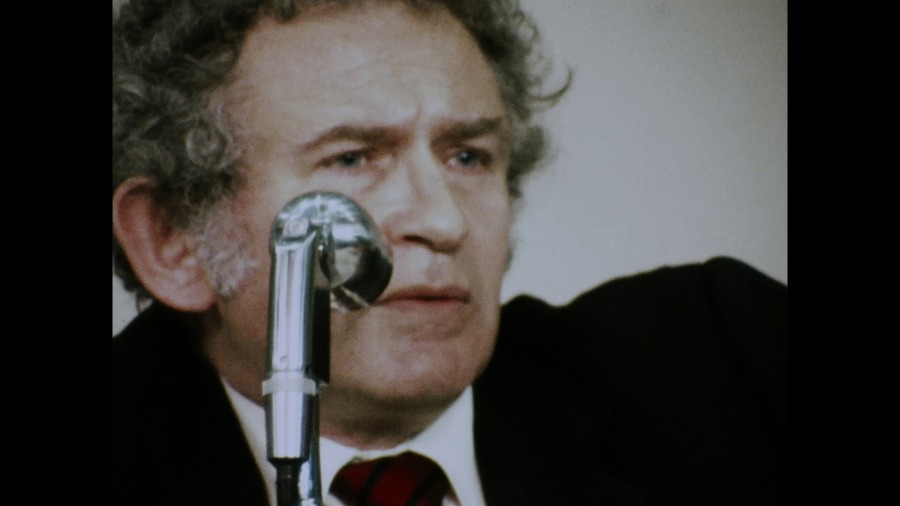
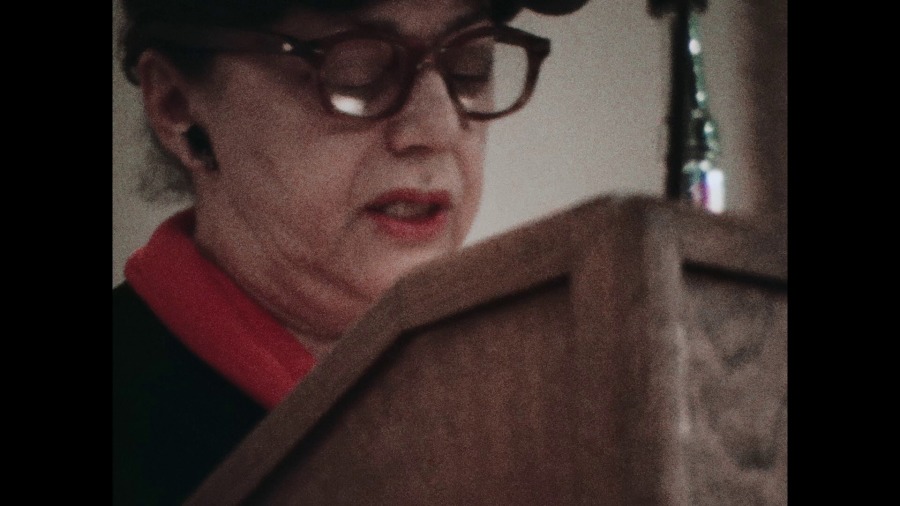
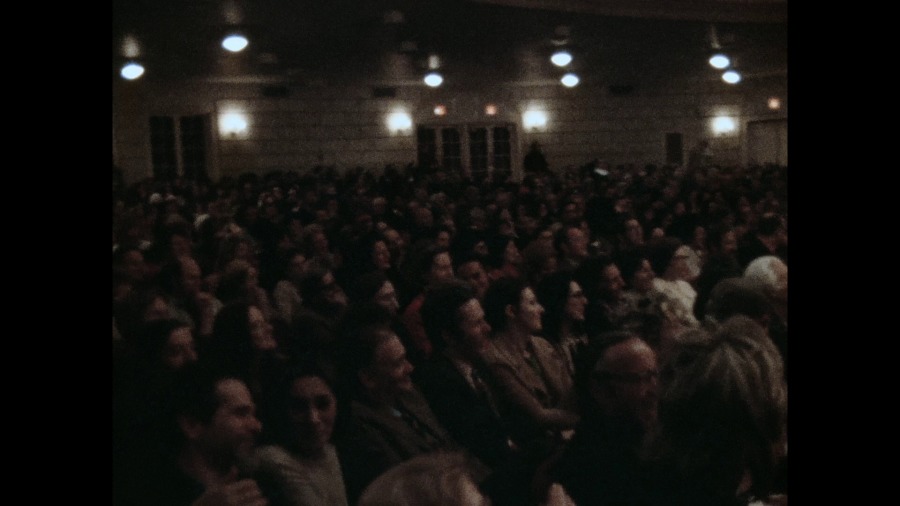
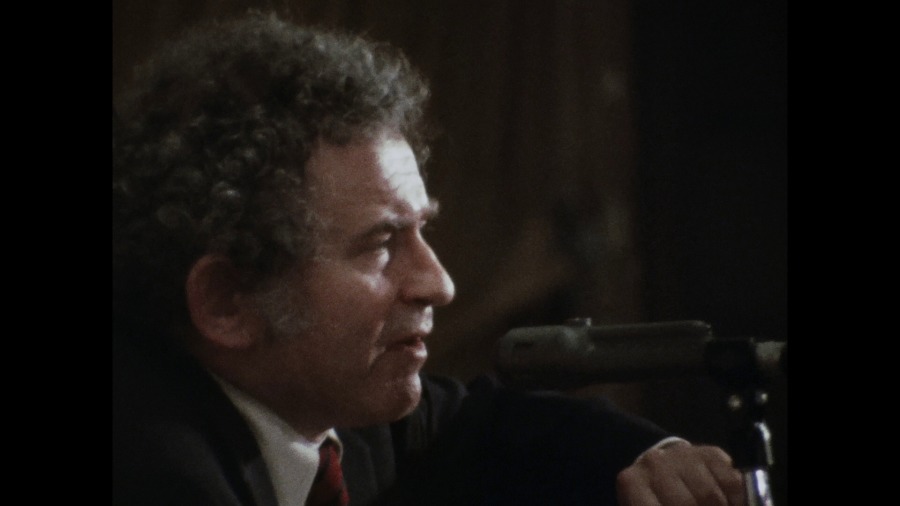
I always find it a bit hard going over the presentation of a film like this simply because of how it has been filmed, but even taking into account any shortcomings that either come from the condition of the source materials or the circumstances of the filming (and eventual assembly) it’s hard to not be “wowed” by the end results here. The digital presentation itself is quite good, and I can’t find any concerning fault in it. The film is incredibly grainy and it’s always heavy, but the encode doesn’t make a mess of it, rendering it cleanly and naturally, never like noise. The lighting for the event is all over the place, but grain still manages to look good during darker shots. This leads to a decent amount of detail, even in some of the long shots of the stage and the (poorly lit) audience. The grainy 16mm of course limits things in the detail deparment, but the digital presentation gets all it can out of it and does it very well.
The source materials are in incredible shape, only a few minor marks looking to remain (and you have to be looking for them). Despite a few pops of colour scattered about the colour scheme is muted. Black levels also vary, but they can come off muddy most of the time. This aspect comes down more to lighting than anything problematic with the restoration/encode: lighting was not a concern for the event and it simply is what it is.
Despite everything—the lighting conditions, the improvised camerawork, how the print may have been stored, the camera's constantly running out of film during the debate, and the film having a lengthy production history—the end results still end up being quite impressive, and what’s on screen has a nice filmic look to it.
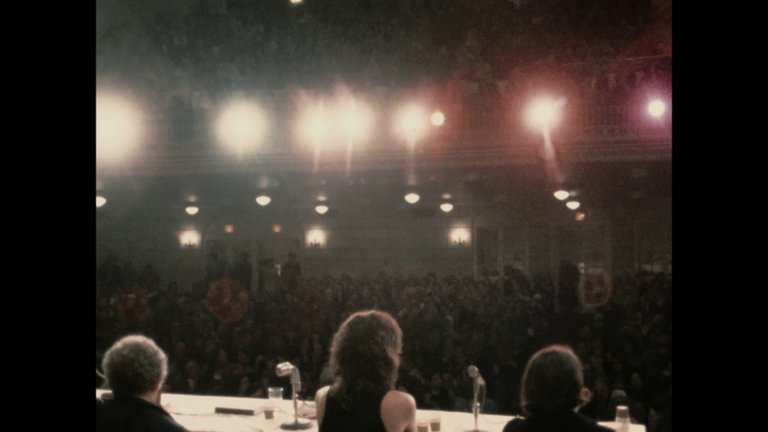
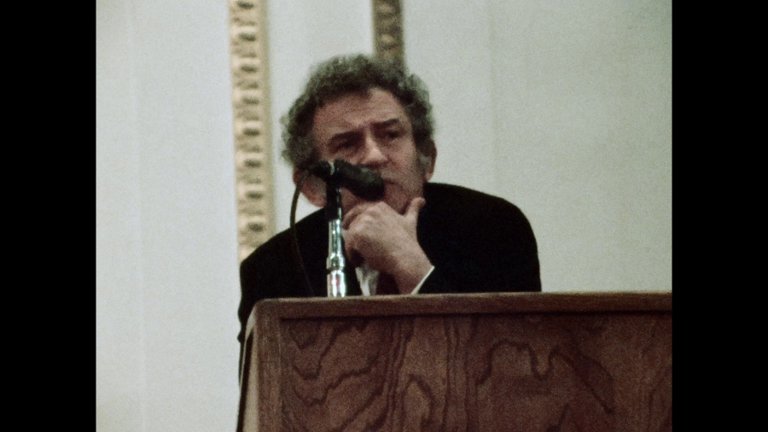
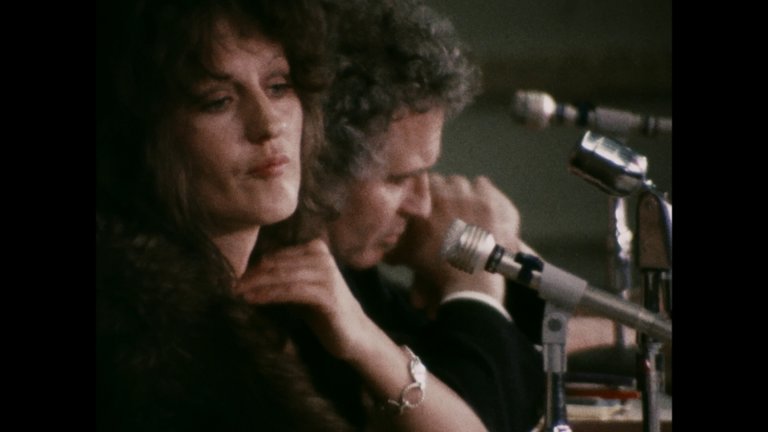
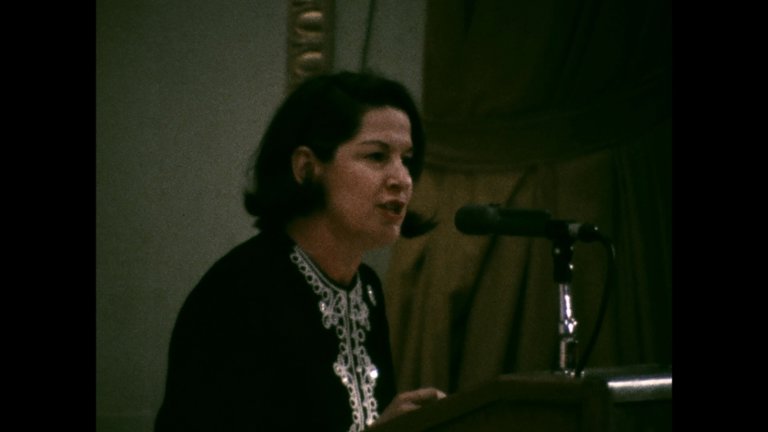
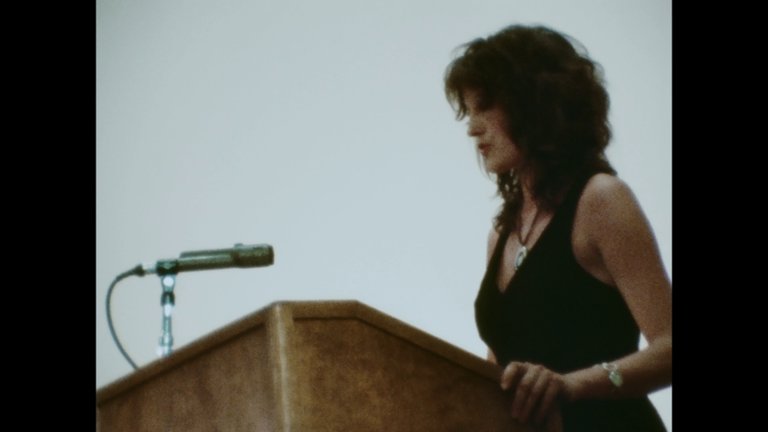
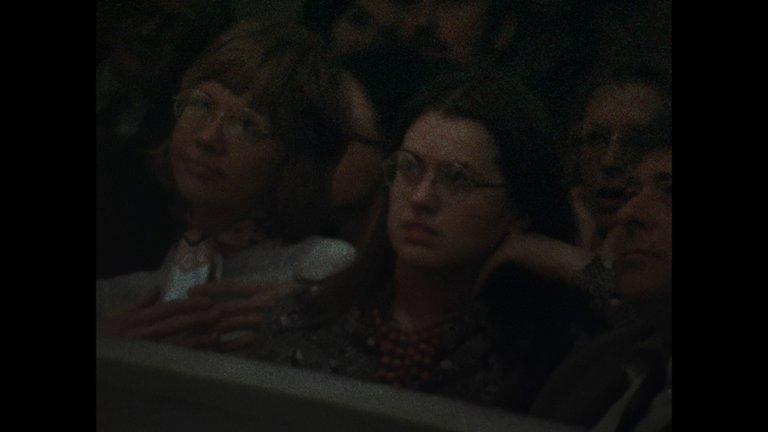
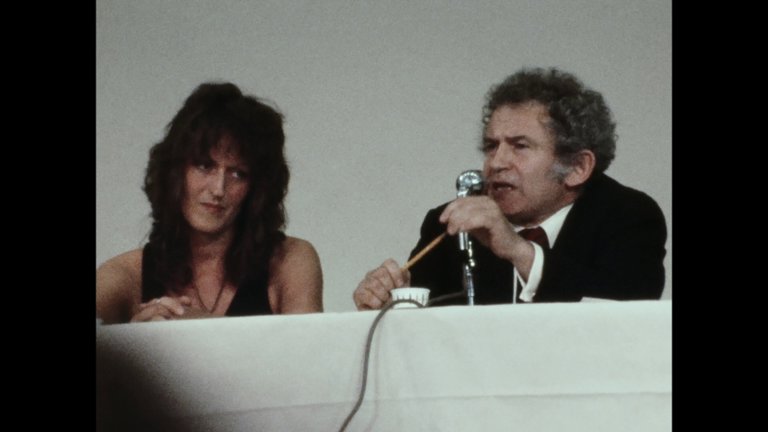
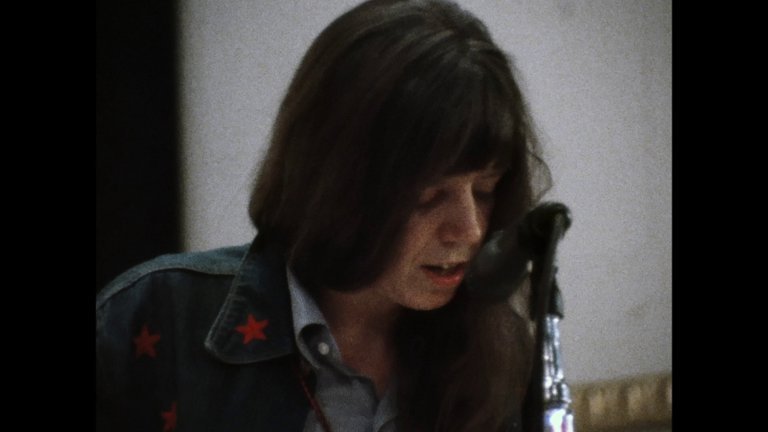
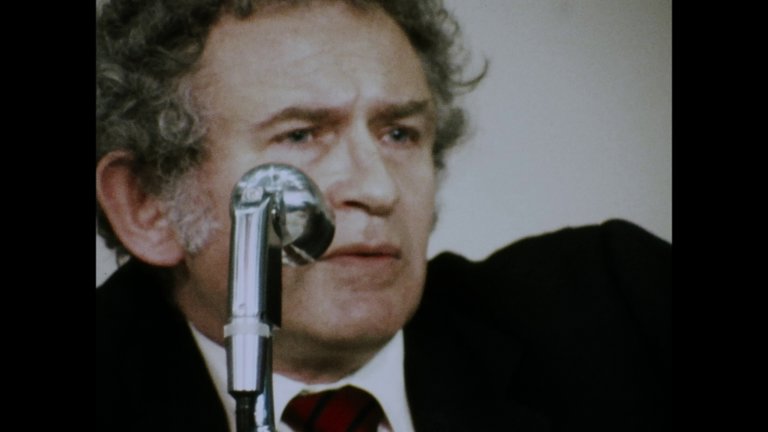
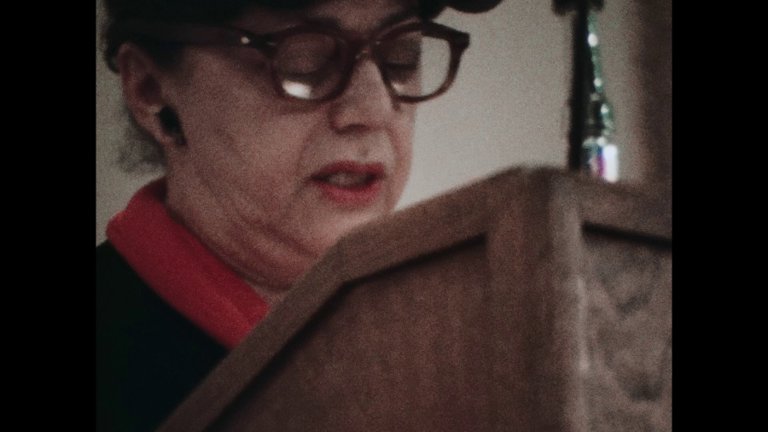
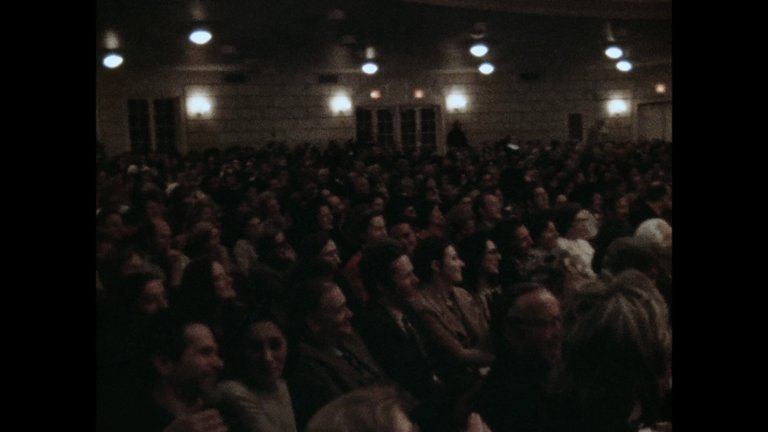
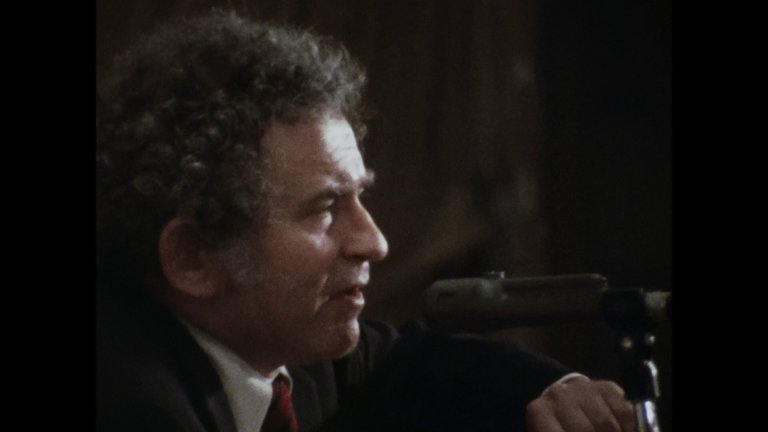
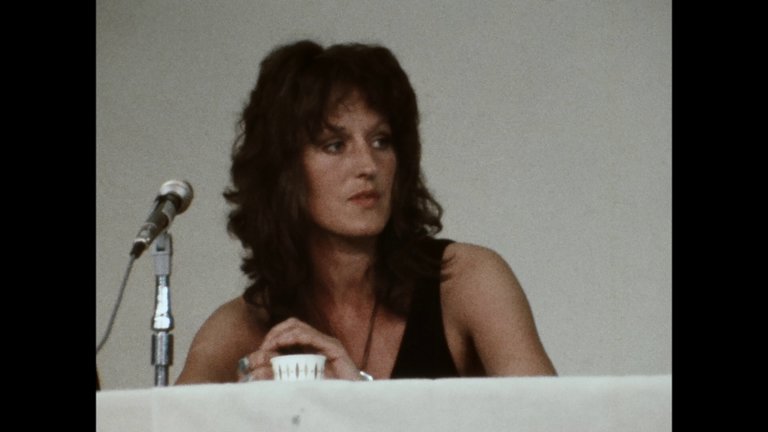
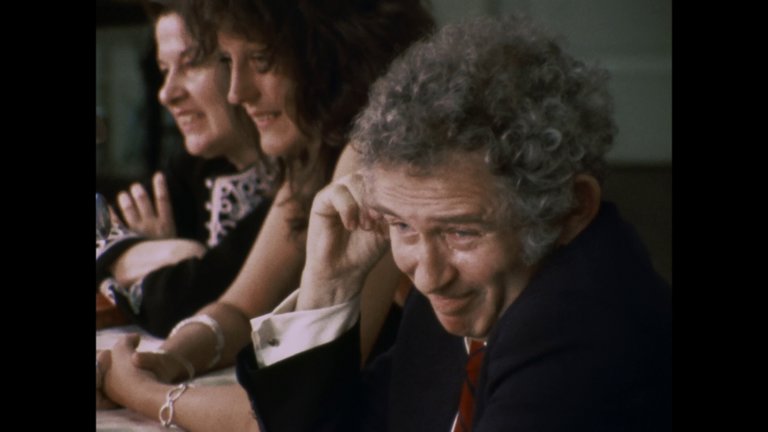
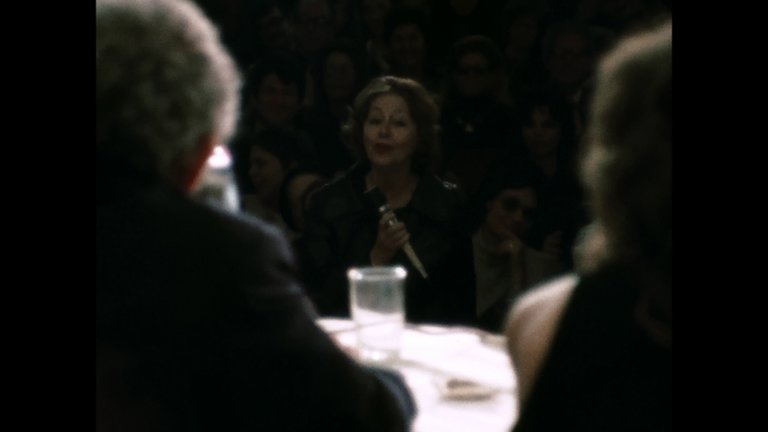
Town Bloody Hall - Screen Captures
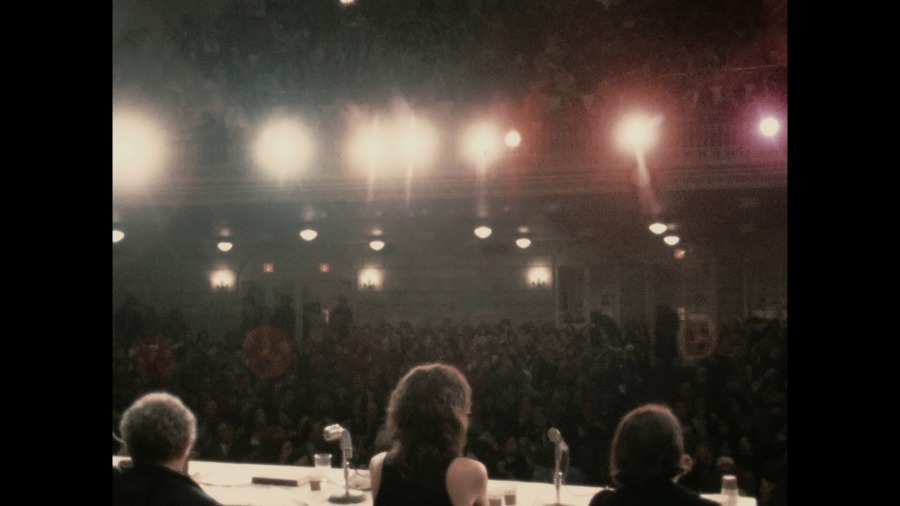
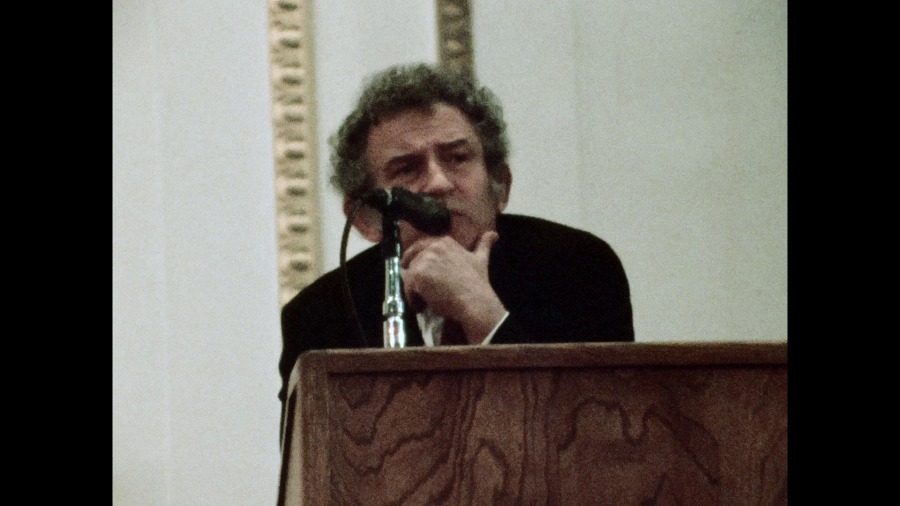
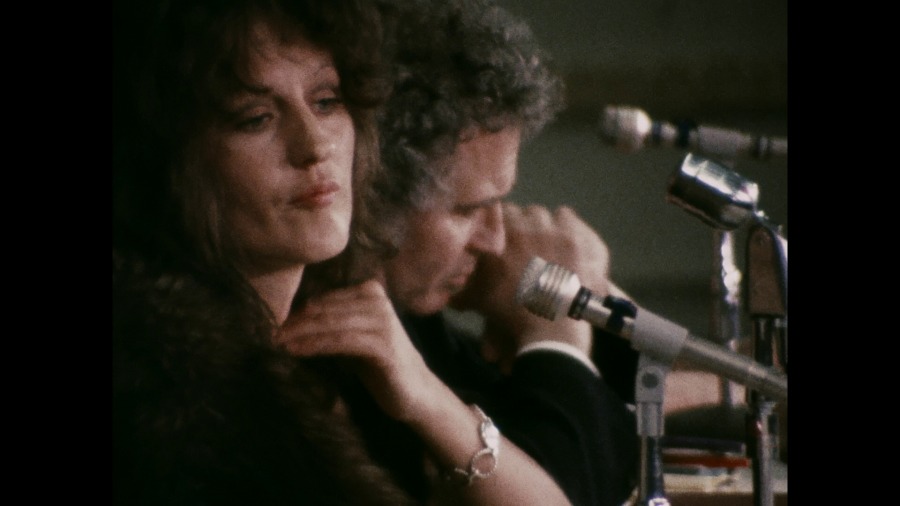
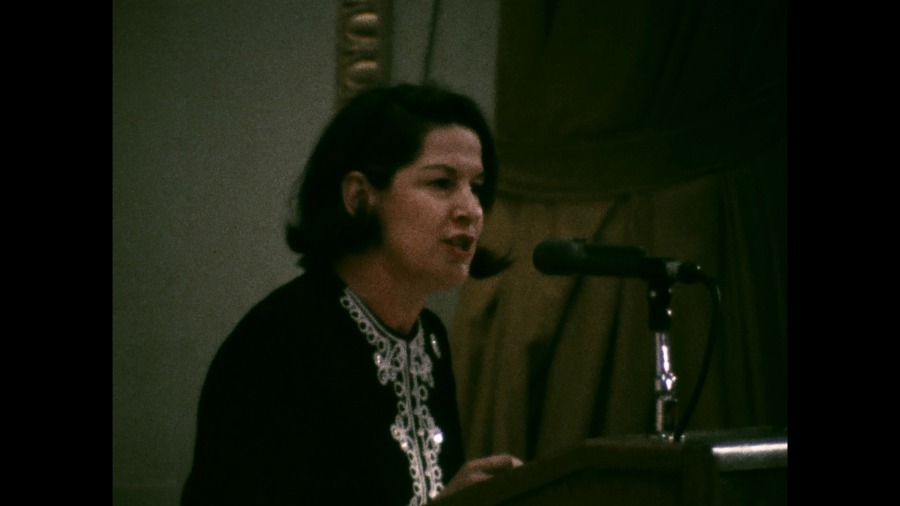
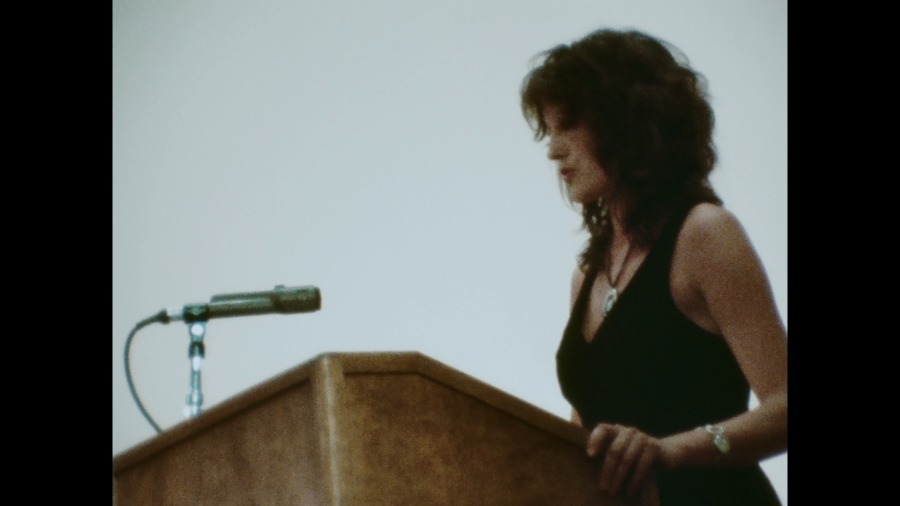
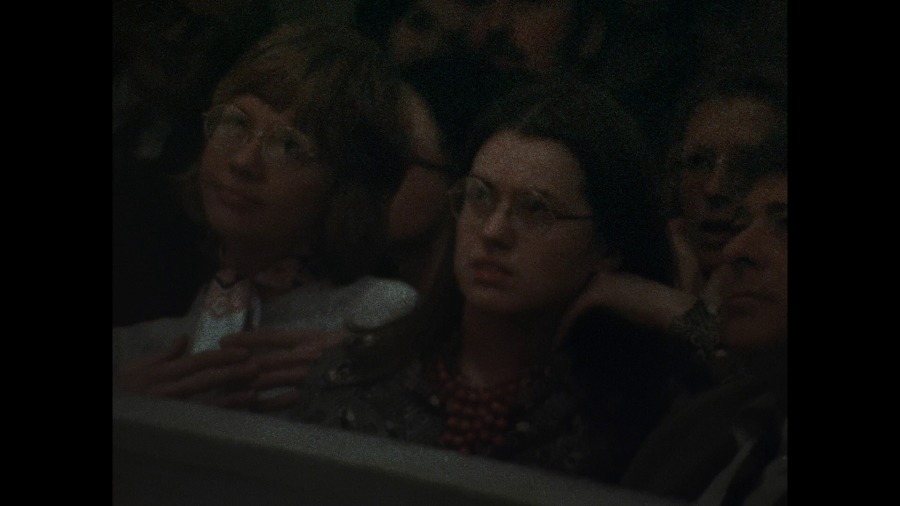
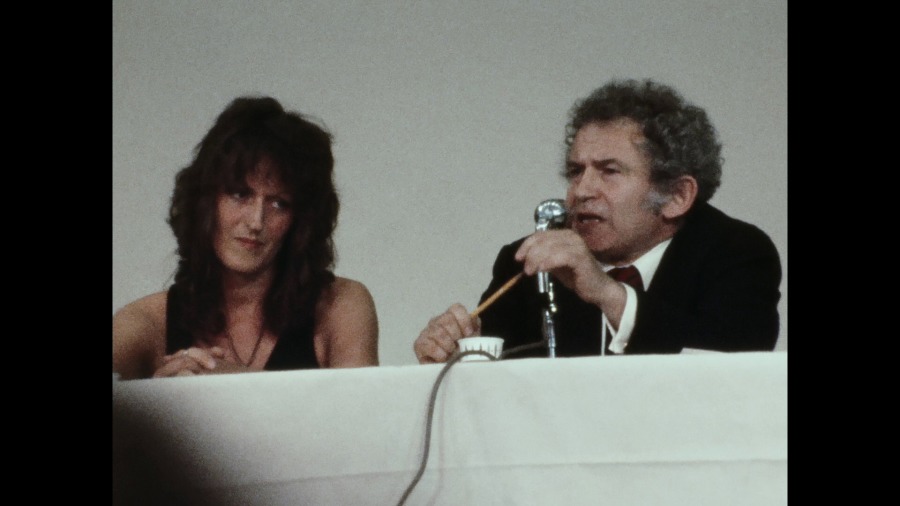
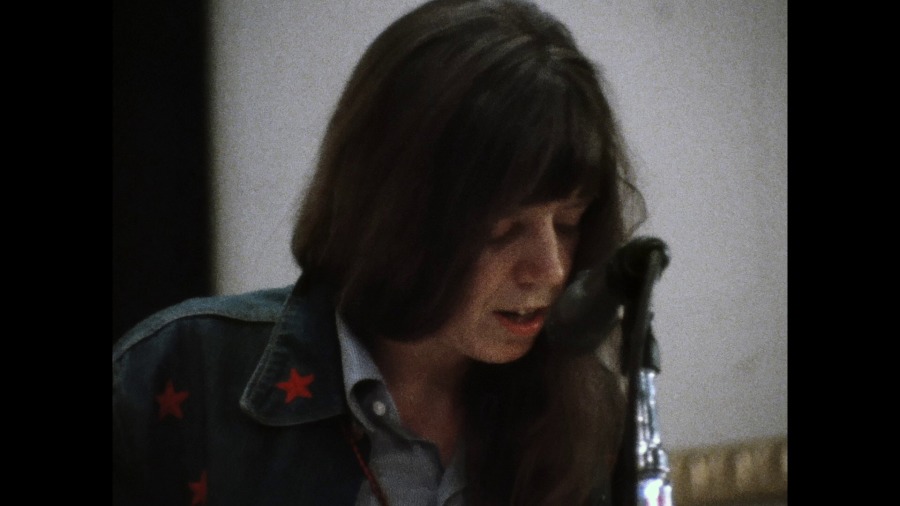
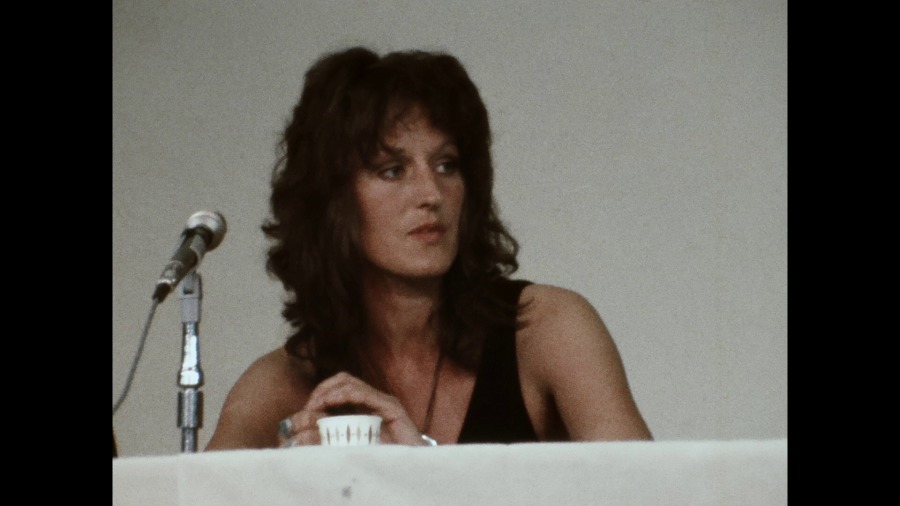
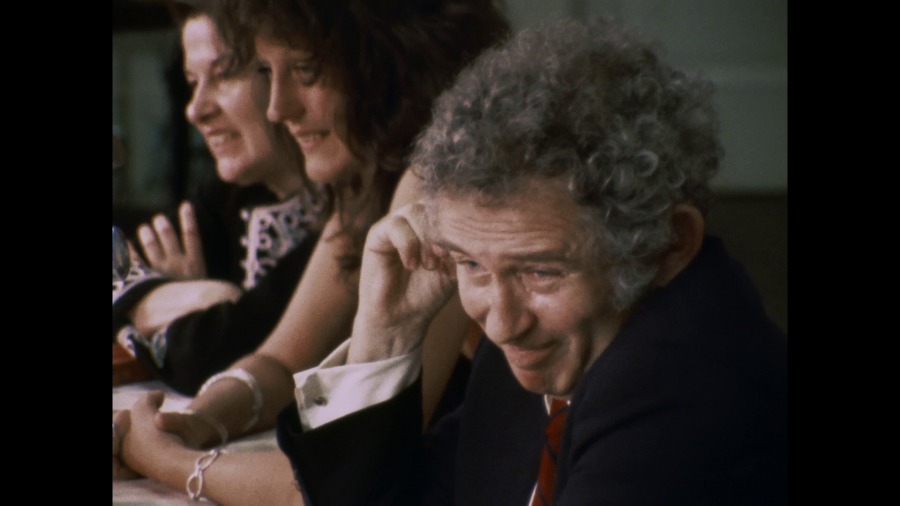
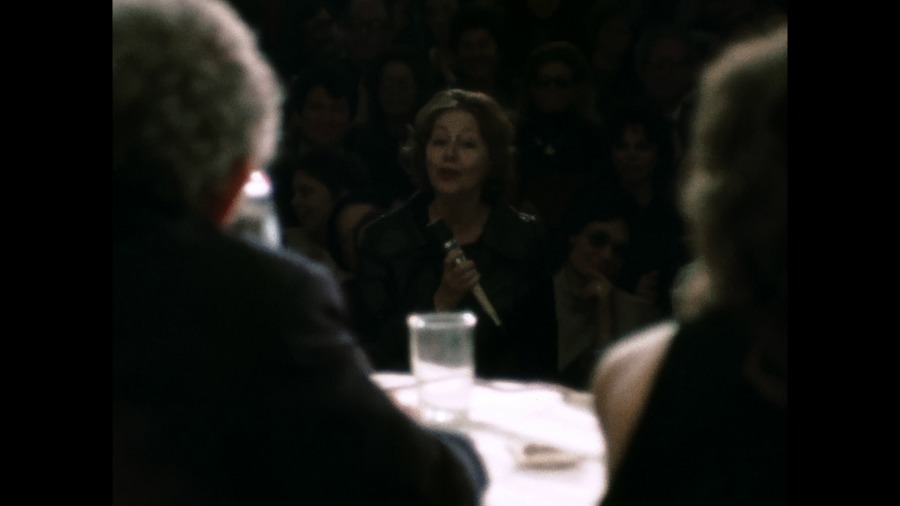
Audio 6/10
The film comes with a lossless PCM 1.0 monaural presentation. In terms of how it is encoded on the disc I have no complaints, but it’s still limited by the source elements. The speakers are easy to hear for the most part, as are audience members, but there were moments I was straining to hear. This comes down to the original recordings, though. As it is, there is no distortion or severe damage hampering things.
Extras 8/10
The film has not been super-easy to come across on video, with a DVD exclusive to the Pennebaker-Hegedus website being the only other edition I’m aware of. I have not seen that edition (which is/was rather pricey at $60 for a personal copy!) though from what I can gather it at least had an audio commentary with director/editor Chris Hegedus and event participant Germaine Greer, which appears to be the same commentary found on this edition. Recorded in 2004 (around the time of a reunion screening) the two talk about that night, Greer from her perspective as a participant of the evening and Hegedus from her perspective as an editor, while also asking a number of questions of Greer. While the two, unsurprisingly, talk about Mailer, I guess I was a bit surprised how Greer gives him some leeway, maybe because he admitted a long time later he didn’t really understand the feminist movement, or at least how serious it was, and She defends him at points, even making sure to praise some of his other work. She’s not so kind about Johnston and Trilling, though, and lets loose a number of criticisms around their comments and actions. She also talks about ow some of her views changed over time and reflects a bit on how she might handle a panel/event like that "now" (in relation to when the commentary was recorded). The two also talk about how things have progressed through the years (and not progressed) and cover other political topics.
Greer has most of the track’s running time but Hegedus does offers some details about editing the footage together. Based on comments here and elsewhere on the disc it’s explained that after filming the evening Pennebaker didn’t know what to do with the footage and it all just sat there. Hegedus came in later and took on the task of making a film of it, and she recounts some of the details that went in to putting the film together, even asking Greer if she feels okay with how it turned out. It’s a very engaging track, both in relation to the subject matter of that night and the technical aspects of the film, and I’d say it’s certainly worth a listen.
To then fill in any gaps around the technical aspects of the film Chris Hegedus has recorded a new 25-minute interview around the film. She expands substantially on how she put the film together after it sat on a rack for seven years in Pennebaker’s studio, explaining how she worked out the focus and constructed a timeline for the film. On top of that she also talks about her own early years before joining up with Pennbaker and her own schooling.
It's a great interview all on its own, though sadly the only *new* item for this release. The rest of the material is archival in nature. There is about 22-minutes’ worth of footage from a 2004 reunion around the film, which gathers back Greer, Jacqueline Ceballos and Jill Johnston (Pennebaker and Hegedus are there as well), all of whom reflect on that night, following a screening of the film. I appreciated this one more as Ceballos explains how that town hall came about, which isn’t touched on in-depth elsewhere on the disc.
Criterion then digs up interview footage with Greer and Norman Mailer recorded in 2001 for a documentary on Pennebaker and Hegedus, running over 13-minutes each. Greer covers some of the same topics she does in the track (including her thoughts on Johnston and Trilling) but also gets into how she came on board (she felt she had to participate after so many had turned it down). Mailer’s interview is a bit of a riot, though sadly has little to do with this film specifically, where he just admits he was out of his element that night. Instead, to my delighted surprise, Mailer talks more about his other work with Pennebaker, which includes the films Wild 90, Beyond the Law, and Maidstone (all of which are available in Criterion’s worst Eclipse set, Maidstone and Other Films by Norman Mailer). While it was great getting the bizarre details around those films, details that were sadly not as surprising as they should have been (like how the gangster films appear to be born out of drunken gangster impersonations Mailer and his friends did), the best is probably Mailer’s confession that he really thought he was going to change filmmaking forever, and he at least laughs at himself now over that.
That interview shows a more laid back Mailer but Criterion remedies that with the next feature, the entire 67-minute episode of The Dick Cavett Show from the end of 1971, about 8-months after the Town Hall event in the film, featuring Mailer (who was there to promote his book The Prisoner of Sex) along with author Gore Vidal and journalist and author Janet Flanner. Vidal and Flanner take up the first half of the episode, Vidal covering his play about Nixon, Flanner talking about some of her recent work (mentioning that the one person she would love to talk to would be Jean-Paul Belmondo). Then in comes Mailer, apparently direct from his favourite “watering hole.” Mailer is already there with a chip on his shoulder from something Vidal had recently written about him and his book. Right from his entrance there are a number of cringey, very painful moments between the two, with Flanner there on the sidelines looking rather disgusted by Mailer (and Vidal to an extent), though not by what he has to say, but just by how he is going about the whole “discussion.” Eventually the audience becomes involved (with Mailer surprised that there are “libbies” in the audience) and even Cavett himself is having a hard time keeping a good sense of humour around everything. It’s obvious Mailer went in there with the sole goal of handing Vidal his own ass by any means necessary, but he isn’t doing it in good faith, twisting things around and in turn painting himself into a corner on a few occasions, leading to him making some cringey statements to try to get himself out (though I should point out Vidal doesn’t help himself either). What seems so bizarre about this segment, when considering the modern discourse, is how tensions are obviously getting high but everyone manages to remain pretty civil and they let the other talk without talking over them (though they are probably ignoring their comments). Nowadays I’m sure fists would have been flying, and Cavett seemed ready for that to happen, but it doesn’t. It can be painful, but I’d be lying if I said the whole segment wasn’t entertaining.
The political climate of the time is contextualized a bit throughout the features, which includes the commentary, Hegedus’ interview, and the Cavett segment, along with the included insert by Melissa Anderson (who also goes over each speakers’ topics and the construction of the film), but maybe a supplement specific to that topic would have been beneficial. Outside of that the disc has a worthwhile collection of supplements worth going through.
Closing
Scarcely available on video previously, Criterion's new Blu-ray offers a very film-like presentation and some great supplements around the the film, the event it covers, and its subject matter.
BUY AT: