
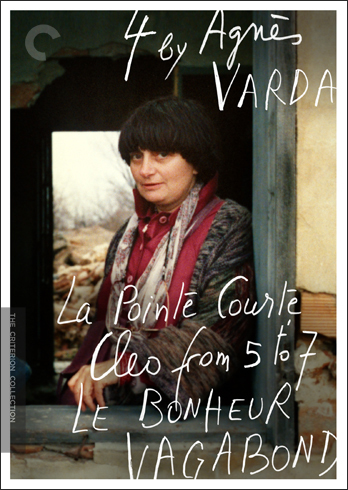



Details by Film
La Pointe Courte
Streaming Options









Cleo from 5 to 7
Streaming Options

Le Bonheur
Streaming Options
Vagabond
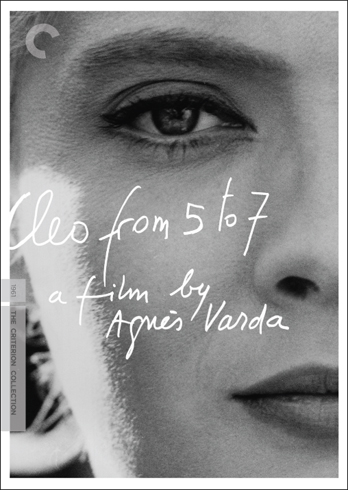
Cléo from 5 to 7
Agnès Varda eloquently captures Paris in the sixties with this real-time portrait of a singer (Corinne Marchand) set adrift in the city as she awaits test results of a biopsy. A chronicle of the minutes of one woman’s life, Cléo from 5 to 7 is a spirited mix of vivid vérité and melodrama, featuring a score by Michel Legrand (The Umbrellas of Cherbourg) and cameos by Jean-Luc Godard and Anna Karina.
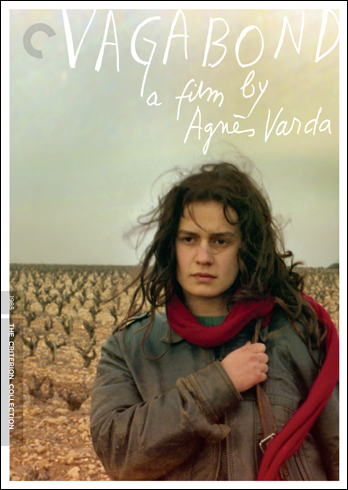
Vagabond
Sandrine Bonnaire won the Best Actress César for her portrayal of the defiant young drifter Mona, found frozen to death in a ditch at the beginning of Vagabond. Agnès Varda pieces together Mona’s story through flashbacks told by those who encountered her (played by a largely nonprofessional cast), producing a splintered portrait of an enigmatic woman. With its sparse, poetic imagery, Vagabond (Sans toit ni loi) is a stunner, and won Varda the top prize at the Venice Film Festival.
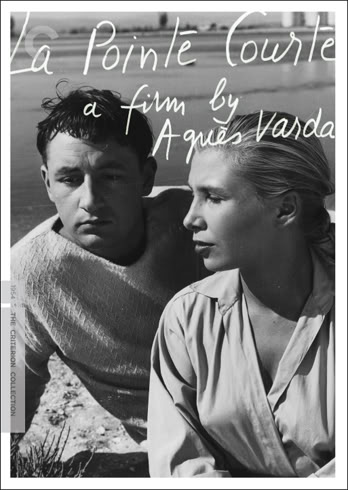
La Pointe Courte
The great Agnès Varda’s film career began with this graceful, penetrating study of a marriage on the rocks, set against the backdrop of a small Mediterranean fishing village. Both a stylized depiction of the complicated relationship between a married couple (played by Silvia Monfort and Philippe Noiret) and a documentary-like look at the daily struggles of the locals, Varda’s discursive, gorgeously filmed debut was radical enough to later be considered one of the progenitors of the coming French New Wave.
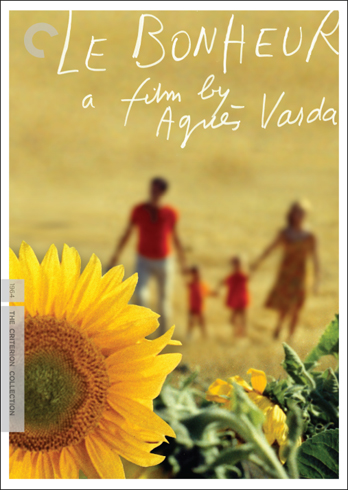
Le bonheur
Though married to the good-natured, beautiful Thérèse (Claire Drouot), young husband and father François (Jean-Claude Drouot) finds himself falling unquestioningly into an affair with an attractive postal worker. One of Agnès Varda’s most provocative films, Le Bonheur examines, with a deceptively cheery palette and the spirited strains of Mozart, the ideas of fidelity and happiness in a modern, self-centered world.
Release Information:
Technical Specifications
Supplements
- Remembrances (2005), a documentary on the making of the film, featuring interviews with Agnes Varda and actors Corinne Marchand and Antoine Bourseiller
- Remembrances (2003), a documentary on the making of the film, including interviews with Sandrine Bonnaire and other cast members
- New video interview with director Agnes Varda
- The Two Women of "Le bonheur", a short piece featuring actors Claire Drouot and Marie-Françoise Boyer
- Booklet featuring new essays by Chris Darke, Adrian Martin, Amy Taubin, and Ginette Vincendeau, as well as a foreword by Agnes Varda on each film
- Gallery of paintings by Hans Baldung Grien, whose work inspired the character of Cléo
- The Story of an Old Lady (2003), a short piece in which Agnes Varda revisits actress Martha Jarnias, who plays the old aunt in the film
- Excerpts from a 1964 episode of the French television series Cinéastes de notre temps, in which Agnes Varda discusses her early career
- Thoughts on "Le bonheur", a discussion between four scholars and intellectuals discussing the concept of happiness and its relation to the film
- Excerpt from a 1993 French television program featuring Madonna and Agnes Varda talking about the film
- Music and Dolly Shots, (2003), a conversation between Agnes Varda and composer Joanna Bruzdowicz
- Two short pieces by Agnes Varda investigating people
- Cléo’s Real Path Through Paris (2005), a short film retracing, on a motorcycle, Cléo’s steps through Paris
- A 1986 radio interview with Agnes Varda and writer Nathalie Sarraute, who inspired the film
- Jean-Claude Drouot Returns (2006), a featurette in which the actor revisits the film's setting forty years later
- Les fiancés du pont Macdonald (1961), a short film directed by Varda, featuring some of her new wave colleagues, with Varda explaining why the film was featured in Cléo
- Theatrical trailer
- Segment from the 1964 television program Démons et merveilles du cinéma, featuring footage of Varda shooting Le bonheur
- Interview with Agnes Varda from 1998 about Le bonheur
- Agnes Varda on Les fiancés du pont Macdonald
- L’opéra Mouffe (1958), an early short by Varda, with a score by Georges Delerue
- Du Côté de la côte (1958), a short film by Varda exploring the tourist destination of the Côte d'Azur
- Theatrical trailer
- Theatrical trailer
Forum Member Statistics
Restoration Information
Release Notes on Restoration
The soundtrack was master at 24-bit from the optical track positive, and audio restoration tools were used to reduce clicks, pops, hiss, and crackle. The Dolby Digital 1.0 signal will be directed to the center on surround sound systems, but some viewers may prefer to switch to two-channel playback for a wider dispersal of the mono sound.
The soundtrack was master at 24-bit from the optical soundtrack, and audio restoration tools were used to reduce clicks, pops, hiss, and crackle. The Dolby Digital 1.0 signal will be directed to the center on surround sound systems, but some viewers may prefer to switch to two-channel playback for a wider dispersal of the mono sound.
The soundtrack was master at 24-bit from the optical track positive, and audio restoration tools were used to reduce clicks, pops, hiss, and crackle. The Dolby Digital 1.0 signal will be directed to the center on surround sound systems, but some viewers may prefer to switch to two-channel playback for a wider dispersal of the mono sound.
The soundtrack was master at 24-bit from the optical soundtrack, and audio restoration tools were used to reduce clicks, pops, hiss, and crackle. The Dolby Digital 1.0 signal will be directed to the center on surround sound systems, but some viewers may prefer to switch to two-channel playback for a wider dispersal of the mono sound.