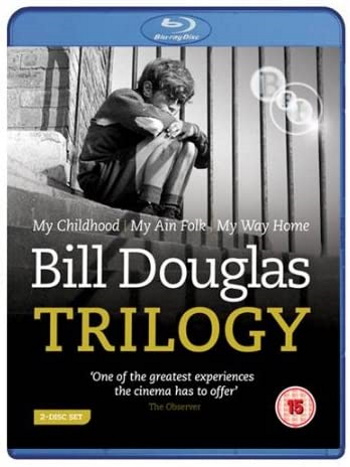
Bill Douglas Trilogy
BUY AT:

See more details, packaging, or compare
Synopsis
Bill Douglas's award-winning films My Childhood, My Ain Folk and My Way Home are three of the most compelling and critically acclaimed films about childhood ever made.
The narrative is largely autobiographical, following Jamie (played with heart-breaking conviction by Stephen Archibald) as he grows up in a poverty-stricken mining village in post-war Scotland. In these brutal surroundings, and subject to hardship and rejection, Jamie learns to fend for himself. We see him grow from child to adolescent – angry and bewildered, but playful, creative and affectionate.
In My Childhood (1972), eight-year old Jamie lives with his granny and elder brother in a Scottish mining village in 1945. With his mother in a mental home and his father absent, he is subject to the hardships of poverty.
In My Ain Folk (1973), Jamie is sent to live with his paternal grandmother and uncle; a life full of silence and rejection.
My Way Home (1978) sees Jamie's ultimate victory over his circumstances; after a spell in foster care, and a homeless shelter, he is conscripted into the RAF, where he embarks on a redemptive friendship with pal Robert, which allows him to emerge from his ineffectual adolescence to pursue his artistic ambition.
Despite the sometimes bleak subject matter, watching the trilogy is far from a depressing experience. This is cinematic poetry: Douglas contracted his subject matter to the barest essentials – dialogue is kept to a minimum, and fields, slag heaps and cobbled streets are shot in bleak monochrome. Yet with its unexpected humour and warmth, the trilogy brims with clear-eyed humanity, and affection for an ultimately triumphant young boy.
Picture 7/10
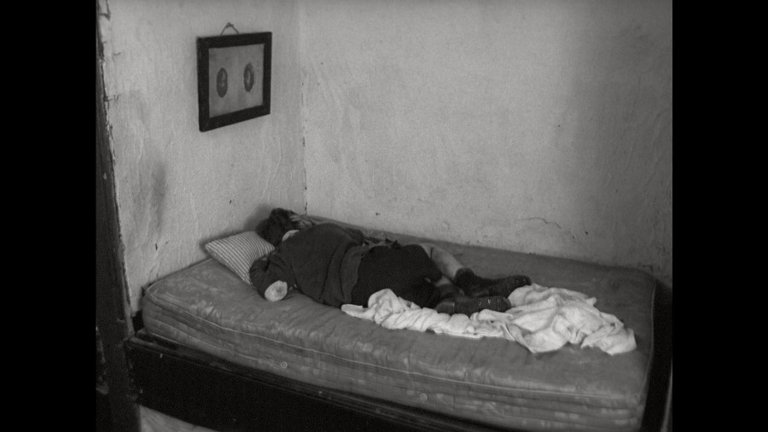
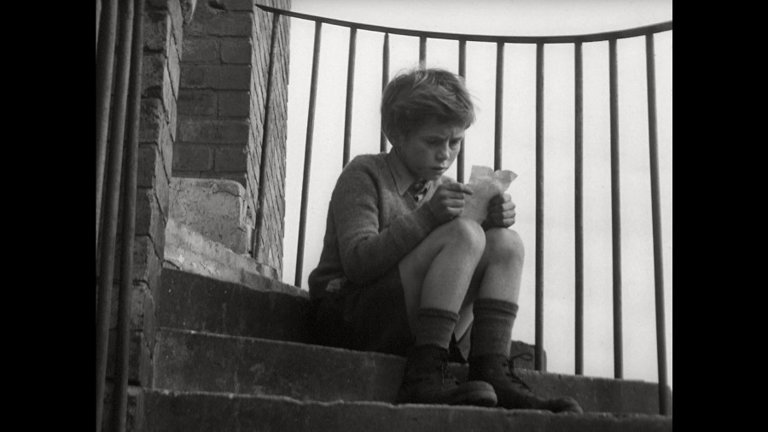
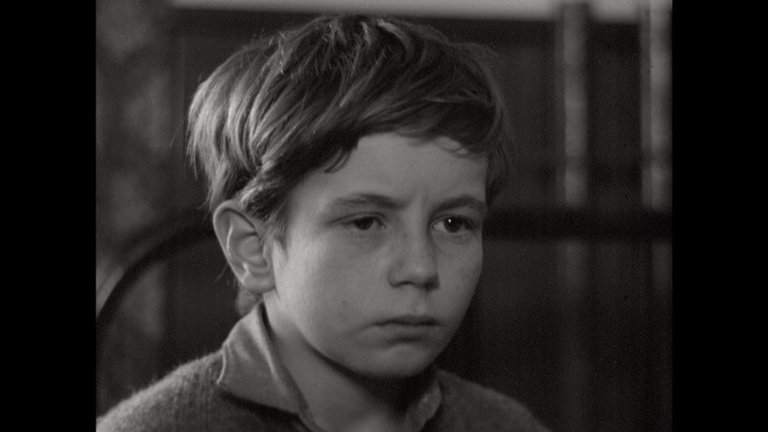
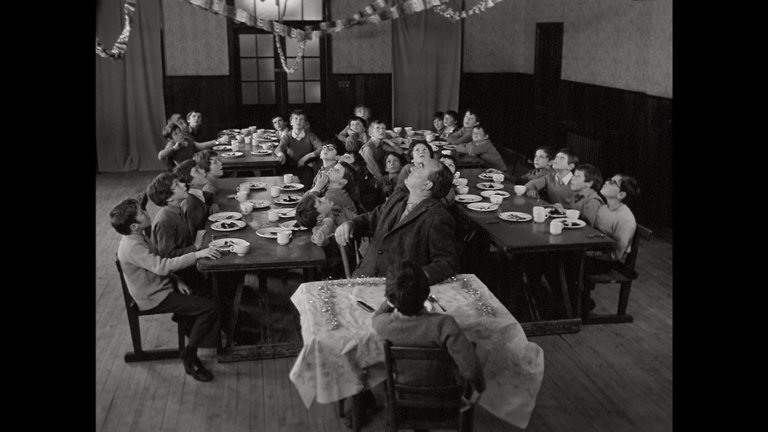
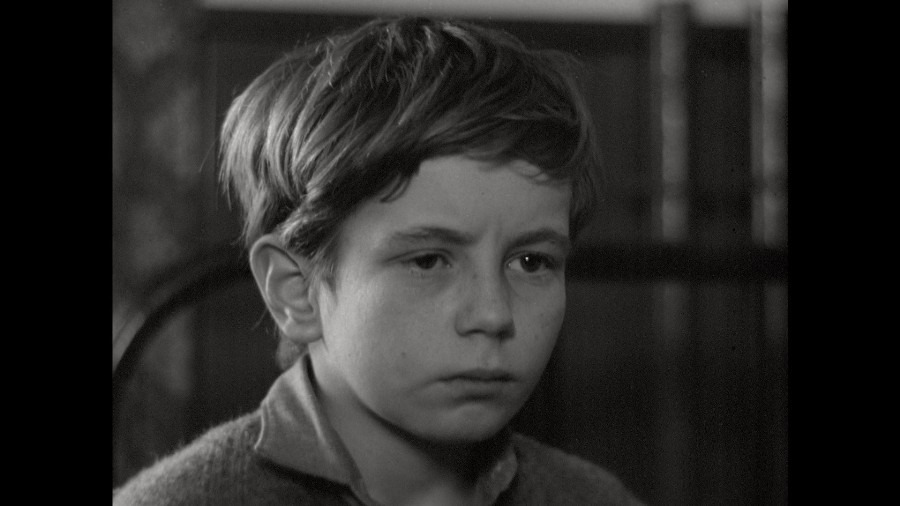
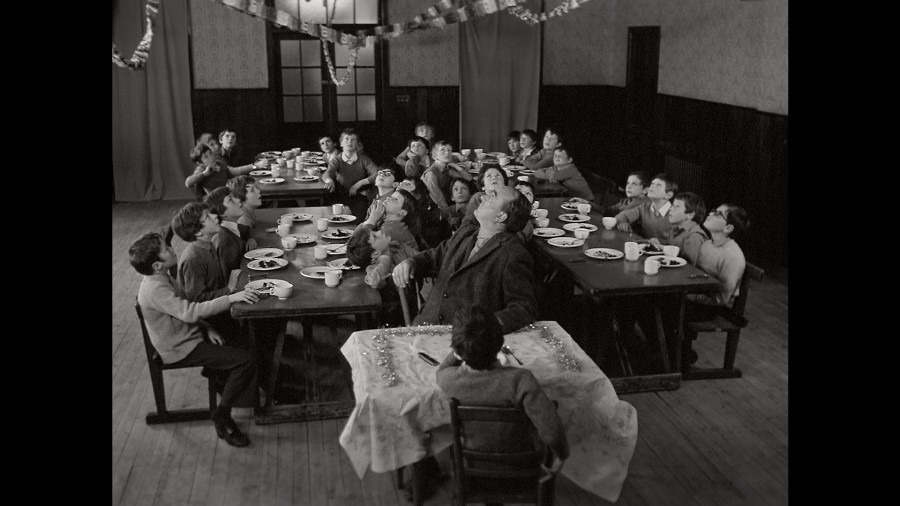
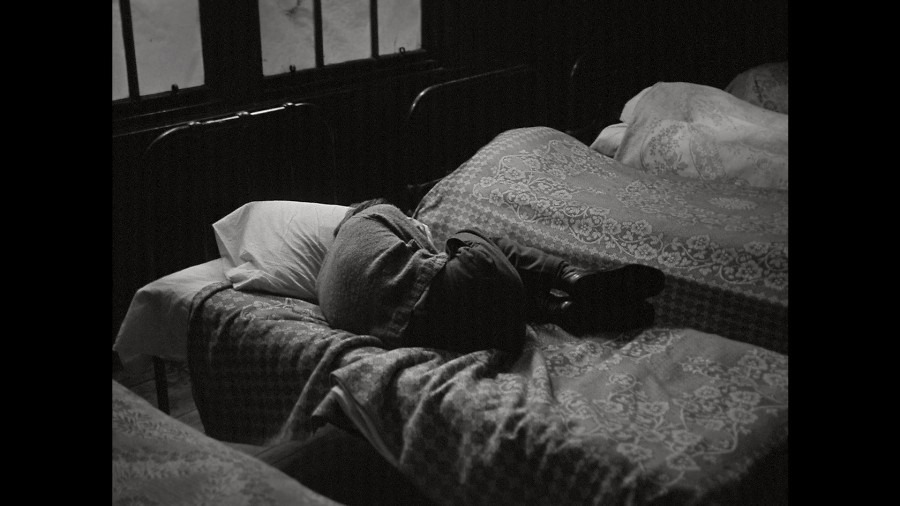
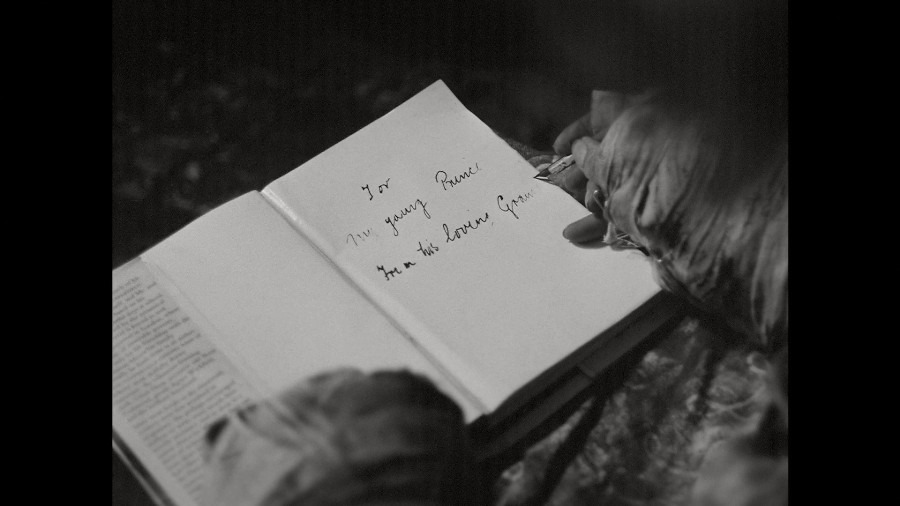
BFI Video presents Bill Douglas’s Trilogy (which includes the films My Childhood, My Ain Folk, and My Way Home) in the aspect ratio of 1.33:1 of the dual-layer Blu-ray disc of this 2-disc set. The image is presented in 1080p. While the first disc is an all-region Blu-ray disc that should play on all players worldwide, the second disc with special features is a single-layer DVD that is locked for region 2 (the content is also in a PAL format.)
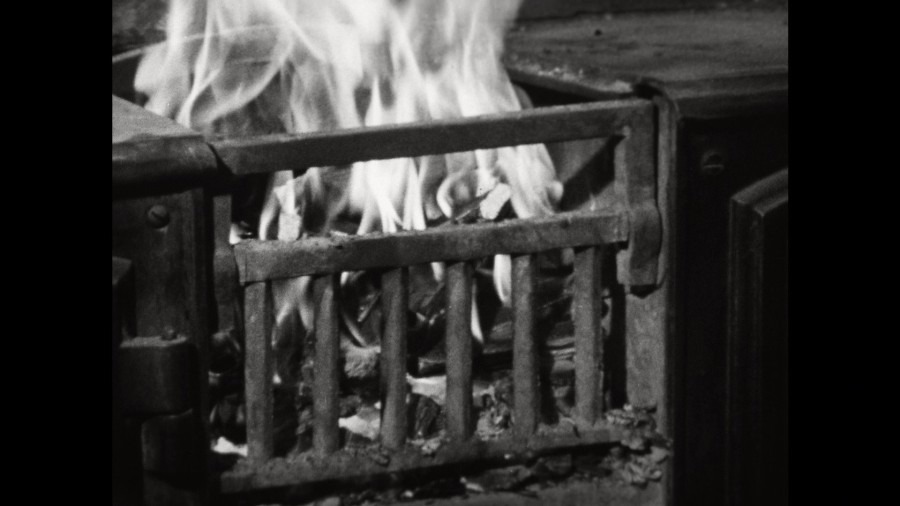
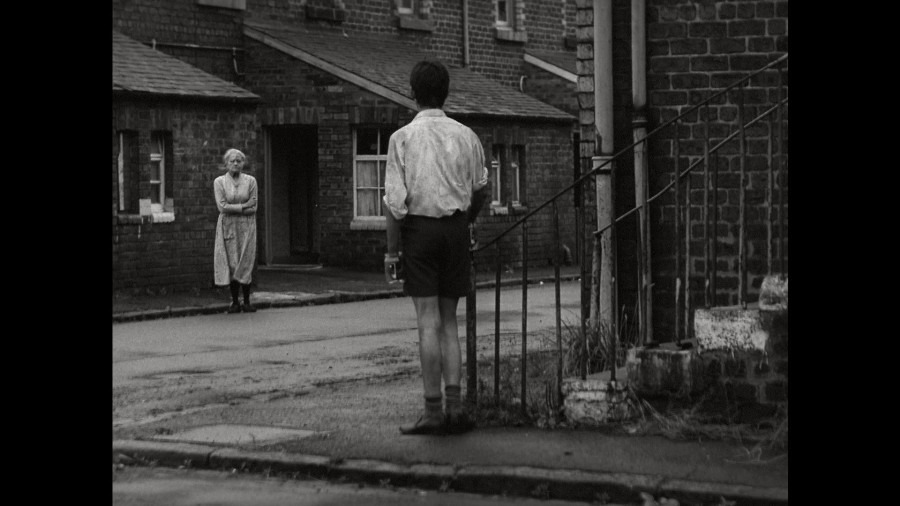
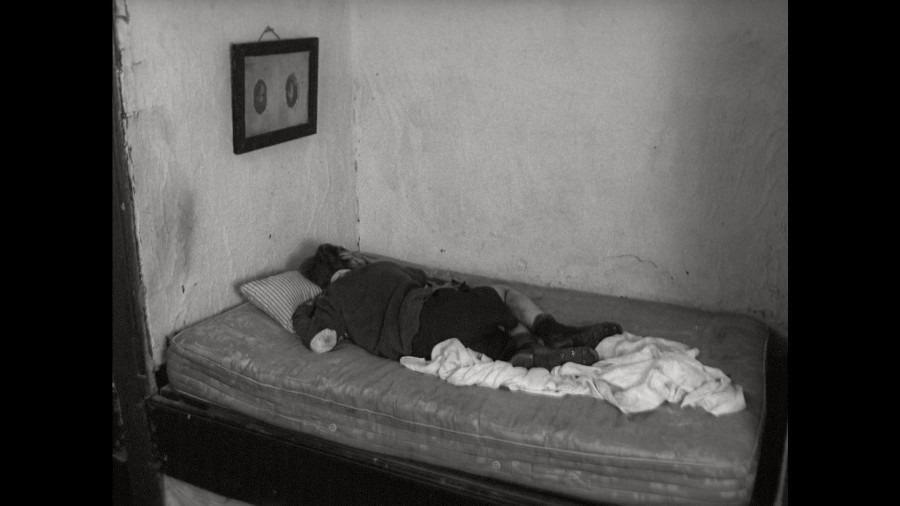
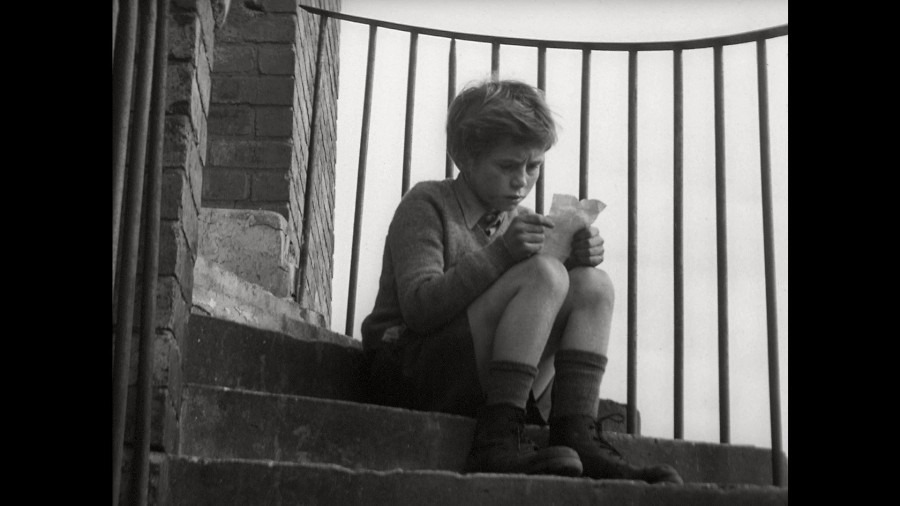
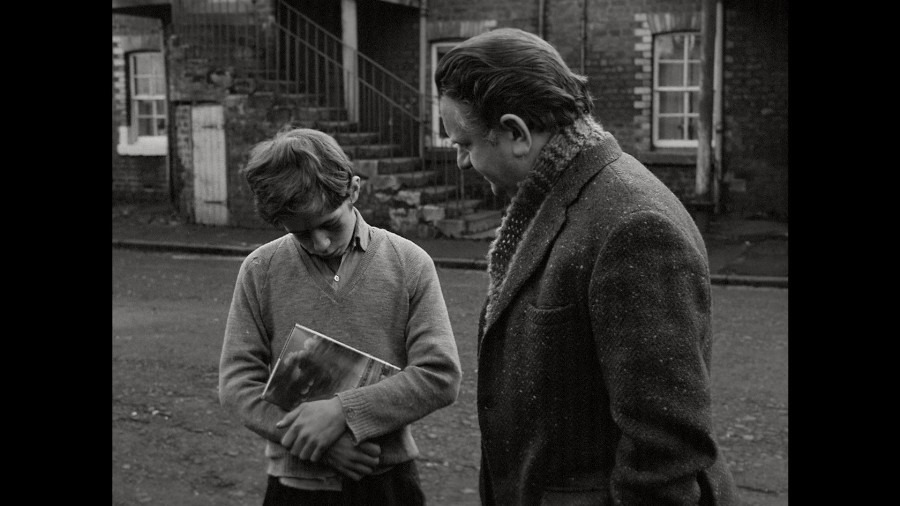
All three films look very good considering the shape of the source and yet again BFI Video have outdone themselves. The transfer isn’t perfect, limited more because of the condition of the source materials, but it’s certainly sharper and cleaner than I ever would have expected.
The first film, My Childhood, is the most problematic, coming from a 16mm source. It presents the most damage and is certainly grainier than the other films. It can also look a little soft and faded with plenty of flickering. The other films come from 35mm sources so they look a lot sharper with more detail, and grain is still present, though not as heavy as the first film.
The transfers all look sharp and present an excellent amount of detail. My only issue was that I felt contrast was boosted a little too much, blacks looking a little too deep and whites almost blinding at times. Otherwise it’s a solid high-def presentation.
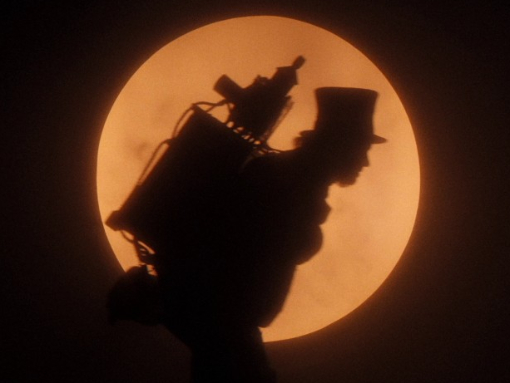
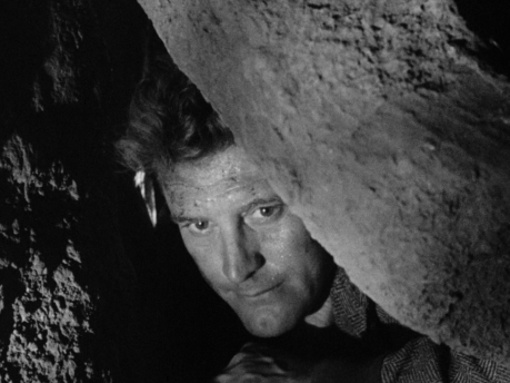
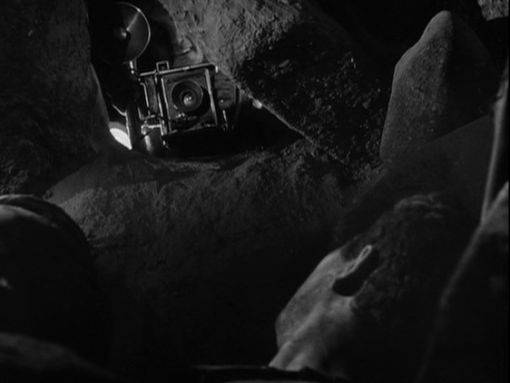
(Screen grabs have been provided by DVD Beaver. The below grabs have been downscaled from their original source but they should still provide a general idea of picture quality.)
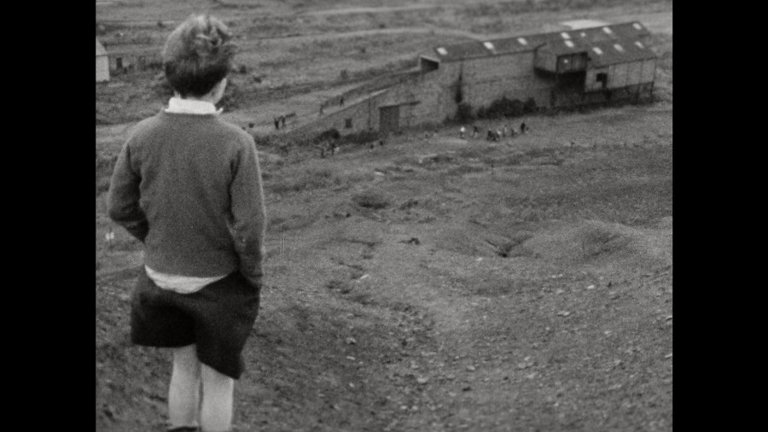
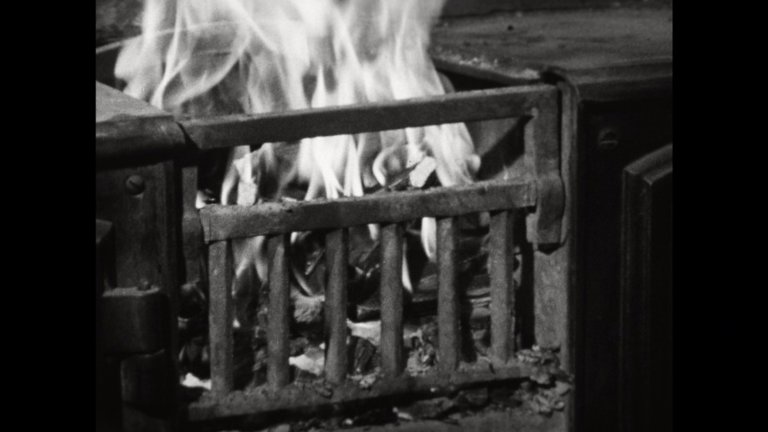
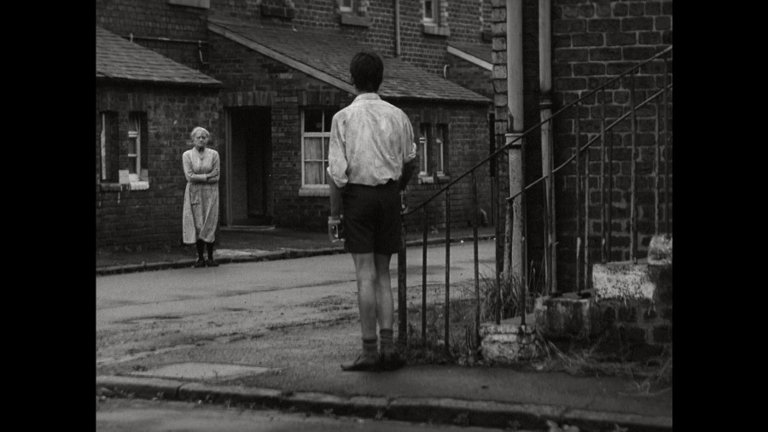
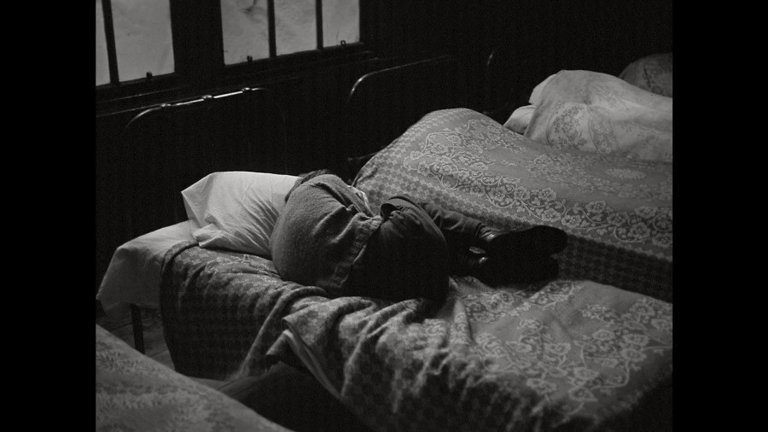
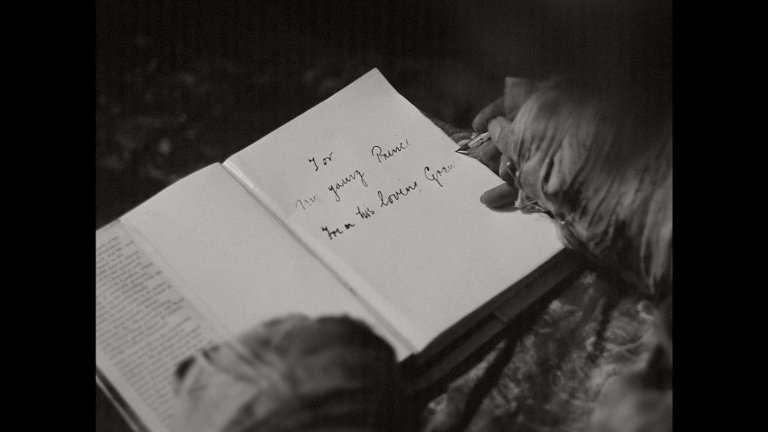
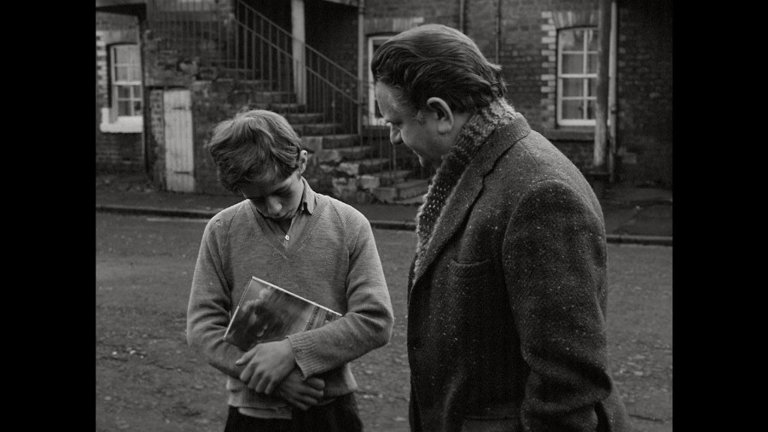
Bill Douglas Trilogy - Screen Captures
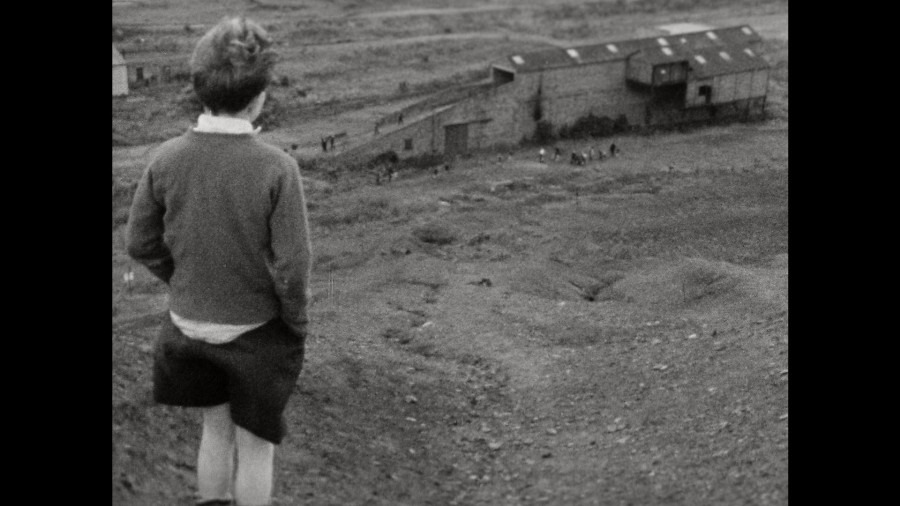
Audio 6/10
Lossless mono tracks accompany all three films. They sound clean but are fairly weak. Dialogue sounds just fine; I will admit I did have some issues with the accents (I’m thankful for the subtitles.) Altogether they’re fine for the film.
Extras 6/10
BFI unfortunately has put all of their supplements on single-layer DVD that’s region 2 locked with the content in PAL, which may be an issue for those that pick up the disc in North America (again the Blu-ray disc is region free.)
First on the disc is Bill Douglas: Intent on Getting the Image, a 63-minute 2006 documentary on the director. It’s a decent documentary but in comparison to the documentary found on BFI’s Comrades release this certainly pales. It gathers together interviews with various friends and acquaintances (including Peter Jewell again,) going through his life showing how it influenced his work. It is a decent documentary that covers more of his work than the doc on Comrades did (even looking at his film school work) and then focusing on the production of his Trilogy, and then there’s still a bit about Comrades.
Interview with Bill Douglas is a 4-minute interview featuring Douglas talking about the Trilogy, surprisingly stating he never intended people to know it was autobiographical, though after director Lindsay Anderson saw the script he figured it out and was the one who suggested the title of My Childhood. It unfortunately closes on a downer note, since Douglas would pass away well too soon, where he asked about his future plans, which did include possibly making more films that would continue the Trilogy. Too short but still an excellent interview.
Mentioned in the documentary and included here is Douglas’ 13-minute short student film Come Dancing. I was rather surprised it was a student film as it seems fairly confident and Douglas has definite feel for his style. I don’t want to give away too much about the story, except it involves a man possibly trying to “pick up” another man. It’s actually quite good and it didn’t really go a route I was fully expecting. An interesting look at Douglas building his techniques early on. Also nice is that BFI have seen fit to give this feature a progressive transfer as opposed to an interlaced transfer like the other supplements here. It doesn’t look like it’s received much of a restoration but the image is still fairly sharp.
And we yet again get another wonderful booklet from BFI, which includes a wonderful piece about Bill and his work by Peter Jewell, his longtime friend, which leads up to a poem he wrote for the 10 year anniversary of his death. You also get an essay on the trilogy by John Caughie, another on the structure of the films by Matthew Flanagan. Also included are biographies for director Bill Douglas and actor Stephen Archibald, the young boy in all three films. It then concludes with notes on features that appear in this release.
Not as good as what we got with Comrades but a decent extension. But I was so happy to see more of Bill Douglas’ work, a director I wasn’t altogether that familiar with but whose work I now have a strong fondness for.
Closing
A nice set that I think is worth picking up, even if you’re in North America and don’t have all-region capabilities for the DVD supplements. The films are all wonderful works and are alone worth owning, and BFI Video has yet again pulled off wonderful high-def transfers for these films. A high recommendation.
BUY AT: