Pinocchio
BUY AT:


See more details, packaging, or compare
Synopsis
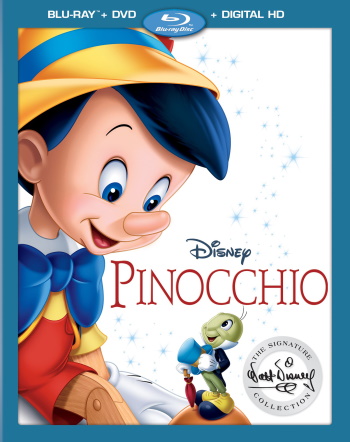
Now a part of the celebrated Walt Disney Signature Collection, the timeless story of PINOCCHIO inspires a new generation with its masterful animation, award-winning music, unforgettable characters and exclusive, all-new behind-the-scenes Bonus Extras! With his faithful friend Jiminy Cricket by his side, Pinocchio embarks on fantastic adventures that test his bravery, loyalty and honesty until he triumphs in his quest for his heart's desire: to become a real boy.
Picture 9/10
Walt Disney Home Entertainment presents the studios second animated feature Pinocchio in a new dual-format edition presenting the film in the aspect ratio of about 1.33:1. The new 1080p/24hz high-definition presentation is delivered on a dual-layer disc.
Disney can be a bit hit and miss with their animated features, some looking very good and others looking waxy and overly processed. They seem to be trying to find that balance between delivering something true to the original look of the film and something that would please the expectations of a modern, mainstream audience in regards to a high-definition presentation. With this edition of Pinocchio, though, I think they may have found that balance.
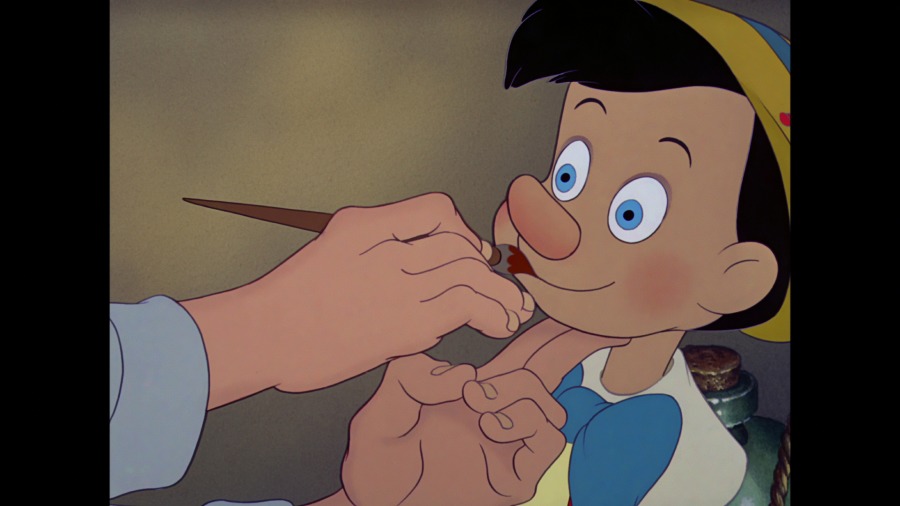
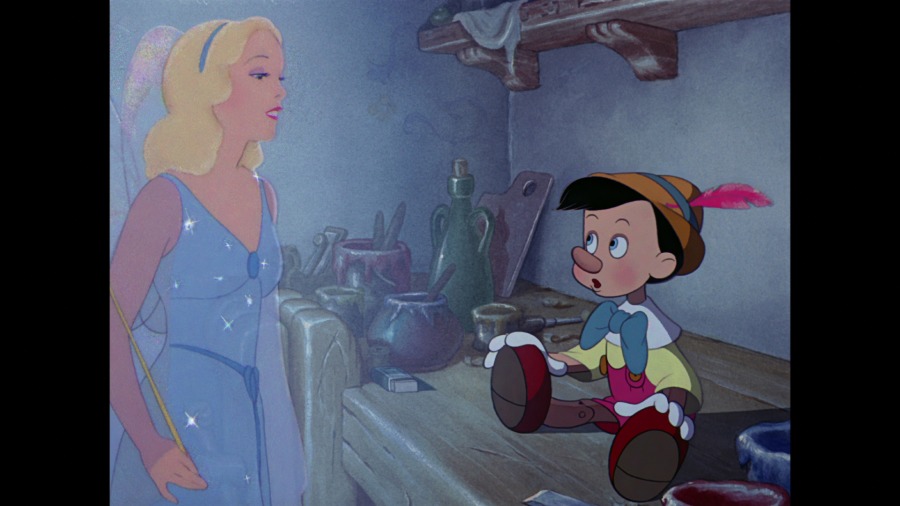
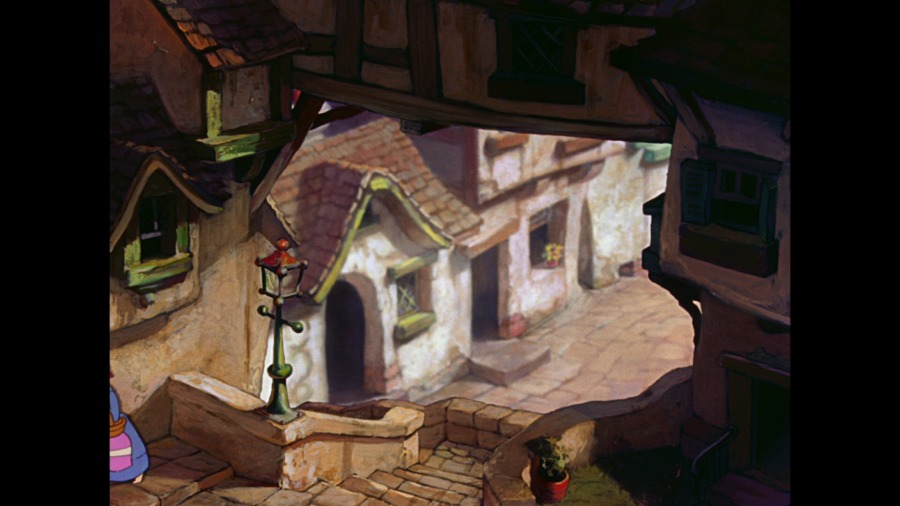
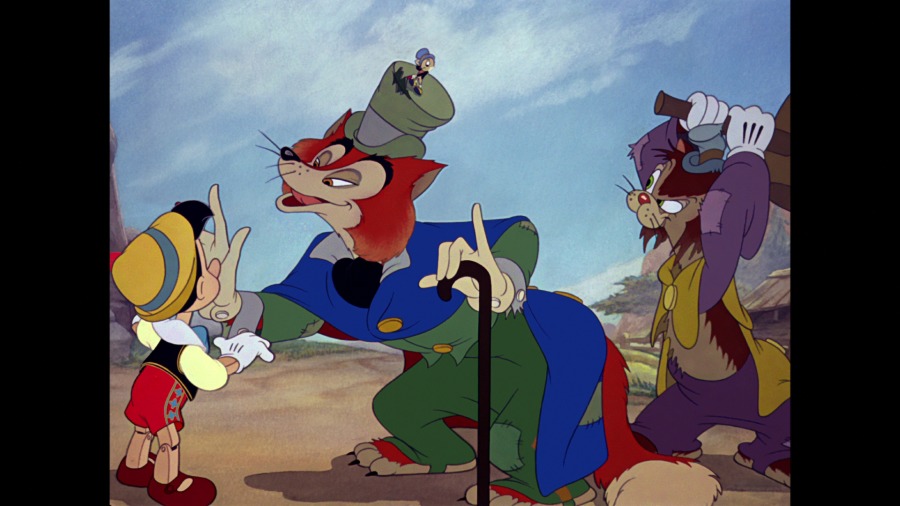
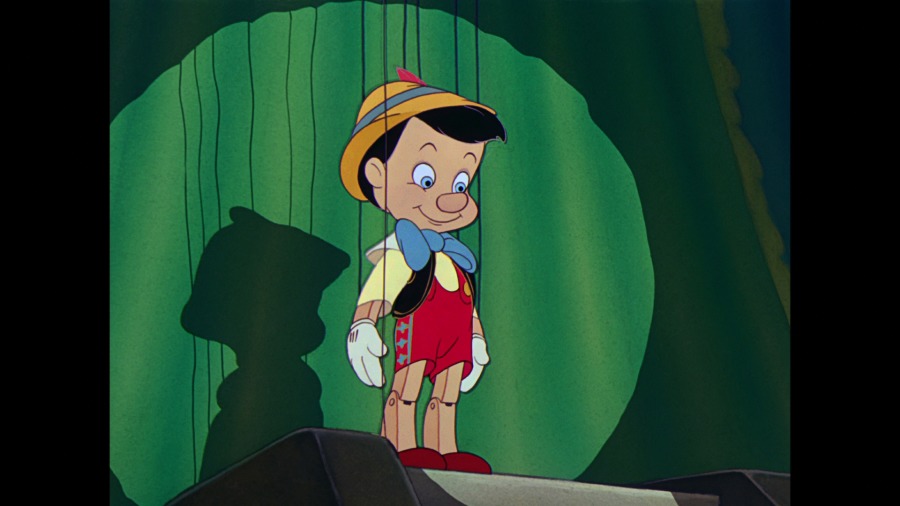
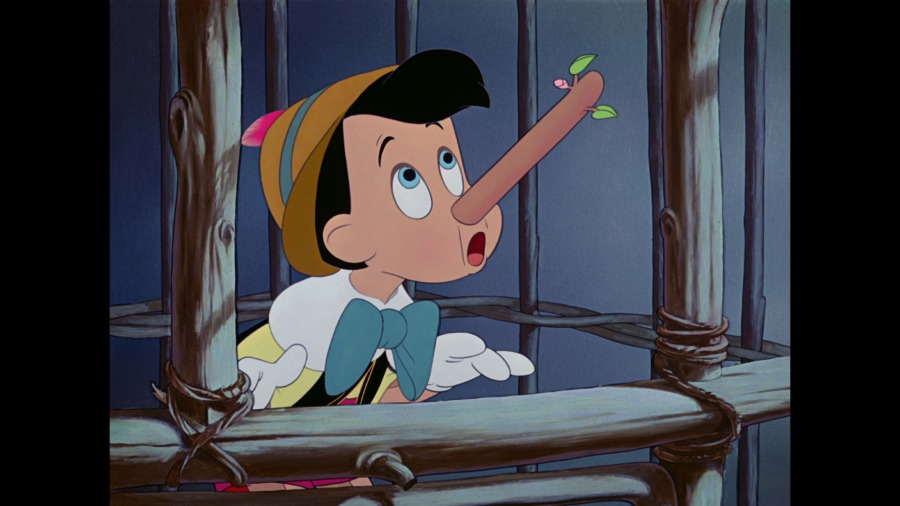
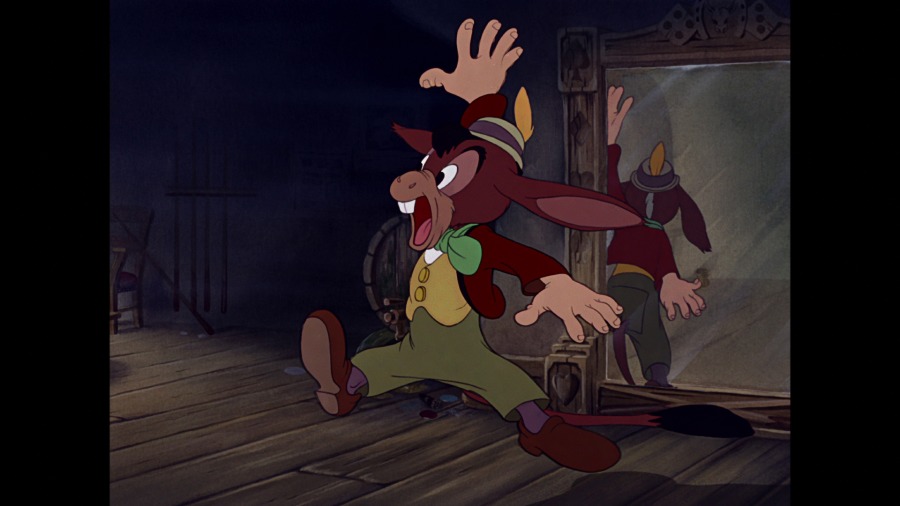
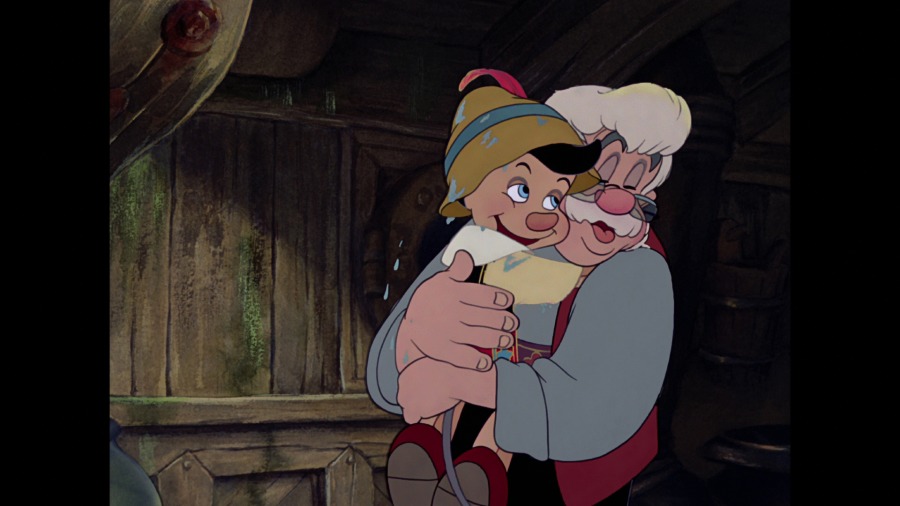
I’m really quite impressed with this one. It could be argued that Disney isn’t really trying to deliver a filmic look, but more trying to present what was on the original cels and plates that were photographed, as if there was nothing there to filter that. Grain isn’t noticeable, at least that I could see, but whatever process they used to clean that aspect up hasn’t appeared to have harmed many other aspects of the image. The image is sharp and clear, with the line artwork coming off very well defined and clean. The colours look sharp, without any bleeding, and you can notice the tonal shifts clearly in the background art. Clarity is excellent most of the time but a few of the more complicated shots in the film (where images are layered using a special camera that used layers of panels to provide depth) can look a little soft, but this appears to be a side effect of the complicated process that Disney employed for these really incredible techniques that are still impressive to this day.
Yet what most impressed me about this presentation is the fact that the textures of the artwork, in both backgrounds and even in the animated foreground objects, comes through very clearly. Everything is very well-defined and clear, and you can tell that it was hand drawn and painted. The artwork really looks fantastic here.
The restoration work itself is also impressive, though Disney has always been fairly good about this. I don’t recall any marks or blotches of any sort, and the film really looks like it could have been just recently made and not 3 years shy of 80 years ago (yeah, let that settle in your head for a second). But whatever techniques Disney has employed to clean up the image they haven’t had any adverse effects on the image. It still looks good, incredibly sharp when it can, and ultimately looks like it could have been scanned from the original animation cels themselves. Probably the best presentation I’ve seen for one of Disney’s classic animations.
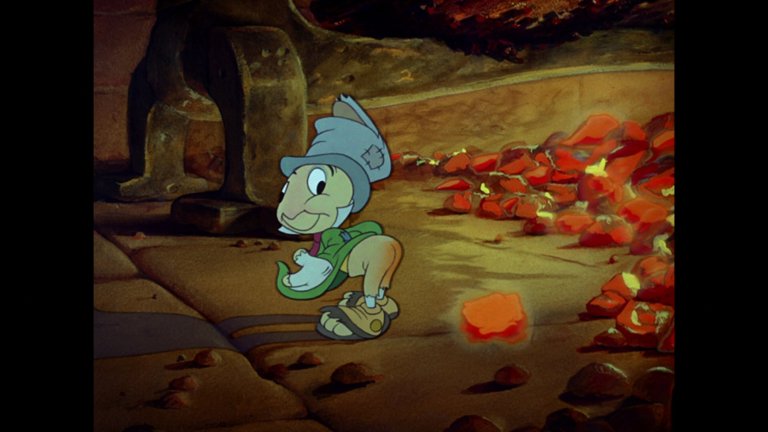
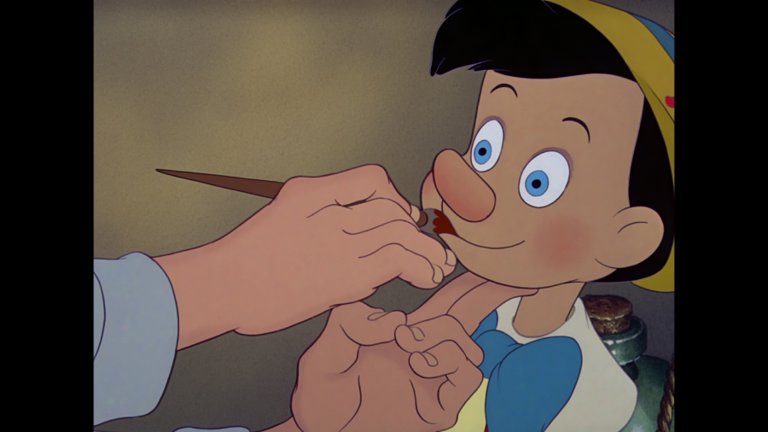
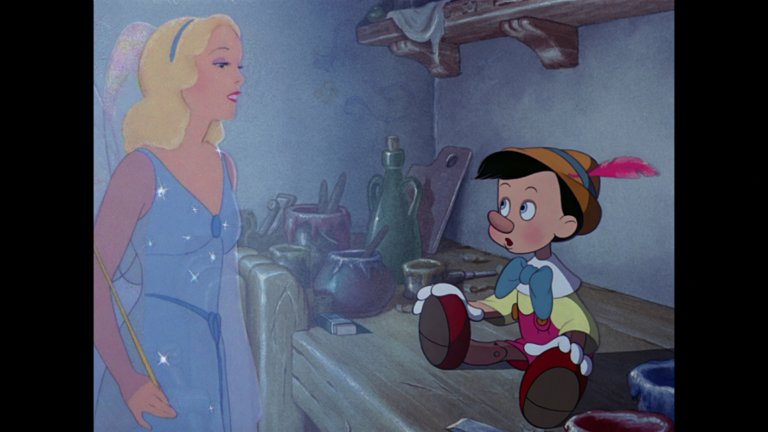
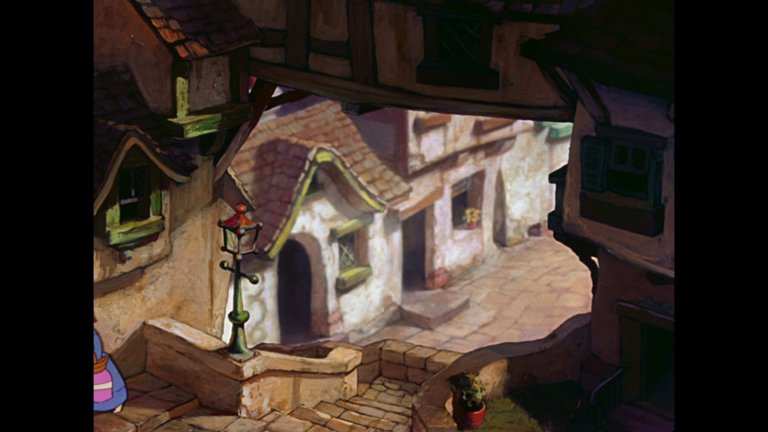
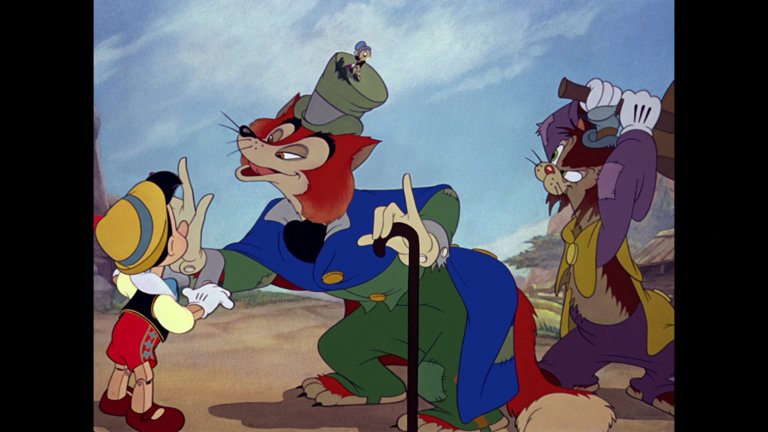
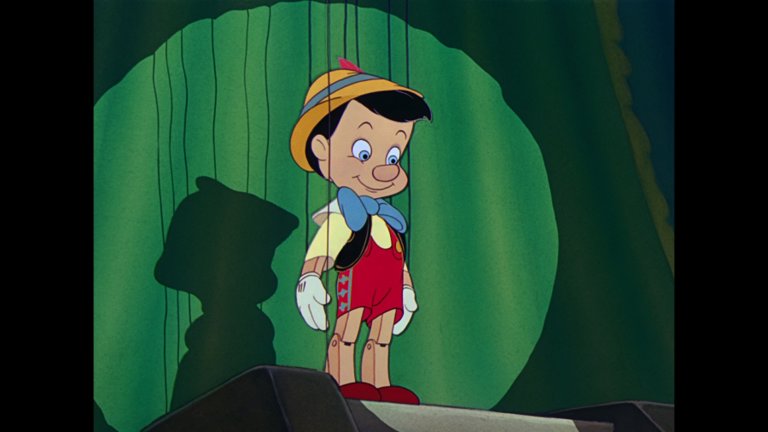
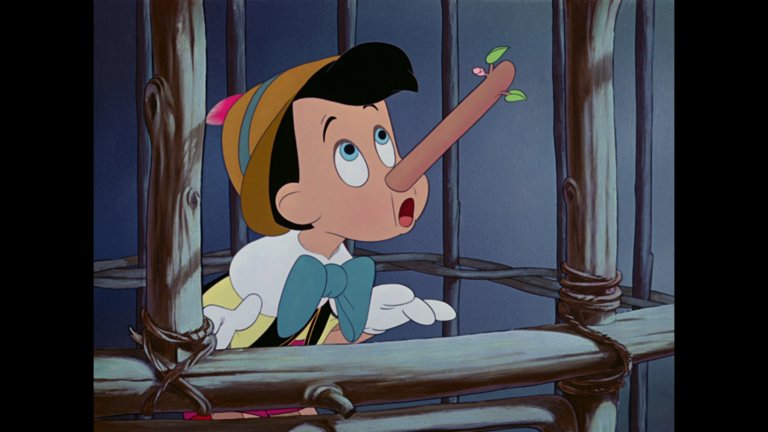
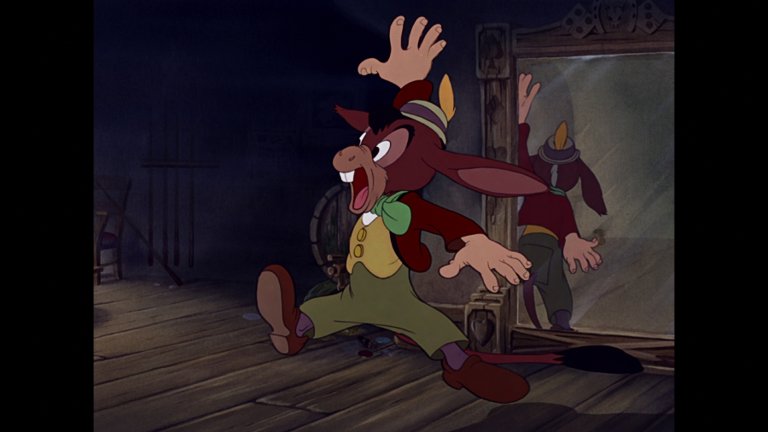
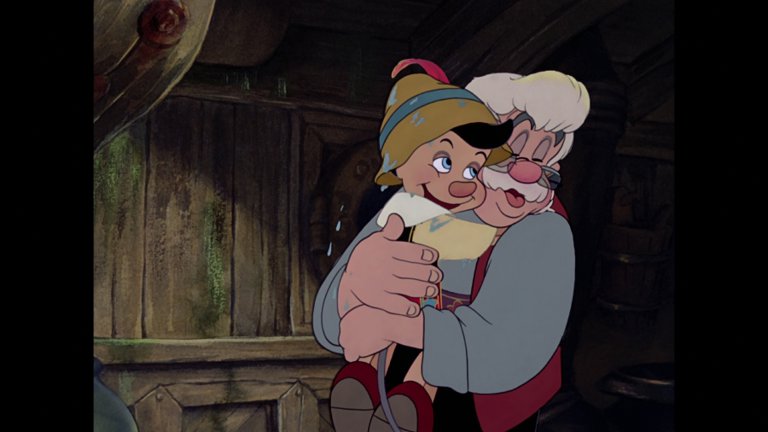
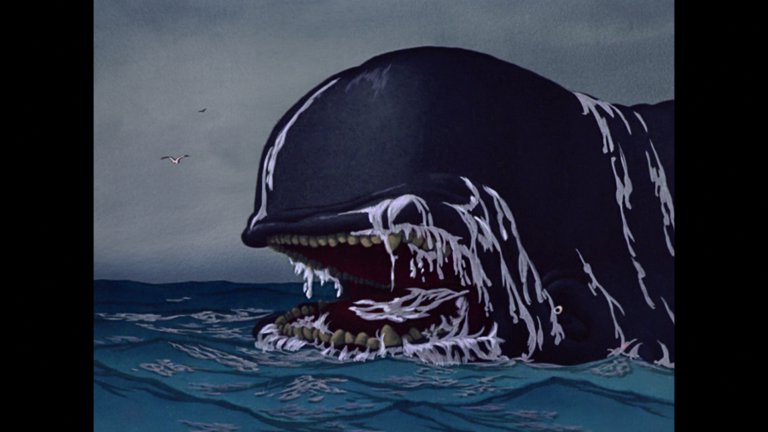
Pinocchio - Screen Captures
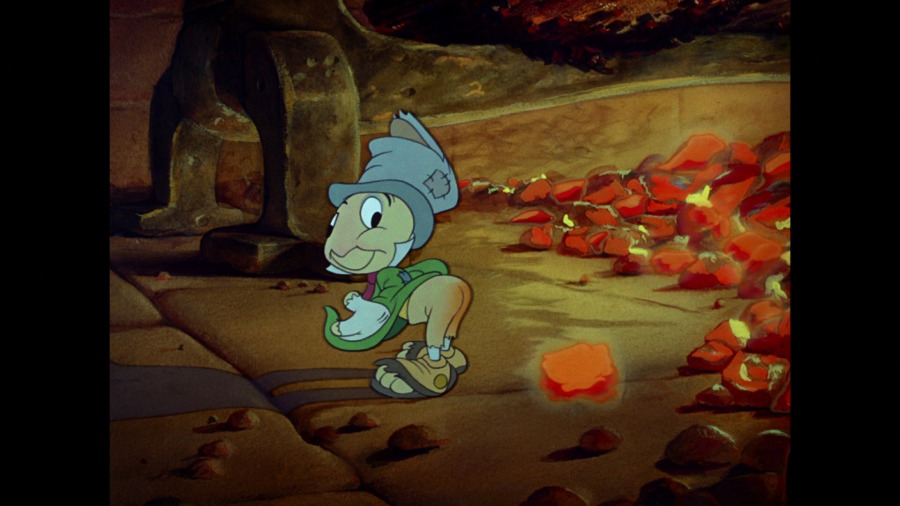
Audio 8/10
Disney includes two English audio tracks (along with a French and Spanish track). The primary track is a remastered 7.1 DTS-HD MA surround track but for the purists Disney also presents the original (but remastered) monaural theatrical track. Disappointingly this track is presented in 1.0 Dolby Digital.
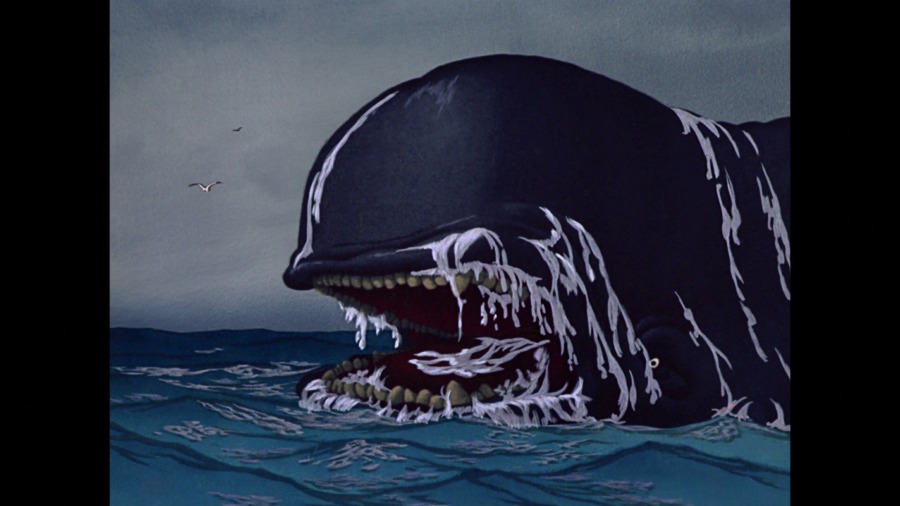
The 7.1 track (as a note I am currently only set up for 5.1 playback) does sound pretty good, though, and I’ll probably be sticking with it. Dialogue is mostly delivered through the center speaker, though some panning between the fronts is noticeable. Music spreads throughout the environment and it has been nicely mixed, delivering strong fidelity and a pretty wide amount of dynamic range. Some of the film’s more action oriented sequence (the theme park, the film’s climax with the whale) get a little more active as well. But the track is nicely mixed, not overdoing things I found, and doesn’t aim to be overly showy, so thankfully things don’t come off sounding unnatural or odd.
The Dolby Digital track also sounds fine, though it’s weaker overall. It’s a bit more flat, dynamic range isn’t as wide. But it’s clear and, similar to the 7.1 track, doesn’t present any noticeable bits of damage or harshness. It’s fine.
As to which one is better I would probably say the 7.1 track does sound a bit crisper but it will ultimately come down to personal preference. I’m just happy Disney at least gives the option of tracks for film purists, it’s just disappointing they couldn’t give it a lossless presentation.
Extras 8/10
Disney has released the film on DVD a few times and Blu-ray once before, and it appears that most of the material has been carried over. Unfortunately they’ve added some newer content. Disney’s older DVD releases were usually well intentioned in their supplements at the very least, even if the material wasn’t as in-depth as one would hope. But they usually tried to give a detailed look at the making of the film, offer insights to the various techniques they might use, and even attempt some historical context, even getting scholars or something similar (usually Leonard Maltin) to talk about the film’s importance. Yeah, there was an obvious bias in the content, and very rarely did any of the dirty secrets about a film come out, but they were usually interesting.
Thankfully that is still here but the new features that Disney provides here are mostly weak. What has become a norm on Disney’s newer Blu-ray releases we get some music video for some terrible song or cover. With The Pinocchio Project: “When You Wish Upon a Star” we get a music video for the song “When You Wish Upon a Star” performed by JR Aquino, Tanner Patrick, and Alex G. Since I don’t know who any of these people are this is obviously not aimed at me. At any rate the 3-minute video presents a serviceable if unremarkable variation of the song; it’s typical of what you expect from the current pop scene and doesn’t break any walls. There is a far worse version on this disc so that’s the praise I can give this one. And in case you care about the backstory of this recording there is a 3-minute video featuring interviews with the performers, though don’t expect to glean any meaningful insights.
A few steps up from that is Walt’s Story Meetings: Pleasure Island, which works to offer a basic look into how the story meetings and planning for these animated films went. Historian J.B. Kaufman and director Pete Docter talk a bit about how Disney had his team put together story ideas (including dozens for this film that were ultimately not used) and how Disney planned on using the profits from Snow White for it and advancing the animation team. Here the focus is on the “Pleasure Island” sequence, at one point called “Boobyland” and we get some samplings of the various ideas through transcripts from the meetings along with designs and storyboards. We even get some reenactments of these meetings. There is probably a more interesting and insightful piece buried in here somewhere but as it is it really only offers a superficial analysis. It runs about 7-minutes.
In Walt’s Words manages to be decent and might be the strongest of the newly produced features (though I’m not taking into account the inclusion of a short film on this release). It presents audio recordings of Walt Disney talking about Pinocchio and how the success of Snow White got the film made and advanced the technology they used for animated features, allowing them to experiment rather freely. It also allowed them to divvy up the work a bit more and create more departments. Again, I would have liked a bit more meat but it’s fine in the end.
A nice little addition, though, is the inclusion of a silent short from Disney’s very early days, a newly restored Oswald the Lucky Rabbit in “Poor Papa.” This is actually a very important inclusion, not only for being the first Oswald cartoon and one of the earliest Disney shorts (from 1927 or so) but also because it was at one point considered lost, or at the very least, “mostly lost.” This may be the most complete version of it. The basic premise involves Oswald becoming an unwitting father as stork after stork delivers new babies to him, who grow up and cause all sorts of headaches. Amusingly the film takes a somewhat dark turn when Oswald turns to trying to shoot the storks to try and stop them from delivering these young-uns. It’s rough but there are some really fascinating uses of perspective here that seem particularly advanced, and the animation work is pretty solid. Also, the restoration work is impressive, cleaning up a lot of the damage and leaving the artwork mostly unharmed; I think most of its shortcomings are more age and material related. It looks quite good and it might be the best, or at the very least, most fascinating feature on here.
Under “Classic Bonus Content” (featuring material from the old DVD and Blu-ray releases) we first get the 56-minute documentary No Strings Attached: The Making of Pinocchio. It’s very similar to other making-of documentaries from Disney, giving an incredibly thorough overview. There aren’t any real surprises in it, but it does go over the production history from inception to release, explaining how Disney went about adapting the story. It’s at its most interesting, though, when it goes over some of the more advanced technical elements, like the multi-plane camera that helped create depth in a number of scenes, or material on the sound effects and music. It’s a worthwhile feature to go through.
Three Deleted Scenes with an introduction are next provided, going over an abandoned sequence where Gepetto tells Pinocchio about the tree he came from, an extended sequence in the whale, and an alternate ending. They’re presented through concept art and storyboards since the scenes weren’t actually completed. I actually liked the extended whale sequence but it does go on fairly long.
That sequence actually leads into the next feature, going over Disney’s Sweat Box, a screening room where various meetings on story development and planning took place, and called that because it lack air conditioning. On top of giving a backstory to the sweat box it also provides re-enactments (though not terribly good ones) using transcripts from meetings about that extended sequence inside the whale. It’s interesting but I have a feeling it holds back the more brutal critiques.
Gepettos Then and Now seems to be a well-meaning feature at first, looking at toymakers through the years, getting interviews from various toymakers from around the world. Unfortunately it then turns into something more like an ad for Disney’s toys, with a Wall-E toy (that is admittedly cute) at the center. It runs a probably too long 11-minutes.
We then get 10-minutes’ worth of Live Action Performance Footage, which is mentioned in some of the other features. For their animations, actors would perform the actions of characters for the animators to replicate, using rotoscope-like techniques, where the animator more or less traces some of the actions. Here we get footage of an actor performing Jiminy Crickets introduction. Though it appears there was a sound track it is now lost and all we get now is the silent footage.
Disney next includes three theatrical trailers, one from 1940, another from 1984, and the last one from 1992. They also include another variation of ”When You Wish Upon a Star” by Meaghen Jette Martin. It’s terrible.
Following that ghastly thing is a 5-minute featurette from 1992, A Wish Come True: The Making of Pinocchio, which is really more of an ad. And then we get a 4-minute storyboard to film comparison for the sequence where Gepetto puts the finishing touches on Pinocchio: the storyboards are presented above the finished scene. There is then a Song-Selection option, where you can jump to any song in the movie, the lyrics displayed via subtitles.
The Blu-ray also carries over the audio commentary from the previous editions featuring Leonard Maltin, Eric Goldberg and J.B. Kaufman. Mixed in are old recordings with other members involved in the production, including animators. It’s not a bad track, but I think a lot of material is covered in the other features. It’s most interesting when we get a bit more in the way of historical context around the film and the technological advances. It’s not bad, probably worth a listen, but you will get most of the same information here out of the other features.
There are also a couple of options in playing back the main feature: you can watch it in a sing-along mode, which basically just brings up subtitles presenting the lyrics to various songs throughout. You can also play it with Disney View, which actually fills the black borders of the 1.33:1 image with artwork by Toby Bluth. It’s kind of a pointless feature I feel, but there it is. The artwork is nice at least.
And there you have it. Disney adds some questionable material but overall I think they’ve done a solid job, thanks primarily to the inclusion of the older features and that recovered Oswald cartoon.
Closing
I think Disney has done a rather wonderful job with this. The supplements are mostly good and worthwhile, but I was most impressed with the presentation. Probably one of their better releases for a classically animated film.
BUY AT: