
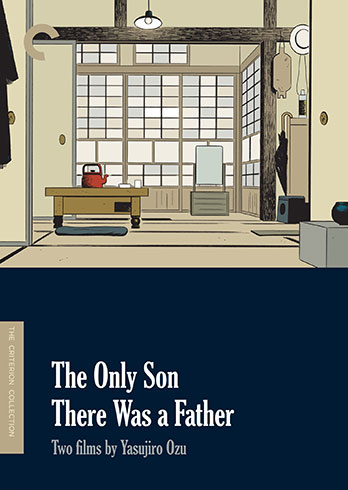



Details by Film
The Only Son
Streaming Options




There Was a Father
Streaming Options
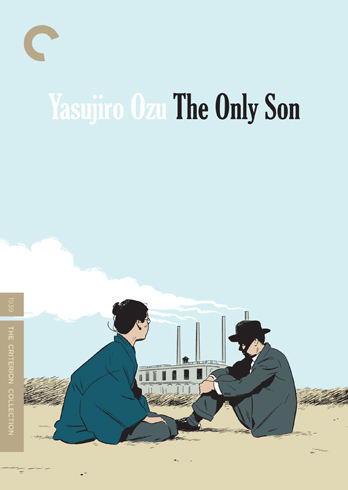
The Only Son
Yasujiro Ozu’s first talkie, the uncommonly poignant The Only Son is among the Japanese director’s greatest works. In its simple story about a good-natured mother who gives up everything to ensure her son’s education and future, Ozu touches on universal themes of sacrifice, family, love, and disappointment. Spanning many years, The Only Son is a family portrait in miniature, shot and edited with its maker’s customary exquisite control.
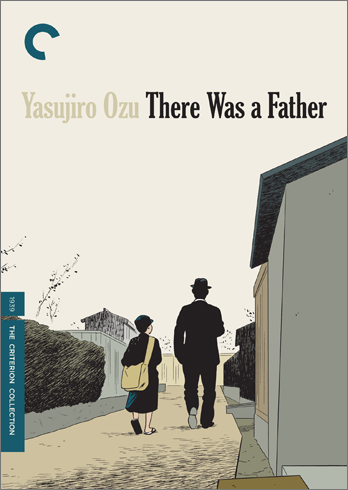
There Was a Father
Yasujiro Ozu’s frequent leading man Chishu Ryu is riveting as Shuhei, a widowed high school teacher who finds that the more he tries to do what is best for his son’s future, the more they are separated. Though primarily a delicately wrought story of parental love, There Was a Father offers themes of sacrifice that were deemed appropriately patriotic by Japanese censors at the time of its release during World War II, making it a uniquely political film in Ozu’s body of work.
Release Information:
Technical Specifications
Supplements
- New video interviews with film scholars Tadao Sato, David Bordwell, and Kristin Thompson
- New video interview with film scholars David Bordwell and Kristin Thompson
- A booklet featuring an essay by critic and historian Tony Rayns
- A booklet featuring an essay by critic and historian Tony Rayns, an appreciation of actor Chishu Ryu by Japanese film scholar Donald Richie, and comments by Chishu Ryu on director Yasujiro Ozu
Forum Member Statistics
Release Notes on Restoration
This new high-definition digital transfer was created on a Spirit HD Datacine from a 16mm fine-grain master positive that is the best surviving element made from the original 35mm nitrate materials, which no longer exist. The 16mm element shows every kind of imaginable wear and tear, including splices, chemical and mold stains, and minor instances of missing footage that could not be replaced. Despite significant efforts on the part of the Criterion Collection to repair the worst of the damage, using MTI’s DRS system, Pixel Farm’s PFClean system, and Digital Vision’s DVNR system, no amount of digital image restoration can ever return the film to its original condition.
The monaural soundtrack was remastered at 24-bit from the optical soundtrack of the 16mm master positive mentioned above. The soundtrack contained clicks, thumps, hiss, hum, and other large abnormalities. Some of these were manually removed using Pro Tools HD, but other artifacts could not be eliminated. Crackle was attenuated using AudioCube’s integrated audio workstation.
This new high-definition digital transfer was created on a Spirit HD Datacine from a 16mm fine-grain master positive that is the best surviving element made from the original 35mm nitrate materials, which no longer exist. The 16mm element shows every kind of imaginable wear and tear, including splices, chemical and mold stains, and minor instances of missing footage that could not be replaced. Despite significant efforts on the part of the Criterion Collection to repair the worst of the damage, using MTI’s DRS system, Pixel Farm’s PFClean system, and Digital Vision’s DVNR system, no amount of digital image restoration can ever return the film to its original condition.
The monaural soundtrack was remastered at 24-bit from the optical soundtrack of the 16mm master positive mentioned above. The soundtrack contained clicks, thumps, hiss, hum, and other large abnormalities. Some of these were manually removed using Pro Tools HD, but other artifacts could not be eliminated. Crackle was attenuated using AudioCube’s integrated audio workstation.